Hubbry Logo
GopherGopherMain
Open search
Gopher
Community hub
Gopher
logo
8 pages, 0 posts
0 subscribers
Be the first to start a discussion here.
Gopher
Gopher
from Wikipedia

Pocket gophers
Temporal range: Chadronian–present[1]
Botta's pocket gopher (Thomomys bottae)
Scientific classification Edit this classification
Kingdom: Animalia
Phylum: Chordata
Class: Mammalia
Order: Rodentia
Superfamily: Geomyoidea
Family: Geomyidae
Bonaparte, 1845
Type genus
Geomys
Genera

Cratogeomys
Geomys
Heterogeomys
Orthogeomys
Pappogeomys
Thomomys
Zygogeomys

Diversity
Around 41 species in 7 genera

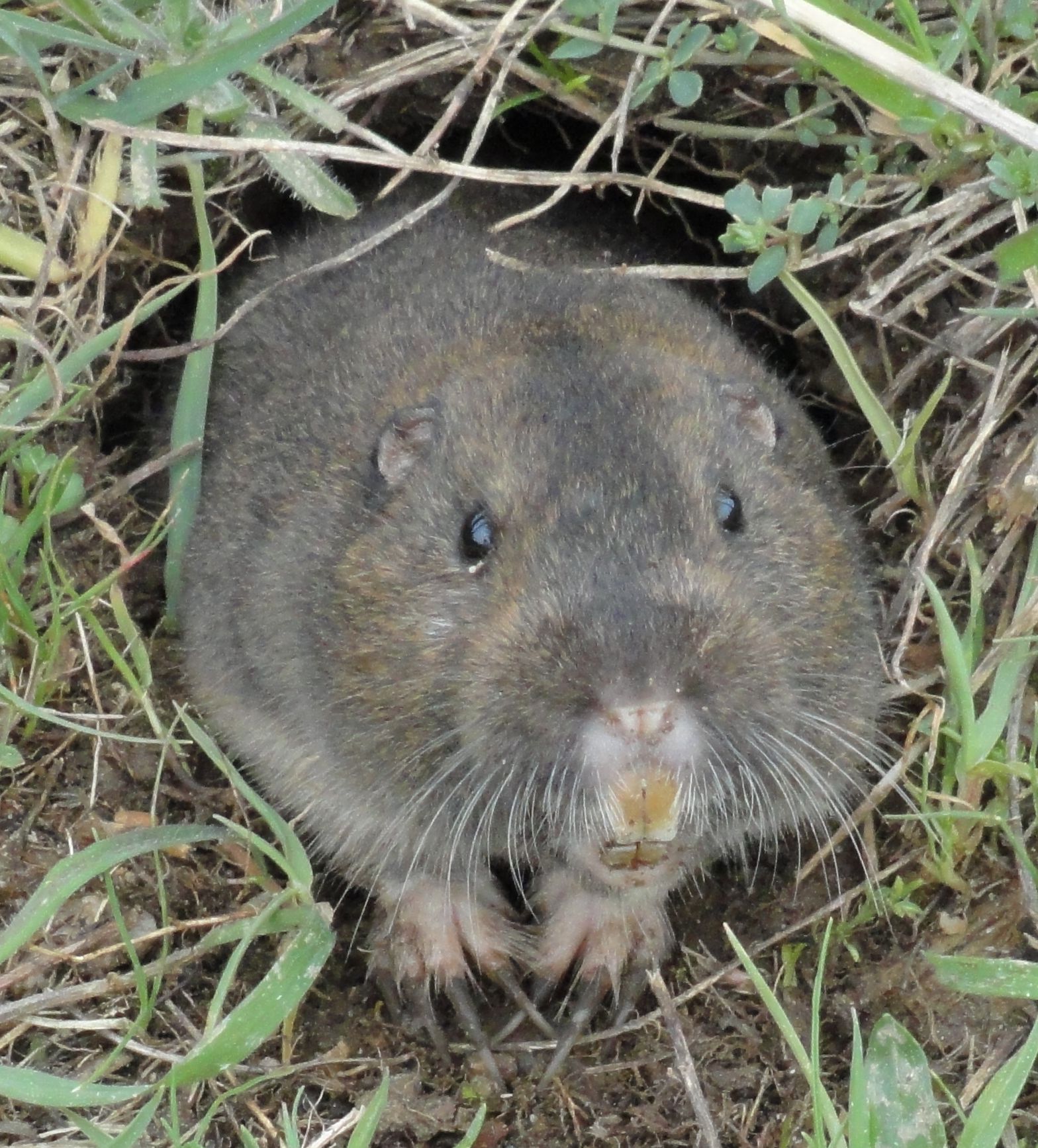
Pocket gophers, commonly referred to simply as gophers, are burrowing rodents of the family Geomyidae.[2] The roughly 41 species[3] are all endemic to North and Central America.[4] They are commonly known for their extensive tunneling activities and their ability to damage farms and gardens.

The name "pocket gopher" on its own may refer to any of a number of genera within the family Geomyidae. These are the "true" gophers, but several ground squirrels in the distantly related family Sciuridae are often called "gophers", as well. The origin of the word "gopher" is uncertain; the French gaufre, meaning "waffle", has been suggested, on account of the gopher tunnels resembling the honeycomb-like pattern of holes in a waffle.[5] Some sources suggest a Muskogean origin of the name.[6]

A typical pocket gopher

Description

[edit]

Pocket gophers weigh around 200 g (12 lb), and are about 15–20 cm (6–8 in) in body length, with a tail 2.5–5 cm (1–2 in) long. A few species reach weights approaching 1 kg (2.2 lb). Within any particular gopher species, the males are larger than the females, and can be nearly double their weight.[7]

Average lifespans are one to three years.[8] The maximum lifespan for the pocket gopher is about five years.[9] Some gophers, such as those in the genus Geomys, have lifespans that have been documented as up to seven years in the wild.[8]

Most gophers have brown fur that often closely matches the color of the soil in which they live. Their most characteristic features are their large cheek pouches, from which the word "pocket" in their name derives. These pouches are fur-lined, can be turned inside out, and extend from the side of the mouth well back onto the shoulders. Gophers have small eyes and a short, hairy tail, which they use to feel around tunnels when they walk backwards.

Pocket gophers have often been found to carry external parasites including, most commonly, lice, but also ticks, fleas, and mites.[8] Common predators of the gopher include weasels, snakes, and hawks.[10]

Behavior

[edit]

All pocket gophers create a network of tunnel systems that provide protection and a means of collecting food. They are larder hoarders, and their cheek pouches are used for transporting food back to their burrows. Gophers can collect large hoards. Unlike ground squirrels, gophers do not live in large communities and seldom find themselves above ground. Tunnel entrances can be identified by small piles of loose soil covering the opening.[11] Burrows are in many areas where the soil is softer and easily tunneled. Gophers often visit vegetable gardens, lawns, or farms, as they like moist soil (see Soil biomantle). This has led to their frequent treatment as pests.

Gophers eat plant roots, shrubs, and other vegetables such as carrots, lettuce, radishes, and any other vegetables with juice.[12] Some species are considered agricultural pests. The resulting destruction of plant life then leaves the area a stretch of denuded soil. At the same time, the soil disturbance created by turning it over can lead to the early establishment of ecological succession in communities of r-selected and other ruderal plant species. The stashing and subsequent decomposition of plant material in the gophers' larder can produce deep fertilization of the soil.

Pocket gophers are solitary outside of the breeding season, aggressively maintaining territories that vary in size depending on the resources available. Males and females may share some burrows and nesting chambers if their territories border each other, but in general, each pocket gopher inhabits its own individual tunnel system. Although they attempt to flee when threatened, they may attack other animals, including cats and humans, and can inflict serious bites with their long, sharp teeth.

Depending on the species and local conditions, pocket gophers may have a specific annual breeding season, or may breed repeatedly through the year. Each litter typically consists of two to five young, although this may be much higher in some species. The young are born blind and helpless and are weaned when around 40 days old.[13]

Control

[edit]

Geomys and Thomomys species are classed as "prohibited new organisms" under New Zealand's Hazardous Substances and New Organisms Act 1996, preventing them from being imported into the country.[14]

Classification

[edit]

Much debate exists among taxonomists about which races of pocket gophers should be recognized as full species, and the following list cannot be regarded as definitive.

Attwater's pocket gopher (Geomys attwateri) from Colorado County, Texas, US

Some sources also list a genus Hypogeomys, with one species, but this genus name is normally used for the Malagasy giant rat, which belongs to the family Nesomyidae.

[edit]

See also

[edit]

References

[edit]
[edit]
Revisions and contributorsEdit on WikipediaRead on Wikipedia
from Grokipedia
A gopher, commonly known as a pocket gopher, is a in the family Geomyidae, native to North and and characterized by its external, fur-lined cheek pouches that it uses to transport food and nesting materials while . These solitary mammals, typically measuring 5 to 14 inches in length with small eyes and ears, sensitive whiskers, and strong clawed forepaws, spend most of their lives underground in extensive burrow systems that can span hundreds of feet. Pocket gophers inhabit a variety of environments, favoring loose, sandy soils with vegetative cover such as grasslands, deserts, forests, and agricultural fields across the , , and parts of the Southeast. Their tunneling behavior aerates soil, reduces erosion, and disperses seeds, contributing positively to dynamics, though they are often considered agricultural pests due to damage to roots, crops, and systems, with populations potentially reaching 30 to 40 individuals per acre in unmanaged areas. Primarily herbivorous, gophers feed on , tubers, bulbs, and occasionally aboveground , using their ever-growing incisors and specialized pouches to efficiently gather and store without surfacing frequently. They are active year-round, breeding in spring or summer to produce litters of 2 to 12 young after a period of about three weeks, though their solitary nature and short lifespan—rarely exceeding three years in the wild—limit population growth. The family Geomyidae comprises around 35 species across six genera, with the most widespread being the plains pocket gopher (Geomys bursarius) in the central U.S. and the Botta's pocket gopher (Thomomys bottae) in the West. While most species are common and not federally listed as threatened or endangered, certain species like the desert pocket gopher (Geomys arenarius) face risks from habitat loss and , highlighting the need for targeted conservation in fragmented landscapes.

Taxonomy and Classification

Etymology and Naming

The term "gopher" applied to burrowing rodents originates from the Louisiana French word gaufre, meaning "honeycomb" or "waffle," a reference to the intricate, honeycomb-like network of tunnels created by these animals. This etymology reflects the rodents' fossorial lifestyle, with the word first appearing in American English around 1812 to describe burrowing squirrels in the southern United States. Early usage likely stemmed from French settlers in Louisiana observing the patterned excavations, analogous to the indentations in a waffle or honeycomb. The scientific naming of pocket gophers evolved in the early 19th century amid European exploration and classification of North American fauna. The genus Geomys was introduced by naturalist Constantine Samuel Rafinesque in 1817, with Geomys pinetis (southeastern pocket gopher) as the type species, based on specimens from pine barrens near Augusta, Georgia. This marked an initial distinction from other burrowing rodents, such as ground squirrels (family Sciuridae), which share superficial similarities in habits but lack the characteristic fur-lined cheek pouches; early naturalists like Rafinesque emphasized morphological differences, including the specialized dentition and skeletal adaptations of geomyids. The family Geomyidae itself, derived from Greek geo ("earth") and mys ("mouse"), was formalized shortly thereafter to encompass these "earth mice," separating them taxonomically from sciurids. Regional variations in common names highlight ongoing terminological overlap and clarification. In the central and western United States, "pocket gopher" specifically denotes members of Geomyidae, emphasizing their external cheek pouches, while "gopher" alone often refers to these . However, in parts of the Midwest and , the term "gopher" is interchangeably applied to ground squirrels like Urocitellus richardsonii, leading to distinctions based on ecological and anatomical traits. Notably, the name "gopher" also applies to the unrelated ( polyphemus), a burrowing reptile in the family Testudinidae, but this usage is geographically limited to the southeastern U.S. and unrelated to the rodent focus here. The gophers remain classified within the broader Geomyidae family, which includes genera such as Geomys and Thomomys.

Species Diversity and Phylogeny

Pocket gophers are classified within the order Rodentia, suborder , and family Geomyidae, a group of burrowing rodents endemic to the . The family encompasses approximately 42 across seven genera: Cratogeomys, Geomys, Heterogeomys, Orthogeomys, Pappogeomys, Thomomys, and Zygogeomys. These exhibit significant taxonomic diversity, with ongoing revisions based on molecular data such as (Cytb) and subunit I (COI) sequences, which support the monophyly of most genera. Phylogenetically, Geomyidae diverged from its closest relatives, the (kangaroo rats and mice), approximately 25 million years ago in the late , as estimated by recent molecular analyses, though fossil records suggest an earlier separation around 30–34 million years ago in the early . This separation marks the origin of the superfamily Geomyoidea, with early geomyid fossils like those of the entoptychine subgroup appearing prominently in and strata of the , indicating a tied to the evolution of adaptations. Subsequent diversification within Geomyidae occurred during the , leading to the modern genera through vicariance and , as reconstructed from multilocus phylogenetic analyses. Among the key genera, Geomys (eastern pocket gophers) and Thomomys (western pocket gophers) represent major eastern-western divisions in , with Geomys showing genetic splits east and west of the , while Thomomys is further subdivided into subgenera Megascapheus and Thomomys. Notable diversity includes endemic forms such as the Mazama pocket gopher (Thomomys mazama), whose like the Olympia pocket gopher (T. m. pugetensis) are federally listed as threatened due to habitat loss. A 2025 molecular study using ultraconserved elements has provided preliminary evidence that may be paraphyletic with respect to Geomyidae, suggesting pocket gophers nest within the pocket mice , though further sampling is needed to confirm this.

Physical Characteristics

Anatomy and Morphology

Pocket gophers, members of the family Geomyidae, exhibit specialized external morphology adapted to their lifestyle. Their most distinctive feature consists of large, fur-lined cheek pouches that extend from the mouth to the shoulders and can be everted for cleaning; these external pouches facilitate the transport and storage of food and nesting materials without impeding burrowing activities. The eyes and ears are notably small, with enlarged lacrimal glands aiding in the removal of dirt to protect these reduced sensory organs during excavation. Additionally, the is short, sparsely haired, and richly supplied with nerves and muscles, serving primarily for tactile feedback and balance while navigating tunnels backward. Skeletal and muscular structures in pocket gophers are robustly modified for efficient digging. The forelimbs are short yet powerful, featuring broad feet with five digits and enlarged claws on the first three, fringed with stiff hairs to enhance soil displacement in scratch-digging behaviors characteristic of the Geomyini tribe. The skull is massively constructed, often elongated and flattened with wide zygomatic arches, a prominent sagittal crest for muscle attachment, and strong, ever-growing incisors that project forward (procumbent in many species) to enable chisel-tooth digging, particularly in harder soils as seen in the Thomomyini tribe. These incisors have a triangular cross-section with flat labial enamel, providing durability against abrasion and mechanical stress during soil penetration. Sensory systems in pocket gophers compensate for their subterranean habitat's darkness and isolation. Vision is minimized, but this is offset by highly sensitive facial vibrissae () that detect touch and air currents, aiding precise and obstacle avoidance in unlit burrows. The further contributes to tactile sensing, allowing gophers to monitor their surroundings during retrograde movement.

Size, Coloration, and Adaptations

Pocket gophers display considerable variation in body size among the approximately 35 within the Geomyidae, with total lengths ranging from 5 to 14 inches (13 to 36 cm), including the tail, and weights from 0.1 to 2.2 pounds (0.05 to 1 kg). Males are generally larger than females across . The (Geomys bursarius), one of the largest North American , attains lengths of 7.5 to 14 inches (19 to 36 cm) and weights up to 1 pound (0.45 kg). Some Central American , such as the big pocket gopher (Heterogeomys lanius), exceed these dimensions, reaching weights over 900 grams (2 pounds). Fur coloration in pocket gophers is highly variable and serves primarily for cryptic against the surrounding soil, typically featuring shades of brown or grayish tones dorsally with paler underbellies. This pelage often matches local substrate colors to reduce visibility to predators, as observed in the , where dorsal fur ranges from brown to black. Regional adaptations include lighter, yellowish tones in arid environments; for instance, the desert pocket gopher (Geomys arenarius) exhibits pale drab-brown fur suited to sandy soils. Key physical adaptations enable pocket gophers' fossorial lifestyle, including prominent yellow incisors that are continuously growing and enriched with iron deposits, conferring increased hardness and resistance to abrasion from gritty . Their is fine, soft, and pliable, lying flat in both forward and backward directions to minimize soil adhesion during excavation and facilitate rapid retrograde movement through burrows. These traits, combined with strong, curved claws on the forefeet, enhance efficiency in tunneling.

Habitat and Distribution

Geographic Range

Pocket gophers, belonging to the family Geomyidae, are native to , with their range extending from southern in the north to in the south. The highest species diversity occurs in the and , where approximately 13 of the roughly 35 extant species are endemic to Mexico alone. For example, the (Geomys bursarius) inhabits the Midwest prairies and , ranging from southern and southward to and northeastern , west of the to the eastern foothills of the . In contrast, the (Thomomys talpoides), a mountain-adapted , occupies western mountain regions and central plains from southern and central Alberta southward to central , western , and eastern Colorado, including areas in the . The current distribution patterns reflect historical expansions and contractions influenced by Pleistocene glaciations; during the (approximately 20–14.7 ka), pocket gopher populations like Geomys texensis and Thomomys bottae were abundant in regions such as , but they underwent rapid range contractions post-glaciation due to shifts toward drier conditions and soil changes. No significant introduced populations exist outside their native range.

Environmental Preferences and Adaptations

Pocket gophers exhibit a strong preference for habitats characterized by loose, friable soils that facilitate burrowing, such as well-drained loamy or sandy substrates found in grasslands, prairies, open forests, and edges. These environments provide the necessary structural integrity for while supporting abundant herbaceous . In contrast, they actively avoid rocky terrains with more than 10% rock content in the top 20 cm of , heavy clay or compacted soils that resist excavation, and waterlogged areas that compromise burrow stability and air circulation. Central to their adaptation is the construction of complex subterranean burrow systems, which can extend up to 200 in total and encompass 200 to 2,000 square feet in area, featuring a network of main tunnels, lateral branches, and specialized chambers. Main tunnels typically run 10 to 30 cm below the surface for access, while deeper chambers for nesting and reach 1.8 or more, often lined with soft materials for insulation. Excavation produces distinctive fan- or crescent-shaped mounds of loose , which serve to eject and maintain integrity by plugging surface openings against predators and flooding. Their robust forelimbs and procumbent incisors enable efficient soil displacement in these friable substrates. Seasonally, pocket gophers adjust their burrowing depth and activity to optimize and resource availability, remaining active year-round without . In winter, they retreat to deeper tunnels—often exceeding 1 meter—to exploit the stable, warmer subsurface temperatures that buffer against surface freezes, particularly in regions with snowfall where they may tunnel beneath . Surface activity and production intensify in spring as soils thaw, aligning with peak reproductive periods from to , when shallower tunnels expand to support increased energy demands.

Behavior and Ecology

Diet and Foraging Strategies

Pocket gophers are strictly herbivorous, with a diet consisting primarily of underground parts such as , tubers, and bulbs. Preferred foods include the of , dandelions, grasses, forbs, and shrubs, though they occasionally consume aboveground vegetation like leaves, tender stems, and seeds when available during the . Foraging occurs almost entirely underground within extensive burrow systems, where gophers encounter and consume directly while excavating . They also pull surface into their burrows from below or make brief forays above ground, limited to a body length from tunnel openings, to clip . is transported using external, fur-lined cheek pouches, allowing efficient carrying back to the burrow without surfacing frequently; gophers consume a substantial amount of plant matter daily. Nutritional adaptations include ever-growing incisors suited for gnawing tough and a system, with an enlarged and that facilitate microbial breakdown of fibrous cell walls. Gophers cache excess food in deeper chambers, storing and tubers to sustain them through periods of scarcity, such as winter.

Reproduction and Life Cycle

Pocket gophers typically breed in late winter or spring, from February to May, with females producing one to three litters annually depending on and ; northern populations often have a single litter, while southern ones may have multiple. periods range from 18 to 50 days across species, with most lasting 18 to 20 days. Litter sizes vary from 2 to 12 young, averaging 3 to 6 pups per birth; the young are altricial at birth, born blind and hairless, and remain dependent on the mother. Pups are weaned at 4 to 6 weeks and achieve independence around 5 to 8 weeks, reaching sexual maturity in 6 to 12 months. In the wild, pocket gophers have a life expectancy of 1 to 3 years, though individuals in captivity can live up to 5 years; high juvenile mortality results primarily from predation and flooding events. Females provide sole parental care in their solitary burrows, with males absent after mating.

Social Behavior and Predation

Pocket gophers exhibit a predominantly solitary , with individuals maintaining exclusive territories centered around their systems and rarely interacting except during brief breeding periods. Territorial aggression is common, particularly among males, who engage in intense fights when encountering intruders outside of contexts, ensuring minimal overlap in home ranges; in some , such as the pocket gopher (Zygogeomys trichopus), these fights can be lethal. Females also defend their territories vigorously, expelling once they reach independence to avoid competition for resources. Communication among pocket gophers primarily occurs through chemical signals, with individuals using to mark burrow entrances and tunnels, thereby signaling territory ownership and deterring rivals. Vocalizations are limited but include soft chattering or clicking sounds produced by grinding teeth, often in response to disturbances, as well as low-pitched grunts or squeaks during encounters with potential threats. Pocket gophers face predation from a variety of aboveground and subterranean hunters, including great horned owls and hawks that target individuals venturing to the surface, as well as coyotes, badgers, and foxes that dig into burrows or ambush at entrances. Snakes such as gopher snakes, rattlesnakes, and bullsnakes pose significant threats by invading tunnels to prey on gophers and their young. To counter these risks, gophers employ anti-predator strategies like rapidly plugging burrow entrances with soil to block intruders and evade detection, a tactic that leverages their extensive underground networks for concealment. Certain species, such as the Townsend's pocket gopher, exhibit primarily nocturnal surface activity to minimize encounters with diurnal predators, complementing their reliance on deep burrows for refuge during vulnerable periods.

Human Interactions

Pest Status and Control Methods

Pocket gophers (Thomomys spp.) are regarded as significant agricultural pests across much of their range in the United States, primarily due to their burrowing and feeding behaviors that damage crops and infrastructure. They consume roots and tubers of crops such as , carrots, and potatoes, leading to direct plant mortality or reduced vigor, while their tunnels can smother vegetation under earthen mounds and divert water. Additionally, gophers frequently gnaw on pipes and lines, causing leaks and system failures that exacerbate water loss in arid farming regions. In , a major agricultural state, gophers contribute approximately 5.7% to the total vertebrate pest damage estimated at $168–$504 million annually as of 2009, with particularly high impacts on (8.8% profit loss). Studies indicate their activities result in forage yield reductions of 20–50% in affected rangelands and pastures, such as in and , underscoring their economic toll on production and crop yields. Control strategies for pocket gophers emphasize , balancing efficacy, cost, and environmental safety, with methods varying by scale and regulatory constraints. Lethal approaches include using box-style devices like the cinch trap or Gophinator, which are highly effective for small areas when probes locate active tunnels for precise placement. Poison baits, such as or restricted anticoagulants like chlorophacinone and diphacinone, are applied via hand-baiting into , though use is limited due to secondary poisoning risks to non-target . with aluminum phosphide gas is another targeted lethal option, effective in moist soils where it penetrates burrow systems, often achieving 70–90% control in treated areas. Non-lethal methods focus on prevention and deterrence to minimize gopher populations without direct harm. Physical barriers, such as underground wire or gravel-filled trenches (at least 2 feet deep), prevent burrow expansion into protected zones like orchards or gardens. Habitat modification involves reducing weed cover and tilling soil to disrupt , while repellents like castor oil-based products or plants such as gopher purge () are sometimes used, though their efficacy remains unsubstantiated by research. Biological controls promote natural predators, including installing barn owl nest boxes to encourage predation, which can supplement other methods in larger landscapes but provides limited standalone control.

Role in Ecosystems and Conservation

Pocket gophers function as ecosystem engineers by extensively modifying through burrowing activities, which aerate the substrate and enhance water infiltration. Their excavations reduce by 10–40% in surface mounds and create backfilled burrows with 15% less compact than undisturbed areas, promoting better moisture retention and nutrient cycling that benefits plant growth and rates. These burrows also provide refuge and nesting sites for , small mammals, and other vertebrates, fostering a heterogeneous mosaic that supports overall functionality. In terms of biodiversity support, pocket gophers serve as a primary food source for numerous predators, including coyotes, weasels, snakes, and , thereby maintaining trophic balance in and systems. Their foraging and caching behaviors contribute to , as uneaten seeds from food stores and exposed on mounds facilitate and , particularly in disturbed areas. In prairie ecosystems, gophers play a key role in restoration efforts by turning over and depositing through feces, which prepares sites for native establishment and enhances resilience against . Several pocket gopher species and subspecies face conservation challenges, with four subspecies of the Mazama pocket gopher (Thomomys mazama)—including the Olympia, Roy Prairie, Tenino, and Yelm—listed as threatened under the U.S. Endangered Species Act since 2014 due to ongoing population declines. Primary threats include habitat loss and fragmentation from urban development, , and altered fire regimes, which have reduced suitable habitats by over 90% in some regions. use, including rodenticides like and , poses additional risks through direct poisoning and secondary effects on predators, contributing to historical and current declines. The southeastern pocket gopher (Geomys pinetis) is also designated as a of greatest conservation need in , Georgia, and , highlighting the need for habitat protection to sustain these .

Cultural Significance

In Folklore and Symbolism

In various Native American traditions, particularly among western and Plains tribes, gophers hold significant roles in folklore as earth-shapers and trickster figures. Among the Blackfoot of the Great Plains, the culture hero Napi (Old Man) features in tales where he outwits gophers to secure food, portraying them as resourceful but ultimately playful adversaries whose burrowing habits symbolize the industriousness required for survival on the prairie. Similarly, in Zuni Pueblo stories from the Southwest, a clever gopher defeats a haughty tribe in a footrace through cunning tunnel-building, embodying wit and the triumph of the underestimated over the arrogant. These narratives highlight gophers as agents of creation and balance, often tied to their role as "earth-movers" that till the soil and reveal hidden resources. Gophers also carry deeper symbolic meanings across tribes, frequently linked to the due to their subterranean lifestyles. Many western groups, including the , Paiute, and , view gophers as messengers from the ’s depths, omens of illness, , or transformation, with taboos against killing or eating them to avoid misfortune. In Klamath and Modoc mythology, the gopher appears as the creator's younger brother and the first animal formed, advising on healing and underscoring themes of persistence and hidden knowledge accessed through burrowing—metaphors for uncovering truths buried in the land or psyche. In modern environmental literature, gophers symbolize adaptability and ecological diligence, reflecting their real-world role as that aerate soil and foster . Contemporary works, such as those re-storying prairie ecosystems, portray gophers as emblems of interconnected survival, where their tunneling represents the unseen labor sustaining fragile habitats against environmental threats.

Representations in Media and Sports

In the 1980 comedy film , directed by , a mischievous animatronic gopher serves as a central , repeatedly thwarting the efforts of groundskeeper Carl Spackler (played by ) to eradicate it from the Bushwood Country Club's . The gopher's antics, including dancing to music and causing widespread destruction, highlight its portrayal as an indomitable pest, a theme that resonates with the film's satirical take on suburban frustrations. This character, added in at a cost of approximately $500,000, became an iconic symbol of defiance in . Gophers also appear in , often depicted as clever burrowers engaging in playful or adventurous escapades. In L. Frank Baum's classic fable The Discontented Gopher (originally published in 1905), the protagonist gopher embarks on a journey of self-discovery, emphasizing themes of curiosity and mischief while exploring underground worlds. Similarly, modern educational titles like Gopher to the Rescue! A Volcano Recovery Story by Terry Catlow (2015) portray gophers as resilient heroes aiding ecosystem recovery after , using simple narratives and illustrations to teach young readers about animal behaviors. In sports, gophers symbolize tenacity and regional pride, most notably as the mascot for the University of Minnesota's athletic teams, known as the Golden Gophers since the 1930s. The nickname derives from Minnesota's "Gopher State" moniker, coined in 1857 via a political cartoon by R.O. Sweeny that satirized state legislators as gophers gnawing at public funds for railroad bonds. The university's yearbook adopted "Gopher" in 1888, and by the 1920s, it extended to sports teams; the "Golden" prefix was popularized in 1932 by radio announcer Halsey Hall to describe the football squad's gold uniforms. The costumed mascot, Goldy Gopher, first appeared in 1940 and has since become a fixture at games, representing the state's hardworking ethos. Gophers feature prominently in cartoons and video games as anthropomorphic burrowers, often embodying humor and resourcefulness. In Warner Bros.' Looney Tunes series, the Goofy Gophers—twin characters Mac and Tosh—debuted in the 1946 short The Goofy Gophers, directed by Arthur Davis, where they outwit Sylvester the Cat in carrot-heisting schemes, appearing in seven shorts through 1957. In video games, Gopher from Disney's Winnie the Pooh franchise appears as a helpful inventor in titles like Piglet's Big Game (2003), where he aids in puzzle-solving within the Hundred Acre Wood, and Disney's Winnie the Pooh: Kindergarten (2000), emphasizing his burrowing expertise. More recently, in Party Animals (2023), a gopher character is unlockable, participating in physics-based multiplayer chaos as a nod to Groundhog Day traditions. Gophers are frequently represented in , particularly for services, where they are cartooned as sneaky villains undermining lawns and gardens. Companies like Gopher Patrol have produced TV commercials since the featuring animated gophers as elusive targets for extermination products, reinforcing their reputation as persistent nuisances while promoting traps and baits. These depictions, common in regional ads across the western U.S., blend humor with urgency to market solutions for gopher infestations.

References

Add your contribution
Related Hubs
User Avatar
No comments yet.