Hubbry Logo
GruiformesGruiformesMain
Open search
Gruiformes
Community hub
Gruiformes
logo
8 pages, 0 posts
0 subscribers
Be the first to start a discussion here.
Gruiformes
Gruiformes
from Wikipedia

Gruiformes
Temporal range: Paleocene[1][2]Holocene, 60–0 Ma Possibly an earlier origin based on molecular clock[3]
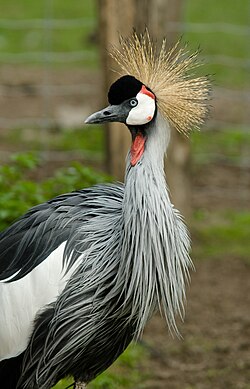
Crested crane, Balearica regulorum
Scientific classification Edit this classification
Kingdom: Animalia
Phylum: Chordata
Class: Aves
Clade: Neoaves
Order: Gruiformes
Bonaparte, 1854
Families

Some 5–10 living, see article text.

Global distribution of the cranes and allies.

The Gruiformes are an order containing a considerable number of living and extinct bird families, with a widespread geographical diversity. Gruiform means "crane form".

Traditionally, a number of wading and terrestrial bird families that did not seem to belong to any other order were classified together as Gruiformes. These include 15 species of large cranes, about 145 species of smaller crakes and rails, as well as a variety of families comprising one to three species, such as the Heliornithidae, the limpkin, or the Psophiidae. Other birds have been placed in this order more out of necessity to place them somewhere; this has caused the expanded Gruiformes to lack distinctive apomorphies. Recent studies indicate that these "odd Gruiformes" are if at all only loosely related to the cranes, rails, and relatives ("core Gruiformes").

Rails are one of the most widespread Gruiformes

Systematics

[edit]

There are only two suprafamilial clades (natural groups) among the birds traditionally classified as Gruiformes. Rails (Rallidae), flufftails (Sarothruridae), finfoots and sungrebe (Heliornithidae), adzebills (Aptornithidae), trumpeters (Psophiidae), limpkin (Aramidae), and cranes (Gruidae) compose the suborder Grues and are termed "core-Gruiformes".[4] These are the only true Gruiformes. The suborder Eurypygae includes the kagu (Rhynochetidae) and sunbittern (Eurypygidae). These are not even remotely related to Grues. The families of mesites or roatelos (Mesitornithidae), button-quails (Turnicidae), Australian plains-wanderer (Pedionomidae), seriemas (Cariamidae), and bustards (Otididae) each represent distinct and unrelated lineages. Many families known only from fossils have been assigned to the Gruiformes, e.g., Ergilornithidae, Phorusrhacidae, Messelornithidae, Eogruidae, Idiornithidae, Bathornithidae, to name just a few (see below). Though some of these are superficially 'crane-like' and the possibility exists that some may even be related to extant families traditionally included in the Gruiformes, there are no completely extinct families that can be confidently assigned to core-Gruiformes.

The traditional order Gruiformes was established by the influential German avian comparative anatomist Max Fürbringer (1888). Over the decades, many ornithologists suggested that members of the order were in fact more closely related to other groups (reviewed by Olson 1985, Sibley and Ahlquist 1990). For example, it was thought that sunbittern might be related to herons and that seriemas might be related to cuckoos. Olson and Steadman (1981) were first to correctly disband any of the traditional Gruiformes. They recognized that the Australian plains-wanderer (family Pedionomidae) was actually a member of the shorebirds (order Charadriiformes) based on skeletal characters. This was confirmed by Sibley and Ahlquist (1990) based on DNA–DNA hybridization and subsequently by Paton et al. (2003), Paton and Baker (2006) and Fain and Houde (2004, 2006). Sibley and Ahlquist furthermore removed button-quails (Turnicidae) from the Gruiformes based on large DNA–DNA hybridization distances to other supposed Gruiformes. However, it was not until the work of Paton et al. (2004) and Fain and Houde (2004, 2006) that the correct placement of buttonquails within the shorebirds (order Charadriiformes) was documented on the basis of phylogenetic analysis of multiple genetic loci. Using 12S ribosomal DNA sequences, Houde et al. (1997) were the first to present molecular genetic evidence of gruiform polyphyly, although apparently they were not convinced by it. However, on the basis of numerous additional sequence data, it has been shown decisively that the traditionally recognized Gruiformes consist of five to seven unrelated clades (Fain and Houde 2004, Ericson et al. 2006, Hackett et al. 2008).

Fain and Houde (2004) proposed that Neoaves are divisible into two clades, Metaves and Coronaves, although it has been suggested from the start that Metaves may be paraphyletic (Fain and Houde 2004, Ericson et al. 2006, Hackett et al. 2008). Sunbittern, kagu, and mesites all group within Metaves but all the other lineages of "Gruiformes" group either with a collection of waterbirds or landbirds within Coronaves. This division has been upheld by the combined analysis of as many as 30 independent loci (Ericson et al. 2006, Hackett et al. 2008), but is dependent on the inclusion of one or two specific loci in the analyses. One locus, i.e., mitochondrial DNA, contradicts the strict monophyly of Coronaves (Morgan-Richards et al. 2008), but phylogeny reconstruction based on mitochondrial DNA is complicated by the fact that few families have been studied, the sequences are heavily saturated (with back mutations) at deep levels of divergence, and they are plagued by strong base composition bias.

The kagu and sunbittern are one another's closest relatives. It had been proposed (Cracraft 2001) that they and the recently extinct adzebills (family Aptornithidae) from New Zealand constitute a distinct Gondwanan lineage. However, sunbittern and kagu are believed to have diverged from one another long after the break-up of Gondwanaland and the adzebills are in fact members of the Grues (Houde et al. 1997, Houde 2009). The seriemas and bustards represent distinct lineages within neoavian waterbirds.

Phylogeny

[edit]
Gruiformes

Psophiidae – trumpeters (3 species)

Aramidae – limpkin

Gruidae – cranes (15 species)

Rallidae – rails, crakes and coots (152 species)

Heliornithidae – finfoots (3 species)

Sarothruridae – flufftails (15 species)

Phylogeny of the extant Gruiformes.[5][6]

Gruiformes[7][8]

  • Family †Songziidae Hou, 1990
  • Suborder Grui
  • Suborder Ralli
    • Family †Aptornithidae (adzebills)
    • Family †Nesotrochidae Stervander, Chen, Feng & Mayr, 2025 (West Indian cave-rails)
    • Family Sarothruridae (flufftails)
      • Genus Mentocrex Peters, 1933 (wood rails)
      • Genus Sarothrura Heine, 1890 non Hasselt, 1823 [Corethrura Reichenbach, 1849 non Hope, 1843 non Gray, 1846; Daseioura Penhallurick, 2003] (flufftails)
    • Family Heliornithidae Gray, 1841 (finfoots and sungrebe)
      • Genus Heliopais Sharpe, 1893 (Asian/masked finfoots)
      • Genus Podica Lesson, 1831 [Rhigelura Wagler, 1832; Podoa Bonaparte, 1857 non Illiger, 1811] (African finfoots)
      • Genus Heliornis Bonnaterre, 1791 [Podoa Illiger, 1811 non Bonaparte, 1857; Plotoides Brookes, 1830; Podia Swainson, 1837] (sungrebe, American finfoot)
    • Family Rallidae (crakes, moorhens, gallinules, and rails)
      • Genus †Aletornis Marsh, 1872 [Protogrus]
      • Genus †Australlus Worthy & Boles, 2011
      • Genus †Baselrallus De Pietri & Mayr, 2014
      • Genus †Belgirallus Mayr & Smith, 2001
      • Genus †Capellirallus Falla, 1954 (snipe-billed rail)
      • Genus †Creccoides Shufeldt, 1892
      • Genus †Eocrex Wetmore, 1931
      • Genus †Euryonotus Mercerat, 1897
      • Genus †Fulicaletornis Lambrecht, 1933
      • Genus †Hovacrex Brodkorb, 1965 (Hova gallinule)
      • Genus †Ibidopsis Lydekker, 1891
      • Genus †Latipons Harrison & Walker, 1979
      • Genus †Miofulica Lambrecht, 1933
      • Genus †Miorallus Lambrecht, 1933
      • Genus †Nesophalaris Brodkorb & Dawson, 1962
      • Genus †Palaeoaramides Lambrecht, 1933
      • Genus †Palaeorallus Wetmore, 1931
      • Genus †Paraortygometra Lambrecht, 1933
      • Genus †Parvirallus Harrison & Walker, 1979
      • Genus †Pastushkinia Zelenkov, 2013
      • Genus †Quercyrallus Lambrecht, 1933
      • Genus †Rallicrex Lambrecht, 1933
      • Genus †Rhenanorallus Mayr, 2010
      • Genus †Vitirallus Worthy, 2004 (Viti Levu rails)
      • Genus †Wanshuina Hou, 1994
      • Genus †Youngornis Yeh, 1981
      • Genus †Rallidae gen. et sp. indet. [Fulica podagrica (partim)] (Barbados rail)
      • Genus †Rallidae gen. et sp. indet. (Easter Island rail)
      • Genus †Rallidae gen. et sp. indet. (Fernando de Noronha rail)
      • Genus †Rallidae gen. et sp. indet. (Tahitian "goose")
      • Genus †Rallidae gen. et sp. indet. (Bokaak "bustard")
      • Genus †Rallidae gen. et sp. indet. ('Amsterdam Island' rail)
      • Genus Rougetius Bonaparte, 1856 (Rouget's Rails)
      • Subfamily Rallinae Rafinesque, 1815
      • Subfamily Gallinulinae Gray, 1840
        • Tribe Pardirallini Livezey, 1998 [Aramidinae] (Wood-rails & allies)
          • Genus Pardirallus Bonaparte, 1856 [Ortygonax Heine, 1890]
          • Genus Mustelirallus Bonaparte, 1858 [Neocrex Sclater & Salvin, 1869; Cyanolimnas Barbour & Peters, 1927]
          • Genus Amaurolimnas Sharpe 1893 (Rufous rails; Uniform crakes)
          • Genus Aramides Pucheran, 1845
        • Tribe Gallinulini Gray, 1840 [Fulicarinae (Nitzsch, 1820) sensu Livezey, 1998]
          • Genus Tribonyx Du Bus de Gisignies, 1840 [Brachyptrallus Lafresnaye, 1840; Microtribonyx Sharpe, 1893] (native-hens)
          • Genus Porzana Vieillot, 1816 [Limnobaenus Sundevall, 1872; Phalaridion Kaup, 1829; Porzanoidea Mathews, 1912; Porzanoides Condon, 1975; Rallites Pucheran, 1845; Schoenocrex Roberts, 1922; Porphyriops Pucheran, 1845]
          • Genus Paragallinula Sangster, García-R & Trewick, 2015 (Lesser Moorhen)
          • Genus Gallinula Brisson, 1760 [Hydrogallina Lacépède, 1799; Stagnicola Brehm, 1831; Porphyriornis Allen, 1892 Pareudiastes Hartlaub & Finsch, 1871 Edithornis]
          • Genus Fulica Linnaeus, 1758 [†Palaeolimnas Forbes, 1893]
      • Subfamily Porphyrioninae Reichenbach, 1849
        • Tribe Porphyrionini Reichenbach, 1849 (Purple gallinules & swamphens)
          • Genus †Aphanocrex Wetmore, 1963 (St. Helena swamphens)
          • Genus Porphyrio Brisson, 1760 [Notornis Owen, 1848]
        • Tribe Himantornithini Bonaparte, 1856 (Bush-hens & Waterhens)
          • Genus Himantornis Hartlaub, 1855 (Nkulenga rails)
          • Genus Megacrex D'Albertis & Salvadori, 1879 (New Guinea Flightless Rails)
          • Genus Aenigmatolimnas (Striped Crakes)
          • Genus Gallicrex Blyth, 1852 [Gallinulopha Bonaparte, 1854; Hypnodes Reichenbach, 1853] (Watercocks)
          • Genus Amaurornis Reichenbach, 1853 [Erythra Reichenbach, 1853; Pisynolimnas Heine & Reichenow, 1890; Poliolimnas Sharpe, 1893] (Bush-hen)
        • Tribe Zaporniini Des Murs, 1860 (Old world crakes)
          • Genus Rallina Gray, 1846 [Euryzona Gray, 1855; Tomirdus Mathews, 1912] (chestnut-rails)
          • Genus Zapornia Stephens, 1824 [Limnocorax Peters, 1854; Limnobaenus; Corethrura Grey, 1846]
        • Tribe Laterallini Tif, 2014 (New world crakes)
          • Genus Micropygia Bonaparte, 1856 (Ocellated Crakes)
          • Genus Rufirallus (russet-crowned crake)
          • Genus Laterallus Gray, 1855 (ruddy crakes)
          • Genus Coturnicops Gray, 1855 (barred-backed crakes)
          • Genus Hapalocrex (Yellow-breasted Crakes)
          • Genus Limnocrex
          • Genus Mundia Bourne, Ashmole & Simmons, 2003 (Ascension Island Crakes)
          • Genus Creciscus Cabanis, 1857 [Atlantisia Lowe, 1923] (blackish crakes)

When considered to be monophyletic, it was assumed that Gruiformes was among the more ancient of avian lineages. The divergence of "gruiforms" among "Metaves" and "Coronaves" is proposed to be the first divergence among Neoaves, far predating the Cretaceous–Paleogene extinction event c. 66 mya (Houde 2009). No unequivocal basal gruiforms are known from the fossil record. However, there are several genera that are not unequivocally assignable to the known families and that may occupy a more basal position:

  • Propelargus (Late Eocene/Early Oligocene of Quercy, France) – cariamid or idornithid
  • Rupelrallus (Early Oligocene of Germany) – rallid? parvigruid?
  • Badistornis (Brule Middle Oligocene of Shannon County, Missouri) – aramid?
  • Probalearica (Late Oligocene? – Middle Pliocene of Florida, France?, Moldavia and Mongolia) – gruid? A nomen dubium?
  • "Gruiformes" gen. et sp. indet. MNZ S42623 (Bathans Early/Middle Miocene of Otago, New Zealand) – Aptornithidae?
  • Aramornis (Sheep Creek Middle Miocene of Snake Creek Quarries, U.S.) – gruid? aramid?
  • Euryonotus (Pleistocene of Argentina) – rallid?

Other even more enigmatic fossil birds and five living families are occasionally suggested to belong into this order, such as the proposed Late Cretaceous family Laornithidae and the following taxa:

See also

[edit]

References

[edit]
[edit]
Revisions and contributorsEdit on WikipediaRead on Wikipedia
from Grokipedia
Gruiformes is an order of birds comprising six families and 193 species, characterized by a diverse array of wetland and terrestrial forms that include small, secretive ground-dwellers and large, long-legged waders, distributed worldwide except . These birds are predominantly associated with marshes, swamps, grasslands, and forests, where they exhibit adaptations such as strong legs for wading or running, bills suited for probing or foraging in mud, and often reduced flight abilities, with many species being flightless or weak fliers on islands. The order's core members share morphological traits like a distinctive hallux (hind toe) position and leg bone structure, though it represents a polyphyletic assemblage refined through modern molecular studies. The families within Gruiformes are the flufftails (Sarothruridae, 15 species, small African forest understory birds), rails, gallinules, and coots (Rallidae, 156 species, the most diverse and widespread group, often highly cryptic in ), finfoots (Heliornithidae, 3 species, tropical riverine swimmers resembling grebes), limpkins (Aramidae, 1 species, wetland foragers known for their vocalizations), trumpeters (Psophiidae, 3 species, South American ground-dwelling forest birds), and cranes (Gruidae, 15 species, tall migratory species famous for elaborate dances and long-distance flights). This taxonomic arrangement reflects recent phylogenetic revisions that exclude former members like the and to the separate order , focusing the Gruiformes on a monophyletic core of marsh and rail-like birds. With greatest diversity in the and , the order spans from Arctic-breeding cranes to island-endemic rails, highlighting in varied habitats. Gruiformes play key ecological roles as seed dispersers, insectivores, and herbivores in ecosystems, with many serving as indicators of habitat health due to their sensitivity to drainage and . Conservation challenges are prominent, particularly for large cranes facing loss and , while numerous rail are vulnerable or endangered on oceanic islands owing to invasive predators. The order's evolutionary history traces back to the , with fossil records indicating ancient diversification among gruiform-like birds, and ongoing molecular research continues to clarify relationships within the broader clade that also includes shorebirds.

Overview

Definition and Etymology

Gruiformes is an order of birds comprising a diverse assemblage of primarily and terrestrial species, many of which are adapted to marshy or aquatic environments, including wading forms like cranes and rails. Traditionally, the order has encompassed a broad range of families exhibiting crane-like morphologies, such as long legs and necks suited for foraging in water or grasslands. However, molecular phylogenetic studies have demonstrated that Gruiformes, as historically defined, is partially polyphyletic, with some included lineages converging on similar traits rather than sharing a unique common ancestry. The name "Gruiformes" derives from the Latin words grus, meaning "crane," and forma, meaning "form" or "shape," reflecting the order's initial focus on birds resembling cranes in structure and habitat. It was coined by the ornithologist in 1854 to classify these crane-like birds within a unified taxonomic group. This order includes approximately 193 living species distributed across six families, such as Gruidae (cranes) and Rallidae (rails), with a nearly cosmopolitan presence on all continents except and the highest species diversity concentrated in tropical regions (as recognized in recent classifications, e.g., IOC World Bird List v15.1, 2025).

Diversity and Scope

Gruiformes comprise approximately 193 extant across six families, representing a diverse assemblage of birds primarily adapted to and terrestrial habitats. The family Rallidae dominates in terms of , accounting for over 140 of rails, crakes, and coots, which constitute the majority of the order's . These birds play crucial ecological roles in wetlands, contributing to avian biomass through their abundance and serving as key components of food webs as both predators and prey. For instance, many rallids forage on , helping control populations, while waterbirds in the order facilitate , promoting plant regeneration and community structure in aquatic ecosystems. Morphologically, Gruiformes display remarkable variation, ranging from diminutive, secretive rails such as the Laterallus species, which measure around 15 cm in length and inhabit dense vegetation, to imposing long-legged cranes like the (Antigone antigone), which can reach heights of up to 1.8 m. This size spectrum underscores their , with smaller forms often exhibiting cryptic behaviors for evasion in environments, while larger species like cranes rely on vigilance and flight for survival. Ecologically, they function as insectivores, consuming aquatic that influence nutrient cycling, and as seed dispersers via endozoochory, aiding the propagation of wetland flora. Additionally, species like the Clapper rail (Rallus crepitans) are valued as indicators of estuarine marsh health due to their fidelity to specific habitat conditions and sensitivity to degradation. Geographically, Gruiformes exhibit a and , occurring on all continents except , with notable concentrations of diversity in , , and where tropical wetlands abound. The order includes both highly migratory forms, such as many Gruidae species that undertake long-distance journeys between breeding and wintering grounds, and sedentary populations, particularly among the Rallidae that occupy stable systems year-round. This broad scope highlights their resilience and adaptability, though their reliance on wetlands ties their persistence to the health of these vulnerable ecosystems.

Taxonomy and Systematics

Historical Classification

The classification of Gruiformes traces its origins to the foundational work of in his (10th edition, 1758), where he grouped various wading and ground-dwelling birds, including cranes (Grus) and rails (Rallus), under the order Grallae, distinct from the more chicken-like Gallinae, based on shared morphological traits such as long legs and bills adapted for foraging in wetlands. This early arrangement reflected a broad categorization of birds by locomotion and habitat, laying the groundwork for later refinements without yet recognizing a unified gruiform order. A significant advancement came in the mid-19th century with , who in 1854 formally established the order Gruiformes in his Conspectum Generum Avium, uniting crane-like birds (such as cranes and ) with rails and related forms based on anatomical similarities in skeletal , including elongated hindlimbs and reduced wings in some taxa. Bonaparte's grouping emphasized shared characteristics like terrestrial or semi-aquatic lifestyles and included families such as Gruidae (cranes), Rallidae (rails), and Otididae (), marking a shift toward a more cohesive taxonomic unit derived from comparative morphology. By the 20th century, the order expanded under figures like Alexander Wetmore, whose 1960 classification in Smithsonian Miscellaneous Collections recognized Gruiformes as a monophyletic assemblage comprising 20 families, incorporating additional groups such as Turnicidae (buttonquails) and Cariamidae (seriemas) based on osteological and myological evidence that suggested close affinities with core gruiforms. This traditional view portrayed Gruiformes as a diverse, unified order encompassing over 200 species, with unifying traits like a and syndactylous toes, influencing standard checklists such as the American Ornithologists' Union. Morphological studies from the 1970s to 1990s began raising doubts about this , with researchers like Storrs Olson (1973) highlighting inconsistencies in skeletal features among included families, and Joel Cracraft (1981) noting the order's extreme heterogeneity in body form and ecology, which suggested potential polyphyletic origins and prompted initial reclassifications of peripheral taxa. These debates, grounded in cladistic analyses of and soft , foreshadowed further taxonomic revisions without relying on molecular data.

Modern Systematics

Molecular studies conducted after 2000 have demonstrated that the traditional order is polyphyletic, comprising several unrelated lineages that were historically grouped based on superficial morphological similarities. This realization prompted significant taxonomic revisions, narrowing the order to a monophyletic "core" aligned with the suborder Grues, which includes the families Rallidae (rails), Sarothruridae (flufftails), Heliornithidae (finfoots), Psophiidae (trumpeters), Aramidae (limpkins), and Gruidae (cranes). These revisions were driven by analyses of DNA sequences from mitochondrial and nuclear genes, which resolved interfamily relationships and confirmed the exclusivity of this core group. Key contributions include the work of Fain, Krajewski, and Houde (2007), who utilized sequences from the mitochondrial 12S rRNA gene and nuclear β-fibrinogen intron 7 to establish the phylogeny of the core Grues, resolving ambiguities such as the placement of the (Aramidae) within the . Similarly, Hackett et al. (2008) employed a phylogenomic approach with approximately 32 kilobases of nuclear DNA from 19 loci across 169 species, excluding peripheral families like Turnicidae (buttonquails, now classified in ) and Cariamidae (seriemas, placed in the separate order Cariamae). These exclusions highlighted the artificial nature of the broader historical Gruiformes and emphasized genetic evidence over morphology for defining order boundaries. Further refinements separated the Eurypygae, comprising Rhynochetidae () and Eurypygidae (), into the distinct order Eurypygiformes based on shared molecular synapomorphies identified in DNA sequence surveys. Contemporary classifications, such as those from the International Ornithological Congress (IOC) World Bird List (v15.1, 2025) and the Clements Checklist (October 2024), recognize 6 families within Gruiformes. Ongoing research continues to clarify relationships within the broader that also includes shorebirds.

Families

The order Gruiformes currently encompasses six families, comprising 193 species worldwide, with the vast majority belonging to a single highly diverse family. The family Rallidae, known as rails, gallinules, and coots, is the largest and most diverse within Gruiformes, containing 156 species that exhibit a wide range of forms, from secretive marsh-dwellers to more open-water species; many are flightless or have reduced flight capabilities, adapted to wetland and grassland habitats across all continents except . Gruidae, the cranes, includes 15 species of tall, long-legged wading birds renowned for their elaborate dances and long-distance migrations; these elegant, mostly gray or brown birds with reddish bare skin on the head are found in open wetlands and grasslands, primarily in , , , and . Sarothruridae, the flufftails and forest rails, comprises 15 of small, secretive, rail-like birds characterized by their fluffy undertail coverts and short tails; restricted to forested wetlands in and , they are ground-foraging insectivores that rarely fly. Heliornithidae, the finfoots or sungrebes, consists of three species of tropical, semi-aquatic birds with lobed toes adapted for swimming, resembling a mix of rails and grebes; they inhabit riverine forests in Central and , , and , where they forage for aquatic prey along waterways. Psophiidae, the trumpeters, includes three species of rotund, chicken-sized ground birds with strong legs for running through South American rainforests; named for their loud, trumpet-like calls, they travel in small flocks and feed on fruits and in the . Aramidae, the limpkins, is a monotypic family with a single species, the , a brownish wading with a long, curved bill specialized for extracting apple snails from mud; it scavenges and forages in shallow wetlands across the Neotropics, from to northern . Several groups formerly included in Gruiformes have been reclassified based on molecular phylogenies; for instance, the buttonquails (Turnicidae) are now placed in , while seriemas (Cariamidae) form the separate order Cariamae, and the (Rhynochetidae) and (Eurypygidae) constitute the order . Rallidae accounts for over 75% of the order's , underscoring the rails' into varied ecological niches compared to the more specialized remaining families.

Phylogeny and Evolution

Phylogenetic Relationships

Molecular phylogenies have established the core Gruiformes, referred to as Grues, as a comprising the families Rallidae (rails), Sarothruridae (flufftails), Heliornithidae (finfoots), Psophiidae (trumpeters), Aramidae (limpkins), and Gruidae (cranes). Within this , Rallidae is sister to a comprising Sarothruridae and Heliornithidae; this Ralloidea superfamily is sister to the Gruoidea superfamily, in which Psophiidae is sister to the of Aramidae + Gruidae. Recent genomic analyses, such as Stiller et al. (2024), reinforce the of Grues within the Cursorimorphae , aligning with earlier molecular phylogenies. This topology is supported by extensive genomic data, including targeted next-generation sequencing of over 390,000 bases from 198 bird species, which places Gruiformes within the higher-level clade alongside (shorebirds and allies). Key molecular evidence from DNA studies confirms the monophyly of Grues and their position in , with divergence estimates for the basal split within Grues around 51 million years ago (Ma) and the broader Gruiformes radiation spanning 60–50 Ma during the early . These estimates align with fossil-calibrated timetrees derived from Bayesian relaxed-clock methods, indicating a post-Cretaceous diversification following the K-Pg boundary. Debates persist regarding the exact placement of Eurypygae (sunbittern and ) relative to Grues, with some molecular analyses suggesting it as a sister to Grues within an expanded Gruiformes, while others, including Prum et al. (2015), position Eurypygae as sister to Aequorlitornithes outside the core Gruiformes. Additionally, potential within rails has been proposed in earlier studies, where Sarothruridae or Heliornithidae may nest within Rallidae based on limited morphological or mitochondrial data, though comprehensive nuclear phylogenies robustly support their separation as distinct families. These controversies highlight ongoing refinements in gruiform driven by increasing genomic resolution.

Fossil Record and Evolutionary History

The fossil record of Gruiformes indicates an early origin, potentially emerging in the late around 60 million years ago (Ma) during the breakup of , with strong biogeographic patterns supporting a southern continental cradle for the order. The earliest unequivocal gruiform fossils date to the Paleocene-Eocene boundary, exemplified by Pellornis mikkelseni from the Fur Formation in , dated to approximately 54 Ma, which represents a crown-group member and pushes back the timeline of gruiform diversification relative to some molecular estimates suggesting a mid-Eocene origin. This specimen highlights a rapid post-Cretaceous radiation among neoavians, with Pellornis exhibiting primitive gruiform traits such as a robust adapted for . Key early fossils further illuminate the order's Paleogene history, including the rail-like Songziidae from the early Eocene of , where nearly complete skeletons of Songzia reveal enigmatic features bridging basal gruiforms and modern rails, dated to around 53-50 Ma. In , the Messelornithidae from the Eocene Messel Pit in , such as Messelornis cristata (~47 Ma), provide abundant evidence of early rail relatives with adaptations for foraging, including elongated legs and a diet inferred from coprolites to include fruits and arthropods. Later, the extinct , giant crane-like birds reaching up to 2 meters in height, dominated from the to across , as seen in Sinoergilornis guangheensis from the late (~7 Ma) Liushu Formation in the Linxia Basin, Province, , which featured robust, flight-reduced skeletons suited to open habitats. Gruiformes boast one of the richest avian records, with nearly as many extinct families as the dozen extant or recently extinct ones, including over ten groups like the Geranoididae and Idiornithidae known primarily from North American and European deposits. Diversification accelerated during the Eocene-Oligocene transition (~40-30 Ma), coinciding with and the expansion of ecosystems that favored the order's semi-aquatic and terrestrial niches. analyses, calibrated with s like Palaeorallus from the Eocene, estimate the crown-group age of major lineages such as Rallidae at around 40.5 Ma, with intrafamilial radiations extending into the , though discrepancies persist between evidence (supporting ~50 Ma for broader crown Gruiformes) and some genomic data favoring later dates.

Physical Characteristics

Morphology and Anatomy

Gruiformes exhibit substantial morphological diversity, reflecting their adaptation to a range of terrestrial and aquatic environments, with body forms ranging from compact and rounded in rails (Rallidae) to tall and slender in cranes (Gruidae). The order encompasses a broad size spectrum, from diminutive species like the striped flufftail (Sarothrura affinis), which measures 14–15 cm in length and weighs 25–30 g, to the imposing sarus crane (Antigone antigone), which stands up to 1.8 m tall and can weigh over 7 kg. Cranes typically feature elongated legs and necks that facilitate wading in shallow waters, while rails possess shorter wings relative to body size and more rounded bodies suited to navigating dense vegetation. Bills vary notably across families: straight and tapered in cranes for probing sediments, long and slightly decurved in limpkins (Aramus guarauna) to extract snails from shells, and slender or robust in rails depending on foraging habits. Anatomically, many gruiforms display adaptations for traversal, including long, slender toes that are non-webbed in most but lobed for in coots (Fulica spp.) and finfoots (Heliornithidae). The hind toe is often reduced or elevated, as seen in cranes where it is small and raised , aiding stability on soft substrates without hindering locomotion. This reduction is particularly pronounced in flightless rails, enhancing efficiency in marshy terrains. Wings across the order generally have a low , supporting bursts of flight rather than sustained soaring, and tails are short in most taxa. The , the avian vocal organ, supports complex calls in like cranes, where an elongated and sometimes coiled trachea amplifies resonant tones for long-distance communication. Skeletal features underscore the order's uniformity amid diversity, with osteological traits such as robust bearing unfused uncinate processes in many forms, facilitating flexible thoracic movement during or flight. is predominantly cryptic in browns and grays for concealment in habitats, though some display brighter facial shields or legs. These traits collectively enable gruiforms to exploit varied ecological niches while maintaining shared structural foundations.

Physiological Adaptations

Gruiformes display a range of physiological adaptations that enhance locomotion, particularly in and terrestrial environments. Many species possess robust hindlimb musculature and elongated legs that facilitate wading, running, and sustained walking. In cranes (family Gruidae), powerful leg muscles support high-stepping gaits and long-distance traversal of open grasslands and marshes, enabling efficient energy use during and migration. Rails (family Rallidae), such as the (Fulica americana), exhibit specialized leg muscles that flex and extend the and digits, optimizing propulsion for both terrestrial running through dense vegetation and aquatic paddling. Flightlessness, a recurrent in island-dwelling rails, involves physiological shifts prioritizing function over flight. These birds reduce pectoral muscle mass and sternal size while developing stronger femoral muscles and wider pelves, which enhance running speed and stability on land. For instance, in multiple rail lineages has led to smaller flight muscles and more robust , reallocating energy from aerial escape to terrestrial evasion in predator-poor island settings. Sensory physiology in Gruiformes supports navigation and prey detection in varied habitats. (Aramus guarauna) employ tactile probing with their curved bills to locate and extract apple snails from and shells, enhancing detection efficiency in opaque substrates. Metabolic adaptations enable endurance in migratory and osmoregulatory challenges. Migratory cranes, like cranes (Antigone canadensis), accumulate substantial fat reserves—up to approximately 25% of body mass—through hyperphagia, fueling long flights via efficient and sustained aerobic capacity. Black-necked cranes (Grus nigricollis) shift to carbohydrate-dominant metabolism post-breeding, optimizing energy storage for trans-Himalayan migrations exceeding 5,000 km. Some semi-marine Gruiformes, including the (Fulica americana) and clapper rail (Rallus crepitans), possess functional supraorbital salt glands that excrete hypertonic NaCl solutions, maintaining ionic balance when consuming brackish or seawater.

Ecology and Behavior

Habitats and Distribution

Gruiformes exhibit a nearly , spanning from high-latitude temperate zones in the —where migratory species like the (Grus americana) breed in wetlands—to extensive tropical and subtropical regions across the globe. The order is absent from and certain arid deserts, but hotspots of diversity occur in the Neotropics (e.g., Amazonian wetlands), African savannas and floodplains, and Australasian islands. Some families like cranes undertake long-distance migrations between breeding grounds in northern marshes and wintering sites in southern grasslands. Preferred habitats vary markedly among families, with the diverse Rallidae (rails, crakes, and coots) predominantly occupying wetlands, marshes, and riverine corridors worldwide, including dense reed beds and shallow aquatic zones that provide cover and foraging opportunities. In contrast, cranes (Gruidae) favor open grasslands, prairies, and freshwater marshes, often in expansive landscapes that support their tall stature and social displays, as seen in the (Grus canadensis) across North American plains. The (Aramus guarauna) inhabits swampy, vegetated wetlands of . A notable pattern in Gruiformes distribution is the prevalence of island endemism, particularly among rails, where isolation has driven repeated evolution of flightlessness in over 30 species, many of which are now extinct due to human impacts on oceanic islands. Examples include the adzebills (Aptornithidae) of New Zealand and numerous rail taxa on Pacific atolls, highlighting how archipelagoes like those in Australasia and the Indian Ocean served as evolutionary traps for these ground-dwelling birds. This insular radiation underscores the order's adaptability to fragmented, predator-poor environments but also its vulnerability to colonization.

Feeding Ecology

Gruiformes exhibit diverse diets that reflect their varied habitats and morphologies across families. Members of the Rallidae (rails, gallinules, and coots) are predominantly omnivorous, consuming a mix of plant material such as seeds, roots, and aquatic vegetation alongside animal prey including small like and crustaceans, as well as , frogs, and occasionally small birds. In contrast, cranes of the Gruidae primarily forage on herbivorous items like roots, tubers, grains, and rhizomes, supplemented by , small vertebrates, and mollusks, particularly during breeding seasons when aquatic form a significant portion of their intake. The (Aramidae) displays a highly specialized diet dominated by freshwater mollusks, especially apple snails (Pomacea spp.), which can comprise over 90% of its consumption, with opportunistic intake of , frogs, , and worms during periods of environmental stress like droughts. Foraging behaviors in Gruiformes are adapted to their semi-aquatic or terrestrial environments, often involving precise bill usage to access hidden resources. Cranes employ a probing technique, using their long, decurved to penetrate or in wetlands, extracting buried tubers, , or small vertebrates in a rhythmic "probe-step-probe" pattern that allows efficient coverage of foraging areas. Trumpeters (Psophiidae) scratch the forest floor litter with their feet, similar to gallinaceous birds, to uncover fallen fruits, seeds, arthropods, and occasionally small vertebrates or carrion, often in groups while following swarms or troops for opportunistic feeding. Many rails, particularly those in tidal or marshy habitats, engage in nocturnal or crepuscular to exploit low tides or reduced predation risk, probing shallow or for invertebrates and seeds under cover of darkness. Ecologically, Gruiformes play key roles in wetland and forest dynamics through their feeding activities. As seed predators, rails and cranes consume substantial quantities of grains and fruits, helping regulate populations and preventing excessive vegetative overgrowth in marshes and grasslands, which maintains diversity for other . They also serve as important prey for predators such as raptors, mammals, and reptiles, contributing to trophic structure in ecosystems. Additionally, their foraging disturbs sediments and facilitates nutrient cycling by incorporating from consumed prey and plants back into the through excretion and bill-probing, enhancing productivity and supporting microbial processes.

Reproduction and Social Behavior

Gruiformes exhibit diverse mating systems, ranging from strict in cranes to cooperative polyandry in some rails and other families. In the Gruidae (cranes), pairs form lifelong monogamous bonds, often established through extended social interactions on wintering grounds or during migration. involves elaborate dances featuring synchronized jumping, bowing, wing-spreading, and tossing of vegetation or sticks, which strengthen pair bonds and synchronize breeding activities; these displays are performed year-round but intensify before nesting. In contrast, many Rallidae (rails) are socially monogamous, with pairs defending breeding territories, though some species like the (Porphyrio porphyrio) engage in where multiple males assist a single female. Nesting habits in Gruiformes are adapted to or terrestrial environments, with most species constructing simple ground or platform nests from vegetation. Cranes build large mounds of grasses, sedges, or reeds in shallow marshes or open s, often 1-2 meters in diameter, with both sexes contributing to construction over 1-7 days. Rails typically nest in concealed ground depressions lined with leaves or reeds near water, such as crotches in the chestnut rail (Eulabeornis castaneoventris) or shallow twig cups in the red-necked crake (Rallina tricolor). Clutch sizes generally range from 2 to 6 eggs, with cranes laying 1-3 (most often 2) buffy or bluish eggs, and rails producing 3-7, as seen in the (Gallirallus owstoni) with 3-4 eggs. Eggs are incubated for 20-31 days depending on the family, with minimal nest construction in arboreal species like trumpeters, which use natural tree cavities. Parental care is predominantly biparental across Gruiformes, with variations in helper involvement. In cranes, both parents share incubation duties equally during the day and brood precocial chicks, which hatch covered in down and can walk immediately; parents lead and feed the young for up to 10 months, teaching skills through bill-touching behaviors. Rail chicks are similarly precocial and nidifugous, leaving the nest soon after hatching, with both parents providing food and protection, as observed in the red-necked crake where adults continue feeding post-fledging. In the Psophiidae (trumpeters), cooperative polyandry involves a dominant female laying 2-4 eggs in a group setting, with all adult males (3-12 per group) copulating and sharing incubation (23-29 days) and chick-rearing; precocial young are fed entirely by adults for the first three weeks before self-. Social structures in Gruiformes vary from solitary to highly gregarious, influencing breeding dynamics. Many rails, such as the (Canirallus cuvieri), are solitary or pair-based outside breeding, with minimal group interactions beyond territorial defense. Trumpeters form stable, gregarious groups of 4-13 individuals that defend year-round territories through vocal and physical confrontations, with linear dominance hierarchies determining breeding roles and chick defense.

Vocalizations and Migration

Vocalizations in Gruiformes vary widely across families, reflecting their diverse habitats and behaviors. In cranes (family Gruidae), calls are often loud and far-carrying, such as the penetrating trumpeting or calls used for territorial defense and alarm. For instance, sandhill cranes (Antigone canadensis) produce rattling calls during flight and interactions, while whooping cranes (Grus americana) emit a single-note lasting less than one second when startled. These vocalizations are amplified by elongated tracheae, with the whooping crane's reaching up to 147 cm in males, enabling sounds to travel over long distances in open landscapes. In contrast, rails (family Rallidae) produce more secretive, low-amplitude sounds adapted to dense vegetation, including whistles, clucks, and grunts for communication within marshes. The (Rallus limicola) gives repeated "tick-it" or "kick-er" calls at dawn and dusk, along with piglike grunts for territory defense, while king rails (Rallus elegans) utter abrupt "kek" notes and descending grunt series as alarm calls. Yellow rails (Coturnicops noveboracensis) add cackles, squeaks, and wheezes during nesting, often at night. These subtle vocalizations facilitate close-range interactions without attracting predators. Many gruiform use duet calls for pair bonding and coordination, a prominent in both cranes and rails. Crane pairs perform synchronized calls, involving complex sequences of purrs, moans, and trumpets accompanied by specific postures, which strengthen bonds and signal territory; these emerge around 2-3 years of age and vary by , such as the crane's pattern of two to three female calls per male response. Similarly, Virginia rails produce duetting grunts to initiate breeding, enhancing in social contexts. Migration patterns in Gruiformes differ markedly between families, with cranes undertaking extensive long-distance journeys while rails exhibit more localized movements. Cranes such as the migrate annually over 4,000 km between breeding grounds in and wintering sites in , covering up to 800 km per day in spring for experienced pairs, often in family groups using established flyways. Common cranes (Grus grus) follow three main European routes to winter quarters in Iberia and , with Finnish breeders traveling in multi-stage flights exceeding typical distances for southern populations. Demoiselle cranes (Anthropoides virgo) similarly cover thousands of kilometers along Central Asian flyways, with adults and juveniles showing comparable spring migration durations. Rails generally show partial, short-distance, or altitudinal migration rather than full long-distance treks, influenced by their weaker flight capabilities. Northern populations of the migrate nocturnally to southern U.S. and Mexican wintering areas, while southern ones remain resident year-round. King rail inland breeders move southward, but coastal groups are largely non-migratory, with some local movements following seasonal wetland changes. Overall, most rails are non-migratory or undertake limited dispersals, unlike the obligatory migrations of cranes. These vocalizations and migrations serve key functions in survival and reproduction. Trumpeting calls in cranes aid navigation during migrations by maintaining group cohesion over vast distances, while duet songs reinforce pair bonds essential for coordinated breeding and chick-rearing. In rails, secretive whistles help locate mates in obscured environments, supporting social behaviors like territorial defense.

Conservation

Major Threats

Gruiformes face significant threats from loss, primarily driven by human activities such as drainage for agricultural expansion, which has severely impacted rail species that depend on marshy environments. For instance, the draining of wetlands has led to population declines in like the Yellow Rail, where conversion for farming remains the dominant pressure. These alterations exacerbate vulnerabilities in with restricted distributions, such as island-endemic rails. Hunting and direct persecution pose additional risks, particularly for larger-bodied Gruiformes. Trumpeters, including the Black-winged Trumpeter, are heavily targeted in the bushmeat trade across Amazonian regions, where intense subsistence hunting sustains high mortality rates due to their visibility and size. Migratory species like cranes encounter collisions with infrastructure, such as power lines and aircraft, during travel; for example, the suffers significant losses from and wire strikes along migration corridors. Invasive species represent a critical danger on islands, where introduced predators like cats, rats, and dogs have driven multiple rail extinctions since human arrival. The Tahiti Rail vanished in the mid-19th century due to predation by cats and rats, while the Rodrigues Rail succumbed to similar invasive pressures combined with hunting. further compounds these issues by altering migration routes and ; for the , warming temperatures have shifted arrival and departure timings on breeding grounds, potentially disrupting breeding success and increasing exposure to other threats. Overall, these pressures have resulted in approximately 27 rail species becoming extinct in recent centuries, accounting for the majority of Gruiform losses since 1600.

Conservation Status and Efforts

The conservation status of Gruiformes varies across families, but a significant proportion of species—approximately 20%—are classified as threatened with extinction on the , including Vulnerable, Endangered, and Critically Endangered categories. For instance, the (Grus americana) is listed as Endangered due to its small global population of around 850 individuals as of 2025. Many rail species in the family Rallidae, which comprises the majority of Gruiformes diversity, are , reflecting insufficient information on their populations and threats, particularly for secretive tropical species. Conservation efforts for Gruiformes emphasize habitat protection, captive breeding, and reintroduction programs. Protected areas such as Everglades National Park in Florida provide critical wetland habitats for rail species like the black rail (Laterallus jamaicensis), supporting surveys and management to mitigate habitat loss. Captive breeding initiatives, led by organizations like the International Crane Foundation, have been pivotal for cranes, producing individuals for release and maintaining genetic diversity in species like the whooping crane. Reintroduction efforts have succeeded for the Guam rail (Gallirallus owstoni), which was declared Extinct in the Wild in 1987 but has been re-established on Rota Island through releases from captive populations, achieving natural breeding outside enclosures by 2020. Despite these advances, significant knowledge gaps persist, particularly for understudied tropical Gruiformes species in remote island and forest habitats, where population trends and remain poorly documented. Recent studies since 2020 highlight the need for enhanced genetic monitoring to inform management, as many rails and other taxa lack baseline data for effective conservation planning. Notable successes include the recovery of (Antigone canadensis) populations, which have increased from near-extirpation in parts of to over 700,000 individuals continent-wide as of 2025, largely due to regulated hunting seasons and habitat restoration that balance with protection.

References

Add your contribution
Related Hubs
User Avatar
No comments yet.