Hubbry Logo
CampylobacteralesCampylobacteralesMain
Open search
Campylobacterales
Community hub
Campylobacterales
logo
8 pages, 0 posts
0 subscribers
Be the first to start a discussion here.
Campylobacterales
Campylobacterales
from Wikipedia

Campylobacterales
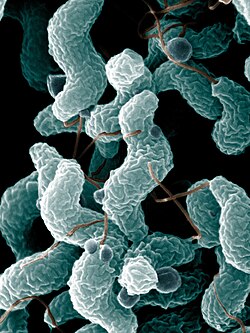
Campylobacter jejuni bacteria
Scientific classification Edit this classification
Domain: Bacteria
Kingdom: Pseudomonadati
Phylum: Campylobacterota
Class: "Campylobacteria"
Waite et al. 2017
Order: Campylobacterales
Garrity et al. 2006
Families and genera
  • Arcobacteraceae
  • Campylobacteraceae
  • Helicobacteraceae
  • Hydrogenimonadaceae
  • Nitratiruptoraceae
  • Sulfurimonadaceae
  • Sulfurospirillaceae
  • Sulfurovaceae
  • "Thiobarbaceae" Assie et al. 2020
  • Thiovulaceae

The Campylobacterales are an order of Campylobacterota which make up the epsilon subdivision, together with the small family Nautiliaceae. They are Gram-negative. Most of the species are microaerophilic.[1]

Molecular signatures

[edit]

Comparative genomic analysis has led to the identification of 49 proteins which are uniquely found in virtually all species of the order Campylobacterales. Additionally, two conserved signature indels have been identified which, along with the proteins, serve as molecular markers for the order. The indels are a three-amino-acid insertion in the B protein of the Uvr ABC system, and a two-amino-acid deletion in phenylalanyl-tRNA synthetase.[2]

Phylogeny

[edit]

The currently accepted taxonomy is based on the List of Prokaryotic names with Standing in Nomenclature (LPSN)[3] and National Center for Biotechnology Information (NCBI)[4]

16S rRNA based LTP_10_2024[5][6][7] 120 marker proteins based GTDB 09-RS220[8][9][10]
Thiovulaceae

Thiovulum

Sulfurimonadaceae
Nitratiruptoraceae

Nitrosophilus alvini

Nitrosophilus species-group 2

Nitratiruptor

Hydrogenimonadaceae

Hydrogenimonas

Sulfurovaceae

Unassigned genera:

See also

[edit]

References

[edit]
Revisions and contributorsEdit on WikipediaRead on Wikipedia
from Grokipedia
Campylobacterales is an order of belonging to the class Campylobacteria within the phylum , comprising primarily Gram-negative, spiral-shaped or curved rods that are motile via polar flagella and typically microaerophilic or anaerobic in their oxygen requirements. These exhibit diverse metabolic capabilities, including chemolithoautotrophy and the use of various donors such as , , and , as well as acceptors like oxygen, , and fumarate, often relying on menaquinones for transport. Members of this order are ubiquitous in environments ranging from deep-sea hydrothermal vents and sulfidic sediments to the gastrointestinal tracts of animals and humans, where they play roles in nutrient cycling, sulfur oxidation, and . The taxonomic structure of Campylobacterales includes key families such as Campylobacteraceae, Helicobacteraceae, and Arcobacteraceae, encompassing over 50 validly described species across multiple genera. Within Campylobacteraceae, the genus is prominent, with species like C. jejuni and C. coli recognized as leading causes of bacterial worldwide, transmitted primarily through contaminated , water, and . These pathogens invade intestinal epithelial cells, producing toxins and triggering inflammatory responses that lead to symptoms including diarrhea, fever, and abdominal pain. Similarly, the Helicobacteraceae family features , a microaerophilic spiral bacterium that colonizes the mucosa, contributing to chronic , peptic ulcers, and increased gastric cancer risk through urease-mediated ammonia production and immune evasion strategies. Beyond their , Campylobacterales demonstrate ecological versatility; for instance, genera like Sulfurovum and Sulfurimonas in related families dominate chemosynthetic communities at hydrothermal vents, oxidizing compounds for energy. Genomic analyses reveal compact genomes (typically 1.5–2.5 Mb) with streamlined electron transport chains adapted for low-oxygen niches, highlighting evolutionary adaptations to fluctuating conditions. is a growing concern, particularly in species, driven by mechanisms such as efflux pumps and point mutations, complicating treatment of infections. Ongoing research emphasizes the order's role in the , zoonotic transmission, and environmental cycling, underscoring the need for integrated surveillance and genomic surveillance to mitigate risks.

Taxonomy and Classification

Definition and Etymology

Campylobacterales is an order of bacteria classified within the domain Bacteria, kingdom Pseudomonadati, phylum Campylobacterota, and class Campylobacteria. This taxonomic placement reflects the modern reorganization of prokaryotic nomenclature, where the order serves as the type order for its class. The name Campylobacterales derives from the genus Campylobacter, the nomenclatural type of the order, which originates from the Greek words kampylos (curved) and bakterion (small rod or staff), alluding to the distinctive curved or spiral rod-shaped morphology of its principal members. The order was formally established in 2006 by Garrity et al. in the second edition of Bergey's Manual of Systematic Bacteriology, based on phylogenetic analyses of 16S rRNA gene sequences that delineated a cohesive group distinct from other proteobacterial orders. Campylobacterales encompasses a diverse array of that were historically assigned to the epsilon subdivision of the Proteobacteria, but have since been reclassified into the independent Campylobacterota to better reflect their evolutionary divergence. This reclassification, validated in 2021, highlights the group's unique genomic and physiological traits, including a tendency toward microaerophilic growth conditions.

Historical Development

The earliest observations of bacteria now recognized as belonging to the genus Campylobacter date back to 1886, when described spiral or comma-shaped bacilli in the stool samples of infants who had died from diarrheal diseases, though he was unable to culture them using contemporary methods. These organisms were initially overlooked as non-culturable forms and not linked to specific pathogens. Subsequent isolations from animal sources, such as aborted sheep fetuses in 1906 by McFadyean and Stockman in the , further documented similar vibrio-like bacteria associated with veterinary diseases, but their taxonomic placement remained unclear for decades. The Campylobacter was formally established in 1973 by Marguerite Sebald and Lucien Véron, who conducted a comprehensive taxonomic study of microaerophilic, curved, vibrio-like , designating Campylobacter fetus (previously Vibrio fetus) as the and providing a neotype strain to resolve nomenclatural ambiguities. This built on earlier work reclassifying related species from the genus Vibrio. A pivotal milestone came in 1977, when Martin Skirrow reported outbreaks of human definitively linked to Campylobacter jejuni, elevating its recognition as a major enteric pathogen and spurring intensive research into its epidemiology and isolation techniques. Initially, Campylobacter species were provisionally grouped within the class Epsilonproteobacteria, proposed in the late based on early rRNA sequencing data that highlighted their phylogenetic divergence from other proteobacterial classes. The order Campylobacterales was formally erected in 2006 by Garrity and colleagues, utilizing 16S rRNA gene phylogeny to delineate it within the , encompassing families such as Campylobacteraceae, Helicobacteraceae, and Nautiliaceae based on shared molecular markers. This elevation reflected accumulating evidence from the , including the first complete sequence of C. jejuni in , which revealed unique genomic features like hypervariable plasticity regions and confirmed the epsilon group's metabolic and phylogenetic distinctness from core proteobacteria through comparative analyses. Further genomic studies in the mid- reinforced this separation, identifying conserved signature proteins exclusive to the group and supporting its deep-branching position. In 2017, Waite et al. proposed a major reclassification based on whole-genome phylogenomics, elevating the epsilon group to the novel phylum Epsilonbacteraeota (later emended to ) and renaming the class Campylobacteria to reflect its basal divergence from other Proteobacteria, driven by evidence of distinct mechanisms, membrane lipid compositions, and respiratory chains. This revision underscored how genomic data had transformed the taxonomic framework, distinguishing Campylobacterales from superficially similar bacterial lineages.

Morphology and Physiology

Cellular Structure

Members of the order Campylobacterales are characterized by a distinctive curved rod morphology, typically appearing as comma-shaped, spiral, or S-shaped cells measuring 0.2–0.8 μm in width and 0.5–5 μm in length. These bacteria are motile, propelled by a single polar unsheathed or, in some cases, bipolar tufts of flagella, enabling a characteristic corkscrew-like movement that facilitates navigation through viscous environments such as . This helical form is maintained by the underlying layer and contributes to their in host-associated habitats. The cell wall of Campylobacterales follows the typical Gram-negative architecture, featuring a thin layer in the periplasmic space between the inner cytoplasmic membrane and the outer membrane. The outer membrane contains lipooligosaccharide (LOS) rather than the full () found in many other , as LOS lacks the repeating O-antigen chain, which influences host interactions and immune evasion. Some species produce mucoid capsules that envelop the cell, providing protection against environmental stresses and host defenses. Internally, Campylobacterales possess a single circular with a ranging from approximately 1.5 to 2.5 Mb, encoding essential functions for their lifestyle. Many strains across the order harbor plasmids, particularly those conferring resistance and other adaptive traits, though some lack them. The includes 70S ribosomes and other basic prokaryotic components, with genomic adaptations such as specialized respiratory enzymes supporting their microaerophilic nature by optimizing low-oxygen metabolism. These structural features collectively enable survival in oxygen-limited, host-derived niches.

Growth and Metabolism

Members of the order Campylobacterales exhibit primarily microaerophilic growth requirements, thriving in atmospheres with 5-10% oxygen and 5-10% , while displaying sensitivity to ambient atmospheric oxygen levels (21%) due to limitations in their machinery, which generates under higher oxygen tensions. Some species within the order, such as certain Arcobacter strains, demonstrate aerotolerance, enabling survival and limited growth in aerobic conditions, whereas others, including members of the genus Sulfurovum, can grow anaerobically by utilizing alternative electron acceptors like , fumarate, or compounds. Optimal growth temperatures generally range from 30°C to 42°C, with many human-associated pathogens achieving peak rates near 37°C to align with host body temperature. Members of the order Campylobacterales exhibit diverse metabolic strategies. Host-associated genera like and are chemoorganotrophs that derive energy and carbon primarily from (e.g., aspartate, glutamate), organic acids (e.g., , lactate, pyruvate), and occasionally molecular , reflecting their adaptation to nutrient-scarce environments like animal intestines; they generally lack complete glycolytic pathways and cannot efficiently metabolize common carbohydrates such as glucose or . In contrast, environmental genera such as Sulfurovum and Sulfurimonas are chemolithoautotrophs that oxidize reduced compounds (e.g., , ) for energy and fix via the reductive tricarboxylic acid cycle. Certain taxa produce as a metabolic byproduct through the dissimilatory reduction of compounds like or , which serves as an electron sink in and contributes to their distinctive biochemical profile. Respiration in Campylobacterales is mediated by a branched featuring menaquinones and the , which facilitates oxygen reduction under microaerobic conditions to generate a proton motive force for ATP synthesis via . Most species lack catalase activity, relying instead on and alkyl reductase to detoxify , which underscores their vulnerability to and necessitates controlled oxygen environments for cultivation. Flagellar , powered by this proton motive force, enhances nutrient acquisition in viscous or heterogeneous media.

Phylogeny and Molecular Features

Evolutionary Relationships

Campylobacterales represents a deep-branching order within the class Campylobacteria of the phylum , forming a to the order Nautiliales, as established by phylogenomic analyses of 120 concatenated protein markers and 16S/23S rRNA genes across thousands of bacterial genomes. This reclassification separates Campylobacteria from the broader Proteobacteria phylum, highlighting its distinct evolutionary trajectory with an ancestral thermophilic, autotrophic chemolithotroph . These analyses confirm the order's despite extensive genomic rearrangements and niche adaptations, with ongoing refinements in databases like the Genome Taxonomy Database (GTDB) as of 2025 supporting the of . Phylogenetic evidence supporting the monophyly of Campylobacterales derives from 16S rRNA gene sequences exhibiting 85-95% similarity within the order, alongside whole-genome phylogenies from the Genome Taxonomy Database (GTDB) and NCBI Taxonomy that robustly cluster Campylobacteria genomes as a cohesive distinct from other bacterial groups. Within Campylobacterales, ingroup diversity reveals Arcobacteraceae occupying a basal position, with Campylobacteraceae and Helicobacteraceae branching as more derived families, as inferred from concatenated protein trees and 16S rRNA phylogenies. Genera such as Thiovulum serve as outgroups in these reconstructions, underscoring the order's internal stratification. Signature proteins further corroborate these relationships, though detailed markers are addressed elsewhere.

Diagnostic Signatures

Diagnostic signatures for the order Campylobacterales include specific molecular markers identified through comparative genomic analyses that distinguish this group from other bacterial orders. These markers encompass conserved signature (CSIs) and unique signature proteins, which are exclusive to members of Campylobacterales and provide reliable tools for taxonomic identification and phylogenetic validation. Two key CSIs are present in all sequenced Campylobacterales species. A 2-amino-acid deletion occurs in the beta subunit of phenylalanyl-tRNA synthetase (PheT), an essential for protein synthesis, and this is flanked by conserved regions, ensuring its specificity to the order. Additionally, a 3-amino-acid insertion is found in the UvrC protein, the C subunit of the ABC excinuclease system involved in for DNA damage response; this insertion is also unique to Campylobacterales and absent in other proteobacterial orders. These CSIs, identified via alignments of multiple protein sequences, serve as synapomorphies confirming the of the order. Comparative genomics has revealed 49 conserved signature proteins that are uniquely present in nearly all members of Campylobacterales, such as Campylobacter jejuni, Helicobacter pylori, and Wolinella succinogenes. These proteins exhibit high sequence conservation and are involved in critical cellular processes, including membrane transport (e.g., TonB-dependent transporters and lipoproteins for nutrient uptake) and stress response (e.g., oxidoreductases aiding adaptation to oxidative or environmental stresses). Identified through BLAST searches and phylogenetic analyses of over 100 bacterial genomes, these signature proteins offer potential targets for diagnostics and further functional studies. Genomic traits further characterize Campylobacterales, with genomes typically ranging from 1.6 to 2.2 Mb in size (average approximately 1.8 Mb) and G+C contents of 30-45%, reflecting adaptations to microaerophilic or anaerobic niches. Type IV secretion systems (T4SS), which facilitate protein or DNA translocation across membranes, are prominently featured in pathogenic clades such as and species, often encoded on plasmids or genomic islands to enhance through effector delivery. In contrast, these systems are generally absent in environmental clades like Wolinella and Sulfurimonas, highlighting evolutionary divergence in host interaction strategies.

Families and Genera

Composition of Families

The order Campylobacterales encompasses seven families, as proposed in the 2017 reclassification and delineated by authoritative taxonomic databases such as the List of Prokaryotic names with Standing in Nomenclature (LPSN) and the NCBI Taxonomy. These families exhibit considerable diversity in ecological niches, from pathogenic associations with animal and human hosts to chemolithoautotrophic lifestyles in extreme environments like deep-sea hydrothermal vents. Classification within Campylobacterales is primarily based on phylogenetic analysis of 16S rRNA gene sequences, typically employing a 95% similarity cutoff for family delineation, supplemented by whole-genome comparisons, fatty acid profiles, and multilocus sequence typing (MLST) to resolve boundaries. Several families are monotypic or oligotypic, reflecting their specialized evolutionary adaptations. This structure is current as of 2025, within the phylum Campylobacterota (formerly Epsilonbacteraeota). The core pathogenic and host-associated families include Campylobacteraceae, Helicobacteraceae, and Arcobacteraceae. Campylobacteraceae primarily comprises gut-associated , many of which are microaerophilic and implicated in zoonotic infections, with genera like demonstrating spiraled morphology and flagellar motility. Helicobacteraceae features gastric symbionts and pathogens, characterized by production and helical cells adapted to acidic environments, including genera such as and Wolinella. Arcobacteraceae encompasses opportunistic, often marine-derived with versatile , including some capable of autotrophic growth via the reverse tricarboxylic acid cycle; genera like Arcobacter are aerotolerant and associated with both environmental and clinical isolates. Environmental families dominate the remaining composition, highlighting the order's chemolithotrophic diversity. Sulfurospirillaceae includes microaerophilic hydrogen- and formate-oxidizing bacteria, such as Sulfurospirillum, which reduce under anaerobic conditions. Thiovulaceae consists of motile, -oxidizing genera like Thiovulum, thriving in sulfidic sediments and forming multicellular aggregates. Sulfurovaceae features non-motile, microaerophilic epsilonproteobacteria like Sulfurovum and Nitratifractor, specialized in oxidation coupled to oxygen or reduction in vent ecosystems. Nitratiruptoraceae is monotypic, containing Nitratiruptor, a hydrogen-oxidizing, -reducing bacterium from hydrothermal fields, distinguished by its divergent 16S rRNA phylogeny. This family-level composition underscores the order's bifurcation between host-pathogenic lineages and free-living, sulfur-cycling specialists, with taxonomic boundaries refined through genomic signatures like conserved insertion-deletions in proteins.

Notable Genera

The order Campylobacterales encompasses a diverse array of genera within the class Epsilonproteobacteria (now also referred to as ), with notable representatives spanning pathogenic, commensal, and environmental niches. These genera are characterized by their Gram-negative, often spiral or curved morphology, microaerophilic or anaerobic , and flagellar , adapting them to varied ecosystems from animal intestines to deep-sea vents. The Campylobacter, belonging to the family Campylobacteraceae, is one of the most prominent, comprising approximately 33 validly described species as of 2024, including C. jejuni and C. coli as key representatives. These are typically S-shaped or spiral rods, exhibiting microaerophilic growth and a preference for nutrient-rich environments, with distinguishing features such as resistance to certain antibiotics and the ability to reduce fumarate under anaerobic conditions. Helicobacter, assigned to the family Helicobacteraceae, includes more than 40 species, with H. pylori serving as the and a well-studied example of its helical, urease-producing members. This genus features Gram-negative, motile rods with multiple polar flagella, , and asaccharolytic , enabling colonization in low-oxygen settings. Arcobacter, in the family Arcobacteraceae, consists of approximately 34 species, such as A. butzleri, and is noted for its aerotolerant, Gram-negative, curved rods capable of growth across a broad temperature range (15–37°C). These organisms display versatile metabolic capabilities, including nitrate reduction, and are distinguished by their environmental resilience compared to related genera. Among environmental genera, Wolinella (family Helicobacteraceae) represents anaerobic, Gram-negative rods associated with oral and gastrointestinal , with like W. succinogenes exemplifying fumarate reduction and oxidation as key metabolic traits; the genus includes fewer than five described . Sulfurovum (Sulfurovaceae) comprises chemolithoautotrophic, -oxidizing adapted to hydrothermal vents, featuring motile rods that utilize and reduced compounds for energy, with around 10 identified to date. Thiovulum (Thiovulaceae) includes -oxidizing, colorless forming veil-like mats in marine sediments, characterized by their large, ovoid cells and via flagella; it has a handful of , including T. majus. Overall, Campylobacterales harbor approximately 150 validly described across its genera as of 2025, with additional unassigned or candidate taxa like Nitrosophilus (in the family Nitratiruptoraceae), which includes ammonia- and hydrogen-oxidizing chemolithoautotrophs from deep-sea vents, highlighting ongoing taxonomic expansions.

Ecology and Distribution

Environmental Habitats

Members of the order Campylobacterales are ubiquitous in various aquatic and soil environments, where they play key roles in nutrient cycling. They are particularly abundant in freshwater, , and sediments, often thriving in microaerophilic or anaerobic conditions with fluctuating potentials. For instance, genera such as Arcobacter are frequently detected in polluted aquatic systems, including raw sewage, wastewater influents, and surface waters contaminated by fecal matter, with pooled prevalence rates exceeding 90% in untreated effluents and around 78% in samples. Similarly, Thiovulum species inhabit sulfidic marine sediments, forming conspicuous veil-like structures at the oxic-anoxic interface in coastal areas such as bays and fjords, where they aggregate in response to oxygen-sulfide countergradients and contribute to oxidation. In extreme environments, Campylobacterales members exhibit remarkable adaptability, particularly in deep-sea hydrothermal vents and geothermal systems. Genera like Sulfurovum and Nautilia dominate chemosynthetic communities in these vents, utilizing (H₂S) and elemental (S⁰) as donors for generation, often coupled with oxygen or reduction, enabling in high-temperature (30–45°C), high-pressure settings with steep geochemical gradients. Sulfurospirillum species are prevalent in anaerobic sediments and geochemically dynamic subsurface environments, where they perform mixotrophic growth on inorganic donors like and , facilitating carbon and nutrient cycling in low-oxygen niches such as CO₂-rich subsurface fluids and freshwater sediments. Survival in these diverse habitats is enhanced by adaptive strategies, including biofilm formation on abiotic surfaces, which allows persistence in low-nutrient conditions and protects against environmental stressors. For example, forms denser biofilms under atmospheric oxygen exposure compared to microaerophilic settings, correlating with increased resistance and extended viability outside optimal conditions. Arcobacter species similarly produce biofilms that aid adhesion in fluctuating oxygen environments, contributing to their widespread distribution. Overall, the global dissemination of Campylobacterales is facilitated by water cycles, enabling colonization across continents via rivers, oceans, and flows.

Host Interactions

Members of the order Campylobacterales commonly act as commensals in the gastrointestinal and oral microbiomes of various animal hosts, including birds and mammals. Campylobacter jejuni, for example, establishes persistent, asymptomatic colonization in the intestines of , such as chickens, where it forms part of the normal gut flora without eliciting disease symptoms in the birds. Studies have reported high rates of Campylobacter species in broiler flocks, often exceeding 70% and reaching up to 100% near slaughter age, highlighting their role as stable residents in avian intestinal ecosystems. Similarly, Wolinella succinogenes is a component of the human oral , frequently isolated from gingival crevices and periodontal sites in individuals with or other oral conditions, where it contributes to the anaerobic bacterial community. These bacteria also serve as zoonotic reservoirs in livestock and wildlife, facilitating indirect transmission to other hosts through environmental contamination. In cattle and pigs, Campylobacter species are asymptomatically carried in the gut, with fecal shedding contributing to contamination of water sources and the food chain. Wild animals, including birds and mammals, harbor diverse Campylobacterales, with wild birds acting as key reservoirs for thermophilic Campylobacter species that can persist in their intestines and spread via migratory patterns or shared habitats. Transmission typically occurs through the fecal-oral route, contaminated water, or food, underscoring the role of these asymptomatic carriers in maintaining bacterial circulation across host populations. Symbiotic interactions within Campylobacterales provide benefits to certain hosts by modulating microbial communities or nutrient cycling. Helicobacter species are prevalent colonizers of the stomach, where they interfere with the establishment of other enteric bacteria, such as Citrobacter rodentium, thereby attenuating potential and offering protective effects in wild mice. In marine invertebrate hosts, genera like Sulfurospirillum form episymbiotic associations, contributing to sulfur reduction and oxidation cycles that support host nutrition in chemosynthetic environments.

Clinical and Economic Significance

Pathogenic Mechanisms

Pathogenic members of the Campylobacterales order, particularly in the genera and , employ a range of factors to initiate and sustain infection. In , the cytolethal distending toxin (CDT), encoded by the cdtABC operon, is a key genotoxin that induces DNA double-strand breaks in host cells, leading to arrest at the G2/M phase and subsequent or inflammatory responses via activation and release such as IL-8. Similarly, in , the vacuolating cytotoxin A (VacA) forms anion-selective channels in epithelial cell membranes, causing vacuolation, mitochondrial damage, and while suppressing T-cell proliferation to dampen adaptive immunity. The cytotoxin-associated gene A (CagA) protein, translocated into host cells via the type IV secretion system (T4SS), becomes tyrosine-phosphorylated and disrupts epithelial tight junctions by interacting with host signaling pathways like SHP-2, promoting proinflammatory production and cellular morphological changes. Flagella in both genera facilitate initial host cell contact and contribute to by enabling directed toward epithelial surfaces, though non-motile mutants show reduced internalization efficiency. Adhesion to mucosal surfaces is mediated by specific outer membrane proteins that bind host extracellular matrix components. In C. jejuni, fibronectin-binding proteins such as CadF and FlpA interact with on intestinal epithelial cells, triggering kinase signaling and rearrangements essential for bacterial attachment and subsequent uptake. The JlpA further enhances adhesion by binding 90 (HSP90) on host cells, activating NF-κB and p38 MAPK pathways that facilitate bacterial entry. In H. pylori, adhesins like BabA bind fucosylated Lewis^b antigens on gastric , while SabA recognizes sialylated glycoconjugates, promoting stable colonization of the layer. Invasion of the intestinal or gastric occurs through effector translocation systems; C. jejuni secretes invasion antigens (Cia proteins) via a type III secretion system-like apparatus, inducing ruffling and bacterial internalization without fusion. For H. pylori, the T4SS acts as a translocating injectisome to deliver CagA and into host cells, eliciting IL-8 and cytoskeletal alterations that indirectly support epithelial traversal. To evade host defenses, Campylobacterales species utilize phase-variable surface structures and communal behaviors. In C. jejuni, phase variation of lipooligosaccharide (LOS) biosynthesis genes alters sialylated LOS structures to mimic host gangliosides, reducing recognition by complement and antibodies while promoting molecular mimicry that may trigger autoimmune responses. formation, enhanced by flagellar components and extracellular DNA, creates protective matrices on mucosal surfaces that resist , antibiotics, and shear forces, allowing persistent colonization. via the LuxS-dependent autoinducer-2 (AI-2) system coordinates population-level responses in both Campylobacter and Helicobacter, upregulating , production, and expression to synchronize during high-density phases. In H. pylori, VacA further aids evasion by inhibiting and phagocyte function, while LOS Lewis antigen mimicry parallels that in Campylobacter to subvert innate immunity.

Associated Diseases and Impacts

Members of the order Campylobacterales, particularly Campylobacter jejuni and Helicobacter pylori, are significant causes of human diseases. C. jejuni is the primary etiologic agent of campylobacteriosis, a leading bacterial gastroenteritis characterized by acute diarrhea, abdominal pain, fever, and occasionally bloody stools, affecting an estimated 1.5 million people annually in the United States. In severe cases, C. jejuni infection precedes Guillain-Barré syndrome (GBS), an autoimmune neuropathy involving muscle weakness, paralysis, and potential long-term disability, with Campylobacter being one of the most common triggers of GBS worldwide. Separately, H. pylori infection is a major risk factor for peptic ulcers and gastric cancer; it colonizes the gastric mucosa, leading to chronic inflammation that promotes ulcer formation in approximately 10-20% of infected individuals and non-cardia gastric adenocarcinoma in 1-2%, contributing to approximately 760,000 of the nearly 1 million annual global gastric cancer cases, as H. pylori is attributable to about 76% of cases. The global prevalence of H. pylori stands at about 44% among adults as of 2015–2022 estimates, with higher rates in developing regions. Emerging pathogens in the order, such as Arcobacter species (e.g., A. butzleri and A. cryaerophilus), are increasingly recognized as foodborne causes of acute , particularly , and have been isolated from clinical cases of worldwide. Epidemiologically, transmission of Campylobacterales occurs primarily through foodborne and waterborne routes. products are implicated in a majority (approximately 70%) of campylobacteriosis cases due to fecal during processing, making undercooked a key vehicle for C. jejuni. Waterborne outbreaks of campylobacteriosis are also documented, often linked to contaminated following heavy rainfall or inadequate treatment, as seen in incidents affecting hundreds in the United States and . H. pylori spreads via fecal-oral or oral-oral routes, typically in childhood through contaminated water or . Antibiotic resistance complicates treatment, with fluoroquinolone-resistant C. jejuni strains prevalent at 20-80% in various regions, driven by agricultural use and limiting empirical therapy options. The impacts of Campylobacterales infections extend to substantial economic and burdens. In the United States, campylobacteriosis alone incurs annual costs of $1.3-6.8 billion from expenses, lost productivity, and sequelae like GBS. Veterinary losses from in , including bovine genital campylobacteriosis causing and abortions in herds, add to agricultural economic strain, with reported cases linked to reduced reproductive efficiency in farming operations. responses include of and to eliminate , alongside ongoing trials; for instance, live-attenuated oral vaccines have shown promise in reducing C. jejuni in and associated diarrhea in human infants during field studies. Eradication therapies for H. pylori, such as triple antibiotic regimens, have decreased gastric cancer incidence in screened populations by up to 30-50%.

References

Add your contribution
Related Hubs
User Avatar
No comments yet.