


Community hub
Recent from talks
Contribute something
Nothing was collected or created yet.
Walking in the United Kingdom
View on Wikipedia
Walking is one of the most popular outdoor recreational activities in the United Kingdom,[1] and within England and Wales there is a comprehensive network of rights of way that permits access to the countryside. Furthermore, access to much uncultivated and unenclosed land has opened up since the enactment of the Countryside and Rights of Way Act 2000. In Scotland the ancient tradition of universal access to land was formally codified under the Land Reform (Scotland) Act 2003.[2] In Northern Ireland, however, there are few rights of way, or other access to land.
Walking is used in the United Kingdom to describe a range of activity, from a walk in the park to trekking in the Alps. The word "hiking" is used in the UK, but less often than walking; the word rambling (akin to roam[3]) is also used, and the main organisation that supports walking is called The Ramblers. Walking in mountainous areas in Britain is called hillwalking, or in Northern England, including the Lake District and Yorkshire Dales, fellwalking, from the dialect word fell for high, uncultivated land. Mountain walking can sometimes involve scrambling.


History
[edit]The idea of undertaking a walk through the countryside for pleasure developed in the 18th century, and arose because of changing attitudes to nature and the natural environment associated with the Romantic movement.[4] In earlier times walking generally indicated poverty and was also associated with vagrancy.[5]
Thomas West, an English priest, popularised the idea of walking for pleasure in his guide to the Lake District of 1778. In the introduction he wrote that he aimed
to encourage the taste of visiting the lakes by furnishing the traveller with a Guide; and for that purpose, the writer has here collected and laid before him, all the select stations and points of view, noticed by those authors who have last made the tour of the lakes, verified by his own repeated observations.[6]
To this end he included various "stations" or viewpoints around the lakes, from which tourists would be encouraged to appreciate the views for their aesthetic qualities and natural beauty.[7] West's guide was a major success upon its publication.[8]


Another famous early exponent of walking for pleasure was the English poet William Wordsworth. In 1790 he embarked on an extended tour of France, Switzerland and Germany, a journey he subsequently recorded in his lengthy autobiographical poem The Prelude (1850). His famous poem Tintern Abbey was inspired by a visit to the Wye Valley made during a walking tour of Wales in 1798 with his sister Dorothy Wordsworth. Wordsworth's friend the English poet Samuel Taylor Coleridge was another keen walker and in the autumn of 1799, he and Wordsworth undertook a three weeks tour of the Lake District. John Keats, who belonged to the next generation of Romantic poets began, in June 1818, a walking tour of Scotland, Ireland and the Lake District with his friend Charles Armitage Brown.
More and more people undertook walking tours through the 19th century, of which the most famous is probably Robert Louis Stevenson's journey through the Cévennes in France with a donkey, recorded in his Travels with a Donkey (1879). Stevenson also published in 1876 his famous essay "Walking Tours". The subgenre of travel writing produced many classics in the subsequent 20th century. An early American example of a book that describes an extended walking tour is the naturalist John Muir's A Thousand Mile Walk to the Gulf (1916), a posthumous published account of a long botanising walk, undertaken in 1867.
Due to industrialisation in England, people began to migrate to the cities, where living standards were often cramped and unsanitary. They would escape the confines of the city by rambling about in the countryside. However, the land in England, particularly around the urban areas of Manchester and Sheffield, was privately owned and trespass was illegal. Rambling clubs soon sprang up in Northern England and began politically campaigning for the legal 'right to roam'. One of the first such clubs was the 'Sunday Tramps', founded by Sir Frederick Pollock, George Croom Robertson and Leslie Stephen in 1879.[9] The first national grouping, the Federation of Rambling Clubs, was formed in London in 1905 and was heavily patronised by the peerage.[10]
Political activism and walking in inter-war Britain
[edit]In the 1930s walking reached new levels of popularity as a pastime: on any weekend some ten thousand ramblers could be expected on the moors of the Peak District, while in the country at large there were over half a million ramblers.[11] A convergence of economic factors played their part in this boom in numbers: the 1920s saw a steady reduction in the working hours of the British worker as well as a rise in real wages and a decreasing cost of travel.[12] In the early 1930s a rise in unemployment led to more leisure time, leading to a surge in walking known as a "hiking craze".[13] There was also a high level of media coverage which, according to Ann Holt, was comparable to modern media hype.[14] Frank Trentmann has suggested that the surge in walkers made it "the numerically strongest part of the new romanticism [sic] in interwar Britain".[15]
With these increasing numbers came increasingly strong demands for walkers rights. Access to Mountains bills, that would have legislated the public's right to roam across some private land, were periodically presented to Parliament from 1884 to 1932 without success. Mass rallies and trespasses were held in support of this cause, including an annual access to mountains demonstration at Winnats Pass and, most famously, a mass trespass on Kinder Scout in Derbyshire. However, the Mountain Access Bill that was passed in 1939 was opposed by many walkers, including the organisation The Ramblers, who felt that it did not sufficiently protect their rights, and it was eventually repealed.[16]
Following the end of the Second World War the effort to improve access led to the National Parks and Access to the Countryside Act 1949, and in 1951 to the creation of the first national park in Britain, the Peak District National Park.[17] The establishment of this and similar national parks helped to improve access for all outdoors enthusiasts.[18] The Countryside and Rights of Way Act 2000 considerably extended the right to roam in England and Wales.
Walking tour
[edit]A walking tour is an extended walk in the countryside, undertaken by an individual or group and lasting several days. Walking tours have their origin in the Romantic movement of the late-18th and early-19th centuries.[19] It has some similarities with backpacking, trekking and also tramping in New Zealand, though it need not take place in remote places. In the late-20th century, with the proliferation of official and unofficial long-distance walking routes, some walkers now are more likely to follow a designated long-distance route than to plan their own route. Walking tours are also organised by commercial companies, and can have a professional guide, or are self-guided; in these commercially organised tours, luggage is often transported between accommodation stops.
Access to the countryside
[edit]England and Wales
[edit] | This section needs additional citations for verification. (September 2009) |
Rights of way
[edit]
In England and Wales the public have a legally protected right to "pass and repass" (i.e. walk) on footpaths, bridleways and other routes which have the status of a public right of way. Footpaths typically pass over private land, but if they are public rights of way they are public highways with the same protection in law as other highways, such as trunk roads.[20] Public rights of way originated in common law, but are now regulated by the Countryside and Rights of Way Act 2000. These rights have occasionally resulted in conflicts between walkers, landowners and local authorities. The rights and obligations of farmers who cultivate crops in fields crossed by public footpaths are now specified in the law. Walkers can also use permissive paths, where the public do not have a legal right to walk, but where the landowner has granted them permission to do so.
Rights of way in London
[edit]Definitive maps of public rights of way have been compiled for all of England and Wales as a result of Countryside and Rights of Way Act 2000, except the 12 Inner London boroughs[21] which, along with the City of London, were not covered by the Act.
To protect the existing rights of way in London the Ramblers launched their "Putting London on the Map" in 2010 with the aim of getting "the same legal protection for paths in the capital as already exists for footpaths elsewhere in England and Wales. Currently, legislation allows the Inner London boroughs to choose to produce definitive maps if they wish, but none do so".[22]
Right to roam
[edit]Walkers long campaigned for the right to roam, or access privately owned uncultivated land. In 1932 the mass trespass of Kinder Scout had a far-reaching impact.[23] The National Parks and Access to the Countryside Act 1949 created the concept of designated Open Country, where access agreements were negotiated with landowners. The Countryside and Rights of Way Act 2000 gave walkers a conditional right to access most areas of uncultivated land.
Scotland
[edit]Right to roam
[edit]In Scotland there is a traditional presumption of universal access to land. This was formally codified into Scots law under the Land Reform (Scotland) Act 2003, which grants everyone the right to be on most land and inland water for recreation, education, and going from place to place, providing they act responsibly.[2] The basis of access rights in Scotland is one of shared responsibilities, in that those exercising such rights have to act responsibly, whilst landowners and managers have a reciprocal responsibility to respect the interests of those who exercise their rights.[24] The Scottish Outdoor Access Code provides detailed guidance on these responsibilities.
Responsible access can be enjoyed over the majority of land in Scotland, including all uncultivated land such as hills, mountains, moorland, woods and forests. Access rights also apply to fields in which crops have not been sown or in which there are farm animals grazing; where crops are growing or have been sown access rights are restricted to the margins of those fields. Access rights do not apply to land on which there is a building, plant or machinery. Where that building is a house or other dwelling (e.g. a static caravan) the land surrounding it is also excluded in order to provide reasonable measures of privacy.[25] The issue of how much land surrounding a building is required to provide "reasonable measures of privacy" has been the main issue on which the courts have been asked to intervene. In Gloag v. Perth and Kinross Council the sheriff allowed about 5.7 hectares (14 acres) surrounding Kinfauns Castle, a property belonging to Ann Gloag, to be excluded from access rights. In Snowie v Stirling Council and the Ramblers' Association the courts allowed about 5.3 hectares (13 acres) to be excluded, but refused permission for a wider area to be excluded and required the landowner to keep the driveway unlocked to allow access.[26][27]
Rights of way
[edit]In addition to the general right of access the public also have the right to use any defined route over which the public has been able to pass unhindered for at least 20 years. However, local authorities are not required to maintain and signpost public rights of way as they are in England and Wales.
Northern Ireland
[edit]
Northern Ireland has very few public rights of way and access to land in Northern Ireland is more restricted than other parts of the UK, so that in many areas walkers can only enjoy the countryside because of the goodwill and tolerance of landowners. Permission has been obtained from all landowners across whose land the Waymarked Ways and Ulster Way traverse. Much of Northern Ireland's public land is accessible, e.g. Water Service and Forest Service land, as is land owned and managed by organisations such as the National Trust and the Woodland Trust.[28]
Northern Ireland shares the same legal system as England, including concepts about the ownership of land and public rights of way, but it has its own court structure, system of precedents and specific access legislation.[29]
Long-distance footpaths
[edit].jpg)
Long-distance paths are created by linking public footpaths, other rights of way, and sometimes permissive paths, to form a continuous walking route. They are usually waymarked and guidebooks are available for most long-distance paths. Paths are generally well signposted, although a map is also needed, and a compass may sometimes be needed on high moorland. There are usually places to camp on an extended trip, but accommodation of various kinds is available on many routes. However, occasionally paths are distant from settlements, so that camping is necessary. Water is not available on high downland paths, like the Ridgeway, though taps have been provided at some spots.
Fifteen paths in England and Wales have the status of National Trails, which attract government financial support. Twenty-nine paths in Scotland have the similar status of Scotland's Great Trails. The first long-distance path was the Pennine Way, which was proposed by Tom Stephenson in 1935, and finally opened in 1965. Other paths include South Downs Way and Offa's Dyke Path. Major guides to these long-distance footpaths in Britain are provided by HMSO for the Countryside Commission, one of the first being that for the Pennine Way by Tom Stephenson in the 1960s.
Hillwalking
[edit]Walks or hikes undertaken in upland country, moorland, and mountains, especially when they include climbing a summit are sometimes described as hillwalking or fellwalking in the United Kingdom. Though hillwalking can entail scrambling to reach a mountain summit, it is not mountaineering.[30][31] Fellwalking is a word used specifically to refer to hill or mountain walking in Northern England, including the Lake District, Lancashire, especially the Forest of Bowland, and the Yorkshire Dales, where fell is a dialect word for high, uncultivated land.

Popular locations for hillwalking include the Lake District, the Peak District, the Yorkshire Dales, Snowdonia, the Brecon Beacons and Black Mountains, Wales, Dartmoor and the Scottish Highlands. The mountains in Britain are modest in height, with Ben Nevis at 4,409 feet (1,344 m) the highest, but the unpredictably wide range of weather conditions, and often difficult terrain, can make walking in many areas challenging. Peak bagging provides a focus for the activities of many hillwalkers. The first of the many hill lists compiled for this purpose was the Munros—mountains in Scotland over 3,000 feet (910 m)—which remains one of the most popular.
The United Kingdom offers a wide variety of ascents, from gentle rolling lowland hills to some very exposed routes in the moorlands and mountains. The term climbing is used for the activity of tackling the more technically difficult ways of getting up hills involving rock climbing while hillwalking refers to relatively easier routes.

However, many hillwalkers become proficient in scrambling, an activity involving use of the hands for extra support on the crags. It is an ambiguous term that lies somewhere between walking and rock climbing, and many easy climbs are sometimes referred to as difficult scrambles. A distinction can be made by defining any ascent as a climb, when hands are used to hold body weight, rather than just for balance. While much of the enjoyment of scrambling depends on the freedom from technical apparatus, unroped scrambling in exposed situations is potentially one of the most dangerous of mountaineering activities, and most guidebooks advise carrying a rope, especially on harder scrambles, which may be used for security on exposed sections, to assist less confident members of the party, or to facilitate retreat in case of difficulty. Scramblers need to know their limits and to turn back before getting into difficulties. Many easy scrambles in good weather become serious climbs if the weather deteriorates. Black ice or verglas is a particular problem in cold weather, and mist or fog can disorient scramblers very quickly.

Many of the world's mountaintops may be reached by walking or scrambling up their least steep side. In Great Britain ridge routes which involve some scrambling are especially popular, including Crib Goch on Snowdon, the north ridge of Tryfan, Striding Edge on Helvellyn and Sharp Edge on Blencathra in the Lake District, as well as numerous routes in Scotland such as the Aonach Eagach ridge in Glencoe. Many such routes include a "bad step" where the scrambling suddenly becomes much more serious.
In Britain, the term "mountaineering" tends to be reserved for technical climbing on mountains, or for serious domestic hillwalking, especially in winter, with additional equipment such as ice axe and crampons, or for routes requiring rock-climbing skills and a rope, such as the traverse of the Cuillin ridge, on the Scottish island of Skye. The British Mountaineering Council provides more information on this topic.[32]
Navigation and map-reading are essential hillwalking skills on high ground and mountains, due to the variability of British and Irish weather and the risk of rain, low cloud, fog or the onset of darkness. In some areas it is common for there to be no waymarked path to follow. In most areas walking boots are essential along with weatherproof clothing, spare warm clothes, and in mountainous areas a bivvy bag or bothy bag in case an accident forces a prolonged, and possibly overnight halt. Other important items carried by hillwalkers are: food and water, an emergency whistle, a torch (with spare batteries) and a first aid kit. And, where reception permits, a fully charged mobile phone is recommended. Hillwalkers are also advised to let someone know their route and estimated time of return or arrival.
Guidebooks
[edit]
W. A. Poucher (1891–1988) wrote several hillwalking guide books, in the 1960s, which describe, in detail, the various routes up specific mountains, along with the precautions needed and other practical information useful to walkers. The guides cover Wales, Peak District, Scotland, Isle of Skye and the Lake District. Even more detailed guides were written by Alfred Wainwright (1907–1991) but these are mainly restricted to the Lake District and environs. His main series of seven books was first published between 1955 and 1966. Both authors describe the major paths, their starting points and the peaks where they end, with important landmarks along each route. Neither is entirely comprehensive. More recently Mark Richards has written numerous walking guides, especially for the Lake District, for the publisher Cicerone Press, who are now the leading publisher of walking guides in Britain. The Scottish Mountaineering Club are, through the experience and knowledge of their members, the largest publishers of guidebooks to climbing and walking in Scotland.
Walking in London
[edit]
Walking is a popular recreational activity in London, despite traffic congestion. There are many areas that provide space for interesting walks, including commons, parks, canals, and disused railway tracks. This includes Wimbledon Common, Hampstead Heath, the eight Royal Parks, Hampton Court Park and Epping Forest. In recent years access to canals and rivers, including the Regent's Canal, and the River Thames has been greatly improved; in addition several long-distance walking routes have been created that link green spaces.
The following are some of long-distance routes in London:
- Capital Ring a 75-mile (121 km) circular route with 15 sections and a radius of approximately 4–8 miles (6.4–12.9 km) from Charing Cross, mostly through the inner Outer London suburbs but also partly in Inner London. The route forms a complete circuit, crossing the River Thames twice and with a suggested starting point at Woolwich;
- Jubilee Walkway a route through central London, originally called the Silver Jubilee Walkway, laid down in 1977 as part of the celebrations of the Silver Jubilee of Elizabeth II. The route takes in many of London's major attractions;
- Lea Valley Walk which starts outside Greater London but has around 12.5 miles (20 km) within its boundary. The route follows the River Lea and the Lee Navigation;
- London Outer Orbital Path ("Loop") a 150-mile (240 km) circular route with 24 sections mostly through Outer London suburbs. The "M25" for walkers, the path is broken because the Thames cannot be crossed between Purfleet and Erith;
- The River Thames Path a National Trail, opened in 1996, following the length of the River Thames, starting outside London at its source near Kemble in Gloucestershire and ending at the Thames Barrier at Charlton. It is about 184 miles (296 km) long. More than 20 miles (32 km) are within London.
Challenge walks
[edit]Challenge walks are strenuous walks by a defined route to be completed in a specified time. Many are organised as annual events, with hundreds of participants. In May and June, with longer daylight hours, challenge walks may be 40 or more miles. A few are overnight events, covering distances up to 100 miles. Well-known challenge walks include the Lyke Wake Walk and the Three Peaks Challenge in Yorkshire, and the Three Towers Hike in Berkshire. See also Long Distance Walkers Association.

There are also some challenge walks aimed at children, young adults and youth groups such as the Chase Walk.
Walking for health
[edit]In Britain the health benefits of walking are widely recognised. In 1995 a general practitioner named William Bird started the concept of "health walks" for his patients—regular, brisk walks undertaken to improve an individual's health. This led to the formation of the Walking for Health Initiative (WfH, formerly known as 'Walking the way to Health' or WHI) by Natural England and the British Heart Foundation. WfH trains volunteers to lead free health walks from community venues such as libraries and GP surgeries. The scheme has trained more than 35,000 volunteers and there are more than 500 Walking for Health schemes across Britain, with thousands of people walking every week.[33]
Organisations
[edit]The government agency responsible for promoting access to the countryside in England is Natural England. In Wales the comparable body is the Countryside Council for Wales, and in Scotland Scottish Natural Heritage. The Ramblers (Britain's Walking Charity) promotes the interests of walkers in Great Britain and provides information for its members and others.[34] Local Ramblers volunteers organise hundreds of group-led walks every week, all across Britain. These are primarily for members; non-members are welcomed as guests for two or three walks.[35]
Among the organisations that promote the interest of walkers are: the Ramblers Association, the British Mountaineering Council, the Mountaineering Council of Scotland, The Online Fellwalking Club, and the Long Distance Walkers Association, which assists users of long-distance trails and challenge walkers. Organisations which provide overnight accommodation for walkers include the Youth Hostels Association in England and Wales, the Scottish Youth Hostels Association, and the Mountain Bothies Association.
London Living Streets is a charity "dedicated to making London one of the world's best cities for walking and enjoying streets and public spaces—a city that is genuinely inclusive of all its residents, workers and visitors and not just designed for car users".[36] It has created Footways, a network of quiet and interesting streets for walking in central London.[non-primary source needed]
See also
[edit]References
[edit]- ^ Ramblers Association website: Walking Facts and Figures
- ^ a b "Enjoy Scotland's Outdoors" (PDF). Scottish Government. Retrieved 17 July 2018.
- ^ "Ramble". www.etymonline.com.
- ^ The Norton Anthology of English Literature, ed. M. H. Abrams, vol. 2 (7th edition) (2000), p. 9-10.
- ^ Rebecca Solnit, Wanderlust: A History of Walking. New York: Penguin Books, 2000, p.83, and note p.297.
- ^ West. A Guide to the Lakes. p. 2.
- ^ "Development of tourism in the Lake District National Park". Lake District UK. Archived from the original on 11 October 2008. Retrieved 27 November 2008.
- ^ "Understanding the National Park – Viewing Stations". Lake District National Park Authority. Archived from the original on 4 January 2014. Retrieved 27 November 2008.
- ^ "Sunday Tramps". National Portrait Gallery. Retrieved 2 January 2023.
- ^ Stephenson, Tom (1989). Forbidden Land: The Struggle for Access to Mountain and Moorland. Manchester University Press. p. 78. ISBN 9780719028915. Retrieved 7 February 2013.
- ^ Alun Howkins and John Lowerson, Trends in Leisure 1919-1939: A Review for the Joint Panel on Leisure and Recreation Research (London: Sports Council and Social Science Research Council, 1979), 49.
- ^ Frank Trentmann, “Civilization and Its Discontents: English Neo-Romanticism and the Transformation of Anti-Modernism in Twentieth-Century Western Culture,” Journal of Contemporary History 29:4 (1994), 583-625, 586
- ^ Alun Howkins and John Lowerson, Trends in Leisure 1919-1939: A Review for the Joint Panel on Leisure and Recreation Research (London: Sports Council and Social Science Research Council, 1979), 48.
- ^ Ann Holt, “Hikers and Ramblers: Surviving a Thirties Fashion”, The International Journal of the History of Sport 4 (1987): 56-67
- ^ Frank Trentmann, “Civilization and Its Discontents: English Neo-Romanticism and the Transformation of Anti-Modernism in Twentieth-Century Western Culture”, Journal of Contemporary History 29:4 (1994), 583-625, 585
- ^ The Ramblers
- ^ "Quarrying and mineral extraction in the Peak District National Park" (PDF). Peak District National Park Authority. 2011. Archived from the original (PDF) on 27 January 2012. Retrieved 17 April 2012.
- ^ "Kinder Trespass. A history of rambling". Archived from the original on 8 July 2012. Retrieved 17 December 2013.
- ^ Rebecca Solnit, Wanderlust: A History of Walking. New York: Penguin Books, 2000, p.104.
- ^ "Ramblers Association: Basics of Footpath Law".
- ^ "Naturenet: Rights of Way Definitive Maps". naturenet.net.
- ^ "Inner London Ramblers". Archived from the original on 17 April 2013. Retrieved 5 November 2014.
- ^ "Kinder Mass Trespass 'should be taught in schools'". BBC News. 26 April 2012. Retrieved 3 November 2014.
- ^ "About the Scottish Outdoor Access Code". Scottish Natural Heritage. Retrieved 12 February 2018.
- ^ "Scottish Outdoor Access Code" (PDF). Scottish Natural Heritage. 2005. pp. 7–13. Archived from the original (PDF) on 18 July 2018. Retrieved 18 July 2018.
- ^ "Summary of Scottish access and liability court cases" (PDF). Cairngorms Local Outdoor Access Forum. Retrieved 18 July 2018.
- ^ Carrell, Severin (14 June 2007). "Multimillionaire uses financial muscle to bar ramblers from woods". The Guardian. Retrieved 12 August 2008.
- ^ "Access - Useful Info - Walk NI". www.walkni.com.
- ^ A Guide to Public Rights of Way and Access to the Countryside: [1].
- ^ Alex Messenger (4 April 1999). "BMC – Safety & Skills". British Mountaineering Council. Retrieved 17 June 2010.
- ^ "Mountaineering Ireland (Previously MCI)". Mountain Leader Training Northern Ireland. Mountaineering Ireland. 2009. Retrieved 17 June 2010.
- ^ "The British Mountaineering Council". www.thebmc.co.uk.
- ^ "Walking & Hiking Information – Walking & hiking activities".
- ^ "Ramblers". www.ramblers.org.uk.
- ^ Group Walks Finder
- ^ "About Us". London Living Streets. 18 January 2018. Retrieved 2 January 2023.
External links
[edit]Walking in the United Kingdom
View on GrokipediaHistorical Development
Origins and Early Practices
In pre-industrial Britain, walking constituted the predominant form of transportation and labor mobility, particularly in rural areas where roads were rudimentary and packhorses or carts supplemented but did not supplant foot travel. Diaries, letters, and journals from the early modern period document pedestrians routinely traversing several miles daily for agricultural work, market errands, and social visits, with literate travelers noting journeys of 10 to 20 miles on foot as commonplace before the mid-18th-century rise in wheeled conveyances.[9][10] This reliance stemmed from the causal reality that human-powered locomotion aligned with the physical demands of dispersed agrarian settlements, where paths and trackways—often ancient ridgeways along elevated terrain—facilitated drainage and durability for foot traffic.[11] By the late 18th century, walking began transitioning from mere utility to recreation, influenced by shifting cultural attitudes toward nature amid the Romantic movement. Poets such as William Wordsworth, who resided in the Lake District from 1799 onward, championed pedestrianism as a deliberate practice for aesthetic and spiritual renewal, with his journals recording extensive solo and companion walks—often 10 miles or more daily—that inspired works like The Prelude, emphasizing nature's restorative power over urban alienation.[12][13] This view positioned walking as an innate human pursuit fostering direct sensory engagement with landscapes, countering the era's mechanistic worldview, though it remained a pursuit largely accessible to the literate middle classes rather than universal.[14] Customary access norms differentiated common lands, where informal pedestrian rights persisted through communal usage for passage, foraging, and grazing, from private estates increasingly fortified against trespass. In the 18th century, commons—comprising roughly 20-25% of England's land by mid-century—embodied shared stewardship, permitting open traversal tied to traditional rights, whereas estate owners deployed walls, ditches, and game laws to assert exclusivity, reflecting proprietary claims over collective precedents.[15][16][17] This bifurcation underscored causal tensions between inherited communal pathways and emerging individualistic land control, predating formalized restrictions.19th-Century Enclosure and Initial Restrictions
The parliamentary enclosure movement, accelerating in the 19th century, privatized vast tracts of common land through acts that allocated holdings to individual owners, often extinguishing customary public paths and restricting pedestrian access across rural landscapes. The General Enclosure Act 1801 introduced standardized procedures for enclosures, reducing the need for bespoke parliamentary bills and enabling faster consolidation of scattered strips into compact farms, which affected over 21% of England's land by parliamentary means alone.[18] From 1604 to 1914, Parliament passed more than 5,200 enclosure acts enclosing roughly 6.8 million acres, with the 19th-century phase building on 18th-century precedents to enclose additional millions, primarily in arable lowlands where open fields predominated.[19] Enclosure awards frequently rerouted or abolished footpaths that crisscrossed commons, as proprietors fenced boundaries to safeguard improved pastures and crops from straying animals or human interference, thereby curtailing the informal rambling once feasible on unfenced wastes.[17] The Inclosure Act 1773 formalized landowners' authority to enclose and exclude the public, elevating trespass from a minor civil matter to enforceable prohibition on privatized terrain, with 19th-century acts reinforcing penalties amid rising game preservation and agricultural intensification.[20] Early frustrations among walkers manifested in complaints over barred routes, yet enclosures were not mere expropriation; they spurred productivity surges—yields rose by up to 39% within a decade in affected parishes—via consolidated fields amenable to mechanization, drainage, and selective breeding, yielding food surpluses that averted famines and sustained urban industrialization despite population doubling from 9 million in 1801 to 18 million by 1851.[21] In response to these access curtailments, urban professionals initiated organized pedestrian outings, exemplified by the Sunday Tramps club formed in London in 1879 by figures including Leslie Stephen and Frederick Pollock, who coordinated Sunday hikes to nearby countryside amid proliferating barriers.[22] Such groups highlighted tensions between privatized efficiency and public recreation, presaging broader debates without negating enclosures' causal role in elevating output per acre through rationalized land use.20th-Century Activism and Mass Trespass
The Kinder Scout mass trespass occurred on April 24, 1932, when between 400 and 600 ramblers, primarily young workers organized by the Manchester-based British Workers' Sports Federation, asserted public access rights by entering the privately owned moorland plateau of Kinder Scout in Derbyshire's Peak District.[6][23][24] The event, led by Benny Rothman, a communist activist, challenged the exclusion of the working class from upland areas preserved for elite grouse shooting and gamekeeping, reflecting broader inter-war tensions over land use dominated by aristocratic property norms.[25][26] During the trespass, confrontations erupted between ramblers and gamekeepers employed by landowners, resulting in violent scuffles that prompted police intervention.[26] Five trespass leaders, including Rothman, were arrested, charged with unlawful assembly and breach of the peace, and sentenced to prison terms ranging from two to six months at Winster Assizes.[27][28][29] These outcomes underscored the legal risks of direct action against entrenched property rights but amplified public sympathy for ramblers, as the imprisonments drew widespread media attention and protests, framing access denial as a class-based restriction.[23] In the inter-war era, such activism emerged from proletarian rambling clubs amid economic hardship and urbanization, often infused with socialist rhetoric decrying moorland privatization as perpetuating inequality, though critics noted these campaigns frequently disregarded landowners' investments in land management, such as erosion control and habitat preservation essential for sustained public use.[6] The Kinder event exemplified a shift from isolated protests to coordinated mass action, yet its anarchic model risked escalation without institutional support, highlighting the limitations of trespass in achieving enduring access absent legislative compromise.[24] The trespass catalyzed organizational consolidation among rambling groups, culminating in the formation of the Ramblers' Association on January 1, 1935, through the amalgamation of regional federations under the National Council of Ramblers' Federations established in 1931.[30][31] This body prioritized advocacy for statutory rights over repeated illegal incursions, influencing public discourse toward regulated access that balanced recreation with property responsibilities, thereby averting the potential for overuse and conflict inherent in unfettered entry.[30] Empirical evidence from the era's clashes indicated that while trespasses mobilized opinion, negotiated frameworks proved causally necessary to prevent degradation of access lands, as ad hoc intrusions strained fragile ecosystems without maintenance incentives.[27]Post-War Legislation and Expansion
The National Parks and Access to the Countryside Act 1949 established a framework for enhancing public access to rural areas in England and Wales by requiring local authorities to survey and definitively map existing rights of way, with a focus on footpaths and bridleways, and to create provisions for long-distance recreational routes.[32] The Act also empowered the designation of national parks, with the first—Peak District—created in 1951, totaling ten by 1957, covering areas intended for public enjoyment including walking.[32] However, implementation proved uneven, as surveys lagged, leaving thousands of miles of paths undocumented and subject to disputes over legal status.[33] Building on this, the Countryside and Rights of Way Act 2000 (CRoW Act) marked a significant expansion by granting a statutory right of access on foot to mapped "open access land" in England and Wales, comprising approximately 865,000 hectares of mountain, moor, heath, downland, and registered common land.[34] [35] Access was rolled out regionally from 2005, with restrictions for land management, but prescriptive rules limited it to designated areas rather than general roaming.[36] This addressed gaps in the 1949 framework but faced challenges in mapping accuracy and enforcement, contributing to ongoing claims of path blockages by landowners.[37] In Scotland, the Land Reform (Scotland) Act 2003 introduced a broader "right of responsible access" to most land and inland waters for recreational walking, effective from 2005, guided by the Scottish Outdoor Access Code to balance public use with landowner interests.[3] [38] Unlike England's mapped zones, this permitted informal roaming across private estates, fostering fewer prescriptive disputes through emphasis on mutual responsibilities, though data on conflict resolution remains anecdotal rather than quantified at scale.[39] Empirical outcomes show mixed effectiveness: post-2000 legislation correlated with steady rises in adult walking participation in England, reaching pre-pandemic levels by 2023 with over 22% engaging in leisure walking, yet surveys highlight persistent barriers including unrecorded rights of way—estimated at thousands of miles—and physical obstructions, prompting recent government intervention to extend recording deadlines beyond 2031.[40] [37] Path creation expanded via national trails, but disputes over verification and maintenance underscore implementation shortfalls, with only partial resolution of pre-1949 claims despite statutory intent.[33]Legal Framework for Access
England and Wales: Rights of Way and Countryside Access
In England and Wales, public rights of way operate under a prescriptive legal framework, where paths gain public status through historical use or dedication, and are recorded on definitive maps as required by the Highways Act 1980.[41] These maps, maintained by local highway authorities, distinguish footpaths (for walkers only), bridleways (for walkers, cyclists, and horse riders), restricted byways (for non-motorized users), and byways open to all traffic. The network encompasses an estimated 140,000 miles of paths, supporting recreational walking while coexisting with private land ownership.[42] Despite this extent, empirical audits highlight persistent challenges, including bureaucratic delays in mapping and modification processes that have left around 40,000 miles of paths in England unrecorded on definitive maps as of late 2024, necessitating the scrapping of a prior deadline to preserve these routes.[43] Obstructions affect over 32,000 sites across rights of way, with local authority backlogs exacerbating access issues amid resource constraints and disputes over evidence of historical use.[44] Such delays stem from the evidentiary burden under section 31 of the Highways Act 1980, requiring proof of 20 years' uninterrupted public enjoyment, often contested by landowners.[45] Complementing rights of way, the Countryside and Rights of Way Act 2000 establishes statutory access to "open access land," granting the public a right to walk on mapped areas of mountain, moor, heath, downland, and registered common land for recreational purposes, subject to a code of conduct emphasizing minimal environmental impact. Exclusions apply to cultivated land, improved pastures grazed by livestock, and enclosures near farmyards to prioritize agricultural productivity and biosecurity, with landowners empowered to issue temporary restrictions—up to 28 days annually for general management or longer for specific needs like lambing, during which dogs must be kept on leads or excluded to mitigate risks to vulnerable animals.[34] Urban adaptations appear in regions like London, where rights of way integrate with green infrastructure, including the Thames Path—a corridor leveraging riverside footpaths for pedestrian access—and broader urban green corridors that link parks and waterways, facilitating walking amid dense development while navigating private barriers and maintenance variances.[46]Scotland: Land Reform and Responsible Access
The Land Reform (Scotland) Act 2003 established a statutory right of responsible access to most land and inland waters across Scotland for recreational purposes, including walking, crossing land, and water-based activities like canoeing.[47] This framework, effective from February 2005, applies universally without requiring designated paths, subject to exclusions for areas like gardens, school grounds, and military zones during operations. Unlike prescriptive rights-of-way systems, it emphasizes permissive access balanced by user obligations to minimize disruption. The Scottish Outdoor Access Code, issued under the Act, operationalizes this right through three core principles: respect the interests of others, care for the environment, and take responsibility for one's actions.[48] Visitors must avoid causing damage, such as by steering clear of growing crops and vulnerable livestock, closing gates behind them, and removing all litter.[49] To address path erosion, the code advises following established routes, particularly in sensitive or wet terrain, and participating in voluntary repairs like drainage improvements or resurfacing organized by local access trusts.[50] Land managers share duties, such as providing signage for hazards and avoiding unnecessary restrictions, fostering mutual goodwill. This self-regulatory approach has supported infrastructure expansions, notably the John Muir Way, a 134-mile coast-to-coast route from Dunbar to Helensburgh opened on 21 April 2014 to mark the centenary of conservationist John Muir's death.[51] The path leverages the access rights to traverse diverse landscapes, enhancing low-level walking opportunities without formal permissions. User feedback highlights satisfaction with the flexibility, attributing it to cultural expectations of responsibility ingrained in Scottish traditions of open access.[52] Critics contend the system's dependence on voluntary compliance risks abuse, citing incidents of crop trampling by groups ignoring crop avoidance rules and inadequate enforcement mechanisms.[53] Reports of left-open gates endangering livestock and litter in remote areas underscore enforcement gaps, particularly amid rising visitor numbers from tourism.[54] Despite these, formal reviews of the code have been declined, with authorities emphasizing education over stricter controls to preserve the permissive ethos.[55]Northern Ireland: Path Networks and Limitations
Northern Ireland lacks statutory right to roam provisions, with public access to the countryside relying instead on a limited network of public rights of way, permissive paths, and landowner agreements.[56][57] Unlike Scotland's access code, walkers must adhere to designated routes to avoid trespass, as private land ownership predominates and occupiers retain liability duties under the Occupiers' Liability Act (Northern Ireland) 1957.[58] The Department for Infrastructure (DfI) and local councils maintain some paths as part of active travel infrastructure, but the overall network remains fragmented, with significantly fewer routes per capita than in England and Wales.[56][59] Key long-distance paths include the Ulster Way, a 1,024 km circular route encircling Northern Ireland's six counties, established in the 1970s and relaunched in 2009 to promote quality sections totaling around 650 km.[60] Historical land enclosure patterns from the 19th century concentrated ownership in large estates, restricting informal access, while security measures during the Troubles (1969–1998) imposed further limitations, including military checkpoints and no-go areas in border regions that deterred recreational walking.[61] Post-1998 Good Friday Agreement, these constraints eased, enabling negotiated access expansions, though private dominance persists, with over 90% of rural land under individual or estate control absent public dedication.[56] Recent initiatives highlight targeted improvements, such as the Mourne Wall Challenge, a strenuous 35 km circuit traversing 15 granite peaks in the Mourne Mountains, built between 1904 and 1922 to enclose a reservoir catchment and now a popular permitted walk drawing thousands annually.[62][63] However, maintenance challenges endure due to funding shortfalls; DfI's active travel budget, estimated at £50 million annually in 2025, falls short of the £85 million needed for sustainable infrastructure, including path repairs amid erosion and overgrowth.[64] Councils report backlogs in path upkeep, exacerbating accessibility gaps in rural areas where volunteer groups often fill voids left by inconsistent public investment.[65]Comparative Analysis and Recent Reforms
Scotland's right of responsible access, established under the Land Reform (Scotland) Act 2003, contrasts with the more prescriptive frameworks in England, Wales, and Northern Ireland by permitting non-motorized recreation across most land and inland waters, subject to adherence to the Scottish Outdoor Access Code. This flexibility causally enables spontaneous exploration of remote terrains, reducing administrative burdens—implementation costs were approximately six times lower than England's path-based system—but relies on voluntary compliance, potentially leading to localized conflicts over land management or environmental damage in high-use areas without dedicated infrastructure.[66] In England and Wales, access hinges on an extensive public rights of way network exceeding 250,000 kilometers alongside limited open access to designated "access land" covering about 8% of the area, offering legal predictability that minimizes disputes but restricts off-path roaming, thereby channeling use to maintained routes at higher public expense. Northern Ireland's regime remains the most constrained, lacking comprehensive rights of way legislation or roaming provisions, which fosters dependence on permissive landowner agreements and organized path networks, limiting equitable access and exposing walkers to revocation risks.[67] These disparities influence usage patterns: Scotland's model promotes broader engagement with wild landscapes, evidenced by its appeal to international visitors, yet features fewer formal paths per capita than England, complicating navigation and increasing reliance on individual judgment. England's emphasis on defined corridors ensures safer, signposted experiences for novices but perpetuates access inequities, as private land barriers deter casual entry. In Northern Ireland, the absence of statutory roaming causally correlates with lower rural recreation rates, though recent active travel initiatives aim to expand urban and interurban connectivity without addressing core land access gaps.[68] Recent developments in England include the March 2024 opening of the 33.6-mile King Charles III England Coast Path segment from Hunstanton to Sutton Bridge, completing Norfolk's coastal linkage and advancing toward a 2,700-mile national trail by late 2025.[69] Debates over extending roaming rights southward intensified in 2023–2025, with Labour MPs advocating Scottish-style access post-Supreme Court rulings on wild camping, countered by landowner analyses emphasizing amplified liability exposures and stewardship costs that exceed recreational gains, prompting a policy retreat amid agricultural pushback.[70] [71] Active Travel England's 2023–2025 corporate plan targets 46% of short urban journeys via walking, wheeling, or cycling, prioritizing infrastructure in populated areas to boost modal shifts, but overlooks rural contexts where walking often involves longer, terrain-intensive routes unsupported by such investments.[72] Northern Ireland's parallel efforts, including a forthcoming Active Travel Delivery Plan by autumn 2025, focus on budget reallocations for paths but yield minimal access liberalization, perpetuating reliance on ad hoc permissions. Wales maintains its completed 870-mile coast path without major 2023–2025 expansions, aligning closely with England's incremental approach. Scotland reports no substantive reforms, sustaining its established balance of freedoms and responsibilities.[73]Walking Infrastructure
National Trails and Long-Distance Paths
National Trails in England and Wales comprise 16 designated long-distance routes totaling approximately 2,500 miles, providing access to diverse landscapes including moors, coasts, and historic sites.[74][75] The Pennine Way, established on April 24, 1965, was the first such trail, spanning 268 miles from Edale in Derbyshire to Kirk Yetholm in the Scottish Borders.[76][77] The South West Coast Path, the longest at 630 miles, extends from Minehead in Somerset to Poole Harbour in Dorset, featuring rugged cliffs and over 115,000 feet of ascent.[78][79] These trails incorporate infrastructure such as stiles, gates, and bridges to manage access across private land and rights of way, though such features can pose challenges for users with mobility impairments or livestock control. Collectively, the National Trails attract millions of visitors annually, with coastal segments alone recording 29.1 million walking trips in a six-month period in 2019.[80] In Scotland, equivalents known as Scotland's Great Trails number 29 routes, covering over 1,900 miles and including paths like the West Highland Way.[81] The Coast to Coast Walk, devised by Alfred Wainwright in his 1973 guidebook, received National Trail designation in 2022, with upgrades funded at £5.6 million and an expected official opening in 2025 to standardize signage and path conditions.[82] Maintenance of these trails is overseen by National Trail officers and partnerships, with annual funding exceeding £6 million for England alone, including repairs for erosion caused by foot traffic and weather.[83][84] Erosion mitigation efforts, such as path resurfacing, address wear from high usage, though broader path repair backlogs in upland areas can exceed tens of millions in estimated costs.[85]Urban Footpaths and Challenge Events
Urban footpaths in UK cities, such as London's Thames Path and Regent's Canal towpath, provide dedicated routes for pedestrians amid dense infrastructure, often following historic waterways to avoid vehicular traffic. The Thames Path, designated as a national trail, includes extensive urban segments from Putney to the Thames Barrier, spanning approximately 40 miles through central London and facilitating daily commuting and leisure walks. Similarly, the Regent's Canal offers a 8.6-mile linear path from Little Venice to Limehouse, integrated into the city's transport network for short urban excursions. Challenge events along these and similar urban-adjacent paths test participants' endurance through timed, non-competitive walks requiring self-navigation without route marking. The Long Distance Walkers Association (LDWA) organizes over 50 such events annually, typically 20-100 miles, where entrants must complete distances like 100km within 24-48 hours using maps and compasses.[86] The Thames Path Challenge, held annually in September, attracts over 3,000 participants for options from 10km to 100km, starting in Putney and finishing at the Thames Barrier, emphasizing personal pacing over racing.[87] London's ambitions to expand urban walking infrastructure, including widened footpaths and low-traffic neighborhoods, have stalled as of 2025 due to conflicts over road space allocation and unregulated e-bike parking cluttering pavements.[88] Borough-specific regulations on dockless e-bikes have fragmented path usage, with devices often blocking access points and deterring pedestrian flow.[89] Ordnance Survey data indicates a 23% drop in recorded walking routes across Britain during winter months (October 2024 to March 2025) compared to summer, totaling 1,310,885 routes versus higher summer figures, prompting calls for enhanced urban lighting, gritted paths, and seasonal signage to sustain city walking.[90]Maintenance, Signage, and Physical Barriers
Maintenance of public footpaths and trails in the United Kingdom is primarily the responsibility of local highway authorities, which often face chronic underfunding and staffing shortages, resulting in widespread neglect and erosion. A 2025 analysis indicated that thousands of designated routes have become obstructed through deliberate blockages or deterioration, exacerbated by reduced council resources and personnel reductions.[91] Concurrent research from consumer advocacy group Which? revealed a rising trend in blocked paths across England and Wales, contradicting expectations of improvement under existing access laws.[92] Increased footfall and extreme weather contribute to path degradation, prompting organizations like the British Mountaineering Council to organize volunteer repair sessions in 2025 to address erosion and habitat loss.[93] Physical barriers, such as farmer-installed electric fences and gates, frequently impede access, particularly in rural areas where livestock management conflicts with public use. Farmers erect these for animal containment and safety, arguing that unsecured paths enable escapes or injuries, yet such installations must legally maintain unobstructed passage under highway authority guidelines.[94] Instances of fences spanning footpaths prompt walker complaints to authorities, though enforcement remains inconsistent due to resource limitations.[95] Additionally, outdated structures like stiles—reported at one per mile on average—exclude segments of the population, including those with mobility aids, as highlighted in a 2025 Ramblers assessment of access barriers.[96] In open access lands under the Countryside and Rights of Way Act, approximately 2,700 hectares remain effectively inaccessible without trespassing, as they are enclaves surrounded by private land lacking connecting rights of way.[97] Signage inconsistencies further complicate navigation and fuel disputes between users and landowners. Many paths lack on-site markers or feature misleading indicators, leading to confusion despite Ordnance Survey maps denoting rights of way with standardized dashed lines—green on Explorer scales and pink on Landranger.[98] These maps aid planning but cannot account for real-time obstructions or unrecorded changes, contributing to navigational errors. In response, Ordnance Survey introduced a 2025 community hazard reporting tool within its OS Maps app, enabling users to flag path issues for potential updates, though resolution depends on local authority action.[99] Physical signage, when present, can obscure routes or assert private claims erroneously, underscoring the need for better coordination between mapping bodies and maintainers.[100]Specialized Forms of Walking
Hillwalking and Fell Walking
Hillwalking and fell walking involve traversing rugged, elevated terrain in regions such as the Lake District in England and the Scottish Highlands, where paths often feature steep ascents, rocky scrambles, and exposure to variable weather conditions.[101] Fell walking specifically refers to ascents of the Lakeland fells, popularized by Alfred Wainwright's Pictorial Guides to the Lakeland Fells, a seven-volume series hand-illustrated and published between 1955 and 1966, which details routes to 214 principal summits known as the Wainwrights.[102] These guides remain influential for their detailed sketches, elevation profiles, and route descriptions, serving as a primary reference for walkers seeking comprehensive coverage of the area's topography despite the advent of digital mapping.[103] Unlike lowland walking, which typically follows well-marked paths with minimal navigational demands, hillwalking requires proficiency in compass and GPS use due to frequent low visibility from mist or cloud cover, particularly above 600 meters in the Lake District or Highlands.[104] Essential gear includes sturdy, waterproof boots for gripping uneven, boggy, or scree-covered ground; layered clothing with breathable waterproof jackets and trousers to combat sudden rain or wind; and a rucksack containing maps, a compass, spare batteries for GPS devices, and high-energy food supplies.[105] Techniques emphasize route planning with contour reading to anticipate ascents and descents, maintaining a steady pace to conserve energy on prolonged gradients, and recognizing terrain hazards like loose scree or narrow ridges.[106] Injury rates are elevated in these environments compared to flatter lowlands, with Scottish Mountain Rescue data from 2022 recording injuries in 21% of assisted cases, predominantly from slips, trips, or falls on steep or wet terrain.[107] Similarly, English Lake District teams noted a 10-20% annual increase in callouts over recent years, often linked to navigational errors or inadequate preparation.[108] While fatalities remain empirically low—averaging fewer than 10 per year across UK mountain rescues despite rising participation—rescue demands are high, with over 3,800 callouts in England and Wales in 2024 alone, many attributable to under-equipped walkers venturing into adverse conditions without sufficient skills or provisions.[109][110]Coastal and Lowland Rambling
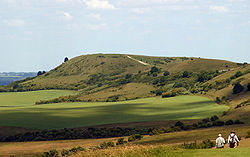
![Ivinghoe Beacon from the Ridgeway][float-right] Coastal rambling in the United Kingdom emphasizes gentler terrain along shorelines, offering scenic views of cliffs, beaches, and estuaries with relatively lower elevation gains compared to upland routes. The King Charles III England Coast Path, a national trail encircling England's coastline, spans approximately 2,700 miles and provides continuous public access where feasible, with sections progressively opened to facilitate easier walking for diverse abilities.[69] As of September 2025, the path is about two-thirds complete, enabling walkers to traverse extensive coastal stretches without the strenuous ascents typical of hillwalking.[111] A notable recent development includes the opening of the Aldeburgh to Hopton-on-Sea section on December 12, 2024, which adds over 60 miles of accessible shoreline paths in Suffolk and Norfolk, enhancing opportunities for leisurely seaside ambles.[112] Lowland rambling features ancient, relatively flat routes through chalk downs and open countryside, prioritizing endurance over steep climbs while exposing participants to variable weather conditions. The Ridgeway National Trail exemplifies this, stretching 87 miles from Overton Hill near Avebury in Wiltshire to Ivinghoe Beacon in Buckinghamshire, following a prehistoric trackway used for over 5,000 years.[113] This path maintains minimal elevation changes, averaging under 500 feet of ascent per day for typical segments, making it suitable for those seeking moderate exertion amid historical landscapes of rolling hills and farmland.[114] In contrast to hillwalking, which demands greater physical fitness due to altitudes exceeding 2,000 feet and rugged terrain, coastal and lowland rambling exhibits higher accessibility, with data indicating that seaside promenades and flat paths accommodate wheelchair users and those with mobility impairments more readily than mountainous routes.[115] Rambling clubs, such as those affiliated with the Ramblers' Association, emphasize communal outings on these terrains, fostering social bonds through group hikes that prioritize steady pacing and shared scenery over competitive challenges. Participation in walking activities, including rambling, rebounded to pre-pandemic levels by 2023, reflecting sustained interest in these accessible forms amid broader public health emphases on outdoor recreation.[40]Guided Tours and Organized Walks
Operators such as Macs Adventure and HF Holidays offer guided group walks along UK national trails, providing structured itineraries with expert leaders, accommodation arrangements, and logistical support like luggage transfers.[116][117] These commercial experiences emphasize standardization through predefined routes, safety briefings, and thematic focuses, such as historical exploration on Hadrian's Wall Path, where tours cover segments from Lanercost Priory to Corbridge, highlighting Roman archaeology.[118][119] Themed organized walks extend to cultural pursuits, notably whisky-focused tours on the Speyside Way in Scotland, integrating hikes with distillery visits at sites like those near Dufftown.[120][121] Providers like Hillwalk Tours and Macs Adventure market these for 2025, combining moderate daily distances of 15-20 km with tastings, appealing to participants seeking combined physical and experiential value.[120][121] Economic viability is supported by rising demand, as escorted tours facilitate access for less experienced walkers while generating revenue through packaged services.[122] Post-2020, the sector shifted toward digital platforms for bookings, with operators enabling online reservations and flexible scheduling amid pandemic recovery.[123] This has standardized operations but drawn critiques for over-commercialization, including elevated pricing and variable accommodation quality relative to costs.[124] Guided formats inherently reduce navigational errors and enhance group safety through professional oversight, contributing to their appeal despite such concerns.[117]Health and Physiological Benefits
Empirical Evidence on Physical Fitness
Regular walking aligns with UK public health recommendations emphasizing physical activity to mitigate cardiovascular disease (CVD) risks, with longitudinal data from large cohorts demonstrating dose-dependent benefits. A 2022 analysis of over 78,000 participants found that accumulating up to approximately 10,000 steps daily was associated with reduced incidence of CVD and all-cause mortality, with each additional 2,000 steps beyond 8,000 linked to further declines in CVD risk by 10-20% independent of sedentary time.[125] UK-specific guidance from the Chief Medical Officers highlights brisk walking—achievable through everyday routes—as lowering CVD risk, with meta-analyses confirming that 7,000-10,000 steps per day correlates with 15-25% reductions in CVD events compared to lower thresholds like 2,000 steps.[126][127] Cohort studies in the UK, such as those utilizing UK Biobank data involving over 500,000 participants, link consistent walking volumes to lowered all-cause mortality, with regular moderate-to-brisk walking associated with 10-20% reductions relative to inactive baselines after adjusting for confounders like age and comorbidities.00302-9/fulltext) A prospective analysis reported that higher daily step counts, particularly above 7,000, yielded up to 47% lower mortality hazard ratios versus minimal activity, with benefits plateauing around 10,000 steps for younger adults but persisting at lower volumes for those over 60.[128] These findings derive from accelerometer-tracked data in randomized and observational designs, underscoring walking's role in countering sedentary lifestyles prevalent in urban UK populations. Hillwalking, a weight-bearing variant common in UK terrains like the Lake District and Scottish Highlands, supports bone mineral density (BMD) maintenance in older adults, as evidenced by dual-energy X-ray absorptiometry (DEXA) assessments in intervention studies. Research on impact-augmented walking, including uphill efforts, indicates minor but measurable BMD gains at the hip and spine—typically 1-2% over 12-24 months—in postmenopausal women versus non-impact activities, attributable to osteogenic loading from varied terrain.[129] UK cohort evaluations confirm that lifelong participation in such outdoor walking correlates with preserved cortical bone size and reduced fracture risk, with high-activity groups showing 10-15% superior BMD metrics compared to sedentary peers.[130] In terms of energy expenditure, moderate-paced walking (3-4 mph) burns 300-400 kcal per hour for an average adult, comparable to many gym-based cardio sessions like stationary cycling or light weightlifting, yet requires no specialized equipment or facilities.[131] This caloric output, verified via metabolic chamber and indirect calorimetry in controlled trials, provides equivalent aerobic fitness gains to structured exercises while promoting adherence through low barriers, directly addressing UK trends of physical inactivity where over 25% of adults fail to meet minimal guidelines.[132]Mental Health Outcomes and Longevity Data
Regular walking has been associated with reduced incidence of depression and anxiety in multiple meta-analyses of prospective cohort studies. For instance, a 2022 dose-response meta-analysis of 15 studies involving over 190,000 adults found that achieving 150 minutes per week of moderate physical activity, such as brisk walking, correlated with a 20-30% lower risk of depression compared to inactivity, with benefits accruing from even lower doses like 30-60 minutes weekly.[133] Similarly, a 2024 systematic review and network meta-analysis of exercise interventions for depression ranked walking as moderately effective in alleviating symptoms, comparable to yoga or light strength training, though less potent than higher-intensity activities in some subgroups.[134] These effects are attributed to neurobiological mechanisms, including elevated endorphin release and improved sleep quality, as evidenced in randomized controlled trials.[135] Exposure to natural environments during walking amplifies psychological benefits beyond urban settings, akin to forest bathing practices. A 2022 systematic review and meta-analysis of 13 studies demonstrated that nature walks significantly lowered depression scores more than equivalent city walks, with effect sizes indicating reduced rumination and enhanced mood restoration.[136] Another 2022 synthesis of 18 trials confirmed that outdoor activity in green spaces improved mental health outcomes, such as decreased anxiety and fatigue, to a greater degree than built-environment walks, potentially via attentional restoration and sensory pleasure mediation.[137] A 2025 randomized trial further supported this, showing forest walking superior to urban walking in elevating positive affect and reducing negative states among adults.[138] However, urban walking still yields gains, suggesting that the activity itself drives core benefits, with nature providing additive value rather than essential causation.[139] Regarding longevity, meta-analyses of step-count data link habitual walking to lower all-cause mortality. A 2022 Lancet Public Health analysis of 47,471 adults across 15 cohorts found that 6,000-8,000 daily steps—achievable via regular walking—reduced mortality risk by 40-50% compared to 4,000 steps, with diminishing returns beyond 10,000.[140] A broader review of 13 longitudinal studies estimated that regular physical activity, including walking, extends life expectancy by 0.4 to 6.9 years, adjusted for confounders like smoking and baseline health.[141] In the Framingham Heart Study cohort of women followed from 1984-1990, higher physical activity levels predicted longer survival independent of cardiovascular disease reduction, with active participants outliving sedentary ones by several years on average.[142] Japanese cohort data reinforce this, showing men walking ≥1 hour daily from age 40 gained approximately 2 years of life expectancy versus <1 hour.[143] Observational dominance in longevity research necessitates caution against conflating correlation with causation, as self-selection bias—wherein healthier individuals walk more—may inflate estimates despite multivariable adjustments.[141] Randomized evidence is stronger for mental health, where walking interventions causally lower symptoms via direct physiological pathways, but longevity claims rely more on associative data, with potential residual confounding from socioeconomic factors or reverse causation in frail populations.[144] Nonetheless, consistency across large cohorts supports walking's role in probabilistic lifespan extension through cumulative risk reduction.[145]Public Health Campaigns and Participation Rates
The UK government and organizations such as Sport England and Natural England have promoted walking through initiatives like the NHS Better Health "Get Active" campaign, which encourages daily brisk walks to improve mood and physical capacity, and the Walking for Health programme, which organizes community walks to boost local participation.[146][147] National Walking Month, held annually in May by groups including Living Streets and the Ramblers, features challenges and events to highlight walking's benefits for physical health and community engagement.[148][149] The Active Travel Strategy, via the second Cycling and Walking Investment Strategy (CWIS2) published in 2023, sets a target for 50% of journeys in English towns and cities to be made by walking or cycling by 2030, supported by investments in infrastructure and promotion to shift short trips from motor vehicles.[150] Participation rates reflect modest gains amid persistent inactivity, with Sport England's Active Lives Adult Survey for November 2023 to November 2024 indicating that 76.5% of English adults walked at least once per month, though only 43.4% did so three or more times weekly, and 31.8% five or more times.[151] Overall, 63.7% of adults met Chief Medical Officers' physical activity guidelines, including walking, marking record highs but with 25% remaining inactive.[152] Seasonal barriers, particularly adverse winter weather, contribute to drops, as extreme conditions negatively affect three in five adults' activity levels, correlating with a 4% decline in overall participation from summer to winter.[153][154] Demographic patterns show higher recreational walking in rural areas, where leisure walks are more prevalent in hamlets and villages, compared to urban settings where walking for travel purposes dominates due to shorter distances and density.[155] Urban initiatives, including apps integrated with public health efforts like the NHS Active 10 walking app evaluated in 2025 trials, aim to counter lower leisure uptake in cities by tracking steps and promoting 10-minute brisk bouts, though rural residents exhibit greater overall active travel willingness for longer distances.[156][157] Economic evaluations underscore walking promotion's value, with government analyses finding investments in walking infrastructure yield strong returns through health gains; for instance, active travel spending generates an average £5.62 in societal benefits per £1 invested, primarily from reduced healthcare costs and productivity losses avoided.[158] Specific walking projects, per social return on investment studies, deliver broader wellbeing outcomes exceeding initial outlays, justifying continued public funding despite uneven uptake across seasons and regions.[159]Economic Dimensions
Tourism Revenue and Rural Economies
Walking tourism provides a substantial fiscal contribution to the United Kingdom, with visitor expenditures concentrated in rural regions where local businesses capture a high proportion of spending through multiplier effects. In England, total annual expenditure on walking-related trips reaches £6.14 billion, generating £1.473 billion to £2.763 billion in income and underscoring the sector's role in offsetting urban economic dominance.[160] Tourist spending on short walks alone—46 million trips—totals £2.342 billion, much of which flows to rural accommodations, hospitality, and trail-adjacent services, amplifying local GDP beyond direct trail usage.[160] In Scotland, walker tourists deliver an annual economic boost of £1.26 billion, derived from expenditures on long-distance routes, hillwalking, and associated stays, with data reflecting sustained demand for remote Highland and island paths.[161] More recent assessments place the walking tourism impact at £1.6 billion, highlighting path networks' centrality to visitor economies in areas like the Cairngorms, where £353 million in spending supported rural viability as of 2022.[162][163] Rural economies exhibit acute dependence on these inflows, with 35% to 38% of walking-derived income and employment benefits stemming from short-walk visitors whose spending sustains pubs, farms, and guesthouses in low-population locales.[160] This fragility manifests in regions where walking accounts for a third or more of visitor activity, buffering against seasonal downturns but vulnerable to access disruptions.[164] Post-Brexit and post-COVID recovery has amplified domestic walking tourism, with UK staycation spending surging to £98.7 billion in 2021 and continuing upward through 2023-2025 amid preferences for accessible rural trails over international travel.[165] Scotland's overall visitor expenditure hit £10.8 billion in 2023, with walking's share driving rural rebounds via heightened day and overnight domestic trips.[166] England's coastal and national trails similarly benefited from this shift, registering millions of additional visits that bolstered fragile locales.[80]Employment and Infrastructure Investments
The maintenance and development of walking paths and trails in the United Kingdom generate employment in sectors such as path upkeep, guiding services, and support roles for local economies dependent on visitor traffic. In England, walking activities associated with the extensive rights-of-way network (over 188,000 km) and long-distance paths (over 33,600 km) support between 180,559 and 245,560 full-time equivalent (FTE) jobs annually, driven by expenditures from walking trips totaling £6.14 billion. These figures encompass direct employment in trail maintenance, which requires ongoing investment estimated at £18.55 million per year, as well as indirect jobs in hospitality and transport linked to path usage.[160] Major infrastructure projects exemplify the causal link between public investments and job creation. The South West Coast Path, spanning 630 miles, underpins over 10,400 FTE jobs through sustained visitor spending of £520 million annually, with roles including rangers, signage installers, and erosion control specialists funded partly by trail association levies and government grants. Similarly, England's coastal paths collectively sustain more than 5,900 FTE jobs, bolstered by 29.1 million walking trips recorded in a six-month period in 2019, where infrastructure enhancements directly enable access and hire local workers for repairs and monitoring. Recent government allocations, such as £300 million in 2025 for 300 miles of new walkways and cycle lanes, further stimulate short-term construction employment while preserving long-term positions in path management.[167][80][168] Such investments, often involving restoration costs like the £69.2 million needed to repair England's path network, create localized hiring chains: funding supports contractors for surfacing and signage, which in turn boosts demand for skilled labor in rural areas with limited alternative opportunities. However, these public expenditures, sourced from taxation, prioritize collective access over purely market-driven land uses, potentially influencing private incentives for tourism development on adjacent properties.[160]Cost-Benefit Analysis Including Externalities
Active travel, encompassing walking, contributed an estimated £36.5 billion to the UK economy in 2021 through direct spending, health improvements, and reduced congestion externalities.[169] Investments in active travel infrastructure yield a benefit-to-cost ratio of 4.3:1, factoring in economic returns alongside avoided healthcare and transport costs, per Department for Transport assessments.[170] These figures underscore a net positive ledger for recreational walking, where aggregate societal gains from tourism, productivity, and emission reductions far exceed direct outlays. Negative externalities include the operational costs of search and rescue for walking-related incidents, primarily in upland areas. Mountain Rescue England and Wales reported expenditures of £621,517 in a recent fiscal year, covering equipment, training, and logistics for volunteer-led operations.[171] Scottish mountain rescue teams incur an average of £2,500 per callout, funded through donations rather than user fees, imposing an implicit societal burden via charitable contributions and volunteer time.[172] Aggregate UK-wide rescue costs, while not centrally tallied, remain modest relative to walking's economic scale, estimated in the low millions annually based on regional data. Landowners face partial liabilities for public rights of way maintenance, including gates, stiles, and surface repairs on paths crossing private land, though highway authorities assume primary responsibility for most upkeep at public expense.[173] Landowners may claim reimbursement of at least 25% of costs for replacement structures from local authorities, mitigating but not eliminating unfunded elements like liability risks from path disrepair.[174] These obligations can distort private land management incentives, as mandatory access under statutes like the Countryside and Rights of Way Act 2000 limits revenue options such as entry fees, potentially leading to deferred maintenance without full public compensation.[175] Overall, walking's externalities tilt positive when monetized, with rescue and maintenance burdens—likely under £5 million combined annually—dwarfed by £36 billion-plus benefits, though unpriced volunteer efforts and landowner liabilities warrant consideration in policy design for sustainable access.[169] Private arrangements, such as permissive paths with negotiated contributions, have demonstrated viability in preserving routes without relying solely on state mandates, aligning incentives for long-term upkeep.Environmental Interactions
Low-Impact Nature and Emission Reductions
Walking produces no direct greenhouse gas emissions, unlike motorized transport, thereby offering substantial carbon savings when substituting for short car trips common in the United Kingdom. An average UK petrol car emits approximately 180 grams of CO2 equivalent per kilometer driven, while walking incurs effectively zero emissions from propulsion, yielding savings of 0.18 kilograms of CO2 per kilometer replaced assuming single-occupancy driving.[177] Diesel vehicles emit slightly less at 173 grams per kilometer, but the substitution principle holds, with potential savings scaling to full trip distances.[177] Modeling from Imperial College London indicates that shifting even one day per week from car use to walking or similar active modes can reduce personal transport-related CO2 emissions by up to 25% in urban settings, based on lifecycle analyses of mobility patterns in cities like London.[178] Habitual integration of walking for routine urban travel—such as commuting or errands—amplifies this, with studies estimating 10-30% reductions in individual transport emissions depending on the proportion of trips modal-shifted, particularly for distances under 5 kilometers where walking is feasible.[179] These savings align with the UK's net-zero emissions target by 2050, where government strategies emphasize mode shifts to active travel to decarbonize passenger transport without relying solely on vehicle electrification.[180] In natural environments, walking maintains compatibility with biodiversity objectives due to its minimal physical and auditory disturbance relative to vehicles. Comparative ecological research on temperate forest mammals reveals negligible negative effects from pedestrian activity on wildlife space use and detections at typical recreational levels, contrasting with the habitat fragmentation and noise pollution from off-road vehicles.[181] UK-specific forest management assessments confirm that trail-based walking on designated paths results in low wildlife displacement, supporting conservation by avoiding the soil compaction and pollution associated with motorized access.[182]Erosion, Wildlife Disturbance, and Litter Issues
High volumes of walkers contribute to footpath erosion through repeated trampling, particularly in upland hotspots such as Snowdonia National Park, where path widening and degradation necessitate substantial repair efforts. In 2017, the National Trust launched a campaign to raise £250,000 for reconstructing 2.5 miles of eroded paths in Snowdonia, with average repair costs of £180 per meter due to the challenging terrain and materials required.[183] Similarly, in the Brecon Beacons, erosion repair on paths like that to Pen y Fan can exceed £170 per meter, exacerbating damage to fragile peat soils and vegetation.[184] Across UK national parks, restoring just one meter of heavily eroded footpath averages £250, with helicopter delivery of stone adding up to £1,000 per bag in remote locations, as reported by the British Mountaineering Council in analyses of path degradation drivers.[185] Walker presence disturbs wildlife, notably ground-nesting birds, prompting flight responses that expose nests to chilling, predation, or abandonment. Forest Research, under the Forestry Commission, classifies such disturbances as transient flushing events, where birds like nightjars or grouse relocate temporarily but risk nest failure from repeated interruptions during breeding seasons.[182] In the New Forest, site-specific observations link walker proximity—often within 50-100 meters—to increased predator activity on ground nests of species such as woodlark and Dartford warbler, with disturbances peaking in popular trail areas from March to July.[186] Forestry England documentation highlights that such flushing behaviors in ground-nesters elevate chick mortality, as parents' absences allow crows and foxes to exploit unattended sites.[187] Litter accumulation, including plastics and food waste, intensifies in high-traffic walking zones, but dog feces represent a critical vector for pathogens affecting ecosystems and agriculture. Uncollected dog waste on trails harbors parasites like Neospora caninum, which transmits to grazing livestock via contaminated grass, causing bovine abortions and herd losses estimated in millions annually for UK farmers.[188] In nature reserves and national parks overlapping with walking routes, dog feces and urine deposit excess nutrients, fostering invasive plant growth and bacterial spread that harms native flora and invertebrates, per a 2022 study of deposition rates in sensitive habitats.[189] Government advisories note that in woodland and trail-adjacent farmlands, such waste introduces roundworms and other zoonotics, posing risks to sheep and cattle health where walkers' dogs roam off-lead.[190]Conservation Efforts and Path Management
In the United Kingdom, path management for walking routes emphasizes erosion control through physical interventions such as boardwalks, surfacing, and rerouting in vulnerable terrains. A notable example is the completion of a new boardwalk section on the West Highland Way in August 2025, designed to mitigate soil erosion from foot and cycle traffic while preserving underlying habitats.[191] Similarly, National Trails partnerships prioritize hardening paths with durable materials in high-use areas, drawing on evidence that such measures significantly curb vegetation loss and sediment runoff compared to untreated trails.[192] Rerouting strategies redirect traffic away from ecologically sensitive zones, as demonstrated in upland studies where path realignments reduced braiding and widening by concentrating use on resilient substrates.[193] Voluntary warden and maintenance schemes form a cornerstone of these efforts, supplementing limited public funding with community labor. Natural England-supported groups, such as the Cotswold Voluntary Wardens, conduct repairs and installations across public rights of way, enhancing accessibility and durability on over 55 miles of trails.[194] On the Thames Path National Trail, volunteers perform more than 50% of routine upkeep, including vegetation management and signage to prevent off-trail damage.[195] These initiatives leverage core grants to secure additional matching funds, with National Trails reporting £1.5 million in extra investment beyond baseline allocations in 2019/20 for targeted repairs.[196] Empirical assessments underscore the efficacy of integrated management, where combining rerouting with surfacing yields measurable reductions in erosion rates; for instance, post-intervention monitoring on degraded mountain paths shows stabilized soil loss and revegetation success in treated versus control sections.[197] In Scotland, funds like the Rural Tourism Infrastructure Fund support path upgrades, including low-impact surfacing, to sustain recreational use without compromising biodiversity.[198] However, unchecked access proliferation can diminish private landowners' incentives for habitat stewardship due to heightened repair burdens, prompting advocacy for zoned systems that limit intensity in conservation-priority areas to preserve long-term ecological integrity.[197]Safety Considerations
Weather and Terrain Hazards
Rapid shifts in weather, characteristic of the UK's upland areas, pose significant risks to walkers through sudden rain, high winds, and temperature drops that can induce hypothermia even during milder seasons. Wet clothing exposed to wind can lose up to 85% of its thermal insulation value, accelerating heat loss and fatigue in a vicious cycle.[199] Incidents in regions like the Brecon Beacons, including fatalities among young hikers in the early 1960s, highlighted these dangers and spurred empirical research.[199] Pioneering 1960s experiments by physiologist Griffith Pugh, conducted in a climate chamber using clothing from deceased walkers, tested survival strategies in simulated wet, windy conditions and debunked reliance on stripping into dry "dead man's clothes" from casualties. Findings demonstrated that insulating over damp layers preserved body heat more effectively than changing into inadequate dry garments like jeans, which proved insufficient against chill factors.[199] These tests, published in Nature in 1966, informed enduring protocols prioritizing shelter, energy conservation, and layered protection over wet base layers.[199] Terrain hazards in the UK's fells and moors include boggy peatlands, tussock grass, and uneven ground, which frequently cause slips and twists leading to lower extremity trauma. Such features contribute to lower limb injuries comprising over 50% of mountain rescue casualties, with fractures reported in approximately 59% of injury cases from 2002 to 2006 across UK teams.[200] Boggy sections, prevalent in areas like the Lake District and Yorkshire Dales, exacerbate instability, particularly after rain when hidden sinkholes or soft ground increase the likelihood of sudden submersion or falls.[201] Winter conditions intensify these risks, with persistent low cloud and early darkness reducing visibility to near zero in overcast weather, heightening disorientation on exposed ridges and amplifying hypothermia exposure from prolonged wind chill.[202] Ordnance Survey guidance notes that such poor visibility, combined with icy surfaces on higher ground, demands vigilant route assessment to avoid navigational errors in terrain already prone to slips.[202]Injury Statistics and Rescue Operations
Mountain Rescue England and Wales (MREW) teams recorded 3,462 callouts in 2023, reflecting a sustained upward trend linked to increased participation in walking and outdoor pursuits, with deployments totaling 2,775 incidents.[203] This marked an escalation from prior years, exacerbated by factors such as social media promotion of remote trails drawing less-prepared individuals, resulting in no callout-free days by 2024 when figures reached 3,842.[204] In Scotland, mountain rescue operations assisted 740 people in 2022, with volunteers contributing over 29,800 hours, primarily for injuries like fractures accounting for 45% of cases.[205] Demographic analysis of rescues highlights overrepresentation of solo walkers and those lacking experience, alongside a shift toward younger participants; 18- to 24-year-olds emerged as the largest group requiring aid in England and Wales, often due to slips, trips (23% of incidents), or missing persons searches (17%).[206] Inexperienced hikers, including those venturing alone without adequate navigation or fitness preparation, feature prominently in incident reports, though comprehensive national data on solo status remains aggregated within broader unpreparedness categories. Fatalities remain rare relative to participation volumes—estimated at under 30 annually across UK hill and mountain walking, yielding a low per-participant risk profile amid millions of annual outings—contrasting with higher injury volumes from minor trauma like sprains and blisters.[207] These operations impose significant strains, with volunteer teams bearing the primary response burden while taxpayer-funded elements, such as search-and-rescue helicopters, add undisclosed but substantial public costs per deployment, often exceeding thousands of pounds for air assets alone.[208] Rescue organizations note growing pressure on finite volunteer resources—78% of 2024 incidents post-midday—amid critiques that official messaging underplays personal responsibility, potentially encouraging dependency on state-supported interventions rather than fostering self-reliance through better preparation.[110]Risk Mitigation and Preparedness
Walkers in the United Kingdom can significantly reduce risks through systematic planning, including selecting routes based on personal fitness levels and using Ordnance Survey maps or compatible apps to identify terrain challenges, stiles, and access points.[209] Essential gear comprises sturdy, waterproof footwear to prevent slips on wet surfaces, layered moisture-wicking clothing for variable conditions, a whistle, torch, and basic first aid supplies, as inadequate preparation contributes to hypothermia and injury in remote areas.[210] Pre-trip weather assessments via the Met Office or Mountain Weather Information Service are critical, enabling postponement or route adjustments to avoid sudden fog, high winds, or rain that exacerbate navigation errors and exposure.[211] Navigation strategies should prioritize traditional map and compass skills supplemented by GPS devices, given evidence that sole reliance on smartphones fails in low battery or signal conditions, leading to disorientation in over 20% of reported hill incidents.[212] Group walking mitigates isolation-related dangers such as delayed self-rescue, though it does not eliminate environmental hazards; data from safety audits show pairs or teams enable mutual aid in 70% of minor incidents without external intervention.[213] Solo walkers face heightened personal security risks, with 32% of British women reporting feelings of unsafety during nighttime local walks—a concern extending to daytime rural trails that deters approximately one-third of young females from unaccompanied outings.[214] Formal training counters cognitive biases like overconfidence in terrain judgment, with programs stressing iterative weather checks and micro-navigation techniques that have demonstrably lowered mishap rates among participants by enhancing decision-making under uncertainty.[215] Preparedness extends to carrying a charged phone, personal locator beacon for grid reference transmission to rescuers, and knowledge of the 999 emergency line with location details, as timely reporting halves response times in upland searches.[216]Advocacy and Stakeholder Perspectives
Walker Organizations and Campaigns
The Ramblers, Britain's principal walking charity, traces its origins to the mass trespass of Kinder Scout on April 24, 1932, when approximately 400-600 ramblers asserted public access rights against private moorland restrictions, catalyzing national advocacy for open countryside.[23] [24] Formed in 1935 as the Ramblers' Association from earlier regional federations dating to 1931, the organization campaigns to protect footpaths and expand roaming rights, maintaining a network of over 14,000 volunteer walk leaders who organize outings and contribute to path upkeep year-round.[217] [218] [219] The group played a pivotal role in securing the Countryside and Rights of Way Act 2000 after sustained campaigning from the 1980s, which mapped and opened over 3 million acres of mountains, moors, heaths, and downs to public access on foot.[220] [221] Post-COVID-19 lockdowns, Ramblers' membership and local group participation grew amid a broader surge in walking interest, with searches for groups rising significantly and new members offsetting departures, reflecting heightened public engagement rather than systemic exclusion.[222] [223] However, its access expansions have faced pushback for prioritizing walker entitlements over practical farmer and landowner inputs, such as livestock safety and path maintenance burdens, fostering perceptions of one-sided advocacy that overlooks rural operational realities.[224] [225] Living Streets, founded in 1929 as the Pedestrians' Association, concentrates on urban walking infrastructure, advocating for pedestrian-priority streets, school walking programs, and reduced traffic hazards to foster everyday local journeys on foot.[226] [227] The charity promotes evidence-based improvements like walkable high streets through research highlighting international case studies of pedestrian-friendly designs that enhance community vitality without unsubstantiated inclusivity overclaims.[228] Its annual UK Walking Summit addresses these issues, with the 2025 edition scheduled for June 3 in Bristol to discuss planning for future-proof streets amid rising post-pandemic urban mobility shifts.[229]Landowner and Farmer Concerns
Landowners and farmers frequently cite the financial and legal burdens imposed by public footpaths and access rights traversing their property. Maintenance responsibilities, including clearing vegetation, repairing stiles, and addressing erosion, often fall partially on landowners despite local authorities bearing primary costs for many public rights of way. Diverting a single footpath can incur expenses exceeding £3,000, while damage from walkers straying off paths has led to crop losses and repair bills in the thousands of pounds per incident for affected farms.[230] [231] Under the Occupiers' Liability Act 1957, landowners owe a duty of reasonable care to lawful visitors such as walkers on rights of way, exposing them to potential claims for injuries arising from hazards like uneven terrain or livestock interactions, though successful litigation remains rare.[232] [233] A primary operational concern involves conflicts between walkers' dogs and livestock, with dogs responsible for severe injuries or deaths to farm animals valued at £2.4 million in 2023 and £1.8 million in 2024, according to insurance claims analyzed by NFU Mutual. The Department for Environment, Food & Rural Affairs estimates around 34,000 livestock worrying incidents annually in England and Wales, many linked to uncontrolled dogs on public paths crossing grazing land, prompting calls for stricter enforcement of leash requirements near herds.[234] [235] [236] Cattle charging walkers, often in defense of calves, adds to tensions, as farmers balance herd protection with access obligations. These issues underscore a broader contention that private property rights foster more effective land stewardship than open commons, where diffused ownership dilutes incentives for maintenance and conservation, leading to overuse and degradation observed historically in unmanaged grazing areas. Private estates, by contrast, enable targeted investments in habitat preservation and sustainable farming, as owners directly reap the benefits of improved land condition.[237] Organizations representing landowners, such as the Country Land and Business Association, emphasize that unrestricted access can undermine these incentives, advocating for controlled entry to safeguard agricultural productivity and environmental quality.[238]Government and Policy Roles
The Department for Environment, Food and Rural Affairs (DEFRA) holds primary responsibility for public access to the countryside, including oversight of open access land under the Countryside and Rights of Way Act 2000, while Natural England, its executive agency, manages mapping and implementation of access provisions such as open country designations and the King Charles III England Coast Path.[34] Natural England's mapping efforts have faced persistent delays, with incomplete designations leaving gaps in legal access to thousands of hectares of purported open access land, compelling walkers to trespass in approximately 2,500 mapped landscapes lacking enforceable entry rights as of 2024.[97] These delays stem from resource constraints and disputes over exclusions, undermining the Act's intent despite statutory requirements for comprehensive coverage.[239] A partial success emerged with the King Charles III England Coast Path, where Natural England has opened over 66% of the 2,700-mile route by late 2025, including new stretches like the 42-mile Easington to Bridlington section in August 2025, but full completion slipped to spring 2026 due to landowner negotiations and infrastructure hurdles.[240][241] This progress, while enabling coastal walking for millions, highlights efficacy shortfalls: targeted stretches advance public access, yet systemic delays in mapping and route confirmation erode overall policy outcomes, fostering reliance on provisional agreements prone to legal challenges.[69] Active Travel England, under the Department for Transport but aligned with DEFRA's rural access goals, allocates hundreds of millions in subsidies to promote walking infrastructure, including £616 million confirmed in the 2025 Spending Review and £291 million for 2024-2026 schemes creating 300 miles of new paths.[242][243] However, audits and reports reveal rural neglect, with funding disproportionately urban-focused and local authorities struggling to maintain rights-of-way networks amid worsening path conditions and under-resourced upkeep, exacerbating erosion and access barriers in countryside areas.[244][245] Government policies broadly enable access through statutory rights and funding, yet enforcement failures—such as inadequate monitoring of open access compliance and slow resolution of obstructions—perpetuate tensions between public use and landowner interests, as evidenced by ongoing trespass incidents and unaddressed blockages despite legal mandates.[34][97] Outcomes indicate that while initiatives like coastal path extensions yield measurable gains in recreational opportunities, broader delivery gaps, including delayed mapping and uneven maintenance investment, limit net efficacy in sustaining viable walking networks.[69]Ongoing Debates and Challenges
Property Rights vs. Public Access Expansion
In England, campaigns for a statutory right to roam intensified in 2024, with organizations like Right to Roam advocating for a dedicated act to extend public access to open countryside, woodlands, and coastal margins, mirroring Scotland's framework under the Land Reform (Scotland) Act 2003.[246] Mass trespass events, such as the February 19, 2024, gathering on Dartmoor, highlighted perceived limitations in current access laws, while a YouGov poll indicated 71% public support for walking along edges of privately owned fields.[247] [248] Proponents frame this as essential for equitable nature connection, but overlook landowner incentives for maintaining land without reciprocal benefits. Landowners counter that uninvited access erodes property values through uncompensated externalities, including restricted development potential, heightened maintenance for wear from foot traffic, and liability for visitor injuries.[249] [250] Access easements, akin to expanded roaming rights, often diminish land's market appeal by interrupting exclusive enjoyment and imposing ongoing burdens, with no direct fiscal offset for affected owners.[251] In Scotland, where access rights apply universally to most land and inland water, concentrated use in popular areas has prompted concerns over path erosion, litter, irresponsible fires, and wildlife disturbance, straining resources without proportional user contributions.[252] Empirical analyses link robust private property rights to superior conservation outcomes, as owners internalize stewardship gains—such as habitat preservation—unlike state-mandated access, which can dilute incentives and lead to overexploitation in shared spaces.[253] [254] Studies of conservation easements reveal that voluntary private arrangements outperform imposed public regimes by aligning owner attitudes with long-term ecological goals, reducing biodiversity loss through targeted, self-funded efforts rather than diffused mandates.[255] This underscores arguments that prioritizing property rights fosters sustainable land management over idealistic "free access" expansions, which risk unintended degradation without accountability mechanisms.[256]Enforcement Gaps and Trespass Incidents
Local authorities in England reported at least 32,000 obstructions on public rights of way as of October 2024, including blocked paths, locked gates, and overgrown vegetation, according to a Freedom of Information request compiled by consumer group Which?. [257] These figures reflect persistent failures in enforcement under section 137 of the Highways Act 1980, which criminalizes willful obstruction of public paths, yet local highway authorities often lack resources to prosecute or clear blockages systematically, with staff reductions exacerbating the issue. [91] Misleading signage and physical barriers like aggressive cattle herds further deter lawful use, as documented in a 2025 analysis by UKHillwalking, which highlights how non-specific "danger" signs and livestock positioned across paths discourage walkers without legal basis, constituting de facto obstructions. [258] Cattle-related incidents, including herds blocking gates or paths, compound these gaps, with reports indicating that such practices persist due to minimal intervention by authorities, despite guidelines from bodies like the Health and Safety Executive emphasizing separation of walkers from bulls. [259] Trespass incidents arise when walkers bypass private land to access designated open access areas under the Countryside and Rights of Way Act 2000, with researchers identifying 2,700 hectares of open country in England surrounded by private holdings lacking connecting rights of way, forcing violations to reach legally permissible terrain. [97] Farmers report resultant damages, such as trampled crops and unsecured gates allowing livestock escape, eroding trust in the access regime as repeated unaddressed trespasses signal weak rule adherence. [53] Lax prosecution of both obstructions and aggravated trespass—civil by default unless involving damage or threats—creates incentives for escalation, as police prioritize criminal over minor civil matters, per Crown Prosecution Service guidance, perpetuating a cycle of non-compliance. [260] [261]Demographic Barriers and Inclusivity Claims
Participation in countryside walking in the United Kingdom exhibits disparities across demographic groups, with lower engagement among ethnic minorities and women compared to white British men, primarily linked to residential patterns and practical safety considerations rather than institutionalized exclusion. Government data indicate that physical activity levels, including walking, are lower among certain ethnic groups; for instance, participation rates for Black adults stand at around 50-55% for meeting activity guidelines, versus 63% for white British adults, correlating strongly with urban concentration where 90% of Black residents live in cities, limiting proximity to rural trails.[262][263] Ethnic minorities, comprising urban-majority populations, face geographic barriers to accessing the UK's dispersed countryside, with empirical studies identifying distance and transport as key deterrents over cultural alienation.[264] Women's participation in walking trips is high overall—78% of females in England report monthly walks for any purpose—but countryside-specific hikes show caution driven by safety perceptions, with 44% feeling unsafe walking in the dark and 41% routinely taking precautions like sharing locations or avoiding solo outings, exceeding concerns about "not belonging."[265][266][267] Surveys consistently rank crime fears and unpredictable weather as primary barriers to outdoor pursuits for women, with 50% reporting unease on quiet streets after dark, far outpacing abstract inclusivity issues; these align with broader deterrence factors like urban crime rates rather than rural hostility.[268][269] Advocacy groups such as Black Girls Hike, founded in 2019 to foster safe spaces for Black women in the outdoors, challenge perceptions of rural spaces as unwelcoming, yet their efforts highlight self-reported barriers like unfamiliarity and group safety over evidence of bias; participation gaps persist due to verifiable factors including lower baseline exposure in urban settings, not systemic rejection.[270][271] Inclusivity initiatives often emphasize narratives of exclusion, but data from sources like Sport England prioritize urban outreach and awareness campaigns addressing practical hurdles—such as transport subsidies or safety apps—over attributing disparities to countryside "whiteness," which overlooks causal realities like population density and personal risk assessment.[152][264] Such claims, while sourced from advocacy perspectives, underweight empirical evidence favoring localized education on weather resilience and crime avoidance over reframing rural access as a belonging deficit.[272]References
- https://www.[gov.uk](/page/Gov.uk)/guidance/public-rights-of-way-landowner-responsibilities