Hubbry Logo
LipaseLipaseMain
Open search
Lipase
Community hub
Lipase
logo
8 pages, 0 posts
0 subscribers
Be the first to start a discussion here.
Lipase
Lipase
from Wikipedia
Lipase
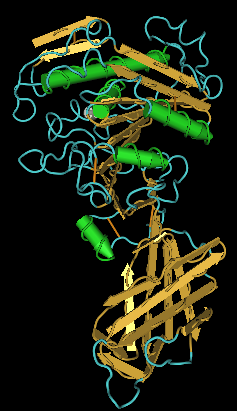
A computer-generated image of a type of pancreatic lipase (PLRP2) from the guinea pig. PDB: 1GPL
Pronunciation/ˈlps, ˈlpz/ LY-payss, LY-payz
Test ofPancreatitis
Conversion calculator
SI (µkat/L) Conventional (U/L)

Lipase is a class of enzymes that catalyzes the hydrolysis of fats. Some lipases display broad substrate scope including esters of cholesterol, phospholipids, and of lipid-soluble vitamins[1][2] and sphingomyelinases;[3] however, these are usually treated separately from "conventional" lipases. Unlike esterases, which function in water, lipases "are activated only when adsorbed to an oil–water interface".[4] Lipases perform essential roles in digestion, transport and processing of dietary lipids in most, if not all, organisms.

Structure and catalytic mechanism

[edit]

Classically, lipases catalyse the hydrolysis of triglycerides:[citation needed]

Lipases are serine hydrolases, i.e. they function by transesterification generating an acyl serine intermediate. Most lipases act at a specific position on the glycerol backbone of a lipid substrate (A1, A2 or A3). For example, human pancreatic lipase (HPL),[5] converts triglyceride substrates found in ingested oils to monoglycerides and two fatty acids.

A diverse array of genetically distinct lipase enzymes are found in nature, and they represent several types of protein folds and catalytic mechanisms. However, most are built on an alpha/beta hydrolase fold[6][7][8][9] and employ a chymotrypsin-like hydrolysis mechanism using a catalytic triad consisting of a serine nucleophile, a histidine base, and an acid residue, usually aspartic acid.[10][11]

Physiological distribution

[edit]

Lipases are involved in diverse biological processes which range from routine metabolism of dietary triglycerides to cell signaling[12] and inflammation.[13] Thus, some lipase activities are confined to specific compartments within cells while others work in extracellular spaces.

  • In the example of lysosomal lipase, the enzyme is confined within an organelle called the lysosome.
  • Other lipase enzymes, such as pancreatic lipases, are secreted into extracellular spaces where they serve to process dietary lipids into more simple forms that can be more easily absorbed and transported throughout the body.
  • Fungi and bacteria may secrete lipases to facilitate nutrient absorption from the external medium (or in examples of pathogenic microbes, to promote invasion of a new host).
  • Certain wasp and bee venoms contain phospholipases that enhance the effects of injury and inflammation delivered by a sting.
  • As biological membranes are integral to living cells and are largely composed of phospholipids, lipases play important roles in cell biology.
  • Malassezia globosa, a fungus thought to be the cause of human dandruff, uses lipase to break down sebum into oleic acid and increase skin cell production, causing dandruff.[14]

Genes encoding lipases are even present in certain viruses.[15][16]

Some lipases are expressed and secreted by pathogenic organisms during an infection. In particular, Candida albicans has many lipases, possibly reflecting broad-lipolytic activity, which may contribute to the persistence and virulence of C. albicans in human tissue.[17]

Human lipases

[edit]
Name Gene Location Description Disorder
bile salt-dependent lipase BSDL pancreas, breast milk aids in the digestion of fats[1]
pancreatic lipase PNLIP digestive juice Human pancreatic lipase (HPL) is the main enzyme that breaks down dietary fats in the human digestive system.[5] To exhibit optimal enzyme activity in the gut lumen, PL requires another protein, colipase, which is also secreted by the pancreas.[18]
lysosomal lipase LIPA interior space of organelle: lysosome Also referred to as lysosomal acid lipase (LAL or LIPA) or acid cholesteryl ester hydrolase Cholesteryl ester storage disease (CESD) and Wolman disease are both caused by mutations in the gene encoding lysosomal lipase.[19]
hepatic lipase LIPC endothelium Hepatic lipase acts on the remaining lipids carried on lipoproteins in the blood to regenerate LDL (low density lipoprotein).
lipoprotein lipase LPL or "LIPD" endothelium Lipoprotein lipase functions in the blood to act on triacylglycerides carried on VLDL (very low density lipoprotein) so that cells can take up the freed fatty acids. Lipoprotein lipase deficiency is caused by mutations in the gene encoding lipoprotein lipase.[20][21]
hormone-sensitive lipase LIPE intracellular
gastric lipase LIPF digestive juice Functions in the infant at a near-neutral pH to aid in the digestion of lipids
endothelial lipase LIPG endothelium
pancreatic lipase related protein 2 PNLIPRP2 or "PLRP2" – digestive juice
pancreatic lipase related protein 1 PNLIPRP1 or "PLRP1" digestive juice Pancreatic lipase related protein 1 is very similar to PLRP2 and PL by amino acid sequence (all three genes probably arose via gene duplication of a single ancestral pancreatic lipase gene). However, PLRP1 is devoid of detectable lipase activity and its function remains unknown, even though it is conserved in other mammals.[22][23] -
lingual lipase ? saliva Active at gastric pH levels. Optimum pH is about 3.5-6. Secreted by several of the salivary glands (Ebner's glands at the back of the tongue (lingua), the sublingual glands, and the parotid glands)

Other lipases include LIPH, LIPI, LIPJ, LIPK, LIPM, LIPN, MGLL, DAGLA, DAGLB, and CEL.

Uses

[edit]

In the commercial sphere, lipases are widely used in laundry detergents. Several thousand tons per year are produced for this role.[4]

Lipases are catalysts for hydrolysis of esters and are useful outside of the cell, a testament to their wide substrate scope and ruggedness. The ester hydrolysis activity of lipases has been well evaluated for the conversion of triglycerides into biofuels or their precursors.[24][25][26][27]

Lipases are chiral, which means that they can be used for the enantioselective hydrolysis prochiral diesters.[28] Several procedures have been reported for applications in the synthesis of fine chemicals.[29][30][31]

Lipases are generally animal sourced, but can also be sourced microbially.[citation needed]

Biomedicine

[edit]

Blood tests for lipase may be used to help investigate and diagnose acute pancreatitis and other disorders of the pancreas.[32] Measured serum lipase values may vary depending on the method of analysis.[citation needed]

Lipase assist in the breakdown of fats in those undergoing pancreatic enzyme replacement therapy (PERT). It is a component in Sollpura (Liprotamase).[33][34]

See also

[edit]

References

[edit]
[edit]
Revisions and contributorsEdit on WikipediaRead on Wikipedia
from Grokipedia
Lipases are a diverse class of enzymes that catalyze the of bonds in , primarily triglycerides, into free fatty acids and , playing a crucial role in fat digestion and across various organisms. These enzymes are ubiquitous in , found in animals, plants, , and fungi, and are essential for breaking down dietary fats in the digestive system as well as mobilizing stored in tissues. Structurally, lipases belong to the hydrolase fold superfamily, featuring a typically composed of serine, , and residues that facilitate a chymotrypsin-like mechanism. This is often covered by a "" domain that regulates substrate access and enzyme activity, with variations in lid structure influencing specificity—for instance, pancreatic lipases exhibit an open lid conformation in humans to accommodate colipase and bile salts for efficient fat emulsification in the intestine. The overall architecture includes an N-terminal α/β hydrolase domain and a C-terminal β-sandwich domain, with molecular weights around 50-60 kDa for many mammalian lipases. Key types of lipases include pancreatic lipase, which is secreted by the and accounts for the majority of dietary fat digestion in the ; , involved in lipoprotein remodeling in the liver; lipoprotein , which hydrolyzes triglycerides in circulating lipoproteins on vascular ; and hormone-sensitive lipase, which mobilizes fatty acids from in response to hormonal signals. Lysosomal lipase, another , degrades cholesteryl esters and triglycerides within lysosomes to prevent accumulation. Physiologically, lipases are vital for nutrient absorption, energy homeostasis, and cholesterol metabolism, with deficiencies or dysregulation leading to conditions such as steatorrhea, hypertriglyceridemia, or lysosomal acid lipase deficiency, which causes lipid buildup and organ damage. Clinically, serum lipase levels are a diagnostic marker for acute pancreatitis, where elevations up to three times the normal range indicate pancreatic inflammation, and therapeutic agents like orlistat inhibit gastric and pancreatic lipases to promote weight loss by reducing fat absorption.

Definition and Properties

Definition

Lipases are a class of enzymes classified under the EC 3.1.1.3, known as triacylglycerol acylhydrolases, that catalyze the of triacylglycerols—commonly referred to as fats and oils—into diacylglycerols, monoacylglycerols, free fatty acids, and . This enzymatic action belongs to the broader family and occurs without the need for cofactors, targeting the bonds in water-insoluble substrates. Unlike esterases, which hydrolyze soluble ester substrates in bulk aqueous phases, lipases demonstrate specificity for insoluble triacylglycerols and exhibit interfacial at the oil-water interface. This involves a conformational change in the structure, often mediated by a domain that opens upon binding to the interface, thereby exposing the and enhancing catalytic efficiency. Such interfacial behavior distinguishes lipases kinetically from esterases, which lack this interface-dependent . Microbial lipases, in particular, display notable with optimal activity typically between 30°C and 60°C, alongside optima ranging from 6 to 9 depending on the microbial source. These properties contribute to their versatility in various biological and industrial contexts. The discovery of lipases traces back to the 19th century, when Claude Bernard first isolated the from pancreatic tissue in 1848, identifying its in emulsifying and saponifying fatty substances.

Classification

Lipases are broadly classified by their biological origin into animal, microbial, and plant sources. Animal lipases, such as pancreatic lipase and lipoprotein lipase, are primarily derived from mammalian tissues like the pancreas and play key roles in lipid digestion and transport. Microbial lipases, sourced from bacteria (e.g., Pseudomonas and Bacillus species) and fungi (e.g., Candida antarctica and Rhizopus oryzae), are favored for industrial applications due to their high production yields, stability, and ease of genetic manipulation. Plant lipases, less frequently utilized commercially, occur in seeds including those of castor beans (Ricinus communis), where they contribute to lipid mobilization during germination. Lipases are also categorized by substrate specificity under the International Union of Biochemistry and Molecular Biology (IUBMB) Enzyme Commission (EC) system within the carboxylic ester hydrolase class (EC 3.1.1). Triacylglycerol lipases (EC 3.1.1.3) catalyze the hydrolysis of triacylglycerols to diacylglycerols and carboxylates, with a preference for ester-water interfaces. Phospholipase A₂ (EC 3.1.1.4) specifically removes the fatty acid at the sn-2 position of phosphatidylcholine, requiring Ca²⁺ for activity. Lysophospholipase (EC 3.1.1.5) hydrolyzes 2-lysophosphatidylcholine to glycerophosphocholine and a carboxylate. These EC designations provide a standardized framework for identifying lipase variants based on their primary substrates. Regioselectivity further refines lipase classification, distinguishing their positional preferences on the glycerol backbone of triacylglycerols. 1,3-specific lipases preferentially cleave the sn-1 and sn-3 ester bonds, as seen in enzymes from Rhizomucor miehei and Rhizopus delemar. Non-specific lipases hydrolyze all three positions without strong preference, exemplified by Candida rugosa lipase. 2-specific lipases target the sn-2 position, such as those from Geotrichum species and certain Staphylococcus strains. Lipase nomenclature adheres to the IUBMB EC system, incorporating descriptive names that reflect function or source. For instance, hormone-sensitive lipase (HSL, EC 3.1.1.79) is a serine hydrolase with broad specificity, hydrolyzing triacylglycerols, diacylglycerols, monoacylglycerols, and other esters, with activity modulated by cAMP-elevating hormones and a preference for shorter-chain fatty acids.

Molecular Structure

Overall Architecture

Lipases predominantly exhibit the α/β hydrolase fold, characterized by a central parallel β-sheet typically comprising eight strands, flanked on both sides by α-helices that form a compact, barrel-like core domain. This structural motif positions the catalytic machinery at the interface between the β-sheet and a surrounding α-helix, with the β-strands connected by loops of varying lengths that accommodate functional diversity. The fold's conserved topology ensures stability and enables the enzyme's nucleophilic attack on ester bonds, while peripheral elements allow adaptation to specific substrates. Key modular components include the lid domain, a flexible segment often consisting of one or two α-helices that covers the in the inactive, closed conformation, shielding it from aqueous environments. Upon substrate binding at lipid-water interfaces, the lid undergoes conformational rearrangement to expose the catalytic pocket. Complementing this, the —formed by backbone groups or side chains near the —stabilizes the negatively charged oxyanion intermediate during . These modules are to the enzyme's and , with the lid's mobility being a hallmark of interfacial activation in many lipases. Lipases vary in size, generally spanning –350 with molecular weights of –60 , though some include additional domains that extend this range. For instance, pancreatic lipase comprises 449 residues, featuring an N-terminal catalytic domain (residues 1–336) that houses the α/β and a C-terminal domain (residues 337–) that binds colipase to enhance activity on emulsified substrates. This modular extension exemplifies how lipases can incorporate accessory regions for cofactor interaction without disrupting the core . The α/β fold demonstrates evolutionary conservation across lipases from diverse sources, the same structural with other serine hydrolases such as and certain esterases. This homology underscores a common ancestral origin, where variations in loop lengths and appended domains have diversified enzymatic specificities while preserving the fundamental catalytic .

Active Site Components

The active site of lipases is characterized by a catalytic triad comprising a nucleophilic serine residue, a acting as a general base, and an aspartate that orients the through hydrogen bonding, forming a charge-relay system essential for catalysis. In human pancreatic lipase, this triad consists of Ser152 as the nucleophile, His263 as the base, and Asp176 as the acid, with the serine's hydroxyl group positioned to attack the carbonyl carbon of the ester substrate. This arrangement is conserved across most serine hydrolases and enables efficient proton transfer during the reaction. Complementing the triad, the oxyanion hole stabilizes the transient tetrahedral intermediate by providing hydrogen bonds to its negatively charged oxygen. In pancreatic lipase, this hole is formed by the backbone amide NH groups of Phe77 and Leu153, which are strategically located near the catalytic serine to interact with the intermediate's oxyanion without requiring significant conformational changes. This stabilization lowers the activation energy barrier, enhancing the enzyme's efficiency in ester hydrolysis. The substrate-binding adjacent to the is a hydrophobic cleft designed to accommodate the acyl of triacylglycerols, with its dictating chain-length specificity. For instance, lipases with narrower pockets, such as those in medium-chain-specific enzymes, preferentially hydrolyze short- to medium-chain fatty acids (C4-C12), while broader clefts in pancreatic lipase allow binding of longer chains ( C18). The hydrophobicity of the , lined by nonpolar residues, facilitates substrate positioning while excluding water to promote acyl-enzyme intermediate formation. In some lipases, such as cutinases, the active site exhibits variations including the absence of a lid domain, resulting in a more open and solvent-exposed configuration that bypasses interfacial activation requirements. Cutinases retain the catalytic triad (e.g., Ser120, His188, Asp175 in cutinase) and hole but feature a shallow, accessible pocket suited for polymeric substrates like cutin, enhancing their versatility in non-aqueous environments.

Catalytic Mechanism

Hydrolysis Process

Lipases catalyze the of ester bonds in substrates such as triacylglycerols through a two-step serine mechanism involving and deacylation phases. In the step, the nucleophilic serine residue of the attacks the carbonyl carbon of the ester bond, forming a tetrahedral intermediate that collapses to yield a covalent acyl-enzyme intermediate and release the alcohol product (e.g., glycerol from stepwise ). This is followed by deacylation, where a water molecule acts as a nucleophile to hydrolyze the acyl-enzyme intermediate, regenerating the free enzyme and releasing the fatty acid product. The overall simplified reaction for triacylglycerol hydrolysis is: Triacylglycerol+3H2Oglycerol+3fatty acids\text{Triacylglycerol} + 3 \mathrm{H_2O} \rightarrow \text{glycerol} + 3 \text{fatty acids} However, the process occurs stepwise, with positional specificity often favoring the sn-1 or sn-3 positions in triacylglycerols, as determined by the enzyme's . Both acylation and deacylation involve tetrahedral transition states stabilized by the , typically formed by backbone hydrogens or side-chain residues (e.g., Thr40 in Candida antarctica lipase B), which provide hydrogen bonds to the negatively charged . Many lipases exhibit optimal activity at neutral to slightly alkaline (around 7.0-8.0), where the residue in the maintains appropriate states to facilitate its role as a general base and in proton relay during nucleophilic attacks. At this , the 's imidazole side chain (pKa ≈ 6.5) is partially protonated, enabling efficient of the serine hydroxyl group.

Interfacial Activation

Lipases distinguish themselves from esterases through a unique known as interfacial activation, wherein undergoes a conformational change upon binding to a lipid-water interface, enabling high catalytic efficiency toward insoluble substrates. In its soluble form within aqueous environments, is shielded by a flexible lid domain, maintaining in an inactive, closed conformation that prevents premature hydrolysis of soluble esters. Adsorption to the hydrophobic interface triggers displacement of this lid, exposing the catalytic triad and facilitating substrate access, which dramatically enhances the turnover number (k_cat) by 100- to 1000-fold compared to activity on monomeric substrates. Effective interfacial demands specific physical of the substrate aggregate to stabilize the open conformation of the lipase. This typically involves a formed by amphipathic with a packing around 1, promoting low-curvature structures such as bilayers or droplets rather than highly curved spherical micelles. becomes pronounced above a substrate concentration threshold at which insoluble aggregates form and provide the necessary interfacial area for enzyme binding and lid opening. Illustrative examples highlight the diversity in interfacial activation across lipases. Pancreatic lipase, for instance, relies on colipase as a cofactor to anchor the to salt-stabilized lipid interfaces, overcoming inhibition by amphipathic acids and enabling efficient dietary fat digestion. In contrast, microbial lipases, such as those from or species, display variable activation energies ranging from 20 to 50 kJ/mol, reflecting differences in lid flexibility and interfacial affinity that influence their to diverse environments. The kinetics of interfacially activated lipases follow a ping-pong bi-bi mechanism, characterized by sequential binding and release of substrates and products at the exposed , with the interfacial adsorption step serving as a prerequisite that modulates the overall rate. This model accounts for the enzyme's acyl-enzyme intermediate formation and the dependence on interfacial concentration rather than bulk substrate levels, underscoring the interface's role in rate enhancement.

Biological Roles and Distribution

Functions in Digestion and Metabolism

Lipases play essential roles in the digestion of dietary lipids, initiating and completing the breakdown of triglycerides into absorbable components. In the oral cavity and stomach, lingual and gastric lipases begin the hydrolysis of triglycerides, particularly those in milk fats, which is crucial for infants where pancreatic enzyme secretion is underdeveloped. These enzymes are acid-stable and contribute 10-30% of initial fat digestion, producing free fatty acids and diglycerides that facilitate subsequent processing. In the small intestine, pancreatic lipase serves as the primary enzyme for hydrolyzing dietary triglycerides into monoglycerides and free fatty acids, a process enhanced by bile salts that emulsify lipids into micelles for efficient enzyme access. This colipase-dependent activity accounts for the majority of fat absorption in adults, preventing undigested lipids from passing through the gut. In lipid metabolism, lipases facilitate the mobilization and distribution of triglycerides for energy utilization across tissues. Lipoprotein lipase (LPL), anchored on the endothelial surface of capillaries, hydrolyzes triglycerides in circulating chylomicrons and very-low-density lipoproteins (VLDL), releasing fatty acids for uptake by adipose tissue, muscle, and heart. This process is vital for postprandial lipid clearance and energy partitioning. Hormone-sensitive lipase (HSL) in adipocytes and other cells mobilizes stored triglycerides during fasting or exercise, breaking them down into glycerol and free fatty acids that enter the bloodstream for oxidation. Complementing HSL, adipose triglyceride lipase (ATGL) initiates intracellular lipolysis by preferentially hydrolyzing the first ester bond in triglycerides, accounting for over 70% of basal lipolytic activity in fat cells. Beyond energy metabolism, lipases contribute to cellular signaling and inflammatory responses through the generation of bioactive lipids. Intracellular lipases, including ATGL and HSL, regulate lipid droplet dynamics, influencing membrane remodeling and signaling pathways in various cell types. Phospholipase A2 (PLA2) enzymes hydrolyze phospholipids to produce lysophospholipids, such as lysophosphatidic acid (LPA), which act as signaling molecules in cell proliferation, migration, and inflammation. Secreted and cytosolic PLA2 isoforms are activated during inflammatory stimuli, amplifying arachidonic acid release for eicosanoid synthesis and contributing to immune responses. Lipase activities are tightly regulated by hormones and metabolic products to maintain lipid homeostasis. Insulin stimulates LPL expression and activity in adipose tissue to promote fat storage post-meal, while inhibiting HSL and ATGL through phosphorylation changes mediated by , suppressing lipolysis during fed states. and catecholamines, conversely, activate HSL via cyclic AMP-dependent , enhancing fat mobilization. Free fatty acids exert feedback inhibition on lipases like HSL, reducing further to prevent excessive lipid release, as demonstrated by causing up to 40% inhibition of enzyme activity. Such regulatory mechanisms ensure balanced lipid flux in response to physiological demands.

Occurrence in Organisms

Lipases are widely distributed across various organisms, exhibiting tissue-specific expression and localization that reflect their diverse physiological roles. In humans, pancreatic lipase, encoded by the PNLIP gene, is primarily synthesized in acinar cells of the and secreted into the via the to facilitate the initial of dietary triglycerides in the . Lysosomal acid lipase, encoded by the LIPA gene, is ubiquitously expressed but functions intracellularly within lysosomes of multiple tissues, where it hydrolyzes cholesteryl esters and triglycerides; deficiencies in this lead to lysosomal storage disorders such as Wolman disease, characterized by severe lipid accumulation and early mortality. Hepatic lipase, encoded by the LIPC gene, is produced in s and binds to both hepatocyte surfaces and the of liver sinusoids, contributing to the remodeling of plasma lipoproteins in the hepatic vasculature. Endothelial lipase, encoded by the LIPG gene, is predominantly expressed in vascular endothelial cells, including those in the lungs, liver, and , where it modulates and is regulated by inflammatory cytokines. Beyond humans, lipases are prevalent in microorganisms, plants, and other eukaryotes, often adapted for extracellular degradation of lipids in nutrient-scarce environments. In bacteria such as Bacillus subtilis, the extracellular lipase LipA is secreted into the culture medium to hydrolyze environmental triglycerides, enabling lipid utilization during growth and aiding in biofilm formation through degradation of lipid components. Fungal species like Rhizopus oryzae produce extracellular lipases as precursors with pre- and pro-sequences, which are processed and released to break down complex lipids in the surrounding medium, supporting nutrient acquisition in soil and decaying organic matter. In plants, lipases are notably active in seeds during germination; for instance, the acid lipase in castor beans (Ricinus communis) is present in dormant seeds and hydrolyzes the triglyceride-rich castor oil, which contains up to 90% ricinoleic acid, releasing free fatty acids essential for seedling development. Evolutionarily, lipases form a superfamily with ancient origins, present in both prokaryotes and eukaryotes, reflecting their fundamental role in across domains of ; the core is conserved from bacterial extracellular enzymes to intracellular variants, suggesting divergence from a common ancestral . While lipases are integral to bacterial and eukaryotic , evidence for phage-encoded lipases specifically disrupting host membranes remains limited, with bacteriophages more commonly employing holins and endolysins for . Disruptions in lipase expression underscore their physiological importance; for example, familial lipoprotein lipase deficiency, an autosomal recessive disorder caused by mutations in the LPL gene, results in profound hypertriglyceridemia due to impaired clearance of chylomicrons and very low-density lipoproteins, often presenting with recurrent pancreatitis in affected individuals.

Applications

Industrial Uses

Lipases play a pivotal role in various industrial processes as biocatalysts, offering sustainable alternatives to traditional chemical methods through their specificity and mild operating conditions. In the detergent industry, alkaline microbial lipases, such as those derived from Pseudomonas species, are incorporated to effectively hydrolyze and remove lipid-based stains like oils and greases from fabrics. These enzymes enhance wash performance at moderate temperatures of 20-60°C, reducing energy consumption and improving cleaning efficiency without damaging textiles. As of 2024, demand for microbial lipases in the detergent and food sectors is estimated at over 36,000 metric tons annually, reflecting their widespread adoption in commercial formulations. In the food industry, lipases facilitate key modifications to fats and oils, enhancing product and flavor profiles. For cheese ripening, pregastric esterases—specialized lipases from sources—accelerate of milk fats, generating that contribute to characteristic piquant flavors in varieties like Cheddar and . Through interesterification, lipases rearrange chains in oils and stearins to produce cocoa butter equivalents, mimicking the triacylglycerol composition of natural for use in . Additionally, lipases catalyze the of oils with to yield methyl esters (), achieving conversion efficiencies of 90-95% under optimized conditions, providing a greener route to . Beyond food and detergents, lipases find applications in other manufacturing sectors. In leather processing, they are employed for degreasing hides by hydrolyzing residual fats, improving penetration of tanning agents and yielding cleaner, softer leather without harsh solvents. In the paper industry, lipases control pitch deposition—sticky resinous deposits from wood lipids—by breaking down triglycerides and fatty acids, thereby reducing machine downtime and enhancing pulp quality. For fine chemicals production, lipases enable the kinetic resolution of racemic mixtures, selectively acylating one enantiomer to produce chiral intermediates for pharmaceuticals, such as enantiopure anti-inflammatory drugs. The industrial appeal of lipases stems from their biodegradability, serving as eco-friendly substitutes for chemical catalysts that generate hazardous byproducts. Immobilization techniques, such as adsorption onto silica supports, significantly boost their operational stability, allowing over multiple cycles—often exceeding 100—while maintaining high activity and extending half-life under conditions.

Biomedical Applications

Lipases play a crucial role in biomedical applications, particularly in diagnostics and therapeutic interventions for disorders involving . In clinical diagnostics, elevated serum levels of pancreatic lipase serve as a key for , with levels exceeding three times the upper limit of normal (typically >3x ULN, such as >480 U/L depending on assay reference ranges) confirming the diagnosis in symptomatic patients. This elevation occurs rapidly within hours of symptom onset and persists for several days, offering higher specificity than testing. Lipase activity in these assays is commonly measured using fluorogenic substrates, such as BODIPY-labeled triglycerides or EnzChek derivatives, which release fluorescent products upon , enabling sensitive, high-throughput detection in serum samples. Therapeutically, pancreatic enzyme replacement therapy (PERT) addresses exocrine pancreatic insufficiency in conditions like and post-pancreatectomy states by supplementing lipase activity to aid fat digestion. Formulations such as Creon (pancrelipase) provide enteric-coated lipase units, with recommended dosing starting at 500 lipase units/kg body weight per meal for adults and children over 4 years, titrated up to a maximum of 2,500 USP units/kg/meal or 10,000 USP units/kg/day to avoid fibrosing colonopathy risks. In patients, this therapy improves nutrient absorption and growth, with doses adjusted based on fat intake and clinical response. Research on lipase inhibitors has led to targeted therapies for metabolic diseases, exemplified by orlistat (tetrahydrolipstatin), a potent irreversible inhibitor of pancreatic lipase used in obesity management. By covalently binding to the serine residue in the enzyme's active site, orlistat reduces dietary fat absorption by approximately 30%, promoting caloric deficit and weight loss without systemic effects on other lipases. Modulation of lipoprotein lipase (LPL) activity represents another promising avenue, particularly for atherosclerosis, where LPL overexpression in animal models reduces triglyceride-rich lipoproteins and plaque formation by enhancing lipolysis and clearance. Emerging applications include therapies for lysosomal lipase (LIPA) deficiencies, such as Wolman and cholesteryl ester storage , which cause lipid accumulation due to LIPA . Recombinant AAV vectors, like rscAAVrh74.miniCMV.LIPA, have demonstrated in murine models by restoring activity, reducing hepatic lipid burden, and extending . Recent 2024 studies using liver-directed AAV have shown normalization of symptoms and cross-correction in Lipa-/- mouse models of lysosomal lipase deficiency. Additionally, lipase-nanoparticle conjugates enable targeted , where immobilized lipases on nanoparticles facilitate site-specific of therapeutics by hydrolyzing lipid coatings in response to physiological cues, enhancing in applications like antibacterial treatments and cancer .

References

Add your contribution
Related Hubs
User Avatar
No comments yet.