Hubbry Logo
Lithium iodideLithium iodideMain
Open search
Lithium iodide
Community hub
Lithium iodide
logo
8 pages, 0 posts
0 subscribers
Be the first to start a discussion here.
Lithium iodide
Lithium iodide
from Wikipedia
Lithium iodide
Lithium iodide
Lithium iodide
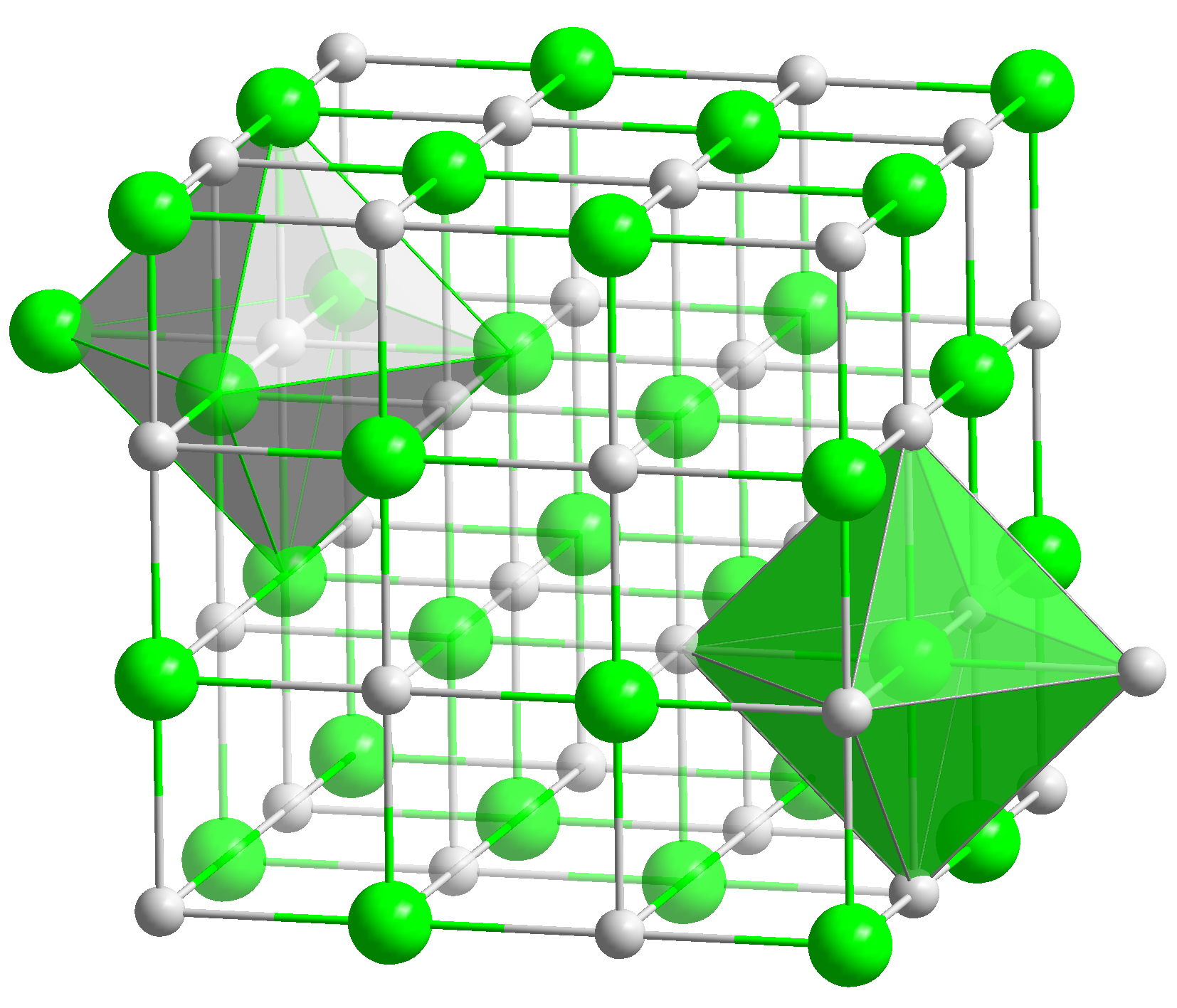
__ Li+     __ I
Identifiers
3D model (JSmol)
ChemSpider
ECHA InfoCard 100.030.735 Edit this at Wikidata
UNII
  • InChI=1S/HI.Li/h1H;/q;+1/p-1 checkY
    Key: HSZCZNFXUDYRKD-UHFFFAOYSA-M checkY
  • InChI=1/HI.Li/h1H;/q;+1/p-1
    Key: HSZCZNFXUDYRKD-REWHXWOFAM
  • [Li+].[I-]
Properties
LiI
Molar mass 133.85 g/mol
Appearance White crystalline solid
Density 4.076 g/cm3 (anhydrous)
3.494 g/cm3 (trihydrate)
Melting point 469 °C (876 °F; 742 K)
Boiling point 1,171 °C (2,140 °F; 1,444 K)
1510 g/L (0 °C)
1670 g/L (25 °C)
4330 g/L (100 °C) [1]
Solubility soluble in ethanol, propanol, ethanediol, ammonia
Solubility in methanol 3430 g/L (20 °C)
Solubility in acetone 426 g/L (18 °C)
−50.0×10⁻⁶ cm3/mol
1.955
Thermochemistry
54.4 J mol−1 K−1
75.7 J mol−1 K−1
−270.48 kJ/mol
−266.9 kJ/mol
Hazards
NFPA 704 (fire diamond)
NFPA 704 four-colored diamondHealth 2: Intense or continued but not chronic exposure could cause temporary incapacitation or possible residual injury. E.g. chloroformFlammability 0: Will not burn. E.g. waterInstability 0: Normally stable, even under fire exposure conditions, and is not reactive with water. E.g. liquid nitrogenSpecial hazards (white): no code
2
0
0
Flash point Non-flammable
Safety data sheet (SDS) External MSDS
Related compounds
Other anions
Lithium fluoride
Lithium chloride
Lithium bromide
Lithium astatide
Other cations
Sodium iodide
Potassium iodide
Rubidium iodide
Caesium iodide
Francium iodide
Except where otherwise noted, data are given for materials in their standard state (at 25 °C [77 °F], 100 kPa).
☒N verify (what is checkY☒N ?)

Lithium iodide, or LiI, is a compound of lithium and iodine. When exposed to air, it becomes yellow in color, due to the oxidation of iodide to iodine.[2] It crystallizes in the NaCl motif.[3] It can participate in various hydrates.[4]

Applications

[edit]
LiI chains grown inside double-wall carbon nanotubes.[5]

Lithium iodide is used as a solid-state electrolyte for high-temperature batteries. It is also the standard electrolyte in artificial pacemakers[6] due to the long cycle life it enables.[7] The solid is used as a phosphor for neutron detection.[8] It is also used, in a complex with Iodine, in the electrolyte of dye-sensitized solar cells.

In organic synthesis, LiI is useful for cleaving C-O bonds. For example, it can be used to convert methyl esters to carboxylic acids:[9]

RCO2CH3 + LiI → RCO2Li + CH3I

Similar reactions apply to epoxides and aziridines.

Lithium iodide was used as a radiocontrast agent for CT scans. Its use was discontinued due to renal toxicity. Inorganic iodine solutions suffered from hyperosmolarity and high viscosities. Current iodinated contrast agents are organoiodine compounds.[10]

It is also useful in MALDI imaging mass spectrometry of lipids by adding lithium salts to the matrix solution.[11]

See also

[edit]

References

[edit]
[edit]
Revisions and contributorsEdit on WikipediaRead on Wikipedia
from Grokipedia
Lithium iodide is an with the LiI, composed of cations (Li⁺) and anions (I⁻), and it serves as a source of iodide ions in various chemical applications. It appears as a white crystalline solid that is highly hygroscopic and turns yellow upon exposure to air due to of the iodide to iodine. The compound has a of 133.85 g/mol and exhibits high in (approximately 1670 g/L at 25 °C), as well as in polar solvents like and . In terms of physical properties, lithium iodide has a of 4.08 g/cm³, a of 469 °C, and a of 1171 °C. It crystallizes in the cubic rock salt () structure with the Fm-3m (No. 225), where each lithium ion is octahedrally coordinated to six iodide ions at a of 2.98 Å, forming a network of corner- and edge-sharing octahedra. Lithium iodide finds prominent use as a in high-temperature batteries and implantable devices, such as lithium-iodine batteries employed in cardiac pacemakers for their long-term reliability. It also serves as an additive in lithium-sulfur batteries and dye-sensitized solar cells to enhance cycle life and performance. In , it acts as a reagent for cleaving C-O bonds, facilitating ester cleavage, , epoxide opening, and C-C bond formation reactions. Additionally, lithium iodide is utilized as a in devices due to the neutron-capture properties of lithium-6.

Properties

Physical properties

Lithium iodide has the LiI and a of 133.85 g/mol. It appears as a white to yellow to beige powder or crystalline solid. Due to its highly hygroscopic nature, it readily absorbs moisture from the air, leading to deliquescence and often forming hydrates such as the common trihydrate LiI·3H₂O. In its anhydrous form, lithium iodide has a of 446 °C and a of 1171 °C. The of the anhydrous is 3.49 g/cm³ at 25 °C. The trihydrate form has a of approximately 3.49 g/cm³. Lithium iodide exhibits high in polar solvents. It is highly soluble in , with a solubility of 165 g/100 mL at 20 °C, increasing to 433 g/100 mL at 80 °C. It is also soluble in and acetone (42.6 g/100 g at 18 °C), as well as in (343 g/100 g at 20 °C). The solid-state of lithium iodide is of the rock salt (NaCl) type, featuring a face-centered cubic lattice with Li⁺ cations octahedrally coordinated to six I⁻ anions, and vice versa.

Chemical properties

Lithium iodide (LiI) is an ionic compound consisting of the cation (Li⁺) and iodide anion (I⁻), characterized by strong electrostatic interactions typical of halides. In aqueous solutions, it behaves as a , fully dissociating into its constituent ions to facilitate high ionic conductivity. As a neutral salt derived from a strong base and strong acid, its aqueous solutions are expected to be neutral, with observed values of 5.2–8.8 in 10% solutions due to impurities. The behavior of involves the anion (I⁻), which can be readily oxidized to elemental iodine (I₂) under oxidizing conditions, while the cation (Li⁺) remains stable and does not participate in reactions within the compound. In the presence of excess iodine, forms polyiodide complexes, such as LiI·I₂ (or LiI₃), where the ions coordinate with additional I₂ molecules to create extended anionic chains. Lithium iodide demonstrates thermal stability up to high temperatures, remaining intact below its , but undergoes decomposition above approximately 1171 °C.

Synthesis

Laboratory preparation

Lithium iodide can be synthesized in the through simple acid-base neutralization reactions or direct combination, suitable for small-scale . A standard method involves reacting aqueous with to form lithium iodide solution:
\ceLiOH(aq)+HI(aq)>LiI(aq)+H2O(l)\ce{LiOH(aq) + HI(aq) -> LiI(aq) + H2O(l)}
This reaction occurs readily at and is often used for its simplicity and availability of reagents.
Another approach utilizes and , producing gas that facilitates the reaction:
\ceLi2CO3(aq)+2HI(aq)>2LiI(aq)+H2O(l)+CO2(g)\ce{Li2CO3(aq) + 2HI(aq) -> 2LiI(aq) + H2O(l) + CO2(g)}
High-purity is typically employed, with the acid added gradually under stirring to control ; the solution is then filtered to remove any excess .
For preparing anhydrous lithium iodide, lithium metal is directly combined with iodine in a vigorous, :
\ce2Li(s)+I2(s)>2LiI(s)\ce{2Li(s) + I2(s) -> 2LiI(s)}
This synthesis requires an inert atmosphere, such as or , to prevent 's reaction with atmospheric moisture or oxygen, and is conducted in a dry or sealed apparatus.
Regardless of the method, the product is commonly purified by recrystallization from or , leveraging lithium iodide's high to separate impurities effectively; multiple recrystallizations may be needed for high purity (>99%). These procedures generally provide high yields due to the favorable of the reactions.

Industrial production

Lithium iodide is produced on a commercial scale primarily through the reaction of (Li₂CO₃) or (LiOH) with (HI) in aqueous solution. This neutralization reaction yields lithium iodide trihydrate (LiI·3H₂O), which is then dehydrated under vacuum and controlled heating to produce anhydrous LiI. is generated in situ by reducing elemental iodine (I₂) with (H₂S), producing HI and elemental sulfur as a . Lithium raw materials are sourced from brine extraction operations, notably the Salar de Atacama in Chile, which supplies a significant portion of global lithium for compounds like Li₂CO₃ and LiOH. Iodine is obtained from natural brines or as a coproduct from Chilean nitrate (caliche) deposits during fertilizer production. Global production of lithium iodide reached approximately 3,200 metric tons in 2024, with growth driven by demand in battery electrolytes and pharmaceuticals; industrial-grade product typically achieves purity levels exceeding 99%. Recent developments since 2020 emphasize cleaner processes to reduce waste, such as metathesis using (KI) and (Li₂SO₄) in a membrane reactor, yielding high-purity LiI (up to 98.9%) at lower energy costs. Another approach, detailed in a 2006 but with ongoing relevance, involves direct reaction of metal or with elemental iodine in aprotic solvents to form concentrated LiI solutions suitable for immediate use. Production costs are heavily influenced by lithium price volatility, with lithium carbonate prices averaging approximately $10,000 per metric ton in 2025 (as of November 2025), alongside expenses for iodine and energy-intensive dehydration steps.

Applications

In batteries and energy storage

Lithium iodide serves as a key component in various battery technologies, particularly as a solid-state electrolyte and cathode material in primary lithium batteries. Its high chemical stability and lithium-ion conductivity make it suitable for applications requiring long-term reliability and operation under elevated temperatures. In lithium-iodine (Li/I₂) cells, lithium iodide forms the basis of the cathode, where iodine is reduced to polyiodides during discharge, enabling a stable electrochemical reaction. These batteries have been pivotal in implantable medical devices since the 1970s, with the lithium/iodine-polyvinylpyridine system first implanted in 1972 and becoming the predominant power source for cardiac pacemakers by the 1980s. In high-temperature lithium batteries, lithium iodide acts as a solid-state electrolyte, often in composites like lithium iodide-aluminum oxide, which exhibit enhanced ionic conductivity suitable for operation between 80–150 °C. This range leverages lithium iodide's thermal stability, allowing sustained performance without liquid electrolyte degradation. For instance, in primary Li/I₂ cells designed for harsh environments, the solid electrolyte prevents leakage and maintains integrity at elevated temperatures. Historically, these batteries powered over 90% of cardiac pacemaker implants in the 1980s due to their decade-long lifespan and low self-discharge rate. The mechanism underlying lithium iodide's efficacy involves its high lithium-ion conductivity, reaching approximately 10⁻³ S/cm at 300 °C, which facilitates efficient transport while its solid nature mechanically suppresses formation on metal anodes. A uniform lithium iodide protective layer on the surface promotes homogeneous deposition, mitigating uneven plating that leads to short circuits. This prevention is particularly beneficial in solid-state configurations, enhancing and cycle stability. Beyond primary batteries, lithium iodide is used as an additive in lithium-sulfur (Li-S) batteries to improve cycle life by forming lithium-ion-permeable protective coatings on the , reducing shuttling. This addition enables enhanced stability, with cells demonstrating over 500 cycles while retaining significant capacity, addressing a key limitation in Li-S systems. In dye-sensitized solar cells, lithium iodide enhances ionic conductivity and stability, contributing to power conversion efficiencies up to 6.26% by improving iodide/triiodide mediation. Overall, Li/I₂ batteries achieve practical energy densities up to 300 Wh/kg, with operating temperatures of 80–150 °C in high-temperature variants, underscoring lithium iodide's role in advancing reliable energy storage solutions.

In medicine and diagnostics

Lithium iodide has been employed historically as a radiocontrast agent in X-ray computed tomography (CT) imaging, particularly in the early development of water-soluble iodine-based compounds during the 1920s and 1930s. Its use allowed visualization of vascular structures and organs due to the high atomic number of iodine, which provides strong X-ray attenuation. However, administration typically involved intravenous or oral routes at doses of approximately 0.5–1 g/kg body weight, adjusted for iodine content, though specific protocols varied by procedure. In medical practice, lithium iodide inhibits the release of thyroid hormones T3 and T4 from the gland, similar to other iodide therapies used in managing . This effect stems from the ion's interference with iodine organification and hormone secretion, making it a potential adjunct in conditions like , though clinical use has largely favored other lithium salts such as . As a pharmaceutical precursor, lithium iodide facilitates iodination reactions in the synthesis of dopamine-related compounds, which are critical for treating symptoms such as muscle stiffness and tremors. For instance, it serves as a reagent in producing L-ribonucleosides and other agents, highlighting its role in . The medical application of lithium iodide as a was discontinued in the mid-20th century due to its renal , which manifested as from high osmolality and direct nephrotoxic effects at required iodine concentrations. This led to its replacement by safer non-ionic alternatives like , which exhibit lower profiles. Today, its use is limited to settings, with no approved clinical formulations for routine diagnostics.

Other uses

Lithium iodide crystals doped with europium (LiI:Eu) serve as efficient scintillators in detectors for thermal neutron detection, leveraging the high neutron capture cross-section of the ⁶Li isotope to achieve detection efficiencies exceeding 90% for thermal neutrons. These crystals produce scintillation light upon neutron interaction via the ⁶Li(n,α)³H reaction, enabling clear discrimination between neutron and gamma events through pulse height analysis. In , lithium iodide acts as a reagent for cleaving carbon-oxygen bonds in alkyl aryl , converting them to the corresponding under mild conditions, often in polar solvents like (DMF) for selective deprotection strategies. This reactivity stems from the nucleophilic iodide ion, which facilitates SN2-type displacement, making LiI valuable in synthetic routes requiring ether bond scission without affecting other functional groups. Lithium iodide finds application in due to its high of approximately 1.955 and broad transmission window in the spectrum, extending up to several micrometers, which suits it for specialized optical devices such as windows and lenses in IR systems. Its hygroscopic nature requires protective coatings, but the material's support use in components demanding high index contrast and low dispersion in the mid- to far-IR range. In nuclear applications, thallium-doped lithium iodide (LiI:Tl) crystals function as scintillators for gamma-ray , offering good energy resolution and light yield comparable to other detectors, with peak emission around 550 nm for efficient coupling to tubes. The doping enhances radiative recombination, improving sensitivity for low-energy gamma detection in spectroscopic setups. A 2014 study explored lithium iodide in the development of electrolytes, such as those based on rice starch, where it enhances ionic conductivity for sustainable applications in and energy devices.

Safety and environmental considerations

Toxicity and handling

Lithium iodide is classified as an irritant and poses risks of primarily through , with an oral LD50 in rats reported as greater than 300 mg/kg but less than 2000 mg/kg, indicating it is . It causes skin irritation upon contact, serious eye damage including redness and pain, and may irritate the if inhaled, leading to coughing or . Chronic exposure to lithium iodide can result in lithium accumulation, which may lead to manifesting as tremors, confusion, and due to interference with function. Prolonged iodide exposure from the compound can cause iodism, characterized by rashes, gastrointestinal upset such as and , and irritation of mucous membranes. Lithium iodide is not classified as carcinogenic. The primary exposure routes include of particles, which is facilitated by its hygroscopic that can form aerosols in moist environments; through accidental swallowing; and dermal absorption via contact. Safe handling requires working in a well-ventilated to minimize risks, and using such as gloves, safety goggles, and protective clothing to prevent and . Storage should be in a dry, airtight container or to avoid absorption and deliquescence. In case of exposure, first aid measures include immediately flushing affected eyes or with copious amounts of for at least 15 minutes; for , moving the person to fresh air; and for , seeking immediate medical attention without inducing vomiting, as this may exacerbate injury. Regulatory guidelines include an ACGIH threshold limit value-time-weighted average (TLV-TWA) of 0.025 mg/m³ (as Li) for compounds, with skin notation indicating potential dermal absorption. It is regulated as an irritant under GHS classifications but does not require specific handling beyond standard precautions for such substances.

Environmental impact

The production of lithium iodide (LiI) begins with lithium extraction from brine deposits, primarily in arid regions like the spanning , , and , where evaporation processes deplete scarce freshwater resources. Approximately 2 million liters of water are evaporated per tonne of lithium produced, exacerbating water stress in areas already facing deficits, such as Chile's , where mining activities have consumed over 65% of available water. Iodine, the other key component, is sourced almost exclusively from caliche ore deposits in northern Chile's , where and operations lead to significant environmental burdens, including resource depletion and emissions from electricity and fuel use in mining and leaching operations, contributing substantially to the cradle-to-gate GWP of approximately 14.8 kg CO₂ eq. per kg iodine. These activities also demand substantial water and energy inputs, contributing to local from dust and chemical residues. Waste streams from LiI manufacturing, containing iodide effluents, present toxicity risks to aquatic ecosystems. Iodide ions are highly toxic to sensitive invertebrates like Daphnia magna (96-hour LC50 of 0.17 mg/L), though less so to fish such as (Oncorhynchus mykiss; 96-hour LC50 of 860 mg/L). Upon disposal, LiI qualifies as an environmentally hazardous substance under transport regulations and must be managed as to prevent leaching into waterways. In , its high facilitates dispersal rather than , while iodide ions can bioaccumulate in aquatic food webs, with factors up to 15 in fish, potentially disrupting thyroid hormone regulation in . Sustainability measures are addressing these challenges through and regulatory frameworks. Advanced processes for recovering from end-of-life batteries, including those incorporating iodide electrolytes, can achieve up to 95% material recovery, reducing the need for virgin . The European Union's Batteries (EU) 2023/1542, applying from 2024, sets progressive collection targets (e.g., 63% for portable batteries by 2027) and requires declarations from 2025, with maximum thresholds for EV batteries (e.g., around 80 kg CO₂e/kWh) enforced from 2027 via delegated acts, as of 2025, to curb emissions from production and disposal. For specialty applications like lithium-iodine batteries in medical devices, end-of-life follows medical waste protocols, with emerging pilots achieving high iodide recovery as of 2025. Energy-intensive in processing contributes to a of about 2.9 kg CO₂e per kg of equivalent, while iodine extraction from adds further emissions through and leaching.

References

Add your contribution
Related Hubs
User Avatar
No comments yet.