


Community hub
Recent from talks
Contribute something
Nothing was collected or created yet.
Grand Prix of Long Beach
View on Wikipedia | |
 | |
| IndyCar Series | |
|---|---|
| Location | Long Beach, California 33°45′59″N 118°11′34″W / 33.76639°N 118.19278°W |
| Corporate sponsor | Acura (Honda) |
| First race | 1975 |
| First ICS race | 2009 |
| Distance | 177.12 mi (285.05 km) |
| Laps | 90 |
| Previous names | Long Beach Grand Prix (1975) United States Grand Prix West (1976–1983) Toyota Grand Prix of the United States (1980–1981, 1983) Toyota Grand Prix of Long Beach (1984–2018) |
| Most wins (driver) | Al Unser Jr. (6) |
| Most wins (team) | Team Penske (7) Ganassi (7) |
| Most wins (manufacturer) | Chassis: Dallara (15) Engine: Honda (18) Tires: Firestone (21) |
| Circuit information | |
| Length | 1.968 mi (3.167 km) |
| Turns | 11 |
| Lap record | 1:05.309 ( Colton Herta, Dallara IR18–Honda, 2022, IndyCar) Colton Herta, Dallara IR18–Honda, 2022, IndyCar) |
The Grand Prix of Long Beach (known as Acura Grand Prix of Long Beach since 2019 for naming rights reasons) is an IndyCar Series race held on a street circuit in downtown Long Beach, California. It was the premier race on the CART/Champ Car World Series calendar from 1984 to 2008, with the 2008 race being the final Champ Car series race prior to the formal unification and end of the open-wheel "split" between CART and Indy Racing League (IRL). Since 2009, the race has been part of the unified IndyCar Series.[1][2] The race is typically held in April. It is the second-oldest continuously running event in IndyCar racing behind only the Indianapolis 500, and is considered one of the most prestigious events on the circuit.
The Long Beach Grand Prix is the longest running major street race held in North America. It was started in 1975 as a Formula 5000 race by event founder Christopher Pook, and became a Formula One event in 1976.[3] In an era when turbocharged engines were starting to come to prominence in Formula One, Long Beach remains one of the few circuits used from the time Renault introduced turbos in 1977 until the last Long Beach Grand Prix in 1983 that never once saw a turbo-powered car take victory.
John Watson's win for McLaren in 1983 holds the Formula One record for the lowest ever starting position for a race winner. In a grid consisting of 26 cars, Watson started 22nd in his McLaren-Ford. That same race also saw Watson's teammate (and 1982 Long Beach winner) Niki Lauda finish second after starting 23rd on the grid. René Arnoux, who finished third in his Ferrari 126C2B, was the only driver to ever finish on the Formula One podium at Long Beach driving a turbocharged car.
In 1984, the race switched from a Formula One race to a CART IndyCar event. Support races over the years have included Indy Lights, IMSA, Atlantics, Pirelli World Challenge, Trans-Am Series, Formula D, Stadium Super Trucks, Formula E, and the Toyota Pro/Celebrity Race. Toyota was a sponsor of the event since its beginning and title sponsor from 1980 to 2018,[4] believed to be the longest continuously running sports sponsorship in the U.S.
The Long Beach Grand Prix has been announced since 1978 by Bruce Flanders (and various guest announcers). The Long Beach Grand Prix in April is the single largest event in the city of Long Beach. Attendance for the weekend regularly reaches or exceeds 200,000 people. In 2006, the Long Beach Motorsports Walk of Fame was created to honor selected past winners and key contributors to the sport of auto racing.
Event history
[edit]

The Long Beach Grand Prix was the brainchild of promoter Chris Pook, a former travel agent from England. Pook was inspired by the Monaco Grand Prix, and believed that a similar event had the potential to succeed in the Southern California area. The city of Long Beach was selected, approximately 25 miles (40 km) south of downtown Los Angeles. A waterfront circuit, near the Port of Long Beach was laid out on city streets, and despite the area at the time being mostly a depressed, industrial port city, the first event drew 30,000 fans. The inaugural race was held in September 1975 as part of the Formula 5000 series.[5][6]
In 1976, the United States Grand Prix West was created, providing two grand prix races annually in the United States for a time. Long Beach became a Formula One event for 1976 and the race was moved to March or April. Meanwhile, the United States Grand Prix East at Watkins Glen International was experiencing a noticeably steady decline. Despite gaining a reputation of being demanding and rough on equipment, Long Beach almost immediately gained prominence owing much to its pleasant weather, picturesque setting, and close proximity to Los Angeles and the glitzy Hollywood area.[5][6][7] When Watkins Glen was dropped from the Formula One calendar after 1980, the now-established Long Beach began to assume an even more prominent status.
Despite exciting races and strong attendance, the event was not financially successful as a Formula One event. The promoter was risking a meager $100,000 profit against a $6–7 million budget. Fearing that one poor running could bankrupt the event, Pook convinced city leaders to change the race to a CART Indy car event beginning in 1984. In short time, the event grew to prominence on the Indy car circuit and has been credited with triggering a renaissance in the city of Long Beach. The race was used to market the city, and in the years since the race's inception, many dilapidated and condemned buildings have been replaced with high-rise hotels and tourist attractions.[5][6]
The event served as a CART/Champ Car race from 1984 to 2008, then became an IndyCar Series race event in 2009. The 2017 race was the 43rd running, and the 34th consecutive as an IndyCar race, one of the longest continuously running events in the history of American open-wheel car racing. On three occasions (1984, 1985 and 1987) the race served as the CART season opener. In seven separate seasons (1986, 1988, 1989, 1990, 1992, 1993 and 1994), it served as the final race before the Indianapolis 500.
Due to the COVID-19 pandemic, the 2020 race was canceled as part of the City of Long Beach's ban on events with estimated attendance of more than 250.[8] The following year, as a preparatory measure for the pandemic's effects on the schedule, the race was moved from its traditional April date to September 26, and served as the season finale.[9] With the rise of the Delta variant there were concerns from IndyCar and the event promoters that the race would have to be canceled for 2021 or run with an attendance cap, but the promoters and the city of Long Beach were able to work out a compromise on safety measures and rapid testing to allow the event to go forward with full capacity.[10]
The Grand Prix returned to its traditional April date for the 2022 season.
On March 28, 2024, it was announced that former ChampCar owner Gerald Forsythe would buy a 50% stake in the Long Beach Grand Prix from the estate of the late Kevin Kalkhoven.[11]
First wins
[edit]Despite the challenging nature of the course, the Grand Prix of Long Beach has produced the first Indy/Champ Car victories for several drivers. Drivers who won their first career Indy car race at Long Beach include Michael Andretti, Paul Tracy, Juan Pablo Montoya, Mike Conway, Takuma Sato, and Kyle Kirkwood. For Michael Andretti, the Long Beach Grand Prix has the distinction of being his first career Indy car win (1986), and 42nd and final career IndyCar win (2002).
James Hinchcliffe won his first-career Indy Lights race at Long Beach in 2010, then followed it up with an IndyCar Series win at the track in 2017. In 2005, Katherine Legge won the Atlantic Championship support race at Long Beach, her first start in the series. In doing so, she became the first female driver to win a developmental open-wheel race in North America.[12]
Circuit
[edit]The current race circuit is a 1.968-mile (3.167 km) temporary road course laid out in the city streets surrounding the Long Beach Convention Center. The convention center actually doubled as the pit paddock during the days of Formula One. The circuit also goes primarily over the former location of The Pike historic amusement zone. The track is particularly noted for its last section, a sharp hairpin turn followed by a long, slightly curved front straightaway which runs the length of Shoreline Drive. The circuit is situated on the Long Beach waterfront, and is lined with palm trees (especially along the front straightaway towards the Aquarium of the Pacific), making for a scenic track. Long Beach is classified as an FIA Grade Two circuit.[13]
The circuit has undergone numerous layout changes since the race's inception in 1975. All iterations have featured a signature hairpin turn, main stretch along Shoreline Drive, and back stretch along Seaside Way or Ocean Boulevard. The first grand prix layout measured 2.02 miles, and featured two hairpins, one at each end of the Shoreline Drive straightaway. In its early years, the starting line and the finish line were located on different sides of the course.
In 1982, the hairpin turn and the end of the main stretch (turn 1) was removed, and replaced with a 90-degree right turn, followed by 90-degree left turn. When the race became a CART series event, the layout was changed significantly. The final turn hairpin was moved to the east, closer to the pit entrance. Other slow chicanes and turns were removed. After a minor tweak to the layout in 1987, the track was shortened in 1992 by the removal of the Park Avenue loop. That created a longer Seaside Way back stretch and a faster run to the passing zone.
In 1999, due to new construction in the area, the turn one set of curves was removed, and replaced with the new fountain complex. Turn one now became a 90-degree left turn, leading into a roundabout around a fountain, and a series of three 90-degree turns. A year later, this segment was revised again, to create a longer straightaway leading to Pine Avenue. This course layout remains intact today.
Course layouts
[edit]-
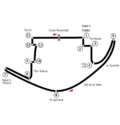 Grand Prix Circuit (1975–1977)
 -
 Grand Prix Circuit (1978–1981)
 -
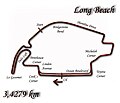 Grand Prix Circuit (1982)
 -
 Grand Prix Circuit (1983)
 -
 Grand Prix Circuit (1992–1998)
 -
 Grand Prix Circuit (1999)
 -
 Grand Prix Circuit (2000–present)
 -
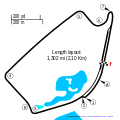 ePrix Circuit (2015–2016)


Events
[edit]Formula 5000 and Formula One
[edit]The inaugural race was held as part of the Formula 5000 series. From 1976 to 1983 the event was a Formula One race, commonly known as the United States Grand Prix West.
The City of Long Beach and the Grand Prix Association signed a contract in 2014 to hold the Grand Prix as part of the IndyCar Series through 2018, with optional extensions available through 2020.[14] In 2016, the Long Beach City Council issued an RFP, opening up consideration for returning the event to a Formula One race as early as 2019.[15] In August 2017, after a study was completed and after discussions, the switch to Formula One was rejected. The city council voted unanimously to continue the event as part of the IndyCar Series.[16]
2008 Long Beach/Motegi "split weekend"
[edit]
During negotiations which led to the unification of the Champ Car World Series and the IRL IndyCar Series in 2008, a scheduling conflict arose between the IndyCar race held at Twin Ring Motegi (April 19) and the Champ Car race at Long Beach (April 20). Neither party was able to reschedule their event.
A compromise was made to create a unique "split weekend" of races at Motegi and Long Beach. The existing Indy Racing League teams would compete in Japan, while the ex-Champ Car teams raced at Long Beach. Both races paid equal points towards the 2008 IndyCar Series championship. The ex-Champ Car teams utilized the Panoz DP01 machines, the cars that would have been used in 2008 had the unification not taken place. The 2008 Long Beach Grand Prix was billed as the "final Champ Car race."
Drifting
[edit]Beginning in 2005, the event included a demonstration by participants in the Formula D drifting series. Since 2006 Formula D has held the first round of their pro series on Turns 9–11 on the weekend prior to the Grand Prix. In 2013 the Motegi Super Drift Challenge, a drifting competition, was added on the GP weekend, using the same Turn 9–11 course as Formula D. The Motegi Super Drift Challenge is the only event during the GP that runs at night, under floodlights.
North American Touring Car Championship
[edit]Long Beach hosted the opening round of the 1997 North American Touring Car Championship, being won by Neil Crompton in a Honda Accord.
Formula E
[edit]A modified version of the Long Beach Grand Prix track was used during the Long Beach ePrix of the FIA Formula E Championship. The track is 2.1 km (1.3 mi) in length and features seven turns.[17][18] Admission to the first event was free: "the free admission will afford everyone the opportunity to come out and witness this historic and unique event", Jim Michaelian, president of the Grand Prix Assn. of Long Beach, said in a statement.[19][20] The ePrix was held once again in 2016. However, it was not renewed for the third Formula E season in 2017.[21]
Race winners
[edit]| Season | Date | Driver | Team | Chassis | Engine | Tires | Race distance | Race time | Average speed (mph) |
Report | |
|---|---|---|---|---|---|---|---|---|---|---|---|
| Laps | Miles (km) | ||||||||||
| Formula 5000 | |||||||||||
| 1975 | Sept 28 |  Brian Redman Brian Redman
|
Carl A. Haas Racing | Lola T332 | Chevrolet | Goodyear | 50 | 101 (162.543) | 1:10:12 | 86.325 | Report |
| Formula One | |||||||||||
| 1976 | March 28 |  Clay Regazzoni Clay Regazzoni
|
Scuderia Ferrari SpA SEFAC | Ferrari 312T | Ferrari | Goodyear (2) | 80 | 161.6 (260.069) | 1:53:18 | 85.572 | Report |
| 1977 | April 3 | Mario Andretti
|
Team Lotus | Lotus 78 | Ford–Cosworth | Goodyear (3) | 80 | 161.6 (260.069) | 1:51:35 | 87.073 | Report |
| 1978 | April 2 |  Carlos Reutemann Carlos Reutemann
|
Scuderia Ferrari SpA SEFAC (2) | Ferrari 312T3 (2) | Ferrari (2) | Michelin | 80 | 161.6 (260.069) | 1:52:01 | 86.555 | Report |
| 1979 | April 8 |  Gilles Villeneuve Gilles Villeneuve
|
Scuderia Ferrari SpA SEFAC (3) | Ferrari 312T4 (3) | Ferrari (3) | Michelin (2) | 80 | 161.6 (260.069) | 1:50:25 | 87.812 | Report |
| 1980 | March 30 |  Nelson Piquet Nelson Piquet
|
Brabham Racing Team | Brabham BT49 | Ford–Cosworth (2) | Goodyear (4) | 80 | 161.6 (260.069) | 1:50:18 | 87.899 | Report |
| 1981 | March 15 |  Alan Jones Alan Jones
|
Williams Racing Team | Williams FW07 | Ford–Cosworth (3) | Goodyear (5) | 80 | 161.6 (260.069) | 1:50:41 | 87.601 | Report |
| 1982 | April 4 |  Niki Lauda Niki Lauda
|
McLaren International | McLaren MP4/1 | Ford–Cosworth (4) | Goodyear (6) | 75 | 159.75 (257.092) | 1:58:25 | 80.939 | Report |
| 1983 | March 27 | John Watson
|
McLaren International (2) | McLaren MP4/1 (2) | Ford–Cosworth (5) | Michelin (3) | 75 | 152.55 (245.505) | 1:53:34 | 80.624 | Report |
| CART/Champ Car World Series | |||||||||||
| 1984 | March 31 | Mario Andretti (2)
|
Newman/Haas Racing | Lola (2) | Cosworth (6) | Goodyear (7) | 112 | 187.04 (301.011) | 2:15:23 | 82.898 | Report |
| 1985 | April 14 | Mario Andretti (3)
|
Newman/Haas Racing (2) | Lola (3) | Cosworth (7) | Goodyear (8) | 90 | 150.3 (241.884) | 1:42:50 | 87.694 | Report |
| 1986 | April 13 | Michael Andretti
|
Kraco Racing | March | Cosworth (8) | Goodyear (9) | 95 | 158.65 (255.322) | 1:57:34 | 80.965 | Report |
| 1987 | April 5 | Mario Andretti (4)
|
Newman/Haas Racing (3) | Lola (4) | Chevrolet (2) | Goodyear (10) | 95 | 158.65 (255.322) | 1:51:33 | 85.33 | Report |
| 1988 | April 17 | Al Unser Jr.
|
Galles Racing | March (2) | Chevrolet (3) | Goodyear (11) | 95 | 158.65 (255.322) | 1:53:47 | 83.655 | Report |
| 1989 | April 16 | Al Unser Jr. (2)
|
Galles Racing (2) | Lola (5) | Chevrolet (4) | Goodyear (12) | 95 | 158.65 (255.322) | 1:51:19 | 85.503 | Report |
| 1990 | April 22 | Al Unser Jr. (3)
|
Galles/Kraco Racing (3) | Lola (6) | Chevrolet (5) | Goodyear (13) | 95 | 158.65 (255.322) | 1:53:00 | 84.227 | Report |
| 1991 | April 14 | Al Unser Jr. (4)
|
Galles/Kraco Racing (4) | Lola (7) | Chevrolet (6) | Goodyear (14) | 95 | 158.65 (255.322) | 1:57:14 | 81.195 | Report |
| 1992 | April 12 | Danny Sullivan
|
Galles/Kraco Racing (5) | Galmer | Chevrolet (7) | Goodyear (15) | 105 | 166.53 (268.004) | 1:48:56 | 91.945 | Report |
| 1993 | April 18 | Paul Tracy
|
Team Penske | Penske | Chevrolet (8) | Goodyear (16) | 105 | 166.53 (268.004) | 1:47:36 | 93.089 | Report |
| 1994 | April 17 | Al Unser Jr. (5)
|
Team Penske (2) | Penske (2) | Ilmor | Goodyear (17) | 105 | 166.53 (268.004) | 1:40:53 | 99.283 | Report |
| 1995 | April 9 | Al Unser Jr. (6)
|
Team Penske (3) | Penske (3) | Mercedes-Benz | Goodyear (18) | 105 | 166.53 (268.004) | 1:49:32 | 91.422 | Report |
| 1996 | April 14 | Jimmy Vasser
|
Chip Ganassi Racing | Reynard | Honda | Firestone | 105 | 166.53 (268.004) | 1:44:02 | 96.281 | Report |
| 1997 | April 13 |  Alex Zanardi Alex Zanardi
|
Chip Ganassi Racing (2) | Reynard (2) | Honda (2) | Firestone (2) | 105 | 166.53 (268.004) | 1:46:17 | 93.999 | Report |
| 1998 | April 5 | Alex Zanardi (2)
|
Chip Ganassi Racing (3) | Reynard (3) | Honda (3) | Firestone (3) | 105 | 166.53 (268.004) | 1:51:29 | 88.946 | Report |
| 1999 | April 18 |  Juan Pablo Montoya Juan Pablo Montoya
|
Chip Ganassi Racing (4) | Reynard (4) | Honda (4) | Firestone (4) | 85 | 155.04 (249.512) | 1:45:48 | 87.915 | Report |
| 2000 | April 16 | Paul Tracy (2)
|
Team Green | Reynard (5) | Honda (5) | Firestone (5) | 82 | 161.376 (259.709) | 1:57:11 | 82.626 | Report |
| 2001 | April 8 |  Hélio Castroneves Hélio Castroneves
|
Team Penske (4) | Reynard (6) | Honda (6) | Firestone (6) | 82 | 161.376 (259.709) | 1:52:17 | 86.223 | Report |
| 2002 | April 14 | Michael Andretti (2)
|
Team Green (2) | Reynard (7) | Honda (7) | Bridgestone | 90 | 177.12 (285.047) | 2:02:14 | 86.935 | Report |
| 2003 | April 13 | Paul Tracy (3)
|
Forsythe Racing | Lola (8) | Ford–Cosworth (9) | Bridgestone (2) | 90 | 177.12 (285.047) | 1:56:01 | 91.59 | Report |
| 2004 | April 18 | Paul Tracy (4)
|
Forsythe Racing (2) | Lola (9) | Ford–Cosworth (10) | Bridgestone (3) | 81 | 159.408 (256.542) | 1:44:12 | 91.785 | Report |
| 2005 | April 10 |  Sébastien Bourdais Sébastien Bourdais
|
Newman/Haas Racing (4) | Lola (10) | Ford–Cosworth (11) | Bridgestone (4) | 81 | 159.408 (256.542) | 1:46:29 | 89.811 | Report |
| 2006 | April 9 | Sébastien Bourdais (2)
|
Newman/Haas Racing (5) | Lola (11) | Ford–Cosworth (12) | Bridgestone (5) | 74 | 145.632 (234.371) | 1:40:07 | 87.268 | Report |
| 2007 | April 15 | Sébastien Bourdais (3)
|
Newman/Haas/Lanigan Racing (6) | Panoz | Cosworth (13) | Bridgestone (6) | 78 | 153.504 (247.04) | 1:40:43 | 91.432 | Report |
| IndyCar Series | |||||||||||
| 2008* | April 20 | Will Power
|
KV Racing Technology | Panoz (2) | Cosworth (14) | Bridgestone (7) | 83 | 163.344 (262.876) | 1:45:25 | 92.964 | Report |
| 2009 | April 19 | Dario Franchitti
|
Chip Ganassi Racing (5) | Dallara | Honda (8) | Firestone (7) | 85 | 167.28 (269.211) | 1:58:47 | 84.491 | Report |
| 2010 | April 18 | Ryan Hunter-Reay
|
Andretti Autosport | Dallara (2) | Honda (9) | Firestone (8) | 85 | 167.28 (269.211) | 1:47:13 | 93.619 | Report |
| 2011 | April 17 | Mike Conway
|
Andretti Autosport (2) | Dallara (3) | Honda (10) | Firestone (9) | 85 | 167.28 (269.211) | 1:53:11 | 88.676 | Report |
| 2012 | April 15 | Will Power (2)
|
Team Penske (5) | Dallara (4) | Chevrolet (9) | Firestone (10) | 85 | 167.28 (269.211) | 1:54:02 | 88.021 | Report |
| 2013 | April 21 |  Takuma Sato Takuma Sato
|
A. J. Foyt Enterprises | Dallara (5) | Honda (11) | Firestone (11) | 80 | 157.44 (253.375) | 1:50:09 | 85.763 | Report |
| 2014 | April 13 | Mike Conway (2)
|
Ed Carpenter Racing | Dallara (6) | Chevrolet (10) | Firestone (12) | 80 | 157.44 (253.375) | 1:54:42 | 82.362 | Report |
| 2015 | April 19 |  Scott Dixon Scott Dixon
|
Chip Ganassi Racing (6) | Dallara (7) | Chevrolet (11) | Firestone (13) | 80 | 157.44 (253.375) | 1:37:35 | 96.8 | Report |
| 2016 | April 17 | Simon Pagenaud
|
Team Penske (6) | Dallara (8) | Chevrolet (12) | Firestone (14) | 80 | 157.44 (253.375) | 1:33:54 | 100.592 | Report |
| 2017 | April 9 | James Hinchcliffe
|
Schmidt Peterson Motorsports | Dallara (9) | Honda (12) | Firestone (15) | 85 | 167.28 (269.211) | 1:50:29 | 90.845 | Report |
| 2018 | April 15 | Alexander Rossi
|
Andretti Autosport (3) | Dallara (10) | Honda (13) | Firestone (16) | 85 | 167.28 (269.211) | 1:53:15 | 88.622 | Report |
| 2019 | April 14 | Alexander Rossi (2)
|
Andretti Autosport (4) | Dallara (11) | Honda (14) | Firestone (17) | 85 | 167.28 (269.211) | 1:41:35 | 88.622 | Report |
| 2020 | Canceled in response to the COVID-19 pandemic | ||||||||||
| 2021 | September 26* | Colton Herta
|
Andretti Autosport with Curb Agajanian (5) | Dallara (12) | Honda (15) | Firestone (18) | 85 | 167.28 (269.211) | 1:49:10 | 91.935 | Report |
| 2022 | April 10 | Josef Newgarden
|
Team Penske (7) | Dallara (13) | Chevrolet (13) | Firestone (19) | 85 | 167.28 (269.211) | 1:46:48 | 93.977 | Report |
| 2023 | April 16 | Kyle Kirkwood
|
Andretti Autosport (6) | Dallara (14) | Honda (16) | Firestone (20) | 85 | 167.28 (269.211) | 1:43:17 | 97.171 | Report |
| 2024 | April 21 | Scott Dixon (2)
|
Chip Ganassi Racing (7) | Dallara (15) | Honda (17) | Firestone (21) | 85 | 167.28 (269.211) | 1:43:03 | 98.350 | Report |
| 2025 | April 13 | Kyle Kirkwood (2)
|
Andretti Global (7) | Dallara (16) | Honda (18) | Firestone (22) | 90 | 177.12 (285.05) | 1:45:51 | 100.395 | Report |
Notes
[edit]- 2008: Race sanctioned by the IndyCar Series; used cars and regulations from the Champ Car World Series and held on same day as Indy Japan 300 due to scheduling conflict as a result of reunification.
- 2021: Race rescheduled to September due to COVID-19 pandemic
Race summaries
[edit]
CART PPG Indy Car World Series
[edit]- 1984: After eight years, the Long Beach Grand Prix changed to a CART series race. The race served as the 1984 season opener. Mario Andretti, who won the 1977 race, won the pole position, took the lead at the start and led all 112 laps en route to a dominating victory. The only other driver to finish the race on the lead lap was Geoff Brabham, who finished second on only seven cylinders. Two-time World Champion Emerson Fittipaldi made his CART debut with a 4th-place finish.[22]
- 1985: Mario Andretti started on the pole position, and led the first 58 laps. Andretti's strategy was to try to complete the race on one pit stop. After building up an over 10-second lead, Andretti pitted on lap 44. In order to conserve fuel, however, he subsequently dialed back his turbocharger boost. Danny Sullivan had pitted on lap 37. With Andretti slowing his pace, Sullivan went on a charge, dicing through traffic and caught up to Andretti. On the back stretch on lap 59, Sullivan took the lead and began pulling out to a 15-second advantage. It was expected that the race would be decided between Sullivan and Andretti, with Sullivan needing one final pit stop, and Andretti gambling on going the distance. The Penske Team was planning a timed pit stop for Sullivan, hoping to fuel the car, and get back out on the track in close proximity to Andretti. On lap 79, Sullivan shockingly ran out of fuel coming out of the hairpin, and he coasted into the pits barely under power. Sullivan lost many seconds, allowing Andretti to re-take the lead. Andretti led the rest of the way and won at Long Beach for the second year in a row, and third time overall. Sullivan ran out of fuel again on the last lap, and wound up third.[23][24]
- 1986: Michael Andretti scored the first win of his CART career, battling Al Unser Jr. to the finish over a frantic final 25 laps. Michael Andretti made his final pit stop on lap 56, while Al Unser Jr. pitted on lap 69. Unser came out of the pits just ahead of Andretti, but on cold tires, had difficulties holding off the challenge. Down the back stretch on lap 70, Andretti got by and re-assumed the lead. Unser stayed in close contact with Andretti, and on lap 80 when Andretti came upon the lapped car of Roberto Moreno, Unser closed dramatically. Andretti tried to lap Moreno at the end of the back stretch (turn 11), but the two cars nearly clipped wheels and Andretti locked up the brakes. Unser dove below both cars and went side by side with Andretti going into turn 12. Andretti barely held off Unser going into the hairpin. The cars battled nearly nose-to-tail to the finish, with Andretti winning the race by 0.380 seconds.[25]
- 1987: Mario Andretti started on the pole position and led all 95 laps, en route to his third CART win at Long Beach, and fourth win overall. Andretti's victory marked the first-ever Indy car win for the Ilmor–Chevy Indy V-8 engine. Mario Andretti's only serious challenge was from Emerson Fittipaldi. The drivers pulled away from the field and dominated the first half. Fittipaldi, however, suffered from a broken wastegate, and eventually dropped out with a burned piston on lap 52. Andretti cruised the rest of the way, lapping the field. For the third year in a row, Bobby Rahal dropped out early after contact with the concrete wall.[26][27]

- 1988: Al Unser Jr. snapped the Andretti family winning streak at Long Beach, winning the race for the first time, in dominating fashion. Unser Jr. started fourth, but at the start, settled into second behind Mario Andretti. Going into the hairpin at the end of the first lap, Unser dove below Andretti and took the lead. On his first pit stop, Unser suffered a cross-threaded lug nut, and dropped to sixth, putting Danny Sullivan into the lead. Unser charged, however, gaining nearly a second per lap, re-taking the lead for good on lap 42. Unser led 72 of the 95 laps, lapping the entire field, and when Sullivan dropped out on lap 82, was all alone to the finish. Bobby Rahal finished second, his best career Long Beach result, driving the Judd AV engine.[28][29]
- 1989: Al Unser Jr. led 72 of the first 74 laps, but late in the race, Unser found himself in a battle with Mario and Michael Andretti. All three drivers made their final pit stops, and after a faster pit stop, Mario Andretti emerged as the leader on lap 78, with Unser second, and Michael now a distant third. Unser was close behind Mario when they approached the lapped car of Tom Sneva. At the exit of turn two, and going into turn three, Unser dove under Mario Andretti for the lead, but punted Mario's right-rear wheel. Andretti was sent spinning out with a flat tire and broken suspension, while Unser broke part of his front wing, and bent his steering. Despite the damage, Unser nursed the crippled car to the finish line, winning by 12.377 seconds over Michael Andretti. The contact was controversial, and after the race, Mario called the move "stupid driving." Unser accepted blame for the contact.[30][31]
- 1990: Al Unser Jr. led 91 of 95 laps, but late in the race, had to hold off the challenge of Penske teammates Emerson Fittipaldi and Danny Sullivan for the victory. On lap 2, Fittipaldi and Sullivan banged wheels, causing Sullivan to spin and collect Michael Andretti. Both Sullivan and Andretti recovered and charged up through the field as the race went progressed. With Unser Jr. holding a 10-second lead, a caution came out on lap 66 which bunched the field and erased Unser's advantage. All of the leaders pitted, and when the green flag came back out on lap 70, Fittipaldi was able to close up behind Unser. Fittipaldi got within two car lengths, but Unser held on for the victory. After the early altercation, Danny Sullivan and Michael Andretti finished 3rd and 4th. It was Al Unser Jr.'s third consecutive win at Long Beach.[32]
- 1991: Al Unser Jr. set an event record and tied a CART series record, by winning the Long Beach Grand Prix for the fourth year in a row. The race, however, is best-remembered for a frightening pit road collision between Michael Andretti and Emerson Fittipaldi. Michael Andretti started on the pole and led the first lap, but Al Unser Jr. took the lead on lap 2. Unser stretched his lead to as large as 16 seconds, while Andretti ran second much of the afternoon. On lap 70, Unser and Andretti made their final pit stops. Unser returned to the track with the lead. While Andretti was exiting the pit lane, Emerson Fittipaldi came out of his pit stall in the path of Andretti. The two cars touched wheels, Andretti's car flew up on its side, then came to rest on top of Fittipaldi's sidepod. The two cars were too damaged to return, but neither driver was injured. After the pit road mishap, Unser cruised to victory, with his Galles/KRACO Racing teammate Bobby Rahal coming home second.[33][34]

- 1992: Going for an unprecedented fifth win in a row at Long Beach, Al Unser Jr. lead 54 laps, and was leading with less than four laps to go. His Galles/KRACO Racing teammate Danny Sullivan was right behind in second, challenging for the lead in the closing laps. Bobby Rahal and Emerson Fittipaldi were also nose-to-tail with the leaders. Going down the back stretch on lap 102, Sullivan dove low to make the pass, but Unser closed the door. The two cars tangled, and Unser was sent spinning out into a tire barrier. Sullivan took the lead, and staved off Rahal and Fittpaldi to the finish line. It was the first ever win for the Galmer chassis, and Sullivan's first Indy car win since 1990. Unser Jr. recovered from the spin, and finished in 4th place.[35][36] The race started out on the first lap with a collision between Mario Andretti and Eddie Cheever, which started a standing feud between the two.
- 1993: Paul Tracy won his first career Indy car race, battling Nigel Mansell most of the afternoon. Tracy led 81 of the 105 laps, but his day was not without incident. While leading the race on lap 25, he clipped wheels with Danny Sullivan, and was forced to pit with a flat tire. Later on lap 61, he had to make an unscheduled pit stop for a blistered tire. Tracy re-assumed the lead on lap 74 after Mansell made his final pit stop, and when Mansell later lost second gear, Tracy cruised to the finish. Bobby Rahal, running 11th at the halfway point, finished 2nd in the RH chassis, owing much to the fact that Mansell, Scott Goodyear, Mario Andretti, Raul Boesel all suffered contact or mechanical problems late in the race.[37][38]
- 1994: Al Unser Jr., who had joined Team Penske during the offseason, won his first race driving for his new team, and his record fifth victory at Long Beach. Penske teammates Paul Tracy, Unser, and Emerson Fittipaldi started 1st, 2nd, and 3rd, respectively, and combined to lead all but two laps. Tracy and Fittipaldi led early, but both eventually dropped out with gearbox failures. Tracy spun four times due to the axle-hopping from the gearbox issues, including spinning out while leading the race on lap 20. Unser led 61 laps, and despite a black flag penalty for violating the pit road speed limit, won the race going away. Nigel Mansell finished second, but had lost considerable time when he and Michael Andretti made contact, resulting in a flat tire.[39][40]
- 1995: Al Unser Jr. started fourth, and charged to the lead by lap 30. Unser dominated most of the rest of the race, and won his sixth Long Beach Grand Prix in the past eight years. Scott Pruett finished second for Patrick Racing, the best finish for Firestone tires since returning to Indy car racing at the beginning of the season. Contenders Bobby Rahal (transmission), Christian Fittipaldi (engine), and Teo Fabi (stop-and-go penalty) all fell from contention in the latter stages of the race.[41][42]
- 1996: Gil de Ferran won the pole position and dominated the race, leading 100 of the first 101 laps. With four laps to go, however, a turbocharger hose came loose, and de Ferrans's car suddenly began to slow. Jimmy Vasser led the final four laps, holding off Parker Johnstone for the victory.[43][44]
- 1997: Gil de Ferran and Alex Zanardi started on the front row, and battled much of the afternoon. Though de Ferran appeared to have the faster machine, Zanardi's Ganassi crew executed faster pit stops, which put Zanardi out in front after each sequences of stops. Charging hard to catch Zanardi, de Ferran clipped the wall on lap 93, and fell out with a damaged suspension.[45][46]
CART FedEx Championship Series
[edit]

- 1998: Alex Zanardi scored an improbable victory, winning at Long Beach for the second year in a row. Zanardi fell a lap down early in the race after a collision resulted in a bent steering arm. The race lead was being contested between Bryan Herta, Gil de Ferran, Dario Franchitti, and Hélio Castroneves. With a race-record seven cautions, Zanardi managed to get back on the lead lap and slowly worked his way up through the field. On lap 72, Zanardi pitted for tires and fuel, while most of the leaders stayed out since they had just pitted on lap 56. In the closing stages, all of the leaders except Zanardi were facing a splash-and-go pit stop for fuel. After the leaders cycled through their stops, Herta and Frachitti emerged 1st-2nd, with Zanardi now in third, and charging hard. With five laps to go, the top three were nose-to-tail, and Zanardi passed for second. Three laps later, he took the lead. Zanardi led only the final two laps to steal the win.[47][48]
- 1999: Rookie Juan Pablo Montoya won his first-career Champ/Indy car race, in his third career start, giving Chip Ganassi Racing the team's fourth consecutive victory at Long Beach, in front of a record crowd of 102,000. Montoya started the race fifth, and one by one, picked off the top three cars to move into second behind race leader Tony Kanaan. On lap 46, due to the track breaking up, Kanaan lost control and slid off the course and into a tire barrier. The crash handed the lead to Montoya, who led the rest of the way to victory.[49][50]
- 2000: Paul Tracy started 17th, but steadily climbed to the front of the field, taking the lead on lap 62 to win at Long Beach for the second time. Tracy benefited from strong pit strategy, swift pit work, and an aggressive charge, and managed to put himself in third on lap 58. On a restart with rookie Takuya Kurosawa leading, Roberto Moreno second, and Tracy third, Moreno suddenly slowed with gearbox trouble. Tracy muscled past Kurosawa four laps later, and held off Hélio Castroneves for the victory.[51][52]
- 2001: Hélio Castroneves started from the pole position and led all 82 lap to victory. Despite leading wire-to-wire, Castroneves did not run away with the race, with Cristiano da Matta and Kenny Bräck in close pursuit most of the day. After Brack dropped out with a broken gearbox on lap 30, the race was a two-man battle between Castroneves and da Matta. Castroneves staved off numerous overtake attempts by da Matta in the second half. The margin of victory was a mere 0.534 seconds, one of the closest finishes in Long Beach history.[53]
- 2002: Michael Andretti won the 2002 Grand Prix of Long Beach, his 42nd and final career Indy/Champ car victory. The win came nearly sixteen years to the day of his first career Indy car win – at the same race – the 1986 Long Beach Grand Prix. Andretti started 15th and gambled by pitting out-of-sequence, as did Max Papis. Andretti assumed the lead on lap 62 when the rest of the leaders cycled through routine green flag pit stops. Andretti and Papis led Jimmy Vasser by over 30 seconds, but both still needed one final pit stop for fuel. A full-course caution came out on lap 63, and both drivers took advantage of the break. Meanwhile, Vasser slowed down to be picked up by the pace car, not realizing he was not the race leader, and actually running third. Vasser slowing down gave Andretti and Papis extra time and allowed them to pit without giving up first and second position. Vasser managed to get by Papis when the green came back out, but Andretti held on for the win.[54][55]
- 2003: Michel Jourdain Jr. looked poised to win his first-career CART series race, but mechanical problems foiled his chances at victory. Jourdain started on the pole, but Paul Tracy took the lead at the start and led the first 26 laps. After pit stops, Jourdain assumed the lead on lap 27, and mostly dominated the race over the next 49 laps. The race came down to Jourdain and Tracy, with both drivers needing one final pit stop in the final ten laps. Tracy pitted with 8 laps to go, and came back out on the track still in second place, ahead of Adrián Fernández. Jourdain pitted one lap later, but as he was leaving the pits, the car failed to pull away. A faulty clutch dropped him out of the race, and handed the victory to Tracy. It was Tracy's third win at Long Beach, and he became the first driver in CART history to sweep the first three races of the season.[56][57]
Champ Car World Series
[edit]
- 2004: Paul Tracy won the 30th Long Beach Grand Prix, his fourth victory in the event, and second in a row. At the start, Tracy utilized the new Push-to-pass button to boldly dive from third to first in the first turn. Tracy ran away with the race, giving up the lead only once during a routine pit stop. On lap 2, three cars (Jimmy Vasser, Alex Sperafico, and Tarso Marques) crashed, bringing out the lone caution of the day.[58][59]
- 2005: Sébastien Bourdais worked his way from fourth starting position to the lead by lap 30. Bourdais pulled out to as much as a 7-second lead, and controlled the race most of the way thereafter. A late caution bunched the field, and second place Paul Tracy was on the optional tires, while Bourdais was on the primary tires. Bourdais got the jump on the restart and went on to win, while Tracy became mired behind a lapped car and finished second.[60][61] The race was held under a cloud of uncertainty, as it was in its final contract year with CART/Champ Car. Rumors were swirling around the paddock that the event might switch to the Indy Racing League for 2006.[12]
- 2006: After rumors of a possible switch to IRL, the race returned as part of the Champ Car series. Sébastien Bourdais won for the second year in a row, starting from the pole and leading 70 of the 74 laps. He finished 14 seconds ahead of second place Justin Wilson.
- 2007: Sébastien Bourdais led 58 of 78 laps, dominating en route to his third consecutive Long Beach victory. Paul Tracy crashed during practice on Saturday and sat out with a back injury. He was replaced by Oriol Servia. Will Power passed Alex Tagliani on the last lap to finish second.[62]
- 2008: The 2008 Long Beach Grand Prix was the first to take place after the open wheel unification, and it was considered the final race of the Champ Car era. After the IndyCar and Champ Car calendars were hastily merged, an irreconcilable scheduling conflict arose between Long Beach and the Indy Japan 300. A compromise was made such that the former Champ Car teams competed at Long Beach, while established IndyCar Series teams competed at Motegi. Both races would pay full points to the IndyCar championship, and while Long Beach technically now fell under the sanctioning umbrella of IndyCar, it was run with Champ Car regulations, and was heralded as the "final" Champ Car race. The contingent of former Champ Car teams produced a twenty-car field, all utilizing the turbocharged Cosworth/Panoz DP01 for the final time. From a standing start (the first such at Long Beach since 1983), Will Power got the jump from fourth position to take the lead into turn one. Power led 81 of the 83 laps, relinquishing the top position only during pit stops.
IndyCar Series
[edit]_(2).jpg)

- 2009: Will Power took the lead from the pole position and led the first 16 laps. Dario Franchitti and Danica Patrick both pitted early on lap 16, and benefited from a full-course caution. Over the next 30 laps, the lead traded between Tony Kanaan, Marco Andretti, and Dario Franchitti. Pitting early once more, Dario Franchitti and Danica Patrick again benefited. Moments later, Mike Conway spun into the tire barrier in turn 8, bringing out the full course caution again. Most of the leaders pitted under the yellow, while Franchitti stayed out to take the lead. Franchitti pulled away and held the lead to the finish, taking the victory. It was his first IndyCar win since 2007, having spent 2008 racing in NASCAR.
- 2010: Will Power started on the pole position, and led the race early. On lap 17, Power errored, when he inadvertently hit the pit road speed limiter button. Ryan Hunter-Reay and Justin Wilson slipped by and Power dropped to third. On a restart on lap 65, Hunter-Reay led, with Power second, and Wilson third. Hunter-Reay had lapped traffic between him and Power and was able to pull out to a comfortable lead. Power, struggling to get through traffic, was passed by Wilson for second. Wilson was not able to close the gap, and Hunter-Reay drove on to victory.
- 2011: With less than 20 laps to go, Mike Conway charged into third place on a restart. He quickly powered past Dario Franchitti and Will Power to take the lead. Conway pulled out to a six-second advantage, and led the final 14 laps en route to his first Indy car victory.
- 2012: Just days prior to the race, Chevrolet announced that all eleven of their entries would change engines, in violation of IndyCar's mileage requirement rule. As a penalty, all of the Chevrolet entries would incur a 10-position grid penalty after time trials. At the start, Dario Franchitti and rookie Josef Newgarden battled into turn one. Newgarden tried to take the lead on the outside, but the two cars clipped slightly, and Newgarden smacked the tire barrier and crashed out of the race. Franchitti took the lead for the first four laps, but quickly faded with handling problems. The race became a contest between rookie Simon Pagenaud and Will Power, with Takuma Sato also strong all afternoon. Power made his final pit stop on lap 64, and attempted to stretch his fuel over the final 21 laps. Pagenaud pitted on lap 70, and seemingly had plenty of fuel to charge to the finish. As Power held the lead, Pagenaud dramatically charged to catch Power, gaining 1–2 seconds per lap. The cars were nose-to-tail in the hairpin as they approached the white flag. Power held off on the final lap to win by 0.8 seconds. Despite the grid penalties, Chevrolet-powered cars swept eight of the top ten finishing positions.
- 2013: Takuma Sato led 50 of 80 laps, and won his first career IndyCar race. Sato effectively took control of the race on lap 23, when he passed Ryan Hunter-Reay for second place in turn 1. After the leaders cycled through pit stops, Sato assumed the lead on lap 31, and did not relinquish the top spot for the remainder of the race. Sato's win was the first for A. J. Foyt Enterprises since 2002.
- 2014: On lap 56, a controversial crash took out six cars, including the drivers running 1st–2nd–3rd. During a sequence of green flag pit stops, Josef Newgarden inherited the lead. Ryan Hunter-Reay, James Hinchcliffe, and Will Power were running nose-to-tail in 2nd–3rd–4th. Newgarden completed his pit stop, and came out on the track just ahead of Hunter-Reay, momentarily holding on to the lead. Going into turn 4, Hunter-Reay attempted a risky pass for the lead, and he made contact with Newgarden, sending both cars into the wall. Hinchcliffe was collected, as was three other cars in the huge melee that nearly blocked the track. Late in the race, Scott Dixon led, followed by Mike Conway and Power close behind. Dixon ran out of fuel, and had to pit with two laps to go. Conway held off Power and Carlos Muñoz to win for the second time at Long Beach.
- 2015: During the first sequence of green flag pit stops on lap 29, leader Hélio Castroneves was briefly held in his pit box to avoid collision with Tony Kanaan, who was entering the stall just ahead. The delay cost Castroneves valuable track position, and allowed Scott Dixon to take over the lead. During the second round of pit stops on lap 55, Dixon was narrowly able to hold the lead, and cruised to victory, his first career win at Long Beach. With Dixon comfortably out in front, and Castroneves in second, the closing laps focused on a furious four-car battle for third place, led by Juan Pablo Montoya and Simon Pagenaud. Fifth place went to Tony Kanaan.
- 2016: Hélio Castroneves led 49 of the first 51 laps. During the second round of stops, Scott Dixon was able to pass Castroneves with quick pit work. However, Simon Pagenaud's pit stop was even faster, and he emerged with the lead of the race. Controversy followed, as Pagenaud placed two tires over the blend line at the exit of pit lane while trying to beat Dixon to turn one. IndyCar officials let Pagenaud off with a warning for the incident, despite protests from Chip Ganassi Racing. Pagenaud held off Dixon by 0.3032 seconds, the closest finish in Long Beach history.
- 2017: James Hinchcliffe won for the first time since his serious crash during practice at the 2015 Indianapolis 500. In the late stages of the race, Andretti Autosport teammates Alexander Rossi, Takuma Sato, and Ryan Hunter-Reay all dropped out with mechanical problems, leaving Hinchcliffe to battle Sébastien Bourdais and Josef Newgarden to the finish. On a restart with three laps to go, Hinchcliffe got the jump and held on for the victory.
- 2021: The new Roger Penske-led IndyCar Series returned to Long Beach in 2021 after the 2020 event was canceled due to the COVID-19 pandemic. The race was moved from the traditional early season slot in April to the season finale on September 26 due to the ongoing pandemic, effectively ending the season with a three race west coast swing. The race was a championship-deciding showdown between three drivers; Alex Palou of Chip Ganassi Racing, Pato O'Ward of Arrow McLaren SP, and Josef Newgarden of Team Penske. Palou held a 35-point advantage over his rivals, meaning he only had to finish no worse than 11th to win the championship. O'Ward and Newgarden both had to qualify on the pole to earn the awarded bonus point and win the race to put themselves in a position to win the championship. If he met those prerequisites, O'Ward needed Palou to finish no better than thirteenth to win the championship. Newgarden needed to meet those prerequisites and for Palou to finish no better than twentieth and O'Ward to finish no better than third to win the championship. Qualifying for the race was highly controversial due to a yellow flag caused by Will Power that prevented both Palou and O'Ward from advancing into the Firestone Fast Six while Newgarden advanced. Newgarden won his season-leading fourth pole position and first ever at Long Beach while Palou qualified tenth and O'Ward eighth. Further controversy erupted in a first lap pile up when Ed Jones ran into the back of O'Ward and broke a driveshaft on O'Ward's car. The incident knocked O'Ward out of the race and the championship battle. Meanwhile Colton Herta mounted a furious charge to the front of the field from fourteenth and overtook Scott Dixon and Newgarden for the lead on lap 31 en route to his third win of the season. Palou drove a conservative race into fourth place to secure his first IndyCar championship. Newgarden and Dixon finished second and third respectively.[63]
- 2022: Long Beach returned to its traditional early season slot for 2022. Colton Herta took pole position and led the early stint of the race before Josef Newgarden and Alex Palou overcut Herta in the first series of pitstops. Herta would attempt to attack both Newgarden and Palou before he crashed into the walls near Turn 9. Newgarden then overcut Palou in the next pitstop sequence for the race lead. Herta's teammate and former Haas F1 driver Romain Grosjean managed to pass Palou after the last round of pitstops and began to cut into Newgarden's lead late in the race by virtue of running on a brand new set of alternate tires while Newgarden ran on used primary tires. Newgarden and Grosjean heavily leaned into their push to pass quota, with both using all of their extra horsepower heading into the final ten laps. A late yellow caused by Jimmie Johnson and David Malukas bunched the field together before Newgarden and Grosjean pulled away again for what appeared to be a near photo finish. The race ultimately ended under caution when Takuma Sato made contact with a wall on the last lap. Newgarden claimed his second victory in a row, helping Team Penske win the first three events of the season. Grosjean meanwhile finished second to earn his first podium with Andretti Autosport. Alex Palou rounded out the podium.[64]
- 2023: Kyle Kirkwood qualified on pole, his first IndyCar pole position. Kirkwood led the initial sequence of the race before a yellow caused by contact between Pato O'Ward and Scott Dixon on lap 20 shuffled the field, with most of the field pitting under caution. 2022 race winner Josef Newgarden took the lead from Kirkwood on Lap 26 and held it through the middle stint of the race. Newgarden and Romain Grosjean made their last pitstop with 32 laps to go, while Kirkwood and strategist Bryan Herta elected to remain out for one lap longer. The overcut sequence worked, Kirkwood overtook both Newgarden and Grosjean for the race lead, and held onto it for his first IndyCar win. Newgarden faded from the front of the field due to fuel saving, leading Romain Grosjean and reigning Indianapolis 500 winner Marcus Ericsson to finish second and third respectively.
- 2024: Felix Rosenqvist qualified on pole, earning the first pole position ever for Meyer Shank Racing in IndyCar. Rosenqvist lost the lead on the opening lap early to Will Power. The first yellow of the day came on Lap 15 by Christian Rasmussen, and Power was forced to pit and relinquish the lead to Josef Newgarden. Newgarden later surrendered the lead under a green flag pit stop around lap 31 to Colton Herta. Herta lost the lead at lap 62 to Scott Dixon, who was running a tight fuel saving strategy. Newgarden heavily pursued Dixon in the closing laps, but was rear ended by Colton Herta and stalled with nine laps to go. This let Herta and Alex Palou by. Herta pursued Dixon heavily, but Dixon conserved enough fuel to use up his significant push to pass advantage to build a gap between himself and Herta to take his second win at Long Beach. Herta finished second and Alex Palou rounded out the podium.
- 2025: The 2025 iteration of the Long Beach Grand Prix was extended from 85 laps to 90 laps. Kyle Kirkwood qualified on pole and led the entire race. Alex Palou attempted numerous undercuts to attempt to gain the advantage on Kirkwood but the Andretti driver held strong. Uniquely for Long Beach, the race ran entirely under a green flag. Palou settled for second while Christian Lundgaard rounded out the podium in third.
Other race winners
[edit]Road to Indy
[edit]

IMSA GTO/GTU
[edit]| Year | GTO | GTU | Report |
|---|---|---|---|
| 1990 | Dorsey Schroeder Mercury Cougar |
John Finger Mazda MX-6 |
Report |
| 1991 | Steve Millen Nissan 300ZX |
John Fergus Dodge Daytona |
Report |
Rolex Sports Car Series
[edit]| Rolex Sports Car Series | ||||||
|---|---|---|---|---|---|---|
| Year | Drivers | Car | Report | |||
| 2006 | Scott Pruett Luis Díaz Luis Díaz
|
Riley Mk XX–Lexus | Report | |||
American Le Mans Series
[edit]| Year | LMP1 | LMP2 | GT1 | GT2 | Report | |
|---|---|---|---|---|---|---|
| 2007 | Rinaldo Capello Allan McNish Audi R10 TDI |
Romain Dumas Timo Bernhard Timo BernhardPorsche RS Spyder |
Oliver Gavin Olivier Beretta Olivier BerettaChevrolet Corvette C6.R |
 Mika Salo Jaime Melo Mika Salo Jaime MeloFerrari F430 GT2 |
Report | |
| 2008 | Marco Werner Lucas Luhr Audi R10 TDI |
Scott Sharp David Brabham Acura ARX-01b |
Johnny O'Connell Jan Magnussen Jan MagnussenChevrolet Corvette C6.R |
Dominik Farnbacher Dirk Müller Ferrari F430 GT2 |
Report | |
| 2009 | Gil de Ferran Simon Pagenaud Acura ARX-02a |
Adrián Fernández Luis Díaz Acura ARX-01b |
Oliver Gavin Olivier Beretta Chevrolet Corvette C6.R |
Patrick Long Jörg Bergmeister Porsche 911 GT3-RSR |
Report | |
| LMP | LMPC | GT | GTC | |||
| 2010 | David Brabham Simon Pagenaud HPD ARX-01c |
Elton Julian Gunnar Jeannette Oreca FLM09/Chevrolet |
Patrick Long Jörg Bergmeister Porsche 911 GT3-RSR |
Juan González Butch Leitzinger Porsche 997 GT3 Cup |
Report | |
| LMP1 | LMP2 | LMPC | GT | GTC | ||
| 2011 | Klaus Graf Lucas Luhr Lola-Aston Martin B09/60 |
Scott Tucker Christophe Bouchut HPD ARX-03b |
Gunnar Jeannette Ricardo González Oreca FLM09/Chevrolet |
Dirk Müller Joey Hand BMW M3 GT2 |
Tim Pappas Jeroen Bleekemolen Jeroen BleekemolenPorsche 997 GT3 Cup |
Report |
| 2012 | Klaus Graf Lucas Luhr HPD ARX-03a |
Scott Tucker Christophe Bouchut HPD ARX-03b |
 Alex Popow Ryan Dalziel Alex Popow Ryan DalzielOreca FLM09/Chevrolet |
Oliver Gavin Tommy Milner Chevrolet Corvette C6.R |
Peter LeSaffre Damien Faulkner Damien FaulknerPorsche 997 GT3 Cup |
Report |
| 2013 | Klaus Graf Lucas Luhr HPD ARX-03a |
Scott Sharp Guy Cosmo HPD ARX-03b |
Jon Bennett Colin Braun Oreca FLM09/Chevrolet |
Bill Auberlen Maxime Martin Maxime MartinBMW Z4 GTE |
Sean Edwards Henrique Cisneros Porsche 997 GT3 Cup |
Report |
IMSA WeatherTech SportsCar Championship
[edit]| Year | Prototype | Prototype Challenge | GT Le Mans | GT Daytona | Report | ||||||
|---|---|---|---|---|---|---|---|---|---|---|---|
| 2014 | Scott Pruett Memo Rojas Riley DP/Ford |
did not participate |  Antonio García Jan Magnussen Antonio García Jan MagnussenChevrolet Corvette C7.R |
did not participate | Report | ||||||
| 2015 | Ricky Taylor Jordan Taylor Corvette DP/Chevrolet |
did not participate | Dirk Werner Bill Auberlen BMW Z4 GTE |
did not participate | Report | ||||||
| 2016 | Ricky Taylor Jordan Taylor Corvette DP/Chevrolet |
Misha Goikhberg Stephen Simpson Stephen SimpsonOreca FLM09/Chevrolet |
Patrick Pilet Nick Tandy Porsche 911 RSR |
did not participate | Report | ||||||
| 2017 | Ricky Taylor Jordan Taylor Cadillac DPi-V.R |
did not participate | Oliver Gavin Tommy Milner Chevrolet Corvette C7.R |
Gunnar Jeannette Cooper MacNeil Mercedes-AMG GT3 |
Report[65] | ||||||
| Year | Prototype | GT Le Mans | GT Daytona | Report | |||||||
| 2018 |  João Barbosa Filipe Albuquerque João Barbosa Filipe AlbuquerqueCadillac DPi-V.R |
Oliver Gavin Tommy Milner Chevrolet Corvette C7.R |
did not participate | Report[66] | |||||||
| Year | Daytona Prototype international | GT Le Mans | GT Daytona | Report | |||||||
| 2019 | Filipe Albuquerque João Barbosa Cadillac DPi-V.R |
Earl Bamber Laurens Vanthoor Porsche 911 RSR |
did not participate | Report[67] | |||||||
| 2020 | Canceled due to the COVID-19 pandemic | ||||||||||
| 2021 | Pipo Derani Felipe Nasr Cadillac DPi-V.R |
Tommy Milner Nick Tandy Chevrolet Corvette C8.R |
Bryan Sellers Madison Snow Lamborghini Huracán GT3 Evo |
Report[68] | |||||||
| Year | Daytona Prototype international | GT Daytona Pro | GT Daytona | Report | |||||||
| 2022 | Sébastien Bourdais Renger van der Zande Cadillac DPi-V.R |
Ross Gunn Alex Riberas Aston Martin Vantage AMR GT3 |
Bryan Sellers Madison Snow BMW M4 GT3 |
Report | |||||||
| Year | Grand Touring Prototype | GT Daytona Pro | GT Daytona | Report | |||||||
| 2023 | Mathieu Jaminet Nick Tandy Porsche 963 |
Ben Barnicoat Jack Hawksworth Lexus RC F GT3 |
Bryan Sellers Madison Snow BMW M4 GT3 |
Report | |||||||
| 2024 | Sébastien Bourdais Renger van der Zande Cadillac V-Series.R |
did not participate | Ben Barnicoat Parker Thompson Lexus RC F GT3 |
Report | |||||||
- Overall winners in bold
Stadium Super Trucks
[edit]| Year | Date | Driver | Ref |
|---|---|---|---|
| 2013 | April 21 | Justin Lofton
|
[69] |
| 2014 | April 13 | Robby Gordon
|
[70] |
| 2015 | April 19 | E. J. Viso
|
[71] |
| 2016 | April 16 | Sheldon Creed
|
[72] |
| April 17 | |||
| 2017 | April 8 | Matthew Brabham
|
[73] |
| April 9 | Robby Gordon
|
[74] | |
| 2018 | April 14 | Gavin Harlien
|
[75] |
| April 15 | Matthew Brabham
|
[76] | |
| 2019 | April 13 | Matthew Brabham
|
[77] |
| April 14 | Robby Gordon
|
[78] | |
| 2020 | Canceled due to the coronavirus (COVID-19) pandemic | ||
| 2021 | September 25 | Jerett Brooks
|
[79] |
| September 26 | Robby Gordon
|
[80] | |
| 2022 | April 9 | Max Gordon
|
[81] |
| April 10 | Robby Gordon
|
[82] | |
| 2023 | April 15 | Matthew Brabham
|
[83] |
| April 16 | Matthew Brabham
|
[84] | |
| 2024 | April 20 | Max Gordon
|
[85] |
| April 21 | Myles Cheek
|
[86] | |
| 2025 | April 12 | Max Gordon
|
[87] |
| April 13 | Myles Cheek
|
[88] | |
Lap records
[edit]As of April 2025, the fastest official race lap records at the Grand Prix of Long Beach are listed as:
| Category | Time | Driver | Vehicle | Event |
|---|---|---|---|---|
| Grand Prix Circuit: 3.167 km (2000–present)[89] | ||||
| IndyCar | 1:07.2359 | Álex Palou | Dallara DW12 | 2022 Acura Grand Prix of Long Beach |
| Champ Car | 1:07.931 | Sébastien Bourdais | Lola B02/00 | 2006 Toyota Grand Prix of Long Beach |
| CART | 1:08.981 | Bruno Junqueira | Lola B02/00 | 2002 Toyota Grand Prix of Long Beach |
| DPi | 1:10.317[90] | Sébastien Bourdais | Cadillac DPi-V.R | 2022 Grand Prix of Long Beach |
| LMDh | 1:11.503[91] | Connor De Phillippi | BMW M Hybrid V8 | 2023 Grand Prix of Long Beach |
| LMP2 | 1:12.383[92] | Patrick Long | Porsche RS Spyder EVO | 2008 American Le Mans Series at Long Beach |
| LMP1 | 1:12.599[92] | Marco Werner | Audi R10 TDI | 2008 American Le Mans Series at Long Beach |
| Indy Lights | 1:12.9009[93] | Félix Serrallés | Dallara IL-15 | 2015 Long Beach 100 |
| LMH | 1:14.479[94] | Ross Gunn | Aston Martin Valkyrie AMR-LMH | 2025 Grand Prix of Long Beach |
| DP | 1:15.279[95] | Dane Cameron | Corvette Daytona Prototype | 2016 BUBBA Burger Sports Car Grand Prix |
| Formula Atlantic | 1:16.058[96] | Richard Philippe | Swift 016.a | 2006 Long Beach Formula Atlantic round |
| LM GTE | 1:17.215[97] | Oliver Gavin | Chevrolet Corvette C7.R | 2019 BUBBA Burger Sports Car Grand Prix |
| LMPC | 1:17.244[95] | Kyle Marcelli | Oreca FLM09 | 2016 BUBBA Burger Sports Car Grand Prix |
| GT1 (GTS) | 1:17.415[92] | Oliver Gavin | Chevrolet Corvette C6.R | 2008 American Le Mans Series at Long Beach |
| GT3 | 1:18.617[90] | Raffaele Marciello | Mercedes-AMG GT3 Evo | 2022 Grand Prix of Long Beach |
| GT | 1:19.511[98] | Oliver Gavin | Chevrolet Corvette C6.R | 2013 American Le Mans Series at Long Beach |
| Global Time Attack | 1:19.571[99] | Feras Qartoumy | Corvette Z06 | 2021 Acura Grand Prix of Long Beach |
| Porsche Carrera Cup | 1:19.660[100] | Kay van Berlo | Porsche 911 (992) GT3 Cup | 2022 Long Beach Porsche Carrera Cup North America round |
| SRO GT2 | 1:21.216[101] | Aaron Farhadi | Lamborghini Huracán Super Trofeo GT2 | 2024 Long Beach GT America round |
| Trans-Am | 1:22.030[102] | Paul Gentilozzi | Jaguar XKR | 2003 Long Beach Trans-Am round |
| IMSA GTO | 1:24.448[103] | Craig Bennett | Nissan 300ZX Turbo | 2019 Historic IMSA GTO/Trans-Am Invitational |
| GT4 | 1:25.773[101] | Isaac Sherman | Porsche 718 Cayman GT4 RS Clubsport | 2024 Long Beach GT America round |
| Stadium Super Trucks | 1:44.939[103] | Matthew Brabham | Stadium Super Truck | 2019 Long Beach SST round |
| Formula E Circuit: 2.131 km (2015–2016)[89] | ||||
| Formula E | 0:57.938 | Sébastien Buemi | Renault Z.E 15 | 2016 Long Beach ePrix |
| GP Circuit: 2.935 km (1999)[89][104] | ||||
| CART | 1:02.779[105] | Juan Pablo Montoya | Reynard 99I | 1999 Toyota Grand Prix of Long Beach |
| Indy Lights | 1:08.623[106] | Felipe Giaffone | Lola T97/20 | 1999 Long Beach Indy Lights round |
| Grand Prix Circuit: 2.552 km (1992–1998)[89][104] | ||||
| CART | 0:51.333[107] | Bobby Rahal | Reynard 98I | 1998 Toyota Grand Prix of Long Beach |
| Indy Lights | 0:57.190[108] | Cristiano da Matta | Lola T97/20 | 1997 Long Beach Indy Lights round |
| Formula Atlantic | 1:00.249[109] | Jacques Villeneuve | Ralt RT40 | 1993 Long Beach Formula Atlantic round |
| Trans-Am | 1:00.775[110] | Tommy Kendall | Ford Mustang Trans-Am | 1996 Long Beach Trans-Am round |
| Super Touring | 1:06.731[111] | Neil Crompton | Honda Accord | 1997 Long Beach NATCC round |
| IMSA Supercar | 1:10.248[112] | Randy Pobst | BMW M5 | 1995 Long Beach IMSA Supercar round |
| Grand Prix Circuit: 2.687 km (1984–1991)[89][104] | ||||
| CART | 1:08.5563[113] | Mario Andretti | Lola T900 | 1985 Long Beach Grand Prix |
| Formula Atlantic | 1:13.482[114] | Jimmy Vasser | Swift DB4 | 1991 Long Beach Formula Atlantic round |
| Formula Super Vee | 1:14.083[115] | Steve Bren | Ralt RT5 | 1986 Long Beach SCCA Formula Super Vee round |
| IMSA GTO | 1:15.172[116] | Pete Halsmer | Mazda RX-7 | 1991 IMSA Grand Prix of Long Beach |
| Trans-Am | 1:17.772[117] | Scott Pruett | Merkur XR4Ti | 1988 Long Beach Trans-Am round |
| IMSA GTU | 1:20.478[118] | Stu Hayner | Dodge Daytona | 1990 IMSA Grand Prix of Long Beach |
| IMSA AAC | 1:23.020[116] | J. D. Smith | Chevrolet Camaro | 1991 IMSA Grand Prix of Long Beach |
| Grand Prix Circuit: 3.275 km (1983)[89] | ||||
| Formula One | 1:28.330 | Niki Lauda | McLaren MP4/1C | 1983 United States Grand Prix West |
| Grand Prix Circuit: 3.428 km (1982)[89] | ||||
| Formula One | 1:30.831 | Niki Lauda | McLaren MP4B | 1982 United States Grand Prix West |
| Formula Atlantic | 1:37.621[119] | Geoff Brabham | Ralt RT4 | 1982 Long Beach Formula Atlantic round |
| Grand Prix Circuit: 3.251 km (1975–1981)[89] | ||||
| Formula One | 1:19.830 | Nelson Piquet | Brabham BT49 | 1980 United States Grand Prix West |
| Formula 5000 | 1:19.905 | Tony Brise | Lola T332 | 1975 Long Beach Grand Prix |
| Formula Atlantic | 1:27.232[120] | Geoff Brabham | Ralt RT4 | 1981 Long Beach Formula Atlantic round |
Gallery
[edit]
See also
[edit]References
[edit]- ^ Morales, Robert (February 27, 2008). "Champ Car finale to roar into L.B." The Long Beach Press-Telegram. Archived from the original on April 19, 2008. Retrieved 2008-02-27.
- ^ Steven Cole Smith (2007-11-06). "Champ Car schedule "stable" for 2008". www.autoweek.com. Archived from the original on 2007-11-10. Retrieved 2007-10-30.
- ^ Peltz, James F. (April 7, 2019). "Jim Michaelian steers the Long Beach Grand Prix with a steady hand". Los Angeles Times. Retrieved 2019-04-10.
- ^ "Toyota ends 44-year title sponsorship of Long Beach GP". RACER. 2018-08-16. Retrieved 2018-10-18.
- ^ a b c Miller, Robin (April 18, 1994). "Pook's innovative work made Long Beach a top road course (Part 1)". The Indianapolis Star. p. 11. Retrieved April 9, 2017 – via Newspapers.com.

- ^ a b c Miller, Robin (April 18, 1994). "Pook's innovative work made Long Beach a top road course (Part 2)". The Indianapolis Star. p. 12. Retrieved April 9, 2017 – via Newspapers.com.
- ^ Kightlinger, Cathy (April 9, 2017). "Celebrity sightings add glitter to popular Long Beach race". IndyCar.com. Retrieved April 10, 2017.
- ^ Glendenning, Mark (March 12, 2020). "Long Beach GP cancelled due to city-wide coronavirus measures". Racer. Retrieved December 17, 2020.
- ^ Brown, Nathan (December 17, 2020). "IndyCar's Long Beach Grand Prix shifts to September as new season finale due to pandemic". The Indianapolis Star. Retrieved December 17, 2020.
- ^ Journalist, Community (22 June 2021). "Start your engines: Long Beach Acura Grand Prix confirms September return with full crowds". ABC7. ABC. Retrieved 20 September 2021.
- ^ Marshall Pruett (March 28, 2024). "Forsythe to buy remaining Long Beach stake; commits event to IndyCar". RACER. Retrieved March 29, 2024.
- ^ a b Ballard, Steve (April 11, 2005). "Race will choose between groups". The Indianapolis Star. p. 29. Retrieved June 7, 2017 – via Newspapers.com.
- ^ "List of FIA licensed circuits" (Press release). Federation Internationale de l'Automobile. December 14, 2018. Retrieved September 24, 2019.
- ^ Stewart, Joshua (April 22, 2014). "Grand Prix will stay in Long Beach until 2018". Long Beach Register. Retrieved April 23, 2014.
- ^ "Connecting the dots: Formula 1 and Long Beach could be a match for 2019". AutoWeek. March 7, 2017. Retrieved April 25, 2017.
- ^ Saltzgaver, Harry (August 9, 2017). "SO MOVED: City Council Meeting Aug. 8, 2017". The Grunion. Archived from the original on March 17, 2019. Retrieved August 9, 2017.
- ^ "Circuit Guide | Long Beach, USA – Round 7 | FIA Formula E". FIA Formula E. Archived from the original on 2014-09-06. Retrieved 2014-08-26.
- ^ "Formula E to race on streets of Long Beach in 2015". FIA Formula E. 2014-04-22. Archived from the original on 2020-11-12. Retrieved 2014-08-26.
- ^ "Formula E electric-car race in Long Beach to have free admission". LA Times. 2014-07-23. Retrieved 2014-08-26.
- ^ "Environmentally friendly auto racing series Formula E coming to Long Beach". FIA Formula E. 2014-05-22. Retrieved 2014-08-26.
- ^ "Formula E will not return to Long Beach in 2017". Long Beach Press Telegram. 2016-07-02. Retrieved 2016-07-30.
- ^ Miller, Robin (April 2, 1984). "Mario posts wire-to-wire LBGP win". The Indianapolis Star. p. 18. Retrieved April 6, 2017 – via Newspapers.com.
- ^ Miller, Robin (April 15, 1985). "Andretti outfoxes field for Long Beach win (part 1)". The Indianapolis Star. p. 17. Retrieved April 6, 2017 – via Newspapers.com.
- ^ Miller, Robin (April 15, 1985). "Andretti outfoxes field for Long Beach win (part 2)". The Indianapolis Star. p. 18. Retrieved April 6, 2017 – via Newspapers.com.
- ^ Miller, Robin (April 14, 1986). "Michael Andretti races to Long Beach victory". The Indianapolis Star. p. 21. Retrieved April 6, 2017 – via Newspapers.com.
- ^ Miller, Robin (April 6, 1987). "Mario victorious at Long Beach (part 1)". The Indianapolis Star. p. 17. Retrieved April 6, 2017 – via Newspapers.com.
- ^ Miller, Robin (April 6, 1987). "Mario victorious at Long Beach (part 2)". The Indianapolis Star. p. 18. Retrieved April 6, 2017 – via Newspapers.com.
- ^ Miller, Robin (April 18, 1988). "Little Al coasts to Long Beach win (part 1)". The Indianapolis Star. p. 17. Retrieved April 6, 2017 – via Newspapers.com.
- ^ Miller, Robin (April 18, 1988). "Little Al coasts to Long Beach win (part 2)". The Indianapolis Star. p. 17. Retrieved April 6, 2017 – via Newspapers.com.
- ^ Shaffer, Rick (April 17, 1989). "Long Beach a rough win for Al Jr. (part 1)". The Indianapolis Star. p. 17. Retrieved April 6, 2017 – via Newspapers.com.
- ^ Shaffer, Rick (April 17, 1989). "Long Beach a rough win for Al Jr. (part 2)". The Indianapolis Star. p. 20. Retrieved April 6, 2017 – via Newspapers.com.
- ^ Shaffer, Rick (April 23, 1990). "Unser Jr. wins at Long Beach". The Indianapolis Star. p. 21. Retrieved April 6, 2017 – via Newspapers.com.
- ^ Harris, Mike (April 15, 1991). "Unser jr. cruises to victory (part 1)". The Indianapolis Star. p. 29. Retrieved April 6, 2017 – via Newspapers.com.
- ^ Harris, Mike (April 15, 1991). "Unser jr. cruises to victory (part 2)". The Indianapolis Star. p. 31. Retrieved April 6, 2017 – via Newspapers.com.
- ^ Miller, Robin (April 13, 1992). "Sullivan bumps into victory at Long Beach (part 1)". The Indianapolis Star. p. 36. Retrieved April 6, 2017 – via Newspapers.com.
- ^ Miller, Robin (April 13, 1992). "Sullivan bumps into victory at Long Beach (part 2)". The Indianapolis Star. p. 38. Retrieved April 6, 2017 – via Newspapers.com.
- ^ Miller, Robin (April 19, 1993). "Tracy Triumphs at Long Beach (part 1)". The Indianapolis Star. p. 9. Retrieved April 7, 2017 – via Newspapers.com.
- ^ Miller, Robin (April 19, 1993). "Tracy Triumphs at Long Beach (part 2)". The Indianapolis Star. p. 13. Retrieved April 7, 2017 – via Newspapers.com.
- ^ Miller, Robin (April 18, 1994). "Unser wins Toyota GO again despite changes (part 1)". The Indianapolis Star. p. 11. Retrieved April 7, 2017 – via Newspapers.com.
- ^ Miller, Robin (April 18, 1994). "Unser wins Toyota GO again despite changes (part 2)". The Indianapolis Star. p. 15. Retrieved April 7, 2017 – via Newspapers.com.
- ^ Miller, Robin (April 10, 1995). "Unser posts another seaside win (part 1)". The Indianapolis Star. p. 15. Retrieved April 20, 2017 – via Newspapers.com.
- ^ Miller, Robin (April 10, 1995). "Unser posts another seaside win (part 2)". The Indianapolis Star. p. 17. Retrieved April 20, 2017 – via Newspapers.com.
- ^ Miller, Robin (April 15, 1996). "Vasser rides good fortune to third victory (part 1)". The Indianapolis Star. p. 23. Retrieved April 20, 2017 – via Newspapers.com.
- ^ Miller, Robin (April 15, 1996). "Vasser rides good fortune to third victory (part 2)". The Indianapolis Star. p. 24. Retrieved April 20, 2017 – via Newspapers.com.
- ^ Miller, Robin (April 14, 1997). "High-octane work by crew fuels Zanardi (part 1)". The Indianapolis Star. p. 15. Retrieved April 20, 2017 – via Newspapers.com.
- ^ Miller, Robin (April 14, 1997). "High-octane work by crew fuels Zanardi (part 2)". The Indianapolis Star. p. 19. Retrieved April 20, 2017 – via Newspapers.com.
- ^ Miller, Robin (April 6, 1998). "Zanardi steals another unlikely win (part 1)". The Indianapolis Star. p. 13. Retrieved April 21, 2017 – via Newspapers.com.
- ^ Miller, Robin (April 6, 1998). "Zanardi steals another unlikely win (part 2)". The Indianapolis Star. p. 15. Retrieved April 21, 2017 – via Newspapers.com.
- ^ Miller, Robin (April 19, 1999). "Montoya upholds his team's tradition (part 1)". The Indianapolis Star. p. 29. Retrieved April 21, 2017 – via Newspapers.com.
- ^ Miller, Robin (April 19, 1999). "Montoya upholds his team's tradition (part 2)". The Indianapolis Star. p. 31. Retrieved April 21, 2017 – via Newspapers.com.
- ^ Miller, Robin (April 17, 2000). "Tracy keeps faith, rallies to wild win (part 1)". The Indianapolis Star. p. 11. Retrieved April 25, 2017 – via Newspapers.com.
- ^ Miller, Robin (April 17, 2000). "Tracy keeps faith, rallies to wild win (part 2)". The Indianapolis Star. p. 15. Retrieved April 25, 2017 – via Newspapers.com.
- ^ Harris, Mike (April 9, 2001). "Castroneves gives fans a show". The Indianapolis Star. p. 30. Retrieved April 25, 2017 – via Newspapers.com.
- ^ Ballard, Steve (April 15, 2002). "Andretti gambled and wins at Long Beach (part 1)". The Indianapolis Star. p. 23. Retrieved April 25, 2017 – via Newspapers.com.
- ^ Ballard, Steve (April 15, 2002). "Andretti gambled and wins at Long Beach (part 2)". The Indianapolis Star. p. 30. Retrieved April 25, 2017 – via Newspapers.com.
- ^ Ballard, Steve (April 14, 2003). "Tracy writes CART history in 3-for-3 start (Part 1)". The Indianapolis Star. p. 25. Retrieved June 7, 2017 – via Newspapers.com.
- ^ Ballard, Steve (April 14, 2003). "Tracy writes CART history in 3-for-3 start (Part 2)". The Indianapolis Star. p. 32. Retrieved June 7, 2017 – via Newspapers.com.
- ^ Ballard, Steve (April 19, 2004). "Tracy wins with race to 1st turn (Part 1)". The Indianapolis Star. p. 25. Retrieved June 7, 2017 – via Newspapers.com.
- ^ Ballard, Steve (April 19, 2004). "Tracy wins with race to 1st turn (Part 2)". The Indianapolis Star. p. 32. Retrieved June 7, 2017 – via Newspapers.com.
- ^ Ballard, Steve (April 11, 2005). "Bourdais drives to victory, asks for shot to repeat (Part 1)". The Indianapolis Star. p. 23. Retrieved June 7, 2017 – via Newspapers.com.
- ^ Ballard, Steve (April 11, 2005). "Bourdais drives to victory, asks for shot to repeat (Part 2)". The Indianapolis Star. p. 29. Retrieved June 7, 2017 – via Newspapers.com.
- ^ "Bourdais returns to dominating form at Long Beach". The Indianapolis Star. April 16, 2007. p. D3. Retrieved June 7, 2017 – via Newspapers.com.
- ^ Ryan, Nate (27 September 2021). "IndyCar results and points standings after Long Beach". NBC Sports. NBC Universal. Retrieved 28 September 2021.
- ^ Ryan, Nate (10 April 2022). "Josef Newgarden scores first victory at Long Beach, holding off Romain Grosjean". NBC Sports. NBC Universal. Retrieved 10 April 2022.
- ^ "2017 BUBBA burger Sports Car Grand Prix at Long Beach" – via www.youtube.com.
- ^ "Official Race Results" (PDF). International Motor Sports Association. 2018-04-17. Archived from the original (PDF) on 2018-12-09. Retrieved 2018-12-09.
- ^ "Official Race Results" (PDF). International Motor Sports Association. 2019-04-16. Retrieved 2019-04-20.
- ^ "Official Race Results" (PDF). International Motor Sports Association. 2021-09-25. Retrieved 2012-10-03.
- ^ "Lofton Soars To Long Beach Victory". Speed Sport. April 21, 2013. Retrieved April 13, 2019.
- ^ "Motorsports legends Robby Gordon, Bryan Herta to be honored today in Long Beach". Press-Telegram. April 16, 2015. Retrieved April 13, 2019.
- ^ "E.J. Viso Wins the SST Grand Prix of Long Beach". Race-Dezert. April 20, 2015. Retrieved April 13, 2019.
- ^ "Sheldon Creed Sweeps Stadium SUPER Trucks Weekend at the Grand Prix of Long Beach". Stadium Super Trucks. April 19, 2016. Retrieved April 13, 2019.
- ^ "Matt Brabham Wins Race 1 At Long Beach". Stadium Super Trucks. April 9, 2017. Retrieved April 13, 2019.
- ^ Nguyen, Justin (April 10, 2017). "SST: Long Beach Race #2 Recap". Overtake Motorsport. Retrieved April 13, 2019.
- ^ Dottore, Damian (April 15, 2018). "Joao Barbosa's fuel-saving tactic leads to IMSA Sports Car Grand Prix victory". Press-Telegram. Retrieved January 15, 2019.
- ^ "Matt Brabham and DeVilbiss Grab Victory at GP of Long Beach". Shortcourse Racer. April 18, 2018. Retrieved April 13, 2019.
- ^ Dottore, Damian (April 13, 2019). "Grand Prix notes: Driving for a big-time owner brings share of challenges". Press-Telegram. Retrieved April 15, 2019.
- ^ Coch, Mat; Herrero, Dan (April 15, 2019). "WORLD WRAP: Aussie James Allen wins ELMS opener". Speedcafe. Retrieved April 15, 2019.
- ^ Morales, Robert (September 25, 2021). "Acura Grand Prix of Long Beach: Jerett Brooks wins first of two Super Stadium Trucks races". Press-Telegram. Retrieved September 27, 2021.
- ^ Nguyen, Justin (September 27, 2021). "Robby Gordon becomes SST Long Beach all-time winner with Race 2 triumph". The Checkered Flag. Retrieved September 27, 2021.
- ^ Henderson, Martin (April 9, 2022). "Local product Colton Herta wins pole position for Grand Prix of Long Beach". Los Angeles Times. Retrieved April 14, 2022.
- ^ Dottore, Damian (April 10, 2022). "Max Gordon following, closely, in father's racing footsteps". Press-Telegram. Retrieved April 14, 2022.
- ^ Pope, Dennis (April 15, 2023). "Grand Prix of Long Beach: Jaminet avoids the other's mistakes to win IMSA SportsCar race". Press-Telegram. Retrieved April 20, 2023.
- ^ Dottore, Damian (April 16, 2023). "Grand Prix of Long Beach: Patrick Long wins Historic Formula One Challenge". Press-Telegram. Retrieved April 20, 2023.
- ^ Nguyen, Justin (2024-04-21). "Max Gordon leads another Gordon 1–2 in SST Long Beach Race 1". thecheckeredflag.co.uk. Retrieved 2024-04-22.
- ^ Nguyen, Justin (2024-04-22). "SST Long Beach Race 2 cut short by fence-ripping crash". thecheckeredflag.co.uk/. Retrieved 2024-04-22.
- ^ Haddock, Tim (April 12, 2025). "Grand Prix of Long Beach: Justin Rothberg wins GT America race under caution". Press-Telegram. Retrieved May 14, 2025.
- ^ Garcia, Jordi; Ramirez, Marvin (May 9, 2025). "Grand Prix in Long Beach: 50 Years at full speed". The Corsair. Retrieved May 14, 2025.
- ^ a b c d e f g h "Long Beach - RacingCircuits.info". Retrieved 9 May 2022.
- ^ a b "2022 IMSA Acura Grand Prix of Long Beach - Race Official Results (1 Hours 40 Minutes)" (PDF). International Motor Sports Association (IMSA). 12 April 2022. Retrieved 12 February 2023.
- ^ "2023 Acura Grand Prix of Long Beach - Race Official Results (1 Hours 40 Minutes)" (PDF). International Motor Sports Association (IMSA). 19 April 2023. Retrieved 13 May 2023.
- ^ a b c "2008 Tequila Patrón American Le Mans Series at Long Beach - ALMS Provisional Race Report" (PDF). International Motor Sports Association (IMSA). 19 April 2008. Archived from the original (PDF) on 18 February 2012. Retrieved 9 May 2022.
- ^ "2015 Long Beach Indy Lights". Motor Sport Magazine. 19 April 2015. Retrieved 7 November 2024.
- ^ "2025 Acura Grand Prix of Long Beach - Race Results by Driver Fastest Lap" (PDF). International Motor Sports Association (IMSA). 12 April 2025. Retrieved 27 April 2025.
- ^ a b "Long Beach 100 Minutes 2016". 16 April 2016. Retrieved 1 May 2021.
- ^ "2006 Formula Atlantic Long Beach". 9 April 2006. Retrieved 12 July 2022.
- ^ "2019 BUBBA Burger Sports Car Grand Prix - Race Official Results (1 Hours 40 Minutes)" (PDF). International Motor Sports Association (IMSA). 16 April 2019. Retrieved 1 May 2021.
- ^ "2013 American Le Mans Series Long Beach". 20 April 2013. Retrieved 11 February 2023.
- ^ "2021 Acura Grand Prix of Long Beach Global Time Attack Race Results". 27 September 2021. Retrieved 12 February 2023.
- ^ "2022 Acura Grand Prix of Long Beach - Porsche Carrera Cup North America - Race 1 Official Results (40 Minutes)" (PDF). International Motor Sports Association (IMSA). 12 April 2022. Retrieved 2 January 2023.
- ^ a b "Long Beach Grand Prix - Apr. 19 - 21, 2024 / Long Beach, CA - GT America powered by AWS - Race 2 Provisional Results" (PDF). 21 April 2024. Retrieved 22 April 2024.
- ^ "Trans-Am Series 2003 :: Race 2 results". 13 April 2003. Archived from the original on 30 September 2022. Retrieved 7 November 2024.
- ^ a b "Stadium Super Trucks in Long Beach - Long Beach Grand Prix - SST Race 1" (PDF). 13 April 2019. Retrieved 24 March 2023.
- ^ a b c "Long Beach - Motor Sport Magazine". Motor Sport Magazine. Retrieved 9 May 2022.
- ^ "1999 Long Beach Grand Prix". Motor Sport Magazine. 18 April 1999. Retrieved 9 May 2022.
- ^ "1999 Long Beach Indy Lights". Motor Sport Magazine. 18 April 1999. Retrieved 9 May 2022.
- ^ "1998 Long Beach Grand Prix". Motor Sport Magazine. 5 April 1998. Retrieved 9 May 2022.
- ^ "1997 Long Beach Indy Lights". Motor Sport Magazine. 13 April 1997. Retrieved 9 May 2022.
- ^ "1993 Formula Atlantic Long Beach". 17 April 1993. Retrieved 8 March 2025.
- ^ "1996 Trans-Am Long Beach". 14 April 1996. Retrieved 5 March 2025.
- ^ "NATCC 1997 » Long Beach Street Circuit Round 2 Results". 13 April 1997. Retrieved 9 May 2022.
- ^ "IMSA Supercar Long Beach 1995". 9 April 1995. Retrieved 11 February 2023.
- ^ "1985 Long Beach Grand Prix". Motor Sport Magazine. 14 April 1985. Retrieved 9 May 2022.
- ^ "1991 Toyota Atlantic Long Beach". 14 April 1991. Retrieved 8 March 2025.
- ^ "Super Vee Race : Bren Uses Traffic, Beats Groff to Wire - Los Angeles Times". Los Angeles Times. 13 April 1986. Retrieved 24 March 2023.
- ^ a b "Long Beach 1 Hour IMSA GT 1991". 14 April 1991. Retrieved 9 May 2022.
- ^ "1988 Trans-Am Long Beach". 16 April 1988. Retrieved 7 November 2024.
- ^ "Long Beach 1 Hour IMSA GT 1990". 22 April 1990. Retrieved 7 November 2024.
- ^ "Long Beach Toyota Long Beach Grand-Prix, April 3 Avril 1982". 3 April 1982. Retrieved 3 June 2022.
- ^ "Long Beach, March 14 Mars 1981 Toyota Grand-Prix of Long Beach". 14 March 1981. Retrieved 3 June 2022.

Further reading
[edit]- Morris, Gordon (December 17, 2013). "More Than 40 Years Ago, The 'Roar On The Shore' Was Born". Long Beach Business Journal. Archived from the original on December 20, 2013. Retrieved December 19, 2013.
- The magic of Long Beach Archived 2014-04-08 at the Wayback Machine – Racer, David Malsher, 7 April 2014
- Long Beach a success story – ESPN, John Oreovicz, 9 April 2014
External links
[edit]
| Preceded by The Thermal Club IndyCar Grand Prix |
IndyCar Series Grand Prix of Long Beach |
Succeeded by Indy Grand Prix of Alabama |
Grand Prix of Long Beach
View on GrokipediaHistory
Origins and Formula 5000 Era
The Grand Prix of Long Beach was founded in 1975 by Chris Pook, a British-born travel agent and motorsport enthusiast based in the city, who envisioned transforming the economically struggling downtown area through a major street race modeled after the Monaco Grand Prix.[10] Pook, leveraging his industry connections, proposed the event as a means to revitalize Long Beach and establish it as an international sports destination, marking it as the first major street circuit race in North America.[11] To organize the inaugural event, Pook established the Grand Prix Association of Long Beach (GPALB), which handled logistics, secured sponsorships, and managed operations under his leadership.[5] The first race, held on September 28, 1975, as part of the SCCA/USAC Formula 5000 Championship, utilized a 2.02-mile temporary street circuit winding through downtown Long Beach, featuring tight corners, a long straight along Ocean Boulevard, and two hairpins at the ends of Shoreline Drive.[12] British driver Brian Redman won the event in a Lola-Chevrolet, adopting a conservative strategy to edge out competitors Mario Andretti and Al Unser Sr. amid challenging conditions.[13] The circuit's layout, sketched initially on a napkin during planning, incorporated scenic elements like views of the Queen Mary ship but required extensive setup, including tire barriers and street closures around boarded-up buildings and adult entertainment venues, whose marquees were covered to suit television broadcasts.[10] Organizing the 1975 event presented significant challenges, including prolonged negotiations with city officials, state authorities, and the California Coastal Commission to approve street closures and address environmental concerns in a then-downtrodden urban area.[14] Pook faced skepticism from naysayers and financial pressures from creditors, yet secured civic support by emphasizing the race's potential economic boost, ultimately staging it as a test event to demonstrate feasibility.[11] Public reception was initially cautious, with some residents wary of the disruption, but the successful debut drew 65,000 spectators and positive feedback, setting the stage for expansion.[15] In the following years, the event grew rapidly, with attendance rising to approximately 85,000 by 1977, solidifying its status as a premier U.S. motorsport attraction and prompting minor early adjustments to the course layout for improved safety and flow, such as refining chicane placements.[16] The GPALB, under Pook's direction and with early hires like Jim Michaelian, played a pivotal role in navigating these developments, managing finances, and building partnerships that ensured the race's sustainability through the late 1970s.[17] This period's success led to the full transition to Formula One in 1976, with Mario Andretti's 1977 victory elevating the event's global profile.[15]Formula One and CART/Champ Car Period
The Grand Prix of Long Beach elevated to international prominence in 1976 when it hosted the United States Grand Prix West as part of the Formula One World Championship. Niki Lauda claimed victory in the inaugural F1 race for Ferrari, marking the first time a street circuit in the United States had hosted a round of the world championship.[4] The event continued as an F1 fixture through 1983, attracting global stars and drawing crowds that boosted local visibility, with notable wins including Mario Andretti in 1977 for Lotus, Gilles Villeneuve in 1979 for Ferrari, Nelson Piquet in 1980 for Brabham, and Lauda again in 1982 for McLaren.[18] A dramatic incident occurred in 1978 when Villeneuve, leading in his Ferrari 312T3, collided with teammate Clay Regazzoni on lap 39 while attempting to lap him in a twisty section before Ocean Boulevard, launching his car over the Shadow into the wall before coming to rest; he emerged unharmed but the car was heavily damaged.[19] The F1 era ended after 1983 due to escalating costs for promoters, prompting a shift to the Championship Auto Racing Teams (CART) IndyCar series in 1984, where Mario Andretti secured the first victory in a dramatic race that avoided a multi-car first-lap pileup.[6] Long Beach quickly became a cornerstone of the CART calendar, serving as the season opener for much of the 1980s and 1990s and showcasing intense competition on the street circuit, which saw minor modifications like added chicanes for F1 compatibility earlier in the decade.[18] The event generated millions in economic benefits for Long Beach during this period, enhancing tourism through visitor spending on hotels, dining, and attractions while elevating the city's profile among racing fans and businesses.[20] High-profile rivalries defined the CART years, particularly between Al Unser Jr. and Michael Andretti, who engaged in wheel-to-wheel battles; Unser won four consecutive races from 1988 to 1991, including a contentious 1989 duel where he outmaneuvered Andretti for the lead, while Andretti claimed his first CART win at Long Beach in 1986 after a fierce late-race fight with Unser.[21] The 1996 schism between CART and the Indy Racing League (IRL) saw Champ Car—formerly CART—retain exclusive rights to Long Beach as its premier street race and traditional opener, maintaining the event's prestige through the early 2000s despite the divided open-wheel landscape.[22] The CART/IRL split fragmented the series, reducing overall attendance and sponsorship revenue for Champ Car, which struggled with financial instability and declining manufacturer support amid the ongoing rivalry.[23] This culminated in 2008, when Champ Car's final race at Long Beach occurred on a "split weekend," with the IRL holding its event at Twin Ring Motegi in Japan the day before to accommodate the merger announcement earlier that year; Will Power won the last Champ Car Grand Prix, ending the sanctioning body's 25-year run at the venue.[24] The schism's toll, including duplicated efforts and lost momentum, ultimately led to Champ Car's absorption into the IRL, marking the close of a transformative era for the Long Beach event.[22]IndyCar Revival and Modern Era
Following the dissolution of the Champ Car World Series in 2008, the Grand Prix of Long Beach transitioned to the IndyCar Series in 2009, marking the event's revival under unified open-wheel racing in the United States.[6] The inaugural IndyCar edition, held on April 19, saw Dario Franchitti of Target Chip Ganassi Racing secure victory, capitalizing on a strategic pit stop amid early cautions to lead 51 laps on the 1.968-mile street circuit. This return solidified Long Beach's status as a premier street race venue, leveraging its tight, technical layout that demands precise handling and overtaking skills suited to IndyCar's high-downforce machines.[25] Key operational shifts enhanced the event's appeal in the ensuing years. In 2012, the race date reverted to mid-April from its prior late-spring slot, aligning with the series calendar and traditional timing to optimize fan attendance and logistics.[26] Sponsorship evolved notably in 2019 when Acura assumed title rights from Toyota, which had backed the event for nearly four decades, reflecting the luxury brand's motorsport heritage through Honda Racing.[27] The COVID-19 pandemic disrupted proceedings, with the 2020 edition canceled outright and the 2021 race postponed to September 24-26, incorporating strict protocols such as proof of vaccination or negative testing for entry to ensure safety amid surging cases.[28][29] The 50th anniversary in 2025 highlighted the event's enduring legacy, with track construction commencing on February 20 to prepare the streets for the April 11-13 weekend.[30] A unique historic Formula exhibition doubleheader featured classic Formula 5000, Formula 1, and Indy cars racing together for the first time, drawing enthusiasts to celebrate five decades of competition.[31] Kyle Kirkwood of Andretti Global claimed the IndyCar win on April 13, leading 46 of 90 laps in a dominant performance aboard his Honda-powered Dallara.[32] Attendance has surged in recent iterations, reaching 194,000 in 2024—the highest since the 2008 reunification—and exceeding 200,000 in 2025, underscoring the event's growing draw.[30][33] Economically, the Grand Prix generates nearly $100 million annually for Long Beach and surrounding counties through visitor spending on lodging, dining, and entertainment, bolstering local tourism and commerce.[34] Culturally, it integrates deeply with the city, transforming downtown into a vibrant festival hub that attracts celebrities—historically through events like the defunct Toyota Pro/Celebrity Race featuring stars such as Jay Leno and Keanu Reeves—and fosters community engagement via fan zones, concerts, and family activities, cementing its role as a cornerstone of Southern California motorsport heritage.[35][36]Circuit
Track Layout and Configurations
The current layout of the Long Beach street circuit is a counterclockwise, 11-turn configuration measuring 1.968 miles (3.167 km), which has been the standard since refinements in the late 1980s following the initial CART era adoption.[37] This design encircles key waterfront landmarks, utilizing public streets including Shoreline Drive for the long front straightaway, Ocean Boulevard for the back section, Seaside Way for the mid-circuit chicane area, and Chestnut Place for tighter corners.[12] The track's path begins with a right-hand Turn 1 around the fountain and roller coaster at the Long Beach Waterfront, proceeds through the flowing Turns 3 and 4 esses, navigates the blind right-hander at Turn 8, and culminates in the tight 90-degree right hairpin at Turn 11 before accelerating onto Shoreline Drive.[25] The pit lane is situated along Shoreline Drive adjacent to the start/finish line, with grandstands positioned strategically for optimal viewing, such as those overlooking Turns 5 and 6 near the convention center and along the front straight for hairpin action.[38] Barriers consist of stacked concrete blocks and fencing that transform downtown streets into a secure racing environment, with over 2,400 such blocks installed annually to anchor the layout.[30] For the 50th anniversary event in April 2025, track preparation commenced in February, involving 50 days of setup to integrate the circuit with the surrounding urban waterfront while minimizing disruption to daily traffic.[39] Historically, the inaugural 1975 Formula 5000 configuration spanned 2.02 miles (3.251 km) with 12 turns, starting on Shoreline Drive and featuring dual hairpins at each end of the straight.[12] During the Formula One period from 1976 to 1981, the layout remained approximately 2.02 miles, but expansion in 1982 extended it to 2.13 miles (3.428 km) by incorporating additional loops near the harbor, though 1983 saw a modification back to approximately 2.035 miles (3.275 km).[40] The shift to CART/Champ Car in 1984 prompted a shortening to 1.67 miles (2.687 km) by eliminating the Le Mans hairpin and rerouting sections for enhanced flow, a change aimed at adapting to open-wheel racing demands.[41] Further evolutions included the 1992 simplification of the Seaside Way area to create a continuous back straight and the 1999 addition of the Marina Green loop, gradually increasing the length back toward the current 1.968 miles while preserving the counterclockwise orientation and waterfront essence.[42] The circuit's design emphasizes harmony with the Long Beach waterfront, weaving through entertainment districts and ports to offer spectators proximity to the action amid ocean views.[25] Parking integrates via designated lots like Pike Parking at Chestnut Avenue and Seaside Way for infield access, Shoreline Parking west of the 710 Freeway for straightaway views, and downtown municipal garages, with entry points primarily from the 710 Freeway at Broadway or Aquarium Way to facilitate pedestrian flow to grandstands and vendor areas.[38]Evolution and Safety Features
The Long Beach street circuit's safety features originated in the 1970s amid the challenges of urban racing, where high-speed corners adjacent to concrete walls posed significant risks. Event founder Chris Pook developed an innovative system of concrete barriers, catch fencing, and stacked tire walls in 1975 to absorb impacts and protect drivers and spectators, setting a precedent for street courses worldwide.[43] This design included runoff areas in braking zones and hairpin turns to allow error recovery, contributing to the circuit's reputation for relative safety despite average lap speeds in the low 90 mph range.[43] The 1977 Grand Prix featured a dramatic multi-car collision at the first turn on lap one, highlighting early vulnerabilities, but the tire walls and barriers effectively minimized severe injuries, prompting ongoing refinements to runoff spaces post-incident.[44] In the post-1980s era, upgrades focused on advanced energy-absorbing technologies and incident response. The 1990s saw extensions to runoff areas at key locations, such as Turn 8, following incidents that underscored the need for greater margin in tight, walled sections, enhancing overall track performance without altering the core 1.968-mile, 11-turn layout established in 1984.[43] Additionally, LED lighting systems were installed for night practices starting in the 2010s, improving visibility and reducing accident risks during low-light sessions while minimizing energy consumption.[45] Major accidents have driven targeted modifications, exemplified by the response to crashes in the mid-2000s, including a 2005 incident at the hairpin that led to chicane adjustments for better speed control and driver separation.[46] In the 2020s, IndyCar emphasized cockpit protection with the aeroscreen, a titanium halo-like structure introduced in 2020 to shield against debris, following fatal incidents like Dan Wheldon's 2011 crash elsewhere that accelerated series-wide safety reviews.[47] An updated, lighter aeroscreen debuted at Long Beach in 2024, reducing weight by approximately 35 pounds and incorporating improved vents for driver cooling while maintaining impact resistance.[48] Environmental adaptations balance racing demands with urban proximity, including reduced-height noise barriers near residential areas to mitigate sound pollution complaints from events exceeding 100 decibels.[49] For the 2025 50th anniversary, sustainable track materials like recyclable composites for barriers and low-emission asphalt resurfacing were incorporated, aligning with broader IndyCar and IMSA green initiatives that diverted over 90% of waste from landfills in prior years.[50] The circuit holds FIA Grade 2 certification, permitting high-level open-wheel and sports car racing, with annual pre-event inspections by IndyCar and IMSA ensuring compliance through structural checks, barrier integrity tests, and emergency response drills.[51]Supported Events
IndyCar Series
The Acura Grand Prix of Long Beach has served as the headline event for the NTT IndyCar Series since 2009, marking the revival of open-wheel racing at the venue following the conclusion of the Champ Car era.[52] As one of the series' most prestigious street course races, it typically consists of 85 laps covering approximately 167 miles on the 1.968-mile temporary circuit, scheduled annually in April to kick off the season's West Coast swing.[53] This format emphasizes high-speed navigation through urban obstacles, testing drivers' precision and adaptability.[54] The weekend unfolds over three days, beginning Friday with IndyCar practice sessions and qualifying to set the starting grid, alongside initial runs for support series.[52] Saturday features additional practice, final qualifying for support events, and a full slate of preliminary races, building anticipation for the main attraction.[55] The IndyCar race culminates on Sunday afternoon, preceded by ceremonial traditions including the national anthem performed with a military flyover, followed by the 85-lap showdown starting around 3:00 PM local time.[56] IndyCar vehicles at Long Beach utilize the Dallara DW12 chassis, a carbon-fiber monocoque design standard across the series since 2012, paired with universal aero kits optimized for road and street courses.[57] From 2024 onward, teams employ a 2.2-liter twin-turbocharged V6 hybrid power unit, delivering over 700 horsepower through integrated energy recovery systems that add strategic deployment options during the race.[58] The street circuit's inherent challenges, such as uneven surfaces and bumps particularly in braking zones like Turn 11, demand meticulous suspension tuning to maintain control and tire management.[59] Broadcast coverage for the IndyCar race is provided domestically by FOX Sports, which airs all 2025 NTT IndyCar Series events live on its primary network, with streaming available via the FOX Sports app and website.[60] Internationally, the event reaches audiences in over 200 countries through a network of broadcasters, ensuring global accessibility for the series' high-stakes action.[61] Fans enjoy a multifaceted experience beyond the racing, with VIP options like the Pit Lane Club offering reserved seating, open bars, and limited paddock access for around $1,570 per three-day pass.[62] Free concerts by internationally known artists, lasting about 90 minutes each day, are included with race tickets, enhancing the festival atmosphere.[63] The event integrates seamlessly with Long Beach's attractions, drawing visitors to nearby waterfront areas and leveraging the circuit's downtown layout for a blend of motorsport and coastal entertainment.[64]Formula One and Formula 5000
The Grand Prix of Long Beach began as a Formula 5000 event in 1975, attracting American drivers due to the series' lower costs compared to international open-wheel formulas, allowing talents like Al Unser Sr. to compete on a prominent stage.[65] Al Unser Sr. qualified on pole for the inaugural race in a Lola T332-Chevrolet but finished third behind winner Brian Redman and Mario Andretti, highlighting the event's appeal to U.S. racers seeking high-profile opportunities without the financial barriers of Formula One.[13] The event transitioned to Formula One in 1976 as the United States Grand Prix West, integrated into the World Championship calendar from the start and remaining there through 1983, with support races from series such as Formula Atlantic drawing domestic entries.[66][4] Iconic moments defined the Formula One era at Long Beach, blending high drama and technical innovation. In 1978, Carlos Reutemann secured victory for Ferrari in a race marked by Gilles Villeneuve's early lead before a spin handed the win to his teammate, underscoring the circuit's unforgiving nature amid emerging ground-effect aerodynamics.[67] The 1982 event exemplified the turbocharged era's arrival, with Brabham-BMW's Nelson Piquet pushing the limits in the BT49D powered by the pioneering BMW M12 turbo engine, though reliability issues limited their dominance; the race was ultimately won by Niki Lauda, but Brabham's turbo integration foreshadowed their 1983 championship success.[68] These years showcased Formula One's blend of speed and spectacle on American soil, with the 3.2-mile street course's hairpin turns and oceanfront backdrop creating intense battles. Formula One's departure from Long Beach after 1983 stemmed from escalating financial pressures, including sanctioning fees that reached $1.75 million by that year, rendering the event unviable without substantial additional sponsorship.[4] Low attendance in the U.S. market, coupled with Bernie Ecclestone's demands for higher revenues, further strained organizers, prompting a shift to the CART series in 1984 for a more accessible and crowd-pleasing spectacle tailored to American audiences.[42] The Formula One and Formula 5000 periods left a lasting legacy, pioneering street racing in the United States by demonstrating the viability of urban circuits for elite open-wheel competition and inspiring subsequent events nationwide.[4] Long Beach provided a stateside equivalent to Monaco's glamour, with its seaside setting and celebrity appeal drawing global attention and elevating the profile of motorsport in California, influencing the evolution of U.S. racing culture through the 1980s and beyond.[69]Sports Car and Touring Car Races
The Grand Prix of Long Beach has hosted a variety of sports car and touring car events since 1990, serving as a key venue for closed-wheel racing on its challenging street circuit. These support races, typically held on Saturday, emphasize multi-class competition where prototypes and grand touring cars vie for overall and class victories, adapting to the track's tight corners and elevation changes that demand precise braking and cornering from heavier, more stable closed-wheel machines compared to open-wheel series.[70] Sports car racing began at Long Beach in 1990 under the International Motor Sports Association (IMSA) with the GTO and GTU classes, featuring 60-minute sprint races for sedan-based grand tourers (GTO for engines over 2.5 liters) and smaller displacement sports cars (GTU for 2.5 liters and under). The inaugural event saw Dorsey Schroeder win GTO in a Mercury Cougar after a dramatic hood loss, while John Finger took GTU in a Mazda MX-6; the 1991 race highlighted intense GTO rivalries, including Pete Halsmer's Mazda RX-7 against Robby Gordon's Ford Mustang, with Steve Millen securing victory in a Nissan 300ZX. These early races established Long Beach as a proving ground for production-derived sports cars on urban streets. After a hiatus, the Rolex Sports Car Series (Grand American Road Racing Association) joined in 2006 with a 90-minute race, won by Scott Pruett and Luis Diaz in a Lexus-Riley Daytona Prototype, blending prototypes and GT classes.[70][70][70] The American Le Mans Series (ALMS) elevated the profile from 2007 to 2013, running 100-minute races (extending to two hours in 2011–2013) with Le Mans Prototypes (LMP1 and LMP2) and Grand Touring classes (GT1/GT2). Notable wins included Romain Dumas and Timo Bernhard's 2007 LMP2 overall victory in a Porsche RS Spyder and Corvette Racing's 2009 GT1 triumph by Oliver Gavin and Jan Magnussen. In 2014, the IMSA WeatherTech SportsCar Championship unified ALMS and Grand-Am efforts, adopting a consistent 100-minute format on the 1.968-mile, 11-turn layout shared with primary events but tailored for multi-class starts. Modern classes feature Grand Touring Prototype (GTP) hybrids like the Porsche 963 and Acura ARX-06, alongside LMP2 and Grand Touring Daytona (GTD) entries such as Corvettes and Porsches; the 2023 GTP debut saw Mathieu Jaminet and Nick Tandy win for Porsche Penske, while 2025 marked their third straight GTP victory. Enduring rivalries, particularly between Porsche and Corvette teams in GTLM/GTD, have defined the era, with the street circuit's confines amplifying close-quarters battles.[70][70][70][8] Touring car events appeared briefly in the 1990s via the North American Touring Car Championship (NATCC), a two-year Supertouring series (1996–1997) using modified production sedans like BMW 320i and Dodge Stratus. The 1997 Long Beach round, the series opener, was won by Neil Crompton in a BMW, showcasing spec-like classes with cars akin to later Spec Miata entries in support racing. These sprint-format races complemented the sports car focus by highlighting affordable, equalized touring machinery on the tight urban layout.[71][71]Electric and Exhibition Events
The Formula E championship made its debut at the Grand Prix of Long Beach in 2015, marking one of the series' early U.S. events on a specially configured 2.13 km street circuit that shortened the traditional layout to accommodate the electric racing format.[72] This ePrix, held on April 4, 2015, as Round 6 of Season 1, featured silent, zero-emission racing with an average lap speed of 108.325 km/h, emphasizing sustainable technology and close-quarters battles on the coastal streets.[72] The event returned for a second and final time in 2016, but Formula E subsequently shifted to other American venues like Brooklyn starting in the 2016–17 season, citing scheduling conflicts and logistical preferences for multi-event weekends.[73] Drifting exhibitions have been a staple of the Long Beach Grand Prix since 2005, when Formula DRIFT was invited to stage its inaugural event as part of the weekend's entertainment lineup.[74] These high-skill displays involve drivers executing controlled sideways slides through a custom infield course, blending precision with spectacle to engage fans beyond traditional circuit racing. The series has returned annually, evolving into a fan-favorite segment that highlights automotive culture and driver talent in a non-championship format.[75] Other exhibition events add variety and nostalgia to the program, including the Stadium Super Trucks series, which debuted in 2013 with gravity-defying jumps over ramps and signature donut celebrations on the track.[76] These 1,000-horsepower trucks emphasize entertainment through acrobatic maneuvers, racing on both the main circuit and off-road sections. For the 50th anniversary in 2025, a unique Historic Formula doubleheader featured classic cars from Formula 5000, Formula 1, and IndyCar eras competing in non-competitive demonstration races on April 12 and 13, celebrating the venue's legacy without championship implications.[31] Developmental series like Indy Lights and the former Pro Mazda (now part of the USF Pro Championships) have supported the Grand Prix since the early 2010s, serving as qualifiers in the Road to Indy ladder while offering exhibition-style racing that showcases emerging talent on the street course.[77] These events prioritize driver progression and fan accessibility, with formats that highlight the challenges of urban racing in a lower-stakes environment compared to the headline series. Overall, electric and exhibition activities at Long Beach underscore the event's commitment to innovation, history, and diverse spectator experiences, from the quiet intensity of Formula E to the high-energy antics of drifting and trucks.[72]Race Results
Primary Series Winners
The Grand Prix of Long Beach has hosted premier single-seater racing across multiple series since its inception, beginning with Formula 5000 in 1975, transitioning to Formula One from 1976 to 1983, CART/Champ Car from 1984 to 2008, and the IndyCar Series from 2009 onward. Winners in these eras reflect the circuit's demanding street layout, which favors precise handling and aggressive passing, influencing strategies like tire management and fuel conservation. The race has produced iconic victories that often carried championship significance, such as Mario Andretti's 1977 Formula One win during his title campaign and Alex Zanardi's back-to-back CART triumphs in 1997–1998 that propelled his dominance.[78][25] Al Unser Jr. holds the record for most victories with six, all in CART from 1988 to 1995, including a streak of four consecutive wins from 1988 to 1991, showcasing his mastery of the temporary street course. Mario Andretti secured four wins across Formula One and CART, while Paul Tracy claimed four victories in CART/Champ Car, and Sébastien Bourdais secured three consecutive wins from 2005 to 2007. Among teams, Penske Racing and Chip Ganassi Racing share the lead with seven victories each, highlighting their engineering prowess on the 1.968-mile (3.167 km) layout. Andretti Autosport follows with seven wins, including Michael Andretti's 2002 victory, underscoring the event's role in elevating American open-wheel racing talent.[78][25][79] Notable incidents include the 1978 Formula One race, where Riccardo Patrese finished sixth for Arrows' first points but faced scrutiny from peers over prior conduct, though no on-site disqualification occurred. Weather has occasionally altered outcomes, such as the 1999 CART race shortened to 85 laps due to time constraints amid overcast conditions, and the 2012 IndyCar practice sessions disrupted by rain, forcing wet-tire adaptations that previewed variable strategies. Championship implications were evident in races like 1981, where Alan Jones' Formula One victory bolstered his drivers' title, and 2007, when Bourdais' Champ Car win clinched his third consecutive crown.[80][16] The race distance evolved with series changes: Early Formula One events (1976–1983) targeted 75–80 laps on a approximately 2.02-mile (3.25 km) configuration, while the 1975 Formula 5000 race was 50 laps on a similar layout; CART/Champ Car standardized at 95–105 laps on a 1.67-mile (2.69 km) version for approximately 167–177 miles. IndyCar races settled at 85 laps for about 167 miles, adapting to safety and scheduling. Points systems shifted from Formula One's 9-6-4-3-2-1 structure to CART's 20-16-12-10-8-6-4-3-2-1 with bonuses for pole and laps led, then to IndyCar's current 50-40-35-32-30 scaling for winners and top finishers, emphasizing consistency over the 17-race season.[78][81][82]| Year | Series | Winner | Team/Car | Laps |
|---|---|---|---|---|
| 1975 | F5000 | Brian Redman | Boraxo Lola T332 | 50 |
| 1976 | F1 | Clay Regazzoni | SPA Ferrari 312T2 | 80 |
| 1977 | F1 | Mario Andretti | John Player Lotus 78 | 80 |
| 1978 | F1 | Carlos Reutemann | Ferrari 312T2 | 80 |
| 1979 | F1 | Gilles Villeneuve | Ferrari 312T4 | 80 |
| 1980 | F1 | Nelson Piquet | Parmalat Brabham BT49C | 80 |
| 1981 | F1 | Alan Jones | Albilad Williams FW07C | 80 |
| 1982 | F1 | Niki Lauda | Marlboro McLaren MP4/1B | 75 |
| 1983 | F1 | John Watson | Marlboro McLaren MP4/1C | 75 |
| 1984 | CART | Mario Andretti | Budweiser Haas Lola HTG | 112 |
| 1985 | CART | Mario Andretti | Newman/Haas Beatrice Lola T900 | 90 |
| 1986 | CART | Michael Andretti | Kraco March 86C | 95 |
| 1987 | CART | Mario Andretti | Newman/Haas Lola T8700 | 95 |
| 1988 | CART | Al Unser Jr. | Valvoline March 88C | 95 |
| 1989 | CART | Al Unser Jr. | Valvoline Lola T8900 | 95 |
| 1990 | CART | Al Unser Jr. | Valvoline Lola T90/00 | 95 |
| 1991 | CART | Al Unser Jr. | Valvoline Lola T91/00 | 95 |
| 1992 | CART | Danny Sullivan | Galmer G92/90 | 105 |
| 1993 | CART | Paul Tracy | Penske PC-23 | 105 |
| 1994 | CART | Al Unser Jr. | Penske PC-23B | 105 |
| 1995 | CART | Al Unser Jr. | Penske PC-95 | 105 |
| 1996 | CART | Jimmy Vasser | Reynard 96I | 105 |
| 1997 | CART | Alex Zanardi | Reynard 97I | 105 |
| 1998 | CART | Alex Zanardi | Reynard 98I | 105 |
| 1999 | CART | Juan Pablo Montoya | Reynard 99I | 85 |
| 2000 | CART | Paul Tracy | Reynard 2Ki | 82 |
| 2001 | CART | Hélio Castroneves | Reynard 01I | 82 |
| 2002 | CART | Michael Andretti | Reynard 02I | 90 |
| 2003 | CART | Paul Tracy | Lola B2/00 | 90 |
| 2004 | Champ Car | Paul Tracy | Lola B2/00 | 81 |
| 2005 | Champ Car | Sébastien Bourdais | Lola B2/00 | 81 |
| 2006 | Champ Car | Sébastien Bourdais | Panoz DP01 | 74 |
| 2007 | Champ Car | Sébastien Bourdais | Panoz DP01 | 78 |
| 2008 | Champ Car | Will Power | Panoz DP01 | 83 |
| 2009 | IndyCar | Dario Franchitti | Ganassi Dallara IR03-Honda | 85 |
| 2010 | IndyCar | Ryan Hunter-Reay | Andretti Dallara IR05-Honda | 85 |
| 2011 | IndyCar | Mike Conway | A.J. Foyt Dallara IR05-Honda | 85 |
| 2012 | IndyCar | Will Power | Penske Dallara DW12-Chevrolet | 85 |
| 2013 | IndyCar | Takuma Sato | Rahal Dallara DW12-Honda | 80 |
| 2014 | IndyCar | Mike Conway | Ed Carpenter Dallara DW12-Chevrolet | 80 |
| 2015 | IndyCar | Scott Dixon | Ganassi Dallara DW12-Chevrolet | 80 |
| 2016 | IndyCar | Simon Pagenaud | Penske Dallara DW12-Chevrolet | 80 |
| 2017 | IndyCar | James Hinchcliffe | Schmidt Peterson Dallara DW12-Honda | 85 |
| 2018 | IndyCar | Alexander Rossi | Andretti Dallara DW12-Honda | 85 |
| 2019 | IndyCar | Alexander Rossi | Andretti Dallara DW12-Honda | 85 |
| 2021 | IndyCar | Colton Herta | Andretti Dallara DW12-Honda | 85 |
| 2022 | IndyCar | Josef Newgarden | Penske Dallara DW12-Chevrolet | 85 |
| 2023 | IndyCar | Kyle Kirkwood | Andretti Dallara DW12-Chevrolet | 85 |
| 2024 | IndyCar | Scott Dixon | Ganassi Dallara DW12-Honda | 85 |
| 2025 | IndyCar | Kyle Kirkwood | Andretti Dallara DW12-Honda | 85 |
Support Series Winners
The Grand Prix of Long Beach has hosted a variety of support series over the years, showcasing diverse racing formats from sports cars to open-wheel feeders and exhibition events. These races complement the main event by providing additional competition during the weekend, often featuring multi-class battles and emerging talents. Winners in these series have included notable drivers and teams that have gone on to greater success in motorsport. In the IMSA categories during the 1980s, the GTO and GTU classes saw frequent victories by Porsche 911 entries, with drivers like Al Holbert and Hurley Haywood securing multiple wins in the production-based grand tourers on the street circuit.[83] The series transitioned in the 1990s with the North American Touring Car Championship (NATCC) featuring multi-class podiums, but it was discontinued by the late 1990s due to declining participation and sponsorship challenges. During the 2000s, the American Le Mans Series (ALMS) and Rolex Sports Car Series highlighted prototype and GT dominance, exemplified by Audi R8 victories in LMP2 and GT classes, such as Marco Werner and Lucas Luhr's 2008 overall win in the Audi R10 TDI, which underscored the brand's endurance prowess on the tight Long Beach layout.[84] In the modern era under the WeatherTech SportsCar Championship since 2014, Acura ARX-06 prototypes have been competitive, with teams like Meyer Shank Racing achieving podiums, including Filipe Albuquerque's pole in 2023, though overall wins have been contested by Porsche and Cadillac entries like the 2025 victory by Felipe Nasr and Nick Tandy in the No. 7 Porsche Penske 963.[85] Multi-class racing remains a staple, with GT3 cars often battling for class honors alongside prototypes. Formula E made its debut at Long Beach in 2015 as part of the all-electric single-seater series, running on a modified version of the street circuit until 2023. Sébastien Buemi claimed an early victory in 2015 for e.dams-Renault, setting a tone for close racing with energy management key to success. Sam Bird added to the excitement with a win in 2016 for DS Virgin Racing, navigating the technical turns to edge out rivals in a season marked by rapid technological evolution. The series featured intense battles, with Lucas di Grassi securing the 2017 ePrix in the Audi e-tron FE02 amid strategic pit stops for car swaps. The event was discontinued after 2023 due to scheduling conflicts and circuit changes, but it highlighted sustainable racing on the urban track. Drifting events have been a fan favorite since 2002, with Formula Drift integrating into the Grand Prix weekend from 2005 onward, utilizing the infield and shoreline sections for high-speed sideway action. Vaughn Gittin Jr. emerged as a standout, winning the 2010 season opener at Long Beach in his Nitto Tire Ford Mustang, demonstrating precise control in the competitive field.[86] Recent years have seen Fredric Aasbo take the 2025 Round 1 victory in his Papadakis Racing Toyota GR Supra, continuing the tradition of international talent clashing on the concrete.[87] Stadium Super Trucks, introduced in 2013, bring spectacle with high-flying jumps and off-road elements integrated into the circuit. Robby Gordon, the series founder, has multiple wins, including strong performances in the series' early Long Beach outings, where his No. 7 truck often led chaotic races featuring aerial maneuvers.[88] In 2025, Max Gordon claimed Race 1 victory, followed by Myles Cheek in Race 2, showcasing the next generation amid the weekend's diverse lineup.[89] The Road to Indy ladder has been prominent since 2005, with Indy Lights serving as the top step and providing pathways to IndyCar. Mike Conway won the 2007 Indy Lights race for Sam Schmidt Motorsports in a Dallara, marking his breakout on the series en route to future IndyCar success. Pro Mazda (later Indy Pro 2000) has seen emerging drivers like Kyle Kaiser triumph in 2015, emphasizing the developmental focus of these support races. Discontinuations, such as the shift from Pro Mazda to Indy Pro 2000 in 2018, reflect evolving feeder structures to better prepare talents for the primary series.Records and Statistics
Lap Records
The lap records at the Grand Prix of Long Beach have evolved alongside changes to the circuit layout, advancements in tire compounds, and the introduction of hybrid technology in series like IMSA GTP from 2023 onward. The current 1.968-mile (3.167 km) configuration, used by most modern series, features 11 turns and emphasizes high-speed straights and tight corners, allowing for faster times compared to the longer 2.169-mile (3.492 km) layout employed during the Formula One era in the early 1980s. These records represent the fastest official race laps set under race conditions where specified, reflecting improvements in aerodynamics, power units, and track surface preparation over time. Qualifying records are noted separately for IMSA classes.[90] In the NTT IndyCar Series, the lap record stands at 1:07.721, set by Álex Palou in the No. 10 Chip Ganassi Racing Honda during the 2023 Acura Grand Prix of Long Beach on the standard 1.968-mile layout. This time, averaging approximately 105.5 mph, was achieved late in the 85-lap race and highlights the series' push-to-pass system and Dallara DW12 chassis capabilities on street circuits. The 2025 race did not surpass this mark, with fastest laps around 1:08.135.[91][92] The historical Formula One lap record, from the longer circuit configuration, is 1:18.321, established by Niki Lauda in a McLaren-Ford during the 1983 United States Grand Prix West. This benchmark came during an era of turbocharged engines and a track that included additional length through the harbor area, resulting in lower average speeds than today's setups despite raw power outputs exceeding 700 hp.[93] For the FIA Formula E Championship, the record is 0:58.973, recorded by Nicolas Prost in the No. 5 e.dams Renault during the 2015 Long Beach ePrix on a shortened 1.324-mile (2.131 km) layout designed for energy management. The compact course, which bypassed several turns to fit the series' battery constraints, allowed for aggressive acceleration from electric powertrains delivering up to 200 kW. In the IMSA WeatherTech SportsCar Championship, the GTP class lap record is 1:12.456, set by Pipo Derani in the No. 31 Whelen Engineering Cadillac V-Series.R during the 2024 Grand Prix of Long Beach race. This time benefited from hybrid-assisted power exceeding 670 hp and low-drag aerodynamics on the full 1.968-mile layout. The 2025 race fastest lap was 1:12.708 by Nick Tandy in the No. 7 Porsche Penske. In the GT3 class (encompassing GTD and GTD Pro), the qualifying record is 1:17.811, set by Ross Gunn in the No. 27 Heart of Racing Team Aston Martin Vantage GT3 during the 2023 event, showcasing the balance of naturally aspirated V8 power and ABS/traction control on street surfaces. Race laps are typically slower.[94][90][95]| Series/Class | Time | Driver | Vehicle | Year | Layout Length |
|---|---|---|---|---|---|
| IndyCar Series | 1:07.721 | Álex Palou | Honda DW12 | 2023 | 1.968 miles |
| Formula One (historical) | 1:18.321 | Niki Lauda | McLaren-Ford | 1983 | ~2.169 miles |
| Formula E | 0:58.973 | Nicolas Prost | Renault Z.E.15 | 2015 | 1.324 miles |
| IMSA GTP | 1:12.456 | Pipo Derani | Cadillac V-Series.R | 2024 | 1.968 miles |
| IMSA GT3 (qualifying) | 1:17.811 | Ross Gunn | Aston Martin Vantage GT3 | 2023 | 1.968 miles |