Recent from talks
Nothing was collected or created yet.
Macadamia
View on Wikipedia
| Macadamia | |
|---|---|
| Macadamia nuts | |
| Scientific classification | |
| Kingdom: | Plantae |
| Clade: | Tracheophytes |
| Clade: | Angiosperms |
| Clade: | Eudicots |
| Order: | Proteales |
| Family: | Proteaceae |
| Subfamily: | Grevilleoideae |
| Tribe: | Macadamieae |
| Subtribe: | Macadamiinae |
| Genus: | Macadamia F.Muell. |
| Type species | |
| Macadamia integrifolia | |
| Species | |
| |
Macadamia is a genus of four species of trees in the flowering plant family Proteaceae.[1][2] They are indigenous to Australia—specifically, northeastern New South Wales and central and southeastern Queensland. Two species of the genus are commercially important for their fruit, the macadamia nut /ˌmækəˈdeɪmiə/ (or simply macadamia). Global production in 2025 was 344,000 tonnes (379,000 short tons).[3] Other names include Queensland nut, bush nut, maroochi nut or bauple nut.[4] It was an important source of bushfood for the Aboriginal peoples.


The nut was first commercially produced on a wide scale in Hawaii, where Australian seeds were introduced in the 1880s, and which for more than a century was the world's largest producer.[5][6] South Africa has been the world's largest producer of the macadamia since the 2010s.
The macadamia is the only widely grown food plant that is native to Australia.[7]
Description
[edit]Macadamia is a genus of evergreen trees that grows 2–12 m (7–40 ft) tall.
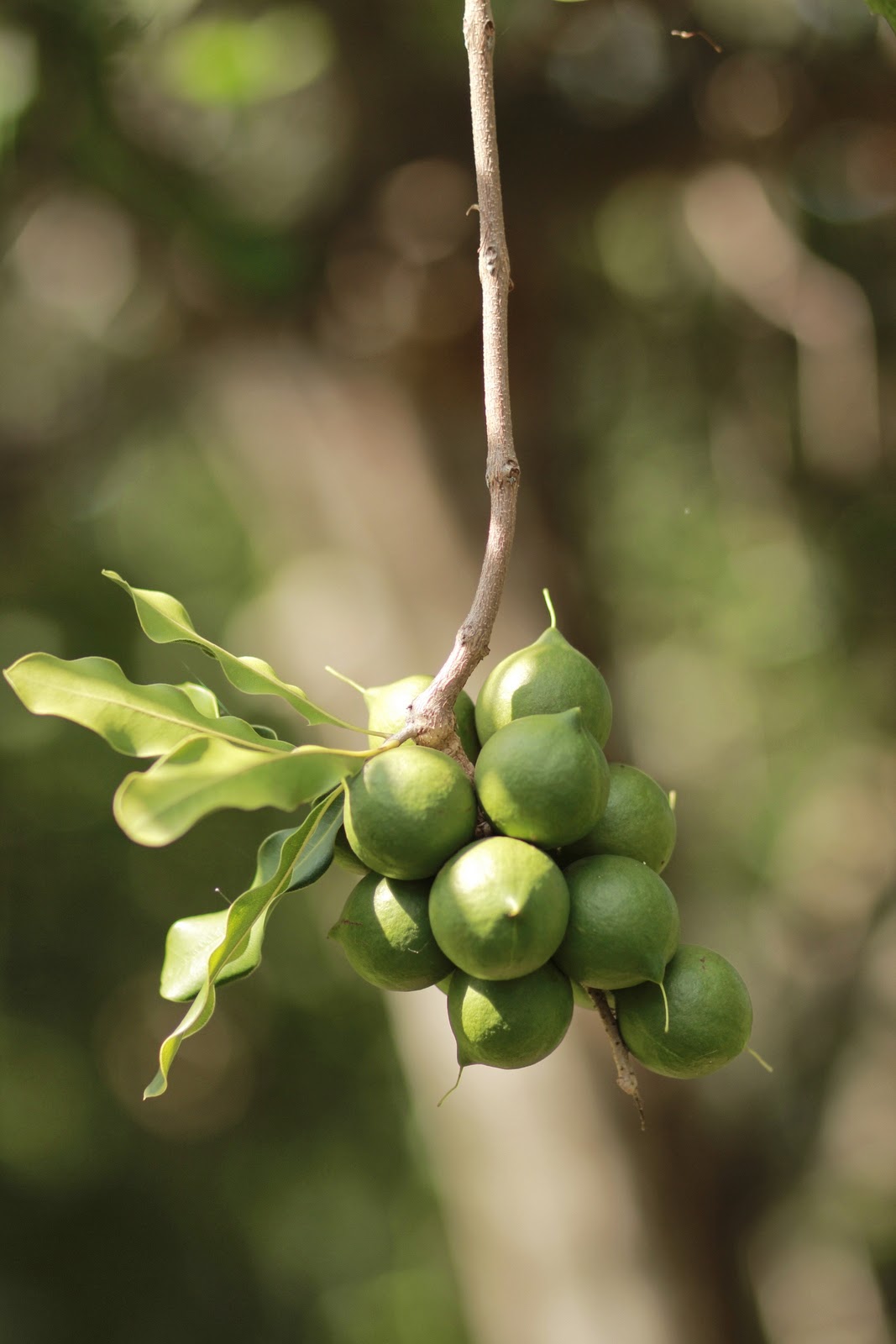
The leaves are arranged in whorls of three to six, lanceolate to obovate or elliptic in shape, 60–300 mm (2+1⁄2–12 in) long and 30–130 mm (1+1⁄8–5+1⁄8 in) broad, with an entire or spiny-serrated margin. The flowers are produced in a long, slender, and simple raceme 50–300 mm (2–12 in) long, the individual flowers 10–15 mm (3⁄8–9⁄16 in) long, white to pink or purple, with four tepals. The fruit is a hard, woody, globose follicle with a pointed apex containing one or two seeds. The nutshell ("coat") is particularly tough and requires around 2000 N to crack. The shell material is five times harder than hazelnut shells and has mechanical properties similar to aluminum. It has a Vickers hardness of 35.[8][9]
Taxonomy
[edit]Species
[edit]| Image | Scientific name | Distribution |
|---|---|---|
| Macadamia integrifolia Maiden & Betche | south east Queensland and extreme adjacent northern New South Wales | |
| Macadamia jansenii C.L.Gross & P.H.Weston | Queensland | |
| Macadamia ternifolia F.Muell. | Queensland | |
| Macadamia tetraphylla L.A.S.Johnson | extreme south east Queensland and northern New South Wales |
Nuts from M. jansenii and M. ternifolia contain cyanogenic glycosides.[10][11] The other two species are cultivated for the commercial production of macadamia nuts for human consumption.
Previously, more species with disjunct distributions were named as members of this genus Macadamia.[2] Genetics and morphological studies published in 2008 show they have separated from the genus Macadamia, correlating less closely than thought from earlier morphological studies.[2] The species previously named in the genus Macadamia may still be referred to overall by the descriptive, non-scientific name of macadamia.
- Lasjia claudiensis (C.L.Gross & B.Hyland) Peter H. Weston & A.R.Mast; synonym, base name: Macadamia claudiensis C.L.Gross & B.Hyland
- Lasjia erecta (J.A.McDonald & R.Ismail) P.H.Weston & A.R.Mast; synonym, base name: Macadamia erecta J.A.McDonald & R.Ismail
A tree endemic to the island of Sulawesi, Indonesia. First described by science in 1995.[12] - Lasjia grandis (C.L.Gross & B.Hyland) P.H.Weston & A.R.Mast; synonym, base name: Macadamia grandis C.L.Gross & B.Hyland
- Lasjia hildebrandii (Steenis) P.H.Weston & A.R.Mast; synonym, base name: Macadamia hildebrandii Steenis
Another species endemic to Sulawesi.[13][14] - Lasjia whelanii (F.M.Bailey) P.H.Weston & A.R.Mast; synonyms: base name: Helicia whelanii F.M.Bailey, Macadamia whelanii (F.M.Bailey) F.M.Bailey
- Catalepidia Peter H. Weston, formerly Macadamia until 1995
- Catalepidia heyana (F.M.Bailey) P.H.Weston; synonyms: base name: Helicia heyana F.M.Bailey , Macadamia heyana (F.M.Bailey) Sleumer
- Virotia L.A.S.Johnson & B.G.Briggs, formerly Macadamia until the first species renaming began in 1975 and comprehensive in 2008
- Virotia angustifolia (Virot) P.H.Weston & A.R.Mast; synonym, base name: Macadamia angustifolia Virot
- Virotia francii (Guillaumin) P.H.Weston & A.R.Mast; synonym, base name: Roupala francii Guillaumin
- Virotia leptophylla (Guillaumin) L.A.S.Johnson & B.G.Briggs (1975 type species); synonym, base name: Kermadecia leptophylla Guillaumin
- Virotia neurophylla (Guillaumin) P.H.Weston & A.R.Mast; synonyms: base name: Kermadecia neurophylla Guillaumin, Macadamia neurophylla (Guillaumin) Virot
- Virotia rousselii (Vieill.) P.H.Weston & A.R.Mast; synonym, base name: Roupala rousselii Vieill
- Virotia vieillardi (Brongn. & Gris) P.H.Weston & A.R.Mast; synonym, base name: Roupala vieillardii Brongn. & Gris
Etymology
[edit]The German-Australian botanist Ferdinand von Mueller gave the genus the name Macadamia in 1857 in honour of the Scottish-Australian chemist, medical teacher, and politician John Macadam, who was the honorary Secretary of the Philosophical Institute of Victoria beginning in 1857.[15]
Cultivation
[edit]
The macadamia tree is usually propagated by grafting. It does not begin to produce commercial quantities of seeds until it is 7–10 years old, but once established, it may continue bearing for over 100 years. Macadamias prefer fertile, well-drained soils, a rainfall of 1,000–2,000 mm (40–80 in), and temperatures not falling below 10 °C (50 °F) (although once established, they can withstand light frosts), with an optimum temperature of 25 °C (80 °F). The roots are shallow, and trees can be blown down in storms; like most Proteaceae, they are also susceptible to Phytophthora root disease. As of 2019, the macadamia nut is the most expensive nut in the world, which is attributed to the slow harvesting process.[16]
Cultivars
[edit]Beaumont
[edit]A Macadamia integrifolia / M. tetraphylla hybrid commercial variety is widely planted in Australia and New Zealand; Dr. J. H. Beaumont discovered it. It is high in oil but is not sweet. New leaves are reddish, and flowers are bright pink, borne on long racemes. It is one of the quickest varieties to come into bearing once planted in the garden, usually carrying a useful crop by the fourth year and improving from then on. It crops prodigiously when well pollinated. The impressive, grape-like clusters are sometimes so heavy they break the branchlets to which they are attached. Commercial orchards have reached 18 kg (40 lb) per tree by eight years old. On the downside, the macadamias do not drop from the tree when ripe, and the leaves are a bit prickly when one reaches into the tree's interior during harvest. Its shell is easier to open than that of most commercial varieties.
Maroochy
[edit]A pure M. tetraphylla variety from Australia, this strain is cultivated for its productive crop yield, flavour, and suitability for pollinating 'Beaumont.'
Nelmac II
[edit]A South African M. integrifolia / M. tetraphylla hybrid cultivar, it has a sweet seed, which means it must be cooked carefully so that the sugars do not caramelise. The sweet seed is usually not fully processed, as it generally does not taste as good, but many people enjoy eating it uncooked. It has an open micropyle (hole in the shell), which may let in fungal spores. The crack-out percentage (ratio of nut meat to the whole nut by weight) is high. Ten-year-old trees average 22 kg (50 lb) per tree. It is a popular variety because of its pollination of 'Beaumont,' and the yields are almost comparable.
Renown
[edit]A M. integrifolia / M. tetraphylla hybrid, this is a rather spreading tree. On the plus side, it is high-yielding commercially; 17 kg (37 lb) from a 9-year-old tree has been recorded, and the nuts drop to the ground. However, they are thick-shelled, with not much flavour.
Production
[edit]In 2024, South Africa was the leading producer of macadamia nuts, with 87,000 tonnes,[17] up from 77,000 tonnes in 2023[18] and 54,000 tonnes out of global production of 211,000 tonnes in 2018.[19] Macadamia is commercially produced in many countries of Southeast Asia, South America, Australia, and North America having Mediterranean, temperate or tropical climates.[19]
History
[edit]The first commercial orchard of macadamia trees was planted in the early 1880s by Rous Mill, 12 km (7.5 mi) southeast of Lismore, New South Wales, consisting of M. tetraphylla.[20] Besides the development of a small boutique industry in Australia during the late 19th and early 20th centuries, macadamia was extensively planted as a commercial crop in Hawaii from the 1920s onward. Macadamia seeds were first imported into Hawaii in 1882 by William H. Purvis, who planted seeds that year at Kapulena.[21] The Hawaiian-produced macadamia established the well-known seed internationally, and in 2017, Hawaii produced over 22,000 tonnes.[22]
In 2019, researchers collected samples from hundreds of trees in Queensland and compared their genetic profiles to samples from Hawaiian orchards. They determined that essentially all the Hawaiian trees must have descended from a small population of Australian trees from Gympie, possibly just a single tree.[23] This lack of genetic diversity in the commercial crop puts it at risk of succumbing to pathogens (as has happened in the past to banana cultivars). Growers may seek to diversify the cultivated population by hybridizing with wild specimens.
Shelling
[edit]
Macadamias are the world's hardest edible nut to crack.[24] Since ordinary nutcrackers apply insufficient force,[25] various types of specialist macadamia nut crackers are available, many of which apply force to the micropyle, visible as a white dot, to fracture the shell.[24]
For commercial scale deshelling, rotating steel rollers are used.[25] In South Africa, the average crack-out rate, meaning the ratio of usable nut to discarded shell, is 27.6% nut to 72.4% waste.[25]
Toxicity
[edit]Nuts from M. jansenii and M. ternifolia contain cyanogenic glycosides.[10][11]
Allergen
[edit]Macadamia allergy is a type of food allergy to macadamia nuts which is relatively rare, affecting less than 5% of people with tree nut allergy in the United States.[26] Macadamia allergy can cause mild to severe allergic reactions, such as oral allergy syndrome, urticaria, angioedema, vomiting, abdominal pain, asthma, and anaphylaxis.[27] Macadamia allergy can also cross-react with other tree nuts or foods that have similar allergenic proteins, such as coconut, walnut, hazelnut, and cashew.[28] The diagnosis and management of macadamia allergy involves avoiding macadamia nuts and their derivatives, reading food labels carefully, carrying an epinephrine auto-injector in case of severe reactions, and consulting a doctor for further testing and advice.
Toxicity in dogs and cats
[edit]Macadamias are toxic to dogs. Ingestion may result in macadamia toxicity marked by weakness and hind limb paralysis with the inability to stand, occurring within 12 hours of ingestion.[29] It is not known what makes macadamia nuts toxic in dogs.[30] Depending on the quantity ingested and the size of the dog, symptoms may also include muscle tremors, joint pain, and severe abdominal pain. In high doses of toxin, opiate medication may be required for symptom relief until the toxic effects diminish, with full recovery usually within 24 to 48 hours.[29]
Macadamias are also toxic to cats, causing tremors, paralysis, joint stiffness, and high fever.[31]
| Nutritional value per 100 g (3.5 oz) | |||||||||||||||||||||||||||||||||||||||||||
|---|---|---|---|---|---|---|---|---|---|---|---|---|---|---|---|---|---|---|---|---|---|---|---|---|---|---|---|---|---|---|---|---|---|---|---|---|---|---|---|---|---|---|---|
| Energy | 3,080 kJ (740 kcal) | ||||||||||||||||||||||||||||||||||||||||||
13.8 g | |||||||||||||||||||||||||||||||||||||||||||
| Sugars | 4.57 g | ||||||||||||||||||||||||||||||||||||||||||
| Dietary fiber | 8.6 g | ||||||||||||||||||||||||||||||||||||||||||
75.8 g | |||||||||||||||||||||||||||||||||||||||||||
| Saturated | 12 g | ||||||||||||||||||||||||||||||||||||||||||
| Monounsaturated | 59 g | ||||||||||||||||||||||||||||||||||||||||||
| Polyunsaturated | 1.5 g | ||||||||||||||||||||||||||||||||||||||||||
7.9 g | |||||||||||||||||||||||||||||||||||||||||||
| |||||||||||||||||||||||||||||||||||||||||||
| Other constituents | Quantity | ||||||||||||||||||||||||||||||||||||||||||
| Water | 1.4 g | ||||||||||||||||||||||||||||||||||||||||||
| †Percentages estimated using US recommendations for adults,[32] except for potassium, which is estimated based on expert recommendation from the National Academies.[33] | |||||||||||||||||||||||||||||||||||||||||||
Uses
[edit]Nutrition
[edit]Raw macadamia nuts are 1% water, 14% carbohydrates, 76% fat, and 8% protein (table). In a reference amount of 100 g (3.5 oz), macadamia nuts provide 740 kilocalories of food energy, and are a rich source (20% or more of the Daily Value, DV) of thiamine, iron, magnesium, and manganese, with other B vitamins and dietary minerals in moderate amounts (table).
Raw macadamia nuts have a high amount of monounsaturated fats (59% of total fat content) and contain the saturated fatty acid, palmitic acid (reference in table).
Other uses
[edit]The trees are also grown as ornamental plants in subtropical regions for their glossy foliage and attractive flowers. The flowers produce a well-regarded honey. The wood is used decoratively for small items.[34] Macadamia species are used as food plants by the larvae of some Lepidoptera species, including Batrachedra arenosella.[citation needed]
Macadamia seeds are often fed to hyacinth macaws in captivity. These large parrots are among the few animals, other than humans, capable of cracking the shell and removing the seed.[35]
Modern history
[edit]- 1828
- Allan Cunningham was the first European to encounter the macadamia plant in Australia.[36]
- 1857–1858
- German-Australian botanist Ferdinand von Mueller gave the genus the scientific name Macadamia. He named it after his friend John Macadam, a noted scientist and secretary of the Philosophical Institute of Australia.[37]
- 1858
- 'Bauple nuts' were discovered in Bauple, Queensland; they are now known as macadamia nuts.
- Walter Hill, superintendent of the Brisbane Botanic Gardens (Australia), observed a boy eating the kernel without ill effect, becoming the first nonindigenous person recorded to eat macadamia nuts.[38]
- 1860s
- King Jacky, an aboriginal elder of the Logan River clan, south of Brisbane, Queensland, was the first known macadamia entrepreneur in his tribe and he regularly collected and traded the macadamias with settlers.[39]
- 1866
- Tom Petrie planted macadamias at Yebri Creek (near Petrie) from nuts obtained from Aboriginals at Buderim.[40]
- 1882
- William H. Purvis introduced macadamia nuts to Hawaii as a windbreak for sugar cane.[41]
- 1888
- The first commercial orchard of macadamias was planted at Rous Mill, 12 km from Lismore, New South Wales, by Charles Staff.[42]
- 1889
- Joseph Maiden, an Australian botanist, wrote, "It is well worth extensive cultivation, for the nuts are always eagerly bought."[43]
- 1910
- The Hawaiian Agricultural Experiment Station encouraged the planting of macadamias on Hawaii's Kona District as a crop to supplement coffee production in the region.[44]
- 1916
- Tom Petrie begins trial macadamia plantations in Maryborough, Queensland, combining macadamia with pecans to shelter the trees.[45]
- 1922
- Ernest van Tassel formed the Hawaiian Macadamia Nut Co. in Hawaii.[46]
- 1925
- Tassel leased 75 acres (30 ha) on Round Top in Honolulu and began Nutridge, Hawaii's first macadamia seed farm.[47]
- 1931
- Tassel established a macadamia-processing factory on Puhukaina Street in Kakaako, Hawaii, selling the nuts as Van's Macadamia Nuts.
- 1937
- Winston Jones and J. H. Beaumont of the University of Hawaiʻi's Agricultural Experiment Station reported the first successful grafting of macadamias, paving the way for mass production.[48]
- 1946
- A large plantation was established in Hawaii.[49][50]
- 1953
- Castle & Cooke added a new brand of macadamia nuts called "Royal Hawaiian," which was credited with popularizing the nuts in the U.S.
- 1991
- A fourth macadamia species, Macadamia jansenii, was described, being first brought to the attention of plant scientists in 1983 by Ray Jansen, a sugarcane farmer and amateur botanist from South Kolan in Central Queensland.[51]
- 1997
- Australia surpassed the United States as the major producer of macadamias.[44]
- 2012–2015
- South Africa surpassed Australia as the largest producer of macadamias.[52][53]
- 2014
- The manner in which macadamia nuts were served on Korean Air Flight 86 from John F. Kennedy International Airport in New York City led to a "nut rage incident", which gave the nuts high visibility in South Korea and marked a sharp increase in consumption there.[54][55]
See also
[edit]References
[edit]- ^ "Macadamia". Australian Plant Name Index (APNI). Centre for Plant Biodiversity Research, Australian Government. Retrieved 15 March 2023.
- ^ a b c Mast, Austin R.; Willis, Crystal L.; Jones, Eric H.; Downs, Katherine M.; Weston, Peter H. (July 2008). "A smaller Macadamia from a more vagile tribe: inference of phylogenetic relationships, divergence times, and diaspore evolution in Macadamia and relatives (tribe Macadamieae; Proteaceae)". American Journal of Botany. 95 (#7): 843–870. Bibcode:2008AmJB...95..843M. doi:10.3732/ajb.0700006. ISSN 1537-2197. PMID 21632410.
- ^ "Macadamias Global Statistical Review". INC International Nuts and Dried Fruit. International Nut and Dried Fruits Council. 13 March 2025. Retrieved 23 November 2025.
{{cite web}}: CS1 maint: url-status (link) - ^ "The Bopple Nut" (PDF). Bauple Museum. Archived from the original (PDF) on 11 August 2014. Retrieved 19 June 2014.
- ^ Kean, Zoe (12 December 2020). "In a nutshell: how the macadamia became a 'vulnerable' species". The Guardian. Retrieved 14 December 2020.
- ^ Shigeura, Gordon T.; Ooka, Hiroshi (April 1984). Macadamia nuts in Hawaii: History and production (PDF). Research extension series. University of Hawaii. College of Tropical Agriculture and Human Resources. ISSN 0271-9916. Archived from the original (PDF) on 22 September 2019. Retrieved 1 June 2020.
- ^ "Australian plants can be new food crops for sustainable agricultural systems". 8 February 2024.
- ^ Schüler, Paul; Speck, Thomas; Bührig-Polaczek, Andreas; Fleck, Claudia; Buehler, Markus J. (7 August 2014). "Structure-Function Relationships in Macadamia integrifolia Seed Coats – Fundamentals of the Hierarchical Microstructure". PLOS ONE. 9 (#8) e102913. Bibcode:2014PLoSO...9j2913S. doi:10.1371/journal.pone.0102913. PMC 4125148. PMID 25102155.
- ^ Jennings, J. S.; Macmillan, N. H. (May 1986). "A tough nut to crack". Journal of Materials Science. 21 (#5): 1517–1524. Bibcode:1986JMatS..21.1517J. doi:10.1007/BF01114704. S2CID 136850984.
- ^ a b Sharma, Priyanka; Murigneux, Valentine; Haimovitz, Jasmine; Nock, Catherine J.; Tian, Wei; Kharabian Masouleh, Ardashir; Topp, Bruce; Alam, Mobashwer; Furtado, Agnelo; Henry, Robert J. (2021). "The genome of the endangered Macadamia jansenii displays little diversity but represents an important genetic resource for plant breeding". Plant Direct. 5 (12) e364. Bibcode:2021PlanD...5E.364S. doi:10.1002/pld3.364. ISSN 2475-4455. PMC 8671617. PMID 34938939.
- ^ a b Dahler, JM; Mcconchie, C; Turnbull, CGN (1995). "Quantification of Cyanogenic Glycosides in Seedlings of Three Macadamia (Proteaceae) Species". Australian Journal of Botany. 43 (6): 619–628. Bibcode:1995AuJB...43..619D. doi:10.1071/bt9950619. ISSN 1444-9862. Retrieved 16 February 2022.
- ^ J. Andrew McDonald and Ismail, R. (September 1995). "Macadamia erecta (Proteaceae), a New Species from Sulawesi". Harvard Papers in Botany. 1 (#7). Harvard University Herbaria: 7–10. JSTOR 41761991.
- ^ "Macadamia hildebrandii - Steenis". Plants for a Future. Retrieved 18 February 2021.
- ^ Akhbar; Nuryanti S.; Naharuddin (2020). "Spatial distribution and habitat characteristics of Macadamia hildebrandii in the Sintuwu Maroso Protection Forest, Central Sulawesi, Indonesia". Biodiversitas Journal of Biological Diversity. 20 (#2). doi:10.13057/biodiv/d210245. Retrieved 18 February 2021.
- ^ The proceedings of Philosophical Institute of Victoria, now the Royal Society of Victoria Rev: Mueller F (1857) Account of some new Australian plants. Transactions of the Philosophical Institute of Victoria 2: pages 62–77; Burke & Wills: The Scientific Legacy of the Victorian Exploring Expedition by E B Joyce & D A McCann, Royal Society of Victoria 2011
- ^ Kim, Irene Anna (6 March 2019). "What makes macadamia nuts the most expensive nuts in the world, at $25 per pound". Business Insider. Archived from the original on 26 August 2019. Retrieved 8 July 2020.
- ^ Brederode, William. "SA macadamia industry faces R460m tariff blow — but time is on its side". News24. Retrieved 13 July 2025.
- ^ Brederode, William. "SA is world's biggest macadamia producer - why it now has to start cracking nuts to survive". Business. Retrieved 25 December 2024.
- ^ a b Motaung, Ntswaki (30 May 2018). "More and more macadamia produced globally". Agriorbit. Archived from the original on 15 January 2019. Retrieved 15 January 2019.
- ^ Macadamia Power Pty (1982). Macadamia Power in a Nutshell. Macadamia Power Pty Limited. p. 13. ISBN 978-0-9592892-0-6.
- ^ Schmitt, Robert. "Macadamia Nuts". Hawaiian Historical Society. Archived from the original on 16 February 2012. Retrieved 7 April 2012.
- ^ "USDA/NASS QuickStats Ad-hoc Query Tool". quickstats.nass.usda.gov. Archived from the original on 16 January 2019. Retrieved 15 January 2019.
- ^ Imbler, Sabrina (3 June 2019). "70 Percent of the World's Macadamia Nuts Came From One Tree in Australia". Atlas Obscura. Archived from the original on 7 June 2019. Retrieved 5 June 2019.
- ^ a b "How to crack a macadamia nut".
- ^ a b c "Macadamia Nuts Processing Industry in South Africa". 25 June 2019.
- ^ Cox, A.L.; Eigenmann, P.A.; Sicherer, S.H. (2021). "Clinical Relevance of Cross-Reactivity in Food Allergy". The Journal of Allergy and Clinical Immunology: In Practice. 9 (1): 82–99. doi:10.1016/j.jaip.2020.09.030. PMID 33429724. S2CID 231587027. Retrieved 6 May 2023.
- ^ Yoshida, K; Shirane, S; Kinoshita, K (2021). "Macadamia nut allergy in children: Clinical features and cross-reactivity with walnut and hazelnut". Pediatric Allergy and Immunology. 32 (5): 111–1114. doi:10.1111/pai.13469. PMID 33559377. S2CID 231863665. Retrieved 6 May 2023.
- ^ "f345 Macadamia nut". Allergy & Autoimmune Disease. Retrieved 6 May 2023.
- ^ a b Christine Allen (October 2001). "Treacherous Treats – Macadamia Nuts" (PDF). Veterinary Technician. Archived from the original (PDF) on 16 January 2014. Retrieved 15 January 2014.
- ^ "Macadamia Nut Toxicity". The Spruce Pets. Retrieved 30 March 2021.
- ^ David Brunner, Sam Stall: Die Katze. Sanssouci, München/Wien 2005, ISBN 3-7254-1357-6, S. 181.
- ^ United States Food and Drug Administration (2024). "Daily Value on the Nutrition and Supplement Facts Labels". FDA. Archived from the original on 27 March 2024. Retrieved 28 March 2024.
- ^ "TABLE 4-7 Comparison of Potassium Adequate Intakes Established in This Report to Potassium Adequate Intakes Established in the 2005 DRI Report". p. 120. In: Stallings, Virginia A.; Harrison, Meghan; Oria, Maria, eds. (2019). "Potassium: Dietary Reference Intakes for Adequacy". Dietary Reference Intakes for Sodium and Potassium. pp. 101–124. doi:10.17226/25353. ISBN 978-0-309-48834-1. PMID 30844154. NCBI NBK545428.
- ^ "Macadamia Nut | The Wood Database – Lumber Identification (Hardwood)". Archived from the original on 14 May 2019. Retrieved 19 August 2019.
- ^ Kashmir Csaky (November 2001). "The Hyacinth Macaw". Parrots Magazine. Archived from the original on 12 June 2007. Retrieved 6 December 2010.
- ^ Wilson, Bee (5 October 2010). "The Kitchen Thinker: Macadamias". The Telegraph. Archived from the original on 17 February 2019. Retrieved 11 July 2017.
- ^ Shigeura, Gordon T.; Ooka, Hiroshi (1984). Macadamia nuts in Hawaii: history and production (PDF). Honolulu, Hawaii: University of Hawaiʻi. p. 8. Archived from the original (PDF) on 24 December 2016. Retrieved 10 July 2017.
- ^ McKinnon, Ross. "Hill, Walter (1819–1904)". Australian Dictionary of Biography. Canberra: National Centre of Biography, Australian National University. Archived from the original on 13 February 2018. Retrieved 12 February 2018.
- ^ McConachie, Ian (1980). "The Macadamia Story" (PDF). California Macadamia Society Yearbook. 26: 41–47. Archived (PDF) from the original on 11 January 2014. Retrieved 11 January 2014.
- ^ "Nut Growing Experiments", The Queenslander, 8 October 1931, page 13
- ^ Hamilton, Richard; Ito, Philip; Chia, C.L. Macadamia: Hawaii's Dessert Nut (PDF). University of Hawaii. p. 3. Archived (PDF) from the original on 24 December 2016. Retrieved 10 July 2017.
- ^ Rosengarten, Frederic Jr. (2004). The Book of Edible Nuts. Courier Corporation. p. 122. ISBN 978-0-486-43499-5. Archived from the original on 1 September 2020. Retrieved 10 July 2017.
- ^ Maiden, J. H. (1889). The Useful Native Plants of Australia, (Including Tasmania). Sydney: The Technological Museum of New South Wales. p. 40. Retrieved 9 November 2025.
- ^ a b Rieger, M., Introduction to Fruit Crops, 2006, page 260. ISBN 978-1-56022-259-0
- ^ "Nut Growing Experiments". The Queenslander. 8 October 1931. p. 13.
- ^ Shigeura, Gordon; Ooka, Hiroshi (April 1984). Macadamia Nuts in Hawaii: History and Production (PDF). University of Hawaii. p. 13. Archived from the original (PDF) on 24 December 2016. Retrieved 10 July 2017.
- ^ Gordon T. Shigeura and Hiroshi Ooka. Macadamia Nuts in Hawaii: History and Production.
- ^ Jones, Winston; Beaumont, J.H. (1 October 1937). "Carbohydrate accumulation in relation to vegetative propagation of the litchi". Science. 86 (#2231): 313. Bibcode:1937Sci....86..313J. doi:10.1126/science.86.2231.313. PMID 17794458.
- ^ Sandra Wagner-Wright (1995). History of the macadamia nut industry in Hawaiʻi, 1881–1981. Lewiston, New York: Edwin Mellen Press. ISBN 978-0-7734-9097-0. Archived from the original on 1 September 2020. Retrieved 27 April 2020.
- ^ Mauna Loa Macadamia Nut Packaging
- ^ Gross, C. L.; Weston, P. H. (1992). "Macadamia jansenii (Proteaceae), a new species from central Queensland". Australian Systematic Botany. 5 (6): 725–728. Bibcode:1992AuSyB...5..725G. doi:10.1071/sb9920725. ISSN 1446-5701.
- ^ "Cracking good run for macadamia industry". Farmer's Weekly. Archived from the original on 24 September 2015. Retrieved 8 June 2015.
- ^ "South Africa becomes king of macadamia nuts again". FreshPlaza. 14 April 2015. Archived from the original on 10 October 2016. Retrieved 9 October 2016.
- ^ Taylor, Adam. "Why 'nut rage' is such a big deal in South Korea". The Washington Post. Archived from the original on 9 August 2017. Retrieved 10 July 2017.
- ^ Ahn, Young-oon (15 December 2014). "Sales of macadamias soar in Korea after nut rage". CNBC. Archived from the original on 9 August 2017. Retrieved 10 July 2017.
External links
[edit]
Media related to Macadamia at Wikimedia Commons
Macadamia
View on GrokipediaBotanical Characteristics
Description
Macadamia comprises four species of evergreen trees in the Proteaceae family, endemic to the rainforests of eastern Australia. These trees typically reach heights of 6 to 18 meters, featuring dense, rounded crowns with scabrous gray bark on trunks and branches.[11][12]
Leaves are leathery, glossy green, and arranged in whorls of three (in M. integrifolia) to four (M. tetraphylla), measuring 10–30 cm long and 3–12 cm wide, with entire or slightly toothed margins and acute to acuminate apices.[11] New growth emerges pale green, sometimes tinged pink.[13]
Flowers are small, 5–7 mm long, creamy white to pale pink, and borne in lax axillary racemes up to 20 cm long, with peduncles 3–10 mm and pedicels 2–4 mm; they attract insect pollinators.[11][14] The fruit consists of woody, ovoid follicles 2–2.5 cm long and 1.5–2 cm wide, each enclosing one seed with a thick, hard testa 1.5–2 cm long—the edible kernel surrounded by a fibrous husk in the mature fruit.[11] M. integrifolia produces rounder nuts with smoother shells, while M. tetraphylla yields more elongated nuts with rougher shells.[5]
Taxonomy and Etymology
The genus Macadamia belongs to the family Proteaceae within the order Proteales, comprising evergreen trees native to Australia.[15] This classification places it among ancient flowering plants that originated during the Gondwanan era, approximately 90-100 million years ago.[16] Four species are recognized in the genus: Macadamia integrifolia, M. tetraphylla, M. jansenii, and M. ternifolia.[4] Of these, M. integrifolia and M. tetraphylla are the primary species cultivated commercially for their edible seeds, while M. ternifolia produces nuts with toxic cyanogenic compounds and M. jansenii is rare and not commercially exploited.[14] [17] The name Macadamia derives from the New Latin genus designation honoring John Macadam (1827–1865), a Scottish-born Australian chemist and physician who served as secretary of the Philosophical Institute of Victoria.[18] The genus was established by botanist Ferdinand von Mueller in 1857, who named it in recognition of Macadam's contributions to science, appending the suffix -ia common in botanical nomenclature.[19]Natural History and Distribution
Native Range and Ecology
The genus Macadamia, belonging to the family Proteaceae, comprises four species endemic to the subtropical rainforests of eastern Australia, ranging from southeastern Queensland to northeastern New South Wales.[20] These include M. integrifolia, M. tetraphylla, M. ternifolia, and M. jansenii, with natural distributions concentrated in coastal rainforest habitats, including a minor outlier population further inland.[21] The trees typically inhabit mid-story or understory positions in these ecosystems, favoring humid, sheltered environments with high rainfall and fertile, well-drained soils enriched with organic matter.[22] M. tetraphylla, for instance, often occurs along stream banks in moist open forests adjacent to rainforests.[23] Ecologically, macadamia trees are evergreen perennials adapted to subtropical conditions, producing cream-colored flowers in racemes that attract native insect pollinators, primarily bees.[24] While self-pollination is possible, cross-pollination predominates, accounting for 78–90% of nut set in natural settings, which enhances genetic diversity and yield potential but requires proximity to compatible conspecifics.[25] Fruits mature over 6–8 months into woody follicles containing hard-shelled nuts, dispersed primarily by gravity, small rodents, and occasionally cockatoos, though dispersal distances remain limited, contributing to patchy regeneration.[25] Populations of all four species are small and fragmented, facing significant threats from habitat destruction, with approximately 60% of original rainforest cover lost in southeastern Queensland and northeastern New South Wales due to agriculture, urbanization, and logging.[26] Additional pressures include high seed predation, insufficient pollination from declining native insect populations, and climate variability, which exacerbate low natural recruitment rates and elevate extinction risks across the genus.[21] Conservation efforts emphasize habitat protection and restoration to sustain these ecosystems, where macadamias play roles in supporting biodiversity through nut provisions for fauna.[25]Domestication and Spread
Macadamia trees (Macadamia integrifolia and M. tetraphylla) evolved in the subtropical rainforests of eastern Australia, where Indigenous Australians harvested nuts from wild stands for food, roasting them over fires and trading them across regions for millennia prior to European contact.[27][28] These populations were not agriculturally domesticated by Indigenous groups, remaining as gathered wild resources valued for their nutrition despite the nuts' hard shells requiring stone tools for cracking.[27] European botanists first described the genus in 1857, with initial cultivation attempts in Australia starting in 1858 at the Brisbane Botanical Gardens using seeds from wild trees.[29] Seeds were exported to Hawaii between 1881 and 1892, where the first orchards were established experimentally, but true domestication advanced through selective breeding and propagation techniques developed at the University of Hawaii's Agricultural Experiment Station.[7] Successful grafting, reported in 1937 by W. W. Jones and J. H. Beaumont, enabled clonal propagation of superior cultivars like 'Kakea' and 'Pahau', overcoming seed variability and establishing maternal lineages traceable via chloroplast genome sequencing to specific wild Queensland sites such as Mooloo and Mt. Bauple—indicating a genetic bottleneck in early domesticated stock.[7][29] Commercial spread originated in Hawaii, with large-scale orchards planted from 1949 onward, but production techniques including grafting later informed Australia's industry, which began commercial operations in the 1960s along the east coast from New South Wales to Queensland.[8][7] From these centers, cultivation expanded globally in the mid-20th century to subtropical regions in South Africa (1960s introductions), California, Latin America, and parts of Asia, driven by demand for the nuts' high-fat content and adaptability to rain-fed agroforestry systems, though genetic diversity in orchards remains limited to Hawaiian-derived lineages.[8][29]Historical Development
Early Discovery and Indigenous Use
Macadamia nuts, endemic to the rainforests of eastern Australia, particularly in Queensland and northern New South Wales, were harvested and consumed by Indigenous Australian peoples for thousands of years prior to European contact.[28] Aboriginal groups such as the Budjilla referred to the nuts as kindal-kindal or boombera, using them as a staple food source gathered primarily by women in woven dilly bags, roasted over open fires to enhance flavor and digestibility, and stored for extended periods due to their natural longevity.[28][8] The nuts were also processed for oil, applied as liniment for ailments or as body and face paint during ceremonies.[28] These communities, including the Yugambeh, Gumbaynggirr, Bundjalung, Kabi Kabi, and Butchulla nations, integrated macadamias into their cultural practices, trading them across tribal boundaries and presenting them as valued gifts during inter-tribal corroborees.[30][8] Some groups, like the Yugambeh, deliberately planted trees along travel routes such as the Nerang River as markers and reliable food sources for future generations, reflecting a managed relationship with the species.[30] Dreamtime stories, such as the Butchulla legend of Baphal—a figure who nurtured the land and transformed into the nut-bearing tree—underscore their spiritual significance.[30] European awareness of macadamia emerged in the 19th century, with explorer Ludwig Leichhardt collecting the first documented specimens in 1843 approximately 60 kilometers north of Brisbane.[27] Indigenous Australians introduced the nuts to early settlers, who noted their edibility despite the challenge of cracking the hard shells.[27] Formal scientific description followed in 1857, when German-Australian botanist Ferdinand von Mueller named the genus Macadamia in honor of his colleague, Scottish-Australian chemist John Macadam, based on observations in Queensland by botanist Walter Hill and others.[31] This recognition marked the transition from Indigenous stewardship to botanical cataloging, though commercial exploitation remained decades away.[32]Commercial Introduction and Expansion
The commercial introduction of macadamia nuts originated in Hawaii, where Australian seeds arrived in 1881, initially planted as windbreaks for sugarcane fields. Systematic efforts toward commercialization began in the early 1920s, led by Ernest Van Tassel, who founded the Hawaii Macadamia Nut Company and established the first dedicated commercial orchard near Honolulu in 1921 after acquiring seedlings from experimental plantings.[33][34] These early orchards faced challenges including the nuts' hard shells, which complicated harvesting and processing, and the trees' 5–7-year maturation period before bearing viable crops.[7] Commercial processing emerged in 1934 when Van Tassel opened a facility in Kakaako, Honolulu, enabling shelling, roasting, salting, and bottling for domestic markets; this marked the shift from ornamental or small-scale use to viable industry, though output remained limited by manual labor and inconsistent yields.[35] Post-World War II investment accelerated expansion, with Castle & Cooke (later part of Dole) planting a 1,000-acre orchard near Hilo in 1949, followed by other large operations like the first mechanized facility in Puna that same year and C. Brewer's Kau Macadamia in Pahala.[7][36] By the 1950s, Hawaii accounted for nearly all global commercial production, reaching about 1,000 tons annually by the 1960s through grafted cultivars selected for higher yields and kernel quality.[7] Expansion beyond Hawaii gained momentum in the 1960s, as Australia—despite earlier experimental plantings in the 1880s—developed large-scale commercial orchards along its eastern subtropical coast, leveraging native genetic diversity for improved varieties.[8][37] This was driven by research from bodies like the New South Wales Department of Agriculture, focusing on orchard management to overcome phytophthora root rot and erratic bearing. Subsequent global spread included South Africa (starting in the 1970s with plantings in Limpopo and Mpumalanga provinces) and Kenya (from the 1960s onward in central highlands), where favorable climates and lower labor costs enabled rapid scaling; by the 2000s, these regions contributed to diversifying supply amid Hawaii's stagnation due to land competition from urbanization and higher costs.[7] Today, Australia produces over 40% of world output, reflecting causal factors like government-supported breeding programs and export infrastructure that outpaced Hawaii's early monopoly.Modern Advancements and Challenges
Recent genetic research has advanced macadamia breeding through genome-wide association studies identifying links between early vigor and precocity, enabling selection for trees that bear nuts in three years rather than five, thereby accelerating returns on investment for growers.[38] Australia's national breeding program, ongoing since 2019, targets cultivars with higher yields, compact tree size for denser planting, superior nut quality, and resistance to pests like the nut borer, with genomic selection models predicting genetic gains in nut yield up to 20-30% over traditional methods.[39][40] High-quality genome assemblies of all four Macadamia species, completed in 2024, provide resources for marker-assisted breeding to enhance traits such as fatty acid profiles and heat tolerance, addressing limitations in the narrow genetic base of domesticated lines derived primarily from M. integrifolia and M. tetraphylla.[41] Innovations in pest management include USDA-developed pheromone-based mating disruption for the macadamia nut borer, reducing infestation without broad-spectrum insecticides and supporting integrated pest management in orchards.[42] Processing advancements focus on improved drying and packaging to mitigate unsaturated lipid oxidation in kernels, with vacuum-sealed systems extending shelf life and maintaining export quality amid rising global demand that grew the market to over $2 billion by 2022 at a 11.2% CAGR.[43][44] Many orchards now function as net carbon sinks, sequestering GHGs and contrasting with emissions-intensive agriculture, as evidenced by lifecycle assessments in Australian plantations showing negative emissions balances.[45] Persistent challenges include the macadamia quick decline (MQD) syndrome, a phytoplasma-associated disease first noted in Hawaii in 1986 and continuing to kill mature trees despite ongoing USDA research into vectors and diagnostics.[46] Climate variability, such as wetter growing seasons, correlates with reduced kernel quality and higher defect rates, exacerbating losses in regions like Hawaii and Australia where projections indicate shifting habitat suitability under global warming.[47][48] Economic pressures persist from market volatility, including post-COVID inventory buildups that depressed prices until recoveries in 2024-2025, and production hurdles like a projected 4% decline in South Africa's output for 2025 due to erratic weather and supply chain constraints, despite its status as the top global producer.[49][50]Cultivation Practices
Growing Conditions and Requirements
![Macadamia integrifolia tree in Hawaii][float-right]Macadamia trees thrive in subtropical climates characterized by mild temperatures and protection from frost. Mature trees tolerate brief exposures to temperatures as low as 24°F (-4°C), though prolonged cold below 28°F (-2°C) can damage foliage and reduce yields.[51] Young trees are more susceptible, with temperatures around 21°F (-6°C) potentially lethal.[52] Optimal growth occurs where minimum temperatures remain above 0°C, with summer highs preferably under 102°F (39°C) to avoid heat stress.[48][53] Annual rainfall of at least 60 inches (1500 mm), well-distributed throughout the year, supports vigorous growth and nut production, mimicking the humid conditions of their native Australian rainforests.[54] In regions with 40-50 inches (1000-1200 mm) of precipitation, supplemental irrigation is essential, particularly during flowering and nut development, as trees may require up to 350 liters per tree weekly in hot, dry periods.[55][56] Excessive drought during critical phases can lead to flower drop and poor kernel quality. Well-drained, deep soils with a pH of 5.0 to 6.5 are ideal, allowing root penetration to at least 1 meter while preventing waterlogging, which predisposes trees to root rot.[51] Loamy or sandy loam textures predominate in successful orchards, though trees adapt to lower-fertility volcanic soils if drainage is adequate.[57] A minimum soil depth of 0.5 meters free of impermeable layers is required to accommodate the extensive root system.[58] Full sun exposure, supplemented by partial shade in intense heat, promotes healthy canopy development and nut set, while elevations below 2000 feet (600 meters) in tropical zones minimize frost risk and optimize humidity.[59][60]
Propagation, Planting, and Maintenance
Macadamia trees for commercial cultivation are primarily propagated by grafting to preserve specific cultivar characteristics and ensure uniformity, as seedling trees exhibit high variability in nut quality and yield.[61] Rootstocks are typically raised from seeds of Macadamia tetraphylla or hybrid varieties for their vigor and compatibility, germinated in a controlled nursery environment with consistent moisture and temperatures around 25–30°C.[62] Scion wood is collected from mature, disease-free trees during active growth periods, such as late winter to early spring in subtropical regions, and grafted using techniques like cleft, whip-and-tongue, or veneer methods to fuse the cambium layers effectively.[63] Post-grafting, rooted grafts require shading, regular irrigation, and nitrogen fertilization to promote callus formation and bud break, achieving success rates of 70–90% under optimal conditions.[61] Seed propagation remains viable for rootstock production but is avoided for direct orchard planting due to inconsistent performance, while cuttings and micropropagation techniques, though researched, are not widely adopted commercially owing to lower rooting success and higher costs.[64][65] Planting occurs preferably in spring to align with the growing season, allowing young grafted trees—typically 30–60 cm tall with established root systems—to establish before summer heat or winter dormancy.[52] Sites must feature deep, well-drained soils with a pH of 5.0–6.5 to prevent root rot, as macadamias are sensitive to waterlogging; pre-plant soil preparation includes deep ripping to 1 m, incorporation of organic matter for improved structure, and correction of nutrient deficiencies via analysis-guided amendments like gypsum for sodic soils.[51][56] Standard spacing accommodates mature canopy spread of 10–15 m, with 4–8 m between trees in rows and 7–11 m between rows, optimizing light interception and machinery access while yielding 100–200 trees per hectare depending on cultivar and terrain.[52][66] Holes are dug 60–90 cm wide and deep, backfilled with native soil mixed with compost, and trees staked against wind; immediate mulching with 10–15 cm of organic material conserves moisture and suppresses weeds, followed by irrigation to settle roots.[67] Ongoing maintenance emphasizes irrigation, nutrition, canopy management, and pest monitoring to sustain productivity, which peaks 10–15 years post-planting.[68] Trees require 1,500–2,000 mm annual rainfall or equivalent drip irrigation, applied to maintain soil moisture without saturation, particularly during flowering and nut fill from September to March in the Southern Hemisphere.[69] Fertilization follows annual soil and leaf tissue tests, targeting nitrogen at 100–200 g/tree/year increasing with age, phosphorus and potassium based on deficiencies, and micronutrients like zinc and boron to address common subtropical shortages; split applications avoid leaching and root burn.[56] Pruning is minimal, focusing on removing dead, diseased, or crossing branches annually after harvest to improve airflow and light penetration, with formative pruning in the first 3–5 years to develop a strong central leader and open vase structure.[70] Integrated pest management controls threats like macadamia nut borer, leafminer, and husk spot fungus through monitoring, cultural practices such as sanitation, and targeted biopesticides or chemicals only when thresholds are exceeded, as trees stressed by drought or nutrient imbalance are more susceptible.[52][71] Regular inspections and mulching renewal support soil health and weed control, contributing to yields of 20–50 kg/tree at maturity under intensive care.[51]Varieties and Cultivars
Commercial macadamia production relies on cultivars derived from Macadamia integrifolia (smooth-shelled) and Macadamia tetraphylla (rough-shelled), as well as their hybrids, selected for traits such as high kernel recovery (typically 30-45%), large nut size, yield stability, and tree architecture suited to mechanical harvesting.[72] M. integrifolia cultivars generally exhibit higher yields and better adaptability to subtropical climates, while M. tetraphylla contributes cold tolerance and larger kernels in hybrids.[73] Breeding programs in Hawaii pioneered early selections in the 1940s-1960s, focusing on nut quality and productivity, whereas Australian efforts since the 1980s emphasize reduced alternate bearing and compact growth for higher density planting.[72] Key Hawaiian cultivars include '344', an early-bearing variety with medium-large nuts and kernel recovery around 38%, widely planted for its consistent production; '660', known for high yields and large kernels; '741', valued for oversized nuts (up to 25g) but prone to alternate bearing; and '800', selected for uniform nut size and shell thickness aiding processing.[73] In Australia, prominent selections are A4 (large, thin-shelled nuts from spreading trees), A16 (upright growth with oval nuts), and A38 (medium-large round nuts from very upright trees), alongside hybrids like Beaumont (M. integrifolia × tetraphylla), which features compact stature, early maturity, and kernel recovery exceeding 40%.[72] Recent advancements include MCT1, an elite Australian hybrid released in 2017 under Plant Breeders Rights, noted for superior yields (up to 6-8 kg/nut-in-shell per tree annually after maturity) and rapid adoption, with over 550,000 trees propagated by licensed nurseries as of 2023.[74] Other Australian hybrids like Daddow and Own Choice offer improved disease resistance and nut uniformity.[72] Cultivar choice depends on regional climate, with M. tetraphylla-influenced types preferred in cooler areas for better frost tolerance down to -4°C.[73]| Cultivar | Primary Species | Origin | Key Traits |
|---|---|---|---|
| 344 | M. integrifolia | Hawaii | Early bearing, medium-large nuts, ~38% kernel recovery[73] |
| 741 | M. integrifolia | Hawaii | Large nuts (20-25g), high quality but alternate bearing[73] |
| A4 | M. integrifolia | Australia | Large thin-shelled nuts, spreading canopy[72] |
| Beaumont | Hybrid | Australia | Compact tree, early yields, >40% kernel[72] |
| MCT1 | Hybrid | Australia | High yields (6-8 kg/tree), elite performance[74] |
Production and Processing
Global Output and Major Regions
Global production of macadamia nuts, measured in in-shell metric tons at 3.5% moisture, reached 315,425 metric tons in 2023, marking continued expansion from prior years driven by maturing orchards and new plantings in subtropical regions.[75] Forecasts for 2024 indicate a rise to 339,200 metric tons, a 7.5% increase attributable to favorable weather in key areas and yield improvements, though subject to risks like erratic rainfall and pests.[76] [77] Over the past decade, output has roughly tripled, fueled by demand from Asia, particularly China, which absorbs over half of exports.[78] South Africa leads as the largest producer, outputting 79,700 metric tons in 2023 and projecting 92,000 metric tons in 2024, supported by over 100,000 hectares under cultivation across Limpopo, Mpumalanga, and KwaZulu-Natal provinces.[79] [80] Its dominance stems from rapid industry growth since the 1990s, with annual increases averaging 9% due to varietal selection and irrigation advancements, though export dependencies introduce market volatility.[81] Australia, the crop's origin country, produced 48,400 metric tons in 2023, with 2024 estimates at 56,000 metric tons from primary regions in New South Wales and Queensland, where integrated grower cooperatives enhance efficiency.[79] Kenya follows as a rising African hub, forecasting 46,000 metric tons in 2024 amid central highland expansions, though smallholder challenges like quality inconsistencies limit yields.[80] China's production climbed to an estimated 69,500 metric tons in 2024, concentrated in southern provinces like Guangxi and Yunnan, benefiting from domestic demand and government subsidies, yet facing constraints from fragmented farms and disease pressures.[82] Other notable regions include Vietnam and Brazil, contributing smaller but growing shares through tropical adaptations, while Hawaii's output has declined to under 5,000 metric tons annually due to land competition and labor costs.[78]| Country/Region | 2023 Production (metric tons in-shell) | 2024 Projection (metric tons in-shell) |
|---|---|---|
| South Africa | 79,700 | 92,000 |
| Australia | 48,400 | 56,000 |
| Kenya | ~40,000 | 46,000 |
| China | ~65,000 | 69,500 |
Harvesting, Shelling, and Quality Control
Macadamia nuts reach maturity 26 to 32 weeks after flowering, at which point they naturally abscise and fall to the orchard floor, signaling readiness for harvest.[54] Harvesting involves collecting these fallen nuts from the ground, often multiple times per season as drop occurs over several months, to capture peak maturity while minimizing immature inclusions.[83] Mechanical sweepers or finger-wheel harvesters, introduced in the 1970s, facilitate efficient ground collection by gently lifting nuts without excessive soil contamination, though multiple passes may be required for complete recovery.[84] Post-harvest, the fibrous outer husk is promptly removed via mechanical dehusking to prevent spoilage and initiate drying, as retained husks can trap moisture leading to fungal growth.[85] In-shell nuts are then dried to a moisture content of 1.5% or less over 2-3 weeks under controlled conditions, typically using forced-air dryers at temperatures below 40°C to preserve kernel quality without scorching.[86] Shelling follows, employing specialized crackers that apply precise force—such as between a rotating roller and fixed anvil—to fracture the exceptionally hard shell (up to 250 MPa compressive strength) while minimizing kernel damage, which can exceed 20% yield loss if mishandled.[87] Quality control spans the entire process, beginning with on-farm float tests in saltwater to assess kernel maturity: viable, oil-rich nuts float due to density below 1.0 g/cm³, while immature ones sink, enabling rejection of subpar lots before processing.[88] Post-shelling, kernels undergo optical sorting, manual inspection, and grading for defects like insect damage, discoloration, or oil content below 72%, with premium grades requiring absence of fungal contamination and uniform whiteness.[68] Computer-monitored drying and cracking stages further mitigate risks such as aflatoxin development or shell fragmentation, ensuring compliance with export standards like those from the USDA, where kernel recovery rates above 30-40% indicate superior handling.[89][9] Delays in husk removal or improper drying can degrade quality, underscoring the need for rapid throughput in high-volume operations.[90]Production Hurdles and Innovations
Macadamia production faces significant biological hurdles, including a protracted juvenile phase requiring 3 to 7 years from planting to initial harvest and up to 10 years for commercial yields, delaying returns on investment.[91] Alternate bearing, characterized by high yields in "on" years followed by low yields in "off" years, exacerbates income unpredictability, often linked to carbohydrate shortages during fruit development.[92] Pests such as the macadamia nut borer, lace bug, fruit spotting bug, and seed weevil cause premature nut drop, discoloration, and yield losses exceeding 90% in untreated lace bug infestations.[93] Diseases including husk spot, phytophthora root rot, and anthracnose further diminish kernel quality through fungal infections and waterlogging-induced hypoxia.[94] Harvesting and processing present mechanical and logistical challenges, with manual collection labor-intensive and mechanical sweepers impeded by orchard debris and vegetation, necessitating frequent sweeps every 4 weeks to avert sun damage, fungal ingress, and viviparous germination.[94] The exceptionally hard shell, comprising two-thirds of nut weight with only 33% kernel recovery, complicates cracking without kernel damage, while post-harvest delays in dehusking and drying lead to internal browning via enzymatic reactions or Maillard processes, reducing export quality.[95] Climate variability, such as unseasonal rains causing waterlogging or high temperatures impairing kernel development, compounds these issues in subtropical regions.[94] Innovations in breeding address shell and disease vulnerabilities through selective programs targeting thinner shells for easier cracking, larger kernels to boost recovery beyond 33%, and tougher husks resistant to borers, funded by $2.2 million from Horticulture Innovation Australia and led by University of Queensland researchers evaluating 5,000 trees via genomic markers.[96] Integrated pest management (IPM) integrates biological agents like parasitoid wasps for nut borers, trap crops for fruit spotting bugs, and pheromone monitoring to minimize chemical use and resistance buildup.[93] Mechanization advances include ethephon applications accelerating nut abscission up to 15-fold within 4 days to enable timely harvest, autonomous robots for collection in Australia, and hyperspectral imaging coupled with machine learning for non-destructive moisture and defect prediction during drying.[97] Precision irrigation, AI-enhanced sorting via NIR and X-ray, and girdling techniques to curb early fruit drop further mitigate yield fluctuations and quality losses.[94]Nutritional Profile
Chemical Composition
The chemical composition of macadamia nuts primarily features a high lipid content, constituting 75-76% of raw kernel weight on a dry basis, with monounsaturated fatty acids predominating.[98][99] Protein levels range from 7.9-8.8%, carbohydrates from 2-14% (largely as dietary fiber), and moisture around 1.4-1.5%, reflecting their low-water, energy-dense nature suited to subtropical origins.[98][99]| Component (per 100 g raw kernels) | Amount | Source |
|---|---|---|
| Water | 1.36 g | [98] |
| Protein | 7.91 g | [98] |
| Total fat | 75.77 g | [98] |
| Carbohydrates (by difference) | 13.82 g | [98] |
| Dietary fiber | 8.6 g | [98] |
| Ash | 1.14 g | [98] |
Evidence-Based Health Impacts
Macadamia nuts are primarily composed of monounsaturated fatty acids (MUFAs), particularly oleic acid, which constitutes about 59% of their total fat content, alongside moderate levels of antioxidants like tocotrienols and flavonoids.[102] These components contribute to potential cardiometabolic benefits when consumed as part of a balanced diet low in saturated fats and cholesterol. Supportive evidence from intervention studies indicates that daily intake of approximately 42 grams (1.5 ounces) may modestly improve serum lipid profiles, though effects vary by individual baseline health and overall dietary context.[103] Randomized controlled trials have demonstrated cholesterol-lowering effects. In a 2003 crossover study involving hypercholesterolemic subjects, replacing saturated fats with macadamia nuts in a high-MUFA diet reduced plasma total cholesterol by 3.0% and low-density lipoprotein (LDL) cholesterol by 5.3%, while increasing high-density lipoprotein (HDL) cholesterol by 7.9% over four weeks.[104] Similarly, a 2000 trial comparing a macadamia-enriched diet to a typical Western high-fat diet found a 4.5% greater reduction in HDL cholesterol relative to the control, but overall favorable shifts in total-to-HDL ratios, attributing benefits to the nuts' MUFA dominance over polyunsaturated fats.[105] These outcomes align with broader meta-analyses on nut consumption, where tree nuts like macadamia contribute to reduced LDL oxidation and inflammation markers, though macadamia-specific data remain limited to small cohorts.[106] The U.S. Food and Drug Administration (FDA) has authorized a qualified health claim stating that "supportive but not conclusive research" links 1.5 ounces daily of macadamia nuts to reduced coronary heart disease (CHD) risk, based on three human intervention trials showing lipid improvements without adverse weight gain.[103] A 2023 systematic review reinforced this, noting macadamia consumption increases MUFA intake without elevating saturated fats, leading to neutral or positive changes in body weight, blood pressure, and glycemic control in short-term studies, though long-term cardiovascular event data are absent.[102] Potential mechanisms include enhanced endothelial function and reduced low-grade inflammation via flavonoids, but these require confirmation from larger randomized trials.[107] Evidence for non-cardiovascular impacts is preliminary. Macadamia nuts may support gut microbiota diversity through fiber and polyphenols, as inferred from general nut meta-analyses showing increased short-chain fatty acid production, but species-specific studies are scarce.[108] High caloric density (about 718 kcal per 100g) necessitates moderation to avoid weight gain, with no robust data linking them to diabetes prevention beyond lipid effects.[102] Overall, while macadamia nuts offer evidence-based advantages for lipid management comparable to other MUFA sources like olive oil, claims of broader benefits lack sufficient direct, high-quality trials and should not extrapolate from mixed-nut research.[109]Applications and Uses
Culinary and Consumer Products
Macadamia nuts are primarily marketed and consumed as premium roasted snacks, often plain, salted, dry-roasted, or coated in flavors such as honey or wasabi, appealing to health-conscious consumers due to their high monounsaturated fat content and low carbohydrate profile.[110] [9] Roasting processes significantly enhance their buttery texture, nutty aroma, and oxidative stability relative to raw kernels, making them more palatable and shelf-stable for commercial packaging.[99] These nuts command higher retail prices than almonds or walnuts, reflecting their labor-intensive shelling and perceived luxury status in snack aisles.[9] In baking and confectionery, macadamia nuts serve as a versatile ingredient in items like white chocolate macadamia cookies, blondies, fudge, and fruit-based pies, where their mild sweetness and crunch complement chocolate, caramel, or tropical flavors such as pineapple.[111] [112] They are also processed into nut butters, providing a rich, spreadable product akin to peanut butter but with higher fat density for applications in smoothies, toast, or as a dessert-like topping.[113] Savory culinary uses include incorporation into salads, granola mixes, vegetable stir-fries, or as coatings for proteins, leveraging their ability to balance bitter or acidic elements without overpowering dishes.[114] Consumer products extend to chocolate-covered macadamias, ice cream inclusions, and trail mixes, with brands emphasizing keto-friendly or low-glycemic attributes to target niche markets.[115] [116] Packaged forms prioritize whole or halved kernels to preserve visual appeal and texture, though their high oil content requires careful storage to prevent rancidity during distribution.[99]Industrial and Non-Food Applications
Macadamia oil, extracted from the nuts, serves as a key ingredient in cosmetics and personal care products due to its emollient, moisturizing, and oxidative stability properties, which provide a non-greasy feel and support skin barrier repair.[117] It is incorporated into formulations such as creams, lotions, serums, lip balms, hair conditioners, and makeup removers, often at concentrations of 5-50% to enhance absorption and reduce wrinkles, with clinical studies showing significant improvements in skin hydration after 8 weeks of use.[118][119] The oil's high palmitoleic acid content mimics human sebum, making it suitable for anti-aging and anti-inflammatory applications in both face and body products.[120] Non-food grade nuts are increasingly utilized for industrial-scale oil production, diverting lower-quality kernels from waste and supporting sustainable sourcing.[121] Macadamia nut shells, a byproduct comprising about 50% of the nut's weight, are processed into activated carbon for environmental and industrial adsorption applications, including CO2 and methane capture, water purification, and as supports for catalysts in fuel cells.[122][123] Hydrothermal carbonization or gasification of shells yields porous carbons with high surface areas (up to 1000 m²/g), effective for removing pollutants like heavy metals and dyes from wastewater, as demonstrated in lab-scale tests achieving adsorption capacities exceeding 200 mg/g for certain contaminants.[124][125] These materials also find use in energy production via biochar or fuel briquettes, reducing emissions compared to traditional wood fuels and enabling cascading utilization where gasification produces syngas for power alongside adsorbent residues.[126] Such applications leverage the shells' lignocellulosic composition, converting agricultural waste into value-added products with minimal environmental impact.[127]Safety and Toxicity
Human Allergies and Sensitivities
Allergic reactions to macadamia nuts are IgE-mediated and typically manifest as symptoms ranging from mild oral pruritus and urticaria to severe anaphylaxis, including hypotension, bronchospasm, and angioedema, as documented in case reports of ingestion-induced shock requiring epinephrine and mechanical ventilation.[128] Such reactions can occur upon first known exposure, highlighting sensitization through cross-reactivity or prior undetected contact.70304-0/fulltext) Prevalence of macadamia nut allergy remains low relative to other tree nuts; epidemiological data indicate it affects approximately 0.2% of Australian children with clinically confirmed cases, while comprising less than 5% of allergies among individuals sensitized to tree nuts in the United States.[129][130] Overall tree nut allergy prevalence in the general population ranges from 1% to 3%, with macadamia rarely implicated as a primary sensitizer.[131] Key allergens include vicilin, legumin, and antimicrobial peptide 2a, which bind IgE and have been purified from macadamia extracts, alongside oleosins that contribute to reactivity.[129] Cross-reactivity occurs primarily with hazelnut via shared oleosin epitopes, and to a lesser extent with walnut through 2S albumins and legumin-like storage proteins, though not all sensitized individuals react clinically.[131]02666-9/fulltext) Coconut shows some overlap, but peanut and other tree nuts exhibit minimal cross-reactivity.[130] Diagnosis relies on skin prick tests, serum IgE levels (with levels predicting anaphylaxis risk), and oral food challenges, as component-resolved diagnostics for macadamia-specific proteins are emerging but not standardized.[132]Effects on Animals
Macadamia nuts induce a nonfatal toxicosis in dogs characterized by clinical signs appearing within 12 hours of ingestion, including weakness (particularly in the hind limbs), vomiting, ataxia, tremors, hyperthermia, and central nervous system depression.[133] [134] The toxic mechanism remains unidentified, though doses as low as 0.7–5 grams per kilogram of body weight—equivalent to approximately 5–40 nuts for a 20-kilogram dog—have elicited symptoms in reported cases.[135] Due to their high fat content, ingestion can also precipitate pancreatitis, manifesting as abdominal pain, dehydration, and fever, though this complication is rare.[136] Symptoms typically resolve within 48 hours with supportive care such as intravenous fluids and monitoring, without specific antidotes available; most cases do not require hospitalization.[137] Toxicity has been documented exclusively in dogs across veterinary case reports and poison control data, with no confirmed instances of similar effects in other species such as cats, horses, or birds.[133] [138] In cats, while high-fat foods like macadamia nuts may risk pancreatitis, no species-specific toxic syndrome akin to that in dogs has been observed.[139] For livestock or wildlife, empirical data on macadamia nut exposure remains absent, though general nutritional analyses suggest potential gastrointestinal upset from excessive fat in non-canine mammals, without the neuromuscular symptoms unique to canine physiology.[140] Veterinary guidelines emphasize preventing access for dogs, as even small quantities pose risks, but do not extend prohibitions to other animals based on available evidence.[141]Broader Consumption Risks
Macadamia nuts possess a high caloric density, yielding approximately 718 kilocalories per 100 grams, with the majority derived from fats comprising about 76 grams per 100 grams serving.[142] This profile can contribute to unintended caloric surplus and weight gain when consumed excessively without dietary adjustments, as evidenced by nutritional analyses highlighting their energy intensity relative to portion size.[142] Nonetheless, intervention trials indicate that incorporating 42 grams daily into free-living diets of overweight or obese adults does not promote body weight or fat mass increases, potentially due to enhanced satiety from monounsaturated fats displacing less nutrient-dense foods.[102] Their elevated fat content, while predominantly healthy monounsaturated types, may occasionally provoke gastrointestinal disturbances such as bloating, cramps, or loose stools in sensitive individuals or upon acute overconsumption, akin to effects observed with other high-fat tree nuts.[143] Such responses stem from the digestive system's adaptation challenges to rapid fat loads, though macadamia nuts are generally well-tolerated and low in fermentable oligosaccharides that exacerbate irritable bowel symptoms.[144] Commercially processed macadamia nuts, frequently roasted with added salts or vegetable oils, introduce extraneous sodium and calories that elevate risks for hypertension or further caloric imbalance in susceptible consumers.[142] Opting for raw or unsalted varieties mitigates these additives, as labels often disclose such enhancements absent in whole, unprocessed kernels. Whole macadamia nuts, owing to their hard shells and dense texture even when shelled, constitute a choking hazard for young children under age 4 and individuals with dysphagia, prompting recommendations for ground, buttered, or softened preparations in these groups.[145] Medical guidelines emphasize supervised consumption and avoidance of intact nuts to prevent aspiration incidents.[145]Economic and Industry Dynamics
Key Producers and Trade Patterns
South Africa is the world's largest producer of macadamia nuts, with output expanding at an average annual rate of 9% since 2010, driven by expanded plantings in subtropical regions like Limpopo and Mpumalanga provinces.[146] Australia ranks as the second-largest producer, particularly dominant in the Asia-Pacific region, where it supplies high-quality kernels from established orchards in New South Wales and Queensland.[147] Kenya follows as a key emerging producer, with production centered in the Mount Kenya region, benefiting from favorable climate and lower labor costs despite challenges like erratic weather.[148] Other notable producers include the United States (primarily Hawaii, yielding about 17,100 metric tons in 2025), mainland China, and Vietnam, though their outputs remain smaller relative to the top trio.[149] Global macadamia production has risen steadily, from 298,914 metric tons in 2022 to an estimated 338,000 metric tons in the 2024 season (in-shell basis), reflecting new acreage coming into bearing in Africa and Asia despite declines in some areas like Australia and Guatemala.[150][80] Production cycles are biennial, with "on" years yielding higher volumes due to alternate bearing in macadamia trees.| Top Exporters (2023 Trade Surpluses) | Value (USD Million) |
|---|---|
| South Africa | 246 |
| Australia | 148 |
| Kenya | 57.5 |