


Community hub
0 subscribers8 pages, 0 posts
Recent from talks
All channels
Be the first to start a discussion here.
Be the first to start a discussion here.
Be the first to start a discussion here.
Be the first to start a discussion here.
Contribute something
Welcome to the community hub built to collect knowledge and have discussions related to Oral cancer.
Nothing was collected or created yet.
Oral cancer
View on Wikipediafrom Wikipedia
Not found
Oral cancer
View on Grokipediafrom Grokipedia
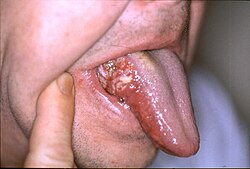
Oral cancer, also known as mouth cancer or in German Mundhöhlenkarzinom, is a malignant neoplasm that originates in the tissues of the oral cavity, including the lips, inner lining of the cheeks, gums, floor of the mouth, hard and soft palate, and the front two-thirds of the tongue.[1][2] It is primarily a squamous cell carcinoma, accounting for the vast majority of cases, and represents about 2-4% of all cancers worldwide.[3] In 2022, oral cancers (including lip and oral cavity) were estimated to cause 389,846 new cases and 188,438 deaths globally, ranking as the 16th most common cancer overall, with higher incidence and mortality in men and older adults.[4]
The primary risk factors for oral cancer include tobacco use, which is the strongest contributor, heavy alcohol consumption, and their combined effects, which synergistically increase risk up to 30-fold.[5] Other significant factors are infection with high-risk strains of human papillomavirus (HPV), particularly HPV-16, responsible for a growing proportion of cases especially in younger individuals in regions like North America and Europe; betel quid (areca nut) chewing, prevalent in South Asia and a major contributor to cases in the region; excessive sun exposure for lip cancer; and poor oral hygiene or chronic irritation from ill-fitting dentures.[5][6] Genetic predispositions and dietary deficiencies in fruits and vegetables also play roles, though less dominantly.[5]
Common symptoms of oral cancer include a persistent sore or ulcer on the lip or inside the mouth that does not heal within two weeks, unexplained lumps or thickening in the mouth or neck, white or red patches (leukoplakia or erythroplakia) on the gums, tongue, or lining of the mouth, chronic pain or numbness in the mouth or jaw, difficulty chewing, swallowing, or moving the tongue or jaw, loose teeth, poorly fitting dentures, and unexplained bleeding.[7] Early detection through routine dental examinations is crucial, as symptoms often mimic less serious conditions, and advanced disease may involve ear pain, hoarseness, or weight loss.[2]
Diagnosis typically begins with a physical examination of the mouth and neck, followed by biopsy of suspicious lesions to confirm malignancy, and imaging such as CT, MRI, or PET scans to assess spread.[8] Staging follows the TNM system, ranging from stage 0 (carcinoma in situ) to stage IV (distant metastasis), guiding treatment decisions.[8] Treatment options depend on stage, location, and patient health but commonly include surgery to remove the tumor and affected lymph nodes, often combined with radiation therapy and/or chemotherapy for advanced cases; targeted therapies like cetuximab and immunotherapies such as pembrolizumab are used for recurrent or metastatic disease.[9] The five-year survival rate is approximately 68% overall, improving to over 80% for localized early-stage cancers but dropping below 50% for regional or distant spread.[3] Prevention strategies emphasize tobacco and alcohol cessation, HPV vaccination, limiting sun exposure, and regular oral screenings.[6]
Multiple patient- and tumor-related factors influence survival in oral cancer. Younger age at diagnosis correlates with better outcomes due to fewer comorbidities and greater treatment tolerance. Tumor site affects prognosis, with lip cancer showing a 95% 5-year survival rate, while floor-of-mouth cancer has about 52% overall.[119] Achieving surgical margins greater than 5 mm significantly enhances survival, as margins of 1-5 mm increase mortality risk by 22% through higher local recurrence rates.[177] Positive lymph node status (N+) halves 5-year survival compared to node-negative disease, primarily due to increased metastatic potential.[178]
Survival rates are lower for Black (57%) and American Indian/Alaska Native individuals compared to White (70%), reflecting disparities.[179] As of 2025, immunotherapy has been associated with modest overall survival improvements in advanced cases, including metastatic oral cavity cancer, driven by checkpoint inhibitors like pembrolizumab.[180] Beyond overall survival, key quality metrics include disease-free survival, which tracks recurrence-free intervals post-treatment, and cancer-specific mortality, which isolates deaths attributable to the malignancy, offering nuanced prognostic insights.[16]
Overview
Definition and types
Oral cancer, also referred to as oral cavity cancer, is defined as a malignant neoplasm originating from the squamous epithelium that lines the oral cavity. This includes the mucosal surfaces of the lips, the anterior two-thirds of the tongue, the floor of the mouth, the buccal mucosa (inner cheeks), the gingiva (gums), the hard palate, and the retromolar trigone (area behind the wisdom teeth).[10][1] These cancers are part of the broader category of head and neck cancers but are specifically localized to the mouth, distinguishing them from malignancies in adjacent regions. Oral cancer must be differentiated from oropharyngeal cancer, which arises in the posterior aspects of the pharynx and includes the base (posterior one-third) of the tongue, the tonsils, the soft palate, and the posterior and lateral pharyngeal walls.[9] While both share similar risk factors and histological features, their anatomical distinctions influence staging, treatment approaches, and prognosis.[1] The predominant histological type of oral cancer is squamous cell carcinoma, which accounts for approximately 90-95% of all cases.[11] Variants of squamous cell carcinoma include verrucous carcinoma, a low-grade, well-differentiated form comprising 2-5% of oral malignancies; basaloid squamous cell carcinoma, an aggressive subtype with basaloid features; and spindle cell carcinoma (also known as sarcomatoid carcinoma), a biphasic tumor representing less than 1-3% of cases.[12][13] Rare non-squamous histological types, such as adenocarcinoma (arising from salivary glands), lymphoma, and sarcoma, constitute fewer than 5% of oral cancers combined.[14] Anatomically, oral cancers occur across various subsites within the oral cavity, with the tongue being the most common, accounting for 30-40% of cases, particularly the lateral borders.[15] Other frequent subsites include the floor of the mouth (15-20%), buccal mucosa (10-15%), and lower lip (10%), though prevalence varies by geographic region and risk factor exposure.[16]Anatomy of the oral cavity
The oral cavity, also known as the mouth, is the initial portion of the digestive tract and serves as the entry point for food, air, and speech production. It is bounded anteriorly by the lips, laterally by the cheeks, superiorly by the hard and soft palates, inferiorly by the floor of the mouth, and posteriorly by the oropharynx at the level of the circumvallate papillae on the tongue.[17] The oral cavity is divided into the oral cavity proper and the vestibule, with the former containing the teeth, tongue, and associated structures, while the vestibule lies between the lips/cheeks and the teeth/gums.[17][18] The lips consist of an external vermilion border covered by stratified squamous epithelium transitioning from skin and an internal mucosal surface continuous with the oral lining. They are supported by orbicularis oris muscle and contain minor salivary glands. The buccal mucosa lines the inner cheeks, forming a smooth, non-keratinized mucous membrane that reflects onto the lips and gingiva, facilitating mastication and containing minor salivary glands for lubrication.[17][18] The alveoli and gingiva refer to the bony sockets housing the teeth and the surrounding fibrous mucosa, respectively; the gingiva is firmly attached to the underlying alveolar bone of the mandible and maxilla, providing support and sealing the periodontal ligament.[19] The anterior two-thirds of the tongue, known as the oral tongue, extends from the tip to the V-shaped sulcus terminalis, featuring a dorsal surface with filiform, fungiform, foliate, and circumvallate papillae for taste and texture sensation; it is highly mobile, anchored by intrinsic and extrinsic muscles.[17][18] The floor of the mouth is a U-shaped region beneath the tongue, bounded laterally by the gingiva of the lower teeth and anteriorly by the lingual frenulum, composed of thin mucosa overlying mylohyoid and genioglossus muscles, with sublingual salivary glands embedded within. The hard palate forms the anterior roof of the oral cavity, consisting of the palatine processes of the maxilla and horizontal plates of the palatine bones, covered by masticatory mucosa with rugae for grip during swallowing. The retromolar trigone is a small triangular mucosal area posterior to the last mandibular molars, bounded by the ascending ramus of the mandible, the posterior tonsillar pillar, and the floor of the mouth, serving as a transition zone to the oropharynx.[17][18] These structures are intimately related to the mandible inferiorly and maxilla superiorly, with the oral cavity proper opening posteriorly into the oropharynx beyond the circumvallate papillae, marking the anatomical boundary for clinical considerations.[17] Blood supply to the oral cavity primarily arises from branches of the external carotid artery, including the facial artery for the lips and anterior gingiva, the lingual artery for the tongue and floor of mouth, and the maxillary artery for the buccal mucosa, hard palate, and retromolar trigone. Venous drainage parallels the arterial supply, converging into the internal jugular vein. Innervation involves sensory supply from the trigeminal nerve (CN V), with the maxillary division (V2) innervating the upper lip, palate, and buccal mucosa, and the mandibular division (V3) supplying the lower lip, tongue, floor, and gingiva; motor innervation to muscles like buccinator and orbicularis oris comes from the facial nerve (CN VII), while the hypoglossal nerve (CN XII) controls tongue movements.[17][20] Lymphatic drainage of the oral cavity varies by subsite: the anterior regions, including the lips, anterior tongue, floor of mouth, and gingiva, primarily drain to level I nodes (submental and submandibular groups), while posterior sites like the retromolar trigone and buccal mucosa drain to level II (upper jugular) and level III (middle jugular) nodes, with further pathways to deep cervical and retropharyngeal chains. This pattern reflects the rich submucosal lymphatic plexus facilitating regional spread.[21][22][23]Signs and symptoms
Early manifestations
Early manifestations of oral cancer are typically subtle and localized changes in the oral cavity that may go unnoticed or be dismissed as minor issues, making self-awareness and routine dental checkups crucial for timely detection. These initial signs often develop gradually and can appear in various sites such as the lips, tongue, gums, or inner cheeks, allowing for potential intervention before progression to more invasive stages.[24] Common early signs include persistent sores or ulcers in the mouth that do not heal within two weeks, which may present as small, non-healing lesions on the lips, tongue, or floor of the mouth. White patches, known as leukoplakia, or red patches, termed erythroplakia, are also frequent indicators; leukoplakia appears as thickened, whitish areas often linked to tobacco use, while erythroplakia shows as velvety red spots that carry a higher risk of malignancy. Unexplained bleeding from the mouth or numbness in the lips, tongue, or cheeks can further signal early disease, sometimes accompanied by a feeling of tenderness without obvious cause.[25][26][2] Site-specific symptoms vary by location; on the tongue, lesions may cause discomfort or pain during swallowing or speaking, often starting as a sore or patch that interferes with normal function. Lip involvement typically manifests as sores with crusting or rough, scaly areas that fail to resolve, potentially leading to cracking or minor bleeding upon contact.[27][26] Non-specific early indicators include hoarseness, particularly if the cancer affects posterior oral sites near the throat, and loose teeth or sudden ill-fitting of dentures due to underlying gum or bone changes. These symptoms are often painless in their initial phases, closely resembling benign conditions such as canker sores, frictional irritation from dentures, or viral infections, which can delay recognition.[25][28][29]Advanced presentations
As oral cancer progresses, local invasion becomes evident through persistent and increasingly severe symptoms that impair daily functions. Painful, non-healing ulcers often develop on the oral mucosa, tongue, or gums, accompanied by bleeding and intense discomfort that worsens with eating or speaking.[30] Difficulty chewing and swallowing, known as dysphagia, arises as the tumor infiltrates surrounding tissues, leading to odynophagia (painful swallowing) and reduced oral intake.[7] Trismus, or restricted mouth opening, results from involvement of the masticatory muscles, such as the pterygoids, further complicating nutrition and hygiene.[31] Regional spread, particularly to cervical lymph nodes, manifests as palpable neck swelling or firm masses, often unilateral and progressively enlarging, which may cause visible facial asymmetry due to tumor distortion of soft tissues and bone.[30][32] These metastatic nodes indicate advanced disease, with more than half of oral cancers presenting with regional involvement at diagnosis.[30] Systemic effects emerge as the disease impacts overall health, including unintentional weight loss from chronic dysphagia and pain, leading to malnutrition and cachexia.[7] Chronic ear pain, or referred otalgia, occurs via neural pathways when tumors invade the base of the tongue or pharynx, despite no primary ear pathology.[31] Foul breath, or halitosis, stems from necrotic tissue in ulcerated lesions or secondary bacterial overgrowth.[33] In extreme cases, complications such as secondary infections from open ulcers or airway obstruction from large tumors in the floor of the mouth or tongue base can arise, posing life-threatening risks and necessitating urgent intervention.[34][35] These presentations often correlate with higher TNM staging, emphasizing the need for prompt clinical evaluation.[30]Risk factors
Tobacco and alcohol
Tobacco use, whether through smoking or smokeless forms, is a major risk factor for oral cancer, primarily due to the presence of potent carcinogens such as tobacco-specific nitrosamines (TSNAs) like N'-nitrosonornicotine (NNN) and 4-(methylnitrosamino)-1-(3-pyridyl)-1-butanone (NNK), as well as polycyclic aromatic hydrocarbons (PAHs).[36][37] These compounds in cigarette smoke and smokeless tobacco products, including snuff and chewing tobacco, directly damage DNA in oral mucosal cells, initiating carcinogenesis.[38] The risk exhibits a clear dose-response relationship, with heavy smokers—defined as those consuming 20 or more cigarettes per day—facing a 5- to 15-fold increased risk of oral cancer compared to never smokers.[39] Smokeless tobacco users experience a lower but still significant elevation in risk, with relative risks approximately 3-fold higher for oral cavity cancer among men.[40] Alcohol consumption independently elevates oral cancer risk through its metabolite acetaldehyde, a known carcinogen that forms DNA adducts and impairs DNA repair in oral tissues.[41] Ethanol itself acts as a solvent, facilitating the penetration of other carcinogens into oral epithelial cells, and heavy drinking—typically more than 3-4 drinks per day—confers about a 5-fold increased risk compared to non-drinkers.[42][43] This effect is particularly pronounced in the oral cavity due to direct exposure during swallowing.[44] The combined use of tobacco and alcohol produces a synergistic, multiplicative effect on oral cancer risk, amplifying it to 15- to 30-fold higher than non-use of either substance.[45][39] This interaction arises because alcohol enhances tobacco carcinogen absorption while tobacco may impair alcohol metabolism, leading to prolonged exposure; chronic dual exposure also promotes field cancerization, where large areas of the oral mucosa undergo premalignant changes, increasing the likelihood of multiple primary tumors.[46][47] In Western countries, such as the United States and those in Europe, approximately 75% of oral cancer cases are attributable to tobacco and alcohol use combined, underscoring their dominant role in non-HPV-related disease burden.[48]Human papillomavirus
Human papillomavirus (HPV) is an emerging infectious risk factor for oral cancer, particularly in oropharyngeal extensions such as the base of the tongue and tonsils. High-risk HPV types, primarily 16 and 18, account for the majority of HPV-associated cases, with HPV-16 being the most prevalent genotype in over 90% of infections. These viruses integrate their DNA into the host genome, leading to the expression of oncoproteins E6 and E7, which disrupt key tumor suppressor pathways by binding and degrading p53 via E6 and inactivating retinoblastoma protein (pRb) via E7, thereby promoting uncontrolled cell proliferation and inhibiting apoptosis.[49][50][51] Approximately 5-10% of oral cavity cancers are HPV-positive, with higher rates (up to 70%) in oropharyngeal cancers, and elevated prevalence observed among younger patients who are non-smokers and non-drinkers, contrasting with the older demographic typically affected by tobacco-related cases.[52][53] HPV transmission to the oral cavity occurs primarily through sexual contact, including oral-genital and oral-oral routes, facilitating viral entry via mucosal abrasions during intimate behaviors. HPV-positive oral cancers often exhibit distinct histopathological features, such as basaloid squamous cell carcinoma morphology, and are associated with a more favorable prognosis, including improved overall survival rates compared to HPV-negative counterparts, potentially due to enhanced responsiveness to radiotherapy and chemotherapy.[54][55][56][57][58] As of 2025, HPV-associated oropharyngeal cancers account for over 70% of cases in the US, with vaccination linked to declining incidence in younger cohorts.[59] The attributable fraction of HPV to oropharyngeal cancers has risen significantly, now comprising about 70% of cases in developed countries, while it remains lower at 10-20% for pure oral cavity tumors; this trend reflects increasing HPV prevalence driven by changing sexual behaviors. Vaccination against high-risk HPV types offers preventive potential by reducing infection rates and subsequent oncogenic risk in oral tissues.[60][58]Betel quid and other cultural practices
Betel quid chewing, a traditional practice prevalent in South Asia and Southeast Asia, significantly elevates the risk of oral cancer, particularly squamous cell carcinoma of the buccal mucosa. The quid typically consists of areca nut wrapped in betel leaf, often combined with slaked lime (calcium hydroxide) and sometimes tobacco or spices, and is chewed for extended periods, leading to direct and prolonged contact with the oral mucosa. The primary carcinogenic component is the areca nut, which contains alkaloids such as arecoline that induce genotoxic effects through the generation of reactive oxygen species (ROS) and DNA damage in oral epithelial cells. Slaked lime enhances alkaloid release and mucosal absorption, while additives like tobacco introduce additional nitrosamines, though the areca nut alone is classified as a Group 1 carcinogen by the International Agency for Research on Cancer (IARC). These mechanisms promote cellular proliferation, fibrosis, and malignant transformation, with studies showing up to a 10- to 20-fold increased risk of oral cancer among habitual chewers compared to non-users, especially in regions like India, Taiwan, and Bangladesh where prevalence is high. In South Asia and Southeast Asia, betel quid use is deeply embedded in cultural and social rituals, affecting millions and contributing to 30-50% of oral cancer cases in high-incidence areas such as Taiwan and parts of India, where it accounts for the majority of buccal and tongue cancers. Globally, 120,200 oral cancer cases in 2022 were attributable to smokeless tobacco or areca nut.[61] Migration of these practices to diaspora communities in Europe and North America has led to rising cases among immigrant populations, underscoring the need for targeted awareness. Other cultural practices exacerbate this risk, including reverse smoking in certain Indian tribal communities, where the lit end of the cigar is held inside the mouth, causing thermal injury and a 4- to 6-fold higher incidence of palatal cancers. Similarly, shisha (waterpipe) smoking and paan masala consumption—often flavored, tobacco-laced betel preparations—have gained popularity, with paan masala linked to submucous fibrosis and subsequent carcinogenesis in young users across Asia. These practices, while varying by region, share the commonality of chronic mucosal irritation and chemical exposure.Genetic and environmental factors
Inherited genetic disorders involving DNA repair defects significantly elevate the risk of oral cancer. Fanconi anemia (FA), a rare autosomal recessive condition characterized by chromosomal instability and defective DNA repair, confers a 500- to 1000-fold increased risk of developing head and neck squamous cell carcinoma, particularly in the oral cavity, often at young ages.[62] Similarly, dyskeratosis congenita (DC), a telomere biology disorder leading to premature cellular senescence, is associated with a markedly heightened risk of oral squamous cell carcinoma, with observed-to-expected ratios exceeding 100-fold for head and neck cancers due to impaired telomere maintenance.[63] These syndromes underscore the role of genomic instability in oral carcinogenesis, where affected individuals require vigilant surveillance for early premalignant lesions. Genetic polymorphisms in xenobiotic-metabolizing enzymes also modulate oral cancer susceptibility, particularly in conjunction with environmental exposures. Variants in glutathione S-transferase (GST) genes, such as the GSTM1 and GSTT1 null genotypes, impair detoxification of carcinogens, resulting in a 1.5- to 2-fold elevated risk of oral cancer.[64] Likewise, polymorphisms in cytochrome P450 (CYP) enzymes, including CYP1A1 exon 7 Ile/Val and CYP2E1 c1/c2, enhance activation of procarcinogens like those in tobacco smoke, associating with up to a 2- to 4-fold increase in risk among carriers.[65] These common variants highlight how subtle genetic differences in metabolic pathways can influence disease predisposition. Beyond genetics, environmental exposures contribute to oral cancer etiology. Ultraviolet (UV) radiation from chronic sun exposure is a primary risk factor for lip cancer, a subtype of oral cancer, with fair-skinned individuals and outdoor workers facing a 2- to 3-fold higher incidence; UV-induced mutations in the TP53 gene, such as C-to-T transitions, are frequently observed in these tumors.[66] Prior head and neck radiation therapy or hematopoietic stem cell transplantation (HSCT) further amplifies risk through DNA damage and immunosuppression, with HSCT recipients exhibiting a 3- to 6-fold elevated incidence of secondary oral malignancies within 10-15 years post-procedure.[67] Additional environmental and lifestyle factors include poor oral hygiene and chronic mechanical irritation, which promote persistent inflammation and cellular proliferation. Ill-fitting dentures, sharp teeth, or faulty restorations can cause ongoing mucosal trauma, associating with a 2- to 5-fold increased risk in affected sites, potentially via promotion of leukoplakia.[68] Diets deficient in fruits and vegetables, lacking protective antioxidants and micronutrients, correlate with a 1.5- to 2-fold higher oral cancer risk, as evidenced by cohort studies showing dose-dependent reductions with higher intake.[69] Rare associations involve infectious agents in specific populations. Epstein-Barr virus (EBV) has been implicated in a subset of oral squamous cell carcinomas, particularly in Asian cohorts, where viral DNA is detected in up to 30% of tumors, potentially through latent infection and immune evasion mechanisms.[70] Human immunodeficiency virus (HIV) infection, via profound immunosuppression, elevates oral cancer risk by 2- to 4-fold, independent of other factors, with higher rates observed in untreated individuals.[71]Pathophysiology
Cellular and molecular mechanisms
Oral carcinogenesis follows a multistep model involving initiation, promotion, and progression phases. During initiation, exposure to carcinogens such as those in tobacco induces DNA damage and genetic mutations in normal oral epithelial cells.[72] In the promotion phase, altered cells undergo clonal expansion and proliferation due to dysregulated growth signals, leading to hyperplasia and dysplasia.[72] The progression phase is characterized by additional genetic and epigenetic changes that enable invasion into the stroma and metastasis to distant sites.[73] Key genetic alterations drive these processes, with mutations in the TP53 tumor suppressor gene occurring in approximately 70% of oral squamous cell carcinoma (OSCC) cases, impairing DNA repair and apoptosis.[74] Overexpression of epidermal growth factor receptor (EGFR) is common in OSCC, promoting uncontrolled cell proliferation, survival, and invasion through downstream signaling.[75] Activation of the PI3K/AKT pathway further contributes by enhancing cell survival, inhibiting apoptosis, and supporting metabolic reprogramming in tumor cells.[76] In HPV-associated oral cancers, which account for approximately 6-25% of OSCC cases globally depending on detection method and region, with higher rates (up to 30%) for HPV DNA in some studies but lower causal attribution, the viral oncoproteins E6 and E7 play central roles by binding and degrading p53 and Rb proteins, respectively, thereby disrupting cell cycle control and apoptosis. However, while HPV DNA is detected in 20-30% of cases per some reviews, E6/E7 mRNA expression confirming active oncogenesis is found in only 2-6% of OSCC, highlighting the limited causal role in oral cavity compared to oropharyngeal cancers.[77][78] This leads to genomic instability and immortalization of infected cells, facilitating malignant transformation independent of traditional carcinogen-induced mutations.[79] Epigenetic modifications also underpin oral carcinogenesis, including hypermethylation of promoter regions in tumor suppressor genes such as TFPI2, SOX17, and GATA4, which silences their expression and promotes tumor growth.[80] Dysregulation of microRNAs (miRNAs) contributes similarly, with upregulated oncomiRs like miR-31 enhancing proliferation and invasion, while downregulated tumor-suppressive miRNAs fail to inhibit oncogenic pathways.[81] Angiogenesis is essential for tumor progression, driven primarily by vascular endothelial growth factor (VEGF) overexpression, which stimulates endothelial cell proliferation and new vessel formation to support nutrient supply and metastasis.[82] Epithelial-mesenchymal transition (EMT) facilitates stromal invasion, where matrix metalloproteinases (MMPs), such as MMP-13, degrade extracellular matrix components, enabling cancer cells to acquire migratory properties and disseminate.[83]Progression from premalignant lesions
Premalignant lesions in the oral cavity represent identifiable precursor states that can progress to invasive oral squamous cell carcinoma through a multistep process influenced by genetic and environmental factors. The most common such lesions include oral leukoplakia, characterized by white plaques that cannot be scraped off and exhibit a malignant transformation rate ranging from 5% to 25% over time, depending on clinical features like size, location, and histological dysplasia.[84] Erythroplakia, appearing as red, velvety patches, carries a substantially higher risk, with malignant transformation rates estimated at approximately 20% based on recent meta-analyses, though some studies report up to 50%, making it one of the most concerning oral potentially malignant disorders.[85] Oral submucous fibrosis (OSF), a fibrosis-related condition primarily linked to areca nut chewing, has a transformation rate of approximately 7% to 13%, with progression accelerated by the chronic inflammation and collagen deposition induced by areca alkaloids.[86] Progression from these lesions to invasive cancer is marked by histological and molecular changes that enable risk stratification. Dysplasia grading, based on architectural and cytological atypia, categorizes lesions as mild, moderate, or severe; mild dysplasia shows limited basal cell involvement with low progression risk (around 1-5%), while severe dysplasia, affecting more than two-thirds of the epithelium, correlates with a 20-50% chance of malignant transformation within 5-10 years.[87] Molecular markers such as loss of heterozygosity (LOH) at chromosomal regions 3p, 9p, and 17p further predict progression; LOH at 3p and/or 9p indicates a 3.8- to 22-fold increased relative risk compared to lesions without these alterations, reflecting inactivation of tumor suppressor genes like FHIT, CDKN2A, and TP53.[88][89] The concept of field cancerization explains the multicentric nature of oral premalignancy, where broad mucosal patches exposed to shared carcinogens like tobacco develop synchronous or metachronous genetic changes, leading to multiple lesions or second primary tumors. This phenomenon increases the risk of second primaries by 3- to 5-fold in patients with an initial oral cancer, often arising within the same anatomical field due to clonal expansion of altered cells.[90][91] Not all premalignant lesions inevitably progress; some demonstrate reversion potential upon cessation of risk factors. For instance, up to 60% of tobacco-associated leukoplakias regress clinically following smoking cessation, with complete resolution observed in 97.5% of smokeless tobacco-related cases after involuntary abstinence, highlighting the role of ongoing exposure in lesion persistence.[92][93] In OSF, early-stage lesions may stabilize or partially regress with areca avoidance and supportive therapies, though advanced fibrosis limits full reversal.[86]Diagnosis
Clinical evaluation
The clinical evaluation of suspected oral cancer commences with a comprehensive patient history to identify potential symptoms and risk factors. Clinicians inquire about the duration of symptoms, such as persistent oral pain, difficulty swallowing, or unexplained bleeding, which may have been present for weeks to months.[94] Risk factor assessment includes quantifying tobacco exposure in pack-years (packs per day multiplied by years smoked) and alcohol consumption in standard units per week, as heavy use synergistically elevates risk.[5] Family history of head and neck cancers is also documented, given its association with increased susceptibility.[95] A detailed physical examination follows, focusing on the head, neck, and oral cavity to detect abnormalities. Intraoral inspection uses a mouth mirror and adequate lighting to visualize mucosal surfaces for changes like white or red patches, including leukoplakia as an early sign.[96] Palpation assesses lesion texture for induration (firmness), mobility, and depth, while bimanual examination evaluates the floor of the mouth and tongue.[94] The neck is systematically palpated for lymphadenopathy, noting node size, consistency, and fixation to underlying structures.[97] General assessment includes vital signs, documentation of unintentional weight loss (often >5% in recent months, indicating advanced disease), and evaluation of performance status using the Eastern Cooperative Oncology Group (ECOG) scale, where scores range from 0 (fully active) to 5 (dead) to gauge functional impairment.[98] Red flags prompting urgent referral include non-healing ulcers exceeding two weeks, fixed or indurated lesions, and facial asymmetry suggestive of underlying malignancy.[99] This initial non-invasive approach guides subsequent diagnostic steps.[100]Imaging and biopsy techniques
Imaging techniques play a crucial role in evaluating the extent of oral cancer, assessing involvement of surrounding structures, and detecting potential metastases. Panoramic X-rays, also known as orthopantomograms, are commonly used to assess dental involvement and jawbone changes associated with oral tumors, providing a broad overview of the oral cavity and mandible in a single image.[101] Computed tomography (CT) and magnetic resonance imaging (MRI) are essential for delineating tumor extent, evaluating soft tissue invasion, and detecting bone involvement, with CT offering superior bone detail and MRI providing better contrast for soft tissues.[102][103] For instance, contrast-enhanced CT demonstrates high diagnostic accuracy in identifying mandibular bone invasion in oral squamous cell carcinoma, aiding in surgical planning.[102] Positron emission tomography-computed tomography (PET-CT) using 18F-fluorodeoxyglucose (FDG) is particularly valuable for detecting lymph node metastases and distant spread, with reported sensitivity ranging from 80% to 90% in identifying cervical nodal involvement.[104][105] Biopsy remains the gold standard for confirming the diagnosis of oral cancer through histopathological examination, offering definitive identification of malignant cells and tumor characteristics. Incisional biopsy involves removing a representative portion of the suspicious lesion under local anesthesia, which is preferred for larger tumors to avoid compromising surgical margins in subsequent treatments, while excisional biopsy entails complete removal of smaller lesions for both diagnostic and potentially therapeutic purposes.[106][107] For evaluating neck nodes suspected of metastasis, fine-needle aspiration (FNA) cytology is a minimally invasive technique that samples lymph nodes, providing cytological evidence of malignancy with high specificity when combined with imaging findings.[106] In cases linked to human papillomavirus (HPV), particularly in oropharyngeal subsites of oral cancer, HPV testing is integrated into biopsy analysis; p16 immunohistochemistry (IHC) serves as a sensitive surrogate marker for HPV-related disease, often followed by confirmatory polymerase chain reaction (PCR) for HPV DNA or RNA to assess transcriptional activity.[108][109] Adequate sampling in biopsies minimizes false negatives, which occur in less than 5% of cases when multiple sites are appropriately targeted.[107] Several adjunctive techniques enhance the detection of suspicious lesions during clinical assessment, though they do not replace biopsy. Toluidine blue staining, a vital dye applied topically, selectively binds to DNA in malignant or dysplastic cells, highlighting areas of concern with a sensitivity of around 80-90% for identifying high-risk lesions.[110] Vital tissue fluorescence using devices like VELscope employs autofluorescence under blue light to visualize loss of fluorescence in abnormal tissues, aiding in the demarcation of premalignant changes with improved specificity over conventional examination.[111] Narrow-band imaging (NBI) leverages filtered light to accentuate vascular patterns and epithelial irregularities, facilitating non-invasive identification of superficial tumor margins and microvascular invasion in oral mucosa.[110] These tools are particularly useful for guiding biopsy sites and monitoring high-risk patients, with FNA often applied to neck nodes identified through such adjuncts in conjunction with clinical palpation.[111] Emerging diagnostic methods as of 2025 include artificial intelligence (AI)-assisted analysis of images for early lesion detection and liquid biopsies for detecting circulating tumor DNA (ctDNA) biomarkers, which show promise in improving sensitivity and specificity but are not yet standard of care.[112]Classification and staging
Oral cancer is classified histologically primarily according to the World Health Organization (WHO) system, with squamous cell carcinoma (SCC) comprising the vast majority of cases, typically over 90%.[113] Less common subtypes include verrucous carcinoma, papillary SCC, and spindle cell carcinoma, but conventional SCC predominates and forms the basis for most classifications.[114] Histologic grading of oral SCC focuses on the degree of differentiation, which correlates with tumor behavior and prognosis. Well-differentiated tumors exhibit abundant keratinization, intercellular bridges, and minimal nuclear atypia; moderately differentiated tumors show reduced keratinization and increased pleomorphism; and poorly differentiated tumors display minimal or absent keratinization, marked atypia, and aggressive features.[113] The WHO 5th edition (2024) emphasizes these morphologic criteria for grading, assigning scores from 1 (well-differentiated) to 3 (poorly differentiated) to guide clinical management.[114] Staging employs the American Joint Committee on Cancer (AJCC)/Union for International Cancer Control (UICC) TNM system, 8th edition (2017), which categorizes disease extent to inform treatment and prognosis. The T (primary tumor) category incorporates tumor size and depth of invasion (DOI): T1 denotes tumors ≤2 cm with DOI ≤5 mm; T2, tumors ≤2 cm with DOI >5 mm and ≤10 mm or >2 cm but ≤4 cm with DOI ≤10 mm; T3, tumors >4 cm or any size with DOI >10 mm; T4a, moderately advanced disease invading deep/extrinsic muscles of tongue, maxillary sinus, or skin; and T4b, very advanced unresectable invasion of masticator space, pterygoid plates, or skull base.[115] The N (regional lymph nodes) category ranges from N0 (no regional metastasis) to N3 (multiple or large nodes, often with extranodal extension); and M (distant metastasis) is M0 (none) or M1 (present).[116] For HPV-associated cases, particularly p16-positive tumors more common in oropharynx but occasionally in oral cavity, the 8th edition introduces prognostic modifiers that recognize improved outcomes without altering core TNM criteria for oral cavity sites.[117] Stage grouping integrates TNM elements into overall stages: stage 0 (Tis N0 M0, carcinoma in situ); stage I (T1 N0 M0); stage II (T2 N0 M0); stage III (T1-T3 N1 M0 or T3 N0 M0); stage IVA (T1-T4a N1-N2 M0 or T4a N0-N1 M0); stage IVB (any T N3 M0 or T4b any N M0); and stage IVC (any T any N M1).[118] These groupings reflect disease burden, with early stages (I-II) indicating localized disease amenable to curative intent. Prognostic implications vary markedly by stage, with 5-year relative survival rates approximately 80-85% for stages I-II (localized disease), dropping to around 40% for stage IV (advanced or metastatic).[119] HPV-p16-positive status, when present, is associated with better prognosis across stages compared to HPV-negative counterparts.[120]Prevention and screening
Risk reduction strategies
Reducing exposure to tobacco and alcohol is a cornerstone of oral cancer prevention, as these are major modifiable risk factors. Smoking cessation programs, including nicotine replacement therapy (NRT) and pharmacotherapies like varenicline, have demonstrated success rates of 20-30% at one year, with varenicline achieving abstinence rates of approximately 22-32% compared to placebo.[121][122] For alcohol, adhering to low-risk guidelines of no more than 14 units per week—spread across at least three days—can significantly lower the risk, as excessive consumption synergistically amplifies tobacco-related harm.[123][42] Dietary modifications and oral hygiene practices further contribute to risk reduction by mitigating chronic irritation and providing protective antioxidants. High intake of fruits and vegetables, particularly at least five servings daily, is associated with an odds ratio (OR) of approximately 0.5 for oral cancer compared to low intake, due to their rich content of vitamins and fiber that counteract carcinogenic effects.[124] Regular dental care, including brushing twice daily and professional cleanings, reduces oral irritation from plaque and ill-fitting dentures, halving the risk of head and neck cancers (OR = 0.5).[125] Human papillomavirus (HPV) vaccination targets virus-associated oropharyngeal cancers, a subset of oral malignancies. The Gardasil vaccine, recommended for individuals aged 9-45, shows over 90% efficacy in preventing infections from HPV types 16 and 18, which cause about 70% of HPV-related oropharyngeal cancers.[126][127] Recent studies as of 2025 indicate that HPV vaccination is associated with reduced odds ratios for oral and oropharyngeal cancer incidence.[128] Public health initiatives, such as bans on betel quid sales and targeted awareness campaigns, have proven effective in high-prevalence regions. In areas like Southeast Asia and the Pacific, these interventions have reduced betel quid use and associated oral cancer incidence by 10-20% through education on carcinogenicity and policy enforcement.[129][130]Screening methods and guidelines
Screening for oral cancer primarily involves systematic visual and tactile examinations of the oral cavity, conducted by dental professionals or physicians to identify suspicious lesions or abnormalities in asymptomatic individuals. This conventional oral examination (COE) includes inspection under adequate lighting and palpation of the lips, tongue, floor of the mouth, palate, and surrounding structures, allowing for the detection of premalignant changes such as leukoplakia or erythroplakia. For high-risk populations, including current or former tobacco users and heavy alcohol consumers, guidelines recommend these examinations every 6 to 12 months during routine dental visits to facilitate early intervention. Adjunctive tools, such as oral brush biopsy, can enhance detection by collecting cells for cytological analysis; a systematic review of liquid-based cytology methods reported a pooled sensitivity of approximately 84% and specificity of 95% for identifying oral epithelial dysplasia or carcinoma in suspicious lesions.[131] Major guidelines emphasize targeted screening rather than population-wide programs due to limited evidence on net benefits. The United States Preventive Services Task Force (USPSTF) issues an "I" statement, indicating insufficient evidence to assess the balance of benefits and harms of routine screening for oral cancer in asymptomatic adults aged 18 years or older, but notes that clinicians may choose to discuss screening with high-risk patients, such as those aged over 40 who smoke or use smokeless tobacco. The American Dental Association (ADA) supports routine visual and tactile screening as part of comprehensive oral examinations for all patients, with increased frequency and adjunctive aids like brush biopsy recommended for those at elevated risk, including tobacco users, to triage potentially malignant lesions. The World Health Organization (WHO), through its International Agency for Research on Cancer (IARC), highlights the need for prevention and early detection efforts focused on high-risk groups, such as betel quid chewers in Asia-Pacific regions where usage contributes to over 600 million users and elevated oral cancer incidence; targeted screening programs in such populations, like those in Taiwan, provide biennial exams for betel users over age 30.[132][133] Evidence on screening effectiveness shows potential benefits in high-risk groups, with studies indicating that visual inspection programs can detect 19% to 30% more early-stage lesions and reduce advanced-stage diagnoses by up to 15%, leading to improved outcomes. A meta-analysis of screening interventions reported a 26% reduction in oral cancer mortality and a 19% decrease in advanced cases among screened high-risk individuals, attributed to earlier treatment initiation. Early detection through these methods correlates with substantially higher survival rates, exceeding 80% at five years for localized disease compared to under 50% for regional or metastatic stages.[134][135][136] Self-examination empowers individuals to monitor for changes between professional visits, particularly in at-risk groups. Guidelines from organizations like the Mouth Cancer Foundation recommend a monthly two-minute self-check using a mirror and good lighting: inspect the lips, gums, tongue, and inner cheeks for white or red patches, lumps, or sores lasting over two weeks, and palpate the neck for swollen lymph nodes; persistent abnormalities warrant prompt professional evaluation. Mobile applications, such as AI-assisted tools for risk assessment in conditions like oral leukoplakia, can aid in tracking self-exams and symptoms, though they supplement rather than replace clinical screening; as of 2025, AI-based diagnostic aids have shown promise in improving detection accuracy in clinical reviews.[137][138][139]Management
Surgical interventions
Surgical interventions form the cornerstone of curative treatment for oral cancer, particularly for early-stage disease where complete resection offers the best chance for local control and survival. The primary goal is to remove the tumor with adequate margins while preserving as much function as possible, guided by preoperative staging to determine the extent of resection.[22][140] For primary tumor surgery, wide local excision is the standard approach for superficial or early lesions, involving removal of the tumor along with a surrounding cuff of normal tissue to ensure clear margins. In cases where the cancer invades the mandible, marginal mandibulectomy is performed for tumors abutting the bone without frank invasion, preserving the mandibular arch, while segmental mandibulectomy is required for direct bone involvement to achieve oncologic clearance. For select early-stage lesions, such as those in the oral tongue or floor of mouth, transoral CO2 laser resection provides precise ablation with minimal blood loss and reduced postoperative pain, suitable for T1 tumors.[141][142][143][144] Neck management is integral, as occult metastases are common even in clinically negative necks. Elective neck dissection (END) is recommended for tumors T2 or larger to address potential subclinical disease in cervical lymph nodes, improving regional control compared to observation alone. For clinically node-negative (cN0) early-stage oral squamous cell carcinoma, sentinel lymph node biopsy serves as a less invasive alternative to END, demonstrating approximately 95% accuracy in detecting occult metastases and comparable survival outcomes.[145][146] Achieving clear surgical margins is critical for reducing local recurrence; a 1-1.5 cm margin of clinically normal tissue around the tumor is typically resected, with intraoperative frozen section analysis used to confirm negativity before closure. Reconstruction planning occurs concurrently, selecting flaps or grafts based on defect size to optimize healing and function.[147][148][149] Common complications include wound issues such as dehiscence or infection, occurring in 10-20% of cases, alongside functional deficits like impaired speech due to tissue loss or scarring.[150][151]Radiation and systemic therapies
Radiation therapy plays a central role in the management of oral cancer, either as a primary treatment for early-stage disease or adjuvantly following surgery for higher-risk cases. External beam radiation therapy (EBRT), particularly intensity-modulated radiation therapy (IMRT) and volumetric modulated arc therapy (VMAT), is the preferred modality due to its ability to conform radiation doses to the tumor while minimizing exposure to surrounding structures such as salivary glands, reducing the risk of xerostomia.[152][153] Standard doses for definitive or postoperative radiation typically range from 60 to 70 Gy, delivered in daily fractions of 1.8 to 2 Gy over 6 to 7 weeks, with adjustments based on tumor stage and margins.[154][155] For early-stage oral cancers, particularly T1-T2 lesions in accessible sites like the tongue or floor of mouth, brachytherapy offers a targeted alternative or boost, delivering high doses (e.g., 40-60 Gy in 10 fractions for high-dose-rate) directly to the tumor bed with lower integral dose to normal tissues.02498-2/fulltext)[156] Systemic therapies are integrated with radiation to enhance locoregional control and survival, especially in locally advanced disease. Concurrent chemoradiation with high-dose cisplatin (100 mg/m² every 3 weeks) is a standard approach, demonstrating an absolute improvement in overall survival of 6-8% at 5 years compared to radiation alone in high-risk head and neck squamous cell carcinomas, including oral cavity sites.[157] Weekly lower-dose cisplatin (40 mg/m²) is an alternative for patients with compromised renal function, offering similar efficacy with potentially reduced toxicity.[158] Neoadjuvant chemotherapy, often cisplatin-based combinations like cisplatin-fluorouracil, may be considered for select advanced unresectable cases to downstage tumors prior to definitive therapy, though its impact on survival remains less established than concurrent regimens.[159] Targeted therapies and immunotherapies have expanded options, particularly for recurrent or metastatic disease. Cetuximab, an epidermal growth factor receptor (EGFR) monoclonal antibody, is used concurrently with radiation in cisplatin-ineligible patients, improving locoregional control and survival based on phase III evidence in head and neck cancers.[160] For recurrent/metastatic oral cancer, PD-1 inhibitors such as pembrolizumab and nivolumab are approved, with objective response rates of 20-30% in HPV-positive subsets, reflecting better outcomes in virally driven tumors; as of 2025, expanded indications include frontline use with chemotherapy for PD-L1-positive cases.[161][162] In 2025, perioperative pembrolizumab combined with standard surgery and radiation was approved for resectable locally advanced head and neck squamous cell carcinoma, including oral cavity cancers, demonstrating improved event-free survival in phase III trials.[163] Emerging PI3K pathway inhibitors, targeting frequent activations in oral squamous cell carcinoma, show promise in preclinical models and early trials, potentially synergizing with EGFR or PD-1 blockade to overcome resistance.[164] Treatment de-intensification strategies are under investigation primarily for HPV-positive oropharyngeal cancers, which exhibit favorable prognoses. For oral cavity cancers, HPV-positive status does not confer a similarly improved prognosis, and standard treatment intensity is generally maintained, though select low-risk cases may be considered in clinical trials to mitigate long-term toxicities like dysphagia and xerostomia while preserving efficacy, supported by phase II data.[165]07726-X/fulltext)Reconstructive and rehabilitative care
Reconstructive surgery plays a vital role in restoring form and function after tumor resection in oral cancer patients. Free flaps, such as the radial forearm flap, are commonly used for soft tissue reconstruction in the oral cavity and pharynx due to their reliable vascularity and versatility in matching defect size. For bony defects, particularly in the mandible, the fibula osteocutaneous free flap provides both vascularized bone and soft tissue, enabling immediate or delayed reconstruction to support mastication and aesthetics.[166] Pedicled flaps like the pectoralis major myocutaneous flap serve as an alternative for larger defects when free tissue transfer is not feasible, offering robust tissue coverage with a straightforward surgical approach.[167] Following adequate healing, typically 6-12 months post-reconstruction, dental implants can be integrated into the restored site to anchor prostheses, enhancing chewing efficiency and facial symmetry.[168] Rehabilitation of speech and swallowing is essential, as dysphagia occurs in 20-50% of patients after oral cancer treatment, often due to surgical alterations or fibrosis.[169] Speech-language pathologists deliver targeted therapies, including oral motor exercises and compensatory strategies, to optimize bolus control and reduce aspiration risk.[170] For structural defects, such as velopharyngeal incompetence, prosthetic devices like palatal augmentation prostheses improve speech intelligibility and swallowing efficacy by reshaping the oral cavity.[171] Pain and palliative management address common sequelae to improve quality of life. Opioids, such as morphine or oxycodone, are employed for acute postoperative pain or persistent discomfort, with careful titration to minimize side effects.[172] Trismus, resulting from muscle fibrosis or scarring, is treated with progressive jaw-stretching exercises using devices like the TheraBite and, in refractory cases, botulinum toxin injections into the masseter or temporalis muscles to reduce spasm and improve mouth opening.[172] Nutritional support frequently involves temporary percutaneous endoscopic gastrostomy (PEG) tubes, placed prophylactically or reactively, to ensure caloric intake during the acute recovery phase when oral feeding is impaired, with removal once swallowing recovers.[173] Radiation-induced xerostomia can exacerbate these challenges, often managed with salivary substitutes to facilitate oral intake.[174] A multidisciplinary approach coordinates care among specialists to holistically address functional and psychosocial needs. Speech-language pathologists focus on communication and dysphagia training, dentists oversee prosthetic fitting and oral hygiene to prevent complications, and psychologists provide interventions for depression, which affects about 30% of patients and can hinder adherence to rehabilitation.[175] This integrated team model enhances overall recovery and patient-centered outcomes.[176]Prognosis
Survival rates and factors
The 5-year relative survival rate for oral cavity and pharynx cancer is approximately 70%, based on Surveillance, Epidemiology, and End Results (SEER) Program data from diagnoses between 2015 and 2021.[16] This rate reflects the proportion of patients alive five years after diagnosis compared to the general population, accounting for all causes of death. Survival outcomes vary substantially by disease stage at diagnosis, with early detection markedly improving prognosis.| Stage | 5-Year Relative Survival Rate |
|---|---|
| Localized (Stage I) | 85% |
| Regional (Stages II-III) | 69% |
| Distant (Stage IV) | 41% |
| All stages combined | 70% |