Hubbry Logo
Kherson OblastKherson OblastMain
Open search
Kherson Oblast
Community hub
Kherson Oblast
logo
8 pages, 0 posts
0 subscribers
Be the first to start a discussion here.
Kherson Oblast
Kherson Oblast
from Wikipedia

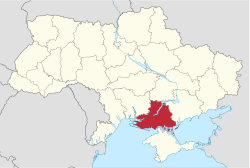
Kherson Oblast (Ukrainian: Херсонська область, romanizedKhersonska oblast, IPA: [xerˈsɔnʲsʲkɐ ˈɔblɐsʲtʲ]; Russian: Херсонская область), also known as Khersonshchyna (Херсонщина, IPA: [xerˈsɔnʃtʃɪnɐ]), is an oblast (province) in southern Ukraine. It is located just north of Crimea. Its administrative center is Kherson, on the northern or right bank of the Dnieper river, which bisects the oblast. The oblast has an area of 28,461 km2 and a population of 1,001,598 (2022 estimate).[3] It is considered the 'fruit basket' of the country, as much of its agricultural production is dispersed throughout the country, with production peaking during the summer months.

Key Information

Most of the area of the oblast has been under Russian military occupation since early in the 2022 Russian invasion of Ukraine. In September 2022, Russia claimed to have annexed Kherson Oblast after arranging a disputed referendum. The referendum and the subsequent claimed annexation are internationally unrecognized. As the result of a counteroffensive operation, Ukrainian forces retook the whole area on the right bank of the Dnieper, including Kherson city, by mid-November 2022.

History

[edit]
17th-century view of Kazikermen, now Beryslav

At various times throughout its history, the territory was ruled either entirely or partly by Scythia, ancient Greeks, Old Great Bulgaria, Khazars, Kipchaks, the Byzantine Empire, Kyivan Rus', Italians,[6] the Mongol Empire, Lithuania, the Crimean Khanate, the Ottoman Empire, Poland[7] and Russia. In medieval times, the towns of greatest importance were Oleshia, a former Byzantine, Kyivan Rus' and Genoese trading port,[6] and Tawan/Kazikermen, a former Lithuanian customs point and Polish and Turkish fortress, which is now Beryslav.[7] Another notable town in the early modern period was Bilchowisce, now Kherson.[8]

In 1917–1920 the territory was variously controlled by the Ukrainians, Bolsheviks and White Russians, decisively becoming part Soviet Ukraine in 1920. It was the scene of Soviet genocidal crimes, chiefly the Holodomor of 1932–1933, and part of the Katyn massacre of 1940.[9] During World War II, it was occupied by Germany from 1941 to 1944.

The province was established in 1944 within Soviet Ukraine. In the 1991 Ukrainian independence referendum, 90.13% of votes in Kherson Oblast were in favor of the Declaration of Independence of Ukraine.[10]

A survey conducted by the Kyiv International Institute of Sociology in December 2014 found that 90.9% of the oblast's population opposed their region joining Russia, 1% supported the idea, and the rest were undecided or did not respond.[10][11]

Russian invasion

[edit]
Map showing territorial control in Kherson Oblast

As a result of the 24 February 2022 Russian invasion of Ukraine, Russian forces occupied most of the oblast. Russian-controlled parts of the oblast were governed by the "Kherson military–civilian administration"[12] from 28 April to 30 September 2022.

On 27 July 2022, the Ukrainian army destroyed the Antonivka Road Bridge, as part of its wider campaign to isolate the Russian forces on the right bank of the Dnieper river.[13]

On 23–27 September 2022, the Russian Federation held referendums in the occupied territories of Kherson oblast for the "independence and subsequent entry into the Russian Federation". Most states recognized the referendums to be staged and against international law.[citation needed]

On 29 September, the Russian Federation recognized Kherson Oblast as an independent state.[14] The next day, Russian president Vladimir Putin announced the annexation of the Kherson Oblast and signed an "accession decree" that is widely considered to be illegal.[15] At that time, Russia was not in control of the province as a whole.[16]

The United Nations General Assembly subsequently passed a resolution calling on countries not to recognise what it described as an "attempted illegal annexation" and demanded that Russia "immediately, completely and unconditionally withdraw".[17]

By 11 November 2022, the city of Kherson and all the Russian-held territory on the right bank of the Dnieper had been recaptured by Ukrainian forces.[18] The territory on the left bank is still under Russian control.

On 6 June 2023, the Kakhovka Dam was breached, causing extensive flooding downstream and prompting mass evacuations in the oblast, while the Kakhovka Reservoir was drained.[19]

Russian authorities claimed that Russian President Vladimir Putin won 88.12% of the vote in the occupied Kherson region in the 2024 Russian presidential election,[20] which has been described as rigged and fraudulent.[21]

Geography

[edit]
Kherson Oblast and subdivisions since July 2020

Kherson Oblast is bordered by Dnipropetrovsk Oblast to the north, the Black Sea and Crimea to the south, Mykolaiv Oblast to the west, and the Azov Sea and Zaporizhzhia Oblast to the east. The Dnieper River, which includes the Kakhovka Reservoir, runs through the oblast.

Before the 2022 Russian invasion of Ukraine, two bridges spanned the Dniper: the Kakhovka Bridge near Nova Kakhovka and the Antonivka Road Bridge at Kherson. Another significant bridge, the Daryivka Bridge crosses the Inhulets river and connects Kherson via the M14 highway to Beryslav, the other abutment of the Kakhovka Bridge.

The oblast's Henichesk Raion includes the northern portion of the Arabat Spit, a thin strip of land between the brackish Syvash and the Sea of Azov that is geographically part of the Crimean Peninsula. Due to Russia gaining de facto control of the Autonomous Republic of Crimea in 2014, this strip within Kherson Oblast was the only part of the Crimean Peninsula under Ukrainian control immediately prior to the 2022 Russian invasion of Ukraine.[citation needed]

Historically, it is located in Yedisan (north-western part), Zaporizhzhia (northern part) and Pryazovia (southern and eastern parts).[citation needed]

Kherson is the only city in the oblast with a population over 100,000. Four other cities have over 30,000; they are, in order from largest, Nova Kakhovka, Kakhovka, Oleshky and Henichesk.

Administrative divisions

[edit]

Until the 2020 re-organisation, the Kherson Oblast was administratively subdivided into 18 raions (districts) and 3 municipalities. The municipalities – Kherson (administrative center of the oblast), Nova Kakhovka, and Kakhovka – were directly subordinate to the oblast government. The Kherson municipality was subdivided into 3 urban districts. All information below was current as of 2015.[22]

Name Ukrainian name Area
(km2)
Population
2015
Admin. center Urban population only
Kherson Херсон (місто) 423 333,737 Kherson 322,260
Hola Prystan Гола Пристань (місто) 9 14,883 Hola Prystan 14,568
Nova Kakhovka Нова Каховкa (місто) 223 68,205 Nova Kakhovka 62,128
Kakhovka Каховкa (місто) 16 36,958 Kakhovka 36,958
Beryslav Raion Бериславський (район) 1,721 48,025 Beryslav 16,682
Bilozerka Raion Білозерський (район) 1,534 66,564 Bilozerka 9,739
Chaplynka Raion Чаплинський (район) 1,722 35,219 Chaplynka 12,638
Henichesk Raion Генічеський (район) 3,008 59,991 Henichesk 33,748
Hola Prystan Raion Голопристанський (район) 3,411 45,827 Hola Prystan 14,666
Hornostaivka Raion Горностаївський (район) 1,018 19,788 Hornostaivka 6,681
Ivanivka Raion Іванівський (район) 1,120 13,995 Ivanivka 4,560
Kalanchak Raion Каланчацький (район) 916 21,568 Kalanchak 11,169
Kakhovka Raion Каховський (район) 1,450 35,968 Kakhovka N/A *
Novotroitske Raion Новотроїцький (район) 2,298 35,921 Novotroitske 14,979
Novovorontsovka Raion Нововоронцовський (район) 1,005 21,442 Novovorontsovka 6,379
Nyzhni Sirohozy Raion Нижньосірогозький (район) 1,209 15,985 Nyzhni Sirohozy 4,891
Oleshky Raion Олешківський (район) 1,759 71,888 Oleshky 36,317
Skadovsk Raion Скадовський (район) 1,456 47,930 Skadovsk 21,830
Velyka Lepetykha Raion Великолепетиський (район) 1,000 16,827 Velyka Lepetykha 8,326
Velyka Oleksandrivka Raion Великоолександрівський (район) 1,540 25,948 Velyka Oleksandrivka 9,747
Verkhniy Rohachyk Raion Верхньорогачицький (район) 915 12,003 Verkhniy Rohachyk 5,698
Vysokopillia Raion Високопільський (район) 701 15,121 Vysokopillia 6,148
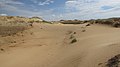
Typical agricultural landscape of Kherson Oblast

.* Note: Though the administrative center of the raion is housed in the city/town that it is named after, cities do not answer to the raion authorities only towns do; instead they are directly subordinated to the oblast government and therefore are not counted as part of raion statistics.

At a lower level of administration, these district-level administrations are subdivided into:

The local administration of the oblast is controlled by the Kherson Regional Council. The governor of the oblast is the Kherson Regional Council speaker, appointed by the President of Ukraine.

Demographics

[edit]
People in Nova Kakhovka in 2017
Children in the Kherson Oblast in 2019
People in the resort village of Shchaslyvtseve in 2016
Historical population
YearPop.±%
19701,029,988—    
19791,163,435+13.0%
19891,239,969+6.6%
20011,175,122−5.2%
20111,088,237−7.4%
20221,001,598−8.0%
Source: [23][24]

The population of the oblast is 1,083,367 (2012), which is 2.4% of the total population of Ukraine. It is also ranked 21st by its population. The population density is 38 per km2.

About 61.5% or 745,400 people live in urban areas of the Oblast and 38.5% or 467,600 people live in agricultural centers/villages. Men make up 46.7% or 565,400 people of the population, women make up 53.3% or 644,600 people, and pensioners make up 26.2% or 317,400 people of the oblast population.

Ukrainian National Census (2001):

Age structure

0–14 years: 15.1% Increase (male 83,397/female 79,303)
15–64 years: 70.5% Decrease (male 364,907/female 393,933)
65 years and over: 14.4% Steady (male 50,404/female 104,856) (2013 official)

Median age

total: 39.5 years Increase
male: 36.2 years Increase
female: 42.7 years Increase (2013 official)

Attractions

[edit]
[edit]

See also

[edit]

Notes

[edit]

References

[edit]
[edit]
Revisions and contributorsEdit on WikipediaRead on Wikipedia
from Grokipedia
Kherson Oblast is an administrative province of situated in the southern part of the country, bordering the to the west, the Russian-occupied to the south, and the River running through its territory. The oblast covers an area of 28,461 square kilometers and had a pre-war of approximately 1,001,600 as of 2022 estimates. Its administrative center is the city of , located on the right bank of the near its mouth. Renowned for its fertile soils and climate, the region serves as a key agricultural hub, producing substantial quantities of grains such as and , , melons including watermelons, and fruits, contributing significantly to 's exports. Since Russia's full-scale in February , Russian forces have occupied approximately 70-80% of the oblast's territory, primarily the left bank east of the and southern coastal areas, while Ukrainian authorities administer the right-bank region including city, which was recaptured in November following Russian withdrawal across the river. This ongoing territorial contest has severely disrupted agriculture, infrastructure including the whose destruction in 2023 caused widespread flooding, and civilian life, with reports of forced deportations and resource extraction by occupying forces.

Geography

Physical Geography

Kherson Oblast occupies the southern tip of , bordering the to the south, the to the southeast via the lagoon system, and the lower River to the north and east, encompassing an area of 28,461 square kilometers. The region's topography is predominantly flat plains, with elevations rarely exceeding 200 meters and averaging approximately 46 meters above , shaped by sedimentary deposits in a coastal lowland trough extending along the Black and Azov seas. This terrain includes isolated features such as the , a large area of shifting dunes covering about 160,000 hectares in the central-northern part, representing one of Europe's few inland desert-like formations. Hydrologically, the oblast is dominated by the 's delta in its northern reaches, where the river splits into multiple branches, creating a network of channels, islands, floodplains, and swamps that drain into the , with the former (Dnipro Reservoir) historically impounding waters for and upstream. The eastern (Sivash) lagoons, a shallow, hypersaline complex linked to the Sea of Azov, cover extensive shallow basins prone to seasonal fluctuations in water levels and salinity, influencing local microclimates and evaporation-driven salt accumulation. Coastal areas along the feature sandy beaches and barrier spits, while inland rivers like the Inhulets and Konka tributaries contribute to a dense network of canals and drainage systems designed to manage flooding and support agriculture. The soils consist mainly of fertile southern chernozems (43.7% of arable land) and dark chestnut soils (30.7%), which underpin the region's agricultural productivity through high organic content and structure suitable for grain and vegetable cultivation, though irrigation with brackish water from local sources poses risks of salinization and sodification, elevating sodium levels and reducing soil permeability in low-lying areas. Ecologically, the steppe zones support diverse grasslands with endemic flora, while wetlands in the Dnieper delta and Syvash host significant biodiversity, including habitats for over 280 bird species as migratory stopovers; the oblast contains seven Ramsar-listed wetlands spanning 432,359 hectares, emphasizing their role in maintaining aquatic and avian ecosystems amid threats like secondary salinization and habitat fragmentation from drainage.

Climate and Environment

Kherson Oblast experiences a temperate characterized by hot summers and cold winters, with annual average temperatures around 11.9°C. Summers typically peak in with average highs of 30.5°C and lows of 16°C, while winters from to March feature average highs near 4°C and lows around -2°C. averages 464 mm annually, distributed unevenly with drier summers prone to and wetter periods in spring and autumn. The oblast's location in the Black Sea Lowland exposes it to moderating influences from the nearby and , which slightly temper extreme temperature fluctuations in coastal areas compared to inland s, though continental air masses still dominate overall patterns. Environmental conditions include vast landscapes vulnerable to , with approximately 95% of the territory affected by various forms of degradation including surface water and wind erosion. The River and its tributaries, along with the prior to 2023, have historically shaped , supporting but also fostering flood risks during high-water periods. Ecological pressures are compounded by recurring droughts and episodic flooding from the , which exacerbate and salinization in agricultural zones. The on June 6, 2023, triggered rapid reservoir drainage, downstream flooding over 600 square kilometers, and widespread contamination from resuspended sediments carrying and pollutants into the delta. This event led to acute losses, including mass fish die-offs and disruption in the Dnieper Delta, while long-term effects include reduced water availability for and heightened desertification risks in exposed floodplains. deteriorated post-breach due to increased and chemical leaching, with monitoring showing elevated levels of nutrients and toxins persisting into 2024. Protected areas like the Askania-Nova Biosphere Reserve preserve remnant ecosystems amid these challenges, highlighting the oblast's role in maintaining Ukraine's despite ongoing erosion and hydrological instability. Empirical records indicate soil loss rates of up to several tons per annually in eroded zones, underscoring the need for sustained to counter trends observed since the mid-20th century.

History

Pre-20th Century History

The territory encompassing modern Kherson Oblast, part of the , was inhabited by nomadic Indo-European tribes including the from the 8th century BCE, followed by the who dominated the region from approximately the 7th to 3rd centuries BCE. Archaeological evidence, such as (tumuli burial mounds), attests to Scythian presence, with artifacts indicating a warrior nomadic society engaged in horse breeding, metallurgy, and warfare. Greek colonists from established the apoikia of around 600 BCE near the Dnieper-Bug estuary (close to modern ), serving as a key trading hub for grain, slaves, and furs exchanged with Scythian tribes. Subsequent centuries saw the displaced by around the 3rd century BCE, with the area experiencing intermittent Roman and later Byzantine influence through coastal outposts and missionary activities, though nomadic pastoralism remained predominant. The 13th-century Mongol invasions under in the 1230s–1240s devastated settled populations and incorporated the into the Golden Horde's domain, leading to depopulation and Tatar nomadic dominance that persisted into the . By the 15th century, the region fell under the suzerainty of the , a successor state to the allied with the , which controlled the northern coast through Tatar raids and fortifications. , autonomous Slavic warrior communities along the Dnieper rapids, began contesting this control from the 16th century, using the oblast's riverine and steppe terrain for raids against and Ottomans, facilitating Russian southward expansion. In the 1730s, during the Russo-Turkish War (1735–1739), Russia constructed the Ukrainian Line—a chain of fortresses including Kinburn (near modern )—to secure the frontier against Ottoman-Tatar incursions, incorporating Cossack detachments. The decisive shift occurred after the Russo-Turkish War of 1768–1774, culminating in the on July 21, 1774, which granted navigation rights in the , territorial gains north of the , and nominal protection over Orthodox Christians in Ottoman lands, while declaring Crimean independence (paving the way for its 1783 annexation). This enabled the establishment of the and the founding of city in 1778 as a fortified and administrative center for New Russia Governorate, marking the onset of systematic Russian colonization, agricultural settlement, and suppression of the in 1775. Throughout the , the oblast served as a zone for imperial expansion, with serf-based farming, port development, and military outposts solidifying Russian control amid ongoing tensions with Ottoman remnants.

Soviet Era and World War II

The territory encompassing modern Kherson Oblast underwent administrative reorganization in the early Soviet era, forming part of Mykolaiv gubernia in 1921, Odesa gubernia in 1922, and then the Kherson okruh in 1925 under the Ukrainian SSR's okruha system, before integration into Odesa oblast in 1932 and Mykolaiv oblast in 1937. Agricultural collectivization, enforced from 1928 to 1933, consolidated private peasant holdings into state-controlled kolkhozy, prioritizing grain procurement for industrialization and export, which disrupted local food production and exacerbated vulnerabilities in grain-dependent southern regions. This policy contributed causally to the Holodomor famine of 1932–1933, a man-made crisis resulting from excessive requisitions, restricted movement, and deliberate starvation tactics targeting rural populations; demographic studies estimate 3.9 million excess deaths across Ukraine, with severe impacts in southern agricultural zones including the Kherson area due to high collectivization rates and export demands amid poor harvests. German forces occupied Kherson Oblast's territory from August 1941 to March 1944 following , exploiting the region's ports and agriculture while implementing scorched-earth retreats and mass executions; records indicate over 100,000 civilian deaths in the wider region from Nazi reprisals, forced labor, and antisemitic pogroms. Soviet counteroffensives during the Lower Dnieper Offensive culminated in the liberation of city on March 13, 1944, by the Red Army's , enabling the formal establishment of Kherson Oblast on March 30, 1944, as an administrative unit of the Ukrainian SSR. Post-liberation reconstruction emphasized infrastructure and heavy industry, with the Kherson Shipyard founded in 1951 to produce merchant vessels, including the Soviet Union's first large tankers launched in 1953, bolstering shipping and supporting regional economic integration. projects transformed arid lands, notably the initiated in 1957 from the on the , channeling water southward to enable cultivation and expand arable acreage by hundreds of thousands of hectares, though at the cost of ecological strain from salinization. Industrial expansion and urban migration under central planning promoted through Russian-language administration and workforce influxes, shifting linguistic demographics toward bilingualism or Russian dominance in official spheres, despite a historically Ukrainian-majority rural base.

Post-Soviet Independence to 2021

In the wake of the Soviet Union's dissolution, Kherson Oblast affirmed independence through the national referendum held on 1 December 1991, where voters across , including in southern regions like , provided overwhelming support for the Act of , with a national turnout of 84.18% and approval exceeding 90% in most areas outside . The oblast's , previously balanced between industry (25% of workforce in the late 1980s) and (28.3%), underwent significant restructuring amid and the collapse of Soviet supply chains. Deindustrialization in the 1990s hit Kherson hard, as Soviet-era enterprises like and faced market disruptions and inefficiencies, contributing to a broader Ukrainian GDP drop of 50-60% by the decade's end, with regional industry shares contracting similarly due to lost inter-republican ties. , however, sustained the region as a powerhouse, focusing on (wheat, ) and sunflower production; by the , these crops dominated output, with sunflower seeds supporting Ukraine's rise as a top global exporter, bolstered by fertile soils and irrigation from the . Recovery accelerated post-2014 via the EU-Ukraine Deep and Comprehensive (DCFTA), implemented in 2016, which expanded agricultural exports by reducing tariffs and integrating value chains, helping Kherson's GDP decline lag behind national averages during 2014-2015 instability. Politically, the oblast exhibited pro-Russian leanings in early post-independence elections, reflecting Soviet-era demographics and economic ties; in the 2004 presidential runoff, Viktor Yanukovych garnered strong support in southern oblasts including Kherson amid contested polls marked by fraud allegations. Yanukovych's 2010 victory similarly drew regional backing, aligning Kherson with Kyiv's Russia-oriented policies until the 2013-2014 Euromaidan protests, which ousted him and prompted a pivot toward European integration. In the 2014 snap presidential election, Petro Poroshenko secured victories across all oblasts, including Kherson, signaling reduced pro-Russian sentiment amid anti-corruption drives and the launch of decentralization reforms that amalgamated communities (hromadas) and devolved fiscal powers, enhancing local governance resilience. These reforms, credited with boosting regional budgets and service delivery, were actively implemented in Kherson through support offices and community mergers by 2020. Stability persisted through 2021, with no sustained separatist unrest despite initial 2014 protests quelled by local authorities.

2022 Russian Invasion, Occupation, and Annexation Attempt

Russian forces initiated advances into Kherson Oblast as part of the broader invasion of Ukraine starting February 24, 2022, prioritizing the southern axis to secure a land bridge to Crimea and control over the Dnieper River crossings. By late February, Russian troops captured key coastal areas including Henichesk and Nova Kakhovka, encountering limited initial resistance due to the rapid maneuver of combined arms groups from the 49th Combined Arms Army. Kherson city, the oblast capital, fell on March 2 after brief fighting, marking the only regional capital captured by Russia during the early phase of the invasion; Ukrainian defenders withdrew to avoid encirclement, preserving forces for later operations. Russian military rationale emphasized logistical hubs like the Antonivskyi Bridge for sustaining advances toward Odesa, though Ukrainian HIMARS strikes later disrupted these supply lines. During the occupation from March to November 2022, Russian authorities installed a provisional administration led by collaborators such as Vladimir Saldo, who was appointed governor and oversaw efforts to integrate the region into Russian governance structures, including currency changes and propaganda distribution. Occupation forces extracted resources systematically, with reports documenting the seizure and export of at least hundreds of thousands of tons of grain from oblast silos and farms, often rerouted through Crimean ports for sale on international markets; Ukrainian officials estimated broader thefts from occupied southern territories exceeding 400,000 tons by mid-2022. Local resistance included partisan networks that provided intelligence to Ukrainian special forces, conducted sabotage against Russian logistics, and distributed anti-occupation leaflets, contributing to disruptions like the downing of helicopters at the Chernobayevka airfield. Collaboration existed among some locals, but data on proportions remains anecdotal, with resistance activities documented in urban centers like Kherson city through groups such as the Yellow Ribbon movement. In late September 2022, Russian occupation authorities conducted referendums from September 23 to 27, claiming over 87% support for joining amid reports of , including door-to-door voting under armed supervision and exclusion of dissenting voices; these results were used to formalize an claim on September 30, though the process lacked independent verification and was rejected internationally as illegitimate. Ukrainian forces launched a counteroffensive on August 29, employing incremental advances with Western-supplied to degrade Russian positions east of the Inhulets , forcing a gradual Russian retreat; by early November, Ukrainian troops crossed the in limited probes, prompting Russian command to order a full withdrawal on November 9 to consolidate on the left bank. city and right-bank areas were liberated by Ukrainian forces on November 11, with minimal urban fighting as Russians demolished infrastructure during evacuation. The occupation period saw documented abuses, including forced deportations of civilians; the UN and human rights monitors reported cases of abductions and transfers to Russian territory from , with over 500 verified civilian detentions in the region alone, often under pretexts of "filtration" for loyalty checks. Casualty figures for the phase remain estimates, with Russian sources claiming Ukrainian losses in the thousands during the counteroffensive, while independent analyses like those from Oryx document hundreds of destroyed Russian vehicles in the sector; civilian deaths numbered in the hundreds per UN verification for -specific incidents. On June 6, 2023, amid ongoing Ukrainian advances, the —under Russian control—was breached in an explosion that released over 10 cubic kilometers of water, flooding right-bank areas and causing ecological damage; attributed the deliberate destruction to to impede the counteroffensive, supported by engineering analyses indicating internal charges rather than impacts blamed by , though responsibility remains disputed without conclusive forensic access.

Administrative Divisions and Governance

Pre-2022 Divisions

Prior to Ukraine's 2020 administrative reform, Kherson Oblast comprised 18 raions, alongside municipalities of oblast significance including the administrative center of city. Key raions included Beryslav Raion in the north, Raion along the Azov Sea coast, and others such as Bilozerka, Velyka Lepetykha, and , each overseeing local rural councils and settlements. Urban centers of note were , with a pre-war population of about 279,000 residents, —site of the Kakhovka Hydroelectric Power Plant and Dam—and , a port town serving coastal agriculture and tourism. In July 2020, as part of nationwide , the consolidated the oblast's divisions into five enlarged : (4,747 km²), (7,121 km²), (4,310 km²), (4,102 km²), and (6,415 km²). This reform integrated former and municipalities into these districts, with sub-level hromadas (amalgamated territorial communities) handling local governance, while focused on broader coordination. , for instance, incorporated the oblast capital and surrounding areas, reflecting a shift toward more efficient administration amid Ukraine's post-2014 reforms. Pre-2022 population distribution showed approximately 61% urban residency, concentrated in cities like and , versus 39% rural, spread across agricultural villages and communities. This split underscored the oblast's role as a transitional zone between urban-industrial hubs on the River and expansive rural farmlands toward the south.

Disputed Post-2022 Administrations

Following the Russian invasion in February 2022, Ukraine maintained administrative continuity over Kherson Oblast through a military administration structure, with Oleksandr Prokudin appointed as head on February 7, 2023, succeeding prior appointees amid wartime governance needs. Under Prokudin's leadership, the administration has prioritized demining operations in liberated areas, clearing over thousands of explosive devices from the right bank of the Dnipro River, and reconstruction efforts including infrastructure repair and humanitarian aid distribution in Ukrainian-controlled territories. This framework operates from bases outside occupied zones, asserting sovereignty over the entire oblast while focusing practical governance on the right bank recaptured in November 2022. In contrast, Russian authorities established a parallel administration in occupied portions, appointing as acting governor of the claimed "Kherson Region" in April 2022, with formal confirmation and a disputed "election" in September 2023. Saldo's administration, integrated into Russian Federation structures after the September 2022 declaration, implemented policies such as introducing the as in controlled areas starting April 2022—though enforcement waned in retreating zones—and accelerating passportization, issuing Russian citizenship documents to residents under coercive conditions like denying services without them. These measures aimed at economic and demographic assimilation in left-bank pockets, including new impositions on local businesses from January 2025. The dual claims have resulted in fragmented governance: Ukraine exercises effective control over the right bank, providing services like pensions and utilities in hryvnia, while Russian structures dominate left-bank enclaves with ruble-based systems and restricted cross-river movement. This overlap has caused service disruptions, such as inconsistent access to banking and healthcare, and administrative conflicts where residents in contested zones face incompatible regulations without widespread evidence of enforced dual taxation. Russian sources portray Saldo's setup as stabilizing local order, whereas Ukrainian officials denounce it as illegitimate occupation governance.

Demographics

Population Dynamics

The population of Kherson Oblast stood at an estimated 1,001,598 as of 2022, prior to the escalation of the Russian invasion, reflecting a long-term decline from higher figures recorded in earlier censuses such as the 1.15 million in 2001. This yielded a population density of approximately 35 inhabitants per square kilometer across the oblast's 28,461 km² area, among the lowest in , with roughly 61% of residents urbanized and concentrated in city, which had 279,131 inhabitants in 2021. Since Ukraine's in 1991, the oblast has exhibited persistent rural depopulation trends, driven by net out-migration to urban centers and abroad, compounded by negative natural growth from birth rates below replacement levels and rising mortality among an aging demographic. Annual population change averaged -0.79% from 2001 to 2022, with rural areas often below 10 persons per km². The Russian invasion from February 2022 intensified these dynamics, triggering mass evacuations and displacements estimated in the hundreds of thousands from occupied territories, alongside returns to liberated areas offset by further outflows due to ongoing shelling and damage. By January 2025, the population in Ukrainian-controlled right-bank territories—comprising about 30% of the oblast's area—had fallen to approximately 145,000, with city at around 65,000, reflecting evacuations of over 300,000 internally displaced persons (IDPs) from the region since amid front-line risks. Natural decrease accelerated, with 2024 data showing only 434 births against 4,776 deaths in the region, a ratio exceeding 10:1, attributable to war-related casualties, disrupted healthcare, and pre-existing demographic aging where deaths outpace births by factors of 11 or more in controlled zones. This has further strained density in remaining populated areas, exacerbating urban-rural imbalances and hindering post-conflict recovery.

Ethnic and Linguistic Composition

According to the , the ethnic composition of Kherson Oblast consisted of 82.0% , 14.1% , 0.7% , and smaller groups including 0.5% , 0.3% , and 0.2% , with the remainder comprising other minorities or unspecified. This distribution reflected a Ukrainian majority, with the Russian minority tracing origins to Soviet-era industrialization and settlement policies that encouraged migration from Russian-speaking regions to southern agricultural and industrial areas. Pre-Soviet records, such as 1897 imperial data adjusted for the oblast's approximate territory, indicated even higher Ukrainian proportions, around 90%, before 20th-century demographic shifts. Linguistically, the 2001 census reported 73.2% of the oblast's population declaring Ukrainian as their mother tongue, an increase of 5.5 percentage points from the , while 25.5% reported Russian. Among ethnic , 87% identified Ukrainian as their native language, though bilingualism was prevalent, particularly in urban centers like city, where Russian served as a in commerce and media due to historical Soviet promotion. Surveys prior to 2014, including regional polls in , indicated that while daily spoken (a Ukrainian-Russian mix) and Russian were common among 20-30% in mixed households, Ukrainian dominated in rural areas and formal settings. Following Ukraine's 2014 language reforms and the 2019 law mandating Ukrainian as the state language of from grade 5 onward, usage in Kherson's schools shifted toward Ukrainian-medium instruction, with accelerating by 2020-2021 to counter prior bilingual practices. In government-controlled areas post-liberation in late 2022, these policies reinforced Ukrainian in curricula, though bilingual proficiency persisted among older residents. In Russian-occupied portions of the oblast since 2022, authorities mandated Russian as the primary of instruction, phasing out Ukrainian curricula by September 2023 and incorporating narratives, as documented in school inspections and teacher testimonies. Ukrainian officials and monitors describe this as coercive assimilation, while occupation administrations claim it addresses purported demand for Russian- education; no independent verification of local preferences exists due to restricted access. These divergences highlight ongoing pressures on linguistic practices amid territorial division, with no post-2001 oblast-wide to quantify shifts.

Economy

Primary Sectors and Resources

Agriculture dominates the economy of Kherson Oblast, supported by roughly 2 million hectares of agricultural land, which constitutes the highest share of plowed fields among Ukrainian regions. The oblast specializes in grain production, including and sunflowers for oil extraction, alongside such as watermelons and tomatoes grown in extensive facilities that accounted for over 21% of Ukraine's total greenhouse output in 2021. Fisheries in the River Delta and adjacent coastal areas provide additional resources, with the delta hosting diverse fish species and serving as a key site for commercial and . Industrial activities, though secondary to agriculture, include shipbuilding at facilities in Kherson city and chemical manufacturing near Nova Kakhovka, where high-risk chemical plants process materials for regional and national use. The oblast's ports, particularly the Kherson Sea Commercial Port, handle general cargo, bulk goods, mineral fertilizers, and chemicals, with a designed annual capacity of 4 million tons. River ports along the supplement this, managing up to 1.5 million tons of yearly, facilitating export of agricultural products and imports of industrial inputs. Energy resources center on hydroelectric power from the , which prior to its destruction generated approximately 357 megawatts through its associated , contributing to regional electricity needs and supporting for agriculture. Offshore potential in the Black Sea shelf includes reserves estimated at up to 2 trillion cubic meters across broader Ukrainian waters, though onshore gas fields within the oblast are limited. These sectors underscore the oblast's reliance on fertile soils, waterways, and hydraulic infrastructure for economic viability.

War Impacts and Disruptions

The Russian occupation of parts of has facilitated the extraction of agricultural resources, including the seizure of harvests, contributing to economic losses for . In August 2024, Ukrainian authorities charged the Russian-installed head of occupied with seizing and relocating over 2,800 tons of from local storage facilities. Broader reports indicate that Russian forces extracted approximately 6 million tons of from occupied Ukrainian territories by September 2023, with ongoing harvests in occupied and adjacent regions supporting Russian exports, such as a state-owned company's shipment of over 200,000 tons from nearby in 2023 alone. These actions have disrupted local agricultural output, a primary in the , by redirecting production away from Ukrainian control. Infrastructure essential to economic activity has sustained repeated damage, exacerbating disruptions. Russian strikes destroyed a key facility in city in April 2025, leaving civilians without power and hindering industrial and commercial operations. Bridges critical for transport, such as those in , were bombed in August 2025, isolating districts and damaging pipelines, while power supplies were disrupted in March 2025 shelling that also affected railway . These incidents, building on initial destruction of during the 2022 occupation, have impaired , distribution, and trade flows across the region. Western sanctions targeting trade with occupied areas, including , have curtailed formal economic exchanges, prompting adaptations via informal networks. EU restrictions since 2022 prohibit investments and certain goods in non-government-controlled parts of Kherson Oblast, limiting legitimate commerce and encouraging channels for commodities like grain. Russian occupation authorities claim economic stabilization through investments and rouble integration, including efforts to secure additional funding tied to broader narratives as of September 2025. Conversely, Ukrainian-controlled areas benefit from international reconstruction support, such as EU Facility programs, alongside local initiatives like the addition of 762 protective structures in 2025 to enable safer economic continuity amid threats. These efforts underscore competing claims of recovery, though verifiable regional GDP data remains limited due to the conflict's fragmentation.

Military and Security Situation

Territorial Control as of October 2025

As of October 2025, Ukrainian forces maintain control over the entirety of the right (west) bank of the River in Kherson Oblast, including the regional capital of city and surrounding areas such as and Velyka Oleksandrivka. Russian forces hold pockets on the left (east) bank, primarily east of the , encompassing districts around , , and , representing approximately 20% of the oblast's territory. The frontline runs roughly along the River, with no verified Russian or sustained presence on the right bank, despite Russian claims of advances such as control over industrial zones in city or Karantynnyi , which independent assessments have refuted due to lack of geolocated evidence. Limited Russian assaults, including attempts to probe Ukrainian positions near on the left bank in mid-October, were repelled with Ukrainian forces reporting destruction of Russian landing groups and equipment. Civilian movement across the remains severely restricted, with both sides enforcing no-go zones along the riverine frontline due to ongoing artillery duels, drone strikes, and minefields creating no-man's-land strips several kilometers wide on either side. Ukrainian authorities report frequent Russian shelling into right-bank settlements, while left-bank occupied areas face Ukrainian counter-battery fire, limiting local access to frontline vicinities.

Key Military Events and Frontlines

Russian forces rapidly advanced into Kherson Oblast following the full-scale on February 24, , capturing key settlements including city by early March after limited resistance, with an estimated 35,000 troops involved in the initial thrust. Ukrainian forces conducted defensive operations along the Dnipro River, but Russian troops secured the right bank (west side) by mid-March, establishing control over administrative centers and infrastructure like the Antonivskyi Bridge. Ukrainian counteroffensive operations commenced in late August 2022, targeting Russian logistics and fortifications east of city, leading to the liberation of the right bank by November. Forces recaptured over 5,000 square kilometers, forcing Russian withdrawal across the on November 9-11, 2022, with city entering Ukrainian hands on November 11 amid reports of mined retreats and scorched-earth tactics. This success stemmed from interdiction of Russian supply lines via HIMARS strikes, degrading artillery and command capabilities, though Russian forces retained the left bank (east side). Post-liberation efforts focused on left-bank incursions, with Ukrainian establishing a at village in October 2023 via amphibious assaults across the , holding positions until July 2024 despite intense Russian counterattacks involving glide bombs and drones. The operation inflicted significant Russian losses—estimated by Ukrainian sources at thousands—by drawing fire and exposing positions to , but Ukrainian casualties exceeded 3,000 killed according to Russian claims, with the ultimately abandoned due to unsustainable resupply under drone dominance. The on June 6, 2023, flooded frontlines along the , complicating crossings by widening the river and eroding banks, which delayed Ukrainian tactical raids and favored entrenched Russian defenses. By 2024-2025, fighting devolved into artillery and drone stalemates, with Russian forces attempting incremental gains on islands like Karantynnyi in August-October 2025 via small-boat landings, though Ukrainian reports and geolocated footage indicate limited success amid heavy . Ukrainian General Staff claimed over 1,000 Russian casualties in direction assaults during October 2025, while Russian Ministry of Defense reported Ukrainian losses exceeding 1,460 daily across fronts, including equipment destructions; discrepancies highlight unverified reporting from both sides. Attempts at humanitarian corridors faced repeated disruptions, including a UN interagency attack by Russian drones on October 14, 2025, near frontlines, damaging vehicles but causing no casualties, as condemned by UN officials for endangering delivery. Such incidents, alongside drone strikes on civilian evacuations, underscore tactical priorities overriding safe passage, per UN monitoring.

Political Disputes and International Status

Russian Annexation Claims and Referendum

In September 2022, Russian authorities organized a in occupied portions of Kherson Oblast from September 23 to 27, claiming it sought public consent for integration into the Russian Federation. reported a turnout of 76.86% among eligible voters in the Kherson region, with 87.05% approving accession, figures disseminated through official channels without independent verification. The process excluded international observers and occurred amid ongoing , with polling stations reportedly supervised by armed personnel, raising empirical questions about voluntariness given prior population displacements—over 60% of Kherson's pre-war residents had fled by mid-2022 due to conflict. Russian justifications framed the vote as fulfilling historical imperatives, portraying Kherson as inherently tied to Russian cultural and territorial continuity since the , while aligning with broader invasion goals of "" to counter alleged Ukrainian extremism. rhetoric emphasized protecting Russian-speaking populations from Kyiv's policies, with no empirical evidence presented for systemic threats justifying unilateral action. Methodological flaws were evident: ballots lacked secrecy, with door-to-door canvassing and passport checks documented by observers, incentivizing participation through threats of aid denial; turnout and approval rates mirrored improbable Soviet-era consistencies across regions, inconsistent with diverse local sentiments under duress. On September 30, 2022, President formalized the annexation by signing treaties incorporating Kherson as a federal subject, establishing administrative structures under figures like , previously appointed head of the occupation's military-civilian administration. Russian claims highlighted post-referendum "achievements" such as issuing ruble-denominated pensions—exceeding Ukrainian equivalents for recipients obtaining Russian passports—to foster , though this required renouncing prior affiliations and excluded non-compliant residents. These measures, implemented via coercion-linked passport drives, empirically prioritized loyalty over broad welfare, as non-participants faced benefit cuts amid infrastructural strain from .

Ukrainian Sovereignty Assertions

The Government of Ukraine asserts undivided sovereignty over Kherson Oblast as an integral component of its territory, in accordance with the 1991 Act of Declaration of Independence and the Constitution, rejecting all Russian administrative or territorial claims as illegitimate. Since the onset of the full-scale invasion, martial law—initially imposed on February 24, 2022, and repeatedly extended by the Verkhovna Rada—has centralized governance through military administrations to preserve constitutional continuity amid hostilities. In Kherson Oblast, the Regional Military Administration, established in March 2022 and led by figures such as Oleksandr Prokudin, oversees liberated areas, coordinating civil defense, infrastructure repair, and public services while asserting authority over the entire oblast. To enforce these claims through military means, Ukrainian forces initiated a southern counteroffensive on August 29, 2022, targeting Russian positions in and oblasts, which resulted in the liberation of over 75 settlements by mid-October and compelled Russian troops to retreat from the right (west) bank of the River. This culminated in the full evacuation of Russian forces from city on November 11, 2022, restoring direct Ukrainian control over key urban centers and the majority of the oblast's right-bank territory, thereby demonstrating practical reclamation of sovereign ground. Ukrainian authorities have further substantiated sovereignty assertions by documenting systematic violations in occupied zones, framing them as assaults on national integrity. These include allegations of forced deportations, with the issuing arrest warrants on March 17, 2023, against Russian President and Children's Rights Commissioner for the of unlawfully deporting and forcibly transferring Ukrainian children from occupied areas, encompassing Kherson Oblast. Domestically, prosecuted initial cases in June 2023 involving the deportation of orphans from institutions, portraying such acts as efforts to erode demographic and cultural ties to . Historical precedents reinforce Kyiv's position, particularly the nationwide on December 1, 1991, where 92.3% of participants affirmed Ukraine's independence from the , including strong majorities in southern s like Kherson that underscored regional commitment to sovereign Ukrainian statehood over time. This plebiscite, coupled with ongoing military and administrative assertions, forms the evidentiary basis for Ukraine's rejection of any partition or foreign administration in the oblast. The adopted Resolution ES-11/4 on October 12, 2022, condemning Russia's "illegal so-called referendums" and attempted annexation of , , , and oblasts as invalid and without legal effect, demanding that Russia reverse its actions and urging non-recognition by member states. The resolution passed with 143 votes in favor, 5 against (, , , , and ), and 35 abstentions, reflecting broad international consensus against the annexations. Major powers including the , members, and allies have explicitly refused recognition, imposing sanctions on Russian officials and entities involved, such as asset freezes and trade restrictions targeting annexed territories' integration into Russia's economy. A small number of states aligned with Russia have recognized the annexations, including , , and , which voted against the UNGA resolution; followed suit in July 2025, citing solidarity with 's territorial claims despite lacking diplomatic normalization with the affected regions. These recognitions remain outliers, comprising fewer than 5% of UN members, and have not altered the prevailing non-recognition policy, which aligns with empirical patterns where coerced territorial changes under fail to gain legitimacy absent voluntary state . Legal debates center on conflicting principles of peoples' versus state . Russia justifies the annexations by invoking , claiming the September 2022 referendums expressed the will of local populations, particularly Russian-speaking majorities, and framing the process as remedial from alleged Ukrainian discrimination. Critics, including most international legal scholars, counter that such referendums conducted under armed occupation violate the free expression required for under UN instruments like the 1970 Declaration on Friendly Relations, prioritizing instead the UN Charter's Article 2(4) prohibition on force altering borders and the principle of , which preserves post-colonial territorial boundaries to prevent instability. This tension echoes precedents like , where claims succeeded without by force, underscoring causal factors: non-recognition deters aggression by denying economic and diplomatic benefits, though enforcement gaps have enabled de facto control in cases like since 2014, potentially prolonging frozen conflicts without decisive military reversal. Proceedings at the (ICJ) have indirectly addressed related aspects, with Ukraine's 2022 case alleging Russia's misuse of genocide claims to justify invasion; the ICJ affirmed jurisdiction in February 2024 but has not ruled on annexation validity, focusing instead on obligations under the and racial discrimination treaty. No dedicated ICJ exists on the 2022 annexations akin to the 2019 Crimea request, leaving debates reliant on declarations and affirming non-acquisition of territory by force as norms. Dissenting Russian legal arguments emphasize effectiveness on the ground—de facto control since March 2022 in parts of Kherson Oblast—as overriding formal title, but this view lacks support in state practice, where sustained non-recognition correlates with isolation rather than consolidation.

Culture, Society, and Attractions

Historical and Cultural Sites

Kherson Oblast features numerous ancient kurgans, burial mounds from the , such as the Bratolyubovskii Kurgan near the village of Bratolyubivka, which exemplifies nomadic elite tombs in the . The Chervony Mayak necropolis includes a Late hillfort, settlement, and over 100 kurgans, with artifacts like jewelry from Burial 128 highlighting intricate goldwork and cultural practices. Excavations near Lvove revealed five graves with medical instruments, indicating advanced around the 5th-4th centuries BC. Ottoman-era fortifications include the Kinburn Fortress on , a strategic sandbank site opposite that defended approaches; it was a focal point in the 1787 Russo-Turkish War battle where Russian forces under repelled Ottoman assaults despite numerical inferiority. The fortress, with 19 bronze and 300 iron guns, supported early fleet operations. Eighteenth-century Russian imperial developments center on Kherson's shipyards, established after the city's founding on June 18, 1778, as a Black Sea naval base; the first vessel, the 66-gun battleship Slava Kateryna, launched in 1783, marking the onset of regional shipbuilding. The Ochakiv Gates of the Kherson Fortress, remnants of the original defenses, underscore Potemkin's strategic vision. Cossack heritage sites include Kamianska Sich, a 18th-century Zaporozhian Cossack settlement in the national , preserving fortifications and historical markers of autonomy. The Suvorov Museum in , housed in a 15th-century former mosque converted to Saint Nicholas Church in 1804, documents but faces ongoing risks from proximity to frontlines. Ongoing conflict has impacted preservation, with verifying damage to historical buildings like the 1912 German gymnasium in Vysokopillia and broader threats to over 500 cultural sites nationwide since February 2022, including looting of regional museums holding Cossack and artifacts. The Delta's tentative biosphere elements, tied to ancient trade routes, remain vulnerable to military actions.

Local Traditions and Identity

The cultural identity of Kherson Oblast is rooted in its and littoral geography, blending Cossack martial traditions with practices tied to and ethnic pluralism. Cossack heritage, inherited from the Zaporozhian hosts who controlled the southern frontiers, endures through folk songs, dances, and communal feasts that emphasize autonomy, valor, and communal defense. Local communities, such as in Ivanivka of Raion, transmit these customs generationally, often via seasonal gatherings that reenact historical exploits. Similarly, coastal customs focus on seasonal harvests from the and Delta, targeting species like , pike-perch, and using nets and traps adapted from historical methods, which sustain both subsistence and commercial livelihoods. Religious practices underscore a dual Orthodox-Muslim orientation, with prevailing among the ethnic Ukrainian and Russian populations through parish churches and liturgical observances, while Crimean Tatar communities in coastal enclaves like uphold Sunni Islamic rites centered on familial and communal prayer. Tatar settlements, historically established in Soviet-era hubs such as Genichesk and Nova Olexiivka, incorporate customs like food preparation and seasonal festivals, reinforced by influxes of refugees fleeing Crimea's 2014 annexation. This ethnic layering reflects the oblast's position within historic , where ethnographic records document intertwined Slavic and Turkic influences in daily rituals and oral lore. Post-2014, amid Ukraine's reforms, local identity has pivoted toward Ukrainian-centric markers, including heightened promotion of the state language in literature and festivals, diminishing the visibility of Russian-language works that once characterized bilingual authors in southern regions. Russian officials contend this constitutes deliberate erasure of Russian cultural elements, framing it as a "" purge of historical bilingualism prevalent in oblasts like . Empirical surveys of coast populations indicate, however, a pragmatic persists in informal settings, with shifts driven by rationales rather than wholesale suppression, though debates persist over causal impacts on social cohesion.

References

Add your contribution
Related Hubs
User Avatar
No comments yet.