Hubbry Logo
OmicsOmicsMain
Open search
Omics
Community hub
Omics
logo
8 pages, 0 posts
0 subscribers
Be the first to start a discussion here.
Omics
Omics
from Wikipedia
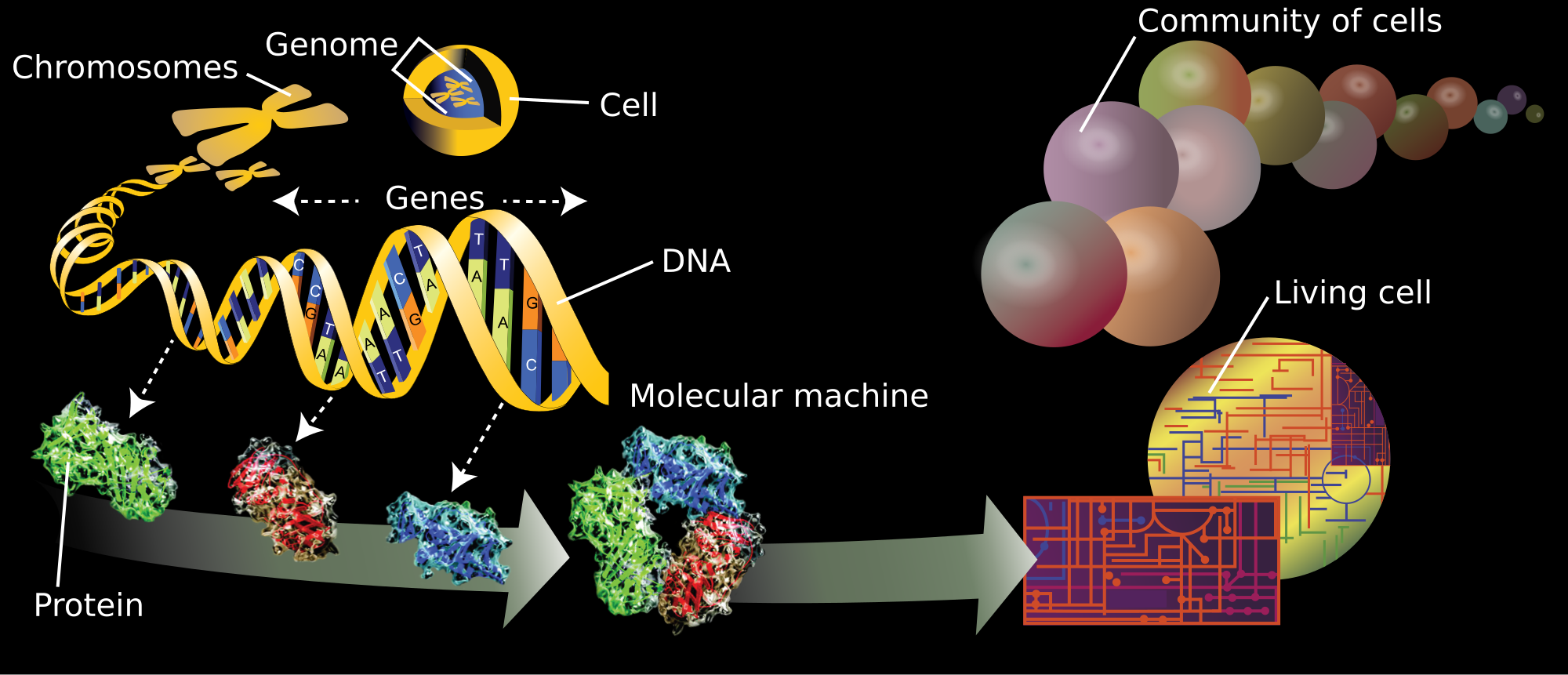
Diagram illustrating genomics

Omics is the collective characterization and quantification of entire sets of biological molecules and the investigation of how they translate into the structure, function, and dynamics of an organism or group of organisms.[1][2] The branches of science known informally as omics are various disciplines in biology whose names end in the suffix -omics, such as genomics, proteomics, metabolomics, metagenomics, phenomics and transcriptomics.

The related suffix -ome is used to address the objects of study of such fields, such as the genome, proteome or metabolome respectively. The suffix -ome as used in molecular biology refers to a totality of some sort; it is an example of a "neo-suffix" formed by abstraction from various Greek terms in -ωμα, a sequence that does not form an identifiable suffix in Greek.

Functional genomics aims at identifying the functions of as many genes as possible of a given organism. It combines different -omics techniques such as transcriptomics and proteomics with saturated mutant collections.[3]

Origin

[edit]
"Omicum": Building of the Estonian Biocentre which houses the Estonian Genome Centre and Institute of Molecular and Cell Biology at the University of Tartu in Tartu, Estonia.

The Oxford English Dictionary (OED) distinguishes three different fields of application for the -ome suffix:

  1. in medicine, forming nouns with the sense "swelling, tumour"
  2. in botany or zoology, forming nouns in the sense "a part of an animal or plant with a specified structure"
  3. in cellular and molecular biology, forming nouns with the sense "all constituents considered collectively"

The -ome suffix originated as a variant of -oma, and became productive in the last quarter of the 19th century. It originally appeared in terms like sclerome[4] or rhizome.[5] All of these terms derive from Greek words in -ωμα,[6] a sequence that is not a single suffix, but analyzable as -ω-μα, the -ω- belonging to the word stem (usually a verb) and the -μα being a genuine Greek suffix forming abstract nouns.

The OED suggests that its third definition originated as a back-formation from mitome,[7] Early attestations include biome (1916)[8] and genome (first coined as German Genom in 1920[9]).[10]

The association with chromosome in molecular biology is by false etymology. The word chromosome derives from the Greek stems χρωμ(ατ)- "colour" and σωμ(ατ)- "body".[10] While σωμα "body" genuinely contains the -μα suffix, the preceding -ω- is not a stem-forming suffix but part of the word's root. Because genome refers to the complete genetic makeup of an organism, a neo-suffix -ome suggested itself as referring to "wholeness" or "completion".[11]

Bioinformaticians and molecular biologists figured amongst the first scientists to apply the "-ome" suffix widely.[citation needed] Early advocates included bioinformaticians in Cambridge, UK, where there were many early bioinformatics labs such as the MRC centre, Sanger centre, and EBI (European Bioinformatics Institute); for example, the MRC centre carried out the first genome and proteome projects.[12]

Current usage

[edit]

Many "omes" beyond the original "genome" have become useful and have been widely adopted by research scientists. "Proteomics" has become well-established as a term for studying proteins at a large scale. "Omes" can provide an easy shorthand to encapsulate a field; for example, an interactomics study is clearly recognisable as relating to large-scale analyses of gene-gene, protein-protein, or protein-ligand interactions. Researchers are rapidly taking up omes and omics, as shown by the explosion of the use of these terms in PubMed since the mid-1990s.[13]

Kinds of omics studies

[edit]

Genomics

[edit]
  • Genomics: Study of the genomes of organisms.
    • Cognitive genomics: Study of the changes in cognitive processes associated with genetic profiles.
    • Comparative genomics: Study of the relationship of genome structure and function across different biological species or strains.
    • Functional genomics: Describes gene and protein functions and interactions (often uses transcriptomics).
    • Metagenomics: Study of metagenomes, i.e., genetic material recovered directly from environmental samples.
    • Neurogenomics: Study of genetic influences on the development and function of the nervous system.
    • Pangenomics: Study of the entire collection of genes or genomes found within a given species.[14]
    • Personal genomics: Branch of genomics concerned with the sequencing and analysis of the genome of an individual. Once the genotypes are known, the individual's genotype can be compared with the published literature to determine likelihood of trait expression and disease risk. Helps in Personalized Medicine
    • Electromics: Branch of genomics concerned with the role of exogenous electric fields in potentiating the gene expression profiles of cells, tissues, and organoids.[15]

Epigenomics

[edit]

The epigenome is the supporting structure of the genome, including protein and RNA binders, alternative DNA structures, and chemical modifications on DNA.

  • Epigenomics: Modern technologies include chromosome conformation by Hi-C, various ChIP-seq and other sequencing methods combined with proteomic fractionations, and sequencing methods that find chemical modification of cytosines, like bisulfite sequencing.
  • Nucleomics: Study of the complete set of genomic components which form "the cell nucleus as a complex, dynamic biological system, referred to as the nucleome".[16][17] The 4D Nucleome Consortium officially joined the IHEC (International Human Epigenome Consortium) in 2017.

Microbiomics

[edit]

The microbiome is a microbial community occupying a well-defined habitat with distinct physio-chemical properties. It includes the microorganisms involved and their theatre of activity, forming ecological niches. Microbiomes form dynamic and interactive micro-ecosystems prone to spaciotemporal change. They are integrated into macro-ecosystems, such as eukaryotic hosts, and are crucial to the host's proper function and health.[18] The interactive host-microbe systems make up the holobiont.[19]

Microbiomics is the study of microbiome dynamics, function, and structure.[20] This area of study employs several techniques to study the microbiome in its host environment:[19]

  • Sampling methods focused on collecting representative samples of the local environment, either from oral swabs or stool.[19]
  • Culturomics (microbiology) is the high-throughput cell culture of bacteria that aims to comprehensively identify strains or species in samples obtained from tissues such as the human gut or from the environment.[21][22]
  • Microfluidics gut-on-a-chip devices, which simulate the conditions of the gut and allow analysis of changes to the microbiome that can be more accurately monitored than in situ[19].
  • Mechanical DNA extraction techniques and gene amplification methods, such as PCR, to analyze the genomic profile of the entire microbiome.[19]
  • DNA fingerprinting using microarrays and hybridization techniques allow analysis of shifts in microbiota populations.[19]
  • Multi-omics studies allow for functional analysis of microbiota.[19]
  • Animal models can be used to take more accurate samples of the in situ microbiome. Germ-free animals are used to implant a specific microbiome from another organism to yield a gnotobiotic model. These can be studied to see how it changes under different environmental conditions.[19]

Lipidomics

[edit]

The lipidome is the entire complement of cellular lipids, including the modifications made to a particular set of lipids, produced by an organism or system.

  • Lipidomics: Large-scale study of pathways and networks of lipids. Mass spectrometry techniques are used.

Proteomics

[edit]

The proteome is the entire complement of proteins, including the modifications made to a particular set of proteins, produced by an organism or system.

  • Proteomics: Large-scale study of proteins, particularly their structures and functions. Mass spectrometry techniques are used.
    • Chemoproteomics: An array of techniques used to study protein-small molecule interactions
    • Immunoproteomics: Study of large sets of proteins (proteomics) involved in the immune response
    • Nutriproteomics: Identifying the molecular targets of nutritive and non-nutritive components of the diet. Uses proteomics mass spectrometry data for protein expression studies
    • Proteogenomics: An emerging field of biological research at the intersection of proteomics and genomics. Proteomics data used for gene annotations.
    • Structural genomics: Study of the three-dimensional structure of every protein encoded by a given genome using a combination of experimental and modeling approaches.

Glycomics

[edit]

Glycomics is the comprehensive study of the glycome i.e. sugars and carbohydrates.

Foodomics

[edit]

Foodomics was defined by Alejandro Cifuentes in 2009 as "a discipline that studies the food and nutrition domains through the application and integration of advanced omics technologies to improve consumer's well-being, health, and knowledge."[23][24]

Transcriptomics

[edit]

Transcriptome is the set of all RNA molecules, including mRNA, rRNA, tRNA, and other non-coding RNA, produced in one or a population of cells.

Metabolomics

[edit]

The metabolome is the ensemble of small molecules found within a biological matrix.

  • Metabolomics: Scientific study of chemical processes involving metabolites. It is a "systematic study of the unique chemical fingerprints that specific cellular processes leave behind", the study of their small-molecule metabolite profiles
  • Metabonomics: The quantitative measurement of the dynamic multiparametric metabolic response of living systems to pathophysiological stimuli or genetic modification

Nutrition, pharmacology, and toxicology

[edit]
  • Nutritional genomics: A science studying the relationship between human genome, nutrition and health.
    • Nutrigenetics studies the effect of genetic variations on the interaction between diet and health with implications to susceptible subgroups
    • Nutrigenomics: Study of the effects of foods and food constituents on gene expression. Studies the effect of nutrients on the genome, proteome, and metabolome
  • Pharmacogenomics investigates the effect of the sum of variations within the human genome on drugs;
  • Pharmacomicrobiomics investigates the effect of variations within the human microbiome on drugs and vice versa.
  • Toxicogenomics: a field of science that deals with the collection, interpretation, and storage of information about gene and protein activity within particular cell or tissue of an organism in response to toxic substances.

Culture

[edit]

Inspired by foundational questions in evolutionary biology, a Harvard team around Jean-Baptiste Michel and Erez Lieberman Aiden created the American neologism culturomics for the application of big data collection and analysis to cultural studies.[25]

Miscellaneous

[edit]
A National Oceanic and Atmospheric Administration scientist using microbiomics to study marine ecosystems
  • Mitointeractome
  • Psychogenomics: Process of applying the powerful tools of genomics and proteomics to achieve a better understanding of the biological substrates of normal behavior and of diseases of the brain that manifest themselves as behavioral abnormalities. Applying psychogenomics to the study of drug addiction, the ultimate goal is to develop more effective treatments for these disorders as well as objective diagnostic tools, preventive measures, and eventually cures.
  • Stem cell genomics: Helps in stem cell biology. Aim is to establish stem cells as a leading model system for understanding human biology and disease states and ultimately to accelerate progress toward clinical translation.
  • Connectomics: The study of the connectome, the totality of the neural connections in the brain.
  • Microbiomics: The study of the genomes of the communities of microorganisms that live in a specific environmental niche.
  • Cellomics: The quantitative cell analysis and study using bioimaging methods and bioinformatics.
  • Tomomics: A combination of tomography and omics methods to understand tissue or cell biochemistry at high spatial resolution, typically using imaging mass spectrometry data.[26]
  • Viral metagenomics: Using omics methods in soil, ocean water, and humans to study the Virome and Human virome.
  • Ethomics: The high-throughput machine measurement of animal behaviour.[27]
  • Videomics (or vide-omics): A video analysis paradigm inspired by genomics principles, where a continuous image sequence (or video) can be interpreted as the capture of a single image evolving through time through mutations revealing 'a scene'.
  • Multiomics: Integration of different omics in a single study or analysis pipeline.[28]

Unrelated words in -omics

[edit]

The word "comic" does not use the "omics" suffix; it derives from Greek "κωμ(ο)-" (merriment) + "-ικ(ο)-" (an adjectival suffix), rather than presenting a truncation of "σωμ(ατ)-".

Similarly, the word "economy" is assembled from Greek "οικ(ο)-" (household) + "νομ(ο)-" (law or custom), and "economic(s)" from "οικ(ο)-" + "νομ(ο)-" + "-ικ(ο)-". The suffix -omics is sometimes used to create names for schools of economics, such as Reaganomics.

See also

[edit]

Notes

[edit]

Further reading

[edit]
[edit]
Revisions and contributorsEdit on WikipediaRead on Wikipedia
from Grokipedia
Omics refers to a family of scientific disciplines in that involve the comprehensive, high-throughput characterization and quantification of pools of biological molecules, such as genes, transcripts, proteins, and metabolites, to understand their roles and interactions within . These fields, which include (study of the complete set of genes), transcriptomics (analysis of all RNA transcripts), (examination of the entire ), and (profiling of all metabolites), among others like and , enable global assessments of biological processes rather than targeted analyses of individual components. The suffix "-omics" emerged from the need to describe large-scale studies, building on the earlier term "" coined in 1920 by Hans Winkler to denote the complete haploid set of chromosomes, with "-ome" implying wholeness or totality. The first use of "" occurred in 1986, proposed by geneticist Thomas H. Roderick at a conference in , to name the emerging field of mapping and sequencing entire genomes, inspired by the Human Genome Project's ambitions. This was followed by "" in 1994, introduced by biochemist Marc Wilkins to describe the systematic study of proteins expressed by a genome, marking the expansion of the "-omics" nomenclature as high-throughput technologies like DNA microarrays and became available in the 1990s. Omics approaches have transformed biomedical research by facilitating systems-level insights into and , particularly through multi-omics integration, which combines from multiple layers (e.g., genomic, transcriptomic, and proteomic) to model complex interactions and identify biomarkers. Key applications include advancing , where omics guide tailored treatments, and elucidating mechanisms in areas like cancer and neurodegeneration via projects such as . Emerging technologies, including single-cell omics and , further enhance resolution to study cellular heterogeneity and tissue organization.

History and Etymology

Origin of the Term

The suffix "-omics" originated with the term "," coined by geneticist Thomas H. Roderick in 1986 during a meeting in to denote the comprehensive study of an organism's entire , evolving from the earlier concept of "" as a blend of "" and "." This combined the suffix "-," implying a totality or collective mass derived from the Greek "-ωμα" (indicating a group or aggregate), with "-ics" to signify a systematic scientific discipline focused on large-scale analysis of biological entities. The construction emphasized wholeness in biological data, drawing parallels to fields like , where "-ics" denotes the study of complex systems. In the late and , the suffix gained traction with the introduction of "" in 1994 by Marc Wilkins, referring to the large-scale study of proteins, and "" in 1998 by Stephen G. Oliver and colleagues, describing the comprehensive analysis of metabolites. These terms reflected the growing emphasis on high-throughput technologies for holistic biological profiling, inspired by the need to move beyond reductionist approaches to capture systemic interactions. The broader application of "omics" as a descriptor for integrative, data-intensive biology first appeared in a major publication in a 1998 Science commentary by John N. Weinstein, which framed "-omics" as the aggregate study of biomolecules in high-throughput contexts. By the 2000s, the suffix had expanded to interdisciplinary areas, such as foodomics for the study of food-related molecular profiles.

Historical Development

The foundations of omics studies were laid in the and with the development of technologies that first enabled analysis at the scale. In 1977, and colleagues introduced the chain-termination method, which allowed for the sequencing of the 5,386-base-pair of the bacteriophage phiX174, marking the first complete sequence determination and setting the stage for large-scale genomic investigations. This breakthrough, along with refinements in the , shifted from gene-by-gene analysis to comprehensive genomic profiling, influencing the emergence of the broader omics paradigm. The 1990s saw omics accelerate as a field, propelled by major initiatives and technological innovations. The , launched in 1990 and completed in 2003, coordinated international efforts to sequence the entire , serving as a pivotal catalyst for by demonstrating the feasibility of whole-genome analysis and inspiring systematic studies of other biological layers. Concurrently, the introduction of DNA microarrays in the mid-1990s enabled high-throughput measurement of , revolutionizing transcriptomics; for instance, complementary DNA microarrays allowed simultaneous quantification of thousands of transcripts, facilitating the study of cellular responses at scale. In the 2000s, the post-genome era expanded omics to proteins and metabolites through advances in analytical techniques. progressed significantly for , with methods enabling the identification of thousands of proteins from complex samples via tandem MS coupled with liquid chromatography, as exemplified by large-scale mapping efforts. For , (NMR) spectroscopy and liquid chromatography-mass spectrometry (LC-MS) gained prominence, allowing untargeted profiling of small molecules in biological systems and supporting systems-level metabolic studies. The (ENCODE) project, initiated in 2003, further advanced by systematically annotating non-coding regions of the , bridging with regulatory omics. The 2010s brought transformative scalability to omics through next-generation sequencing (NGS) and tools. NGS platforms, such as those from Illumina, revolutionized by enabling genome-wide mapping of modifications like and marks via techniques including whole-genome , which provided high-resolution insights into epigenetic landscapes. In microbiomics, NGS facilitated metagenomic surveys of microbial communities, as seen in expansions of the Human Microbiome Project, allowing characterization of microbial diversity without cultivation. Additionally, the integration of CRISPR-Cas9, developed in 2012, into functional omics enabled high-throughput gene perturbation screens, linking genomic variations to phenotypic outcomes across omics layers. As of 2025, the have witnessed the rise of single-cell and spatial omics, driven by integrated platforms that resolve heterogeneity at subcellular resolution. Technologies from , such as the Chromium system for single-cell RNA sequencing and Visium for , have enabled multi-omics profiling of individual cells within tissues, revealing dynamic processes in development, disease, and immunity. These advances have scaled omics to capture spatiotemporal contexts, fostering integrative analyses across , transcriptomics, and beyond.

Conceptual Framework

Definition and Scope

Omics refers to the high-throughput, comprehensive analysis of biological molecules or systems on a global scale, encompassing fields such as , transcriptomics, , and , which study the entirety of specific molecular sets rather than individual components. This approach contrasts with traditional reductionist methods in , which focus on isolated pathways or single molecules, by aiming to capture the complexity of biological systems through simultaneous measurement of thousands to millions of elements. The scope of omics extends from molecular levels, such as DNA, RNA, proteins, and metabolites, to cellular and organismal scales, enabling a holistic view of biological processes and their interactions. It emphasizes the integration of diverse datasets to uncover emergent properties and systemic behaviors, particularly within systems biology, where omics data inform models of disease mechanisms, environmental responses, and physiological states. For instance, multi-omics studies combine genomic and proteomic profiles to reveal how genetic variations influence phenotypic outcomes at the organism level. A core principle of omics is its hypothesis-generating nature, producing vast, exploratory datasets that identify patterns and associations for subsequent validation through targeted experiments, unlike hypothesis-testing paradigms in classical . These studies generate in , with individual datasets frequently exceeding 1 terabyte due to the high dimensionality and volume of measurements, necessitating advanced computational tools for and interpretation. In distinction from traditional biochemistry, which typically examines a limited number of molecules using low-throughput techniques, omics operates at scales involving thousands to millions of analytes, rendering it inherently dependent on bioinformatics and computational modeling to handle noise, variability, and integration challenges. This shift prioritizes data-driven discovery over predefined mechanistic assumptions, transforming biological inquiry into a quantitative, systems-oriented .

Methodological Principles

Omics research generally follows a standardized workflow that encompasses sample preparation, high-throughput detection, data acquisition, and subsequent bioinformatics processing to generate comprehensive molecular profiles. Sample preparation is a critical initial step, involving the isolation and purification of biological materials such as DNA, RNA, proteins, or metabolites from tissues, cells, or biofluids, often requiring techniques like lysis, extraction, and quality control to minimize contamination and ensure compatibility with downstream analyses. High-throughput detection then employs scalable platforms to capture vast amounts of molecular data, followed by data acquisition where raw signals are digitized and stored, and bioinformatics processing applies algorithms for alignment, annotation, and interpretation to extract meaningful biological insights. Key technologies underpinning these workflows include sequencing methods, mass spectrometry, chromatography, microarrays, and flow cytometry, each tailored to specific omics layers. For genomics and transcriptomics, Sanger sequencing provided the foundational chain-termination approach for accurate, low-throughput DNA analysis, while next-generation sequencing (NGS) platforms like Illumina's sequencing-by-synthesis enable massively parallel readout of millions of fragments for high-resolution genome and transcriptome profiling. In proteomics and metabolomics, mass spectrometry techniques such as electrospray ionization (ESI-MS) and matrix-assisted laser desorption/ionization time-of-flight (MALDI-TOF) ionize and separate analytes based on mass-to-charge ratios to identify and quantify biomolecules with high sensitivity. Chromatography methods, including gas chromatography-mass spectrometry (GC-MS) for volatile compounds and liquid chromatography-mass spectrometry (LC-MS) for polar molecules, couple separation with detection to enhance resolution in complex mixtures. Microarrays facilitate hybridization-based detection of nucleic acids or proteins across thousands of probes on a chip, offering a cost-effective alternative for expression profiling, whereas flow cytometry analyzes cell populations by measuring fluorescence and light scatter to profile surface markers and intracellular components in single cells. Omics data can be qualitative, indicating presence or absence of features like genetic variants or metabolites, or quantitative, measuring abundance levels such as or protein concentrations, with the latter often requiring careful handling of technical noise from variability in sample handling or instrument performance. Normalization is essential to account for biases in sequencing depth, gene length, or library size; for instance, reads per kilobase of transcript per million mapped reads (RPKM) adjusts counts to enable comparable expression estimates across genes and samples. Statistical foundations in omics analysis emphasize multivariate approaches to manage high-dimensional data, including for , which projects data onto principal axes capturing maximum variance to visualize patterns and remove outliers. Given the large number of simultaneous tests, correction, such as the Benjamini-Hochberg procedure, controls the expected proportion of false positives among significant results, ensuring robust identification of biologically relevant features.

Types of Omics Studies

Genomics

Genomics is the comprehensive study of an organism's entire genome, encompassing all of its DNA, including the sequencing, assembly, and annotation of genetic material to understand its structure, organization, and function. This field employs high-throughput DNA sequencing methods, bioinformatics tools, and recombinant DNA techniques to analyze the full genetic complement, generating vast datasets that reveal patterns of genetic variation and organization. Unlike traditional genetics, which focuses on individual genes, genomics examines the genome at a systems level to elucidate how genetic elements interact within the broader context of the organism. Key aspects of genomics include structural genomics, which involves mapping the physical locations of genes and other genomic features to construct detailed genome maps that guide sequencing efforts; functional genomics, which investigates gene functions and expression patterns often through genome-wide association studies (GWAS) that link genetic variants to traits or diseases; and , which compares genomes across to identify conserved regions indicative of evolutionary relationships and functional elements. These approaches enable the annotation of genomes by assigning biological roles to sequences and highlighting variations such as single nucleotide polymorphisms (SNPs). Briefly, genomics data can integrate with to provide insights into how environmental factors influence gene regulation without altering the DNA sequence itself. A major milestone in was the completion of the in April 2003, an international effort that produced the first reference sequence of the , spanning approximately 3 billion base pairs and identifying an estimated 20,000–25,000 genes. This project, coordinated by the U.S. and Department of Energy, cost about $3 billion and laid the foundation for subsequent genomic research by demonstrating the feasibility of large-scale sequencing. Since then, technological advances have dramatically reduced sequencing costs; for instance, the price per dropped from around $100 million in 2001 to under $1,000 by 2025, enabling widespread clinical and research applications. Central techniques in genomics include whole-genome sequencing (WGS), which determines the complete DNA sequence of an organism to capture all genetic variations, and SNP arrays, which simultaneously genotype hundreds of thousands of SNPs to detect common variants associated with traits. These methods facilitate genome assembly, where short reads are computationally pieced together to reconstruct the original sequence, and annotation, which identifies genes, regulatory elements, and functional motifs. In applications to hereditary diseases, genomics has revolutionized diagnosis by identifying causative mutations in conditions like cystic fibrosis and Huntington's disease through WGS and GWAS, enabling personalized risk assessment and targeted therapies.

Epigenomics

Epigenomics is the genome-wide study of epigenetic modifications, which are heritable changes in gene expression that do not alter the underlying DNA sequence, such as DNA methylation and histone modifications like acetylation. These modifications, including the addition of methyl groups to cytosine bases in DNA (typically at CpG sites) and chemical tags to histone proteins that package DNA, regulate chromatin structure and accessibility, thereby influencing transcriptional activity without changing the genetic code. Epigenomic profiles provide a dynamic layer atop the static genome, revealing how environmental and developmental cues can modulate gene function across cell types and tissues. Key methods in epigenomics include followed by sequencing (ChIP-seq), which maps the locations of modifications and associated proteins by crosslinking, immunoprecipitating, and sequencing DNA fragments bound to specific antibodies. For DNA , bisulfite sequencing converts unmethylated cytosines to uracil while preserving methylated ones, enabling high-resolution genome-wide detection through subsequent sequencing. The (ENCODE) project has significantly advanced the field since 2012 by generating comprehensive epigenomic maps, including over 1,000 datasets on marks and patterns across hundreds of human cell types, facilitating the annotation of regulatory elements. Epigenomic modifications play crucial roles in biological processes such as embryonic development, where dynamic changes in histone acetylation and orchestrate cell differentiation and tissue specification. They also mediate , an epigenetic mechanism that silences one parental of certain genes, ensuring parent-of-origin-specific expression essential for growth and . Additionally, responds to environmental stimuli, such as nutrient availability or toxins, by altering patterns that confer adaptive across generations. Aberrant epigenomic changes, particularly hyper of promoters, are hallmarks of diseases like cancer, driving oncogenesis in various tissues through silenced . By 2025, advances in single-cell have enabled the profiling of modifications in individual cells, uncovering heterogeneity within populations that bulk methods obscure, such as varied states in tumor microenvironments. These techniques, integrating ChIP-seq variants with single-nucleus sequencing, reveal cell-type-specific regulatory landscapes and support precision medicine applications. Epigenomic modifications often target specific genomic contexts, like enhancers identified through sequencing, to fine-tune gene regulation.

Transcriptomics

Transcriptomics is the study of the , defined as the complete set of all molecules, including (mRNA) and various non-coding RNAs such as long non-coding RNAs (lncRNAs), produced by an organism or in a specific cell or tissue at a given time. This field focuses on quantifying and analyzing RNA transcripts to understand dynamics, including how genes are turned on or off in response to developmental cues, environmental stimuli, or states. Unlike , which examines static DNA sequences, transcriptomics captures the dynamic, functional output of the , revealing regulatory mechanisms and cellular responses. The primary technique in transcriptomics is RNA sequencing (RNA-seq), which has become the gold standard by 2025, surpassing older microarray methods due to its superior sensitivity for low-abundance transcripts, broader dynamic range, and ability to detect novel isoforms and non-coding RNAs without prior knowledge of sequences. RNA-seq involves reverse transcription of RNA to complementary DNA (cDNA), followed by high-throughput sequencing, enabling comprehensive profiling of the entire transcriptome. For higher resolution, single-cell RNA-seq (scRNA-seq) techniques isolate and sequence transcripts from individual cells, uncovering heterogeneity within tissues and identifying rare cell types or transient states that bulk methods overlook. Key insights from transcriptomics include the prevalence of , where a single produces multiple mRNA isoforms through differential exon inclusion, affecting up to 95% of multi-exon genes in humans and expanding diversity. LncRNAs, often identified through , play crucial regulatory roles, such as modulating splicing factors, acting as scaffolds for protein complexes, or influencing structure to control . These findings have driven applications in discovery, where transcriptomic profiles identify dysregulated genes and pathways in diseases like cancer, enabling the development of diagnostic signatures from patient samples. Data analysis in transcriptomics typically begins with alignment of sequencing reads to a , followed by quantification of transcript abundance using tools like featureCounts or . Differential expression analysis compares transcript levels between conditions, employing statistical models such as DESeq2, which uses to detect significant changes while accounting for variability and normalizing for library size. For isoform-level insights, methods like DELongSeq or NanoCount enable precise quantification of events by estimating uncertainty in expression levels from sequencing data.

Proteomics

Proteomics is the large-scale study of the , defined as the complete set of proteins expressed by a cell, tissue, or under specific conditions, encompassing their structures, abundances, modifications, and interactions. Unlike , which focuses on static DNA sequences, proteomics captures dynamic aspects such as post-translational modifications (PTMs) like , , and ubiquitination, which vastly expand protein functional diversity and cannot be inferred from the genome alone. These PTMs regulate protein activity, localization, and interactions, enabling the proteome to respond to environmental cues and developmental signals in ways not predictable from transcriptomic data. Central to proteomics are analytical methods that enable high-throughput protein identification and characterization. (2D-GE) separates proteins based on and molecular weight, allowing visualization and quantification of thousands of proteins in complex mixtures, though it struggles with hydrophobic or low-abundance species. (LC-MS/MS) has become the cornerstone for proteomic analysis, providing sensitive detection and sequencing of peptides for database matching and de novo identification. Proteomics workflows are broadly classified into bottom-up and top-down approaches: digests proteins into peptides for easier fragmentation and analysis, facilitating large-scale profiling but potentially losing information on PTM stoichiometry; top-down proteomics examines intact proteins to preserve full modification patterns and isoforms, though it faces challenges in efficiency for larger molecules. In biomedical applications, proteomics excels at identifying drug targets by mapping protein expression changes in disease states, such as overexpressed kinases in cancer that can be inhibited therapeutically. A key strength lies in PTM mapping, exemplified by phosphoproteomics, which elucidates signaling cascades where events activate or deactivate pathways like MAPK in and . These insights have driven precision medicine, such as targeting phosphorylated EGFR variants in therapies. Despite advances, proteomics faces challenges from protein instability, including degradation during sample handling and the wide dynamic range of protein abundances that masks low-level species critical for signaling. Membrane proteins, with their hydrophobic nature, are particularly prone to aggregation and poor solubility, complicating extraction and analysis. By 2025, AI-driven tools like AlphaFold3 have transformed the field by predicting protein structures and PTM effects with near-experimental accuracy, accelerating functional annotation and interaction modeling without relying solely on empirical data.

Metabolomics

Metabolomics is the systematic study of the metabolome, which comprises the complete set of small-molecule metabolites—typically under 1,500 Da—present in a biological system, such as cells, tissues, or biofluids. This field captures the end products of cellular processes, providing a direct reflection of the physiological or pathological state of an organism, and is considered the omics discipline closest to the phenotype due to its integration of genetic, environmental, and lifestyle influences. Unlike genomics or proteomics, which focus on potential or intermediary layers, metabolomics reveals functional outcomes, such as responses to disease, diet, or drugs, making it essential for understanding dynamic biological responses. The primary analytical techniques in metabolomics include (NMR) spectroscopy and (MS)-based methods, each offering complementary strengths in metabolite detection and quantification. provides non-destructive, reproducible structural information without extensive sample preparation, ideal for identifying known metabolites in complex mixtures, though it has lower sensitivity for low-abundance compounds. , often coupled with chromatography like liquid chromatography (LC-MS) or gas chromatography (GC-MS), excels in high-throughput, sensitive detection of a broader metabolite range, enabling the profiling of hundreds to thousands of compounds per sample. Approaches are classified as untargeted, which aim for comprehensive, hypothesis-generating profiling of all detectable metabolites without prior selection, or targeted, which focus on predefined sets of metabolites for precise quantification and validation. An extension of , fluxomics incorporates to measure the dynamic rates of metabolic fluxes through pathways, revealing how metabolites are transformed over time rather than static snapshots. This approach uses stable isotopes like 13C to trace flux distribution, providing insights into metabolic network regulation and that static alone cannot capture. Fluxomics thus bridges with , enabling the modeling of pathway efficiencies in response to perturbations. Metabolomics plays a key role in elucidating metabolic pathways by mapping metabolite alterations to specific biochemical routes, such as identifying disruptions in or the tricarboxylic acid cycle in diseased states. Proteomic influences, including expression levels, can modulate these pathways, linking protein activity to observed changes. In biomarker discovery, metabolomics has identified signatures for diseases like , where elevated branched-chain amino acids and reduced lysophosphatidylcholines serve as predictive indicators of years before clinical onset. These applications extend to clinical diagnostics, with targeted panels validating metabolites like acylcarnitines for monitoring therapeutic responses. As of 2025, emerging trends in metabolomics emphasize integration with wearable technologies for real-time monitoring, such as non-invasive sweat or urine sensors that detect fluctuations during daily activities. This fusion enables continuous profiling of markers like glucose or lactate, supporting personalized interventions in metabolic disorders and advancing precision health.

Lipidomics

Lipidomics is a specialized branch of focused on the comprehensive identification, quantification, and characterization of within biological systems. encompass a diverse array of molecules, including fats, sterols, glycerophospholipids, , and others, which collectively form the lipidome—a vast collection estimated to include tens of thousands of distinct species. This field emphasizes the structural and functional complexity of , distinguishing it from broader metabolomic analyses by targeting these hydrophobic compounds essential to cellular architecture and dynamics. Key methodologies in lipidomics include shotgun lipidomics, which employs direct infusion (ESI-MS) to analyze extracts without prior chromatographic separation, enabling rapid, high-throughput profiling of major classes. For enhanced resolution of isomeric and low-abundance species, liquid chromatography- (LC-MS) is widely used, often with reversed-phase or hydrophilic interaction liquid chromatography (HILIC) to separate based on hydrophobicity or polar head groups, respectively, coupled with high-resolution MS for precise identification. These approaches leverage databases like LIPID MAPS for annotation, ensuring robust quantification with internal standards per class. Lipids play critical roles in biological processes, forming the structural backbone of cellular membranes through phospholipids and sterols that maintain fluidity and compartmentalization. They also serve as signaling molecules, exemplified by eicosanoids derived from polyunsaturated fatty acids like , which regulate , vascular tone, and immune responses. Dysregulation of lipid profiles contributes to diseases such as , where oxidized lipids and eicosanoids promote plaque formation and . Recent advances in include spatial enabled by (MALDI-MSI), which maps lipid distributions in tissues at resolutions down to 0.6 μm, revealing localized changes in brain pathologies like . By 2025, integrations with and multimodal imaging have expanded applications in neurodegeneration and , facilitating discovery without tissue destruction.

Glycomics

Glycomics is the comprehensive study of the glycome, defined as the entire repertoire of carbohydrate structures, including free glycans, glycoproteins, and glycolipids, produced by a cell, tissue, or under specific conditions. This field emphasizes the systems-level analysis of glycan diversity to elucidate their roles in biological processes. Unlike nucleic acids or proteins, the glycome exhibits high heterogeneity due to extensive branching, variable linkages, and modifications such as sialylation and fucosylation, resulting in an estimated 10^6 to 10^12 possible glycan structures across species. This structural complexity arises from non-templated biosynthesis, making the glycome dynamic and responsive to environmental factors like nutrient availability. Key techniques in glycomics include glycan microarrays, which enable of glycan-binding proteins and comparative profiling of samples using fluorescent labeling. methods, such as time-of-flight (MALDI-TOF) MS, provide detailed structural elucidation by generating glycan profiles from permethylated or native samples, often coupled with liquid chromatography for enhanced resolution. -based profiling, utilizing immobilized on microarrays or affinity columns, offers a functional readout by detecting specific glycan motifs through carbohydrate-lectin interactions, complementing structural analyses. These approaches are frequently integrated with enzymatic release of glycans from glycoproteins to study site-specific modifications. Glycans mediate essential biological functions, particularly in cell recognition and immunity. In cell recognition, glycans facilitate and signaling; for instance, sialylated and fucosylated structures like serve as ligands for selectins, enabling leukocyte rolling on during and tissue homing. In immunity, sialic acid-containing glycans interact with receptors on immune cells to maintain by recognizing self-associated molecular patterns and dampening innate responses. Aberrant sialylation plays a critical role in cancer, where hypersialylation promotes by enhancing tumor cell to via and shielding cells from immune surveillance, as observed in elevated sialyl Lewis antigens on metastatic and colon cancers. Despite these insights, glycomics faces significant challenges stemming from glycan structural complexity, including isomeric diversity and linkage variability that confound unambiguous identification without advanced separation techniques. The lack of a genetic template further complicates in synthesis and . By 2025, progress in automated glycan synthesis has addressed some hurdles, with solid-phase and enzymatic platforms enabling scalable production of complex glycans, such as polyarabinosides up to 1080-mers and therapeutic candidates for vaccines, facilitating better standards for glycomic studies.

Microbiomics

Microbiomics is the comprehensive study of microbiomes, which are the assemblages of microorganisms—including , , fungi, and viruses—and their collective genetic material in specific environments such as the human gut, , , or aquatic systems. This field emphasizes the functional roles of these microbial communities in maintaining ecosystem balance and host physiology, often revealing how environmental factors like diet and shape microbial diversity. A key aspect of microbiomics involves , which enables the analysis of genetic material directly from environmental samples, bypassing the need to culture microbes in the lab and thus accessing the vast majority of uncultured that dominate microbial diversity. Central methods in microbiomics include 16S rRNA gene sequencing, which targets a conserved region of bacterial to identify and classify microbial taxa based on phylogenetic markers, providing a cost-effective snapshot of community composition. In contrast, shotgun metagenomics sequences all DNA in a sample indiscriminately, offering deeper insights into both taxonomic profiles and functional genes across , viruses, and other microbes, though it is more resource-intensive than 16S approaches. For functional profiling, tools like PICRUSt predict the metabolic capabilities of microbial communities from 16S data by inferring gene family abundances based on known genomic references, bridging taxonomic identification with potential ecological roles without full metagenomic sequencing. The impacts of microbiomics research extend to human health, where dysbiosis—imbalances in microbial composition—has been linked to conditions like (IBD), with reduced diversity and overgrowth of pathogenic taxa such as Proteobacteria contributing to chronic inflammation. In , microbiomes drive nutrient cycling and resilience in environments like , where microbial shifts influence plant growth and , highlighting their role in broader dynamics. The Human Microbiome Project (2007–2013), a landmark initiative by the , characterized microbial communities across 300 healthy individuals using metagenomic and 16S methods, establishing reference datasets that advanced understanding of variability and its ties to states. Host can subtly interact with microbiomes, accounting for less than 2% of gut microbial variation but influencing specific taxa that affect . As of 2025, emerging subsets like viromics—focusing on viral components of microbiomes—have advanced through metagenomic tools to reveal viruses as regulators of bacterial populations in ecosystems, with applications in for infections. Similarly, mycobiomics, the study of fungal microbiomes, has gained traction, showing how fungi comprise about 0.1% of gut communities yet modulate immune responses and disease progression in conditions like IBD.

Other Specialized Omics

Beyond the core molecular omics disciplines, several specialized fields have emerged to address niche aspects of biological systems, often integrating high-throughput technologies to profile organismal, elemental, or secreted components. These areas extend omics principles to phenotypic, environmental, and extracellular phenomena, providing insights into complex interactions not captured by or alone. focuses on the systematic study of organismal phenotypes, particularly through high-throughput and technologies to quantify traits at multiple scales, from cellular structures to whole-plant architectures. This approach enables the capture of dynamic traits like growth patterns and stress responses in and animals, often using automated platforms for non-destructive analysis. For instance, methods, including RGB and , allow for the phenotyping of thousands of samples to link genotypes to visible outcomes. In , supports biodiversity assessments by analyzing morphological variations across populations, aiding in the identification of adaptive traits under environmental pressures. Ionomics examines the elemental composition of organisms, profiling the concentrations of minerals and trace elements to understand nutrient and environmental adaptations. Key methods include (ICP-MS), which provides high-sensitivity detection of up to 20 elements simultaneously in tissues like leaves or . This technique has been instrumental in programs, where ionomic profiling identifies varieties with enhanced nutrient use efficiency, such as improved or iron uptake, to combat deficiencies in . Secretomics investigates the secretome—the full repertoire of proteins secreted by cells, tissues, or organisms—using workflows to uncover intercellular signaling and pathological mechanisms. Techniques such as mass spectrometry-based analysis of conditioned media or biofluids enable the identification and quantification of low-abundance secreted factors, distinguishing them from intracellular contaminants. This field ties briefly to by focusing on extracellular extensions of the , revealing roles in immune modulation and disease progression. Applications span , where secretomic profiles highlight tumor-derived factors influencing . Toxonomics profiles toxin compositions in organisms, particularly and bioactive compounds, to classify and elucidate their molecular diversity and ecological roles. High-throughput sequencing of cDNA libraries combined with identifies novel peptides and proteins in toxinomes, as seen in databases cataloging thousands of entries from animal sources. In studies, toxonomic analysis reveals autonomic effects and potential therapeutic peptides, supporting for . By , emerging fields like nanomics explore nanoscale interactions in biological systems, integrating with omics to achieve ultra-high resolution profiling of molecular assemblies. This involves nano-sensors and single-molecule imaging to detect dynamic processes, such as protein-nanoparticle bindings, with applications in for targeted delivery of agrochemicals. Similarly, bibliomics applies omics-inspired mining to non-biological domains, using text analytics and to extract patterns from , facilitating knowledge synthesis across disciplines without direct biological measurement.

Applications and Interdisciplinary Uses

Biomedical and Clinical Applications

Omics technologies have revolutionized biomedical and clinical applications by enabling the molecular profiling of diseases at multiple levels, facilitating early diagnosis, targeted treatments, and strategies. In , cancer identifies actionable mutations that guide targeted therapies, such as (EGFR) inhibitors for non-small cell lung cancer (NSCLC) patients harboring EGFR exon 19 deletions or L858R mutations, which improve compared to standard . Similarly, analyzes genetic variants influencing and efficacy, exemplified by CYP2D6 and CYP2C19 polymorphisms that predict responses to antidepressants and clopidogrel, respectively, reducing adverse events through dose adjustments. These approaches underscore omics' role in shifting from empirical to genotype-informed care, enhancing therapeutic precision across diverse patient populations. Key case studies highlight the integrative power of multi-omics in clinical settings. (TCGA), launched in 2006, has characterized over 11,000 primary tumor samples across 33 cancer types using , transcriptomics, , and , revealing molecular subtypes like the BRCA1/2-deficient profile in that informs use. This project has accelerated discoveries, such as immune-hot tumor classifications, influencing decisions. Complementing tissue-based analyses, liquid biopsies detect (ctDNA) in plasma, enabling non-invasive monitoring of tumor evolution and in cancers like colorectal and , with ctDNA levels correlating to treatment response and relapse risk. For instance, ctDNA assays have achieved 80-90% sensitivity for detecting EGFR T790M resistance mutations in NSCLC, guiding therapy switches. In precision medicine, omics-derived tools stratify patient risks and tailor interventions. Polygenic risk scores (PRS) aggregate thousands of genomic variants to estimate disease susceptibility, such as PRS for that reclassify 10-20% of individuals into higher-risk categories for preventive statins. In , proteomics identifies plasma biomarkers for (AD), including phosphorylated tau at 217 (p-tau217) and neurofilament light chain, which distinguish AD from other dementias with over 90% accuracy in early stages. These markers, validated in large cohorts, support timely interventions like anti-amyloid therapies. By 2025, advances in (AI) integrated with multi-omics have enhanced drug repurposing efforts. AI models analyzing TCGA-derived multi-omics data have identified repurposed candidates, such as metformin for epigenetic modulation in gynecological cancers, by predicting off-target effects and pathway interactions with 75% accuracy in validation sets. Similarly, frameworks combining and have accelerated repurposing for neurodegenerative diseases, uncovering novel applications for existing drugs like cholinesterase inhibitors in AD subtypes. These AI-driven approaches reduce development timelines from years to months, broadening therapeutic options in resource-limited clinical environments.

Nutrition, Pharmacology, and Toxicology

Omics technologies have revolutionized the study of , , and by providing molecular-level insights into how dietary components, drugs, and toxins interact with biological systems. In , foodomics integrates and other omics approaches to assess nutrient and ensure through . For instance, liquid chromatography-mass spectrometry (LC-MS) in detects adulterants in food chains, enabling precise identification of contaminants like in products. This approach enhances understanding of how bioactive compounds from food are absorbed and utilized, supporting sustainable strategies that address challenges in plant-based diets. In , pharmacometabolomics analyzes endogenous metabolites to predict individual responses to drugs, including adverse reactions. By profiling pre-dose metabolic patterns in biofluids like plasma or , this method identifies biomarkers that forecast toxicity risks, such as idiosyncratic drug-induced . Complementing this, nutrigenomics examines gene-diet interactions to tailor personalized diets, revealing how genetic variants influence responses to nutrients like or omega-3 fatty acids, thereby optimizing dietary interventions for metabolic health. These applications extend briefly to clinical trials, where omics data refines participant stratification for drug efficacy. Toxicology benefits from toxicoepigenomics, which investigates epigenetic modifications induced by environmental exposures, such as DNA methylation changes from bisphenol A (BPA). BPA exposure alters histone modifications and gene expression in reproductive and developmental pathways, linking low-dose environmental contaminants to long-term health risks in humans and model organisms like zebrafish. Dose-response modeling integrates multi-omics data to quantify these effects, using tools like DoseRider for benchmark dose estimation in transcriptomic and metabolomic profiles, improving risk assessment for pollutants. Recent 2025 studies highlight microbiome modulation by probiotics, where multi-omics analyses show how strains like Lactobacillus species alter gut metabolomes to mitigate toxin-induced dysbiosis, as seen in precision interventions for environmental exposure recovery.

Environmental and Agricultural Applications

Omics technologies have significantly advanced the study of environmental impacts, particularly through ecotoxicogenomics, which integrates , transcriptomics, , and to assess pollutant effects on ecosystems. This approach enables the identification of molecular responses in organisms exposed to contaminants, revealing mechanisms of toxicity and adaptation at the genetic and biochemical levels. For instance, has been pivotal in analyzing microbial community shifts following the in 2010, where 16S rRNA sequencing of sediment samples from 64 sites demonstrated rapid proliferation of hydrocarbon-degrading bacteria, such as , highlighting their role in natural processes. In biodiversity monitoring, environmental DNA (eDNA) analysis, a form of metabarcoding within the omics framework, offers a non-invasive method to detect presence and composition from or soil samples. By sequencing DNA fragments shed by organisms into the environment, eDNA provides higher resolution for assessing temporal and spatial dynamics compared to traditional surveys, as evidenced in studies of aquatic ecosystems where it captured finer-scale variations in species distributions. In agriculture, QTLomics combines quantitative trait locus (QTL) mapping with multi-omics data to identify genetic variants associated with agronomic traits, accelerating marker-assisted breeding programs. In soybean, for example, QTLomics has mapped numerous loci for yield, seed quality, and disease resistance, enabling the development of varieties with enhanced performance through integration of genomic, transcriptomic, and phenotypic datasets. Similarly, metabolomics profiling uncovers biochemical pathways underlying plant stress responses, such as drought tolerance, by quantifying changes in metabolites like osmoprotectants and antioxidants; in crops like maize and wheat, these analyses have identified key compounds, such as proline and sugars, that accumulate to maintain cellular homeostasis under water deficit. Large-scale initiatives like the Earth Microbiome Project, launched in , exemplify omics applications in by generating a global catalog of microbial diversity through standardized metagenomic sequencing of thousands of samples from diverse habitats. This project has generated extensive multi-omics datasets from over 27,000 samples (as reported in ), with the goal of analyzing 200,000 samples, revealing patterns in microbial taxonomy and function across ecosystems and supporting broader ecological research. In agricultural contexts, omics profiling enhances the safety assessment of genetically modified organisms (GMOs) by detecting unintended molecular changes; European field trials of GM soybeans, for instance, used and to compare GMO lines with non-GM counterparts, identifying minimal differential expressions that align with regulatory tolerance intervals and confirming substantial equivalence. Emerging trends as of 2025 emphasize pan-genomics for breeding climate-resilient crops, where comprehensive genome assemblies from diverse accessions capture structural variations and novel alleles absent in single reference genomes. This approach has facilitated the identification of drought- and heat-tolerance genes in staples like and , enabling targeted improvements in yield stability under changing climates through integrated multi-omics strategies.

Challenges and Future Directions

Technical and Computational Challenges

Omics technologies generate vast amounts of , often reaching petabyte scales, which poses significant storage and management challenges for researchers. For instance, (TCGA) project alone produced over 2.5 petabytes of multi-omics , encompassing genomic, epigenomic, transcriptomic, and proteomic profiles from thousands of cancer samples. Similarly, as of 2015, major institutions collectively utilized more than 100 petabytes of storage for sequencing , with estimates indicating growth to around 40 exabytes required by 2025, highlighting the exponential growth driven by high-throughput sequencing. Standardization efforts, such as the Minimum Information About a Experiment (MIAME) guidelines, aim to address inconsistencies in data reporting and experimental design across omics studies. Established in 2001, MIAME specifies essential details like sample characteristics, experimental design, and data processing to enable unambiguous interpretation and replication of microarray experiments, with extensions to next-generation sequencing via MINSEQE. Despite these, adherence remains uneven, complicating and in diverse omics fields like and . A reproducibility crisis exacerbates these issues, with many omics findings failing to replicate due to variability in protocols, software versions, and statistical practices. In biomedical research, including , up to 50% of preclinical studies may not reproduce, often stemming from selective reporting and insufficient data transparency. This is particularly acute in high-dimensional omics data, where p-hacking and inflate false positives, undermining trust in discoveries like biomarker identification. Computationally, algorithm scalability is a bottleneck for processing large omics datasets, as alignment tools must handle billions of short reads against reference genomes efficiently. Bowtie, an ultrafast aligner using Burrows-Wheeler transforms, processes over 25 million 35-bp reads per hour for the while using minimal memory (about 2.2 GB), but scaling to modern datasets with longer reads and higher error rates requires optimizations like multi-threading. Recent enhancements enable Bowtie2 to utilize hundreds of threads on general-purpose processors, achieving near-linear speedup for tasks like alignment. approaches further aid pattern detection in omics, with ensemble methods like DeepProg integrating and traditional ML to predict survival subtypes from multi-omics data, outperforming single-modality models by identifying subtle regulatory patterns. Technical challenges include sample biases and throughput limitations inherent to omics platforms. Sampling biases, such as effects in sequencing, distort community abundance estimates in , leading to skewed functional enrichments if unaccounted for. High-throughput methods like single-cell offer scale but sacrifice accuracy due to dropout events and limited capture efficiency, processing thousands of cells yet introducing noise that propagates to downstream analyses. Solutions like mitigate these hurdles by providing scalable infrastructure for omics workflows. Amazon Web Services (AWS) HealthOmics, a HIPAA-eligible service launched in , enables storage, querying, and analysis of petabyte-scale genomic data without local hardware, supporting variant calling and cohort analytics for clinical applications, though as of November 2025, variant and annotation stores are no longer available to new customers. Looking to 2025, quantum computing emerges as a potential solution for simulating complex omics interactions, such as or multi-omics integrations, where classical methods falter due to exponential complexity. Early platforms like those from demonstrate quantum advantages in encoding entire genomes for variant detection, promising faster insights into non-linear biological patterns.

Integration in Multi-Omics Approaches

Multi-omics approaches involve the integrated analysis of multiple biological layers, such as , transcriptomics, , and , to provide a comprehensive view of cellular and organismal function beyond what single-omics studies can achieve. This layered analysis reveals interactions and regulatory relationships across molecular scales, enabling the reconstruction of complex biological networks that underpin and . For instance, combining genomic variants with proteomic expression profiles and metabolomic outputs allows researchers to trace how genetic perturbations propagate through downstream pathways. Key methods for multi-omics integration include correlation-based network analyses and frameworks. Weighted Gene Co-expression Network Analysis (WGCNA) constructs modules of co-expressed genes or features across omics datasets, identifying correlated patterns that highlight shared regulatory mechanisms; it has been extended to multi-omics contexts for discovering disease-associated hubs in high-dimensional data. Similarly, Multi-Omics Factor Analysis (MOFA) employs factor analysis to decompose variation into latent factors that capture shared signals across layers, facilitating the identification of driving biological processes without prior assumptions. These techniques prioritize and cross-layer alignment to handle the heterogeneity and scale of multi-omics data. The primary benefits of multi-omics integration lie in enhanced pathway reconstruction and elucidation of disease mechanisms, offering insights unattainable from isolated analyses. By mapping interactions between omics layers, researchers can infer causal pathways, such as how metabolic shifts influence immune responses in . In studies from 2020 to 2025, multi-omics has revealed dynamic immune alterations and viral-host interactions, identifying biomarkers for severity and long-term effects through integrated genomic, proteomic, and metabolomic profiling. Practical tools like the platform support multi-omics workflows by providing modular pipelines for data harmonization, , and visualization, including plugins for proteogenomic integration. Complementary resources, such as HiOmics, offer cloud-based environments for scalable processing of diverse omics inputs. Recent 2025 advances in spatial multi-omics, exemplified by MERFISH+, enable high-throughput, multiplexed imaging of and protein distributions in tissues, resolving subcellular dynamics and enhancing contextual pathway insights.

Ethical and Societal Implications

Omics research, encompassing fields like , , and , raises significant ethical concerns related to data privacy and . The vast volumes of sensitive biological data generated in omics studies pose risks of re-identification, even when pseudonymized, prompting stringent compliance with regulations such as the European Union's (GDPR). For instance, GDPR classifies pseudonymized genomic data as personal information, requiring robust safeguards against breaches that could expose individuals to harm. In biobanks storing omics samples for future research, obtaining broad remains challenging, as participants must authorize unspecified uses while ensuring ongoing autonomy and protection against misuse. Ethical frameworks emphasize dynamic consent models, allowing participants to update preferences as research evolves, to address these dilemmas. Genetic discrimination represents another critical ethical risk in omics, where revelations from sequencing could lead to adverse outcomes in , , or social contexts. In the United States, the (GINA) of prohibits such discrimination in and based on genetic information, yet public awareness of its protections remains low, perpetuating fears. Internationally, similar vulnerabilities persist, with reports of insurers requesting family history despite legal prohibitions, highlighting the need for expanded global safeguards. These risks underscore the imperative for omics researchers to integrate anti-discrimination measures, such as anonymization protocols, into study designs. On the societal front, access disparities in omics exacerbate inequities, particularly in low- and middle-income countries (LMICs) where and funding limitations hinder participation and benefit-sharing. Genomic technologies, while advancing rapidly in high-income settings, often overlook LMIC populations, resulting in datasets biased toward certain ancestries and limiting the applicability of findings to diverse groups. Efforts to bridge this gap include initiatives promoting local capacity-building, yet persistent underrepresentation in omics databases perpetuates outcome disparities. Additionally, the promise of through omics has been tempered by the gap between hype and reality; while multi-omics integration holds potential for tailored therapies, challenges like data interoperability and validation have slowed clinical translation. Critics argue that overemphasis on genomic personalization diverts resources from environmental and , risking disillusionment among patients and policymakers. Cultural implications of omics research further complicate its societal footprint, especially regarding indigenous data sovereignty. Indigenous communities have historically contested projects like the (HGDP), a 1990s initiative linked to the (HGP), for sampling without adequate consent or benefit-sharing, viewing it as exploitative . Today, principles of indigenous data sovereignty assert communities' rights to govern their genomic data, challenging the "open science" ethos that prioritizes unrestricted sharing. For example, tribes like the in have successfully litigated against unauthorized use of their samples, setting precedents for co-governance in omics. Public perception of omics, shaped heavily by media portrayals, often amplifies both and apprehension, influencing participation and . Surveys indicate that while citizens recognize omics' potential for disease prevention, concerns over and unintended consequences dominate, with media coverage frequently sensationalizing breakthroughs like without contextualizing risks. This disparity between expert and public skepticism calls for transparent communication to foster trust. In , the (WHO) advanced equity in omics-related fields by releasing principles for ethical human genomic , access, use, and sharing, emphasizing inclusive governance to mitigate disparities in global research. These guidelines promote fair benefit-sharing and community involvement, particularly for underrepresented populations, building on prior frameworks to ensure omics advances serve diverse societies equitably.

Unrelated Terms in -omics

Some terms ending in "-omics" are etymologically and conceptually unrelated to the biological "-omics" disciplines, which derive from the suffix "-ome" (indicating totality or completeness) combined with "-ics" (denoting a field of study). These unrelated terms often stem from different Greek roots, such as "-nomos" (law or management), and predate the modern biological usage. For instance, "economics" originates from the Greek "oikonomia," meaning "management of a household" or "household law," formed from "oikos" (house or household) and "nomos" (law, custom, or management). The term entered English in the late 16th century referring to household management and evolved by the late 18th century to describe the science of production, distribution, and consumption of goods and services. Similarly, "ergonomics" was coined in the 19th century from Greek "ergon" (work) and "nomos" (natural law), referring to the scientific study of designing equipment and workplaces to optimize human efficiency and safety. The term "comics," used for humorous illustrated strips or books, derives from Greek "kōmikos" (relating to comedy or revelry), from "kōmos" (a festivity or merrymaking procession), entering English in the 16th century to describe comedic literature or performers. In addition, the "-omics" ending has been borrowed for portmanteau words in non-biological contexts, particularly . "," for example, refers to the supply-side economic policies of U.S. President (1981–1989), including tax cuts and ; the term blends "Reagan" with "economics" and was popularized by radio broadcaster in 1981. Other similar neologisms include "Nixonomics" for Richard Nixon's policies and "coronanomics" for the economic effects of the . These examples illustrate how the superficial similarity in spelling can lead to confusion, but the biological "-omics" suffix specifically pertains to high-throughput studies of biological wholes, as covered in prior sections.

References

Add your contribution
Related Hubs
User Avatar
No comments yet.