Hubbry Logo
search
logo
2264203

Paramilitary

logo
Community Hub0 Subscribers

Wikipedia

from Wikipedia
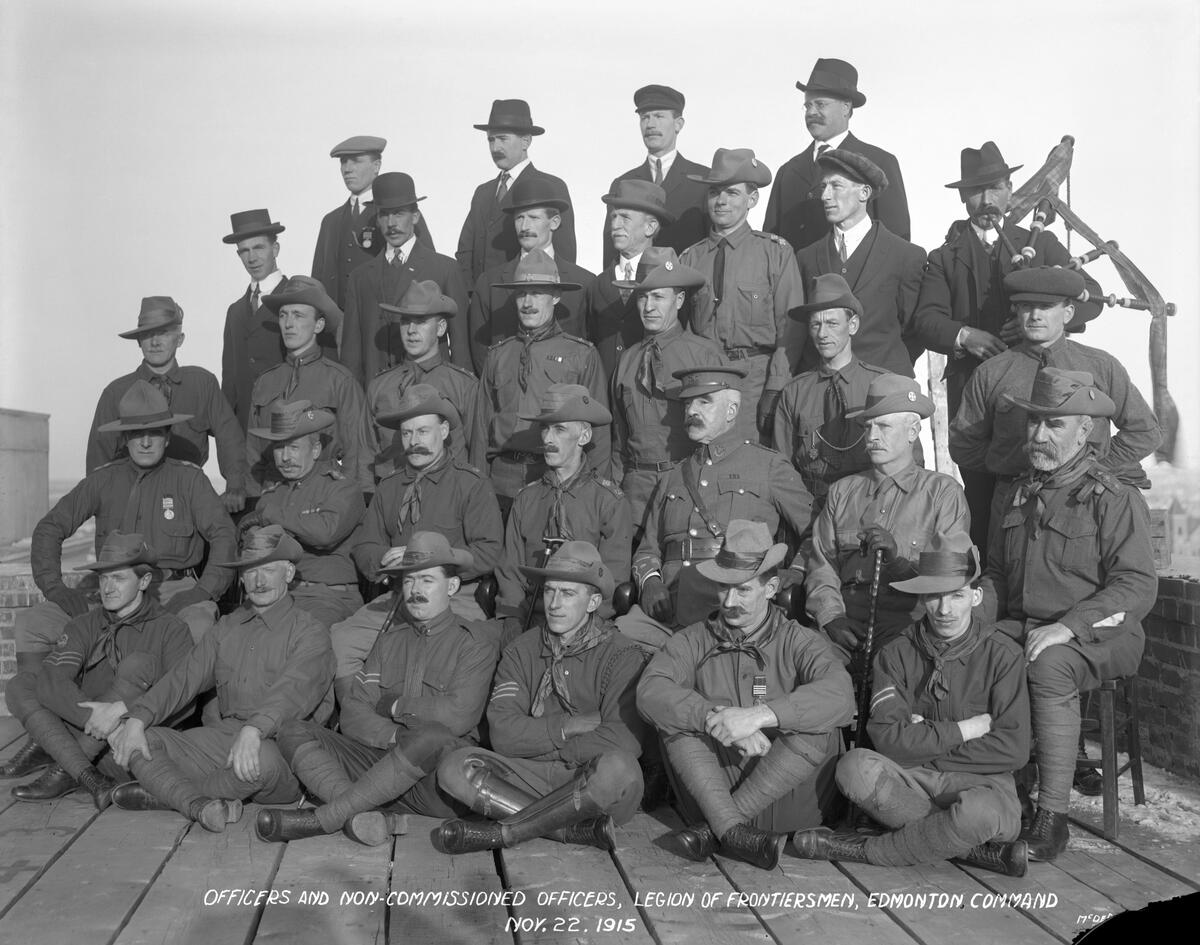
Legion of Frontiersmen, Edmonton Command, 1915 – a nationalist paramilitary group not officially affiliated with the Canadian Army

A paramilitary is a force or unit that functions and is organized in a manner analogous to a military force, but does not have professional or legitimate status.[1] The Oxford English Dictionary traces the use of the term "paramilitary" as far back as 1934.[2]

Overview

[edit]

Paramilitaries may use combat-capable kit/equipment (such as internal security/SWAT vehicles), or even actual military equipment[3] (such as armored personnel carriers;[citation needed] usually military surplus resources) that are compatible with their purpose, often combining them with skills from other relevant fields such as law enforcement, coast guard, or search and rescue.[citation needed] A paramilitary may fall under the command of a military, train alongside them, or have permission to use their resources, despite not actually being part of them.[3]

Legality

[edit]

Under the law of war, a state may incorporate a paramilitary organization or armed agency (such as a law enforcement agency or a private volunteer militia) into its combatant armed forces. Some countries' constitutions prohibit paramilitary organizations outside government use.

Types

[edit]
A group of the "Forest Brothers" in central Estonia meeting with a German unit in 1941.
The Steel Shirts copying the Nazi salute during its rally in Syria

Depending on the definition adopted, "paramilitaries" may include:

Military organizations

[edit]

Law enforcement

[edit]

Civil defense

[edit]

Political

[edit]
  • Armed, semi-militarized wings of political parties and similar political organizations.

Examples of paramilitary units

[edit]

See also

[edit]

References

[edit]

Further reading

[edit]
[edit]

Grokipedia

from Grokipedia
A paramilitary is an armed group or force structured, trained, and equipped in a manner analogous to a military organization but operating independently of a nation's official armed forces, often serving as an auxiliary, supplemental, or rival entity in security, enforcement, or conflict roles.[1][2] These organizations typically adopt hierarchical command, disciplined tactics, and weaponry similar to professional militaries, enabling them to conduct operations ranging from internal policing and counterinsurgency to territorial defense or ideological campaigns, though their lack of formal integration with state structures allows for greater flexibility but also reduced oversight.[3][4] Historically, paramilitaries have filled voids where regular forces prove insufficient or politically constrained, such as the Freikorps units in post-World War I Germany that suppressed leftist revolts and later contributed personnel to emerging political militias.[5] In modern contexts, they have countered non-state threats like guerrillas in Colombia, where groups allied with landowners effectively disrupted narcotrafficking networks despite official ambivalence.[6] While praised for operational efficacy in asymmetric warfare, paramilitaries often face scrutiny for extralegal actions and human rights concerns arising from their autonomous status, which can enable deniability for sponsoring entities but risks escalation into unchecked violence.[7][8]

Definition and Characteristics

Core Definition

A paramilitary is an organization or force that emulates the structure, training, tactics, and equipment of a regular military but lacks formal integration into a state's official armed forces.[1][3] Such groups typically feature hierarchical command chains, disciplined formations, and combat-oriented drills akin to professional soldiers, often deploying small arms, vehicles, and sometimes heavier weaponry in operations.[9][10] Distinguishing paramilitaries from militaries centers on official status and mandate: regular militaries derive authority directly from national constitutions or statutes for external defense and are subject to unified command under civilian oversight, whereas paramilitaries operate as supplements, substitutes, or independents, frequently handling internal threats like civil unrest, insurgencies, or border security.[11][2] For instance, entities like auxiliary police units or volunteer reserves may adopt paramilitary forms to augment state capabilities without full military assimilation.[12] Paramilitaries span state-sanctioned auxiliaries, such as certain gendarmeries or rapid-response forces, to non-state actors including political militias or separatist bands, with their activities ranging from law enforcement support to offensive campaigns.[13] This duality arises from their auxiliary origins, enabling flexibility in resource-constrained environments but also raising accountability issues absent the oversight of formal militaries.[14] Empirical patterns show paramilitaries proliferating in unstable regions, where they fill gaps in state monopoly on violence, as evidenced by their roles in over 50 documented conflicts since 1945 involving irregular auxiliaries.[15]

Distinguishing Features

Paramilitary forces exhibit organizational, tactical, and operational parallels to regular militaries, including hierarchical command structures, standardized training regimens, and employment of military-grade equipment such as small arms, vehicles, and communications systems, while remaining distinct from a state's official armed forces by lacking full integration into national defense hierarchies.[16] This separation often manifests in their subordination to civilian authorities, such as interior ministries, rather than defense departments, enabling deployment for internal security missions like counterinsurgency, border patrol, or civil unrest suppression where regular troops face legal or political restrictions.[11] Unlike conventional militaries focused on conventional warfare against external adversaries, paramilitaries prioritize asymmetric threats, employing small-unit tactics, intelligence-driven operations, and rapid response capabilities suited to low-intensity conflicts.[14] A key differentiator is their operational flexibility and legal ambiguity: state-sponsored paramilitaries may receive official funding and oversight yet operate with reduced accountability compared to professional soldiers, facilitating deniability in controversial actions, while non-state variantsβ€”such as private security firms or insurgent auxiliariesβ€”emulate military discipline without sovereign legitimacy, often resorting to extrajudicial measures like targeted violence or intimidation.[7] [15] They typically maintain uniforms, ranks, and drill protocols akin to militaries but adapt these for civilian contexts, blurring distinctions from police forces; for instance, specialized units may escalate to lethal force thresholds lower than those for interstate combat but higher than standard law enforcement.[4] Paramilitaries diverge from militias through greater professionalization and institutionalization, often drawing recruits from military veterans or civilians undergoing paramilitary-specific instruction in marksmanship, patrolling, and urban combat, yet they avoid the scale, logistics, and doctrinal emphasis on sustained campaigns characteristic of armies.[3] This structure allows them to augment regular forces during escalationsβ€”evident in historical deployments where paramilitaries numbered in the hundreds of thousands, comprising up to half of a nation's security apparatusβ€”but introduces risks of mission creep, where internal roles expand into quasi-military offensives without parliamentary oversight.[2] Empirical analyses of such groups highlight their reliance on volunteer or conscripted personnel motivated by ideology or incentives, contrasting with the careerist ethos of standing armies, which can foster loyalty to political patrons over constitutional norms.[17]

Historical Origins and Evolution

Pre-20th Century Roots

The concept of paramilitary forces, characterized by organized armed groups operating parallel to or in support of regular armies, finds precursors in ancient irregular units that provided specialized capabilities. In the Roman Empire, auxilia comprised non-citizen recruits from allied or conquered provinces, serving as cavalry, archers, and light infantry to complement the citizen legions' heavy infantry focus. Introduced during the Republic's wars of conquest and formalized under Augustus from 27 BC, these units were structured into cohortes and alae, totaling roughly equal in number to the 28 legions by the 2nd century AD, enabling rapid deployment for border defense and scouting.[18][19] Medieval Europe saw the rise of autonomous mercenary bands known as free companies, which functioned as proto-paramilitary entities during periods of truce or civil strife. Active prominently in the Hundred Years' War from 1337 to 1453, these groupsβ€”often former soldiers from England, France, and other regionsβ€”contracted for pay but frequently turned to brigandage, with bands like the Great Company under Arnaud de Cervole ravaging central France in the 1350s and extracting ransoms exceeding 200,000 gold crowns. Urban militias in free cities of the Holy Roman Empire and Italy, such as those in Florence and Nuremberg, also embodied early paramilitary organization, with able-bodied male citizens required to train and arm themselves for communal defense against feudal lords or invaders, maintaining arsenals and drilling in formations akin to professional troops.[20][21] In the early modern era, steppe warrior communities like the Cossacks emerged as enduring paramilitary models, originating in the 15th century as self-governing hosts of runaway serfs and adventurers along the Dnieper and Don rivers, who defended against Tatar raids while conducting raids themselves. By the 16th century, the Zaporozhian Sich hosted up to 20,000 warriors organized into regiments with elected leaders, later registering as irregular auxiliaries for Polish and Russian crowns, providing light cavalry that proved decisive in campaigns like the 1618–1621 Polish-Muscovite War. Across the Atlantic, colonial minutemen in British North America, formed in 1774 amid rising tensions, represented civilian paramilitaries trained for instant mobilization, with Massachusetts alone fielding 13,600 volunteers who drilled twice weekly and supplied their own arms, clashing with British regulars at Lexington and Concord on April 19, 1775.[22][23] The Napoleonic Wars (1803–1815) further highlighted irregular forces' paramilitary utility, as occupied populations formed guerrilla bands to exploit terrain and logistics vulnerabilities. In the Iberian Peninsula, Spanish partisansβ€”numbering tens of thousands by 1810β€”disrupted French columns through ambushes and intelligence, inflicting an estimated 200,000–300,000 casualties over the conflict and forcing Napoleon to divert 300,000 troops. Prussian reforms post-1806 defeats integrated Landwehr militia and Freikorps volunteers as semi-regular supplements, with units like those under Ferdinand von Schill conducting hit-and-run operations that tied down French garrisons until the 1813 coalition victories. These examples underscore how pre-20th-century paramilitaries arose from necessities of asymmetric warfare, local initiative, and state augmentation, often blending volunteerism with professional tactics absent full standing armies.[24][25]

Interwar and World War Periods

Following the armistice of World War I on November 11, 1918, paramilitary formations emerged across Europe amid political instability, economic hardship, and the suppression of revolutionary movements. In Germany, the Freikorps consisted of demobilized soldiers and volunteers who numbered up to 400,000 at their peak, tasked by the Weimar government with quelling communist uprisings such as the Spartacist revolt in Berlin from January 5-12, 1919, where they executed leaders Rosa Luxemburg and Karl Liebknecht.[26][27] These units also participated in the Baltic campaigns of 1919-1920 against Bolshevik forces, operating with minimal oversight and often committing atrocities against civilians perceived as leftist sympathizers.[28] Many Freikorps veterans later integrated into right-wing groups, providing a cadre for the Nazi Sturmabteilung (SA), illustrating how paramilitaries transitioned from ad hoc stabilizers to ideological enforcers.[27] In Italy, the Squadristi, or Blackshirts, formed in 1919 as fascist squads drawing from Arditi shock troops of World War I, engaging in violent clashes with socialists and trade unionists; by 1921, they had dismantled over 300 socialist organizations through beatings, arson, and murders, peaking at around 200,000 members.[29] This squadrismo facilitated Benito Mussolini's March on Rome in October 1922, after which the groups were formalized as the MVSN (Milizia Volontaria per la Sicurezza Nazionale), a state-sanctioned paramilitary that suppressed opposition and enforced fascist control until World War II.[30] Similarly, in Germany, the SA, established in 1921 as the Nazi Party's paramilitary wing, expanded from 3,000 members in 1925 to over 3 million by 1933, conducting street brawls against communists and Jews while providing Hitler with intimidation tactics that contributed to his chancellorship on January 30, 1933.[31][32] The SA's unchecked violence, including the 1933 boycott of Jewish businesses, underscored paramilitaries' role in undermining democratic institutions amid interwar polarization.[33] During World War II (1939-1945), paramilitary organizations adapted to total war, with some evolving into auxiliary combat units while others formed in occupied territories for collaboration or resistance. The Nazi Schutzstaffel (SS), originating as a paramilitary bodyguard in 1925, grew to 900,000 members by 1944, incorporating Waffen-SS divisions that fought alongside the Wehrmacht, such as the 1941-1945 campaigns on the Eastern Front where they committed documented war crimes including the Babi Yar massacre on September 29-30, 1941.[32] In occupied France, the Milice FranΓ§aise, a Vichy collaborationist paramilitary founded in January 1943, numbered 25,000-30,000 by 1944 and assisted Gestapo roundups, executing over 10,000 resisters before Allied liberation.[34] Eastern European examples included the Ukrainian Auxiliary Police, paramilitary units formed in 1941-1942 that aided in ghetto liquidations, and the Serbian State Guard, a 1942 collaborationist force of 36,000 used for anti-partisan operations under German oversight.[35] Anti-Axis paramilitaries proliferated as irregular resistance networks, particularly in the Soviet Union where partisans numbered 500,000-600,000 by 1943-1944, conducting sabotage like the "Rail War" operation in September-October 1943 that destroyed over 215,000 rails, tying down 10-15% of German rear-area forces.[36] Yugoslav partisans under Josip Broz Tito, formalized in 1941, expanded to 800,000 fighters by 1945, liberating Belgrade in October 1944 with minimal Soviet aid and inflicting 140,000 Axis casualties through guerrilla tactics.[37] Jewish partisan units, estimated at 20,000-30,000 across Eastern Europe, operated autonomously from 1942 onward, such as the Bielski group in Belarus that sheltered 1,200 Jews while raiding supply lines.[38] These groups exemplified paramilitaries' dual utility in both enabling occupation atrocities and mounting asymmetric warfare, often blurring lines with regular forces as the war progressed.[39]

Cold War and Decolonization

During decolonization in the mid-20th century, paramilitary groups emerged as key actors in anti-colonial insurgencies, often blending irregular guerrilla tactics with organized military structures to challenge European imperial forces. In Algeria, the National Liberation Front (FLN), founded in 1954, mobilized an estimated 30,000-40,000 fighters by the war's peak in 1956-1957, conducting ambushes, sabotage, and urban bombings against French rule, which contributed to over 1 million casualties before independence in 1962.[40] In parallel, French ultranationalists formed the Organisation Armée Secrète (OAS) in 1961, a clandestine paramilitary network of former soldiers and officers that carried out assassinations, bombings, and attempts to derail the Evian Accords, resulting in hundreds of attacks and an estimated 2,000 deaths in its brief but intense campaign against Algerian sovereignty. These groups exemplified paramilitaries' role in asymmetric warfare, where limited resources necessitated hit-and-run operations over conventional battles, though their actions often blurred into terrorism, alienating civilian populations.[41] The Cold War intensified paramilitary proliferation through superpower proxy engagements, where the United States and Soviet Union armed irregular forces to extend influence without risking nuclear escalation. In Latin America, U.S.-backed counterinsurgency programs, initiated under the Kennedy administration's Alliance for Progress in 1961, trained and funded paramilitary units in countries like Colombia, where military advisers recommended self-defense groups that evolved into right-wing militias combating leftist guerrillas; by the 1960s, these numbered in the thousands and were linked to early narco-trafficking networks.[42] Similarly, in Nicaragua, the CIA organized the Contras from 1981 onward, drawing ex-Sandinista National Guardsmen and anti-communist exiles into a force that grew to approximately 15,000 members by 1985, conducting cross-border raids that inflicted heavy losses on the Sandinista government but also drew international condemnation for human rights abuses, including village burnings and civilian killings documented in reports exceeding 3,000 deaths. Soviet and Cuban support for groups like Angola's MPLA, starting with 1975 independence, countered U.S.- and South Africa-aided UNITA paramilitaries, prolonging a civil war that killed over 500,000 by the 1980s through jungle ambushes and territorial control.[43] In Africa and Asia, decolonization overlapped with Cold War dynamics, fostering hybrid paramilitary conflicts where ethnic militias and mercenaries supplemented ideological proxies. Portuguese colonial wars in Angola and Mozambique from 1961-1974 saw FRELIMO guerrillas in Mozambique, backed by Soviet arms, employ 10,000-15,000 fighters in protracted rural insurgencies that eroded Lisbon's control, leading to independence amid chaos that invited foreign interventions. Mercenaries, often ex-colonial troops, bolstered pro-Western factions, as in the Congo Crisis (1960-1965), where Belgian and French-hired forces numbering around 1,000 intervened to secure Katanga's secession, highlighting paramilitaries' utility in resource-driven struggles but also their tendency toward atrocities, such as summary executions reported in UN inquiries. European stay-behind networks, like NATO's Operation Gladio established in the late 1940s across Italy, Belgium, and other states, trained thousands in covert sabotage and intelligence for hypothetical Soviet invasions, though some units engaged in domestic operations, including bombings tied to over 300 deaths in Italy's "Years of Lead" from 1969-1980. These cases underscore paramilitaries' strategic value in deniable operations, yet their autonomy often led to uncontrolled violence, complicating post-conflict stability.[41][44]

Post-Cold War Transformations

Following the dissolution of the Soviet Union in 1991, paramilitary groups underwent significant transformations, shifting from primarily superpower-backed proxies in ideological proxy wars to more fragmented, localized actors in intrastate conflicts driven by ethnic, sectarian, or resource-based motivations.[45] The decline in external state sponsorship reduced the scale of globally coordinated paramilitary operations, but weak governance in post-colonial and transitioning states fostered their proliferation as force multipliers or autonomous entities in civil wars, where they often filled vacuums left by overstretched regular armies.[46] Empirical data indicate militias and paramilitaries were active in 81% of country-years experiencing civil war between 1981 and 2007, frequently evolving from community self-defense units into groups with independent agendas, including predation or political influence.[47] In regions like the Balkans, Africa, and Latin America, paramilitaries adapted to ethnic fragmentation and state fragility. During the Yugoslav Wars (1991–1995), Serbian irregulars such as Arkan's Tigers conducted ethnic cleansing operations alongside regular forces, contributing to over 100,000 deaths.[48] In Africa, Rwanda's Interahamwe militia orchestrated the 1994 genocide, killing approximately 800,000 Tutsis and moderate Hutus in 100 days with implicit state backing before fleeing to form armed exile groups.[49] Sierra Leone's Kamajors, initially local hunters mobilized against the Revolutionary United Front in the late 1990s civil war, grew into a 10,000-strong force by 2000, blending traditional rituals with combat roles but later committing atrocities.[47] In Colombia, the United Self-Defense Forces of Colombia (AUC), formed in 1997 as a right-wing umbrella for landowner-backed groups, numbered up to 30,000 fighters by the early 2000s, targeting FARC guerrillas while engaging in drug trafficking and massacres, with documented ties to military intelligence.[50] A notable evolution involved the blurring of paramilitary structures with private military companies (PMCs), particularly in resource-rich or strategically vital areas, as states outsourced deniable operations amid post-1991 military downsizing. Russia's Wagner Group, emerging around 2014 from remnants of earlier Slavic mercenaries, exemplified this hybrid model, deploying 10,000–50,000 contractors in Africa (e.g., Central African Republic since 2018, Mali from 2021) for gold mining concessions and counter-insurgency, often supplanting French or UN forces while committing human rights abuses documented by the UN.[51][52] In Iraq, the Popular Mobilization Units (PMUs), formalized in 2014 against ISIS, integrated Shia militias into a state-supervised framework exceeding 100,000 members by 2016, retaining autonomy for Iran-aligned operations.[46] These adaptations reflect causal pressures like globalization and inequality enabling non-state actors to access advanced weaponry and transnational networks, sustaining paramilitary viability despite international norms against them.[45]

International Law Applications

Paramilitary groups, as non-state or irregular armed entities, fall under international humanitarian law (IHL) primarily during armed conflicts, where they are often treated as parties to non-international armed conflicts (NIACs) rather than lawful combatants in international armed conflicts (IACs).[53] In NIACs, Common Article 3 of the 1949 Geneva Conventions binds such groups to basic protections against violence to life and person, including prohibitions on murder, mutilation, cruel treatment, torture, and hostage-taking, applying to all persons not actively participating in hostilities.[54] This provision extends to paramilitaries irrespective of state affiliation, imposing obligations on their command structures equivalent to those on state forces, though enforcement relies on domestic mechanisms or international tribunals absent state consent. Members of paramilitary units typically fail to qualify as lawful combatants under Article 4 of the Third Geneva Convention, which requires belonging to organized armed forces under responsible command, wearing distinctive signs visible at distance, and carrying arms openly, criteria unmet by many irregular forces operating covertly or without uniforms. Consequently, captured paramilitary fighters are classified as unlawful combatants or unprivileged belligerents, forfeiting prisoner-of-war status and combatant immunity from prosecution for participation in hostilities, allowing trial under domestic criminal law for acts like belonging to banned organizations or waging unlawful war.[55] This status persists unless the group adheres to Additional Protocol II (1977), which supplements Common Article 3 for NIACs involving organized dissident forces controlling territory but has limited ratification and applicability to purely state-sponsored paramilitaries. State sponsorship triggers attribution under the International Law Commission's Articles on State Responsibility (2001), whereby paramilitary acts are imputable to a state if the group functions as a de facto organ or acts on instructions or under effective control, as in cases of proxy forces exceeding mere support.[56] For instance, if a government directs paramilitaries in cross-border operations, the state incurs responsibility for violations of IHL or sovereignty, potentially violating UN Charter Article 2(4).[57] Specialized regimes address mercenary-linked paramilitaries: Additional Protocol I Article 47 denies combatant status to those motivated essentially by private gain in IACs, while the 1989 UN International Convention against the Recruitment, Use, Financing and Training of Mercenaries criminalizes their deployment by states or groups in conflicts.[58] The International Criminal Court exercises jurisdiction over war crimes by paramilitary individuals under Rome Statute Article 8, as seen in prosecutions of leaders from groups like Colombia's AUC for systematic attacks on civilians. UN Security Council resolutions have applied these frameworks ad hoc, demanding withdrawal of paramilitary forces in specific disputes, such as Resolution 1244 (1999) requiring verifiable removal of Serbian paramilitaries from Kosovo alongside military and police units.[59] More recently, Resolution 2724 (2024) on Sudan urged the Rapid Support Forcesβ€”a paramilitary entityβ€”to cease sieges and protect civilians under IHL obligations. These instruments underscore paramilitaries' lack of sovereign legitimacy, subjecting them to hybrid accountability blending IHL minima with international criminal law, though gaps persist in regulating non-conflict activities or unattributed groups.[60] Domestic legal frameworks for paramilitary organizations exhibit significant variation, reflecting national priorities on state monopoly of force, internal security needs, and constitutional protections for self-defense. In many jurisdictions, private paramilitary groupsβ€”defined as non-state armed formations with military-like organizationβ€”are prohibited to prevent challenges to governmental authority, with penalties including dissolution, asset forfeiture, and criminal prosecution for members. Conversely, some states authorize limited paramilitary auxiliaries under strict oversight to supplement regular forces in remote or conflict-prone areas, often tied to specific threats like insurgency or border security. These differences stem from historical contexts, such as post-colonial insurgencies or civil rights concerns, rather than uniform international standards.[61] In the United States, no federal statute authorizes private paramilitary groups, and such formations are deemed unlawful if they engage in unauthorized military training or operations, potentially violating anti-conspiracy laws or state prohibitions on private armies. As of 2022, statutes in 29 states explicitly ban the organization of private military groups without governmental approval, with enforcement aimed at groups conducting paramilitary drills or patrols that threaten public order. Recent legislative efforts, including the Preventing Private Paramilitary Activity Act introduced in 2024, seek to impose federal criminal penalties for activities like teaching guerrilla warfare or assembling for civil disorder, motivated by incidents involving militia extremists.[61][62][63] In contrast, India permits government-sanctioned Village Defence Committees (VDCs) in regions like Jammu and Kashmir, where civilians are armed with rifles and trained to counter militant threats, functioning as auxiliaries to police and paramilitary forces. Established in the 1990s amid insurgency, these committeesβ€”numbering around 4,000 groups with tens of thousands of members by 2023β€”receive state-issued weapons and operate under official supervision, though concerns persist over misuse and lack of accountability. In 2024, upgrades to sophisticated arms were authorized to address rising attacks, illustrating a permissive approach justified by terrain challenges and limited regular troop presence.[64][65] Russia grants semi-official status to Cossack hosts, enabling them to perform paramilitary roles such as border patrols and counter-terrorism under contracts with the Ministry of Defense, with legal recognition enhanced since 2022 amid the Ukraine conflict. These groups, numbering in the tens of thousands, blend traditional self-governance with state integration via the Territorial Troops system, allowing armed operations in support of federal security without full military enlistment. However, unregulated vigilante elements have faced criticism for extralegal violence against minorities.[66][67] In Colombia, paramilitary organizations like the United Self-Defense Forces (AUC) have been illegal since their inception in the 1980s, classified as terrorist entities due to alliances with drug cartels and human rights abuses, leading to a 2003-2006 demobilization under the Justice and Peace Law that offered reduced sentences for confessions but required victim reparations. Post-demobilization splinter groups remain proscribed, with ongoing prosecutions under frameworks addressing state-paramilitary collusion, reflecting a prohibitive stance enforced through special jurisdictions.[68]

Typology and Operational Roles

Auxiliary and State-Sponsored Forces

Auxiliary paramilitary forces consist of irregular units formally organized under state authority to supplement or extend the capabilities of regular armed forces or police, typically performing combat, security, or support roles that regular troops may be unable or unwilling to undertake due to legal, resource, or doctrinal constraints.[69] These groups differ from pro-government militias by their embeddedness in official state structures, receiving direct funding, armaments, and oversight from government ministries or security apparatuses, which enables coordinated operations while maintaining a degree of operational flexibility.[70] States employ such forces to achieve deniability in sensitive operations, mobilize local knowledge for counterinsurgency, or rapidly expand manpower without full military mobilization, though this structure can foster accountability issues and human rights violations due to limited oversight.[71] In typology, auxiliary paramilitaries often recruit from civilian populations, ex-soldiers, or volunteers, organizing into company- or battalion-sized units with military-style hierarchies but lighter armament, such as rifles, machine guns, and vehicles suited for irregular warfare.[69] Their roles include border patrol, village defense against insurgents, intelligence gathering, and reprisal actions, allowing states to project force in asymmetric conflicts where conventional armies face political backlash or logistical limits. For instance, recruitment emphasizes loyalty to the regime, with training focused on rapid deployment rather than prolonged conventional engagements, enabling cost-effective scaling during crises.[71] Historical examples illustrate their deployment for internal security and counter-revolutionary purposes. The British Auxiliary Division of the Royal Irish Constabulary, formed in July 1920, comprised approximately 2,200 former British Army officers organized into mobile companies for counterinsurgency against the Irish Republican Army during the Irish War of Independence; these units conducted raids and intelligence-led operations but were disbanded in 1922 amid accusations of excessive force.[72] Similarly, Turkey's Village Guard system, established in 1985 under Prime Minister Turgut Γ–zal, armed up to 90,000 Kurdish civilians in eastern provinces to defend against Kurdistan Workers' Party (PKK) attacks, providing temporary and voluntary paramilitary support with state-issued weapons and stipends, though the force has faced criticism for involvement in extrajudicial killings and clan-based corruption.[71] [73] In contemporary contexts, state-sponsored auxiliaries continue to fill gaps in hybrid warfare. Iran's Basij Resistance Force, integrated into the Islamic Revolutionary Guard Corps since its founding in 1979, mobilizes an estimated 1-4 million volunteers for internal crowd control, border defense, and auxiliary combat roles, receiving direct state funding and ideological indoctrination to suppress dissent and support regular forces in regional conflicts.[74] Russia's Wagner Group, operational from 2014 until its 2023 mutiny, functioned as a state-sponsored paramilitary entity with up to 50,000 fighters, funded and supplied by the Kremlin for deniable interventions in Ukraine, Syria, and Africa, conducting offensive operations alongside regular troops while allowing plausible deniability for atrocities.[75] These cases highlight how such forces enhance state resilience against non-state threats but risk escalating violence through unchecked autonomy, as evidenced by documented abuses in operations from 2014 onward.[76] [71]

Self-Defense and Vigilante Militias

Self-defense militias emerge in regions where state authorities fail to provide adequate protection against threats such as insurgent groups, criminal syndicates, or widespread violence, organizing civilians into armed units to safeguard communities and property. These groups typically prioritize defensive postures, such as patrolling villages or establishing checkpoints, leveraging local knowledge to deter incursions. In Mexico, autodefensas formed in February 2013 in Tepalcatepec, MichoacΓ‘n, when farmers and ranchers armed themselves against extortion and murders by the Knights Templar Cartel after local police proved ineffective; within months, these militias expelled cartel forces from several municipalities, restoring temporary order in areas long dominated by organized crime.[77] [78] Similarly, in Colombia, paramilitary organizations like the United Self-Defense Forces of Colombia (AUC) originated in the mid-20th century as landowner-backed responses to kidnappings and attacks by FARC and ELN guerrillas, coalescing into a formal umbrella group in 1997 to defend rural populations; they controlled territories and reduced guerrilla access through fortified positions, though often via coercive methods.[79] Vigilante militias differ by extending beyond passive defense to actively pursue and punish perceived offenders, enforcing community norms or targeting enemies without legal oversight, which heightens risks of abuse. In southern Nigeria, the Bakassi Boys vigilante network arose in the late 1990s amid police corruption and rising crime in the southeast, conducting raids and public executions that initially curbed armed robbery but devolved into extortion and arbitrary killings; state governors briefly sponsored them for crowd control before federal bans in 2002 due to excesses.[80] The Oodua People's Congress (OPC) in the southwest similarly positioned itself as ethnic Yoruba defenders against crime and rivals, reducing incidents in Lagos through patrols but engaging in inter-group clashes and shakedowns, with sporadic prosecutions failing to curb operations.[80] In counterinsurgency contexts, states sometimes sponsor self-defense militias for static roles, as with India's Village Defense Committees (established 1995, arming 6,000–23,000 Jammu villagers against militants) or Turkey's Village Guards (initiated 1985, recruiting thousands in Kurdish areas against PKK), which held peripheral zones effectively by disrupting supply lines but invited vigilantism through unchecked local vendettas and corruption.[81] Empirical outcomes reveal mixed efficacy: self-defense units can fill security vacuums, enhancing civilian safety where formal forces lack capacity, yet they frequently evolve into predatory entities due to poor oversight, resource scarcity, and incentives for self-enrichment. Mexican autodefensas routed the Knights Templar by 2014, prompting government integration of 20,000 members into rural police forces, but fragmentation led to alliances with rival cartels and internal criminalization by 2015.[77] Colombian AUC demobilized 30,150 fighters between 2003 and 2006 under peace accords, weakening guerrillas in key areas, but their drug involvement and massacres of suspected sympathizersβ€”displacing thousandsβ€”undermined legitimacy.[79] Sponsored militias like India's VDCs curbed insurgent footholds in remote districts through 2003, yet reports of extortion and civilian targeting persisted, illustrating how initial defensive gains erode without accountability mechanisms, often exacerbating cycles of violence rather than resolving underlying governance failures.[81]

Insurgent and Separatist Groups

Insurgent paramilitary groups challenge established governments through irregular warfare aimed at overthrowing regimes or altering political structures, while separatist variants pursue ethnic or regional independence via sustained guerrilla campaigns. These entities typically maintain hierarchical command structures mimicking conventional militaries, including specialized units for reconnaissance, sabotage, and assault, but operate clandestinely to evade superior state forces. Recruitment often draws from aggrieved populations, emphasizing ideological commitment over professional training, with funding derived from extortion, smuggling, and diaspora support. Such groups have prolonged conflicts in diverse regions, contributing to thousands of casualties and territorial disruptions, though their success varies based on terrain advantages, external backing, and internal cohesion.[41] The Provisional Irish Republican Army (PIRA), emerging in 1969 amid escalating communal violence in Northern Ireland, exemplified insurgent paramilitarism by targeting British security forces and infrastructure to force unification with Ireland. Governed by a seven-member Army Council that directed operations through regional brigades and active service units, the PIRA executed over 1,700 attacks, including bombings and sniper ambushes, resulting in approximately 1,800 deaths attributed to its actions by 1998. Tactics emphasized urban guerrilla warfare, with volunteers undergoing basic training in improvised explosives and small-arms use, often sourced from sympathizers or theft. The group ceased armed activity following the 1998 Good Friday Agreement, though splinter factions persisted.[82][83] Separatist paramilitaries like the Kurdistan Workers' Party (PKK), established in 1978 by Abdullah Γ–calan, have conducted cross-border operations against Turkey to secure Kurdish self-rule, shifting from Marxist insurgency to ethnic autonomy demands. The PKK's forces, estimated at 3,000-5,000 fighters by the 2010s, utilized mountainous bases in northern Iraq and Syria for hit-and-run raids, ambushes, and improvised explosive devices, contributing to over 40,000 deaths in the conflict since 1984. Designated a terrorist organization by Turkey, the EU, and the US, it maintained parallel political wings for mobilization while employing conscription and ideological indoctrination for recruitment. A 2025 announcement dissolved its armed structures after decades of attrition from Turkish counteroperations.[84][85] In Sri Lanka, the Liberation Tigers of Tamil Eelam (LTTE), founded in 1976, pursued Tamil Eelam independence through a 26-year civil war, controlling northern territories and innovating suicide bombings via its Black Tigers unit, which executed over 378 attacks. Structured as a de facto army with naval and air wings, the LTTE fielded up to 14,000 combatants at peak, funded by Tamil expatriate remittances and taxation in held areas, leading to an estimated 100,000 total deaths. Its defeat in May 2009 by Sri Lankan forces ended the insurgency, highlighting vulnerabilities to sustained conventional assaults despite early territorial gains.[86] The Basque group Euskadi Ta Askatasuna (ETA), active from 1959 to 2018, targeted Spanish state symbols for Basque Country independence, conducting 3,300 attacks that killed 829 people, primarily through car bombs and assassinations of officials. Organized in autonomous cells to limit infiltration, ETA relied on urban operatives trained in France and funded via kidnappings and "revolutionary taxes," with membership peaking at around 500 in the 1980s. Ceasefires and arrests eroded its capacity, culminating in full dissolution amid declining public support and Spanish counterterrorism.[87][88]

Criminal Syndicates and Terror Networks

Criminal syndicates, particularly drug trafficking organizations, frequently develop paramilitary capabilities to safeguard revenue streams, eliminate competitors, and challenge state authority through militarized enforcement. Los Zetas, originating as the armed wing of Mexico's Gulf Cartel in the late 1990s, exemplified this evolution by recruiting elite deserters from the Mexican Army's Grupo AeromΓ³vil de Fuerzas Especiales (GAFE), infusing cartel operations with special forces training in tactics such as ambushes, intelligence gathering, and urban warfare.[89][90] By 2010, after splintering from the Gulf Cartel, Los Zetas operated as an independent syndicate controlling smuggling routes and territories across northeastern Mexico, employing hierarchical command structures, checkpoints, and heavy weaponry including rocket-propelled grenades and .50-caliber rifles to sustain dominance amid inter-cartel conflicts that claimed over 120,000 lives nationwide from 2006 to 2012.[91][92] Their innovation in violenceβ€”such as mass graves and public displays of mutilated bodiesβ€”served not only intimidation but also recruitment, drawing from disenfranchised youth and ex-soldiers to maintain a force estimated at 10,000-15,000 operatives at its peak around 2012.[93] Terror networks similarly leverage paramilitary organization to execute ideological objectives, blending guerrilla warfare with asymmetric attacks to project power beyond sporadic bombings. Al-Qaeda, founded in 1988, established paramilitary training camps in Afghanistan during the 1990s, instructing recruits in small-unit tactics, explosives handling, and marksmanship to prepare for global jihadist operations, culminating in coordinated assaults like the September 11, 2001, attacks that killed 2,977 people.[94] The Islamic State of Iraq and Syria (ISIS), emerging from al-Qaeda in Iraq by 2013, scaled this model into a pseudo-conventional force, capturing military-grade equipment from Syrian and Iraqi armies to field armored divisions and artillery, holding territory across 88,000 square kilometers at its 2014 zenith with an estimated 30,000 foreign fighters integrated into battalion-sized units for territorial conquests and governance enforcement.[94] These groups' paramilitary adaptationsβ€”rigid hierarchies, specialized training, and logistics networksβ€”enable sustained campaigns, as seen in ISIS's 2014-2017 offensives that overran Mosul and Raqqa, though both faced attrition from coalition airstrikes and ground operations reducing their core capabilities by 2019.[95] Overlaps between syndicates and terror networks occur when profit motives intersect with extremism, amplifying paramilitary efficacy; for instance, Latin American cartels have allied with groups like Hezbollah for cocaine smuggling routes since the 2000s, exchanging tactical expertise for funding, while ISIS derived up to 50% of its $2 billion annual revenue in 2015 from extortion and oil sales mimicking syndicate rackets.[96] Such hybrid models underscore causal drivers like weak governance and illicit economies fostering armed non-state actors capable of rivaling conventional forces in localized domains, though their decentralized remnants post-defeatβ€”Los Zetas fragmented by 2017 arrests and ISIS reduced to insurgent cellsβ€”highlight vulnerabilities to targeted intelligence and interdiction.[90][97]

Tactics, Organization, and Capabilities

Internal Structures and Recruitment

Paramilitary groups typically feature internal structures analogous to military forces, with hierarchical chains of command, specialized subunits, and mechanisms for discipline and operational coordination.[16] These organizations often include a central leadership body overseeing strategy, regional or brigade-level commanders directing local operations, and tactical cells or platoons executing missions, enabling both centralized decision-making and decentralized flexibility in irregular environments.[98] Centralized hierarchies predominate in state-sponsored or ideologically cohesive paramilitaries, promoting unified command but exposing groups to risks from targeted eliminations of key leaders, whereas more fragmented or cell-based structures in insurgent variants enhance survivability against infiltration at the cost of potential internal divisions.[98] Mid-level commanders play a pivotal role in bridging strategic directives and frontline execution, often wielding significant autonomy in resource allocation and tactical adaptations.[99] Recruitment into paramilitary groups employs multifaceted strategies adapted to contextual pressures, including ideological indoctrination to foster loyalty, economic incentives amid poverty or conflict-induced scarcity, and exploitation of kinship or community networks for trust-based enlistment.[100] Voluntary recruits, drawn by promises of purpose, protection, or financial gain, form the core of many formations, particularly in groups emphasizing ethnic or nationalist causes, though empirical data indicate that such methods yield higher initial commitment than pure coercion.[101] Coercive tactics, such as forced conscription or threats against families, surge during military setbacks or resource shortages, shortening time horizons and prioritizing quantity over quality, but often necessitate subsequent socialization efforts to mitigate desertion and build allegiance.[102] [101] Training regimens mirror military boot camps, emphasizing weapons handling, tactics, and group cohesion to transform recruits into disciplined operatives, with retention reinforced through promotions, shared hardships, and ideological reinforcement.[103]

Common Tactics and Armament

Paramilitary groups typically employ asymmetric warfare tactics to offset disadvantages in manpower, logistics, or firepower against state militaries, favoring mobility and surprise over sustained battles. Common approaches include ambushes along supply routes, hit-and-run raids on isolated outposts, and sabotage of infrastructure such as power lines or bridges, which allow small units to inflict disproportionate damage while minimizing exposure.[104][105] These methods draw from guerrilla doctrines emphasizing terrain familiarity and rapid dispersal, as evidenced in counterinsurgency contexts where local paramilitaries conduct selective strikes before withdrawing to renegotiate alliances or evade pursuit.[104] In urban or vigilante operations, tactics shift toward intimidation and selective enforcement, such as checkpoints, patrols, or targeted assassinations to control populations or deter rivals, often blending with intelligence gathering from civilian networks. Explosives and incendiaries feature prominently in plots, with 9 of 38 far-right paramilitary-linked attacks in 2021 involving such devices alongside firearms.[106] Firearms dominate direct engagements, comprising 16 of those incidents, reflecting a preference for scalable violence that avoids pitched fights.[106] State-sponsored variants may integrate conventional elements like coordinated assaults when augmented by regular forces, but core paramilitary doctrine prioritizes deniability and adaptability over doctrinal rigidity.[107] Armament centers on small arms and light weapons (SALW) for portability and concealability, with assault rifles like the AK-47 and AR-15 forming the backbone due to reliability, availability, and ammunition commonality.[108][109] Submachine guns such as Uzis or MAC-10s, along with pistols like Glocks, enable close-quarters operations, while groups like Northern Ireland's UVF amassed around 200 AK-47s, Uzis, and homemade submachine guns pre-decommissioning.[109][110] Heavier ordnance includes rocket-propelled grenades (RPGs), mortars, and improvised explosive devices (IEDs) for anti-vehicle or area denial roles, often sourced via black markets, captures, or state patrons rather than formal supply chains.[108] Paramilitary police analogs historically field machine guns, carbines, and rifles in fixed formations, but irregular groups adapt with commercial off-the-shelf items to sustain prolonged low-intensity conflicts.[111] Proliferation of low-cost SALW exacerbates conflict duration and intensity, as these weapons require minimal training and enable sustained insurgencies.[112]

Societal Impacts and Evaluations

Positive Contributions to Security

Paramilitary groups have occasionally supplemented state security forces in countering insurgent threats, acting as force multipliers by providing local knowledge, rapid mobilization, and self-defense capabilities in areas where regular military resources are insufficient.[113] In such contexts, these groups have disrupted enemy operations and restored stability to vulnerable populations, though their integration with state forces varies and often invites scrutiny over accountability.[113] A prominent example occurred in Iraq's Anbar province during 2006–2007, when Sunni tribal leaders formed the Anbar Awakening councils, initially paramilitary alliances that shifted from insurgency against U.S. forces to cooperation against al-Qaeda in Iraq (AQI). These councils recruited tens of thousands of local fighters who provided intelligence and conducted patrols, leading to a 90% reduction in attacks in Anbar by late 2007 and transforming the province from a hub of violence to a relatively secure area.[114] [115] U.S. military assessments credited the Awakening with breaking AQI's grip, as tribal fighters exploited local grievances against AQI's extremism to reclaim territory and enable broader counterinsurgency efforts.[116] In Ukraine, the Azov Battalion, established as a volunteer paramilitary unit in May 2014 amid Russian-backed separatism in Donbas, integrated into the National Guard and contributed significantly to frontline defense. Azov forces played a pivotal role in halting advances near Mariupol in 2014–2015 and, during the 2022 Russian invasion, defended the city for 83 days under siege, delaying enemy progress and allowing Ukrainian regulars to regroup elsewhere; this effort preserved strategic coastal access and boosted national morale.[117] [118] By 2024, Azov's expanded structure, including multiple brigades totaling 40,000–80,000 personnel, had adopted NATO command systems for enhanced operational effectiveness against Russian forces in eastern Ukraine.[119] [120] These cases illustrate how paramilitaries can fill immediate security voids through grassroots recruitment and terrain familiarity, yielding tactical gains such as reduced insurgent mobility and protected civilian enclaves, even as long-term risks like factionalism persist.[113] Empirical outcomes, including verifiable drops in violence metrics, underscore their utility in asymmetric conflicts where state monopolies on force prove inadequate.[115]

Criticisms and Human Rights Concerns

Paramilitary groups have faced widespread criticism for perpetrating human rights abuses, including extrajudicial killings, torture, and forced disappearances, often with limited accountability due to their irregular status outside formal military chains of command.[121] These organizations frequently operate as proxies for state or non-state actors, enabling deniability for atrocities while targeting perceived enemies, civilians, or rivals in asymmetric conflicts.[122] Reports from organizations monitoring conflicts document patterns where paramilitaries escalate repression, with empirical data showing higher incidences of violations in regions where they are active compared to regular forces alone.[121] In Colombia, the United Self-Defense Forces of Colombia (AUC), a coalition of right-wing paramilitary groups active from the 1990s to mid-2000s, were responsible for over 3,000 documented killings and massacres, including the 1997 MapiripΓ‘n massacre where 49 civilians were slaughtered in collaboration with army units.[123] Declassified U.S. documents reveal military-paramilitary partnerships facilitated atrocities against leftist guerrillas and suspected sympathizers, with paramilitaries displacing over 3.5 million people by 2005 through intimidation and violence.[124] Demobilization processes under the 2003-2006 Justice and Peace Law failed to dismantle networks fully, as many leaders continued operations under splinter groups like the Clan del Golfo, evading full prosecution for war crimes.[125] Similar concerns arise in Africa, where the Wagner Group, a Russian paramilitary entity deployed in Mali since 2021, has been implicated in civilian massacres, such as the 2022 Moura killings of at least 500 people, including executions and village burnings, often targeting Fulani communities suspected of Islamist ties.[126] In Sudan, the Rapid Support Forces (RSF), evolved from Janjaweed militias, committed war crimes during the 2023 conflict, including deliberate civilian attacks and widespread sexual violence, with UN investigations documenting over 1,000 rapes in West Darfur alone by mid-2024.[127] [128] These cases highlight how paramilitaries' loose oversight facilitates violations of international humanitarian law, such as the Geneva Conventions' prohibitions on targeting non-combatants. Critics argue that paramilitaries undermine the state monopoly on legitimate violence by institutionalizing impunity, as governments deploy them to conduct operations disavowed officially, complicating prosecutions under domestic or international courts.[122] In Ethiopia, special police units functioning as paramilitaries in regions like Oromia committed widespread abuses, including extrajudicial executions during counterinsurgency operations from 2010 onward, with UK-funded training programs drawing scrutiny for enabling such forces despite documented atrocities.[129] Human rights monitors emphasize that without rigorous disarmament and judicial mechanisms, these groups perpetuate cycles of violence, as seen in Nicaragua where pro-government militias suppressed 2018 protests with over 300 killings, yet official denials persisted.[130] Overall, empirical assessments link paramilitary proliferation to elevated civilian casualty rates, underscoring demands for international sanctions and oversight to curb their role in systematic abuses.[121][131]

Debates on State Monopoly of Violence

The concept of the state's monopoly on legitimate violence, as articulated by Max Weber in Politics as a Vocation (1919), posits that a modern state is defined by its exclusive authority to employ physical force within a given territory, with all others acting illegitimately.[132] Paramilitary groups, operating as non-state or quasi-state armed entities, inherently contest this monopoly by wielding coercive power independently or as state proxies, prompting debates over whether they stabilize fragile polities by compensating for governmental weakness or exacerbate fragmentation and authoritarianism.[133] Empirical analyses indicate that while paramilitaries may temporarily suppress insurgencies in high-threat environments, they frequently entrench parallel structures of violence, undermining central authority and prolonging instability.[134] Critics argue that paramilitaries erode the state's monopoly by enabling outsourced repression, which evades accountability and fosters cycles of retaliation. In Colombia, right-wing paramilitaries affiliated with the United Self-Defense Forces (AUC) controlled territories through massacres, kidnappings, and land expropriation from the 1980s to early 2000s, influencing local elections and displacing over 4 million civilians by 2010, as state forces proved unable or unwilling to assert dominance. Demobilization efforts under the 2003-2006 Justice and Peace Law reduced AUC ranks from 30,000 to under 5,000, yet splinter groups like the Clan del Golfo persisted, illustrating how paramilitary empowerment creates enduring non-state fiefdoms resistant to reintegration.[135] Similarly, in Iraq post-2003, U.S.-backed Sunni Awakening militias numbering up to 100,000 fighters curbed al-Qaeda in Iraq temporarily but fragmented into ISIS precursors by 2014, as the central government failed to co-opt them, leading to renewed sectarian violence that killed over 50,000 in 2014-2017.[136] These cases demonstrate a causal pattern: delegation to paramilitaries signals state incapacity, inviting rival armed actors and diluting legitimate authority, with quantitative studies showing pro-government militias correlating with 20-30% higher civilian casualties in civil wars due to indiscriminate tactics.[134] Proponents of paramilitary utility in weak states contend they provide essential security vacuums where formal armies collapse, arguing that absolute monopoly is illusory in low-capacity regimes facing existential threats. In Syria's civil war (2011-present), Kurdish-led People's Protection Units (YPG) and other militias secured northeastern territories against ISIS, holding 25% of Syrian land by 2019 and enabling local governance amid regime fragmentation, which some analysts credit with preventing total state collapse.[137] Russian Wagner Group's operations in the Central African Republic (2018-2023) similarly ousted rebel holdouts, securing mining concessions and stabilizing Bangui's outskirts for a fee, where the national army of 8,000 troops lacked capacity.[51] However, such benefits prove ephemeral; Wagner's 2023 mutiny against Moscow exposed internal fissures, and empirical reviews of fragile states reveal that militia reliance correlates with stalled security sector reforms, as governments prioritize short-term proxies over building professional forces, perpetuating dependency and corruption.[138] In Mexico's drug war (2006-present), state-tolerated autodefensas militias in MichoacΓ‘n reduced cartel extortion in 2013-2014 but devolved into criminal syndicates by 2019, with over 400 vigilante deaths tied to infighting, underscoring how paramilitaries substitute rather than supplement monopoly, often amplifying predation.[139] Overall, evidence tilts against paramilitaries bolstering state monopoly, as their deployment signals and reinforces governmental frailty, with cross-national data from 1989-2010 showing armed non-state actors proliferating in 40% of conflicts, correlating with 15-20 year delays in post-war consolidation.[140] States attempting reclamation, as in Colombia's post-AUC era, face entrenched networks funded by illicit economies, yielding hybrid governance where violence remains privatized. This dynamic challenges Weberian ideals not merely theoretically but practically, as weak regimes' tactical expediency yields strategic erosion, prioritizing survival over sovereignty.[141]

Contemporary Manifestations

Global Hotspots and Recent Activities

In the Sahel region of West Africa, Russian paramilitary units under the Africa Corps banner have maintained a presence in Mali, Burkina Faso, and Niger as of mid-2025, succeeding the Wagner Group's operations after its partial withdrawal in early 2024. These forces, numbering several thousand, provide training, equipment, and direct combat support to local juntas combating jihadist groups affiliated with Islamic State and al-Qaeda, though they have been implicated in civilian executions and resource extraction deals favoring Moscow. In Mali specifically, Africa Corps fighters collaborated with Malian special forces in operations against Fulani communities suspected of Islamist ties, resulting in documented disappearances and killings in areas like Moura as recently as July 2025.[142][143][144] Sudan's civil war features prominent paramilitary involvement from the Rapid Support Forces (RSF), a Hemedti-led militia evolved from Janjaweed fighters, which seized Khartoum in April 2023 and held sway over Darfur and parts of Kordofan by 2025. The RSF, estimated at 100,000 fighters with access to heavy weaponry including drones and artillery, has conducted ethnic-targeted offensives, displacing over 10 million people and exacerbating famine conditions amid clashes with the Sudanese Armed Forces (SAF). As of April 2025, the conflict's paramilitary dynamics underscored debates over external backing, with RSF receiving UAE-sourced arms while SAF relies on Egyptian and Russian support.[145][146] In Myanmar, ethnic armed organizations (EAOs) and People's Defense Forces (PDFs) numbering over 170 active groups have escalated offensives against the Tatmadaw junta since the 2021 coup, capturing more than 80% of Laukkai town in northern Shan State by January 2025 through coordinated assaults involving artillery and improvised explosives. These paramilitary entities, often rooted in separatist movements like the Kachin Independence Army or Arakan Army, control swathes of border territories and have disrupted military supply lines, contributing to over 20,000 combat events in 2024 alone. Their decentralized structures enable adaptive guerrilla tactics but complicate cease-fire prospects.[147] Middle Eastern paramilitaries, including Yemen's Houthi forces and Lebanon's Hezbollah, sustained high-profile actions into 2025, with Houthis launching over 100 drone and missile strikes on Red Sea shipping lanes from October 2023 through mid-2025 to pressure Israel amid the Gaza conflict. Hezbollah, backed by Iran, exchanged cross-border fire with Israeli forces exceeding 8,000 incidents by late 2024, deploying precision-guided munitions and tunnel networks before a fragile November 2024 truce. These groups, integrated into Iran's Axis of Resistance, blend insurgent and state-like functions, with Hezbollah maintaining an arsenal of 150,000 rockets.[146][148] In recent years, paramilitary groups have increasingly incorporated unmanned aerial vehicles (UAVs or drones) into their operations, drawing tactical lessons from conflicts like the Russia-Ukraine war to enhance surveillance, targeted strikes, and propaganda dissemination. Mexican drug cartels, which maintain paramilitary-style enforcer units, have adapted commercial and modified military-grade drones for cross-border smuggling, explosive payloads, and reconnaissance, with reported incidents escalating since 2022 as cartels reverse-engineer Ukrainian FPV (first-person view) drone techniques to evade detection.[149] In Africa's Sahel region, Tuareg rebels affiliated with paramilitary formations have employed smuggled dronesβ€”up to 117 units seized by Malian forces in 2023β€”for both combat and filmed attacks shared online to demoralize adversaries like Russia's Africa Corps mercenaries.[150] [151] Private military contractors (PMCs), often functioning as modern paramilitaries, are embedding AI-driven analytics, sensor networks, and cyber capabilities into their service offerings, enabling remote operations that reduce human exposure while expanding influence in hybrid warfare zones. Firms have modernized with drone swarms for perimeter security and data processing for predictive threat modeling, as seen in contracts in the Gulf of Guinea where Russia's Africa Corps integrates such tech for resource extraction protection amid local insurgencies.[152] [153] This shift reflects a broader adaptation to contested environments, where paramilitaries leverage affordable commercial tech to offset state militaries' advantages, though proliferation risks weapon diversion to non-state actors.[154] Recruitment and ideological dissemination have pivoted toward digital camouflage and niche platforms to circumvent deplatforming, with U.S.-based militias rebranding under innocuous terms like "community defense networks" or "preparedness groups" to expand on Facebook and encrypted apps, coordinating over 100 groups as of 2024.[155] [156] Far-right paramilitary-linked entities have co-opted sports clubs for physical training and bonding, fostering loyalty without overt militarism, as documented in European cases by mid-2024.[157] In parallel, state-aligned paramilitaries in unstable regimes adapt by posing as irregular auxiliaries, providing deniability while securing elite interests, a dynamic evident in Sudan's Rapid Support Forces and similar African outfits post-2020 coups.[158] These evolutions underscore paramilitaries' resilience against counter-measures, prioritizing asymmetric tools and covert networking over traditional hierarchies.

References

User Avatar
No comments yet.