Hubbry Logo
PathiramanalPathiramanalMain
Open search
Pathiramanal
Community hub
Pathiramanal
logo
8 pages, 0 posts
0 subscribers
Be the first to start a discussion here.
Pathiramanal
Pathiramanal
from Wikipedia

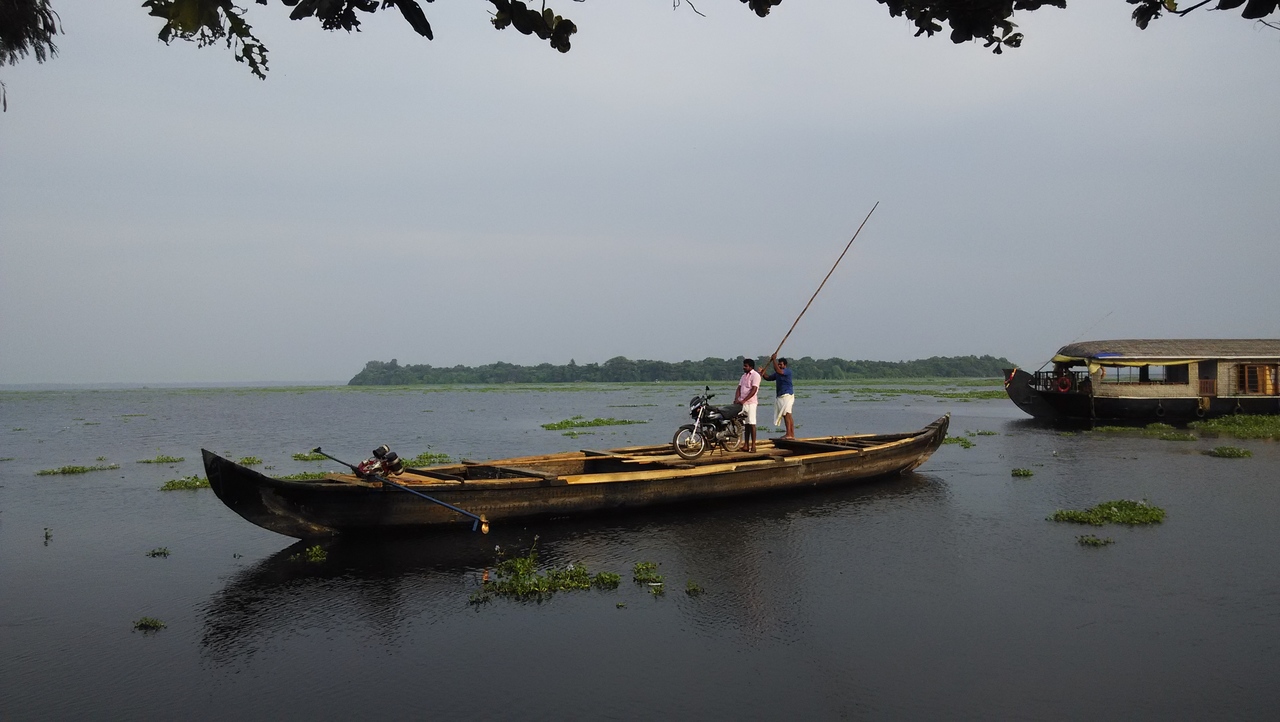
Pathiramanal is a small island in Muhamma panchayat of Alappuzha district located in Vembanad Lake.[3] The name Pathiramanal means 'midnight sand'. It is home to many rare varieties of migratory birds from different parts of the world.

Key Information

Geography

[edit]
Visitors walking through Pathiramanal Island

The Pathiramanal Island is 28.505 ha. It is about 1.5 km from Muhamma boat jetty and about 13 km from Alapuzha. From the jetty close by Baker Bungalow the distance to the island is about 5 km and from Kumarakom 4 km towards northwest.

  • Maximum length: 550m (SW to NE)
  • Maximum width: 450m (SE to NW)
  • Perimeter: 1800 m
  • Estimated Area: 19.6 ha
  • Distance to the nearest main land: 810m

History

[edit]
An information board at Pathiramanal island

The island (also known as Anantha Padmanabhan Thoppu) was purchased by Chevalier ACM Anthraper, from M/s Bheemji Devji Trust of Cochin and was under the private ownership of Thaimattathil Family until the late seventies.[4] When Land Reforms Acts were enforced in the State in 1979, the island came under government ownership. The island was returned to the government as a surplus land that crossed the land ceiling. It was later transferred to the Tourism Department and the idea of leasing it out to private enterprises was under consideration. The island at present is uninhabited. Till the late 1970s, 14 worker families resided in the island, who were later rehabilitated on the mainland in the Muhamma panchayath.[5]

A walkway at Pathiramanal

Birdwatching

[edit]
Little cormorant perched at Pathiramanal

The island is home to around 91 local species of birds and 50 migratory birds. One can see pintail ducks, common teal, night heron, cormorant, darter, Indian shag, purple heron, gulls, terns, large egrets, intermediate egret, cattle egret, Indian pond heron, little egret, pheasant-tailed and bronze-winged jacanas, stork-billed kingfisher, watercock, whistling duck, cotton pygmy-goose, little cormorant and whiskered tern. Some people have even reported seeing the monarch flycatcher.

See also

[edit]

References

[edit]
[edit]
Revisions and contributorsEdit on WikipediaRead on Wikipedia
from Grokipedia
Pathiramanal is a small island situated in Vembanad Lake within the Muhamma panchayat of , , , accessible only by and renowned as a habitat for diverse avian . The name "Pathiramanal," translating to "midnight sand" or "sands of night" in , originates from a local legend in which a young , during evening rituals, dived into the lake causing land to emerge at night, forming the island. Positioned between Thaneermukkom and , it spans roughly 28 hectares and attracts birdwatchers due to its population of 91 local bird and 50 migratory visitors from regions including and . The island's ecological significance lies in its role as a stopover for rare migratory birds, supported by the surrounding backwaters that provide a serene environment amid 's renowned waterway network, though it lacks permanent human habitation and emphasizes natural preservation over development. Visitors typically reach it via a short ride from Muhamma , approximately 1.5 kilometers away, facilitating observation of such as cormorants, egrets, and terns in a setting that highlights the of Vembanad Lake.

Geography and Environment

Location and Physical Characteristics


Pathiramanal is a small, uninhabited island situated in Vembanad Lake within the backwaters of Alappuzha district, Kerala, India. It lies in the Muhamma panchayat, positioned between Thaneermukkom and Kumarakom, and is accessible exclusively by boat. The island's approximate coordinates are 9°37′07″N 76°23′05″E.
The island measures about 10 acres (4 hectares) in area and features a narrow, elongated sandy terrain formed by natural sediment deposits in the lake. It lacks permanent human structures or settlements, remaining a pristine amid the surrounding brackish backwaters of Lake.

Climate and Seasonal Variations

Pathiramanal, situated in Lake within Kerala's coastal lowlands, experiences a characterized by high year-round levels often exceeding 70% and average temperatures ranging from 24°C to 32°C, with extremes occasionally reaching 35°C during pre-monsoon periods in March-May. Regional meteorological records from the indicate minimal seasonal temperature variation due to the moderating influence of the lake and , with daily highs typically between 28°C and 33°C and lows around 23°C to 26°C. The southwest monsoon from June to September brings heavy rainfall, contributing approximately 60-75% of the region's annual total of around 3,000 mm, leading to elevated lake water levels and dilution of through freshwater inflows from rivers like the Pamba and . This period sees average monthly rainfall exceeding 500 mm in , increasing sedimentation from runoff and reducing water clarity temporarily. In contrast, the dry season from December to March features low precipitation under 50 mm per month, resulting in declining water levels in Lake, heightened gradients up to 20‰ due to tidal intrusion, and stabilization of sediments that enhance bottom substrate visibility. These fluctuations underscore the lake's brackish estuarine dynamics, with post-monsoon northeast winds from to further modulating intermediate levels around 10-15‰.

Biodiversity and Ecology

Avifauna and Migratory Birds

Pathiramanal Island supports a diverse avifauna, with ornithological records indicating approximately 89 to 91 species of birds, predominantly waterbirds adapted to the environment of Lake. Studies by the Centre for and (SACON) have assessed bird habitats on the island, highlighting its role in supporting resident populations such as the Indian cormorant (Phalacrocorax fuscicollis), little cormorant (Phalacrocorax niger), Indian pond-heron (Ardeola grayii), and (Ardea purpurea). These species rely on the island's mangroves and shallow waters for foraging and nesting. Migratory birds constitute a notable component, with up to 50 species documented arriving during the winter period from to , coinciding with the peak of southward migration along flyways linking to . Lake, encompassing Pathiramanal, serves as a critical stopover site within the broader complex, attracting species such as teals, egrets including the (Egretta garzetta), and kingfishers like the (Alcedo atthis), which supplement local populations. Empirical observations from eBird checklists confirm seasonal influxes of these migrants, drawn by the abundance of aquatic prey in the lake's brackish habitats. Documented sightings emphasize the island's ecological significance for avian conservation, with surveys noting consistent winter congregations of herons, darters (Anhinga melanogaster), and jacanas such as the (Metopidius indicus), though the latter is largely resident with seasonal movements. Claims of rarer migrants like Siberian cranes lack specific verification for Pathiramanal and are more commonly associated with northern Indian wetlands, underscoring the need for targeted surveys to distinguish transient visitors from erroneous reports in popular accounts. Overall, the avifauna reflects the island's position in a Ramsar-designated site, where seasonal patterns are driven by monsoon-influenced water levels and food availability rather than unsubstantiated exotic influxes.

Flora, Fauna, and Endemic Species

Pathiramanal Island hosts a diverse array of non-avian , with surveys documenting 161 of flowering , including s, hydrophytes, figs, ferns, and vegetation that form the backbone of the island's food chains. Dominant mangrove include Ceriops tagal, Excoecaria agallocha, and , alongside others such as , R. mucronata, Acanthus ilicifolius, and at least 17 mangrove elements adapted to the freshwater-brackish interface of Lake. These , comprising 52 tree , 21 shrubs, 72 herbs, and 13 climbers, stabilize sediments and provide for aquatic and terrestrial , contributing to the ecological balance of the Ramsar-designated . Rare and medicinal flora on the island include the endangered aquatic plant Aponogeton appendiculatus, endemic to southern and noted in Vembanad's Pathiramanal area, as well as . These species underscore the island's role in preserving wetland biodiversity amid surrounding anthropogenic pressures. Faunal diversity features approximately 55 fish species inhabiting the surrounding lake waters and island fringes, alongside 30 butterfly species that pollinate local flora. populations are particularly rich, with spiders numbering 147 species across 26 families and 92 genera, exhibiting seasonal dynamics influenced by temperature, humidity, and prey availability—populations peak during favorable growing seasons but decline in hotter, drier periods due to reduced abundance. These spiders, including crab spiders (), play key predatory roles in controlling insect pests, fostering interdependence within the . Five mammal species, such as otters, also inhabit the island, relying on the for cover and . Biodiversity surveys highlight endemic elements like Aponogeton appendiculatus, whose persistence supports specialized aquatic food webs, while and insect assemblages indicate the island's microhabitats buffer Lake's broader ecological integrity against fragmentation. No uniquely island-endemic non-avian have been documented beyond regional rarities, but the documented inventories reveal high interdependence, with wetland plants sustaining invertebrate and populations essential to the lake's trophic structure.

Historical and Cultural Context

Geological Formation and Naming

Pathiramanal Island emerged through the process of sand deposition within Lake, a brackish system shaped by fluvial and dynamics in Kerala's coastal backwaters. Sedimentary records from the region indicate that such formations result from the interplay of riverine inputs, tidal currents, and wave action, with deposits dominated by clay and sand layers accumulating in estuarine environments following post-glacial sea-level rise around 8,000 to 1,000 years . The island's substrate reflects broader patterns in Lake, where thicknesses reach 34 to 63 meters, influenced by local and hinterland rather than tectonic activity. Geological evidence points to alluvial and fluvial origins, with no documented prehistoric human artifacts or structures, underscoring a natural accretion process tied to the lake's evolution from a marine embayment to a -trapped . The etymology of "Pathiramanal" derives from Malayalam words "pāthira" (midnight) and "maṇal" (sand), literally meaning "midnight sand" or "sands of the night." This designation stems from regional linguistic conventions rather than direct geological descriptors, though it evokes the island's silty, reflective sands visible under nocturnal conditions. While folklore attributes the name to a legendary sage's midnight transformation into sand during a lake crossing, sedimentological prioritizes empirical deposition mechanisms over such narratives, with no verifiable causal link between mythical events and the island's formation. The absence of datable cultural relics in core samples from analogous wetland sites further supports a timeline governed by natural hydrodynamic processes, distinct from human or supernatural influences.

Traditional Human Interactions

Pathiramanal's remote position amid Lake restricted permanent human settlement, fostering minimal traditional interactions primarily involving transient passage by local communities. Fisherfolk from , engaged in sustenance across the backwaters, navigated the lake's expanse where the island's provided a discernible during nocturnal or foggy voyages, though no records detail structured exploitation of the site itself. Local attributes the island's formation and —"Pathiramanal," signifying " sands"—to a ascetic, Vilwamangalathu Swamiar, who purportedly traversed Lake by boat at , casting a handful of that expanded into the ; alternative accounts describe him diving for ablutions, prompting waters to recede and reveal the terrain. This narrative, disseminated through oral traditions among coastal communities, underscores cultural reverence for the site but remains unverified by empirical historical evidence, functioning more as etiological myth than documented event. By the early , European and Indian travel accounts of Kerala's backwaters referenced analogous lacustrine features as pristine navigational aids for and , yet Pathiramanal appears in sparse notations solely as an unaltered natural outcrop, devoid of indications for habitation or resource extraction until post-independence infrastructural shifts. Sustained low anthropogenic footprint preserved its ecological integrity, with interactions confined to opportunistic avian or brief respite by oarsmen amid routine lakeland traverses.

Tourism and Economic Role

Attractions and Visitor Activities

The primary attraction of Pathiramanal is , where visitors can observe over 90 species of local birds and approximately 50 migratory species, particularly during the winter months when arrivals peak from and . This activity draws ornithologists and enthusiasts equipped with , focusing on species such as cormorants and in their natural amid the island's mangroves and wetlands. Nature trails provide opportunities for short walks through dense vegetation and shaded paths, allowing eco-observation of the island's hotspots without structured guided tours to preserve its undeveloped character. is popular here, capturing panoramic backwater views, avian life, and endemic during brief stays, as the 10-acre site's limited emphasizes minimal disturbance. Short boat cruises around the island offer vistas of Lake's expanse, complementing on-land activities with serene water-based observation, especially viable in the November-to-February peak season when migratory bird populations maximize visibility. Visitor interest surges during this period due to favorable weather and heightened avian activity, though specific annual footfall data remains undocumented in official records.

Accessibility and Infrastructure

Pathiramanal Island is reachable solely by boat, lacking any bridges or road links to the mainland. Departures are available from , , or Muhamma, with the shortest route from Muhamma's boat jetty covering approximately 2 kilometers in 15 minutes via . Private operators at jetties such as Kayippuram provide return services for a minimum charge of ₹500. The State Water Transport Department also operates budget-friendly round-trip excursions for ₹80 per person. Island infrastructure remains rudimentary, featuring basic footpaths that enable pedestrian exploration across its 10-acre expanse. No overnight accommodations, electricity, or advanced amenities are present, restricting visits to daytime excursions often integrated into itineraries. Boat operations adhere to capacities set by authorities to mitigate risks.

Environmental Challenges

Pollution Sources and Ecological Degradation

Agricultural runoff from surrounding farmlands introduces excess nutrients such as nitrogen and phosphorus into Lake, promoting and algal overgrowth that depletes oxygen and alters suitability for . Untreated from nearby urban and rural settlements discharges , pathogens, and , exacerbating and contributing to hypoxic conditions in lake waters. waste and , originating from household disposal and riverine inputs, accumulate in sediments and water columns, with Lake exhibiting higher microplastic concentrations than other Indian lakes due to multiple river discharges. Siltation from eroded sediments in agricultural and runoff has reduced the lake's average depth by accumulating deposits, diminishing its water-holding capacity and promoting invasive aquatic weeds that smother benthic habitats. , driven by nutrient loads, has led to hypertrophic shifts since the , with dissolved oxygen levels frequently falling below the 4.0 mg/L threshold required for survival in monitored sites from 2013 to 2017. Contaminant concentrations, including mercury influenced by interactions, show elevated levels in sediments, correlating with reduced macrobenthic diversity. These dynamics have accelerated vegetation loss and decline around Pathiramanal, with and documented as key factors in the degradation of emergent and associated since the early . has dropped from approximately 150 documented varieties pre-2010 to fewer viable populations amid hypoxic events, while overall avian and aquatic metrics indicate a 40% decline in key indicators linked to accumulation.

Impacts from Anthropogenic Activities

Unregulated tourism has imposed significant pressures on Pathiramanal Island, leading to soil erosion, litter accumulation, and disturbances to wildlife habitats. In 2012, reports highlighted the absence of visitor controls, resulting in unchecked foot traffic that degraded the ecologically fragile terrain, home to 88 bird species, 58 fish species, 23 spider varieties, 34 butterfly species, and over 160 plant species. This over-visitation contributed to a buildup of plastic waste and garbage, generating odors and contaminating surrounding water bodies, which prompted a decline in tourist arrivals as the island's natural appeal diminished. Such activities accelerate habitat fragmentation by compacting soil and disrupting native vegetation, countering assumptions of sustained pristine conditions through direct causal mechanisms like trampling and waste-induced toxicity. Illegal has exacerbated , directly reducing the island's land area from 91 hectares to 60 hectares by 2012 through extraction and associated that destabilizes shorelines. This anthropogenic intervention fragments habitats by removing sedimentary substrates essential for endemic flora and fauna, promoting ingress and altering hydrological flows around the island. Concurrent tourist dumping of plastics and other refuse compounds these effects, introducing persistent pollutants that leach into soils and waters, further eroding integrity independent of broader lake-wide pollution dynamics. Fishing practices and motorized , integral to local access and , contribute to via and physical disruption. Unsustainable fishing depletes , indirectly stressing bird and populations reliant on aquatic prey chains. Motorized boats generate wakes that resuspend bottom sediments, increasing , diminishing transparency, and promoting shoreline around Pathiramanal, with propeller action directly linking to heightened sedimentation loads that smother benthic habitats. These disturbances amplify ecological shifts, such as reduced breeding grounds for migratory avifauna, by fragmenting contiguous zones and elevating suspended particulates that impair efficiency.

Conservation Efforts and Developments

Government Initiatives and Projects

The Kerala government launched the Pathiramanal Biodiversity Conservation and Responsible Eco-tourism Development Project to safeguard the island's mangroves, avian habitats, and overall while promoting controlled visitor access and habitat restoration. This initiative, discussed in seminars as early as 2007, emphasizes monitoring and limits on human impact to prevent over-tourism. By , the project saw revival through a biopark development effort, funded partly by local bodies, aiming to integrate educational trails and native vegetation replanting without altering the island's natural footprint. In alignment with national eco-tourism guidelines, the Tourism Department has incorporated protocols, including a no-plastic policy and bans on disposable food packets, to address degradation from accumulation observed in early assessments. These measures, part of environmental impact assessments for like jetties and pathways, prioritize on-site segregation and removal of non-biodegradable waste to maintain in Lake. As of 2025, the State Water Transport Department is advancing the Safari eco-tourism boat service, scheduled for launch in November, which will connect inland canals to Pathiramanal using solar-powered vessels accommodating up to 30 passengers for low-emission tours. Complementing this, construction of an eco-friendly employing local and thatch materials is underway to host cultural demonstrations without permanent structures, enhancing visitor education on conservation. These developments build on prior restrictions capping daily visitors to mitigate and habitat disruption, with outcomes including stabilized bird populations reported in departmental reviews.

Controversies, Protests, and Sustainability Debates

Protests against large-scale development on Pathiramanal have centered on fears of irreversible ecological damage to the fragile island ecosystem. In the late , the government planned to lease portions of the island to Kerala Hotels and Resorts Limited for resort , aiming to capitalize on its to boost revenue; however, environmental concerns and opposition from local activists led to the plan's withdrawal, preserving the site's undeveloped status amid debates over prioritizing short-term economic gains over long-term habitat integrity. Similarly, in 2006, the intervened following petitions by the Kottayam Nature Society and residents like Joseph Nedumpuram and Philip Mathew, halting a proposed resort amid arguments that would disrupt the island's role as a bird sanctuary hosting 88 species, including migratory birds, and threaten endemic flora and fauna. More recent controversies arose with the 2008 bio-park project, budgeted at Rs 549.61 lakh and initiated on November 10 by the Tourism Department through KITCO, which envisioned infrastructure like a butterfly garden, fish park, and floating restaurants to promote "responsible eco-tourism." The initiative faced immediate backlash from the Forest Department and Nature Society over proposed tree-cutting, exacerbating , while a 2010 by the Kerala State Biodiversity Board recommended against any construction due to the island's geological instability and vulnerability to erosion. By 2012, Tourism Minister acknowledged that local protests and environmental hurdles had stalled progress, contributing to unmanaged waste accumulation—plastic and polluted waters—that deterred visitors and filmmakers, who shifted locations citing garbage stench and lack of oversight on visitor numbers. Local bodies, such as Muhamma Grama Panchayat, highlighted the absence of entry controls as a key failure, allowing anti-social activities and further degradation. Sustainability debates underscore trade-offs between tourism-driven economic benefits and biodiversity losses in the Vembanad Lake system encompassing Pathiramanal, where reclamation for agriculture and unchecked backwater tourism have reduced the lake's water-holding capacity from 2.4 cubic kilometers to 0.6 cubic kilometers, intensifying pollution from houseboats and invasives like water hyacinth. Proponents of development, including government officials, argue that regulated eco-tourism could generate livelihoods for nearby communities—evidenced by Alappuzha district's reliance on backwater visits for seasonal income—while funding conservation through entry fees and infrastructure. Critics from NGOs like the Kottayam Nature Society contend that such projects overstate benefits, ignoring empirical declines in fish stocks (58 species affected) and avian populations due to habitat loss, and question enforcement feasibility given past failures; studies warn that without stringent limits on visitor numbers and waste management, eco-tourism labels mask ongoing degradation, potentially rendering the island uninhabitable for its 160+ plant species and invertebrates within decades. These tensions reflect broader stakeholder divides, with government initiatives favoring revenue potential despite evidence of stalled projects yielding neither economic uplift nor ecological protection.

References

Add your contribution
Related Hubs
User Avatar
No comments yet.