Hubbry Logo
Pookode LakePookode LakeMain
Open search
Pookode Lake
Community hub
Pookode Lake
logo
8 pages, 0 posts
0 subscribers
Be the first to start a discussion here.
Contribute something
Pookode Lake
Pookode Lake
from Wikipedia

Hatchery at Pookode Lake

Key Information

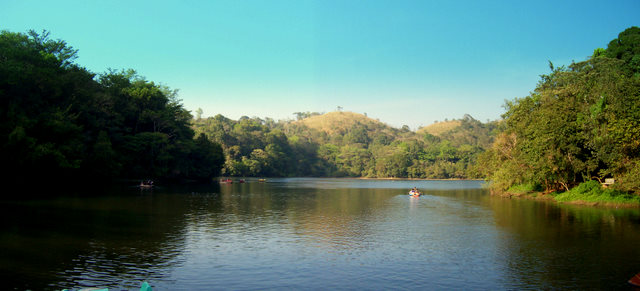
Pookode Lake is a scenic freshwater lake in the Wayanad district in Kerala, South India. A major tourist destination in the district, Pookode is a natural freshwater lake nestling amid evergreen forests and mountain slopes at an elevation of 770 meters above sea level. It is 15 km away from Kalpetta. It is the smallest and highest elevation freshwater lake in Kerala.

Origin

[edit]

Panamaram, the rivulet which ultimately becomes Kabani River, originates from Pookode Lake.[2] It is spread across an area of 8.5 hectares and with a maximum depth of 6.5 metres.[3] Lying 3 km south of Vythiri town, the lake is one of the most popular tourist spots in Wayanad.

Features

[edit]

The lake has the natural shape of India's map in aerial view. This perennial fresh water lake, nestled among wooded hills, is only one of its kind in Kerala. Pethia pookodensis, is a species of cyprinid fish known to occur only in Pookode Lake. The lake has abundance of blue lotus and fresh water fishes. Boating facilities are also there. The forests surrounding the lake hold many wild animals, birds and flies. There are groups of Blue water lily flowers scattered here and there in the lake. In the entrance there is a handicraft shop where you can buy everything like handmade soap, Ayurvedic medicinal products, crafts etc.

Administration

[edit]

The lake is under the South Wayanad forest division and run by District Tourism promotion council. Boating facilities, children's park, handicrafts and spices emporium and fresh water aquarium are among the tourist attractions here.[4]

[edit]

References

[edit]
[edit]
Revisions and contributorsEdit on WikipediaRead on Wikipedia
from Grokipedia
Pookode Lake is a natural freshwater lake situated in the of , , at an altitude of 770 meters above , making it the highest-altitude lake in the state. Covering an area of approximately 8.5 hectares (as of the early 2010s) with a maximum depth of 6.5 meters, though affected by , the lake is renowned for its distinctive shape resembling the map of and serves as the origin point for the Panamaram River, a tributary of the . Nestled amid dense evergreen forests and rolling hills, Pookode Lake has historically offered a serene with , including an abundance of blue lotus flowers and the critically endangered endemic cyprinid fish species Pethia pookodensis, known locally as the Pookode Lake barb, found exclusively in this lake; however, it currently faces environmental challenges such as and issues (as of 2024). The surrounding landscape, approximately 3 kilometers from and 13 kilometers from , enhances its appeal as a tranquil retreat, with the lake's waters reflecting the verdant greenery and mist-shrouded mountains. As a prominent tourist destination, Pookode Lake attracts visitors for its recreational opportunities, including pedal boating, , rowboat rides, , paths, and a fish spa experience. Additional amenities such as a children's , a freshwater aquarium showcasing local aquatic life, and nearby shops selling handicrafts and spices contribute to its family-friendly vibe, while local eateries offer traditional . The site is best explored during the winter months for optimal weather and stunning sunset views over the water.

Location and Geography

Location

Pookode Lake is located in the of , in southern , at coordinates 11°32′33″N 76°01′38″E. It sits at an elevation of 770 meters above sea level, making it the highest-altitude freshwater lake in . The lake is approximately 13 kilometers from , the district headquarters, and about 3 kilometers south of town. It lies within the mountain range, nestled amid evergreen forests and undulating mountain slopes that contribute to its secluded and picturesque setting. As part of the broader Wayanad landscape, Pookode Lake falls within the , a UNESCO-designated area renowned for its across , , and . This positioning underscores its integration into one of India's most ecologically significant highland ecosystems.

Origin and Hydrology

Pookode Lake is a natural freshwater lake that serves as the primary origin point for the Panamaram rivulet, a key tributary in the region's hydrological system. The lake's formation is structurally controlled by the surrounding Wayanad Group rocks, including and hornblende-biotite , overlain by ferruginous loamy soils, creating a basin that collects and holds water amid the forested hills. The outflow from Pookode Lake feeds directly into the Panamaram rivulet, which flows through the valley to join the Kabani River, integrating the lake into Wayanad's broader riverine network that supports downstream ecosystems and water flow toward the larger Kabani basin. This connection underscores the lake's role in the regional , where monsoon-driven sustains the flow regime linking highland sources to lowland rivers. Sediment analysis from the lake reveals a historical geological context shaped by southwest variability over the late , with radiocarbon-dated organic-rich layers indicating deposition influenced by fluctuating rainfall patterns dating back approximately 6,200 years. Wet phases, marked by stronger , led to rising water levels and temporary lake expansion, while drier intervals resulted in reduced and contraction, highlighting the lake's sensitivity to climatic shifts in southern . The lake is primarily sustained by four natural streams originating from the surrounding hills, alongside contributions from rainfall, , and catchment runoff, ensuring a mostly permanent water body despite seasonal variations.

Physical Characteristics

Size and Shape

Pookode Lake originally covers an area of approximately 8.5 hectares (21 acres), but as of 2020, the open water area has decreased to about 5.2 hectares due to and aquatic weed growth, making it a compact yet prominent freshwater body in the of . This size positions it as one of the smaller high-altitude lakes in the region, nestled at an elevation of about 770 meters above . From an aerial perspective, the lake's shape strikingly resembles the map of , with its irregular contours mirroring the country's geographical outline. This distinctive form contributes to its visual appeal and cultural significance as a natural landmark. The lake's perimeter follows an irregular layout, defined by undulating edges that blend seamlessly into the surrounding forested hills, creating a harmonious integration with the landscape.

Depth and Water Quality

Pookode Lake has an average depth of 6.5 meters and a maximum depth of 7 meters, as documented in a assessment. Over the past 40 years, the lake's depth has significantly decreased from an original maximum of 12 meters to the current approximately 6.5–7 meters, primarily due to ongoing from in the surrounding . Based on of sediments, the current sedimentation rate suggests the lake may maintain its hydrological and ecological functions for approximately 700 more years. Geochemical studies of the lake sediments reveal elevated concentrations of , including (Cr), (Cu), (Ni), lead (Pb), iron (Fe), titanium (Ti), manganese (Mn), zinc (Zn), and cadmium (Cd), which exceed global average values and indicate moderate enrichment from natural weathering and anthropogenic influences, with notable levels of and . Signs of are evident through nutrient enrichment, which has promoted excessive growth of aquatic weeds covering more than half of the lake's surface as observed in 2020.

Ecology

Flora

The surface of Pookode Lake is characterized by the presence of aquatic plants such as blue lotus () and blue water lilies, which bloom abundantly in secluded areas and contribute to the lake's scenic appeal. The riparian zones and surrounding areas feature dense forests on the mountain slopes, supporting a diverse array of native vegetation typical of the ' moist deciduous and semi- ecosystems. These forests include medicinal plant from families such as , , and , which exhibit high levels of arbuscular mycorrhizal (AM) fungal associations, with colonization rates ranging from 30% to 80%. Among the AM fungi, Glomus fasciculatum is a dominant species in the of these , enhancing nutrient uptake and in the riparian . Spore densities can reach up to 690 per 100g of soil in species like , underscoring the symbiotic role of these fungi in the local flora. An invasive aquatic plant issue in the lake is the uncontrolled proliferation of Cabomba caroliniana, which has spread to the shallow portions of the lake, leading to ecological disruption, , and potential shallowing by displacing and altering structure.

Fauna

The fauna of Pookode Lake is characterized by a mix of endemic and native species, particularly in its freshwater ecosystem, with the surrounding evergreen forests supporting diverse terrestrial and avian life. The lake hosts Pethia pookodensis, commonly known as the Pookode Lake barb, a critically endangered cyprinid endemic exclusively to this habitat in the of . This small species, reaching a maximum standard length of 4.3 cm, inhabits the lake's benthopelagic zones and is adapted to its freshwater conditions. Aquatic biodiversity includes other native fish such as (snakehead) and Etroplus suratensis (pearlspot), alongside introduced species like common carp (Cyprinus carpio). These freshwater species contribute to the lake's but face threats from alterations due to and invasive plants, potentially reducing population viability and altering community structures. Amphibians, 22 species including the vulnerable Rhacophorus lateralis (Malabar gliding frog), also rely on the lake's margins for breeding. The adjacent forests enrich the ecosystem with over 70 bird species, such as the red spurfowl (Galloperdix spadicea) and Nilgiri wood-pigeon (Columba elphinstonii), which use the area as a foraging and migratory site. Mammals in these surroundings include Indian elephants (Elephas maximus), gaurs (Bos gaurus), and sambar deer (Rusa unicolor), part of the 45 mammal species recorded in the broader Wayanad Wildlife Sanctuary region. Insects are abundant, with over 70 butterfly species like the southern birdwing (Troides minos) and more than 50 odonates, including Anax guttatus, thriving in the moist forest understory. Fish and other fauna serve as key indicators of the lake's water health, with the persistence of sensitive endemics like Pethia pookodensis signaling stable physicochemical conditions amid ongoing environmental pressures. Declines in and populations, observed due to , further highlight vulnerabilities in the ecosystem's balance.

Tourism and Recreation

Attractions and Activities

Pookode Lake offers a variety of recreational activities centered around its serene waters and surrounding . The primary attraction is , where visitors can rent pedal boats and rowboats to navigate the calm lake surface, providing a peaceful way to experience the forests and misty hills. Motorized boats are prohibited to maintain the lake's natural tranquility, ensuring only non-disruptive options are available. Additional amenities enhance the visitor experience, including a freshwater aquarium displaying local fish species such as the endemic Pethia pookodensis, allowing for close observation of the lake's aquatic life. A children's provides play areas suitable for families, while a handicrafts emporium offers locally made items like and husk crafts, herbal medicines, spices, and honey. Designated viewing platforms around the lake enable appreciation of its unique shape, which resembles the map of when seen from above, framed by dense forests and undulating terrain. Tourism at Pookode Lake experienced a significant rise following 's independence, driven by infrastructure advancements such as improved roads that enhanced accessibility to Wayanad's natural sites.

Visitor Information

Pookode Lake is reachable by road from , approximately 13 kilometers away, with regular bus and taxi services available from the town. The site lies between and , making it convenient for visitors traveling through Wayanad's main routes. Following the devastating landslides in Wayanad on July 30, 2024, the lake was temporarily closed for safety assessments but reopened to tourists on August 18, 2024, alongside other attractions like Karlad Lake. This reopening marked an initial step in restoring access to unaffected areas, with operators emphasizing safety measures to rebuild confidence. The lake maintains managed operating hours from 9:00 AM to 6:00 PM daily, with services available until 5:00 PM to ensure orderly access. Entry fees are set at ₹20 for adults and ₹10 for children as of 2025, while charges include ₹300 for a 2-seater pedal and ₹450 for a 4-seater, each for a 20-minute ride; a 7-seater row costs ₹700. These structured timings and fees are part of broader 2025 Wayanad tourism revival initiatives, such as the Splash Monsoon Carnival held in July, which promote sustainable visitor management across the district to support recovery post-landslides. For an optimal experience, visitors should plan to arrive in the early morning or late afternoon to sidestep peak crowds, as weekdays typically see fewer people than weekends. Overcrowding remains a concern during high seasons from to , when tourist influxes strain the lake's delicate , contributing to environmental pressures like degradation noted in eco-tourism assessments.

Administration and Management

Governing Bodies

The primary oversight of Pookode Lake is shared by the South Wayanad Forest Division of the Kerala Forest Department and the Wayanad District Tourism Promotion Council (DTPC). The South Wayanad Forest Division holds jurisdiction over the wetland complex, focusing on ecological protection and maintaining the site's pristine condition within the Western Ghats . Meanwhile, the DTPC manages tourism-related operations, including infrastructure for visitor amenities. The State Fisheries Department also plays a key role as the owner of the lake, overseeing hatcheries, activities, and facilities such as the freshwater aquarium. These bodies collaborate on joint administration, particularly for shared amenities like the aquarium and emporium, ensuring coordinated sustainable use of the lake's resources. The State Wetland Authority (SWAK) provides overarching regulatory guidance, coordinating efforts among the , Fisheries, and departments to address wetland-specific concerns. In 2016, the DTPC initiated protection plans against anthropogenic pressures, including a study on , , and in partnership with the Centre for Water Resources Development and Management, marking an early collaborative effort in lake .

Conservation Efforts

Pookode Lake faces significant environmental challenges, including from and , which have introduced excess nutrients and into the lake system. Sediment accumulation due to from surrounding hills has led to a reduction in the lake's maximum depth from 12 meters to 6.5 meters over the past four decades. Invasive aquatic weeds, such as Cabomba caroliniana, have significantly invaded the lake, promoting and algal blooms through nutrient release during decay. Additionally, 2023 analyses of lake sediments revealed elevated levels of including chromium (Cr), (Cu), (Ni), lead (Pb), iron (Fe), (Mn), (Ti), and (Zn), attributed to high content and human interference. Reports from 2020 highlighted the lake's ongoing decline, with shrinking volume and deteriorating quality driven by anthropogenic activities like construction and farming, resulting in and sediment buildup. Following this, in , the DTPC led a restoration project that included desilting and removal of sediments and plants, recovering over 30% of the lake's -holding capacity at a cost of ₹2.25 . A concrete was also planned to prevent further . Recent conservation measures include the application of techniques, such as SWOT ( and Ocean Topography) , for monitoring levels and storage variations, as demonstrated in studies from . A 2023 geochemical study estimated the lake's rate and predicted a lifespan of approximately 700 years under current conditions. As of 2025, studies continue to note the persistence of like C. caroliniana, emphasizing the need for ongoing management. Broader district-level initiatives, such as Wayanad's 2025 tourism , promote sustainable practices to mitigate environmental pressures. Future recommendations focus on stricter controls over construction and farming activities in the catchment area, alongside limits on visitor numbers, to prevent further eutrophication and biodiversity loss in this ecologically sensitive habitat.

References

Add your contribution
Related Hubs
Contribute something
User Avatar
No comments yet.