Hubbry Logo
Pattern coinPattern coinMain
Open search
Pattern coin
Community hub
Pattern coin
logo
8 pages, 0 posts
0 subscribers
Be the first to start a discussion here.
Pattern coin
Pattern coin
from Wikipedia
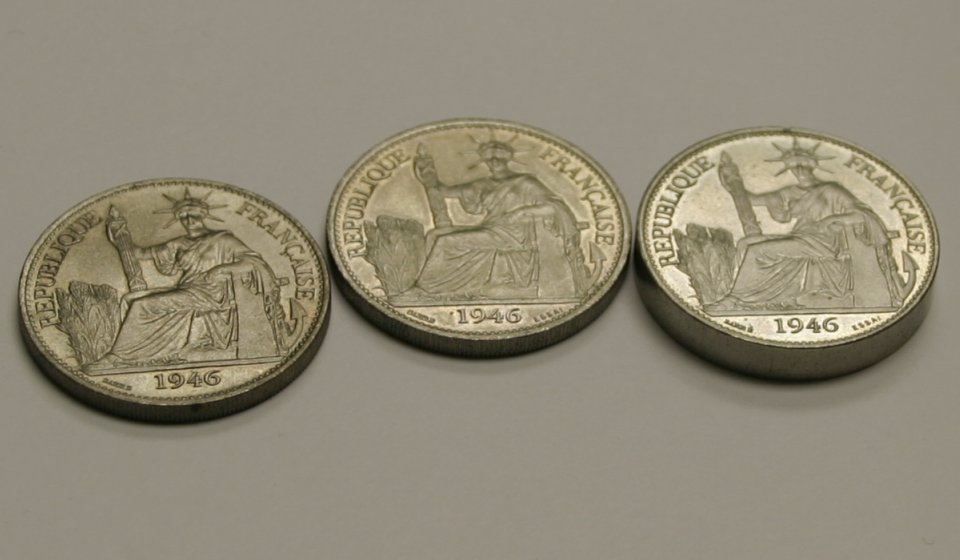
Regular coin (left), pattern coin (center) and piedfort (right)

A pattern coin is a coin which has not been approved for release but is produced to evaluate a proposed coin design.[1] They are often off-metal strike (using metals of lower value to test out the dies), to proof standard or piedforts. Many coin collectors collect and study pattern coins because of their historical importance. Many of the world's most valuable coins are pattern coins; nearly 25 of the pieces listed in 100 Greatest US Coins are pattern coins.[2]

English patterns

[edit]

The first English coin that can be identified with certainty is a groat, originally worth fourpence. This piece, an example of which was illustrated and sold in the Dodsley Cuff sale of the mid-19th century, had crowns in place of the usual three pellets in each quarter of the reverse.[citation needed]

Patterns are particularly identifiable and exist in larger numbers from the reign of Elizabeth I onwards. The experimental base metal issues of all coinage prior to the mid-18th century have been well preserved.[citation needed]

Boulton's mint in Soho produced large quantities of patterns, which were supplemented by Taylor some fifty or so years later from the same dies.[citation needed]

United States patterns

[edit]

Early United States patterns

[edit]
1792 pattern coins
Silver center cent, dime, quarter

After the Declaration of Independence was signed on July 4, 1776, discussion arose over what sort of currency should be adopted in the United States. At the time, people in North America relied upon a mixture of foreign coins, none of which were struck to a consistent standard, making day-to-day financial transactions difficult. In 1783, Congress resolved to create a mint, tasking Superintendent of Finance Robert Morris with developing a plan for a system of coinage. The first coins struck by the United States – the Nova Constellatio patterns – were made to illustrate this plan.[3]

In 1792 the United States Mint opened in Philadelphia. In that year several more patterns were created, including the half dime, then known as a "half disme". It is believed that c. 1,500 pieces were struck as patterns, and that these patterns themselves entered circulation during the next decade.[citation needed]

Over the next 40 years, more patterns were created but there is little information currently known about these pieces. Technically, these coins were not patterns but rather off-metal strikes, with the coins struck in a different metal than those destined for general use in circulation. An example is an 1807 Half Eagle, or five dollar gold piece struck in copper.

Mid-19th century United States patterns

[edit]
1868 pattern for a large cent-sized, copper-nickel, ten-cent piece. From the Harry W. Bass, Jr. Collection.

Starting in 1836, more patterns were created by the United States Mint in Philadelphia. These consisted of several types of patterns:

  • Real pattern coins for proposed coinage
  • Off-metal strikes
  • Transitional pieces
  • Fantasy pieces

One example of a pattern coin for proposed coinage is the half-union, a gold pattern coin with a face value of 50 U.S. dollars that was minted in 1877 and weighed 2.5 ounces (71 g). The U.S. Mint deemed the idea of a 2.5-ounce gold coin infeasible, and only two were ever minted.[4][5]

Transitional pieces are patterns dated before coins with the new design officially went into circulation. These were often produced during the final stage of the pattern process, used to present the newly adopted design to the public. One famous example is the 1856 Flying Eagle cent, although that coin has been commonly and incorrectly believed to be regular issue due to its high mintage for collectors.[citation needed]

Fantasy pieces include many struck in the 1860s and 1870s as patterns and sold to numismatists for the sole purpose of raising cash for the mint. This practice ended in the 1880s, when the U.S. Mint enforced regulations to prevent the sale of pattern coins.[6]

Modern United States patterns

[edit]

The U.S. Mint experiments with new coinage occasionally, such as when silver was removed from coin designs. The Mint began using dies with Martha Washington for trial strikings, since they would not be confused with real circulating money[7] since they do not resemble money. Thus, no restrictions exist on the sale of Martha Washington pieces. Mint-produced modern patterns are very rare, with only a few pieces existing in private collections. The United States mint has placed restrictions on the sale of modern patterns that do resemble coins, such as the 1974 aluminum cent.[citation needed] One of the most expansive collections of American pattern coins is the Harry W. Bass, Jr. collection housed at the American Numismatic Association Money Museum in Colorado Springs, Colorado.[8]

Other countries

[edit]

Pattern coins of France and of French-speaking countries such as Monaco are described by the French term essai. The essai coins of New Hebrides are of interest to collectors of British Commonwealth coinage, as New Hebrides gained independence in 1980 as the Republic of Vanuatu.

The word essai is found inscribed on the pattern coins of Namibia along with the German word Probe.[citation needed]

See also

[edit]

References

[edit]
[edit]
Revisions and contributorsEdit on WikipediaRead on Wikipedia
from Grokipedia
A pattern coin is an experimental or trial piece struck by a mint, such as the , typically to evaluate proposed new designs, metal compositions, or production techniques before approving them for regular circulation. These coins are produced in very limited quantities, often using non-standard metals or dies, and are not intended for public use, making them distinct from proof or circulation strikes. While prominent in US , pattern coins have been produced by mints worldwide, including British patterns and French essai coins. The history of pattern coinage in the United States predates the formal establishment of the Mint, with the earliest known examples being the patterns of 1783, commissioned by Robert Morris to explore potential designs for the new nation's currency. Following the Mint's opening in in 1792, pattern production became more systematic, yielding 13 varieties across six types in 1792 alone, including the Silver Center Cent, Birch Cent, Half Disme, Disme, and Eagle on Globe . The saw a surge in patterns, particularly during periods of monetary reform, with notable peaks in 1840–1850s for new denominations and the amid debates over gold and silver standards; for instance, marked the production of more patterns than any other year, driven by West Coast lobbying for larger gold coins. Pattern coins encompass a broad range of subtypes, including die trials (tests of engraving accuracy), hub trials (prototype hubs for dies), off-metal strikes (coins in incorrect alloys like for silver denominations), and experimental pieces using novel materials or finishes. They often feature innovative or rejected designs, such as the 1877 Half Union—a proposed $50 weighing 2.5 ounces, of which only two examples were ever minted due to impracticality. Other iconic examples include the (with an estimated 1,500–2,000 pieces, some of which inadvertently circulated) and the 1871 Pattern Dollar, which tested metric standards. In , pattern coins hold immense significance for their rarity—many varieties number fewer than 10 known specimens—and their role in illustrating unadopted "what if" scenarios in monetary history, from colonial experiments to Civil War-era innovations. Collectors prize them for artistic merit, historical context, and investment potential, often pursuing sets by era (e.g., 1850s Flying Eagle patterns), denomination, or metal type, with unique pieces housed in institutions like the Smithsonian. Production of patterns largely ceased after the 1880s as minting technology advanced, though occasional modern trials persist for internal testing.

Overview

Definition and Purpose

A pattern coin is a non-circulating trial strike produced by a mint to evaluate proposed designs, materials, or minting techniques before committing to official production. These experimental pieces allow mint officials to assess the feasibility of innovations without risking full-scale manufacturing. Unlike regular circulation coins, patterns are struck in limited quantities and often incorporate variations such as altered compositions or unadopted features to test their practicality. The primary purposes of pattern coins include testing new alloys and metal combinations, such as off-metal strikes where a design intended for one metal is applied to a planchet of another, like silver on . They also serve to evaluate artistic elements, including edge lettering, motifs, or overall aesthetics, ensuring these components translate effectively from drawings to physical form. Additionally, patterns demonstrate conceptual ideas to government authorities or collectors, providing tangible examples of potential changes to coinage standards. Pattern coins differ from proof coins, which are premium-quality strikes of already approved designs produced specifically for numismatic sale and collection. In contrast to fantasies—speculative creations without official mint authorization or intent, often made retrospectively to imagine unproduced designs—patterns represent genuine, sanctioned experiments by the issuing authority. Due to their experimental nature and restricted mintage, pattern coins are historically rare, frequently utilizing unique dies or specialized finishes not employed in circulating issues, which enhances their appeal to numismatists seeking pieces that illustrate "what might have been" in official coinage.

Historical Development

Formalized pattern coinage emerged in the in under Queen Elizabeth I, representing a pivotal advancement in mint and quality control. The first identifiable English pattern, an groat circa 1560, was struck as part of initial trials for milled coinage at the Tower Mint under Eloy Mestrelle, aiming to prevent clipping and enhance uniformity in hammered coins. This development gained momentum during the , as mechanized minting required extensive pattern strikes to test steam-powered presses and new alloys; Matthew Boulton's Soho Mint from 1789 onward utilized such trials to refine production efficiency for both domestic and international commissions. The 19th century marked a global proliferation of pattern coinage, driven by expanding national mints and efforts toward international monetary standardization. The US Mint's establishment in 1792 initiated systematic American patterns, with the first strikes that year testing designs for half dismes, cents, and larger denominations to launch the nation's independent currency. Influences from international trade, including the Latin Monetary Union of 1865—which sought uniform silver and gold standards among European nations—spurred additional patterns worldwide, as mints experimented with compatible weights and compositions to facilitate cross-border exchange. In the , pattern production became increasingly restricted following economic depressions and wars, which prioritized circulation over experimentation and led to declines in official output after the through legislative limits on mint sales in various nations. The and further curtailed physical trials due to resource shortages, shifting focus to essential coinage. Modern practices have evolved with digital design software, minimizing physical patterns in favor of virtual prototypes that simulate minting processes and reduce material costs.

British Patterns

Early British Patterns

The origins of British pattern coins trace back to the Tudor era, with the milled coinage trials under marking a pivotal shift from traditional hammered production. Around 1560, Eloy Mestrelle introduced a screw press at the , leading to the striking of experimental pieces that tested the feasibility of milled edges to combat clipping and counterfeiting. The silver groat of circa 1561, featuring a crowned bust and struck with a star initial mark, exemplifies these early efforts, as it was part of a limited series produced during the recoinage initiated in November 1560 to address the circulation of debased silver. These trials, including shillings and half-groats from the same period, represented the first clear patterns aimed at standardizing higher-quality coinage with precise edges, though the machinery proved inefficient and was discontinued by 1572. In the 17th and 18th centuries, pattern production expanded to explore broader reforms in coinage design and materials. During Charles II's reign in the 1660s, numerous patterns were struck to support the Restoration's overhaul of milled coinage, introducing motifs like on reverses to symbolize national revival and uniformity after the Interregnum's disruptions. These trials, often in and silver, tested new denominations and techniques by artists such as Thomas Simon, laying groundwork for the decimal-like restructuring of values in the emerging pound system. Under William III in the 1690s, experimental issues in base metals addressed shortages and counterfeiting; tin farthings and halfpennies, dated 1690–1694, were lightweight alternatives to , featuring conjoined busts of William and Mary, but their susceptibility to forgery led to their rapid replacement by 1695. Private initiatives further advanced pattern coinage in the late , notably through Matthew Boulton's Soho Mint, established in 1788 and equipped with steam-powered presses by the early 1790s. Boulton's facility produced trials like the 1797 cartwheel twopence, a large piece weighing two ounces, to demonstrate the superiority of mechanized striking for consistent quality and anti-counterfeiting features such as raised edges. These patterns, contracted by the government amid coinage shortages, utilized steam engines developed with to achieve high-pressure minting unattainable by hand methods. Early British patterns typically featured hand-struck or low-mintage strikes, often limited to dozens of examples, with designs emphasizing royal portraits—such as busts of monarchs—and symbolic emblems like ships or seated to evoke naval power and imperial themes. For instance, the 1797 ship halfpenny pattern, designed by Conrad Heinrich Küchler at , depicts a vessel under sail on the reverse, testing nautical iconography for potential low-denomination circulation coins. Their controlled production ensured many survived intact, distributed selectively to dignitaries, officials, and early collectors rather than general release, preserving them in cabinets and archives unlike the wear endured by circulating currency.

Later British Patterns

During the (1837–1901), British pattern coins increasingly incorporated industrial advancements and responses to economic pressures, including trials for decimal coinage reforms. The 1848 pattern florin, designed by engraver , featured a distinctive gothic-style crowned bust of a young on the obverse and cruciform shields on the reverse, representing one-tenth of a pound to ease decimal calculations in trade and accounting. Similarly, the 1848 gothic crown patterns explored ornate medieval-inspired designs for a potential high-value silver denomination, struck in limited numbers to test public and official reception amid ongoing debates on simplification. These trials highlighted the era's blend of artistic revivalism and practical reform, with only a few specimens surviving in proof condition. Experimental alloys also featured prominently in Victorian patterns, driven by concerns over durability, cost, and suitability for . Cupro-nickel compositions, combining and for resistance and a silver-like appearance, were tested in pieces such as the 1859 pattern halfpenny and the 1868 head halfpenny, evaluating alternatives to traditional or silver for lower denominations. These innovations reflected broader imperial influences, as patterns for colonial currencies like the were struck at the London Mint in the , adapting British designs with local motifs to standardize across the while incorporating elements such as the young Victoria to assert . In the Edwardian and interwar periods, patterns continued to address economic challenges, including wartime constraints. Under (1910–1936), a 1911 silver pattern double-florin by John Pinches revived the denomination as a potential decimal-friendly equivalent to one-fifth of a pound, struck en médaille with and shields to test feasibility amid pre-war financial planning. prompted further economy-focused trials, though gold circulation halted, leading to limited patterns exploring alternatives; however, most remained unadopted due to postwar stabilization. The brief reign of (1936) saw extensive preparation for 1937 coinage, including bronze patterns for pennies and halfpennies with his bare head portrait by Humphrey Paget, but all were halted following his in December 1936, rendering them among the rarest British trial pieces with only a handful of sets preserved. Post-World War II patterns under (1936–1952) and (1952–2022) emphasized recovery and modernization. The 1937 matte proof gold , struck for George VI's , featured his left-facing by Paget and the iconic St. George slaying the dragon reverse; its matte finish and extremely limited production, with only a few known examples, underscore its exceptional rarity amid economic austerity. For , decimalization debates in the and yielded trial sets, such as the 1961 six-piece pattern collection and the 1963 one penny pattern, testing new denominations like cents and pence with her youthful to prepare for the 1971 transition. The influence of the persisted in these later patterns, with colonial motifs integrated into trials for overseas mints, such as rupee designs struck in that echoed imperial unity through shared iconography. By the post-1960s era, the adoption of (CAD) and digital engraving at the Royal Mint significantly reduced reliance on physical patterns, shifting focus to virtual simulations for efficiency. Limited trial strikes continued for commemoratives, exemplified by the 1997 redesign of the 50p coin to a smaller heptagonal format, tested amid millennium preparations to balance security and usability without full pattern series. This technological evolution marked a decline in traditional pattern production, prioritizing streamlined prototyping over extensive manual trials.

United States Patterns

Early United States Patterns

The Coinage Act of April 2, 1792, established the in and authorized the creation of a federal coinage system, prompting the production of the nation's first pattern coins to test proposed designs, denominations, and compositions for circulation. These early experiments included the silver half disme of 1792, struck in a limited quantity of approximately 1,500 pieces using silver possibly supplied by President , serving as a trial for the five-cent denomination with a design featuring facing left on the obverse and a small eagle on the reverse. Engraved by Robert Birch, the half disme represented an initial effort to standardize small silver coinage, though its exact production location—likely in a temporary facility near the incomplete Mint building—remains a point of historical debate. Preceding formal Mint operations, the cent of 1785 emerged as a pre-federal trial piece, proposed by financier Robert Morris to introduce a new decimal-based currency system with "" (New Constellation) lettering and starry reverse motifs symbolizing the , struck in copper with an estimated mintage in the thousands but intended as experimental patterns. Among the inaugural patterns at the were the 1792 and , both crafted by engraver Robert Birch to evaluate denominations mandated by the Coinage Act, featuring classical heads and heraldic eagle reverses to incorporate national symbols while testing edge reeding for anti-clipping measures. Only a handful of these patterns survive, with mintages typically limited to one or two specimens per variety, often struck in both silver and for evaluation purposes. In the 1800s, patterns continued to address denomination adjustments amid economic fluctuations. For example, regular dollar coinage had ceased after 1803 due to silver shortages, and in the 1830s, the Class I —an original struck in silver with eight known examples—was prepared as part of proof sets for diplomatic presentation to foreign dignitaries, showcasing the design without later edge lettering. Early patterns were created using hand-engraved dies, where skilled artisans like and Joseph Wright manually incised intricate motifs into steel blanks, followed by striking on manual screw presses that applied immense pressure but limited output to small quantities. Mintage for these trials rarely exceeded 10 pieces, with many distributed to members of or Mint officials for approval before full production, ensuring designs aligned with federal standards while minimizing material waste. These foundational patterns signified the ' transition from colonial and state-issued currencies to a unified federal , drawing stylistic influences from French engravers for eagle emblems and British traditions for portraiture to assert national sovereignty in . By experimenting with motifs, alloys, and security features, they laid the groundwork for enduring types, reflecting the young republic's aspirations for economic independence despite production challenges like rudimentary equipment and wartime interruptions.

Mid-19th Century United States Patterns

The mid-19th century marked a period of significant experimentation in United States pattern coinage, influenced by rapid territorial expansion and economic pressures from the California Gold Rush, which flooded the market with new gold supplies and necessitated innovative denominations. In the 1840s and 1850s, the U.S. Mint produced patterns to test smaller gold coins suitable for everyday transactions amid this influx. For instance, in 1849, Chief Engraver James B. Longacre designed trial pieces for the gold dollar, the first U.S. gold coin of that denomination, featuring Liberty facing left encircled by 13 stars on the obverse and a reverse with an open wreath enclosing the denomination. These patterns, struck in limited quantities to evaluate the feasibility of utilizing California gold for smaller currency, represented an early response to the need for coins that could handle the increased gold volume without overwhelming larger denominations like the eagle. By the 1850s, patterns continued to address material and design transitions driven by . The 1856 Flying Eagle cent patterns, struck in copper-nickel as transitional proofs for congressional review, tested a smaller, lighter one-cent piece to replace the bulky large cents, incorporating an eagle-in-flight obverse by Longacre and a denomination reverse. These one-year patterns, with a of 19 mm and of 4.67 grams, were not intended for circulation but helped pave the way for the 1857 series, reflecting the Mint's adaptation to post-Gold Rush demands for efficient small change. The Civil War era (1860s) intensified pattern production due to metal shortages and wartime exigencies, with the Mint creating emergency trials to maintain coinage supply. In , bronze patterns were struck as part of broader efforts to address the hoarding of silver and gold, using a durable that weighed 4.67 grams and featured Longacre's feathered headdress on the obverse. These patterns, produced amid the conflict's economic chaos, helped test compositions resilient to wear and counterfeiting. Additionally, the Mint struck fantasy pieces in multiple metals, such as silver and copper trials of regular designs, and sold them privately to collectors to generate funds for operations and war support, a practice that boosted numismatic interest while aiding fiscal needs. In the , patterns focused on innovations for and material efficiency, amid debates over and global commerce. The 1873 trade dollar patterns featured modified designs by William Barber, including variations in Liberty's portrait and eagle reverses, struck to refine the coin's appeal in Asian markets where exacting standards for weight (420 grains of 90% silver) and appearance were required. Congress authorized these trials, but many variants were rejected in favor of the final adopted design. Similarly, the 1877 half-union, a proposed $50 pattern weighing 2.5 ounces of 90% fine with a 51 mm diameter, depicted Liberty in a coronet on the obverse and a heraldic eagle reverse; intended to facilitate large-scale trade with and , it passed the but was rejected by the as unnecessary for domestic needs. Production during this decade increasingly relied on steam-powered presses, introduced in but refined by the for higher pressure and precision, enabling consistent strikes for patterns. Off-metal strikes, such as -plated silver planchets or copper trials of designs, were common to assess durability and wear without expending precious metals. Legislative hurdles persisted, as seen in ongoing refinements to trade-oriented designs amid debates.

Late 19th and 20th Century United States Patterns

In the late 1880s and 1890s, the United States Mint explored pattern coins aimed at international trade ambitions, reflecting efforts to align American currency with global standards. The 1879–1880 Flowing Hair Stella, a $4 gold piece designed by Charles E. Barber, was proposed as a trade coin equivalent to 20 francs or 4 German marks, intended to facilitate commerce within the Latin Monetary Union and broader European markets. This design, featuring Liberty with flowing hair on the obverse and a star encircled by "UNITED STATES OF AMERICA * E PLURIBUS UNUM * 4 DOLLARS *," was struck in limited proofs, with only 13 examples known today, as the international proposal ultimately failed due to opposition and lack of adoption. Similarly, the 1874 Bickford $10 pattern, though originating earlier, gained context in this era's international focus; proposed by diplomat Dana Bickford after European travels, it featured a reverse with multilingual value equivalents (e.g., 10 dollars, £2.1.1 sterling, 51.81 francs) to ease cross-border exchanges, but was abandoned as impractical amid fluctuating exchange rates. During the 1880s, Mint Director James Ross Snowden authorized sales of fantasy and restrike patterns to collectors, capitalizing on numismatic interest to fund Mint operations. These included Class III restrikes of the rare 1804 silver dollar, struck with updated edge lettering ("") around 1876–1880, with at least six examples produced and discreetly marketed through dealers like the Chapman brothers. Snowden's practices, which involved off-metal strikes and unauthorized multiples of historical designs, generated revenue but drew scrutiny for blurring official and private distributions. By the late , following scandals, overt sales to collectors ceased, with production shifting to internal testing only, further formalized by design approval centralization in the . In the early , production shifted toward artistic and technical trials, exemplified by ' 1907 high-relief Indian Head ($20 gold) experiments. Commissioned by President , these ultra-high-relief proofs featured a striding in an Indian headdress on the obverse and a soaring eagle on the reverse, with only 22–34 struck before production challenges—such as multiple strikes needed per coin—prompted lower-relief versions for circulation. Another notable case was the , secretly struck by Mint employee Samuel Brown after the design's replacement by the ; only five proofs were produced without authorization and withheld from release, surfacing later as one of ' greatest rarities. The 1920s through 1940s saw pattern activity curtailed by economic pressures, including Depression-era restrictions that limited Mint experimentation amid gold hoarding bans under (1933), which recalled circulating gold coins and indirectly curbed gold pattern strikes. During , material shortages prompted trials like the 1943 aluminum cent prototypes, struck in small quantities (fewer than 20 known) to test non-copper alloys, though ultimately rejected for circulation in favor of zinc-coated steel cents due to wear and production issues.

Modern United States Patterns

In the post-1950s era, pattern coins have become exceedingly rare owing to stringent U.S. Mint policies that prohibit their sale, distribution, or release to the public, a shift from earlier practices of occasional commercialization. These modern patterns serve exclusively as internal experimental pieces to test designs, alloys, and manufacturing processes, with the vast majority destroyed after evaluation to ensure they do not enter circulation or private collections. This regulatory framework, in place since the mid-20th century, emphasizes confidentiality and prevents potential market speculation or counterfeiting risks. A prominent example of post-1950s patterns is the trials, conducted amid soaring copper prices that threatened the cent's production costs. The U.S. Mint struck approximately 1.57 million experimental pieces using a 96% aluminum-4% trace metals alloy, employing standard dies at the and facilities. After extensive testing for durability, weight, and compatibility, rejected authorization for production via a 1974 House bill, leading to the melting of nearly all specimens. Only a handful survive today, including one held by the Smithsonian Institution's . From the 1980s through the 2000s, the Mint produced limited internal patterns for evaluating new coin compositions during design transitions, such as the shift to clad alloys. The Martha Washington experimental quarters, featuring a portrait of Martha Washington dated 1759 (the year of her marriage to George Washington), were struck in various metals—including copper-nickel clad, aluminum, and multi-ply composites—to assess striking quality, edge durability, and acceptance in coin-operated devices. These trials, ongoing since the 1960s but continuing into the late 20th century, informed updates like the 1999 State Quarters Program prototypes, though specifics on the latter remain internal and unreleased. Such pieces exemplified the Mint's focus on practical innovation without public dissemination. In the , digital technologies have transformed pattern coin development, minimizing physical strikes in favor of virtual simulations. U.S. Mint medallic artists employ high-resolution 3D scanners and software to create and iterate digital models from initial sketches or clay prototypes, enabling precise adjustments for , , and overall balance before committing to metal. This approach, integrated since the early 2000s, supports efficient testing for programs like the 2009 Lincoln bicentennial cents, where digital refinements preceded limited physical test strikes of the four reverse designs honoring Lincoln's birth, youth, presidency, and legacy. As of 2025, Mint efforts center on material innovation through ongoing trials, including small-scale strikes of C99750T-M copper-nickel variants (low- and high-manganese formulations) for potential use in nickels, dimes, quarters, and half dollars. As of 2024, ongoing trials of C99750T-M variants, including color optimization, continue for potential future use, with earlier estimates suggesting savings up to $24.2 million annually if implemented; the 2024 Biennial Report notes continued internal testing without public release of patterns. No major pattern releases have occurred, adhering to transparency laws that restrict public access. The scarcity enforced by these policies profoundly impacts collecting, as modern patterns seldom reach private markets and reside mainly in institutional holdings like the Smithsonian, where they contribute to numismatic research rather than commercial trade.

Patterns in Other Countries

French Essai Coins

In French numismatics, "essai" coins refer to trial or pattern strikes produced by the Paris Mint to test new designs, denominations, or metallic compositions before regular production. The term derives from the Latin "exagium," meaning a weighing or assay of metal content, reflecting their role in verifying coin specifications. These pieces emerged prominently in the 18th century amid monetary reforms, serving as prototypes for approval by authorities. During the , essai coins facilitated the shift to a established by the Monetary Law of , 1795, which replaced the with the divided into 10 décimes and 100 centimes. strikes, such as the 1799 two-decimes essai in copper, tested these new decimal subdivisions and revolutionary iconography, including motifs, to align coinage with the metric system's adoption. In the , under Napoleon I, essai pieces continued this tradition; for instance, silver essai versions of the 1807 40-franc design were produced to evaluate portrait styles and wreath borders before gold circulation strikes. Trials in the 1860s, such as the 1860 Napoleon III silver 50-centimes essai, to standardize bimetallic specifications, which contributed to the formation of the in 1865 involving , , and , at a 15.5:1 gold-to-silver ratio. In the , post-World War II essai production extended to colonial and preparatory issues, influencing territories under French influence. For example, Monaco's 1950 essai sets under Prince Rainier III, including silver 10-, 20-, 50-, and 100-franc denominations struck at the Paris Mint, featured the prince's portrait and Grimaldi shield to test modern proof techniques. Later, in former colonies like the (now ), essai pieces such as the 1970 1-, 2-, and 5-franc set in explored decimal continuity, with limited strikes of around 1,250 pieces each. These trials also anticipated European monetary integration, including euro precursors in the 1990s, where French Mint essais tested unified designs for parliamentary review. French essai coins typically bear the inscription "ESSAI" on the edge, field, or as a raised element to distinguish them from circulation issues, ensuring they could not enter commerce. Produced in low mintages—often under 1,000 pieces—they were struck as high-relief proofs on premium planchets for presentation to lawmakers or mint officials, emphasizing superior strike quality and mirror-like fields. The essai tradition extended to France's colonial empire, where trial strikes for territories like and adapted metropolitan designs to local contexts, fostering standardized coinage in spheres of influence. Over 500 distinct French essai varieties from 1789 onward are documented in Victor Gadoury's Monnaies Françaises catalog, serving as the authoritative reference for collectors and highlighting their role in monetary evolution.

Patterns from Other European Nations

In the 19th century, and produced numerous "" patterns, which served as trial strikes to test new designs and materials during periods of political transformation. These coins, often struck in silver or , were essential for standardizing following the German Empire's unification in , with examples like the 5-mark Probe featuring imperial eagle motifs to symbolize the new federation. In , patterns from the same era, including 1915 restrikes amid , explored wartime economic adaptations, such as reduced-weight silver trials to conserve resources while maintaining Habsburg iconography like the . Italy and Spain also issued patterns in response to unification and modernization efforts. Post-1861 Italian trials, including the 20-lire essai in gold, tested decimal alignment under the new , incorporating Vittorio Emanuele II's portrait and the shield to affirm . Similarly, Spanish patterns from the 1890s under young King , such as aluminum essais for minor denominations, experimented with lightweight metals to address colonial economic strains and decimal reforms, featuring the infant monarch's profile alongside the Spanish arms. Scandinavian and Low Countries patterns reflected regional independence and cooperation. The 1818 Dutch guilder proefstuk, struck in bronze or silver shortly after the Kingdom of the ' formation post-Napoleonic independence, showcased I's likeness and heraldic symbols to establish a stable post-French currency. In Sweden, 1873 krona trials marked the Scandinavian Monetary Union's launch, with silver patterns depicting and the to promote gold-standard interoperability among , , and . Twentieth-century examples continued this tradition amid political upheavals. Belgian 1958 franc essais, including silver strikes for the , supported post-war economic recovery by testing bilingual designs with Baudouin I's and the Belgian . Portuguese 1910 republic patterns, such as the 500-reis ensaio commemorating the monarchy's fall, featured allegorical figures of liberty and the republican arms to legitimize the new regime's system. Across these nations, patterns commonly responded to wars, political unions, and decimalization initiatives, serving as prototypes for circulating coinage. Their higher survival rates stem from preservation in institutions like the Austrian Mint and Swedish Riksbank museums, where they document monetary evolution.

Patterns from Non-European Nations

Pattern coins from non-European nations reflect the diverse economic transitions, colonial legacies, and modernization efforts across , Asia, Africa, and , often serving as experimental designs for new currencies amid political upheaval or independence movements. In , these trials frequently drew on Spanish colonial precedents while adapting to post-independence needs. For instance, during Mexico's early 1820s independence era, provisional 8-real patterns were struck at mints like to test new republican designs, featuring symbols of liberty such as the , as royalist forces clashed with insurgents; these scarce pieces, weighing approximately 27 grams in silver, were part of broader efforts to establish a unified national coinage free from Spanish influence. Similarly, Brazil's 1942 cruzeiro essai coins marked the shift from the réis system to a decimal-based currency, with trial strikes in aluminum-bronze for denominations like the 1 cruzeiro, influenced by French minting techniques introduced via European advisors, to stabilize the economy during ; these patterns, produced in limited numbers at the Rio de Janeiro Mint, tested durability and anti-counterfeiting features before full circulation. In , Canadian patterns from the 1850s tested provincial coinage designs before . In , pattern coins often accompanied rapid modernization and regime changes. Japan's Meiji-era yen patterns from the 1870s, such as the Year 3 (1870) gold 10 yen struck at the Mint, were pivotal in adopting a decimal system inspired by Western models to support industrialization; this 16.6-gram piece, featuring a and emblems, was among the first to bear the "yen" inscription and served as a presentation item to , with fewer than 20 examples known today. China's Republican period saw dragon dollar patterns in the 1910s, including the 1911 Flying Dragon silver dollar trials amid the Xinhai Revolution's civil unrest, which overthrew the ; these 26.7-gram silver prototypes, minted in limited quantities at facilities like the Tientsin Mint, experimented with dragon motifs to symbolize continuity while introducing republican symbolism, though political instability delayed their adoption. Colonial influences persisted in , where 1835 rupee patterns under the , such as the William silver rupee struck at Calcutta, tested uniform designs across local mints to consolidate British control; this 11.66-gram coin, with a bust of the king and "" legend, weighed 180 grains of .917 fine silver and was part of Act XVII's reforms for standardized coinage, with varieties showing thin lettering removed after brief use. African nations utilized patterns to navigate post-colonial currency reforms. South Africa's early Union proof coins, such as the 1923 silver struck at the Mint, prepared for the sterling-based system following the 1910 Union formation, experimenting with flower emblems to assert ; these silver prototypes, aligned with , preceded the decimal rand's 1961 introduction and highlighted efforts to phase out pre-Union issues. In , 1990s essai and probe coins commemorated independence from apartheid , such as the unofficial silver 10 dollars "Independence" fantasy pattern struck by the Mint, featuring a native archer and bilingual inscriptions (English, German); with a mintage of 1,000 in .900 fine silver weighing 25.06 grams, these trials tested designs for the new , incorporating anti-counterfeiting reeds and edges. Oceania's patterns emphasized federation and autonomy. Australia's 1910 penny patterns, produced in London prior to the Melbourne Mint's opening, tested bronze compositions for the new Commonwealth currency post-federation; these 9.45-gram trials, with George V's effigy and emu-wheat designs, were struck in limited numbers to refine the 30.8mm diameter and ensure compatibility with imperial standards before 1911 circulation. Rare Indian colonial patterns, like the 1835 rupee trials at local Bombay and Calcutta mints, focused on adapting London-struck dies for regional production, emphasizing silver purity and weight consistency amid expanding trade networks. As of , modern trends in non-European nations increasingly incorporate patterns for hybrid physical-digital currencies, with emphasis on advanced anti-counterfeiting materials like substrates and embedded holograms. Singapore's 2020s e-SGD trials, under Project Orchid by the , have prototyped purpose-bound digital dollars for interbank settlements, simulating pattern-like experiments in blockchain-based ledgers to enhance security and programmability; these non-physical trials, completed in phases through , test with tokenized assets, marking a shift from traditional patterns to digital prototypes for the dollar's evolution.

References

Add your contribution
Related Hubs
User Avatar
No comments yet.