Hubbry Logo
Bago RegionBago RegionMain
Open search
Bago Region
Community hub
Bago Region
logo
8 pages, 0 posts
0 subscribers
Be the first to start a discussion here.
Bago Region
Bago Region
from Wikipedia

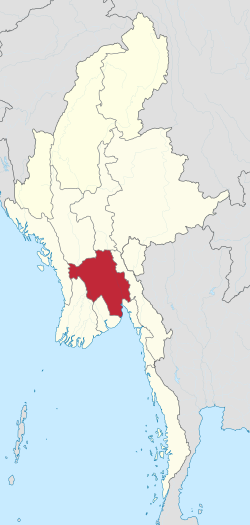
Bago Region (Burmese: ပဲခူးတိုင်းဒေသကြီး, pronounced [bəɡó táɪɰ̃ dèθa̰ dʑí]; formerly Pegu Division and Bago Division) is an administrative region of Myanmar, located in the southern central part of the country. It is bordered by Magway Region and Mandalay Region to the north; Kayin State, Mon State and the Gulf of Martaban to the east; Yangon Region to the south and Ayeyarwady Region and Rakhine State to the west. It is located between 46°45'N and 19°20'N and 94°35'E and 97°10'E. It has a population of 4,867,373 (2014).

Key Information

History

[edit]

According to legend, two Mon princes from Thaton founded the city of Bago in 573 AD. They saw a female Hamsa standing on the back of a male Hamsa on an island in a huge lake. Believing this was an auspicious omen, the princes built a city called Hanthawady (Pali: Haṃsāvatī) on the edge of the lake.

The Persian geographer Ibn Khordadbeh mentions the city around 850 AD. The Mon capital was still in Thaton at that time. The Thiruvalangadu plate describe Rajendra Chola I, the Chola Emperor from South India, as having conquered "Kadaram" in the fourteenth year of his reign- 1028 CE. According to one interpretation, Kadaram refers to Bago.[3][4] More modern interpretations understand Kadaram to be Kedah in modern-day Malaysia, instead of Bago.[3] The earliest reliable external record of Bago comes from Chinese sources that mention Jayavarman VII adding Pegu to the territory of the Khmer Empire in 1195.[5] The Bamar from Bagan ruled the area in 1056. After the collapse of Bagan to the Mongols in 1287, the Mon regained their independence.

From 1369 to 1539, Hanthawady was the capital of the Hanthawaddy kingdom, which covered all of what is now lower Burma. The area came under Burman control again in 1539, when it was annexed by King Tabinshwehti of Kingdom of Taungoo. The kings of Taungoo made Bago their royal capital from 1539 to 1599, and used it as a base for their repeated invasions of Siam. As a major seaport, the city was frequently visited by Europeans, who commented on its magnificence. The Burmese capital was relocated to Ava in 1634. In 1740, the Mon revolted and briefly regained their independence, but Burmese King Alaungpaya sacked and completely destroyed the city (along with Mon independence) in 1757.

Burmese King Bodawpaya (1782–1819) rebuilt Bago, but by then the river had shifted course, cutting the city off from the sea. It never regained its previous importance. After the Second Anglo-Burmese War, the British annexed Bago in 1852. In 1862, with the formation of the province of British Burma, the capital was moved to Yangon.

Administrative divisions

[edit]
6 districts of Bago Region
  Bago District
  Pyay District
  Tharrawaddy District
  Taungoo District
  Nyaunglebin District
  Nattalin District

Bago Region occupies an area of 39,400 square kilometres (15,214 sq mi) divided into the six districts of Bago, Pyay, Tharrawaddy, Taungoo, Nyaunglebin and Nattalin. Bago, the divisional capital, is the fourth largest town of Burma. Other major cities include Taungoo and Pyay.

Bago Region's seal are two sibling hintha (hamsa), due to historic Mon influences in the area.

Government

[edit]

Executive

[edit]

Bago Region Government

Legislature

[edit]

Judiciary

[edit]

Bago Region High Court is the region's highest-level court.

Transport

[edit]

Bago Region is served by Pyay Airport.

Demographics

[edit]
Population density of Bago Region as of 2024
Historical population
YearPop.±%
1973 3,179,604—    
1983 3,799,791+19.5%
2014 4,867,373+28.1%
Source: 2014 Myanmar Census[1]

The total population of Bago Region is 4,863,455 according to 2014 Burma Census.Burmese language is the lingua franca.

Ethnic makeup

[edit]
Ethnic composition of Bago Region
Ethnic group Percentage
Bamar
89.9%
Karen
4.6%
Other
4.6%
Shan
0.9%
Source: 2019 GAD township reports

The Bamar make up the majority of the region's population. The Karen are the region's largest minority. Other represented ethnic groups include the Mon, Chin, Rakhine, Shan, South Asians, Chinese, and Pa-O.

After the 2014 Census in Myanmar, the Burmese government indefinitely withheld release of detailed ethnicity data, citing concerns around political and social concerns surrounding the issue of ethnicity in Myanmar.[6][7] In 2022, researchers published an analysis of the General Administration Department's nationwide 2018-2019 township reports to tabulate the ethnic makeup of the region.[8][9]

Religion

[edit]
Religion in Bago Region (2014)[10]
  1. Buddhism (93.5%)
  2. Christianity (2.90%)
  3. Hinduism (2.00%)
  4. Islam (1.20%)
  5. Other religion (0.30%)
  6. Tribal religion (0.10%)

According to the 2014 Myanmar Census, Buddhists make up 93.5% of Bago Region's population, forming the largest religious community there.[11] Minority religious communities include Christians (2.9%), Muslims (1.2%), Hindus (2.1%), and animists (0.1%) who collectively comprise the remainder of Bago Region's population.[11] 0.3% of the population listed no religion, other religions, or were otherwise not enumerated.[11]

According to the State Sangha Maha Nayaka Committee's 2016 statistics, 50,198 Buddhist monks were registered in Bago Region, comprising 9.4% of Myanmar's total Sangha membership, which includes both novice samanera and fully-ordained bhikkhu.[12] The majority of monks belong to the Thudhamma Nikaya (77.3%), followed by Shwegyin Nikaya (16.7%), with the remainder of monks belonging to other small monastic orders.[12] 5,100 thilashin were registered in Bago Region, comprising 8.4% of Myanmar's total thilashin community.[12]

Economy

[edit]

The division's economy is strongly dependent on the timber trade. Taungoo, in the northern end of the Bago Region, is bordered by mountain ranges, home to teak and other hardwoods. Another natural resource is petroleum. The major crop is rice, occupying over two-thirds of the available agricultural land. Other major crops include betel nut, sugarcane, maize, groundnut, sesamum, sunflower, beans and pulses, cotton, jute, rubber, tobacco, tapioca, banana, Nipa palm and toddy. Industry includes fisheries, salt, ceramics, sugar, paper, plywood, distilleries, and monosodium glutamate.

The division has a small livestock breeding and fisheries sector, and a small industrial sector. In 2005, it had over 4 million farm animals; nearly 1,200 hectares (3,000 acres) of fish and prawn farms; and about 3000 private factories and about 100 state owned factories.[13]

The major tourist sites of the Bago Region can be reached as a day trip from Yangon.

Hydropower plant

[edit]

The Shwegyin Dam is in the eastern part of Bago Region. It is a 478 metres (1,568 ft) long, 41 metres (135 ft) wide and 0.8 metres (2.5 ft) thick zone-type dam with a water storage capacity of 2,078,417 megalitres . The three concrete conduit pipes are 538 metres (1,765 ft) in length, 5 metres (16 ft) in width and 6 metres (20 ft) in height each. The intake infrastructure is 37 metres (121 ft) long, 39 metres (127 ft) wide and 42 metres (137 ft) high. The spillway is 775 metres (2,542 ft) long, 41 metres (135 ft) wide and 18 metres (58 ft) high. Two compressed steel pipe lines at the dam are 8 metres (25 ft) in diameter and 335 metres (1,100 ft) in length each. The power plant is 90 metres (295 ft) long, 29 metres (94 ft) wide and 21 metres (70 ft) high. It is equipped with four 18.75-MW Francis vertical shaft turbines. It can generate 262 million KW hours per year.

The construction of the dam was launched in 2003. The first power station was opened on 29 December 2009, the second on 25 March 2011, the third on 2 June 2011 and the fourth on 21 July 2011. It was inaugurated on 22 October 2011.[14]

Education

[edit]
  • Bago University, Bago
  • Computer University, Pyay
  • Computer University, Taungoo
  • Pyay Education College
  • Pyay Technological University
  • Pyay University
  • Taungoo Educational College
  • Taungoo University
  • Technological University, Taungoo
  • Paku Divinity School

Educational opportunities in Myanmar are extremely limited outside the main cities of Yangon and Mandalay. In 2005, Bago Region had 578 post-primary schools, 119 middle schools and 132 high schools.[13] The following is a summary of the division public school system for the academic year of 2002–2003.[15]

AY 2002–2003 Primary Middle High
Schools 3972 227 95
Teachers 17,400 6600 2000
Students 544,000 194,000 71,000

The division is home to one national university, Pyay Technological University and two local universities, Pyay University and Taungoo University.

Health

[edit]

The general state of health care in Myanmar is poor. The military government spends anywhere from 0.5% to 3% of the country's GDP on health care, consistently ranking among the lowest in the world.[16][17] Although health care is nominally free, in reality, patients have to pay for medicine and treatment, even in public clinics and hospitals. Public hospitals lack many of the basic facilities and equipment. Moreover, the health care infrastructure outside of Yangon and Mandalay is extremely poor. For example, in 2003, Bago Region had less than a quarter of hospital beds than Yangon Region whose population was just slighter greater.[18] More shocking still, in 2005, this division of five million had only 399 doctors in its public hospitals.[13]

2002–2003 # Hospitals # Beds
Specialist hospitals 0 0
General hospitals with specialist services 2 400
General hospitals 28 958
Health clinics 46 736
Total 76 2094

Notable sites

[edit]

References

[edit]
[edit]
Revisions and contributorsEdit on WikipediaRead on Wikipedia
from Grokipedia
The Bago Region is an administrative division in southern-central , bordering the to the south and the to the southwest, with Bago serving as its capital city. Covering an area of 39,405 square kilometers, the region encompasses 28 townships and supports a estimated at 4.97 million as of 2023, making it the fifth-most populous division in the country. Primarily agrarian, Bago is a major center for production and other crops, contributing significantly to Myanmar's agricultural output amid the nation's reliance on farming for economic sustenance. The region features historical significance, with its capital historically known as Hanthawaddy and serving as a former seat of Mon and Burmese kingdoms, alongside natural features like the Bago River and proximity to the Bago Yoma mountains.

Geography

Location and Borders

Bago Region occupies a central-southern position in , spanning approximately 39,400 square kilometers with its administrative capital at Bago City. The region is situated about 80 kilometers north of , serving as a key transitional area between the low-lying Ayeyarwaddy Delta to the south and the arid Central Dry Zone further north. This positioning influences its varied topography, including the Bago Yoma mountain range that separates the basins of the to the west and the Sittang River to the east. To the west, Bago Region adjoins , while its northern boundaries meet and . The eastern frontier interfaces with , and the southern limits connect to and . This configuration places the region in proximity to major river systems, with the Irrawaddy influencing western drainage patterns and the Sittang shaping eastern hydrology, though direct border contact with the Irrawaddy occurs via adjacent divisions rather than extensive regional frontage. The overall layout underscores Bago's role as a bridge between Myanmar's coastal delta plains and inland highlands.

Terrain, Climate, and Natural Resources

The Bago Region's terrain is dominated by flat alluvial plains in its western and central areas, formed by sediments from the and Sittaung rivers, with elevations typically below 100 meters above . These plains support extensive but are prone to inundation. In contrast, the eastern portion features the Bago Mountains, a north-south trending range approximately 435 km long situated between the and Sittaung rivers, where elevations reach up to 1,170 meters, including hilly terrain with moderate slopes. The region experiences a , with a hot, from to characterized by low rainfall under 10 mm per month and average temperatures exceeding 30°C. The spans May to , delivering over 90% of annual , which averages 2,618 mm region-wide, peaking at 575 mm in . This bimodal pattern—intense rains followed by —facilitates double-cropping of on alluvial soils but heightens vulnerability to riverine floods, as evidenced by recurrent overflows from the Sittaung River. Natural resources in Bago Region emphasize agricultural potential from fertile alluvial soils, which cover much of the plains and yield high productivity due to natural irrigation from river systems. The eastern Bago Mountains host teak-dominated forests, contributing to Myanmar's tropical reserves amid broader national forest cover of about 42%. Mineral prospects include in sedimentary basins near , alongside scattered deposits of and other metals, though systematic extraction remains underdeveloped relative to agricultural and forestry outputs.

History

Ancient and Pyu Era

The Bago Region, situated in central , preserves archaeological evidence of early urbanization associated with the , which emerged around the 2nd century BCE and persisted until the 9th century CE. The most prominent Pyu site within the region is Sri Ksetra, located near modern , encompassing an area of approximately 11 square kilometers enclosed by earthen walls and moats, indicative of advanced and for and defense. Excavations have uncovered brick structures, including stupas and monasteries, alongside artifacts such as terracotta plaques and inscribed stones in , demonstrating a sophisticated society with influences from Indian architectural styles adapted to local materials. Pyu polities in the region facilitated extensive networks, primarily overland routes connecting to ports and extending northward, fostering exchanges of goods like beads, ceramics, and metals while introducing as the predominant religion by the 5th century CE. Inscriptions and Chinese chronicles record Pyu rulers sponsoring Buddhist monastic communities, with Sri Ksetra featuring over 700 stupas and relic shrines that reflect this religious patronage, supported by agricultural surpluses from cultivation in fertile plains. These links also brought scriptural and artistic elements from , evident in the of images and votive tablets found at the site, marking the Pyu as intermediaries in Southeast Asia's early . By the CE, Pyu dominance waned due to factors including invasions from the kingdom and internal fragmentation, allowing Mon-speaking groups to assert control in southern areas, with Bago (ancient Pegu) rising as an emerging settlement along riverine trade paths. Archaeological layers at regional sites show a gradual overlay of Mon , such as distinct styles, signaling this transition without abrupt discontinuity, as Pyu populations likely assimilated into successor societies.

Mon Kingdoms and Medieval Period

The Hanthawaddy Kingdom, a Mon-speaking polity controlling lower , emerged in 1287 amid the fragmentation of the Pagan Empire following Mongol incursions. , a local leader of mixed Shan-Mon descent, declared independence and consolidated power by seizing Martaban in 1287 and establishing it as the initial capital, before shifting focus to Pegu (present-day Bago) as a strategic riverine and maritime hub by the mid-14th century. The kingdom expanded through alliances and conquests, incorporating key ports like Mottama and , which facilitated control over trade routes linking , the , and . During the 15th century, Hanthawaddy attained its cultural and economic peak under rulers such as Razadarit (r. 1384–1422), who repelled invasions from the Ava Kingdom, and Dhammazedi (r. 1471–1492), who reformed Buddhist practices and invited Sinhalese monks to purify the . Bago, as the capital from circa 1369, flourished as a cosmopolitan center, with its palaces and ports supporting a prosperous based on rice exports, textiles, and ; royal patronage extended to monumental , including expansions to the Shwemawdaw Pagoda, originally erected by the Mon centuries earlier and gilded anew under Dhammazedi's reign to enshrine Buddha relics. This era underscored the kingdom's maritime orientation and religious devotion, contrasting with the agrarian focus of upland Burmese states. The kingdom's decline accelerated in the early amid internal succession disputes and external pressures from the rising . of Toungoo launched campaigns from 1534, exploiting divisions within Hanthawaddy's court, and captured Bago in 1539 after a that ended Mon independence in the region; the city then served briefly as Toungoo's capital until 1599. Despite incorporation into Burmese empires, Mon communities in Bago and surrounding areas mounted periodic revolts against perceived cultural suppression and taxation, culminating in the 1740 uprising led by Smim Htaw Buddhaketi, which briefly restored a Mon kingdom until its defeat by Konbaung forces in 1757; these conflicts perpetuated ethnic frictions rooted in linguistic and religious differences predating colonial influences. The Shwemawdaw Pagoda endured as a symbol of Mon architectural ingenuity, its spire rebuilt multiple times amid these upheavals.

Colonial Period and British Rule

The British annexed the Pegu region, encompassing present-day Bago, following their victory in the Second Anglo-Burmese War, with formal of occurring on December 20, 1852, without a . This incorporated Lower into British India as the province of Pegu, with Bago (then Pegu) designated as its administrative capital, facilitating direct governance over the fertile lowlands. British authorities reorganized land tenure under the Waste Lands Act of 1861, promoting commercial agriculture by granting concessions to European firms for uncultivated areas, which accelerated reclamation of delta wetlands but prioritized export-oriented production over local subsistence needs. Economic exploitation intensified with the export surge, as British policies transformed Delta—including Bago's environs—into a global rice bowl, with cultivated acreage expanding from approximately 1.25 million acres in to over 7 million by 1914, driven by canal irrigation and steam-powered milling. developments, such as linking to Bago and onward to , opened in 1877, enhanced transport efficiency, enabling Burma to supply up to 15% of global by the early . However, this boom fostered dependency on Indian moneylenders, whose high-interest loans led to widespread peasant indebtedness and land alienation, with non-agriculturalists acquiring over 2 million acres of farmland by , displacing Burman cultivators. Administrative innovations included the first in 1872, which enumerated populations by race, religion, and tribe, embedding ethnic categorizations that British officials used to administer customary laws selectively—applying Anglo-Indian codes to urban and commercial matters while permitting limited Burman customary practices in rural areas. These policies, rooted in divide-and-rule strategies, privileged minority groups like Karens and Indians in recruitment and land deals, heightening Burman grievances and laying groundwork for communal tensions. Peasant unrest culminated in the Rebellion of 1930–1932, a millenarian uprising in Lower Burma districts including Bago, where thousands of dispossessed farmers, led by the former monk , armed with traditional weapons, challenged colonial taxes and land losses before British suppression killed over 10,000 rebels.

Independence, Socialist Era, and Democratization Attempts

Following independence from Britain on January 4, 1948, Bago Division—renamed Bago Region in 2010—integrated into the newly formed Union of Burma as a core agricultural zone, contributing significantly to national rice production amid early post-colonial instability. The region, encompassing fertile delta and lowland areas, faced immediate challenges from insurgencies, including the Communist Party of Burma's initiation of armed conflict on April 2, 1948, in Paukkongyi township, marking the start of widespread internal rebellions that strained unification efforts. As a Bamar-majority heartland bordering ethnic minority states, Bago served as a logistical buffer for government forces countering Karen and Mon insurgencies spilling into its eastern townships like Kyaukkyi and Shwegyin. General Ne Win's military coup on March 2, 1962, abolished the democratic constitution and imposed the "Burmese Way to Socialism," nationalizing industries and agriculture through state cooperatives that curtailed private farming incentives and output in regions like Bago. In Bago's paddy-dependent economy, these policies led to forced collectivization and procurement quotas, exacerbating shortages and farmer discontent by prioritizing ideological control over productivity, with rice yields stagnating under centralized planning. The regime's isolationist stance persisted until the 1988 pro-democracy uprising, during which protests erupted across Bago alongside nationwide demonstrations against economic mismanagement, culminating in a military crackdown by the State Law and Order Restoration Council (SLORC) that killed thousands and entrenched junta rule. Under President Thein Sein's semi-civilian government from March 2011, limited political reforms included relaxing media controls and permitting by-elections, enabling gains and partial that attracted foreign investment to Bago's projects, though dominance persisted. Ethnic tensions in Bago's areas saw intermittent ceasefires, with the signed on October 15, 2015, by eight armed groups—including the New Mon State Party—aiming to reduce hostilities, though adherence remained partial and fighting continued sporadically in adjacent zones. These efforts facilitated tentative stability in Bago as a transitional buffer, but underlying demands for went unaddressed, limiting depth.

Post-2021 Coup and Civil Conflict

The (SAC), established by the military following its seizure of power on February 1, 2021, justified the coup by citing widespread irregularities in the November 2020 general elections, which had delivered a landslide victory to the . In Bago Region, initial civilian protests against the takeover rapidly intensified into armed confrontations as local People's Defense Forces (PDFs) emerged, drawing support from anti-junta networks and aligning with ethnic armed organizations in adjacent areas like . These groups exploited the region's strategic position between and , launching guerrilla operations that disrupted SAC supply lines and administrative control in rural townships. By late 2024 and into 2025, resistance offensives escalated, with PDF coalitions capturing junta outposts in eastern and western Bago districts. On May 8, 2025, combined forces briefly seized a SAC battalion headquarters in Shwekyin before withdrawing under counterattacks, highlighting the employed against fortified positions. In District, PDFs overran the Thein Kone Tower Camp in Paungde on or around May 22, 2025, seizing weapons and forcing junta retreats, though subsequent airstrikes aimed to reclaim the site. Clashes in District involved similar ground advances by resistance units, often coordinated with ethnic allies, resulting in verified SAC territorial concessions in peripheral areas while urban centers like Bago City remained under military garrisons. The SAC responded primarily with aerial bombardments, which inflicted disproportionate civilian casualties and exacerbated local insurgencies rooted in pre-existing ethnic tensions and economic grievances. These operations have triggered significant humanitarian fallout, including mass displacements and restricted aid access. data indicate that conflict in Bago Region (East) has contributed to broader internal displacement, with over 3 million people nationwide uprooted since 2021, including thousands from Bago's townships due to crossfire and junta scorched-earth tactics. In response to mounting losses, the SAC declared and extended states of emergency in Bago Region alongside others in early 2025, enabling intensified and resource extraction to sustain defenses. Blockades on roads and rivers have hindered convoys, amplifying food insecurity in affected districts like Nyaunglebin and Okpho, where local resistance groups such as the Underground Panther Force continue targeted disruptions. Empirical assessments show resistance control over approximately 20-30% of Bago's rural terrain by mid-2025, though SAC air superiority has prevented wholesale collapses, perpetuating a stalemate with high civilian costs.

Administrative Divisions

Districts and Townships

The Bago Region is divided into four districts—Bago, , Tharrawaddy, and —encompassing 28 townships that manage local resource allocation, including , , and water systems. Bago District centers on the regional capital, serving as an urban trade and administrative hub that coordinates resource distribution in central lowland areas. Pyay District, the largest by area in the western plains along the Ayeyarwady River, oversees extensive irrigation networks essential for paddy cultivation and flood control. Tharrawaddy District focuses on management, implementing compartment and taungya systems for sustainable harvesting from 2016 to 2026. Taungoo District, featuring eastern mountainous terrain with ethnic minorities such as Karen groups, regulates shifting agriculture and upland forest resources amid varied topography. Under the 2008 Constitution, townships handle local taxes on markets, land, and extractive activities to fund resource oversight, though remains limited by Union-level centralization.

Local Governance Structure

The Bago Region Government is led by a appointed by the (), with U Myo Swe Win serving in this role as of 2024, overseeing a cabinet that includes ministers for , affairs, , and development under direct SAC supervision. This structure centralizes decision-making, with regional executives implementing national directives rather than exercising independent policy authority. The regional assembly, established under the 2008 Constitution, possesses curtailed legislative functions due to SAC-declared states of emergency extended multiple times since February 2021, effectively subordinating local initiatives to military oversight. Administrative hierarchy extends downward through four districts—Bago, , Thayawady, and Monyo—each comprising multiple managed by General Administration Department (GAD) offices responsible for revenue collection, licensing, and basic service coordination. At the level, development committees facilitate project execution, such as maintenance and , but operate with predefined budgets and approvals from regional and central authorities, limiting discretionary spending. Village tracts, the lowest formal unit aggregating 3–20 villages, feature tract-level administrators and councils tasked with minor dispute resolution, land allocation, and community welfare reporting, though these bodies lack fiscal autonomy and function primarily as extensions of GAD hierarchies. Local governance efficacy remains constrained by SAC-mandated centralization, where village councils' roles in have diminished since 2021 amid heightened oversight and resource scarcity, reducing their capacity for independent mediation. Budget allocations reflect this prioritization, with regional funds directed predominantly toward ; for instance, pre-coup analyses indicated capital outlays (e.g., roads and bridges) comprising up to 36% of state/region expenditures, a pattern reinforced post-2021 through SAC emphasis on physical development over like or maintenance. In Bago specifically, township-level formula-based grants introduced in 2019/20 allocated MMK 56 billion across 28 townships, favoring infrastructural enhancements amid declining own-revenue streams.

Politics and Government

Regional Executive and Legislature

The executive authority in Bago Region is vested in the , currently U Myo Swe Win, who was installed following the ousting of the previous National League for Democracy-affiliated chief minister U Win Thein in the aftermath of the February 2021 coup d'état. The is appointed by the of the Union of , a position held by Senior General as Chairman of the (SAC), which assumed supreme authority post-coup. The oversees regional administration and coordinates with the on policy implementation, including sectors like , , and . Supporting the Chief Minister is a regional cabinet comprising appointed ministers responsible for specific portfolios. Key members include Colonel Nyi Lan Cho, Minister for Security and Border Affairs, and U Tin Oo, Minister for Economic Affairs, with additional roles covering planning, finance, and social welfare. Cabinet operations emphasize alignment with SAC directives, focusing on rule-of-law enforcement, infrastructure maintenance, and food security initiatives, as evidenced by field inspections and local training programs conducted under the Chief Minister's supervision. This structure reflects heightened centralization, where regional executives derive authority from Naypyidaw and implement national priorities, often requiring central approval for major funding allocations. The legislative body, known as the Bago Region Hluttaw, is a unicameral assembly outlined in the 2008 Constitution as comprising 76 members: elected representatives from constituencies alongside military-nominated appointees to ensure defense interests. Pre-coup, it handled regional legislation on matters devolved under the , such as local development and ethnic affairs. However, following the SAC's dissolution of elected bodies in early 2021, the Hluttaw has not reconvened in its constitutional form, with legislative functions suspended and supplanted by SAC-issued decrees and . This shift has centralized law-making at the national level, limiting regional input to advisory roles within the appointed executive framework.

Judicial System

The judicial system in Bago Region follows Myanmar's centralized structure, with the Bago Region as the highest regional authority, supervising courts and subordinate courts that adjudicate civil, criminal, and other prescribed matters. in regions like Bago consist of 3 to 7 judges, including a , and exercise original, appellate, and revisional over lower courts. courts handle more serious cases with broader territorial scope, while courts serve as primary venues for routine disputes, often dealing with high volumes of petty crimes and civil claims in Bago's agrarian . In eastern Bago, where Karen and other ethnic minorities predominate, supplements formal courts for resolving land and familial disputes, typically through village elders, tract administrators, or systems operated by ethnic armed organizations. These mechanisms prioritize and community norms over statutory procedures, addressing gaps in state enforcement but lacking formal codification or appeals to higher civilian courts. Formal integration remains limited, with customary resolutions often unrecognized in district-level appeals unless aligned with national law. Post-2021 military coup, case backlogs surged due to disrupted operations and increased arrests, exemplified by Bago judges handling at least 100 cases daily amid shortages and procedural overloads. tribunals, established under the for security-related offenses, have overridden in the region for anti-junta activities, conducting expedited trials with reported procedural irregularities and high conviction tendencies, though region-specific rates remain undocumented in . Rural enforcement faces empirical barriers, including inadequate , transportation deficits to courts, and shortages, exacerbating delays in peripheral townships like and .

Influence of National Military Rule and Resistance Movements

The (SAC), Myanmar's , has maintained centralized control over Bago Region through repeated extensions of the declared after the February 1, 2021 coup, with the most recent extension on January 31, 2025, adding six months to justify ongoing governance amid civil conflict. This framework has enabled the SAC to enforce under the People's Military Service Law, implemented from February 2024, compelling regional residents into service and exacerbating local tensions, as documented in 37 reports of forced recruitment impacts from January 2024 to February 2025. SAC forces have prioritized securing urban centers like Bago City and , retaining effective control over key infrastructure and administrative hubs in central , including Bago, as of mid-2024 assessments. Resistance activities in and around Bago Region, led by People's Defense Forces (PDFs) and affiliates of ethnic armed organizations such as the (KNU), have targeted SAC supply lines and outposts, drawing on long-standing ethnic autonomist grievances predating the coup rather than solely pro-democracy rhetoric. The KNU, controlling approximately 61% of adjacent Karen State by July 2025, has coordinated with PDFs to disrupt logistics in border townships like , where pre-coup demands for Karen self-rule—rooted in decades of marginalization—have aligned opportunistic post-coup alliances against central authority. These efforts have included ambushes and seizures of minor bases, contributing to national trends where resistance forces held 42% of Myanmar's territory by October 2025, though Bago's central position has limited KNU penetration compared to peripheral states. Infrastructure sabotage by resistance groups has intermittently disrupted rail and road networks vital to Bago's connectivity with and , with coordinated attacks on bridges and convoys echoing tactics seen in central since 2023, though specific 2024-2025 incidents in Bago remain sporadic amid SAC airstrikes targeting PDF positions. By early 2025, SAC losses exceeded control of over 100 towns nationwide, with rural areas in Bago's townships like Thayarwady seeing partial resistance gains estimated at 40% or more in contested zones per conflict monitoring, forcing the military to rely on air superiority and urban fortifications while rural populations face crossfire and displacement. This dynamic underscores causal factors like entrenched ethnic amplifying post-coup fragmentation, beyond idealized narratives of unified democratic resistance.

Demographics

Population and Urbanization

The 2014 Myanmar Population and Housing Census recorded a total population of 4,867,373 for Bago Region, with a density of 123.5 persons per square kilometer, exceeding the national average. This figure represented approximately 9.3% of Myanmar's overall population at the time, characterized by 47.7% males and 52.3% females. Projections from the United Nations Population Fund (UNFPA) estimate the regional population at around 4.97 million as of 2023, reflecting modest annual growth rates of about 0.8-1.0% amid national trends, though no comprehensive post-2014 census has been conducted due to ongoing instability. Urbanization remains limited, with only 22% of the population residing in urban areas in 2014, compared to 78% in rural settings, driven primarily by proximity to and agricultural opportunities in the Irrawaddy Delta lowlands. Key urban centers include Bago City, with an estimated population of 244,376, serving as the regional capital and a historical hub, and , home to approximately 135,308 residents, noted for its strategic location along transport routes. Rural-to-urban migration has contributed to gradual expansion in these towns, particularly in delta districts where economic pull factors like industry and services outweigh rural stagnation, though overall urban growth lags behind national agglomerations like . Post-2021 military coup conflicts have disrupted demographic stability, generating significant internal displacement within Bago Region, particularly in eastern and western townships affected by clashes between junta forces and resistance groups. UNHCR estimates indicate thousands of internally displaced persons (IDPs) in Bago as part of broader southeastern displacements exceeding 1 million since February 2021, with outflows to safer urban peripheries or neighboring regions offsetting potential population gains. These patterns have intensified rural depopulation in conflict zones while straining urban infrastructure, though precise net migration figures remain elusive without updated .

Ethnic Groups

The Bago Region is predominantly populated by the Bamar ethnic group, which forms the majority across most townships, reflecting centuries of settlement and assimilation in the central Burmese lowlands following migrations from the northern regions starting around the . These migrations gradually established Bamar dominance over territories previously held by centered in the Pegu (Bago) area. Mon communities are concentrated in the southern districts adjacent to , such as Kyaikto and , where they maintain distinct linguistic and cultural identities rooted in their historical kingdom. Karen (Kayin) populations reside mainly in the eastern hill townships bordering , including and Nyaunglebin, often in upland areas and comprising notable minorities amid ongoing insurgencies for territorial control. Smaller groups, such as Pa-O and Shan, are found in northern and eastern pockets, while urban centers like Bago city host descendants of Indian and Chinese traders. Estimates indicate Bamar comprise roughly 70-80% of the region's , with Mon around 10% in southern areas and Karen forming significant shares in eastern locales, though precise figures are elusive due to fluid migrations and conflict. The 2014 census undercounted non-Bamar groups owing to boycotts by ethnic armed organizations in contested zones, exacerbating disputes over representation. These demographics have fueled autonomist claims by Mon and Karen factions, who cite overlapping traditional lands as basis for greater self-rule amid historical marginalization.

Religion and Cultural Practices

Theravada Buddhism predominates in the Bago Region, comprising approximately 88 percent of adherents according to patterns mirroring the 2014 national census figures of 87.9 percent Buddhist. This form emphasizes monastic life, merit-making through almsgiving, and pagoda veneration, with festivals centered on sacred sites involving communal offerings, candle lighting during Thadingyut (full moon of the seventh lunar month), and water-pouring rituals at Thingyan (Burmese New Year in April). These practices reinforce social bonds among the Bamar and Mon ethnic majorities, whose cultural identity intertwines with Buddhist observance, as seen in the Mon's historical role in propagating Theravada doctrines from the Mon kingdoms. Syncretic elements persist, blending with pre-existing nat worship—veneration of 37 canonical spirits derived from and ancestral traditions—and localized , particularly in rural areas where households maintain spirit shrines for protection and prosperity. Nat propitiation, often through mediums (nat kadaw) performing dances and offerings, coexists compatibly with , reflecting causal adaptations from indigenous beliefs rather than doctrinal conflict, and aids in maintaining ethnic cohesion by accommodating diverse spiritual needs without supplanting core tenets. Christianity accounts for about 6 percent of the population, concentrated among Karen ethnic minorities who adopted Protestant and Baptist denominations via 19th-century missionary efforts, while , at roughly 4 percent, clusters in urban pockets like Bago city among descendants of Indian traders and local converts. These minorities participate in national observances but maintain distinct practices, such as Karen celebrations, contributing to localized diversity amid Buddhist dominance. Ongoing national conflicts have minimally disrupted religious in Bago compared to peripheral regions, with Buddhist temples rarely targeted or destroyed, preserving their role in stability. Isolated incidents, such as the 2023 forced of a Muslim in Nattalin by regime-affiliated authorities, highlight sporadic pressures on minorities, though evidence indicates these stem from administrative or communal disputes rather than systematic endemic to areas. Such events underscore the need to evaluate targeting claims against verifiable regional data, which show religious practices enduring with relative continuity, bolstering social cohesion through shared Buddhist frameworks while tolerating minority expressions under military oversight.

Economy

Agricultural Sector

The agricultural sector forms the economic foundation of Bago Region, with cultivation dominating land use and output in the fertile Sittaung River valley. Annual production averages approximately 2.5 million tons, positioning Bago as a key contributor to Myanmar's overall paddy supply. The region's and summer paddy varieties benefit from alluvial soils and riverine moisture, supporting cycles where feasible. Pulses, sesame, and sugarcane represent secondary crops, often grown in rotation or on upland tracts less suited to inundation paddy. thrives in Cambisols along the Sittaung basin, while pulses such as mung beans serve as cash alternatives in drier micro-regions. infrastructure draws primarily from the Sittaung River and tributaries, enabling dry-season planting despite reliance on rain-fed systems for the bulk of acreage; however, canal networks cover only select townships like . Smallholder farms predominate, with operations typically spanning under 5 s per household and emphasizing subsistence needs over commercial scale. Techniques involve manual labor, , and minimal mechanization, yielding 3-4 tons per for paddy under optimal conditions. Yields remain constrained by vulnerability, as seen in 2023 when overflows in Nyaunglebin District slashed harvests to roughly 20% of projections across thousands of s. Prior to 2021, Bago's surpluses fed channels through hubs like the Bayintnaung trading center, underscoring the region's role in national trade volumes equivalent to Myanmar's annual overseas shipments. Local milling and variety selection favor fragrant types like paw san, though post-harvest losses from rudimentary storage affect marketable surplus.

Industry, Energy, and Trade

The Bago Region features nascent light concentrated in textiles and garments, with industrial zones in Bago city and Shwedaung township hosting factories such as the No. 1 Textile Factory, which produces fabrics and apparel. Foreign investments, including a modern garment facility by Greatex International (HK) Co., Ltd., have established production sites in Bago Township along the Yangon-Mandalay Road. These operations employ knitwear and garment techniques, contributing to Myanmar's apparel export capacity prior to 2021 disruptions. Energy production in the region emphasizes , with the 60 MW Phyu Township plant—a 75-meter rock-fill completed in 2012—supplying via the Ministry of Electricity and Energy. Additional facilities, such as the Thaukyekhat-2 on the Thaukyekhat Stream east of , generate power from local streams to support grid connectivity. These sites leverage the region's river systems, including tributaries of the Bago River, for renewable output amid Myanmar's broader reliance on from over 60 stations nationwide. Trade in the Bago Region revolves around garment exports from its base, with factories in Bago and surrounding areas channeling products to international markets through ports. Local markets in serve as hubs for internal commerce in textiles and processed goods, facilitating distribution along regional road networks. Pre-2021 inflows targeted garment facilities in Bago, boosting trade volumes before operational halts due to instability.

Economic Disruptions from Conflict and Sanctions

The following Myanmar's February military coup has inflicted severe disruptions on the Bago Region's economy, particularly its agriculture-dependent sectors, through direct , displacement, and logistical blockades that hinder planting, harvesting, and . In Bago, a major rice-producing area, these effects have manifested in reduced paddy cultivation and yields, with conflict-related factors such as insecurity and restricted application leading to lower agricultural performance overall. Nationally, the coup triggered an 18% GDP contraction in , reversing prior gains and stalling recovery through 2025, with Bago's central location exposing it to intensified clashes between junta forces and resistance groups. This contrasts with the pre-coup period of 2011–2019, when Myanmar's economy averaged 6% annual GDP growth, supported by agricultural stability and foreign investment. International sanctions imposed by the and since 2021, targeting junta entities and restricting financial and trade flows, have compounded these war-induced setbacks by limiting formal export revenues for commodities like , thereby squeezing rural livelihoods in regions like Bago more than insulated elites. indicates these measures have elevated informal black-market activities, including cross-border , as farmers face depressed prices and reduced access to global markets, while the regime circumvents restrictions via proxies and non-sanctioning partners. Despite junta claims of maintaining economic order, the interplay of conflict fragmentation—exacerbated by disparate resistance alliances—and sanction pressures has entrenched stagnation, with nearly half the population now in as of 2024, underscoring how external isolation amplifies internal warfare's toll over isolated failures.

Transportation and Infrastructure

Road and Rail Networks

The primary road arteries in Bago Region form part of Myanmar's National , linking to via key towns such as Bago and , spanning approximately 200 kilometers through the region. The parallel Yangon-Mandalay Expressway, a 587-kilometer four-lane divided opened in 2010, also traverses Bago, reducing transit times and supporting connectivity to northern regions. These routes handle significant internal traffic, with arterial highways in Bago totaling around 5,527 miles as of recent assessments. Road infrastructure density varies geographically, with denser networks of paved and arterial roads in the flatter western lowlands, which extend from the Ayeyarwady Delta fringes, compared to sparser coverage in the eastern hilly and mountainous areas bordering . Upgrades, including widening to four lanes in sections like Bago-Kyaito, aim to enhance capacity along international corridors. Myanmar's rail network in Bago features the historic Yangon-Mandalay line, originating from the 1877 Yangon-Pyay railway—the country's first, built for freight including from delta-adjacent areas—and extended northward through Bago for passenger and goods transport. Ongoing improvements include double-tracking and modernization of the 620-kilometer Yangon-Mandalay route, with diesel-electric (DEMU) trains introduced on the Yangon-Bago segment in October 2024 to boost efficiency. Since the 2021 military coup, rail and road links in Bago have endured repeated by People's Defense Force (PDF) units and affiliated resistance groups, disrupting operations through track s, derailments, and mine blasts. Notable incidents include a December 2023 detonation near Kyauktaga Station that derailed the No. 6 Yangon-Mandalay express train, an August 2023 bombing of new tracks in the same township, and a May 2024 mine attack destroying a bridge on the old Yangon-Mandalay highway while derailing a train nearby. A landmine in early 2025 damaged a bridge on the Bago-Mawlamyine line, prompting repairs to restore service by May. State forces have countered with rapid infrastructure repairs and heightened security patrols along these corridors.

Waterways, Ports, and Air Connectivity

The Bago Region features the Sittaung River as its primary internal waterway, originating in the and flowing southward through central , supporting limited barge freight and local despite its narrower channel compared to major rivers. River borders the region to the west, serving as 's chief commercial waterway for inland cargo transport via s, with functioning as a minor river port for loading and unloading goods such as and timber, though facilities remain rudimentary, often consisting of basic landing sites rather than developed infrastructure. Air connectivity relies on small domestic airstrips, including Airport (VYPY) at coordinates 18°49′28″N 95°15′57″E, Airport (VYTO) with a 3,653-meter asphalt , and Bago Airport, which handle limited civilian flights but have shifted toward predominant military usage since the 2021 coup, facilitating junta logistics and airstrikes in the . Ongoing conflict has heightened vulnerabilities in and air access, as resistance groups have targeted bridges spanning rivers like the Sittaung—such as the 2023 bombing of the Bon Tha Taw Bridge in Kyaukkyi Township—disrupting crossings essential for riverine supply chains and forcing reliance on ferries or detours, while military control of airports limits commercial viability.

Education

Primary and Secondary Education

Primary and secondary education in the Bago Region is delivered mainly through a network of government-operated schools, which follow the managed by the Ministry of Education, supplemented by monastic schools that provide instruction in Buddhist scriptures alongside secular subjects for primarily male Buddhist students from low-income or rural families. The adult rate (ages 15 and above) in the region stood at 94.2% as of the 2014 , exceeding the national average of 89.5%, with female at 92.6% and male at 96.8%. Pre-2021, enrollment in Bago East reached approximately 87%, aligning with national gross enrollment rates of 91% for primary levels, though net completion rates were lower at around 51% for primary and 44% for lower secondary due to dropouts. Monastic education plays a supplementary role, particularly in rural areas where government schools may be under-resourced; in township, for instance, 15 monastic schools operated as of recent reports, contributing to basic and instruction amid broader national monastic enrollment of over 300,000 students across 1,700 institutions. Secondary enrollment in the region totaled 284,696 students in 2017, reflecting lower transition rates from primary levels, with national secondary gross enrollment hovering around 37-38%. Following the 2021 military coup, access deteriorated sharply in conflict-affected parts of Bago, including eastern , due to school closures, attacks on facilities, and absences; nationwide, attacks on schools surged from 10 in 2020 to 190 in 2021, while an estimated one-third of school-age children—around 5 million—became out-of-school by 2025, with enrollment in junta-controlled conflict zones dropping to as low as 20% amid displacements and strikes. In Bago, early post-coup protests and clashes led to prolonged disruptions, exacerbating pre-existing rural disparities where access lags urban centers like Bago city. Persistent challenges include acute teacher shortages, intensified by the civil disobedience movement in which up to 65% of educators in some regions refused junta service, resulting in understaffed rural schools and reliance on unqualified substitutes. Rural areas face higher out-of-school rates due to poverty, infrastructure deficits, and geographic isolation, with qualified teacher deployment uneven despite national efforts.

Higher Education Institutions

Bago University, established in 2011 as a public institution in Bago city, offers undergraduate degrees in fields such as , , , and , with limited postgraduate options. Its programs emphasize foundational arts and social sciences training, though research output remains minimal amid resource constraints and faculty shortages. Pyay University, located in Pyay township on an approximately 50-acre campus, provides bachelor's degrees across disciplines including , physics, chemistry, and , serving as a regional hub for general higher education since its evolution from a degree college. Enrollment and program delivery have been hampered by intermittent closures and student protests following the 2021 military coup, contributing to reversed pre-coup expansion trends. Pyay Technological University, upgraded from a technical college in 1998 and one of Myanmar's three senior institutions, delivers bachelor's and master's degrees in disciplines such as civil, mechanical, electrical power, and , alongside . These programs align with regional needs in and industry, but recent publications from the institution stand at zero for the 2024-2025 period, reflecting broader constraints on academic productivity. Technological University, Taungoo, originating as a technical high school in 1982, offers engineering bachelor's degrees in civil, , electrical power, and mechanical fields, with a focus on practical applications for local development. Computer University, , and Computer University, provide specialized IT and computing degrees, including and , to address technical skill gaps. Post-2021 coup disruptions, including military occupations of campuses, educator displacements, and widespread student-led strikes, have led to plummeting enrollment across Bago Region's institutions, exacerbating brain drain as academics and graduates emigrate or join resistance efforts, with national higher education attendance dropping sharply by 2025 due to insecurity and economic pressures.

Health and Social Services

Healthcare Facilities and Challenges

Bago Region's public healthcare infrastructure centers on general hospitals situated in district capitals such as Bago, , and , with Bago General Hospital serving as a primary facility offering broad services including emergency care and basic specialties for rural populations. Official data indicate the region maintains 6 general hospitals equipped with specialist services totaling 1,500 beds, complemented by 28 station hospitals with 448 beds, for an aggregate of 39 public facilities. Township-level hospitals, such as those in Kyauktaga and Thayawady, provide secondary care, while rural sub-centers handle basic outreach. In June 2024, a new four-story People's Hospital building opened in Bago to address capacity constraints. Rural clinics across the region suffer from chronic understaffing and equipment shortages, restricting preventive and delivery to dispersed populations. Endemic diseases like and remain prevalent, mirroring national patterns where TB ranks among top mortality causes and malaria cases surge amid instability, with subclinical infections noted even in low-clinical-suspicion groups such as pregnant women. Maternal mortality exceeds urban Myanmar rates in rural Bago, contributing to a national ratio of approximately 282 deaths per 100,000 live births, primarily from eclampsia-pre-eclampsia (21.6%) and postpartum hemorrhage (18.2%), aggravated by limited access to skilled birth attendants and transport barriers. During the COVID-19 outbreak, national vaccination campaigns extended to Bago through township distributions starting in 2021, yet adherence and coverage lagged due to mobility restrictions and supply disruptions. Ongoing armed conflict between junta forces and ethnic rebels has intensified challenges via blockades and displacement, hindering medical supply chains, inflows, and patient mobility, while exacerbating vulnerabilities to communicable diseases in under-resourced facilities. Recent events, including 2025 earthquakes, have further damaged in affected districts, compounding pre-existing strains on service delivery.

Social Welfare Amid Conflict

The military coup of February 1, 2021, intensified armed conflict across , including in Bago Region, leading to widespread disruptions in formal social welfare programs such as cash transfers and poverty alleviation initiatives previously administered by the government. These efforts, reliant on central funding and administrative reach, faced severe setbacks from budgetary constraints, service deprioritization in opposition-influenced areas, and direct interference by junta forces. Non-governmental organizations (NGOs) attempting to fill gaps in displacement support have encountered significant barriers, including restricted humanitarian access imposed by the junta and escalating violence that limits safe operations in conflict zones. In Bago, this has constrained aid delivery for internally displaced persons (IDPs), with camps primarily situated in safer townships away from active frontlines; for instance, Bago Region (West) hosted approximately 59,300 IDPs as of February 2024, many reliant on community arrangements amid formal aid shortfalls. Post-coup empirical assessments reveal a national rate surge to 49.7% by late 2023, with Bago experiencing compounded vulnerabilities from proximity to fighting and economic spillover effects, pushing local rates well above pre-coup estimates of around 25%. Displacement and losses have driven this escalation, underscoring the inadequacy of disrupted state mechanisms and the turn to informal kinship and clan-based support systems as safety nets in the absence of reliable institutional alternatives.

Culture and Notable Sites

Historical and Archaeological Sites

The Shwemawdaw Pagoda in Bago city, rising to 114 meters, ranks among Myanmar's tallest stupas and dates to the Mon kingdom's era, with origins traceable to the when merchants enshrined relics, including hairs, prompting its construction. The structure has endured multiple reconstructions after earthquakes in 1917 and earlier destructions, incorporating on its and housing additional relics added in 982 and 1385. Adjacent to it, the Shwethalyaung Buddha presents a colossal reclining statue 55 meters long and 16 meters high, erected in 994 during Mon Migadepa's reign to depict the Buddha's final . Concealed by overgrowth after Bago's 1757 sacking and rediscovered in 1881 during British colonial railway work, the statue exemplifies early Mon sculptural techniques with its brick core and details. Sri Ksetra, near Pyay in Bago Region's southern reaches, forms the core of the Pyu Ancient Cities UNESCO World Heritage listing from 2014, encompassing a walled urban complex active from the 1st to 9th centuries AD as the Pyu civilization's apex settlement. Spanning irrigated plains with moats and brick fortifications, it yields artifacts like inscriptions and monumental stupas, including the 47-meter Bawbawgyi, Myanmar's earliest known Buddhist edifice. Pre-2021 conservation involved UNESCO-supported mapping, excavations, and buffer zone enforcement to counter erosion and urbanization, though armed conflict has since curtailed on-site activities. These monuments drew heightened visitation post-2014 UNESCO recognition, boosting Bago's appeal amid Myanmar's 2019 national tourism high of over 4 million arrivals, but arrivals plummeted over 86% by 2021 due to the coup and ensuing instability, rendering site access minimal.

Festivals, Traditions, and Tourism Potential

The Bago Region participates in Myanmar's national Thingyan festival, observed annually in mid-April as the Burmese New Year, featuring water-splashing rituals symbolizing purification, accompanied by music, dance troupes, and public performances that draw local crowds to urban centers like Bago city. Pagoda-specific festivals further highlight regional devotion, such as the Shwemawdaw Pagoda Festival held in April, where dancers and theater groups perform elaborate pwe shows to honor the site's organizers, and the Shwe Kyin Light Festival in October at Shwe Kyi Creek, involving morning rituals followed by evening illuminations and communal gatherings divided into structured sessions. In Pyay district, the Shwesandaw Pagoda Festival emphasizes similar cultural enactments tied to Buddhist sites, underscoring the region's blend of Theravada traditions with performative arts. Mon ethnic influences shape local traditions, including graceful forms that integrate fluid, floral-inspired movements reflective of historical Mon-Bamar cultural synthesis, often performed during festivals to preserve ethnic heritage amid dominant Bamar practices. Artisan crafts, such as and linked to Mon and Karen communities, embody these identities through techniques passed down generations, though specific outputs like remain more associated with central regions. Tourism potential centers on eco-tourism in the Bago Yoma mountain range, spanning approximately 270 miles with forested hills suitable for trekking, creek walks, and observation of traditional villages, as exemplified by the Bago Yoma Eco Resort established for nature-based stays. However, persistent armed conflict since the 2021 military coup has severely curtailed visitor numbers, with recording only around 200,000 international arrivals in the subsequent year—down from pre-coup peaks exceeding 4 million annually—and Bago's remote sites facing compounded risks from instability that prioritize security over development. This decline, driven by causal factors like civil unrest and travel advisories, limits exploitation of the area's and ethnic cultural assets despite infrastructural initiatives.

References

Add your contribution
Related Hubs
User Avatar
No comments yet.