Hubbry Logo
PhotogrammetryPhotogrammetryMain
Open search
Photogrammetry
Community hub
Photogrammetry
logo
8 pages, 0 posts
0 subscribers
Be the first to start a discussion here.
Photogrammetry
Photogrammetry
from Wikipedia
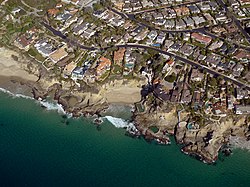
Low altitude aerial photograph for use in photogrammetry. Location: Three Arch Bay, Laguna Beach, California.

Photogrammetry is the science and technology of obtaining reliable information about physical objects and the environment through the process of recording, measuring and interpreting photographic images and patterns of electromagnetic radiant imagery and other phenomena.[1]

Photogrammetry of the headquarters of Fazenda do Pinhal, São Carlos-SP, Brazil

While the invention of the method is attributed to Aimé Laussedat,[2] the term "photogrammetry" was coined by the German architect Albrecht Meydenbauer [de],[3] which appeared in his 1867 article "Die Photometrographie."[4]

Photogrammetry of the headquarters of Fazenda do Pinhal, São Carlos-SP, Brazil

There are many variants of photogrammetry. One example is the extraction of three-dimensional measurements from two-dimensional data (i.e. images); for example, the distance between two points that lie on a plane parallel to the photographic image plane can be determined by measuring their distance on the image, if the scale of the image is known. Another is the extraction of accurate color ranges and values representing such quantities as albedo, specular reflection, metallicity, or ambient occlusion from photographs of materials for the purposes of physically based rendering.

Close-range photogrammetry refers to the collection of photography from a lesser distance than traditional aerial (or orbital) photogrammetry. Photogrammetric analysis may be applied to one photograph, or may use high-speed photography and remote sensing to detect, measure and record complex 2D and 3D motion fields by feeding measurements and imagery analysis into computational models in an attempt to successively estimate, with increasing accuracy, the actual, 3D relative motions.

From its beginning with the stereoplotters used to plot contour lines on topographic maps, it now has a very wide range of uses such as sonar, radar, and lidar.

Methods

[edit]
A data model of photogrammetry[5]
Tuure Leppänen, Reconstruction I: 2D image from a 3D model built with photogrammetry methods from hundreds of ground-level photos of a japanese garden

Photogrammetry uses methods from many disciplines, including optics and projective geometry. Digital image capturing and photogrammetric processing includes several well defined stages, which allow the generation of 2D or 3D digital models of the object as an end product.[6] The data model on the right shows what type of information can go into and come out of photogrammetric methods.

The 3D coordinates define the locations of object points in the 3D space. The image coordinates define the locations of the object points' images on the film or an electronic imaging device. The exterior orientation[7] of a camera defines its location in space and its view direction. The inner orientation defines the geometric parameters of the imaging process. This is primarily the focal length of the lens, but can also include the description of lens distortions. Further additional observations play an important role: With scale bars, basically a known distance of two points in space, or known fix points, the connection to the basic measuring units is created.

Each of the four main variables can be an input or an output of a photogrammetric method.

Algorithms for photogrammetry typically attempt to minimize the sum of the squares of errors over the coordinates and relative displacements of the reference points. This minimization is known as bundle adjustment and is often performed using the Levenberg–Marquardt algorithm.

Stereophotogrammetry

[edit]

A special case, called stereophotogrammetry, involves estimating the three-dimensional coordinates of points on an object employing measurements made in two or more photographic images taken from different positions (see stereoscopy). Common points are identified on each image. A line of sight (or ray) can be constructed from the camera location to the point on the object. It is the intersection of these rays (triangulation) that determines the three-dimensional location of the point. More sophisticated algorithms can exploit other information about the scene that is known a priori, for example symmetries, in some cases allowing reconstructions of 3D coordinates from only one camera position. Stereophotogrammetry is emerging as a robust non-contacting measurement technique to determine dynamic characteristics and mode shapes of non-rotating[8][9] and rotating structures.[10][11] The collection of images for the purpose of creating photogrammetric models can be called more properly, polyoscopy, after Pierre Seguin [12]

Integration

[edit]

Photogrammetric data can be complemented with range data from other techniques. Photogrammetry is more accurate in the x and y direction while range data are generally more accurate in the z direction [citation needed]. This range data can be supplied by techniques like LiDAR, laser scanners (using time of flight, triangulation or interferometry), white-light digitizers and any other technique that scans an area and returns x, y, z coordinates for multiple discrete points (commonly called "point clouds"). Photos can clearly define the edges of buildings when the point cloud footprint can not. It is beneficial to incorporate the advantages of both systems and integrate them to create a better product.

A 3D visualization can be created by georeferencing the aerial photos[13][14] and LiDAR data in the same reference frame, orthorectifying the aerial photos, and then draping the orthorectified images on top of the LiDAR grid. It is also possible to create digital terrain models and thus 3D visualisations using pairs (or multiples) of aerial photographs or satellite (e.g. SPOT satellite imagery). Techniques such as adaptive least squares stereo matching are then used to produce a dense array of correspondences which are transformed through a camera model to produce a dense array of x, y, z data which can be used to produce digital terrain model and orthoimage products. Systems which use these techniques, e.g. the ITG system, were developed in the 1980s and 1990s but have since been supplanted by LiDAR and radar-based approaches, although these techniques may still be useful in deriving elevation models from old aerial photographs or satellite images.

Applications

[edit]
Video of a 3D model of Horatio Nelson bust in Monmouth Museum, produced using photogrammetry
Gibraltar 1 Neanderthal skull 3D wireframe model, created with 123d Catch

Photogrammetry is used in fields such as topographic mapping, architecture, filmmaking, engineering, manufacturing, quality control, police investigation, cultural heritage, and geology. Archaeologists use it to quickly produce plans of large or complex sites, and meteorologists use it to determine the wind speed of tornadoes when objective weather data cannot be obtained.

Photograph of person using a controller to explore a 3D photogrammetry experience, Future Cities by DERIVE, recreating Tokyo

It is also used to combine live action with computer-generated imagery in movies post-production; The Matrix is a good example of the use of photogrammetry in film (details are given in the DVD extras). Photogrammetry was used extensively to create photorealistic environmental assets for video games including The Vanishing of Ethan Carter as well as EA DICE's Star Wars Battlefront.[15] The main character of the game Hellblade: Senua's Sacrifice was derived from photogrammetric motion-capture models taken of actress Melina Juergens.[16]

Photogrammetry is also commonly employed in collision engineering, especially with automobiles. When litigation for a collision occurs and engineers need to determine the exact deformation present in the vehicle, it is common for several years to have passed and the only evidence that remains is crash scene photographs taken by the police. Photogrammetry is used to determine how much the car in question was deformed, which relates to the amount of energy required to produce that deformation. The energy can then be used to determine important information about the crash (such as the velocity at time of impact).

Mapping

[edit]

Photomapping is the process of making a map with "cartographic enhancements"[17] that have been drawn from a photomosaic[18] that is "a composite photographic image of the ground," or more precisely, as a controlled photomosaic where "individual photographs are rectified for tilt and brought to a common scale (at least at certain control points)."

Rectification of imagery is generally achieved by "fitting the projected images of each photograph to a set of four control points whose positions have been derived from an existing map or from ground measurements. When these rectified, scaled photographs are positioned on a grid of control points, a good correspondence can be achieved between them through skillful trimming and fitting and the use of the areas around the principal point where the relief displacements (which cannot be removed) are at a minimum."[17]

"It is quite reasonable to conclude that some form of photomap will become the standard general map of the future."[19] They go on to suggest[who?] that, "photomapping would appear to be the only way to take reasonable advantage" of future data sources like high altitude aircraft and satellite imagery.

Archaeology

[edit]
Using a pentop computer to photomap an archaeological excavation in the field

Demonstrating the link between orthophotomapping and archaeology,[20] historic airphotos photos were used to aid in developing a reconstruction of the Ventura mission that guided excavations of the structure's walls.

Pteryx UAV, a civilian UAV for aerial photography and photomapping with roll-stabilised camera head

Overhead photography has been widely applied for mapping surface remains and excavation exposures at archaeological sites. Suggested platforms for capturing these photographs has included: War Balloons from World War I;[21] rubber meteorological balloons;[22] kites;[22][23] wooden platforms, metal frameworks, constructed over an excavation exposure;[22] ladders both alone and held together with poles or planks; three legged ladders; single and multi-section poles;[24][25] bipods;[26][27][28][29] tripods;[30] tetrapods,[31][32] and aerial bucket trucks ("cherry pickers").[33]

Handheld, near-nadir, overhead digital photographs have been used with geographic information systems (GIS) to record excavation exposures.[34][35][36][37][38]

Photogrammetry is increasingly being used in maritime archaeology because of the relative ease of mapping sites compared to traditional methods, allowing the creation of 3D maps which can be rendered in virtual reality.[39]

3D modeling

[edit]

A somewhat similar application is the scanning of objects to automatically make 3D models of them. Since photogrammetry relies on images, there are physical limitations when those images are of an object that has dark, shiny or clear surfaces. In those cases, the produced model often still contains gaps, so additional cleanup with software like MeshLab, netfabb or MeshMixer is often still necessary.[40] Alternatively, spray painting such objects with matte finish can remove any transparent or shiny qualities.

Google Earth uses photogrammetry to create 3D imagery.[41]

There is also a project called Rekrei that uses photogrammetry to make 3D models of lost/stolen/broken artifacts that are then posted online.

On Mount Stanley, an exhibition team sent out by Project Pressure created the first ever 3D model of the glacier using drone photography and GNSS technology showing a surface area decline of 29.5% between 2020 and 2024[42].

Rock mechanics

[edit]

High-resolution 3D point clouds derived from UAV or ground-based photogrammetry can be used to automatically or semi-automatically extract rock mass properties such as discontinuity orientations, persistence, and spacing.[43][44]

Software

[edit]

There exist many software packages for photogrammetry; see comparison of photogrammetry software.

See also

[edit]

References

[edit]

Sources

[edit]
[edit]
Revisions and contributorsEdit on WikipediaRead on Wikipedia
from Grokipedia
Photogrammetry is the science and technology of obtaining reliable measurements and three-dimensional information about physical objects and the environment through the recording, measuring, and interpretation of photographic images. The term derives from the Greek words φῶς (phōs), 'light'; γράφω (gráphō), 'drawing'; and μέτρον (métron), 'measurement'. The process typically involves capturing overlapping images from multiple viewpoints, applying principles of geometry and triangulation to determine spatial relationships, and generating outputs such as orthomosaic maps, digital elevation models, and 3D reconstructions. The origins of photogrammetry date back to early concepts explored by figures like and , but it emerged as a formal discipline in the mid- with the advent of . The term "photogrammetry" was coined by the Prussian Albrecht Meydenbauer in 1867, and the first comprehensive textbook on the subject was published in in 1889. Key early advancements included the application of geometric studies to by Sebastian Finsterwalder in the late 19th century, followed by the development of analytical methods in the that leveraged computers for precise calculations. Photogrammetry finds extensive applications across diverse fields, including topographic mapping, engineering surveys, documentation, and aerospace analysis. In , it processes imagery from satellites, aircraft, and drones to create accurate geospatial data for and . In and , it supports condition assessments of structures and precise for design and maintenance. Modern advancements have integrated digital sensors and software, enabling non-contact measurements in challenging environments like and .

Overview and History

Definition and Scope

Photogrammetry is the science and technology of extracting reliable three-dimensional geometric and thematic information, often over time, about physical objects and environments through the recording, measuring, and interpreting of images and , with a primary emphasis on reconstructing three-dimensional (3D) models from two-dimensional (2D) images. This process enables the extraction of precise spatial , such as object shapes, positions, and dimensions, by leveraging the geometric properties inherent in overlapping photographs taken from different viewpoints. The key objectives of photogrammetry include deriving accurate measurements of distances, areas, volumes, and coordinates without physical contact with the subject, thereby minimizing disturbance and enhancing safety in applications like hazardous terrain mapping. It differs from , which encompasses a broader range of non-contact using various sensors beyond photographic imagery, such as or multispectral devices, by focusing specifically on photographic sources for metrological precision. In contrast to , photogrammetry shares mathematical foundations but emphasizes calibrated, traceable measurements compliant with standards. The scope of photogrammetry spans a wide range of scales, from macroscopic applications involving industrial components and artifacts to planetary-level analyses using for global topographic modeling. It encompasses both passive approaches, which rely on ambient or natural light to capture images, and active methods, such as structured light projection, to illuminate scenes and enhance feature detection in controlled environments. As an interdisciplinary field, photogrammetry integrates principles from for geospatial accuracy, for , and for advanced image processing algorithms, fostering innovations across domains like , , and .

Historical Development

Photogrammetry originated in the mid-19th century with the advent of , when Aimé Laussedat, a French , conducted the first topographic surveys using photographs in the late 1850s, establishing foundational techniques for mapping terrains through image-based measurements. Independently, in the 1860s, German Albrecht Meydenbauer applied photographic methods to precise architectural measurements, coining the term "photogrammetry" in 1867 to describe the art of measuring from photographs, particularly for documenting historical buildings. The early 20th century marked significant advancements in stereoscopic techniques, with Carl Pulfrich developing the stereocomparator in 1901 at , enabling accurate comparisons of stereo images for topographic mapping and laying the groundwork for stereophotogrammetry. Eduard Dolezal, an Austrian professor, pioneered stereophotogrammetric methods in the 1900s and founded the International Society for Photogrammetry in 1910, promoting global standardization and instrument development. Stereoplotters emerged around this period, allowing operators to reconstruct 3D models from stereo pairs, with widespread adoption following as aerial surveying proliferated for military and civilian mapping needs. The transition to digital photogrammetry began in the 1970s with the introduction of analytical plotters, which used computers to perform precise geometric computations on scanned images, overcoming limitations of . By the 1980s and 1990s, (CCD) sensors and enabled fully automated workflows, reducing reliance on manual stereoplotting. Heinrich Wild, founder of Wild Heerbrugg, contributed key innovations like phototheodolites (e.g., models P30 and FT9) in the mid-20th century, integrating cameras with instruments for accurate terrestrial measurements. In the 2000s, structure-from-motion (SfM) algorithms revolutionized the field by automating from unordered image sets, making photogrammetry accessible beyond specialized equipment. Post-2010, unmanned aerial vehicles (drones) integrated with SfM facilitated high-resolution aerial data collection, expanding applications in environmental and urban monitoring. The 2020s have seen AI enhancements, including for automated feature detection and model optimization, improving efficiency in processing large datasets from diverse sources. In 2025, advancements include AI-powered tools for monitoring at unprecedented scales and accessible software like Artec Studio Lite for professional 3D capture.

Fundamental Principles

Geometric and Mathematical Foundations

Photogrammetry relies on the central perspective projection model, which assumes that light rays from object points pass through the camera's optical center to form images on the sensor plane. This model relates three-dimensional object coordinates (X,Y,Z)(X, Y, Z) to two-dimensional image coordinates (x,y)(x, y) through the equations, derived from the similarity of triangles formed by the object point, camera center, and image point. The equations are expressed as: xxp=fr11(XX0)+r12(YY0)+r13(ZZ0)r31(XX0)+r32(YY0)+r33(ZZ0),x - x_p = -f \frac{r_{11}(X - X_0) + r_{12}(Y - Y_0) + r_{13}(Z - Z_0)}{r_{31}(X - X_0) + r_{32}(Y - Y_0) + r_{33}(Z - Z_0)}, yyp=fr21(XX0)+r22(YY0)+r23(ZZ0)r31(XX0)+r32(YY0)+r33(ZZ0),y - y_p = -f \frac{r_{21}(X - X_0) + r_{22}(Y - Y_0) + r_{23}(Z - Z_0)}{r_{31}(X - X_0) + r_{32}(Y - Y_0) + r_{33}(Z - Z_0)}, where ff is the focal length, (xp,yp)(x_p, y_p) is the principal point, (X0,Y0,Z0)(X_0, Y_0, Z_0) is the camera position, and R=[rij]R = [r_{ij}] is the rotation matrix defining the camera's orientation. These equations, foundational since the mid-20th century, incorporate interior orientation parameters (focal length and principal point) and exterior parameters (position and orientation). In stereo photogrammetry, arises from the displacement of corresponding image points due to baseline separation between cameras, enabling depth computation. Horizontal pxp_x in a stereo pair is given by px=(xlxp)(xrxp)p_x = (x_l - x_p) - (x_r - x_p), where subscripts ll and rr denote left and right images, and depth ZZ relates inversely to via Z=bfpxZ = \frac{b f}{p_x}, with bb as the baseline. constrains this matching: for a point in one image, its correspondent lies on the epipolar line in the other, defined by the fundamental matrix FF such that mTFm=0\mathbf{m}'^T F \mathbf{m} = 0, where m\mathbf{m} and m\mathbf{m}' are homogeneous image coordinates. This geometry reduces search dimensionality from 2D to 1D, crucial for accurate correspondence. Resection determines camera exterior orientation from known object points and their image coordinates, often using the (DLT) method, which solves a homogeneous system Ah=0A \mathbf{h} = 0 for the 11 parameters of the HH (up to scale), where h\mathbf{h} stacks the matrix elements and AA rows derive from for each point. For n6n \geq 6 points, yields the solution. Intersection triangulates 3D points by intersecting rays from multiple images, minimizing the distance between back-projected rays via . These techniques form the basis for camera and point reconstruction. Error models in photogrammetry employ to minimize residuals between observed and computed image coordinates, formulated as v=Axl\mathbf{v} = \mathbf{A} \mathbf{x} - \mathbf{l}, where v\mathbf{v} are residuals, A\mathbf{A} the , x\mathbf{x} corrections to parameters, and l\mathbf{l} observations; the solution is x=(ATPA)1ATPl\mathbf{x} = ( \mathbf{A}^T \mathbf{P} \mathbf{A} )^{-1} \mathbf{A}^T \mathbf{P} \mathbf{l} with weight matrix P\mathbf{P}. Ground control points (GCPs), surveyed points with known coordinates, anchor the model for absolute orientation, transforming relative 3D coordinates to a global datum using similarity transformations involving at least three non-collinear GCPs to estimate scale, , and . This ensures accuracy. Scale and distortion considerations address deviations from ideal perspective projection. In , used for distant objects, rays are parallel (x=fXZ0+xpx = -f \frac{X}{Z_0} + x_p), avoiding perspective foreshortening but less accurate for close-range; central perspective dominates photogrammetry for its fidelity to optics. Lens distortions include radial (Δr=k1r3+k2r5+k3r7\Delta r = k_1 r^3 + k_2 r^5 + k_3 r^7) causing barrel or effects, and tangential (Δxt=2p1xy+p2(r2+2x2)\Delta x_t = 2 p_1 x y + p_2 (r^2 + 2 x^2), Δyt=p1(r2+2y2)+2p2xy\Delta y_t = p_1 (r^2 + 2 y^2) + 2 p_2 x y) from misalignment, modeled in the Brown-Conrady framework and corrected via additional parameters in collinearity equations.

Image Acquisition and Calibration

Image acquisition in photogrammetry begins with selecting appropriate cameras to ensure geometric fidelity and sufficient detail for subsequent . Metric cameras, designed specifically for photogrammetric applications, feature stable optics with minimal distortion and fiducial marks for precise orientation, enabling sub-pixel accuracy in measurements. In contrast, non-metric cameras, such as consumer digital single-lens reflex (DSLR) models or industrial-grade sensors, lack these built-in calibrations but can be adapted through software correction, offering higher image quality and flexibility for close-range tasks. Multispectral sensors, which capture data across multiple wavelength bands, are used for applications requiring material analysis, such as mapping, by integrating visible and near-infrared channels. Resolution requirements typically exceed 20 megapixels for high-accuracy projects to achieve ground sampling distances below 1 cm, minimizing errors during processing. Effective acquisition strategies optimize image coverage and for reliable depth estimation. Forward overlap between consecutive images should range from 60% to 80% to ensure sufficient tie points for , while lateral overlap of 30% to 60% supports stereo pair formation across flight lines or scan paths. The baseline distance, or separation between viewpoints, directly influences depth resolution; shorter baselines (e.g., 1-2 times the object distance) enhance precision for small-scale features but require more images, whereas longer baselines improve overall scale but risk occlusion. Lighting conditions must be controlled to minimize shadows and specular reflections, ideally using diffuse, uniform illumination such as overcast skies or artificial sources to maintain consistent across the scene. Camera calibration is essential to determine intrinsic and extrinsic parameters, compensating for lens distortions and sensor alignments. Zhang's method, a widely adopted technique, uses multiple views of a planar checkerboard pattern to estimate intrinsic parameters—including focal length, principal point, and radial distortion coefficients k1k_1, k2k_2, and k3k_3—through homography decomposition, achieving accuracies below 0.1 pixels with 10-15 images. Self-calibration via (SfM) leverages natural scene features without dedicated targets, simultaneously refining camera poses (extrinsic parameters: rotation matrix RR and translation vector tt) and 3D structure from unordered image sets, suitable for non-metric cameras in dynamic environments. These procedures relate acquired images to geometric projections, setting the stage for post-acquisition processing. Sensor-specific issues can introduce artifacts that degrade photogrammetric accuracy if unaddressed. Rolling shutter sensors, common in consumer cameras, scan lines sequentially, causing geometric (e.g., "wobble" effect) during motion, which can shift features by up to 5% of the image height at speeds over 1 m/s; global shutter sensors expose the entire frame simultaneously, eliminating this issue for high-speed acquisitions. Color and radiometric calibration corrects for and sensor response variations, ensuring consistent reflectance values essential for generating true orthophotos; this involves flat-field corrections and reference panels to achieve radiometric errors below 2%. Captured data must be stored in formats that preserve fidelity and metadata for traceability. RAW formats retain unprocessed sensor data, avoiding compression artifacts that could alter pixel intensities in files, thus supporting higher precision in feature detection. metadata embedding captures timestamps, GPS coordinates, and camera settings (e.g., , ), facilitating and temporal analysis without external logs.

Methods and Techniques

Aerial and Satellite Photogrammetry

Aerial photogrammetry employs airborne platforms to acquire overlapping images for large-scale topographic and thematic mapping, offering flexibility in altitude and coverage compared to ground-based methods. photogrammetry, in contrast, leverages orbital sensors for global-scale observations, enabling consistent over vast areas with revisit cycles. Both approaches rely on principles to reconstruct three-dimensional surfaces, but they differ in resolution, cost, and operational constraints. Key platforms in aerial photogrammetry include manned aircraft, which have facilitated image acquisition since the 1920s for applications like agricultural surveying. Unmanned aerial vehicles (UAVs), or drones, have largely supplemented manned systems due to their lower cost and accessibility; fixed-wing UAVs excel in covering extensive areas efficiently, while multirotor platforms provide high-precision imaging for targeted sites. For satellite photogrammetry, missions like the U.S. Geological Survey's Landsat series deliver multispectral data at moderate resolutions for . Commercial satellites, such as Maxar's constellation, support high-resolution acquisitions using agile pointing capabilities. Effective is essential to achieve desired , particularly through calculation of the (GSD), which represents the real-world distance per image . The GSD is computed as GSD=H×sfGSD = \frac{H \times s}{f}, where HH is the flying height, ss is the sensor pixel size, and ff is the ; this metric guides altitude selection to balance coverage and detail. Nadir-oriented imaging ensures vertical coverage for planimetric mapping, whereas oblique angles facilitate digital surface model (DSM) generation by capturing height variations across . Satellite-specific techniques include pushbroom scanning, where linear sensors capture images continuously along the satellite's orbital path, producing strip-like data suitable for seamless mosaicking. Along-track , achieved by tilting the during consecutive orbits, enables parallax-based height extraction and is particularly effective for temporal in dynamic landscapes. UAV operations face unique challenges, such as wind gusts that induce motion blur and reduce image quality, necessitating robust stabilization systems. Battery constraints further limit flight durations to typically 20-30 minutes per , requiring multiple launches for large surveys. Primary outputs from these methods are digital elevation models (DEMs) representing terrain heights and orthomosaics providing geometrically corrected, seamless image maps. With real-time kinematic (RTK) GPS integration on UAVs, horizontal and vertical accuracies often reach errors (RMSE) below 10 cm, meeting standards for engineering-grade mapping. A notable case is the use of drone photogrammetry in post-Hurricane Helene recovery efforts in North Carolina in 2024, where rapid surveys generated orthomosaics and DEMs to assess flood damage and prioritize infrastructure repairs, demonstrating UAVs' role in accelerating disaster response timelines.

Terrestrial and Close-Range Photogrammetry

Terrestrial photogrammetry involves the acquisition of images from ground-based positions to measure and model objects or scenes at close distances, typically using cameras mounted on stable platforms or held by operators. This approach is particularly suited for detailed documentation of accessible structures and artifacts, where direct line-of-sight access allows for high-resolution imaging without the need for elevated viewpoints. Close-range photogrammetry, a subset of terrestrial methods, focuses on object-scale measurements with camera-to-object distances generally less than 100 meters, enabling precise 3D reconstructions of items ranging from small components to building facades. Common platforms in terrestrial and close-range photogrammetry include total stations integrated with digital cameras for combined angular and photogrammetric measurements, handheld consumer-grade or metric cameras for flexible on-site capture, and robotic arms for controlled industrial scanning of large assemblies. Total stations with built-in imaging capabilities facilitate geo-referenced , aligning visual data with survey coordinates for enhanced accuracy in tasks. Handheld devices, often stabilized on tripods, support rapid deployment in field conditions, while robotic arms provide repeatable positioning in controlled environments like facilities. These setups contrast with aerial methods by prioritizing proximity and multi-angle coverage over broad-area . Key techniques in this domain emphasize comprehensive object coverage and precise control. Convergent photography, where multiple images are captured from overlapping viewpoints converging toward the target, ensures full surface documentation by minimizing blind spots and improving depth estimation through varied baselines. Coded targets—distinctive markers with unique patterns, such as retroreflective circles—are placed on or around the object to serve as control points, automating feature matching and camera orientation during processing. For textured surfaces, multi-view stereo () algorithms reconstruct dense point clouds by analyzing across numerous images, often integrated with structure-from-motion pipelines to derive 3D without prior . These methods rely on digital workflows but reference standard protocols for lens correction. Despite its strengths, terrestrial and close-range photogrammetry faces specific challenges inherent to ground-level acquisition. Occlusions from object protrusions or environmental elements can obscure parts of the scene, requiring additional viewpoints or manual interventions to achieve complete models. Scale ambiguity arises in unconstrained setups, where relative sizes must be resolved using known references like coded targets or measured baselines to prevent distorted reconstructions. Illumination inconsistencies, particularly in indoor or shadowed settings, degrade image quality and matching reliability, necessitating controlled lighting or radiometric adjustments. Vibration in handheld or mobile platforms introduces motion blur, which is mitigated through stabilization tools or high-speed shutters to maintain sub-millimeter precision. In applications, terrestrial photogrammetry excels in industrial , where it supports part inspection with accuracies down to 0.01 mm, as demonstrated in multi-focus imaging for precision components. For heritage documentation, it enables non-invasive of artifacts and structures, capturing geometric details alongside surface conditions for conservation planning. These uses highlight its role in and archival preservation, often yielding models suitable for integration or . Compared to , photogrammetry offers advantages in cost-effectiveness, requiring only cameras and software rather than expensive hardware, making it accessible for fieldwork. It also inherently captures full-color textures during reconstruction, providing visually rich models that enhance analysis in heritage and industrial contexts without secondary texturing steps.

Stereophotogrammetry

Stereophotogrammetry relies on the principle of , analogous to human , where two images of the same scene captured from slightly offset viewpoints are used to reconstruct three-dimensional structure. The core mechanism involves measuring the horizontal disparity dd between corresponding points in the left and right images, which arises due to the separation between the viewpoints. This disparity is inversely proportional to depth, enabling the computation of depth ZZ using the formula Z=fBd,Z = \frac{f \cdot B}{d}, where ff is the camera's focal length and BB is the baseline distance between the two viewpoints. This approach leverages parallax to triangulate object positions, forming the foundation for 3D point extraction in photogrammetric workflows. Camera setups in stereophotogrammetry typically employ either parallel optical axes, which maintain straightforward epipolar geometry for easier correspondence matching, or convergent axes, where cameras are angled inward to converge at a finite distance, potentially reducing radial distortion but introducing vertical disparities that require rectification. For human interpretation of stereo pairs, techniques such as anaglyph viewing—overlaying images in complementary colors (e.g., red-cyan) viewed through filtered glasses—or polarization-based separation, using orthogonally polarized filters to direct images to each eye, facilitate stereoscopic perception without mechanical aids. These methods allow operators to perceive relief and measure contours manually. Automated processing in stereophotogrammetry employs algorithms to identify correspondences, with matching being a widely adopted technique that iteratively minimizes differences between patches through geometric and radiometric transformations, achieving sub-pixel accuracy. Enhancements include multi-baseline configurations, incorporating additional to resolve ambiguities and improve depth precision across varying scales. Matching can be sparse, targeting distinct features for efficient tie-point generation, or dense, producing comprehensive surface models by correlating every , though dense methods demand higher computational resources. In low-texture regions where natural features are scarce, artificial patterns—such as projected grids or textures—are introduced to enhance reliability. Historically, stereoplotters served as mechanical-optical instruments for manual stereophotogrammetry, enabling operators to view pairs through floating marks and trace contours or profiles directly onto maps. Modern implementations integrate these concepts into digital software, automating disparity computation and reconstruction for scalable . Accuracy in stereophotogrammetry is influenced by the baseline-to-depth ratio, with ratios greater than 1:10 recommended to ensure sufficient for precise measurements while avoiding excessive disparities that complicate matching.

Data Processing and Analysis

Analog and Digital Workflows

In traditional analog photogrammetry, the workflow begins with the exposure of photographic film in metric cameras during aerial or terrestrial surveys, capturing overlapping images of the target area. The exposed film undergoes chemical development in a darkroom process, where developers, stop baths, and fixers convert latent images into visible negatives, followed by drying and quality inspection to ensure uniform density and minimal distortion. These physical negatives are then mounted in stereoplotters, such as the Wild B8 or Kern PG2, where optical projection systems use lenses and mirrors to recreate the central perspective and enable stereoscopic viewing of paired images. Operators manually trace contours, measure elevations via parallax bars, and delineate features on drafting tables or scribing sheets, often producing topographic maps or models through floating marks and mechanical linkages. However, analog workflows suffer from precision limitations due to film shrinkage, emulsion irregularities, and operator fatigue, resulting in errors up to 2% in stereoscopic measurements and overall accuracies typically limited to 1:2,000 scale for mapping. Scalability is further constrained by the labor-intensive manual processes, which become impractical for large datasets or high-resolution requirements, often necessitating weeks of compilation for moderate-area projects. The digital workflow, in contrast, starts with the acquisition of raw digital images from sensors like or CCD arrays in modern cameras, bypassing film entirely and enabling immediate transfer to computational pipelines. For legacy analog images, high-resolution scanning digitizes negatives into raster formats, but contemporary processes emphasize native digital capture for reduced distortion. Automated feature detection identifies keypoints using algorithms such as (SIFT), which detects rotation- and scale-invariant descriptors via difference-of-Gaussians, or Speeded-Up Robust Features (SURF), an approximation of Hessian matrices for faster matching. These correspondences feed into Structure-from-Motion (SfM) pipelines to estimate initial sparse 3D point clouds and camera poses through incremental , followed by dense reconstruction using Multi-View Stereo () or patch-based matching to generate high-density points via semi-global optimization or patch correlation. The transition from analog to digital involved hybrid analytical plotters in the 1970s to 1990s, such as the Kern DSR11 or Zeiss Planicomp, which combined optical projection with computer-controlled servos for automated orientation and , bridging mechanical stereovision with early numerical computation. By the post-2000 era, the full shift to digital workflows was driven by large-format sensors like the Leica DMC and widespread adoption of GPU acceleration for parallel processing of matching and , enabling real-time handling of multi-gigapixel datasets. In the digital data flow, raw images are preprocessed for radiometric correction before SfM yields sparse points, which are densified into point clouds exportable in LAS format—a binary standard supporting up to billions of points with , intensity, and for compatibility with systems and compression via LAZ to manage file sizes often exceeding 100 GB for large scenes. These clouds are then meshed using Poisson surface reconstruction or to form watertight polygonal surfaces, followed by and projection from original images to apply textures, resulting in photorealistic 3D models suitable for visualization or . Digital automation yields significant efficiency gains over analog methods, reducing processing time from weeks of manual stereoplotting to hours via parallelized algorithms and eliminating chemical development delays, as demonstrated in cases where 1,200 km² of is triangulated in under 7 hours on multi-core systems.

Bundle Adjustment and Error Correction

Bundle adjustment (BA) is a fundamental optimization process in photogrammetry that refines the three-dimensional structure of a scene and the camera parameters by minimizing the reprojection errors across multiple images. It simultaneously estimates the positions of object points and the exterior and interior orientation parameters of all cameras involved, ensuring a globally consistent photogrammetric model. This problem is typically formulated as minimizing the cost function that sums the squared differences between observed image coordinates and those predicted by the equations. The optimization is solved iteratively using algorithms such as the Levenberg-Marquardt method, which combines and Gauss-Newton techniques to handle the nonlinearity and ensure convergence even with initial approximations. This approach exploits the sparsity of the normal equations derived from the Jacobian matrix of partial derivatives with respect to the unknown parameters, enabling efficient computation for large datasets. Seminal developments in BA trace back to the work of D.C. Brown in the and , where he introduced analytical methods for adjusting photogrammetric blocks, evolving from strip adjustments to full bundle solutions. BA variants include free-net adjustments, which treat the network as floating without fixed control points to focus on relative geometry, and fixed control adjustments that anchor the model using ground control points (GCPs) for absolute positioning. Incremental BA processes images sequentially, refining the model progressively to manage computational load in structure-from-motion pipelines, while global BA optimizes all parameters simultaneously for higher precision in dense blocks. Outliers, often arising from mismatched features, are handled by integrating robust estimators like RANSAC during initial feature correspondence to exclude blunders before optimization. Error sources in photogrammetry encompass systematic distortions, such as radial and tangential lens aberrations or in aerial imagery, and random errors like from quantization or thermal effects. BA corrects these by incorporating additional parameters, such as models for lens within the interior orientation, and by weighting observations according to their variance to downplay noisy measurements. Blunders, including gross measurement errors from incorrect tie points, are detected post-adjustment using editing, which iteratively rejects residuals exceeding a multiple of the standard deviation (typically 2-3σ) derived from the adjustment's variance-covariance matrix. Accuracy assessment in BA relies on metrics like error (RMSE) computed on independent checkpoints, quantifying the planar or vertical discrepancies between adjusted and measured coordinates, often achieving sub-pixel levels in image space (e.g., 0.2-0.5 pixels) for well-calibrated systems. intervals for parameters are derived from the variance-covariance matrix output of the solution, providing statistical reliability estimates scaled by the a posteriori variance factor. Advanced BA techniques distinguish between relative orientation, which establishes the between image pairs without scale, and absolute orientation, which scales and positions the model in a world using GCPs or direct measurements. integrates GNSS and IMU data as additional observations in the adjustment, constraining exterior orientations to reduce reliance on GCPs and mitigate scale drift, particularly in UAV or airborne applications where boresight misalignment between sensors is modeled as extra parameters.

Integration with Other Technologies

With Remote Sensing and GIS

Photogrammetry synergizes with by fusing digital models (DEMs) derived from stereo imagery with hyperspectral data to enhance classification accuracy. This integration leverages the geometric precision of photogrammetric DEMs to provide topographic context, which complements the richness of hyperspectral imagery for distinguishing vegetation types, soil compositions, and urban features in complex environments. For instance, fusing 3D point clouds from photogrammetric processing with hyperspectral bands has been shown to improve semantic segmentation of urban scenes by incorporating both and signatures. Multi-sensor platforms further amplify these synergies, combining visible-light cameras for photogrammetric reconstruction with thermal infrared (IR) sensors to capture temperature variations alongside structural data. Such platforms, often deployed on unmanned aerial vehicles (UAVs), enable simultaneous acquisition of RGB imagery for and thermal IR for detecting heat anomalies, like moisture in agricultural fields or structural defects in . Photogrammetric of these multi-spectral and thermal datasets produces orthomosaics and DEMs that reveal environmental patterns not visible in single-sensor data. Integration with geographic information systems (GIS) facilitates the importation of photogrammetric products, such as orthophotos and triangulated irregular networks (TINs), into platforms like and for advanced . For UAV-based applications, overlapping images are processed via photogrammetry to generate orthomosaics and point clouds, which are imported into GIS software for analyses including normalized difference vegetation index (NDVI) computation for vegetation health and volume calculations from digital elevation models. Orthophotos serve as georeferenced basemaps for overlaying vector layers, while TINs model terrain surfaces to derive metrics like and aspect, essential for hydrological modeling and . This workflow supports feature vectorization, where photogrammetric edges are digitized into GIS polygons for thematic mapping, enhancing the scalability of geospatial databases. Data fusion techniques in this domain emphasize co-registration of photogrammetric optical data with (SAR) imagery to enable all-weather mapping capabilities. Co-registration aligns datasets through feature matching or , mitigating SAR's speckle noise with photogrammetry's high-resolution texture for hybrid models that produce consistent DEMs under or at night. These hybrid approaches have been applied in land-use classification, where fused optical-SAR products improve boundary delineation in vegetated or shadowed areas. Standards ensure interoperability between photogrammetric outputs and /GIS ecosystems, with Open Geospatial Consortium (OGC) specifications like (WMS) enabling seamless data sharing across systems. Photogrammetric datasets comply with OGC standards for encoding orthophotos and DEMs in formats such as , promoting plug-and-play integration in distributed GIS environments. Metadata schemas, including ISO 19115, standardize descriptions of lineage, quality, and extent for these products, facilitating discovery and validation in multi-source fusions. The benefits of these integrations are particularly evident in temporal monitoring, where multi-temporal orthophotos from photogrammetry track surface changes like rates over time. By differencing sequential DEMs, analysts quantify volumetric losses, such as in catchments, with accuracies down to centimeters, supporting predictive models for environmental . This approach has revealed erosion dynamics in Mediterranean landscapes, aiding in the assessment of trends.

With Computer Vision and AI

The integration of and has significantly automated and enhanced photogrammetric workflows, enabling more robust feature extraction, matching, and reconstruction from complex sets. Traditional methods often struggle with variability in , occlusions, and viewpoint changes, but techniques address these by learning hierarchical representations directly from data. For instance, feature matching has been revolutionized through self-supervised neural networks like SuperPoint, which detects and describes interest points without manual annotation, improving repeatability and accuracy in multi-view geometry tasks. In photogrammetric applications, SuperPoint has demonstrated superior performance in aerial tie-point matching, achieving higher estimation metrics compared to classical detectors like SIFT. Semantic segmentation further augments photogrammetry by identifying and delineating objects within images, facilitating targeted processing and reducing noise in 3D reconstructions. Deep convolutional networks, such as variants, segment photogrammetric images into classes like buildings, , or ground, enabling selective feature extraction and improved model fidelity. This approach is particularly valuable for crowdsourced or heritage imagery, where it combines with structure-from-motion to monitor structural changes while classifying elements semantically. Advancements in AI-driven dense matching have shifted photogrammetry toward end-to-end neural pipelines, exemplified by MVSNet, which infers depth maps from unstructured multi-view images using cost volume regularization. This network extracts deep features and predicts disparities, yielding denser point clouds than patch-based stereo methods, with applications in aerial reconstruction. Automated ground control point (GCP) detection leverages models like YOLO variants to identify markers in drone imagery, streamlining and reducing manual intervention in large surveys. Similarly, oriented bounding box adaptations of these models enable precise localization of GCPs in oblique aerial views, enhancing initialization. In the 2020s, generative models have addressed gaps in photogrammetric outputs, with GANs enabling for incomplete 3D models derived from sparse views. These networks generate plausible surface details by learning from exemplar patches, filling holes in SfM reconstructions while preserving photometric consistency, as seen in thermal texture augmentation for multi-spectral models. also supports error prediction in , where neural regressors forecast reprojection residuals to guide adaptive optimization, prioritizing high-uncertainty parameters and converging faster on datasets with outliers. This adaptive approach refines camera poses and structure iteratively, improving global consistency in challenging scenarios. Edge AI deployments on drones facilitate real-time photogrammetric processing, allowing onboard inference for immediate 3D mapping during flights. Lightweight models run on embedded hardware to perform feature tracking and partial reconstructions, enabling applications like dynamic avoidance without latency. Such systems process streams locally, supporting autonomous in surveys. These AI integrations tackle key challenges in photogrammetry, such as low-texture scenes where classical features fail; deep matching networks like SuperGlue paired with DISK extract reliable correspondences even in uniform areas, improving reconstruction completeness in historical or indoor imagery. For scalability with from UAV swarms, distributed AI frameworks parallelize processing across clusters, handling terabyte-scale image volumes from coordinated flights while maintaining sub-millimeter precision in orthomosaics. Practical examples include extensions to pipelines like COLMAP, where PyTorch-based deep feature matchers integrate seamlessly via plugins, replacing hand-crafted descriptors with learned ones for enhanced robustness in diverse environments. These hybrid systems exemplify how AI augments established photogrammetric tools, fostering efficiency in large-scale deployments. As of 2025, recent advancements include the integration of neural radiance fields () with photogrammetry for improved and AI-driven in mobile mapping workflows, enhancing accessibility and speed in .

Applications

Cartography and Topographic Mapping

Photogrammetry plays a central role in by enabling the production of accurate topographic maps through the extraction of elevation data from overlapping aerial images. This process begins with the generation of digital elevation models (DEMs) from stereo imagery, which serve as the foundation for deriving contour lines that represent terrain relief. Contour lines are created by interpolating elevation values across the DEM grid, connecting points of equal height to visualize slopes, valleys, and peaks on two-dimensional maps. A key step in preparing imagery for topographic mapping is ortho-rectification, which corrects geometric distortions caused by terrain relief, camera tilt, and sensor orientation. During ortho-rectification, a DEM is used to project image pixels onto a horizontal plane, effectively removing displacement effects and producing scale-consistent orthomosaics suitable for map overlays. This ensures that features like roads and boundaries align precisely with ground coordinates, facilitating reliable cartographic outputs. For large-scale mapping projects, block triangulation is employed to orient and adjust extensive blocks of overlapping photographs, determining the three-dimensional positions of tie points across vast areas. This technique minimizes errors in position and attitude parameters, achieving sub-meter accuracy over hundreds of square kilometers by solving for bundle adjustments in a single computational framework. Additionally, hydro-flattening adjusts water body elevations in DEMs to a constant level, simulating traditional contour-based representations where lakes and rivers appear flat, which is essential for consistent hydrologic modeling in topographic sheets. Photogrammetric mapping adheres to standardized scales ranging from 1:500 for detailed urban plans to 1:50,000 for regional overviews, balancing resolution with coverage efficiency. The American Society for Photogrammetry and (ASPRS) Positional Accuracy Standards outline requirements for these scales, such as Class 1 accuracy for 1:1,200 mapping, which mandates a horizontal error (RMSEr) of no more than 15 cm to ensure high-fidelity representation of terrain features. These standards guide the validation of map products using independent checkpoints, promoting in national and international cartographic efforts. Common outputs include topographic sheets that integrate orthorectified imagery with vectorized contours, as well as digital terrain models (DTMs) representing bare-earth surfaces by filtering out and structures, in contrast to digital surface models (DSMs) that capture the full topographic envelope including above-ground features. DTMs are preferred for contour generation and hydrological analysis, while DSMs support broader applications like line-of-sight studies. In national programs, such as the U.S. Geological Survey's (USGS) topographic mapping initiatives, aerial photogrammetry has been instrumental since the mid-20th century, producing updated 1:24,000-scale quadrangles through stereo plotting and DEM derivation for the entire . High-resolution DEMs from photogrammetry also aid , as seen in projects generating 1-meter DTMs for infrastructure development and flood risk assessment in densely populated areas.

Archaeology and Cultural Heritage

Photogrammetry plays a pivotal role in and by enabling the non-invasive documentation and analysis of historical sites and artifacts through the generation of accurate 3D models. (SfM) techniques, which reconstruct three-dimensional geometry from overlapping two-dimensional photographs, are particularly suited for creating comprehensive site-wide models of ruins and landscapes, allowing archaeologists to capture spatial relationships and structural details without physical disturbance. Close-range photogrammetry complements this by facilitating high-resolution scanning of individual artifacts, such as or sculptures, often resolving surface details down to 0.1 mm for precise metric analysis during conservation planning. Key applications include virtual reconstructions of ancient ruins, which preserve and visualize lost architectural elements for and . For instance, a 2025 digital study in Pompeii used photogrammetry and to reconstruct elite residences like the House of the Thiasos, modeling original upper-floor layouts with towering structures as luxurious status symbols offering panoramic views, thereby aiding in the understanding of Roman social hierarchies. Similarly, monitoring environmental threats such as at heritage sites relies on repeated photogrammetric surveys to quantify surface changes over time; at the Sabbath Point archaeological site in central Newfoundland, , UAV-based photogrammetry measured rates on prehistoric structures, revealing annual losses of up to approximately 60 cm in vulnerable areas. Metric documentation for restoration projects further benefits from these methods, providing baseline data for interventions while ensuring compliance with preservation standards. Notable case studies from the demonstrate photogrammetry's integration with unmanned aerial vehicles (UAVs) for large-scale surveys. In , , UAV photogrammetry was used during excavations to generate orthomosaic maps and 3D models of the Nabataean city's plateau, identifying archaeological features with centimeter-level accuracy and supporting ongoing conservation efforts against natural degradation. Hybrid approaches combining photogrammetry with have enhanced precision in such projects, as seen in documentation of complex facades where photogrammetric texturing overlays laser-derived geometry to achieve sub-millimeter fidelity for detailed heritage inventories. The primary benefits of photogrammetry in this field stem from its non-destructive nature and , allowing for longitudinal studies without risking fragile materials, while enabling public engagement through (VR) models that democratize access to remote or deteriorating sites. However, challenges persist, particularly at delicate locations where low-impact, lightweight drones are essential to minimize and , and where generating standardized for legal and purposes requires robust protocols to ensure across institutions. These techniques, building on close-range methods for artifact-level detail, underscore photogrammetry's value in safeguarding for future generations.

3D Modeling and Industrial Design

Photogrammetry plays a pivotal role in for by generating detailed digital representations from photographic data, enabling precise onto polygonal to produce photorealistic renders. This process involves aligning multiple images to reconstruct surface and then projecting photographic textures onto the resulting mesh, enhancing visual fidelity for design visualization and simulation. For instance, photogrammetric allows for the precise application of high-resolution images onto laser-scanned models, improving the accuracy of digital twins in workflows. In applications, photogrammetry facilitates the conversion of physical objects into editable CAD models by capturing overlapping photographs to generate point clouds and meshes, which are then refined into parametric surfaces suitable for . This method is particularly effective for complex geometries, where photogrammetric serves as a reference for reconstructing accurate 3D CAD representations, bridging the gap between physical prototypes and digital blueprints. Combining photogrammetry with techniques enables the creation of scalable models from image-based scans, reducing the need for manual measurement in product development. Within the , photogrammetry supports part inspection and by producing 3D models that verify dimensional accuracy during assembly and prototyping. Systems like the MaxSHOT 3D photogrammetry camera achieve repeatable measurements on large components, such as , ensuring compliance with tight tolerances in . In and (VFX), it is employed for asset creation, including scanning actors and environments to generate CGI elements with lifelike details, streamlining the integration of real-world references into digital scenes. For architecture, photogrammetry integrates with (BIM) to create as-built models from site photographs, facilitating design updates and simulations in tools like Civil 3D. Photogrammetry delivers sub-millimeter accuracy in industrial prototyping, with reported precisions as fine as 0.01 over meter-scale volumes, making it suitable for high-precision applications like mold verification and component fitting. This level of detail also enables accurate volume calculations for , such as assessing material displacement in prototypes, where errors are minimized through multi-image overlap and . In game development, scanned environments created via photogrammetry provide realistic assets, as seen in titles incorporating photoscanned props and terrains to enhance immersion without extensive manual modeling. employs photogrammetry for aircraft assembly verification, using it to measure passenger entry doors on the 787 model during production stages, ensuring with sub-millimeter precision (approximately ±0.127 ). Outputs from photogrammetric workflows commonly include OBJ and STL file formats, which support and texture data for import into CAD, , and rendering software. These models are also compatible with (AR) and (VR) platforms, allowing interactive visualization of designs in immersive environments, such as overlaying prototypes on real-world settings for stakeholder review. Close-range photogrammetry techniques, often enhanced by AI for feature detection, further refine these outputs for industrial use. Free open-source photogrammetry pipelines provide accessible means to generate 3D models from photographs for applications in industrial design, reverse engineering, and visualization. Meshroom, based on the AliceVision framework, offers a user-friendly node-based graphical interface for processing 50-200 overlapping photographs taken under consistent lighting to produce textured 3D meshes in formats like OBJ. COLMAP provides a robust alternative with graphical and command-line interfaces for structure-from-motion and multi-view stereo reconstruction. These models can be imported into Blender, a free 3D creation suite, using the Photogrammetry Importer add-on, which supports direct import of reconstruction data such as camera poses, point clouds, and meshes from Meshroom and COLMAP, enabling further refinement, texturing, and integration into industrial workflows.

Engineering, Surveying, and Geotechnical Analysis

In and , photogrammetry enables precise as-built documentation of construction sites by generating detailed 3D models from overlapping photographs, allowing verification of completed structures against design plans with centimeter-level accuracy. This approach is particularly valuable for capturing complex geometries in urban or industrial settings, where traditional methods may be time-consuming or hazardous. For instance, non-metric cameras mounted on drones or tripods facilitate rapid , producing point clouds that quantify deviations in built elements such as foundations or retaining walls. Deformation monitoring represents another critical application, especially for like bridges, where repeat photogrammetric surveys detect subtle movements over time. Unmanned aerial vehicles (UAVs) equipped with high-resolution cameras capture sequential to compute displacements, such as bridge deck deflections under load, achieving sub-millimeter precision through algorithms. This non-contact method minimizes disruption to traffic and enhances safety compared to manual instrumentation, enabling early detection of structural issues in long-span bridges. In geotechnical contexts, photogrammetry supports rock face stability analysis by mapping discontinuities—such as joints and fractures—on slopes or walls, informing kinematic stability assessments via stereographic projections. Terrestrial setups, using fixed cameras, generate dense point clouds that quantify orientation and persistence of these features, crucial for predicting potential rockfalls. For engineering volumetric analysis, photogrammetry excels in earthworks by comparing pre- and post-excavation surfaces to calculate volumes, optimizing material transport and site grading. Drone-based surveys produce orthomosaics and digital elevation models (DEMs) that integrate with geographic information systems (GIS) for automated computations, reducing errors from manual cross-sections by up to 20% in large-scale projects. mapping similarly benefits from terrestrial photogrammetry, where stationary camera arrays document interior geometries and deformations in constrained environments, supporting alignment verification during . In mining operations, monitoring via UAV photogrammetry tracks progressive failures by differencing sequential DEMs, alerting to movements exceeding 10 cm that could indicate instability. Case studies from the highlight these applications, such as drone photogrammetry for inspections, where UAVs inspect spillways and abutments for cracks, generating 3D models that reveal deformations as small as 5 mm without . Post-construction verification often achieves cm-level accuracy, as demonstrated in projects where photogrammetric point clouds confirm pavement alignments. Standards for integration with (BIM) further enhance utility, allowing as-planned models to overlay as-built photogrammetric data for discrepancy analysis, streamlining and . This fusion supports automated deviation reporting, with tolerances typically under 2 cm for .

Forestry and Environmental Monitoring

Drone photogrammetry is utilized in forestry and environmental monitoring to detect and quantify changes in forest ecosystems, including canopy loss, tree growth, and degradation in forest health. Ground Control Points (GCPs) are widely employed to achieve precise georeferencing in drone-based photogrammetry, minimizing alignment errors across multi-temporal datasets. This precision is essential for distinguishing genuine changes (such as canopy loss, growth, or health degradation) from artifacts induced by misalignment. Studies indicate that high-accuracy GCPs, often combined with co-alignment of multiple surveys, enhance relative accuracy by factors of 3-4 and achieve sub-decimeter offsets in the x, y, and z directions. In forested environments, GCPs help overcome challenges from seasonal vegetation changes that affect image matching and feature detection. Typically, 5-10 well-distributed GCPs provide substantial accuracy improvements, with diminishing returns beyond that number.

Software and Tools

Commercial Software Packages

Commercial photogrammetry software packages provide proprietary, enterprise-grade solutions for processing images into 3D models, orthomosaics, and geospatial data, catering to industries like , and . As of 2025, the global photogrammetry software market has reached approximately $2.6 billion, with significant growth driven by demand in and projects that require high-precision reality modeling. Among the leading packages, Agisoft Metashape stands out for its focus on structure-from-motion (SfM) and multi-view stereo (MVS) techniques, particularly suited for drone-based aerial photogrammetry. It offers automated workflows for image alignment, dense cloud generation, and /texture creation, with exports compatible with CAD and GIS formats such as DXF, OBJ, and . Pricing follows a perpetual license model at around $3,499 for the professional edition, though it requires a GPU-enabled system for efficient rendering of large datasets. Its strengths include a user-friendly graphical interface and certified accuracy for surveying applications, meeting standards like those from the American Society of Photogrammetry and Remote Sensing. Pix4D, another market leader, excels in aerial mapping and supports cloud-based processing for scalable operations. Key features encompass automated orthomosaic generation, digital elevation models, and outputs, with seamless integration into ecosystems like for geospatial analysis. Subscription pricing starts at $350 per month or $3,500 annually for PIX4Dmapper, making it accessible for professional drone operators while emphasizing via GPU for real-time previews. The software's intuitive GUI and validated precision—achieving sub-centimeter accuracy in controlled surveys—position it as a go-to for site monitoring. RealityScan (formerly RealityCapture, acquired by in 2021 and rebranded in 2025), is renowned for its rapid scanning capabilities tailored to (VFX) and documentation. It provides high-speed reconstruction of textured 3D meshes from photographs or laser scans, supporting exports to formats like for tools, and is free for individuals and businesses with annual gross revenue under $1 million USD. Annual licensing costs $1,250 per seat for larger users, with GPU-intensive processing enabling quick turnaround for large-scale projects. Its advantages lie in an accessible interface and proven reliability for high-fidelity outputs in professional pipelines. For infrastructure applications, ' iTwin Capture Modeler (formerly ContextCapture) delivers robust photogrammetry for engineering projects, generating multiresolution 3D models from aerial or terrestrial imagery. Features include hybrid processing of photogrammetry and data, with direct integrations to and platforms for enhanced BIM-GIS workflows. It requires GPU support for optimal performance and is priced through enterprise subscriptions, often bundled in Bentley's CONNECT platform starting at several thousand dollars annually. The tool's certified accuracy and streamlined automation make it ideal for large-scale in . Polycam provides an accessible mobile app for photogrammetry-based 3D scanning from photographs, supporting iOS and Android devices for quick reconstruction of objects and environments into textured meshes. On iPhone, it supports a photogrammetry mode using photographs, which enables higher quality 3D scanning beyond LiDAR, although slower. It integrates SfM techniques with user-friendly interfaces for exporting to formats like OBJ and GLB, suitable for creators and professionals in design and heritage documentation, with free tiers and pro subscriptions for advanced features. Luma AI offers AI-enhanced tools for generating photorealistic 3D models from images or videos, leveraging neural radiance fields (NeRF) alongside photogrammetric principles for high-fidelity reconstruction. Available via web and app interfaces, it enables rapid processing for applications in content creation and visualization, with exports compatible with standard 3D formats and emphasis on ease of use for non-experts. Overall, these packages reflect 2025 market trends toward deeper integrations with and suites, facilitating data exchange in multidisciplinary environments while prioritizing ease of use and computational efficiency.

Open-Source and Research Tools

Open-source photogrammetry tools have democratized access to advanced techniques, enabling researchers, academics, and small-scale developers to perform structure-from-motion (SfM) and multi-view stereo () without commercial licensing costs. These tools often feature modular designs with command-line interfaces (CLIs) and extensible APIs, allowing customization for specific workflows such as integrating models for feature detection. COLMAP stands out as a widely adopted open-source pipeline for SfM and MVS, supporting both ordered and unordered image collections through its graphical user interface (GUI) and CLI. Developed initially for research in computer vision, it implements robust algorithms for feature matching, pose estimation, and dense reconstruction, with outputs including sparse and dense point clouds compatible with formats like PLY and OBJ. Its Python bindings facilitate scripting and integration with external libraries, such as those for AI-enhanced feature extraction. In academic prototyping, COLMAP is frequently used for reconstructing cultural heritage sites from archival photos, offering a low-cost alternative to proprietary software while achieving sub-millimeter accuracy in controlled experiments. However, its CLI-heavy workflow presents a steeper learning curve for non-experts, and the GUI lacks the polished visualizations of commercial counterparts. As of mid-2025, version 3.12 introduced enhanced CUDA support for GPU-accelerated dense reconstruction, improving processing speeds by up to 5x on modern NVIDIA hardware for large datasets exceeding 10,000 images. Community extensions have also enabled seamless integration with ROS (Robot Operating System) for real-time robotics applications, such as SLAM in autonomous drones. COLMAP remains fully free and open-source as of 2026. A common free workflow for creating 3D models from photographs involves capturing 50-200 overlapping images of an object from all angles under consistent lighting, processing them in COLMAP via its GUI or CLI to generate reconstructions, and exporting to formats such as PLY or OBJ. The results can be imported into Blender—which lacks built-in photogrammetry tools but supports editing imported models—via File > Import > OBJ or the free Photogrammetry Importer add-on for advanced import of cameras, point clouds, and native COLMAP formats. OpenDroneMap (ODM) specializes in processing UAV-captured imagery, providing a toolkit for generating orthomosaics, point clouds, digital elevation models (DEMs), and textured 3D models via its core engine and web-based interface in WebODM. It employs open algorithms for georeferencing and , with support for metadata from common drone sensors, making it ideal for tasks like forest canopy mapping. The Python API (PyODM) allows in batch processing pipelines, and community plugins extend functionality for multispectral analysis. Startups leverage ODM for cost-effective in , where it processes datasets of 1,000+ images to produce georeferenced outputs with RMSE errors below 5 cm when ground control points are used. Limitations include higher memory demands for high-resolution inputs—recommending at least 128 GB RAM for 2,500-image sets—and less intuitive error handling compared to user-friendly commercial tools. Updates in 2025 added distortion correction and auto-alignment for multi-temporal datasets, enhancing accuracy in dynamic scenes like crop growth tracking. MicMac, developed by the French National Geographic Institute (), offers a comprehensive suite for dense matching and orientation in photogrammetric workflows, emphasizing research-grade precision through tools like AperiCloud for tie-point computation and dense correlation modules. Its CLI design supports scripted processing of terrestrial and aerial imagery, with outputs tailored for geospatial applications such as ortho-rectification. Python interfaces enable extensions for custom models, appealing to academic users in geosciences for prototyping deformation analysis in glaciers. In low-budget scenarios, MicMac serves as an alternative for documentation, reconstructing facades from photos with resolutions up to 1 mm/. The tool's complexity, rooted in its modular structure, results in a steeper and minimal GUI support, often requiring familiarity with photogrammetric terminology for effective use. It features ongoing improvements in parallelization for multi-core systems but lags in native GPU acceleration relative to some peers. Meshroom, built on the AliceVision framework, provides a free, open-source pipeline for SfM-based 3D reconstruction from unordered image sets, featuring a node-graph GUI for intuitive workflow management. It supports feature extraction, matching, and meshing stages, producing textured models exportable to OBJ and similar formats, and is popular among hobbyists and researchers for its accessibility in creating models from photographs without command-line expertise. Meshroom remains fully free and open-source as of 2026. Its user-friendly GUI enables a straightforward workflow: users capture 50-200 overlapping photographs under consistent lighting, drag and drop them into the application, and run the default pipeline to generate a textured 3D mesh. The resulting model can be exported in OBJ format and imported into Blender—which lacks built-in photogrammetry capabilities but allows for subsequent editing—via File > Import > OBJ or the free Photogrammetry Importer add-on for enhanced support including point clouds, cameras, and native Meshroom formats.

Challenges and Future Directions

Current Limitations and Accuracy Issues

Photogrammetry achieves sub-centimeter accuracy in controlled, ideal conditions with high-quality imagery and sufficient ground control points (GCPs), but performance degrades significantly under suboptimal , introducing errors in feature detection and matching. In low-light environments, such as indoor or settings, calibration errors for non-metric cameras increase, leading to higher overall determination errors in 3D reconstructions due to reduced contrast and feature visibility. Accurate relies on GCP density; the optimal number of ground control points (GCPs) varies by site size—for UAV-based surveys, one study found 12 GCPs sufficient for areas up to 39 ha and 18 for areas up to 342 ha to achieve reliable absolute positioning. Environmental factors pose substantial challenges to photogrammetric accuracy, particularly in vegetated or complex terrains where shadows and occlusions obscure key features. Dense vegetation creates partial blockages that hinder stereo matching, resulting in incomplete point clouds and elevated reconstruction errors, as photogrammetry relies on visible surface textures that foliage often conceals. In forested environments, seasonal vegetation changes, such as variations in foliage density or leaf-on versus leaf-off conditions, alter surface appearance and complicate feature matching across multi-temporal datasets, potentially causing misalignment artifacts that can be misinterpreted as genuine changes (e.g., canopy loss, growth, or health degradation). Ground Control Points (GCPs) are widely used to mitigate these issues in forest change detection via drone photogrammetry, providing precise georeferencing and minimizing alignment errors across surveys. Typically, 5-10 well-distributed GCPs yield significant improvements, with diminishing returns beyond that number; when combined with co-alignment of multiple surveys, high-accuracy GCPs enhance relative accuracy by factors of 3-4 and achieve sub-decimeter offsets in x/y/z coordinates, enabling reliable distinction between real forest changes and processing artifacts. In aerial surveys, atmospheric effects like scatter light and reduce image clarity, necessitating dedicated correction algorithms to restore contrast and prevent systematic biases in models. Computational demands limit the of photogrammetry, especially for large datasets from modern sensors. Processing over 1,000 high-resolution images (e.g., 20 MP) typically requires at least 64 GB of RAM to handle dense generation and without excessive swapping or crashes, with real-time applications remaining infeasible without . Ethical and data-related concerns further constrain photogrammetric deployments, particularly in urban settings. Drone-based surveys in populated areas raise issues, as high-resolution imagery can inadvertently capture personal details , prompting calls for stricter regulatory frameworks to balance utility with individual rights. Additionally, AI-driven feature matching algorithms exhibit biases toward textured surfaces, performing poorly on uniform or low-contrast areas like water or bare soil, which can amplify errors in diverse environmental datasets and underscore the need for robust validation across varied textures. In aerial photogrammetry, typical vertical errors are on the order of 1/5,000 of the flying height under standard conditions with adequate GCPs, though this degrades without multi-sensor fusion to address residual uncertainties. The integration of artificial intelligence (AI) and machine learning (ML) into photogrammetry is poised to revolutionize feature extraction through predictive modeling, enabling systems to anticipate and reconstruct incomplete datasets with higher accuracy. By leveraging neural networks for semantic segmentation and anomaly detection, future workflows will automate the identification of geological or architectural elements in imagery, significantly reducing processing times compared to traditional methods. Autonomous drone swarms, coordinated via AI algorithms, will enhance coverage in challenging environments by dynamically optimizing flight paths for comprehensive 3D mapping. In 2025, software advancements like Artec Studio Lite have integrated AI-powered photogrammetry to broaden access to professional 3D tools. Hybrid approaches combining photogrammetry with LiDAR are also gaining traction for enhanced accuracy in vegetated and complex terrains. Hardware innovations are advancing lightweight hyperspectral cameras that capture spectral data across hundreds of bands for enhanced material identification in photogrammetric reconstructions, facilitating real-time 3D visualization on mobile platforms. These compact sensors, weighing under 1 kg, integrate with drones to produce detailed surface models without compromising portability. Complementing this, networks enable for instantaneous data transmission and processing during drone missions, allowing for on-the-fly and model updates with latencies below 10 ms. In space exploration, photogrammetry will support planetary s through AI-assisted 3D terrain mapping, enabling autonomous navigation on extraterrestrial surfaces like Mars, where from rover cameras generates digital elevation models for hazard avoidance. For monitoring, satellite constellations such as those from will employ photogrammetric pipelines to derive high-resolution DEMs from multispectral imagery, tracking changes in ice sheets and vegetation cover at global scales. Ethical AI frameworks are emerging to ensure bias-free reconstructions, incorporating fairness audits in training data to prevent distortions in 3D models derived from diverse cultural or environmental datasets. The photogrammetry market is forecasted to expand significantly, reaching approximately $3.13 billion by 2033, driven by AI integration and UAV adoption, with a exceeding 10%.

References

Add your contribution
Related Hubs
User Avatar
No comments yet.