Respect all members: no insults, harassment, or hate speech.
Be tolerant of different viewpoints, cultures, and beliefs. If you do not agree with others, just create separate note, article or collection.
Clearly distinguish between personal opinion and fact.
Verify facts before posting, especially when writing about history, science, or statistics.
Promotional content must be published on the “Related Services and Products” page—no more than one paragraph per service. You can also create subpages under the “Related Services and Products” page and publish longer promotional text there.
Do not post materials that infringe on copyright without permission.
Always credit sources when sharing information, quotes, or media.
Be respectful of the work of others when making changes.
Discuss major edits instead of removing others' contributions without reason.
If you notice rule-breaking, notify community about it in talks.
Do not share personal data of others without their consent.
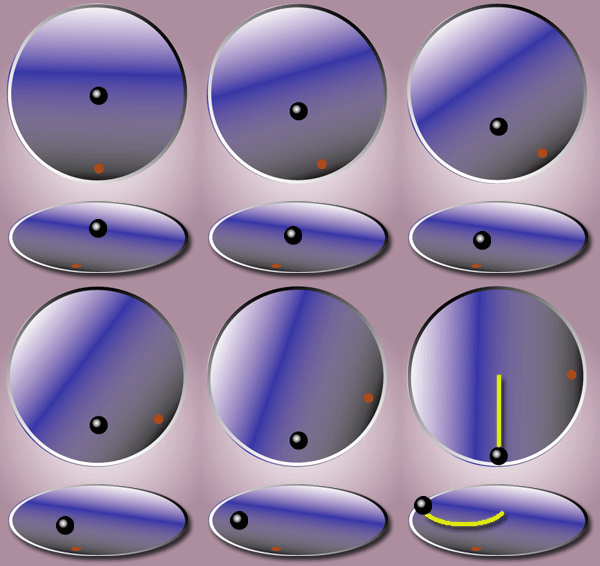
In the inertial frame of reference (upper part of the picture), the black ball moves in a straight line. However, the observer (red dot) who is standing in the rotating/non-inertial frame of reference (lower part of the picture) sees the object as following a curved path due to the Coriolis and centrifugal forces present in this frame.[1]
In physics, the Coriolis force is a pseudo force that acts on objects in motion within a frame of reference that rotates with respect to an inertial frame. In a reference frame with clockwise rotation, the force acts to the left of the motion of the object. In one with anticlockwise (or counterclockwise) rotation, the force acts to the right. Deflection of an object due to the Coriolis force is called the Coriolis effect. Though recognized previously by others, the mathematical expression for the Coriolis force appeared in an 1835 paper by French scientist Gaspard-Gustave de Coriolis, in connection with the theory of water wheels. Early in the 20th century, the term Coriolis force began to be used in connection with meteorology.
Newton's laws of motion describe the motion of an object in an inertial (non-accelerating) frame of reference. When Newton's laws are transformed to a rotating frame of reference, the Coriolis and centrifugal accelerations appear. When applied to objects with masses, the respective forces are proportional to their masses. The magnitude of the Coriolis force is proportional to the rotation rate, and the magnitude of the centrifugal force is proportional to the square of the rotation rate. The Coriolis force acts in a direction perpendicular to two quantities: the angular velocity of the rotating frame relative to the inertial frame and the velocity of the body relative to the rotating frame, and its magnitude is proportional to the object's speed in the rotating frame (more precisely, to the component of its velocity that is perpendicular to the axis of rotation). The centrifugal force acts outwards in the radial direction and is proportional to the distance of the body from the axis of the rotating frame. These additional forces are termed inertial forces, fictitious forces, or pseudo forces. By introducing these fictitious forces to a rotating frame of reference, Newton's laws of motion can be applied to the rotating system as though it were an inertial system; these forces are correction factors that are not required in a non-rotating system.
In popular (non-technical) usage of the term "Coriolis effect", the rotating reference frame implied is almost always the Earth. Because the Earth spins, Earth-bound observers need to account for the Coriolis force to correctly analyze the motion of objects. The Earth completes one rotation for each sidereal day, so for motions of everyday objects the Coriolis force is imperceptible; its effects become noticeable only for motions occurring over large distances and long periods of time, such as large-scale movement of air in the atmosphere or water in the ocean, or where high precision is important, such as artillery or missile trajectories. Such motions are constrained by the surface of the Earth, so only the horizontal component of the Coriolis force is generally important. This force causes moving objects on the surface of the Earth to be deflected to the right (with respect to the direction of travel) in the Northern Hemisphere and to the left in the Southern Hemisphere. The horizontal deflection effect is greater near the poles, since the effective rotation rate about a local vertical axis is largest there, and decreases to zero at the equator. Rather than flowing directly from areas of high pressure to low pressure, as they would in a non-rotating system, winds and currents tend to flow to the right of this direction north of the equator ("clockwise") and to the left of this direction south of it ("anticlockwise"). This effect is responsible for the rotation and thus formation of cyclones(see: Coriolis effects in meteorology).
Image from Cursus seu Mundus Mathematicus (1674) of C.F.M. Dechales, showing how a cannonball should deflect to the right of its target on a rotating Earth, because the rightward motion of the ball is faster than that of the tower.Image from Cursus seu Mundus Mathematicus (1674) of C.F.M. Dechales, showing how a ball should fall from a tower on a rotating Earth. The ball is released from F. The top of the tower moves faster than its base, so while the ball falls, the base of the tower moves to I, but the ball, which has the eastward speed of the tower's top, outruns the tower's base and lands further to the east at L.
Italian scientist Giovanni Battista Riccioli and his assistant Francesco Maria Grimaldi described the effect in connection with artillery in the 1651 Almagestum Novum, writing that rotation of the Earth should cause a cannonball fired to the north to deflect to the east.[2] In 1674, Claude François Milliet Dechales described in his Cursus seu Mundus Mathematicus how the rotation of the Earth should cause a deflection in the trajectories of both falling bodies and projectiles aimed toward one of the planet's poles. Riccioli, Grimaldi, and Dechales all described the effect as part of an argument against the heliocentric system of Copernicus. In other words, they argued that the Earth's rotation should create the effect, and so failure to detect the effect was evidence for an immobile Earth.[3] The Coriolis acceleration equation was derived by Euler in 1749,[4][5] and the effect was described in the tidal equations of Pierre-Simon Laplace in 1778.[6]
Gaspard-Gustave de Coriolis published a paper in 1835 on the energy yield of machines with rotating parts, such as waterwheels.[7][8] That paper considered the supplementary forces that are detected in a rotating frame of reference. Coriolis divided these supplementary forces into two categories. The second category contained a force that arises from the cross product of the angular velocity of a coordinate system and the projection of a particle's velocity into a plane perpendicular to the system's axis of rotation. Coriolis referred to this force as the "compound centrifugal force" due to its analogies with the centrifugal force already considered in category one.[9][10] The effect was known in the early 20th century as the "acceleration of Coriolis",[11] and by 1920 as "Coriolis force".[12]
The understanding of the kinematics of how exactly the rotation of the Earth affects airflow was partial at first.[14] Late in the 19th century, the full extent of the large scale interaction of pressure-gradient force and deflecting force that in the end causes air masses to move along isobars was understood.[15]
In Newtonian mechanics, the equation of motion for an object in an inertial reference frame is:
where is the vector sum of the physical forces acting on the object, is the mass of the object, and is the acceleration of the object relative to the inertial reference frame.
Transforming this equation to a reference frame rotating about a fixed axis through the origin with angular velocity having variable rotation rate, the equation takes the form:[8][16]
where the prime (') variables denote coordinates of the rotating reference frame (not a derivative) and:
is the vector sum of the physical forces acting on the object
is the angular velocity of the rotating reference frame relative to the inertial frame
is the position vector of the object relative to the rotating reference frame
is the velocity of the object relative to the rotating reference frame
is the acceleration of the object relative to the rotating reference frame
The fictitious forces as they are perceived in the rotating frame act as additional forces that contribute to the apparent acceleration just like the real external forces.[17][18][19] The fictitious force terms of the equation are, reading from left to right:[20]
As seen in these formulas the Euler and centrifugal forces depend on the position vector of the object, while the Coriolis force depends on the object's velocity as measured in the rotating reference frame. As expected, for a non-rotating inertial frame of reference the Coriolis force and all other fictitious forces disappear.[21]
As the Coriolis force is proportional to a cross product of two vectors, it is perpendicular to both vectors, in this case the object's velocity and the frame's rotation vector. It therefore follows that:
if the velocity is parallel to the rotation axis, the Coriolis force is zero. For example, on Earth, this situation occurs for a body at the equator moving north or south relative to the Earth's surface. (At any latitude other than the equator, however, the north–south motion would have a component perpendicular to the rotation axis and a force specified by the inward or outward cases mentioned below).
if the velocity is straight inward to the axis, the Coriolis force is in the direction of local rotation. For example, on Earth, this situation occurs for a body at the equator falling downward, as in the Dechales illustration above, where the falling ball travels further to the east than does the tower. Note also that heading north in the Northern Hemisphere would have a velocity component toward the rotation axis, resulting in a Coriolis force to the east (more pronounced the further north one is).
if the velocity is straight outward from the axis, the Coriolis force is against the direction of local rotation. In the tower example, a ball launched upward would move toward the west.
if the velocity is in the direction of rotation, the Coriolis force is outward from the axis. For example, on Earth, this situation occurs for a body at the equator moving east relative to Earth's surface. It would move upward as seen by an observer on the surface. This effect (see Eötvös effect below) was discussed by Galileo Galilei in 1632 and by Riccioli in 1651.[22]
if the velocity is against the direction of rotation, the Coriolis force is inward to the axis. For example, on Earth, this situation occurs for a body at the equator moving west, which would deflect downward as seen by an observer.
For an intuitive explanation of the origin of the Coriolis force, consider an object, constrained to follow the Earth's surface and moving northward in the Northern Hemisphere. Viewed from outer space, the object does not appear to go due north, but has an eastward motion (it rotates around toward the right along with the surface of the Earth). The further north it travels, the smaller the "radius of its parallel (latitude)" (the minimum distance from the surface point to the axis of rotation, which is in a plane orthogonal to the axis), and so the slower the eastward motion of its surface. As the object moves north it has a tendency to maintain the eastward speed it started with (rather than slowing down to match the reduced eastward speed of local objects on the Earth's surface), so it veers east (i.e. to the right of its initial motion).[23][24]
Though not obvious from this example, which considers northward motion, the horizontal deflection occurs equally for objects moving eastward or westward (or in any other direction).[25] However, the theory that the effect determines the rotation of draining water in a household bathtub, sink or toilet has been repeatedly disproven by modern-day scientists; the force is negligibly small compared to the many other influences on the rotation.[26][27][28]
The time, space, and velocity scales are important in determining the importance of the Coriolis force. Whether rotation is important in a system can be determined by its Rossby number (Ro), which is the ratio of the velocity, U, of a system to the product of the Coriolis parameter, , and the length scale, L, of the motion:
Hence, it is the ratio of inertial to Coriolis forces; a small Rossby number indicates a system is strongly affected by Coriolis forces, and a large Rossby number indicates a system in which inertial forces dominate. For example, in tornadoes, the Rossby number is large, so in them the Coriolis force is negligible, and balance is between pressure and centrifugal forces. In low-pressure systems the Rossby number is low, as the centrifugal force is negligible; there, the balance is between Coriolis and pressure forces. In oceanic systems the Rossby number is often around 1, with all three forces comparable.[29]
An atmospheric system moving at U = 10 m/s (22 mph) occupying a spatial distance of L = 1,000 km (621 mi), has a Rossby number of approximately 0.1.[30]
An unguided missile can travel far enough and be in the air long enough to experience the effect of Coriolis force. Long-range shells in the Northern Hemisphere can land to the right of where they were aimed until the effect was noted (those fired in the Southern Hemisphere landed to the left.) It was this effect that first drew the attention of Coriolis himself.[31][32][33]
Left Figure: The trajectory of a ball thrown from the edge of a rotating disc, as seen by an external observer. Because of the rotation, the ball has both an initial tangential velocity and a radial velocity given by the thrower. These velocities bring it to the right of the center. Right Figure: The trajectory of a ball thrown from the edge of a rotating disc, as seen by the thrower, the rotating observer. It is deviating from the straight line.
The figures illustrate a ball tossed from 12:00 o'clock toward the center of a counter-clockwise rotating carousel. In the first figure, the ball is seen by a stationary observer above the carousel, and the ball travels in a straight line slightly to the right of the center, because it had an initial tangential velocity given by the rotation (blue arrow) and a radial velocity given by the thrower (green arrow). The resulting combined velocity is shown as a solid red line, and the trajectory is shown as a dotted red line. In the second figure, the ball is seen by an observer rotating with the carousel, so the ball-thrower appears to stay at 12:00 o'clock, and the ball trajectory has a slight curve.
Bird's-eye view of carousel. The carousel rotates clockwise. Two viewpoints are illustrated: that of the camera at the center of rotation rotating with the carousel (left panel) and that of the inertial (stationary) observer (right panel). Both observers agree at any given time just how far the ball is from the center of the carousel, but not on its orientation. Time intervals are 1/10 of time from launch to bounce.
The figure describes a more complex situation where the tossed ball on a turntable bounces off the edge of the carousel and then returns to the tosser, who catches the ball. The effect of Coriolis force on its trajectory is shown again as seen by two observers: an observer (referred to as the "camera") that rotates with the carousel, and an inertial observer. The figure shows a bird's-eye view based upon the same ball speed on forward and return paths. Within each circle, plotted dots show the same time points. In the left panel, from the camera's viewpoint at the center of rotation, the tosser (smiley face) and the rail both are at fixed locations, and the ball makes a very considerable arc on its travel toward the rail, and takes a more direct route on the way back. From the ball tosser's viewpoint, the ball seems to return more quickly than it went (because the tosser is rotating toward the ball on the return flight).[citation needed]
On the carousel, instead of tossing the ball straight at a rail to bounce back, the tosser must throw the ball toward the right of the target and the ball then seems to the camera to bear continuously to the left of its direction of travel to hit the rail (left because the carousel is turning clockwise). The ball appears to bear to the left from direction of travel on both inward and return trajectories. The curved path demands this observer to recognize a leftward net force on the ball. (This force is "fictitious" because it disappears for a stationary observer, as is discussed shortly.) For some angles of launch, a path has portions where the trajectory is approximately radial, and Coriolis force is primarily responsible for the apparent deflection of the ball (centrifugal force is radial from the center of rotation, and causes little deflection on these segments). When a path curves away from radial, however, centrifugal force contributes significantly to deflection.[citation needed]
The ball's path through the air is straight when viewed by observers standing on the ground (right panel). In the right panel (stationary observer), the ball tosser (smiley face) is at 12 o'clock and the rail the ball bounces from is at position 1. From the inertial viewer's standpoint, positions 1, 2, and 3 are occupied in sequence. At position 2, the ball strikes the rail, and at position 3, the ball returns to the tosser. Straight-line paths are followed because the ball is in free flight, so this observer requires that no net force is applied.
The acceleration affecting the motion of air "sliding" over the Earth's surface is the horizontal component of the Coriolis term
This component is orthogonal to the velocity over the Earth surface and is given by the expression
where
In the Northern Hemisphere, where the latitude is positive, this acceleration, as viewed from above, is to the right of the direction of motion. Conversely, it is to the left in the southern hemisphere.
Coordinate system at latitude φ with x-axis east, y-axis north, and z-axis upward (i.e. radially outward from center of sphere)
Consider a location with latitude φ on a sphere that is rotating around the north–south axis. A local coordinate system is set up with the x axis horizontally due east, the y axis horizontally due north and the z axis vertically upwards. The rotation vector, velocity of movement and Coriolis acceleration expressed in this local coordinate system [listing components in the order east (e), north (n) and upward (u)] are:[34]
When considering atmospheric or oceanic dynamics, the vertical velocity is small, and the vertical component of the Coriolis acceleration () is small compared with the acceleration due to gravity (g, approximately 9.81 m/s2 (32.2 ft/s2) near Earth's surface). For such cases, only the horizontal (east and north) components matter.[citation needed] The restriction of the above to the horizontal plane is (setting vu = 0):[citation needed]
where is called the Coriolis parameter.
By setting vn = 0, it can be seen immediately that (for positive φ and ω) a movement due east results in an acceleration due south; similarly, setting ve = 0, it is seen that a movement due north results in an acceleration due east.[citation needed] In general, observed horizontally, looking along the direction of the movement causing the acceleration, the acceleration always is turned 90° to the right (for positive φ) and of the same size regardless of the horizontal orientation.[citation needed]
In the case of equatorial motion, setting φ = 0° yields:
Ω in this case is parallel to the north–south axis.
Accordingly, an eastward motion (that is, in the same direction as the rotation of the sphere) provides an upward acceleration known as the Eötvös effect, and an upward motion produces an acceleration due west.[citation needed][35]
Due to the Coriolis force, low-pressure systems in the Northern Hemisphere, like Typhoon Nanmadol (left), rotate counterclockwise, and in the Southern Hemisphere, low-pressure systems like Cyclone Darian (right) rotate clockwise.Schematic representation of flow around a low-pressure area in the Northern Hemisphere. The Rossby number is low, so the centrifugal force is virtually negligible. The pressure-gradient force is represented by blue arrows, the Coriolis acceleration (always perpendicular to the velocity) by red arrowsSchematic representation of inertial circles of air masses in the absence of other forces, calculated for a wind speed of approximately 50 to 70 m/s (110 to 160 mph).Cloud formations in a famous image of Earth from Apollo 17, makes similar circulation directly visible
Perhaps the most important impact of the Coriolis effect is in the large-scale dynamics of the oceans and the atmosphere. In meteorology and oceanography, it is convenient to postulate a rotating frame of reference wherein the Earth is stationary. In accommodation of that provisional postulation, the centrifugal and Coriolis forces are introduced. Their relative importance is determined by the applicable Rossby numbers. Tornadoes have high Rossby numbers, so, while tornado-associated centrifugal forces are quite substantial, Coriolis forces associated with tornadoes are for practical purposes negligible.[36]
Because surface ocean currents are driven by the movement of wind over the water's surface, the Coriolis force also affects the movement of ocean currents and cyclones as well. Many of the ocean's largest currents circulate around warm, high-pressure areas called gyres. Though the circulation is not as significant as that in the air, the deflection caused by the Coriolis effect is what creates the spiralling pattern in these gyres. The spiralling wind pattern helps the hurricane form. The stronger the force from the Coriolis effect, the faster the wind spins and picks up additional energy, increasing the strength of the hurricane.[37][better source needed]
Air within high-pressure systems rotates in a direction such that the Coriolis force is directed radially inwards, and nearly balanced by the outwardly radial pressure gradient. As a result, air travels clockwise around high pressure in the Northern Hemisphere and anticlockwise in the Southern Hemisphere. Air around low-pressure rotates in the opposite direction, so that the Coriolis force is directed radially outward and nearly balances an inwardly radial pressure gradient.[38][better source needed]
If a low-pressure area forms in the atmosphere, air tends to flow in towards it, but is deflected perpendicular to its velocity by the Coriolis force. A system of equilibrium can then establish itself creating circular movement, or a cyclonic flow. Because the Rossby number is low, the force balance is largely between the pressure-gradient force acting towards the low-pressure area and the Coriolis force acting away from the center of the low pressure.
Instead of flowing down the gradient, large scale motions in the atmosphere and ocean tend to occur perpendicular to the pressure gradient. This is known as geostrophic flow.[39] On a non-rotating planet, fluid would flow along the straightest possible line, quickly eliminating pressure gradients. The geostrophic balance is thus very different from the case of "inertial motions" (see below), which explains why mid-latitude cyclones are larger by an order of magnitude than inertial circle flow would be.[citation needed]
This pattern of deflection, and the direction of movement, is called Buys-Ballot's law. In the atmosphere, the pattern of flow is called a cyclone. In the Northern Hemisphere the direction of movement around a low-pressure area is anticlockwise. In the Southern Hemisphere, the direction of movement is clockwise because the rotational dynamics is a mirror image there.[40] At high altitudes, outward-spreading air rotates in the opposite direction.[citation needed][41][full citation needed] Cyclones rarely form along the equator due to the weak Coriolis effect present in this region.[42]
An air or water mass moving with speed subject only to the Coriolis force travels in a circular trajectory called an inertial circle. Since the force is directed at right angles to the motion of the particle, it moves with a constant speed around a circle whose radius is given by:
where is the Coriolis parameter , introduced above (where is the latitude). The time taken for the mass to complete a full circle is therefore . The Coriolis parameter typically has a mid-latitude value of about 10−4 s−1; hence for a typical atmospheric speed of 10 m/s (22 mph), the radius is 100 km (62 mi) with a period of about 17 hours. For an ocean current with a typical speed of 10 cm/s (0.22 mph), the radius of an inertial circle is 1 km (0.6 mi). These inertial circles are clockwise in the Northern Hemisphere (where trajectories are bent to the right) and anticlockwise in the Southern Hemisphere.
If the rotating system is a parabolic turntable, then is constant and the trajectories are exact circles. On a rotating planet, varies with latitude and the paths of particles do not form exact circles. Since the parameter varies as the sine of the latitude, the radius of the oscillations associated with a given speed are smallest at the poles (latitude of ±90°), and increase toward the equator.[43]
The Coriolis effect strongly affects the large-scale oceanic and atmospheric circulation, leading to the formation of robust features like jet streams and western boundary currents. Such features are in geostrophic balance, meaning that the Coriolis and pressure gradient forces balance each other. Coriolis acceleration is also responsible for the propagation of many types of waves in the ocean and atmosphere, including Rossby waves and Kelvin waves. It is also instrumental in the so-called Ekman dynamics in the ocean, and in the establishment of the large-scale ocean flow pattern called the Sverdrup balance.
The practical impact of the "Coriolis effect" is mostly caused by the horizontal acceleration component produced by horizontal motion.
There are other components of the Coriolis effect. Westward-traveling objects are deflected downwards, while eastward-traveling objects are deflected upwards.[44] This is known as the Eötvös effect. This aspect of the Coriolis effect is greatest near the equator. The force produced by the Eötvös effect is similar to the horizontal component, but the much larger vertical forces due to gravity and pressure suggest that it is unimportant in the hydrostatic equilibrium. However, in the atmosphere, winds are associated with small deviations of pressure from the hydrostatic equilibrium. In the tropical atmosphere, the order of magnitude of the pressure deviations is so small that the contribution of the Eötvös effect to the pressure deviations is considerable.[45]
In addition, objects traveling upwards (i.e. out) or downwards (i.e. in) are deflected to the west or east respectively. This effect is also the greatest near the equator. Since vertical movement is usually of limited extent and duration, the size of the effect is smaller and requires precise instruments to detect. For example, idealized numerical modeling studies suggest that this effect can directly affect tropical large-scale wind field by roughly 10% given long-duration (2 weeks or more) heating or cooling in the atmosphere.[46][47] Moreover, in the case of large changes of momentum, such as a spacecraft being launched into orbit, the effect becomes significant. The fastest and most fuel-efficient path to orbit is a launch from the equator that curves to a directly eastward heading.
Imagine a train that travels through a frictionless railway line along the equator. Assume that, when in motion, it moves at the necessary speed to complete a trip around the world in one day (465 m/s).[48] The Coriolis effect can be considered in three cases: when the train travels west, when it is at rest, and when it travels east. In each case, the Coriolis effect can be calculated from the rotating frame of reference on Earth first, and then checked against a fixed inertial frame. The image below illustrates the three cases as viewed by an observer at rest in a (near) inertial frame from a fixed point above the North Pole along the Earth's axis of rotation; the train is denoted by a few red pixels, fixed at the left side in the leftmost picture, moving in the others
Earth and train
The train travels toward the west: In that case, it moves against the direction of rotation. Therefore, on the Earth's rotating frame the Coriolis term is pointed inwards towards the axis of rotation (down). This additional force downwards should cause the train to be heavier while moving in that direction.If one looks at this train from the fixed non-rotating frame on top of the center of the Earth, at that speed it remains stationary as the Earth spins beneath it. Hence, the only force acting on it is gravity and the reaction from the track. This force is greater (by 0.34%)[48] than the force that the passengers and the train experience when at rest (rotating along with Earth). This difference is what the Coriolis effect accounts for in the rotating frame of reference.
The train comes to a stop: From the point of view on the Earth's rotating frame, the velocity of the train is zero, thus the Coriolis force is also zero and the train and its passengers recuperate their usual weight.From the fixed inertial frame of reference above Earth, the train now rotates along with the rest of the Earth. 0.34% of the force of gravity provides the centripetal force needed to achieve the circular motion on that frame of reference. The remaining force, as measured by a scale, makes the train and passengers "lighter" than in the previous case.
The train travels east. In this case, because it moves in the direction of Earth's rotating frame, the Coriolis term is directed outward from the axis of rotation (up). This upward force makes the train seem lighter still than when at rest.Graph of the force experienced by a 10-kilogram (22 lb) object as a function of its speed moving along Earth's equator (as measured within the rotating frame). (Positive force in the graph is directed upward. Positive speed is directed eastward and negative speed is directed westward). From the fixed inertial frame of reference above Earth, the train traveling east now rotates at twice the rate as when it was at rest—so the amount of centripetal force needed to cause that circular path increases leaving less force from gravity to act on the track. This is what the Coriolis term accounts for on the previous paragraph.As a final check one can imagine a frame of reference rotating along with the train. Such frame would be rotating at twice the angular velocity as Earth's rotating frame. The resulting centrifugal force component for that imaginary frame would be greater. Since the train and its passengers are at rest, that would be the only component in that frame explaining again why the train and the passengers are lighter than in the previous two cases.
This also explains why high-speed projectiles that travel west are deflected down, and those that travel east are deflected up. This vertical component of the Coriolis effect is called the Eötvös effect.[49]
The above example can be used to explain why the Eötvös effect starts diminishing when an object is traveling westward as its tangential speed increases above Earth's rotation (465 m/s). If the westward train in the above example increases speed, part of the force of gravity that pushes against the track accounts for the centripetal force needed to keep it in circular motion on the inertial frame. Once the train doubles its westward speed at 930 m/s (2,100 mph) that centripetal force becomes equal to the force the train experiences when it stops. From the inertial frame, in both cases it rotates at the same speed but in the opposite directions. Thus, the force is the same cancelling completely the Eötvös effect. Any object that moves westward at a speed above 930 m/s (2,100 mph) experiences an upward force instead. In the figure, the Eötvös effect is illustrated for a 10-kilogram (22 lb) object on the train at different speeds. The parabolic shape is because the centripetal force is proportional to the square of the tangential speed. On the inertial frame, the bottom of the parabola is centered at the origin. The offset is because this argument uses the Earth's rotating frame of reference. The graph shows that the Eötvös effect is not symmetrical, and that the resulting downward force experienced by an object that travels west at high velocity is less than the resulting upward force when it travels east at the same speed.
Contrary to popular misconception, bathtubs, toilets, and other water receptacles do not drain in opposite directions in the Northern and Southern Hemispheres. This is because the magnitude of the Coriolis force is negligible at this scale.[27][50][51][52] Forces determined by the initial conditions of the water (e.g. the geometry of the drain, the geometry of the receptacle, preexisting momentum of the water, etc.) are likely to be orders of magnitude greater than the Coriolis force and hence will determine the direction of water rotation, if any. For example, identical toilets flushed in both hemispheres drain in the same direction, and this direction is determined mostly by the shape of the toilet bowl.
Under real-world conditions, the Coriolis force does not influence the direction of water flow perceptibly. Only if the water is so still that the effective rotation rate of the Earth is faster than that of the water relative to its container, and if externally applied torques (such as might be caused by flow over an uneven bottom surface) are small enough, the Coriolis effect may indeed determine the direction of the vortex. Without such careful preparation, the Coriolis effect will be much smaller than various other influences on drain direction[53] such as any residual rotation of the water[54] and the geometry of the container.[55]
Laboratory testing of draining water under atypical conditions
In 1962, Ascher Shapiro performed an experiment at MIT to test the Coriolis force on a large basin of water, 2 meters (6 ft 7 in) across, with a small wooden cross above the plug hole to display the direction of rotation, covering it and waiting for at least 24 hours for the water to settle. Under these precise laboratory conditions, he demonstrated the effect and consistent counterclockwise rotation. The experiment required extreme precision, since the acceleration due to Coriolis effect is only that of gravity. The vortex was measured by a cross made of two slivers of wood pinned above the draining hole. It takes 20 minutes to drain, and the cross starts turning only around 15 minutes. At the end it is turning at 1 rotation every 3 to 4 seconds.
Both schools of thought are in some sense correct. For the everyday observations of the kitchen sink and bath-tub variety, the direction of the vortex seems to vary in an unpredictable manner with the date, the time of day, and the particular household of the experimenter. But under well-controlled conditions of experimentation, the observer looking downward at a drain in the northern hemisphere will always see a counter-clockwise vortex, while one in the southern hemisphere will always see a clockwise vortex. In a properly designed experiment, the vortex is produced by Coriolis forces, which are counter-clockwise in the northern hemisphere.
Lloyd Trefethen reported clockwise rotation in the Southern Hemisphere at the University of Sydney in five tests with settling times of 18 h or more.[57]
The Coriolis force is important in external ballistics for calculating the trajectories of very long-range artillery shells. The most famous historical example was the Paris gun, used by the Germans during World War I to bombard Paris from a range of about 120 km (75 mi). The Coriolis force minutely changes the trajectory of a bullet, affecting accuracy at extremely long distances. It is adjusted for by accurate long-distance shooters, such as snipers. At the latitude of Sacramento, California, a 1,000 yd (910 m) northward shot would be deflected 2.8 in (71 mm) to the right. There is also a vertical component, explained in the Eötvös effect section above, which causes westward shots to hit low, and eastward shots to hit high.[58][59]
The effects of the Coriolis force on ballistic trajectories should not be confused with the curvature of the paths of missiles, satellites, and similar objects when the paths are plotted on two-dimensional (flat) maps, such as the Mercator projection. The projections of the three-dimensional curved surface of the Earth to a two-dimensional surface (the map) necessarily results in distorted features. The apparent curvature of the path is a consequence of the sphericity of the Earth and would occur even in a non-rotating frame.[60]
Trajectory, ground track, and drift of a typical projectile. The axes are not to scale.
The Coriolis force on a moving projectile depends on velocity components in all three directions, latitude, and azimuth. The directions are typically downrange (the direction that the gun is initially pointing), vertical, and cross-range.[61]: 178
where
, down-range acceleration.
, vertical acceleration with positive indicating acceleration upward.
, cross-range acceleration with positive indicating acceleration to the right.
, down-range velocity.
, vertical velocity with positive indicating upward.
, cross-range velocity with positive indicating velocity to the right.
= 0.00007292 rad/sec, angular velocity of the Earth (based on a sidereal day).
, latitude with positive indicating Northern Hemisphere.
Fluid assuming a parabolic shape as it is rotatingObject moving frictionlessly over the surface of a very shallow parabolic dish. The object has been released in such a way that it follows an elliptical trajectory. Left: The inertial point of view. Right: The co-rotating point of view.The forces at play in the case of a curved surface. Red: gravity Green: the normal force Blue: the net resultant centripetal force.
To demonstrate the Coriolis effect, a parabolic turntable can be used.
On a flat turntable, the inertia of a co-rotating object forces it off the edge. However, if the turntable surface has the correct paraboloid (parabolic bowl) shape (see the figure) and rotates at the corresponding rate, the force components shown in the figure make the component of gravity tangential to the bowl surface exactly equal to the centripetal force necessary to keep the object rotating at its velocity and radius of curvature (assuming no friction). (See banked turn.) This carefully contoured surface allows the Coriolis force to be displayed in isolation.[62][63]
Discs cut from cylinders of dry ice can be used as pucks, moving around almost frictionlessly over the surface of the parabolic turntable, allowing effects of Coriolis on dynamic phenomena to show themselves. To get a view of the motions as seen from the reference frame rotating with the turntable, a video camera is attached to the turntable so as to co-rotate with the turntable, with results as shown in the figure. In the left panel of the figure, which is the viewpoint of a stationary observer, the gravitational force in the inertial frame pulling the object toward the center (bottom ) of the dish is proportional to the distance of the object from the center. A centripetal force of this form causes the elliptical motion. In the right panel, which shows the viewpoint of the rotating frame, the inward gravitational force in the rotating frame (the same force as in the inertial frame) is balanced by the outward centrifugal force (present only in the rotating frame). With these two forces balanced, in the rotating frame the only unbalanced force is Coriolis (also present only in the rotating frame), and the motion is an inertial circle. Analysis and observation of circular motion in the rotating frame is a simplification compared with analysis and observation of elliptical motion in the inertial frame.
Because this reference frame rotates several times a minute rather than only once a day like the Earth, the Coriolis acceleration produced is many times larger and so easier to observe on small time and spatial scales than is the Coriolis acceleration caused by the rotation of the Earth.
In a manner of speaking, the Earth is analogous to such a turntable.[64] The rotation has caused the planet to settle on a spheroid shape, such that the normal force, the gravitational force and the centrifugal force exactly balance each other on a "horizontal" surface. (See equatorial bulge.)
The Coriolis effect caused by the rotation of the Earth can be seen indirectly through the motion of a Foucault pendulum.
A practical application of the Coriolis effect is the mass flow meter, an instrument that measures the mass flow rate and density of a fluid flowing through a tube. The operating principle involves inducing a vibration of the tube through which the fluid passes. The vibration, though not completely circular, provides the rotating reference frame that gives rise to the Coriolis effect. While specific methods vary according to the design of the flow meter, sensors monitor and analyze changes in frequency, phase shift, and amplitude of the vibrating flow tubes. The changes observed represent the mass flow rate and density of the fluid.[65]
In polyatomic molecules, the molecule motion can be described by a rigid body rotation and internal vibration of atoms about their equilibrium position. As a result of the vibrations of the atoms, the atoms are in motion relative to the rotating coordinate system of the molecule. Coriolis effects are therefore present, and make the atoms move in a direction perpendicular to the original oscillations. This leads to a mixing in molecular spectra between the rotational and vibrational levels, from which Coriolis coupling constants can be determined.[66]
Flies (Diptera) and some moths (Lepidoptera) exploit the Coriolis effect in flight with specialized appendages and organs that relay information about the angular velocity of their bodies. Coriolis forces resulting from linear motion of these appendages are detected within the rotating frame of reference of the insects' bodies. In the case of flies, their specialized appendages are dumbbell shaped organs located just behind their wings called "halteres".[67]
The fly's halteres oscillate in a plane at the same beat frequency as the main wings so that any body rotation results in lateral deviation of the halteres from their plane of motion.[68]
In moths, their antennae are known to be responsible for the sensing of Coriolis forces in the similar manner as with the halteres in flies.[69] In both flies and moths, a collection of mechanosensors at the base of the appendage are sensitive to deviations at the beat frequency, correlating to rotation in the pitch and roll planes, and at twice the beat frequency, correlating to rotation in the yaw plane.[70][69]
In astronomy, Lagrangian points are five positions in the orbital plane of two large orbiting bodies where a small object affected only by gravity can maintain a stable position relative to the two large bodies. The first three Lagrangian points (L1, L2, L3) lie along the line connecting the two large bodies, while the last two points (L4 and L5) each form an equilateral triangle with the two large bodies. The L4 and L5 points, although they correspond to maxima of the effective potential in the coordinate frame that rotates with the two large bodies, are stable due to the Coriolis effect.[71] The stability can result in orbits around just L4 or L5, known as tadpole orbits, where trojans can be found. It can also result in orbits that encircle L3, L4, and L5, known as horseshoe orbits.
Riccioli, G. B., 1651: Almagestum Novum, Bologna, pp. 425–427 (Original book [in Latin], scanned images of complete pages.)
Coriolis, G. G., 1832: "Mémoire sur le principe des forces vives dans les mouvements relatifs des machines." Journal de l'école Polytechnique, Vol 13, pp. 268–302. (Original article [in French], PDF file, 1.6 MB, scanned images of complete pages.)
Coriolis, G. G., 1835: "Mémoire sur les équations du mouvement relatif des systèmes de corps." Journal de l'école Polytechnique, Vol 15, pp. 142–154 (Original article [in French] PDF file, 400 KB, scanned images of complete pages.)
Gill, A. E. Atmosphere-Ocean dynamics, Academic Press, 1982.
McDonald, James E. (May 1952). "The Coriolis Effect"(PDF). Scientific American. 186 (5): 72–78. Bibcode:1952SciAm.186e..72M. doi:10.1038/scientificamerican0552-72. Archived from the original(PDF) on 21 March 2016. Retrieved 4 January 2016. Everything that moves over the surface of the Earth – water, air, animals, machines and projectiles – sidles to the right in the Northern Hemisphere and to the left in the Southern. Elementary, non-mathematical; but well written.
Grattan-Guinness, I., Ed., 1994: Companion Encyclopedia of the History and Philosophy of the Mathematical Sciences. Vols. I and II. Routledge, 1840 pp. 1997: The Fontana History of the Mathematical Sciences. Fontana, 817 pp. 710 pp.
Khrgian, A., 1970: Meteorology: A Historical Survey. Vol. 1. Keter Press, 387 pp.
Kuhn, T. S., 1977: Energy conservation as an example of simultaneous discovery. The Essential Tension, Selected Studies in Scientific Tradition and Change, University of Chicago Press, 66–104.
Kutzbach, G., 1979: The Thermal Theory of Cyclones. A History of Meteorological Thought in the Nineteenth Century. Amer. Meteor. Soc., 254 pp.
^Truesdell, Clifford. Essays in the History of Mechanics. Springer Science & Business Media, 2012., p. 225
^Persson, A. "The Coriolis Effect: Four centuries of conflict between common sense and mathematics, Part I: A history to 1885." History of Meteorology 2 (2005): 1–24.
^Bhatia, V.B. (1997). Classical Mechanics: With introduction to Nonlinear Oscillations and Chaos. Narosa Publishing House. p. 201. ISBN978-81-7319-105-3.
^Cline, Douglas (19 August 2021). Variational Principles in Classical Mechanics (3rd ed.). University of Rochester River Campus Libraries. p. 284. ISBN978-0-9988372-3-9.
^Persson, Anders. O (2005). "The Coriolis Effect: Four centuries of conflict between common sense and mathematics, Part I: A history to 1885". History of Meteorology (2) – via University of Exeter.
^Trefethen, Lloyd M.; Bilger, R. W.; Fink, P. T.; Luxton, R. E.; Tanner, R. I. (September 1965). "The Bath-Tub Vortex in the Southern Hemisphere". Nature. 207 (5001): 1084–1085. Bibcode:1965Natur.207.1084T. doi:10.1038/2071084a0. S2CID4249876.
^The claim is made that in the Falklands in WW I, the British failed to correct their sights for the southern hemisphere, and so missed their targets. John Edensor Littlewood (1953). A Mathematician's Miscellany. Methuen And Company Limited. p. 51. John Robert Taylor (2005). Classical Mechanics. University Science Books. p. 364; Problem 9.28. ISBN978-1-891389-22-1. For set up of the calculations, see Carlucci & Jacobson (2007), p. 225
^Klinger, Barry A.; Haine, Thomas W. N. (2019). "Deep Meridional Overturning". Ocean Circulation in Three Dimensions. Thermohaline Overturning. Cambridge University Press. ISBN978-0521768436. Retrieved 19 August 2019.
^McCoy, Robert L. (1999), Modern Exterior Ballistics, Schiffer Military History, ISBN0-7643-0720-7
^When a container of fluid is rotating on a turntable, the surface of the fluid naturally assumes the correct parabolic shape. This fact may be exploited to make a parabolic turntable by using a fluid that sets after several hours, such as a synthetic resin. For a video of the Coriolis effect on such a parabolic surface, see Geophysical fluid dynamics lab demonstrationArchived 20 November 2005 at the Wayback Machine John Marshall, Massachusetts Institute of Technology.
^For a java applet of the Coriolis effect on such a parabolic surface, see Brian FiedlerArchived 21 March 2006 at the Wayback Machine School of Meteorology at the University of Oklahoma.
^Fox, J; Daniel, T (2008). "A neural basis for gyroscopic force measurement in the halteres of Holorusia". Journal of Comparative Physiology. 194 (10): 887–897. doi:10.1007/s00359-008-0361-z. PMID18751714. S2CID15260624.
The coriolis effect in meteorology PDF-file. 5 pages. A detailed explanation by Mats Rosengren of how the gravitational force and the rotation of the Earth affect the atmospheric motion over the Earth surface. 2 figures
Animation clip showing scenes as viewed from both an inertial frame and a rotating frame of reference, visualizing the Coriolis and centrifugal forces.
The Coriolis force is a fictitious force that arises in a rotating reference frame, appearing to deflect the path of moving objects perpendicular to their velocity vector due to the frame's rotation.[1] On Earth, this deflection acts to the right of the motion in the Northern Hemisphere and to the left in the Southern Hemisphere, with magnitude proportional to the object's speed, the frame's angular velocity, and the sine of the latitude.[1] It is not a real force but an apparent effect resulting from observing motion in a non-inertial (rotating) system, such as from the Earth's surface.[2]Named after French mathematician and engineer Gaspard-Gustave de Coriolis (1792–1843), the concept was formally derived in his 1835 paper "Sur les équations du mouvement relatif des systèmes de corps", which analyzed relative motions in rotating mechanical systems like waterwheels and machinery.[3] Earlier contributions included Giovanni Alfonso Borelli's 17th-century observations of eastward deflections in falling bodies and Pierre-Simon Laplace's 19th-century derivations of similar effects in celestial mechanics and ocean tides, though Coriolis provided the general mathematical framework for rotating frames.[3] The force's expression in vector form is Fc=−2mΩ×v, where m is the object's mass, Ω is the angular velocity vector of the frame, and v is the velocity relative to the frame; for horizontal motions on Earth, the key parameter is f=2Ωsinϕ, where Ω≈7.29×10⁻⁵ rad/s is Earth's rotation rate and ϕ is latitude.[1][4]The Coriolis force plays a crucial role in large-scale geophysical phenomena, deflecting winds and ocean currents to produce trade winds, westerlies, and the rotation of cyclones (counterclockwise in the Northern Hemisphere, clockwise in the Southern).[1] It influences geostrophic balance in atmospheric and oceanic flows, where it counteracts pressure gradients to maintain steady circulations, and is essential for understanding phenomena like the jet stream and El Niño oscillations.[2] However, its effects are negligible on small scales, such as in household drains or short-range projectiles, where friction or other forces dominate, requiring distances of hundreds of kilometers or speeds over tens of meters per second for noticeable deflection.[1]
Fundamentals
Definition and Physical Interpretation
The Coriolis force is a fictitious or pseudo-force that manifests in non-inertial reference frames undergoing constant angular rotation relative to an inertial frame. Unlike real forces arising from physical interactions, it does not originate from any tangible field or contact but instead accounts for the apparent deflection of moving objects as observed from the rotating frame. This force is distinct from the centrifugal force, which acts radially outward depending on an object's distance from the rotation axis, whereas the Coriolis force specifically influences the path of objects with velocity in the rotating system.[5][6][4]Physically, the Coriolis force emerges from the conservation of angular momentum for radial motions (e.g., north-south on Earth): in an inertial frame, a free-moving object travels in a straight line, preserving its angular momentum about the rotation axis; however, when viewed from the co-rotating frame, this straight-line motion appears curved or deflected perpendicular to the object's velocity. For tangential motions (e.g., east-west), the deflection is more directly attributable to variations in the centrifugal force, akin to the Eötvös effect, where the moving object experiences a change in effective centrifugal acceleration due to its altered rotation rate relative to the frame. This deflection occurs because the rotating observer's perspective alters the perceived trajectory without any actual torque acting on the object in the inertial frame. The effect is velocity-dependent, meaning stationary objects experience no Coriolis force, and its direction reverses if the rotation sense changes.[7][8][9][2][10][11]In general, the Coriolis force applies to any system in uniform rotation, such as laboratory turntables or planetary bodies, though Earth's rotation serves as the most prominent example in natural phenomena like atmospheric and oceanic flows. The magnitude of this force per unit mass scales linearly with both the object's speed and the angular rotation rate of the frame, making it negligible at small scales or low velocities but significant on global scales. Named after Gaspard-Gustave de Coriolis, who first formalized its description in a 1835 paper on relative motion in rotating systems, the force is typically measured in units of acceleration (m/s²), equivalent to force per unit mass.[12][13][14]
Mathematical Formulation
The mathematical formulation of the Coriolis force arises from the transformation of Newton's second law between an inertial reference frame and a non-inertial frame rotating with constant angular velocity ω. In the inertial frame, the acceleration a of a particle satisfies ma=F, where F is the net real force and m is the mass. To express this in the rotating frame, where position, velocity, and acceleration are denoted r′, v′, and a′ respectively, the relationship between the accelerations in the two frames must be established.[15]The time derivative of a vector A in the rotating frame relates to that in the inertial frame by (dtdA)inertial=(dtdA)rotating+ω×A. Applying this twice to the position vector yields the velocity transformation v=v′+ω×r′ and, upon further differentiation, the acceleration transformation:a′=a−2ω×v′−ω×(ω×r′)−dtdω×r′.For constant angular velocity (i.e., dtdω=0), the Euler acceleration term vanishes, simplifying to a′=a−2ω×v′−ω×(ω×r′). Substituting into Newton's law gives the equation of motion in the rotating frame as ma′=F−2mω×v′−mω×(ω×r′), where the terms beyond F are fictitious forces.[15][16]The Coriolis force is the velocity-dependent fictitious force FC=−2mω×v′, which acts perpendicular to both ω and v′ and does no work on the particle. This term accounts for the apparent deflection of moving objects in the rotating frame, with magnitude 2mωv′sinθ, where θ is the angle between ω and v′. The centrifugal force −mω×(ω×r′) depends on position and is outward from the rotation axis. These formulations assume the origins of the frames coincide and the rotation rate is constant, neglecting higher-order effects for most geophysical applications.[15][4]For horizontal motion on Earth, where ω=Ω is the planet's angular velocity vector (magnitude Ω≈7.292×10⁻⁵ rad/s, directed along the north pole axis), the Coriolis force is often approximated in local coordinates. The vertical component of Ω at latitude ϕ gives the Coriolis parameter f=2Ωsinϕ, which represents the effective strength for horizontal velocities. This scalar form emerges from projecting −2Ω×v′ onto the local horizontal plane, yielding a deflection perpendicular to v′ with magnitude fv′. At the equator, f=0; at the poles, f=2Ω.[17][4]
Direction in Simple Cases
The direction of the Coriolis force arises from the vector cross product in its formulation, −2ω×v′, where ω is the angular velocity vector of the rotating frame and v′ is the velocity relative to that frame; the resulting force is perpendicular to both ω and v′, with its sense determined by the right-hand rule.[18][19] In the Northern Hemisphere, where the local vertical component of ω points upward, the Coriolis force deflects moving objects to the right of their velocity direction, while in the Southern Hemisphere, with the vertical component pointing downward, deflection occurs to the left.[20][18]For simple horizontal motions near the Earth's surface, consider the local approximation where the dominant component of ω is vertical, Ωsinϕ (with Ω as Earth's angular speed and ϕ the latitude). A particle moving northward experiences deflection to the east, as the cross product yields a force pointing eastward perpendicular to the northward velocity.[19][18] Similarly, eastward motion deflects southward, consistent with the rightward rule in the Northern Hemisphere.[20][19] These deflections reverse in the Southern Hemisphere, appearing as leftward turns.Vertical motions, such as upward or downward velocities, produce minimal horizontal deflections at small scales because the cross product with the primarily vertical ω component yields forces largely in the vertical plane, with horizontal effects arising only from the smaller horizontal component of ω, Ωcosϕ.[18][20] This horizontal component, which points east and varies from maximum at the equator to zero at the poles, influences azimuthal deflections in vertical flows but is often negligible for typical geophysical scales.[19][20]
Historical Development
Early Observations and Concepts
In the 17th century, early observations of rotational effects on motion began to emerge amid debates over Earth's rotation. Italian astronomer Giovanni Battista Riccioli, in his 1651 work Almagestum Novum, described how Earth's rotation would cause a cannonball fired northward to deflect eastward due to differences in tangential speeds at varying latitudes, providing one of the first qualitative recognitions of such an apparent deviation in projectile motion.[21] This idea was part of broader arguments against heliocentrism, as Riccioli noted that no such deflection had been observed, which he used to support a stationary Earth model.[22] Similarly, Italian physician and physicist Giovanni Alfonso Borelli, in 1668, quantitatively examined the deflection of falling bodies due to Earth's rotation, predicting an eastward shift and laying early groundwork for understanding these effects.[3]By the 18th century, these notions extended to fluids and projectiles under Earth's rotation. Scottish mathematician Colin Maclaurin, in his 1740 prize essay on tides (published in 1742), explored how Earth's rotation influences the equilibrium figure of a self-gravitating fluid body and deflects moving objects, including projectiles, thereby anticipating dynamical effects on atmospheric and oceanic motions.[23] Maclaurin linked this deflection to pressure gradients in rotating systems, providing an early theoretical framework for trade wind patterns. Independently, Leonhard Euler, in his 1749 paper on the motion of fluids, analytically derived the acceleration term now recognized as the Coriolis component (in the form 2ω×v, where ω is angular velocity and v is velocity), describing its role in rotating fluid dynamics without naming it as a force.[24] French mathematician Pierre-Simon Laplace further incorporated the effect into his 1778 tidal equations, deriving its influence on ocean tides and celestial mechanics.[25]In the early 19th century, these scattered ideas began connecting to geophysical observations, though still lacking a unified theoretical synthesis. British polymath William Whewell, in his 1837 analysis of tidal data and ocean dynamics, proposed that Earth's rotation causes deflections in ocean currents, contributing to their observed patterns such as gyres, based on empirical charts and equilibrium considerations.[26] Whewell's progressive wave theory for tides implicitly incorporated rotational influences on fluid motion, marking a precursor application to large-scale currents without formalizing a distinct force. Overall, these pre-1835 contributions represented empirical and qualitative insights into rotational deflections, setting the stage for Gaspard-Gustave de Coriolis's later systematic formulation.
Formulation by Coriolis and Later Refinements
In 1835, French mathematician and engineer Gaspard-Gustave de Coriolis published his seminal paper "Mémoire sur les équations du mouvement relatif des systèmes de corps" in the Journal de l'École Polytechnique, where he derived the equations of motion for systems of bodies in a rotating frame of reference.[27] Motivated by practical applications to rotating machinery, Coriolis analyzed the relative motions in devices such as waterwheels and pendulums, introducing the key term now recognized as the Coriolis acceleration, expressed as −2ω×v, where ω is the angular velocity of the frame and v is the velocity relative to that frame.[25] This term accounts for the apparent transverse force experienced by moving parts in rotating systems, building on his earlier 1832 work on kinetic energy principles but formalizing the full vector form for broader mechanical contexts.Although Coriolis himself referred to this effect as a "compound centrifugal force" or "entraining force" in the context of machine efficiency, the phenomenon was not immediately named after him.[25] In the late 19th and early 20th centuries, it was more commonly known as the "deflective force," particularly in geophysical applications, with early uses appearing in discussions of planetary motion and fluid dynamics.[28] The term "Coriolis force" gained widespread adoption in the 1920s, reflecting its growing recognition in meteorology and oceanography as a distinct inertial effect, with the first documented English usage appearing around 1923.Subsequent refinements extended Coriolis's formulation to geophysical scales. In the 1890s, Norwegian physicist Vilhelm Bjerknes incorporated the Coriolis term into the primitive equations of atmospheric hydrodynamics, laying the groundwork for numerical weather prediction by treating the atmosphere as a rotating fluid system governed by these forces.[29] Bjerknes's 1904 manifesto emphasized solving these equations graphically to forecast weather patterns, marking a pivotal shift toward applying Coriolis effects to large-scale air motions.[29] Building on this, Swedish oceanographer Vagn Walfrid Ekman in 1902 developed the theory of wind-driven currents in the upper ocean, demonstrating how the Coriolis force balances frictional drag to produce spiraling velocity profiles in boundary layers, now known as the Ekman spiral.[30] Ekman's analysis, published in his 1905 report, quantified the net transport perpendicular to the wind direction, influencing models of ocean circulation.[30]
Intuitive Explanations
Rotating Reference Frames
Newton's second law, F=ma, holds exactly in inertial reference frames, where no acceleration of the frame itself occurs relative to absolute space. However, many practical observations, such as those on Earth, are made from rotating reference frames, which are non-inertial. In such frames, the apparent motion of objects deviates from predictions based solely on real forces, necessitating the introduction of additional terms to restore the form of Newton's laws.[31]To describe motion in a rotating frame, the acceleration in the inertial frame a must be related to the acceleration a′ observed in the rotating frame, along with the frame's angular velocity ω. The full transformation for the acceleration, assuming constant ω, is given bya=a′+2ω×v′+ω×(ω×r′),where v′ is the velocity relative to the rotating frame and r′ is the position vector in that frame. This relation arises from differentiating the position and velocity vectors twice while accounting for the rotation, using vector calculus in three dimensions. The term 2ω×v′ is known as the Coriolis acceleration, while ω×(ω×r′) represents the centripetal acceleration. If the angular velocity varies, an additional term ω˙×r′ appears.[31][16]These extra terms are fictitious in the sense that they do not correspond to any real physical forces acting on the object; instead, they account for the acceleration of the reference frame itself. To apply Newton's second law in the rotating frame as F+Ffictitious=ma′, the fictitious forces are defined as FCoriolis=−2mω×v′ and Fcentrifugal=−mω×(ω×r′), with a similar term for varying ω. This formulation allows convenient analysis of motion from the perspective of the rotating observer, such as on Earth's surface, without constantly transforming back to an inertial frame. The Coriolis term, in particular, depends on the velocity in the rotating frame and vanishes for stationary objects.[31][16]
Carousel and Tossed Ball Analogy
One common analogy for understanding the Coriolis force involves a person standing on a rotating carousel who throws a ball radially outward from near the center toward the edge.[32] In the inertial frame outside the carousel, the ball travels in a straight line at constant velocity, following Newton's first law, unaffected by the rotation of the platform.[33] However, from the perspective of observers on the rotating carousel, the ball appears to curve sideways, deflecting to the right if the carousel rotates counterclockwise.[34]This apparent deflection arises because points on the carousel at different radii have different tangential speeds due to the constant angular velocity; the outer edge moves faster than the inner regions.[32] As the ball moves outward, it retains the lower tangential speed of its starting position, while the carousel beneath it rotates, causing the path to seem to veer relative to the rotating frame.[33] This effect can also be understood through the conservation of angular momentum: the ball's angular momentum remains constant in the inertial frame, but in the rotating frame, it behaves as if an additional force is acting perpendicular to its velocity, producing the observed curve.[32] The Coriolis force is thus a fictitious force that accounts for this motion in non-inertial rotating frames, allowing Newton's laws to be applied consistently within them.[35]A variation of this analogy considers a horizontal throw across the diameter of the carousel, from one edge to the opposite side.[34] In the rotating frame, the ball again deflects to the right for counterclockwise rotation, requiring the thrower to aim leftward to compensate and hit the target.[34] This demonstrates the same principle of relative tangential velocities, where the ball's straight-line path in the inertial frame intersects the moving positions of the thrower and receiver differently.[33] Such deflections align with the general rule that the Coriolis force acts perpendicular to the velocity, to the right in the Northern Hemisphere equivalent of counterclockwise rotation.[32]
Bounced Ball Example
In the dropped ball example, a ball is released from rest above the floor of a rotating platform, such as in a space habitat centrifuge. The platform rotates at a constant angular velocity to simulate gravity. During the free-fall phase, in the inertial frame, the ball follows a straight-line trajectory while the platform rotates beneath it, resulting in the contact point shifting relative to the surface. In the rotating frame, however, the Coriolis force acts perpendicular to the ball's velocity, causing a deflection—for instance, to the right in a counterclockwise-rotating frame analogous to Northern Hemisphere conventions. This deflection arises because the Coriolis acceleration, given by −2Ω×v where Ω is the angular velocity vector and v is the velocity in the rotating frame, alters the perceived horizontal motion during descent.[36]From the perspective of an inertial observer, the ball's path is straight, but observers on the rotating platform see it curve or deviate sideways. The direction of deflection depends on the sense of rotation. Compared to the tossed ball analogy, which demonstrates the Coriolis effect through a single parabolic arc in free flight, the dropped ball highlights the phenomenon for vertical motions with a single interaction at the end. This setup is particularly relevant for understanding activities in artificial gravity systems, such as rotating space habitats, where such deflections could affect coordination.[36]A key quantitative aspect is that the lateral deflection depends on the habitat radius R and drop height h, with the approximate displacement given by R[h2R2−1−arccos(Rh)] (with arccos in radians). For instance, in a centrifuge with 35 ft (~10.7 m) diameter (so R≈5.35 m) and h≈1 m, the deflection is approximately 75 cm, illustrating how rotation leads to noticeable deviations even in large-scale systems.[36]
Scale and Applicability
Characteristic Length Scales
The significance of the Coriolis force in a rotating reference frame depends critically on the spatial scale of the motion. On large scales, such as those in planetary atmospheres and oceans spanning thousands of kilometers, the Coriolis force dominates the dynamics of fluid flows by providing the primary deflection mechanism.[4] In contrast, on small scales, such as laboratory experiments with characteristic lengths under 1 meter, the Coriolis force is entirely negligible compared to inertial, viscous, or frictional forces.[37]Representative examples illustrate this scale dependence. The Coriolis force is essential for the cyclonic rotation and overall structure of hurricanes, which typically extend over hundreds of kilometers in diameter.[38] For a baseball pitch traveling about 20 meters in roughly 0.4 seconds, however, the resulting lateral deflection is only about 0.4 millimeters, far too small to influence the trajectory in practice.[39]The magnitude of the Coriolis deflection depends on the rotation rate ω of the frame, the velocity v of the object or fluid parcel, and the duration t of the motion. Qualitatively, the deflection distance scales as ∼2ωvt2, with the quadratic dependence on time allowing the effect to accumulate substantially over the long durations and distances of geophysical phenomena.[39]On large scales, this leads to a transition toward geostrophic balance, in which the Coriolis force approximately counters the pressure gradient force to produce steady, nearly frictionless flows parallel to contours of constant pressure.[40] At smaller scales, where travel times are short and other forces like friction prevail, the dynamics shift to being dominated by those local effects rather than rotation.[4]
Rossby Number
The Rossby number, denoted as Ro, is a dimensionless quantity that quantifies the relative importance of inertial forces to the Coriolis force in rotating fluid systems.[41] It is defined by the formulaRo=fLU,where U represents the characteristic velocity scale of the flow, L is the characteristic length scale, and f is the Coriolis parameter given by f=2Ωsinϕ, with Ω as the angular velocity of rotation and ϕ the latitude.[41][4]This number arises from a scale analysis of the Navier-Stokes equations in a rotating reference frame, where the momentum equation includes the advective (inertial) term (v⋅∇)v and the Coriolis term −2Ω×v. Non-dimensionalizing the equations using scales U for velocity, L for length, and time scale L/U, the advective term scales as U2/L, while the Coriolis term scales as fU. The ratio of these terms yields Ro=U/(fL), indicating when rotation significantly influences the flow dynamics.[41]When Ro≪1, the Coriolis force dominates over inertial forces, leading to nearly geostrophic balance where rotational effects constrain the flow; this is typical for large-scale atmospheric phenomena like extratropical cyclones.[42] Conversely, Ro≫1 implies negligible Coriolis influence, as seen in small-scale eddies or turbulent structures where local inertial accelerations prevail.[42]In meteorology, the Rossby number serves as a diagnostic tool to assess the validity of geostrophic flow approximations, guiding predictions of wind patterns in weather systems where rotational balance is key.[41]
Applications to Earth
Rotating Sphere Model
The Coriolis force arises in the context of a uniformly rotating sphere, such as Earth, where the angular velocity vector Ω points along the planet's rotation axis from south to north. At the poles, Ω is entirely vertical, with magnitude Ω≈7.29×10⁻⁵ rad/s, while at the equator, it lies entirely in the horizontal plane, pointing north. For a general latitude ϕ, the local components of Ω in a tangent plane approximation are resolved into a vertical component Ωz=Ωsinϕ and a horizontal (northward) component Ωy=Ωcosϕ. This decomposition is derived by projecting Ω onto the local coordinate system, where the z-axis is upward (anti-parallel to local gravity), the x-axis points east, and the y-axis points north.[43][4]In the local Cartesian frame approximating the tangent plane at latitude ϕ0, the full expression for the Coriolis acceleration is −2Ω×v, where v is the velocity relative to the rotating frame. For geophysical applications, where horizontal motions dominate and vertical velocities are small, the vertical component Ωz primarily contributes to the horizontal Coriolis terms via the parameter f=2Ωsinϕ0, which introduces deflection perpendicular to the velocity: eastward for northward motion and westward for southward motion. The horizontal component Ωy influences vertical accelerations but is often secondary for shallow fluid layers, though it plays a role in effects like the Eötvös phenomenon. This setup assumes small-scale motions relative to Earth's radius a≈6371 km, justifying the flat-Earth tangent plane approximation over the sphere's curvature.[43][4]To simplify analyses of large-scale flows, two key approximations are employed: the f-plane and the beta-plane. The f-plane approximation treats f as constant at the reference latitude ϕ0, valid for phenomena confined to scales much smaller than the distance over which f varies significantly (e.g., L≪a/cosϕ0). This yields isotropic geostrophic balance in the mid-latitudes. The beta-plane approximation extends this by linearly varying f with northward distance y: f≈f0+βy, where β=a2Ωcosϕ0 captures the meridional gradient of the Coriolis parameter, essential for planetary-scale dynamics like Rossby waves. These approximations bridge the spherical geometry to tractable equations without resolving the full global rotation.[43][4]
Meteorology and Oceanography
In meteorology, the Coriolis force plays a central role in balancing the pressure gradient force to produce geostrophic winds, where the two forces are equal and opposite, resulting in straight-line flow parallel to isobars at large scales.[44][45] This balance occurs when air accelerates until the Coriolis deflection matches the pressure gradient, typically in the free atmosphere away from frictional influences near the surface.[44] In the Northern Hemisphere, the Coriolis force deflects moving air to the right, causing winds around a low-pressure system to flow counterclockwise as air spirals inward while being deflected rightward relative to its motion.[46][47] Hurricanes exemplify this, rotating counterclockwise in the Northern Hemisphere due to the Coriolis force acting on inflowing air, which gains angular momentum and spins opposite to Earth's rotation; in the Southern Hemisphere, they rotate clockwise.[38][48][49]In oceanography, the Coriolis force influences surface currents through the Ekman layer, where frictional coupling to wind stress causes a net transport at 45 degrees to the right of the wind in the Northern Hemisphere (and to the left in the Southern Hemisphere), leading to the Ekman spiral with velocity decreasing and rotating with depth.[30][50] Below this layer, deeper currents achieve geostrophic balance similar to atmospheric flows, with the Coriolis force countering pressure gradients to drive large-scale circulations.[45] Free particles in the ocean or atmosphere, unforced by pressure or friction, follow inertial circles under the Coriolis force alone, tracing anticyclonic paths (clockwise in the Northern Hemisphere) with radius given by R=2ΩsinϕV, where V is the initial speed, Ω is Earth's angular velocity, and ϕ is latitude; this radius is independent of mass and increases toward the equator.[51][52]The Coriolis force also shapes broader patterns, deflecting trade winds eastward in the tropics to form the easterly belts that drive equatorial ocean upwelling, while contributing to the meandering and strength of mid-latitude jet streams through rightward deflection of westerly flows.[53][54] In ocean basins, it promotes the clockwise rotation of subtropical gyres in the Northern Hemisphere, such as the North Atlantic Gyre, by deflecting western boundary currents equatorward and eastern ones poleward.[55]
Eötvös Effect
The Eötvös effect describes the latitude-dependent modification of effective gravitational acceleration arising from the interaction between an object's horizontal velocity and Earth's rotation.[24] This variation occurs because motion relative to the rotating frame alters the centrifugal contribution to the net downward force, effectively changing the object's apparent weight.[56] The effect is most pronounced for east-west motions and diminishes toward the poles, where the rotational component perpendicular to the motion vanishes.[24]As a component of the broader Coriolis acceleration ac=−2ω×v, the Eötvös effect captures the vertical projection of this fictitious force, distinct from its horizontal deflection.[56] For eastward horizontal velocity v, the effective gravity decreases due to an enhanced centrifugal term, while westward velocity increases it.[24] The approximate relative change is given bygΔg≈g2Ωvcosϕ,where Ω is Earth's angular velocity (7.292×10⁻⁵ rad/s), ϕ is latitude, and g≈9.81 m/s²; the sign is negative for eastward motion.[56] This term dominates over quadratic velocity corrections like v2/R for typical speeds much less than orbital velocities.[24]A practical illustration involves a ship traveling eastward at sea, where gravimeters register a reduced g because the vessel's speed augments the local rotational velocity, boosting the outward centrifugal acceleration and lightening the perceived weight.[56] Conversely, westward travel yields higher readings. This was first quantified in shipboard experiments around 1908 in the Black Sea, resolving discrepancies in early gravity surveys.[24] For pendulums, the effect explains asymmetric oscillation periods in east-west swings near the equator: the bob experiences lower effective g when moving eastward, accelerating that phase of the swing, and higher g westward, slowing it—leading to an overall faster average period compared to north-south motion.[15] These observations were experimentally confirmed by Loránd Eötvös using sensitive torsion balances on railcars and ships between 1906 and 1909.[57]
Draining Phenomena
A widespread misconception attributes the direction of water rotation in draining bathtubs, sinks, or toilets to the Coriolis force, claiming counterclockwise swirling in the Northern Hemisphere and clockwise in the Southern Hemisphere.[58] This myth persists in popular culture despite lacking scientific basis for everyday scenarios, as the Coriolis effect is negligible at such small scales due to its dependence on the size of the system and the duration of fluid motion.[59] In reality, the observed rotation is overwhelmingly determined by initial conditions, such as the shape of the basin, residual angular momentum from filling the container, or minor asymmetries in the drain setup, which introduce far stronger influences than Earth's rotation. For toilets specifically, this includes the design of the fixture, particularly the angle and positioning of the water jets (rim holes) that shoot water into the bowl for efficient cleaning and waste removal.[58][60]The Coriolis force becomes insignificant for draining phenomena because the relevant length and time scales are too small for it to produce measurable deflection. The effect is extremely weak over small distances and volumes like a toilet bowl (a few gallons of water) and is overwhelmed by the toilet's design and other local factors. The Rossby number, a dimensionless measure of the ratio of inertial to Coriolis forces, exceeds 10^4 for typical household drains, indicating that rotational effects are utterly dominated by other dynamics.[61] Moreover, the time required for the Coriolis force to induce noticeable deflection is on the order of hours, whereas water drains in seconds or minutes, rendering any potential influence imperceptible under normal conditions.[59] No observable Coriolis-driven rotation occurs in standard household fixtures, as confirmed by numerous analyses emphasizing the overwhelming role of local perturbations.[58]Laboratory experiments under highly controlled conditions have demonstrated the Coriolis effect on draining fluids, but only by minimizing initial disturbances and extending the process duration. In a seminal 1962 study, Ascher H. Shapiro at MIT constructed a 1.8-meter-diameter cylindrical tank with a flat bottom and central drain, filled it carefully to avoid introducing spin, and allowed water to drain slowly over several hours at a controlled rate of about 1 cm per minute.[62] This setup produced a consistent counterclockwise vortex in the Northern Hemisphere, with the deflection matching predictions from Coriolis theory after accounting for the tank's geometry.[62] Similar results were replicated using rotating turntables to simulate Earth's rotation, where induced vortices aligned with the effective hemisphere under analogous minimal-perturbation conditions.[59] These atypical experiments highlight that while the Coriolis force can influence large-scale, low-velocity drains, it remains irrelevant to everyday draining phenomena.
Ballistic Trajectories
The Coriolis force significantly influences the trajectories of projectiles such as bullets and artillery shells, particularly over long ranges where the time of flight is extended. In the Northern Hemisphere, eastward-fired projectiles experience a deflection to the right due to the horizontal component of the Coriolis acceleration, which arises from the cross product of Earth's angular velocity vector and the projectile's velocity. This deflection can also alter the range slightly, with eastward shots typically achieving greater range than westward ones because the effective gravity is reduced in the direction of Earth's rotation.[63]The horizontal deflection d can be approximated as d≈32g2Ωv03sinϕcosθ, where Ω is Earth's angular velocity (7.292×10⁻⁵ rad/s), v0 is the initial velocity, ϕ is the latitude, θ is the elevation angle, and g is gravitational acceleration; this leading-order approximation assumes small Ω and flat-Earth geometry for short ranges. For typical artillery shells with muzzle velocities around 800 m/s at 45° latitude and 45° elevation, the deflection reaches about 0.03 m over 700 m range, but scales dramatically for longer flights, becoming meters at 10-20 km.[64][65]Historically, the German Paris Gun, deployed during World War I to bombard Paris from approximately 120 km away, marked the first instance where artillery calculations explicitly accounted for the Coriolis effect, alongside Earth's curvature and atmospheric drag variations. The gun's shells had flight times exceeding 170 seconds, necessitating precise adjustments to elevation and azimuth to compensate for the deflection, which without correction could shift impact points by hundreds of meters and introduce substantial range discrepancies. This innovation in ballistic modeling highlighted the force's practical importance in siege warfare.[66][67]In modern applications, standard artillery firing tables incorporate Coriolis corrections as part of six-degrees-of-freedom trajectory models, adjusting aim points based on latitude, azimuth, and flight time to achieve accuracies within tens of meters at 30 km ranges. Long-range snipers, engaging targets beyond 1,000 yards, similarly apply these adjustments using ballistic calculators or software that integrate the Coriolis parameters, often shifting point of aim by inches to feet depending on direction and distance—for instance, a westward shot at 45° latitude may require upward elevation tweaks to counter reduced effective gravity.[63][65]The vertical component of the Coriolis force, which affects the projectile's motion perpendicular to the local horizontal plane, is generally minor for low-elevation trajectories but can subtly increase the apogee height for steeper angles by modifying the perceived gravitational field. This effect, intertwined with the Eötvös phenomenon, contributes negligibly to overall range errors in most field artillery but is modeled in advanced simulations for high-altitude or vertical firings.[63]
Visualizations
Laboratory Demonstrations
Laboratory demonstrations of the Coriolis force provide tangible ways to observe its effects in controlled, rotating environments, often scaled for educational settings to illustrate principles that are subtle at everyday scales. These experiments highlight how the force deflects moving objects in a rotating frame of reference, with observations dependent on rotation rate and object velocity. At small scales, the Coriolis effect is weak compared to other forces, requiring rapid rotations or sensitive setups to make deflections visible, thus emphasizing its negligible role in phenomena like draining sinks but its detectability in precise lab conditions.[68]One classic demonstration is the Foucault pendulum, which reveals the Coriolis force through the precession of its swing plane, demonstrating the local vertical component of Earth's rotation, denoted as Ω sin φ, where Ω is Earth's angular velocity and φ is the latitude. In a typical setup, a heavy bob is suspended from a long wire—often several meters in a classroom version or up to 67 meters in historical displays—from a fixed point, allowing free oscillation in any vertical plane without friction at the pivot. The pendulum is set swinging in a straight line from an inertial perspective, but over time, its plane appears to rotate clockwise in the Northern Hemisphere due to the Coriolis deflection. The period of this precession is approximately 24 hours divided by sin φ, completing a full 360-degree rotation in one sidereal day at the poles and slower rates toward the equator; for example, at 40° latitude, the precession rate is about 9.6° per hour. This setup, scalable for schools using driven mechanisms to maintain amplitude, directly visualizes Earth's rotation without needing high speeds, making it accessible for illustrating the Coriolis parameter 2Ω sin φ in geophysical contexts.[69][70][71]Rotating tank experiments offer a hands-on way to observe both the Coriolis deflection and the related centrifugal effects on fluids, simulating geophysical flows at tabletop scales. In a common setup, a shallow tank of water or a parabolic surface is mounted on a turntable rotating at rates like 20 revolutions per minute, with the surface shaped parabolically—deeper at the center by about 6 cm over a 1-meter diameter—to balance centrifugal force against gravity, creating an equipotential plane. When water is poured in or gently stirred, or when a puck or dye is introduced, the Coriolis force causes deflections: in the rotating frame, radial inflows curve to the right in the Northern Hemisphere analog (counterclockwise rotation), forming inertial circles with periods on the order of π/Ω, where Ω is the tank's angular velocity. For instance, an impulsively launched puck traces straight-line oscillations in the inertial frame but circular paths in the rotating view, with radius roughly equal to initial velocity divided by 2Ω, visibly demonstrating the –2Ω × v deflection without needing large-scale equipment. These demos, often using co-rotating cameras for observation, are highly scalable for classrooms, underscoring small-scale limits where friction or slow rotations can mask the effect unless rotation is accelerated.[72][73][71]
Computational and Graphical Methods
Vector field plots provide a graphical representation of the Coriolis deflection patterns across Earth's surface, typically depicted as arrows indicating the direction and magnitude of the fictitious force acting on moving objects in a rotating frame. These plots illustrate how the Coriolis parameter varies with latitude, showing rightward deflection in the Northern Hemisphere and leftward in the Southern Hemisphere for horizontal motions, often overlaid on a global map or spherical projection to highlight zonal and meridional variations. Such visualizations are commonly generated using computational tools like Mathematica, where parametric plotting reveals the spatial distribution of deflection vectors based on the cross product of Earth's angular velocity and velocity fields.Numerical models simulate particle trajectories by integrating the equations of motion in a rotating reference frame, accounting for the Coriolis term to predict deflections over time. Software such as Python-based simulators numerically solve for paths of objects like projectiles, demonstrating curved trajectories that deviate from straight lines due to rotation, with visual outputs tracing the evolving positions. These models allow users to adjust parameters like initial velocity and latitude, revealing inertial oscillations where particles follow circular paths in the rotating frame, corresponding to straight-line motion in the inertial frame. For instance, simulations of eastward or northward launches show the formation of anticyclonic or cyclonic loops, providing insights into large-scale atmospheric or oceanic flows.[74]Animations enhance understanding by dynamically illustrating complex Coriolis-induced phenomena, such as the development of inertial circles or cyclone-like spirals through time-stepped visualizations. Online tools, including JavaScript-based applets, animate particle launches on a rotating sphere, displaying simultaneous views from inertial and rotating frames to contrast straight inertial paths with apparent deflections. These interactive animations often depict cyclone formation by simulating converging flows that spiral due to Coriolis steering, with adjustable rotation rates to observe varying deflection strengths.[75]Advanced 3D visualizations extend these methods to spherical geometry, capturing latitudinal variations in Coriolis effects that planar approximations overlook. Interactive platforms like Mathematica-based models render three-dimensional wind paths on a globe, showing how deflections intensify poleward and vanish at the equator, with rotatable views to examine vertical and horizontal components. Such tools integrate numerical solutions for multiple particles, producing layered graphics that trace trajectories across hemispheres, aiding in the study of global circulation patterns. These spherical simulations, often built with libraries supporting vector cross products and parametric surfaces, offer scalable exploration beyond two-dimensional limits.
Other Applications
Engineering: Coriolis Flow Meters
Coriolis flow meters are precision instruments used to measure the mass flow rate of fluids in industrial processes by leveraging the Coriolis effect on a vibrating tube. The device consists of one or more U-shaped or straight tubes that are driven to oscillate at their resonant frequency by an electromagnetic driver. As fluid flows through the vibrating tube, the Coriolis force acts perpendicular to the direction of motion, causing the tube to experience a measurable twist or deflection. This twist results in a phase difference between the vibrations detected by sensors at the inlet and outlet of the tube, which is directly proportional to the mass flow rate of the fluid.[76][77]The mass flow rate m˙ is determined from the time difference Δt between the sensor signals and the tube's vibration frequency fvib, following the relation m˙∝Δt⋅fvib, where the proportionality constant depends on the tube geometry and material properties. This phase shift arises because the fluid mass entering the tube is forced to accelerate with the tube's motion, while the exiting mass decelerates, generating opposing Coriolis forces that twist the tube oppositely at each end. The measurement is inherently direct for mass flow, making it independent of fluid density, viscosity, temperature, or pressure variations, which distinguishes it from volumetric flow meters.[76][78]These meters are widely applied in industries such as chemical processing, oil and gas, pharmaceuticals, and food and beverage for accurate measurement of both liquids and gases, including multiphase flows and slurries. Their high accuracy—typically 0.1% to 0.5% of reading—enables reliable custody transfer, batching, and process control, even under varying operating conditions like high pressures up to 10,000 psi or temperatures from -300°F to 400°F. For instance, in chemical plants, they ensure precise dosing of corrosive or viscous fluids without recalibration for changing densities.[76][79]The technology originated from theoretical work in the mid-20th century, but practical commercial development occurred in the 1970s, with the first industrial Coriolis flow meter introduced by Micro Motion in 1977. Patents for the vibrating tube design date back to the 1950s, but advancements in electronics and materials enabled viable products by the late 1970s. Today, Coriolis flow meters are a standard tool in chemical plants and other sectors, with ongoing innovations improving rangeability up to 100:1 and reducing pressure drops for broader adoption.[80][81]
Physics: Molecular and Gyroscopic Effects
In the physics of rotating quantum gases, such as Bose-Einstein condensates, the Coriolis force alters the velocity distribution of particles, effectively mimicking the Lorentz force experienced by charged particles in a magnetic field. In the rotating frame, the Coriolis acceleration −2Ω×v (where Ω is the angular velocity vector and v is the particle velocity) leads to quantized energy levels analogous to Landau levels, with the effective charge-to-mass ratio given by q∗/m∗=2Ω/B∗, freezing kinetic degrees of freedom in the lowest Landau level for rapidly rotating systems.[82] This shift influences molecular interactions, promoting strong correlations via dipole-dipole effects at low filling factors ν≤1/7, where the system transitions from fractional quantum Hall states to Wigner crystals due to roton instabilities.A practical consequence arises in gas centrifuges used for isotope separation, where the Coriolis force couples with centrifugal effects to modify diffusion profiles. In these devices, rotating uranium hexafluoride gas at high speeds (typically thousands of rpm) experiences Coriolis deflection that counteracts axial diffusion, enhancing radial separation of heavier isotopes toward the rotor wall while lighter ones concentrate centrally; this reduces back-mixing.[83] The force's impact on wave propagation in the gas further stabilizes countercurrent flows, with dispersion relations altered by strong Coriolis terms that dampen instabilities.[83]In rigid body dynamics, the Coriolis force contributes to gyroscopic precession through a pseudotorque acting on spinning objects. For a gyroscope with angular momentum L, the Coriolis torque in the precessing frame is −2Ω×L, which balances external gravitational torque τg=mghx^ (where h is the distance from pivot to center of mass), resulting in steady precession at rate Ωp=τg/Lsinθ.[84] Nutation, the oscillatory deviation from steady precession, arises from transient imbalances, with the nutation rate modulated by the same 2Ω×L term, leading to elliptic motion described by Jacobi functions for small amplitudes.[85]Quantum analogs of the Coriolis force appear in rotating Bose-Einstein condensates (BECs), where synthetic gauge fields simulate magnetic effects without real charges. Rotation induces a Coriolis force equivalent to a uniform magnetic field B=2mΩ/q∗, nucleating vortices with circulation κ=h/m and enabling fractional quantum Hall-like states at filling factors ν≈1/2.[86] Experiments with optically trapped rubidium-87 atoms have realized up to 12 vortices, bridging classical superfluid rotation to quantum topological phases for studying anyon statistics. This framework connects classical gyroscopic effects to quantum many-body phenomena, highlighting the Coriolis force's role across scales in non-inertial systems.[82]
Biology and Astrophysics
The Coriolis force exerts a negligible influence on biological systems, particularly the flight dynamics of insects and migrating birds, owing to the small characteristic lengths and velocities involved, which result in a large Rossby number where inertial forces overwhelmingly dominate.[87] For instance, in bird flight at speeds up to 40 m/s near the poles, the Coriolis acceleration reaches only about 5.8 × 10^{-3} m/s², orders of magnitude smaller than gravitational acceleration and thus imperceptible for navigation or path adjustment.[88] Similarly, for insect flight, such as that of desert locusts, the effect is even less pronounced due to sub-meter scales, with no compelling evidence that slight observed path curvatures during migration stem from Coriolis deflections rather than wind gradients or swarming behavior. Overall, biological organisms do not appear to utilize or compensate for the Coriolis force in locomotion or orientation.In astrophysical contexts, the Coriolis force is instrumental in stabilizing the collinear Lagrangian points L4 and L5 within the circular restricted three-body problem, where a small test particle co-orbits two massive bodies. These equilateral triangle configurations remain stable for mass ratios greater than approximately 1:25, as the Coriolis terms in the rotating frame provide restoring forces against perturbations, preventing escape despite the points being potential energy maxima in the gravitational potential. Small displacements from L4 or L5 result in closed tadpole orbits, in which the particle librates along a narrow, tadpole-shaped path around the point, a phenomenon observed in systems like Jupiter's Trojan asteroids.[89][90]The Coriolis effect also shapes atmospheric dynamics on exoplanets, particularly gas giants, by deflecting flows and organizing storm patterns in rotating frames. In models of hot Jupiters, high rotation rates amplify Coriolis forces, suppressing meridional circulations and favoring equatorial superrotation with banded zonal jets, akin to Jupiter's atmospheric bands but adapted to extreme irradiation and tidal locking. At intermediate rotation rates, these forces drive cyclone-anticyclone pairs and enhance energy transport, influencing observable spectral features in exoplanet atmospheres.[91][92]