


Community hub
Recent from talks
Contribute something
Nothing was collected or created yet.
Red River Parish, Louisiana
View on Wikipedia
 | This article needs additional citations for verification. (August 2020) |
Red River Parish (French: Paroisse de la Rivière-Rouge) is a parish located in the U.S. state of Louisiana. As of the 2020 census, the population was 7,620,[1] making it the fourth-least populous parish in Louisiana. The parish seat and most populous municipality is Coushatta.[2] It is one of the newer parishes, created in 1871 by the state legislature from parts of Bienville, Bossier, Caddo, Desoto and Natchitoches Parishes under Reconstruction.[3] The plantation economy was based on cotton cultivation, highly dependent on enslaved African labor before the American Civil War.
Key Information


In 1880, the parish had a population with more than twice as many blacks as whites.[4] They were essentially disenfranchised in 1898 under a new state constitution after the white Democrats regained power in the state in the late 1870s through paramilitary intimidation at the polls. Most of the former slaves worked as sharecroppers and laborers, cultivating cotton. Because of the mechanization of agriculture, many blacks left the parish during the mid-20th century Great Migration to seek better job opportunities elsewhere. By 2000, the parish population was 9,622, with a white majority, but Coushatta itself was still two-thirds black.
History
[edit]As in many other rural areas, Red River Parish and the Red River Valley were areas of white vigilante and paramilitary violence after the Civil War, as insurgents tried to regain power after the South's defeat. The state legislature during Reconstruction created the parish in 1871, one of a number established to develop Republican Party strength.
Marshall H. Twitchell was a Union veteran who moved to the parish from Vermont and married a local woman. With the help of her family, he became a successful cotton planter and local leader. He was elected in 1870 as a Republican to the state legislature and filled four local offices with his brother and three brothers-in-law, the latter native to the parish. He won support from freedmen by appointing some to local offices and promoting education.[5]: 356–357 [6]
During the 1870s, there were regular outbreaks of violence in Louisiana, despite the presence of two thousand federal troops stationed there.[5]: 550 The extended agricultural depression and poor economy of the late 19th century aggravated social tensions, as both freedmen and whites struggled to survive and to manage new labor arrangements.
The disputed gubernatorial election of 1872 increased political tensions in the state, especially as the outcome was unsettled for months. Both the Democratic Party and Republican candidates certified their own slates of local officers. Established in May 1874 from white militias, the White League was formed first in the Red River Valley in nearby Grant Parish. The organization grew increasingly well-organized in rural areas like Red River Parish. Soon White League chapters rose across the state.[7]: 76 Operating openly, the White League used violence against officeholders, running some out of town and killing others, and suppressed election turnout among black and white Republicans.[7]: 76
In August 1874 the White League forced six white Republicans from office in Coushatta and ordered them to leave the state. Members assassinated them before they left Louisiana. Four of the men murdered were the brother and three brothers-in-law of state Senator Marshall Twitchell.[5]: 551 The White League also killed five to twenty freedmen who had accompanied the Twitchell relatives and were witnesses to the vigilante acts.[6][7]: 76–77
Historians came to call the events the Coushatta Massacre. The murders contributed to Republican Governor William Pitt Kellogg's request to President Grant for more Federal troops to help control the state. Ordinary Southerners wrote to President Grant at the White House describing the terrible conditions of violence and fear they lived under during these times.[7]: 76–77
With increased voter fraud, paramilitary violence against Republican blacks and whites, and intimidation at the polls preventing people from voting, white Democrats regained control of the state legislature in 1876. The population of the parish in 1880 was 8,573, of whom 2,506 were whites and 6,007 were blacks.[4] In 1898 the state achieved disfranchisement of most blacks and many poor whites through a new constitution that created numerous barriers to voter registration.[8]
20th century
[edit]To seek better opportunities and escape the oppression of segregation, underfunded education, and disfranchisement, thousands of African Americans left Red River and other rural parishes in the Great Migration north and west. As may be seen in the census table below, most left from 1940 to 1970, when the parish had steep population decreases. Regional agricultural problems contributed to outmigration, especially after increasing mechanization in the 1930s reduced the need for laborers. At this time many African Americans from Louisiana went to California, where the defense industry associated with World War II was growing and workers were needed.
Additional outmigration from the parish occurred as late as the 1980s, when African Americans from Louisiana migrated within the South to jobs in developing metropolitan areas of New South states.[9][10]
Red River Parish has been a Democratic Party stronghold since the party reestablished dominance in 1876. As in other southern states, recent decades have brought a realignment in politics in Presidential elections, with the conservative white majority of the parish voting for Republican U.S. President George W. Bush in his 2004 reelection. The majority of the parish voters, however, has continued to support Democratic candidates at the state and local level.
Red River was one of only three parishes that did not vote for the Republican gubernatorial candidate, U.S. Representative Bobby Jindal in the October 20, 2007, jungle primary. The others were nearby Bienville and St. Bernard, located southeast of New Orleans.[11]
Despite its Democratic heritage, Red River Parish is represented in the Louisiana State Senate by a Republican, Gerald Long, the only member of the Long dynasty not to have been elected to office as a Democrat. Long defeated the Democratic candidate, Thomas Taylor Townsend, in the 2007 nonpartisan jungle primary. Both candidates came from Natchitoches.
Louisiana was the last state to issue same-sex marriage licenses in 2015 after a landmark Supreme Court decision to allow same-sex marriage in all 50 U.S. states. Red River Parish was the final holdout of Louisiana's 64 parishes when it continued to deny marriage licenses after 63 other parishes began doing so in late June 2015. Parish Clerk of Court Stuart Shaw was the only official besides Governor Bobby Jindal to continue to defy the Supreme Court's ruling even after the Clerks of Court Association reversed their "wait and see" position.[12]
Geography
[edit]According to the U.S. Census Bureau, the parish has a total area of 402 square miles (1,040 km2), of which 389 square miles (1,010 km2) is land and 13 square miles (34 km2) (3.3%) is water.[13]
Major highways
[edit]U.S.
[edit] U.S. Highway 71
 U.S. Highway 84
 U.S. Highway 371
 Louisiana Highway 1
 Louisiana Highway 174
 Louisiana Highway 480


.svg)
.svg)
.svg)
Adjacent parishes
[edit]- Caddo Parish (northwest)
- Bossier Parish (north)
- Bienville Parish (northeast)
- Natchitoches Parish (southeast)
- De Soto Parish (west)
National protected area
[edit]Climate
[edit]According to the Köppen Climate Classification system, Red River Parish has a humid subtropical climate, abbreviated "Cfa" on climate maps. The hottest temperature recorded in Red River Parish was 108 °F (42.2 °C) on August 3, 1998, September 4, 2000, and August 19, 2011, while the coldest temperature recorded was 3 °F (−16.1 °C) on December 23, 1989.[14]
| Climate data for Red River, Louisiana, 1991–2020 normals, extremes 1969–present | |||||||||||||
|---|---|---|---|---|---|---|---|---|---|---|---|---|---|
| Month | Jan | Feb | Mar | Apr | May | Jun | Jul | Aug | Sep | Oct | Nov | Dec | Year |
| Record high °F (°C) | 81 (27) |
87 (31) |
90 (32) |
95 (35) |
99 (37) |
103 (39) |
105 (41) |
108 (42) |
108 (42) |
97 (36) |
88 (31) |
83 (28) |
108 (42) |
| Mean maximum °F (°C) | 75.2 (24.0) |
78.1 (25.6) |
83.8 (28.8) |
88.0 (31.1) |
92.5 (33.6) |
96.3 (35.7) |
99.1 (37.3) |
100.1 (37.8) |
97.5 (36.4) |
91.1 (32.8) |
83.0 (28.3) |
77.0 (25.0) |
101.7 (38.7) |
| Mean daily maximum °F (°C) | 56.7 (13.7) |
61.0 (16.1) |
68.9 (20.5) |
76.5 (24.7) |
83.8 (28.8) |
90.2 (32.3) |
93.2 (34.0) |
93.9 (34.4) |
88.9 (31.6) |
79.1 (26.2) |
67.4 (19.7) |
58.9 (14.9) |
76.5 (24.7) |
| Daily mean °F (°C) | 46.4 (8.0) |
50.3 (10.2) |
57.8 (14.3) |
65.2 (18.4) |
73.6 (23.1) |
80.5 (26.9) |
83.3 (28.5) |
83.1 (28.4) |
77.2 (25.1) |
66.5 (19.2) |
56.0 (13.3) |
48.4 (9.1) |
65.7 (18.7) |
| Mean daily minimum °F (°C) | 36.0 (2.2) |
39.5 (4.2) |
46.6 (8.1) |
53.9 (12.2) |
63.3 (17.4) |
70.9 (21.6) |
73.4 (23.0) |
72.2 (22.3) |
65.5 (18.6) |
53.9 (12.2) |
44.7 (7.1) |
38.0 (3.3) |
54.8 (12.7) |
| Mean minimum °F (°C) | 21.7 (−5.7) |
26.7 (−2.9) |
30.9 (−0.6) |
38.7 (3.7) |
49.7 (9.8) |
62.2 (16.8) |
67.4 (19.7) |
64.7 (18.2) |
52.4 (11.3) |
39.0 (3.9) |
29.2 (−1.6) |
25.1 (−3.8) |
20.1 (−6.6) |
| Record low °F (°C) | 6 (−14) |
13 (−11) |
18 (−8) |
29 (−2) |
41 (5) |
51 (11) |
59 (15) |
50 (10) |
42 (6) |
28 (−2) |
18 (−8) |
3 (−16) |
3 (−16) |
| Average precipitation inches (mm) | 4.88 (124) |
4.43 (113) |
5.07 (129) |
5.56 (141) |
4.54 (115) |
4.23 (107) |
3.41 (87) |
3.28 (83) |
3.46 (88) |
4.54 (115) |
4.03 (102) |
5.00 (127) |
52.43 (1,331) |
| Average snowfall inches (cm) | 0.1 (0.25) |
0.1 (0.25) |
0.0 (0.0) |
0.0 (0.0) |
0.0 (0.0) |
0.0 (0.0) |
0.0 (0.0) |
0.0 (0.0) |
0.0 (0.0) |
0.0 (0.0) |
0.0 (0.0) |
0.0 (0.0) |
0.2 (0.5) |
| Average precipitation days (≥ 0.01 in) | 9.7 | 9.6 | 9.7 | 7.8 | 8.5 | 8.4 | 7.7 | 6.7 | 6.4 | 7.4 | 8.4 | 9.8 | 100.1 |
| Average snowy days (≥ 0.1 in) | 0.1 | 0.1 | 0.0 | 0.0 | 0.0 | 0.0 | 0.0 | 0.0 | 0.0 | 0.0 | 0.0 | 0.0 | 0.2 |
| Source 1: NOAA[15] | |||||||||||||
| Source 2: National Weather Service[14] | |||||||||||||
Communities
[edit]Town
[edit]- Coushatta (parish seat and most populous municipality)
Villages
[edit]- Edgefield (smallest municipality)
- Hall Summit
- Martin (largest municipality by land area)
Unincorporated communities
[edit]Demographics
[edit]| Census | Pop. | Note | %± |
|---|---|---|---|
| 1880 | 8,573 | — | |
| 1890 | 11,318 | 32.0% | |
| 1900 | 11,548 | 2.0% | |
| 1910 | 11,402 | −1.3% | |
| 1920 | 15,301 | 34.2% | |
| 1930 | 16,078 | 5.1% | |
| 1940 | 15,881 | −1.2% | |
| 1950 | 12,113 | −23.7% | |
| 1960 | 9,978 | −17.6% | |
| 1970 | 9,226 | −7.5% | |
| 1980 | 10,433 | 13.1% | |
| 1990 | 9,387 | −10.0% | |
| 2000 | 9,622 | 2.5% | |
| 2010 | 9,091 | −5.5% | |
| 2020 | 7,620 | −16.2% | |
| U.S. Decennial Census[16] 1790-1960[17] 1900-1990[18] 1990-2000[19] 2010[20] | |||
2020 census
[edit]| Race / Ethnicity (NH = Non-Hispanic) | Pop 1980[21] | Pop 1990[22] | Pop 2000[23] | Pop 2010[24] | Pop 2020[25] | % 1980 | % 1990 | % 2000 | % 2010 | % 2020 |
|---|---|---|---|---|---|---|---|---|---|---|
| White alone (NH) | 6,556 | 5,720 | 5,540 | 5,305 | 4,150 | 62.84% | 60.94% | 57.58% | 58.35% | 54.46% |
| Black or African American alone (NH) | 3,719 | 3,583 | 3,899 | 3,586 | 2,952 | 35.65% | 38.17% | 40.52% | 39.45% | 38.74% |
| Native American or Alaska Native alone (NH) | 13 | 17 | 27 | 33 | 41 | 0.12% | 0.18% | 0.28% | 0.36% | 0.54% |
| Asian alone (NH) | 3 | 6 | 9 | 12 | 0 | 0.03% | 0.06% | 0.09% | 0.13% | 0.00% |
| Native Hawaiian or Pacific Islander alone (NH) | x [26] | x [27] | 0 | 1 | 0 | x | x | 0.00% | 0.01% | 0.00% |
| Other race alone (NH) | 5 | 0 | 1 | 3 | 20 | 0.05% | 0.00% | 0.01% | 0.03% | 0.26% |
| Mixed race or Multiracial (NH) | x [28] | x [29] | 49 | 50 | 269 | x | x | 0.51% | 0.55% | 3.53% |
| Hispanic or Latino (any race) | 137 | 61 | 97 | 101 | 188 | 1.31% | 0.65% | 1.01% | 1.11% | 2.47% |
| Total | 10,433 | 9,387 | 9,622 | 9,091 | 7,620 | 100.00% | 100.00% | 100.00% | 100.00% | 100.00% |
As of the census of 2000,[30] there were 9,622 people, 3,414 households, and 2,526 families living in the parish. The population density was 25 inhabitants per square mile (9.7/km2). There were 3,988 housing units at an average density of 10 per square mile (3.9/km2). The racial makeup of the parish was 57.87% White, 40.91% Black or African American, 0.28% Native American, 0.09% Asian, 0.02% Pacific Islander, 0.22% from other races, and 0.61% from two or more races; 1.01% of the population were Hispanic or Latino of any race. By the 2020 United States census, there were 7,620 people, 3,372 households, and 1,984 families residing in the parish, and its racial makeup was predominantly non-Hispanic white and Black or African American.
In 2000, were 3,414 households, out of which 35.70% had children under the age of 18 living with them, 51.50% were married couples living together, 18.60% had a female householder with no husband present, and 26.00% were non-families. Individuals made up 23.10% of all households, and 11.50% had someone living alone who was 65 years of age or older. The average household size was 2.74 and the average family size was 3.23.
In the parish the population was spread out, with 30.10% under the age of 18, 9.30% from 18 to 24, 24.80% from 25 to 44, 21.50% from 45 to 64, and 14.40% who were 65 years of age or older. As of 2000, the median age was 35 years. For every 100 females there were 90.80 males. For every 100 females age 18 and over, there were 85.40 males.
According to the 2000 census, the median income for a household in the parish was $23,153, and the median income for a family was $27,870. Males had a median income of $27,132 versus $17,760 for females. The per capita income for the parish was $12,119. About 26.00% of families and 29.90% of the population were below the poverty line, including 40.10% of those under age 18 and 18.90% of those age 65 or over.
Education
[edit]Public schools in Red River Parish are operated by the Red River Parish School District.
It is in the service area of Bossier Parish Community College.[31]
Government
[edit]Red River Parish is governed by the Red River Parish Police Jury, which is divided into seven districts. District 1 is represented by William Brown, District 2 by Brandon Hillman, District 3 by Shawn Beard, District 4 by Jessie Davis, District 5 by John W. Moore, District 6 by Ben Taylor, and District 7 by Tray Murray.[32] Red River Parish is represented in the Louisiana State Senate by Republican Louie Bernard of District 31.[33] In the Louisiana House of Representatives, the parish is represented by Republican Michael Firment of District 22 and Democrat Kenny R. Cox of District 23.[34] In the United States House of Representatives, it is represented by Republican Mike Johnson of Louisiana's 4th congressional district.[35]
National Guard
[edit]Coushatta is the home of C Troop 2-108th Cavalry Squadron, a unit dating back to the Confederate Army during the Civil War under the nickname "the Wildbunch". This unit was formerly known as A Company 1-156 Armor Battalion and served recently in Iraq during 2004-5 under the 256th Infantry Brigade. This unit returned from its second deployment to Iraq in 2010.
Hospital
[edit]Christus Coushatta Health Care Center is the only hospital in Red River Parish.
Prison
[edit]| Name | Address | Zip | Aged |
|---|---|---|---|
| Red River Parish Detention Center | E. Carroll Street, Coushatta, Louisiana | 71019 | 18+ |
Notable people
[edit]- Jean Baptiste Brevelle (1698-1754), early 18th century explorer, trader and soldier of Fort Saint Jean Baptiste des Natchitoches and Le Poste des Cadodaquious, the first European settlement in the area.
- Andrew R. Johnson, former state senator (1916–1924) and mayor of Homer in Claiborne Parish, is interred in Red River Parish at Springville Cemetery in Coushatta.
- Lloyd F. Wheat, attorney and member of the Louisiana State Senate from Red River and Natchitoches parishes from 1948 to 1952
Politics
[edit]| Year | Republican | Democratic | Third party(ies) | |||
|---|---|---|---|---|---|---|
| No. | % | No. | % | No. | % | |
| 1912 | 6 | 1.29% | 357 | 76.61% | 103 | 22.10% |
| 1916 | 4 | 0.70% | 567 | 99.30% | 0 | 0.00% |
| 1920 | 187 | 19.62% | 766 | 80.38% | 0 | 0.00% |
| 1924 | 34 | 5.26% | 579 | 89.49% | 34 | 5.26% |
| 1928 | 317 | 26.00% | 891 | 73.09% | 11 | 0.90% |
| 1932 | 24 | 1.42% | 1,661 | 98.34% | 4 | 0.24% |
| 1936 | 132 | 7.45% | 1,641 | 92.55% | 0 | 0.00% |
| 1940 | 231 | 10.88% | 1,892 | 89.12% | 0 | 0.00% |
| 1944 | 409 | 29.55% | 975 | 70.45% | 0 | 0.00% |
| 1948 | 113 | 5.37% | 452 | 21.46% | 1,541 | 73.17% |
| 1952 | 774 | 29.82% | 1,822 | 70.18% | 0 | 0.00% |
| 1956 | 661 | 36.97% | 803 | 44.91% | 324 | 18.12% |
| 1960 | 406 | 21.18% | 377 | 19.67% | 1,134 | 59.15% |
| 1964 | 2,235 | 87.00% | 334 | 13.00% | 0 | 0.00% |
| 1968 | 380 | 10.08% | 914 | 24.24% | 2,477 | 65.69% |
| 1972 | 2,245 | 65.95% | 957 | 28.11% | 202 | 5.93% |
| 1976 | 1,728 | 46.61% | 1,906 | 51.42% | 73 | 1.97% |
| 1980 | 2,147 | 43.06% | 2,776 | 55.68% | 63 | 1.26% |
| 1984 | 3,060 | 60.39% | 1,958 | 38.64% | 49 | 0.97% |
| 1988 | 2,266 | 49.41% | 2,254 | 49.15% | 66 | 1.44% |
| 1992 | 1,649 | 35.24% | 2,360 | 50.43% | 671 | 14.34% |
| 1996 | 1,344 | 31.28% | 2,641 | 61.48% | 311 | 7.24% |
| 2000 | 2,200 | 48.65% | 2,177 | 48.14% | 145 | 3.21% |
| 2004 | 2,507 | 53.15% | 2,140 | 45.37% | 70 | 1.48% |
| 2008 | 2,484 | 53.66% | 2,080 | 44.93% | 65 | 1.40% |
| 2012 | 2,483 | 51.65% | 2,253 | 46.87% | 71 | 1.48% |
| 2016 | 2,391 | 54.07% | 1,938 | 43.83% | 93 | 2.10% |
| 2020 | 2,413 | 58.40% | 1,644 | 39.79% | 75 | 1.82% |
| 2024 | 2,337 | 62.74% | 1,321 | 35.46% | 67 | 1.80% |
See also
[edit]References
[edit]- ^ "Census - Geography Profile: Red River Parish, Louisiana". United States Census Bureau. Retrieved January 22, 2023.
- ^ "Find a County". National Association of Counties. Retrieved June 7, 2011.
- ^ "Red River Parish". Center for Cultural and Eco-Tourism. Retrieved September 5, 2014.
- ^ a b "IV: Red River Parish History". Biographical and Historical Memoirs of Northwest Louisiana. Chicago: Southern Publishing Company. 1891. p. 209 – via HathiTrust.
- ^ a b c Foner, Eric (2002) [1988]. Reconstruction: America's Unfinished Revolution, 1863–1877. New York: Perennial Classics.
- ^ a b Alexander, Danielle (January–February 2004). "Forty Acres and a Mule: The Ruined Hope of Reconstruction". Humanities. 25 (1). Archived from the original on September 16, 2008. Retrieved April 14, 2008.
- ^ a b c d Lemann, Nicholas (2006). Redemption: The Last Battle of the Civil War. New York: Farrar, Straus & Giroux. ISBN 9780374248550.
- ^ Pildes, Richard H. (2000). "Democracy, Anti-Democracy, and the Canon". Constitutional Commentary. 17: 12–13. Retrieved April 25, 2008 – via SSRN.
- ^ "African American Migration Experience: The Second Great Migration". New York Public Library: Schomburg Center for Research in Black Culture. Archived from the original on April 6, 2005. Retrieved April 24, 2008.
- ^ Frey, William H. (May 2004). The New Great Migration: Black Americans' Return to the South, 1965–2000 (PDF) (Report). Washington, D.C.: The Brookings Institution: Center on Urban and Metropolitan Policy. pp. 1–3. Archived from the original (PDF) on April 28, 2008. Retrieved April 14, 2008.
- ^ Gubernatorial primary election returns (Report). Louisiana Secretary of State. October 20, 2007.
- ^ Lane, Emily (June 30, 2015). "Red River Parish clerk only one refusing to comply with gay marriage ruling, lawyer says". The Times-Picayune. Archived from the original on July 2, 2015. Retrieved November 6, 2017.
- ^ "2010 Census Gazetteer Files". United States Census Bureau. August 22, 2012. Archived from the original on September 28, 2013. Retrieved September 1, 2014.
- ^ a b "NOAA Online Weather Data – NWS Shreveport". National Weather Service. Retrieved February 21, 2023.
- ^ "U.S. Climate Normals Quick Access – Station: Red River RSCH STN, LA". National Oceanic and Atmospheric Administration. Retrieved February 21, 2023.
- ^ "U.S. Decennial Census". United States Census Bureau. Retrieved September 1, 2014.
- ^ "Historical Census Browser". University of Virginia Library. Retrieved September 1, 2014.
- ^ "Population of Counties by Decennial Census: 1900 to 1990". United States Census Bureau. Retrieved September 1, 2014.
- ^ "Census 2000 PHC-T-4. Ranking Tables for Counties: 1990 and 2000" (PDF). United States Census Bureau. Archived (PDF) from the original on March 27, 2010. Retrieved September 1, 2014.
- ^ "State & County QuickFacts". United States Census Bureau. Archived from the original on June 6, 2011. Retrieved August 18, 2013.
- ^ "1980 Census of Population - General Population Characteristics - Louisiana - Table 14 - Persons by Race and Table 15 - Total Persons and Spanish Origin Persons by Type of Spanish Origin and Race (p. 20/12-20/20)" (PDF). United States Census Bureau.
- ^ "1990 Census of Population - General Population Characteristics - Louisiana - Table 6 - Race and Hispanic Origin" (PDF). United States Census Bureau. p. 15-38.
- ^ "P004: Hispanic or Latino, and Not Hispanic or Latino by Race – 2000: DEC Summary File 1 – Red River Parish, Louisiana". United States Census Bureau.
- ^ "P2: Hispanic or Latino, and Not Hispanic or Latino by Race – 2010: DEC Redistricting Data (PL 94-171) – Red River Parish, Louisiana". United States Census Bureau.
- ^ "P2: Hispanic or Latino, and Not Hispanic or Latino by Race – 2020: DEC Redistricting Data (PL 94-171) – Red River Parish, Louisiana". United States Census Bureau.
- ^ included in the Asian category in the 1980 Census
- ^ included in the Asian category in the 1990 Census
- ^ not an option in the 1980 Census
- ^ not an option in the 1990 Census
- ^ "U.S. Census website". United States Census Bureau. Retrieved January 31, 2008.
- ^ "Our Colleges". Louisiana's Technical and Community Colleges. Retrieved June 3, 2021.
- ^ "Police Jurors". Red River Parish Police Jury. Retrieved August 5, 2020.
- ^ "Louie Bernard". Louisiana State Senate. Retrieved August 5, 2020.
- ^ "Members by Parish". Louisiana House of Representatives. Retrieved August 5, 2020.
- ^ "About". Congressman Mike Johnson. December 3, 2012. Retrieved August 5, 2020.
- ^ Leip, David. "Dave Leip's Atlas of U.S. Presidential Elections". USElectionAtlas.org. Retrieved November 6, 2017.
Places adjacent to Red River Parish, Louisiana | ||||||||||||||||
|---|---|---|---|---|---|---|---|---|---|---|---|---|---|---|---|---|
| ||||||||||||||||


Municipalities and communities of Red River Parish, Louisiana, United States | ||
|---|---|---|
| Town | 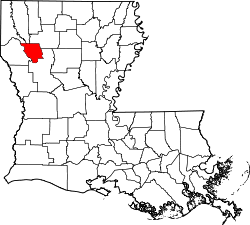 | |
| Villages | ||
| Unincorporated communities |
| |
| Footnotes | ‡This populated place also has portions in an adjacent county or counties | |
| International | |
|---|---|
| National | |
| Other | |

Red River Parish, Louisiana
View on GrokipediaHistory
Establishment and early settlement (19th century)
The territory that became Red River Parish was part of older Louisiana parishes, including Natchitoches, and saw initial European exploration in the early 19th century amid challenges posed by the Red River's natural barriers. The Freeman-Custis Expedition of 1806, commissioned to map the Louisiana Purchase's western boundaries, navigated the Red River but was obstructed by the Great Raft—a massive accumulation of fallen trees and debris spanning over 160 miles—and encounters with Spanish forces, limiting early penetration into the upper valley.[5] These impediments delayed widespread settlement, as the raft had blocked reliable navigation for centuries, confining human activity largely to indigenous groups and sporadic traders prior to American control.[6] Clearing the Great Raft transformed the region's accessibility and spurred settlement. From 1833 to 1838, U.S. Army Captain Henry Miller Shreve led federal efforts using snag boats to dismantle the logjam, enabling steamboat traffic and upstream commerce for the first time.[7] This engineering feat opened the Red River Valley to Anglo-American pioneers and planters, who arrived in increasing numbers by the mid-1800s, drawn by fertile alluvial soils suitable for cotton cultivation.[8] Early homesteads and plantations emerged along the river's bends, reliant on enslaved labor for large-scale agriculture; by the 1850s, the area featured established communities like Coushatta Chute, where a Baptist church was organized in 1850.[9] The valley's economy oriented toward export-oriented cotton production, with river transport facilitating market access to New Orleans.[10] Red River Parish itself was formally established on March 2, 1871, when the Louisiana Legislature carved it from portions of Bienville, Bossier, Caddo, DeSoto, and Natchitoches parishes, under Republican Governor Henry C. Warmoth during Reconstruction. [11] Named for the Red River, which bisects the parish longitudinally, its creation reflected post-Civil War administrative reorganization to manage local governance in a plantation-dominated landscape transitioning from slavery. Coushatta, an existing riverfront settlement named for the indigenous Coushatta people who had inhabited nearby areas, was designated the parish seat, serving as a hub for trade and administration amid the valley's entrenched agrarian patterns. The new boundaries encompassed approximately 402 square miles of bottomlands and uplands, building on decades of incremental settlement that had solidified the area's demographic and economic foundations by the late antebellum period.Civil War, Reconstruction, and plantation economy
Prior to the Civil War, Red River Parish's economy centered on large-scale cotton plantations in the fertile Red River bottomlands, which comprised about 165 of the area's 386 square miles, supporting extensive enslaved labor forces that outnumbered white residents by a ratio of roughly two to one.[8][9] Enslaved Africans performed grueling field work under harsh conditions, with the region's slave prices exceeding those in other states due to high demand for cotton production, contributing to the area's reputation for severe treatment often invoked in the phrase "sold down the river."[12] During the Civil War, the parish experienced direct disruption from the Union Red River Campaign of spring 1864, when General Nathaniel P. Banks advanced up the Red River Valley with over 40,000 troops and naval support, aiming to capture Confederate strongholds and secure cotton supplies, though the effort ultimately failed amid logistical challenges and Confederate resistance.[13] Local plantations suffered raids, destruction, and forced confiscation of cotton, exacerbating economic strain on slaveholders who had invested heavily in enslaved labor for antebellum prosperity.[8] The parish was formally established on March 1, 1871, during Reconstruction by the Republican-dominated Louisiana legislature, carved from portions of Bienville, Bossier, Caddo, DeSoto, and Natchitoches parishes to bolster political support for the party amid efforts to enfranchise freedmen and redistribute influence in rural areas.[8] However, this period saw intense white paramilitary resistance, including actions by the White League—a Democratic-aligned supremacist group—that in late August 1874 resulted in the murder of six white and four Black Republicans over several days in the parish, part of broader efforts to suppress Black voting and Republican governance.[14] Nearby, the 1873 Colfax Massacre in Grant Parish along the Red River claimed up to 150 Black lives in a clash over a courthouse, highlighting the violent backlash against Reconstruction policies in the cotton districts, though such events stemmed from white Democrats' refusal to accept electoral losses rather than unprovoked aggression.[15][16] Post-emancipation, the plantation economy persisted through sharecropping systems where freedmen labored on former estates for cotton yields, often under debt peonage that perpetuated economic dependency, with annual cultivated acreage reaching 33,930 by 1879-80, including 19,200 in cotton.[9][17] This transition reflected causal continuity from slavery's labor-intensive model, as mechanization was absent until the 20th century, sustaining low-wage agrarian patterns despite the war's abolition of chattel bondage.[17]20th-century transitions and challenges
The economy of Red River Parish in the early 20th century remained heavily dependent on cotton agriculture and timber harvesting, with the latter emerging as a key sector amid statewide diversification efforts following the exhaustion of virgin pine forests. The boll weevil infestation, which reached Louisiana by 1903, severely disrupted cotton production across the state, including in Red River Parish's alluvial lowlands suitable for the crop, prompting farmers to adopt resistant varieties, diversify into soybeans and livestock, or shift toward timber operations that peaked in economic output during the 1900s-1920s.[18][19] Natural disasters compounded agricultural vulnerabilities, as recurrent Red River flooding eroded soils and destroyed crops; notable events included high crests in the 1910s and the major 1945 flood that inundated adjacent areas in northwest Louisiana, disrupting local farming and transportation. The Great Depression further strained the parish, with plummeting farm prices and widespread rural hardship mirroring statewide trends in agriculture-dependent regions, where commodity values fell to historic lows by 1932. Population figures reflect these pressures, peaking at 15,881 in 1930 before declining to 12,113 by 1940 and 9,978 by 1950, driven by economic contraction and outmigration from small farms unable to sustain families.[20][21][22] Post-World War II mechanization transformed agriculture by reducing labor demands on sharecropping and tenant systems, accelerating the exodus of African American workers during the Great Migration to urban industrial centers, as tractor adoption and chemical inputs supplanted manual field work in Louisiana's Delta areas. While limited oil and gas exploration occurred in the De Soto-Red River field overlapping the parish's eastern hills starting in the 1910s, yielding modest production, the economy failed to industrialize broadly, leaving persistent challenges of rural depopulation, farm consolidation into larger operations, and socioeconomic stagnation compared to urbanizing parishes.[23][24]21st-century developments
Red River Parish experienced a sustained population decline throughout the 21st century, reflecting broader rural depopulation trends in northern Louisiana driven by limited economic opportunities and outmigration to urban areas. The parish's population fell from 9,724 in 2000 to 9,099 in 2010, and further to 7,620 by 2020, with an additional drop to 7,529 by 2023—a cumulative decrease of over 2,200 residents since 2000.[25][3] This contraction has strained local services and exacerbated aging demographics, with median age rising amid low birth rates and youth exodus.[4] Economic activity remained anchored in agriculture, timber, and small-scale manufacturing, but efforts intensified to leverage the Red River for industrial growth. In 2024, a parish port site received Louisiana Economic Development certification, signaling readiness for manufacturing and logistics investments through improved site infrastructure and utilities.[26] Ongoing navigability enhancements on the Red River, including dredging and lock maintenance, were projected to generate billions in regional economic activity by attracting shipping-related businesses and jobs, though parish-specific gains have been modest amid persistent poverty rates exceeding 30%.[27] Median household income hovered around $43,800 in 2023, underscoring limited diversification.[3] Natural disasters, particularly flooding along the Red River, periodically disrupted the parish, with 28 federal declarations since 2004 mostly tied to severe weather events like the 2015 Red River crest and scattered tornadoes.[28] Infrastructure responses included a $12 million state-funded project in 2025 to replace six deficient rural bridges in Red River and adjacent parishes, aiming to enhance connectivity and resilience.[29] These challenges, compounded by low population density, have hindered broader revitalization, though port and waterway initiatives represent cautious steps toward economic stabilization.Geography
Physical features and terrain
Red River Parish lies within the alluvial floodplain of the Red River in northwestern Louisiana, featuring predominantly flat to gently rolling terrain shaped by fluvial deposition and minor uplift influences from the adjacent Sabine Uplift. Elevations typically range from about 100 to 200 feet above sea level, with cultivated areas often at around 130 feet, reflecting low-relief landscapes conducive to agriculture and ranching. The parish's topography includes level bottomlands along river courses and subtle undulations in upland zones, as evidenced by historical ranch-land surveys depicting rolling contours without significant escarpments or highlands.[30][31] Underlying geology consists of Cenozoic sediments, including lignitic clays and sands from Paleocene and Eocene epochs, overlain by Quaternary alluvial deposits from the Red River's periodic flooding and lateral migration. These form sandy to clayey soils, such as the Coushatta silt loam series prevalent on natural levees and floodplains with slopes of 0 to 2 percent, supporting fertile conditions for crops like cotton and soybeans due to their alluvial origin. Soil surveys indicate average productivity ratings around 66 on the National Commodity Crop Productivity Index, highlighting limitations from periodic inundation but overall suitability for tillage in well-drained areas.[32][31][33][34] The Red River delineates much of the parish's western boundary and traverses its interior, depositing nutrient-rich sediments while contributing to oxbow lakes and bayous that enhance local hydrology. Notable water features include the 2,700-acre John K. Kelly Grand Bayou Reservoir, formed for recreational and water management purposes amid cleared bottomlands. Vegetation comprises mixed bottomland hardwoods—such as oak, cypress, and pecan—in flood-prone zones, transitioning to pine-dominated uplands that reflect the region's timber heritage and support limited forestry alongside open farmlands.[35][30]Climate and environmental factors
Red River Parish lies within the humid subtropical climate zone (Köppen Cfa), marked by long, hot summers, mild winters, and abundant precipitation throughout the year.[36] Average high temperatures reach 93°F (34°C) in August, the warmest month, while January lows average 37°F (3°C), with rare freezes.[37] Annual precipitation totals approximately 51 inches, distributed fairly evenly but peaking in spring and fall, supporting agriculture while contributing to high humidity levels often exceeding 70%.[38] The parish's topography, dominated by the alluvial plains of the Red River, influences local microclimates and heightens vulnerability to environmental hazards, particularly flooding. Periodic inundations from the Red River, exacerbated by heavy rainfall and upstream watershed dynamics, have caused substantial agricultural losses; for instance, in 2015, flooding inflicted $7 million in damage to crops and infrastructure in the region.[39] These events erode fertile loamy soils and disrupt farming, though levees and retention basins mitigate some risks.[40] Native vegetation consists primarily of bottomland hardwood forests adapted to periodic flooding, featuring species such as bald cypress (Taxodium distichum), water tupelo (Nyssa aquatica), and various oaks, which stabilize soils but face pressures from hydrological changes and land use.[41] The area's loamy, flood-prone soils support row crops like soybeans and cotton but require management to prevent nutrient runoff during storms.[42]Boundaries and adjacent areas
Red River Parish occupies a position in northwestern Louisiana, bordered by Caddo Parish to the northwest, Bossier Parish to the north, Bienville Parish to the northeast, Natchitoches Parish to the southeast, and DeSoto Parish to the southwest.[43][44] The parish's boundaries were defined upon its establishment on March 2, 1871, carved from segments of Bienville, Bossier, Caddo, DeSoto, and Natchitoches parishes, resulting in a compact area of approximately 402 square miles, comprising 389 square miles of land and 13 square miles of water.[45][8][43] These boundaries primarily follow surveyed lines rather than major natural features, though the Red River—which lends the parish its name—courses through its territory, influencing local hydrology without delineating the outer edges.[43]Demographics
Population size and trends
As of the 2020 United States Census, Red River Parish had a population of 7,620.[46] The U.S. Census Bureau's estimate for July 1, 2023, placed the population at 7,356, reflecting a decline of about 3.5% from the 2020 census figure.[46] The parish's population has shown a consistent downward trend over recent decades, driven primarily by net domestic out-migration exceeding natural increase.[4] Decennial census data illustrate this pattern:| Census Year | Population | Percent Change from Prior Census |
|---|---|---|
| 2000 | 9,622 | - |
| 2010 | 9,081 | -5.6% |
| 2020 | 7,620 | -16.1% |
Racial, ethnic, and age composition
According to the 2020 United States Census, the racial composition of Red River Parish consists primarily of individuals identifying as White alone (54.7%) and Black or African American alone (43.5%).[2] Smaller proportions include American Indian and Alaska Native alone (0.3%), Asian alone (0.2%), two or more races (1.3%), and Native Hawaiian and Other Pacific Islander alone (0.0%).[2] Regarding ethnicity, 1.5% of residents identified as Hispanic or Latino of any race.[2] Recent estimates from the American Community Survey indicate a slight decline in the non-Hispanic White share to approximately 55.3% in 2022, reflecting increased diversity compared to 58.4% in 2010.[4]| Race/Ethnicity (2020 Census) | Percentage |
|---|---|
| White alone | 54.7% |
| Black or African American alone | 43.5% |
| Two or more races | 1.3% |
| American Indian and Alaska Native alone | 0.3% |
| Asian alone | 0.2% |
| Hispanic or Latino (any race) | 1.5% |
Socioeconomic indicators
Red River Parish displays socioeconomic conditions typical of rural, agriculture-dependent areas in northern Louisiana, marked by below-average incomes, elevated poverty, and modest educational attainment. The median household income stood at $44,539 for the 2019-2023 period, substantially lower than the U.S. median of $75,149 over the same timeframe.[46] Per capita income in the parish during this period was $23,577, reflecting limited wage growth and reliance on low-skill sectors.[51] Poverty affects a significant portion of the population, with 28.0% of residents living below the federal poverty line in 2019-2023, compared to 11.5% nationally; this rate has persisted at high levels, qualifying the parish as one of Louisiana's persistent poverty areas under Census definitions.[46] [52] The unemployment rate, based on American Community Survey estimates, averaged 5.3% in recent data, exceeding the national figure of 3.6% and indicating structural underemployment in a labor force dominated by seasonal and manual labor.[51] Educational attainment remains a constraining factor, with 81.2% of adults aged 25 and older holding a high school diploma or equivalent in 2019-2023, below the U.S. rate of 89.8%.[46] Only 11.2% possessed a bachelor's degree or higher, compared to 34.3% nationally, correlating with restricted access to higher-paying professional occupations.[46] These indicators underscore causal links to historical agrarian economies and geographic isolation, limiting diversification despite proximity to larger markets.[3]Economy
Historical economic base
The economy of Red River Parish prior to the Civil War centered on large-scale plantations cultivating cotton as the primary cash crop, alongside corn, sweet potatoes, and sugar cane, with operations heavily dependent on enslaved labor that comprised roughly twice the white population. The parish's 165 square miles of fertile Red River bottomlands supported this agricultural system, while oak uplands provided additional resources.[8] Removal of the Great Raft obstruction in the Red River between 1832 and 1840, led by Captain Henry M. Shreve, enhanced navigability for steamboats, facilitating the transport of cotton and other goods to markets and stimulating economic activity; subsequent federal appropriations, including $100,000 in 1850, addressed recurring blockages.[53] Post-emancipation, the plantation model fragmented into sharecropping arrangements focused on cotton production, with railroads later supplanting steamboats for transport in the early 1900s.[8] By 1879–1880, cultivation encompassed 33,930 acres, including 19,200 acres of cotton yielding 11,512 bales at an average of 0.6 bales per acre, and 10,566 acres of corn producing 30–40 bushels per acre. Timber resources in the uplands supported early sawmills, with the first established before 1836 and additional lumber and shingle mills operational by the late 1880s, such as at Cotton Point and Cawley's near Coushatta; ancillary industries included cotton gins and an oil mill at Coushatta.[9][53]Current industries and employment
The economy of Red River Parish relies on a mix of traditional sectors including forestry, manufacturing, health care, and agriculture, with total nonfarm employment standing at approximately 2,790 in 2023, reflecting a 4.39% decline from 2,920 in 2022.[3] The parish's labor force participation remains limited by its small population and rural character, with an unemployment rate fluctuating between 4.2% in July 2024 and 5.3% in early 2025, higher than the state average amid broader economic pressures in northwest Louisiana.[54] Median household income was $44,539 from 2019-2023, underscoring persistent socioeconomic challenges despite these core industries.[46] Forestry and forest products represent a foundational industry, contributing about 239 direct and indirect jobs and $12 million in economic output as of recent assessments, driven by the parish's abundant timber resources in pine and hardwood stands.[55] This sector supports logging, sawmills, and related processing, though it faces vulnerabilities from market fluctuations and environmental factors like past wildfires affecting Louisiana's broader timber industry. Manufacturing, the second-largest employer with 389 jobs in 2023, includes small-scale operations in wood products and other goods, benefiting from proximity to regional supply chains but constrained by the parish's scale.[3] Health care and social assistance dominate employment with 446 positions, primarily through local facilities like the parish's sole hospital and clinics serving an aging rural population.[3] Retail trade (265 jobs) and educational services (259 jobs) provide essential local services, while construction (230 jobs) ties into maintenance of infrastructure and occasional residential development. Agriculture persists as a minor but steady component, focused on crops like cotton and soybeans suited to the Red River Valley's alluvial soils, though overshadowed by forestry in economic impact data. No significant oil or gas extraction occurs locally, distinguishing Red River Parish from more energy-dependent neighbors.[56]| Employment Sector | Number of Jobs (2023) |
|---|---|
| Health Care & Social Assistance | 446 |
| Manufacturing | 389 |
| Retail Trade | 265 |
| Educational Services | 259 |
| Construction | 230 |
Recent investments and future prospects
In October 2023, ADA Carbon Solutions, a manufacturer of activated carbon products, proposed a $251 million expansion of its facility in Red River Parish, aimed at increasing production capacity for water treatment and air purification applications. Louisiana Economic Development projected the project would create 103 direct jobs with average annual salaries of $60,000, plus 283 indirect jobs, totaling 386 new positions in the region. As of late 2025, the expansion remained in planning stages, contingent on final incentives and market conditions, reflecting cautious optimism amid volatile commodity prices for carbon products. Infrastructure enhancements have supported economic readiness, including a $12 million Louisiana Department of Transportation and Development project underway in 2025 to replace six structurally deficient rural bridges in Red River Parish and adjacent Bienville Parish.[57] These upgrades target local roadways like LA 514, improving access for agriculture and potential industrial traffic. Additionally, in August 2024, a 75.8-acre site at the Red River Parish Port—located at Highway 1 and Riverport Drive south of Coushatta—earned Louisiana Economic Development's Certified Site designation, verifying utilities, geotechnical suitability, and proximity to the Red River waterway for barge access.[26] Future prospects hinge on leveraging the parish's strategic position along the Red River Waterway, which facilitates low-cost freight movement and ties into broader Northwest Louisiana growth forecasts of nearly 6,000 jobs in Shreveport-Bossier metro by 2027.[58] However, the parish's small scale—dominated by timber, farming, and limited manufacturing—limits spillover effects, with certified sites positioned to attract logistics or light industry rather than high-tech sectors. Sustained viability depends on state incentives and regional energy demand, as power availability emerges as a bottleneck for industrial expansion statewide.[59] Local leaders, via the Red River Parish Chamber of Commerce, emphasize port development to counter population stagnation and outmigration.[60]Government and Administration
Parish governance structure
Red River Parish is governed by the Red River Parish Police Jury, the primary legislative and executive body for parish-level administration in Louisiana's traditional police jury system. The Police Jury consists of seven members, each elected from a single-member district to staggered four-year terms in nonpartisan elections held every two years.[61] [62] The jurors convene regular monthly meetings to conduct business and annually select a president from their ranks to preside over sessions, represent the parish in official capacities, and oversee administrative operations as the de facto executive head. Tray Murray, representing District 7, has served as president as of 2025.[63] [64] The Police Jury holds authority over key parish functions, including the adoption of budgets and ordinances, property tax levies (such as the one-half percent sales and use tax it collects), road maintenance and construction via its road department, zoning and land use regulations, and contracts for services like fire protection districts and solid waste management.[61] [62] It also appoints a parish administrator to handle day-to-day operations, as exemplified by Jessie Davis in District 4 serving in that capacity.[65] Certain essential services fall outside the Police Jury's direct control, vested instead in independently elected constitutional officers to ensure checks and balances: the sheriff manages law enforcement; the assessor handles property valuations; the clerk of court administers records and elections; the coroner oversees death investigations; and the district attorney prosecutes crimes.[62] These officers serve four-year terms concurrent with state elections but operate autonomously from the Police Jury. The Police Jury's offices are situated at 615 East Carroll Street in Coushatta, the parish seat.[66]Law enforcement and public safety
The Red River Parish Sheriff's Office serves as the primary law enforcement agency, responsible for patrol, criminal investigations, corrections, and civil processes across the parish's approximately 402 square miles. Led by Sheriff Glen T. Edwards, who was re-elected on October 14, 2023, the office employs 67 regular deputy sheriffs to maintain public order and respond to emergencies via the 911 system.[67][68] The agency operates from its headquarters at 615 East Carroll Street in Coushatta and handles jail management, with an average daily inmate population of 46 reported in 2021.[69][70] In addition to core policing functions, the Sheriff's Office participates in specialized initiatives, including membership in the Louisiana Internet Crimes Against Children Task Force to address online child exploitation through investigations and enforcement. Public safety efforts also encompass community programs such as a medication drop box for safe disposal of unused drugs, aimed at preventing diversion and environmental hazards.[71][72] Fire protection and emergency medical services are coordinated through the Red River Parishwide Fire Protection District, which maintains multiple stations and runs three full shifts of trained firefighters for rapid response to structure fires, vehicle accidents, and hazardous materials incidents. The district emphasizes ongoing training, including LPG tank fire simulations hosted by the Louisiana Fire Emergency Training Academy. Red River Parish EMS, based in Coushatta, provides ambulance services and basic life support, integrating with the fire district for coordinated emergency responses.[73][74][75] Supplemental support comes from Louisiana State Police Troop G, which covers northwest Louisiana including Red River Parish for highway patrol, traffic enforcement, and assistance in major crimes or disasters. The parish's Office of Homeland Security and Emergency Preparedness coordinates disaster response and public alerts through platforms like redriverready.com. Crime reporting under the FBI's Uniform Crime Reporting program shows limited parish-specific granular data in recent years, reflecting the challenges of aggregating statistics from small rural agencies, though historical records indicate modest volumes of Part 1 offenses relative to population.[76][77][78]Judicial and correctional system
The judicial system in Red River Parish operates under Louisiana's state framework, with the parish primarily served by the 39th Judicial District Court, which handles felony, misdemeanor, civil, probate, and juvenile matters.[79] The court is housed in the Red River Parish Courthouse at 615 Carroll Street in Coushatta.[80] Judge Luke D. Mitchell, elected in 2020, presides over district court proceedings following his swearing-in on January 1, 2021.[81] The District Attorney for the 39th Judicial District, Julie C. Jones, oversees prosecutions from the office at 615 East Carroll Street in Coushatta.[82] The Red River Parish Clerk of Court, located at the same address, manages court records, filings, and elections.[83] Justice of the Peace courts supplement the district court, with elected justices handling limited jurisdiction including small claims, traffic violations, and acting as committing magistrates for preliminary hearings and peace bonds.[84] These justices serve six-year terms through partisan elections. The correctional system is managed by the Red River Parish Sheriff's Office, led by Sheriff Glen T. Edwards, which operates the Red River Parish Jail at 615 East Carroll Drive in Coushatta.[67] The facility has a rated capacity of 198 inmates, expandable to 237 in emergencies, and provides an online roster for public inmate searches.[85] [86] Visitation is permitted daily from 9:00 a.m. to 3:00 p.m. for approved individuals aged 16 and older presenting valid photo identification.[87] In 2022, 30 residents of Red River Parish were incarcerated in state prisons.[88] The jail warden is Joey Wiggins.[85]Politics
Local political dynamics
Red River Parish maintains a tradition of Democratic dominance in local partisan elections, consistent with patterns observed in many rural Louisiana parishes featuring substantial African American populations comprising about 40% of residents.[46] [3] In the October 14, 2023, parish-wide election, Democrat Glen T. Edwards secured re-election as sheriff with 1,427 votes (67.25%), defeating Republican challenger Michael Antilley (616 votes, 29.03%) and Independent Thomas "Tommy" Ashworth (79 votes, 3.72%).[89] Edwards, who assumed office in 2012, represents the continuity of Democratic leadership in law enforcement administration.[67] The nine-member Police Jury, which functions as the parish's legislative and executive body overseeing budgets, infrastructure, and services, also reflects this partisan tilt, with Democrats prevailing in multiple district contests during the same 2023 election cycle. For instance, Democrat William Brown won a Police Jury seat with 228 votes (66.28%) against Republican David Martin (116 votes, 33.72%).[89] Such outcomes underscore a local electorate's preference for Democratic candidates in races emphasizing community-level governance, potentially influenced by historical voting habits among older white and black voters in the region, where national party realignments have not fully eroded entrenched local loyalties. While specific voter registration breakdowns by party remain unavailable in public aggregates, the election results suggest a Democratic plurality sufficient to control key institutions without consistent Republican challenges succeeding at the parish level.[90] This dynamic contrasts with broader state trends toward Republican strength in federal contests, highlighting causal factors like demographic composition and localized issue priorities—such as public safety and economic development in a low-population area (7,620 residents as of 2020)—over national ideological divides.[46] Controversies in local politics are minimal in documented records, though past sheriff races, including a narrow 1999 contest resolved by three votes leading to a special election, illustrate occasional competitiveness.[91]Election results and voter behavior
Red River Parish voters have consistently favored Republican candidates in presidential elections. In the November 3, 2020, United States presidential election, incumbent Republican Donald Trump received 2,413 votes (59.5 percent), defeating Democrat Joe Biden who obtained 1,644 votes (40.5 percent), with total turnout reflecting approximately 4,057 ballots cast.[92] This margin aligned with broader rural Louisiana trends, where economic concerns, cultural conservatism, and skepticism toward federal policies influenced support for Republican platforms despite the parish's demographic composition of roughly 46 percent non-Hispanic white and 53 percent Black residents per 2020 census data.| Election | Republican Votes (%) | Democratic Votes (%) | Total Votes |
|---|---|---|---|
| 2020 Presidential | Trump: 2,413 (59.5%) | Biden: 1,644 (40.5%) | 4,057 |
Policy issues and controversies
In 2023, a legislative audit of the Red River Parish Sheriff's Office revealed that detectives may have violated state ethics laws by performing off-duty overtime work for private entities while using public resources, prompting an investigation by the Louisiana Board of Ethics.[97] The audit, conducted by the Louisiana Legislative Auditor, examined fiscal years 2021 and 2022 and identified potential conflicts of interest, including payments from third-party companies for services that overlapped with official duties.[97] The Ware Youth Center in Coushatta, operated under parish oversight, has faced repeated allegations of staff-on-inmate abuse, including sexual assaults and excessive force, dating back decades. A 2022 New York Times investigation documented multiple incidents, such as a 1997 case where a sheriff's deputy uncovered assaults by a supervisor on a 15-year-old detainee, yet systemic oversight failures persisted, contributing to a surge in suicide attempts and unchecked complaints.[98] In 2024, Governor Jeff Landry selected the center's longtime director, despite its history of eight former female inmates and staff accusing an employee of misconduct, to lead a state juvenile facility, raising concerns over accountability in local correctional policy.[99][99] Local elections have sparked disputes over integrity, notably the 1998 Red River Parish sheriff's race, which was decided by a margin of three votes after recounts and challenges, ultimately affirmed by the Louisiana Supreme Court amid claims of irregularities including poll watcher access issues.[100] These events highlighted vulnerabilities in rural parish voting procedures, influencing subsequent policy discussions on election supervision and verification standards.[101] In 2019, state Attorney General Jeff Landry attempted to appoint a political ally to the Red River Waterway Commission, bypassing gubernatorial authority and citing constitutional violations by Governor John Bel Edwards, but a court ruling rejected the move, underscoring tensions in regional water management governance affecting parish flood control policies.[102]Education
K-12 public education system
Red River Parish Public Schools operates the parish's K-12 public education system, headquartered in Coushatta and serving 1,362 students across pre-kindergarten through grade 12 with a student-teacher ratio of 13:1.[103][104] The district comprises four schools: Red River Elementary School (pre-K3 through grade 5, enrollment approximately 632), Red River Academic Academy (grades 4-6), Red River Junior High School (grades 6-8), and Red River High School (grades 9-12, enrollment 351).[105][106][107] All schools are situated in Coushatta and emphasize core curricula aligned with Louisiana state standards, including LEAP assessments for grades 3-8 and high school end-of-course exams.[108] In the Louisiana Department of Education's 2024 School Performance Scores, the district achieved a B letter grade with a score of 77.4, marking progress amid statewide gains of 1.7 points to 80.2.[109] Red River High School earned an A with 91.7, driven by strong graduation outcomes and ACT participation, while elementary and middle schools received a C with 73.[110] Proficiency on state assessments remains below state averages, with district-wide rates at 19% for math and reading combined; elementary reading proficiency is 16% and math 20%, and high school reading 25-29%.[103][111][112] The 2023 cohort high school graduation rate was 91.5%, exceeding the state median but reflecting challenges in chronic absenteeism up to 31.6% at the high school.[113][114] The district has shown targeted improvements in mathematics, topping state LEAP gains in recent assessments and earning recognition in October 2025 as one of Louisiana's top-performing systems in the subject based on empirical student outcomes.[115][116] Enrollment for 2023-24 totaled 1,285 students parish-wide, with 68 in 12th grade, amid a 68.8% economically disadvantaged student population that correlates with performance variances per state subgroup analyses.[117][118][111]Early childhood and special programs
The Red River Parish School District operates early childhood programs through its affiliation with the Red River Parish Early Childhood Community Network (RRPECCN), a small rural network in northwest Louisiana focused on supporting families and child development from infancy through preschool.[119] These efforts include federally funded Head Start initiatives, with the school board serving as the primary grantee, providing classes for three- and four-year-olds at Red River Elementary School.[120] The network maintains four Pre-K 3 Head Start classrooms, one Pre-K 4 Head Start classroom, and four additional Pre-K classrooms at a public elementary school, emphasizing school readiness through structured play, social interaction, and family support services.[119] Early Head Start components target younger children, serving eight one-year-olds and eight two-year-olds, with limited spots leading to waitlists, such as three two-year-olds pending for Pre-K 3 Head Start transitions.[119] Programs like those operated in partnership with entities such as Save the Children extend to infants under one and toddlers aged one to two, incorporating music, art, and developmental activities to foster early cognitive and social skills.[121] Enrollment prioritizes low-income families per federal guidelines, with applications processed through the district's federal programs office, including support from the Ready Start director.[122] Special education services for early childhood are coordinated by the district's Department of Exceptional Student Services, which identifies and assists children aged three to five—whether enrolled in public school or not—who require interventions under the Individuals with Disabilities Education Act (IDEA) Part B.[123] [124] This includes Child Find screenings for developmental delays, related therapies, and individualized education plans delivered through specialized facilities like the Red River Special Education center in Coushatta.[125] Contact for evaluations is available via the department at (318) 271-3138, ensuring compliance with state and federal mandates for least restrictive environments.[126] These programs integrate with broader early childhood offerings to address exceptionalities early, though parish-specific caseload data aligns with Louisiana's statewide special education profiles showing varied prevalence of conditions like speech impairments and specific learning disabilities.[127]Challenges, reforms, and incidents
Red River Parish public schools have faced persistent challenges in student achievement, with elementary reading proficiency at 16% and mathematics proficiency at 20% in recent assessments, rates significantly below state averages.[111] Achievement gaps are evident, as Black students lag approximately 1.4 grade levels behind White students on average.[128] These issues reflect broader rural education hurdles, including limited resources and high poverty rates, contributing to the district's overall performance score of 77.4 in 2024, earning a "B" grade but trailing the statewide average of 80.2.[129][130] A notable incident occurred in early 2025 involving the parish's Head Start program, where three teachers were arrested for alleged physical punishment, verbal abuse, and threats against young children in one classroom.[131] The Louisiana Department of Education investigation documented multiple episodes, including inappropriate disciplinary actions, prompting the school board to issue a statement acknowledging the allegations and cooperating with authorities.[132] In response to achievement challenges, the district implemented a balanced school calendar in 2021, becoming the first in Louisiana to eliminate the traditional long summer break in favor of shorter, evenly spaced terms to enhance instructional consistency and support at-risk students.[133] This reform aimed to mitigate summer learning loss and has coincided with modest performance gains, including a 0.2-point increase in the district's score from 2023 to 2024.[129] Additional measures include the creation of an academic alternative school to accelerate learning for underperforming students and boundary adjustments in select districts approved by the school board in May 2022 to optimize resource allocation.[134][135] Security reforms followed a $500,000 state grant awarded in August 2023, funding enhanced measures such as improved campus access controls at multiple schools.[136]Communities and Settlements
Incorporated municipalities
Red River Parish encompasses one incorporated town and three villages. Coushatta, the parish seat and principal municipality, functions as the administrative and commercial hub, with a 2023 estimated population of 1,950 residents.[137] Incorporated on April 22, 1872, it lies along U.S. Highway 71 and supports local agriculture, government services, and small-scale industry.[138] The villages are smaller, rural communities primarily engaged in farming and residential living. Edgefield, located in the eastern portion of the parish, recorded a population of 231 in recent estimates.[139] Hall Summit, situated in the northern area, has approximately 272 residents as of 2023, serving as a localized center for nearby agricultural operations.[140] Martin, in the western part, reports a 2023 population of 674, reflecting modest growth amid the parish's overall rural character.[141]| Municipality | Type | Estimated Population (2023) |
|---|---|---|
| Coushatta | Town | 1,950 |
| Edgefield | Village | 231 |
| Hall Summit | Village | 272 |
| Martin | Village | 674 |
Unincorporated areas and hamlets
Red River Parish encompasses several unincorporated communities and hamlets, which function as rural settlements without independent municipal governance, relying instead on parish-wide administration for services such as roads, utilities, and emergency response. These areas, often centered around historical farming or timber operations, include East Point in the southern parish, established in the late 19th century as a small agrarian outpost; Grand Bayou in the west-central region near key highway junctions; and Lake End, both noted for their sparse, agriculture-dependent populations.[142][143][1] Additional hamlets such as Armistead, Crichton, Hanna, Harmon, and Piermont dot the landscape, typically comprising clusters of residences and minor commercial sites amid forested and cultivated lands, with no formal boundaries or census-designated status that would enable separate demographic tracking.[144][145] Other minor populated places, including Abington, Bayou Pierre, Carroll, Halfway, Hollingsworth, and Red Dirt, reflect the parish's historical settlement patterns tied to river access and logging, though many remain little more than place names with negligible permanent residency today.[144][145] The absence of incorporation in these areas contributes to lower infrastructure density compared to the parish's villages, with residents commuting to Coushatta or nearby parishes for employment and amenities; the overall unincorporated portions align with the parish's 2022 population decline to 7,420, driven by rural outmigration and economic shifts away from traditional agriculture.[4]Infrastructure and Services
Transportation networks
U.S. Highway 71 serves as the primary north-south artery through Red River Parish, connecting the parish seat of Coushatta to Shreveport in the north and Alexandria to the south, facilitating regional freight and passenger travel. U.S. Highway 84 provides east-west connectivity across the southern portion of the parish, linking to DeSoto Parish westward and Catahoula Parish eastward. U.S. Highway 371 traverses the northern section, intersecting US 71 near the Bienville Parish line. State routes including Louisiana Highway 1, which parallels US 71 along the Red River; LA 4, extending eastward from US 71; LA 174, branching southeast from Coushatta toward Natchitoches Parish; and LA 177 complement these federal highways for local access.[146][147] Aviation infrastructure includes The Red River Airport (FAA LID: 0R7), a publicly owned general aviation facility located two miles southeast of Coushatta, featuring a single 5,002-foot asphalt runway (18/36) suitable for small aircraft, with tiedown spaces available but no fuel or maintenance services. The parish lacks active rail lines, with historical railroads such as the Red River Railroad no longer operational in the area. Water transportation is supported by the Red River Parish Port, the smallest facility on the Red River Waterway, offering shallow-draft inland barge access for limited cargo handling as part of the navigable Red River system managed by the U.S. Army Corps of Engineers.[148][149][150] Public transit options are limited to Red River Public Transit, a demand-response service providing contracted rides for non-emergency medical transportation and employment/training access, operated without fixed routes due to the parish's rural character. The Louisiana Department of Transportation and Development (LaDOTD) maintains the road network and has initiated recent improvements, including resurfacing segments of LA 4, LA 177, and US 371 as part of a district overlay project, alongside a $12 million effort to replace six structurally deficient rural bridges shared with adjacent Bienville Parish.[151][29][152]
Healthcare facilities
The primary healthcare facility in Red River Parish is the CHRISTUS Coushatta Health Care Center, a 60-bed acute care hospital located at 1635 Marvel Street in Coushatta, providing inpatient services, emergency care, and outpatient treatments including rehabilitation and wellness programs.[153][154] The center employs four full-time physicians and supports a range of specialties, serving the parish's approximately 7,800 residents as the main provider for routine and urgent medical needs. Adjacent to the hospital, the CHRISTUS Coushatta Rural Health Clinic at 1633 Marvel Street offers primary care, urgent care, behavioral health services, and specialized treatments such as ear, nose, and throat care, operating as a federally qualified health center to address common rural health challenges like access to preventive services.[155] Additional outpatient options include the Don Bell Clinic, a family medicine practice affiliated with Willis-Knighton Health System at 1633 Marvel Street, focusing on general adult and pediatric care, and the Willis Knighton Red River Internal Medicine clinic, which manages chronic conditions including diabetes, asthma, and anemia with diagnostic services like EKG and X-ray.[156][157] Public health services are coordinated through the Red River Parish Health Unit at 2015 Red Oak Road in Coushatta, operated by the Louisiana Department of Health, which provides immunizations, communicable disease control, environmental health inspections, and maternal-child health programs without charge for eligible low-income residents.[158] For advanced or specialized care beyond local capabilities, such as major surgeries or cardiology, patients typically travel to regional centers in Shreveport (about 50 miles north) or Alexandria (about 70 miles south), reflecting the limitations of rural infrastructure in a parish with low population density.[159]Military and emergency services
Red River Parish lacks active-duty U.S. military installations but maintains a presence through the Louisiana Army National Guard, with C Troop, 2nd Battalion, 108th Cavalry Regiment headquartered in Coushatta to support state-level missions including disaster response and training.[1] The parish also hosts a Veterans Service Office in the Courthouse Annex at 2010 Red Oak Road, Coushatta, administered by the Louisiana Department of Veterans Affairs to assist eligible veterans with benefits claims and support services.[160] Law enforcement in the parish is primarily managed by the Red River Parish Sheriff's Office, headed by Sheriff Glen T. Edwards since his election, which operates from 615 East Carroll Street in Coushatta and employs deputies for patrol, investigations, and jail operations across the rural area.[72] Emergency response coordination uses the statewide 911 system, with the sheriff's non-emergency line at (318) 932-4221 for reporting incidents outside immediate threats.[69] Emergency medical services are provided by Red River Parish EMS, a dedicated agency offering ambulance transport and advanced life support from its station at 525 Rush Street in Coushatta, reachable at (318) 932-5719 for dispatch or (318) 471-4595 in crises.[161] Fire protection falls under the Red River Fire Protection District, which covers the parish with volunteer and career firefighters trained in structural fires, wildland response, and hazardous materials, including recent drills hosted by regional academies.[162] These services collaborate during events like floods, as seen in past Red River inundations where National Guard assets supplemented local efforts for evacuations and levee monitoring.[163]Notable Individuals
Political and public figures
Marshall H. Twitchell (1840–1905), a Union Army veteran from Vermont, relocated to northwestern Louisiana after the Civil War and emerged as a prominent Republican leader during Reconstruction. Elected to the Louisiana State Senate in 1868, he spearheaded the legislative effort to establish Red River Parish in 1871, carving it from parts of Bienville, Natchitoches, and Rapides parishes to consolidate Republican influence in the region. Twitchell secured control over local offices, including tax collector and school board president, through interracial coalitions and federal appointments, though this provoked violent opposition from white Democrats, culminating in the 1874 Coushatta Massacre that targeted his relatives and allies.[164][165][166] Twitchell endured multiple assassination attempts, including a 1876 ambush on the Red River that severed his arm, yet he continued public service until shifting to consular roles abroad.[166] His tenure exemplified the precarious hold of Radical Republican governance in rural Louisiana parishes amid widespread paramilitary resistance.[167] Elmo Pearce Lee (February 10, 1882–July 26, 1949), born in Coushatta, pursued legal education at Louisiana State University, earning an LL.B. in 1911. He practiced law in Mansfield from 1911 to 1913 and then in Shreveport until 1937, when President Franklin D. Roosevelt nominated him to the United States Court of Appeals for the Fifth Circuit. Confirmed by the Senate, Lee served as a circuit judge until his death, handling federal appeals primarily from Louisiana, Mississippi, Texas, and other southern states.[168]Cultural and economic contributors
Margie Singleton (born Margaret Louise Ebey, October 12, 1935, in Coushatta), a country music singer and songwriter raised in Red River Parish, achieved prominence in the 1960s with chart-topping singles such as "Wanna Keep You" and duets including "Did I Turn Down a Million" with George Jones.[169] Her recordings, influenced by early exposure to country, blues, and gospel, contributed to the genre's national expansion through Mercury and Starday Records, reflecting the rural Southern musical traditions of northwest Louisiana.[169] Joe Adcock (October 30, 1927–May 3, 1999), born and died in Coushatta, emerged as a professional baseball first baseman, playing 17 Major League seasons primarily with the Milwaukee Braves, where he hit 336 home runs and participated in the 1957 World Series victory. Adcock's athletic achievements, including a record-tying four home runs in a single 1954 game, elevated local sports heritage and inspired youth programs in the parish's agrarian communities.[170] John Alston "Jack" Crichton (1916–2007), born on a family cotton plantation near the community of Crichton in Red River Parish, founded Crichton & Company in 1940, developing it into a major independent oil and gas exploration firm operating across Texas and Louisiana.[171] His ventures expanded regional energy infrastructure, including seismic exploration and drilling that supported postwar economic diversification beyond agriculture, while his civic roles in Dallas furthered business networks tied to Louisiana's resource extraction.[171]References
- https://usafacts.org/data/topics/people-society/population-and-demographics/our-changing-population/state/[louisiana](/page/Louisiana)/county/red-river-parish/