


Community hub
Recent from talks
Contribute something
Nothing was collected or created yet.
Rogatica
View on Wikipedia
Key Information


Rogatica (Serbian Cyrillic: Рогатица, pronounced [rogatitsa]) is a town and municipality in Republika Srpska, Bosnia and Herzegovina. As of 2013, the municipality has a population of 10,723 inhabitants, while the town of Rogatica itself has a population of 6,855 inhabitants.
Geography
[edit]The town lies on the river Rakitnica, on the magistral road between Podromanija and Ustiprača, roughly 25 kilometres (16 mi) west of Višegrad and 45 km (28 mi) east of Sarajevo.
History
[edit]
The history of Rogatica dates back to the ancient era, with typical remains of fortified settlements of the Illyrians.[1]
Medieval Borač Castle was located about 10km south from Rogatica. It was a seat of the Pavlović noble family and one of the largest fortified cities on the territory of Bosnia in the 14the and 15th centuries.[2]
Medieval artifacts from this area include numerous stećak monuments, some of exceptional historical value. Stećak from Banja Stijena and stećak Vlatka Vlađevića are preserved at the National Museum of Bosnia and Herzegovina in Sarajevo.[3][4] Borak stećak necropolis near Burati is included in the UNESCO World Heritage list.[5]
In 1463, the town, along with rest of the Kingdom of Bosnia, fell to the Ottoman Empire and was assigned to the Sanjak of Bosnia. The Ottomans referred to the town as Çelebi Pazar.[6]
In 1878, Rogatica became a part of the Austro-Hungarian Empire.[7] First school in Rogatica was established in 1880.[8] Church of the Holy Trinity was built in the center of the city between 1883-86.[9]
In 1942, the Croatian fascist Ustaše regime slaughtered about 6,000 Serbs in Stari Brod near Rogatica and Miloševići.[10][11]
Demographics
[edit]Population
[edit]| Population of settlements – Rogatica municipality | |||||
|---|---|---|---|---|---|
| Settlement | 1971. | 1981. | 1991. | 2013. | |
| Total | 25,501 | 23,771 | 21,812 | 10,723 | |
| 1 | Plješevica | 454 | 426 | ||
| 2 | Rogatica | 4,792 | 6,496 | 8,916 | 6,855 |
| 3 | Seljani | 474 | 276 | ||
Ethnic composition
[edit]| Ethnic composition – Rogatica town | |||||||
|---|---|---|---|---|---|---|---|
| 2013. | 1991. | 1981. | 1971. | ||||
| Total | 6,855 (100,0%) | 8,916 (100,0%) | 6,496 (100,0%) | 4,792 (100,0%) | |||
| Bosniaks | 5,681 (63,72%) | 3,855 (59,34%) | 3,172 (66,19%) | ||||
| Serbs | 2,971 (33,32%) | 1,998 (30,76%) | 1,524 (31,80%) | ||||
| Yugoslavs | 140 (1,570%) | 584 (8,990%) | 41 (0,856%) | ||||
| Others | 108 (1,211%) | 9 (0,139%) | 17 (0,355%) | ||||
| Croats | 16 (0,179%) | 21 (0,323%) | 25 (0,522%) | ||||
| Montenegrins | 15 (0,231%) | 10 (0,209%) | |||||
| Albanians | 9 (0,139%) | 2 (0,042%) | |||||
| Slovenes | 4 (0,062%) | 1 (0,021%) | |||||
| Macedonians | 1 (0,015%) | ||||||
| Ethnic composition – Rogatica municipality | |||||||
|---|---|---|---|---|---|---|---|
| 2013. | 1991. | 1981. | 1971. | ||||
| Total | 10,723 (100,0%) | 21 978 (100,0%) | 23,771 (100,0%) | 25,501 (100,0%) | |||
| Serbs | 9,527 (88,85%) | 8,391 (38,18%) | 8,877 (37,34%) | 10,208 (40,03%) | |||
| Bosniaks | 1,117 (10,42%) | 13,209 (60,10%) | 14,020 (58,98%) | 15,096 (59,20%) | |||
| Others | 60 (0,560%) | 173 (0,787%) | 31 (0,130%) | 66 (0,259%) | |||
| Croats | 19 (0,177%) | 19 (0,086%) | 32 (0,135%) | 45 (0,176%) | |||
| Yugoslavs | 186 (0,846%) | 762 (3,206%) | 62 (0,243%) | ||||
| Montenegrins | 22 (0,093%) | 17 (0,067%) | |||||
| Albanians | 20 (0,084%) | 4 (0,016%) | |||||
| Slovenes | 5 (0,021%) | 1 (0,004%) | |||||
| Macedonians | 2 (0,008%) | 2 (0,008%) | |||||
Economy
[edit]The following table gives a preview of total number of registered people employed in legal entities per their core activity (as of 2018):[12]
| Activity | Total |
|---|---|
| Agriculture, forestry and fishing | 255 |
| Mining and quarrying | - |
| Manufacturing | 363 |
| Electricity, gas, steam and air conditioning supply | 69 |
| Water supply; sewerage, waste management and remediation activities | 65 |
| Construction | 30 |
| Wholesale and retail trade, repair of motor vehicles and motorcycles | 346 |
| Transportation and storage | 48 |
| Accommodation and food services | 71 |
| Information and communication | 15 |
| Financial and insurance activities | 25 |
| Real estate activities | - |
| Professional, scientific and technical activities | 22 |
| Administrative and support service activities | 6 |
| Public administration and defense; compulsory social security | 180 |
| Education | 149 |
| Human health and social work activities | 104 |
| Arts, entertainment and recreation | 26 |
| Other service activities | 29 |
| Total | 1,803 |
Notable people
[edit]- Zehra Bajraktarević, singer
- Kemal Mešić, athlete
- Muhamed Mustafić, handball player
- Ibrahim Šehić, football goalkeeper
- Mersad Selimbegović, football player
- Nezir Škaljić, third mayor of Sarajevo (1899–1905)
- Safet Zec, painter
Gallery
[edit]-
 Ancient Roman tomb
 -
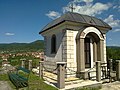 Ossuary of the Serbian Army member killed in action in World War I
 -
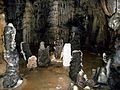
-
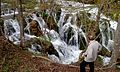 Waterfall located in the municipality
 -
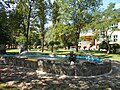 Park in the city
 -
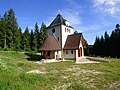 Monastery of Saint John the Baptist
 -
 Church in Obrtići
 -
 Despot supermarket and residential building in the town of Rogatica, Bosnia and Herzegovina.


References
[edit]- ^ "О Рогатици – Opština Rogatica". Retrieved 2024-08-25.
- ^ "Turistička organizacija Republike Srpske". 2014-08-08. Archived from the original on 2014-08-08. Retrieved 2024-09-23.
- ^ "Tombstone – Stecak from Banja Stijena, Rogatica Stecak14 – Global Digital Heritage". Retrieved 2024-08-25.
- ^ "Stećak Vlatka Vlađevića". Zemaljski muzej Bosne i Hercegovine (in Bosnian). 2021-06-03. Retrieved 2024-08-25.
- ^ Centre, UNESCO World Heritage. "Stećci Medieval Tombstone Graveyards". UNESCO World Heritage Centre. Retrieved 2024-11-04.
- ^ Korić, Elma (27 December 2024). "Osmanlı İmparatorluğunda Coğrafya ve Kartografya". Ottoman Map of the Vilayet of Bosnia from 1869/1870 – via Istanbul University Press.
- ^ "Austrougarska okupacija Rogatice – BosanskeHistorije.com - Historija Bosne i Bošnjaka" (in Bosnian). 2009-10-27. Retrieved 2024-11-06.
- ^ "О нашој школи – ЈУ Основна школа "Свети Сава" Рогатица" (in Serbian). Retrieved 2024-08-25.
- ^ "Храм Свете Тројице – Рогатица | Туристичка организација Републике Српске" (in Serbian). Retrieved 2024-08-25.
- ^ Sokol, Anida (2014). "War Monuments: Instruments of Nation-building in Bosnia and Herzegovina". Croatian Political Science Review. 51 (5): 105–126.
- ^ "Prime Minister Višković attends the commemorating ceremony in memory of the Serbs killed in Stari Brod and Miloševići in 1942". Republic of Srpska Government. Retrieved 12 May 2020.
- ^ "Cities and Municipalities of Republika Srpska" (PDF). rzs.rs.ba. Republika Srspka Institute of Statistics. 25 December 2019. Retrieved 31 December 2019.
External links
[edit]


| International | |
|---|---|
| National | |
| Other | |

Rogatica
View on GrokipediaGeography
Location and Administrative Divisions
Rogatica Municipality occupies a position in the eastern portion of Republika Srpska, one of the two primary entities constituting Bosnia and Herzegovina, with geographic coordinates centered at approximately 43°48′N 19°00′E. The town of Rogatica functions as the administrative seat, overseeing local governance operations. The total area spans 645.92 km², encompassing varied administrative units within the entity's territorial framework.[10] The municipality lies roughly 71 km east of Sarajevo by road, positioning it as a connective node in the regional transport network of Republika Srpska. Its boundaries adjoin neighboring municipalities such as Višegrad to the east and Srebrenica, facilitating inter-municipal coordination on shared infrastructure and services. These delineations stem from the post-war territorial configurations ratified under the 1995 Dayton Peace Agreement, which preserved Rogatica's integrity as a standalone municipality within the entity.[11][12][13] Administratively, Rogatica divides into multiple settlements and underlying local communities (mjesne zajednice), structures designed to decentralize service delivery and community engagement in line with Republika Srpska's local self-government laws. This subdivision supports efficient management of public utilities, electoral processes, and civic initiatives at the grassroots level, reinforcing the municipality's operational autonomy post-Dayton.[14]Physical Features and Climate
Rogatica municipality occupies a position in the Dinaric Alps of eastern Bosnia and Herzegovina, featuring rugged mountainous topography with deep valleys and karst formations. Elevations in the area generally range from 500 to over 1,000 meters, while the town of Rogatica itself sits at approximately 553 meters above sea level. The Prača River, a left tributary of the Drina River, flows through the municipality, shaping its hydrology with canyons and contributing to local watercourses that support diverse ecosystems. [15] [16] Forested areas dominate the landscape, reflecting Bosnia and Herzegovina's national tree cover of about 52% with canopy density exceeding 30%, particularly in upland regions like Rogatica where coniferous and deciduous species prevail. The terrain's alpine character fosters limited arable land, with slopes prone to erosion and seasonal flooding from river overflows. Natural features include waterfalls and glacial remnants, enhancing the area's hydrological diversity without significant mineral deposits noted in regional surveys. [17] [18] The region experiences a continental climate with pronounced seasonal variations, marked by cold winters and mild to warm summers. Average annual temperatures approximate 13°C, with January means near 0°C and frequent sub-zero lows enabling prolonged snow cover, while July highs average 20-25°C. Precipitation totals around 800-1,000 mm annually, concentrated in spring and autumn, supporting forest growth but occasionally leading to heavy rains and localized flooding in river valleys. [19] [20] [21]History
Ancient and Medieval Origins
The Rogatica region, situated in a fertile valley along the Rakitnica River at approximately 525 meters elevation, attracted early settlements due to its access to water resources, arable land, and strategic positioning amid surrounding mountains. Prior to Roman incorporation, the area formed part of Illyrian tribal territories in the western Balkans, where indigenous groups established fortified hilltop sites for defense and resource control, as evidenced by broader archaeological patterns in pre-Roman Bosnia. Roman expansion into the region, culminating in the annexation of Illyricum by 9 CE, introduced administrative infrastructure, with epigraphic finds from Rogatica attesting to local cults like that of Liber and figures such as Claudius Antonius.[22] By the 3rd century AD, the settlement had evolved into a municipium elevated to colony status on the eastern periphery of Dalmatia, supporting trade routes and provincial governance.[22] An ancient Roman tomb discovered in the vicinity further confirms funerary practices and enduring Roman influence.[23] Medieval records first document Rogatica as a distinct settlement in the 15th century, deriving its name from the local Rogatici family amid the feudal landscape of the Kingdom of Bosnia. Approximately 10 km south, the Borač fortress—initially referenced in the 10th century by Byzantine chronicler Constantine VII Porphyrogennetos—emerged as a pivotal stronghold, serving as the noble court for the Radinović-Pavlović dynasty and one of Bosnia's largest fortified centers. This site's elevated, defensible terrain overlooking valleys enabled control over regional trade and agriculture, reflecting causal drivers of medieval Bosnian nobility in consolidating power through natural fortifications. Rogatica and adjacent areas integrated into the Kingdom of Bosnia's eastern domains, benefiting from silver mining and agrarian economies until the Ottoman Empire's conquest in 1463, precipitated by Mehmed II's campaigns that dismantled Bosnian defenses following the siege of Jajce.[24][25]Ottoman Era and Early Modern Period
Following the Ottoman conquest of the Kingdom of Bosnia, completed with the fall of Jajce in 1463, Rogatica was incorporated into the Sanjak of Bosnia as part of the empire's administrative reorganization of the region.[26] The town, known to Ottoman officials as Rogačica or Chelebi Pazar, saw the establishment of waqfs—Islamic endowments—by the late 16th century, supporting religious and charitable institutions such as mosques and schools, which reflected early processes of Islamic settlement and institutionalization.[27] These developments coincided with gradual Islamicization in parts of Bosnia, driven by factors including tax incentives for converts and the influx of Muslim administrators and settlers, though conversion rates varied regionally and were often slower in rural eastern areas like Rogatica compared to urban centers.[28] The local economy centered on agriculture under the timar system, where sipahis received land grants in return for military service, collecting taxes from peasant households engaged in grain cultivation, livestock rearing, and forestry in the surrounding hills and valleys along the Drina River basin.[29] This system sustained Ottoman provincial forces but imposed heavy burdens on Christian rayah (tax-paying subjects), many of whom remained Orthodox Serbs, preserving their communities through adherence to the millet system that allowed religious autonomy in exchange for the jizya poll tax and other levies.[30] Demographic records from tahrir defters indicate persistence of a Christian majority in peripheral nahiyes (districts) like those around Rogatica, with limited but growing Muslim populations tied to administrative roles and waqf beneficiaries, averting the more pronounced shifts seen in central Bosnian valleys.[31] Tensions over taxation and corvée labor culminated in localized resistance during the Great Eastern Crisis, as the 1875 Herzegovina uprising spread northward into Bosnian Serb-inhabited areas, including eastern districts encompassing Rogatica, where peasants joined broader revolts against Ottoman authority amid the Russo-Turkish War of 1877–1878.) These disturbances, fueled by agrarian grievances and external encouragement from Serbia and Montenegro, pressured Ottoman control but were suppressed until the Congress of Berlin in 1878 mandated reforms, marking the erosion of the timar framework in Bosnia without immediate territorial loss for the empire.[32]19th and 20th Centuries up to World War II
After the Austro-Hungarian occupation of Bosnia and Herzegovina in 1878, Rogatica, characterized as an almost entirely Muslim town nestled in a leafy valley, fell under the administration of the Dual Monarchy.[33] The occupying authorities implemented reforms aimed at modernization, including the development of transportation infrastructure such as roads and bridges, as well as the establishment of educational institutions, which extended to rural areas like Rogatica to facilitate economic integration and administrative control.[34] These measures encountered initial resistance but gradually improved connectivity and public services across the province.[35] With the dissolution of Austria-Hungary in late 1918, Rogatica was incorporated into the newly formed Kingdom of Serbs, Croats, and Slovenes on December 1, 1918.[36] In the interwar period, the region retained its agrarian character, dominated by small-scale farming amid broader Yugoslav efforts at land redistribution through reforms initiated in 1919, which sought to break up large estates and bolster peasant holdings, though implementation in Bosnia faced challenges from uneven land distribution and economic underdevelopment.[37] Serbian cultural and religious institutions, including Orthodox churches, saw consolidation as part of national unification policies, reflecting the Serb plurality in the surrounding rural areas despite the town's Muslim demographic core.[33] As tensions mounted in the late 1930s, the prelude to World War II in Rogatica was marked by escalating ethnic frictions under the Kingdom's centralizing pressures. Following the Axis invasion of Yugoslavia in April 1941 and the creation of the Independent State of Croatia, the town came under Ustaše administration, whose policies of persecution against Serbs ignited local resistance. This culminated in a coordinated siege by initially allied Chetnik and Partisan forces against Ustaše-held Rogatica from October 13 to 24, 1941, highlighting the rapid breakdown of interethnic relations in eastern Bosnia.[38][39]World War II and Immediate Postwar Developments
In the wake of the Axis invasion of Yugoslavia in April 1941, Rogatica came under the administration of the Independent State of Croatia (NDH), where Ustaše forces enforced policies targeting Serb populations through massacres, forced conversions, and expulsions, sparking widespread local resistance among Serbs.[40] Initial uprisings in eastern Bosnia saw temporary cooperation between monarchist Chetnik forces loyal to Draža Mihailović and communist-led Partisans against NDH garrisons, driven by shared opposition to Ustaše atrocities rather than ideological alignment. This joint effort peaked in the siege of Rogatica in late September to early October 1941, when combined rebel units numbering several hundred encircled and assaulted the town, capturing it around October 4 after days of combat that inflicted heavy losses on NDH defenders, including over 200 killed among Croatian troops and local auxiliaries.[41] The liberation proved short-lived in strategic terms, as Chetnik-Partisan relations deteriorated amid mutual suspicions and competing claims to authority; by late 1941, open clashes emerged in the Rogatica district, with Partisans establishing local National Liberation Committees (NOOs) to consolidate control, while Chetniks maintained influence in Serb villages through promises of royalist restoration.[41] Multi-factional fighting, compounded by NDH counteroffensives and occasional Axis reprisals, led to significant local destruction, including burned villages and disrupted agriculture, though precise casualty tallies for Rogatica remain elusive due to fragmented records—regional estimates suggest thousands of civilian and combatant deaths across eastern Bosnia in 1941 alone from internecine and anti-Axis actions. Chetnik units in the area, responding to prior Ustaše killings, conducted reprisals against Muslim civilians perceived as collaborators, exacerbating ethnic tensions that persisted into later phases of the war.[39] With the Partisan victory and establishment of the Federal People's Republic of Yugoslavia in 1945, immediate postwar policies focused on consolidating communist authority through agrarian reform, enacted via the Agrarian Reform Law of August 1945, which expropriated estates over 45 hectares from absentee landlords, religious institutions, and wartime collaborators without compensation, redistributing parcels to cooperative farms and individual tillers. In rural, Serb-predominant municipalities like Rogatica, where prewar land concentration favored Muslim beys and Orthodox endowments, the reform transferred ownership to local peasant families—predominantly Serbs—who had endured wartime displacement, affecting roughly 1.2 million hectares nationwide and enabling 70,000 landless households to gain holdings averaging 5-10 hectares each. This redistribution mitigated immediate postwar instability by tying rural loyalty to the regime, fostering collectivization groundwork while averting famine in war-ravaged areas through incentivized cultivation, though enforcement involved purges of Chetnik sympathizers and resisted large-scale resistance in Serb heartlands.[42][43][44]Socialist Yugoslavia Period
After World War II, Rogatica integrated into the Socialist Republic of Bosnia and Herzegovina within the Federal People's Republic of Yugoslavia, established in 1945 under Josip Broz Tito's leadership. Initial post-war policies included agrarian reform via the 1945 Agrarian Reform Law, which redistributed land from absentee owners and churches to landless peasants, followed by forced collectivization campaigns starting in 1949 to form cooperative farms (zadrugarije). By 1951, collectivization encompassed over half of Yugoslavia's arable land, but in rural areas like Rogatica, peasant resistance—manifesting in foot-dragging, animal slaughter, and informal sabotage—limited success, with many collectives dissolving after the 1953 amnesty and shift to decentralized self-management. This reversion allowed private smallholdings to predominate, sustaining subsistence agriculture amid modest state investments in irrigation and mechanization.[45] Economic development in Rogatica focused on exploiting local resources, with gradual expansion in wood processing industries leveraging the municipality's dense forests for logging, sawmills, and furniture production, alongside smaller metalworking operations for tools and machinery parts. These sectors employed a fraction of the workforce, as the economy remained agrarian-dominant, with state enterprises operating under worker self-management from the 1950s onward, theoretically empowering councils but often hampered by bureaucratic inefficiencies and regional underinvestment in eastern Bosnia. Growth was incremental, aligning with Yugoslavia's broader industrial output rise from 1947–1980, yet per capita income in rural SR BiH lagged behind urban centers, fostering disparities that official narratives of equitable socialism downplayed.[46][47] The 1971 census documented Rogatica's municipality population at 25,501, with Serbs at 15,096 (59.1%) forming a clear plurality, Muslims at 10,208 (40.0%), and negligible others, reflecting ethnic stability under suppressed nationalism via the "Brotherhood and Unity" doctrine enforced by the League of Communists. This composition persisted into the 1980s, though economic pressures from hyperinflation (peaking at 2,500% annually by 1989) and inter-republic debt imbalances strained interethnic relations, despite state propaganda emphasizing harmony; empirical data from migration patterns showed selective outflows of younger Muslims to urban areas, hinting at unaddressed grievances over resource allocation favoring Serb-majority locales.[48][49]Bosnian War and Ethnic Conflicts
Pre-War Ethnic Tensions and Outbreak of Hostilities
In the 1991 census, Rogatica municipality had a population of 24,847, with Serbs forming a plurality at 14,513 (58.4%), Muslims (later identified as Bosniaks) numbering 9,252 (37.2%), Croats at 393 (1.6%), and others comprising the remainder. This ethnic distribution reflected broader patterns in eastern Bosnia, where Serb majorities in rural areas coexisted with significant Bosniak populations in villages, fostering latent divisions exacerbated by the introduction of multi-party elections in 1990.[50] The elections saw the Serb Democratic Party (SDS) secure strong support among Serbs, while the Party of Democratic Action (SDA) dominated Bosniak votes, polarizing local politics along ethnic lines as parties advocated incompatible visions for Bosnia and Herzegovina's future within or outside Yugoslavia. As Bosnia's leadership, dominated by SDA and Croatian Democratic Union (HDZ) figures, pursued sovereignty from Yugoslavia, Serb communities perceived this as a threat to their demographic and cultural security, fearing subordination in a unitary state where they would be a minority overall.[50] In response, local Serb assemblies in Serb-majority areas like Rogatica organized to assert autonomy; by early 1992, a Serb Crisis Staff was formed, followed by the announcement of a Serb Municipality of Rogatica, declaring the entire territory as Serb land to counter anticipated centralization from Sarajevo.[51] These moves mirrored the January 9, 1992, proclamation by the Bosnian Serb Assembly for a Serbian Republic within Bosnia, framed by Serb leaders as a defensive measure against secessionist pressures that could replicate historical vulnerabilities, such as those during World War II.[52] Tensions escalated with Bosnia's independence referendum on February 29–March 1, 1992, boycotted by most Serbs, prompting barricades across the republic, including in eastern regions like Rogatica, where initial multi-ethnic clashes erupted amid fears of territorial partition.[53] Local incidents involved SDS-affiliated groups erecting checkpoints to prevent perceived SDA-led dominance, while Bosniak responses heightened mutual suspicions of impending violence, setting the stage for hostilities without yet involving sustained military operations. This outbreak aligned with the republic-wide crisis, where Serb autonomy bids clashed with Bosniak-Croat pushes for statehood, amplifying pre-existing ethnic frictions rooted in divergent national aspirations.[51]Military Engagements and Territorial Control
The Army of Republika Srpska (VRS) gained control of Rogatica municipality in May 1992, following initial clashes with nascent Army of the Republic of Bosnia and Herzegovina (ARBiH) units amid the rapid consolidation of Serb-held territories in eastern Bosnia.[54] Local VRS formations, including elements that would form the Rogatica Brigade under the Drina Corps, secured key positions to protect supply corridors through the Romanija plateau.[55] Throughout the war, the Rogatica Brigade focused on defensive operations against ARBiH threats originating from the nearby Žepa enclave, a persistent ARBiH stronghold besieged by VRS forces from 1992 onward.[56] ARBiH units in Žepa launched incursions and artillery strikes aimed at severing VRS logistics routes along the Drina River valley and accessing resources, prompting reinforced VRS patrols and fortifications in Rogatica to maintain territorial integrity and support broader eastern front operations.[57] These engagements emphasized containment, with VRS priorities centered on preventing enclave breakouts that could link ARBiH pockets and disrupt VRS command lines to Sarajevo. Casualty data for military personnel in Rogatica-specific clashes remains limited, though VRS records indicate losses from ARBiH raids involving infantry probes and indirect fire, often compounded by the enclave's role in coordinating attacks across the Drina Corps sector.[58] The strategic positioning of Rogatica ensured its role as a bulwark, with VRS forces allocating resources to static defenses and counter-raids rather than offensive maneuvers, reflecting the causal dynamics of enclave-based guerrilla tactics versus VRS siege doctrine.Civilian Experiences and Atrocities from All Sides
During the early stages of the Bosnian War, Bosniak civilians in Rogatica municipality experienced widespread expulsions and violence as Army of Republika Srpska (VRS) forces asserted control over the area following hostilities that began in April 1992.[59] The Bosniak population, which numbered around 8,400 individuals or approximately 38% of the municipality's 21,978 residents per the 1991 census, fled or was forcibly displaced en masse, leaving virtually no Bosniaks in the area by the war's end.[3] [60] A notable incident was the Paklenik massacre on 15 June 1992, in which VRS troops executed at least 48 Bosniak civilians near a pit in the municipality, amid broader operations targeting non-Serb villages.[61] Bosniak men and boys were often detained in facilities such as the Rasadnik camp, where prisoners faced beatings, inadequate food, and executions; witnesses reported that some detainees were removed and killed, with bodies disposed of in pits.[62] These acts contributed to the near-total ethnic homogenization of Rogatica under VRS control, with surviving Bosniaks either escaping to enclaves like Goražde or facing ongoing peril during sporadic shelling and raids.[59] Serb civilians also suffered targeted violence, particularly during retreats or evacuations amid counteroffensives by the Army of the Republic of Bosnia and Herzegovina (ARBiH). On 27 August 1992, ARBiH fighters ambushed a convoy of fleeing Serb civilians in Rogatica, wounding multiple individuals including women and children, in an attack prosecuted as a war crime against non-combatants.[63] [64] Such incidents reflected retaliatory dynamics in contested eastern Bosnian territories, where ARBiH units and affiliated foreign fighters posed threats to Serb villages through ambushes and incursions, exacerbating civilian flight on both sides.[65] Overall, these events displaced thousands across ethnic lines, with wartime chaos amplifying risks of summary killings and property destruction irrespective of perpetrator.[66]Post-War Developments and Controversies
Dayton Agreement Implementation and Reconstruction
The Dayton Agreement, initialed on November 21, 1995, and formally signed on December 14, 1995, delineated the Inter-Entity Boundary Line that incorporated the entirety of Rogatica municipality into Republika Srpska, ratifying the territorial control established by Bosnian Serb forces during the 1992-1995 conflict.[67] This configuration preserved local Serb administrative dominance while mandating cooperation with Bosnian central institutions, though practical integration faced resistance from RS leadership prioritizing entity autonomy.[68] NATO's Implementation Force (IFOR), authorized by UN Security Council Resolution 1031 on December 15, 1995, and deployed starting December 20, 1995, enforced military provisions across Bosnia and Herzegovina, including in eastern Republika Srpska sectors encompassing Rogatica; its 60,000 troops oversaw weapons cantonment, troop withdrawals, and mine clearance, transitioning to the Stabilization Force (SFOR) in December 1996 for continued oversight amid sporadic non-compliance.[69] In Rogatica, IFOR/SFOR activities focused on verifying demilitarized zones and facilitating freedom of movement, with no major armed incidents reported in the municipality during the initial stabilization phase.[70] Post-agreement reconstruction in Rogatica drew from broader international aid inflows to Republika Srpska, including the World Bank's Reconstruction Assistance Project initiated in 1996, which allocated funds for entity-wide infrastructure repairs such as water systems, roads, and power grids; by 2000, over 80% of BiH's critical infrastructure had been rehabilitated through similar donor efforts, aiding local stabilization.[71] Rogatica's population, which plummeted during the war due to displacement, stabilized in the early 2000s at approximately 11,000-12,000 residents, reflecting Serb repatriation and minimal net growth amid ongoing economic stagnation.[72] Return programs for non-Serb displaced persons, coordinated by UNHCR and tied to property restitution under Annex 7 of Dayton, yielded limited outcomes in Rogatica, where Bosniak return rates remained low through the late 1990s and early 2000s owing to causal factors including local authority obstructions in repossession processes, entrenched security risks from unresolved interethnic tensions, and structural economic disincentives like persistent unemployment exceeding 40% in RS areas that deterred sustainable reintegration.[60] [73] These barriers perpetuated de facto ethnic homogeneity, with international monitors noting that minority returns to RS municipalities like Rogatica comprised under 30% of pre-war figures by 2002, despite conditional aid incentives.[74]War Crimes Investigations and Judicial Outcomes
In the aftermath of the Bosnian War, investigations into alleged war crimes in Rogatica primarily focused on actions by Bosnian Serb Army (VRS) and military police units against Bosniak civilians and detainees, with proceedings handled by Bosnia's State Court following the transfer of cases from the International Criminal Tribunal for the former Yugoslavia (ICTY).[75] Claims by Bosniak witnesses often described systematic ethnic cleansing, including forced expulsions, murders, and detentions, while VRS defendants argued that operations were driven by combat necessities in a contested eastern Bosnian enclave amid mutual hostilities.[59] Courts consistently required proof beyond reasonable doubt, resulting in mixed verdicts that rejected unsubstantiated genocide allegations specific to Rogatica while upholding convictions for documented inhumane acts.[59] A notable case in 2016 saw the acquittal of eight former VRS soldiers charged with crimes against humanity, including the persecution, unlawful deportation, and murder of Bosniak civilians in Rogatica municipality during 1992-1993; the court found insufficient evidence linking the accused to the alleged acts, emphasizing the absence of direct proof amid wartime chaos.[59] Similarly, in 2014, three Bosnian Serb soldiers were cleared of killing a Bosniak man and torturing his son near Rogatica, as prosecutors failed to establish individual responsibility beyond associative guilt.[76] These outcomes underscored evidentiary challenges in attributing command responsibility or direct participation, contrasting with broader narratives of coordinated cleansing that lacked corroboration from forensic or documentary records in these instances.[59] More recent proceedings reflect ongoing scrutiny, with Bosnia's State Court in July 2025 convicting two former VRS military policemen—Nenad Ujic (four years) and Zoran Neskovic (three years)—of inhumane acts for the physical and psychological abuse of Bosniak detainees from Rogatica, Zepa, and Srebrenica areas held between July and December 1995, based on witness testimonies of beatings and threats; three co-defendants (Panto Pantovic, Slavisa Djeric, and Pero Despet) were acquitted due to unproven individual involvement.[75] In January 2025, the appellate panel upheld the conviction of VRS soldier Zoran Ilic for the forced disappearance of 16 Bosniak civilians seized near Rogatica in 1992, affirming his role in their abduction and presumed execution as a violation of the laws of war, supported by survivor accounts and circumstantial evidence of mass grave sites.[77] No genocide convictions have been secured in Rogatica-specific cases, as tribunals differentiated localized atrocities from intent to destroy groups, prioritizing verifiable causation over generalized ethnic conflict claims.[75]Demographic and Social Repercussions
![Memorial room for fighters of the Rogatica Brigade of the Army of Republika Srpska][float-right] The Bosnian War profoundly altered Rogatica's demographic landscape through widespread expulsions and displacements, primarily affecting the Bosniak population, resulting in a near-complete ethnic homogenization favoring Serbs. Pre-war ethnic diversity gave way to a Serb population comprising approximately 99% post-conflict, as Bosniaks decreased by over 62% between 1991 and 2013 due to wartime atrocities including murders, intimidation, and forced removals. This shift reflects the causal impact of ethnic cleansing campaigns, which prevented significant returns despite international agreements like the Dayton Accords mandating refugee repatriation; empirical data on minimal Bosniak reintegration underscores the failure of forced multi-ethnic integration narratives, as security concerns and local hostilities perpetuated segregation.[60] Social repercussions persist through unresolved missing persons cases and competing narratives of victimhood. As of 2024, 304 individuals—predominantly Bosniaks presumed killed by Serb forces—remain unaccounted for in Rogatica, including six children, fueling ongoing grief and demands for accountability among displaced communities. Meanwhile, local Serb-majority society maintains memorials honoring VRS fighters and victims, highlighting divisions where Bosniak claims of atrocities contrast with Serb commemorations, often leading to polarized public discourse and limited cross-ethnic reconciliation efforts.[78] The war's legacy has exacerbated family and community disruptions, compounded by post-war youth emigration driven by limited opportunities in Republika Srpska. This outflow of younger generations has accelerated population aging and weakened social fabrics, as economic stagnation intertwined with unresolved conflict traumas discourages retention, empirically demonstrating how wartime homogenization and subsequent migrations hinder communal vitality without viable integration paths.[79]Demographics
Historical Population Changes
The population of Rogatica municipality reached a pre-war peak of 21,881 according to the 1991 Yugoslav census conducted on March 31.[3] This figure reflected steady growth in the Socialist Federal Republic of Yugoslavia era, driven by post-World War II recovery and internal migration, though specific earlier census data for the municipality indicate fluctuations, with a reported total of around 13,228 in the 1948 census following wartime losses.[80]| Census/Estimate Year | Population | Source |
|---|---|---|
| 1948 | 13,228 | Yugoslav census data |
| 1991 | 21,881 | Yugoslav census |
| 2013 | 10,302 | Bosnia and Herzegovina census |
| 2022 (estimate) | 9,518 | Projection based on census trends |