Hubbry Logo
SandpiperSandpiperMain
Open search
Sandpiper
Community hub
Sandpiper
logo
8 pages, 0 posts
0 subscribers
Be the first to start a discussion here.
Sandpiper
Sandpiper
from Wikipedia

Sandpipers
Temporal range: Early Oligocene to recent
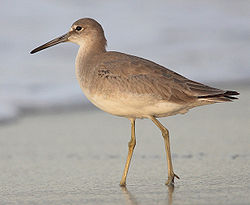
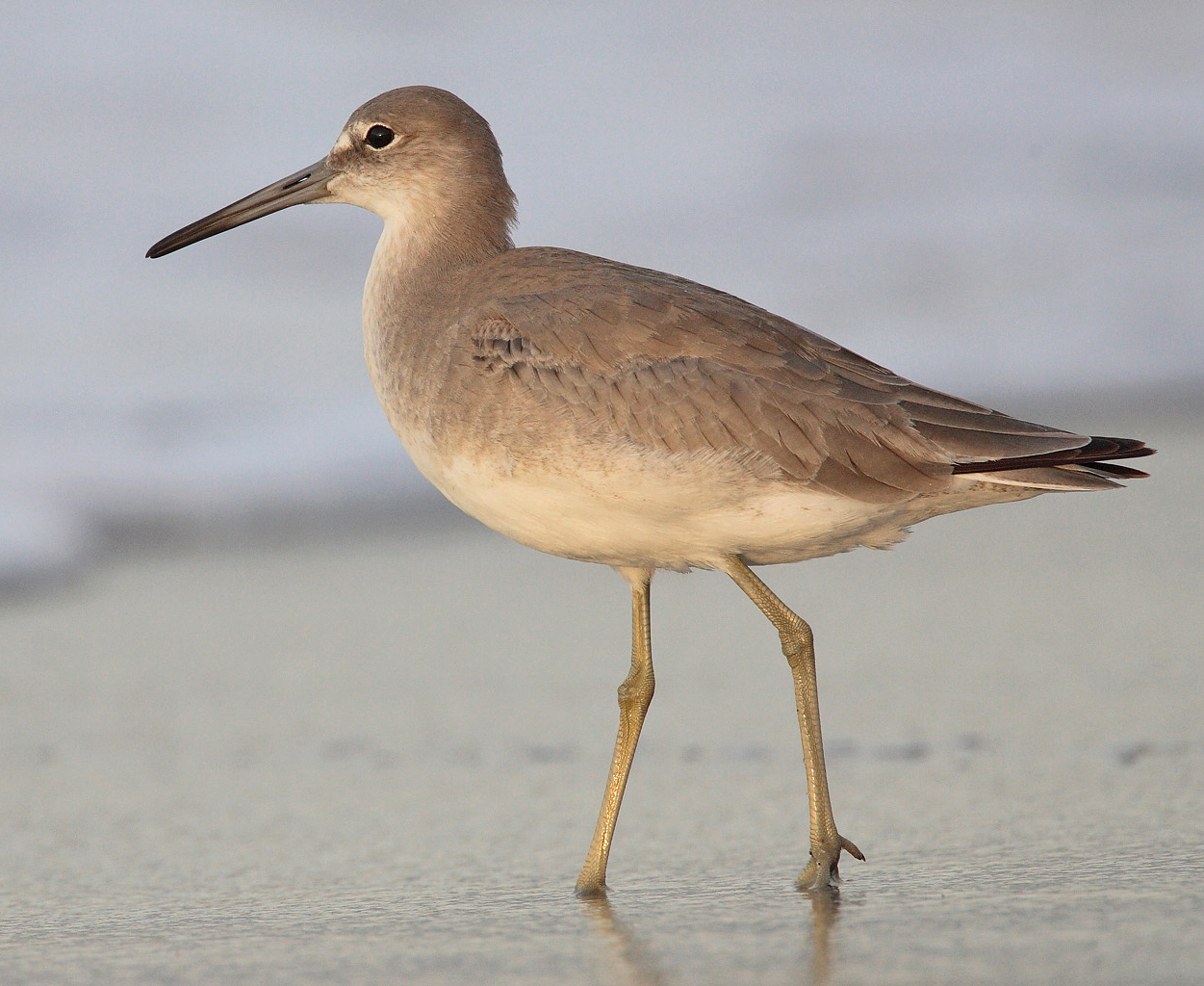
Willet (Tringa semipalmata)
Scientific classification Edit this classification
Kingdom: Animalia
Phylum: Chordata
Class: Aves
Order: Charadriiformes
Suborder: Scolopaci
Family: Scolopacidae
Rafinesque, 1815
Type genus
Scolopax
Genera

Scolopacidae is a large family of shorebirds, or waders, which mainly includes many species known as sandpipers, but also others such as woodcocks, curlews, and snipes. Most of these species eat small invertebrates picked out of the mud or soil. There is no evidence that different lengths of bills enable multiple species to feed in the same habitat, particularly on the coast, without direct competition for food. On sandy beaches, species with different bill lengths feed on the only abundant invertebrate, such as mole crabs Emerita.[1]

Sandpipers have long bodies and legs, and narrow wings. Most species have a narrow bill, but the form and length are variable. They are small to medium-sized birds, measuring 12 to 66 cm (4.7–26.0 in) in length. The bills are sensitive, allowing the birds to feel the mud and sand as they probe for food. They generally have dull plumage, with cryptic brown, grey, or streaked patterns, although some display brighter colours during the breeding season.[2]

Most species nest in open areas and defend their territories with aerial displays. The nest itself is a simple scrape in the ground, in which the bird typically lays three or four eggs. The young of most species are precocial.[2]

Sandpiper nest with four eggs

Taxonomy

[edit]

The family Scolopacidae was introduced (as Scolopacea) by the French polymath Constantine Samuel Rafinesque in 1815.[3][4] The family contains 98 extant or recently extinct species divided into 15 genera.[5] For more details, see the article List of sandpiper species.

The following genus-level cladogram of the Scolopacidae is based on a study by David Černý and Rossy Natale that was published in 2022.[6]

Scolopacidae

Bartramia – upland sandpiper

Numenius – curlews (9 species)

Limosa – godwits (4 species)

Limnodromus – dowitchers (3 species)

Lymnocryptes – jack snipe

Scolopax – woodcocks (8 species)

Gallinago imperialis – imperial snipe

Gallinago undulata – giant snipe

Coenocorypha – austral snipes (3 extant and 6 extinct species)

Gallinago – snipes (18 species)

Xenus – Terek sandpiper

Actitis – sandpipers (2 species)

Phalaropus – phalaropes (3 species)

Tringa – sandpipers, shanks, tattlers etc (13 species)

Prosobonia – Polynesian sandpipers (1 extant and 3 extinct species)

Arenaria – turnstones (2 species)

Calidris – sandpipers (24 species)


Image Genus Living and recently extinct species
Numenius Brisson, 1760
Limosa Brisson, 1760
Arenaria Brisson, 1760
Prosobonia Bonaparte, 1850
Calidris Merrem, 1804
Limnodromus Wied-Neuwied, 1833
Scolopax Linnaeus, 1758
Coenocorypha G. R. Gray, 1855
  • Chatham snipe, Coenocorypha pusilla (Buller, 1869) – Chatham Islands
  • Subantarctic snipe, Coenocorypha aucklandica (G. R. Gray, 1845)
    • Auckland snipe, C. a. aucklandica (G. R. Gray, 1845) – Auckland Islands
    • Antipodes snipe, C. a. meinertzhagenae Rothschild, 1927 – Antipodes Islands
    • Campbell snipe, C. a. perseverance Miskelly & Baker, 2010 – Campbell Island
  • Snares snipe, Coenocorypha huegeli (Tristram, 1893) – Snares Islands
  • North Island snipe, Coenocorypha barrierensis Oliver, 1955 – also known as the Little Barrier Snipe
  • South Island snipe, Coenocorypha iredalei Rothschild, 1921 – also known as the Stewart Island Snipe
  • Forbes's snipe, Coenocorypha chathamica (Forbes, 1893) – Chatham Islands
  • Viti Levu snipe, Coenocorypha miratropica Worthy, 2003 – Fiji
  • New Caledonian snipe, Coenocorypha neocaledonica Worthy et al., 2013 – New Caledonia
  • Norfolk snipe, Coenocorypha sp. – Norfolk Island
Lymnocryptes F. Boie, 1826
Gallinago Brisson, 1760
Xenus Kaup, 1829
Phalaropus Brisson, 1760
Actitis Illiger, 1811
Tringa Linnaeus, 1758

Evolution

[edit]

The early fossil record is scant for a group that was probably present at the non-avian dinosaurs' extinction. "Totanus" teruelensis (Late Miocene of Los Mansuetos (Spain) is sometimes considered a scolopacid – maybe a shank – but may well be a larid; little is known of it.

Paractitis has been named from the Early Oligocene of Saskatchewan (Canada), while Mirolia is known from the Middle Miocene at Deiningen in the Nördlinger Ries (Germany). Most living genera would seem to have evolved throughout the Oligocene to Miocene with the waders perhaps a bit later; see the genus accounts for the fossil record.

In addition there are some indeterminable remains that might belong to extant genera or their extinct relatives:

  • Scolopacidae gen. et sp. indet. (Middle Miocene of Františkovy Lázně, Czech Republic – Late Miocene of Kohfidisch, Austria)
  • Scolopacidae gen. et sp. indet. (Edson Early Pliocene of Sherman County, Kansas, United States)[note 1]

Description

[edit]
The least sandpiper is the smallest species of sandpiper

The sandpipers exhibit considerable range in size and appearance, the wide range of body forms reflecting a wide range of ecological niches. Sandpipers range in size from the least sandpiper, at as little as 18 grams (0.040 pounds) and 11 cm (4.3 in) in length, to the Far Eastern curlew, at up to 66 cm (26 in) in length, and the Eurasian curlew, at up to 1.3 kg (2.9 lb). Within species there is considerable variation in patterns of sexual dimorphism. Males are larger than females in ruffs and several sandpipers, but are smaller than females in the knots, curlews, phalaropes and godwits. The sexes are similarly sized in the snipes, woodcock and tringine sandpipers. Compared to the other large family of wading birds, the plovers (Charadriidae), they tend to have smaller eyes, more slender heads, and longer thinner bills. Some are quite long-legged, and most species have three forward pointing toes with a smaller hind toe (the exception is the sanderling, which lacks a hind toe).[10]

Sandpipers are more geared towards tactile foraging methods than the plovers, which favour more visual foraging methods, and this is reflected in the high density of tactile receptors in the tips of their bills. These receptors are housed in a slight horny swelling at the tip of the bill (except for the surfbird and the two turnstones). Bill shape is highly variable within the family, reflecting differences in feeding ecology. Bill length relative to head length varies from three times the length of the head in the long-billed curlew to just under half the head length in the Tuamotu sandpiper. Bills may be straight, slightly upcurled or strongly downcurved.[10] Like all birds, the bills of sandpipers are capable of cranial kinesis, literally being able to move the bones of the skull (other than the obvious movement of the lower jaw) and specifically bending the upper jaw without opening the entire jaw, an act known as rhynchokinesis. It has been hypothesized this helps when probing by allowing the bill to be partly opened with less force and improving manipulation of prey items in the substrate. Rhynchokinesis is also used by sandpipers feeding on prey in water to catch and manipulate prey.[11]

Distribution, habitat, and movements

[edit]
Sandpipers spending the non-breeding season in Roebuck Bay, Western Australia

The sandpipers have a cosmopolitan distribution, occurring across most of the world's land surfaces except for Antarctica and the driest deserts. A majority of the family breed at moderate to high latitudes in the Northern Hemisphere, in fact accounting for the most northerly breeding birds in the world. Only a few species breed in tropical regions, ten of which are snipes and woodcocks and the remaining species being the unusual Tuamotu sandpiper, which breeds in French Polynesia (although prior to the arrival of humans in the Pacific there were several other closely related species of Polynesian sandpiper).[10]

Diet and feeding

[edit]

There are broadly four feeding styles employed by the sandpipers, although many species are flexible and may use more than one style. The first is pecking with occasional probing, usually done by species in drier habitats that do not have soft soils or mud. The second, and most frequent, method employed is probing soft soils, muds and sands for prey. The third, used by Tringa shanks, involves running in shallow water with the bill under the water chasing fish, a method that uses sight as well as tactile senses. The final method, employed by the phalaropes and some Calidris sandpipers, involves pecking at the water for small prey.[10] A few species of scolopacids are omnivorous to some extent, taking seeds and shoots as well as invertebrates.

Breeding

[edit]

Many sandpipers form monogamous pairs, but some sandpipers have female-only parental care, some male-only parental care, some sequential polyandry and other compete for the mate on the lek. Sandpipers lay three or four eggs into the nest, which is usually a vague depression or scrape in the open ground, scarcely lined with soft vegetation.[10] In species where both parents incubate the eggs, females and males share their incubation duties in various ways both within and between species. In some pairs, parents exchange on the nest in the morning and in the evening so that their incubation rhythm follows a 24-hour day, in others each sex may sit on the nest continuously for up to 24 hours before it is exchanged by its partner.[12] In species where only a single parent incubates the eggs, during the night the parent sits on the eggs nearly continuously and then during the warmest part of a day leaves the nest for short feeding bouts.[13] Chicks hatch after about three weeks of incubation and are able to walk and forage within a few hours of hatching. A single parent or both parents guide and brood the chicks.[10]

[edit]

Footnotes

[edit]

References

[edit]
[edit]
Revisions and contributorsEdit on WikipediaRead on Wikipedia
from Grokipedia
Sandpipers comprise the family Scolopacidae, a diverse group of approximately 97 of shorebirds within the order , known for their slender builds, long legs, and bills adapted for probing soft substrates in search of . These waders range in size from small like the (about 13–15 cm long) to larger curlews exceeding 60 cm, with plumage typically in cryptic browns and grays for , though some display vibrant breeding colors. The family encompasses subgroups such as true sandpipers (), curlews (Numenius), godwits (Limosa), snipes (), woodcocks (Scolopax), and phalaropes (Phalaropus), each with specialized and locomotion traits. Scolopacids exhibit a nearly global distribution, occurring across all continents except and the most arid deserts, with the majority breeding in northern temperate to regions. Preferred breeding habitats include wet, open areas such as , marshes, bogs, grasslands, and forest edges, where they nest in shallow scrapes on the ground. Many species are highly migratory, traveling thousands of kilometers from high-latitude nesting grounds to winter in tropical coastal mudflats, estuaries, lakeshores, and inland wetlands, often forming large flocks during migration and non-breeding seasons. These birds primarily feed on , crustaceans, mollusks, and worms detected by touch-sensitive bill tips, employing techniques like stitching (rapid pecking) or deeper probing depending on bill morphology. Notable behaviors include in phalaropes, where females are more colorful and competitive while males incubate eggs, and elaborate aerial displays in woodcocks. While most remain common, some face threats from habitat degradation, hunting, and climate-driven changes to breeding and stopover sites, highlighting the importance of .

Taxonomy and Systematics

Classification and Genera

The family Scolopacidae, commonly known as the and allies, belongs to the order and comprises 98 extant across 15 genera, as recognized in the IOC World Bird List (version 15.1, 2025). This diverse group includes typical , shanks, godwits, curlews, snipes, woodcocks, and turnstones, characterized by their long bills adapted for probing soft substrates. The reflects ongoing refinements based on morphological and molecular data, emphasizing monophyletic groupings within the family. Key subfamilies within Scolopacidae include Calidrinae, which encompasses stints and typical ; Tringinae, comprising shanks and phalaropes; and Arenariinae, consisting of turnstones. These subfamilies highlight evolutionary distinctions in foraging behaviors and morphology, with Calidrinae often featuring shorter bills for surface feeding, while Tringinae members have longer legs suited for shallow-water wading. Additional subfamilies, such as Scolopacinae for snipes and woodcocks, further delineate the family's internal structure. Recent phylogenetic analyses have revised the linear sequence of genera and within Scolopacidae. Among the major genera, is the most speciose, containing 24 species such as the dunlin (Calidris alpina), a widespread migrant known for its compact form and seasonal changes. The genus includes 13 species, exemplified by the common redshank (Tringa totanus), which features bold white wing panels and a distinctive upturned call during flight. Godwits are represented by Limosa with 4 species, including the bar-tailed godwit (Limosa lapponica), renowned for its epic non-stop migrations across oceans. Curlews fall under Numenius, encompassing 9 species like the long-billed curlew (Numenius americanus), notable for its decurved bill used to extract prey from deep burrows. This increase reflects the 2025 split of the whimbrel (Numenius phaeopus) into Eurasian whimbrel and Hudsonian whimbrel. Recent taxonomic proposals have focused on refining subfamily boundaries, particularly within Arenariinae; for instance, SACC Proposal 665 (2014) revised this group by merging former genera such as Aphriza, Tryngites, , Eurynorhynchus, and into , based on phylogenetic evidence supporting their . The 2025 eBird taxonomy update included a major split in Numenius, increasing while maintaining overall stability in the family's classification.

Species Diversity

The family Scolopacidae encompasses 98 recognized extant species across 15 genera, representing a significant portion of global shorebird diversity. The genus exhibits the highest species richness with 24 members, primarily small to medium-sized migratory waders, while follows with 13 species, including various shanks and tattlers adapted to wetland and coastal environments. This distribution underscores the family's emphasis on genera specialized for probing and foraging in soft substrates. Diversity is concentrated in breeding hotspots of the , particularly and subarctic tundra, where the majority of species nest in wet, open habitats during summer months. Over 20 species undertake long-distance migrations, often crossing equatorial regions to winter in tropical and wetlands, facilitating but exposing them to varied ecological pressures. Regionally, more than 40 species have been recorded in , including breeders, migrants, and vagrants, while supports over 30 species, reflecting its role as a primary breeding and . Notable examples highlight extremes in size and conservation concern within the family. The (Calidris minutilla), the smallest member at approximately 18–30 g, exemplifies the diminutive, agile foragers common in the genus . In contrast, the (Numenius arquata), the largest at up to 1.3 kg, represents the long-billed curlews adapted for deep-probing in mudflats. The (Calidris pygmaea) stands out as critically endangered, with a global population under 1,000 individuals due to habitat loss along its East Asian . Patterns of diversity reveal regional endemism, particularly in Polynesia, where the genus Prosobonia includes several island specialists; for instance, the extinct Henderson sandpiper (Prosobonia sauli), described from fossils in 2020, underscores historical losses in isolated Pacific archipelagos. No new Scolopacidae species have been formally described between 2023 and 2025, though taxonomic splits such as the whimbrel have adjusted species counts amid ongoing refinements.

Evolutionary History

Fossil Record

The fossil record of sandpipers (Scolopacidae) is notably sparse, with fewer than 20 described taxa known worldwide, reflecting significant gaps particularly in the Eocene epoch where no unequivocal scolopacid remains have been identified, despite the family's likely divergence from other shorebirds following the Cretaceous-Paleogene extinction boundary. This paucity of early fossils underscores the challenges in tracing the group's origins, with the earliest records appearing in the late Eocene to early Oligocene. No new scolopacid fossil discoveries have been reported between 2021 and 2025, maintaining the current understanding of their paleontological history. The oldest known scolopacid fossil is Paractitis bardi from the late Eocene (approximately 37 million years ago) of , , represented by a partial that indicates early divergence of within the broader shorebird post-Cretaceous. In , fragmentary remains assigned to Scolopaci, the superfamily including , date to the early (around 33-28 million years ago) from deposits in , providing evidence of the group's presence in western shortly after its North American record. Additional late (approximately 28-23 million years ago) fossils from further document this initial phase of scolopacid evolution, though these are limited to isolated bones lacking diagnostic details for precise familial placement. Diversification of sandpipers accelerated during the (23-5.3 million years ago), with fossils exhibiting morphological traits akin to modern forms, such as specialized bills for probing. A key example is the genus Mirolia from middle (approximately 16-11 million years ago) lake deposits in , comprising multiple species (M. brevirostrata, M. dubia, M. parvula, and possibly others) that display calidridine-like skull features, including a shallow origin of the m. depressor mandibulae, suggesting adaptations for tactile foraging similar to extant small sandpipers. These European finds highlight a period of morphological innovation within the family, though North American records, such as early remains from , remain fragmentary and less diverse. In the (last 11,700 years), human impacts led to extinctions among insular sandpipers, as evidenced by fossils from Pacific islands. The Henderson sandpiper (Prosobonia sauli), described from multiple bones including humeri, femora, and tibiotarsi collected in the early 1990s from cave deposits on Henderson Island in the Pitcairn Group, represents a distinct Polynesian that persisted until after human around the 11th century CE but vanished thereafter due to introduced predators and alteration. This taxon extends the known diversity of extinct Prosobonia sandpipers to five , all but the surviving Tuamotu sandpiper having disappeared in the late . Key fossil sites contributing to this record include Oligocene deposits in Europe, such as those in Belgium and France yielding early scolopacid fragments, and North American localities like the late Eocene strata of Saskatchewan, with Miocene diversification best documented in central European lacustrine formations.

Phylogenetic Relationships

A comprehensive cladogram of the Scolopacidae family, derived from a total-evidence analysis incorporating genetic and morphological data, indicates a basal divergence between the woodcocks (subfamily Scolopacinae) and all other sandpipers. This 2022 study by Černý and Natale, published in Molecular Phylogenetics and Evolution, employed a dataset of 353 ingroup taxa, including sequences from 27 genetic loci (both mitochondrial and nuclear) and 69 skeletal characters, to resolve relationships across the shorebirds. The analysis highlights the monophyly of the genus Calidris, which includes the diverse group of small to medium-sized sandpipers, confirming their cohesive evolutionary lineage within the family. Molecular evidence from mtDNA and nuclear genes further supports the close relationship between Tringinae (shanks, curlews, and godwits) and Calidridinae (typical sandpipers), positioning Tringinae as the to Calidridinae. In contrast, Phalaropodinae (phalaropes) emerges as a highly divergent early-branching lineage, characterized by distinct morphological and behavioral traits that set it apart from the core sandpiper . The same study resolves longstanding uncertainties in curlew-shank relationships, placing curlews ( Numenius) within a well-supported Tringinae alongside shanks (Tringa spp.), based on shared genetic markers and morphological synapomorphies. Divergence time estimates from this phylogeny, calibrated with 14 vetted s, place the split between shorebirds (Charadrii) and gulls plus allies (Lari) at approximately 50 million years ago during the Eocene, with the subsequent radiation of (Scolopacidae) occurring around 35 million years ago in the late Eocene to . These timelines align with evidence of early charadriiform diversification, though molecular data emphasize rapid within Scolopacidae. No significant phylogenetic revisions to relationships have been proposed from 2023 to 2025, and the eBird 2025 continues to follow the 2022 IOC World Bird List, which incorporates the Černý and Natale findings without alteration.

Physical Characteristics

Morphology and Size

Sandpipers, members of the family Scolopacidae, exhibit a wide range of sizes, with lengths varying from 13 to 66 cm and weights from 19 g to 1.35 kg across species. The smallest species, the (Calidris minutilla), measures 13-15 cm in length and weighs 19-30 g, while the largest, the (Numenius madagascariensis), reaches 60-66 cm in length and up to 1.35 kg in weight. These variations reflect adaptations to diverse environments, from shallow intertidal zones to deeper mudflats. The body structure of sandpipers is typically elongated with long legs adapted for wading in water, short tails, and narrow, pointed wings suited for agile flight during migration. Long legs, often with extended tarsi, enable species to navigate varying water depths without submerging their bodies, enhancing stability on soft substrates. Bill morphology varies significantly among genera, influencing prey access in sediment. In the genus Calidris, bills are generally straight to slightly decurved, facilitating probing into soft mud for invertebrates. Curlews (Numenius spp.) possess long, downcurved bills that allow extraction of prey from deeper burrows in mud. Some species, such as the semipalmated sandpiper (Calidris pusilla), feature partially webbed toes between the middle and outer digits, aiding propulsion in shallow water. Many possess Herbst corpuscles, mechanoreceptors concentrated in the bill tip, enabling tactile detection of buried prey through vibrations in substrate. A 2020 study revealed that this vibrotactile bill-tip organ, present in probe-foraging , originated in the period, possibly deriving from sensory specializations in theropod ancestors.

Plumage and Adaptations

Sandpipers in the family Scolopacidae display seasonal variations that serve reproductive and survival functions, with breeding adults often acquiring more vibrant feathers while non-breeding and juvenile emphasize cryptic patterns. In breeding , some develop more vibrant colors to facilitate ; for instance, the ( canutus) exhibits distinctive underparts and a complex pattern of gold, buff, black, and above, enhancing visibility during mating displays. In exhibiting , such as the ( macularius), females possess more ornamented with fewer but larger, irregularly shaped dark spots covering a greater percentage of the breast compared to males, reflecting their role in mate attraction while males remain relatively cryptic to support incubation duties. Non-breeding plumage in sandpipers shifts to mottled browns and grays, providing effective on mudflats and beaches; adults of species like the (Calidris pusilla) show a lighter gray-brown upper body with faint streaking on the white breast, blending seamlessly with sedimentary substrates. Juvenile sandpipers, particularly in the genus , feature distinctive scaly backs formed by pale-fringed feathers on a gray-brown ground color, which aids in predator avoidance by mimicking the textured appearance of their foraging environments. Sexual dimorphism in plumage is minimal in most sandpiper species, with males and females appearing similar outside of subtle variations in spot patterns or intensity. However, phalaropes represent a notable exception due to sex-role reversal, where females display brighter breeding plumage—such as the chestnut neck and underparts in red-necked phalaropes (Phalaropus lobatus)—to compete for mates, while males adopt duller tones for during incubation. These plumage adaptations prioritize cryptic patterning to reduce detection by predators, with mottled and scaled designs disrupting outlines against varied backgrounds; unlike some shorebirds such as plovers, sandpipers lack iridescent feathers, favoring matte tones that enhance concealment over visual signaling.

Distribution and Habitat

Global Distribution

The family Scolopacidae, encompassing sandpipers and their allies, displays a nearly across all continents except , where occurrences are limited to vagrants. The group is absent from extreme polar deserts and high-altitude interiors but is well-represented in coastal, , and habitats worldwide. Breeding is predominantly confined to the , spanning and subarctic , boreal forests, and temperate zones from and through to . In the non-breeding season, most species undertake long-distance migrations to wintering grounds along the coasts and wetlands of the tropics and , including , , southern Asia, , and . Species diversity is highest in , where over 50 species occur, reflecting the broad Palearctic breeding ranges. hosts more than 40 species, primarily as breeders or migrants, while supports around 20 species, mainly winter visitors and residents. Occurrences in the African interior remain rare, typically involving vagrant individuals rather than established populations. Notable regional endemics include the Tuamotu sandpiper (Prosobonia parvirostris), which is restricted to a handful of atolls in the Tuamotu of and is classified as endangered due to habitat loss and invasive predators. Vagrancy extends the family's reach beyond typical ranges, with records of species like the white-rumped sandpiper (Calidris fuscicollis) in remote areas such as . No major range shifts have been documented for between 2023 and 2025, though some Arctic-breeding have exhibited localized expansions potentially linked to climate-driven changes in northern latitudes.

Habitat Preferences

Sandpipers in the Scolopacidae primarily favor coastal habitats such as mudflats, estuaries, and beaches during non-breeding seasons, where they exploit open, wet substrates for their activities. Inland marshes and wetlands also serve as important year-round environments for many , providing sheltered and resource-rich areas. For breeding, numerous , particularly in the genus , prefer and subarctic , often selecting sites with sparse vegetation and proximity to water bodies. Intertidal zones within these coastal settings are especially critical, offering dynamic environments that support essential needs; for instance, a modeling study found that 59% of suitable non-breeding habitats for the (Calidris pygmaea) occur in intertidal areas along the East Asian-Australasian . These zones feature fluctuating water levels that expose soft substrates periodically. Sandpipers occupy a broad elevational range from to 4,000 m, adapting to varied terrains including flat coastal plains and upland grasslands; the upland sandpiper (Bartramia longicauda), for example, thrives in open prairies and meadows at moderate elevations. Microhabitats typically include soft sediments like mud or for accessibility and vegetated edges, such as grassy borders or shrubby margins, which provide cover and stability. Species like Baird's sandpiper (Calidris bairdii) exemplify adaptability by using high-altitude plateaus in the up to 4,000 m during non-breeding periods. However, ongoing habitat loss from coastal development and land conversion threatens these specialized preferences across the family.

Migration and Movements

Migration Patterns

Sandpipers exhibit diverse migration patterns, with many species undertaking long-distance journeys between and breeding grounds and temperate or southern wintering areas. -breeding species, such as the (Limosa lapponica), perform some of the longest nonstop flights recorded among birds, covering up to 13,560 km from to or in as little as 11 days. These migrations highlight the family's capacity for extreme endurance, often spanning hemispheres to reach sub-Antarctic wintering sites. Migration timing varies by species and direction but generally follows seasonal patterns, with northward spring migrations occurring from to and southward fall migrations from July to October. These movements are highly stopover-dependent, as birds rely on key sites to refuel and rest. For instance, a 2025 study using VHF on western sandpipers (Calidris mauri) along the found that adults make shorter stopovers during southbound migration compared to northbound, reflecting time-minimizing strategies to optimize energy use. Juveniles, in contrast, often have longer stays to build fat reserves. Major routes include the East Asian-Australasian (EAAF), which supports over 50 species of migratory shorebirds, including numerous sandpipers like the spoon-billed sandpiper ( pygmaea) and curlew sandpiper ( ferruginea), connecting breeding areas in and to wintering grounds in and . In the Americas, species such as the pectoral sandpiper ( melanotos) and upland sandpiper (Bartramia longicauda) follow flyways along the Pacific and Atlantic coasts or through the interior, often crossing the or . Migration strategies emphasize efficient fueling at stopover sites to support long flights, with birds rapidly gaining weight before departure. Pectoral sandpipers, for example, use reservoirs like Lake Red Rock as critical pit stops during fall migration, where a 2025 tracking study revealed they depart after short stays for nonstop flights of up to 4,000 km to or . Some species exhibit partial migration, where not all individuals migrate fully; semipalmated sandpipers (Calidris pusilla) show oversummering , with juveniles and some adults remaining in South American wintering areas like instead of returning north to breed, prioritizing survival over reproduction. Recent 2025 research underscores how life-history constraints, such as body size and breeding priorities, influence migration timing and strategies across . These patterns reveal adaptive flexibility in response to environmental and physiological demands. Sandpipers employ a combination of celestial and geomagnetic cues for during migration. such as the ( alpina) and curlew sandpiper ( ferruginea) rely primarily on a magnetic , which dominates over celestial cues like the sun's position, as demonstrated in cue-conflict experiments where birds did not recalibrate their magnetic orientation based on shifted polarization patterns at sunset. This hierarchy allows for reliable orientation under varying conditions, with the magnetic providing a stable reference even when visual cues are obscured. In long-distance migrants like the sharp-tailed sandpiper, both sun-compensated and magnetic mechanisms facilitate route-following, adapting to latitudinal changes in the . Flock coordination during flight relies heavily on visual signals, enabling synchronized maneuvers among thousands of individuals. In species like the dunlin, birds monitor the movements of multiple neighbors—up to six or seven—allowing rapid, wave-like turns that propagate through the flock faster than simple nearest-neighbor interactions. Auditory signals, such as contact calls, may supplement visual cues in some contexts, though visual flashing of plumage during turns plays a key role in maintaining cohesion. Flocking behavior in sandpipers serves primarily as an anti-predator strategy, with large groups forming erratic, pulsating waves to confuse aerial predators like peregrine falcons. Calidrid , in particular, exhibit united display flights where the maneuvers as a single entity, enhancing survival by diluting individual risk across thousands of birds. This tactic is especially pronounced during migration, where predation pressure influences departure timing and route choices to minimize encounters with falcons. Many demonstrate strong site to wintering grounds, returning to the same locations year after year with high repeatability in spatial use. A 2025 study on long-billed dowitchers, a closely related shorebird, found 87% overlap in wintering home ranges between consecutive years, with birds maintaining centroids just 10 km apart on average, reflecting adaptive consistency in non-breeding habitats. In contrast, some species engage in exploratory prospecting of breeding sites, sampling multiple areas with low interannual ; dowitchers, for instance, dispersed an average of 159 km between breeding seasons and occupied up to 11 residency sites per year. At stopover sites, sandpipers adopt tactics focused on rapid refueling and rest to optimize energy for continued migration. Western sandpipers (Calidris mauri) typically stay 2–8 days depending on the site, with heavier individuals departing sooner after quick fat deposition, while lighter birds extend stays for recovery. influence these patterns, as juveniles often remain longer than adults—up to 7.9 days versus 4.4 days during southward migration at key estuaries—due to inexperience and lower . Sex differences also appear, with males stopping briefly during northward journeys. Vagrant occurrences in sandpipers arise from navigational disruptions, particularly storms that displace birds far from typical routes. Strong events can blow individuals off course, leading to rare sightings in unexpected regions, as seen in pectoral sandpipers ( melanotos) during European influxes linked to atypical winds. Such anomalies highlight the vulnerability of migratory paths to environmental perturbations.

Foraging and Diet

Feeding Methods

Sandpipers utilize a diverse array of techniques tailored to their bill structures and habitats, primarily relying on visual and tactile cues to capture prey. Visual pecking involves spotting and rapidly snatching surface-dwelling organisms with quick bill thrusts, common among smaller on exposed mudflats. Tactile probing entails inserting the bill into soft substrates like or to detect buried items through sensory feedback, a method prevalent in intertidal zones. Specialized variants include stitching, where birds make rapid, shallow jabs to sample layers, and scything, in which with curved bills sweep side-to-side to stir and intercept prey in shallow or loose . Bill morphology significantly influences these methods, with adaptations enhancing efficiency in specific niches. Long-billed species, such as curlews in the genus Numenius, employ deep probing to access invertebrates several centimeters below the surface, their straight or slightly decurved bills allowing precise extraction from dense mud. In contrast, short-billed taxa like stints (Calidris spp.) excel at surface-oriented pecking and shallow stitching, minimizing energy expenditure on accessible prey. These morphological variations correlate directly with foraging depth and success rates across scolopacid genera. Foraging behaviors also differ by locomotion and context. In the genus , birds often adopt a run-stop-peck mode, sprinting across flats to scan visually before pecking, which suits dynamic, prey-rich environments. shanks, meanwhile, prefer wading in shallow water, using deliberate, upright stabs to probe while standing stationary or moving slowly. Daily foraging intensity is high, with individuals capable of thousands of pecks or probes—up to approximately 3,600 in spotted sandpipers (Actitis macularius)—sustained over extended periods to meet energetic demands during migration. Tactile capabilities underpin probing efficiency, enabled by the bill-tip organ—a cluster of Herbst corpuscles and other mechanoreceptors that detect substrate vibrations from moving prey. This sensory system, documented in shorebirds, originated in the among early neornithine birds and persists as a key adaptation for non-visual . In group settings, form dense flocks where collective probing and foot movements stir sediments, flushing prey and allowing followers to capitalize on disturbances with reduced individual effort, thereby boosting overall intake rates amid competition.

Prey Items

Sandpipers primarily consume small such as polychaetes, amphipods, and , which form the bulk of their diet, often comprising 80-90% by in many . For instance, in the (Actitis hypoleucos), amphipods and polychaetes dominate, accounting for approximately 46.9% and 39.0% of the diet during winter, respectively. This invertebrate-focused composition provides essential proteins and fats necessary for their energetic demands. Dietary preferences exhibit clear seasonal shifts, with breeding periods emphasizing terrestrial and occasional berries to support and chick-rearing in upland or coastal habitats. In contrast, during non-breeding seasons, sandpipers rely more heavily on marine crustaceans and mollusks available in intertidal zones, reflecting adaptations to coastal sites. Recent studies (as of 2025) highlight the importance of intertidal biofilms, contributing 45-59% of the diet in species like western sandpipers during spring migration, and increased polychaete consumption in smaller species during winter. These variations ensure optimal nutrient intake aligned with environmental prey availability across migratory cycles. Prey size selection is influenced by bill morphology, where longer bills enable access to deeper-buried in sediments, allowing species like the Western Sandpiper to exploit buried polychaetes and amphipods beyond the reach of shorter-billed relatives. This correlation between bill length and maximum prey depth enhances resource partitioning among sandpiper in shared habitats. While largely invertebrate-dependent, sandpipers display opportunistic feeding, incorporating seeds or small when available, particularly in disturbed or varied environments. The Upland Sandpiper (Bartramia longicauda), for example, consumes predominantly such as grasshoppers and beetles, with over 95% of its diet consisting of such prey, supplemented minimally by seeds. To fuel long-distance migrations, sandpipers preferentially select high-fat prey like certain polychaetes and , which supply essential fatty acids such as EPA and DHA for and membrane maintenance.

Reproduction

Breeding Systems

Sandpipers in the family Scolopacidae exhibit a range of mating systems, with most being socially monogamous, forming pair bonds that last for the breeding season. For instance, the (Calidris alpina) typically pairs monogamously, with both partners sharing territorial defense and reproductive duties. In contrast, phalaropes (Phalaropus spp.) display , where females are dominant, competing aggressively for mates and laying multiple clutches with different males while males assume all parental responsibilities. This reversal of traditional sex roles in phalaropes is an adaptation to the intense selective pressures of their breeding environments. Courtship in sandpipers often involves elaborate aerial displays and vocalizations to attract mates and establish territories. Males of like the ( melanotos) perform dramatic flights, producing hooting calls from inflated beneath their breast , which signals readiness and quality. In the ( ferruginea), pairs engage in swerving aerial chases followed by ground displays, with breeding —such as tones in males—serving as visual cues for mate selection. These help synchronize pair formation and minimize conflicts in densely populated breeding grounds. Clutches typically consist of 3-4 eggs, laid in a simple ground scrape, with incubation lasting 20-30 days depending on the and environmental conditions. In monogamous , biparental care is common, with both sexes sharing incubation duties; for example, western sandpipers (Calidris mauri) divide this task roughly equally. Polyandrous phalaropes, however, feature male-only incubation and brood care, allowing females to pursue additional matings. Breeding among sandpipers generally occurs from May to July, aligning with the short polar summer to maximize chick growth before migration. Multiple per season are rare across the , as the compressed timeline limits renesting opportunities. A 2025 study on partial migration in shorebirds suggests that some individuals skip breeding to conserve energy for future seasons, potentially enhancing long-term survival amid changing climates.

Nesting and Parental Care

Sandpipers in the Scolopacidae typically construct simple nests consisting of shallow ground scrapes, often lined with sparse such as grass, moss, lichens, or leaves to provide minimal and insulation. These nests are cryptically placed in a variety of habitats, including open , coastal marshes, or grassy edges near water bodies, where the surrounding or terrain helps conceal them from predators while allowing parents to maintain vigilance. In some , such as the upland sandpiper, nests may be situated in slightly more open areas to facilitate monitoring for threats, though this increases exposure risk. Incubation duties vary across species but are generally shared between both parents in monogamous pairs, with each taking shifts to relieve the other, often involving vocal exchanges to coordinate nest reliefs. In polyandrous species like the , however, males assume primary or sole responsibility for incubation, lasting 21 to 28 days until hatching, during which they maintain consistent egg temperatures despite environmental fluctuations. For the , biparental incubation is standard, with nests positioned close to water edges to enhance survival probabilities by reducing certain predation risks. Sandpiper chicks are precocial, emerging from eggs covered in downy plumage and capable of leaving the nest within hours of hatching to follow parents to safer areas. Initially, both parents, or the tending male in uniparental cases, provide protection by brooding the chicks and leading them to sources, occasionally assisting with feeding small prey items during the first few days. Fledging occurs after 15 to 30 days, depending on the , but chick mortality remains high due to predation, with estimates indicating up to 50% loss in some populations during this vulnerable period. Variations in nesting practices persist across the family; for instance, the uniquely reuses abandoned tree nests of passerines rather than scraping ground sites. Recent surveys in 2025 identified a previously unknown breeding site for the critically endangered in remote Russian tundra, highlighting ongoing discoveries in nest site distribution but no substantial shifts in core behaviors.

Conservation Status

Many species of sandpipers, part of the broader group of migratory shorebirds, have experienced significant population declines globally, with approximately 40% of shorebird populations in lost since according to community science data. On average, sandpiper populations have declined by 20-30% since the , driven by multiple anthropogenic pressures, as evidenced by long-term monitoring in key breeding and wintering areas. The 2024 BirdLife International update to the highlights that 15% of shorebird species, including several sandpipers, are now globally threatened, with 16 species uplisted to higher risk categories due to ongoing declines. Key threats to sandpipers include habitat loss from coastal development and , which has reduced critical stopover sites along migration routes by over 65% in regions like the . exacerbates these issues by altering tundra breeding habitats through thaw and shifting patterns, leading to failed breeding seasons and reduced chick survival. Illegal and disturbance along flyways further contribute to mortality, particularly for long-distance migrants, while from agricultural runoff and oil spills contaminates foraging areas, affecting prey availability and bird health. The (Calidris pygmaea) is classified as Critically Endangered on the , with a global population estimated at 240-580 mature individuals and an ongoing annual decline of approximately 5% as of 2024 estimates from breeding ground surveys. Similarly, the upland sandpiper (Bartramia longicauda) is listed as Threatened in 10 northeastern U.S. states, including New York, based on the 2025 Species Status Assessment, due to habitat fragmentation in grassland breeding areas. Notable trends include an estimated 15-29% over the past three generations (approximately 24 years) for the (Limosa lapponica), a close relative often studied alongside s, as per recent IUCN assessments, with ongoing declines reported in the 2025 State of the Birds and no signs of recovery observed between 2023 and 2025 across monitored . Flyway-wide counts along the East Asian-Australasian Flyway (EAAF) reveal substantial losses for populations, with species like the (Calidris ferruginea) showing rapid declines linked to stopover site degradation. Overall, these trends indicate persistent vulnerability without reversal in most populations as of 2025.

Conservation Measures

Conservation efforts for sandpipers emphasize international collaboration to safeguard migratory routes and habitats across the . The Task Force, coordinated under the East Asian-Australasian Flyway Partnership (EAAFP), updated its International Single Species Action Plan in 2024 to prioritize protection, , and recovery for this critically endangered species, serving as a model for broader sandpiper conservation, and in November 2025 released a new 10-year plan for 2025-2035 noting that coordinated efforts have slowed the population decline, with stabilization possible through continued actions. The EAAFP itself fosters flyway-wide protection by uniting 42 partner countries and organizations to conserve over 50 million migratory waterbirds, including numerous sandpiper species, through policy advocacy and site management. Over 100 Ramsar wetland sites along the provide critical protected areas for sandpipers, supporting stopover, breeding, and wintering needs. For instance, the Quanzhou Bay conservation station in , established in 2025, monitors and protects key intertidal s vital for spoon-billed sandpipers and other shorebirds during migration. In the region, reserves such as the and the UNESCO-listed Migratory Bird Sanctuaries along the Coast of -Bohai Gulf serve as essential stopover sites, hosting millions of sandpipers annually and mitigating habitat loss through legal safeguards. Active interventions include and headstarting programs, particularly for the , where eggs are collected from wild nests, hatched in , and released as fledglings to significantly boost survival rates, with headstarted chicks showing apparent survival rates of 70-75% in early years. Habitat restoration efforts, such as replanting mangroves and controlling in coastal wetlands, enhance areas, while initiatives in wintering grounds like and involve community agreements to reduce trapping. Recent successes highlight progress, including the 2024 discovery of a new nesting area in northeastern , expanding known breeding grounds and informing targeted protections. In 2025, satellite transmitter tracking of individuals revealed novel migration routes and stopovers, enabling refined conservation strategies across the . Despite these advances, challenges persist, including funding shortages that limit program scalability and the need for enhanced international coordination to meet 2025-2030 recovery goals outlined in the EAAFP and plans.

References

Add your contribution
Related Hubs
User Avatar
No comments yet.