Hubbry Logo
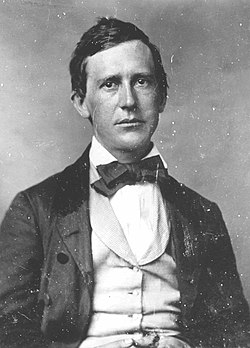
Stephen FosterStephen FosterMain
Open search
Stephen Foster
Community hub
Stephen Foster
logo
8 pages, 0 posts
0 subscribers
Be the first to start a discussion here.
Stephen Foster
Stephen Foster
from Wikipedia

Stephen Collins Foster (July 4, 1826 – January 13, 1864), known as "the father of American music", was an American composer known primarily for his parlour and folk music during the Romantic period. He wrote more than 200 songs, including "Oh! Susanna", "Hard Times Come Again No More", "Camptown Races", "Old Folks at Home" ("Swanee River"), "My Old Kentucky Home", "Jeanie with the Light Brown Hair", "Old Black Joe", and "Beautiful Dreamer". Many of his compositions remain popular today.

Key Information

Early life

[edit]
Foster's parents, Eliza Tomlinson Foster and William Barclay Foster

There are many biographies of Foster, but details differ widely. Among other issues, Foster wrote very little biographical information himself, and his brother Morrison Foster may have destroyed much information that he judged to reflect negatively upon the family.[4][5]

Foster was born on July 4, 1826,[6] in Lawrenceville, Pennsylvania. His parents, William Barclay Foster and Eliza Clayland Tomlinson Foster, were of Ulster Scots and English descent. He had three older sisters and six older brothers. He attended private academies in Allegheny, Athens, and Towanda, Pennsylvania, and received an education in English grammar, diction, the classics, penmanship, Latin, Greek, and mathematics.[citation needed]

Foster taught himself to play the clarinet, guitar, flute, and piano. In 1839, his brother William was serving his apprenticeship as an engineer at Towanda and thought that Stephen would benefit from being under the supervision of Henry Kleber (1816–1897), a German-born music dealer in Pittsburgh. Under Kleber, Stephen was exposed to music composition.[7] Together the pair studied the works of Mozart, Beethoven, Weber, Mendelssohn and Schubert.

The site of the Camptown Races – which would provide both the title and setting for events of one of Foster's best-known songs – was located 30 miles (48 km) from Athens and 15 miles (24 km) from Towanda. Foster's education included a brief period at Jefferson College in Canonsburg, Pennsylvania, now part of Washington & Jefferson College.[8][nb 1] His tuition was paid, but he had little spending money.[8] He left Canonsburg to visit Pittsburgh with another student[when?] and did not return.[8]

Career

[edit]
House in Hoboken, New Jersey where Foster is believed to have written "Jeanie with the Light Brown Hair" in 1854[10]

Foster married Jane Denny McDowell on July 22, 1850, and they visited New York and Baltimore on their honeymoon. Foster then returned to Pennsylvania and wrote most of his best-known songs: "Camptown Races" (1850), "Nelly Bly" (1850), "Ring de Banjo" (1851), "Old Folks at Home" (known also as "Swanee River", 1851), "My Old Kentucky Home" (1853), "Old Dog Tray" (1853), and "Jeanie with the Light Brown Hair" (1854), written for his wife Jane.

Many of Foster's songs were used in the blackface minstrel shows popular at the time. He sought to "build up taste...among refined people by making words suitable to their taste, instead of the trashy and really offensive words which belong to some songs of that order".[11] However, Foster's output of minstrel songs declined after the early 1850s, as he turned primarily to parlor music.[12] Many of his songs had Southern themes, yet Foster never lived in the South and visited it only once, during his 1852 honeymoon. Available archival evidence does not suggest that Foster was an abolitionist.[12]

Foster's last four years were spent in New York City. There is little information on this period of his life, although family correspondence has been preserved.[13]

Illness and death

[edit]
A Pittsburgh Press illustration of the original headstone on Stephen Foster's grave

Foster became sick with a fever in January 1864. Weakened, it is possible he fell in his hotel in the Bowery and cut his neck; he may also have sought to take his own life.[14] His writing partner George Cooper found him still alive but lying in a pool of blood. Foster died in Bellevue Hospital three days later at the age of 37.[15] His leather wallet contained a scrap of paper that simply said, "Dear friends and gentle hearts", along with 37 cents in Civil War scrip and three pennies.

Other biographers describe different accounts of his death.[16] Historian JoAnne O'Connell speculates in her biography, The Life and Songs of Stephen Foster, that Foster may have killed himself.[14] As O'Connell and musicologist Ken Emerson have noted, several of the songs Foster wrote during the last years of his life foreshadow his death, such as "The Little Ballad Girl" and "Kiss Me Dear Mother Ere I Die." Emerson says in his 2010 Stephen Foster and Co. that Foster's injuries may have been "accidental or self-inflicted".[17]

Telegram that communicated Stephen Foster's death addressed to his brother Morrison Foster

The note inside Foster's wallet is said to have inspired Bob Hilliard's lyric for "Dear Hearts and Gentle People" (1949). Foster was buried in the Allegheny Cemetery in Pittsburgh. After his death, Morrison Foster became his "literary executor". As such, he answered requests for copies of manuscripts, autographs, and biographical information.[13] After his death, "Beautiful Dreamer", one of the best-loved of his works, was posthumously published in 1864.[18]

Music

[edit]

Foster grew up in Lawrenceville, now a neighborhood of Pittsburgh, where many European immigrants had settled and were accustomed to hearing the music of the Italian, Scots-Irish, and German residents. He composed his first song when he was 14 and entitled it the "Tioga Waltz". The first song that he had published was "Open thy Lattice Love" (1844).[7][19] He wrote songs in support of drinking, such as "My Wife Is a Most Knowing Woman", "Mr. and Mrs. Brown", and "When the Bowl Goes Round", while also composing temperance songs such as "Comrades Fill No Glass for Me" or "The Wife".[6]

Foster also authored many church hymns, although the inclusion of his hymns in hymnals ended by 1910. Some of the hymns are "Seek and ye shall find",[20] "All around is bright and fair, While we work for Jesus",[21] and "Blame not those who weep and sigh".[22] Several rare Civil War-era hymns by Foster were performed by The Old Stoughton Musical Society Chorus, including "The Pure, The Bright, The Beautiful", "Over The River", "Give Us This Day", and "What Shall The Harvest Be?".[citation needed][when?] He also arranged many works by Mozart, Beethoven, Donizetti, Lanner, Weber and Schubert for flute and guitar.

Foster usually sent his handwritten scores directly to his publishers. The publishers kept the sheet music manuscripts and did not give them to libraries nor return them to his heirs. Some of his original, hand-written scores were bought and put into private collections and the Library of Congress.[13]

[edit]

"My Old Kentucky Home" is the official state song of Kentucky, adopted by the General Assembly on March 19, 1928.[citation needed]

Foster's songs, lyrics, and melodies have often been altered by publishers and performers.[23]

In 1957 Ray Charles released a version of "Old Folks at Home" that was titled "Swanee River Rock (Talkin’ ’Bout That River)", which became his first pop hit that November.[24]

In the 2000s[when?] "Old Folks at Home", designated the official state song of Florida in 1935,[25] came under attack for what some regarded as offensive terms in the song's lyrics. Changes were made to them with the approval of the Stephen Foster Memorial.[citation needed][when?] The modified song was kept as the official state song, while "Florida (Where the Sawgrass Meets the Sky)" was added as the state anthem.[citation needed]

A 1974 published collection, Stephen Foster Song Book; Original Sheet Music of 40 Songs (New York : Dover Publications, Inc.), of Stephen Foster's popular songs was edited by musicologist Richard Jackson.[26]

Legacy

[edit]

Musical influence

[edit]

Songs

[edit]
  • Professor of folklore and musician John Minton wrote a song titled "Stephen C. Foster's Blues".[27]
  • Walt Kelly recorded an a cappella rendition of Foster's "Old Dog Tray" on the 1956 album Songs of the Pogo. Kelly regularly referenced "Old Dog Tray" as the theme song for his character Beauregard Hound Dog, from his comic strip Pogo.
  • The Firesign Theatre makes many references to Foster's compositions in their CD Boom Dot Bust (1999, Rhino Records).
  • Larry Kirwan of Black 47 mixes the music of Foster with his own in the musical Hard Times, which earned a New York Times accolade in its original run: "a knockout entertainment". Kirwan gives a contemporary interpretation of Foster's troubled later years and sets it in the tumultuous time of the New York draft riots and the Irish–Negro relations of the period. A revival ran at the Cell Theater in New York in early 2014, and a revised version of the musical called Paradise Square opened at Berkeley Repertory Theatre in 2018.
  • Gordon Lightfoot wrote a song in 1970 titled "Your Love's Return (Song for Stephen Foster)."
  • Randy Newman's 1970 album 12 Songs contained Newman's song "Old Kentucky Home" (originally titled "Turpentine and Dandelion Wine"), which is based on Foster's "My Old Kentucky Home, Good-Night!" Newman told Billboard magazine, "It's a good song because Stephen Foster wrote the hook".[28] Under various titles, Newman's "Old Kentucky Home" was covered by the Beau Brummels, the Alan Price Set and Johnny Cash.
  • Spike Jones recorded a comedy send-up "I Dream of Brownie with the Light Blue Jeans."
  • Humorist Stan Freberg imagined a 1950s style version of Foster's music in "Rock Around Stephen Foster" and, with Harry Shearer, had a sketch about Foster having writer's block in a bit from his "United States of America" project.
  • Songwriter Tom Shaner mentions Stephen Foster meeting up with Eminem's alter ego "Slim Shady" on the Bowery in Shaner's song "Rock & Roll is A Natural Thing".
  • The music of Stephen Foster was an early influence on the Australian composer Percy Grainger, who stated that hearing "Camptown Races" sung by his mother was one of his earliest musical recollections. He went on to write a piece entitled "Tribute to Foster", a composition for mixed choir, orchestra, and pitched wine glasses based on the melody of "Camptown Races".[29]
  • Art Garfunkel was cast as Stephen Foster and sang his songs in an elementary school play in Queens, New York.[30]
  • Foster's name is included in the rapid fire litany of musicians and songs that make up the lyrics of the 1974 pop novelty song "Life Is a Rock (But the Radio Rolled Me)" by Reunion.
  • Neil Sedaka wrote and recorded a song about Foster and released it on his 1975 album, The Hungry Years.
  • Alternative country duo The Handsome Family's song "Wildebeest", from their 2013 album Wilderness, is about Foster's death.[31]
  • Squirrel Nut Zippers wrote and recorded a song in 1998 titled "The Ghost of Stephen Foster".
  • Stace England released in April 2024, as part of the group Foster's Satchel, a full-length album entitled Over the River: Stephen Foster Reimagined.
  • John Fogerty of Creedence Clearwater Revival has said Foster's music inspired his own music, especially "Proud Mary".
Foster commemorative stamp in the Famous American Composers series, 1940[32]

Television

[edit]
  • Two television shows about the life of Foster and his childhood friend (and later wife) Jane MacDowell were produced in Japan, the first in 1979 with 13 episodes, and the second from 1992 to 1993 with 52 episodes; both were titled Jeanie with the Light Brown Hair after the song of the same name.
  • In the Honeymooners episode "The $99,000 Answer", Ralph Kramden studies decades' worth of popular songs for his upcoming appearance on a television game show. Before each song, Ed Norton warms up on the piano by playing the opening to "Swanee River". On the program, Ralph is asked his first question for just 100 dollars: "Who is the composer of 'Swanee River'?" Ralph freezes, then nervously responds "Ed Norton?" and loses.
  • In a "Fractured Fairy Tales" segment of The Rocky and Bullwinkle Show, Aladdin finds a lamp with a female genie with light brown hair, who immediately asks, "Are you Stephen Foster?"
  • Lucille Ball, in an episode of The Lucy Show, announces that she is about to play a record called "Bing Crosby Sings Stephen Foster." A Crosby impressionist is heard singing (to the melody of "Camptown Races") "A-bum-bum-bum-bum bum-bum-bum, Stephen, Foster..."

Film

[edit]

Many early filmmakers selected Foster's songs for their work because his copyrights had expired and cost them nothing.[33] The 1935 technicolor musical short film Memories and Melodies depicts Collins trying to sell a song at the local music shop and reminiscing. Other Hollywood films include Harmony Lane (1935) with Douglass Montgomery, Swanee River (1939) with Don Ameche, and I Dream of Jeanie (1952), with Bill Shirley. The 1939 production was one of Twentieth Century Fox's more ambitious efforts, filmed in Technicolor; the other two were low-budget affairs made by B-movie studios.

Other events

[edit]

Art

[edit]
Stephen Foster sculpture in Schenley Plaza, Pittsburgh, by Giuseppe Moretti (1900)

Accolades and honors

[edit]
Foster is depicted on the obverse of the 1936 Cincinnati Musical Center half dollar

Foster is honored on the University of Pittsburgh campus with the Stephen Foster Memorial, a landmark building that houses the Stephen Foster Memorial Museum, the Center for American Music, and two theaters: the Charity Randall Theatre and Henry Heymann Theatre, both performance spaces for Pitt's Department of Theater Arts. It is the largest repository for original Stephen Foster compositions, recordings, and other memorabilia his songs have inspired worldwide.

Two state parks are named in Foster's honor: the Stephen Foster Folk Culture Center State Park in White Springs, Florida, and Stephen C. Foster State Park in Georgia. Both parks are on the Suwannee River. Stephen Foster Lake at Mt. Pisgah State Park in Pennsylvania is named after him.

One state park is named in honor of Foster's songs, My Old Kentucky Home State Park, a historic mansion formerly named Federal Hill, located in Bardstown, Kentucky, where Foster is said to have been an occasional visitor according to his brother, Morrison Foster.[citation needed] The park dedicated a bronze statue in honor of Stephen's work.

The Lawrenceville Historical Society, together with the Allegheny Cemetery Historical Association, hosts the annual Stephen Foster Music and Heritage Festival (Doo Dah Days!). Held the first weekend of July, Doo Dah Days! celebrates the life and music of one of the most influential songwriters in America's history. His home in the Lawrenceville section of Pittsburgh, Pennsylvania, still remains on Penn Avenue near the Stephen Foster Community Center.

[edit]

Statue controversy and later views

[edit]

A 1900 statue of Foster by Giuseppe Moretti was located in Schenley Plaza, in Pittsburgh, from 1940 until 2018. On the unanimous recommendation of the Pittsburgh Art Commission, the statue was removed on April 26, 2018.[35] Its new home has not yet been determined. It has a long reputation as the most controversial public art in Pittsburgh "for its depiction of an African-American banjo player at the feet of the seated composer. Critics say the statue glorifies white appropriation of black culture and depicts the vacantly smiling musician in a way that is at best condescending and at worst racist."[36] A city-appointed Task Force on Women in Public Art called for the statue to be replaced with one honoring an African American woman with ties to the Pittsburgh community. The Task Force held a series of community forums in Pittsburgh to collect public feedback on the statue replacement and circulated an online form which allowed the public to vote for one of seven previously selected candidates or write in an alternate suggestion.[37] However, the Task Force on Women in Public Art and the Pittsburgh Art Commission have not reached an agreement as to who will be commemorated or if the statue will stay in the Schenley Plaza location.[38]

The musicologist Ken Emerson has suggested that some of Foster's songs are "a source of racial embarrassment and infuriation."[39]

See also

[edit]

Notes

[edit]

References

[edit]

Further reading

[edit]
[edit]
Revisions and contributorsEdit on WikipediaRead on Wikipedia
from Grokipedia
Stephen Collins Foster (July 4, 1826 – January 13, 1864) was an American songwriter and composer who rose to prominence in the mid-19th century through parlor ballads and songs that captured elements of American expression. Born in Lawrenceville, , near , to a family of modest means, Foster produced over 200 works, including enduring hits such as "" (1848), "" (1850), "" (1851), and "" (1853), many tailored for troupes that popularized them across theaters and households. Foster's early career involved composing comic dialect songs disparaging for shows, reflecting the era's entertainment norms, though his later output shifted toward sentimental depictions of life and , purportedly aiming to evoke sympathy for enslaved people despite his lack of direct Southern experience. Lacking formal musical training beyond self-study and familial influences, he became one of the first U.S. s to derive primary income from song sales and royalties, yet chronic financial instability, exacerbated by exploitative contracts and personal habits including , culminated in his from injuries sustained in a New York boardinghouse fall while impoverished. Regarded as a foundational figure in for embedding folk-like melodies into that transcended class and region, Foster's catalog shaped national identity and inspired subsequent genres, earning him designations like the "first great ." His legacy persists amid modern scrutiny over lyrics containing racial stereotypes and dialect, which originated in minstrelsy's commercialized portrayals of life but fueled widespread cultural adoption and adaptation.

Early Life

Family and Upbringing

Stephen Collins Foster was born on July 4, 1826, in Lawrenceville, (now a neighborhood in ), the ninth of ten children born to William Barclay Foster and Eliza Clayland Tomlinson Foster. William B. Foster, a , civil servant, and civic leader who helped found Lawrenceville, provided for the family through various business ventures including lumber trading and . Eliza, originally from , managed the household and emphasized education and moral upbringing in a Presbyterian household. The Fosters resided in the White Cottage overlooking the from approximately 1815 to 1829, a period encompassing Stephen's , before relocating within the area due to William's business pursuits. As the youngest child, Foster benefited from a close-knit environment where older siblings, including brothers Morrison and Dunning, offered protection and encouragement; Morrison later documented family history and managed Stephen's posthumous affairs. The family's relative affluence in early years supported a stable upbringing, though economic fluctuations affected them later, fostering resilience amid Stephen's emerging musical interests. Despite the parents lacking musical training themselves, the household valued cultural refinement, indirectly nurturing Foster's talents through exposure to hymns and folk tunes.

Musical Influences and Education

Foster attended private academies in Allegheny in 1834, Athens Academy, and Towanda Academy during 1840–1841, receiving instruction in , , the , , Latin, Greek, and mathematics. He briefly enrolled at Jefferson College in , in summer 1841 but withdrew after about one month. At age 14 while at Athens Academy, he composed his early instrumental work "Tioga Waltz." The Foster household provided an informal musical environment, with sisters playing , guitar, and , the father performing on , and a acquired in 1828; early exposure included servant Olivia Pise taking young Foster to services featuring . Primarily self-taught with limited formal instruction, he learned to play as a child and received some training from Henry Kleber, a German immigrant and versatile musician teaching in . At age nine in 1835, Foster formed an amateur group performing Ethiopian minstrel songs like "Zip Coon." His influences encompassed and folk traditions, Thomas Moore's Irish Melodies, German lieder, and Italian operas encountered via productions. Teenage years brought further impact from entertainers, including Dan Rice, blending popular vernacular styles with structured forms. These elements shaped his early compositions, such as the 1844 publication of "Open Thy Lattice, Love" at age 17 or 18.

Professional Career

Initial Compositions and Publishing

Foster's earliest known composition was the instrumental "Tioga Waltz," written in 1840 at age 14, though it remained unpublished during his lifetime. His initial published works were sentimental parlor songs, a genre suited for domestic music-making in middle-class homes, often dedicated to personal acquaintances such as women from his social circle. The first of these, "Open Thy Lattice, Love," appeared in 1844, with Foster providing the melody for lyrics by poet George Pope Morris; it was issued as by publisher George . At 18, Foster received a flat fee of $100 for the rights, forgoing royalties or ongoing payments, a common practice that limited his later earnings. This , evoking a lover's plea beneath a , exemplified his early style of simple, lyrical melodies over accompaniment. By 1845, Foster had composed "Old Uncle Ned," an early ethno-character song depicting an aged enslaved man, which he presented without initial publication credit to himself. In 1846, while employed as a bookkeeper in for his brother's firm, he wrote "," another character song with dialect verse, selling it outright to publisher W.C. Peters & Co. for $100. Peters marketed it through performers, accelerating its spread despite Foster's lack of performance rights enforcement; by 1848, it had entered via unauthorized printings, yet gained national popularity in variety shows. These initial publications relied on sheet music sales to amateur musicians and performers, with Foster navigating publishers in , , and without formal contracts beyond one-time payments. Lacking protections he did not pursue, songs like "" proliferated through and pirated editions, establishing Foster's reputation while yielding minimal direct income—estimated at under $200 total from early works before 1850. This period marked his transition from amateur composer to professional, though financial precarity persisted due to the era's nascent structures.

Collaboration with Minstrel Troupes

Foster's entry into composing for troupes occurred in the late 1840s, as minstrelsy emerged as a dominant form of American popular entertainment, featuring white performers in exaggerated caricatures of African American life. His early song "," composed in 1847 and first published in 1848 by W. C. Peters in , quickly gained traction through performances by troupes such as the Ethiopian Serenaders, establishing Foster as a contributor to the genre despite initial limited financial returns. By 1849, Foster had placed eight songs in minstrel shows, including "Uncle Ned" and "Nelly Was a Lady," marking his shift toward tailoring compositions for stage use in these ensembles. A pivotal collaboration formed in 1850 with Edwin Pearce Christy, founder of the Christy Minstrels, a leading New York-based troupe known for refining minstrelsy's structure into a formalized three-part show format. Foster proactively sent Christy unpublished songs, including "Gwine to Run All Night" (commonly known as ""), offering the troupe exclusive premiere rights in exchange for promotion, as he lacked direct access to urban performance circuits from . This arrangement proved mutually beneficial; Christy's ensemble, which had performed a Foster benefit in on August 25, 1847, specialized in his works thereafter, integrating them into routines that emphasized comic and accompaniment. In the summer of 1851, Foster sold "" (also titled "Swanee River") to Christy for $15, granting the troupe rights to introduce it, though Christy initially presented it as his own composition in performances, a practice that delayed Foster's public credit but amplified the song's reach across circuits. Foster further demonstrated his strategic approach in a May 25, 1852, letter to Christy, stating his intention to omit his name from certain "Ethiopian songs" to foster "a taste for this style of " among broader audiences, prioritizing artistic elevation over immediate attribution. This partnership extended to other hits like "Massa's in de Cold Ground" (1852) and "" (1853), which premiered, embedding Foster's melodies—characterized by simple, memorable hooks and pseudo-dialect lyrics—into the core repertoire of minstrelsy during its commercial peak before the Civil War. Though Foster never performed onstage himself, relying instead on intermediaries like Christy for validation and dissemination, this collaboration solidified his role as minstrelsy's preeminent songwriter, with his output comprising the genre's musical backbone amid its transition from itinerant acts to polished theatrical productions. The arrangement yielded inconsistent royalties for Foster due to lax enforcement and Christy's promotional claims, yet it propelled songs like "" (1860) into widespread cultural circulation via troupe tours and sales.

Shift to Parlor and Civil War Songs

By the mid-1850s, Foster reduced his composition of minstrel songs, which had dominated his early career, and increasingly focused on parlor music intended for domestic performance by middle-class families. This transition, gradual between 1853 and 1855, stemmed from artistic aspirations to create works of greater emotional depth and universality, moving beyond the dialect and stereotypes of minstrelsy; social pressures amid rising abolitionist critiques of entertainment; and commercial incentives to target the expanding market for sentimental songs suitable for home pianos and sales. Foster's exclusive with Firth, Pond & Co., renewed in 1853 and 1854, facilitated this pivot by providing steady outlets for non-minstrel output, though weak enforcement limited royalties. Key parlor songs from this period include "Jeanie with the Light Brown Hair," published in 1854 and dedicated to his wife, featuring a evoking and romance; and "Hard Times Come Again No More," also 1854, a poignant addressing economic hardship with appealing to broader audiences beyond theatrical troupes. These compositions emphasized refined sentiment over comic exaggeration, reflecting Foster's stated intent to produce "Ethiopian songs" elevated for general appeal. As the erupted in , Foster, then residing in , composed several pieces addressing themes of separation, patriotism, and Union resolve, often in collaboration with lyricist George Cooper. Notable works include "I'll Be a Soldier" (), a rallying enlistment song; "Was My Brother in the Battle?" (1862), expressing familial anxiety over casualties; "We Are Coming, Father Abraam, 300,000 More" (1862), urging reinforcements for President Lincoln's call for troops; and "When This Dreadful War Is Ended" (1863), a for peace. These songs, published amid Foster's financial decline, blended parlor-style accessibility with wartime urgency but achieved modest commercial success compared to his earlier hits. Foster's Union sympathies, evident in lyrics supporting federal efforts, aligned with his Northern upbringing despite the Southern themes in prior works.

Personal Life and Financial Hardships

Marriage and Family

Foster married Jane Denny McDowell, the daughter of physician Dr. William McDowell, on , 1850, in a ceremony conducted by a minister from Trinity in . Jane, born December 10, 1829, came from a socially prominent family, which contrasted with Foster's more modest circumstances and reportedly surprised acquaintances given the brevity of their courtship. The couple's only child, daughter Marion Foster, was born on April 18, 1851, in . Marion, who lived until July 9, 1935, later worked as a teacher in to support herself. The family primarily resided in during the early years of the marriage, though Foster frequently traveled for professional reasons, including stints in and later New York; Jane and Marion occasionally joined him but returned to amid his financial instability. Little detailed documentation exists on the daily dynamics of Foster's family life, but the marriage endured for 14 years until his in 1864, after which Jane worked as a private nurse and remarried merchant Matthew D. Wiley in 1874. Marion maintained ties to her father's legacy, preserving some artifacts and participating in commemorative events, such as interviews in the and where she discussed inheriting his musical inclinations and raising her own children—Jessie, Matthew, and Mabel—with an emphasis on .

Economic Struggles and Contracts

Foster's early publishing deals provided limited financial security, as he often sold song rights outright for modest lump sums rather than securing ongoing royalties. In December 1848, he received $100 from W.C. Peters & Co. in Louisville for the rights to "Oh! Susanna," though unauthorized reprints by other publishers diluted potential earnings due to lax copyright enforcement. Similarly, Edwin Christy of the Christy Minstrels paid Foster $10 per song for premiere rights in the early 1850s, with an exception of $15 for "Old Folks at Home" in 1851, in exchange for crediting Christy as the composer on the sheet music. By 1849, Foster signed a more structured with the New York firm Firth, Pond & Co., entitling him to a royalty of two cents per copy sold (approximately 8% of the standard 25-cent price), marking one of his few arrangements with residual payments. This deal was renewed in 1854 and 1858, but Foster increasingly relied on advances against future royalties, accumulating debts; by January 1860, he owed the firm $1,479.95. Publishers like Firth, Pond exploited the era's weak protections by bootlegging editions, while Foster's habit of drawing ahead eroded his income stream. Financial pressures intensified in the late amid personal losses and declining output, prompting Foster to sell future royalties outright. On , 1857, he transferred rights to ongoing and prospective songs with Firth, Pond for $1,872.28 and received $200 from F.D. Benteen for 16 additional works, forgoing long-term earnings from hits like "." A May 1859 request for a $100 advance was denied due to his outstanding balance, and by April 1860, he sought small loans from family. On August 9, 1860, facing mounting debts, Foster sold all rights to his prior Firth, Pond publications for $1,600, settling $1,396.64 in advances and netting just $203.36. These transactions reflected broader economic hardships, including the 1837 Panic's lingering effects on his family and slowed composition after deaths in his circle (parents in 1855, friend Dunning in 1856). Despite lifetime sheet-music royalties totaling around $15,000, Foster's strategy of prioritizing immediate cash over sustained revenue—coupled with publisher exploitation and no performance royalties—left him vulnerable; he relocated to New York in 1860 seeking stability but encountered persistent instability and outright sales yielding only upfront payments.

Death and Immediate Aftermath

Final Years in New York

In the fall of 1860, Stephen Foster relocated to with his wife Jane and daughter Marion, seeking opportunities in the city's burgeoning music publishing scene. By July 1861, however, Jane and Marion returned to , leaving Foster to live alone amid mounting personal and financial pressures. He resided in inexpensive rooming houses in Manhattan's district, a area known for its theaters and transient population, which aligned with his efforts to sell songs directly to publishers and performers. Foster's productivity remained high during these years, though the quality and commercial success of his output declined. In 1862, he published 17 songs, many of which were criticized for mediocrity and failed to generate significant income, compounded by his struggles with alcohol and the era's inadequate laws that allowed publishers to claim ownership after outright purchases. These laws meant Foster received no royalties on hits like earlier tunes, as publishers advanced sums against future earnings that often exhausted potential profits. His sentimental parlor songs from this period, such as "Gentle Lena Clare" (1862), reflected a shift toward domestic themes but did not reverse his economic slide. In 1863, Foster contributed 10 new compositions to The Golden Harp, a collection of hymns that marked one of his last collaborative efforts. He also experimented with forms like secular cantatas, aiming to establish a light opera troupe, but these ventures yielded little success amid his isolation and health decline. Among his final works was "," a wistful composed in New York in late 1863 or early 1864, capturing themes of longing and evanescence; it was published posthumously on March 10, 1864, by William A. Pond & Co. By this time, Foster's total earnings from 1849 to 1860 had amounted to $15,091.08—averaging about $1,372 annually—but subsequent years brought destitution, with no effective mechanisms to sustain income from his catalog.

Circumstances of Death

In early January 1864, Stephen Foster, residing in a modest lodging house in amid ongoing financial distress, fell ill with a high fever. On or around January 10, he reportedly slipped in his room, striking a washbasin and severely gashing his throat, which led to significant blood loss. Foster was discovered in this condition by a chambermaid and rushed to Bellevue Hospital's charity ward, where he received treatment but succumbed to his injuries and complications from the fever three days later, on January 13, 1864, at the age of 37. Upon his admission, medical staff found only 38 cents in his possession, underscoring his impoverished state at the time. His brother Morrison Foster later detailed these events in the 1932 biography My Brother Stephen, drawing from hospital records and eyewitness accounts, though some contemporary reports speculated on contributing factors like chronic alcoholism without conclusive evidence. Foster died unrecognized by hospital staff initially, and his body was claimed by family after identification.

Compositional Style and Techniques

Melodic and Harmonic Innovations

Foster's melodies often drew from , evoking a folk-like simplicity and Celtic influences that contributed to their enduring catchiness and emotional resonance. For instance, the opening phrases of (1848) rely predominantly on the major , creating a jaunty, repetitive structure that facilitated oral transmission and broad popular adoption. This approach aligned with ballad traditions while incorporating elements from African American work songs and Irish melodies, resulting in conjunct motion with stepwise phrases and occasional large leaps for expressive peaks, as seen in "Jeanie with the Light Brown Hair" (1854), where compression on melodic lines builds hypnotic sentimentality. Such techniques marked an innovation in American songwriting by hybridizing European lyricism—evident in bel canto-inspired phrasing—with vernacular accessibility, elevating minstrel-derived forms beyond toward universal appeal. Harmonically, Foster favored diatonic progressions rooted in tonic, dominant, and functions, ensuring clarity and emotional focus without excessive complexity, which supported the sentimental tone of works like "" (1851). This restraint contrasted with contemporaneous European romanticism's denser , yet he introduced subtle sophistication through secondary harmonies and occasional chromatic inflections in later parlor songs, such as the supportive arpeggiated accompaniments in "" (1864) that mimic arias while maintaining homophonic texture. Innovations here included adapting classical influences from composers like and Beethoven for harmonic depth in ballads, blending them with simplicity to create versatile structures—static chords in verses yielding to active resolutions—that appealed across social classes and performance contexts, from solo voice to ensemble choruses. Overall, these elements fostered a distinctly American vernacular style, prioritizing melodic memorability and harmonic restraint to evoke and sympathy amid antebellum cultural shifts.

Thematic Elements and Dialect Use

Foster's compositions recurrently feature themes of , love, and human longing, often framed within sentimental portrayals of antebellum Southern life, despite his lifelong residence in the North. predominates in works evoking a lost , such as "" (1851), where the speaker yearns for the "old folks" by the Swanee River, blending restorative desires to reclaim the past with reflective melancholy over irrecoverable simplicity amid 19th-century industrialization and . Similarly, ", Good-Night!" (1853) laments a bygone era of familial harmony and natural beauty, reflecting broader American cultural sentiments of displacement and loss tied to migration, economic shifts, and familial separation. Love and sympathy emerge in plantation melodies that humanize enslaved figures, portraying their emotional depths and trials rather than mere , influenced by Foster's encounters with free Black laborers in and antislavery undercurrents of the era. Examples include "Nelly Was a Lady" (), a for a deceased enslaved woman emphasizing her dignity and virtue, and "Massa's in de Cold Ground" (1852), which conveys grief over a master's death through memories of shared hardship. These themes align with abolitionist resonances noted by contemporaries like , though Foster's depictions idealized rural Southern settings—canebrakes, rivers, and cabins—drawn from conventions and indirect observations rather than firsthand Southern experience. In songs, Foster utilized a stylized phonetic dialect to evoke African American as perceived in Northern urban contexts and theatrical traditions, featuring substitutions like "de" for "the," "gwine" for "going," and "Massa" for "master," as in "" (1848): "I come from wid my on my knee." This ""—largely Foster's invention, blending phrasing with caricatured elements—served minstrelsy's performative demands but diminished in later works to enhance universality and parlor suitability; "" (1860) employs entirely, while "" (1851) limits it to minor phonetic shifts like "th" to "f." The approach humanized characters by prioritizing emotional narrative over exaggeration, marking Foster's innovation in elevating forms toward -like depth, though rooted in era-specific rather than linguistic fidelity.

Major Works

Early Minstrel Hits

Foster's entry into the minstrel genre occurred during his time in , where he worked as a bookkeeper from 1846 to 1849 and began selling songs to publisher William C. Peters. His first significant composition, "," was written in 1847, debuted publicly that September at a event, and published in 1848. The song's upbeat melody and simple structure propelled it to widespread popularity, particularly among westward migrants during the , establishing Foster as a recognized songwriter despite its initial sale to Peters for just $100. Following "," Foster released "Old Uncle Ned" in 1848, another Peters publication depicting the death of an aged field hand in dialect-laden verses. This ethopoiia-style piece, blending with rhythmic simplicity, gained traction in minstrel repertoires and reflected Foster's early experimentation with sentimental plantation themes. Its sales contributed to his growing catalog, though exact figures remain undocumented beyond general accounts of Peters' output. By 1850, Foster's "," published in February through Firth, Pond & Co. in New York, marked his second major success, popularized by E.P. Christy's troupe with its infectious "doo-dah" chorus mimicking horse-race excitement. The 's narrative of and revelry in a fictional town sold briskly, cementing Foster's reputation for crafting accessible, performative tunes suited to stages, where it endured as a staple into the Civil War era.

Iconic Ballads and Sentimental Songs

Foster's sentimental ballads, often performed in parlor settings, emphasized themes of , lost love, and familial longing, reflecting the emotional landscape of mid-19th-century America amid rapid industrialization and . These works contrasted with his earlier compositions by prioritizing melodic simplicity and heartfelt lyrics over or , appealing to a broader through sales and domestic performances. "Old Folks at Home" (also known as "Swanee River"), composed in 1851 and first published that year, exemplifies this genre as a sentimental evocation of aging and separation from one's birthplace, despite its initial adaptation for ; by 1854, it had sold over 100,000 copies, establishing Foster's reputation for capturing universal yearning. Similarly, "My Old Home, Good-Night!" (1853) portrayed idealized Southern domesticity and exile, achieving widespread popularity through troupes and parlor adaptations, with sales exceeding those of many contemporaries and influencing state symbolism in . Purer parlor ballads like "Jeanie with the Light Brown Hair" (1854) shifted to personal romance and melancholy, depicting a speaker's grief over a departed beloved, with its lilting melody and poetic imagery contributing to over 130,000 sheet music sales in the decade following publication. "Hard Times Come Again No More" (1854), published amid economic instability preceding the Civil War, addressed collective hardship through empathetic verses pleading for relief from poverty and division, resonating in folk traditions and later recordings due to its stark realism rather than escapism. Foster's posthumously published "Beautiful Dreamer" (1864) culminated this style, blending dreamlike serenity with undertones of transience; critics have hailed it as his melodic pinnacle for its harmonic subtlety and enduring appeal in choral and solo renditions. These songs collectively sold millions of copies in aggregate by the late 19th century, embedding Foster's name in American cultural memory through their adaptability to diverse ensembles and their avoidance of overt theatricality.

Later and Lesser-Known Pieces

In the later phase of his career, particularly from the late through his death in 1864, Stephen Foster produced a variety of compositions that diverged from his earlier successes, including parlor ballads, Civil War-themed songs, and occasional works, many of which garnered limited contemporary or enduring popularity due to shifting musical tastes and Foster's financial distress. These pieces often reflected personal melancholy, wartime , or retained elements, but lacked the broad commercial appeal of hits like "." Among the minstrel-style songs from this period, "The Glendy Burk" (1860) evoked the imagery of steamboat travel with lyrics about a lively crew and passengers, published amid Foster's declining output for blackface troupes. Similarly, "Don't Bet Your Money on de Shanghai" (1861) warned against gambling on unreliable racehorses in verse, exemplifying Foster's continued but less innovative engagement with tropes during economic hardship. "A in de Colored Brigade" (1861) addressed the enlistment of Black Union troops, portraying their resolve with lines like "We's gwine to fight fuh de Union," though it received scant notice compared to white-focused war songs. Foster's Civil War contributions included patriotic calls like "We Are Coming, Father Abra'am, 300,000 More" (1862), a recruitment anthem urging Northern volunteers with stirring choruses of loyalty to President Lincoln, composed shortly after his relocation to . Less celebrated were reflective ballads such as "Nothing But a Plain Old Soldier" (1862), which lamented the sacrifices of enlisted men through simple, narrative verses, and "Willie Has Gone to the War" (1863), a maternal over a son's departure, both underscoring themes of loss amid national conflict but overshadowed by Foster's prior sentimental standards. Parlor-oriented works like "Beautiful Child of Song" (1860) shifted toward lyrical introspection on music's consoling power, with piano accompaniment suited for domestic performance, marking Foster's pivot from theatrical minstrelsy. Humorous exceptions included "If You've Only Got a " (1862), a lighthearted poking fun at trends, reflecting Foster's occasional forays into topical whimsy during his New York years. These later efforts, totaling around two dozen known pieces from 1860–1864, yielded minimal royalties—often under $10 per song—and highlighted Foster's adaptation to a war-torn market, though most faded into obscurity without the folkloric resonance of his 1840s–1850s canon.

Cultural Impact and Legacy

Stephen Foster composed over 200 songs between 1844 and 1864, establishing himself as America's first professional songwriter who earned a living exclusively from musical compositions, thereby laying foundational practices for the commercialization of popular music. His integration of European bel canto opera melodies, Anglo-Celtic ballads, and African American spirituals and work songs produced a distinctive syncretic style that permeated American folk traditions and early popular genres. Foster's early hits, including "Oh! Susanna" (1848) and "Camptown Races" (1850), popularized catchy, rhythmic tunes suited for minstrel performances and folk gatherings, influencing the structure of subsequent vernacular songs with their simple verse-chorus forms and narrative lyrics. These works elevated minstrelsy from vulgar entertainment to vehicles for broader cultural expression, with Foster refining "Ethiopian" dialect songs into sympathetic "plantation melodies" that emphasized nostalgia and humanity, as in "Old Folks at Home" (1851, also known as "Swanee River"). By 1852, he had explicitly aimed to adapt such songs for refined audiences, ceding performance credits to promoters like E.P. Christy while retaining melodic innovations that spread through theatrical and domestic repertoires. In the realm of sentimental ballads, Foster's "Jeanie with the Light Brown Hair" (1854) and "Beautiful Dreamer" (1864, published posthumously) introduced lush, lyrical harmonies that bridged parlor music and folk revival, inspiring 20th-century adaptations by composers such as Aaron Copland in Old American Songs (1950) and performers like Ray Charles, who reinterpreted "Old Folks at Home" in soul styles. Socially themed pieces like "Hard Times Come Again No More" (1854) resonated in abolitionist circles and later folk movements, performed by groups such as the Hutchinsons and echoed in Pete Seeger's arrangements, underscoring Foster's role in embedding empathetic narratives into American popular consciousness. By the Civil War era, Foster's oeuvre had blurred distinctions between folk and , with his tunes achieving ubiquity in homes, theaters, and public events, as noted in contemporary periodicals like Harper's New Monthly Magazine, which dubbed his output the "national music" of the United States. This enduring integration fostered a shared musical idiom that influenced , songcraft, and beyond, cementing Foster's legacy as a progenitor of America's vernacular soundscape.

Adaptations in Media and Performance

Foster's compositions have been extensively adapted for theatrical films, with the 1940 biographical drama Swanee River, directed by Sidney Lanfield and produced by 20th Century Fox, portraying his life and incorporating songs such as "Old Folks at Home" and "Oh! Susanna." Starring Don Ameche as Foster and Al Jolson as minstrel troupe leader E.P. Christy, the film dramatizes Foster's inspirations and struggles, though it includes fictional elements like a Southern marriage for his wife Jane, who was actually from Pennsylvania. The production featured orchestral arrangements and performances emphasizing the sentimental and minstrel styles of his era. Stage adaptations include The Stephen Foster Story, an outdoor musical premiered in 1961 at in , which has run annually and integrates over 20 of his songs into a of his life, performed by local casts with period costumes and choreography evoking 19th-century traditions. Another example is Beautiful Dreamer: The Stephen Foster Musical, which uses originals like "" and "" in a biographical format highlighting his compositional process. In 2012, Hard Times, a musical by Larry Kirwan, debuted , adapting Foster's works to explore his financial woes and creative output through ensemble performances. Notable performances feature orchestral and vocal reinterpretations, such as baritone Thomas Hampson's 1992 album American Dreamer, which pairs Foster songs with American folk ensembles arranged by and , emphasizing melodic purity over dialect. Ray Charles's 1957 recording of "," retitled "Swanee River (Old Folks at Home)," adapted the melody into with altered lyrics to suit contemporary audiences. Classical ensembles have transcribed works for , including Robert Russell Bennett's A Commemoration Symphony to Stephen Foster premiered in the mid-20th century, conducted by William Steinberg, blending Foster's themes into symphonic form. Cellist has performed arrangements of Foster pieces in concerts, preserving harmonic structures while adapting for instrumental solo. These renditions often modify original dialects or instrumentation to align with modern performance contexts, reflecting evolving interpretive practices.

Enduring Popularity and State Songs

Foster's compositions have maintained widespread appeal in American culture, with melodies such as "Oh! Susanna" and "Camptown Races" becoming staples in folk repertoires, school curricula, and public performances long after his death in 1864. By the late 19th century, his works were already embedded in national consciousness, often mistaken for traditional folk tunes due to their pervasive adoption in minstrel shows, parlors, and early recordings. Over 160 years later, Foster's output of approximately 200 songs continues to influence popular music, with covers by artists ranging from Bing Crosby to modern folk ensembles, underscoring his role as the preeminent 19th-century American songwriter whose accessible, memorable tunes bridged European parlor traditions and vernacular styles. Two of Foster's most iconic works hold official status as state songs, reflecting their deep regional resonance. "Old Folks at Home," composed in 1851 and originally titled for Christy’s Minstrels, was designated Florida's state song in 1935, with the —misspelled by Foster—symbolizing the state's heritage despite the song's Ohio origins in his imagination. Similarly, "," written in 1853, became Kentucky's official state song on March 19, 1928, evoking nostalgia for the and performed annually at events like the . These adoptions highlight the songs' enduring sentimental value, even as lyrics have faced periodic revisions for contemporary sensibilities, yet their core melodies persist in official ceremonies and cultural events. Foster's legacy endures through institutional recognition, including the Stephen Foster Memorial at the , which preserves his manuscripts and hosts performances that keep his catalog alive for new generations. Sales of his in the millions during the phonograph era and ongoing inclusions in American songbooks affirm his foundational impact, positioning him as the architect of a distinctly national musical idiom that prioritized emotional directness over classical complexity.

Controversies and Critical Reappraisal

Racial Stereotypes in Minstrel Context

Foster's compositions, such as those performed by in the 1840s and 1850s, incorporated dialectal representations of African American speech that mimicked phonetic patterns like consonant dropping and substitutions (e.g., "de" for "the," "gwine" for "going"), which were conventional in entertainment to evoke rural Southern black characters. These linguistic choices, drawn from earlier crude tunes, were refined in Foster's works but still served to black vernacular as simplistic and uneducated, reinforcing perceptions of intellectual inferiority among enslaved people. Songs like "De Camptown Races" (published 1850) depicted black characters indulging in gambling and , portraying them as shiftless and pleasure-seeking through lines such as "De long tail filly and de big black hoss, / Dey fly de track and dey cut across," which aligned with archetypes of the lazy or improvident Southerner. Similarly, "" (1848) featured a banjo-playing narrator boasting of exploits in —"I come from wid my on my knee"—evoking the trope of the wandering, musically gifted but aimless black figure, a staple in shows that grossed thousands of performances annually by the . In plantation-themed pieces, such as "Old Uncle Ned" (1848), Foster presented elderly slaves as loyal and fiddle-playing entertainers whose deaths elicited communal mourning, using dialect to frame them as childlike dependents: "Den ole massa saddle up his fossil hoss, / An' rid him inter town so fast." This "faithful retainer" stereotype idealized servitude, implying contentment under white mastery, as echoed in "My Old Kentucky Home" (1851), where enslaved singers nostalgically recall "the old folks at home" amid "darkies" working in the fields, downplaying bondage's coercions in favor of sentimental harmony. These elements mirrored broader minstrelsy conventions originating in the , where white performers in burnt-cork makeup exaggerated physical mannerisms (e.g., shuffling dances) alongside vocal dialects to trade on working-class audiences' familiarity with Northern urban blacks or imagined Southern plantations, though Foster, a native who never resided in the , relied on published tropes rather than direct observation. While some later Foster songs introduced familial pathos absent in earlier, more buffoonish minstrel fare, the persistent dialect and scenarios codified racial hierarchies, portraying blacks as inherently musical yet subordinate, which shaped public imagery during an era of expanding slavery with over 4 million enslaved by 1860.

Anachronistic Modern Critiques

In the late 20th and early 21st centuries, scholars and activists have condemned Stephen Foster's songs for employing dialect and stereotypical depictions of , viewing them as perpetuating dehumanizing racial caricatures that reinforced . Critics, including musicologists, argue that tunes like "" (1848), with original lyrics referencing slave whippings ("I come from with my banjo on my knee / I'm goin' to , my true love for to see... It rain'd all night de day I left, de weather it was drear / I try'd to feed my hungry mouth, but a whippoorwill but sang / In ev'ry berry"), embody casual violence and exoticization offensive by contemporary standards. Similarly, "" (1850) and "Massa's in de Cold, Cold Ground" (1852) are cited as exemplars of dialect-driven mockery that minimized enslaved suffering while entertaining predominantly white audiences. These evaluations have prompted tangible cultural repudiations, such as the 2018 removal of a 1900 statue in Pittsburgh's Oakland neighborhood depicting Foster cradling an enslaved child, which protesters labeled as glorifying subjugation and necessitating erasure to combat systemic . In Kentucky, "My Old Kentucky Home" (1853)—designated the state song in 1928—underwent lyric revisions in 2021, substituting "darkies" with "people" to excise dialect perceived as derogatory, reflecting broader institutional efforts to sanitize 19th-century repertoire amid heightened sensitivity to racial language post-2020 social movements. Advocacy groups like the have historically campaigned against Foster memorials, framing his output as indelibly tainted by the minstrel tradition's racial politics. Such critiques are characterized as anachronistic by historians who emphasize the mid-19th-century context: Foster composed amid rising in free-state , never owned slaves, and drew from sentimental "plantation melodies" intended to evoke sympathy for enslaved lives rather than endorse bondage, as evidenced by inspirations from Harriet Beecher Stowe's . Minstrelsy, while reliant on stereotypes, democratized music access and influenced later African American performers like , who reinterpreted Foster's works; blanket modern condemnations thus overlook how these songs humanized black characters within era-specific entertainment norms, where overt abolitionist messaging risked commercial failure. This presentist lens prioritizes current moral frameworks over Foster's documented intent to refine minstrelsy toward empathy, as articulated in his 1852 correspondence pledging to compose "Old Uncle Ned" sans vulgarity for broader appeal.

Defenses Based on Historical Realism

Defenders of Stephen Foster's minstrel compositions emphasize that they must be interpreted within the mid-19th-century American cultural landscape, where minstrelsy dominated popular entertainment from the onward as the nation's first indigenous theatrical form, blending European folk traditions with observed African-American musical and elements to appeal to diverse working-class audiences in Northern urban centers like and . This genre, peaking in the 1840s-1850s, often served as escapist amid economic upheavals like the and slavery debates, portraying plantation life not solely as mockery but as sentimentalized realism drawn from secondhand accounts, minstrel performances, and regional interactions rather than direct Southern experience. Foster, residing in free-state and briefly in , incorporated such portrayals without personal slaveholding, reflecting the era's mediated Northern perceptions of Southern life. A key aspect of this historical realism lies in the evolution of Foster's "plantation songs" during 1848-1852, a phase when minstrelsy shifted toward sympathetic depictions of enslaved people amid growing abolitionist influences, including Harriet Beecher Stowe's (1852) and local antislavery networks. Songs like "Nelly Was a Lady" (1849) humanize a Black woman's death through eloquent lament, marking an early white-composed work voicing slave emotions for white performers, while "" (1853, initially titled "Poor , Good Night") evokes family separations caused by the internal slave trade, drawing from Stowe's themes and earning praise from abolitionists such as for stirring empathy. Similarly, "" (1860) employs dignified to convey an aged slave's hardships without explicit dialect caricature, aligning with minstrel trends that dignified rather than demeaned subjects to broaden parlor-song appeal. These elements, scholars contend, demonstrate Foster's intent to evoke universal pathos over derision, countering claims of inherent malice by grounding the works in contemporaneous sentimental racialism that sought to bridge racial divides through shared human experiences of loss and nostalgia. Critics applying modern standards overlook the causal role of minstrelsy in cultural exchange, as it exposed white audiences to African-American rhythmic and melodic innovations, fostering hybrid forms that influenced subsequent American music without prescriptive endorsement of . Foster's abandonment of heavy post-1852, transitioning to non-minstrel parlor songs like "Jeanie with the Light Brown Hair" (1854) and Union-supporting Civil War pieces such as "We Are Coming, Father Abraam" (1862), reflects adaptation to shifting public sentiments after events like the Kansas-Nebraska Act (1854) and Fugitive Slave Law (1850), prioritizing market viability and moral nuance over static . While acknowledging economic ties to cotton production, defenders highlight empirical song content—praised by figures like the Hutchinson singers for antislavery —as evidence of realism over , arguing that retroactive condemnation ignores the genre's function in processing 's societal tensions without Foster's direct advocacy for the . This contextual lens posits his oeuvre as a product of its time's empirical observations and empathetic aspirations, not timeless prejudice.

References

Add your contribution
Related Hubs
User Avatar
No comments yet.