Hubbry Logo
StonehavenStonehavenMain
Open search
Stonehaven
Community hub
Stonehaven
logo
8 pages, 0 posts
0 subscribers
Be the first to start a discussion here.
Stonehaven
Stonehaven
from Wikipedia

Stonehaven (/stnˈhvən/ stohn-HAY-vən) is a town on the northeast coast of Scotland, 15 miles (24 km) south of Aberdeen. It had a population of 11,177 at the 2022 Census.[2]

Key Information

Stonehaven was formerly the county town of Kincardineshire, succeeding the now abandoned town of Kincardine. It is currently administered as part of Aberdeenshire. The town is known in the local Doric dialect as Steenhive (/stinˈhv/ )[3] and is nicknamed Stoney.[4]

Pre-history and archaeology

[edit]

Stonehaven is the site of prehistoric events evidenced by finds at Fetteresso Castle and Neolithic pottery excavations from the Spurryhillock area.[5] In 2004, archaeological work by CFA Archaeology, in advance of the building of the Aberdeen to Lochside Natural Gas Pipeline, found two short cists burials containing cremated remains to the southwest of Stonehaven. Radiocarbon dating put the burials in the first half of the 2nd millennium BC, which was the Early Bronze Age in Scotland. The burials contained stone tool artifacts and shale/cannel coal beads.[6] That same year, researchers at the National Museums of Scotland and Yale University announced that a fossil found by an amateur paleontologist the previous year was the earliest known fossil of a land-dwelling animal. The fossil was about 420 million years old.[7]

History

[edit]
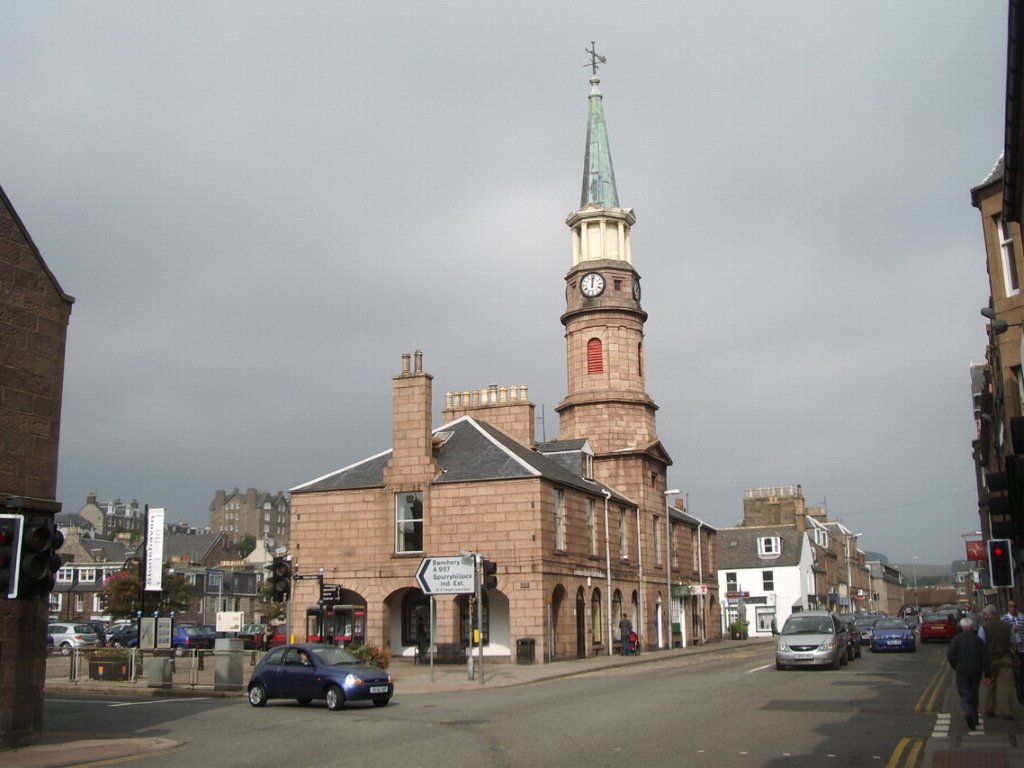
Stonehaven Town Hall

The town lies at the southern origin of the ancient Causey Mounth trackway, which was built on high ground to make passable this only available medieval route from coastal points south of Aberdeen. This ancient passage specifically connected the Bridge of Dee to Cowie Castle via the Portlethen Moss and the Stonehaven central plaza.[8] The route was taken by the Earl Marischal and Marquess of Montrose when they led a Covenanter army of over 9,000 men in the first battle of the Wars of the Three Kingdoms in 1639.[9]

View of Stonehaven from the South East

The Covenanters were imprisoned in Dunnottar Castle, where many died. A memorial to them can be found in Dunnottar Church. Other castles in the vicinity are Fetteresso Castle and Muchalls Castle, both of which are in private ownership and not open to the public. The oldest surviving structure in Stonehaven is the Stonehaven Tolbooth at the harbour, used as an early prison and now a museum.[10]

Dunnottar Castle, perched atop a rocky outcrop, was home to the Keith family, and during the Scottish Wars of Independence, the Scottish Crown Jewels were hidden there. In 1296, King Edward I of England took the castle only for William Wallace to reclaim it in 1297, burning down the church in the process with the entire English garrison still in it. In 1650, Oliver Cromwell sacked the castle to find the Crown Jewels following an eight-month siege (having previously destroyed the English Crown Jewels). However, just before the castle fell, the Crown Jewels were smuggled out by some ladies who took them by boat to a small church just down the coast in the village of Kinneff, where they remained undetected for eleven years.

Stonehaven was a Jacobite town in the Fifteen and it was a safe base for the retreating Jacobite army to stay overnight on the night of 5–6 February 1716. In the Forty-Five Stonehaven, part of the Episcopalian north-east, was again ‘reliably Jacobite’ and it was one of the north-eastern ports where reinforcements, plus money and equipment were periodically landed from France.[11] After 1709, when Dunnottar Parish Church was taken over by the Church of Scotland Episcopalian services were held in the tolbooth until a meeting house was built in the High Street in 1738. Following the failure of the Forty-Five, the Duke of Cumberland ordered the building's demolition. Services were then held in a house on the High Street.[12] Stonehaven Town Hall, which is an events venue in the town, was completed in 1878.[13]

Near the Cowie Bridge, at the north of Stonehaven, was a fishing village known as Cowie, which has now been subsumed into Stonehaven. Somewhat further north are the ruins of Cowie Castle. Slightly to the west of Stonehaven is the ruined Ury House, originally a property of the Frasers.

A fossil of the oldest known land animal, Pneumodesmus newmani, a species of millipede, was found at Stonehaven's Cowie Beach in 2004.[14][15]

Geography

[edit]
Stonehaven from the air
Stonehaven Beach

Stonehaven is 15 miles (24 km) south of Aberdeen sheltered in Stonehaven Bay. The Carron Water and Cowie Water run through the town. Stonehaven lies adjacent to a deeply indented bay surrounded on three sides by higher land between Downie Point and Garron Point. The harbour, consisting of two basins, was improved in the 1820s by the engineer Robert Stevenson (grandfather of the author Robert Louis Stevenson), and became an important centre of the 19th century herring trade;[16] the harbour is bordered on the north by Bellman's Head and the south by Downie Point. At the western edge of Stonehaven west of the A90 road lies the village of Kirkton of Fetteresso. Nearby to the south, Fowlsheugh is a coastal nature reserve, known for its 230-foot-high cliff formations and habitat supporting prolific seabird nesting colonies.

Stonehaven has grown rapidly since the oil boom in Aberdeen. The increasing demand for new, middle-class housing has seen four new estates being appended to the town, creating an expanse of suburbs and Stonehaven has been bypassed since 1984.

Parts of Stonehaven near to the Carron Water were prone to flooding following heavy rain.[17][18] Aberdeenshire Council has completed construction of flood defenses in 2023 that have now been effective at preventing flooding from major storms.[19]

The Highland Boundary Fault traverses Scotland from the Isle of Arran and Helensburgh on the west coast to immediately north of Stonehaven on the east coast.

Parks and green spaces

[edit]

The largest park is Mineralwell, situated adjacent to the Glenury Viaduct which carries the Dundee–Aberdeen line. St Kieran's Well, a grade-C listed public fountain, is situated in the park. It was restored in 1982, though its water supply has since been severed.[20] The park contains one of the largest purpose built radio controlled car circuits in the UK, located at the edge of the park beside the viaduct.[21] The John McRobert Pavilion was opened in the park in 1993 and an artificial turf pitch opened in the park in 2015.[22] The park is home to a parkrun.[23] In 2021, 120 cherry blossom trees were planted as part of the Sakura Cherry Tree Project. The trees are dedicated to Thomas Blake Glover.[24][25]

Nearby Baird Park occupies an area of four acres and was given to the town by Sir Alexander Baird in 1920, though it had been leased to the council for the previous twelve years.[26]

Stonehaven Recreation Grounds was opened in 1885 and is situated near the beach.[27] It is owned by the council.[28] It contains tennis courts and a bowling green.[29]

Dunnottar Woods is a 32.91-hectare (81.3-acre) woodland area managed by the Woodland Trust.[30][31]

Education

[edit]

The town has a secondary school, Mackie Academy, which was founded at the site occupied currently by Arduthie School. Mackie takes pupils from a relatively large chunk of southern Aberdeenshire with its catchment zone stretching from Johnshaven and St Cyrus (Although the primary school is in the catchment area for Mearns Academy in Laurencekirk) in the south to Netherley in the north and out to Drumlithie in the west. The feeder primary schools include: Glenbervie, Inverbervie, Lairhillock, Gourdon, Catterline, Kinneff, Arduthie, Mill’o forest, Dunnottar and Carronhill.

There are three primary schools:

  • Arduthie School is one of the three primary schools in Stonehaven serving a large portion of the north and east of the town as well as the surrounding countryside to the north-west.[32]
  • Dunnottar School was founded in 1889. It is linked to the notable Parish Church and the historic Dunnottar Castle and is located at the edge of the old town. It serves the old town and the majority of the countryside surrounding Stonehaven[33] As part of the Stonehaven flooding in 2009 the school was affected and pupils had to be relocated for a week while work was undertaken. There have been plans to replace this school in recent years, but they are now abandoned.
  • Mill O' Forest School, is located in the newer part of Stonehaven and serves the south and parts of the north of the town.[34] It opened in 1977.[35]

One special education school, Carronhill,[36] opened in 1975.[37] It is situated in the newer part of the town near Mill O' Forest Primary School.

Commerce and culture

[edit]
Stonehaven Harbour

Historically the chief commerce of Stonehaven lay in fishing. Led by the herring fishery, the catch peaked around the year 1894 with a peak catch of about 15 million fish per annum and employment in the fishing industry of 1280 people. Due to overfishing to serve the expanding regional population, the fishing industry declined with diminishing catches, such that by 1939 only a remnant of the earlier fishing fleet continued to exist,[9] and the catch mostly supported the local population from that point onward. Glenury distillery was situated near Mineralwell park, and closed in 1985.

Bar At The Marine Hotel, Stonehaven Harbour

Currently, the town's primary industries are marine services and tourism, with Dunnottar Castle, a local landmark, bringing in a large number of tourists every year. Dunnottar Castle is regularly used in promotional material by the Scottish tourism industry; in addition, it was used in the 1990 film Hamlet, and appeared as a featured desktop background in the UK edition of Microsoft Windows 7. Furthermore, Dunnottar Castle was also selected as Merida's home in the Disney movie, Brave. Situated nearby is Stonehaven War Memorial, constructed after World War I.[38] It was unveiled by Viscountess Cowdray in 1923.[39] It is visible from much of the town thanks to its prominent position on a hilltop overlooking the bay. Another attractive feature of the town is the long beach facing the North Sea, with large cliffs at either end sheltering small rock pools and inlets. It is also famous for its Olympic-size outdoor swimming pool, which is heated and filled with filtered seawater. The local harbour features the Tolbooth, the town's small museum of local heritage.

Stonehaven Fireballs Ceremony 2003

During Hogmanay festivities, crowds watch the annual fireballs ceremony in which volunteers walk down the High Street swinging their fireball - a homemade ball of burning waste materials with a chain and handle attached. The Fireball Festival was part of the content of STV's Hogmanay coverage. The fireballs are finally thrown into the harbour.[40] It is uncertain when the fireballs began, however, reports covering the event from as early as 1911 exist.[41] The event has taken place annually, though has been cancelled during the world wars and in 2021 due to the COVID-19 pandemic.[42][43][44] Stonehaven's long-established pipe band plays at events throughout the year, including the folks festival and fireball ceremony. The band has competed at various levels throughout its illustrious history including several years at the prestigious Grade 1.

Stonehaven also hosts a Folk Festival.

Cuisine

[edit]

The town's Haven Fish Bar was the likely origin of the deep-fried Mars Bar,[45] a snack now culturally associated with Scotland - and its health record - as a whole. In 2012, the (since renamed) Carron fish and chip shop sold around 100–150 deep-fried Mars bars per week, with tourists accounting for around 70% of this figure.[46] The Carron was awarded No 1 Fish and Chip Shop in Scotland 2020.[47] Another local fish and chip shop, the Bay, was awarded the number one fish and chip shop in Scotland, at the National fish and Chip awards in 2012 and 2013.[48]

Sports and events

[edit]

Every July, Stonehaven holds a Highland Games. All those competing in the heavy events (which include the Hammer, the Heavy Stone, and Tossing the Caber) must wear full Highland dress. Other events include the Stonehaven Folk Festival, regularly attended by famous Glaswegian comedian Billy Connolly. On the first Saturday in June, the Feein' Market recreates a 19th-century agricultural hiring fair. The RW Thomson Classic Car Rally is an annual celebration of the inventor of the pneumatic tire and attracts an impressive range of vintage and classic cars. There are two harbour festivals each summer. A farmers' market is now held once a month in the market square, where local food suppliers and producers can sell fresh fruit, vegetables, poultry, and other types of meat.[49]

Stonehaven supports a rugby club - Mackie Academy Former Pupils Rugby Football Club - which plays in the RBS Caledonia Regional League Division 1. They have previously trained on pitches at Red Cloak.[50]

The town has a Junior football club - Stonehaven F.C. - that plays in the North Region Scottish Junior Football North Premier League. Home games are played at Glenury Park, set in Mineralwell Park. There are also three amateur football clubs: AC Mill Inn, Cowie Thistle and Stonehaven Athletic, as well as Stonehaven Youth Football Club, who all play their games in Mineralwell Park. In 2015, a combination of Stonehaven Football Club, Cowie Thistle, Stonehaven Athletic, Stonehaven Youth Football Club and Stonehaven Ladies Football Club created the Stonehaven Community Football Club, which was recognised by the Scottish Football Association with a Quality Mark Community Level Award, and subsequently the Legacy Award in November 2017.

Local radio

[edit]

The Local Community Radio Station Mearns FM broadcasts to the town and surrounding area, including Inverbervie and Laurencekirk. Staffed completely by volunteers, it is run as a not-for-profit organisation, broadcasting under a community radio license, with a remit to provide locally focused news, events, and programming. Jointly funded by local adverts and local and national grants, Mearns FM has one of the largest listening areas of any community radio station owing to the Mearns' distributed population.[51]

Notable residents

[edit]

Stonehaven was the birthplace of Robert William Thomson, inventor of the pneumatic tyre.[52] It is also the birthplace of James Murdoch, a journalist and Orientalist, Lord Reith of Stonehaven, the first Director-General of the BBC, and Tom McEwen, a Canadian communist politician and trade union organiser.

John Ellis, an architect who was born and lived here, was responsible for many local buildings including the War Memorial.[53] George Thomson Chapman (1824–1881), a New Zealand publisher, was born in Stonehaven.

Ury House, Stonehaven, is the ancestral seat of the Viscounts Stonehaven. It was built by Sir Alexander Baird, 1st Baronet in 1885.

The novelist Lewis Grassic Gibbon (James Leslie Mitchell) attended school at what was the old Mackie Academy (now Arduthie Primary).

Famous historical visitors include William Wallace and Mary, Queen of Scots. Poet Robert Burns met friends in Stonehaven in 1787.[54]

Transport

[edit]
Stonehaven railway station

The town has been served by Stonehaven railway station on the Dundee–Aberdeen line since 1849. Initially located outside the town, Stonehaven has since grown and has absorbed the station. The A90 road bypasses the town, and meets the A92 here. The town has a local service and is also on the X7 Coastrider route between Aberdeen and Perth.[55] A locally run Land Train runs from the town square to the outdoor pool, Dunnottar Castle and the harbour.[56]

Public services

[edit]

Woodcot Hospital operated from 1867 to 1998. Kincardine Community Hospital continues to operate today. On 11 June 2013, it was decided by the Justice Committee that Stonehaven Sheriff Court would be closed. This was despite a petition attracting nearly 300 signatures and disagreement from the local community.[57]

Lifeboats were provided by the local charity Maritime Rescue Institute until its closure in 2013. A Royal National Lifeboat Institution station was subsequently established.

Stonehaven Leisure Centre was opened in 1985 following an investment of £650,000 and contains sports halls and a 25 metre swimming pool.[58]

References

[edit]
Revisions and contributorsEdit on WikipediaRead on Wikipedia
from Grokipedia
Stonehaven is a coastal town in , northeast , situated about 15 miles (24 km) south of along the North Sea shoreline. With a of 11,177 recorded in the 2022 census, it serves as a regional hub for , , and local administration. The town features a historic harbour that supported its and a sandy attracting visitors, while its economy has diversified into services and commuting to nearby . Historically, Stonehaven functioned as the county town of until local government reorganization in 1975 integrated it into . Divided into an older medieval quarter clustered around the harbour and a newer Georgian-era expansion to the south, the settlement grew from fishing roots in the , when its combined old and new town population reached 3,240 by 1851. Proximity to , a ruined clifftop fortress 2 miles south, enhances its appeal as a gateway to historical sites, though the castle lies just outside town limits. Stonehaven gained renown for its annual Fireball Ceremony on , where participants swing blazing tar-soaked rags on chains through the streets to ward off evil spirits in a tradition dating back centuries, drawing crowds despite safety risks managed by organizers. The event underscores the town's cultural vibrancy, complemented by its performances and coastal path walks. Infrastructure includes a railway station connecting to and , supporting its role as a town.

History

Prehistory and Archaeology

Excavations at Kirkton of Fetteresso, 2.2 km west of Stonehaven, have uncovered evidence of early Neolithic activity, including a pit (F21) containing 306 sherds of carinated pottery, flint tools, and burnt bone, radiocarbon dated to 3952–3766 cal BC (SUERC-67591). This indicates ritual or domestic deposition in the region's earliest farming communities. Early Bronze Age burials appear at Lindsayfield, approximately 3 km south of Stonehaven, where two short cists contained cremated human bone, prehistoric flint artifacts, and beads, with placing the remains in the first half of the (circa 2000–1500 BC). A nearby prehistoric pit yielded additional flints and , supporting localized funerary practices. Late features at Kirkton of Fetteresso include postholes and a partial ring ditch (F8), associated with charcoal samples dated to 1107–915 cal BC (SUERC-67581), evidencing structural activity such as enclosures or dwellings. occupation is documented at Kirkton through multiple pits and postholes (e.g., F16, F34) with , burnt bone, and dated to 792–406 cal BC (early phase, SUERC-67582) and 401–51 cal BC (middle to late phase, SUERC-67588), pointing to sustained domestic settlement. On the south of Stonehaven, the Dunnicaer sea stack features Roman ramparts and settlement traces, interpreted as a , with later Pictish reuse evidenced by symbol stones and a dated to the 3rd–4th centuries AD. These finds suggest defensive coastal use, though direct evidence of fishing-specific tools in the "auld toon" remains sparse. Limited Pictish material, such as a pit at Kirkton dated 559–653 cal AD (SUERC-67589), hints at continuity into the early historic period without implying uninterrupted habitation.

Medieval and Early Modern Periods

The first recorded harbor at Stonehaven was constructed prior to 1607 under the auspices of the , reflecting early efforts to establish a viable coastal facility amid the town's emerging role as a regional outpost. This initial structure, built on the exposed open shore, was ruined by a during construction and required immediate repairs, underscoring the site's inherent vulnerability to weather patterns driven by prevailing westerly gales and high tidal surges. Subsequent s destroyed the repaired version, illustrating how causal factors like shoreline and storm frequency repeatedly undermined basic designs without advanced breakwaters. A more durable harbor was erected in 1678, incorporating reinforced elements to withstand recurrent battering, which enabled sustained use for local fishing and coastal exchange rather than larger mercantile operations. This rebuild aligned with the early modern emphasis on pragmatic adaptation, as the harbor's persistence facilitated trade in commodities like salted fish and agricultural goods from inland , tying Stonehaven to broader northeast Scottish networks without evidence of extensive international commerce. The facility's limitations—stemming from its shallow basin and exposure—necessitated ongoing maintenance, with storms proving a persistent destructive force over centuries. Stonehaven's proximity to Dunnottar Castle, approximately two miles south, linked the town to pivotal 17th-century events, including the castle's role in safeguarding the during Cromwell's 1651 invasion, when parliamentary forces besieged the fortress for eight months but failed to seize the regalia hidden within. Later, in the 1670s, over 167 —presbyterian dissenters opposing episcopal reforms imposed by Charles II—were imprisoned in the castle's vaults under harsh conditions for refusing oaths of allegiance, with local logistics likely drawing on Stonehaven's harbor for provisioning amid regional unrest. These episodes highlight the town's ancillary position in conflicts rooted in religious and monarchical tensions, where coastal access supported defensive sustainment without direct sieges on Stonehaven itself. The Scottish Reformation's national pivot in 1560, abolishing papal authority and establishing , extended to Stonehaven, where local ecclesiastical structures transitioned to Protestant oversight, mirroring the kingdom-wide causal shift from Catholic hierarchies to reformed governance without recorded unique resistance in the burgh. This alignment reinforced community ties to Aberdeen's presbytery, fostering adaptations in worship and land use that prioritized scriptural authority over pre-Reformation rituals, though sparse local records limit details on implementation.

Industrial and Modern Era

In the , Stonehaven's economy centered on , with the harbor serving as a key hub for the trade following improvements initiated in the 1820s by engineer Robert Stevenson, including pier extensions between 1825 and 1835. These enhancements supported expanded fleet operations, culminating in approximately 60 line boats by the late 1800s, though the introduction of steam trawlers later curtailed traditional line methods. records document steady but modest population growth during this period, reflecting incremental economic expansion tied to maritime activities rather than rapid industrialization. The arrival of the railway in 1850, via the 's coastal line developed by private enterprise, connected Stonehaven to broader markets, facilitating the export of and agricultural commodities without dependence on intervention. This infrastructure improvement integrated the town into regional trade networks, boosting harbor usage for both and coastal shipping, though growth remained constrained by the scale of local resources and competition from larger ports like . The World Wars imposed hardships on Stonehaven's coastal economy, with naval defensive installations such as flame throwers positioned in the harbor during to counter potential invasions. A wartime mine in the harbor caused significant local disruption and , yet community efforts enabled swift recovery, underscoring resilience amid external pressures rather than prolonged victimhood. By mid-century, these events highlighted the vulnerabilities of fishing-dependent locales but also their adaptive capacity in maintaining essential trade functions.

Post-1970s Developments and Oil Influence

The discoveries, beginning with the Forties field in 1970 and ramping up production through the decade, catalyzed economic expansion in northeast , with Stonehaven benefiting indirectly as a commuter for Aberdeen's oil workforce. This spurred development to meet demand from incoming professionals, transforming the town from a relatively static coastal settlement into a growing suburb; local accounts note the addition of several new residential areas to accommodate middle-class families priced out of . Aberdeenshire's population, encompassing Stonehaven, increased by over 50% in the four decades following the oil surge, driven by employment opportunities in extraction, support services, and related logistics. The sector's influence extended to job creation and pressures in Stonehaven, where proximity to facilitated spillover effects such as service industry growth and upgrades to handle commuter traffic and expanded residential zones. Regionally, offshore oil and gas supported approximately 25,000 direct jobs in , with 98% concentrated in and , contributing to higher wages and GDP uplift—evidenced by the industry's role in broadening the local economic base beyond traditional and over the subsequent four decades. adaptations, including road improvements and utility expansions, were necessitated by this influx, though the town's harbor saw limited direct oil-related investment compared to 's facilities. However, the boom's volatility highlighted risks of over-reliance on fossil fuels, with maturing fields and policy-driven windfall taxes leading to job contractions since the 2010s—exemplified by ongoing declines in the Aberdeen area that ripple to commuter towns like Stonehaven. Empirical evidence underscores the absence of scalable alternatives to replicate oil's economic contributions, rendering accelerated "transition" mandates causally disconnected from viable energy substitution and potentially exacerbating regional downturns without corresponding job or GDP offsets. Post-2000s diversification initiatives have targeted Stonehaven's harbor for non-oil uses, including a South Harbours Improvement Plan assessing upgrades for fisheries resilience and , and a 2024 Economic Development Plan prioritizing sustainable growth through environmental and economic feasibility analyses to reduce dependence. These efforts aim to leverage the harbor's second-highest revenue among Aberdeenshire's seven ports, focusing on infrastructure enhancements amid broader regional strategies to mitigate boom-bust cycles.

Geography and Environment

Location and Topography

Stonehaven occupies a coastal position on the northeast shore of Scotland within the Aberdeenshire council area, situated 24 kilometres (15 miles) south of Aberdeen along the A90 road. The town's geographical coordinates centre at approximately 56°58′N 2°13′W, placing it at the mouth of the Carron Water where it meets the North Sea. The is defined by a natural harbour in a bounded by Downie Point to the south and the Carron Water estuary to the north, creating a sheltered that has shaped settlement since prehistoric times by enabling safe anchorage amid otherwise exposed coastal cliffs. Elevations in the town centre remain low, averaging 11 metres above , with the harbour at facilitating development while surrounding hinterlands rise gradually to hills exceeding . Prominent features include the Dunnottar headland, a steep rocky south of the harbour rising to around , which demarcates the urban edge and historically directed expansion northward along the flatter . The Carron and Cowie rivers converge near the town, their valleys providing natural corridors that influence the linear urban-rural divide, with built-up areas confined to a compact footprint of harbour, , and adjoining suburbs against expansive rural farmland inland.

Climate Patterns and Coastal Risks

Stonehaven exhibits a temperate maritime climate typical of Scotland's northeast coast, with mild winters and cool summers moderated by the . Annual average temperatures range from a minimum of about 3°C in to a maximum of 15°C in , based on long-term observations from nearby stations. Precipitation totals approximately 700-850 mm per year, distributed relatively evenly but with peaks in autumn and winter; records the highest monthly average at roughly 74 mm, while summer months see around 50 mm. Storm frequency has historically included intense events, such as those damaging the harbor in the and more recent gales like the 2021 "," which battered coastal infrastructure. Coastal risks stem primarily from wave overtopping, , and pluvial-fluvial flooding exacerbated by storms, with documented harbor breaches occurring repeatedly since pre-1607 constructions. In February 2024, high tides and waves inflicted significant damage to the seafront boardwalk and displaced boulders into adjacent areas, necessitating cleanup operations. Council's 2019 coastal flood study identified vulnerabilities along Stonehaven Bay, where natural sediment dynamics and occasional contribute to rates of 0.5-1 meter per year in exposed sections, though long-term geological records indicate cyclical patterns tied to tidal regimes and storm variability rather than uniform acceleration. A 2025 council assessment estimates 1,600 properties at risk from under current conditions, prioritizing defenses based on observed event recurrence over projected escalations. Flood protection efforts include a scheme designed for a 0.5% annual exceedance probability (1-in-200-year event), incorporating a 33% uplift for potential variability, yet faces delays due to prioritization metrics favoring higher-risk sites. Discussions of "" emerged in Aberdeenshire's 2025 Regional Coastal Change Adaptation Plan, which models scenarios up to 1.8 meters of relative sea-level rise by 2100 under low-likelihood assumptions, but Stonehaven ranks low (17th) for action owing to cost-benefit analyses revealing insufficient empirical justification for absent verified beyond historical rates of 1-2 mm per year locally. These proposals, while precautionary, overlook natural forcings like cycles evident in 20th-century data, which show no consistent break from multi-decadal norms to warrant preemptive abandonment of viable defenses.

Demographics

The population of Stonehaven stood at 11,177 according to the 2022 Scotland Census, marking a modest increase from prior estimates around 10,050 in earlier mid-year figures. This reflects a recent annual decline rate of approximately -0.20%, indicative of stabilization following earlier expansions. Historical trends show accelerated growth in the 1970s and 1980s, driven by spillover effects from the industry's expansion in , which spurred demand for housing in proximate towns like Stonehaven and resulted in the addition of multiple new estates. Population levels rose from roughly 9,500 to near 11,000 over subsequent decades, with the town functioning increasingly as a commuter hub for workers seeking more affordable residential options. Post-2020, growth has plateaued amid broader projections anticipating a 0.3% decline over the next decade, primarily from natural decrease offset partially by net migration. Demographic composition underscores family-oriented patterns, with approximately 15-16% of residents under age 15 across Stonehaven's intermediate zones, compared to 61% in working ages (16-64) and 23% over 65. data from the indicates a of multi-person units, with one-person comprising a minority, supporting trends toward settlement influenced by migration for spacious, cost-effective living. Inward flows from continue to shape these dynamics, as evidenced by commuting patterns and housing pressures in the urban core.

Socioeconomic and Ethnic Composition

The rate in Stonehaven stood at 1.5% in 2022, a decline from a peak of 3.7% in 2020, remaining below the average of approximately 2.1% recorded for the year ending December 2023. Household incomes in the town benefit from ties to the sector and , contributing to median earnings that exceed Scotland's national median, though specific town-level figures align with Aberdeenshire's broader profile of above-average disposable income driven by energy-related . Stonehaven's population of 11,177 as of the 2022 Census is predominantly of Scottish , with self-reported data indicating over 90% identifying as (primarily Scottish or other British), and minority ethnic groups forming less than 5%, lower than 's national minority ethnic share of 12.9%. Country of birth data reinforces this, with 81.3% born in or the , supplemented by small numbers from and other countries, reflecting limited inflows relative to urban Scottish centers. Educational attainment is relatively high, with around 20% of residents holding no qualifications per earlier aligned data, but recent indicators show improvements in higher-level qualifications linked to economic opportunities in and services; health metrics, per Scottish Index of Multiple Deprivation rankings, position parts of Stonehaven among Aberdeenshire's better-off zones for outcomes like low chronic conditions and hospital admissions, attributable to stable and coastal living factors.

Economy

Traditional Industries: Fishing and Harbor Trade

Stonehaven's harbor has served as a vital safe haven on Scotland's northeast coast since medieval times, shielding vessels from storms and facilitating early subsistence fishing by local communities. Initial breakwater structures date to the 1500s, enabling rudimentary in whitefish such as and whiting, which formed the backbone of the town's pre-industrial economy. The marked a shift to , driven by the boom, with fleets expanding from five boats in to 88 by 1875. By 1883, the fishery district supported 80 first-class, 50 second-class, and 69 third-class boats, employing 485 resident fishermen and boys, while the 1890s peak saw nearly 200 vessels operating seasonally. Landings reached approximately 15 million in 1894, with barrels lining the for curing and export, underscoring the harbor's role in regional trade networks. Harbor improvements enhanced sustainability and capacity, including extensions designed by Robert Stevenson from 1825 to 1835, the Old Pier elongation in 1877 to create an inner basin, and breakwater completion in 1908. These engineering feats supported increased yields and exports, transitioning the industry from local consumption to international markets, particularly for salted shipped southward. Post-peak, the declined due to stock depletion from intensive exploitation, with catches falling sharply after the early as strained populations without contemporaneous regulatory quotas in . This shift prompted adaptations toward demersal , though traditional harbor trade volumes never recovered their 19th-century highs, reflecting broader causal pressures on finite .

Oil Boom Impacts and Energy Sector Ties

The discovery of fields in the late 1960s and subsequent production boom from the onward transformed northeast Scotland's economy, with Stonehaven benefiting indirectly as a approximately 15 miles south of , the industry's operational hub. residents, comprising about 40% of Stonehaven's workforce in 2017, commuted to City for employment, where oil and gas activities supported a significant share of jobs—estimated at around 13% directly in the sector regionally. This linkage tied roughly 20-30% of Stonehaven's economic activity to oil-related roles, including and support services, driving demand for and elevating average property values amid influxes of high-wage workers during peak periods like the 1980s and early 2000s. Oil-driven prosperity funded infrastructure enhancements in , including road improvements facilitating commutes and public services bolstered by elevated local tax revenues from sector-linked incomes, contributing to Stonehaven's transition from a fishing-dependent locale to a more affluent . The industry's output, peaking at over 4 million barrels per day UK-wide in 1999, underpinned national by reducing import reliance during global supply disruptions, such as the crises, while generating fiscal surpluses that indirectly supported without the higher emissions footprint of imported alternatives. Environmental critiques, including risks of spills and seabed disruption, persist—evidenced by incidents like the 2019 Statfjord partial blowout affecting nearby fields—but empirical data shows operations' carbon intensity at 8-12 kg CO2 per barrel extracted, lower than many global benchmarks, prioritizing causal trade-offs in energy reliability over absolutist decarbonization. The 2014-2020 downturn, triggered by oil prices plummeting from over $100 per barrel in mid-2014 to below $30 by 2016 amid oversupply and competition, exposed vulnerabilities, with oil and gas jobs dropping by up to one-third and ripple effects stalling Stonehaven's in affected sub-areas like North Kincardine. By 2023, direct sector stabilized at 3,240 jobs or 3.1% in , reflecting partial recovery but underscoring volatility's toll on commuter-dependent locales. These episodes highlight the need for pragmatic diversification—evident in regional shifts toward offshore wind via initiatives like ScotWind—while sustaining viable fossil extraction to match persistent demand, avoiding ideologically hasty phase-outs that could exacerbate import dependencies projected to reach 70% by 2030 without balanced investment.

Tourism, Commerce, and Emerging Challenges

Tourism in Stonehaven is primarily driven by nearby attractions such as , which drew 126,219 visitors in 2024, marking an increase of over 7,000 from the previous year and contributing to local accommodation and service spending. The castle, located 1.6 miles south of the town, ranks among the top paid attractions in the region, with pre-pandemic figures exceeding 135,000 annually, though exact Stonehaven-specific spillover remains unquantified beyond estimates that a portion of visitors utilize town facilities. Regional tourism data indicate broader economic contributions, with visitor spending in and reaching £1.1 billion in 2023, bolstered by post-COVID recovery trends including rapid increases in Aberdeenshire arrivals. Commerce centers on retail and services, with recent proposals for expansion—such as a new Tesco supermarket promising 100 jobs—rejected in August 2025 to safeguard town center viability against out-of-town competition, echoing concerns over Aberdeen's declining Union Street retail strip. Developers have indicated potential appeals, highlighting tensions between growth and preserving local trade, while council assessments prioritize empirical retail capacity studies showing limited turnover expansion without harming established businesses. Emerging challenges include tourism-related congestion, addressed by temporary coach parking restrictions introduced in June 2025 to improve safety and accessibility amid rising group visits, alongside competition from Aberdeen's larger retail base eroding Stonehaven's market share. Harbor development potentials, explored in feasibility studies, reveal limited viability; a 2024 economic plan notes difficulties competing with Aberdeen and Montrose for larger operations like offshore wind support, while marina visions deemed unfeasible due to high costs exceeding £20 million yielded no realistic progress despite £22,500 in funding. These assessments weigh environmental and infrastructural constraints against modest tourism promotion benefits, favoring targeted improvements over expansive builds.

Governance and Public Services

Local Administration and Politics

Stonehaven is governed as part of , the unitary local authority responsible for delivering services such as , , and across the region via its 70 elected councillors in 19 wards. The town's administration operates within the Kincardine and Mearns area committee, which addresses localized issues through an office at Viewmount, Arduthie Road. The Stonehaven & District functions as a voluntary representative body and statutory consultee in applications, advocating for residents on developments, , and consultations while preparing initiatives like the November 2024 Local Place Plan to guide sustainable growth. In response to rising tourist coach visits, Council introduced temporary parking restrictions in central Stonehaven on June 10, 2025, prohibiting waiting on key streets like Market Square to reduce congestion and enhance pedestrian safety, with designated short-stay alternatives provided via updated maps. Scottish devolution since 1999 has shaped local funding through grants from the , enabling policies like nationwide reductions that cap Aberdeenshire's revenue-raising autonomy despite rising service demands. The 2014 , where recorded a majority against separation—aligning with the north-east's 58-60% No vote—preserved integrated fiscal mechanisms, including oil revenue allocations via the , bolstering local budgets tied to energy sector fluctuations without the uncertainties of sovereign debt or currency transition. Post-referendum continuity has maintained service delivery, though community councils note persistent strains from centralized priorities over local fiscal flexibility.

Infrastructure Maintenance and Safety Incidents

Aberdeenshire Council holds primary responsibility for maintaining local roads and drainage systems in Stonehaven, with a budget allocation of approximately £11.96 million for roads maintenance across the region in 2020, covering activities such as patching, footway repairs, and gully cleaning. manages and infrastructure, while the coordinates emergency responses to incidents like flooding through partnerships with the Scottish Environment Protection Agency (SEPA). constraints have periodically strained these efforts, as evidenced by council reports highlighting pressures on upkeep. Recurrent flash flooding has exposed lapses in drainage maintenance, particularly in surface water management. On September 6, 2022, heavy rainfall caused sudden inundation in Stonehaven's town center and upper areas, attributed to overwhelmed drainage systems and insufficient gully clearance, prompting local concerns over reactive rather than preventive upkeep. Similar issues arose in 2012, contributing to Stonehaven's designation as a high-risk area for surface water flooding by SEPA, which recommended assessments of sewer flood risks in priority zones. Council responses have included enhanced gully emptying protocols post-incident, though residents criticized delays in addressing blocked drains during peak rainfall events. A £20 million scheme, completed in 2023, has mitigated coastal and riverine risks, successfully holding back waters during in October 2023 and protecting 372 properties from a 1-in-200-year event. However, ongoing vulnerabilities persist in upland areas, with SEPA issuing warnings as recently as October 2025 due to saturated ground and poor drainage performance. These outcomes underscore mixed efficacy in public maintenance: direct interventions like the scheme demonstrated resilience against , whereas episodic failures in routine tasks, such as gully maintenance, highlight operational gaps amid budget limitations, without evidence of systemic benefits in local non-rail contexts.

Culture and Society

Traditions, Festivals, and Community Events

The Fireball Ceremony in Stonehaven, held annually on , involves local participants swinging flaming tar-soaked rags or chicken feathers attached to wires or chains above their heads while parading through the town center. This tradition, symbolizing the expulsion of the old year's evil spirits, has documented origins in the fishing communities dating to at least the , with the first written record appearing in the 1908 Stonehaven Journal describing Old Town celebrations. Although possibly inspired by earlier events at nearby Skateraw in the 1800s, the practice evolved from fishermen's customs and now features 40 to 60 participants, drawing thousands of spectators despite weather challenges. Stonehaven's annual Folk Festival, established in the 1980s, celebrates traditional and contemporary Scottish music with concerts, ceilidhs, workshops, and sessions held primarily in July. The 2025 edition, marking its 35th year from July 10 to 13, featured acts including , Old Blind Dogs, Fiddlers' Bid, and The Henry Girls, earning praise for its vibrant atmosphere and strong attendance amid reports of organizational success despite minor logistical issues noted by some attendees. These events reinforce community bonds through shared cultural participation, though they contrast with contested traditions. Orange Order marches represent another facet of Stonehaven's communal expressions, rooted in Protestant fraternal traditions commemorating historical events like the . In 2024, a proposed on to open a new lodge faced opposition, culminating in Council's Kincardine and Mearns committee denial on public safety grounds, supported by a exceeding 10,000 signatures decrying the event as sectarian and outdated. The Grand Orange Lodge appealed, arguing the ban violated and domestic law by suppressing religious and cultural assembly, but lost in . Critics, including local theologians, highlighted organizer statements under investigation for inflammatory remarks, while defenders contended the decision reflected selective intolerance toward unionist symbols amid broader Scottish nationalist influences. Such restrictions illustrate tensions in community events, where efforts to prioritize harmony sometimes curtail longstanding customs, potentially eroding without empirical evidence of disproportionate risk.

Cuisine, Arts, and Local Media

Stonehaven's cuisine emphasizes fresh, locally sourced reflecting its coastal location and historical heritage. The Seafood Restaurant, situated on the northern harbour wall, specializes in dishes featuring regionally caught and , drawing on the town's maritime resources for offerings like and crab prepared with minimal alteration to preserve natural flavors. Similarly, The Bay Fish & Chips employs MSC-certified , sourcing and potatoes locally to produce traditional battered , which earned national recognition prior to owner critiques of industry awards. In 2023, The Bay received accolades from the inaugural Scottish Chippy Awards, yet proprietor Calum Richardson dismissed the event as "rubbish," arguing it lacked substantive judging criteria and failed to reflect genuine quality distinctions among Scotland's chip shops. The local arts scene centers on community-driven initiatives and small-scale galleries rather than large institutions. The Stonehaven Art Club, active since at least the early , convenes regularly at the for members to produce and exhibit works in mediums like and , culminating in an annual end-of-June showcase featuring member creations available for purchase. The Quay Gallery in the town centre displays contemporary pieces in a domestic-style setting, fostering appreciation for regional artists without emphasis on transient trends. Complementing this, Mearns ArtHouse serves as a centre highlighting local handmade items, while in 2024, artist William Ross converted a town centre flat into a permanent gallery space following successful pop-ups, prioritizing accessible displays of northeast Scotland's artistic output. Local media outlets provide coverage tailored to Stonehaven's community, with print and broadcast options sustaining resident engagement. The Bellman, an independent newspaper published weekly, delivers news on heritage, sports, and local events, maintaining a focus on verifiable community matters without reliance on broader national narratives. Mearns FM, a station originating from Stonehaven's 1994 transmissions and now serving including the town, broadcasts locally produced content on topics from agriculture to coastal life, operating under volunteer oversight to ensure relevance to rural audiences. Regional supplements from occasionally feature Stonehaven-specific reporting, though primary reliance falls on these grassroots sources for unfiltered local discourse.

Sports and Recreation

Stonehaven's primary indoor sports venue is the Stonehaven Leisure Centre, operated by Live Life , which includes a 25-metre , an 18-station fitness , three courts, a games room, and facilities for 5-a-side football and short . The centre supports community classes and swim sessions, contributing to broader regional efforts to boost physical activity participation. Outdoor recreation centers on the Stonehaven Recreation Grounds, featuring a recently constructed multi-use games area (MUGA) for football and , an enhanced putting green, and an inflatable tennis dome enabling year-round play despite coastal . The grounds also host lawn bowls and integrate green spaces for informal activities, with Aberdeenshire-wide resident satisfaction for parks and open spaces at 85.3% as of 2021-2024. Stonehaven Golf Club, founded in 1888, maintains an 18-hole links course elevated above the , emphasizing natural challenges over length at around 5,000 yards with seven par-3 holes. Local amateur successes include the club's Pennant team defeating in 2021 and junior golfer Erin Herd winning the Girls Nett Championship at the Scottish Junior Masters that year; additionally, Stonehaven native Sam Locke claimed the as low amateur at in 2018, finishing three over par after two rounds. Stonehaven FC fields teams in the McBookie.com North of Scotland Junior Football League, operating at amateur levels with internal awards such as Player of the Year recognizing contributions like top scorers in the 2024-2025 season. Coastal recreation leverages the harbour area's open-air heated swimming pool, beach access for paddleboarding and sea safaris, and nearby paths for walking and cycling, alongside weekly parkrun events at the community sports hub to encourage broad participation. The Stonehaven Community Sports Hub partners with local clubs to develop opportunities, focusing on increasing engagement without professional-level metrics.

Education

Primary and Secondary Schools

Mackie Academy, the town's main , was endowed in 1893 by local merchant William Mackie, who bequeathed funds for its establishment following the deaths of his wife and sons. It transitioned to a comprehensive in 1969 with the opening of new facilities at Ury Park, accommodating the shift from fee-paying status amid rising local demand. As of the 2023/2024 , the school enrolled 1,118 pupils served by approximately 80 teaching staff, drawing from Stonehaven and surrounding rural areas. Attainment at Mackie Academy has consistently exceeded local and national averages from 2017/18 to 2023/24, with most pupils achieving (CfE) fourth level standards in and during 2023/24, though writing outcomes lagged slightly. In 2022/23, the majority of leavers, including those requiring additional support, attained Scottish Credit and Qualifications Framework (SCQF) level 5 or higher in . An Education Scotland inspection in May 2025 rated the school as "good" overall, noting strengths in raising attainment through targeted interventions like expanded higher applications of courses. Stonehaven's primary schools include Arduthie Primary School, located centrally and serving urban pupils, and Dunnottar School, which covers the historic old town and nearby rural catchments. Arduthie Primary opened on 19 August 1969 in the former Mackie Academy buildings, reflecting post-war educational expansions to meet growing enrollment from regional population increases. These schools feed into Mackie Academy, contributing to its large roll amid Stonehaven's sustained demographic growth as a commuter hub for . primaries, including those in Stonehaven, align with council-wide efforts to benchmark literacy and numeracy against national targets, though specific Stonehaven metrics remain integrated into broader authority reports showing variable progress in these areas.

Further Education and Community Programs

Residents of Stonehaven primarily access through North East Scotland College (NESCol), located in approximately 15 miles north, which delivers vocational courses in , energy technologies, and suited to adult learners and career changers. NESCol's programs, including part-time options for and technical skills, serve the North East region, with Stonehaven commuters benefiting from its focus on practical training aligned to local industries. Aberdeenshire Council's Community Learning and Development (CLD) service operates local initiatives in Stonehaven, offering workshops and forums at sites like Stonehaven Community Centre to build skills in trades, , and . These programs, coordinated through the Adult Learners' Forum, support for over 100 participants annually in the area, emphasizing confidence-building and practical applications such as basic vocational upskilling rather than formal accreditation. In response to oil and gas sector skills shortages, NESCol administers the Oil and Gas Transition Fund, providing funded courses for workers to acquire competencies in renewables like operations and technician roles, with around 200 participants targeted in 2025 initiatives. The college's Skills Hub, opened on September 29, 2025, projects enrollment of 42 students in and 27 in for the 2025-2026 year, underscoring high demand for hands-on amid a regional where 90% of offshore oil workers hold transferable skills yet face gaps in specialized green applications. Tourism-related vocational learning, relevant to Stonehaven's coastal attractions, is facilitated via NESCol's and courses, which include short modules on visitor management and event support, though local CLD offerings prioritize general trades over specialized due to fluctuating seasonal needs. Critics of regional , including industry analyses, argue that an overreliance on humanities-oriented pathways in Scottish academia neglects vocational priorities, exacerbating skills deficits in practical fields like and trades, where empirical data shows stronger outcomes from targeted technical programs.

Transport

Road and Rail Connectivity

Stonehaven connects to , approximately 15 miles north, via the A90 , a forming part of Scotland's primary north-south route from through and to . The A90 facilitates efficient , with average daily volumes near Stonehaven recorded at around 18,000 to 20,000 vehicles in recent years, reflecting heavy use by local residents and regional . Rail services operate from Stonehaven railway station on the Aberdeen to Dundee main line, with providing frequent trains to (journey time about 20 minutes) and onward connections to , , and the . The station handles passenger assist services and is staffed during peak hours, supporting daily commuters. Many Stonehaven residents rely on these links for employment in 's oil and gas sector, a key economic driver, with the A90 and rail enabling short commutes to the industry's hub. In 2019, invested £13.5 million in track and signalling upgrades between and Stonehaven to boost capacity and reliability. Electrification of the Aberdeen line, intended to extend from the central belt and enable faster, low-emission services, faced delays in 2024, postponing completion beyond the original 2035 target.

Maritime Facilities and Harbor Operations

Stonehaven Harbour, managed by Aberdeenshire Council, serves primarily as a recreational facility with limited activity, featuring 550 meters of berthing space, 140 moorings, water and power supplies, a , and a 6-tonne crane. The harbor includes three basins, making it the largest recreational harbor in South , with the basin maintaining depths of 3-4 feet. It supports leisure boating and small-scale operations by vessels under 50 feet, though a dedicated no longer operates. The harbor's design incorporates historical adaptations for storm resilience, initially constructed before 1607 but repeatedly damaged by storms until a more robust build in 1678. In the mid-20th century, around 1950, steel piles were installed on the south pier and fish jetty ends, accompanied by storm gates to safeguard structures against wave impact. These enhancements have contributed to ongoing operational stability despite the region's harsh coastal conditions. Economically, the harbor bolsters local and activities rather than large-scale , with fish landings by tonnage declining 20% from 2017 to 2021 amid broader shifts in regional fisheries. Recent investments include £2.2 million in 2022 for structural enhancements to ensure long-term viability, followed by £500,000 in essential repairs announced in August . The South Harbours Improvement Plan outlines eight projects totaling approximately £1.2 million over five years to upgrade facilities. Expansion feasibility studies, such as a 2015 effort funded at £22,500 by Council, assessed options like a £20 million but concluded no realistic prospects due to environmental and economic constraints. A 2024 Economic Development Plan emphasizes building on existing leisure strengths rather than commercial scaling.

Notable Incidents and Safety Lessons

On 12 August 2020, at approximately 09:38 BST, a passenger train operating the 06:38 service from to Queen Street derailed near Carmont, about 4 km north of Stonehaven, after colliding with a of earth and washed onto the track during heavy rainfall. The train, carrying nine s and crew, struck approximately 170 mm of debris on the rails, causing it to and collide with a nearby bridge , resulting in the deaths of three individuals—train driver Brett McCullough (aged 45), conductor (aged 58), and Christopher Stuchbury (aged 62)—and injuries to the remaining six aboard. The Rail Accident Investigation Branch (RAIB) determined the primary cause was a failure in a drainage system installed in 2017 by contractor , which featured a steeply sloping lacking a proper to manage water flow, leading to and washout during the storm. , responsible for oversight, had not adequately inspected or verified the installation, exacerbating vulnerabilities to localized flooding despite prior weather warnings. The RAIB's March 2022 report highlighted systemic shortcomings, including inadequate for earthworks in flood-prone areas and insufficient protocols for closing lines during , though it noted the debris accumulation occurred rapidly post-inspection. In September 2023, pleaded guilty at Aberdeen's to health and safety violations under the Health and Safety at Work etc. Act 1974, admitting failures in maintaining safe infrastructure; the court imposed a £6.7 million fine, reduced from an initial £10 million due to the early plea, underscoring accountability for oversight lapses rather than attributing the event solely to unprecedented weather. Carillion's role, as the collapsed contractor, illustrated risks in privatized maintenance where design flaws—such as omitting flow controls—persisted unchecked, prompting scrutiny of contractor selection and verification processes. A Fatal Accident Inquiry (FAI), mandated to examine circumstances and prevention measures, commenced preliminary hearings in 2025, with the full proceeding scheduled for 2026 in Sheriff Court, expected to last up to two months. has affirmed the RAIB findings without dispute, rejecting calls for reinvestigation and focusing on procedural lapses like unheeded line closure recommendations. lessons emphasize causal factors rooted in neglect over external variables: RAIB issued 10 recommendations, including enhanced drainage audits, real-time monitoring of vulnerable cuttings, and mandatory weather-triggered speed restrictions or diversions, revealing that routine shortfalls, not chronic underfunding—given Network Rail's £11.4 billion control period for 2019-2024—directly enabled the failure. These underscore the need for rigorous contractor accountability and proactive hardening against foreseeable hydrological risks, independent of broader narratives.

Notable Individuals

Historical Figures

Robert Barclay Allardice (1779–1854), commonly known as Captain Barclay, was born at Ury House, located just outside Stonehaven, to a family of landowners with Quaker roots. He achieved international renown as a professional pedestrian, most notably completing a wager to walk one mile every successive hour for 1,000 hours—totaling 1,000 miles—between June 1 and July 12, 1809, on a half-mile course near Newmarket, Suffolk, earning 16,000 guineas. This endurance feat, performed under strict rules without sleep beyond hourly rests, not only showcased physical resilience but also boosted the popularity of pedestrianism as a spectator sport in early 19th-century Britain, influencing later athletic pursuits. Robert William Thomson (1822–1873), born in Stonehaven as the eleventh of twelve children to a local woollen mill owner, emerged as a self-taught inventor whose work advanced transportation and manufacturing. In 1845, at age 23, he patented the pneumatic tyre—a rubber tube inflated with air inside a leather cover—designed for use on carriages and road vehicles to absorb shocks and improve traction, though commercial viability awaited later developments. Thomson secured over 40 patents, including a portable steam traction engine in 1867 that hauled 55 passengers at 8 mph, an early with refillable ink reservoir in 1846, and innovations in ribbon saws and detectors for heat measurement. His inventions stemmed from practical engineering in and abroad, including time spent in the United States, emphasizing efficiency in industrial processes. John Reith, 1st Baron Reith (1889–1971), was born in Stonehaven on July 20, 1889, during a family holiday from their Glasgow home, to a Presbyterian minister father. As the founding Director-General of the British Broadcasting Corporation from 1927 to 1938, he transformed radio into a public service institution by enforcing standards of accuracy, impartiality, and cultural elevation, rejecting advertising to avoid commercial sensationalism. Reith advocated for the BBC's monopoly license, arguing it ensured unified national programming for education and morale—particularly during the 1926 General Strike—over fragmented private enterprise, though this structure drew later critiques for potentially suppressing viewpoint diversity and innovation until commercial radio's introduction in 1972.

Modern Contributors

John Reith, born in Stonehaven on 29 July 1889, became the first Director-General of the in 1927, establishing foundational principles of public service broadcasting that emphasized impartiality, education, and entertainment for the British public during the and beyond. His tenure until 1938 transformed the BBC from a nascent radio entity into a national institution, influencing global media standards through innovations like the development of prototypes in the 1930s. In the boom era, Ken Whittaker co-founded Whittaker Engineering in Stonehaven in 1983 with his wife Janet, specializing in solutions for the offshore oil and gas sector, including fabrication and maintenance services that supported rig operations and subsea equipment. The family-run firm navigated industry downturns, achieving profitability rebounds such as a £224,386 pre-tax profit in 2017 amid sector recovery, and expanded internationally with a in by the , contributing to sustained local employment and technical expertise in Aberdeen's energy ecosystem. Ben Leonard, originating from Stonehaven and previously employed as an environmental advisor in the oil and gas industry, launched Beast Gear in the 2010s from a home spare cupboard, growing it into a seven-figure e-commerce enterprise specializing in fitness equipment sales. Leveraging online marketing and supply chain efficiencies, Leonard diversified beyond energy dependencies, authoring the guide "Quit Stalling and Build Your Brand" in 2023 to mentor aspiring e-commerce entrepreneurs and delivering training through Business Gateway programs to foster regional business startups. Calum Richardson, a lifelong Stonehaven resident after birth in nearby , opened The Bay Fish & Chips in 2006, elevating local tourism through sustainable sourcing and culinary innovation, earning accolades such as Lonely Planet's recognition as one of the world's top fish and chip shops by 2018. Transitioning from service, his emphasis on premium, traceable attracted international visitors, boosting Stonehaven's coastal appeal with expansions like award-winning ready meals and a focus on eco-friendly practices amid growing demand for quality dining experiences. Charles McHardy operated Charles McHardy Butchers in Stonehaven, achieving national prominence as Britain's top butcher through multiple Scottish awards and Q Guild membership for innovative products like marinated meats and pies, sustaining a premium local until his death in 2022 at age 78. His prioritized Scottish sourcing, contributing to regional food by setting standards for quality and awards success in the retail meat sector.

References

Add your contribution
Related Hubs
User Avatar
No comments yet.