Hubbry Logo
TenementTenementMain
Open search
Tenement
Community hub
Tenement
logo
8 pages, 0 posts
0 subscribers
Be the first to start a discussion here.
Tenement
Tenement
from Wikipedia
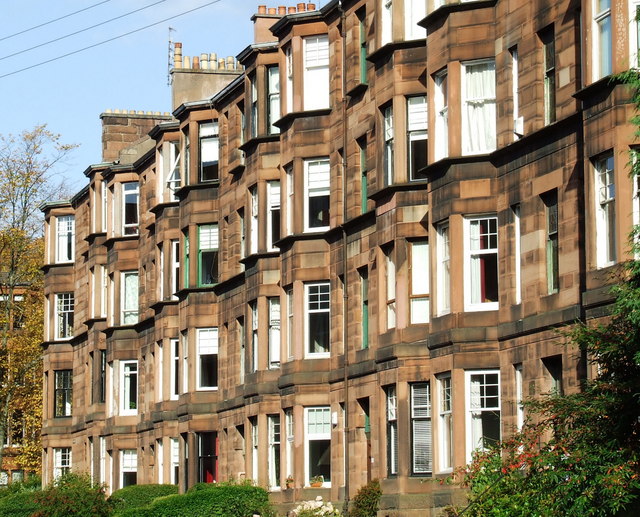
High-quality tenements in the Hyndland residential area of Glasgow, built 1898–1910[1]
Tenements in the Morningside area of Edinburgh, featuring atypical decorative lintels, built 1880

A tenement is a type of building shared by multiple dwellings, typically with flats or apartments on each floor and with shared entrance stairway access. Tenements are common in cities throughout Europe and North and South America, albeit called different names (e.g. conventillos in Spanish, Mietskaserne in German, vuokrakasarmi in Finnish, hyreskasern in Swedish or kamienica in Polish).

From medieval times, fixed property and land in Scotland was held under feudal tenement law as a fee rather than being owned, and under Scots law dwellings could be held individually in a multi-storey building, known as a tenement.[2] In England, the expression "tenement house" was used to designate a building subdivided to provide cheap rental accommodation, which was initially a subdivision of a large house. Beginning in the 1850s, purpose-built tenements of up to six stories held several households on each floor.[3] Various names were introduced for better dwellings, and eventually modern apartments predominated in North American urban living.[4]

In the medieval Old Town, in Edinburgh, Scotland, tenements were developed with each apartment treated as a separate house, built on top of each other (such as Gladstone's Land). Over hundreds of years, custom grew to become law concerning maintenance and repairs, as first formally discussed in Stair's 1681 writings on Scots property law.[2] In Scotland, these are now governed by the Tenements Act, which replaced the old Law of the Tenement and created a new system of common ownership and procedures concerning repairs and maintenance of tenements. Tenements with one- or two-room flats provided popular rented accommodation for workers, but in some inner-city areas, overcrowding and maintenance problems led to shanty towns, which have been cleared and redeveloped. In more affluent areas, tenement flats form spacious privately owned houses, some with up to six bedrooms, which continue to be desirable properties.[1]

Tenements at Park Avenue and 107th Street, New York City, c. 1898–1910

In the United States, the term tenement initially meant a large building with multiple small spaces to rent. As cities grew in the nineteenth century, there was increasing separation between rich and poor. With rapid urban growth and immigration, overcrowded houses with poor sanitation gave tenements a reputation as shanty towns.[4]

In parts of England, especially Devon and Cornwall, the word tenement refers to an outshot, or additional projecting part at the back of a terraced house, normally with its roof.[5]

History

[edit]
Gladstone's Land is a tenement from 1617 in the Old Town, Edinburgh[6]

In medieval times, the Old Town in Edinburgh, Scotland, developed along its High Street on narrow strips of land ("tenements") feued under tenement law. The restricted site and the constraints of the Edinburgh town walls led to multi-storey buildings with each apartment treated as a separate house, built on top of each other (such as Gladstone's Land of 1617). Over hundreds of years, custom grew to become law concerning maintenance and repairs, as first formally discussed in Stair's 1681 writings on Scots property law.[2]

An early example of a tenement in Wales is Morris Castle in Swansea. The castle was built sometime before 1775 by Sir John Morris to house workers in the rapidly industrializing area. The castle's location was hazardous and impractical and many workers preferred to live in individual cottages. As such, the tenement was abandoned in the 1850s.[7][8]

In the United States, the term tenement originally referred to tenancy and therefore to any rented accommodation. The New York State legislature defined it in the Tenement House Act of 1867 in terms of rental occupancy by multiple households, as:

Any house, building, or portion thereof, which is rented, leased, let, or hired out to be occupied or is occupied, as the home or residence of more than three families living independently of one another and doing their own cooking upon the premises, or by more than two families upon a floor, so living and cooking and having a common right in the halls, stairways, yards, water-closets, or privies, or some of them.[9]

In Scotland, it continues to be the most common word for a traditional multiple-occupancy building, including high quality dwellings,[1] but elsewhere it is used as a pejorative in contrast to apartment building or block of flats.[10] Tenement houses were either adapted or built for the working class as cities industrialized,[11] and came to be contrasted with middle-class apartment houses, which started to become fashionable later in the 19th century. Late-19th-century social reformers in the United States were hostile to both tenements (for fostering disease, and immorality in the young) and apartment houses (for fostering "sexual immorality, sloth, and divorce").[12]

Specific places

[edit]

New York

[edit]
Tenements in Soundview, The Bronx
Side Sectional View of Tenement House, 38 Cherry Street, N.Y., 1865

As the United States industrialized during the 19th century, immigrants and workers from the countryside were housed in former middle-class houses and other buildings, such as warehouses, which were bought up and divided into small dwellings.[13][14] Beginning as early as the 1830s in New York City's Lower East Side[11] or possibly the 1820s on Mott Street,[15] three- and four-story buildings were converted into "railroad flats," so called because the rooms were linked together like the cars of a train,[16] with windowless internal rooms. The adapted buildings were also known as "rookeries," and these were a particular concern, as they were prone to collapse and fire. Mulberry Bend and Five Points were the sites of notorious rookeries that the city worked for decades to clear.[15] In both rookeries and purpose-built tenements, communal water taps and water closets (either privies or "school sinks," which opened into a vault that often became clogged) were squeezed into the small open spaces between buildings.[16] In parts of the Lower East Side, buildings were older and had courtyards, generally occupied by machine shops, stables, and other businesses.[17]

Lower East Side tenement buildings
Charles Henry White, The Condemned Tenement, NY, 1906, National Gallery of Art

Such tenements were particularly prevalent in New York, where in 1865 a report stated that 500,000 people lived in unhealthy tenements, whereas in Boston in 1845, less than a quarter of workers were housed in tenements.[11] One reason New York had so many tenements was the large number of immigrants; another was that the grid plan on which streets were laid out, and the economic practice of building on individual 25-by-100-foot (7.6 by 30.5 m) lots, combined to produce high land coverage.[18] Prior to 1867, tenements often covered more than 90 percent of the lot, were five or six stories high, and had 18 rooms per floor, of which only two received direct sunlight. Yards were a few feet wide and often filled with privies. Interior rooms were not ventilated.[16]

Early in the 19th century, many of the poor were housed in cellars, which became even less sanitary after the Croton Aqueduct brought running water to wealthier New Yorkers: the reduction in well use caused the water table to rise, and the cellar dwellings flooded. Early housing reformers urged the construction of tenements to replace cellars, and beginning in 1859 the number of people living in cellars began to decline.[19]

The airshaft of a dumbbell tenement, c. 1900
Tenements. Brooklyn, Gold Street, 1890. Brooklyn Museum.
A Sweltering Night in New York, 1883. Brooklyn Museum.

The Tenement House Act of 1866, the state legislature's first comprehensive legislation on housing conditions, prohibited cellar apartments unless the ceiling was 1 foot (30 cm) above street level; required at least one water closet per each 20 residents and the provision of fire escapes; and paid some attention to space between buildings.[20] This was amended by the Tenement House Act of 1879, known as the Old Law, which required lot coverage of no more than 65 percent. As of 1869, New York State law defined a "tenement house" as "any house or building, or portion thereof, which is rented, leased let or hired out, to be occupied, or is occupied as the home or residence of three families or more living independently of each other, and doing their cooking upon the premises, or by more than two families upon any floor, so living and cooking, but having a right in the halls, stairways, yards, water-closets or privies, or some of them." L 1867, ch 908.[21] The New York City Board of Health was empowered to enforce these regulations, but it declined to do so. As a compromise, the "Old Law tenement" became the standard: this had a "dumbbell" shape, with air and light shafts on either side in the center (usually fitted to the shafts in the adjacent buildings), and it typically covered 80 percent of the lot.[22] James E. Ware is credited with the design;[23] he had won a contest the previous year held by Plumber and Sanitary Engineer Magazine to find the most practical improved tenement design, in which profitability was the most important factor to the jury.[24]

Public concern about New York tenements was stirred by publication in 1890 of Jacob Riis's How the Other Half Lives ,[25] and in 1892 by Riis's The Children of the Poor. [26] The New York State Assembly Tenement House Committee report of 1894 surveyed 8,000 buildings with approximately 255,000 residents and found New York to be the most densely populated city in the world, at an average of 143 inhabitants per acre (350/ha), with part of the Lower East Side having 800 inhabitants per acre (2,000/ha), denser than Bombay. It used both charts and photographs, the first such official use of photographs.[27] Together with the publication in 1895 by the US Department of Labor of a special report on housing conditions and solutions elsewhere in the world, The Housing of Working People, it ultimately led to the passage of the Tenement House Act of 1901, known as the New Law, which implemented the Tenement House Committee's recommendation of a maximum of 70 percent lot coverage and mandated strict enforcement, specified a minimum of 12 feet (3.7 m) for a rear yard and 6 feet (1.8 m) for an air and light shaft at the lot line or 12 feet (3.7 m) in the middle of the building (all of these being increased for taller buildings), and required running water and water closets in every apartment and a window in every room. There were also fire-safety requirements. These rules are still the basis of New York City law on low-rise buildings, and they have made single-lot development uneconomical.[28]

Most of the purpose-built tenements in New York were not slums, although they were not pleasant to be inside, especially in hot weather, so people congregated outside, made heavy use of the fire escapes, and slept in summer on fire escapes, roofs, and sidewalks.[29]

The Lower East Side Tenement Museum, a five-story brick former tenement building in Manhattan that is a National Historic Site, is a museum devoted to tenements on the Lower East Side.

Other famous tenements in the US include tenement housing in Chicago, in which various housing areas were built to the same affect as tenements in New York.

Glasgow and Edinburgh

[edit]
Tenements in Dumbarton Road, Glasgow

Tenements make up a large percentage of the housing stock of Glasgow and Edinburgh in Scotland. Glasgow tenements were built to provide high-density housing for the large number of people immigrating to the city in the 19th and early 20th century as a result of the Industrial Revolution, when the city's population boomed to more than 1 million people. Edinburgh's tenements are much older, dating from the 17th century onwards, and some were up to 15 storeys high when first built, which made them among the tallest houses in the world at that time.[30] Glasgow tenements were generally built no taller than the width of the street on which they were located; therefore, most are about 3–5 storeys high. Virtually all Glasgow tenements were constructed using red or blonde sandstone, which has become distinctive.

In Edinburgh, residential dwellings in the UNESCO World Heritage Sites of the medieval Old Town and Georgian New Town (as well as the Victorian city centre districts immediately surrounding them) are almost exclusively tenements. The Tenement House historic house museum in the Garnethill area of Glasgow preserves the interior, fittings and equipment of a well-kept, upper middle-class tenement from the late 19th century.

Many tenements in Glasgow were demolished in the 1960s and 1970s because of slum conditions, overcrowding and poor maintenance of the buildings. Perhaps the most striking case of this is seen in the Gorbals, where virtually all the tenements were demolished to make way for tower blocks, many of which have in turn have been demolished and replaced with newer structures. The Gorbals is an area of approximately 1 km2 and at one time had an estimated 90,000 people living in its tenements, leading to very poor living conditions. The population now is roughly 10,000.

Tenement demolition was to a significantly lesser extent in Edinburgh, thus making its later World Heritage designations in 1985 possible. Largely, such clearances were limited to pre-Victorian buildings outside the New Town area and were precipitated by the so-called "Penny Tenement" incident of 1959 in which a tenement collapsed.[31]

Apartments in tenement buildings in both cities are now often highly sought after, due to their locations, often large rooms, high ceilings, ornamentation and period features.

Berlin

[edit]

In German, the term corresponding to tenement is Mietskaserne, "rental barracks", and the city especially known for them is Berlin. In 1930, Werner Hegemann's polemic Das steinerne Berlin (lit. transl. The stony Berlin) referred to the city in its subtitle as "the largest tenement city in the world."[32] They were built during a period of great increases in population between 1860 and 1914, particularly after German unification in 1871, in a broad ring enclosing the old city center, sometimes called the Wilhelmian or Wilhelmine Ring. The buildings are almost always five stories high because of the mandated maximum height.[33] The blocks are large because the streets were required to be able to handle heavy traffic, and the lots are therefore also large: required to have courtyards large enough for a fire truck to turn around, the buildings have front, rear, and cross buildings enclosing several courtyards.[34][35] Buildings within the courtyards were the location of much of Berlin's industry until the 1920s, and noise and other nuisances affected the apartments, only the best of which had windows facing the street.[36]

Members of a tenants' collective in front of their tenement building in East Berlin in 1959 (the façade still pockmarked with 1945 battle damage)

One notorious Berlin Mietskaserne was Meyers Hof [de] in Gesundbrunnen,[37] which at times housed 2,000 people and required its police officer to keep order.[38]

Between 1901 and 1920, a Berlin clinic investigated and documented in photographs the living conditions of its patients, revealing that many lived in damp basements and garrets, spaces under stairs, and apartments where the windows were blocked by courtyard businesses.[39]

Many apartments in the Wilhelmian Ring were very small, only one room and a kitchen.[40] Also, apartments were laid out with their rooms reached via a common internal corridor, which even the Berlin Architects' Association recognized was unhealthy and detrimental to family life.[41] Sanitation was inadequate: in a survey of one area in 1962, only 15 percent of apartments had both a toilet and a bath or shower; 19 percent had only a toilet, and 66 percent shared staircase toilets.[40] Heating was provided by stoves burning charcoal briquettes.[42]

Dublin

[edit]
Dublin slum dwellers, 1901

By the 19th and early 20th century, Dublin's tenements (Irish: tionóntán)[43] were infamous, often described as the worst in Europe.[44] Many tenement buildings were originally the Georgian townhouses of upper-class families, neglected and subdivided over the centuries to house dozens of Dublin's poor.[45] Henrietta Street's fifteen buildings housed 835 people. In 1911 nearly 26,000 families lived in inner-city tenements, and 20,000 of these families lived in a single room. Disease was common, with death rates of 22.3 per thousand (compared with 15.6 for London at the same time).[46]

The collapse of 65–66 Church Street in 1913, which killed seven residents, led to inquiries into housing.[47] A housing committee report of 1914 said,

There are many tenement houses with seven or eight rooms that house a family in each room and contain a population of between 40 and 50 souls. We have visited one house that we found to be occupied by 98 persons, another by 74 and a third by 73.

The entrance to all tenement houses is by a common door off either a street, lane or alley, and, in most cases, the door is never shut, day or night. The passages and stairs are common and the rooms all open directly either off the passages or landings.

Most of these houses have yards at the back, some of which are a fair size, while others are very small, and some few houses have no yards at all. Generally, the only water supply of the house is furnished by a single water tap, which is in the yard. The yard is common and the closet accommodation [toilet] is to be found there, except in some few cases in which there is no yard, when it is to be found in the basement where there is little light or ventilation.

The closet accommodation is common not only to the occupants of the house, but to anyone who likes to come in off the street, and is, of course, common to both sexes. The roofs of the tenement houses are, as a rule, bad . . .

Having visited a large number of these houses in all parts of the city, we have no hesitation in saying that it is no uncommon thing to find halls and landings, yards and closets of the houses in a filthy condition, and, in nearly every case, human excreta is to be found scattered about the yards and in the floors of the closets and, in some cases, even in the passages of the house itself.[48]

Tenement life often appeared in fiction, such as the "Dublin trilogy" of plays by Seán O'Casey, Oliver St. John Gogarty's play Blight, and James Plunkett's novel Strumpet City (adapted for television in 1980). 14 Henrietta Street serves as a museum of Dublin tenement life.[49]

The last tenements were closed in the 1970s, families being rehoused in new suburbs such as Ballymun.[50]

Buenos Aires

[edit]
Conventillo in La Boca, Buenos Aires

In Buenos Aires, the tenements, called conventillos, developed from subdividing one- or two-story houses built around courtyards for well-off families. These were long and narrow, three to six times as long as they were wide, and the size of the patios was reduced until as many as 350 people could be living on a lot that had originally housed 25. Purpose-built tenements copied their form. By 1907 there were some 2,500 conventillos, with 150,000 occupants.[51] El conventillo de la Paloma was particularly famous and is the title of a play by Alberto Vaccarezza.

Montevideo

[edit]
Conventillo Mediomundo in the Barrio Sur neighbourhood

In Montevideo, Uruguay, the tenements, called conventillos, emerged from the end of the 19th century, due to the rapid increase in the city's population caused by the massive arrival of immigrants and the settlement of people from other areas of the country, especially from the countryside.[52] They were located mainly in the southwestern neighborhoods of Ciudad Vieja, Palermo and Barrio Sur.[53]

They were inhabited by low-income and working-class people, including Italian and Spanish immigrants, Sephardic Jews and Afro-Uruguayans.[54][55] The now demolished Conventillo Mediomundo located in Barrio Sur was one of the most emblematic, as it was a central hub for the Afro-Uruguayan community and for candombe music and dance.[56]

In the conventillos, social gatherings were organized where tango was danced, which arose from the mixture of the different cultures of the working class people who lived in these collective dwellings.[57]

Mumbai

[edit]
A chawl in Mumbai

"Chawls" are found in India. They are typically four to five story buildings with 10 to 20 kholis (tenements) on each floor, kholis literally meaning 'rooms'. Many chawl buildings can be found in Mumbai, where chawls were constructed by the thousands to house people migrating to the large city because of its booming cotton mills and overall strong economy.

A typical chawl tenement consists of one all-purpose room, which functions both as a living and sleeping space, and a kitchen which also serves as a dining room. A frequent practice is for the kitchen to also serve as a bedroom for a newly married couple in order to give them some degree of privacy.

Poland

[edit]
Tenements in Warsaw Old Town, Market Place

Kamienica (plural kamienice) is a Polish term describing a type of residential tenement building made of brick or stone, with at least two floors. There are two basic types: one designed as a single-family residence, which existed until the 1800s (a burgher house), and the other designed as multi-family housing, which emerged in the 19th century and was the basic type of housing in cities. From the architectural point of view, the word is usually used to describe a building that abuts other similar buildings forming the street frontage, in the manner of a terraced house. The ground floor often consists of shops and other businesses, while the upper floors are apartments, oftentimes spanning the entire floor. Kamienice have large windows in the front, but not in the side walls, since the buildings are close together.

The first type of kamienica is most prevalent especially in centers of historical cities such as Kraków, Poznań, Wrocław, and Toruń, whereas the second type is most prominent in Łódź. City which is known for beautiful kamienice in Art Nouveau style is Bydgoszcz. The name derives from the Polish word kamień (stone) and dates from the 15th century.[58][59] Late 19th century and early 20th century kamienice often took form of city palaces with ornamental facades, high floors and spacious, representative and heavily decorated interiors.

Later in the 20th century, especially after the Second World War, large apartments would be divided into several smaller flats due to general lack of habitable space caused by vast destruction of cities, thus lowering the generally high standard of living in so-called grand city tenements (Polish: kamienice wielkomiejskie). Examples of kamienice include Korniakt Palace and Black Kamienica in Lviv.

See also

[edit]

References

[edit]

Further reading

[edit]
[edit]
Revisions and contributorsEdit on WikipediaRead on Wikipedia
from Grokipedia
A tenement is a multi-occupancy urban building subdivided into separate apartments or flats for rental to multiple families, typically constructed or adapted during the to meet surging demand for amid industrialization and mass . These structures proliferated in cities like New York, , and , where rapid from rural-to-urban migration and overseas arrivals outpaced housing supply, leading developers to maximize density through cheap conversions of existing homes or purpose-built narrow, multi-story edifices. Characterized by severe overcrowding—often exceeding 18 residents per apartment—tenements frequently lacked indoor plumbing, adequate ventilation, and natural light, fostering rampant disease transmission including and rates far above average. In alone, by 1900 approximately two-thirds of residents inhabited such dwellings, where shared privies in courtyards and dim interior rooms exacerbated crises and fire hazards, as evidenced by frequent conflagrations in wooden-framed buildings. These conditions spurred regulatory responses, such as New York's Tenement House Act of 1867 requiring rudimentary fire escapes and windows, followed by the more comprehensive 1901 law mandating separate per , interior courtyards for air circulation, and stricter building codes to curb exploitation while addressing imperatives driven by empirical observations of morbidity in dense . Though often critiqued for substandard quality, tenements functioned as a pragmatic, market-driven adaptation to acute urban pressures, facilitating labor mobility essential to industrial expansion despite their inherent limitations.

Definition and Characteristics

Etymology and Terminology

The word tenement entered around 1300 from Anglo-French tenement, denoting a holding or piece of , particularly in , derived from tenementum ("a thing held") and ultimately from Latin tenēre ("to hold"). This root reflects feudal tenure systems, where a tenement signified , buildings, or rights held by a tenant rather than outright owned, often encompassing any permanent or under . In early usage, as documented in the , it broadly applied to any abode or dwelling-place, including figurative senses like the body as the soul's residence, without connotations of urban overcrowding. By the , amid rapid in industrializing nations, the term evolved in common parlance to specifically describe multi-family rental in dense city environments, typically subdivided into small apartments for low-income workers and immigrants. , this shift was pronounced post-Civil , when "tenement" became synonymous with substandard, high-density lacking and ventilation, as evidenced by reformist reports and early building codes distinguishing it from more affluent multi-unit . Legal definitions, such as those in New York's Tenement House Law, formalized it as a three or more independent families under one roof with shared access, emphasizing rental for profit over quality. Regional variations persist in terminology: in , tenement neutrally refers to any large block of flats, often with stone facades and communal stairs, dating to medieval land divisions without pejorative implications of decay. Conversely, in American and broader English contexts, it retains a historical stigma tied to 19th-century slums, though modern usage sometimes overlaps with "apartment building" for older, working-class housing stock. This divergence underscores how empirical urban conditions— densities exceeding 100 persons per building in places like 1890s New York—influenced semantic narrowing toward negative associations in some dialects.

Architectural and Design Features

Tenement buildings were typically narrow, multi-story structures designed to maximize rental units on small urban lots, often measuring 25 feet wide by 100 feet deep and rising 5 to 7 stories. Constructed primarily of brick in examples, with stone prevalent in Scottish tenements, these buildings featured load-bearing walls and wooden interior framing to support multiple apartments per floor accessed via shared stairwells. Apartments were compact, usually comprising 2 to 4 rooms including a living area, , and , with minimal internal partitions for flexibility. A defining in late-19th-century New York tenements was the "dumbbell" layout, mandated under the 1879 Tenement House Act, which indented the sides of the building to create narrow air shafts providing ventilation and limited light to interior rooms. These shafts, typically 5 to 10 feet wide, flanked central hallways, resulting in a building footprint resembling a when viewed from above, though early implementations often proved inadequate for airflow and became fire hazards. Post-1901 New Law tenements improved on this with wider courtyards and setbacks to enhance sunlight penetration. Scottish tenements, such as those in and , emphasized durable facades with sash-and-case windows, decorative lintels, and iron railings, evolving from simpler designs to include larger windows for better illumination by the late 19th century. Later iterations in both regions incorporated ornamental elements like terra-cotta moldings and beltcourses on facades, reflecting builders' efforts to elevate amid constraints. Fire escapes, initially exterior iron ladders added reactively, became standard protrusions on building exteriors by the early 20th century.

Variations by Region and Era

In 19th-century , particularly , tenements consisted of four- to five-story buildings constructed primarily between 1850 and 1900 to accommodate the population surge from industrialization, featuring self-contained with bay windows, indoor plumbing in later examples, and serving both working-class and middle-class residents without strict class segregation. These structures often included communal closes and were built to densities of up to 200 persons per tenement, reflecting market-driven responses to housing demand rather than uniform slum conditions. New York City's tenements evolved through regulatory eras: pre-1879 "pre-law" buildings maximized lot coverage with dark interior rooms; "old law" dumbbell designs, mandated after 1879, incorporated indented airshafts for minimal ventilation, yielding six-story structures housing 40-60 families in 4-5 rooms each but frequently resulting in inadequate light and air circulation due to narrow shafts often blocked by adjacent buildings. Post-1901 "new law" tenements required larger courtyards and fireproofing, reducing density to about 25 families per building while improving sanitation, though initial compliance was uneven amid immigrant influxes peaking at 1.5 million arrivals from 1890-1910. Dublin's tenements, adaptations of 18th-century Georgian townhouses subdivided by the mid-19th century, housed multiple families per in one- or two-room units sharing outdoor privies, with reaching 20-30 persons per dwelling by 1911 data, exacerbated by absentee landlords and contributing to mortality rates six times the national average in 1900-1913. Berlin's Mietskaserne ("rental barracks"), proliferating from German unification in 1871 to , formed five-story perimeter blocks enclosing courtyards that housed 100-200 families per structure, designed for speculative rental to industrial migrants but often featuring subdivided rear apartments with minimal sunlight, as in working-class districts like exceeded 500 persons per acre by 1900. In late 19th-century , conventillos emerged as low-rise wooden or corrugated iron buildings with central patios for immigrant laborers, typically comprising 10-20 rooms per unit sharing latrines and kitchens, built rapidly during the 1880-1914 boom that saw city population triple to 1.5 million, prompting tenant strikes in 1907 over rent hikes amid 80% occupancy by European migrants. Mumbai's chawls, constructed from the 1850s through the 1920s near textile mills, were two- to four-story with back-to-back rooms accessed via verandas, accommodating 300-500 workers per building in single-room units with shared facilities, as mill employment expanded from 14,000 in 1875 to 150,000 by 1921, fostering communal living but straining in tropical climates. By the mid-20th century, regional variations incorporated reforms: tenements gained electric lighting and refuse chutes post-1919; New York shifted to elevator apartments after 1929 zoning; while in developing regions like , chawls persisted with minimal upgrades until post-independence slum clearance efforts in the 1950s-1970s, though many endured due to persistent urban migration.

Historical Development

Origins in Early Urban Centers

The earliest precursors to modern tenements emerged in ancient Rome as multi-story apartment blocks known as insulae, designed to accommodate the burgeoning urban population amid rapid city growth. These structures filled entire city blocks—hence the name insula, Latin for "island"—and housed the majority of Rome's residents, excluding the elite who occupied single-family domus homes. By the late Roman Republic (circa 133–27 BCE), as the city's population swelled toward 500,000 due to conquests and rural migration, insulae proliferated to exploit limited land within the pomerium (sacred city boundary), with construction intensifying under emperors like Augustus (27 BCE–14 CE) to support densities exceeding 100,000 inhabitants per square kilometer in central areas. Typically constructed from and at the base with timber-framed upper levels for cost efficiency, insulae rose 4 to 6 stories (up to 20–25 meters high), though some reached 8 stories before collapses prompted height restrictions under around 15 meters. Ground floors often featured shops (tabernae) generating rental income for owners, while upper apartments (cenacula) were subdivided into small, dimly lit rooms lacking or , relying on public latrines and aqueduct-fed fountains. , in (circa 15 BCE), criticized their shoddy build quality, noting overuse of wood led to frequent fires—evidenced by 7 major blazes under (54–68 CE)—and structural failures, as upper rents were cheaper but riskier, reflecting market-driven stratification by income. Socially, insulae enabled vertical for laborers, artisans, and freedmen, fostering economic vitality through proximity to forums and ports, but conditions were harsh: (up to 10–20 people per ), noise from street-level commerce, and vulnerability to crime and disease, as described by in his Satires (circa 100–127 CE) decrying the "towers" teeming with the indigent. Archaeological evidence from sites like corroborates this, revealing narrow alleys, shared stairwells, and minimal ventilation, underscoring causal links between population pressures and high-density housing without modern regulatory frameworks. While elite sources like may emphasize engineering flaws, empirical remains and literary accounts align on insulae as pragmatic responses to urban scarcity, predating medieval European equivalents by centuries.

19th-Century Expansion in Industrializing Nations

The expansion of tenement housing in the 19th century coincided with rapid urbanization driven by the Industrial Revolution in nations such as Britain and the United States, where rural-to-urban migration swelled city populations to meet factory labor demands. In Britain, cities like Manchester grew from under 10,000 inhabitants in 1700 to over 300,000 by 1851, necessitating dense housing solutions for workers. Tenements emerged as a primary form, particularly in Scotland, with Glasgow's stone-built structures—typically four stories with multiple flats per floor—constructed from the early 1800s to accommodate the influx of industrial laborers in shipbuilding, engineering, and textiles. By mid-century, such buildings housed a significant portion of the working class, featuring shared stairwells and minimal amenities reflective of cost-driven construction amid population booms. In the United States, New York City's tenement development accelerated between 1820 and 1850 as and industrialization drew over 2 million residents by 1900, with factories concentrating workers in and . Purpose-built tenements, often five or six stories of narrow apartments without ventilation or adequate , proliferated; by 1860, structures like those on Cherry Street exemplified early designs with dark interiors and privies in rear yards. Over 80,000 such buildings existed by 1900, sheltering 2.3 million people—two-thirds of the city's population—in response to housing shortages from . Similar patterns appeared in , including and , where mid-19th-century industrialization spurred multi-family for proletarian workforces, though British and American models emphasized vertical density over terraces. Britain's tripled from 1780 to 1860, fueling tenement construction in industrial hubs like alongside . These accommodations, while enabling proximity to , often prioritized quantity over quality, with empirical records showing ratios exceeding 10 persons per in peak growth areas.

20th-Century Evolution and Global Diffusion

In the United States, tenement housing underwent significant regulatory transformation in the early 20th century, culminating in the New York State Tenement House Act of 1901, which prohibited the construction of dark, unventilated "dumbbell" designs and mandated interior rooms with windows, fire escapes, and minimum sanitation standards such as one toilet per 20 residents. These reforms, driven by exposés like Jacob Riis's documentation of overcrowding—where densities reached 1,000 people per acre in Manhattan's —shifted new builds toward "New Law" tenements with air shafts and yards, though enforcement remained inconsistent until the . By the 1930s, federal initiatives under the , including projects like those authorized by the , began supplanting private tenements, with over 19,000 of New York City's 82,000 pre-1901 tenements abandoned or demolished by 1940 due to deterioration and suburban migration enabled by automobiles and zoning laws. European tenements evolved similarly through municipal interventions and post-World War II reconstruction. In , , where sandstone tenements housed 80% of the population by 1911 amid tuberculosis rates 50% above national averages, the 1915 Housing Act spurred slum clearances, replacing two-thirds of inner-city stock with low-rise flats by 1975, though many surviving structures were retrofitted with indoor plumbing and elevators. Edinburgh's four-story tenements, originally built in the 18th-19th centuries, saw rehabilitation in the mid-20th century, preserving communal closes while adding modern amenities, transforming them into sought-after housing by the 2000s with occupancy rates exceeding 95%. In , wartime destruction accelerated demolitions; lost 70% of its pre-1939 housing stock, leading to high-rise replacements under 1950s-1960s , though some Altbau tenements were subdivided post-1945 to address shortages housing 4 million refugees. Globally, the tenement model diffused through industrialization and colonial influences, adapting to local contexts in the Global South during rapid 20th-century urbanization. In India, Mumbai's chawls—multi-story for workers—proliferated from the 1890s to 1920s, accommodating 20-30 residents per room in structures like those in mills, where 150,000 laborers lived by 1947 amid densities of 500 persons per acre. Similar overcrowding emerged in Latin America's port cities; Buenos Aires's conventillos, wooden tenement-like rooming houses, peaked at 100,000 units by 1914, housing Italian and Spanish immigrants in conditions mirroring New York's, with mortality 40% higher than in formal housing until evictions and curbed expansion. By the late , as and urbanized—'s urban population rising from 17% in 1950 to 37% by 2000—informal tenement equivalents persisted in megacities like São Paulo's cortiços and Manila's barung-barong, often bypassing regulations due to gaps and migration surges exceeding 50 million annually. These adaptations reflected causal pressures of labor influx outpacing infrastructure, with empirical data showing persistent high densities (e.g., 300+ persons per acre in Mumbai chawls into the 1990s) despite Western-style reforms.

Social and Economic Dimensions

Role in Urbanization and Labor Mobility

Tenement buildings emerged as a critical market-driven response to the explosive urban population growth during the , housing the labor force essential for factory-based economies. In the United States, cities like New York saw their population surge from approximately 60,000 in 1800 to 3,437,202 by 1900, driven by rural-to-urban migration and international seeking jobs. This rapid influx necessitated dense, low-cost housing; tenements, typically narrow five- or six-story structures subdivided into small apartments, accommodated up to 3 million residents in New York alone by 1903, enabling workers to live in proximity to employment centers such as ports and mills. By reducing relocation costs through affordable rents—often as low as a few dollars per month per family—tenements facilitated high labor mobility, allowing individuals from agrarian backgrounds to transition into industrial roles without prohibitive housing expenses. Immigrants, who comprised a significant portion of this mobile workforce, contributed substantially to industrial expansion; between 1880 and 1920, they and their descendants accounted for over half of the growth in the American labor force, filling roles in , textiles, and other sectors. In practice, this proximity minimized commute times in an era without widespread public transit, enhancing productivity and supporting the shift from subsistence farming to wage labor, as evidenced by the tripling of urban populations in industrialized nations from 1800 to 1900. Similar dynamics operated in , where tenements in industrial hubs like and housed migrants from rural areas and , underpinning textile production and . Census records show Britain's urban population rising from about 20% in 1801 to 77% by 1901, with tenement districts concentrating workers near factories to sustain output amid labor shortages. This housing form, despite its limitations, empirically enabled the elastic supply of labor that fueled economic transformation, as without such accommodations, migration flows and industrial scaling would have been constrained by housing scarcity.

Living Conditions: Empirical Realities vs. Narratives

Tenement living conditions in 19th-century urban centers like New York City featured severe overcrowding, with multiple families often sharing single rooms lacking ventilation and sanitation facilities. In Manhattan, densities reached levels where one privy served dozens of residents, contributing to rapid disease transmission. Empirical data from the period record annual infectious disease mortality rates averaging about 1% of the population between 1868 and 1910, driven by outbreaks of cholera, typhoid, and tuberculosis exacerbated by shared water sources and waste accumulation. A cholera epidemic in 1849 alone claimed approximately 5,000 lives in New York, highlighting how tenement proximity amplified pathogen spread in the absence of modern plumbing. Despite these hardships, historical analyses reveal that tenement mortality varied significantly by neighborhood, with some densely populated areas exhibiting infectious disease death rates below city averages due to localized efforts or demographic factors. Immigration-driven population surges increased overall urban mortality primarily through heightened residential crowding, as evidenced by declines in death rates following restrictive quotas that eased density pressures. For many European immigrants fleeing rural poverty and , tenements represented a pragmatic choice over destitution; affordable rents, though extracting a high share of wages, enabled access to industrial jobs absent in agrarian homelands. Studies indicate that pre-Civil War tenement housing, despite flaws, facilitated for working-class entrants by concentrating labor near hubs. Prevailing narratives, amplified by reformers like in works such as (1890), depicted tenements as unrelenting infernos of vice and despair, often prioritizing sensational imagery over nuanced data on resident agency or comparative baselines. Riis's accounts, while catalyzing reforms, have been critiqued for staging scenes and generalizing extremes as norms, potentially overlooking that urban tenement conditions, grim as they were, outperformed sleeping rough or persistent rural for countless migrants. Such portrayals, echoed in later academic and media interpretations, sometimes downplay causal links between rapid industrialization and housing supply lags, framing conditions as moral failings rather than market responses to . In contrast, empirical records affirm that while tenements imposed costs, they underpinned urbanization's net benefits, with immigrant cohorts achieving intergenerational gains in income and post-settlement. This disparity underscores the need to weigh documented perils against the era's limited alternatives, avoiding ahistorical condemnations that ignore voluntary migration patterns.

Economic Contributions and Market Dynamics

Tenements served as a critical mechanism for accommodating the influx of industrial workers and immigrants into rapidly expanding urban centers during the , enabling the concentration of labor essential for and factory operations. In , for instance, by 1900, approximately 2.3 million individuals—constituting two-thirds of the city's population—resided in tenement buildings, which were constructed primarily to working-class families relocating from rural areas or abroad to fill jobs in emerging industries such as textiles, garment production, and shipping. This housing model minimized relocation barriers by offering proximity to workplaces, thereby supporting labor mobility and reducing transportation costs in an era before widespread mass transit, which facilitated the scalability of urban economies reliant on dense, low-wage workforces. The rental market for tenements operated through speculative development driven by high demand and limited land availability, with buildings funded by small-scale investors, landlords, and banks, and erected by developers using inexpensive materials to maximize occupancy and returns. In New York, tenements typically occupied 90% of standard 25-by-100-foot lots, allowing for multiple narrow apartments per structure and generating steady rental income amid population surges from industrialization; weekly or monthly tenancies predominated, reflecting the precarious of tenants but also enabling quick turnover to match labor market fluctuations. Similar dynamics prevailed in , where working-class properties were leased on short-term weekly tenancies, fostering a landlord-driven market that responded to industrial migration but often prioritized profit over amenities, leading to high occupancy rates that sustained urban as an sector. Economically, tenements contributed to market efficiencies by clustering populations, which spurred ancillary services like local , street vending, and informal economies within of factories, while their affordability—relative to —underpinned suppression and in labor-intensive sectors. Empirical evidence from New York's market indicates that this supply of low-cost units absorbed rural and immigrant labor, preventing broader disruptions from housing shortages and enabling sustained industrial output; for example, the model's prevalence correlated with the city's population tripling between 1860 and 1900, fueling economic expansion without equivalent infrastructure lags. However, these dynamics also amplified income disparities, as rental burdens consumed a significant portion of workers' , though the system's responsiveness to demonstrated market adaptation to pressures absent large-scale public intervention.

Reforms, Regulations, and Improvements

Initial Private and Municipal Responses

Private philanthropists initiated responses to tenement and deficiencies in the mid-19th century by constructing "model dwellings" designed to offer improved ventilation, indoor , and communal facilities while targeting modest returns for investors, often 5% annually, to demonstrate viability without relying on government subsidies. In , American banker established the Peabody Donation Fund in 1862 with £150,000, leading to the completion of the first blocks of model housing by 1864, featuring shared laundry facilities, open courtyards, and rents affordable to industrial workers earning around 20 shillings weekly. These initiatives prioritized sanitary reform over , contrasting with speculative tenement builders who subdivided existing structures to house up to 20 residents per unit without adequate light or water access. In the United States, early efforts mirrored this approach, with housing reformers advocating for better from the onward through organizations like improved tenement associations, though scale remained limited until figures like philanthropist Alfred T. White erected the Riverside Buildings in in 1890—three-story structures with private toilets, gas lighting, and rents at $6–$9 monthly for families of four, yielding exactly 5% profit to underscore economic feasibility. Earlier examples included the 1855 Workmen's Home in New York, a six-story building by a charitable society providing 72 suites with shared privies and ventilation shafts, aimed at mechanics and laborers displaced by urban growth. These private ventures, while innovative, housed only thousands amid millions in slums and often required tenant selection based on sobriety and employment stability, limiting broader impact. Municipal authorities responded with rudimentary regulations in the 1860s, focusing on and basic amid outbreaks and inquiries that documented tenement mortality rates exceeding 25% for children under five in dense wards. New York's Tenement House Act of 1867, the first such law, defined tenements as buildings housing 18 or more and mandated one window or ventilator per sleeping room, iron fire escapes accessible from each floor, and sufficient privies (one per 20 residents), enforced by the Board of Health following 1864 reports from the Council of on rampant from poor air circulation. Enforcement proved inconsistent, with pre-1867 "pre-law" tenements lacking any oversight and post-act violations common due to lax inspections, yet the measure retroactively affected over 10,000 structures by requiring compliance for water closets and yard space. In , local vestries under the 1848 Public Health Act began nuisance abatement orders for overflowing privies and unventilated basements by the 1860s, though comprehensive tenement codes lagged until later decades. These initial municipal steps emphasized reactive health policing over proactive design standards, reflecting fiscal constraints and property owner resistance.

Major Legislative Milestones

The Tenement House Act of 1867, enacted by the , represented the earliest comprehensive regulation of tenement buildings in the United States, legally defining a tenement as any rented structure housing three or more independent families and mandating basic safety features such as fire escapes and one per twenty occupants. This law arose from investigations into fire hazards and sanitation failures, including the 1864 Elm Street tenement fire that killed over a dozen residents, but enforcement proved limited due to lax oversight and exemptions for existing structures. Subsequent reforms addressed persistent deficiencies in ventilation and water access through the 1879 Tenement House Act in New York, often termed the "Old Law," which permitted the construction of dumbbell-shaped buildings to maximize lot coverage while requiring indoor water closets in some units and rear yard space for light. These inward-narrowing designs, however, exacerbated dark interior rooms and air circulation problems, as documented in contemporaneous surveys revealing rates up to three times higher in tenements than in detached housing. The New York State Tenement House Act of 1901, known as the "New Law," established stringent standards that effectively banned dumbbell tenements by requiring every room to have an exterior window, apartments to include private bathrooms, and buildings to feature unblocked air shafts for ventilation and light. Prompted by exposés like Jacob Riis's How the Other Half Lives (1890) and a state commission's findings on mortality rates exceeding 20% in some blocks, the act applied retroactively to compel upgrades in pre-existing tenements, reducing construction of substandard units and influencing model codes adopted in cities like Chicago and Philadelphia by 1910. In the , the Housing of the Working Classes Act of 1890 consolidated prior sanitary reforms, empowering local authorities to demolish unhealthy tenements and construct replacement dwellings, building on the 1875 Artisans' and Labourers' Dwellings Improvement Act's clearance provisions amid cholera outbreaks that highlighted overcrowding's role in disease transmission. Across , the Berlin Building Regulations of 1897 similarly imposed minimum standards for tenement , ceiling heights, and window areas, responding to rapid industrialization's strain on housing stock in Prussian cities where density exceeded 100,000 inhabitants per square mile in core districts. These measures prioritized from data over anecdotal advocacy, though implementation varied due to property rights conflicts and fiscal constraints on municipalities.

Long-Term Impacts of Interventions

The New York State Tenement House Act of 1901 established standards for ventilation, lighting, and sanitation in multi-family dwellings, mandating windows in every room, private toilets per apartment, and minimum lot coverage limits, which formed the basis for ongoing low-rise housing regulations in the city. These requirements reduced the prevalence of dark, airless interior spaces that had exacerbated respiratory diseases like tuberculosis, with historical data showing a decline in New York City's tuberculosis mortality rate from 240 per 100,000 in 1900 to under 50 per 100,000 by 1940, attributable in part to improved housing airflow and reduced overcrowding density. However, enforcement challenges and the persistence of pre-1901 stock limited immediate gains, as many substandard tenements remained occupied until mid-century demolitions, delaying broader health benefits for low-income residents. In the , the Housing of the Working Classes Act of empowered local authorities to construct and regulate working-class housing, leading to the development of over 24,000 homes by 1914 and a foundational shift toward municipal intervention in urban slums. Long-term outcomes included sustained reductions in infectious disease incidence, as better-ventilated and sewered accommodations contributed to a halving of rates from 150 per 1,000 live births in 1900 to around 75 by 1930 in industrial cities like and , where tenement-style had previously amplified and typhoid outbreaks. Economically, these interventions raised construction and compliance costs, which filtered into higher rents for compliant units, prompting some low-wage workers to seek peripheral accommodations and accelerating suburban migration patterns evident by the . Slum clearance programs, often tied to tenement reforms, yielded mixed results, with physical upgrades improving but frequently disrupting social networks and imposing relocation costs that offset gains for displaced families. In cases like New York's early 20th-century clearances of areas such as , short-term disease reductions were observed, yet long-term analyses indicate persistent cycles, as cleared sites were redeveloped into higher-rent inaccessible to original occupants, contributing to informal settlements elsewhere. Empirical studies of similar U.S. efforts, such as 1930s rehousing, reveal neutral to negative effects on family stability and , with no significant long-term income improvements for cleared households despite initial gains from reduced . Overall, while interventions curbed the most acute hazards of unregulated tenements—such as fire risks and contamination—their legacy includes entrenched regulatory frameworks that prioritized safety over affordability, influencing modern restrictions and contributing to shortages in high-demand cities.

Regional and Cultural Contexts

North American Examples

Tenement housing proliferated in the United States during the mid-19th century amid rapid urbanization and mass immigration, with New York City serving as the archetype. By 1900, approximately 2.3 million residents—two-thirds of the city's population—lived in tenements, which were typically narrow, low-rise buildings designed to maximize rental units on small lots. These structures often featured dark interiors, inadequate ventilation, and shared sanitation facilities, exacerbating health risks in densely packed immigrant neighborhoods like the Lower East Side. Early tenements, known as "Old Law" buildings after the Tenement House Act of 1867, were legally defined for the first time under that legislation, which mandated fire escapes and exterior windows but failed to enforce meaningful improvements in light or air circulation. The prevalent "" design, with inset sections creating narrow air shafts, provided illusory ventilation while trapping odors and promoting outbreaks. By the late , around 43,000 such buildings accommodated 1.6 million people in alone, out of a total population of 2 million. Comparable conditions existed in other industrial hubs like , , and , where tenements housed factory workers in overcrowded, fire-prone environments, though New York's scale dwarfed these. The New York State Tenement House Act of 1901 marked a pivotal reform, prohibiting the dumbbell shape, requiring windows in every room, private toilets per apartment, and enhanced ventilation and plumbing standards for new constructions. This "New Law" spurred the erection of sturdier buildings with interior courtyards, gradually alleviating some sanitary deficiencies, though retrofitting older stock lagged. Enforcement by the newly formed Tenement House Department documented persistent violations, underscoring the limits of regulation amid landlord resistance and tenant desperation. In Canada, tenement-like overcrowding emerged in growing cities such as Montreal and Toronto during the late 19th and early 20th centuries, driven by industrial labor influxes, but formalized tenement districts were less extensive than in the U.S. Toronto reported 92 tenement houses by 1911, alongside basement and cellar dwellings housing hundreds in unsanitary conditions akin to American slums. Montreal's working-class housing evolved from subdivided row houses to denser apartments post-Confederation, with ethnic enclaves facing similar ventilation and sanitation woes, though municipal responses emphasized demolition over comprehensive redesign until the interwar period. Overall, North American tenements reflected market-driven responses to housing shortages, yielding high-density affordability at the cost of habitability until regulatory interventions shifted dynamics.

European Cases

![Dumbarton Road, Glasgow tenement]float-right In , particularly , tenements emerged during the to house the influx of industrial workers amid rapid urbanization driven by the . These structures, often constructed from , typically featured three to four stories with one- or two-room apartments lacking private sanitation, leading to shared outdoor privies and widespread overcrowding. By the late , 's tenements accommodated a significant portion of the city's , with conditions marked by poor ventilation and that contributed to high rates, though some middle-class variants included indoor bathrooms as seen in the preserved 1892 Tenement House. Edinburgh's tenements, dating back to the 18th and 19th centuries, similarly served working-class but often incorporated traditional elements like closes and wynds for access, with buildings divided horizontally into multiple flats. Unlike many examples demolished in the mid-20th century due to decay, Edinburgh preserved much of its stock, reflecting plainer facades in working-class areas that prioritized density over ornamentation. Living conditions varied, with early in unlit, damp spaces giving way to gradual improvements under stricter building regulations by the late 19th century. In Ireland, Dublin's tenements represented some of 's most severe urban slums by the late 19th and early 20th centuries, evolving from subdivided Georgian townhouses into overcrowded single-room dwellings for the poor. By , nearly 26,000 families resided in inner-city tenements, with over 20,000 confined to one room, exacerbating and rates documented in data. Conditions persisted into the 1930s, characterized as among the worst in , prompting eventual clearance efforts but highlighting the failure of private landlordism in maintaining habitability. Germany's Mietskasernen in , constructed rapidly between 1871 and following unification, formed dense blocks to shelter the expanding proletarian workforce in industrial districts. These "rental barracks" prioritized high occupancy over amenities, resulting in dark rear apartments and communal facilities that fueled social critiques of the era's . Despite initial overcrowding, Berlin's tenements influenced later debates on density and worker welfare.

Examples from Latin America, Asia, and Africa

In Latin America, conventillos emerged as tenement-style housing in the late 19th century amid rapid urbanization and European immigration, particularly in Argentina and Uruguay. In Buenos Aires, these structures originated from subdividing one- or two-story houses around central courtyards originally designed for affluent families, resulting in over 1,800 conventillos by 1881 that housed working-class immigrants in cramped rooms with shared facilities and limited ventilation. Conditions were often squalid, with high rents prompting tenants' strikes in 1907–1908, where socialist and anarchist organizers mobilized against exploitative landlords amid outbreaks of disease like cholera. Similar developments occurred in Montevideo, where conventillos proliferated due to population influx, while in Mexico City, vecindades evolved from colonial-era mansions into communal tenements with central patios for working-class families, fostering shared living but exacerbating overcrowding. In , chawls represent a prominent tenement form in , especially , constructed from the mid-19th century to accommodate textile mill workers during British colonial industrialization. These low-rise buildings featured linear corridors of single- or double-room units flanking a central , with shared toilets and verandas promoting communal life but enabling extreme —often 5–6 occupants per original single-person unit. Rents remained nominally low, equivalent to $1 monthly in some cases as of 2023, reflecting rent-control legacies, though many chawls now face demolition for high-rise redevelopment amid Mumbai's megacity growth. In Africa, tenement-like housing appeared in colonial urban centers but was less systematized than in other regions, often blending with informal compounds amid apartheid-era segregation and post-colonial sprawl. Cape Town's , a vibrant inner-city area until its 1966 forced removal under the , featured narrow alleys and crowded tenements housing diverse working-class communities in multi-story blocks with shared amenities, serving as a hub for cultural exchange before demolition displaced over 60,000 residents. Johannesburg saw similar overcrowded rentals for migrant laborers in the early , though these evolved into townships like rather than enduring tenement archetypes, with limited surviving examples due to policy-driven relocations and informal settlement dominance. Overall, African tenements reflected transient labor mobility but were overshadowed by rural-urban migrations yielding shantytowns over formalized multi-family blocks.

Contemporary Perspectives and Legacy

Modern Tenement Forms in Developing Economies

In developing economies undergoing rapid , modern tenements—multi-family rental structures often featuring shared facilities like bathrooms and kitchens—continue to house millions of low-income migrants and workers, filling gaps left by insufficient formal supply. These buildings, typically constructed informally or through of older properties, accommodate high densities driven by economic migration to cities; for instance, in , , chawls provide rooms as small as 160 square feet at rents equivalent to $1 per month, supporting the city's growth into a of over 20 million residents. Despite substandard conditions such as and limited ventilation, they enable labor mobility and reduce costs, contributing to industrial and service sector expansion. In India, chawls remain prevalent in , where government-led redevelopment efforts, such as the Bombay Development Directorate (BDD) projects, have rehabilitated thousands of residents since the early ; in August 2025, 556 families from Worli's BDD chawls received 500-square-foot flats in high-rise buildings after decades of delay, with 65% of land allocated for rehabilitation across 121 structures 9,689 people. Similar forms persist elsewhere, including cortiços in Brazil's , where subdivided single-family homes or low-rise blocks lower-income workers and students in shared setups, packing a dozen units per structure amid the megalopolis's population exceeding 12 million. These tenements, defined legally as collective multifamily dwellings with communal infrastructure, have absorbed urban influx since the but face pressures from and issues. In , Old 's multi-court tenements, evolved from dilapidated colonial-era mansions partitioned into low-income rentals, exemplify amid shortages; these structures, often accommodating extended families in narrow courtyards, house migrants drawn by garment industry jobs, with densities exceeding 30,000 people per square kilometer in core areas. In , , high-rise tenements in areas like feature vertical stacking of rental units, where dense configurations—sometimes 10-15 stories with minimal amenities—generate stressors like noise and loss, particularly affecting women in informal economies. Across these contexts, tenements sustain affordability in markets where formal costs 30-50% of median incomes, though they often evade regulations, leading to vulnerabilities like evictions during . Empirical data from indicate that such rental options, comprising up to 40% of stock in megacities like and , underpin alleviation by proximity to hubs, despite health risks from poor .

Debates on Density, Affordability, and Policy

Contemporary debates on tenement-style high-density housing revolve around its potential to alleviate urban affordability crises through increased supply, contrasted against concerns over livability, infrastructure strain, and social externalities. Proponents, often aligned with "YIMBY" (Yes In My Backyard) advocacy, contend that historical tenements demonstrated density's capacity to house large populations at low cost per unit, and modern equivalents—multi-family dwellings—could replicate this if regulatory barriers like zoning were eased. Empirical analyses indicate that supply constraints, rather than density itself, drive high prices; for instance, areas with stringent land-use regulations exhibit housing costs disconnected from population density levels, suggesting regulations inflate prices by limiting construction. Opponents, including "" (Not In My Backyard) stakeholders, argue that unchecked density exacerbates overcrowding, traffic, and reduced , echoing early 20th-century tenement critiques of poor and risks. However, causal evidence from reforms challenges this, showing that loosening minimum lot size requirements—doubling which raises home prices by 14% and rents by 9%—boosts housing stock without proportionally increasing negative externalities when paired with building codes. State-level upzoning initiatives have yielded a 0.8% supply increase within three to nine years, modestly curbing price escalation in high-demand metros. Policy responses increasingly favor supply-side interventions over subsidies, as the latter often fail to address root scarcities; for example, mandating affordable units in developments can deter overall building, raising market-rate costs. In developing economies, where tenement-like structures persist, debates mirror these tensions: high density supports rapid but requires enforcement of standards to avoid historical pathologies like those in 19th-century New York or . Critics of overly permissive policies highlight uneven infrastructure funding, yet data from elastic supply cities like — with fewer zoning hurdles—reveal lower per-unit costs and higher mobility without density-induced collapse. Reforms emphasizing streamlined permitting and reduced height/density caps are thus prioritized in truth-seeking analyses, as they empirically enhance affordability by aligning supply with demand signals.

Preservation, Revitalization, and Cultural Significance

Preservation efforts for historic tenements have focused on maintaining structures that embody urban immigrant experiences and architectural evolution. In New York City, the Lower East Side Tenement Museum safeguards two buildings at 97 and 103 Orchard Street, which housed approximately 15,000 individuals from over 20 nationalities between 1863 and 2000, offering guided tours of restored apartments to illustrate migration histories. Designated a National Historic Site in 2024, the site integrates with the National Park Service to educate on tenement life amid dense urbanization. In Scotland, the National Trust for Scotland maintains the Tenement House in Glasgow, preserving four rooms as they appeared in the early 20th century to depict middle-class urban living. Edinburgh's Old and New Towns, including tenements, form a UNESCO World Heritage site, with recent conservation on Canongate properties like 183-187 restoring 300-year-old facades while adhering to heritage guidelines. Revitalization projects adapt these aging structures for contemporary use without erasing historical fabric, often incorporating energy-efficient retrofits. Glasgow's tenements, once subject to post-war demolitions, saw policy shifts in the 1970s toward rehabilitation, with recent initiatives funding common repairs averaging £10,000 per flat to sustain sandstone facades and internal layouts. In Edinburgh, sustainable upgrades balance preservation with modern demands, such as improved insulation in tenement blocks to reduce carbon emissions while preserving skyline integrity. Similar efforts in Poland, like the Krakow tenement near Wawel, involve meticulous restorations transforming derelict properties into viable residences, reflecting broader European trends in adaptive reuse. Culturally, tenements signify the adaptive resilience of working-class and immigrant communities in industrial cities, influencing literature and urban identity. They appear in historical accounts as cramped yet formative spaces for , as seen in New York's narratives of diverse newcomers. In , tenements define cityscapes, from Edinburgh's stacked apartments mirroring geographic constraints to Glasgow's Victorian builds housing manual laborers during industrialization. Preservation underscores their role in causal chains of —dense enabled economic hubs but exposed sanitation failures—without idealizing substandard conditions that spurred reforms. These structures endure as tangible links to past densities, informing debates on legacies.

References

Add your contribution
Related Hubs
User Avatar
No comments yet.