Hubbry Logo
Testament of JobTestament of JobMain
Open search
Testament of Job
Community hub
Testament of Job
logo
8 pages, 0 posts
0 subscribers
Be the first to start a discussion here.
Testament of Job
Testament of Job
from Wikipedia
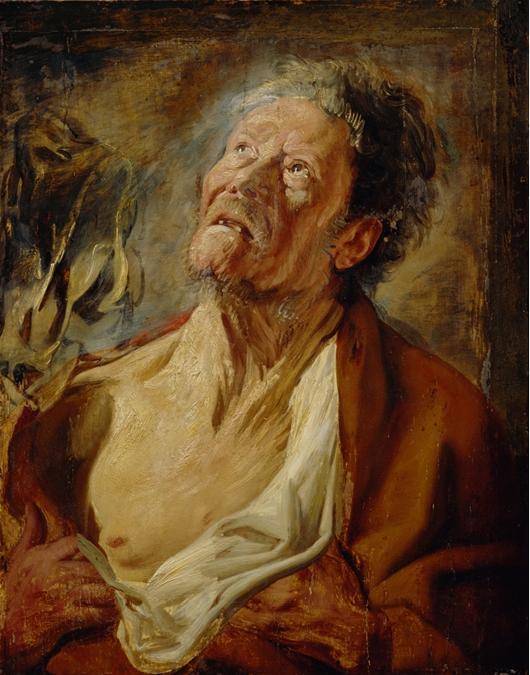
Jacob Jordaens - Abraham Grapheus as Job

The Testament of Job (also referred to as Divrei Lyov,[1] literally meaning "Words of Job") is a book written in the 1st century BC or the 1st century AD. Some Midrashic parallels in the work[2] indicate that it was a production of the pre-Christian era, and belongs to the Jewish apocrypha.[3] Christian scholars refer to such writings as belonging to "intertestamental literature".

The text is not directly dependent on the canonical Book of Job, and presents many differences from it.

Manuscripts

[edit]

The earliest surviving manuscript is in Coptic, of the 5th century; other early surviving manuscripts are in Greek and Old Slavonic.

In 1967, Sebastian Brock published an edition of the Testament using the Greek ms P as his base.[4] Then a bilingual Greek and English edition, edited by Robert A. Kraft, was issued in New York by the Society of Biblical Literature in 1974 with ISBN 0-88414-044-X. It used the Greek mss S-V as the base.[5]

Maria Haralambakis (2012) surveyed as many as nine Slavonic manuscripts, some of which are now lost. The date of these manuscripts is between the 14th and 18th centuries. Also she covers the ongoing publication of the Coptic text, which is unfortunately rather fragmentary.[6]

The Slavonic tradition is not believed to be derived from the two main Greek textual traditions. It seems to be separate from them, and contains the readings characteristic of both of them.[7]

Contents

[edit]

In folktale manner in the style of Jewish aggada,[8] it elaborates upon the Book of Job making Job a king. Like many other Testament of ... works in the Old Testament apocrypha, it gives the narrative a framing-tale of Job's last illness, in which he calls together his sons and daughters to give them his final instructions and exhortations. The Testament of Job contains all the characters familiar in the Book of Job, with a more prominent role for Job's wife, given the name Sitidos, and many parallels to Christian beliefs that Christian readers find, such as intercession with God and forgiveness. In this text, Job's first wife dies and the seven sons and three daughters that he had in the epilogue of the book of Job were from his second wife, whom he married after his trials ended. According to the Testament of Job, his second wife is Dinah, the daughter of Jacob.[9] This would mean that not only was Job joined to the house of Israel, but also that Job lived between the death of Abraham and the birth of Moses.

Unlike the Biblical Book of Job, Satan's vindictiveness towards Job is described in the Testament as being due to Job destroying a non-Jewish temple. Indeed, Satan is described in a far more villainous light, rather than simply being a prosecuting counsel. Job is equally portrayed differently; Satan is shown to directly attack Job, but fails each time due to Job's willingness to be patient, unlike the Biblical narrative where Job falls victim but retains faith.

The latter section of the work, dedicated like the Biblical text to Job's comforters, deviates even further from the Biblical narrative. Rather than complaining or challenging God, Job consistently asserts his faith despite the laments of his comforters. While one of the comforters gives up, and the others try to get him medical treatment, Job insists his faith is true, and eventually the voice of God tells the comforters to stop their behaviour. When most of the comforters choose to listen to God's voice, they decide to taunt the one remaining individual who still laments Job's fate.

Unlike many Testament of .... works, there is little concentration on ethical discourses, instead the text concentrates on delivering narrative, as well as embedding a noticeably large number of hymns.

One passage concerns multicoloured cords for women to put around their breasts to enable them to sing in the language of the angels.[10] Some scholars have suggested that this text also shows an interest in glossolalia (speaking in tongues).[11] Indeed, this is an early example of such a phenomenon, although the precedent for this is also found within Judaism and late antique Christianity.[12]: 54 

Composition

[edit]

There has been a general consensus in scholarship that the Testament of Job comes from the Jewish origins because it lacks any clear Christian features. Yet some possibly Christian features have also been noted in the text, such as the use of the Greek compound word ἀπροσωπόληπτός ("impartiality").[13] After analysing such features in the Testament of Job, Nicholas List concludes that they may be explained as the work of a later Christian scribe or editor.[12]

Although in early scholarship the suggestions were made that the original text was written in Hebrew or Aramaic, there has been a more recent scholarly consensus that the original language of composition of the Testament of Job was Greek.[14]

Parallels in Qumran literature

[edit]

Some scholars have noted that the Testament of Job shares some thematic and ideological similarities with the Qumran community. For example, James H. Charlesworth has called attention to the numerous parallels between the Testament of Job and some of the Dead Sea Scrolls. In particular he commented upon a “striking resemblance to the Qumran concept of the fellowship of the just with the angels” as found in the Testament. This refers especially to the ability of Job’s daughters to have access to the language of the angels. Also, according to Charlesworth, “The whole of the hymn against Elihu (TJob 43:4-17), in fact, is replete with Qumran affinities.”[15]

Montanists

[edit]

The assertion has been made that the ecstatic speech of the Montanists (a later Christian sect), was another example of speaking in tongues. This has led some scholars, such as Spittler,[16] to suggest that the Montanists may have edited parts of the Testament of Job, adding sections such as these.[17] But Spittler also suggested that this could have been the Therapeutae who were responsible.

The letter ends with a reference to life after death; "It is written that he will rise up with those whom the Lord will reawaken. To our Lord by glory. Amen."[18]

Therapeutae

[edit]

It has been suggested that the work originated from the Therapeutae.[19][20] However, speaking in tongues has not been recorded as a practice of the Therapeutae.

Apocrypha categorisation

[edit]

At the end of the 5th century, the Testament of Job was relegated to the apocrypha by the Gelasian Decree, concerning canonical and noncanonical books. Subsequently, the Testament of Job was ignored by Roman Catholic writers until it was published in 1833 in the series edited by Angelo Mai (Scriptorum Veterum Nova Collectio Vol. vii, pp. 180–191). Mai's manuscript had a double title: Testament of Job the Blameless, the Conqueror in Many Contests, the Sainted (which seems to be the older title) and The Book of Job Called Jobab, and His Life, and the Transcript of His Testament.

See also

[edit]

References

[edit]

Further reading

[edit]
[edit]
Revisions and contributorsEdit on WikipediaRead on Wikipedia
from Grokipedia
The Testament of Job is an ancient Jewish pseudepigraphal text that retells and expands the biblical story of Job, focusing on his extraordinary piety, endurance through severe trials inflicted by Satan, and his final exhortations to his children before death. Composed in Greek during the 1st century BCE or the 1st century CE, it portrays Job as a king from the East who gives away his wealth to the poor, withstands the loss of his possessions, the death of his ten children, and a debilitating illness, all while refusing to curse God. The narrative structure divides into Job's initial prosperity and charitable acts, the onslaught of calamities orchestrated by a more anthropomorphic who disguises himself as a beggar to tempt humanity, and Job's 48-year vigil on a dung heap where he is visited by three royal friends who accuse him of hidden sins. His wife, Sitis (or Sitidos), plays a prominent role, selling her hair for bread to feed him during their poverty, and eventually dies peacefully after seeing visions of their children . eventually restores Job's health and doubles his fortunes, granting him new children—seven sons and three daughters, with the daughters endowed with miraculous abilities, including the gift of heavenly knowledge through heavenly girdles (cords) that allow them to chant angelic hymns. The text concludes with Job's testament, narrated by his brother Nahor, emphasizing themes of unwavering faith, resistance to , and the soul's ascent to paradise. Surviving in Greek manuscripts from the 11th to 16th centuries, alongside earlier 5th-century Coptic fragments and 11th-century Slavonic versions, the work shows no clear evidence of Semitic origins and lacks extensive Christian interpolations, supporting its as a Jewish composition possibly linked to communities in or . Scholarly consensus views it as a homiletic expansion of the Septuagint's , potentially influenced by therapeutic or ascetic groups like the , and serving as an encouragement for perseverance amid persecution. Its mystical elements, such as ecstatic hymns chanted by Job's daughters, highlight a blend of narrative and visionary traditions in .

Introduction and Background

Historical Context

The Testament of Job was composed during the Second Temple period (c. 516 BCE–70 CE), a transitional era in marked by the rebuilding of the after the Babylonian exile and extending until its destruction by the Romans in 70 CE. This period saw the flourishing of diverse Jewish literary traditions, including a wide array of Hebrew, , and Greek texts that expanded upon scriptural narratives and explored theological themes. Among these were pseudepigraphal works, such as the Testaments of the Twelve Patriarchs and Enochic literature, which attributed writings to ancient figures to lend authority and address contemporary concerns within Jewish communities. In the , especially in , Hellenistic culture exerted profound influence on Jewish textual production following Alexander the Great's conquests in the late fourth century BCE. emerged as a major center, where Greek became the dominant for Jewish authors, leading to compositions like the translation of the and philosophical reinterpretations of Mosaic law. This synthesis allowed Jewish writers to engage with Greco-Roman ideas while preserving core religious identities, resulting in a proliferation of Greek-language that adapted biblical stories for Hellenistic audiences. Apocryphal and pseudepigraphal texts played a vital role in by elaborating on canonical scriptures, filling perceived narrative gaps, and providing moral and eschatological guidance amid political instability. During the era of Roman occupation, which intensified after Pompey's conquest of in 63 BCE, these works reflected heightened messianic expectations and explorations of suffering, divine justice, and communal resilience. The , building on the earlier Hebrew tradition of the canonical , exemplifies this genre by expanding its themes in a testamentary framework. Scholars associate the Testament of Job with Jewish communities in the , possibly in , facing cultural pressures and . Its emphasis on , , and endurance against adversities reinforced group boundaries in hostile environments. Traditional scholarship classifies it as a Jewish composition, though recent studies debate this attribution, suggesting possible Christian origins or later emendations.

Relation to Canonical Book of Job

The Testament of Job serves as a midrashic retelling and interpretive expansion of the canonical , drawing on its core narrative while adapting it to emphasize themes of endurance and divine vindication within the testamentary genre of Jewish literature. Unlike the biblical account, which presents Job as a pious from the whose righteousness is tested through unspecified divine permission, the Testament portrays Job explicitly as a wealthy king ruling over and Uz, enhancing his status to underscore his exemplary piety and royal benevolence prior to his trials. This elevation aligns with Hellenistic Jewish tendencies to idealize biblical figures, transforming the ambiguous figure of the biblical Job into a more heroic protagonist who actively combats and aids the poor. Shared elements between the two texts include the fundamental structure of Job's afflictions inflicted by , who requires divine approval to act, the loss of Job's wealth and children, his bodily , visits from three friends (, , and Sophar), and ultimate restoration of prosperity doubled by . Both works highlight Job's exemplary , rendered in Greek as hypomone, portraying it as a model of steadfast amid undeserved , though the Testament omits the biblical book's extended poetic dialogues on , replacing them with streamlined narrative expansions that resolve tensions more affirmatively. The biblical Job's confrontational speeches with and his friends, which probe the mysteries of divine , are absent, allowing the Testament to focus on moral edification rather than philosophical debate. The Testament introduces significant interpretive expansions, particularly in Job's family backstory, where his wife, named Sitidos, receives a more prominent and sympathetic role as a defender of her husband during his trials, contrasting her brief, unnamed appearance in the biblical text where she urges him to curse . It further elaborates on Job's daughters—Kemisha, Kezia, and —granting them a unique inheritance of divine cords that bestow heavenly knowledge and beauty, linking them narratively to Abraham's lineage through intermarriage prohibitions and emphasizing female spiritual agency in a patrilineal context. These additions fill perceived gaps in the canonical , such as the daughters' unspecified inheritance in Job 42:15, and serve to connect Job's story to broader patriarchal traditions. As a work in the "testament" genre common to pseudepigraphal , the Testament of Job frames its narrative as Job's deathbed recounting of his life and trials to his heirs, imparting ethical instructions on piety, charity, and resistance to evil, much like the or Testament of Isaac. This structure shifts the focus from the biblical Job's introspective lament to a didactic legacy, positioning the text as an exhortatory supplement that resolves the canonical book's open-ended by affirming Satan's culpability and Job's foreknowledge of redemption. Scholars note that this adaptation avoids deep engagement with the problem of innocent suffering, instead promoting hypomone as triumphant endurance.

Manuscripts and Editions

Surviving Manuscripts

The earliest surviving witness to the Testament of Job is a set of Coptic fragments in Sahidic dialect, dated to the fifth century CE, discovered among the materials from the Monastery of Deir el-Bala'izah in , and published in 2009. These fragments, cataloged as P. Köln inv. 3221, preserve portions of the narrative but are too incomplete to reconstruct the full text independently. The primary manuscript tradition is preserved in Greek, with four medieval s forming the core of the textual evidence. These include the eleventh-century Paris (ms. P, , gr. 2658), a sixteenth-century copy of P (ms. P², Paris, , grec 938), the Vatican (ms. V, Codex Vaticanus Graecus 1238, dated to the thirteenth century), and the Sicilian (ms. S, Biblioteca Regionale Universitaria, , San Salvatore 29, dated 1307–1308). Manuscripts S and V represent a influenced by later Slavonic transmissions, while P provides an earlier, more independent witness. In addition to the Greek tradition, the text survives in nine Slavonic manuscripts dating from the fourteenth to eighteenth centuries, as surveyed by Haralambakis. These include notable examples such as the 1381 manuscript (BP) and a fifteenth-century copy (MS), which exhibit a distinct that blends elements from Greek sources with local adaptations, including deliberate abbreviations and expansions. No Hebrew original of the Testament of Job survives, and scholarly consensus holds that the work was likely composed in Greek, though possible influences have been noted in certain linguistic features. Textual variants across the traditions are evident, particularly in the endings; for instance, some Greek and Slavonic versions feature extended hymns attributed to Job's daughters or additional interactions with angels, while others conclude more abruptly after the restoration narrative.

Modern Editions and Translations

The first modern publication of the Testament of Job appeared in 1833, when Cardinal Angelo Mai provided a transcription of the Greek text from Vaticanus Graecus 1238. Subsequent scholarly editions focused on Greek witnesses, with Sebastian P. Brock producing a critical text in 1967 based on the primary Greek P (Paris BN gr. 2658, 11th century). Robert A. Kraft advanced this work in 1974 by editing an eclectic Greek text drawing from manuscripts S (, San Salvatore 29, 1307–1308) and V (Vaticanus Graecus 1238, 13th century), providing a facing English . For the Slavonic tradition, Maria Haralambakis offered a comprehensive edition in 2012, collating multiple Slavonic manuscripts alongside an English to highlight textual variants. Key English translations have made the text accessible to broader audiences. Russell P. Spittler's version, published in 1983 within James H. Charlesworth's (vol. 1), remains a standard reference, with a revised edition appearing in 2002. In recent decades, the text has been integrated into digital resources, such as the Thesaurus Linguae Graecae, which hosts searchable Greek editions derived from Brock and Kraft for comparative analysis. A 2023 study by Nicholas List utilized these modern editions to examine hybrid Jewish and Christian elements, arguing that apparent Christian interpolations likely stem from later scribal activity in the recension. Scholars continue to face challenges in establishing a definitive critical text, particularly in reconciling discrepancies between the shorter Greek recension and the more expansive Slavonic versions, which preserve potentially original material absent in Greek witnesses.

Narrative Contents

Plot Summary

The Testament of Job is framed as a deathbed testament in which Job, surrounded by his seven sons and three daughters, recounts the story of his life and trials to instruct his children on and endurance. In his early years, Job—originally named Jobab—was a wealthy ruling over the of Ausitis, a descendant of through his son . Devoutly worshiping the true , he destroyed a temple to the idol Apollo after receiving a divine warning in a vision, thereby angering the local idolaters but earning God's favor. Job married Sitidos, daughter of a prosperous herdsman, and they had seven sons and three daughters, amassing great riches including 130,000 sheep, 7,000 camels, 200 herds of oxen, and 500 she-asses, which he used generously to aid the poor. Job's trials begin when , jealous of his righteousness, seeks permission from to test him and disguises himself as a beggar to infiltrate Job's . Through successive deceptions, orchestrates the loss of Job's wealth in a raid by charioteers and the of his house, killing all ten children during a feast. Further afflicting Job, touches his body with a loathsome plague, causing worms to emerge from his flesh, forcing him to sit on a dung heap outside the city for forty-eight years in abject poverty. Amid the suffering, Sitidos endures extreme hardship, reduced to begging and eventually selling her beautiful hair for three loaves of bread to feed her husband. Despairing, she urges Job to blaspheme and die, echoing Satan's temptation, but Job steadfastly refuses, rebuking her and clinging to his despite the agony. In a , the archangel Michael delivers to Job three multicolored cords, woven by the on His , which Job wraps around his . These cords enable Job to understand and speak in , heal his body by extracting the worms and restoring his skin, and receive divine revelations about the chariots that will carry the righteous to . God restores Job's fortunes doubly: his former wealth is returned through gifts from his relatives and friends. After Sitidos dies from grief, Job marries , Jacob's daughter and sister of his original wife, who bears him seven more sons and three daughters named , Kasia, and Keren, each endowed with supernatural beauty and the ability to see heavenly visions. The daughters inherit the divine cords, granting them the power to chant angelic hymns of praise to God. At the age of 240, Job distributes his possessions among his sons, giving the cords and equal shares to his daughters, and dies peacefully as angels carry his soul in a fiery . His and the poor mourn him deeply, composing hymns that exalt God's and Job's exemplary .

Unique Elements and Themes

The Testament of Job introduces several distinctive symbolic elements absent from the canonical , notably the multicolored cords bestowed upon Job by divine messengers, which serve as emblems of spiritual empowerment and charismatic utterance. These cords, described as shimmering with fiery sparks akin to sun rays, enable the wearers to engage in glossolalia, or speaking in heavenly tongues, symbolizing a or conferral of divine authority for prophetic praise. When Job ties them around his body, they heal his afflictions, underscoring their role as conduits of miraculous intervention and ecstatic . A particularly innovative feature is the portrayal of Job's daughters, who inherit the cords in place of material wealth given to their brothers, thereby linking them to the patriarchal lineage through spiritual rather than economic means. Named evocatively—Day (Hemera), Incense (Kasia), and Amalthea's Horn (Keren)—they don the cords and immediately prophesy in distinct angelic dialects: the tongue of angels, of authorities, and of cherubim, respectively, offering hymns of divine glory. This episode elevates the daughters as vessels of divine revelation, contrasting with the biblical account where they receive only beauty and inheritance portions. Satan's depiction expands into a more overtly demonic and duplicitous , disguising himself as a beggar to inflict a suppurating on Job's flesh, an act of vengeful malice tied to Job's prior destruction of an idolatrous temple. This portrayal heightens Satan's role as a deceptive tempter, operating under divine permission but with intensified malice, including magical elements like breath that causes affliction. Thematically, the text exalts hypomone (endurance or ) as Job's defining , framing his 48 years of as a model of steadfast that culminates in apocalyptic reward and vindication. It critiques sharply, portraying Job's initial royal as a rejection of pagan , which provokes Satan's and reinforces monotheistic fidelity. Job's status as a of Ausis, ruling with vast and dispensing to surrounding monarchs, underscores themes of royal and posthumous legacy, where his endurance ensures an enduring heavenly patrimony for his lineage. Liturgical elements further distinguish the narrative, incorporating hymns such as Job's psalm recited on a ten-stringed to comfort the afflicted, blending musical worship with testamentary instruction as acts of devotion. These poetic insertions function as embedded prayers, emphasizing communal amid trial.

Composition and Influences

Date and Place of Origin

The Testament of Job is generally dated to the first century BCE or the first century CE. This timeframe is supported by its composition in , a language prevalent in the Hellenistic and early Roman periods, and the absence of any references to the destruction of the Second Temple in 70 CE, which would likely have been mentioned if the text postdated that event. Scholars such as James H. Charlesworth place it specifically between the first century BCE and first century CE, noting its alignment with other pseudepigraphal works from that era. The text postdates the canonical , composed between the sixth and fourth centuries BCE, but precedes evident influences from the Christian . Linguistically, the work was originally composed in , as evidenced by its fluid narrative style and lack of translation artifacts, though it incorporates Semitic influences such as Hebrew names (e.g., Sitidos for , echoing biblical forms) and echoes of phrasing in dialogues. This blend suggests an author immersed in both Hellenistic and Jewish traditions, with the Greek serving as the primary vehicle for a story rooted in Semitic storytelling motifs. The place of origin is most commonly identified as , within a Hellenistic Jewish context, due to thematic and stylistic parallels with the works of , including allegorical interpretations of suffering and divine chariots reminiscent of Merkabah traditions adapted for a audience. Russell P. Spittler argues for an Egyptian provenance, linking it to communities like the described by , where women's roles in hymns and piety align with the text's portrayal of Job's daughters. An alternative proposal is , based on potential ties to Qumran-like Essene influences, though this is less favored given the text's Hellenistic features and avoidance of distinctly Palestinian post-exilic concerns.

Scholarly Debates on Authorship

The Testament of Job is an , pseudepigraphically attributed to Job himself as a deathbed testament to his children, a common literary device in ancient Jewish and early to lend authority to the narrative. No historical author is named in the text or surviving manuscripts, and scholarly consensus holds that it originated within a Hellenistic Jewish context, likely composed by a single author or a closely knit group familiar with the version of the canonical . This core narrative is viewed as a product of , possibly from an Egyptian Jewish community such as the , a contemplative described by of , given thematic resonances with ascetic practices and communal hymnody in the text. However, connections to the Therapeutae remain speculative and have been challenged by comparisons showing divergences in ritual and numerical symbolism. Debates intensify over potential Christian influences, particularly in light of terms like ἀπροσωπόληπτός (impartiality) in Testament of Job 4:8 and προσωπολήπτης in 43:13, which echo New Testament language (e.g., Acts 10:34) and appear exclusively in Christian sources such as the Apostolic Fathers. Scholars like James R. Davila have argued for a Christian provenance, proposing the text as an early fifth-century composition based on manuscript evidence and these linguistic markers, potentially originating in a Christian monastic setting. In contrast, the prevailing view, advanced by Robert A. Kugler and others, maintains a pre-Christian Jewish core with later Christian scribal emendations, such as nomina sacra in manuscripts, rather than wholesale redaction. Parallels to Qumran texts, including angelic fellowship motifs in the Hodayot (1QH 6:30), further bolster the Jewish origin theory by linking the work to Second Temple sectarian traditions of divine communion and perseverance amid suffering. Additional theories highlight multi-stage composition, with Russell P. Spittler suggesting that chapters 46–53, featuring glossolalia and ecstatic speech, may reflect second-century Montanist interpolations, a prophetic Christian movement emphasizing spiritual gifts, though this risks given the text's earlier dating. Recent scholarship, notably Nicholas List's 2023 analysis, identifies "hybrid" Jewish-Christian signature features—such as Job's portrayal as an ideal alongside subtle motifs—without necessitating full Christian , positing instead a fluid transmission in mixed religious environments. Ergo Naab supports this layered model, noting probable Christian reworking for eschatological and demonological emphases that align with early church utility, while affirming the foundational narrative's Jewish integrity from the first century BCE to CE. These debates underscore the text's pseudepigraphic nature, where authorship reflects communal rather than individual creativity in antiquity.

Theological Significance

Jewish Perspectives

The Testament of Job, as a Jewish pseudepigraphon from the Second Temple period, expands the biblical figure of Job into a paragon of , emphasizing his unwavering and moral in the face of affliction. It portrays Job as an anti-idolatry hero who resists Satanic temptations to worship foreign gods, thereby upholding monotheistic devotion akin to patriarchal ideals. This enhancement links Job genealogically to the Abrahamic line, positioning him as a contemporary of the patriarchs in the (Ausis), preserving the "holy seed" through endogamous practices that echo themes in Jubilees. Theologically, the text underscores divine justice amid human trials, presenting Job's suffering as a test of that ultimately affirms God's impartial benevolence and restorative power. A distinctive motif is the of Job's daughters through their , which includes not only material portions alongside their brothers—uncommon in ancient Jewish inheritance laws—but also mystical girdles granting and linguistic gifts, symbolizing spiritual authority rare for women in contemporaneous traditions. Though absent from the rabbinic canon, the Testament of Job finds echoes in midrashic literature, such as discussions of Job's Edomite origins and historical placement in Baba Batra 15a, which debate his era among the patriarchs and affirm his existence as a righteous . Its narrative may have circulated in synagogues, serving as edifying material for communities navigating and identity. Overall, the work reinforces covenantal themes of faithfulness to without prophetic , modeling Job as an exemplar of covenantal through , charity, and rejection of idolatry, thereby enriching Jewish reflections on piety in exile.

Christian Interpretations

In the early , the Testament of Job was classified among the apocryphal writings, as evidenced by its explicit listing as a non-canonical text in the Decretum Gelasianum, a late fifth-century document attributed to (c. 492–496 CE), which distinguished between approved scriptures and those to be rejected. This categorization reflected broader ecclesiastical efforts to define the amid diverse pseudepigraphal literature. Despite this status, the text found limited reception in certain heterodox groups, notably among the Montanists in century CE, who appear to have adapted or emphasized its depictions of ecstatic —particularly the scenes of Job's daughters speaking in heavenly tongues—to support their practices of prophetic inspiration and glossolalia. Patristic interpreters, while primarily engaging the canonical , occasionally alluded to expanded Joban traditions that align with elements in the Testament, such as themes of endurance amid suffering. For instance, of (c. 185–254 CE) referenced extra-biblical lore about Job's life and trials in his homilies, interpreting them as exemplars of divine pedagogy through affliction, though he did not directly quote the Testament. This interpretive tradition culminated in the New Testament's own endorsement of Job's in James 5:11, where the cites Job as a model of steadfastness ("You have heard of the endurance of Job"), a amplified in the Testament's narrative of unyielding piety despite demonic torments and familial loss. The Testament's portrayal of liturgical and charismatic elements, including Job's daughters receiving cords from that enable them to compose hymns and utter angelic speech (ch. 46–50), has been viewed by some scholars as prefiguring the Pentecostal outpouring in , where the empowers believers with diverse tongues. This connection underscores early Christian appropriations of the text's ecstatic motifs as typological foreshadows of the church's charismatic experiences, though such readings were marginal given the work's apocryphal status. Recent scholarship identifies subtle "Christian signature features" in the Testament, such as its emphasis on divine —a concept articulated through phrasing reminiscent of ethical ideals (e.g., T. Job 9:1–2)—suggesting a receptive Christian overlay on an originally Jewish core. Nicholas List argues that while the text retains strong Jewish elements, these interpolations indicate second-century Christian engagement, facilitating its use in communities exploring themes of universal salvation and endurance.

Reception History

In Ancient and Medieval Traditions

The Testament of Job circulated in antiquity primarily through Greek and Coptic manuscripts, with the earliest surviving evidence being a fragmentary Coptic from the CE. These versions reflect its use among early Christian communities, where it served as an edifying promoting , , and , aligning with ascetic ideals of moral and . The text was excluded from the Jewish Tanakh as a non-canonical and similarly rejected in Christian traditions. Despite its marginal status, the Testament of Job was preserved in non-canonical collections, including monastic libraries, even after 5th-century ecclesiastical decrees relegated it to the , as seen in the Decree's explicit condemnation of it as an uncanonical work. In ascetic or therapeutic communities, such as those echoing the practices of the described by , the text functioned as a model for righteous suffering and communal edification, emphasizing themes of patience and divine reward suitable for devotional reading. During the medieval period, the Testament of Job appeared in Slavonic translations within Eastern Orthodox contexts, with manuscripts reflecting features alongside vernacular influences from regions like medieval , indicating its adaptation for liturgical or devotional use in Slavic Christian settings. These versions contributed to its indirect influence on , where motifs of saintly endurance and demonic trials paralleled narratives of holy lives, enhancing its role as inspirational literature for the faithful. The text's transmission faded after the medieval era until its modern rediscovery in 1833, when Angelo Mai published the first edition from a Greek manuscript in the Scriptorum Veterum Nova Collectio.

Modern Scholarship and Cultural Impact

Modern scholarship on the Testament of Job has significantly advanced since the mid-20th century, with key contributions emphasizing its place within early Jewish literature and its interpretive layers. James H. Charlesworth's inclusion of the text in The Old Testament Pseudepigrapha (Vol. 1, 1983) marked a pivotal moment, establishing it as a core pseudepigraphon and facilitating broader access through critical editions that highlight its narrative expansions on the biblical Book of Job. More recent analyses, such as Nicholas List's 2023 study, examine "signature features" distinguishing Jewish and Christian elements, arguing that motifs like the intermarriage prohibition (T. Job 45:3) reflect Second Temple Jewish diaspora concerns for endogamy, while rare Greek terms like ἀπροσωπόληπτός (T. Job 4:8) suggest later Christian scribal emendations rather than original hybridity. List concludes that these support a primarily Jewish origin (ca. 100 B.C.E.–200 C.E.), with Christian influences as secondary, filling gaps in debates over the text's provenance. Interpretive approaches in contemporary studies have diversified, incorporating feminist and psychological lenses to explore the text's unique portrayals. Feminist readings highlight the empowered roles of Job's daughters—named Day, Wine-press, and Eye-liner (T. Job 48–52)—who receive divine cords granting them prophetic abilities and equal inheritance, challenging patriarchal norms and offering insights into ancient Jewish women's agency. One analysis frames this as a testament to female spiritual authority, drawing implications for Jewish women's history by portraying the daughters as inheritors of divine wisdom beyond economic rights. Psychological interpretations focus on Job's emotional responses to suffering, such as suppressed anger, grief, and shame, as mechanisms for resilience; these elements underscore the text's depiction of endurance through authentic confrontation with loss, rather than passive acceptance. The Testament of Job's cultural impact extends modestly into modern literature and arts, often through echoes of its themes in broader Joban retellings. It influences contemporary narratives on innocent suffering, as seen in Archibald MacLeish's 1958 play J.B., where Job's trials parallel the text's emphasis on demonic temptation and divine vindication, though without direct citation; such works revive interest in resilience amid unexplained adversity. Artistic depictions remain minor, with limited visual adaptations focusing on the daughters' prophetic roles or Job's chariot visions, appearing sporadically in illustrative projects rather than mainstream . Post-2020 digital initiatives, like the Online Critical , have enhanced accessibility through open-source editions and indices, bridging scholarly gaps, with ongoing engagement in 2025 scholarship, including reevaluations of the text as rewritten scripture and its narrative characterization. This revival supports on , as the text's Jewish-Christian hybrid elements—per List—foster discussions on shared motifs of divine justice across traditions.

References

Add your contribution
Related Hubs
User Avatar
No comments yet.