Hubbry Logo
Phalanx bonePhalanx boneMain
Open search
Phalanx bone
Community hub
Phalanx bone
logo
8 pages, 0 posts
0 subscribers
Be the first to start a discussion here.
Phalanx bone
Phalanx bone
from Wikipedia
Phalanx bone
Bones of the hand
Bones of the foot
Details
ArticulationsMetacarpophalangeal, metatarsophalangeal, interphalangeal
Identifiers
Latinphalanx
pl. phalanges
Anatomical terms of bone

The phalanges /fəˈlænz/ (sg.: phalanx /ˈfælæŋks/) are digital bones in the hands and feet of most vertebrates. In primates, the thumbs and big toes have two phalanges while the other digits have three phalanges. The phalanges are classed as long bones.

Structure

[edit]
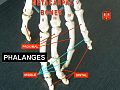
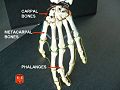
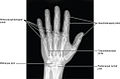
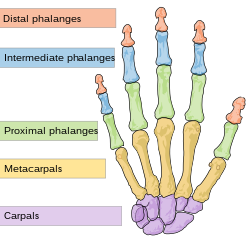
The phalanges in a human hand

Toe bones or phalanges of the foot. Note the big toe has no middle phalanx.
People vary; sometimes the smallest toe also has none (not shown).[1]

  Distal phalanges of the foot
  Middle phalanges of the foot
  Proximal phalanges of the foot

The phalanges are the bones that make up the fingers of the hand and the toes of the foot. There are 56 phalanges in the human body, with fourteen on each hand and foot. Three phalanges are present on each finger and toe, with the exception of the thumb and big toe, which possess only two. The middle and far phalanges of the fourth and[citation needed] fifth toes are often fused together (symphalangism).[1][2] The phalanges of the hand are commonly known as the finger bones. The phalanges of the foot differ from the hand in that they are often shorter and more compressed, especially in the proximal phalanges, those closest to the torso.[3]

A phalanx is named according to whether it is proximal, middle, or distal and its associated finger or toe. The proximal phalanges are those that are closest to the hand or foot. In the hand, the prominent, knobby ends of the phalanges are known as knuckles. The proximal phalanges join with the metacarpals of the hand or metatarsals of the foot at the metacarpophalangeal joint or metatarsophalangeal joint. The intermediate phalanx is not only intermediate in location, but usually also in size. The thumb and large toe do not possess a middle phalanx. The distal phalanges are the bones at the tips of the fingers or toes. The proximal, intermediate, and distal phalanges articulate with one another through interphalangeal joints of hand and interphalangeal joints of the foot.[4]: 708–711 : 708–711 

Bone anatomy

[edit]

Each phalanx consists of a central part, called the body, and two extremities.[5]

  • The body is flat on either side, concave on the palmar surface, and convex on the dorsal surface.[6] Its sides are marked with rough areas giving attachment to fibrous sheaths of flexor tendons. It tapers from above downwards.[7]
  • The proximal extremities of the bones of the first row present oval, concave articular surfaces, broader from side to side than from front to back. The proximal extremity of each of the bones of the second and third rows presents a double concavity separated by a median ridge.[7]
  • The distal extremities are smaller than the proximal, and each ends in two condyles (knuckles) separated by a shallow groove; the articular surface extends farther on the palmar than on the dorsal surface, a condition best marked in the bones of the first row.[7]

In the foot, the proximal phalanges have a body that is compressed from side to side, convex above, and concave below. The base is concave, and the head presents a trochlear surface for articulation with the second phalanx.[8] The middle are remarkably small and short, but rather broader than the proximal. The distal phalanges, as compared with the distal phalanges of the finger, are smaller and are flattened from above downward; each presents a broad base for articulation with the corresponding bone of the second row, and an expanded distal extremity for the support of the nail and end of the toe.[9]

Distal phalanx

[edit]

In the hand, the distal phalanges are flat on their palmar surface, small, and with a roughened, elevated surface of horseshoe form on the palmar surface, supporting the finger pulp.[10]: 6b. 3. The Phalanges of the Hand  The flat, wide expansions found at the tips of the distal phalanges are called "apical tufts". They support the fingertip pads and nails.[11] The phalanx of the thumb has a pronounced insertion for the flexor pollicis longus (asymmetric towards the radial side), an ungual fossa, and a pair of unequal ungual spines (the ulnar being more prominent). This asymmetry is necessary to ensure that the thumb pulp is always facing the pulps of the other digits, an osteological configuration which provides the maximum contact surface with held objects.[12]

In the foot, the distal phalanges are flat on their dorsal surface. It is largest proximally and tapers to the distal end. The proximal part of the phalanx presents a broad base for articulation with the middle phalanx, and an expanded distal extremity for the support of the nail and end of the toe.[10]: 6b. 3. The Phalanges of the Foot  The phalanx ends in a crescent-shaped rough cap of bone epiphysis — the apical tuft (or ungual tuberosity/process) which covers a larger portion of the phalanx on the volar side than on the dorsal side. Two lateral ungual spines project proximally from the apical tuft. Near the base of the shaft are two lateral tubercles. Between these a V-shaped ridge extending proximally serves for the insertion of the flexor pollicis longus. Another ridge at the base serves for the insertion of the extensor aponeurosis.[13] The flexor insertion is sided by two fossae — the ungual fossa distally and the proximopalmar fossa proximally.

Development

[edit]

The number of phalanges in animals is often expressed as a "phalangeal formula" that indicates the numbers of phalanges in digits, beginning from the innermost medial or proximal. For example, humans have a 2-3-3-3-3 formula for the hand, meaning that the thumb has two phalanges, whilst the other fingers each have three.

In the distal phalanges of the hand the centres for the bodies appear at the distal extremities of the phalanges, instead of at the middle of the bodies, as in the other phalanges. Moreover, of all the bones of the hand, the distal phalanges are the first to ossify.[10]: 6b. 3. The Phalanges of the Hand 

Function

[edit]
Thumb and index finger of right hand during pad-to-pad precision grasping in ulnar view.[12]

The distal phalanges of ungulates carry and shape nails and claws and these in primates are referred to as the ungual phalanges.

History of phalanges

[edit]

Etymology

[edit]

The term phalanx or phalanges refers to an ancient Greek army formation in which soldiers stand side by side, several rows deep, like an arrangement of fingers or toes.

Other animals

[edit]

Most land mammals including humans have a 2-3-3-3-3 formula in both the hands (or paws) and feet. Primitive reptiles usually had the formula 2-3-4-4-5, and this pattern, with some modification, remained in many later reptiles and in the mammal-like reptiles. The phalangeal formula in the flippers of cetaceans (marine mammals) varies widely due to hyperphalangy (the increase in number of phalanx bones in the digits). In humpback whales, for example, the phalangeal formula is 0/2/7/7/3; in pilot whales the formula is 1/10/7/2/1.[14]

In vertebrates, proximal phalanges have a similar placement in the corresponding limbs, be they paw, wing or fin. In many species, they are the longest and thickest phalanx ("finger" bone). The middle phalanx also has a corresponding place in their limbs, whether they be paw, wing, hoof or fin.

The distal phalanges are cone-shaped in most mammals, including most primates, but relatively wide and flat in humans.

Primates

[edit]
Morphological comparisons of pollical distal phalanges in African apes, extant humans and selected hominins. Although with several morphological differences, all the features related to refined manipulation in modern humans are already present in the late Miocene Orrorin.[12]

The morphology of the distal phalanges of human thumbs closely reflects an adaptation for a refined precision grip with pad-to-pad contact. This has traditionally been associated with the advent of stone tool-making. However, the intrinsic hand proportions of australopiths and the resemblance between human hands and the short hands of Miocene apes, suggest that human hand proportions are largely plesiomorphic (as found in ancestral species) — in contrast to the derived elongated hand pattern and poorly developed thumb musculature of other extant hominoids.[12]

In Neanderthals, the apical tufts were expanded and more robust than in modern and early Upper Paleolithic humans. A proposal that Neanderthal distal phalanges was an adaptation to colder climate (than in Africa) is not supported by a recent comparison showing that in hominins, cold-adapted populations possessed smaller apical tufts than do warm-adapted populations. [15]

In non-human, living primates the apical tufts vary in size, but they are never larger than in humans. Enlarged apical tufts, to the extent they actually reflect expanded digital pulps, may have played a significant role in enhancing friction between the hand and held objects during Neolithic toolmaking.[11]

Among non-human primates phylogenesis and style of locomotion appear to play a role in apical tuft size. Suspensory primates and New World monkeys have the smallest apical tufts, while terrestrial quadrupeds and Strepsirrhines have the largest.[15] A study of the fingertip morphology of four small-bodied New World monkey species, indicated a correlation between increasing small-branch foraging and reduced flexor and extensor tubercles in distal phalanges and broadened distal parts of distal phalanges, coupled with expanded apical pads and developed epidermal ridges. This suggests that widened distal phalanges were developed in arboreal primates, rather than in quadrupedal terrestrial primates.[16]

Cetaceans

[edit]

Whales exhibit hyperphalangy. Hyperphalangy is an increase in the number of phalanges beyond the plesiomorphic mammal condition of three phalanges-per-digit.[17] Hyperphalangy was present among extinct marine reptiles -- ichthyosaurs, plesiosaurs, and mosasaurs -- but not other marine mammals, leaving whales as the only marine mammals to develop this characteristic.[18] The evolutionary process continued over time, and a very derived form of hyperphalangy, with six or more phalanges per digit, evolved convergently in rorqual whales and oceanic dolphins, and was likely associated with another wave of signaling within the interdigital tissues.[17]

Other mammals

[edit]

In ungulates (hoofed mammals) the forelimb is optimized for speed and endurance by a combination of length of stride and rapid step; the proximal forelimb segments are short with large muscles, while the distal segments are elongated with less musculature. In two of the major groups of ungulates, odd-toed and even-toed ungulates, what remain of the "hands" — the metacarpal and phalangeal bones — are elongated to the extent that they serve little use beyond locomotion. The giraffe, the largest even-toed ungulate, has large terminal phalanges and fused metacarpal bones able to absorb the stress from running.[19]

The sloth spends its life hanging upside-down from branches, and has highly specialized third and fourth digits for the purpose. They have short and squat proximal phalanges with much longer terminal phalanges. They have vestigial second and fifth metacarpals, and their palm extends to the distal interphalangeal joints. The arboreal specialization of these terminal phalanges makes it impossible for the sloth to walk on the ground where the animal has to drag its body with its claws.[19]

Additional images

[edit]

See also

[edit]

References

[edit]
[edit]
Revisions and contributorsEdit on WikipediaRead on Wikipedia
from Grokipedia
The phalanx bone, also known as a (plural: phalanges), is a small that forms part of the digital skeleton in the hand and foot, comprising the fingers and toes. These bones are tubular in shape, each featuring a proximal base for articulation with adjacent bones, a central shaft or body, and a distal head for formation. In total, there are 56 phalanges in the —14 in each hand (28 total in the hands) and 14 in each foot (28 total in the feet)—with and big toe possessing only two phalanges each (proximal and distal), while the remaining digits have three (proximal, middle, and distal). Phalanges in the hand are slender and elongated, enabling precise movements essential for grasping, manipulating objects, and fine motor skills, with the proximal phalanges articulating with the metacarpals at metacarpophalangeal joints, the middle phalanges (where present) connecting via proximal interphalangeal joints, and the distal phalanges terminating in the distal interphalangeal joints. In contrast, the phalanges of the foot are shorter, thicker, and more robust to support body weight during locomotion, , and balance, with the big toe's phalanges playing a key role in push-off during . These bones are connected by ligaments and tendons, allowing flexion, extension, and limited abduction/adduction, and they develop from independent centers during embryogenesis. Clinical significance arises from common fractures or deformities like hammertoe, which affect phalangeal alignment and function. The phalanges' evolutionary adaptations underscore their role in and tool use, contributing to human dexterity and mobility.

Anatomy

General Structure

Phalanges are small, elongated tubular long bones that form the digits of the hands and feet. Each hand contains 14 phalanges, consisting of three per finger and two in , while each foot has 14 phalanges, with three in each except the big toe, which has two. The general structure of a includes a proximal base with an articular surface for attachment to adjacent bones, a central shaft or body that is slender and cylindrical, and a distal head that is condyloid in shape to facilitate articulation. The shaft features nutrient foramina, small openings that allow passage of nutrient arteries into the . In distal phalanges, the head expands distally into an ungual tuberosity, a roughened area on the volar or plantar surface that provides attachment for the nail bed. Microscopically, phalanges exhibit the typical architecture of long bones, with a dense outer layer of compact cortical bone surrounding a central medullary cavity filled with trabecular bone. The outer surface is covered by periosteum, a fibrous membrane that supports osteogenesis and vascular supply, while the inner surface lining the medullary cavity is the endosteum, which aids in bone remodeling. The blood supply to phalanges is provided by digital arteries, which are branches of the radial and ulnar arteries in the hand and the anterior and posterior tibial arteries in the foot. These arteries enter through nutrient foramina and form periosteal and intraosseous networks to nourish the bone tissue. Venous drainage occurs via accompanying digital veins that converge into dorsal and palmar (or plantar) venous arches, ultimately joining larger veins like the cephalic, basilic, or great saphenous. Lymphatic drainage from the phalanges follows the digital lymphatic vessels, which ascend to regional nodes in the axillary basin for the upper limb and the inguinal basin for the lower limb.

Specific Types of Phalanges

The proximal is the longest among the phalanges in each digit, characterized by a robust, expanded base with a concave, oval-shaped articular surface that articulates with the head of the corresponding metacarpal in the hand or metatarsal in the foot. The shaft, or body, is tubular and slightly convex dorsally, tapering toward the distal end, while the head is convex and trochlea-shaped to articulate with the base of the intermediate phalanx. In the foot, the proximal phalanx body is compressed mediolaterally, with a convex dorsal surface and concave plantar surface, adapting to demands. The intermediate phalanx, also known as the middle phalanx, is shorter than the proximal and is present only in digits 2 through 5 of both the hand and foot ( and hallux lack this ). Its base features biconcave articular surfaces separated by a central ridge, allowing stable articulation with the trochlear head of the proximal phalanx, while the head is similarly convex and trochlear for connection to the distal phalanx, promoting flexibility in digit flexion. The shaft is slender and cylindrical, with minimal dorsal convexity compared to the proximal phalanx. The distal phalanx is the shortest type, tapering to a flattened or pointed tip that expands into a roughened ungual tuberosity on the volar (palmar or plantar) surface for nail bed attachment. Its base is concave to articulate with the head of the intermediate phalanx (or proximal phalanx in and hallux), and the overall shape is more robust and curved in the toes to support toenail structure and ground contact. Quantitative differences highlight positional adaptations, with average lengths in the hand varying by type and digit; for instance, proximal phalanges measure approximately 39 mm on average, intermediate phalanges around 25-30 mm, and distal phalanges 15-20 mm. In the foot, these lengths are generally shorter by 10-20%, reflecting reduced mobility. Size variations exist by sex and side, with male phalanges typically 5-10% longer and more robust than female ones across all types, and the right hand phalanges slightly larger than the left due to influences.

Articulations and Supporting Structures

The phalanges articulate primarily through synovial joints that facilitate precise movements of the digits in both the upper and lower limbs. In the hand, the interphalangeal (IP) joints connect the proximal, middle, and distal phalanges, consisting of the proximal interphalangeal (PIP) joint between the proximal and middle phalanges, and the distal interphalangeal (DIP) joint between the middle and distal phalanges. These are hinge (ginglymus) synovial joints that primarily permit flexion and extension, with minimal lateral deviation restricted by surrounding ligaments. In the foot, analogous IP joints exist between the phalanges of the lesser toes, while the hallux (great toe) features only a single IP joint between its proximal and distal phalanges, also functioning as a hinge joint for similar motions. The metacarpophalangeal (MCP) joints in the hand form condyloid synovial articulations between the metacarpal heads and the bases of the proximal phalanges, allowing flexion, extension, abduction, adduction, and circumduction. Similarly, the metatarsophalangeal (MTP) joints in the foot connect the metatarsal heads to the proximal phalanges as condyloid synovial joints, supporting comparable multiplanar movements essential for weight-bearing and propulsion. Stability in both MCP and MTP joints is enhanced by a volar (or plantar) plate, a fibrocartilaginous structure that reinforces the joint capsule volarly, preventing hyperextension and anchoring the collateral ligaments. Collateral ligaments, comprising proper and accessory components, originate from the metacarpal or metatarsal condyles and insert onto the proximal phalanges and volar plate, providing lateral stability against varus and valgus forces; these ligaments are taut in flexion and lax in extension. Supporting structures around these articulations include key ligaments and tendons that integrate the phalanges into the broader digital mechanism. In the IP joints, radial and ulnar collateral ligaments span the , inserting onto the volar plate and phalangeal bases to limit lateral motion while permitting hinge-like flexion and extension. Flexor tendons, such as the flexor digitorum profundus, insert on the palmar aspect of the distal phalanges, enabling deep flexion at the DIP , whereas extensor tendons terminate via the on the dorsal surface of the distal phalanges, facilitating extension across both IP joints. Sesamoid bones, small embedded in tendons, are present in select joints for ; notably, two sesamoids lie in the flexor pollicis brevis at the thumb MCP and in the flexor hallucis brevis at the hallux MTP , reducing friction and enhancing flexion force. Typical ranges of motion underscore the functional design of these , with joint achieving approximately 100° of flexion and 0-10° of extension, and the DIP joint around 70-90° of flexion and 0° of extension, contributing to grip precision in the hand. In the foot, MTP flexion reaches about 40-50° and IP flexion 40-60°, supporting toe-off during without the extensive dexterity of the hand. These articulations and stabilizers collectively enable the phalanges' role in coordinated digital function.

Development and Variation

Embryological Origins

The development of bones begins within the upper and lower limb buds, which emerge during the fourth week of and undergo significant patterning by the eighth week. The limb buds consist of a core of covered by , with mesenchymal cells proliferating to form the foundational structures of the limbs. The apical ectodermal ridge (AER), located at the distal tip of the limb bud, secretes fibroblast growth factors (FGFs) to regulate proximal-distal axis growth and elongation, while the zone of polarizing activity (ZPA) in the posterior mesenchyme produces sonic hedgehog (SHH) to establish the anterior-posterior axis and digit identity. These signaling centers interact reciprocally to ensure coordinated limb outgrowth, with AER maintenance dependent on ZPA-derived SHH and vice versa. By the fifth to sixth week, mesenchymal cells in the distal limb bud (progress zone) condense to form paddle-like structures that segment into five digital rays, the precursors to individual digits, under the influence of expression. HoxD cluster genes, particularly , play a critical role in specifying digit identity and promoting the segmentation of these rays into phalangeal anlagen, with graded expression along the anterior-posterior axis directing the number and patterning of phalangeal elements. This condensation phase transitions into chondrogenesis around week 6, where mesenchymal cells differentiate into chondrocytes to create models of the future phalanges, including the formation of interzones—avascular regions of flattened cells that delineate prospective synovial joints between phalanges. Simultaneously, via in the interdigital separates the digits, preventing webbing and allowing individual phalanges to emerge distinctly, regulated by BMP signaling from the AER and non-apoptotic regions. Disruptions in this process, such as mutations in GLI3 (which represses SHH targets) or HOXD genes, can lead to (fused digits due to failed interdigital ) or (shortened phalanges from impaired chondrogenesis and segmentation). For instance, GLI3 results in with , while mutations cause brachydactyly-syndactyly syndromes by altering digital ray formation. These genetic factors highlight the precise molecular orchestration required for normal phalangeal development.

Ossification and Growth

The ossification of phalanx bones follows the process of endochondral ossification, where primary centers first appear in the diaphysis during intrauterine development. In the upper limb, primary ossification centers for the phalangeal diaphyses emerge between 9 and 12 weeks of gestation, beginning with the distal phalanges around 9 weeks, followed by the proximal phalanges around 10 weeks, and the middle phalanges at approximately 14 weeks. In the lower limb, primary centers appear similarly but with a slight delay, with distal phalangeal centers forming around the 8th fetal week and proximal phalangeal centers between the 12th and 16th weeks. Secondary ossification centers develop in the epiphyses postnatally, contributing to the expansion of the bone ends. These centers typically appear at or after birth in the proximal bases of the proximal and middle phalanges, with ossification visible radiographically between 1 and 3 years of age in the hands and 3 to 10 months in the feet, progressing from proximal to distal phalanges. The distal tuft of the distal phalanges ossifies last, often between 18 and 24 months, marking the final epiphyseal center in both limbs. Longitudinal growth occurs at the epiphyseal plates, zones of between the and epiphyses that facilitate proliferation and hypertrophy until plate closure. These growth plates in hand phalanges typically close between ages 14 and 18 years, while those in foot phalanges close later, often extending to 18 to 20 years, influenced by systemic hormones such as and insulin-like growth factor-1 (IGF-1), which promote activity and matrix production. The timeline of phalangeal provides radiographic milestones for skeletal age assessment, particularly in the hands, where hand phalanges ossify earlier than those in the feet, allowing earlier visibility on imaging. The Greulich-Pyle atlas, based on standardized hand-wrist radiographs, evaluates maturation stages of phalangeal centers and epiphyseal fusion to estimate chronological age with high clinical utility in . Post-infancy, phalanx bones undergo continuous remodeling, adapting their architecture to mechanical stresses in accordance with , which posits that bone density and trabecular orientation adjust to the prevailing loads experienced during weight-bearing and manipulative activities.

Anatomical Variations in Humans

Anatomical variations in the number of phalanges primarily manifest as and , which alter the standard configuration of 14 phalanges per hand or foot. involves the presence of supernumerary digits, each typically containing one to three phalanges, with an incidence of approximately 1 in 1,000 live births globally, though rates vary by population and can reach up to 1 in 300 among certain Indigenous groups. , characterized by the partial or complete fusion of adjacent digits, often results in shared or malformed phalanges and affects about 1 in 2,000 to 3,000 births, commonly involving the third and fourth digits of the hand. These variations are frequently isolated but can occur alongside other limb anomalies. Brachydactyly represents variations in phalangeal size, defined as disproportionately short fingers or toes due to underdevelopment of specific phalanges, and is classified into types A through E based on the affected bones. Type A brachydactyly primarily shortens the middle phalanges, leading to stubby fingers with preserved proximal and distal elements; type B involves shortening or absence of distal phalanges, often with nail dysplasia; type C features short middle phalanges of the index, middle, and ring fingers while sparing ; type D, or "stub thumb," shortens the distal phalanx of ; and type E results in generalized shortening of all phalanges and metacarpals, conferring a brachymelic appearance. These types are inherited in autosomal dominant patterns in many cases, with estimates ranging from 1 in 20,000 to rarer forms depending on the subtype. Population-specific differences in phalangeal dimensions include longer proximal phalanges observed in some African-descended populations compared to European or Asian groups, potentially linked to adaptations in or locomotor patterns, with studies showing average increases of 5-10% in length metrics for individuals. is evident across phalanges, with males exhibiting approximately 10% greater overall size in proximal hand phalanges than females, a pattern consistent in both upper and lower limbs and attributable to influences during development. Left-right asymmetry in phalangeal length is generally minimal, with differences present in about 5% of individuals exceeding 2 standard deviations from , often favoring the dominant hand side due to mechanical loading, though no consistent directional is observed in non-dominant limbs. Evolutionary remnants include the consistent absence of an intermediate phalanx in the pollex () and hallux (big toe), reducing these digits to two phalanges each—a trait shared with other and interpreted as an adaptation enhancing opposability and prehensile function, diverging from the three-phalange formula in other digits.

Function

Biomechanics in the Upper Limb

The phalanges of the hand facilitate complex movements through coordinated flexion and extension, primarily driven by the flexor digitorum superficialis and profundus s for flexion, and the extensor digitorum for extension. The flexor digitorum superficialis inserts on the middle phalanx, enabling flexion at the proximal interphalangeal (PIP) joint, while the flexor digitorum profundus attaches to the distal phalanx, allowing flexion at both the PIP and distal interphalangeal (DIP) joints.00110-6/abstract) The extensor mechanism, a intricate network of tendons and ligaments spanning the phalanges, transmits forces to extend the metacarpophalangeal (MCP), PIP, and DIP joints, with intrinsic muscles like the interossei and lumbricals contributing to fine adjustments in extension . This system ensures balanced motion across the three phalanges per , optimizing dexterity for manipulation. In the thumb, opposition—a key motion for grasping—is enabled by its unique structure of only two phalanges (proximal and distal), which allows greater mobility at the carpometacarpal (CMC) joint compared to the multi-phalangeal fingers. The shorter phalangeal chain in the thumb enhances rotational freedom, with the opponens pollicis muscle facilitating pulp-to-pulp contact with other digits through combined flexion at the MCP and interphalangeal (IP) joints. During grip tasks, load distribution emphasizes the proximal phalanges, which bear a substantial portion of the force—often decreasing relative to distal contributions as object size increases—while the DIP joint supports precision pinch grips and the PIP joint contributes to power grasps.00058-9/pdf) Kinematically, the phalanges generate via muscle moment arms that vary with joint posture; for instance, flexor moment arms at joint can increase up to 20% during flexion from extension, enhancing for flexion . Stability is maintained by volar plates, fibrocartilaginous structures at and DIP joints that act as check ligaments to limit hyperextension, preventing dorsal under load. Evolutionarily, hand phalanges exhibit an increased thumb-to-finger length ratio compared to apes, promoting precision handling and tool use by improving opposition efficiency and reducing curvature for straighter grips. This adaptation, evident in fossil hominins, underscores the phalanges' role in manipulative prowess distinct from the arboreal adaptations in apes.

Biomechanics in the Lower Limb

The phalanges of the foot play a critical role in toe-off during the cycle, where the distal phalanges provide the final push against the ground to propel the body forward. The , which inserts on the distal phalanx of the hallux, facilitates plantarflexion of this phalanx, generating significant force for this phase. The hallux, or big toe, is particularly important, contributing approximately 40% of the total thrust during , which helps in efficient forward momentum and energy transfer. This specialized function underscores the adaptation of the foot phalanges for bipedal locomotion. Proximal phalanges contribute to arch support by participating in the windlass mechanism, where dorsiflexion at the tightens the , elevating and stabilizing the longitudinal and transverse . The attachments of the to the bases of the proximal phalanges enable this dynamic stabilization, preventing arch collapse under body weight. In humans, the shorter length of foot phalanges compared to those in other represents an evolutionary for , reducing leverage disadvantages and improving the foot's rigidity during the stance phase for better stability and efficiency. During gait, the metatarsophalangeal (MTP) joints undergo plantarflexion of about 15-20° during the loading response to aid in shock absorption, followed by dorsiflexion of up to 50° in terminal stance to facilitate and dissipate forces across the forefoot. Phalangeal curvature varies among toes, with differences in the lesser toes (2-5) facilitating greater flexibility for this absorption compared to the straighter hallux, which prioritizes . These morphological distinctions enhance the foot's ability to adapt to ground reactions, minimizing stress on the lower limb. The alignment of the phalanges predisposes the foot to certain adaptations, such as hallux valgus, where lateral deviation of the proximal phalanx of the hallux relative to the first metatarsal disrupts normal and increases medial forefoot pressure. This misalignment can alter propulsion efficiency and arch dynamics, highlighting the interplay between phalangeal structure and overall lower limb function.

Sensory and Proprioceptive Roles

The sensory innervation of the phalanges in the upper and lower limbs is provided primarily by digital nerves, which branch from the and ulnar nerves in the hands and from the medial and lateral plantar nerves (branches of the ) in the feet. These nerves deliver a dense array of mechanoreceptors to the glabrous skin overlying the phalanges, including Meissner's corpuscles for detecting low-frequency vibrations and light touch, and Pacinian corpuscles for high-frequency vibrations and pressure. Meissner's corpuscles are particularly concentrated in the distal phalanges of the fingers and toes, with densities reaching 100–140 per cm² in the , enabling exquisite tactile sensitivity. Proprioceptive functions of the phalanges rely on Golgi tendon organs embedded in the flexor and extensor s crossing the proximal interphalangeal (PIP) and distal interphalangeal (DIP) joints, along with Ruffini endings and other receptors that detect stretch and position changes. These structures provide kinesthetic feedback essential for precise and movements, contributing to the overall of limb orientation and coordination. The high proprioceptive acuity in phalanges supports fine tactile , as evidenced by a threshold of approximately 2–4 mm on the distal phalanges, allowing differentiation of closely spaced stimuli. Nociceptive pathways in the phalanges involve A-delta fibers, which transmit rapid, sharp signals from mechanical or thermal stimuli, and unmyelinated C fibers, responsible for slower, diffuse aching . These fibers originate from free nerve endings in the skin, , and capsules of the phalanges, ascending via the digital nerves to the . Disruptions in these pathways, as seen in peripheral neuropathies, can significantly impair phalangeal sensation and overall protective reflexes. Sensory inputs from the phalanges are processed and integrated in the , where the representation forms part of the somatosensory ; the hand phalanges occupy a substantially larger cortical area than those of the foot, underscoring the enhanced sensory resolution in the upper limbs for manipulative tasks. This disproportionate mapping facilitates rapid neural processing of touch and position data from the digits.

Clinical Significance

Injuries and Fractures

Phalangeal fractures represent a significant portion of traumatic hand injuries, often resulting from crush, axial loading, or avulsion mechanisms that exploit the bones' relatively small size and proximity to soft tissues. In the hand, distal phalanx tuft fractures commonly arise from crush injuries, such as those sustained by slamming a finger in a , leading to comminuted fragments at the fingertip. Shaft fractures of the proximal or middle phalanges typically occur due to transverse or oblique patterns from direct axial loads, like impacts during sports or falls. Base avulsion fractures at the distal , known as injuries, stem from sudden disruption of the extensor , causing a dorsal fragment to separate via forceful hyperextension. Phalangeal fractures of the hand account for approximately 10% of all skeletal fractures, with higher incidence in males and active populations due to occupational or recreational trauma. In the foot, these fractures are less common overall but more frequently involve stress mechanisms, particularly in dancers or runners, where repetitive loading can produce stress fractures of the proximal phalanx of the fifth . In pediatric cases, phalangeal fractures involving the are classified using the Salter-Harris system, with type II fractures—extending through the and —being the most prevalent due to the relative weakness of the growth plate compared to surrounding ligaments. Stable, nondisplaced fractures in children generally heal well with conservative measures. For immediate management across age groups, nondisplaced shaft or tuft fractures are often treated with buddy taping, which immobilizes the injured digit to an adjacent stable using with padding between digits to prevent skin irritation, allowing early motion to minimize stiffness. Alternatively, splinting in the intrinsic plus position—metacarpophalangeal joints at 90 degrees and interphalangeal joints extended—provides more rigid support for unstable or intra-articular fractures, typically for 3-6 weeks followed by protected range-of-motion exercises. Complications from phalangeal fractures include joint stiffness, the most frequent issue arising from prolonged immobilization or soft-tissue adhesions, and , which occurs in less than 1% of cases but is more likely with open fractures involving the tuft or inadequate stabilization. Risk factors for fracture occurrence and poor healing encompass , which weakens and increases susceptibility to both traumatic and stress injuries, particularly in older adults. Early and vigilant follow-up are essential to mitigate these risks.

Congenital and Acquired Deformities

Congenital deformities of the phalanges arise from disruptions in embryonic development and are often genetically determined. Symphalangism, characterized by the fusion or of interphalangeal joints due to the absence of normal joint formation, is a rare genetic condition typically inherited in an autosomal dominant manner and affecting the proximal interphalangeal joints of the s and toes. involves a radial or ulnar curvature of the distal phalanx, most commonly the fifth , resulting from a triangular-shaped or bracket that leads to abnormal longitudinal growth; its in the general population ranges from 1% to 19.5%, with higher rates in syndromic contexts. , marked by shortened phalanges due to premature epiphyseal closure, occurs as an isolated trait or part of syndromes, with overall for isolated forms being low (e.g., types A3 and D ranging from 0.41% to 4% in various populations), though specific subtypes like type A3 can reach up to 21%. Certain congenital phalangeal deformities are associated with broader genetic syndromes. In (trisomy 21), of the fifth finger occurs in 25% to 79% of cases, often contributing to overall hand shortening and functional limitations. , caused by FGFR2 gene mutations, features complex with fusion of phalanges in the hands and feet, leading to mitten-like deformities that severely restrict digit separation and mobility. These conditions, including symphalangism, may also present with additional anomalies such as or , emphasizing their syndromic links rather than isolated occurrences. Acquired deformities develop later in life through disease processes or injury, progressively altering phalangeal structure. In , synovial inflammation leads to marginal bone erosions at the proximal and distal interphalangeal joints, causing joint instability and deformities like ulnar deviation; these erosions can appear early and correlate with disease severity. commonly manifests as , which are bony enlargements at the distal interphalangeal joints due to formation and cartilage loss, predominantly affecting postmenopausal women and resulting in joint stiffness. y tophi, deposits of monosodium urate crystals, can erode phalangeal bone and soft tissues, particularly in chronic cases, leading to nodular swellings and joint destruction, often in older adults with comorbidities. Post-traumatic acquired deformities, such as angular following phalangeal fractures, arise from improper healing that results in rotational or angular misalignment, compromising hand function. In degenerative diseases like , progression involves joint space narrowing—often exceeding 2 mm in advanced stages—accompanied by subchondral sclerosis and growth, which exacerbates pain and restricts (ROM). These deformities collectively impair ROM, induce , and reduce , with syndromic congenital forms like those in further linking to systemic impacts on .

Diagnostic and Surgical Considerations

Diagnosis of phalangeal issues typically begins with radiographic imaging, where plain X-rays serve as the primary modality for detecting fractures. Standard protocols recommend three-view examinations including anteroposterior, oblique, and lateral projections to ensure comprehensive assessment, with oblique views particularly crucial for visualizing phalangeal fractures that may be obscured in standard orientations. For involvement, such as injuries or effusions, (MRI) provides superior detail of surrounding structures, enabling evaluation of and integrity around the phalanges. is also effective as a radiation-free option for identifying effusions and abnormalities in phalangeal regions, offering high concordance with surgical findings in hand trauma cases. Surgical interventions for phalangeal conditions are selected based on fracture stability and associated . Open reduction and internal fixation (ORIF) using Kirschner (K)-wires is a common approach for unstable s, providing stable alignment while minimizing disruption; closed reduction pinning (CRPP) with K-wires is preferred for its minimally invasive nature in over 80% of operative cases. For degenerative affecting proximal interphalangeal joints, options such as silicone implants or surface replacement designs aim to restore motion and alleviate , with advancements in biomaterials improving long-term durability. Tendon-related injuries, like involving the distal phalanx, often require conservative management with continuous splinting in extension for 6 to 8 weeks to promote healing, though open repairs may be necessary for significant disruptions. Postoperative rehabilitation emphasizes early mobilization to prevent stiffness, a common complication in phalangeal injuries. Protocols typically involve protected range-of-motion exercises starting within 2 to 4 weeks after fixation, leading to grip strength recovery approaching 96% of the unaffected side by final follow-up. Union rates for phalangeal fractures exceed 99% with appropriate management, often achieving radiographic healing within 3 to 6 weeks. Recent advances have enhanced precision in phalangeal surgery, including 3D-printed personalized implants for joint reconstruction, which post-2020 studies demonstrate provide superior anatomical fit and functional outcomes in complex cases like metacarpophalangeal defects. Minimally invasive techniques, such as intramedullary cannulated headless compression screws, further reduce operative trauma and support immediate active motion, showing biomechanical equivalence to traditional plating in proximal fractures.

Comparative Anatomy

Phalanges in Primates

In non-human , phalangeal anatomy varies significantly with locomotor adaptations, contrasting with modifications for terrestrial manipulation. Arboreal species, such as (Platyrrhini), exhibit elongated and curved phalanges that facilitate grasping thin branches during suspension and brachiation, differing from the shorter, straighter phalanges in cursorial monkeys (Cercopithecoidea) adapted for terrestrial . For instance, in the (Ateles spp.), the distal phalanx supports hook-like grips for arboreal navigation. This curvature is more pronounced in proximal and middle phalanges of suspensory , enhancing leverage during flexion, while cursorial forms prioritize stability over flexibility. Thumb opposability, crucial for precision grasping, shows reduction in certain lineages, impacting phalangeal function compared to the enhanced thumb. In most , digits follow a phalangeal formula where fingers II–V have three phalanges (proximal, middle, and distal), while the has two, but colobine monkeys () display diminished thumb utility with a reduced first metacarpal and limited interphalangeal (IP) joint flexion, restricting full opposability for fine manipulation. This adaptation suits folivorous diets and quadrupedal locomotion, contrasting human-like pad-to-pad opposition enabled by elongated proximal phalanges. Evolutionary trends in hominids highlight shifts toward precision grip capabilities, with fossil evidence indicating increased proximal phalanx length relative to distal segments. In Australopithecus species, such as A. afarensis and A. africanus, proximal phalanges are proportionally longer than in arboreal apes, supporting stable opposition of thumb and fingers for tool use precursors, a departure from the curved, elongated profiles in earlier primates. This trend reflects bipedal and manipulative pressures, reducing overall phalangeal curvature while enhancing joint stability. Variations among strepsirrhines, such as lorises (), emphasize clinging adaptations with short proximal phalanges that promote sustained vertical suspension on slender supports. In slow lorises (Nycticebus spp.) and pottos (Perodicticus spp.), the proximal phalanges are notably abbreviated, allowing powerful clamping via and digits III–V, complemented by a reduced second digit for enhanced grip force during slow climbing. This contrasts with the longer proximal phalanges in hominids, underscoring diverse strategies for arboreal retention versus terrestrial dexterity.

Phalanges in Other Mammals

In non-primate mammals, phalanges exhibit significant diversity shaped by locomotor demands, ranging from adaptations in ungulates to modifications in , often involving reductions from the ancestral pentadactyl condition. Ungulates display pronounced phalangeal reductions linked to formation and weight-bearing efficiency. In perissodactyls like , each limb retains a single functional digit comprising three phalanges—proximal, middle, and distal—with the distal phalanx () encapsulated by the wall to support rapid terrestrial locomotion. In contrast, such as deer maintain two primary digits per limb, each with three phalanges (proximal, intermediate, and distal), allowing even weight distribution across cloven hooves while lateral digits are vestigial. Camels exhibit , where the two central digits are proximally fused via and , yet each retains three phalanges adapted for padded, traversal. Carnivores typically retain five digits per manus and pes, with most featuring three phalanges per digit to facilitate agile predation and , though the pollex often has two. In felids, the middle and distal phalanges are elongated and uniquely shaped, enabling retractile claws that curve over the distal tip for gripping prey, with protraction facilitated by asymmetric orientations. Paw pads, formed from fibrous , directly overlie and integrate with the distal phalanges, providing cushioning and traction during high-speed pursuits. Rodent phalanges are generally short and robust, supporting diverse habits like gnawing and burrowing, with a common phalangeal formula of 2-3-3-3-3 across digits. In species such as moles, proximal phalanges are particularly robust and broadened to withstand resistance during excavation, while the manus features enlarged claws on distal phalanges for shoveling dirt. Evolutionary transitions in mammalian phalanges trace back to pentadactyl ancestors, where successive reductions in digit number and phalangeal count enhanced specialization, as seen in fossil synapsids with streamlined autopodia for terrestrial efficiency. A notable example is the giant panda, which evolved a pseudo-thumb from an enlarged radial sesamoid bone adjacent to the true digits, aiding bamboo manipulation without altering the core phalangeal structure.

Specialized Adaptations in Cetaceans

In cetaceans, the phalanges exhibit hyperphalangy, a condition characterized by an increased number of phalanges per digit beyond the typical mammalian formula of three, enabling elongation of the flipper for aquatic locomotion. In bottlenose dolphins (Tursiops truncatus), for instance, digits can contain up to 14 phalanges, all morphologically resembling proximal phalanges without differentiation into intermediate or distal forms. This hyperphalangy contrasts sharply with the three phalanges per digit in humans and other terrestrial mammals, representing an adaptation for enhanced flexibility and surface area in the flipper. The phalanges are integrated into the pectoral flipper, where they are shortened, flattened, and embedded within dense fibrous , forming a rigid yet streamlined that minimizes drag and optimizes lift during swimming. Fossil evidence from early cetaceans like attocki, dating to approximately 50 million years ago, reveals transitional forelimbs with phalanges similar to those of terrestrial , indicating the ary shift from weight-bearing limbs to non-load-bearing structures specialized for aquatic propulsion via undulatory movements. In modern cetaceans, these phalanges no longer support weight but contribute to maneuverability and stability in water, with vestigial nail-like structures appearing transiently in some embryos before resorption. Variations in phalangeal structure occur between mysticetes ( whales) and odontocetes (toothed whales), with whales typically retaining 4-5 digits and moderate hyperphalangy (4-5 phalanges per digit), while toothed whales often exhibit greater digit elongation and higher phalange counts, up to 14 in some species like dolphins. This divergence reflects of hyperphalangy in both groups, potentially driven by modifications in the Sonic hedgehog (Shh) signaling pathway, which regulates limb patterning and phalange formation during development.

History and Etymology

Etymology of the Term

The term "" derives from the word φάλαγξ (phálanx), originally denoting a compact formation of soldiers standing in close ranks, akin to a "," and secondarily referring to a or due to the aligned, phalangeal of the digits. This dual meaning, possibly rooted in the Greek concept of a "log" or cylindrical shape for both the and the battle array, was borrowed into Latin as "phalanx" (plural "phalanges") and adopted in anatomical to describe the serial of the and , evoking their soldier-like alignment. Specific designations for certain phalanges also stem from Latin roots: is termed "pollex," likely from the verb "pollere" meaning "to be strong," reflecting its robust function, while the big toe is "hallux," a corruption of "allex" or "hallus," signifying the "great toe." The distal phalanx, closest to the nail, is known as the "ungual phalanx," derived from "unguis" meaning "nail" or "," emphasizing its role in supporting the nail bed across . In modern anatomical usage, the terminology was formalized in the Basle Nomina Anatomica (BNA) of 1895, an international standard established by the German Anatomical Society to unify Latin terms for human body structures, including "phalanges digitorum manus" for hand phalanges and "phalanges digitorum pedis" for those of the foot. Earlier, advanced the nomenclature through detailed illustrations of the phalanges in his 1543 treatise De Humani Corporis Fabrica, the first comprehensive, illustrated anatomy text that depicted the hand and foot skeletons with unprecedented accuracy, influencing subsequent standardization. Cultural precedents for recognizing phalangeal structures appear in , where treatments of digit injuries, including bandaging of finger and toe fractures, are described in medical papyri such as the (c. 1600 BCE), with evidence of linen wrappings soaked in resins for immobilization and healing from archaeological findings.

Historical Discoveries and Nomenclature

The understanding of phalanx bones began in antiquity with the Greek physician (c. 129–c. 216 CE), who provided one of the earliest detailed descriptions of these digital bones through dissections primarily of animal cadavers, noting their structure and attachments in works such as On Anatomical Procedures. Galen's observations, though influential for over a millennium, were limited by his reliance on non-human subjects, leading to inaccuracies in human phalangeal , such as misconceptions about the thumb's bone configuration. During the , scholars like (Ibn Sina, 980–1037 CE) built upon and refined Galenic concepts in his , providing detailed descriptions of the musculoskeletal system and joint mechanics. In the , (1514–1564) advanced phalangeal knowledge through direct human dissections in De humani corporis fabrica (1543), correcting Galen's errors derived from animal anatomy, including discrepancies in digit bone counts and arrangements that better aligned with human skeletal reality. By the , enabled deeper insights into phalangeal development; John Goodsir's 1845 observations on bone structure and processes revealed cellular mechanisms in formation, including phalanges, emphasizing their incremental growth from ossification centers. The 20th century introduced radiographic methods for studying phalangeal , with Wingate Todd's 1937 atlas establishing standards for assessing skeletal maturity through hand-wrist X-rays, which quantified the timing of phalangeal epiphyseal appearances to aid in age determination. Post-2000 genetic research has further illuminated phalangeal development, with studies on —such as —demonstrating their role in regulating digit formation and interphalangeal joint specification, linking mutations to congenital anomalies like synpolydactyly. Nomenclature for phalanx bones evolved systematically, beginning with the Basle Nomina Anatomica (BNA) of 1895, which standardized Latin terms like phalanges digitorum manus for hand phalanges in international anatomical congresses. This was succeeded by the (TA) in 1998, promulgated by the Federative Committee on Anatomical Terminology, which refined and globalized terms while retaining core BNA structures for phalanges, promoting consistency across languages and disciplines. In English anatomical literature, debates persist over singular forms—"" (preferred for its classical Greek root) versus "phalange" (influenced by French usage)—though "phalanx" and plural "phalanges" dominate modern texts for precision.

References

Add your contribution
Related Hubs
User Avatar
No comments yet.