Recent from talks
Nothing was collected or created yet.
154th Wing
View on Wikipedia
| 154th Wing | |
|---|---|
| Active | 1 December 1960-Present |
| Country | |
| Allegiance | |
| Branch | |
| Type | Wing |
| Role | Composite |
| Part of | Hawaii Air National Guard |
| Garrison/HQ | Joint Base Pearl Harbor–Hickam, Honolulu, Hawaii |
| Motto | Hookanaka |
| Commanders | |
| Current Commander | Brigadier General KRISTOF K. SILLS |
| Vice Commander | Colonel Regina H. Komine |
| Command Chief | CMSgt Kurt K. Uchimura |
| Insignia | |
| 154th Wing emblem | |
| Tail Code | HH |
| Tail Flash | |
| Aircraft flown | |
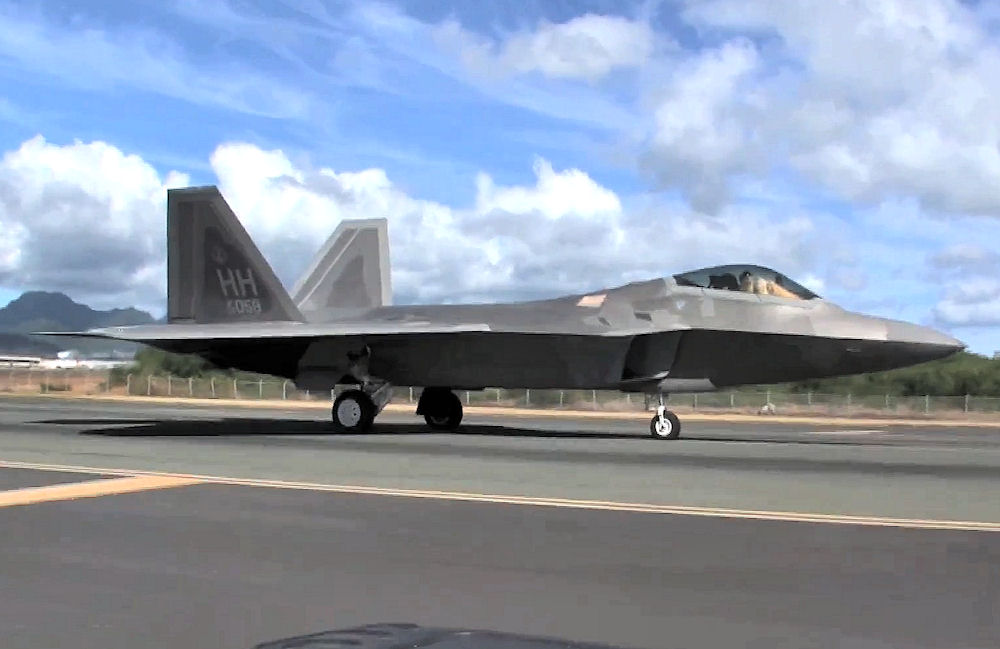
| Fighter | F-22A Raptor |
| Transport | C-17 Globemaster III |
| Tanker | KC-135R Stratotanker |
The 154th Wing (154 WG) is a unit of the Hawaii Air National Guard, stationed at Hickam Air Force Base, Joint Base Pearl Harbor–Hickam, Honolulu, Hawaii. If activated to federal service, the Wing is placed under the command of the Pacific Air Forces.
Overview
[edit]The 154th Wing is the major operational component of the Hawaii Air National Guard. The 154th is both a composite wing, consisting of Air Supremacy, Airlift, Radar, and Air Refueling squadrons, and in certain instances an associate unit with the USAF Pacific Air Forces' 15th Wing.
In performing its state mission, the Hawaii ANG provides organized, trained units to protect Hawaii's citizens and property, preserve peace, and ensure public safety in response to natural or human-caused disasters. The federal mission of the Hawaii ANG is to provide operationally ready combat units, combat support units, and qualified personnel for active duty in the U.S. Air Force in time of war, national emergency, or operational contingency.
Units
[edit]The major components of the 154th Wing are:
- 154th Operations Group
- 199th Fighter Squadron (F-22A Raptor)
- 203rd Air Refueling Squadron (KC-135R Stratotanker)
- 204th Airlift Squadron (C-17 Globemaster III)
- 154th Maintenance Group
- 154th Mission Support Group
- 154th Medical Group
- 169th Aircraft Control and Warning Squadron (GSU at Mount Kaala, Oahu) 21°30′27″N 158°08′31″W / 21.50750°N 158.14194°W
- Designated as Joint Surveillance System station "H-01"; ARSR-4 Radar; Joint-use site between HI ANG and FAA.
- 150th Aircraft Control and Warning Flight (GSU at Kokee Air Force Station, Kauai) 169 ACWS OL-AA 22°08′52″N 159°38′42″W / 22.14778°N 159.64500°W
- Located atop Mount Kokee. Designated as Joint Surveillance System station "H-02"; AN/FPS-117v4 Radar; Joint-use site between HI ANG and FAA.
History
[edit]On 1 December 1960, the Hawaii Air National Guard 199th Fighter-Interceptor Squadron was authorized to expand to a group level, and the 157th Fighter-Interceptor Group was established by the National Guard Bureau. The 199th FIS becoming the group's flying squadron. Other squadrons assigned into the group were the 157th Headquarters, 157th Material Squadron (Maintenance), 157th Combat Support Squadron, and the 157th USAF Dispensary.

The 199th FIG F-86L Sabre Interceptors were upgraded to F-102A Delta Dagger interceptors, the mission of the 154th FIW is the air defense of Hawaii. Eventually 29 F-102s were received. This was in line with the policy of equipping ANG units with one generation of aircraft behind the active-duty Air Defense Command forces. For the next sixteen years, the 157th FIG operated the Delta Daggers establishing an excellent safety record. In December 1961, The new Hawaii Air National Guard (HANG) complex was completed and consisted of 60 acres. The land was originally part of Fort Kamehameha and had been acquired in 1960 by permit from the U.S. Army to the Hawaii ANG.
The 157th flew the Delta Dagger throughout the 1960s, and although the Hawaii ANG was not activated during the Vietnam War, several of its pilots volunteered for combat duty in Southeast Asia. The group was the longest user of the interceptor, being equipped with the F-102 long after most of its Air National Guard counterparts were upgraded to the F-106.
Tactical fighters
[edit]
The last F-102A finally left ANG service in October 1976, when the 199th FIS of the Hawaii ANG traded in their Delta Daggers for F-4C Phantom II and the 157th became a Tactical Fighter Group. The F-4C was a workhorse tactical fighter-bomber during the Vietnam War, and could also be used as an effective interceptor. The Hawaii ANG used the Phantom in both roles, employing it during training exercises with Army and Marine units in ground exercises, as well as retaining the standing air defense alert at Hickam. On 3 November 1978, the 154th became a Composite Group with the addition of a C-130A Hercules and a C-7A Caribou flight.
After a decade flying the F-4C, the 157th received F-15A Eagles in 1987 along with a twin-seat F-15B trainer as part of the retirement of the F-4 from the Air Force inventory.

The F-15As were received from the 21st Tactical Fighter Wing, Elmendorf AFB, Alaska, which was upgrading to the F-15C model. The Eagles received from Alaska had been upgraded through the F-15 Multi-Stage Improvement Program (MSIP) and were used in an air defense mission, which the Hawaii ANG had taken over. In mid-1991, early F-15C versions were received, and the Hawaii ANG operated both the A and C models of the Eagle for the next two decades.
In 1989 with inactivation of the PACAF 326th Air Division, the 154th Composite Group took over the air defense Radar mission in Hawaii. The 169th Aircraft Control and Warning Squadron began operating a JSS radar site at Mount Kaala, Oahu along with the FAA, and the 150th Aircraft Control and Warning Flight operates a joint-use JSS radar site at Kokee Air Force Station, Kauai. These radar sites are linked to the NORAD Hawaii Region Air Operations Center (HIRAOC) at Wheeler Army Airfield, Oahu, 21°28′57″N 158°02′45″W / 21.48250°N 158.04583°W. With these two sites, 24/7 air surveillance of the Hawaiian island chain is provided. The 154th Aircraft Control Squadron on Kauai also provides a mobile, self-sustainable, combat ready, forward extension and control element equipped to meet the Air Force's ground theater air control systems.
Post Cold War
[edit]In March 1992, with the end of the Cold War, the 154th adopted the Air Force Objective Organization plan, and the unit was re-designated as the 154th Group. In January 1993, the 203d Air Refueling Squadron was recognized and activated by the National Guard Bureau. The 203d assumed the rotating deployments of KC-135s to Hickam which started in the 1970s by SAC-gained stateside Air National Guard squadrons. On 1 August 1994 the C-130 flight was expanded and the 204th Airlift Squadron was recognized and activated by the National Guard Bureau, eventually transitioning from the C-130A to the C-130H2..

In 1995, in accordance with the Air Force "One Base-One Wing" directive, the 154th was changed in status to a Wing, and the 199th Fighter Squadron was assigned to the new 154th Operations Group.
In 2006, the 204th Airlift Squadron began transitioning from the C-130 to the C-17 Globemaster III.
In July 2010, the Hawaii Air National Guard welcomed the first of its new inventory of F-22A Raptors. The 154th Wing was the second ANG unit to be equipped with the F-22. The 199th is planned to have 20 aircraft, the initial aircraft being transferred from the 325th Fighter Wing, Tyndall Air Force Base, Florida; the remaining 18 aircraft will come from the 1st Fighter Wing, Langley Air Force Base, Virginia.
The F-22 is designed to counter advanced surface-to-air missile systems and next-generation fighters equipped with launch-and-leave missile capability. The F-15s were sent to the CONUS, the last Eagle leaving in 2011. The 199th operates active-duty 19th Fighter Squadron as an associate unit, although the Hawaii ANG is responsible for seventy-five percent of the mission configuration. This is the first time an Air National Guard unit, the 199th Fighter Squadron, has taken the position of lead squadron in an associate flying unit arrangement with the active duty Air Force.
Lineage
[edit]
- Established as 154th Fighter-Interceptor Group and allotted to Hawaii ANG in 1960
- Received federal recognition and activated on 1 December 1960
- Re-designated: 154th Tactical Fighter Group, 10 June 1976
- Re-designated: 154th Composite Group, 3 November 1978
- Re-designated: 154th Group, 15 March 1992
- Status changed from Group to Wing, 1 October 1995
- Re-designated: 154th Wing, 1 October 1995
Assignments
[edit]- Hawaii Air National Guard, 1 December 1960
- Gained by: Pacific Air Forces
Stations
[edit]- Hickam Air Force Base, Honolulu, Hawaii, 1 December 1960
- Re-designated: Joint Base Pearl Harbor–Hickam, 1 January 2010-Present
Aircraft
[edit]
|
|
Decorations
[edit]References
[edit]
This article incorporates public domain material from the Air Force Historical Research Agency
- ^ Air Force Personnel Center Awards Search (Post-1991) Archived 24 January 2008 at the Wayback Machine
- 154th Wing website
- Rogers, B. (2006). United States Air Force Unit Designations Since 1978. ISBN 1-85780-197-0
- 199th Fighter Squadron lineage and history
- Hawaii Aviation
- Hawaii ANG Dedicates its first F-22 Raptors
External links
[edit]154th Wing
View on GrokipediaMission and Role
Overview
The 154th Wing is the primary operational component of the Hawaii Air National Guard, established on 1 December 1960 as the 154th Fighter Group and redesignated as a wing in 1995 to reflect its expanded composite structure.[4] Headquartered at Joint Base Pearl Harbor–Hickam on Oahu, it operates as one of the largest and most complex wings in the Air National Guard, with approximately 1,900 personnel supporting missions across the Pacific region.[1][3] As a composite unit, the 154th Wing integrates diverse capabilities, including air supremacy through fighter operations, strategic airlift for global mobility, aerial refueling to extend mission endurance, radar surveillance for regional air defense, and emerging space and intelligence functions such as signals intelligence and electromagnetic warfare support. In November 2024, the wing activated two Electromagnetic Warfare Squadrons under the 154th Regional Support Group, further enhancing these capabilities.[5][6][7] Its strategic location enables critical contributions to U.S. Indo-Pacific Command objectives, providing combat-ready forces for theater defense and expeditionary operations.[8] The wing maintains a dual mission profile, operating under state authority for emergency response, disaster relief, and civil support within Hawaii, while capable of federal activation under Pacific Air Forces for national defense and overseas contingencies.[3] This versatility underscores its role as a total force partner, blending traditional airpower with modern multi-domain capabilities to safeguard U.S. interests in the Asia-Pacific.[1]Federal and State Responsibilities
The 154th Wing, as a unit of the Hawaii Air National Guard, fulfills dual federal and state responsibilities under the broader framework of the Air National Guard's operational mandates. Federally, under Title 10 of the U.S. Code, the wing provides operationally ready combat, combat support units, and qualified personnel for active duty service in the U.S. Air Force during times of war, national emergency, or operational contingencies.[3] This includes air defense of Hawaii and its Pacific approaches through air sovereignty alert missions conducted by the 199th Fighter Squadron, which intercepts potential threats to sovereign airspace on a 24/7 basis. The wing integrates with the North American Aerospace Defense Command (NORAD) by supporting regional exercises and providing surveillance via the 169th Aircraft Control and Warning Squadron's radar operations at Mount Kaala, which monitor vast oceanic areas critical to Pacific defense.[9] Additionally, it contributes to global airlift and refueling support, with the 204th Airlift Squadron operating as a classic associate unit alongside the active-duty 15th Wing's 535th Airlift Squadron using C-17 Globemaster III aircraft for strategic and tactical airlift, and the 203rd Air Refueling Squadron providing worldwide aerial refueling via KC-135R Stratotankers to U.S. and allied fixed-wing aircraft.[1] At the state level, under Title 32 of the U.S. Code, the wing delivers organized, trained units to safeguard Hawaii's citizens and property, maintain peace, and ensure public safety during natural or human-caused disasters.[3] This encompasses disaster relief efforts, such as hurricane response during events like Hurricane Lane in 2018, where Task Force Hawaii personnel extended resources for recovery operations despite concurrent challenges.[10] The wing also supports wildfire mitigation and recovery, exemplified by the deployment of its Fatality Search and Recovery Team and 41 medical personnel from the 154th Medical Group during the 2023 Maui wildfires to assist in search, rescue, and recovery at affected sites.[11] Furthermore, it conducts search and rescue operations and civil support, including training for urban search and rescue scenarios through FEMA-certified courses to enhance response capabilities in Hawaii's unique island environment.[12] The wing's activation history demonstrates its rapid deployment capabilities under both federal and state authorities, enabling seamless transitions between missions. During Operation Desert Storm in 1991, while not fully mobilized, the Hawaii Air National Guard, including 154th Wing elements, provided critical support through C-130 air transportation for troops and supplies from Joint Base Pearl Harbor-Hickam.[13] In contrast, for Operation Enduring Freedom in 2001, approximately 150 members of the 154th Wing were fully mobilized to deliver air refueling services in support of global operations.[14] More recently, the wing has participated in Pacific deterrence exercises, such as Sentry Aloha, which integrate joint and allied forces for multi-domain training focused on regional readiness, including large-scale airdrops and international refueling with partners like the Indonesian Air Force to bolster deterrence in the Indo-Pacific.[15][16] This unique Pacific orientation underscores the wing's role in surveilling expansive oceanic regions and supporting U.S. allies through electromagnetic warfare, signals intelligence, and combat communications provided by elements like the 154th Intelligence, Surveillance, and Reconnaissance Group.[6]Organization and Units
Operations Group
The 154th Operations Group is the primary flying entity within the 154th Wing of the Hawaii Air National Guard, responsible for overseeing and executing fighter, air refueling, and airlift missions to support both federal and state objectives.[1] Stationed at Joint Base Pearl Harbor-Hickam, the group manages a diverse set of squadrons equipped for air superiority, extended-range operations, and rapid global transport, ensuring seamless integration with active-duty Air Force units as classic associate partners.[17] The 199th Fighter Squadron, established on November 4, 1946, with federal recognition, operates the F-22A Raptor to conduct air superiority missions, including air-to-air combat and interception in defense of Hawaiian airspace.[8] The squadron transitioned from the F-15 Eagle to the F-22A in 2010, marking a significant upgrade in stealth and sensor capabilities that enhanced its role in Pacific theater operations.[18] Today, it maintains combat readiness through advanced tactics development and deployments supporting U.S. Indo-Pacific Command priorities.[19] The 203rd Air Refueling Squadron, activated in 1992 and achieving operational status with eight KC-135R Stratotankers by September 30, 1995, provides aerial refueling support to extend the range and endurance of fighter, bomber, and transport aircraft across global missions. Equipped with the KC-135R, the squadron conducts boom refueling operations, enabling sustained air operations in exercises and real-world contingencies, such as support for Pacific Air Forces tanking requirements. The 204th Airlift Squadron operates the C-17 Globemaster III as a classic associate unit alongside the active-duty 535th Airlift Squadron, focusing on strategic and tactical airlift missions including troop transport, cargo delivery, and humanitarian aid. The squadron supports rapid global mobility, such as delivering supplies to remote Pacific locations and participating in joint exercises that demonstrate interoperability with allied forces.[9] Training and readiness within the Operations Group emphasize high-intensity scenarios through annual participation in exercises like Red Flag, where squadrons hone combat skills in simulated wartime environments at Nellis Air Force Base.[1] These events facilitate integration with active-duty forces, fostering total force compatibility and validating operational concepts for air dominance and sustainment.[20] The group is led by a colonel serving as commander, overseeing squadron-level leadership that includes lieutenant colonels or majors directing daily operations, maintenance coordination, and mission planning for approximately 500 personnel across its units.[21]Support and Intelligence Groups
The 154th Wing's support and intelligence groups provide essential logistical, maintenance, and informational capabilities to enable the wing's operational missions, ensuring readiness across federal and state tasks. These groups handle aircraft sustainment, base operations, communications infrastructure, and intelligence analysis, with a focus on supporting air superiority and regional security in the Pacific theater.[1] The 154th Maintenance Group oversees the repair and upkeep of the wing's aircraft fleet, including F-22 Raptors and C-17 Globemasters, through specialized backshop functions and supply chain management. It comprises the 154th Aircraft Maintenance Squadron, which performs direct aircraft servicing and inspections; the 154th Maintenance Squadron, responsible for component-level repairs; and the 154th Maintenance Operations Flight, which coordinates scheduling and resource allocation. This group ensures high mission-capable rates by integrating advanced maintenance techniques tailored to stealth aircraft requirements.[1][22] The 154th Mission Support Group delivers comprehensive base-level services to sustain personnel and facilities, including security, civil engineering, logistics, and force support functions. Its subunits encompass the Security Forces Squadron for perimeter defense and law enforcement; the Civil Engineering Squadron for infrastructure maintenance and emergency response; the Logistics Readiness Squadron for deployment sustainment and supply distribution; and the Force Support Squadron for administrative and morale services. These elements support wing-wide readiness by managing resources across Joint Base Pearl Harbor-Hickam and deployed locations.[1][23] Intelligence operations fall under the 154th Regional Support Group, which was expanded post-2020 to incorporate space domain awareness and electromagnetic warfare capabilities critical for Pacific theater threats. Activated in 2023, this group includes the 109th Electromagnetic Warfare Squadron (activated November 2, 2024) on Oahu, focused on disrupting adversary space systems, and the 150th Electromagnetic Warfare Squadron (activated November 1, 2024) on Kauai, specializing in satellite communications monitoring and cyber defense.[6] The 201st Intelligence Squadron, federally recognized on January 31, 2015, provides signals intelligence analysis and fusion to support combatant commanders with actionable insights on regional risks.[24][8] These units enhance the wing's ability to integrate intelligence with operational planning, emphasizing defensive and offensive effects in contested environments.[6][24][25] The 154th Communications Flight maintains secure network systems and mission-essential IT infrastructure, supporting data transmission for flight operations and intelligence sharing. It ensures cyber resilience and connectivity for deployed forces, having provided combat communications in regions including the Middle East and Central Asia. Overall, these groups contribute to wing readiness through coordinated repairs, logistical efficiency, and threat intelligence, enabling seamless integration with flying units for homeland defense and expeditionary tasks.[1]Radar and Detached Elements
The 154th Combat Operations Squadron, based at Joint Base Pearl Harbor-Hickam, serves as the central hub for radar data fusion and air defense command, processing surveillance inputs to generate North American Aerospace Defense Command (NORAD) alerts for potential threats in the Hawaiian region.[1] This squadron integrates real-time radar feeds from remote sites to maintain continuous situational awareness, supporting rapid response to air sovereignty missions across the Pacific theater.[26] The 154th Wing operates detached radar sites as part of the Joint Surveillance System, including H-01 at Mount Kaala on Oahu, equipped with an ARSR-4 long-range radar that has provided air surveillance since the 1960s.[27] This site, manned by the 169th Aircraft Control and Warning Squadron, delivers 360-degree coverage of the Hawaiian island chain and surrounding airspace, with data relayed to the Hawaii Region Air Operations Center.[1] Complementing this is the H-02 site at Kokee on Kauai, operated by the 150th Aircraft Control and Warning Flight and featuring an AN/FPS-117 3D radar upgraded in the 2000s to enhance detection range and precision tracking.[17] These facilities ensure 24/7 monitoring of Pacific air approaches, identifying aircraft from commercial flights to potential adversaries.[28] The wing's surveillance efforts also incorporate integration with the U.S. Space Force for space domain awareness, fusing ground-based radar data with orbital tracking to provide comprehensive warning of missile and space-based threats affecting the region.[7] Personnel at these remote sites, including technicians and operators from the 169th and 150th squadrons, follow structured rotation schedules to sustain operations in isolated, high-altitude environments, often in collaboration with Federal Aviation Administration teams for maintenance and logistics.History
Formation and Cold War Era
The roots of the 154th Wing trace back to the establishment of the Hawaii Air National Guard on November 4, 1946, shortly after World War II, when the 199th Fighter Squadron was formed as one of its inaugural units, initially equipped with P-47 Thunderbolt aircraft and operating from Bellows Field to provide territorial air defense. This squadron served as the primary predecessor to the 154th Wing, evolving through post-war reorganization to focus on maintaining readiness for both state and federal missions in the Pacific theater. By the mid-1950s, as Cold War tensions escalated, the unit transitioned to more advanced jet fighters, adopting the F-86E Sabre in 1954 and the all-weather F-86L Sabre variant in 1958, which enabled 24-hour alert operations for rapid response to potential aerial incursions.[1][4] The 154th Fighter-Interceptor Group received federal recognition and was officially activated on December 1, 1960, at Hickam Air Force Base, marking its formal establishment as a dedicated air defense unit within the Hawaii Air National Guard. Comprising six core elements—including the headquarters, 154th Air Base Squadron, 154th Materiel Squadron, 154th Consolidated Aircraft Maintenance Squadron, 199th Fighter-Interceptor Squadron, and 154th USAF Dispensary—the group was assigned to the Aerospace Defense Command (ADC), integrating into the nationwide network for continental air defense against Soviet bomber threats. In 1961, it upgraded to the supersonic F-102A Delta Dagger interceptor, a delta-wing aircraft optimized for all-weather interception, which remained in service through the 1960s and into the 1970s to patrol Hawaiian airspace and the broader Pacific region. Operating primarily from Hickam AFB, the group conducted routine scrambles to identify and intercept unidentified aircraft approaching U.S. territories, contributing to the ADC's strategic deterrence posture during heightened Cold War alerts.[1] During the 1962 Cuban Missile Crisis, Air National Guard units, including those in the Pacific, were placed on heightened alert status as part of the broader response to augment active-duty forces and safeguard U.S. approaches amid global nuclear tensions. By the 1970s, the group had expanded from its initial squadron-centric structure into a more robust organization, incorporating additional support personnel and facilities to handle the growing demands of air sovereignty missions, though specific numerical growth figures from this era remain documented primarily through unit activation records rather than detailed rosters.[4]Tactical Fighter Period
In 1976, the 154th Fighter Group underwent a significant redesignation to the 154th Tactical Fighter Group, coinciding with the conversion of the 199th Fighter-Interceptor Squadron to operate the F-4C Phantom II aircraft. On November 3, 1978, the unit was redesignated as the 154th Composite Group to accommodate its growing diversity of roles beyond pure fighter operations, including the addition of C-130A Hercules and C-7A Caribou aircraft for operational support airlift. This shift marked the unit's evolution from a primarily defensive interceptor role to multirole tactical fighter operations, emphasizing ground attack and air superiority missions in support of Pacific theater contingencies. The F-4C, a versatile fighter-bomber proven in Vietnam War operations, enabled the wing to conduct training for rapid deployment scenarios, including alert postures at dispersed sites across the region.[29][4] The wing's missions during this period focused on enhancing readiness for potential conflicts in the Indo-Pacific, with personnel and aircraft participating in rotational deployments to forward operating locations. For instance, in June 1980, six F-4C Phantoms and support crews deployed to Andersen Air Force Base, Guam, for air-to-air exercises alongside Strategic Air Command B-52 bombers, followed by operations at Misawa Air Base, Japan, for joint training with the Japan Air Self-Defense Force. These deployments underscored the unit's role in multinational exercises, such as Cope Thunder at Clark Air Base, Philippines; Team Spirit in South Korea; and Cope North at Misawa, Japan, where pilots honed dissimilar air combat tactics against varied adversaries. Additional training occurred at Nellis Air Force Base, Nevada, during Red Flag exercises, emphasizing realistic combat simulations, while Combat Sage evaluations tested weapons systems proficiency.[30][4] By 1987, the unit transitioned to the more advanced F-15A/C Eagle, replacing the F-4C fleet with aircraft transferred from active-duty units at Holloman Air Force Base, New Mexico, and Elmendorf Air Force Base, Alaska. The F-15 enhanced the wing's strike and air superiority roles, with improved speed, range, and radar systems that bolstered its contributions to Pacific defense strategies through the end of the Cold War.[4]Post-Cold War Reorganization
Following the end of the Cold War, the 154th Wing underwent significant restructuring to align with evolving national defense needs, emphasizing versatility in air refueling, transport, and surveillance missions while retaining fighter capabilities. This status as the 154th Composite Group persisted until March 15, 1992, when it became the 154th Group, reflecting further integration of support functions. By October 1, 1995, in line with the Air Force's "One Base, One Wing" policy, it was elevated to full wing status as the 154th Wing, overseeing a composite force with fighter, airlift, refueling, and radar elements stationed at Hickam Air Force Base.[31] Aircraft transitions marked the wing's pivot toward multi-role operations, including phased enhancements and retirements of legacy platforms. The 154th Airlift Squadron upgraded from C-130A to C-130H Hercules aircraft, with planning beginning in 1988 and the first C-130H arriving in 1989 to improve tactical airlift and weather reconnaissance capabilities. In 2006, the squadron transitioned to the C-17A Globemaster III, with the first aircraft arriving at Hickam AFB on February 8, enhancing strategic airlift as an associate unit with the active-duty 15th Wing. Concurrently, the 203rd Air Refueling Squadron gained federal recognition on February 12, 1993, and received its initial KC-135R Stratotankers starting in December 1992 following Hurricane Iniki, eventually operating up to nine aircraft for aerial refueling support.[4][32] The F-15A/B Eagles, acquired in 1987, underwent Multi-Stage Improvement Program upgrades in 1992 for enhanced avionics and weapons systems, but began retirement phases in the mid-2000s, culminating in the departure of the last two aircraft on September 22, 2009, as the wing shifted toward newer platforms.[4][33] The wing's personnel supported early post-Cold War global engagements, demonstrating its composite adaptability despite no full unit activations for major conflicts. During Operations Desert Shield and Desert Storm (1990-1991), while fighter aircraft remained stateside, 20 members of the 154th Combat Support Squadron deployed to Saudi Arabia in January 1991 to backfill active-duty gaps in logistics and security. In 1994, the 199th Fighter Squadron conducted its first combat sorties over Iraq's northern no-fly zone under Operation Northern Watch, enforcing UN sanctions with F-15s. By December 2001, approximately 150 wing members mobilized for Operation Enduring Freedom, providing KC-135R refueling services to coalition aircraft in the Afghanistan theater.[34][4][14] Infrastructure adaptations included the 2010 consolidation of Hickam Air Force Base with Naval Station Pearl Harbor into Joint Base Pearl Harbor-Hickam, effective October 1, enhancing joint operations and resource sharing for the 154th Wing's nearly 1,900 personnel. Radar elements under the 169th Aircraft Control and Warning Squadron modernized in the 2000s with AN/FPS-117 long-range surveillance systems at sites like Kokee Air Force Station, improving 3D air detection and tracking for homeland defense and regional alerts.[35][1][36]Recent Developments and Expansions
The 154th Wing achieved full operational capability (FOC) with the F-22A Raptor on April 7, 2013, following the transition from F-15 Eagles that began in 2010, enabling fifth-generation stealth fighter operations for air superiority missions across the Indo-Pacific. This milestone involved a record sortie surge of 46 F-22 flights using 14 aircraft in a single day, demonstrating the unit's readiness to replace legacy platforms with advanced stealth capabilities.[37] In November 2024, the 154th Wing activated the 109th and 150th Electromagnetic Warfare Squadrons (EWS) under the 154th Regional Support Group, marking a significant expansion into space operations following the relocation of the 109th EWS from Guam in October 2023. These units, based at Joint Base Pearl Harbor-Hickam on Oahu and the Pacific Missile Range Facility on Kauai respectively, focus on space electromagnetic warfare, including monitoring and disrupting adversary satellite communications, ensuring electromagnetic spectrum dominance, and providing space domain awareness to support combatant commanders in global and theater campaigns. This activation represents the wing's first dedicated space units, enhancing its role in multi-domain operations.[6] Maintenance innovations advanced in early 2025 when the 154th Aircraft Maintenance Squadron developed and implemented custom-designed maintenance stands for the F-22 Raptor, tailored to the aircraft's angular profile for improved stability, accessibility, and worker safety during inspections and repairs. These stands, the first of their kind in the Air National Guard, streamline ground operations and reduce turnaround times, addressing unique challenges of the F-22's stealth design.[38] The wing participated in key exercises during the 2020s, including Pacific Iron 2021 at Andersen Air Force Base, Guam, where 154th Fighter Wing Airmen conducted combat readiness training, simulated emergencies, and sustained F-22 deployments from dispersed bases to validate dynamic force employment in the Indo-Pacific. Additionally, amid the COVID-19 pandemic from 2020 to 2022, the 154th Wing supported Hawaii's response efforts through medical detachments providing healthcare, airlift of equipment like HMMWVs using C-17 aircraft, and morale-boosting flyovers over hospitals.[39][40][41] Looking ahead, the 154th Wing's recent space activations position it for further growth in electromagnetic warfare and domain awareness, aligning with U.S. Indo-Pacific Command priorities to maintain superiority amid evolving regional challenges.[6]Bases and Infrastructure
Primary Station
The 154th Wing is headquartered at Joint Base Pearl Harbor–Hickam on the island of Oahu, Hawaii, serving as its primary station for all major operations.[1] This joint installation was formed on October 1, 2010, through the merger of Hickam Air Force Base and Naval Station Pearl Harbor under the Base Realignment and Closure Act, enabling integrated support for Air Force, Navy, and National Guard activities while optimizing resources in a strategic Pacific location.[35] Key facilities at the base support the wing's diverse mission sets, including specialized hangars for its F-22 Raptor fighters, C-17 Globemaster III airlifters, and KC-135 Stratotanker refuelers, along with dedicated maintenance bays for aircraft upkeep and repair.[42] Operations centers facilitate command and control, while family support services provide housing, morale, and welfare programs essential for the wing's approximately 1,900 personnel.[1] These infrastructure elements were bolstered by post-World War II expansions at Hickam, which transformed the airfield into a major hub for air transport and depot-level maintenance following its pivotal role in the 1941 Pearl Harbor attack and Pacific theater logistics.[43] The wing benefits from collocation with the active-duty 15th Airlift Wing at the same base, fostering joint training opportunities such as operational readiness exercises and total force integration for airlift and maintenance operations.[44] Infrastructure adaptations address Hawaii's environmental demands, including hurricane-resistant designs in newer facilities like the 2011 F-22 maintenance hangar to mitigate typhoon risks, alongside logistics strategies that overcome the challenges of the state's remote island geography, such as limited inter-island transport and supply dependencies.[45][46]Radar Sites and Facilities
The 154th Wing maintains two key remote radar installations under the Joint Surveillance System, providing vital air surveillance across the Hawaiian Islands and the central Pacific: the H-01 site at Kaala Air Force Station on Mount Ka'ala, Oahu, and the H-02 site at Kokee Air Force Station on Kauai. These facilities, operated in partnership with the Federal Aviation Administration, support both military air defense and civil aviation by detecting and tracking aircraft over extensive ranges exceeding 200 nautical miles.[47][48][49] The H-01 site, situated at 4,025 feet atop Mount Ka'ala—the highest peak on Oahu—houses an ARSR-4 long-range three-dimensional radar operated by the wing's 169th Aircraft Control and Warning Squadron. Activated in the mid-1960s as a joint-use station, the ARSR-4 delivers comprehensive detection capabilities for air defense and air traffic control, with a typical instrumented range of approximately 250 nautical miles.[50][51][52] At the H-02 site, established in 1961 and managed by the 150th Aircraft Control and Warning Flight, an AN/FPS-117 three-dimensional solid-state radar provides similar long-range surveillance, also reaching up to 250 nautical miles. This L-band system has benefited from ongoing digital enhancements to improve performance in adverse weather conditions and operational resilience.[48][53][54] Both sites operate continuously with dedicated Hawaii Air National Guard personnel from the respective squadrons, ensuring round-the-clock monitoring and maintenance. Collected radar data is transmitted in real time to the Hawaii Region Air Operations Center at Joint Base Pearl Harbor-Hickam for integration into broader threat evaluation and response efforts.[1] Operating these remote facilities involves significant logistical hurdles due to their isolated mountaintop locations amid rugged terrain, with access limited primarily to helicopter transport and no direct road connections. Resupply and personnel rotations rely on aerial missions, which can be disrupted by Hawaii's frequent heavy rains, high winds, and fog, demanding robust contingency planning for sustainment.[27][48] The sites' outputs integrate seamlessly into the national air defense architecture, contributing radar tracks to continental U.S. surveillance networks for enhanced situational awareness. In recent years, as the Hawaii Air National Guard has activated specialized electromagnetic warfare squadrons, these radar feeds have supported expanded multi-domain operations, including nascent space domain awareness initiatives to counter emerging threats in the Indo-Pacific.[55][6]Equipment and Capabilities
Aircraft Inventory
The 154th Wing's primary fixed-wing aircraft inventory consists of advanced fighters, aerial refueling tankers, and strategic airlifters, supporting its multifaceted missions in air dominance, mobility, and sustainment operations. These assets are operated through associate arrangements with active-duty units at Joint Base Pearl Harbor-Hickam, enabling seamless integration of Air National Guard personnel into broader Air Force capabilities.[1] The wing's fighter component includes approximately 18 F-22A Raptors assigned to the 199th Fighter Squadron in a reverse associate role with the active-duty 19th Fighter Squadron. These stealth multirole fighters provide air dominance through superior speed, supercruise, and sensor fusion, with the aircraft entering service with the Hawaii Air National Guard in 2010 as replacements for legacy F-15 Eagles.[56][57] For aerial refueling, the 203rd Air Refueling Squadron maintains 9 KC-135R Stratotankers in an associate partnership with the 96th Air Refueling Squadron, enabling extended-range missions for U.S. and allied fixed-wing aircraft across the Indo-Pacific theater; these tankers were integrated into the wing's operations in 1995.[1][4] Strategic airlift is handled by the 204th Airlift Squadron, a classic associate unit that operates 4 C-17A Globemaster III aircraft owned by the active-duty 535th Airlift Squadron of the 15th Wing, focusing on rapid deployment of troops, equipment, and humanitarian cargo; these versatile platforms have been operational with the wing since the mid-1990s, following the phase-out of C-130H Hercules transports in the early 2000s.[1][58] The wing possesses no rotary-wing assets, emphasizing its fixed-wing focus. Aircraft maintenance is supported by specialized Air National Guard programs, ensuring high operational readiness through joint active-reserve sustainment efforts.[1]Radar and Support Systems
The 154th Wing maintains critical radar surveillance capabilities through the 169th Air Defense Squadron, which operates the ARSR-4 (Air Route Surveillance Radar Model 4) at the joint-use site on Mount Kaala, Oahu. This L-band, three-dimensional, solid-state radar provides long-range air surveillance with an effective detection range of approximately 250 nautical miles (about 288 statute miles), supporting both air defense and air traffic control missions in a shared capacity with the Federal Aviation Administration.[47][59] Complementing this, the wing utilizes the AN/FPS-117 at Kokee Air Force Station for medium- to long-range, three-dimensional air search and multi-target tracking, enabling precise airspace monitoring with instrumented ranges up to 250 nautical miles.[48][54] These fixed radar systems form the backbone of the wing's ground-based surveillance network, integrated into the broader Joint Surveillance System. Support equipment enhances the wing's operational reach, including satellite communications systems managed by the 109th Electromagnetic Warfare Squadron, which protects critical links for space operations and enables near-global detection and geolocation of threats.[7] Additionally, cyber defense tools are employed by dedicated teams within the wing to safeguard radar and communication networks against digital threats, as demonstrated in exercises and response operations.[60] These assets support intelligence, surveillance, and reconnaissance functions, with brief integration to aircraft systems for enhanced situational awareness. Radar upgrades in the 2010s incorporated advanced digital signal processing to improve clutter rejection and target discrimination; for instance, the AN/FPS-117 received enhancements under the Essential Parts Replacement Program to boost reliability and performance in diverse environments.[36] More recently, the wing has integrated its systems with the U.S. Space Force for orbital tracking, leveraging the 109th Electromagnetic Warfare Squadron's capabilities to monitor satellite vulnerabilities.[61] Logistics support is handled by the 154th Logistics Readiness Squadron, which oversees ground vehicles for site maintenance, fuel storage and distribution systems to sustain remote radar operations, and mobile command posts for rapid deployment in exercises or contingencies.[1] Post-2020 additions have addressed technical gaps in electromagnetic spectrum warfare, including specialized tools within the 109th Electromagnetic Warfare Squadron for jamming detection and spectrum management, enhancing resilience against contested environments.[7]Lineage and Honors
Lineage
The lineage of the 154th Wing originates with the 199th Fighter Squadron, constituted on 24 May 1946 and allotted to the Hawaii Air National Guard, receiving federal recognition and activation on 4 November 1946.[29] The squadron was redesignated as the 199th Fighter-Bomber Squadron on 15 July 1952 and as the 199th Fighter Interceptor Squadron on 19 November 1952.[29] On 1 December 1960, the 154th Fighter-Interceptor Group was established and activated, assuming command of the 199th Fighter Interceptor Squadron as its primary flying unit, along with supporting squadrons for maintenance, air base operations, and medical services.[29][4] The group was redesignated as the 154th Tactical Fighter Group on 10 June 1976, with the 199th Fighter Interceptor Squadron concurrently becoming the 199th Tactical Fighter Squadron to reflect its evolving fighter mission.[29] It was further redesignated as the 154th Composite Group on 3 November 1978, incorporating diverse airlift and refueling capabilities alongside fighter operations.[29] On 15 March 1992, it became the 154th Group, with the 199th Tactical Fighter Squadron reverting to the 199th Fighter Squadron.[29] Status changed to wing level on 1 October 1995, redesignated as the 154th Wing to integrate composite fighter, airlift, and refueling elements under a unified structure.[29][4] In 2023, the wing expanded its scope through the integration of space and electromagnetic warfare capabilities via the formation of the 154th Regional Support Group, which activated the 109th and 150th Electronic Warfare Squadrons in November 2024 as geographically separated units focused on intelligence, surveillance, reconnaissance, and space domain awareness.[6] The unit has maintained continuous active status since 1946, with no inactivations in its lineage per Air Force policy on organizational continuity.[29]Assignments, Stations, and Decorations
The 154th Wing is assigned to the Hawaii Air National Guard, providing both state and federal air defense, refueling, and airlift capabilities across the Hawaiian Islands.[1] In federal service, the wing falls under the operational control of Pacific Air Forces, supporting missions in the Indo-Pacific theater.[62] Historically, during its early years as the 154th Fighter Group, the wing was gained by Aerospace Defense Command, focusing on air defense interceptor roles from the 1960s until the command's reorganization in 1979.[62] The wing's primary station is Joint Base Pearl Harbor–Hickam on Oahu, Hawaii, where it has been headquartered since the base's establishment in 2010 through the merger of Hickam Air Force Base and Naval Base Pearl Harbor.[1] Prior to this, the unit operated from Hickam Air Force Base continuously since its activation as the 154th Fighter Group in December 1960.[4] Geographically dispersed elements include radar operations; the wing's 169th Aircraft Control and Warning Squadron currently maintains a radar site at Mount Kaala on Oahu, linked to regional air operations centers.[1] Earlier configurations featured the 154th Aircraft Control Squadron based on Kauai, providing mobile radar and control support for air sovereignty missions.[63] The 154th Wing has earned multiple Air Force Outstanding Unit Awards for exceptional performance in training, deployments, and operational support, including the period from June 1, 2007, to May 31, 2009, recognizing superior achievement in national defense exercises and mission execution.[64] Notable commanders include Brigadier General Kristof K. Sills, who has served as the wing commander since April 2023, overseeing nearly 1,900 personnel and multi-mission operations from Joint Base Pearl Harbor–Hickam.[65][1] Previous leaders, such as Brigadier General Gregory S. Woodrow, directed the wing's transition to advanced F-22 Raptor capabilities and enhanced Pacific theater engagements.[66] The 154th Wing's emblem, approved by the U.S. Air Force, depicts a stylized eagle in flight against a blue field, symbolizing vigilance and air superiority, with integrated Hawaiian cultural elements representing the unit's island heritage and commitment to excellence.[67]References
- https://commons.wikimedia.org/wiki/File:A_U.S._Air_Airman_in_an_F-22_Raptor_aircraft_prepares_to_taxi_at_Joint_Base_Pearl_Harbor-Hickam%2C_Hawaii%2C_April_6%2C_2013%2C_during_a_14-ship_sortie_rotation_130406-F-SG476-064.jpg
- https://commons.wikimedia.org/wiki/File:154th_Wing.png
