Hubbry Logo
search
logo
2187976

ATLAS experiment

logo
Community Hub0 Subscribers
Read side by side
from Wikipedia
Large Hadron Collider
(LHC)
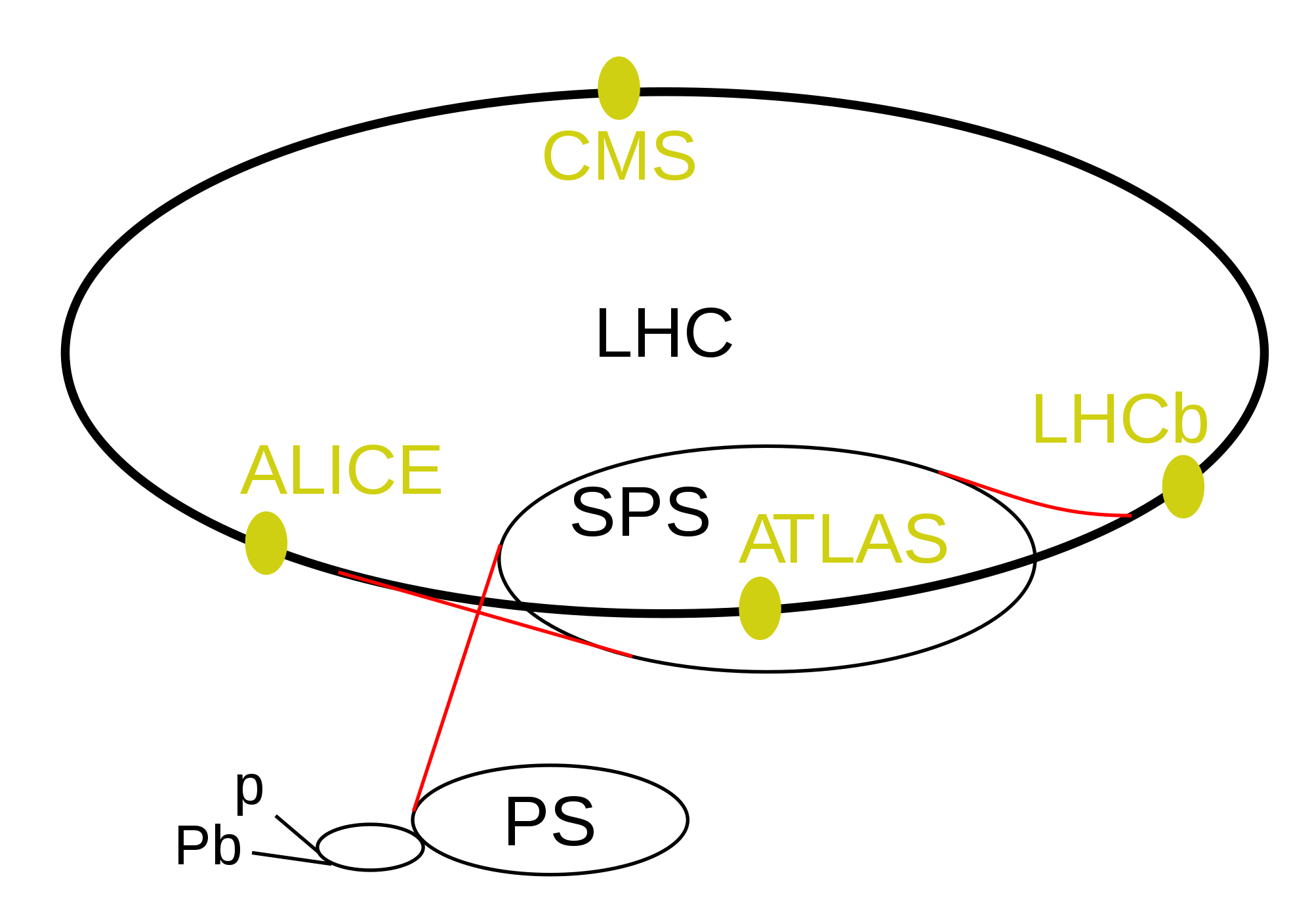
Plan of the LHC experiments and the preaccelerators.
LHC experiments
ATLASA Toroidal LHC Apparatus
CMSCompact Muon Solenoid
LHCbLHC-beauty
ALICEA Large Ion Collider Experiment
TOTEMTotal Cross Section, Elastic Scattering and Diffraction Dissociation
LHCfLHC-forward
MoEDALMonopole and Exotics Detector At the LHC
FASERForwArd Search ExpeRiment
SNDScattering and Neutrino Detector
LHC preaccelerators
p and PbLinear accelerators for protons (Linac 4) and lead (Linac 3)
(not marked)Proton Synchrotron Booster
PSProton Synchrotron
SPSSuper Proton Synchrotron

ATLAS[1][2][3] is the largest general-purpose particle detector experiment at the Large Hadron Collider (LHC), a particle accelerator at CERN (the European Organization for Nuclear Research) in Switzerland.[4] The experiment is designed to take advantage of the unprecedented energy available at the LHC and observe phenomena that involve highly massive particles which were not observable using earlier lower-energy accelerators. ATLAS was one of the two LHC experiments involved in the discovery of the Higgs boson in July 2012.[5][6] It was also designed to search for evidence of theories of particle physics beyond the Standard Model.

The experiment is a collaboration involving 6,003 members, out of which 3,822 are physicists (last update: June 26, 2022) from 243 institutions in 40 countries.[1][7]

History

[edit]

Particle accelerator growth

[edit]
ATLAS detector under construction in October 2004 in the experiment pit. Construction was completed in 2008 and ATLAS has been successfully collecting data since November 2009, when colliding beam operation at the LHC started. Note the people in the background, for size comparison.

The first cyclotron, an early type of particle accelerator, was built by Ernest O. Lawrence in 1931, with a radius of just a few centimetres and a particle energy of 1 megaelectronvolt (MeV). Since then, accelerators have grown enormously in the quest to produce new particles of greater and greater mass. As accelerators have grown, so too has the list of known particles that they might be used to investigate.

ATLAS Collaboration

[edit]

The ATLAS Collaboration, the international group of physicists belonging to different universities and research centres who built and run the detector, was formed in 1992 when the proposed EAGLE (Experiment for Accurate Gamma, Lepton and Energy Measurements) and ASCOT (Apparatus with Super Conducting Toroids) collaborations merged their efforts to build a single, general-purpose particle detector for a new particle accelerator, the Large Hadron Collider.[8] At present, the ATLAS Collaboration involves 6,003 members, out of which 3,822 are physicists (last update: June 26, 2022) from 257 institutions in 42 countries.[1][7]

Detector design and construction

[edit]

The design was a combination of two previous projects for LHC, EAGLE and ASCOT, and also benefitted from the detector research and development that had been done for the Superconducting Super Collider, a US project interrupted in 1993. The ATLAS experiment was proposed in its current form in 1994, and officially funded by the CERN member countries in 1995. Additional countries, universities, and laboratories have joined in subsequent years. Construction work began at individual institutions, with detector components then being shipped to CERN and assembled in the ATLAS experiment pit starting in 2003.

Detector operation

[edit]

Construction was completed in 2008 and the experiment detected its first single proton beam events on 10 September of that year.[9] Data-taking was then interrupted for over a year due to an LHC magnet quench incident. On 23 November 2009, the first proton–proton collisions occurred at the LHC and were recorded by ATLAS, at a relatively low injection energy of 900 GeV in the center of mass of the collision. Since then, the LHC energy has been increasing: 1.8 TeV at the end of 2009, 7 TeV for the whole of 2010 and 2011, then 8 TeV in 2012. The first data-taking period performed between 2010 and 2012 is referred to as Run I. After a long shutdown (LS1) in 2013 and 2014, in 2015 ATLAS saw 13 TeV collisions.[10][11][12] The second data-taking period, Run II, was completed, always at 13 TeV energy, at the end of 2018 with a recorded integrated luminosity of nearly 140 fb−1 (inverse femtobarn).[13] A second long shutdown (LS2) in 2019–22 with upgrades to the ATLAS detector[14] was followed by Run III, which started in July 2022.[15]

Fabiola Gianotti, ATLAS spokesperson (2009 - 2013) and CERN director-general (2016 - 2025).
Periods of LHC Operation
Apr 2010 – Jan 2013 Run I
Feb 2013 – Jan 2015 LS1
Feb 2015 – Nov 2018 Run II
Dec 2018 – Jun 2022 LS2
Jul 2022 – Jun 2026 Run III

Leadership

[edit]

The ATLAS Collaboration is currently led by Spokesperson Stephane Willocq and Deputy Spokespersons Anna Sfyrla and Guillaume Unal.[16] Former Spokespersons have been:

Friedrich Dydak and Peter Jenni (1992 – 1995)
Peter Jenni (1995 – 2009)
Fabiola Gianotti (2009 – 2013)
David Charlton (2013 – 2017)
Karl Jakobs (2017 – 2021)
Andreas Hoecker (2021 - 2025)
Stephane Willocq (2025 – Present)

Experimental program

[edit]

In the field of particle physics, ATLAS studies different types of processes detected or detectable in energetic collisions at the Large Hadron Collider (LHC). For the processes already known, it is a matter of measuring more and more accurately the properties of known particles or finding quantitative confirmations of the Standard Model. Processes not observed so far would allow, if detected, to discover new particles or to have confirmation of physical theories that go beyond the Standard Model.

Standard Model

[edit]

The Standard Model of particle physics is the theory describing three of the four known fundamental forces (the electromagnetic, weak, and strong interactions, while omitting gravity) in the universe, as well as classifying all known elementary particles. It was developed in stages throughout the latter half of the 20th century, through the work of many scientists around the world,[17] with the current formulation being finalized in the mid-1970s upon experimental confirmation of the existence of quarks. Since then, confirmation of the top quark (1995), the tau neutrino (2000), and the Higgs boson (2012) have added further credence to the Standard Model. In addition, the Standard Model has predicted various properties of weak neutral currents and the W and Z bosons with great accuracy.

Although the Standard Model is believed to be theoretically self-consistent[18] and has demonstrated huge successes in providing experimental predictions, it leaves some phenomena unexplained and falls short of being a complete theory of fundamental interactions. It does not fully explain baryon asymmetry, incorporate the full theory of gravitation[19] as described by general relativity, or account for the accelerating expansion of the universe as possibly described by dark energy. The model does not contain any viable dark matter particle that possesses all of the required properties deduced from observational cosmology. It also does not incorporate neutrino oscillations and their non-zero masses.

Precision measurements

[edit]

With the important exception of the Higgs boson, detected by the ATLAS and the CMS experiments in 2012,[20] all of the particles predicted by the Standard Model had been observed by previous experiments. In this field, in addition to the discovery of the Higgs boson, the experimental work of ATLAS has focused on precision measurements, aimed at determining with ever greater accuracy the many physical parameters of theory. In particular for

ATLAS measures:

For example, the data collected by ATLAS made it possible in 2018 to measure the mass [(80,370±19) MeV] of the W boson, one of the two mediators of the weak interaction, with a measurement uncertainty of ±2.4.

Higgs boson

[edit]
Schematics, called Feynman diagrams show the main ways that the Standard Model Higgs boson can be produced from colliding protons at the LHC.

One of the most important goals of ATLAS was to investigate a missing piece of the Standard Model, the Higgs boson.[1][21] The Higgs mechanism, which includes the Higgs boson, gives mass to elementary particles, leading to differences between the weak force and electromagnetism by giving the W and Z bosons mass while leaving the photon massless.

On July 4, 2012, ATLAS — together with CMS, its sister experiment at the LHC — reported evidence for the existence of a particle consistent with the Higgs boson at a confidence level of 5 sigma,[5] with a mass around 125 GeV, or 133 times the proton mass. This new "Higgs-like" particle was detected by its decay into two photons () and its decay to four leptons ( and ).


In March 2013, following the updated results from ATLAS and CMS, CERN announced that the newly discovered particle was indeed a Higgs boson. The experiments were also able to show that the properties of the particle as well as the ways it interacts with other particles were well-matched with those of a Higgs boson, which is expected to have spin 0 and positive parity. Analysis of more properties of the particle and data collected in 2015 and 2016 confirmed this further.[20]

In October 2013, two of the theoretical physicists who predicted the existence of the Standard Model Higgs boson, Peter Higgs and François Englert, were awarded the Nobel Prize in Physics.

Top quark properties

[edit]

The properties of the top quark, discovered at Fermilab in 1995, had been measured approximately. With much greater energy and greater collision rates, the LHC produces a tremendous number of top quarks, allowing ATLAS to make much more precise measurements of its mass and interactions with other particles.[22] These measurements provide indirect information on the details of the Standard Model, with the possibility of revealing inconsistencies that point to new physics.

Beyond the Standard Model

[edit]

While the Standard Model predicts that quarks, leptons and neutrinos should exist, it does not explain why the masses of these particles are so different (they differ by orders of magnitude). Furthermore, the mass of the neutrinos should be, according to the Standard Model, exactly zero as that of the photon. Instead, neutrinos have mass. In 1998 research results at detector Super-Kamiokande determined that neutrinos can oscillate from one flavor to another, which dictates that they have a mass other than zero. For these and other reasons, many particle physicists believe it is possible that the Standard Model will break down at energies at the teraelectronvolt (TeV) scale or higher. Most alternative theories, the Grand Unified Theories (GUTs) including Supersymmetry (SUSY), predicts the existence of new particles with masses greater than those of Standard Model.

Supersymmetry

[edit]

Most of the currently proposed theories predict new higher-mass particles, some of which may be light enough to be observed by ATLAS. Models of supersymmetry involve new, highly massive particles. In many cases these decay into high-energy quarks and stable heavy particles that are very unlikely to interact with ordinary matter. The stable particles would escape the detector, leaving as a signal one or more high-energy quark jets and a large amount of "missing" momentum. Other hypothetical massive particles, like those in the Kaluza–Klein theory, might leave a similar signature. The data collected up to the end of LHC Run II do not show evidence of supersymmetric or unexpected particles, the research of which will continue in the data that will be collected from Run III onwards.

CP violation

[edit]

The asymmetry between the behavior of matter and antimatter, known as CP violation, is also being investigated.[21] Recent experiments dedicated to measurements of CP violation, such as BaBar and Belle, have not detected sufficient CP violation in the Standard Model to explain the lack of detectable antimatter in the universe. It is possible that new models of physics will introduce additional CP violation, shedding light on this problem. Evidence supporting these models might either be detected directly by the production of new particles, or indirectly by measurements of the properties of B- and D-mesons. LHCb, an LHC experiment dedicated to B-mesons, is likely to be better suited to the latter.[23]

Microscopic black holes

[edit]

Some hypotheses, based on the ADD model, involve large extra dimensions and predict that micro black holes could be formed by the LHC.[24] These would decay immediately by means of Hawking radiation, producing all particles in the Standard Model in equal numbers and leaving an unequivocal signature in the ATLAS detector.[25]

ATLAS detector

[edit]

The ATLAS detector is 46 metres long, 25 metres in diameter, and weighs about 7,000 tonnes; it contains some 3,000 km of cable.[1][2][3]

At 27 km in circumference, the Large Hadron Collider (LHC) at CERN collides two beams of protons together, with each proton carrying up to 6.8 TeV of energy – enough to produce particles with masses significantly greater than any particles currently known, if these particles exist. When the proton beams produced by the Large Hadron Collider interact in the center of the detector, a variety of different particles with a broad range of energies are produced.

General-purpose requirements

[edit]

The ATLAS detector is designed to be general-purpose. Rather than focusing on a particular physical process, ATLAS is designed to measure the broadest possible range of signals. This is intended to ensure that whatever form any new physical processes or particles might take, ATLAS will be able to detect them and measure their properties. ATLAS is designed to detect these particles, namely their masses, momentum, energies, lifetime, charges, and nuclear spins.

Experiments at earlier colliders, such as the Tevatron and Large Electron–Positron Collider, were also designed for general-purpose detection. However, the beam energy and extremely high rate of collisions require ATLAS to be significantly larger and more complex than previous experiments, presenting unique challenges of the Large Hadron Collider.

Layered design

[edit]

In order to identify all particles produced at the interaction point where the particle beams collide, the detector is designed in layers made up of detectors of different types, each of which is designed to observe specific types of particles. The different traces that particles leave in each layer of the detector allow for effective particle identification and accurate measurements of energy and momentum. (The role of each layer in the detector is discussed below.) As the energy of the particles produced by the accelerator increases, the detectors attached to it must grow to effectively measure and stop higher-energy particles. As of 2022, the ATLAS detector is the largest ever built at a particle collider.[26]

Detector systems

[edit]
Computer generated cut-away view of the ATLAS detector showing its various components.
Muon Spectrometer:
   (1) Forward regions (End-caps)
   (1) Barrel region
Magnet System:
   (2) Toroid Magnets
   (3) Solenoid Magnet
Inner Detector:
   (4) Transition Radiation Tracker
   (5) Semi-Conductor Tracker
   (6) Pixel Detector
Calorimeters:
   (7) Liquid Argon Calorimeter
   (8) Tile Calorimeter

The ATLAS detector[1][2][3] consists of a series of ever-larger concentric cylinders around the interaction point where the proton beams from the LHC collide. Maintaining detector performance in the high radiation areas immediately surrounding the proton beams is a significant engineering challenge. The detector can be divided into four major systems:

  1. Inner Detector;
  2. Calorimeters;
  3. Muon Spectrometer;
  4. Magnet system.

Each of these is in turn made of multiple layers. The detectors are complementary: the Inner Detector tracks particles precisely, the calorimeters measure the energy of easily stopped particles, and the muon system makes additional measurements of highly penetrating muons. The two magnet systems bend charged particles in the Inner Detector and the Muon Spectrometer, allowing their electric charges and momenta to be measured. The only established stable particles that cannot be detected directly are neutrinos; their presence is inferred by measuring a momentum imbalance among detected particles. For this to work, the detector must be "hermetic", meaning it must detect all non-neutrinos produced, with no blind spots.

The installation of all the above detector systems was finished in August 2008. The detectors collected millions of cosmic rays during the magnet repairs which took place between fall 2008 and fall 2009, prior to the first proton collisions. The detector operated with close to 100% efficiency and provided performance characteristics very close to its design values.[27]

Inner Detector

[edit]
The TRT (Transition Radiation Tracker) central section, the outermost part of the Inner Detector, assembled above ground and taking data from cosmic rays[28] in September 2005.

The Inner Detector[1][2][3][29] begins a few centimetres from the proton beam axis, extends to a radius of 1.2 metres, and is 6.2 metres in length along the beam pipe. Its basic function is to track charged particles by detecting their interaction with material at discrete points, revealing detailed information about the types of particles and their momentum.[30] The Inner Detector has three parts, which are explained below.

The magnetic field surrounding the entire inner detector causes charged particles to curve; the direction of the curve reveals a particle's charge and the degree of curvature reveals its momentum. The starting points of the tracks yield useful information for identifying particles; for example, if a group of tracks seem to originate from a point other than the original proton–proton collision, this may be a sign that the particles came from the decay of a hadron with a bottom quark (see b-tagging).

Pixel Detector

[edit]

The Pixel Detector,[31] the innermost part of the detector, contains four concentric layers and three disks on each end-cap, with a total of 1,744 modules, each measuring 2 centimetres by 6 centimetres. The detecting material is 250 μm thick silicon. Each module contains 16 readout chips and other electronic components. The smallest unit that can be read out is a pixel (50 by 400 micrometres); there are roughly 47,000 pixels per module.

The minute pixel size is designed for extremely precise tracking very close to the interaction point. In total, the Pixel Detector has over 92 million readout channels, which is about 50% of the total readout channels of the whole detector. Having such a large count created a considerable design and engineering challenge. Another challenge was the radiation to which the Pixel Detector is exposed because of its proximity to the interaction point, requiring that all components be radiation hardened in order to continue operating after significant exposures.

Semi-Conductor Tracker

[edit]

The Semi-Conductor Tracker (SCT) is the middle component of the inner detector. It is similar in concept and function to the Pixel Detector but with long, narrow strips rather than small pixels, making coverage of a larger area practical. Each strip measures 80 micrometres by 12 centimetres. The SCT is the most critical part of the inner detector for basic tracking in the plane perpendicular to the beam, since it measures particles over a much larger area than the Pixel Detector, with more sampled points and roughly equal (albeit one-dimensional) accuracy. It is composed of four double layers of silicon strips, and has 6.3 million readout channels and a total area of 61 square meters.

Transition Radiation Tracker

[edit]

The Transition Radiation Tracker (TRT), the outermost component of the inner detector, is a combination of a straw tracker and a transition radiation detector. The detecting elements are drift tubes (straws), each four millimetres in diameter and up to 144 centimetres long. The uncertainty of track position measurements (position resolution) is about 200 micrometres. This is not as precise as those for the other two detectors, but it was necessary to reduce the cost of covering a larger volume and to have transition radiation detection capability. Each straw is filled with gas that becomes ionized when a charged particle passes through. The straws are held at about −1,500 V, driving the negative ions to a fine wire down the centre of each straw, producing a current pulse (signal) in the wire. The wires with signals create a pattern of 'hit' straws that allow the path of the particle to be determined. Between the straws, materials with widely varying indices of refraction cause ultra-relativistic charged particles to produce transition radiation and leave much stronger signals in some straws. Xenon and argon gas is used to increase the number of straws with strong signals. Since the amount of transition radiation is greatest for highly relativistic particles (those with a speed very near the speed of light), and because particles of a particular energy have a higher speed the lighter they are, particle paths with many very strong signals can be identified as belonging to the lightest charged particles: electrons and their antiparticles, positrons. The TRT has about 298,000 straws in total.

Calorimeters

[edit]
September 2005: The main barrel section of the ATLAS hadronic calorimeter, waiting to be moved inside the toroid magnets.
One of the sections of the extensions of the hadronic calorimeter, waiting to be inserted in late February 2006.
The extended barrel section of the hadronic calorimeter.

The calorimeters[1][2][3] are situated outside the solenoidal magnet that surrounds the Inner Detector. Their purpose is to measure the energy from particles by absorbing it. There are two basic calorimeter systems: an inner electromagnetic calorimeter and an outer hadronic calorimeter.[32] Both are sampling calorimeters; that is, they absorb energy in high-density metal and periodically sample the shape of the resulting particle shower, inferring the energy of the original particle from this measurement.

Electromagnetic calorimeter

[edit]

The electromagnetic (EM) calorimeter absorbs energy from particles that interact electromagnetically, which include charged particles and photons. It has high precision, both in the amount of energy absorbed and in the precise location of the energy deposited. The angle between the particle's trajectory and the detector's beam axis (or more precisely the pseudorapidity) and its angle within the perpendicular plane are both measured to within roughly 0.025 radians. The barrel EM calorimeter has accordion shaped electrodes and the energy-absorbing materials are lead and stainless steel, with liquid argon as the sampling material, and a cryostat is required around the EM calorimeter to keep it sufficiently cool.

Hadron calorimeter

[edit]

The hadron calorimeter absorbs energy from particles that pass through the EM calorimeter, but do interact via the strong force; these particles are primarily hadrons. It is less precise, both in energy magnitude and in the localization (within about 0.1 radians only).[23] The energy-absorbing material is steel, with scintillating tiles that sample the energy deposited. Many of the features of the calorimeter are chosen for their cost-effectiveness; the instrument is large and comprises a huge amount of construction material: the main part of the calorimeter – the tile calorimeter – is 8 metres in diameter and covers 12 metres along the beam axis. The far-forward sections of the hadronic calorimeter are contained within the forward EM calorimeter's cryostat, and use liquid argon as well, while copper and tungsten are used as absorbers.

Muon Spectrometer

[edit]

The Muon Spectrometer[1][2][3] is an extremely large tracking system, consisting of three parts:

  1. A magnetic field provided by three toroidal magnets;
  2. A set of 1200 chambers measuring with high spatial precision the tracks of the outgoing muons;
  3. A set of triggering chambers with accurate time-resolution.

The extent of this sub-detector starts at a radius of 4.25 m close to the calorimeters out to the full radius of the detector (11 m). Its tremendous size is required to accurately measure the momentum of muons, which first go through all the other elements of the detector before reaching the muon spectrometer. It was designed to measure, standalone, the momentum of 100 GeV muons with 3% accuracy and of 1 TeV muons with 10% accuracy. It was vital to go to the lengths of putting together such a large piece of equipment because a number of interesting physical processes can only be observed if one or more muons are detected, and because the total energy of particles in an event could not be measured if the muons were ignored. It functions similarly to the Inner Detector, with muons curving so that their momentum can be measured, albeit with a different magnetic field configuration, lower spatial precision, and a much larger volume. It also serves the function of simply identifying muons – very few particles of other types are expected to pass through the calorimeters and subsequently leave signals in the Muon Spectrometer. It has roughly one million readout channels, and its layers of detectors have a total area of 12,000 square meters.

Magnet System

[edit]
The eight toroid magnets of the ATLAS detector
The ends of four of the eight ATLAS toroid magnets, looking down from about 90 metres above, in September 2005

The ATLAS detector uses two large superconducting magnet systems to bend the trajectory of charged particles, so that their momenta can be measured.[1][2][3] This bending is due to the Lorentz force, whose modulus is proportional to the electric charge of the particle, to its speed and to the intensity of the magnetic field:

Since all particles produced in the LHC's proton collisions are traveling at very close to the speed of light in vacuum , the Lorentz force is about the same for all the particles with same electric charge :

The radius of curvature due to the Lorentz force is equal to

where is the relativistic momentum of the particle. As a result, high-momentum particles curve very little (large ), while low-momentum particles curve significantly (small ). The amount of curvature can be quantified and the particle momentum can be determined from this value.

Solenoid Magnet

[edit]

The inner solenoid produces a two tesla magnetic field surrounding the Inner Detector.[33] This high magnetic field allows even very energetic particles to curve enough for their momentum to be determined, and its nearly uniform direction and strength allow measurements to be made very precisely. Particles with momenta below roughly 400 MeV will be curved so strongly that they will loop repeatedly in the field and most likely not be measured; however, this energy is very small compared to the several TeV of energy released in each proton collision.

Toroid Magnets

[edit]

The outer toroidal magnetic field is produced by eight very large air-core superconducting barrel loops and two smaller end-caps air toroidal magnets, for a total of 24 barrel loops all situated outside the calorimeters and within the muon system.[33] This magnetic field extends in an area 26 metres long and 20 metres in diameter, and it stores 1.6 gigajoules of energy. Its magnetic field is not uniform, because a solenoid magnet of sufficient size would be prohibitively expensive to build. It varies between 2 and 8 Teslameters.

Forward detectors

[edit]

The ATLAS detector is complemented by a set of four sub-detectors in the forward region to measure particles at very small angles.[34]

  1. LUCID (LUminosity Cherenkov Integrating Detector)
    is the first of these detectors designed to measure luminosity, and located in the ATLAS cavern at 17 m from the interaction point between the two muon endcaps;
  2. ZDC (Zero Degree Calorimeter)
    is designed to measure neutral particles on-axis to the beam, and located at 140 m from the IP in the LHC tunnel where the two beams are split back into separate beam pipes;
  3. AFP (Atlas Forward Proton)
    is designed to tag diffractive events, and located at 204 m and 217 m;
  4. ALFA (Absolute Luminosity For ATLAS)
    is designed to measure elastic proton scattering located at 240 m just before the bending magnets of the LHC arc.

Data systems

[edit]

Data generation

[edit]

Earlier particle detector read-out and event detection systems were based on parallel shared buses such as VMEbus or FASTBUS. Since such a bus architecture cannot keep up with the data requirements of the LHC detectors, all the ATLAS data acquisition systems rely on high-speed point-to-point links and switching networks. Even with advanced electronics for data reading and storage, the ATLAS detector generates too much raw data to read out or store everything: about 25 MB per raw event, multiplied by 40 million beam crossings per second (40 MHz) in the center of the detector. This produces a total of 1 petabyte of raw data per second. By avoiding to write empty segments of each event (zero suppression), which do not contain physical information, the average size of an event is reduced to 1.6 MB, for a total of 64 terabyte of data per second.[1][2][3]

Trigger system

[edit]

The trigger system[1][2][3][35] uses fast event reconstruction to identify, in real time, the most interesting events to retain for detailed analysis. In the second data-taking period of the LHC, Run-2, there were two distinct trigger levels:[36]

  1. The Level 1 trigger (L1), implemented in custom hardware at the detector site. The decision to save or reject an event data is made in less than 2.5 μs. It uses reduced granularity information from the calorimeters and the muon spectrometer, and reduces the rate of events in the read-out from 40 MHz to 100 kHz. The L1 rejection factor in therefore equal to 400.
  2. The High Level Trigger trigger (HLT), implemented in software, uses a computer battery consisting of approximately 40,000 CPUs. In order to decide which of the 100,000 events per second coming from L1 to save, specific analyses of each collision are carried out in 200 μs. The HLT uses limited regions of the detector, so-called Regions of Interest (RoI), to be reconstructed with the full detector granularity, including tracking, and allows matching of energy deposits to tracks. The HLT rejection factor is 100: after this step, the rate of events is reduced from 100 to 1 kHz. The remaining data, corresponding to about 1,000 events per second, are stored for further analyses.[37]

Analysis process

[edit]

ATLAS permanently records more than 10 petabytes of data per year.[1] Offline event reconstruction is performed on all permanently stored events, turning the pattern of signals from the detector into physics objects, such as jets, photons, and leptons. Grid computing is being used extensively for event reconstruction, allowing the parallel use of university and laboratory computer networks throughout the world for the CPU-intensive task of reducing large quantities of raw data into a form suitable for physics analysis. The software for these tasks has been under development for many years, and refinements are ongoing, even after data collection has begun. Individuals and groups within the collaboration are continuously writing their own code to perform further analyses of these objects, searching the patterns of detected particles for particular physical models or hypothetical particles. This activity requires processing 25 petabytes of data every week.[1]

Trivia

[edit]

The researcher pictured for scale in the famous ATLAS detector image is Roger Ruber, a researcher from Uppsala University, Sweden. Ruber, one of the researchers responsible for the ATLAS detector's central cryostat magnet, was inspecting the magnets in the LHC tunnel at the same time Maximilien Brice, the photographer, was setting up to photograph the ATLAS detector. Brice asked Ruber to stand at the base of the detector to illustrate the scale of the ATLAS detector. This was revealed by Maximilien Brice, and confirmed by Roger Ruber during interviews in 2020 with Rebecca Smethurst of the University of Oxford.[38]

References

[edit]

Further reading

[edit]
[edit]
Revisions and contributorsEdit on WikipediaRead on Wikipedia
from Grokipedia
The ATLAS experiment, whose full name is A Toroidal LHC ApparatuS, is a general-purpose particle physics detector at the Large Hadron Collider (LHC) at CERN in Geneva, Switzerland, designed to probe fundamental questions about the building blocks of matter, the forces governing them, and phenomena such as dark matter and extra dimensions.[1] Located 100 meters underground near the Franco-Swiss border, it records and analyzes collisions of protons or heavy ions accelerated to nearly the speed of light in the LHC's 27-kilometer ring, aiming to test the Standard Model of particle physics and search for new physics beyond it.[2] With its massive scale—46 meters long, 25 meters in height and width, and weighing 7,000 tonnes—ATLAS employs over 100 million electronic channels to capture data from billions of collisions per second, using layered subdetectors including silicon and gas-based trackers for particle trajectories, electromagnetic and hadronic calorimeters for energy measurements, and a muon spectrometer within a toroidal magnetic field for identifying long-lived particles.[1][2] Operated by an international collaboration of approximately 6,000 members from 248 institutions across 40 countries, ATLAS exemplifies global teamwork in high-energy physics, with contributions spanning detector construction, data analysis, and theoretical interpretation.[1] The experiment's physics program encompasses precision measurements of known particles like the top quark and W/Z bosons, studies of quantum chromodynamics in high-density environments, and hunts for supersymmetric particles, dark matter candidates, and rare processes that could reveal cracks in the Standard Model.[2] ATLAS shares the LHC interaction point with the complementary CMS detector, enabling cross-verification of results through diverse technological approaches.[1] Among its landmark achievements, ATLAS played a pivotal role in the 2012 discovery of the Higgs boson, announced jointly with CMS on July 4 of that year, confirming the mechanism by which particles acquire mass as predicted by the Standard Model; this breakthrough earned the 2013 Nobel Prize in Physics for theorists Peter Higgs and François Englert.[3] Since then, ATLAS has delivered increasingly precise Higgs property measurements, including its couplings to other particles and potential rare decays, while also observing phenomena like light-by-light scattering in heavy-ion collisions.[4] Currently in LHC Run 3 (2022–2025), ATLAS is collecting vast datasets at 13.6 TeV center-of-mass energy to refine these studies and probe rarer events.[5] Looking ahead, the experiment is undergoing upgrades for the High-Luminosity LHC phase starting around 2030, which will boost collision rates by a factor of 10, enabling the collection of exabyte-scale data for even deeper insights into the Universe's fundamental nature.[2]

History

Origins and Planning

The ATLAS experiment was conceived in 1992 as a general-purpose proton-proton collider detector for the proposed Large Hadron Collider (LHC) at CERN, addressing the limitations of existing facilities like the Large Electron-Positron (LEP) collider, which operated at center-of-mass energies up to approximately 209 GeV but lacked the reach to fully probe TeV-scale physics. The initiative emerged from the merger of earlier concepts, including the ASCOT and EAGLE proposals, to create a versatile detector capable of exploiting the LHC's planned 14 TeV collision energy. This conception was formalized through the ATLAS Letter of Intent (LoI), submitted to the LHC Experiments Committee (LHCC) on October 1, 1992, marking the first official use of the ATLAS acronym—standing for A Toroidal LHC ApparatuS—and outlining a broad research program driven by the need to explore uncharted territory beyond the Standard Model.[6][2] The primary scientific motivations centered on elucidating electroweak symmetry breaking, a cornerstone of the Standard Model that remained experimentally elusive. Central to this was the search for the Higgs boson, predicted to have masses between 80 and 1000 GeV, with key decay channels such as H → γγ and H → ZZ* → 4ℓ offering discovery potential at significances exceeding 5σ with 10^5 pb^{-1} of integrated luminosity. Equally compelling were investigations into supersymmetry (SUSY), an extension to the Standard Model that could stabilize the Higgs mass hierarchy and provide dark matter candidates, with ATLAS designed to detect signatures like multijet events plus missing transverse energy or same-sign dileptons, sensitive to gluinos and squarks up to 2.3 TeV. These goals underscored the experiment's role in testing mechanisms for mass generation and new physics at the electroweak scale, building on LEP's successes while targeting phenomena inaccessible at lower energies.[6][7] Planning advanced with the submission of the ATLAS Technical Proposal on December 15, 1994, which detailed the detector's architecture, performance simulations, and resource needs, estimated at 370–450 million Swiss francs and 1500 person-years of effort. This led to a positive recommendation from the LHCC and CERN Research Board in 1995, culminating in official approval for construction by CERN Director-General Chris Llewellyn Smith, enabling initial funding commitments from CERN member states. Site selection focused on the LHC's interaction point 1, utilizing the existing underground cavern UX15—approximately 100 meters below ground near the Franco-Swiss border—with a design incorporating a 33-meter-diameter access shaft for lowering pre-assembled detector components, ensuring compatibility with ongoing LEP operations.[8][9][2] A major planning challenge was adapting to the LHC's extreme environment, including instantaneous luminosities up to 10^{34} cm^{-2} s^{-1}, which would produce interaction rates of 20–40 events per crossing and necessitate precise event reconstruction amid pile-up. Radiation hardness emerged as a critical concern, with projected doses reaching 28 kGy per year and neutron fluences of 6.0 \times 10^{14} cm^{-2} per year (for E ≥ 100 keV, with moderator) in inner regions, driving early R&D (e.g., via CERN's RD29 project) for resilient materials, electronics, and calorimetry to maintain efficiency over a 10-year lifespan without significant degradation. These factors shaped a staged construction approach, prioritizing core components while deferring peripheral systems like end-cap toroids to optimize costs and timelines.[6]

Construction and Commissioning

Construction of the ATLAS detector began in 1998 with the excavation of underground caverns at Point 1 along the Large Hadron Collider (LHC) ring in Meyrin, Switzerland, marking the start of the engineering and infrastructure setup phase.[2] Civil engineering work included digging two shafts and two caverns to house the detector, a process that took five years and concluded in 2003, enabling the subsequent installation of detector components 90 meters underground.[10] This initial phase involved international teams coordinating the preparation of surface buildings and access infrastructure, laying the foundation for the assembly of one of the largest particle detectors ever built.[11] Major milestones in the construction included the assembly of the barrel toroid magnet in 2004, a critical step in integrating the superconducting magnet system. The first of eight massive coils, each 25 meters long and weighing 100 tonnes, was lowered into the cavern on 26 October 2004, with the full mechanical assembly completed by autumn 2005.[12] By 2008, detector integration reached completion, with the final large component—the small wheel of the muon spectrometer—installed in early 2007, and the entire structure sealed on 4 October 2008 to celebrate the end of the construction phase.[13] These achievements highlighted the project's scale, involving the precise positioning of over 7,000 tonnes of materials within a 44-meter-long, 25-meter-diameter cylinder.[2] Key technologies developed during construction encompassed advanced superconducting magnets, including the central solenoid providing a 2 T field for the inner detector and the toroid system—comprising a barrel toroid and two end-cap toroids—for bending charged particle paths in the muon spectrometer. The solenoid and toroids utilized niobium-titanium coils cooled to 4.5 K via cryogenic systems, with the barrel toroid's eight coils interconnected in a rigid structure to withstand immense magnetic forces.[14] Silicon pixel sensors formed the innermost layer of the tracking system, offering high-resolution vertex reconstruction, while liquid argon calorimeters provided precise energy measurements for electrons, photons, and hadrons across the detector's full coverage.[2] The project relied heavily on international contributions, with over 20 countries funding and building major components through in-kind agreements. The United States led the design, construction, and testing of the inner detector, including its pixel, semiconductor tracker (SCT), and transition radiation tracker subsystems, contributing approximately $164 million in materials and expertise.[15] Japan played a pivotal role in the SCT, producing a significant portion of its 4,088 silicon strip modules and associated hybrids, leveraging expertise in semiconductor fabrication. Other nations, such as those in Europe and Canada, handled calorimeters, muon systems, and magnet components, ensuring distributed responsibility across the collaboration.[16] The total construction cost approximated 1 billion Swiss francs, supported by funding agencies from more than 20 member states and non-member countries, reflecting the global scale of the endeavor.[17] Commissioning in 2008 addressed significant challenges, including the alignment of approximately 100 million electronic readout channels to achieve micrometer precision for particle tracking. Cryogenic systems for the magnets required stabilization at superconducting temperatures, with successful cool-down and powering tests ensuring operational integrity. First cosmic ray tests, conducted from spring through autumn 2008, validated subsystem performance and integration, using natural muons to calibrate detectors and identify issues like cooling leaks in end-cap regions, which affected about 2.5% of channels but were largely recoverable.[18] These efforts confirmed the detector's readiness for LHC beams by late 2008.[19]

Operations and Milestones

The ATLAS experiment commenced operations with the first circulation of LHC beams in September 2008, followed by the inaugural proton-proton collisions on November 23, 2009, at a center-of-mass energy of 900 GeV.[20] These initial events marked the beginning of data collection, with the collision energy ramping up to 3.5 TeV per beam by December 2009 and further to 7 TeV in March 2010, initiating Run 1. During Run 1 (2010–2012), ATLAS recorded approximately 25 fb^{-1} of integrated luminosity at 7–8 TeV, enabling early precision measurements in particle physics.[21] Following Run 1, the LHC entered Long Shutdown 1 (LS1) from February 2013 to April 2015, primarily to consolidate over 10,000 electrical splices between superconducting magnets, addressing vulnerabilities exposed by a 2008 incident and preparing for higher energies.[22] Run 2 commenced in June 2015 at 13 TeV, with ATLAS collecting about 140 fb^{-1} of data through December 2018, including a 2016 milestone where the LHC exceeded its annual target by delivering over 40 fb^{-1} that year alone.[23][24] Long Shutdown 2 (LS2), spanning December 2018 to April 2022, facilitated ATLAS Phase-1 upgrades, including a new Level-1 calorimeter trigger system and additional muon chambers in the New Small Wheels, to cope with increased pileup from higher luminosities in Run 3.[25] Run 3 began on July 5, 2022, at 13.6 TeV and continues through 2026, with 2025 data contributing to advanced Higgs boson analyses amid record proton runs that year, delivering 125 fb^{-1}.[26][27] By November 2025, ATLAS had amassed over 300 fb^{-1} of cumulative integrated luminosity across all runs, maintaining a data-recording efficiency exceeding 95%.[28] In April 2025, the ATLAS collaboration, alongside CMS, ALICE, and LHCb, received the Breakthrough Prize in Fundamental Physics for transformative LHC discoveries.[29]

Collaboration

Formation and Membership

The ATLAS Collaboration was formally established on October 1, 1992, with the submission of its Letter of Intent to the LHC Experiments Committee, marking the unification of earlier proto-collaborations and involving approximately 850 scientists from 88 institutions across 25 founding countries.[2][30] Initially comprising physicists and engineers focused on designing a general-purpose detector for the proposed Large Hadron Collider, the collaboration grew rapidly through the 1990s and 2000s, reaching nearly 3,000 members by 2008 as construction advanced and international participation expanded.[31] As of 2025, the ATLAS Collaboration encompasses around 6,000 members, including approximately 3,000 scientific authors, from over 170 institutions in 40 countries, drawing in physicists, engineers, technicians, doctoral students (about 1,200), and support staff.[32] Membership is structured into full institutional members, which hold complete rights and obligations including representation on the Collaboration Board; associate institutes, designed for universities or labs transitioning toward full membership with access to data and participation opportunities; and clustered institutions, allowing smaller groups to join collectively as a single voting entity to meet the same criteria as individual institutions.[33][34][35] The collaboration's diversity is evident in its global reach, with members from over 100 nationalities, including significant representation from non-OECD countries, fostering broad international expertise.[36] Key recruitment efforts have included international agreements, such as the US ATLAS program funded by the Department of Energy and National Science Foundation, which has integrated numerous American institutions since the early 2000s.[37] The 2012 discovery of the Higgs boson spurred a notable influx of new members, attracting talent eager to contribute to precision measurements and beyond-Standard-Model searches, further diversifying the collaboration's composition.[38] Contributions to the collaboration are divided between in-kind deliverables, such as hardware components, and cash support for common projects like computing and operations. Notable in-kind examples include the Russian Federation's provision of superconducting coils for the barrel toroid magnet system and contributions from European institutions to the Athena software framework for data simulation and reconstruction.[39][40] Inclusivity initiatives emphasize gender balance and support for early-career researchers, with the collaboration actively tracking demographics to promote equity and providing programs like the ATLAS Early Career Scientists Board to mentor PhD students and young professionals.[41][42][43]

Organization and Leadership

The ATLAS collaboration operates under a hierarchical governance structure designed to coordinate its international efforts in particle physics research. At the apex is the Spokesperson, elected every two years by the Collaboration Board with a maximum of two consecutive terms, who oversees all aspects of the experiment, represents ATLAS to CERN, funding agencies, and external bodies, and ensures alignment between scientific goals and operational needs.[32] The current Spokesperson is Stéphane Willocq from the University of Massachusetts Amherst, serving from March 2025 to March 2027, supported by Deputy Spokespersons Anna Sfyrla from the University of Geneva and Guillaume Unal from CEA Saclay, who assist in management and share representational duties.[44][45] The Executive Board, comprising the Spokesperson, Deputies, Technical Coordinator (Martin Aleksa from CERN), Resource Coordinator (David Francis from CERN), and Upgrade Coordinator (Benedetto Gorini from CERN), handles day-to-day coordination of technical integration, resource planning, and upgrade programs.[46] Leadership transitions emphasize international rotation to reflect the collaboration's global composition, fostering diverse perspectives and equitable participation. Notable past Spokespersons include Fabiola Gianotti (Italy, 2009–2013), who led during the initial LHC data-taking phase; Karl Jakobs (Germany, 2017–2021), who guided upgrades for high-luminosity operations; and Andreas Hoecker (France/CERN, 2021–2025), who advanced data analysis and computing strategies.[47][48][31] This rotation, drawn from institutions across Europe, North America, and beyond, ensures continuity while promoting broad institutional involvement in decision-making.[32] Key committees support specialized functions and contribute to governance. The Physics Committee reviews and approves scientific publications and analyses, ensuring rigorous standards; the Operations Committee manages detector performance and data-taking coordination; the Detector and Performance Committee oversees hardware maintenance and upgrades; the Trigger Committee handles event selection systems; and the Computing Committee addresses software development, data storage, and processing infrastructure.[49][50] These committees play critical roles in approving upgrades, such as those for the High-Luminosity LHC, by evaluating proposals and integrating feedback from subsystems.[46] Decision-making within ATLAS is consensus-based, prioritizing broad agreement while allowing voting by member institutions when necessary, particularly through the Collaboration Board, which serves as the primary policy-setting body and convenes annual general meetings to address strategic issues.[51][52] The Collaboration Board, composed of representatives from all institutions, endorses major initiatives like new memberships or policy changes via institutional votes.[53] Complementing this, the Resource Review Board (RRB), involving funding agencies, allocates resources by reviewing and approving budgets for construction, operations, and upgrades proposed by the collaboration.[54][16] In high-stakes scenarios, such as coordinating responses to LHC operational challenges during the 2012 proton-lead collision preparations, leadership and committees facilitate rapid, unified action across the collaboration.[55]

Physics Objectives

Standard Model Investigations

The ATLAS experiment at the Large Hadron Collider (LHC) plays a central role in verifying the predictions of the Standard Model (SM) through high-precision measurements, which are essential for establishing a robust baseline before pursuing searches for physics beyond the SM. These investigations focus on electroweak and quantum chromodynamics (QCD) processes, where deviations from SM expectations could signal new physics, often interpreted within the framework of effective field theory (EFT). By achieving sensitivities to anomalies at the percent level or better, ATLAS measurements constrain potential extensions of the SM, such as those involving higher-dimensional operators in the Standard Model Effective Field Theory (SMEFT).[56] Precision tests of electroweak parameters include detailed studies of W and Z boson properties. For instance, using LHC Run 1 data at 7 TeV with an integrated luminosity of 4.6 fb^{-1}, ATLAS measured the W boson mass to be 80,360 ± 16 MeV, achieving an uncertainty of 16 MeV and confirming consistency with SM predictions. This result refines global electroweak fits and probes the gauge structure of the SM. Similarly, measurements of Z boson properties, such as decay widths and angular distributions, provide stringent tests of electroweak unification.[57] QCD studies at ATLAS validate perturbative QCD at high energies through measurements of jet production cross-sections. Inclusive jet cross-sections at 13 TeV have been measured differentially in jet rapidity and transverse momentum up to several TeV, showing agreement with next-to-next-to-leading-order predictions within uncertainties of 5-10% at high p_T. These results constrain parton distribution functions (PDFs) and test the strong coupling constant α_s, demonstrating the SM's predictive power in high-multiplicity environments.[58] Investigations of electroweak symmetry breaking involve diboson production processes, such as WW and ZZ, whose rates probe unitarity and the stability of gauge boson self-interactions. ATLAS has measured fiducial cross-sections for ZZ production at 13.6 TeV, yielding values consistent with SM expectations to within 7%, and used these to set limits on anomalous quartic gauge couplings that could arise from EWSB mechanisms. Such analyses ensure the SM's longitudinal gauge boson scattering remains unitary at TeV scales. Initial Run 3 analyses at 13.6 TeV continue these investigations with higher precision.[59][60] Although flavor physics is primarily the domain of dedicated experiments like LHCb, ATLAS contributes measurements of B-hadron decays to complement SM tests. Recent analyses include the B^0 meson lifetime, measured as 1.5053 ± 0.0012 (stat.) ± 0.0035 (syst.) ps using 140 fb^{-1} of 13 TeV data from the full Run 2 dataset in decays to J/ψ K^{*0}, aligning with SM predictions and aiding in the validation of heavy-quark effective theory. These results help constrain CKM matrix elements and search for subtle flavor anomalies.[61] Theoretically, ATLAS frames SM investigations using EFT to quantify potential deviations, parameterizing new physics via Wilson coefficients in the SMEFT Lagrangian. Production cross-sections for SM processes, such as pp → X, are computed as
σ(ppX)=L(x1,x2)f(x1)f(x2)dx1dx2, \sigma(pp \to X) = \int L(x_1, x_2) \, f(x_1) \, f(x_2) \, dx_1 \, dx_2,
where L(x_1, x_2) represents the parton luminosity, and f(x_i) are the PDFs, allowing EFT corrections to be incorporated for sensitivity to dimension-6 operators. This approach motivates precision measurements by highlighting how SM confirmation underpins BSM sensitivities, with ATLAS results excluding certain EFT parameters at 95% confidence levels.[56]

Beyond Standard Model Searches

The ATLAS experiment at the Large Hadron Collider (LHC) conducts extensive searches for physics beyond the Standard Model (BSM) to probe theoretical extensions that address shortcomings in the Standard Model, such as the hierarchy problem, the nature of dark matter, and the unification of forces. These searches target specific signatures predicted by models like supersymmetry (SUSY), extra dimensions, and dark matter candidates, often characterized by events with high missing transverse energy (MET), multiple leptons, or unusual jet topologies. By analyzing proton-proton collision data, ATLAS employs signature-based approaches that are sensitive to a broad range of BSM scenarios, integrating model-dependent interpretations with model-agnostic techniques using effective field theory operators to explore deviations from Standard Model expectations. Initial Run 3 data at 13.6 TeV enhance sensitivities to these signatures.[62][60] In supersymmetry searches, ATLAS focuses on the production of strongly interacting superpartners such as squarks and gluinos, which are expected to decay into final states with significant MET arising from the lightest supersymmetric particle, often a stable neutralino. These investigations utilize simplified models that parameterize the masses and decay modes of superpartners, allowing for targeted exclusions in parameter spaces where squarks or gluinos cascade to lighter particles plus MET. Complementary searches target electroweak production of sleptons, charginos, and neutralinos in multi-lepton channels, enhancing sensitivity to compressed mass spectra. Standard Model backgrounds, such as those from W/Z boson decays and QCD multijet events, are estimated using data-driven methods to isolate potential BSM signals.[63][64] Searches for extra dimensions, particularly in Randall-Sundrum models, aim to detect the production of Kaluza-Klein gravitons through resonances in di-lepton, di-photon, or jet+MET final states, where the warped geometry of extra dimensions could explain the weakness of gravity. ATLAS probes these signatures by reconstructing high-mass invariant systems and applying cuts on angular distributions to distinguish them from Standard Model processes like Drell-Yan or diboson production. For dark matter candidates, mono-jet events with large MET provide a key channel, where dark matter particles are produced in association with a quark-initiated jet, evading detection and manifesting as an imbalance in transverse momentum; these analyses often interpret results in terms of simplified dark matter models or effective operators coupling dark matter to quarks via mediators.[65] Additional BSM probes include leptoquarks, hypothetical particles mediating quark-lepton interactions, searched for in final states like single or pair-produced leptoquarks decaying to a lepton and jet, with sensitivities to scalar or vector types across generations. ATLAS also investigates axion-like particles (ALPs), light pseudoscalars that could couple to photons or gluons, via channels such as light-by-light scattering in heavy-ion collisions or ALP production in Higgs decays to diphotons. In the flavor sector, measurements of CP violation in B meson decays, such as time-dependent asymmetries in B^0 → J/ψ K_S, test for deviations beyond Standard Model predictions, potentially indicating new sources of CP violation from BSM contributions to mixing or decay amplitudes. These diverse searches employ statistical methods like the CL_s approach to set limits at 95% confidence level, combining signal regions with control samples to quantify excesses over background-only hypotheses. Model-agnostic strategies further allow ATLAS to parameterize BSM effects using dimension-6 effective operators, providing inclusive constraints on new physics scales without assuming specific particle spectra.[66][67][68]

The ATLAS Detector

Design Principles

The ATLAS detector is engineered as a general-purpose instrument for proton-proton collisions at the Large Hadron Collider (LHC), optimized to probe a wide spectrum of physics phenomena, from Standard Model precision measurements to searches for new particles and interactions.[69] Its design emphasizes comprehensive solid-angle coverage, achieving η<2.5|\eta| < 2.5 for charged-particle tracking in the central region, extending to η<3.2|\eta| < 3.2 for electromagnetic calorimetry and η<4.9|\eta| < 4.9 for forward hadronic calorimetry, alongside full 2π2\pi azimuthal coverage to ensure nearly hermetic detection of particles across all directions.[69] This hermeticity is crucial for reconstructing missing transverse energy (MET), enabling sensitive analyses of processes involving neutrinos or hypothetical invisible particles.[69] The detector adopts a layered, cylindrical architecture with forward-backward symmetry, comprising three primary concentric systems: the inner detector for precise tracking of charged particles, the calorimeter system for energy measurements of electrons, photons, and hadrons, and the outer muon spectrometer for identifying and momentum-analyzing muons.[69] This modular structure facilitates particle identification through successive interactions—tracks originate in the inner volume, energy deposits occur in the calorimeters, and penetrating muons reach the outermost layers—allowing robust event reconstruction in complex collision environments.[69] Key design requirements address the LHC's high-luminosity challenges, including high spatial and temporal granularity to reject overlapping pile-up events (up to 200 simultaneous interactions per bunch crossing) and radiation hardness tolerant to integrated fluences of 1015neq/cm210^{15} \, n_\mathrm{eq}/\mathrm{cm}^2 over the experiment's lifetime.[69] ATLAS employs a cylindrical coordinate system aligned with the LHC beam axis, where pseudorapidity η=ln(tan(θ/2))\eta = -\ln\left(\tan(\theta/2)\right) quantifies the polar angle θ\theta from the beam direction, providing a rapidity-like measure invariant under Lorentz boosts along the beam; transverse momentum pTp_T is defined in the plane perpendicular to the beam.[69] Physically, the detector spans 46 meters in length and 25 meters in diameter, with a total mass of approximately 7,000 tonnes and a power consumption of around 1 MW to operate its vast array of sensors and electronics.[69] Detector response and performance are validated through detailed simulations based on the GEANT4 toolkit, which models particle interactions within the full geometry to predict signatures and optimize reconstruction algorithms.[69]

Inner Detector

The Inner Detector (ID) of the ATLAS experiment is the innermost component of the detector system, designed to reconstruct the trajectories of charged particles produced in proton-proton collisions at the Large Hadron Collider (LHC). Operating within a 2 tesla solenoidal magnetic field, it provides precise tracking and vertexing capabilities essential for identifying decay vertices, measuring transverse momentum, and enabling b-tagging for heavy-flavor identification. The ID consists of three primary subsystems: the Pixel Detector, the Semiconductor Tracker (SCT), and the Transition Radiation Tracker (TRT), which together offer high granularity and robustness against the high radiation environment of the LHC.[70] The Pixel Detector is positioned closest to the interaction point, starting at a radial distance of approximately 3.3 cm from the beam axis. It comprises four barrel layers and three disks in each endcap, totaling around 1,736 sensor modules with 92 million readout channels and a silicon sensing area of about 1.9 m². Each pixel measures 50 × 250–400 μm², providing a spatial resolution of roughly 10 μm, which is crucial for reconstructing primary and secondary vertices with high precision. This subsystem excels in b-tagging by identifying displaced vertices from b-hadron decays, leveraging its fine granularity to resolve tracks separated by as little as 100 μm.[70][71] Surrounding the Pixel Detector is the SCT, which uses silicon microstrip sensors arranged in four barrel layers and nine disks per endcap (18 disks total). It features 4,088 double-sided modules with 6 million readout channels and a total silicon area of 60 m², where strips are spaced at 80 μm on each side, oriented at ±40 mrad stereo angles for 3D position measurement. The SCT delivers a resolution of about 17 μm in the radial direction and 580 μm along the beam axis (from stereo strips), contributing significantly to track momentum measurement by providing up to eight measurement points per track.[72][73] The outermost subsystem, the TRT, consists of approximately 300,000 straw tubes filled with a xenon-based gas mixture, with 50,640 long (144 cm) straws in the barrel and shorter (37 cm) straws in the endcaps, covering a volume of 12 m³. Each 4 mm diameter straw contains a 30 μm gold-plated tungsten sense wire, providing up to 36 hits per track and a single-hit resolution of 170 μm. Beyond tracking, the TRT enables electron-pion discrimination through transition radiation detection and energy loss measurements (dE/dx), achieving particle identification efficiency above 90% for electrons with transverse momentum above 2 GeV.[70][74] The entire Inner Detector provides azimuthal coverage over 2π and pseudorapidity coverage up to |η| < 2.5, ensuring comprehensive reconstruction of charged particles from LHC collisions. Its transverse momentum resolution is given by
σ(pT)pT0.05%pT1.0%, \frac{\sigma(p_T)}{p_T} \approx 0.05\% \cdot p_T \oplus 1.0\%,
where pTp_T is in GeV, achieving better than 1% resolution for tracks with pT>20p_T > 20 GeV; this performance relies on the combined hits from all subsystems in the magnetic field. To minimize multiple scattering, the ID employs low-mass materials, with the Pixel Detector contributing about 0.14 radiation lengths (X0X_0) and the total ID material budget kept below 0.4 X0X_0 in the central region.[71][75][76] Readout for the Pixel and SCT subsystems uses binary hit registration via hybrid silicon sensors connected through bump bonding, which enhances radiation tolerance by separating sensitive silicon from radiation-hardened readout ASICs (e.g., FE-I3 for pixels and ABCD3T for SCT). The TRT employs analog readout via time-over-threshold measurements in straws for precise dE/dx estimation. Overall, the ID achieves transverse impact parameter resolution better than 10 μm for high-momentum tracks and primary vertex resolution of ~10–20 μm, enabling efficient reconstruction of up to 2000 tracks per event with efficiencies exceeding 99% for isolated tracks. Radiation damage mitigation includes cooling to -7°C for SCT endcaps and defect monitoring via bump-bonded structures.[77][78][79]

Calorimeters

The ATLAS calorimeters are designed to measure the energy of particles produced in proton-proton collisions, providing essential data for identifying electrons, photons, hadrons, and jets while compensating for the non-compensating response to electromagnetic and hadronic showers. These systems surround the inner detector and extend to high pseudorapidity regions, absorbing most of the energy from particles originating at the interaction point. The electromagnetic calorimeter (EMC) uses liquid argon (LAr) as the active medium in an accordion geometry to ensure uniform and gapless coverage, while the hadronic calorimeter (HCAL) combines a central tile scintillator barrel with LAr endcaps for robust hadron energy measurement. The forward calorimeter (FCal) extends coverage to very high rapidities using LAr with dense absorbers.[80][81] The electromagnetic calorimeter consists of a barrel covering |η| < 1.475 and endcaps extending to |η| < 3.2, employing lead absorbers interleaved with LAr gaps of 2 mm in the barrel and varying thicknesses in the endcaps to achieve a total radiation length of at least 24 X₀. Its accordion structure, formed by folded lead plates and copper readout electrodes, eliminates azimuthal cracks and provides fast signal collection via capacitive charge readout. Granularity is finely tuned for precise shower shape analysis: the presampler and first sampling layer offer Δη × Δφ = 0.025 × 0.1 and 0.003 × 0.1, respectively, while the middle layer uses 0.025 × 0.025 cells for optimal electron/photon separation, and the back layer has 0.05 × 0.025; trigger towers aggregate to 0.1 × 0.1. The energy resolution is given by
σE/E10%/E0.7% \sigma_E / E \approx 10\% / \sqrt{E} \oplus 0.7\%
where E is in GeV, achieving high precision for Higgs boson decays to photons, for example. This sampling fraction captures electromagnetic showers efficiently, with the LAr operated at -184°C to maintain purity and stability.[80] The hadronic calorimeter measures jet energies and missing transverse energy, featuring a steel-tile barrel for |η| < 1.7 (with 64 wedge-shaped modules containing 420,000 plastic scintillator tiles read out by wavelength-shifting fibers to photomultiplier tubes) and LAr endcaps (HEC) for 1.5 < |η| < 3.2 using copper absorbers for compensation of the e/h response ratio. The tile barrel, the heaviest component at 2,900 tonnes, provides non-compensating sampling with three longitudinal layers, while the HEC adds depth for better containment. Overall HCAL coverage reaches |η| < 4.9 when including the FCal, with granularity of Δη × Δφ ≈ 0.1 × 0.1 in the central regions (coarser to 0.2 × 0.1 in outer layers). The energy resolution is parameterized as
σE/E50%/E3% \sigma_E / E \approx 50\% / \sqrt{E} \oplus 3\%
(E in GeV), sufficient for top quark studies and electroweak precision measurements, though it degrades slightly in the endcaps due to increased sampling fluctuations.[80][81] The forward liquid argon calorimeter (FCal) covers 3.2 < |η| < 4.9 with three modules of copper (EM section) and tungsten (hadronic sections) absorbers in a matrix of LAr-filled tubes, providing about 10 interaction lengths for containment despite the high radiation environment. Its rod-and-tube design offers Δη × Δφ ≈ 0.2 × 0.2 granularity in hexagonal cells, optimized for forward jet reconstruction and diffraction physics. Jets are reconstructed from calorimeter deposits using the anti-k_t clustering algorithm with radius R = 0.4, seeded by tracks from the inner detector for charged particle subtraction, and calibrated to account for pile-up contamination via area-based methods. This forward coverage ensures comprehensive event characterization, including for beyond-Standard-Model searches involving high-rapidity particles.[80][80]

Muon Spectrometer

The ATLAS Muon Spectrometer is the outermost component of the detector, designed to identify and precisely measure the momentum of muons that penetrate the inner detector and calorimeters. It operates within the air-core toroid superconducting magnet system, which provides a bending field for track curvature measurement. The spectrometer covers the pseudorapidity range |η| < 2.7, enabling high-efficiency muon detection across a wide angular acceptance. Standalone momentum resolution is approximately σ(p_T)/p_T ~ 10% at 1 TeV, achieved through multi-layer tracking chambers.[82][83] The spectrometer's structure comprises precision tracking chambers and dedicated trigger detectors. Monitored Drift Tubes (MDTs) form the primary precision tracking system, consisting of over 1,000 multilayer chambers with tubes of 30 mm diameter and lengths up to 6.5 m, providing position resolution better than 80 μm per tube. In the forward regions (2.0 < |η| < 2.7), Cathode Strip Chambers (CSCs) supplement the MDTs for high-rate environments, offering two-dimensional readout with strip cathodes for η-coordinate measurement. Resistive Plate Chambers (RPCs) in the barrel (|η| < 1.05) serve as the trigger system, featuring parallel-plate detectors with 2 mm gas gaps operated at high voltage for fast response and coarse φ-coordinate determination.[82][83] For triggering, the RPCs and complementary Thin Gap Chambers (TGCs) in the endcaps enable fast readout with a latency of about 1 μs, allowing Level-1 muon trigger decisions within the 2.5 μs bunch-crossing window. This low-latency system selects candidate muons based on track segments, rejecting most background particles. Alignment of the chambers is maintained by an optical system using laser beams, alignment bars, and sensors to monitor relative positions with 30 μm precision over baselines up to 100 m, ensuring long-term stability against mechanical deformations.[82][84][83] Background rejection is enhanced through η-strip coincidence logic in the trigger chambers, which requires matching hits in η-oriented strips across layers to suppress fake triggers from cavern background or decays, achieving rejection factors that maintain high purity at luminosities up to 10^34 cm^{-2}s^{-1}. This approach, particularly refined in forward upgrades, reduces random coincidences while preserving efficiency for genuine muons.[85][83]

Magnet and Forward Systems

The ATLAS solenoid magnet generates a uniform axial magnetic field of 2 tesla within the inner detector volume, enabling precise momentum measurements of charged particles by bending their trajectories.[86] This superconducting magnet, constructed from niobium-titanium (NbTi) coils stabilized in aluminum, measures 5.8 meters in length and 2.56 meters in outer diameter, with a total weight of approximately 5 tonnes.[86] The design minimizes material to preserve tracking efficiency, while the field uniformity is maintained below 0.1% variation across the sensitive volume to ensure consistent particle bending.[87] The toroid magnet system provides azimuthal bending fields for muon momentum reconstruction, consisting of a barrel toroid with 8 coils and two endcap toroids each with 8 coils, totaling 24 superconducting units.[86] These NbTi-based coils operate at fields up to 4 tesla on the superconductors, producing an effective bending field of 0.5 to 1 tesla for muons traversing the spectrometer.[88] The entire system stores approximately 1.6 gigajoules of energy, necessitating advanced quench protection mechanisms, including fast dump resistors and energy extraction systems, to safely dissipate magnetic energy during superconducting transitions.[87] Field uniformity in the toroid is optimized to less than 0.1% to support accurate muon tracking, with the barrel toroid spanning 25.3 meters in length and 20.1 meters in diameter.[87] The forward detector systems in ATLAS monitor luminosity and probe diffractive processes at very high rapidities. The LUCID detector, positioned at approximately 17 meters from the interaction point, uses Cherenkov light from quartz rods to detect charged particles, achieving a detection efficiency of about 99% for inelastic proton-proton collisions and serving as the primary luminometer.[89] The Zero Degree Calorimeter (ZDC), located at 140 meters along the beamline, captures neutral particles like spectator neutrons in heavy-ion collisions at pseudorapidities beyond 8.5, providing centrality and reaction plane information.[90] Complementing these, the ATLAS Forward Proton (AFP) detectors, installed in Roman pots at 205 and 217 meters, tag intact diffractive protons with silicon trackers and time-of-flight systems to study central diffractive events.[91] Luminosity in ATLAS is measured using LUCID via bunch-integrated event counting, where the instantaneous luminosity $ L $ is determined from the formula $ L = \frac{N_{\text{coll}}}{\sigma f} $, with $ N_{\text{coll}} $ as the number of collisions per bunch crossing, $ \sigma $ the inelastic cross section (approximately 80 millibarns at 13 TeV), and $ f $ the bunch revolution frequency.[92] This method, calibrated through van der Meer beam scans, achieves uncertainties below 2.5% per data-taking period, ensuring reliable normalization for physics analyses. The toroid fields briefly support muon identification in forward regions, but primary forward monitoring relies on these specialized detectors.[86]

Trigger and Data Acquisition

The ATLAS Trigger and Data Acquisition (TDAQ) system selects a small fraction of the approximately 1 billion proton-proton collisions occurring every second at the LHC during Run 3, reducing the data volume from a potential full readout of over 100 TB/s to a sustainable rate for storage and analysis.[93][94] This real-time selection ensures that events with potentially interesting physics signatures, such as those involving high-energy particles, are prioritized while discarding the majority of uninformative minimum-bias interactions. The system integrates hardware and software components to achieve this filtering with minimal latency, relying on inputs from the calorimeter and muon spectrometer subsystems.[95] The trigger operates in two main stages: the Level-1 (L1) hardware trigger and the High-Level Trigger (HLT). The L1 trigger processes coarse-grained data from the calorimeters and muon spectrometer using custom electronics, making a decision within 2.5 μs to accept events containing objects like electrons, photons, jets, taus, muons, or significant missing transverse energy above predefined thresholds.[94] This stage reduces the 40 MHz bunch crossing rate to up to 100 kHz, defining regions of interest (ROIs) for further scrutiny. Trigger algorithms focus on single- or multi-object signatures, such as isolated muons with transverse momentum $ p_T > 20 $ GeV or electron-photon pairs, to capture potential signals from processes like electroweak boson decays.[94] As part of the Phase-1 upgrade, field-programmable gate arrays (FPGAs) were implemented in the L1 calorimeter trigger to handle increased input rates and improved object identification precision.[96] The HLT stage employs software algorithms running on approximately 50,000 CPU cores to perform detailed reconstruction within the L1-defined ROIs and, for high-priority events, a full-event analysis similar to offline processing.[94] This reduces the rate further to an average of 1 kHz (with peaks up to 3 kHz during Run 3), using refined criteria that incorporate particle identification and kinematic refinements, such as machine learning-based improvements in tau energy resolution via boosted decision trees.[94] The HLT decision time is typically 200–400 ms per event, balancing computational resources with the need for rapid filtering.[94] Data flow through the TDAQ begins with L1-accepted events triggering the readout of relevant subdetector fragments, aggregating to an input bandwidth of about 0.2 TB/s for the DAQ system during Run 3.[97] After HLT selection, the output rate is approximately 1.5 GB/s of raw event data, which is buffered and streamed to the CERN Tier-0 facility via a high-bandwidth network.[98] From Tier-0, data is promptly replicated to multiple Tier-1 centers worldwide and further distributed to Tier-2 sites through the Worldwide LHC Computing Grid (WLCG), enabling global access for processing.[99] Offline reconstruction and analysis utilize the Athena framework, a modular software environment that performs full event processing, including track finding, calorimeter clustering, and particle identification, with reconstruction efficiencies exceeding 97% for electrons in the central rapidity region.[100][101] Athena integrates simulation, reconstruction, and analysis tools, ensuring consistency between online HLT selections and offline workflows. The resulting raw data volume totals over 10 PB per year, stored durably across the WLCG infrastructure to support long-term physics studies.[102]

Key Results and Discoveries

Higgs Boson Research

The ATLAS experiment contributed decisively to the discovery of the Higgs boson on July 4, 2012, through the analysis of proton-proton collision data collected at center-of-mass energies of 7 TeV and 8 TeV. The observation was established in the diphoton (H → γγ) and four-lepton (H → ZZ*) decay channels, yielding a local significance of 5.9σ in the mass region around 126 GeV, consistent with Standard Model expectations.[103] Subsequent analyses refined this mass measurement to 125.11 ± 0.11 GeV using the full Run 2 dataset.[104] Post-discovery, ATLAS has measured the Higgs boson's properties with increasing precision, confirming its consistency with the Standard Model scalar particle. The spin and parity were determined to be 0^{++} through analyses of angular distributions in H → ZZ* and H → γγ decays, showing no evidence for alternative spin-2 or non-zero parity hypotheses at high confidence levels. Charge-parity (CP) properties have also been probed, with measurements of CP-odd components in H → VV (V = W, Z) decays revealing no deviations from the Standard Model CP-even prediction, with limits on the CP-mixing parameter \tilde{\kappa}_V below 0.25 at 68% confidence level using Run 2 data extended into Run 3.[105] Higgs boson production and decay have been characterized across dominant modes, with gluon fusion (ggF) accounting for approximately 90% of the cross-section at the LHC, while vector boson fusion (VBF) and vector boson associated production (VH) provide tagged signatures for enhanced sensitivity. The signal strength μ, defined as
μ=σobsσSM \mu = \frac{\sigma_\text{obs}}{\sigma_\text{SM}}
where σ_obs is the observed production cross-section times branching ratio and σ_SM is the Standard Model prediction, has been measured to be μ = 1.06^{+0.06}{-0.05} overall, with ggF-tagged μ ≈ 1.10 and VBF/VH-tagged μ ≈ 0.90, demonstrating compatibility within uncertainties. Couplings to vector bosons{HVV}) align with Standard Model values to about 10% precision in combined fits, κ_V = 1.01^{+0.08}_{-0.07}.[106] The trilinear Higgs self-coupling λ_{HHH} has been constrained using vector boson associated production channels VH → VV in Run 3 data up to 2025, with limits of -1.6 < λ_{HHH}/λ_{SM} < 6.6 at 95% confidence level from analyses sensitive to off-shell contributions and di-Higgs final states.[107] Rare decay modes have been explored, including the 2024 evidence for H → μμ with 3.4σ significance and a branching ratio of (0.30 ± 0.09) × 10^{-3}, consistent with the Standard Model prediction of 0.22 × 10^{-3}, achieved through dimuon invariant mass searches in ggF-enriched categories.[108] These results underscore ATLAS's role in validating the Higgs sector while probing for subtle deviations.

Top Quark and Electroweak Studies

The ATLAS experiment has conducted precise measurements of the top quark mass using direct reconstruction techniques in top-antitop (tt̄) pair production events, yielding a value of m_t = 172.56 ± 0.31 GeV (PDG 2024 average including ATLAS results). This determination relies on kinematic reconstructions in leptonic and hadronic decay channels, incorporating advanced modeling of jet energy scales and b-tagging to minimize systematic uncertainties from detector resolution and parton shower effects. Complementing this, the inclusive tt̄ production cross-section at √s = 13.6 TeV has been measured as σ = 850 ± 21 pb, consistent with next-to-next-to-leading-order (NNLO) quantum chromodynamics predictions.[109] The theoretical framework for tt̄ production at leading order scales as
σtt=αs2mt2×(phase space factors), \sigma_{tt} = \frac{\alpha_s^2}{m_t^2} \times \text{(phase space factors)},
with NNLO corrections enhancing accuracy by including higher-order strong coupling (α_s) terms and resummation of soft gluon emissions, achieving agreement within 5% of experimental values.[109] In single top quark production, ATLAS has focused on the dominant t-channel process, measuring the production rate to probe the Cabibbo-Kobayashi-Maskawa matrix element V_tb in the Wtb vertex.[110] The observed cross-section aligns with Standard Model expectations, yielding |V_tb| ≈ 1.0 with uncertainties below 5%, indicating no significant deviations in the left-handed coupling strength.[110] These analyses employ multivariate discriminants to isolate signal from background, leveraging the distinctive single b-jet signature and forward light-quark jet in t-channel events. Electroweak precision studies by ATLAS include an updated measurement of the W boson mass from 2023, m_W = 80.360 ± 0.016 GeV, derived from transverse mass distributions in W → and W → μν decays using a reanalysis of 7 TeV data.[111] This result refines earlier determinations by incorporating improved lepton momentum calibrations and electroweak corrections, providing a stringent test of the Standard Model's gauge sector. For the Z boson, the invisible width has been measured as 501 ± 11 MeV using 37 fb^{-1} of 13 TeV data, consistent with three light neutrino species and limits on additional invisible decays.[112] Searches for anomalous triple gauge couplings in diboson processes, such as WZ and ZZ production, have set limits on parameters like κ_γZ, with observed deviations constrained to |Δκ_γZ| < 0.10 at 95% confidence level using angular distributions and invariant masses.[113] These bounds arise from effective field theory interpretations, assuming linear realizations of new physics operators. Supporting these precision efforts, ATLAS employs the DL1r deep learning-based flavor tagging algorithm, achieving b-jet identification efficiencies of 70-80% across transverse momentum ranges up to 1 TeV, with 2025 updates incorporating recurrent neural networks for enhanced track and vertex resolution in high-pileup environments.[114]

New Physics Constraints

The ATLAS experiment has utilized data from LHC Run 3 (up to an integrated luminosity of approximately 100 fb⁻¹ by mid-2025 at √s = 13.6 TeV) to set stringent limits on various beyond-Standard-Model (BSM) scenarios, focusing on null results from dedicated searches for new phenomena. These constraints probe supersymmetry (SUSY), extra dimensions, dark matter candidates, microscopic black holes, CP violation in beauty meson decays, and effective field theory (EFT) operators, often employing advanced machine learning techniques for signal reconstruction and background rejection. No evidence for BSM physics has been observed, pushing parameter spaces to higher scales and informing global interpretations of LHC data.[115] In SUSY searches, ATLAS excludes gluino masses above 2.25 TeV in simplified models where gluinos decay to quarks and the lightest neutralino (assumed stable), based on analyses targeting events with jets, missing transverse energy (E_T^miss), and τ-leptons using combined Run 2 and partial Run 3 datasets. For compressed spectra, stop (top-squark) searches limit stop masses up to 1.23 TeV assuming a massless neutralino, with sensitivities extending to 600 GeV in scenarios where the stop-neutralino mass difference is small (~10-20 GeV), exploiting final states like top-antitop pairs plus E_T^miss. These results represent improvements over Run 2 limits by incorporating higher center-of-mass energy and refined reconstruction algorithms.[116] Searches for extra dimensions in the Randall-Sundrum model constrain the mass of the first Kaluza-Klein (KK) graviton excitation to above 6 TeV, derived from analyses of diphoton, dilepton, and diboson final states with high invariant masses, using Run 2 data extended with early Run 3 contributions. These limits arise from the absence of resonant enhancements in high-mass spectra, with sensitivities enhanced by improved jet and photon calibration in the higher-luminosity environment.[117] For dark matter, ATLAS sets upper limits on spin-dependent weakly interacting massive particle (WIMP)-nucleon cross-sections below 10^{-47} cm² for mediators around 100 GeV, from mono-jet and vector-boson-plus-missing-energy searches incorporating Run 3 data up to 2023. These constraints complement direct detection experiments by probing axial-vector mediators in quark-initiated processes, with no excess observed beyond Standard Model backgrounds like Z + jets.[118] No evidence for microscopic black holes has been found in multi-jet events with or without leptons, leading to model-independent limits on the fundamental Planck scale M_* exceeding 10 TeV in scenarios with large extra dimensions, based on Run 2 analyses projected to Run 3 with increased luminosity. These searches target semi-classical black hole production and rapid evaporation, setting bounds via shape analyses of event kinematics.[115] In the realm of flavor physics, ATLAS constrains CP violation through measurements of the asymmetry ΔA_CP in B_s → J/ψ φ decays to below 0.1, using time-dependent analyses of Run 2 data with prospects for Run 3 enhancements in beauty tagging efficiency. This limit tests new physics contributions to B_s mixing, consistent with Standard Model expectations within uncertainties.[119] Global fits to dimension-6 EFT operators from combined ATLAS electroweak, Higgs, and top-quark measurements exclude coefficients like C_{ll} (lepton-lepton contact interactions) below 0.1 TeV^{-2} at 95% confidence level, incorporating Run 3 data for improved precision on anomalous triple-gauge couplings and Yukawa modifications. These interpretations use principal component analyses to reduce operator degeneracies, highlighting sensitivities to new physics scales around 10 TeV.[120] By 2025, improvements in b-jet triggers, including the deployment of the transformer-based GN3 algorithm with neutral particle flow integration and looser track selections, have enhanced flavor-sensitive BSM searches by up to 40% in efficiency for processes like Higgs-to-bottom pairs or supersymmetric squark production. New triggers for b + τ combinations further boost acceptance in multi-flavor final states, enabling deeper probes into flavor-violating new physics.[121]

Upgrades and Future Outlook

Long Shutdown Modifications

During the first Long Shutdown (LS1) from 2013 to 2015, the ATLAS experiment implemented key upgrades to enhance its tracking capabilities and prepare for higher luminosity operations. A major addition was the Insertable B-Layer (IBL), a new innermost pixel layer installed inside the existing Pixel Detector to maintain b-tagging performance and vertex resolution amid increasing radiation damage and pile-up effects expected in subsequent LHC runs.[122][123] The IBL utilized novel 3D pixel sensors and FE-I4 readout chips, marking the first ATLAS application of CO2 evaporative cooling for improved thermal management in a high-radiation environment.[124] Additionally, consolidation efforts included refreshing the electronics of the Monitored Drift Tube (MDT) chambers in the Muon Spectrometer to improve trigger reliability and reduce background noise from beam-induced events.[125] These modifications also encompassed a new cooling system for the Inner Detector to support the upgraded pixel components.[125] The second Long Shutdown (LS2) from 2019 to 2022 focused on Phase-I upgrades to the trigger and muon systems, enabling ATLAS to handle the increased collision rates of LHC Run 3 starting in 2022. The Level-1 (L1) calorimeter trigger was enhanced with new electronics providing finer granularity for electron, photon, and tau identification, allowing topological clustering and improved rejection of pile-up jets.[126] In the muon sector, the forward region saw the installation of the New Small Wheels (NSW), replacing the innermost Small Wheel stations with Micromegas (MM) detectors for precision tracking and small-strip Thin Gap Chambers (sTGC) for fast triggering, achieving a position resolution of about 100 μm and timing precision under 25 ns.[127][128] Complementary to this, Gas Electron Multiplier (GEM) detectors were integrated into the endcap muon stations to suppress fake triggers from background muons and low-pT particles, particularly in the 1.5 < |η| < 2.5 region.[129] These upgrades collectively reduced muon fake trigger rates by approximately 50% while maintaining high efficiency for physics signals.[130] Computing infrastructure upgrades during LS1 and LS2 shifted ATLAS toward more scalable data management and processing. The experiment transitioned to the EOS distributed storage system for handling petabyte-scale datasets, with dedicated instances at CERN and Tier-1 sites optimizing access patterns for reconstruction and analysis workflows.[131] In parallel, advancements in AI-based algorithms were integrated into event reconstruction pipelines, leveraging machine learning for faster jet and track finding to cope with higher event rates post-shutdown.[132] The Simulation at Point 1 (Sim@P1) facility was also upgraded during LS2 to utilize the enhanced High-Level Trigger hardware for Monte Carlo simulations, improving throughput for Run 3 preparations.[133] To address radiation-induced degradation observed after Run 2, LS2 included targeted replacements of damaged sensors in the Inner Detector, particularly in the pixel layers closest to the interaction point, where fluences exceeded 10^15 n_eq/cm². These replacements involved swapping out modules with radiation-hardened spares, restoring full operational efficiency and extending the detector's lifespan without full-scale redesign.[134] The Phase-I upgrades, encompassing the L1 trigger and muon enhancements completed in LS2, enabled an increase in the L1 trigger acceptance rate to 300 kHz while preserving data quality under luminosities up to 2 × 10^34 cm^{-2} s^{-1}.[135]

High-Luminosity LHC Preparations

The High-Luminosity Large Hadron Collider (HL-LHC), planned to commence operations in 2030 following Long Shutdown 3 (LS3) from July 2026 to mid-2029, will deliver proton-proton collisions at a center-of-mass energy of 14 TeV and an instantaneous luminosity reaching a baseline of 5×1034 cm2 s15 \times 10^{34} \ \mathrm{cm}^{-2} \ \mathrm{s}^{-1}, with the goal of accumulating an integrated luminosity of 3000 fb1\mathrm{fb}^{-1} by approximately 2040.[136][137] This upgrade, enabled by the recent extension of LHC Run 3 to end June 2026, will dramatically increase the number of simultaneous collisions per bunch crossing, up to 140 on average, posing severe challenges from radiation damage and pile-up. To fully exploit these conditions, the ATLAS experiment is implementing Phase-II upgrades, focusing on enhanced tracking precision, timing capabilities, calorimetry readout, and triggering efficiency to maintain high physics reach while handling rates exceeding current capabilities.[138] Central to these preparations is the Inner Tracker (ITk), which will replace the existing Inner Detector with an all-silicon system comprising a five-layer pixel detector in the barrel and endcaps, complemented by a four-layer microstrip detector, providing at least nine measurement points per track across η<4|\eta| < 4.[139][140] The ITk modules incorporate radiation-hardened sensors and electronics, designed to endure fluences up to 2×10¹⁶ neq/cm22 \times 10^{16} \ n_{\mathrm{eq}} / \mathrm{cm}^2 at the innermost layers, ensuring robust performance over the HL-LHC lifetime.[141] By 2025, substantial R&D advancements have been achieved, particularly on the strip detector, with full-size prototypes demonstrating efficient assembly, low noise operation, and integration with the serial powering scheme to manage power distribution for over 10,000 modules.[142][143] Pile-up mitigation is further addressed by the High-Granularity Timing Detector (HGTD), positioned between the ITk and electromagnetic calorimeter in the forward regions (2.4<η<4.02.4 < |\eta| < 4.0). This system employs Low-Gain Avalanche Diode (LGAD) sensors in a double-sided configuration, delivering a per-track timing resolution of 30 ps at the start of operations, degrading to 50 ps after full radiation exposure.[144][145] The HGTD's high granularity—over 3,000 sensors per side—enables association of tracks to the correct vertex, reducing combinatorial backgrounds in dense events. The Liquid Argon (LAr) calorimeter upgrade for Phase-II introduces new front-end electronics and off-detector processing, allowing full-granularity readout of all cells without presumming, which provides finer spatial and energy resolution for triggering and reconstruction under high pile-up.[146] This enables the calorimeter to contribute detailed topological information to the trigger, improving electron, photon, and jet identification. Complementing these, the trigger and data acquisition system will feature a hardware-based Level-0 trigger accepting events at 1 MHz latency, followed by software processing on a large computing farm to select the final dataset at ~10 kHz.[138][147] These enhancements collectively ensure ATLAS's sensitivity to rare processes.[142]

References

User Avatar
No comments yet.
