


Community hub
Recent from talks
Contribute something
Nothing was collected or created yet.
Crematogaster
View on Wikipedia
| Crematogaster Temporal range: Eocene-present,
| |
|---|---|

| |
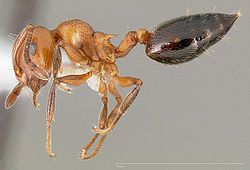
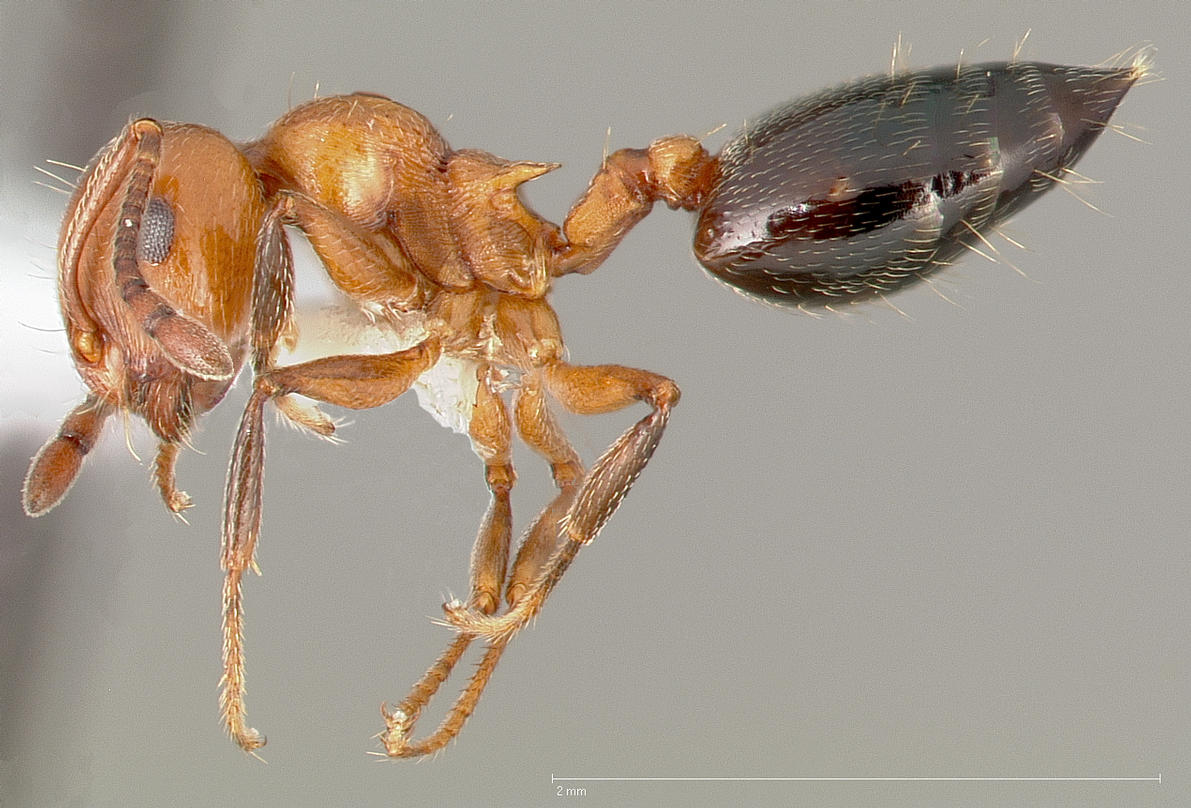
| C. hespera worker | |
Scientific classification 
| |
| Kingdom: | Animalia |
| Phylum: | Arthropoda |
| Class: | Insecta |
| Order: | Hymenoptera |
| Family: | Formicidae |
| Subfamily: | Myrmicinae |
| Tribe: | Crematogastrini |
| Genus: | Crematogaster Lund, 1831 [1] |
| Diversity | |
| > 420 species | |


Crematogaster is an ecologically diverse genus of ants found worldwide, which are characterised by a distinctive heart-shaped gaster (abdomen), which gives them one of their common names, the Saint Valentine ant.[2] Members of this genus are also known as cocktail ants because of their habit of raising their abdomens when alarmed.[3] Most species are arboreal (tree-dwelling). These ants are also known as acrobat ants.[4]
Cocktail ants acquire food largely through predation on other insects, such as wasps.[5] They use venom to stun their prey and a complex trail-laying process to lead comrades to food sources. Like most ants, Crematogaster species reproduce by partaking in nuptial flights, where the queen acquires the sperm used to fertilize every egg throughout her life.[citation needed]
Predatory behavior
[edit]Cocktail ants hunt both large and small prey. When time to hunt, foragers typically recruit nearby ants to assist them. The ants can mark and detect their prey by specific contact. When they make contact, they attack, sometimes releasing a small amount of venom with a sting. They also release an alarm pheromone to alert still more workers that prey has been seized. If other workers are present, the ants "spread-eagle" the prey. When the prey is spread-eagled, all limbs are outstretched and it is carried along the backsides of the ants. The ants carry arolia, pad-like projections that are used to carry the prey back to the nest. These arolia are critical because cocktail ants are arboreal and often need to travel up trees to return to their nesting location. If the prey is small and only one ant is present, it can carry the prey individually. If other workers are present, the ant recruits carrying assistance, even if the prey is small. Cocktail ants typically eat grasshoppers, termites, wasps, and other small insects.[6] South American Crematogaster ants are also known to feed on egg sacs and spiderlings from the colonies of the social spider Anelosimus eximius.[7]
Predation of wasps
[edit]Cocktail ants are known to eat different types of wasps. Many of these wasps have mutualistic relationships with trees involving pollination.[8] Additionally, the wasps typically have cycles that they follow, which can make locating and capturing them by the ants more difficult. As a result, cocktail ants have evolved unique characteristics to detect the presence of prey. They have become sensitive to chemical signals released by wasps, and use these signals as cues in locating their prey.[5]
Habitat
[edit]

Cocktail ants can be found either outdoors or indoors with great frequency in each case. Outdoors, they are usually arboreal, but they often live in many common areas in the wild. These areas are typically moist and are often dark. They can often be found in trees, collections of wood (like firewood), and under rocks. Indoors, nests have been found inside homes around electrical wires.[9] These locations are often very near large food supplies and may be around other ant nests.[citation needed]
Reproduction
[edit]As with many social ant species, in cocktail ants, a queen mates with a single male during a nuptial flight. During this flight, the winged queen and winged male mate, and the male dies shortly afterwards. The female eventually lands and removes her own wings, which she no longer needs.[citation needed]
In these ant species, a variation also exists to this mating strategy. Large female workers exist that are smaller than winged queens, yet larger than small workers. They also have many anatomical features that are intermediate to small workers and the queen, including ovary size and composition, and patches. These females can produce unfertilized eggs that can eventually develop into males in colonies that do not have a queen. If these eggs are produced in a colony with a queen, the queen can devour them. Larvae can also devour the eggs. Large workers normally produce more eggs in ant colonies that are queenless. Large workers can be tended to by small workers in a similar manner to ant queens.[10]
Defensive behavior
[edit]Crematogaster ants "are able to raise their abdomens forward and over their thoraces and heads, which allow them to point their abdominal tips in nearly all directions",[11] "as if they were performing a balancing act",[12] thus they are colloquially known as cocktail ants or acrobat ants.
When in conflict, cocktail ants can release a venom by flexing their abdominal regions. The effectiveness of the venom varies greatly with the opposer to the ant. For example, some other ant species are not very resistant and can be killed with only a few drops, while other ant species and insects have a high degree of resistance to even large amounts of venom. However, the venom can often repel offending ants if it comes into contact with their antennae. Cocktail ants are typically not repelled by venom from other cocktail ants. The venom is created in a metapleural gland and usually consists of complex and simple phenols and carboxylic acids, some of which have known antibiotic properties.[13] The ants apply froths to conflicting organisms. The froths are applied in a "paintbrush" style manner to surround the offender. "Frothing" has evolved independently in ants and grasshoppers.[14]
Division of labor
[edit]As with most eusocial insects, cocktail ants tend to form castes based on labor duties. This division is normally behavioral, but also has a physical basis, including size or age.[15] Soldiers are typically larger with a more developed metapleural gland specialized for colony defence or food acquisition. A worker ant is generally smaller than soldiers and queens, and its main task is to assist the queen in rearing the young. Workers vary in size more than soldiers. This considerable variation in size may have played a considerable role in the evolution of "large workers" in this genus.[16]
Mutualism
[edit]Cocktail ants participate in a form of mutualism called myrmecophytism, in which plants provide shelter and secreted food, while the ants provide the plants with protection from predators. Many cocktail ants use plants such as Macaranga as their main source of food.
The ants become alarmed when the plant is disturbed. They quickly emerge from their plant shelter and become aggressive. This can be the case even when neighboring plants are under attack. They can also recruit other ants to help in their defense.[17] 3-Octanone and 3-Octanol have been identified as the alarm pheromones of East African Crematogaster negriceps and Crematogaster mimosa.[18] The major components of the mandibular secretion of the Costa Rican Crematogaster rochai are also 3-octanone and 3-octanol.[19]
Trail-laying
[edit]Cocktail ants lay scent trails for many different reasons - communication, recruitment of workers, etc. The scents originate in the tibial gland and are secreted from the gaster of the ants. The gaster never actually touches the surface of what the ant is leaving the scent on. When laying a scent trail, the ants will typically lift their abdomen sharply upward then bend it forward.[20]
One practical use for trail laying is to mark the path toward food. The ants often find a food source requiring them to make multiple trips to the nest or shelter. To keep track of space, a scent is useful. Another significant use of a scent is to recruit other workers. This is actually helpful in a number of scenarios. It can increase efficiency when a food source is located and needs to be brought back to the nest. It can also be helpful in recruiting assistance during an attack on one of the cocktail ants' plant shelters.[citation needed]
Species
[edit]More than 430 species are recognised in the genus Crematogaster :[1]
- C. abdominalis Motschoulsky, 1863
- C. aberrans Forel, 1892
- C. abrupta Mann, 1919
- C. abstinens Forel, 1899
- C. acaciae Forel, 1892
- C. aculeata Donisthorpe, 1941
- C. acuta Fabricius, 1804
- C. adrepens Forel, 1897
- C. aegyptiaca Mayr, 1862
- C. affabilis Forel, 1907
- C. afghanica Forel, 1967
- C. africana Mayr, 1895
- C. agnetis Forel, 1892
- C. agniae Karavaiev, 1935
- C. agnita Wheeler, 1934
- C. aitkenii Forel, 1902
- C. algirica Lucas, 1849
- C. alluaudi Emery, 1893
- C. aloysiisabaudiae Menozzi, 1930
- C. alulai Emery, 1901
- C. amabilis Santschi, 1911
- C. amapaensis Kempf, 1960
- C. ambigua Santschi, 1926
- C. amita Forel, 1913
- C. ampla Powell, 2014
- C. ampullaris Smith, 1861
- C. ancipitula Forel, 1917
- C. angulosa Andre, 1896
- C. angusticeps Santschi, 1911
- C. antaris Forel, 1894
- C. anthracina Smith, 1857
- C. apicalis Motschoulsky, 1878
- C. arata Emery, 1906
- C. arcuata Forel, 1899
- C. arizonensis Wheeler, 1908
- C. armandi Forel, 1921
- C. arnoldi Forel, 1914
- C. aroensis Menozzi, 1935
- C. arthurimuelleri Forel, 1894
- C. ashmeadi Mayr, 1886
- C. atitlanica Wheeler, 1936
- C. atkinsoni Wheeler, 1919
- C. atra Mayr, 1870
- C. auberti Emery, 1869
- C. augusti Emery, 1895
- C. aurita Karavaiev, 1935
- †C. aurora LaPolla & Greenwalt, 2015 [21]
- C. australis Mayr, 1876
- C. baduvi Forel, 1912
- C. bakeri Menozzi, 1925
- C. barbouri Weber, 1934
- C. batesi Forel, 1911
- C. bequaerti Forel, 1913
- C. betapicalis Smith, 1995
- C. bicolor Smith, 1860
- C. biformis Andre, 1892
- C. binghamii Forel, 1904
- C. bingo Forel, 1908
- C. biroi Mayr, 1897
- C. bison Forel, 1913
- C. boera Ruzsky, 1926
- C. bogojawlenskii Ruzsky, 1905
- C. boliviana Wheeler, 1922
- C. borneensis Andre, 1896
- C. brasiliensis Mayr, 1878
- C. brevimandibularis Donisthorpe, 1943
- C. brevis Emery, 1887
- C. brevispinosa Mayr, 1870
- C. breviventris Santschi, 1920
- C. browni Buren, 1968
- C. bruchi Forel, 1912
- C. brunnea Smith, 1857
- C. brunneipennis Andre, 1890
- C. brunnescens Motschoulsky, 1863
- C. buchneri Forel, 1894
- C. buddhae Forel, 1902
- C. butteli Forel, 1913
- C. californica Wheeler, 1919
- C. capensis Mayr, 1862
- C. captiosa Forel, 1911
- C. carinata Mayr, 1862
- C. castanea Smith, 1858
- C. censor Forel, 1910
- C. cephalotes Smith, 1857
- C. cerasi Fitch, 1855
- C. chiarinii Emery, 1881
- C. chlorotica Emery, 1899
- C. chopardi Bernard, 1950
- C. chungi Brown, 1949
- C. cicatriculosa Roger, 1863
- C. clariventris Mayr, 1895
- C. clydia Forel, 1912
- C. coarctata Mayr, 1870
- C. coelestis Santschi, 1911
- C. colei Buren, 1968
- C. concava Emery, 1899
- C. constructor Emery, 1895
- C. coriaria Mayr, 1872
- C. cornigera Forel, 1902
- C. cornuta Crawley, 1924
- C. corporaali Santschi, 1928
- C. corticicola Mayr, 1887
- C. corvina Mayr, 1870
- C. crassicornis Emery, 1893
- C. crinosa Mayr, 1862
- C. cristata Santschi, 1929
- C. curvispinosa Mayr, 1862
- C. cuvierae Donisthorpe, 1945
- C. cylindriceps Wheeler, 1927
- C. dahlii Forel, 1901
- C. daisyi Forel, 1901
- C. dalyi Forel, 1902
- C. decamera Forel, 1910
- C. degeeri Forel, 1886
- C. delagoensis Forel, 1894
- C. delitescens Wheeler, 1921
- C. dentinodis Forel, 1901
- C. depilis Wheeler, 1919
- C. depressa (Latreille, 1802)
- C. descarpentriesi Santschi, 1928
- C. descolei Kusnezov, 1949
- C. desecta Forel, 1911
- C. desperans Forel, 1914
- C. detecta sp. nov. [22]
- C. difformis Smith, 1857
- C. diffusa (Jerdon, 1851)
- C. dispar Forel, 1902
- C. distans Mayr, 1870
- C. dohrni Mayr, 1879
- C. dolens Forel, 1910
- C. donisthorpei Santschi, 1934
- C. dorsidens Santschi, 1925
- C. dubia Karavaiev, 1935
- C. ebenina Forel, 1902
- C. edentula Santschi, 1914
- C. egidyi Forel, 1903
- C. egregior Forel, 1912
- C. elegans Smith, 1859
- C. elysii Mann, 1919
- C. emeryana Creighton, 1950
- C. emeryi Forel, 1907
- C. emmae Forel, 1891
- C. enneamera Emery, 1900
- C. ensifera Forel, 1910
- C. erecta Mayr, 1866
- C. esterelana (Bernard, 1978)
- C. eurydice Forel, 1915
- C. euterpe Santschi, 1922
- C. evallans Forel, 1907
- C. excisa Mayr, 1895
- C. ferrarii Emery, 1888
- C. flavicornis Emery, 1897
- C. flavitarsis Emery, 1900
- C. foraminiceps Santschi, 1913
- C. formosa Mayr, 1870
- C. foxi Mann, 1919
- C. fraxatrix Forel, 1911
- C. fritzi Emery, 1901
- C. frivola Forel, 1902
- C. fruhstorferi Emery, 1901
- C. fuentei Menozzi, 1922
- C. fulmeki Forel, 1922
- C. fusca Mayr, 1876
- C. gabonensis Emery, 1899
- C. gallicola Forel, 1894
- C. gambiensis Andre, 1889
- C. gavapiga Menozzi, 1935
- C. gerstaeckeri Dalla Torre, 1892
- C. gibba Emery, 1894
- C. gordani Karaman, M., 2008
- C. gratiosa Santschi, 1926
- C. grevei Forel, 1891
- C. gutenbergi Santschi, 1914
- C. heathi Mann, 1916
- C. hemiceros Santschi, 1926
- C. hespera Buren, 1968
- C. hezaradjatica Pisarski, 1967
- C. himalayana Forel, 1902
- C. hogsoni Forel, 1902
- C. homeri Forel, 1913
- C. hottentota Emery, 1899
- C. hova Forel, 1887
- C. huberi Forel, 1907
- C. iheringi Forel, 1908
- C. ilgii Forel, 1910
- C. impressa Emery, 1899
- C. impressiceps Mayr, 1902
- C. inca Wheeler, 1925
- C. inconspicua Mayr, 1896
- C. incorrecta Santschi, 1917
- C. indefensa Kempf, 1968
- C. inermis Mayr, 1862
- C. inflata Smith, 1857
- C. innocens Forel, 1911
- C. inops Forel, 1892
- C. insularis Smith, 1859
- C. ionia Forel, 1911
- C. iridipennis Smith, 1865
- C. irritabilis Smith, 1860
- C. isolata Buren, 1968
- C. jacindae Sharaf & Hita Garcia, 2019
- C. jacobsoni Forel, 1911
- C. javanica Menozzi, 1935
- C. jeanneli Santschi, 1914
- C. jehovae Forel, 1907
- C. jullieni Santschi, 1910
- C. juventa Santschi, 1926
- C. kachelibae Arnold, 1954
- C. karawaiewi Menozzi, 1935
- C. kasaiensis Forel, 1913
- C. kelleri Forel, 1891
- C. kirbii (Sykes, 1835)
- C. kneri Mayr, 1862
- C. kohli Forel, 1909
- C. kutteri Viehmeyer, 1924
- C. laboriosa Smith, 1874
- C. laestrygon Emery, 1869
- C. laeviceps Smith, 1858
- C. laevis Mayr, 1878
- C. laevissima Smith, 1860
- C. laeviuscula Mayr, 1870
- C. lamottei Bernard, 1953
- C. lango Weber, 1943
- C. larreae Buren, 1968
- C. latuka Weber, 1943
- C. laurenti Forel, 1909
- C. ledouxi Soulie, 1961
- C. libengensis Stitz, 1916
- C. liengmei Forel, 1894
- C. limata Smith, 1858
- C. lineolata (Say, 1836)
- C. litoralis Arnold, 1955
- C. lobata Emery, 1895
- C. longiceps Forel, 1910
- C. longiclava Emery, 1893
- C. longipilosa Forel, 1907
- C. longispina Emery, 1890
- C. lorteti Forel, 1910
- C. lotti Weber, 1943
- C. lucayana Wheeler, 1905
- C. luctans Forel, 1907
- C. lutzi Forel, 1905
- C. macracantha Creighton, 1945
- C. madagascariensis Andre, 1887
- C. madecassa Emery, 1895
- C. magitae Forel, 1910
- C. magnifica Santschi, 1925
- C. major Donisthorpe, 1941
- C. manni Buren, 1968
- C. margaritae Emery, 1895
- C. marioni Buren, 1968
- C. marthae Forel, 1892
- C. matsumurai Forel, 1901
- C. meijerei Emery, 1911
- C. melanogaster Emery, 1895
- C. menilekii Forel, 1894
- C. mesonotalis Emery, 1911
- C. microspina Menozzi, 1942
- C. millardi Forel, 1902
- C. mimicans Donisthorpe, 1932
- C. mimosae Santschi, 1914
- C. minutissima Mayr, 1870
- C. misella Arnold, 1920
- C. mjobergi Forel, 1915
- C. modiglianii Emery, 1900
- C. montenigrinus Karaman, M., 2008
- C. montezumia Smith, 1858
- C. monticola Arnold, 1920
- C. moorei Donisthorpe, 1941
- C. moqorensis Pisarski, 1967
- C. mormonum Wheeler, 1919
- C. mottazi Santschi, 1928
- C. mucronata Emery, 1900
- C. muralti Forel, 1910
- C. mutans Buren, 1968
- C. myops Forel, 1911
- C. natalensis Forel, 1910
- C. navajoa Buren, 1968
- C. nesiotis Mann, 1919
- C. neuvillei Forel, 1907
- C. nigeriensis Santschi, 1914
- C. nigrans Forel, 1915
- C. nigriceps Emery, 1897
- C. nigronitens Santschi, 1917
- C. nigropilosa Mayr, 1870
- C. nocturna Buren, 1968
- C. oasium Santschi, 1911
- C. obnigra Mann, 1919
- C. obscura Smith, 1857
- C. obscurior Dalla Torre, 1892
- C. ochracea Mayr, 1862
- C. ochraceiventris Stitz, 1916
- C. onusta Stitz, 1925
- C. opaca Mayr, 1870
- C. opaciceps Mayr, 1901
- C. opuntiae Buren, 1968
- C. ornatipilis Wheeler, 1918
- C. orobia Santschi, 1919
- C. osakensis Forel, 1900
- C. oscaris Forel, 1910
- C. overbecki Viehmeyer, 1916
- C. oxygynoides Santschi, 1934
- C. painei Donisthorpe, 1945
- C. pallida Lowne, 1865
- C. pallipes Mayr, 1862
- C. paolii Menozzi, 1930
- C. paradoxa Emery, 1894
- C. parallela Santschi, 1925
- C. parapilosa sp. nov. [22]
- C. patei Buren, 1968
- C. pauciseta Emery, 1899
- C. pauli Emery, 1901
- C. pellens Walker, 1859
- C. perelegans Forel, 1902
- C. peringueyi Emery, 1895
- C. peristerica Menozzi, 1925
- C. perthensis Crawley, 1922
- C. peruviana (Wheeler, 1922)
- C. petiolidens Forel, 1916
- C. phoenica Santschi, 1915
- C. phoenix Santschi, 1921
- C. pia Forel, 1911
- C. pilosa Emery, 1895
- C. pinicola Deyrup, 2007
- C. polita Smith, 1865
- C. politula Forel, 1902
- C. polymnia Santschi, 1922
- C. popohana Forel, 1912
- C. praecursor Emery, 1891
- C. pseudinermis Viehmeyer, 1923
- C. pulchella Bernard, 1953
- C. punctulata Emery, 1895
- C. pusilla (Heer, 1850)
- C. pygmaea Forel, 1904
- C. pythia Forel, 1915
- C. quadriformis Roger, 1863
- C. quadrispinosa Roger, 1863
- C. queenslandica Forel, 1902
- C. ralumensis Forel, 1901
- C. ranavalonae Forel, 1887
- C. ransonneti Mayr, 1868
- C. rasoherinae Forel, 1891
- C. rectinota Forel, 1913
- C. recurva Emery, 1897
- C. resulcata Bolton, 1995
- C. retifera Santschi, 1926
- C. rifelna Buren, 1968
- C. rivai Emery, 1897
- C. rogenhoferi Mayr, 1879
- C. rogeri Emery, 1922
- C. rossi Buren, 1968
- C. rothneyi Mayr, 1879
- C. rudis Emery, 1894
- C. rufa (Jerdon, 1851)
- C. rufigena Arnold, 1958
- C. rufotestacea Mayr, 1876
- C. rugosa Andre, 1895
- C. rugosior Santschi, 1910
- C. ruspolii Forel, 1892
- C. russoi Menozzi, 1930
- C. rustica Santschi, 1935
- C. sagei Forel, 1902
- C. sanguinea Roger, 1863
- C. santschii Forel, 1913
- C. saussurei Forel, 1899
- C. scapamaris Santschi, 1922
- C. scelerata Santschi, 1917
- C. schencki Forel, 1891
- C. schimmeri Forel, 1912
- C. schmidti (Mayr, 1853)
- C. schultzei Forel, 1910
- C. scita Forel, 1902
- C. sculpturata Pergande, 1896
- C. scutellaris (Olivier, 1792)
- C. semperi Emery, 1893
- C. senegalensis Roger, 1863
- C. sewellii Forel, 1891
- C. similis Stitz, 1911
- C. simoni Emery, 1893
- C. sjostedti (Mayr, 1907)
- C. skounensis Soulie, 1961
- C. solenopsides Emery, 1899
- C. solers Forel, 1910
- C. sordidula (Nylander, 1849)
- C. sorokini Ruzsky, 1905
- C. soror Forel, 1902
- C. spengeli Forel, 1912
- C. stadelmanni Mayr, 1895
- C. steinheili Forel, 1881
- C. stenocephala Emery, 1922
- C. stethogompha Wheeler, 1919
- C. stigmata Santschi, 1914
- C. stollii Forel, 1885
- C. striatula Emery, 1892
- C. subcircularis Mayr, 1879
- C. subdentata Mayr, 1877
- C. subnuda Mayr, 1879
- C. sumichrasti Mayr, 1870
- C. tanakai Hosoishi, S. & Ogata, K., 2009[23]
- C. tarsata Smith, 1865
- C. terminalis (Shuckard, 1838)
- C. tetracantha Emery, 1887
- C. theta Forel, 1911
- C. togoensis Donisthorpe, 1945
- C. torosa Mayr, 1870
- C. transiens Forel, 1913
- C. transvaalensis Forel, 1894
- C. trautweini Viehmeyer, 1914
- C. travancorensis Forel, 1902
- C. treubi Emery, 1896
- C. tumidula Emery, 1900
- C. udo Forel, 1905
- C. unciata Santschi, 1925
- C. ustiventris Menozzi, 1935
- C. vandeli Soulie, 1961
- C. vandermeermohri Menozzi, 1930
- C. vermiculata Emery, 1895
- C. vetusta sp. nov. [22]
- C. victima Smith, 1858
- C. vidua Santschi, 1928
- C. vitalisi Menozzi, 1925
- C. voeltzkowi Forel, 1907
- C. vulcania Santschi, 1913
- C. walshi Forel, 1902
- C. warburgi Menozzi, 1933
- C. wasmanni Santschi, 1910
- C. weberi Emery, 1911
- C. wellmani Forel, 1909
- C. werneri Mayr, 1907
- C. wheeleri Mann, 1919
- C. whitei Wheeler, 1915
- C. wilwerthi Santschi, 1910
- C. wroughtonii Forel, 1902
- C. xerophila Wheeler, 1915
- C. yappi Forel, 1901
- C. yamanei Hosoishi, S. & Ogata, K., 2009[23]
- C. zavattarii Menozzi, 1926
- C. zonacaciae Weber, 1943
See also
[edit]References
[edit]- ^ a b "Crematogaster". Integrated Taxonomic Information System.
- ^ Alex Wild (2007-07-21). "Crematogaster". Archived from the original on 2007-08-06.
- ^ African Insect Life - S. H. Skaife (Longmans, Green — Cape Town)
- ^ Acrobat Ant, Iowa State Univ., Dept. of Entomology
- ^ a b Schatz, Bertrand, and Martine Hossaert-Mckey. "Interactions of the Ant Crematogaster Scutellaris with the Fig/fig Wasp Mutualism." Ecological Entomology 28.3 (2003): 359-68. Print.
- ^ Richard, Freddie. "Predatory Behavior in Dominant Arboreal Ant Species: The Case of Crematogaster Sp. (Hymenoptera: Formicidae) - Springer." Predatory Behavior in Dominant Arboreal Ant Species: The Case of Crematogaster Sp. (Hymenoptera: Formicidae) - Springer. N.p., 01 Mar. 2001. Web. 24 Oct. 2013.
- ^ Christenson, Terry E. (August 1984). ""Behaviour of colonial and solitary spiders of the theridiid species Anelosimus Eximius"". Animal Behaviour. 32 (3): 725–726. doi:10.1016/S0003-3472(84)80148-7. Retrieved July 12, 2024.
- ^ Schatz, Bertrand, Marie-Charlotte Anstett, Welmoed Out, and Martine Hossaert-McKey. "Olfactive Detection of Fig Wasps as Prey by the Ant Crematogaster Scutellaris (Formicidae; Myrmicinae)." Naturwissenschaften 90.10 (2003): 456-59. Print.
- ^ Nauman, Jennifer S. "Acrobat Ants." : College of Agriculture, Forestry and Life Sciences : Clemson University : South Carolina. N.p., n.d. Web. 22 Nov. 2013.
- ^ Heinze, J., S. Foitzik, B. Oberstadt, O. Rüppell, and B. Hölldobler. "A Female Caste Specialized for the Production of Unfertilized Eggs in the Ant Crematogaster Smithi."Naturwissenschaften 86.2 (1999): 93-95. Print.
- ^ Schulz, Stefan (7 January 2005). The Chemistry of Pheromones and Other Semiochemicals II. Springer Science & Business Media. p. 193. ISBN 9783540213086.
- ^ James Baker (Aug 29, 2019). "Acrobat Ants". N.C. Cooperative Extension.
- ^ Marlier, J., Y. Quinet, and J. Debiseau. "Defensive Behaviour and Biological Activities of the Abdominal Secretion in the Ant Crematogaster Scutellaris (Hymenoptera: Myrmicinae)." Behavioural Processes 67.3 (2004): 427-40. Print.
- ^ Resh, Vincent H.; Cardé, Ring T. (2009-07-22). Encyclopedia of Insects. Academic Press. ISBN 9780080920900.
- ^ Stapley, L. "Physical Worker Castes in Colonies of an Acacia-ant (Crematogaster Nigriceps) Correlated with an Intra-colonial Division of Defensive Behaviour." Insectes Sociaux 46 (1999): 146-49.
- ^ Peeters, Christian, Chung-Chee Lin, and Yves Quinet. "Evolution of a Soldier Caste Specialized to Lay Unfertilized Eggs in the Ant Genus Crematogaster (subgenus Orthocrema)." Elsevier 42 (201 a3): 257-64. Web. 10 Nov. 2013.
- ^ Inui, Yoko, and Takao Itioka. "Species-specific Leaf Volatile Compounds of Obligate Macaranga Myrmecophytes and Host-specific Aggressiveness of Symbiotic Crematogaster Ants." Journal of Chemical Ecology 33.11 (2007): 2054-063. Print.
- ^ Wood, William F.; Chong, Berni (1975). "3-Octanone and 3-Octanol; Alarm Pheromones from East African Acacia Ants". Journal of the Georgia Entomological Society. 10: 332–334.
- ^ Wood, William F. (2005). "Comparison of mandibular gland volatiles from ants of the bull horn acacia, Acacia collinsii". Biochemical Systematics and Ecology. 33 (7): 651–658. Bibcode:2005BioSE..33..651W. doi:10.1016/j.bse.2004.12.009.
- ^ "Leuthold, R. H. "A Tibial Gland Scent-Trail Lying Behavior in Crematogaster." Psyche75.128 (1968): 233-48. Web. 20 Oct. 2013". Archived from the original on 2020-02-02. Retrieved 2013-10-25.
- ^ "Crematogaster aurora". www.antweb.org. Retrieved 2023-10-25.
- ^ a b c Ward, Philip S.; Blaimer, Bonnie B. (2022). "Taxonomy in the phylogenomic era: species boundaries and phylogenetic relationships among North American ants of the Crematogaster scutellaris group (Formicidae: Hymenoptera)". Zoological Journal of the Linnean Society. 194 (3): 898–937. doi:10.1093/zoolinnean/zlab047.
- ^ a b Hosoishi, S. & Ogata, K., 2009, A taxonomic revision of the Asian endemic subgenus Physocrema of the genus Crematogaster (Hymenoptera: Formicidae)., Zootaxa (2062), pp. 15-36: 29-30
External links
[edit] Data related to Crematogaster at Wikispecies
 Media related to Crematogaster at Wikimedia Commons
- Black Ants' unique nest in a tree trunk- Philippines Archived 2020-10-24 at the Wayback Machine by Isidro A. T. Savillo


Crematogaster
View on GrokipediaTaxonomy and Phylogeny
Classification
Crematogaster belongs to the subfamily Myrmicinae within the family Formicidae and is classified in the tribe Crematogastrini.[5][6] The genus was first described by Danish entomologist Christian J. Lund in 1831, based on the type species Formica scutellaris (now Crematogaster scutellaris).[6] Subsequent taxonomic work advanced understanding of its boundaries, with significant contributions in Hölldobler and Wilson's comprehensive 1990 monograph The Ants, which treated numerous proposed subgenera as junior synonyms while emphasizing the genus's ecological and morphological diversity. More recent revisions, such as Blaimer's 2012 subgeneric study, have refined this classification using molecular data to reassess phylogenetic relationships and synonymies. Phylogenetically, Crematogaster occupies a basal position within the diverse Myrmicinae subfamily, closely allied with other genera in the Crematogastrini tribe, such as Cophomyrma. Molecular phylogenies based on multilocus nuclear gene sequences indicate that the genus originated in Southeast Asia during the mid-Eocene (approximately 40–45 million years ago), with major diversification occurring through the late Oligocene and early Miocene, aligning with broader Paleogene radiations in ants driven by angiosperm proliferation.[7] These studies highlight Crematogaster's exceptional dispersal capabilities, facilitating multiple colonization events across tropical and temperate regions. Subgeneric divisions have undergone substantial revision, reducing over a dozen historical subgenera to two primary ones: Crematogaster sensu stricto and Orthocrema. Crematogaster sensu stricto incorporates former groups like Decacrema, distinguished by traits such as a quadrate petiole with a posteriorly placed spiracle relative to the propodeal one and a postpetiole that broadly attaches to the gaster. Orthocrema encompasses other lineages, including Neocrema, characterized by a more elongate petiole and an anteriorly positioned propodeal spiracle. These divisions reflect monophyletic clades supported by morphological and genetic evidence, aiding in the genus's high species diversity worldwide.Species Diversity and Subgenera
The genus Crematogaster encompasses more than 500 described species worldwide, representing one of the most species-rich ant genera in the family Formicidae.[8] This diversity is particularly pronounced in tropical and subtropical regions, with the highest concentrations observed in the Indo-Australian and Neotropical realms, where these ants often dominate local arthropod communities.[9] For instance, Asia alone accounts for approximately 145 valid species, underscoring the Indo-Australian hotspot, while the Neotropics harbor a significant portion of the genus's overall richness due to extensive adaptive radiations.[10][11] Molecular phylogenetic studies have highlighted substantial undescribed diversity within Crematogaster, including numerous cryptic species that are morphologically indistinguishable but genetically distinct.[12] These hidden lineages, often uncovered through multilocus DNA sequencing, suggest that the true species count could nearly double the current tally, especially in understudied tropical areas like Southeast Asia and the Americas.[13][14] Such findings emphasize the challenges of traditional morphology-based taxonomy in this hyperdiverse group and the value of integrative approaches for revealing evolutionary patterns. A comprehensive subgeneric revision recognizes two primary subgenera: Orthocrema and Crematogaster sensu stricto, with numerous former subgenera now treated as synonyms.[9] Orthocrema is diagnosed by a nodiform petiole (with a distinct node) and the postpetiole attached to the anterior face of the fourth abdominal tergite, encompassing species adapted to diverse Old World habitats; examples include C. (Orthocrema) viduata from Africa and various Malagasy endemics like C. (Orthocrema) tarava.[15] In contrast, Crematogaster sensu stricto features a more variable petiole shape (often trapezoidal or rounded) and dorsal attachment of the postpetiole to the gaster, including former subgenera such as Oxygyne (noted for polymorphic queens suggestive of social parasitism) and Atopogyne (with variable propodeal spine development).[9][16] Representative species in this subgenus include C. (Oxygyne) ranavalonae from Madagascar, which exhibits extreme queen polymorphism, and C. (Atopogyne) spp. with inconsistent spine morphology across populations.[16][17] Conservation concerns for Crematogaster are limited but notable in certain cases, primarily driven by habitat destruction in tropical ecosystems. Crematogaster pilosa in the southeastern United States faces threats from habitat loss in coastal marshes due to development, highlighting the genus's vulnerability where species are restricted to fragile environments.[18]Description and Morphology
Physical Characteristics
Crematogaster ants are small to medium-sized, with workers typically measuring 2–5 mm in length and queens reaching up to 8 mm. Coloration is predominantly black or dark brown, though regional variations occur, such as reddish hues in some tropical species and lighter yellow tones in leaf-litter inhabitants.[2][19] The genus features several distinctive morphological traits. The gaster is heart- or teardrop-shaped, attaching dorsally to the postpetiole, which enables elevation over the mesosoma. The propodeum bears a pair of dorsal spines, varying from short and thick to long and slender across species. The petiole is slender and node-less, often rectangular or triangular in outline with subtle sculpturing. Antennae comprise 11 segments, forming a club of 2–4 enlarged apical segments.[3][2] Sexual dimorphism is pronounced, particularly in thoracic structure. Queens possess an enlarged mesosoma for flight musculature and prominent ocelli, distinguishing them from workers. Males are generally smaller, with relatively elongated antennal scapes and larger compound eyes relative to head size.[2]Behavioral Adaptations in Form
Crematogaster ants exhibit a distinctive defensive behavior known as the "acrobat" posture, where workers elevate their heart-shaped gaster over the thorax and head when threatened, allowing precise application of venom from the abdominal glands directly onto intruders. This elevation, often exceeding 90 degrees relative to the body axis, exposes the spatulate tip of the sting, facilitating topical smearing of the venom rather than injection, which serves as an effective threat display to deter predators and rivals. The behavior is triggered during interspecific encounters, with strong gaster flexions accompanying high aggression levels, enabling the ants to direct the secretion accurately while maintaining mobility.[20] The tibial glands in the hind legs represent a key morphological adaptation for chemical communication in Crematogaster, consisting of class-3 exocrine structures with secretory cells and a reservoir embedded within the tibia, allowing for the production and storage of trail pheromones. These glands enable workers to lay persistent foraging trails by rubbing the hind legs against the substrate during movement, a necessity due to the ants' inability to contact the gaster tip with the ground owing to their compact form.[21][22] Sensory adaptations in Crematogaster are exemplified by their compound eyes, which are relatively large for arboreal ants and optimized for detecting motion in dense foliage, aiding in predator avoidance and prey location. These eyes feature a high density of ommatidia, correlating with the foraging niche in canopy environments, where visual cues are crucial for navigation and orientation. In species like Crematogaster, eye area measurements show significant variation tied to arboreal habits, supporting behaviors such as directed aerial descent through visual targeting of landing sites.[23][24]Distribution and Habitat
Geographic Range
The genus Crematogaster exhibits a cosmopolitan distribution, with species present on all continents except Antarctica and the polar regions, primarily in tropical and subtropical zones.[3] This widespread occurrence spans major biogeographic realms, including the Afrotropics, Neotropics, Indo-Malaya, and Australasia, where the ants have colonized diverse ecosystems through historical dispersals.[25] While native to warmer climates, certain species have been introduced to temperate areas via human activities, expanding their range beyond original tropical strongholds.[26] Regional hotspots for Crematogaster diversity and abundance are concentrated in the tropics, particularly the Afrotropical, Neotropical, and Indo-Malayan regions, which harbor the majority of the genus's over 520 described species.[3][1] In contrast, representation is sparser in arid desert environments, where only a subset of tolerant species persist, reflecting the genus's preference for more mesic conditions.[27] These patterns underscore the ants' adaptation to humid, vegetated landscapes over extreme xeric habitats. Phylogenetic analyses indicate that Crematogaster originated in Southeast Asia during the mid-Eocene, approximately 40–45 million years ago, with subsequent Miocene dispersals enabling colonization of Africa, the Americas, and other regions.[25] Biogeographic patterns reveal significant endemism in island systems, notably Madagascar, where numerous species are restricted to the island's unique forests and exhibit high levels of local diversification.[28] This endemism highlights Madagascar as a key center for Crematogaster radiation, driven by isolation and habitat heterogeneity.[29]Ecological Preferences
Crematogaster species primarily occupy arboreal habitats in forests, woodlands, and shrublands, where they often dominate the canopy ant fauna, though certain taxa exhibit ground-nesting behaviors in disturbed or arid landscapes. For instance, species such as C. laeviuscula and C. pinicola are characteristically arboreal, nesting in elevated vegetation, while C. lineolata and C. pilosa favor terrestrial sites in open or altered environments. This dual strategy allows adaptation to diverse ecological niches, from tropical rainforests to desert scrubs. Colonies preferentially select microhabitats offering protection and moisture retention, including tree hollows, rotten wood, dead branches, and accumulations of leaf litter. Shaded, humid sites are favored, as seen in C. ashmeadi nests within beetle galleries and logs in forested understories, or C. minutissima in hollow twigs amid moist litter. Ground-foragers like C. dentinodis utilize crevices under rocks or shrub roots in semi-arid zones, emphasizing sheltered, low-evaporation locales. Abiotic conditions significantly shape Crematogaster distributions, with optimal activity occurring at temperatures of 20–26°C, as documented for C. rogenhoferi in nest environments.[30] Many species tolerate seasonal dryness through polydomous colony structures, distributing nests to mitigate desiccation risks. Elevational ranges vary, with lowland species below 500 m in wet climates and montane forms up to 1700 m in drier uplands. Biotic interactions, particularly co-occurrence with canopy vegetation, strongly influence nest site selection, as arboreal species like C. rifelna associate with live oaks (Quercus virginiana) for structural support and microclimate stability. Similarly, desert dwellers such as C. depilis nest near creosote bushes (Larrea tridentata), leveraging plant architecture for protection and proximity to resources. These associations underscore how vegetation structure guides habitat suitability across the genus.Reproduction and Life Cycle
Mating and Colony Founding
In Crematogaster ants, reproduction typically begins with nuptial flights involving synchronous swarming of alate males and queens, often triggered by environmental cues such as rainfall in tropical and subtropical regions. For instance, in the Southeast Asian species C. captiosa, flights occur shortly after monsoon rains, with swarming ceasing during active precipitation but resuming on dry days following rain, facilitating mid-air mating between winged sexuals.[31] In temperate species like C. ashmeadi, these flights are concentrated in early summer (June–July), depleting sexual brood from natal colonies by late July, while C. cerasi exhibits flights in July and August.[32][33] Such synchronization enhances mating success by concentrating dispersers, though timing varies by species and locale, often aligning with the onset of rainy seasons to optimize dispersal.[34] Following mating, dealate queens initiate colony founding primarily through independent claustral strategies in most species, where the queen seals herself in a nest site—such as abandoned beetle galleries in dead wood for C. ashmeadi—and rears the first brood using her body reserves without external foraging.[32][2] However, some groups, like the acuta-group (e.g., C. montezumia), employ temporary social parasitism, with queens infiltrating host nests of related species to exploit heterospecific workers for initial brood care before assuming control.[2] In C. scutellaris, queens may co-found colonies pleometrotically in available refugia like tree galls when nest sites are scarce, though this typically results in only one survivor dominating the mature colony. Fertilization in Crematogaster queens generally involves single mating during the nuptial flight, with spermatozoa transferred via spermatophore to the bursa copulatrix and subsequently stored immotile in the spermatheca for lifelong use, enabling egg production over a decade or more without remating.[35] Multiple mating is rare across the genus but occurs occasionally; for example, in C. smithi, genetic analyses reveal an effective mating frequency of about 1.14, with polyandry detected in roughly 22% of colonies, while C. osakensis queens show evidence of mating with multiple males based on sperm stores and worker relatedness.[36] Stored sperm remains viable for at least five years in C. osakensis, supporting continuous fertilization of diploid female eggs.[35] During initial colony growth, the founding queen lays a mix of trophic (unviable) and viable eggs to nourish emerging larvae, with trophic egg production peaking around 15 days post-founding in C. ashmeadi.[32] The claustral phase lasts 40–50 days, during which the queen loses approximately 50% of her dry weight to produce the first workers (nanitics), after which foraging begins and the colony expands.[32] This solitary provisioning ensures the transition to a functional workforce, with initial queen weight predicting total progeny biomass.[32]Development Stages
The development of Crematogaster ants follows the standard holometabolous life cycle of ants, encompassing egg, larval, pupal, and adult stages, with total immature development varying from about 4 to 8 weeks depending on species, temperature, and conditions—for example, approximately 40–50 days in C. ashmeadi at 27 °C.[32][3] Eggs are laid individually by the queen, primarily fertilized to produce female offspring (workers or new queens) or unfertilized to produce males; in queenless colonies, workers can also lay unfertilized eggs that develop into males. The egg stage lasts several days, during which embryonic development occurs, influenced by temperature and humidity.[3] The larval stage consists of multiple instars and lasts several weeks, with the legless, C-shaped larvae growing rapidly while dependent on nurse workers for protection and sustenance. Larvae are nourished through trophallaxis, receiving regurgitated liquid food from adults, and caste fate is determined by nutritional input—larvae receiving abundant, high-quality provisions develop into reproductive castes or larger workers, while those fed sparingly become smaller workers.[19] A short prepupal phase precedes pupation, during which the mature larva spins a silken cocoon for protection. The pupal stage, enclosed within this cocoon, involves internal reorganization into the adult form; the eclosing adult then chews its way out of the cocoon to emerge.[37] Once adults, Crematogaster workers typically live 3 to 6 months, performing colony tasks until worn out, whereas queens endure 10 to 15 years, continuously producing eggs to sustain the colony.[32]Social Organization
Division of Labor
In Crematogaster colonies, workers are typically monomorphic, performing a range of tasks including brood care, nest maintenance, foraging, and defense, with specialization often influenced by age polyethism and subtle size variations.[2] In certain species, such as those in the subgenus Orthocrema (e.g., C. smithi), workers exhibit dimorphism, with smaller workers focusing on nursing tasks and larger workers functioning as foragers, soldiers, and producers of trophic eggs—unfertilized eggs that serve as a protein-rich food source for the colony, storing nutrients from perishable prey for extended periods.[38][39] Workers also display age-based polyethism, whereby younger individuals focus on internal tasks like tending larvae and older ones shift to external activities such as foraging, a pattern common across ant species including Crematogaster.[40] The queen's primary role is egg production to sustain colony growth, with little to no participation in foraging or other labor once the nest is established; in species like C. cerasi, she mates once during nuptial flights, stores sperm, and lays eggs throughout her lifespan.[41] Males, in contrast, are short-lived with a lifespan of a few weeks to a month, dedicated solely to mating during reproductive flights before dying shortly thereafter.[41] Task allocation among workers is dynamically influenced by colony needs, such as resource availability or threats, and social interactions including antennal contacts that facilitate behavioral coordination; this system promotes flexibility, especially in smaller colonies where individuals often perform multiple roles to meet demands.[42] Colony size variations can modulate the extent of such specialization, with larger nests supporting more distinct task divisions.[43]Colony Structure
Crematogaster colonies vary widely in size across species, typically ranging from 100 to 10,000 workers, though some can exceed 28,000 individuals in exceptional cases. Larger colonies are frequently polydomous, comprising multiple interconnected nests that enhance resource exploitation and colony resilience, particularly in resource-rich environments like tropical forests. This polydomous structure allows for spatial expansion, with nests often linked by foraging trails spanning several meters.[44][45][3] Nest architecture in Crematogaster is predominantly arboreal, with many species constructing carton nests from masticated plant fibers mixed with soil or fungal material, forming a durable, waterproof structure. These nests exhibit a distinctive pagoda-like or spheroidal form, composed of overlapping concavo-convex chambers arranged in a conspheroidal pattern, where the concavity of each chamber faces the nest's center for internal protection. Chambers, typically 2–9 cm in diameter and 0.3–2.6 cm thick, interconnect via small passages, providing shelter for brood and workers while perched on twigs or branches 1–10 m above ground. This design optimizes defense against predators and environmental stressors like heavy rainfall.[46] Mature Crematogaster colonies are often polygynous, housing multiple queens per nest—averaging around four in some species—which contributes to sustained reproduction and colony growth. Queens exert dominance through chemical signals, likely pheromones, that render them highly attractive to workers, prompting retinue formation and defensive behaviors such as venom spraying in response to threats. In queenless conditions, workers enforce social control via policing, aggressively eliminating eggs laid by reproductive workers to maintain colony stability and favor queen-produced offspring.[45][47][48] Colony founding typically begins monogynously, with a single mated queen establishing an independent nest through claustral founding, where she rears the first workers without external aid. As colonies mature, they transition to polygyny and polydomy via budding, in which queens and worker groups relocate to establish satellite nests, often seasonally during resource peaks like the rainy season. This dynamic shift supports long-term colony persistence and expansion.[45]Foraging and Predation
Feeding Strategies
Crematogaster ants exhibit an omnivorous diet, incorporating a variety of food sources such as live insects, honeydew from hemipterans, fungi associated with wood, and opportunistic scavenging of dead arthropods.[49][50] This generalist approach allows them to exploit diverse resources in their habitats, with foraging workers collecting both solid particles like plant material and prey (approximately 72.5% plant-based and 27.5% animal-based in some species) and liquid rewards such as sugary exudates, which are preferred over fats or proteins.[51] Food sharing within Crematogaster colonies occurs primarily through trophallaxis, a mouth-to-mouth transfer of regurgitated liquids that distributes nutrients among workers, the queen, and brood.[52] This behavior facilitates efficient circulation of carbohydrates and other resources, enabling even non-foraging colony members to access food collected externally.[53] For storage, Crematogaster workers utilize an expandable crop to transport and temporarily hold liquid foods like honeydew, allowing repletes—distended individuals—to act as living reservoirs for the colony during periods of scarcity.[54] While some ant species construct nest granaries for solids, evidence for this in Crematogaster is limited, with reliance more on individual crop capacity than communal storage structures. Feeding preferences in Crematogaster shift seasonally, influenced by resource availability and environmental factors like water scarcity; in wetter spring periods, colonies prioritize carbohydrate-rich sources such as sucrose solutions or nectar-like exudates, while drier summer conditions lead to increased uptake of proteinaceous foods, reflecting higher predation to meet colony protein demands.[55] These adjustments ensure nutritional balance, with water limitation in dry seasons broadening the diet to include lower-value carbohydrates previously rejected.[56]Predatory Interactions
Crematogaster species typically employ group ambushes to capture arthropod prey, with workers detecting targets through contact and rapidly recruiting nestmates via short-range pheromones for collective foraging. In arboreal environments, such as tropical forests, foraging parties of up to 15 workers surround prey within 5–10 mm, seizing small arthropods by the body and larger ones by a leg to immobilize them. Venom is injected or applied topically via the ants' characteristic spatulated stinger, often from the Dufour gland, causing rapid paralysis; in species like C. striatula, this venom is emitted as a volatile vapor, allowing chemical immobilization without physical contact and causing termites such as Macrotermes bellicosus workers and soldiers to fall and become immobilized within 10 minutes.[57][58] Prey primarily consists of small insects, including termites and wasps, with Crematogaster laeviuscula known to raid entire nests of Polistes exclamans, consuming eggs, larvae, and pupae to cause complete colony failure. These ants also engage in kleptoparasitism, as seen in C. limata parabiotica, which conducts nocturnal raids on Ectatomma tuberculatum nests in French Guiana, intercepting 75.2% of returning foragers and stealing their loads of sugary liquid by licking, thereby complementing their diet without direct hunting.[59][60] These predatory tactics exhibit high efficiency in arboreal settings, where well-developed arolia on the ants' pretarsi aid in spread-eagling and transporting oversized prey, enabling capture of items far larger than a single worker's capacity. Chemical immobilization enhances success rates, repelling competitors and ensuring quick subdual even of agile arthropods. Notably, C. scutellaris in Mediterranean olive groves demonstrates a dual role by preying on soft scale insects (Coccidae) at high rates—significantly higher on occupied trees—while also tending them for honeydew, indirectly disrupting host plant populations and natural enemy dynamics through selective predation.[57][58][61]Defensive and Communication Behaviors
Defense Mechanisms
Crematogaster ants employ a unique chemical defense strategy involving the topical application of venomous secretions rather than spraying, facilitated by their characteristic spatulate sting. This reduced sting apparatus, located at the tip of the gaster, allows workers to raise their abdomen forward over the head and apply a droplet of toxic fluid directly onto the integument of intruders or predators. The secretions, primarily derived from an enlarged Dufour's gland, contain bioactive compounds such as long-chain aldehydes and acetates that act as contact poisons, deterring attackers through irritation, toxicity, or repellency. In addition to chemical application, workers bite with their mandibles to grasp and injure threats, often combining this with the venom smear for enhanced effect.[62] Physical displays play a key role in individual defense, with workers frequently raising their heart-shaped gaster high above the body in a characteristic "acrobat" posture, which positions the sting for precise targeting and serves as a visual warning to potential predators. This elevated gaster orientation also enables the release of alarm pheromones from the sting or mandibular glands, signaling danger to nearby nestmates. Stridulation, produced by rubbing the file-like pars stridens on the gaster against a scraper on the petiole, generates vibrational signals that amplify alarm communication, particularly in species like Crematogaster scutellaris, where the intensity and pattern of stridulations vary by threat level to coordinate responses.[63] Collectively, Crematogaster colonies mount defenses through rapid recruitment of nestmates using alarm pheromones, such as 4-methyl-3-heptanone from the Dufour's gland, which mobilizes workers to swarm and overwhelm intruders despite the lack of distinct soldier castes. In response to threats, ants may seal nest entrances with carton material constructed from masticated wood fibers, preventing access by larger predators or rival colonies, a behavior observed in arboreal species nesting in tree cavities. This cooperative sealing enhances nest fortification, particularly in exposed arboreal habitats.[64] Antipredator adaptations in Crematogaster emphasize evasion and concealment, with many species exhibiting camouflage by nesting within tree bark or dead wood, where their dark coloration and small size blend seamlessly with the substrate to avoid detection by visually hunting predators.Trail-Laying and Pheromones
Crematogaster ants utilize trail pheromones to establish and maintain foraging paths, primarily secreted from specialized tibial glands in their hind legs, a morphological adaptation unique to this genus. These glands produce volatile compounds that workers deposit by dragging their legs along substrates, creating chemical guides that direct nestmates to food resources with high efficiency. In Crematogaster scutellaris, for instance, the primary trail pheromone is (R)-(-)-tridecan-2-ol, an alcohol that elicits robust following behavior at concentrations as low as 0.001 ng/µL, while the Dufour's gland contributes additional components in some species for trail reinforcement.[21][65][66] Trail formation in Crematogaster involves the continuous deposition of these pheromones, resulting in persistent paths that allow sustained access to ephemeral resources until depletion. In intricate environments like tree canopies, trails frequently branch to facilitate exploration of multiple routes, optimizing collective foraging efforts without redundant overlap. This branching pattern supports adaptive navigation in three-dimensional spaces, where physical constraints such as branch overlaps dictate trail topology.[67] Alarm pheromones enable rapid recruitment and defensive coordination in Crematogaster, often released from the head or Dufour's gland upon disturbance. Representative components include octan-3-one as the major alarm signal in Crematogaster peringueyi, triggering agitation and attack responses among nearby workers. In species like Crematogaster castanea, 3-octanol functions similarly, with its enantiomeric composition influencing the intensity of the behavioral response. These pheromones briefly integrate with broader defensive behaviors by alerting the colony to threats, promoting swift mobilization.[68][69] Beyond foraging and alarm functions, Crematogaster employs other pheromonal signals for colony regulation. Queen pheromones, characterized by distinct chemical profiles in species such as Crematogaster smithi, are involved in caste signaling and maintenance of social structure. Cuticular hydrocarbons coating the exoskeleton serve as primary cues for nestmate recognition, with colony-specific blends allowing precise discrimination of familiar individuals from non-nestmates, thereby preventing infiltration.[70][71]Ecological Role
Mutualistic Associations
Crematogaster species engage in mutualistic associations with honeydew-producing hemipterans, such as aphids and scale insects, where ants tend these insects in exchange for a carbohydrate-rich food source. Workers actively solicit and collect honeydew, a sugary excretion produced by the hemipterans as they feed on plant sap, while providing protection against predators and parasites. This tending behavior enhances hemipteran survival and reproduction, as ants remove competitors and deter natural enemies like lady beetles. For instance, Crematogaster brevispinosa tends Planococcus citri mealybugs on orchids, leading to increased mealybug populations but also heightened plant damage due to facilitated sap-feeding.[72] Similarly, Crematogaster mimosae tends scale insects on Acacia trees, using the honeydew as a key nutritional supplement alongside extrafloral nectar.[73] In plant-ant mutualisms, certain Crematogaster species form obligate symbioses with myrmecophytic trees, particularly in African savannas. C. mimosae occupies domatia—hollow, swollen thorns provided by host trees like Acacia drepanolobium and A. zanzibarica—which serve as secure nesting sites for colonies. In return, the ants aggressively defend the trees from herbivores, including mammalian browsers such as elephants and goats, by swarming and biting intruders in response to plant-borne vibrations signaling damage. This protection significantly reduces browsing damage; for example, trees hosting C. mimosae with associated scale insects experience 2.5 times less elephant damage over 10 months compared to those without. The trees supply year-round carbohydrates through extrafloral nectaries, supporting ant colony growth and defensive vigor.[74][73] Fungal farming in Crematogaster is rare and distinct from the nutritional cultivation seen in other ant clades like the Attini. Crematogaster clariventris, an arboreal species in Central Africa, cuts small pieces of young leaves and flowers to inoculate and fertilize fungal mycelia (primarily Capnodiales) within its carton nests, creating a reinforced composite material that withstands heavy rainfall. This structural mutualism enhances nest durability without providing direct food benefits to the ants, representing a convergent evolution with fungus-growing ants but focused on architectural strength rather than provisioning. Additionally, in ant-plant systems, C. mimosae and C. nigriceps maintain distinct fungal communities within domatia, including Chaetothyriales that offer antibacterial protection and aid in nest maintenance, with alates transmitting these fungi during colony founding.[75][76][77] These associations provide Crematogaster with essential nutrition from honeydew and nectar, stable nest sites via domatia, and structural support from fungi, while partners gain defense against herbivores, predators, and environmental stressors.[72][74][75]Interactions with Other Species
Crematogaster ants engage in intense competition with other ant species for resources such as nesting sites and food, often leading to territorial disputes and exclusion of rivals. In African savannas, species like Crematogaster mimosae and Crematogaster sjostedti compete aggressively with congeners and Tetraponera ants for exclusive possession of myrmecophyte trees, such as whistling thorn (Vachellia drepanolobium), where dominant colonies prune neighboring vegetation to deter intruders and secure nectar resources.[78][79] In North American contexts, Crematogaster quadriformis exhibits rapid foraging and holds its own in direct confrontations with the invasive red imported fire ant (Solenopsis invicta), spraying venom to defend food baits and occasionally displacing the competitor.[80] This resource exclusion extends to broader interspecific rivalries, where invading ants like the big-headed ant (Pheidole megacephala) outcompete Crematogaster species by disrupting their tree-based territories, reducing native ant densities by up to 90% in affected ecosystems.[81] Predators target Crematogaster colonies at various life stages, exploiting their arboreal and ground-nesting habits. Birds such as woodpeckers and thrushes forage on worker ants and brood from exposed nests, while spiders, including orb-weavers and jumping spiders, ambush foraging Crematogaster individuals on vegetation. Parasitic organisms exploit Crematogaster colonies through direct infestation and social manipulation. Phorid flies (Pseudacteon spp.) are key parasitoids, with females ovipositing on foraging workers; the resulting larvae decapitate the host ant, emerging to pupate and reducing colony foraging efficiency in affected populations.[41] Nematodes, including species like Diploscapter sp., are associated with Crematogaster workers and queens in tropical ant-plant associations, such as those with Macaranga trees, where they occur in the ants' habitats and may impair reproduction and longevity.[82] Social parasites employ inquilinism, where inquiline species like certain chalcid wasps (Myrmokata sp.) integrate into Crematogaster colonies as permanent guests, relying on host workers for brood care while producing their own offspring that compete for resources.[83] Crematogaster species pose conflicts with humans primarily through structural damage and agricultural impacts. In urban and suburban settings, acrobat ants (Crematogaster spp.) nest in moisture-damaged wood, such as roof timbers and wall voids, excavating galleries that weaken already compromised structures, though they do not consume sound wood like termites. In agriculture, species like Crematogaster cerasi exacerbate pest issues by tending honeydew-producing aphids and scale insects on crops, indirectly promoting plant damage and reducing yields in orchards and fields.[37][84]References
- https://www.antwiki.org/wiki/Crematogaster
- https://www.antwiki.org/wiki/Myrmecophytes
- https://www.antwiki.org/wiki/Crematogastrini
- https://www.antwiki.org/wiki/Crematogaster_%28subgenus%29
- https://www.antwiki.org/wiki/Malagasy_Region_Species_List
- https://www.antwiki.org/wiki/images/b/b9/Fiala%2C_B.%2C_Hashim%2C_R.B._et-al._2017._Nuptial_flight_of_the_Southeast_Asian_plant-ant_Crematogaster_captiosa_and_the_phenology_of_colony_founding.pdf
- https://www.antwiki.org/wiki/The_Ants_Chapter_8
- https://www.antwiki.org/wiki/Nestmate_Recognition