Hubbry Logo
Allopathic medicineAllopathic medicineMain
Open search
Allopathic medicine
Community hub
Allopathic medicine
logo
8 pages, 0 posts
0 subscribers
Be the first to start a discussion here.
Allopathic medicine
Allopathic medicine
from Wikipedia
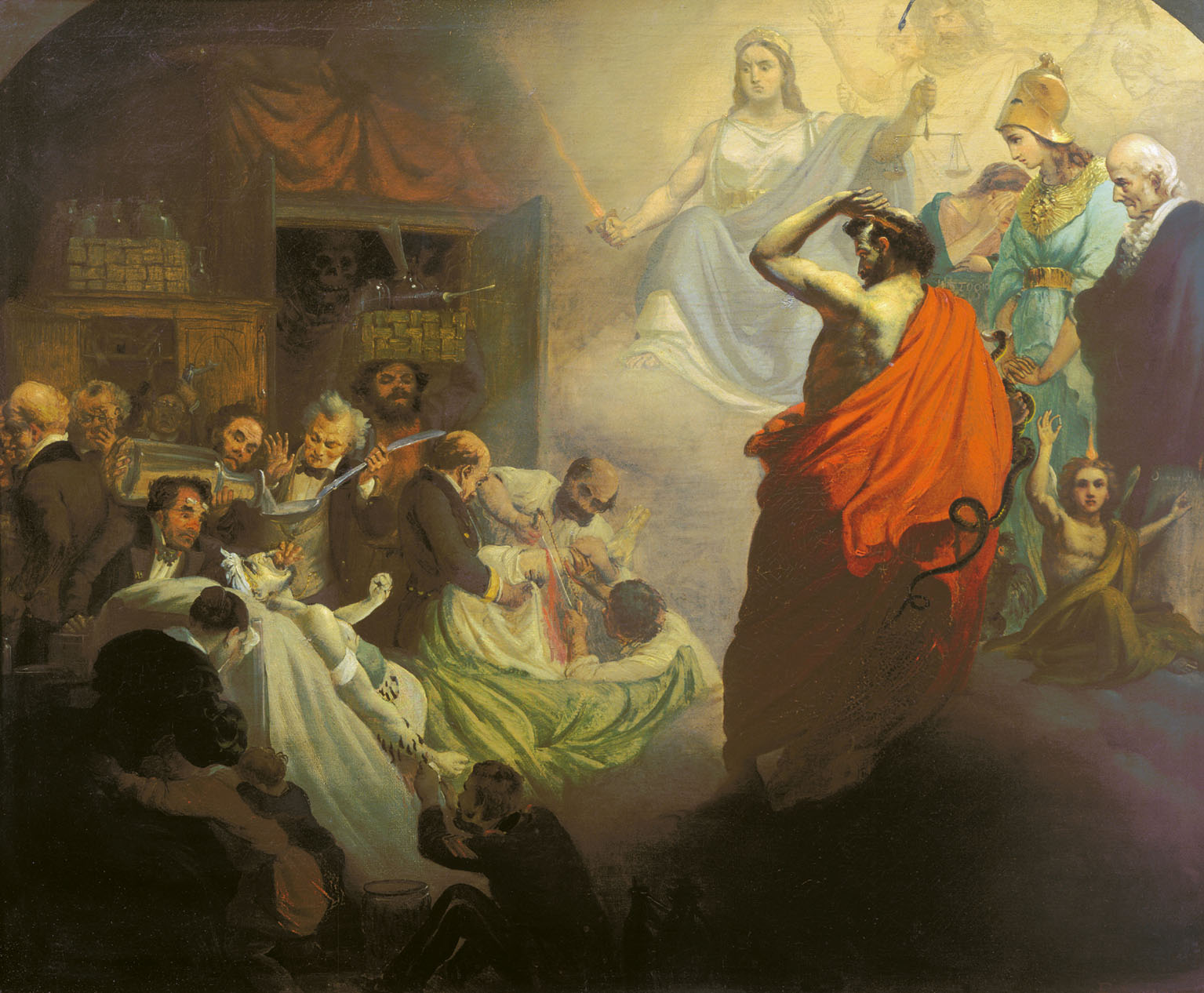
Homeopathy Looks at the Horrors of Allopathy, by Alexander Beideman (1857)

Allopathic medicine, or allopathy, from Ancient Greek ἄλλος (állos), meaning "other", and πάθος (páthos), meaning "pain", is a label originally used derogatorily by 19th-century homeopaths to describe heroic medicine. [1] In its current usage, the term generally refers to contemporary conventional medicine.[2][3] However, there are regional variations in usage of the term. For example, in the United States the term is primarily used in contrast with osteopathic medicine, especially in the field of medical education; whereas in India the term is used to distinguish modern medicine from Siddha medicine, Ayurveda, homeopathy, Unani and other alternative and traditional medicine traditions, especially when comparing treatments and drugs.[citation needed]

The terms were coined in 1810 by the creator of homeopathy, Samuel Hahnemann.[4] Heroic medicine was the conventional European medicine of the time and did not rely on evidence of effectiveness. It was based on the belief that disease is caused by an imbalance of the four "humours" (blood, phlegm, yellow bile, and black bile) and sought to treat disease symptoms by correcting that imbalance, using "harsh and abusive" methods to induce symptoms seen as opposite to those of diseases[5] rather than treating their underlying causes: disease was caused by an excess of one humour and thus would be treated with its "opposite".[6]

A study released by the World Health Organization (WHO) in 2001 defined allopathic medicine as "the broad category of medical practice that is sometimes called Western medicine, biomedicine, evidence-based medicine, or modern medicine."[7] The WHO used the term in a global study in order to differentiate Western medicine from traditional and alternative medicine, noting that in certain areas of the world "the legal standing of practitioners is equivalent to that of allopathic medicine" where practitioners can be separately certified in complementary/alternative medicine and Western medicine.[7]

The term allopathy was also used to describe anything that was not homeopathy.[6] Kimball Atwood, an American medical researcher and alternative medicine critic, said the meaning implied by the label of allopathy has never been accepted by conventional medicine and is still considered pejorative.[8] American health advocate and sceptic William T. Jarvis, stated that "although many modern therapies can be construed to conform to an allopathic rationale (e.g., using a laxative to relieve constipation), standard medicine has never paid allegiance to an allopathic principle" and that the label "allopath" was "considered highly derisive by regular medicine."[9] Most modern science-based medical treatments (antibiotics, vaccines, and chemotherapeutics, for example) do not fit Hahnemann's definition of allopathy, as they seek to prevent illness or to alleviate an illness by eliminating its cause.[10][11]

History

[edit]

The practice of medicine in both Europe and North America during the early 19th century is sometimes referred to as heroic medicine because of the extreme measures (such as bloodletting) sometimes employed in an effort to treat diseases.[12] The term allopath was used by Hahnemann and other early homeopaths to highlight the difference they perceived between homeopathy and the "conventional" heroic medicine of their time. With the term allopathy (meaning "other than the disease"), Hahnemann intended to point out how physicians with conventional training employed therapeutic approaches that, in his view, merely treated symptoms and failed to address the disharmony produced by underlying disease.[clarification needed] Homeopaths saw such symptomatic treatments as "opposites treating opposites" and believed these methods were harmful to patients.[4]

Practitioners of alternative medicine have used the term "allopathic medicine" to refer to the practice of conventional medicine in both Europe and the United States since the 19th century. In that century, the term allopath was used most often as a derogatory name for the practitioners of heroic medicine,[13][14] a precursor to modern medicine that itself did not rely on evidence of effectiveness.

James Whorton discusses this historical pejorative usage:

One form of verbal warfare used in retaliation by irregulars was the word "allopathy". ..."Allopathy" and "allopathic" were liberally employed as pejoratives by all irregular physicians of the nineteenth century, and the terms were considered highly offensive by those at whom they were directed. The generally uncomplaining acceptance of [the term] "allopathic medicine" by today's physicians is an indication of both a lack of awareness of the term's historical use and the recent thawing of relations between irregulars and allopaths.[15]

The controversy surrounding the term can be traced to its original usage during a heated 19th-century debate between practitioners of homeopathy and those they derisively referred to as "allopaths."[16]

Hahnemann used "allopathy" to refer to what he saw as a system of medicine that combats disease by using remedies that produce effects in a healthy subject that are different (hence the Greek root allo- "different") from the effects produced by the disease to be treated. The distinction comes from the use in homeopathy of substances that are meant to cause similar effects as the symptoms of a disease to treat patients (homeo - meaning "similar").

As used by homeopaths, the term allopathy has always referred to the principle of treating disease by administering substances that produce other symptoms (when given to a healthy human) than the symptoms produced by a disease. For example, part of an allopathic treatment for fever may include the use of a drug which reduces the fever, while also including a drug (such as an antibiotic) that attacks the cause of the fever (such as a bacterial infection). A homeopathic treatment for fever, by contrast, is one that uses a diluted dosage of a substance that in an undiluted form would induce fever in a healthy person. These preparations are typically diluted so heavily that they no longer contain any actual molecules of the original substance. Hahnemann used this term to distinguish medicine as practiced in his time from his use of infinitesimally small (or nonexistent) doses of substances to treat the spiritual causes of illness.

The Companion Encyclopedia of the History of Medicine states that "[Hahnemann] gave an all-embracing name to regular practice, calling it 'allopathy'. This term, however imprecise, was employed by his followers and other unorthodox movements to identify the prevailing methods as constituting nothing more than a competing 'school' of medicine, however dominant in terms of number of practitioner proponents and patients".[17]

Contrary to the present usage, Hahnemann reserved the term "allopathic medicine" to the practice of treating diseases by means of drugs inducing symptoms unrelated (i.e., neither similar nor opposite) to those of the disease. He called the practice of treating diseases by means of drugs producing symptoms opposite to those of the patient "enantiopathic" (from the Greek ἐνάντιος (enántios), meaning "opposite") or "antipathic medicine".[18]

Current usage

[edit]

In the United States, the term is used in the modern era to differentiate between two types of US medical schools (both of which teach aspects of science-based medicine and neither of which teach homeopathy): Allopathic (granting the MD degree) and Osteopathic (granting the DO degree).[19][20]

In India the term is used principally to distinguish "Western medicine" from Ayurveda, especially when comparing treatments and drugs.[21]

A study released by the World Health Organization (WHO) in 2001 defined "allopathic medicine" as "the broad category of medical practice that is sometimes called Western medicine, biomedicine, evidence-based medicine, or modern medicine."[7] The WHO used the term in a global study in order to differentiate Western medicine from traditional medicine, and from complementary/alternative medicine, noting that in certain areas of the world “the legal standing of practitioners is equivalent to that of allopathic medicine” where practitioners are certified in both complementary/alternative medicine and Western medicine.[7]

As of 2004, use of the term remained common among homeopaths and had spread to other alternative medicine practices. Kimball Atwood, an American medical researcher and alternative medicine critic, said the meaning implied by the label of allopathy has never been accepted by conventional medicine and is still considered pejorative by some.[8] American health educator and skeptic William T. Jarvis, stated in 2008 that "although many modern therapies can be construed to conform to an allopathic rationale (e.g., using a laxative to relieve constipation), standard medicine has never paid allegiance to an allopathic principle" and that the label "allopath" was "considered highly derisive by regular medicine".[9]

Most modern science-based medical treatments (antibiotics, vaccines, and chemotherapeutics, for example) do not fit Samuel Hahnemann's definition of allopathy, as they seek to prevent illness, or remove the cause of an illness by acting on the cause of disease.[10][11]

See also

[edit]

References

[edit]
[edit]
Revisions and contributorsEdit on WikipediaRead on Wikipedia
from Grokipedia
Allopathic medicine, also termed conventional or , constitutes the prevailing system of healthcare in most developed nations, employing scientifically validated interventions such as pharmaceuticals, surgical procedures, radiation, and diagnostic technologies to identify, treat, and prevent diseases by addressing their pathophysiological mechanisms or symptomatic manifestations. The term "allopathy," derived from Greek roots meaning "other suffering," was coined pejoratively in 1810 by , originator of , to critique the era's dominant practices of countering disease symptoms with opposing therapeutic effects, such as purgatives for constipation or bloodletting for fevers. Over time, this framework has integrated germ theory, randomized controlled trials, and to prioritize causal interventions over symptomatic palliation alone, though it retains elements of opposition-based in areas like antipyretics for fever. Central to allopathic medicine are principles of empirical validation through hypothesis-testing, anatomical and biochemical , and targeted modulation of disease processes, often via elimination, cellular repair, or physiological restoration. Practitioners, typically holding (MD) degrees, conduct differential diagnoses using tests, , and clinical history to formulate evidence-based plans, emphasizing acute interventions for infections, traumas, and malignancies while incorporating preventive strategies like screening and counseling. This approach has yielded profound advancements, including antibiotics that curbed bacterial epidemics—elevating average from around 47 years in the early to over 78 years in the contemporary era—and that have averted at least 154 million deaths globally since 1974, eradicating and sharply diminishing , , and incidence. Surgical innovations, such as organ transplants and minimally invasive techniques, alongside integrations like sanitation-linked infectious disease controls, account for roughly 25 of the 30-year U.S. lifespan extension since 1900. Notwithstanding these triumphs, allopathic medicine grapples with defining challenges, including iatrogenic adverse events from and procedural complications, as well as pervasive sway over , guideline formulation, and physician decision-making, which can skew evidence toward marketable interventions at the expense of unbiased assessment. Instances of suppressed negative data, off-label promotion, and regulatory lapses—exemplified by opioid approvals amid inadequate scrutiny—have precipitated public health crises and eroded trust, prompting calls for greater transparency in funding and data disclosure to align incentives with outcomes over commercial gain. Such critiques underscore the tension between allopathy's causal rigor in and potential overmedicalization in chronic, multifactorial conditions where empirical efficacy wanes.

Definition and Principles

Definition and Terminology

Allopathic medicine refers to the standard system of medical practice that employs pharmacologically active substances, surgical procedures, , and other interventions to diagnose, treat, and prevent diseases by targeting physiological mechanisms underlying pathological conditions. This approach contrasts with alternative systems like and is synonymous in modern contexts with conventional, Western, or , which relies on empirical validation through . The term "allopathy" originated in the early 19th century, coined by (1755–1843), a German physician and founder of , to denote the prevailing medical practices of his era. Derived from the Greek ἄλλος (allos, "other" or "different") and πάθος (pathos, "suffering" or "disease"), it described treatments that induced effects opposite to the patient's symptoms, such as using emetics for or purgatives for . Hahnemann intended the label pejoratively to criticize what he viewed as suppressive rather than curative methods, positioning —based on the principle of similia similibus curentur ("like cures like")—as a rational alternative. Historically, "allopathy" gained traction in the amid debates between homeopaths and conventional practitioners, particularly , where it distinguished (MD) training from homeopathic or eclectic schools. In medical dictionaries, it is defined as a therapeutic system that opposes processes through antagonistic reactions, though some entries note its application to orthodox practice as erroneous or archaic. Contemporary terminology often favors "conventional medicine" over "allopathy," as the latter implies a strict symptom-opposition model that does not fully capture modern pathophysiology-driven interventions, such as antibiotics targeting bacterial replication or vaccines stimulating immune responses. Professional bodies like the and peer-reviewed literature discourage "allopathy" due to its origins as a derogatory term from pseudoscientific critique, preferring descriptors emphasizing scientific rigor. In regions like , however, "allopathic" persists to differentiate Western from indigenous systems such as or .

Core Principles and Biomedical Model

Allopathic medicine, also known as conventional or orthodox medicine, adheres to the principle of employing therapeutic agents or procedures that produce effects antagonistic to the manifestations of disease, such as using antipyretics to reduce fever or antibiotics to eliminate bacterial infections. This approach contrasts with homeopathic methods, which seek to stimulate self-healing through , and emerged prominently in the as a formalized grounded in empirical and pathological . At its foundation, allopathy prioritizes identifying and directly countering pathological deviations from physiological norms, relying on mechanistic interventions like , , and radiation to restore . The serves as the dominant theoretical framework for allopathic practice, positing that health constitutes the absence of disease while illness arises from identifiable biological disruptions, such as microbial invasion, genetic mutations, or biochemical imbalances. This model employs reductionism, deconstructing the human organism into molecular, cellular, and organ-level components to isolate specific causal mechanisms, as exemplified by the established by and in the late 19th century, which linked pathogens like to tuberculosis via . Diagnostic processes emphasize objective biomarkers—such as elevated blood glucose levels (>126 mg/dL fasting) for diabetes mellitus—over subjective patient reports, enabling precise etiology determination through tools like , , and . Causal realism underpins the model's therapeutic rationale, asserting that diseases stem from verifiable material causes amenable to targeted correction, independent of psychological or social influences in primary analysis. For instance, insulin for directly addresses pancreatic beta-cell destruction by exogenous hormone replacement, yielding survival rates exceeding 90% in treated patients since its 1921 discovery by and Best, compared to near-total mortality pre-intervention. Treatments are selected for their capacity to oppose disease progression mechanistically, such as chemotherapeutic agents disrupting or inducing immunity via exposure, with efficacy validated through controlled experimentation rather than . While critiques, such as George Engel's 1977 proposal of a biopsychosocial alternative, highlight the model's neglect of factors in chronic conditions, its emphasis on falsifiable hypotheses and reproducible outcomes has driven empirical advances, including a 50-fold increase in human life expectancy from 1900 to 2020 largely attributable to interventions like , antibiotics, and .

Historical Development

Ancient and Pre-Modern Foundations

The foundations of allopathic medicine, understood as the rational treatment of disease through interventions that counteract pathological processes, trace back to ancient civilizations where naturalistic explanations began to supplant purely supernatural ones. In around 1550 BCE, the documented over 700 remedies, including herbal concoctions, surgical techniques for abscesses and tumors, and diagnostic methods like pulse examination, though often intertwined with incantations. These practices emphasized empirical observation of symptoms and bodily functions, laying early groundwork for systematic medical intervention. In , (c. 460–370 BCE) shifted toward natural causation, rejecting divine punishment as the primary origin of illness and advocating based on environmental factors, diet, and lifestyle. His introduced the theory of four humors—blood, phlegm, yellow bile, and black bile—positing that health required their balance and disease arose from imbalances, treated by opposites such as purgatives for excess fluids or warming agents for chills. This framework prioritized clinical observation, patient history, and non-invasive therapies like regimen adjustments over ritual. Roman physician (129–c. 216 CE) synthesized and expanded Greek humoralism, incorporating anatomical insights from animal dissections to describe organ functions and blood flow, while refining therapeutic opposites to restore humoral equilibrium, such as for sanguine plethora. His works, emphasizing empirical experimentation and reasoning, dominated medical thought for over a millennium, influencing treatments that directly opposed symptoms to normalize bodily states. During the (8th–13th centuries), scholars preserved and advanced Greco-Roman knowledge through translations and innovations. (Ibn Sina, 980–1037 CE) in his integrated Hippocratic and Galenic principles with clinical trials, from over 800 drugs, and hospital-based practices, refining and emphasizing evidence from experimentation over unverified tradition. These contributions, including systematic drug testing for efficacy and safety, transmitted humoral-based allopathic approaches back to via translations, fostering empirical methodologies. In medieval (c. 500–1500 CE), medicine retained humoral dominance amid monastic preservation of texts, with universities like (founded c. 900 CE) teaching Galenic opposites therapy, herbalism, and basic surgery, though limited by prohibitions on human dissection and intertwined with religious views of illness as moral imbalance. Practices included urine analysis for humoral and interventions like cupping or emetics to expel excesses, reflecting continuity in counteractive principles despite stagnant progress and vulnerability to plagues like the (1347–1351), which killed 30–60% of Europe's population due to inadequate germ theory. This era's reliance on authoritative texts over widespread experimentation highlighted tensions between inherited and empirical constraints.

19th Century Formalization and Opposition to Homeopathy

The term "allopathy" was coined by , the founder of , around 1810 to derogatorily label conventional medical practices that employed remedies producing effects opposite to disease symptoms, contrasting with homeopathy's "like cures like" principle. In the early , Western medicine—predominantly reliant on humoral and heroic interventions like and purging—began shifting toward formalization via anatomical studies, physical , and clinical training, particularly in institutions like the Clinical School and emerging U.S. medical colleges that emphasized over speculation. This accelerated as practitioners sought to differentiate empirically grounded methods from unverified alternatives, amid growing public of harmful therapies that contributed to high mortality rates. Homeopathy's popularity surged in the United States by the 1830s and 1840s, attracting patients disillusioned with conventional medicine's aggressive treatments and leading to the establishment of the American Institute of Homeopathy in 1844 as the first national medical organization dedicated to the system. In direct response to this competitive threat and the proliferation of irregular practitioners, conventional physicians founded the on May 5, 1847, in , with aims to standardize , promote scientific inquiry, and safeguard the profession against " and ." The AMA's early code of ethics explicitly barred members from consulting or associating with homeopaths, enforcing professional exclusivity to uphold what it deemed evidence-based standards over homeopathy's unsubstantiated dilutions and provings. Critics within conventional medicine, such as , lambasted homeopathy's core tenets—including infinitesimal dilutions (e.g., 1 in 10^60 or beyond)—as physically implausible and therapeutically inert, arguing in 1842 lectures that such preparations would require "the waters of ten thousand Adriatic seas" to yield even a single of active substance. A 1835 trial in , often cited as an early precursor to randomized controlled testing, further fueled opposition by failing to demonstrate homeopathy's superiority over placebos in treating , highlighting its reliance on suggestion rather than causal mechanisms. By the late 19th century, as conventional medicine incorporated advances like antisepsis (pioneered by in 1867) and , the AMA and allied bodies intensified exclusionary policies, marginalizing homeopathy through licensure reforms and hospital privileges that favored verifiable outcomes over doctrinal claims. This opposition reflected a broader commitment to causal realism, privileging observable physiological effects and empirical validation amid homeopathy's stagnant theoretical framework.

20th Century Scientific Revolution and Key Milestones

The marked a profound shift in allopathic medicine toward empirical validation through controlled experimentation, biochemical understanding of disease mechanisms, and scalable interventions grounded in and . This era's was propelled by advances in laboratory techniques, such as and electron microscopy, enabling precise identification of pathogens and therapeutic targets. Randomized controlled trials, formalized post-World War II, provided causal evidence for efficacy, distinguishing allopathic approaches from anecdotal traditions. By mid-century, integration of physics (e.g., modalities) and chemistry (e.g., synthetic drugs) yielded treatments that demonstrably reduced mortality from infectious and metabolic diseases, with global rising from about 31 years in 1900 to 66 years by , largely attributable to these innovations. A pivotal early milestone was the isolation of insulin in 1921 by and Charles Best at the , following experiments extracting the hormone from canine pancreases; the first human injection occurred in January 1922, enabling survival for patients previously doomed to fatal within months. This breakthrough exemplified causal targeting of endocrine deficiencies, with purified insulin production scaling rapidly and earning and John Macleod the 1923 in Physiology or Medicine. Similarly, Alexander Fleming's 1928 observation of penicillin's antibacterial properties from mold at , laid the groundwork for antibiotics; Howard Florey and advanced purification in 1940, enabling mass production by 1943 that treated over 18 million Allied soldiers during , slashing mortality from 90% to under 10%. Penicillin resistance emerged as early as 1947, underscoring evolutionary pressures on , yet its deployment revolutionized surgical and infectious management. Mid-century advances included Jonas Salk's inactivated , licensed on April 12, 1955, after field trials involving 1.8 million children demonstrated 80-90% efficacy against paralytic poliomyelitis, reducing U.S. cases from 35,000 annually in the early to near elimination by 1960. The elucidation of DNA's double-helix structure by and in 1953 provided a molecular framework for , catalyzing genetic diagnostics and therapies, including recombinant DNA techniques by the 1970s that enabled insulin production via . Surgical milestones encompassed the first successful transplant in 1954 between identical twins by Joseph Murray at Brigham Hospital, achieving indefinite graft survival without immunosuppression due to genetic match, and Christiaan Barnard's 1967 orthotopic heart transplant in , which, despite initial short-term survivals, refined immunosuppressive protocols like cyclosporine in the 1980s. The century culminated in the World Health Organization's 1980 declaration of smallpox eradication, following a 1967 intensified campaign that vaccinated over 80% of global populations in endemic areas, with the last natural case in 1977; this success, reliant on ring and , eliminated a killing 300 million in the 20th century alone. These milestones collectively validated the biomedical model's emphasis on verifiable causality, though challenges like variable trial outcomes highlighted ongoing needs for rigorous replication.

Late 20th to Early 21st Century Expansions

The late 20th and early 21st centuries marked a period of rapid expansion in allopathic medicine driven by advances in , , and computational tools, enabling more precise diagnostics and therapies grounded in genetic and cellular mechanisms. , initiated in 1990 and culminating in a draft sequence in 2000 and full completion in 2003, provided a foundational reference for , facilitating the identification of disease-associated variants and paving the way for and targeted interventions. This project accelerated the shift toward , where treatments are tailored based on individual genetic profiles, as evidenced by subsequent developments in for drug response prediction. Pharmaceutical innovations proliferated, with statins exemplifying the empirical success of lipid-lowering agents in preventing . , the first , received FDA approval in 1987, followed by broader adoption in the 1990s through agents like simvastatin and , which clinical trials demonstrated reduced major coronary events by 25-35% in high-risk populations via inhibition of . Concurrently, the introduction of highly active antiretroviral therapy (HAART) in 1996 transformed management from a near-uniformly fatal condition to a chronic one, achieving viral suppression in over 70% of adherent patients and slashing U.S. AIDS mortality by approximately 70% within two years. Biologic therapeutics, particularly monoclonal antibodies, emerged as a cornerstone of expansion, with engineered versions overcoming early immunogenicity issues to target specific pathogens and cells. Rituximab, approved in 1997 for non-Hodgkin lymphoma, represented a shift to antibody-based oncology by depleting CD20-positive B cells, achieving response rates of 50-60% in refractory cases. Targeted small-molecule inhibitors followed, exemplified by imatinib's 2001 FDA approval for chronic myeloid leukemia, which inhibits the BCR-ABL tyrosine kinase in Philadelphia chromosome-positive cases, yielding complete cytogenetic responses in over 80% of chronic-phase patients and establishing precision oncology paradigms. Surgical and interventional techniques advanced through minimally invasive and robotic platforms, reducing recovery times and complications. , granted FDA clearance in 2000, enabled telesurgery and enhanced precision in procedures like prostatectomies, with studies showing decreased blood loss and hospital stays compared to open methods. These expansions, supported by large-scale clinical trials and regulatory frameworks, underscored allopathic medicine's emphasis on reproducible, mechanism-based interventions, though challenges like and access disparities persisted.

Scientific Foundations and Methodology

Evidence-Based Practice and Clinical Trials

Evidence-based practice (EBP) in allopathic medicine integrates the best available scientific evidence from clinical research with clinical expertise and patient preferences to inform diagnostic, therapeutic, and preventive decisions. This approach emphasizes rigorous evaluation of interventions through hierarchical levels of evidence, where systematic reviews and meta-analyses of randomized controlled trials (RCTs) rank highest due to their ability to minimize bias and establish causality. Originating formally in the early 1990s but building on centuries of methodological advancements, EBP shifted medical practice from reliance on tradition or anecdotal experience toward empirical validation, as articulated in foundational works like those from McMaster University researchers. The process of EBP involves five key steps: formulating a precise clinical question (often using the PICO framework—population, intervention, comparison, outcome), systematically searching for relevant evidence in databases like or , critically appraising the validity and applicability of studies, applying findings to individual patient care, and evaluating outcomes to refine future practice. In allopathic contexts, this ensures treatments such as pharmaceuticals or surgical procedures are supported by data demonstrating superior risk-benefit profiles over alternatives, with tools like the GRADE system assessing evidence quality across outcomes like mortality or . Regulatory bodies, including the U.S. (FDA), mandate EBP adherence for approvals, requiring evidence from well-designed trials to confirm efficacy and safety before widespread adoption. Clinical trials serve as the cornerstone of EBP by providing controlled empirical data on interventions' causal effects, progressing through distinct phases to build cumulative evidence. Phase I trials, involving 20-100 healthy volunteers, primarily assess safety, , and optimal dosing while identifying acute toxicities. Phase II expands to 100-300 patients with the target condition to evaluate preliminary efficacy and refine dosing, monitoring for common adverse effects. Phase III involves large-scale (300-3,000+ participants) RCTs comparing the intervention against standard care or in diverse populations, confirming effectiveness, rare side effects, and long-term outcomes, often serving as pivotal data for regulatory approval. Phase IV post-marketing surveillance tracks real-world use in broader populations, detecting delayed risks or interactions missed in earlier phases. Randomized controlled trials (RCTs), integral to Phases II and III, randomize participants to intervention or control groups to isolate treatment effects, reducing variables through blinding and . As the gold standard in allopathic methodology, RCTs enable by comparing outcomes like disease progression or symptom relief, with statistical powering to detect clinically meaningful differences (e.g., ratios or ratios). For instance, the 1954 Salk trial, one of the largest RCTs with over 1.8 million children, demonstrated 60-90% efficacy against paralytic poliomyelitis, exemplifying how such designs underpin vaccines and therapies. Despite their strengths, RCTs require ethical oversight via institutional review boards and to balance individual risks against population benefits.

Diagnostic Approaches

Diagnostic approaches in allopathic medicine emphasize a systematic, evidence-based process aimed at identifying the underlying pathophysiological causes of through iterative clinical reasoning and empirical verification. This begins with gathering patient-specific data via history-taking and to generate a , followed by selective use of , , and procedural tests to confirm or refute hypotheses. The process is collaborative, involving clinicians, patients, and sometimes multidisciplinary teams, with decisions guided by probabilistic assessments of disease likelihood and test utility to minimize diagnostic errors, which affect approximately 12 million U.S. adults annually. Medical history collection forms the foundational step, eliciting the chief complaint, symptom onset, duration, severity, associated factors, and relevant past medical, surgical, family, social, and medication histories to contextualize symptoms within causal frameworks. For instance, detailed history-taking identifies risk factors such as smoking or genetic predispositions that inform subsequent testing, contributing up to 70-90% of diagnostic value in outpatient settings when combined with examination. Physical examination complements this by providing objective data through inspection, palpation, percussion, and auscultation of affected systems, detecting signs like abnormal vital signs or organomegaly that refine the differential diagnosis. These initial steps prioritize causal inference over symptom palliation, adhering to principles of reproducibility and falsifiability inherent in biomedical evaluation. Targeted ancillary investigations follow to validate clinical suspicions with quantifiable evidence. Laboratory tests, including complete blood counts, biochemical panels, microbial cultures, and molecular assays, quantify biomarkers of disease processes, such as elevated levels indicating with specificity exceeding 90% in acute settings. Imaging modalities like X-rays, computed tomography (CT), , and enable visualization of structural abnormalities, with CT angiography, for example, achieving sensitivities of 95-100% for detection. Invasive procedures, such as biopsies or endoscopies, provide histopathological confirmation when non-invasive methods are inconclusive, ensuring diagnoses rest on direct tissue evidence rather than presumption. Test selection is evidence-driven, weighing sensitivity, specificity, and pre-test probability to avoid unnecessary procedures, as over-testing can lead to incidental findings without altering in up to 40% of cases. Integration of findings occurs through Bayesian clinical reasoning, updating disease probabilities with test results to reach a working diagnosis, often validated against established guidelines from bodies like the . Emerging tools, including and algorithms for in imaging, enhance precision but remain adjuncts to clinician judgment, with human oversight essential for contextual nuances. This approach has demonstrably reduced diagnostic delays for conditions like , where protocolized history, exam, and labs enable time-sensitive interventions improving survival by 20-30%.

Therapeutic Modalities

Allopathic medicine's therapeutic modalities target disease mechanisms through interventions that produce physiological effects opposing or neutralizing pathological processes, validated primarily through randomized controlled trials establishing causal efficacy. Core approaches include , surgical procedures, and , with adjunctive rehabilitative methods such as for functional restoration. These modalities prioritize measurable outcomes like symptom reduction, pathogen elimination, or tissue repair, often integrated based on diagnostic from or biomarkers. Pharmacotherapy dominates as a systemic intervention, employing small-molecule drugs, biologics, and vaccines to modulate cellular or molecular targets. Antimicrobials inhibit bacterial replication by disrupting cell walls (e.g., beta-lactams like penicillin) or (e.g., quinolones), achieving cure rates exceeding 90% in uncomplicated infections when susceptibility is confirmed via culture. Cardiovascular agents, such as beta-blockers and ACE inhibitors, reduce risk by 20-30% in secondary prevention trials by lowering cardiac workload and . Oncologic pharmacotherapies, including cytotoxic chemotherapeutics and targeted inhibitors, extend survival in malignancies like chronic from months to years via induction or pathway blockade, as demonstrated in phase III studies. Adverse effects, including organ , necessitate monitoring, with efficacy contingent on pharmacokinetic principles ensuring therapeutic dosing. Surgical interventions provide definitive local control by excising, reconstructing, or bypassing diseased structures, grounded in anatomical precision and hemostatic techniques refined since the antisepsis era. Procedures range from minimally invasive for —reducing recovery time to days versus weeks post-open —to , where 1-year graft survival rates reach 90% for kidneys due to immunosuppressive adjuncts. Evidence from comparative effectiveness studies shows superior to conservative management for conditions like aortic aneurysms, preventing rupture with hazard ratios below 0.5. Complications, including (2-5% incidence) and , are mitigated by evidence-based protocols, though randomized trials remain limited by ethical constraints on withholding intervention. Radiation therapy delivers ionizing energy to damage DNA in proliferating cells, primarily for neoplastic diseases, achieving local control rates of 70-90% in early-stage cancers like Hodgkin's lymphoma when combined with . External beam techniques, evolved from sources in the 1950s to intensity-modulated delivery today, spare adjacent tissues via planning, with curative intent in 50% of applications per data. implants sources internally for , yielding biochemical recurrence-free survival of 85-95% at 5 years in low-risk cases. Stochastic risks like secondary malignancies (1-2% lifetime) underscore to balance tumoricidal effects against normal tissue tolerance. Rehabilitative modalities, including and targeted exercises, support recovery by leveraging biomechanical principles to restore mobility and strength post-injury or surgery. and electrical stimulation enhance tissue healing via thermal and neuromuscular effects, with meta-analyses confirming 20-30% reduction in musculoskeletal disorders versus no . Psychotherapy, integrated for psychiatric comorbidities, employs cognitive-behavioral techniques to rewire maladaptive neural circuits, reducing depression relapse by 40% over alone in long-term trials. These adjuncts emphasize patient-specific causality, avoiding overreliance on invasive methods where lifestyle or behavioral interventions suffice.

Achievements and Empirical Successes

Eradication and Control of Infectious Diseases

Allopathic medicine has played a pivotal role in the eradication of and the near-eradication of through systematic campaigns, alongside substantial reductions in morbidity and mortality from numerous vaccine-preventable diseases such as , , , , , and pertussis. The development and deployment of inactivated and live-attenuated vaccines, grounded in virological and immunological research, enabled targeted immunization strategies that interrupted transmission chains, often in coordination with surveillance and containment efforts. These interventions have prevented an estimated 60 million deaths globally between 2000 and 2023 alone, demonstrating the causal efficacy of thresholds achieved via high vaccination coverage. The eradication program, intensified by the in 1967, utilized a ring strategy—vaccinating contacts of cases alongside mass campaigns—which eliminated the variola from human reservoirs by 1977, with the last naturally occurring case reported in that October. Formal certification of global eradication followed in 1980, marking the human disease eradicated through medical intervention, as the persists solely in secure laboratories for research. This success relied on the Jennerian vaccine's refinement into a heat-stable lyophilized form, enabling deployment in resource-limited settings and achieving over 80% efficacy in preventing severe disease. For poliomyelitis, the inactivated (IPV) developed by in 1955 and the oral (OPV) by in 1961 facilitated the Global Polio Eradication Initiative launched in 1988, reducing wild cases from 350,000 annually to fewer than 100 by 2023, confined to and . Global third-dose coverage reached 84% in 2024, though challenges like vaccine-derived outbreaks underscore the need for sustained and novel oral polio vaccine type 2 (nOPV2) to mitigate risks. Eradication efforts have averted 20 million cases of since , with type 2 and 3 strains certified eradicated in 2015 and 2019, respectively. Antimicrobial agents, particularly antibiotics introduced post-1940s, transformed bacterial infectious disease outcomes by targeting pathogens directly, reducing mortality from conditions like , , and by orders of magnitude; for instance, penicillin's clinical use from 1941 onward halved syphilis case-fatality rates within years. Sulfonamides and later beta-lactams enabled survival rates exceeding 90% in previously lethal streptococcal infections, though rising resistance now claims over 1.2 million direct deaths annually as of 2019, highlighting stewardship needs without negating historical gains. Combined with vaccines like BCG for (introduced 1921) and Haemophilus influenzae type b (Hib, ), these modalities have controlled respiratory and invasive bacterial diseases, with U.S. Hib incidence dropping 99% post-vaccination. Broader control of viral diseases via combined measles-mumps-rubella (MMR) vaccination, licensed in 1971, has eliminated endemic in the Americas since 2002 and reduced global incidence by 99% from pre-vaccine peaks, preventing outbreaks through two-dose regimens achieving 97% efficacy against measles. Similar trajectories apply to pertussis and via acellular and toxoid vaccines in DTP schedules, averting millions of neonatal deaths since 1988 WHO initiatives. These empirical successes affirm vaccination's role in surpassing sanitation-driven declines by enabling absolute elimination where alone proved insufficient.

Advances in Chronic Disease Management

Allopathic medicine has significantly advanced the management of chronic diseases through pharmacological innovations, procedural interventions, and evidence-based protocols that target underlying pathophysiological mechanisms. Unlike acute conditions, chronic diseases such as , cardiovascular disorders, and cancers involve prolonged trajectories requiring sustained interventions to mitigate progression, complications, and mortality. Key developments include the introduction of insulin for in 1921–1922, which converted from a rapidly fatal condition to a controllable one by enabling exogenous replacement of deficient , thereby improving prognosis and enabling long-term survival. In , statins exemplify pharmacological progress; meta-analyses of randomized trials demonstrate that therapy reduces major cardiovascular events and mortality by 20–30% compared to in high-risk populations, primarily through inhibition of to lower LDL cholesterol and stabilize plaques. Similarly, for , metformin and insulin analogs facilitate glycemic control, reducing HbA1c levels and microvascular complications, while timely initiation in diabetic patients aged 40–75 further cuts heart attack and stroke risk by approximately one-third. Targeted therapies in represent a toward precision medicine, selectively inhibiting molecular drivers of cancer growth. For instance, BRAF inhibitors in extended median survival from 6 months to 30 months by blocking aberrant signaling pathways, while broader adoption of such agents, alongside , has contributed to a 30% decline in overall cancer mortality rates since the . In autoimmune conditions like , biologic agents such as TNF-α inhibitors achieve higher remission rates than conventional disease-modifying antirheumatic drugs, with American College of Rheumatology 20 response criteria met in up to 70% of patients in clinical studies, slowing joint destruction and improving function. Antiretroviral therapy (ART) has transformed infection into a manageable ; combination regimens suppress to undetectable levels, preventing progression to AIDS and restoring immune function, with long-term adherence yielding near-normal in treated individuals. These advances, validated through large-scale randomized controlled trials, underscore allopathic medicine's emphasis on causal interventions that interrupt mechanisms, though ongoing challenges include adherence, side effects, and access disparities.

Impacts on Life Expectancy and Public Health Metrics

Allopathic medicine has contributed substantially to increases in global , particularly from the mid-20th century onward through interventions like antibiotics and . Following the widespread adoption of penicillin and other antibiotics in the , mortality from bacterial infections declined sharply, aligning with a post-World War II surge in ; for instance, diseases with high baseline mortality rates saw greater lifespan gains from such therapies. Global rose from about 46.5 years for individuals born between 1950 and 1955 to over 70 years by the , with pharmaceutical innovations accounting for a measurable portion of these gains beyond earlier improvements like . In the United States, at birth increased from 47 years in 1900 to 78 years by 2010, driven in later decades by reductions in cardiovascular mortality through medical treatments such as statins and surgical procedures. Key metrics reflect these impacts, including dramatic declines in and maternal mortality. U.S. fell from over 100 deaths per 1,000 live births in 1915 to under 30 by 1950, with neonatal rates dropping an additional 41% between 1970 and 1979 due to technological advances in neonatal care, regionalized perinatal services, and antibiotics. Maternal mortality decreased by 99% over the , attributable to improvements in obstetric interventions, blood transfusions, and infection control via antiseptics and antibiotics. campaigns further enhanced metrics by eradicating globally in 1980 and reducing cases by over 99% since 1988, thereby lowering rates and extending healthy life years. Surgical and therapeutic modalities have also bolstered these outcomes, particularly in managing chronic conditions. Declines in heart disease mortality since the 1970s, facilitated by , , and pharmacotherapies, extended in developed nations by several years. Overall, while early 20th-century gains owed much to non-medical factors like , allopathic interventions post-1940—quantified in analyses of two centuries of —accounted for an increasing share of improvements, with medical care preventing millions of premature deaths annually. These effects are evident in metrics like reduced years lived with , though gains have slowed in recent decades amid rising chronic burdens.

Criticisms, Controversies, and Limitations

Iatrogenic Harm and Medical Errors

Iatrogenic harm refers to adverse effects or illnesses resulting directly from medical interventions, distinct from the underlying disease process. This encompasses unintended consequences of treatments such as adverse drug reactions, procedural complications, and nosocomial infections. Medical errors, a subset often preventable, include diagnostic mistakes, dosing inaccuracies, and failures in communication or monitoring. In the United States, the Institute of Medicine's 1999 report estimated that preventable adverse events in hospitals contribute to 44,000 to 98,000 deaths annually, highlighting systemic vulnerabilities rather than individual fault. Subsequent analyses have varied widely in scope and methodology. A 2016 study in extrapolated from prior data to claim medical errors as the third leading cause of death, estimating 251,000 annual fatalities, or about 9.5% of total deaths, based on reviews of and voluntary reporting systems that may undercount due to incomplete documentation. However, this figure has faced scrutiny for overextrapolation from limited samples and conflating all adverse events with errors; critics argue it inflates prevalence by including non-preventable harms and note that true error-attributable mortality likely remains lower, as comprehensive national vital statistics do not classify "" as a . A 2023 multicenter study across 11 hospitals found adverse events in 22% of adult admissions, with 30% deemed preventable, primarily involving medications (39%) and surgical procedures (28%), though mortality was not the sole outcome measured. Diagnostic errors represent a persistent challenge, contributing to up to 17% of adult hospitalizations involving serious harm in some estimates, with strokes, infections, and vascular events most commonly missed. Medication-related errors, including adverse drug events, affect millions yearly; the US Office of Inspector General reported that 12% of Medicare inpatients in 2018 experienced adverse events leading to temporary or permanent harm, often from in complex cases. Surgical adverse events occur in over one-third of procedures in some cohorts, with rates of 15 to 47 events per 100 admissions varying by hospital size and resources. Globally, the estimates that unsafe care causes 134 million adverse events annually across low- and middle-income countries, underscoring underreporting in resource-limited settings. Contributing factors include high system complexity, clinician fatigue, and fragmented care coordination, exacerbated by reliance on electronic health records that can introduce new error types like alert fatigue. From 1999 to 2020, US iatrogenic error-related mortality declined overall, with 531,792 deaths reported, reflecting partial gains from safety initiatives post-To Err is Human, yet rates for non-surgical conditions stabilized at around 70 events per 1,000 discharges since 2012. These harms impose substantial economic burdens, with preventable events costing billions in extended stays and readmissions, though underreporting—estimated at 90% for serious events—complicates precise quantification. Despite progress in protocols like checklists and barcoding, iatrogenic risks persist as a counterbalance to allopathic medicine's interventional paradigm, where benefits must empirically outweigh induced harms on a case-by-case basis.

Influence of the Pharmaceutical Industry

The funds a majority of clinical trials in allopathic medicine, creating inherent conflicts of interest that can outcomes toward favorable results for sponsor products. Industry-sponsored studies are more likely to report positive efficacy data and underreport adverse events compared to or nonprofit-funded trials, as evidenced by systematic reviews showing selective reporting and design choices that minimize negative findings. For instance, pharmaceutical companies have historically suppressed unfavorable trial data, such as in the case of antidepressants where ghostwritten studies masked limited benefits and risks, eroding trust in published evidence that informs clinical guidelines and prescribing practices. Marketing efforts further amplify this influence, with U.S. pharmaceutical companies expending $29.9 billion on medical marketing in 2016, including over $20 billion targeted at physicians through detailing visits, gifts, and payments. These interactions correlate with increased prescribing of promoted drugs; a 10% rise in industry payments to physicians is linked to a 1.3% increase in overall medical costs, driven by higher utilization of specific pharmaceuticals regardless of superior efficacy. Such practices extend to direct-to-consumer advertising, which reached nearly $14 billion in 2023, shaping patient demand and pressuring providers toward branded interventions over generics or non-pharmacologic options. Regulatory capture is facilitated by a "" between agencies like the FDA and industry, where nine of the past ten FDA commissioners transitioned to pharmaceutical roles or boards post-tenure. Companies hiring former FDA reviewers experience elevated drug approval rates, as seen in analyses of post-approval firm value increases tied to such personnel moves, potentially prioritizing over rigorous safety scrutiny. This dynamic contributed to controversies like the opioid crisis, where Purdue Pharma's aggressive promotion of OxyContin from 1996 onward—claiming reduced addiction risk despite internal evidence—drove sales from $48 million to $1.1 billion annually by 2000, fueling widespread overprescription and over 500,000 deaths. While industry funding accelerates drug development, these mechanisms underscore systemic incentives favoring profitability over unvarnished empirical validation in allopathic paradigms.

Overreliance on Interventions Versus Lifestyle Factors

Critics of allopathic medicine argue that its prioritizes through pharmaceuticals and procedures over addressing modifiable factors, which empirical data indicate play a predominant causal role in the onset and progression of many chronic diseases. For instance, behavioral determinants such as poor diet, physical inactivity, , and account for a larger proportion of variations in outcomes than medical interventions alone, with studies estimating that contributes only modestly to gains in the United States, where expenditures exceed those of peer nations yet trails due to adverse patterns. This overreliance is attributed to systemic incentives, including influence and clinical time constraints, which favor quick pharmacological solutions despite guidelines nominally endorsing primacy. In prevention, the Diabetes Prevention Program (DPP) trial demonstrated that intensive lifestyle intervention—emphasizing 7% through diet and 150 minutes weekly of moderate exercise—reduced diabetes incidence by 58% over three years in high-risk individuals, outperforming metformin, which achieved a 31% reduction. Long-term follow-up in the DPP Outcomes Study confirmed sustained benefits, with lifestyle participants showing lower progression rates and cardiovascular risk factors compared to the metformin group, underscoring that non-pharmacological approaches can avert disease onset more effectively in prediabetic populations. Nonetheless, clinical practice often defaults to metformin initiation, reflecting a toward interventions measurable in short-term trials rather than sustained behavioral change, which requires patient engagement and systemic support. For (CVD) and , meta-analyses of randomized trials affirm that lifestyle modifications yield substantial risk reductions: adherence to diets like (rich in fruits, , and low-fat dairy with sodium restriction) combined with and lowers systolic by 5-10 mm Hg, frequently obviating the need for antihypertensive drugs in mild cases. meeting guidelines (150 minutes moderate-intensity weekly) correlates with 20-30% lower CVD incidence, independent of pharmacological adjuncts, while cohort studies link clusters of healthy behaviors—non-smoking, optimal BMI, regular exercise, and balanced diet—to 7-10 years added in U.S. adults. Despite such evidence, remains prevalent; for example, over 50% of hypertensives receive multiple agents before exhaustive lifestyle trials, contributing to iatrogenic risks without proportionally superior outcomes over rigorous prevention. This pattern extends to public health metrics, where U.S. chronic —driving 90% of $4.1 trillion annual expenditures—stems largely from modifiable risks like (affecting 42% of adults) and sedentary behavior, yet interventions target downstream symptoms rather than upstream causes. Adopting four to five healthy factors could avert 80% of premature CVD deaths and extend average lifespan by over a , per modeling from large cohorts, highlighting a causal disconnect wherein medical spending amplifies without offsetting behavioral deficits. Proponents of reform advocate integrating into core curricula and reimbursements to realign practice with epidemiological realities, though entrenched models persist amid low patient adherence (often <50% for sustained changes) and provider skepticism toward non-pharmacologic efficacy.

Debates with Alternative Medicine Systems

Allopathic medicine's proponents argue that its methodologies, grounded in randomized controlled trials (RCTs) and systematic reviews, provide superior empirical validation compared to alternative systems such as , , and herbalism, which frequently fail to demonstrate effects beyond in high-quality studies. For instance, multiple Cochrane reviews on for conditions like and upper respiratory infections conclude there is no reliable evidence of efficacy greater than , attributing reported benefits to methodological flaws or non-specific effects. Similarly, systematic analyses of trials often reveal inconsistent results, with benefits in not exceeding sham acupuncture controls, suggesting physiological or psychological mechanisms unrelated to the intervention's purported principles. Alternative medicine advocates counter that allopathic standards overly prioritize reductionist RCTs, which may not capture holistic outcomes like patient well-being or long-term prevention, and cite patient dissatisfaction with conventional care's side effects or focus on symptoms over root causes. However, meta-analyses indicate that while some herbal remedies, such as capsaicin for osteoarthritis, show modest efficacy in specific contexts, broader claims for alternative systems lack replication in rigorous, large-scale trials, and positive findings are often associated with lower-quality studies prone to bias. This evidentiary gap persists despite efforts to integrate complementary and alternative medicine (CAM), where debates center on whether unproven therapies should be endorsed without meeting allopathic evidence thresholds, potentially undermining public trust in verifiable treatments. Safety concerns amplify these tensions, as alternative practices have been linked to direct harms, including herb-drug interactions, contamination in unregulated supplements, and delayed access to proven interventions. Case studies document worsened outcomes in cancer patients opting for alternatives over , with survival rates dropping significantly—e.g., a 1999 study found early-stage patients using alternatives had a fivefold higher risk of death. Regulatory bodies like the FDA have issued warnings on unverified CAM products, highlighting risks from adulterated herbals or therapies like absent empirical support for non-chelation indications. Proponents of alternatives emphasize individualized care and fewer iatrogenic risks compared to pharmaceuticals, yet systematic evidence of net safety benefits remains sparse, with underreporting of adverse events in CAM trials complicating assessments. These debates extend to epistemological foundations: allopathy's causal realism demands mechanistic plausibility and , rejecting homeopathy's extreme dilutions (often beyond Avogadro's limit, containing no detectable active molecules) as incompatible with chemistry and physics. In contrast, alternative systems invoke or energy fields testable only anecdotally, leading critics to classify many as pseudoscientific despite widespread use—up to 40% of U.S. adults report CAM utilization, often alongside conventional care without disclosure, risking interactions. While some integration occurs in supportive roles (e.g., for adjunctive relief), truth-seeking evaluations prioritize therapies with reproducible, placebo-subtracted effects, cautioning against equating popularity or tradition with efficacy.

Regulatory, Ethical, and Societal Frameworks

Professional Licensing and Standards

Professional licensing for practitioners of allopathic medicine, which emphasizes evidence-based interventions such as pharmacology and surgery, is primarily regulated at the state or national level to ensure minimum competency standards. In the United States, each of the 50 states, the District of Columbia, and certain territories maintains a medical board responsible for issuing licenses to physicians holding Doctor of Medicine (MD) degrees, with requirements typically including graduation from a medical school accredited by the Liaison Committee on Medical Education (LCME), completion of an accredited residency program lasting at least one to three years depending on the specialty, and passing the United States Medical Licensing Examination (USMLE), a three-step national assessment evaluating basic science knowledge, clinical skills, and independent practice capabilities. The USMLE must generally be completed within a seven-year window from the first passed step, with Step 3 often required after initial postgraduate training and limited to attempts within four years of the first try in many jurisdictions, reflecting efforts to verify recency of amid evolving medical . International medical graduates pursuing allopathic practice in the U.S. must additionally obtain from the Educational Commission for Foreign Medical Graduates (ECFMG), which verifies credentials and requires passing USMLE Steps 1 and 2, before applying for residency and full licensure. Maintenance of licensure involves mandatory (CME), with requirements varying by state but commonly mandating 20 to 50 credits biennially, often including content-specific training on topics like , opioids, or to address public health priorities. through one of the 24 member boards of the (ABMS) is voluntary but serves as a marker of advanced expertise, requiring initial examinations post-residency and periodic recertification every 6 to 10 years via additional assessments and CME. Internationally, standards differ; for instance, in the , the General Medical Council oversees registration after completion of a primary medical qualification and the (PLAB) test for non-EEA graduates, followed by foundation training, though equivalence is granted to certain international degrees without exams. These frameworks aim to protect public safety by enforcing verifiable qualifications, though state-specific variations in the U.S. can lead to disparities in enforcement rigor.

Ethical Principles in Practice

The ethical principles guiding allopathic medical practice derive primarily from the four principles articulated by Tom L. Beauchamp and James F. Childress in their framework of biomedical ethics: respect for , non-maleficence, beneficence, and . Respect for emphasizes patients' right to make informed decisions about their care, while non-maleficence requires avoiding harm, beneficence mandates promoting well-being, and addresses fair distribution of resources and burdens. These principles, drawn from common morality norms, inform clinical but often require balancing when conflicts arise, such as prioritizing urgent interventions over full in emergencies. In clinical practice, respect for autonomy manifests through , a process requiring physicians to disclose material risks, benefits, alternatives, and assessments of patient understanding before procedures or treatments. This doctrine evolved from post-World War II responses to unethical experiments, notably the of 1947, which established voluntary consent as essential to permissible medical interventions, influencing subsequent standards like the AMA's requirement for patient authorization via communication. Non-maleficence and beneficence underpin the Hippocratic maxim "," applied in allopathic settings through evidence-based interventions like or , where practitioners weigh empirical risks—such as adverse drug reactions affecting 6.5% of hospitalized patients annually—against potential benefits. Professional codes reinforce these principles; the American Medical Association's Code of Medical Ethics, updated periodically with its latest major revision in 2016, mandates physicians uphold professionalism, honesty, and reporting of deficient colleagues while respecting human dignity. For research-integrated practice, the World Medical Association's , first adopted in 1964 and revised as recently as 2013, stipulates ethical conduct in clinical trials, requiring qualified oversight, risk minimization, and priority of participant welfare over scientific interests. Justice principles guide , evident in protocols during crises like the , where utilitarian assessments prioritized patients with higher survival likelihood based on prognostic data. Challenges persist in application, particularly from pharmaceutical industry influences that can undermine beneficence and non-maleficence through aggressive marketing or pricing strategies; for instance, has been linked to overprescribing, with U.S. expenditures reaching $6.58 billion in 2019, prompting ethical scrutiny over biased prescribing decisions. Defensive medicine practices, driven by litigation fears, may also conflict with non-maleficence by subjecting patients to unnecessary tests, estimated to account for 20-30% of certain procedures despite limited causal evidence of efficacy improvements. These tensions highlight the need for ongoing vigilance, as institutional codes like the AMA's emphasize transparency to mitigate biases from financial incentives.

Economic and Access Considerations

Allopathic medicine's economic footprint is substantial, with the alone accounting for approximately $4.9 trillion in national health expenditures in 2023, equivalent to 17.6% of GDP and $14,570 , driven primarily by care (31.2%), physician and clinical services (20.1%), and prescription drugs (9.2%, or $449.7 billion). This spending growth of 7.5% from 2022 outpaced GDP expansion, reflecting escalating costs for pharmaceuticals, procedures, and administrative overhead, which together consume over 25% of total outlays. Approximately 90% of these expenditures target chronic and conditions managed through allopathic interventions like ongoing and specialist procedures. Out-of-pocket costs, a key barrier to sustained treatment adherence, reached $433 billion in 2021 and continue to rise, often leading patients to ration medications or forgo care. High prices exacerbate access challenges within allopathic frameworks, particularly for innovative therapies where U.S. list prices exceed those in other high-income nations by factors of 2-3 times, prompting cost-related nonadherence among 25% of adults, including higher rates among frequent users. Practices such as settlements delaying generic entry contribute an estimated $12 billion annually to inflated costs, limiting affordability for essential drugs in conventional treatment protocols. mechanisms mitigate some burdens but introduce complexities like prior authorizations and copays, which correlate with reduced utilization; for instance, higher copayments have been linked to a 22% drop in adherence in empirical studies. Globally, access disparities are pronounced in low- and middle-income countries (LMICs), where two billion people lack reliable availability of essential allopathic medicines due to affordability barriers, supply chain inefficiencies, and limited for delivery of procedures like surgeries or diagnostics. The 2024 Access to Medicine Index evaluates pharmaceutical firms' strategies for 113 countries, highlighting gaps in pricing adaptations and registration for LMIC markets, with only modest progress in expanding access to patented drugs despite overall use growing 14% from 2018-2023. In high-income settings like the U.S., socioeconomic and geographic factors compound inequities, as rural or low-income populations face higher barriers to specialist care and advanced interventions compared to urban affluent groups, per comparative analyses. These dynamics underscore how economic structures influence the scalability of allopathic approaches, often prioritizing high-cost, technology-driven care over preventive or low-intervention alternatives.

Current Status and Future Directions

Global Variations in Practice

Allopathic medicine, characterized by its reliance on pharmaceutical interventions, surgical procedures, and diagnostic technologies grounded in biomedical , exhibits substantial variations in clinical practice across countries due to differences in healthcare financing, regulatory oversight, resource availability, and cultural influences on expectations. In high-income countries with universal coverage systems, such as those in , practices emphasize preventive care and evidence-based guidelines, resulting in lower rates of unnecessary interventions compared to models prevalent in the United States, where higher procedure volumes correlate with reimbursement incentives. In low- and middle-income countries (LMICs), resource constraints often limit access to advanced diagnostics and specialists, leading to a focus on and basic , with empirical data showing overcrowded urban clinics but underutilization in rural areas. Prescribing patterns for exemplify these disparities, with global surveys revealing marked international differences in usage and adherence to guidelines. Inpatient antibiotic prescriptions in LMICs frequently exceed 50% of total use, often inappropriately at rates over 25%, driven by diagnostic limitations and pressure for rapid treatment, whereas high-income settings like those in report lower volumes aligned with narrower-spectrum agents. Outpatient prescribing rates vary widely, with the at approximately 24 defined daily doses per 1,000 population per day, higher than many European peers, contributing to regional gradients. Inappropriate use remains about 6% higher in LMICs than high-income countries, per 2000–2021 trends, underscoring systemic gaps in guideline implementation. Surgical practices also diverge, influenced by infrastructure and litigation climates; for instance, cesarean section rates range from under 15% in parts of to over 50% in certain Latin American and private Indian facilities, reflecting variations in risk aversion and capacity rather than uniform evidence thresholds. In , countries like and formally integrate allopathic approaches with traditional systems—such as in state hospitals or alongside biomedicine—leading to hybrid protocols where adjuncts are prescribed with pharmaceuticals, a model endorsed by the for resource augmentation in . Korea exemplifies full integration, embedding Koryo traditional practices within allopathic frameworks at all health levels, which enhances adherence but raises concerns over unstandardized data. In , collaboration between allopathic and indigenous practitioners remains ad hoc, with traditional healers filling gaps in formal care delivery, though evidence of coordinated models is limited. These variations impact outcomes, with OECD data indicating that despite allopathic dominance, and intervention efficacy differ by system type—socialized models yielding better equity in access, while market-driven ones excel in diffusion. Regulatory harmonization efforts, such as WHO guidelines, aim to standardize core practices, yet persistent disparities highlight the interplay of economic factors and local adaptations in shaping allopathic application.

Integration of Emerging Technologies

Allopathic medicine integrates emerging technologies to augment evidence-based diagnostics, treatment personalization, and procedural efficiency, with (AI) playing a central role in analyzing and predicting outcomes. For example, AI algorithms applied to CT scans and MRIs have achieved diagnostic accuracies exceeding 90% for conditions like , surpassing traditional radiologist performance in speed and consistency in controlled studies conducted as of 2023. In August 2025, researchers developed the MIGHT method, an AI enhancement that improved sensitivity and reliability in blood-based diagnostics by addressing inconsistencies in training data, outperforming prior models in patient cohort tests. These tools are deployed in clinical workflows, such as AI-assisted in emergency departments, where they reduce diagnostic errors by up to 30% according to benchmarks from evaluations in early 2025. Genomics-driven precision medicine represents another key integration, enabling therapies tailored to individual genetic profiles within conventional and practices. Since the Project's completion in 2003, genomic sequencing costs have plummeted from $100 million to under $1,000 per genome by 2025, facilitating routine use in identifying actionable mutations for drugs like targeted kinase inhibitors in patients. As of February 2025, genomic medicine has been incorporated into preventive strategies, with polygenic risk scores predicting disease susceptibility in over 10% of U.S. visits for high-risk populations, per analyses. This approach contrasts with one-size-fits-all protocols by prioritizing causal genetic variants, though integration remains limited by data issues and the need for prospective trials validating long-term beyond surrogate endpoints. Robotic systems and telemedicine further embed technology into surgical and remote care domains of allopathic practice. Robotic-assisted procedures, utilizing platforms like the da Vinci system, accounted for over 1 million surgeries annually by 2023, offering 3D visualization and tremor-filtered precision that reduce recovery times by 20-50% in prostatectomies compared to open surgery. Integration with AI has advanced in tasks like suturing, as noted in reports from March 2025. Telemedicine adoption surged post-2020, with AI-enhanced platforms enabling remote monitoring via wearables; by 2025, over 80% of U.S. physicians reported using for follow-ups, improving access in rural areas while integrating real-time data analytics for chronic disease management. Challenges include regulatory hurdles from the FDA for AI validation and cybersecurity risks in data transmission, yet empirical outcomes show reduced hospital readmissions by 15% in integrated systems.

Challenges and Potential Reforms

Allopathic medicine faces significant challenges from iatrogenic harm, with estimates indicating that medical errors contribute to approximately 251,000 deaths annually in U.S. hospitals, positioning them as a leading cause of mortality despite methodological debates over exact figures. Globally, surgical complications affect 7 million people yearly, resulting in 1 million deaths, underscoring persistent risks in interventional procedures. Antimicrobial resistance exacerbates these issues, causing over 1.27 million direct deaths worldwide each year, with projections estimating 10 million annual fatalities by 2050 if unaddressed, largely due to overuse of antibiotics in clinical practice. This diminishes treatment efficacy for common infections, threatening foundational aspects of infectious . The persistence of chronic diseases represents another core challenge, affecting 60% of U.S. adults with at least one condition and 40% with multiple, accounting for 90% of the nation's $4.5 trillion annual healthcare expenditures, even as mortality rates from such diseases have declined globally since 2010. Advances in and procedures have not reversed the epidemic's trajectory, highlighting limitations in addressing root causes like factors over symptom management. Physician burnout compounds operational strains, with 43.2% of U.S. doctors reporting symptoms in 2024, down slightly from prior years but remaining elevated, particularly among early-career practitioners. In Canada, 46% of physicians experienced high burnout levels in 2025 surveys. Escalating costs further burden the system, with U.S. healthcare spending reaching $4.9 trillion in 2023—$14,570 —and premiums poised for an 18% rise in 2026, eroding access and sustainability. Potential reforms include streamlining administrative burdens like prior authorizations and extending telehealth flexibilities to alleviate burnout and improve efficiency, as advocated in bipartisan legislative proposals. Integrating could modernize practice laws, enhancing diagnostic accuracy and care team support while expanding access amid workforce shortages. Reforms targeting cost controls, such as auditing programs like 340B for transparency in hospital revenue use, aim to curb inflationary pressures without compromising care quality. Broader systemic changes propose shifting toward value-based care models that incentivize outcomes over volume, potentially reducing iatrogenic risks through standardized protocols and data-driven error reduction. Addressing antimicrobial stewardship via global surveillance and restricted prescribing could mitigate resistance, preserving antibiotic efficacy for future use. Emphasizing preventive strategies, informed by empirical lifestyle interventions, may complement allopathic interventions to stem chronic disease burdens, though implementation requires overcoming entrenched treatment paradigms.

References

Add your contribution
Related Hubs
User Avatar
No comments yet.