



Community hub
Recent from talks
Contribute something
Nothing was collected or created yet.
Electronegativity
View on Wikipedia
Electronegativity, symbolized as χ, is the tendency for an atom of a given chemical element to attract shared electrons (or electron density) when forming a chemical bond.[1] An atom's electronegativity is affected by both its atomic number and the distance at which its valence electrons reside from the charged nucleus. The higher the associated electronegativity, the more an atom or a substituent group attracts electrons. Electronegativity serves as a simple way to quantitatively estimate the bond energy, and the sign and magnitude of a bond's chemical polarity, which characterizes a bond along the continuous scale from covalent to ionic bonding. The loosely defined term electropositivity is the opposite of electronegativity: it characterizes an element's tendency to donate valence electrons.
On the most basic level, electronegativity is determined by factors like the nuclear charge (the more protons an atom has, the more "pull" it will have on electrons) and the number and location of other electrons in the atomic shells (the more electrons an atom has, the farther from the nucleus the valence electrons will be, and as a result, the less positive charge they will experience—both because of their increased distance from the nucleus and because the other electrons in the lower energy core orbitals will act to shield the valence electrons from the positively charged nucleus).
The term "electronegativity" was introduced by Jöns Jacob Berzelius in 1811,[2] though the concept was known before that and was studied by many chemists including Avogadro.[2] Despite its long history, an accurate scale of electronegativity was not developed until 1932, when Linus Pauling proposed an electronegativity scale that depends on bond energies, as a development of valence bond theory.[3] It has been shown to correlate with several other chemical properties. Electronegativity cannot be directly measured and must be calculated from other atomic or molecular properties. Several methods of calculation have been proposed, and although there may be small differences in the numerical values of electronegativity, all methods show the same periodic trends between elements.[4]
The most commonly used method of calculation is that originally proposed by Linus Pauling. This gives a dimensionless quantity, commonly referred to as the Pauling scale (χr), on a relative scale running from 0.79 to 3.98 (hydrogen = 2.20). When other methods of calculation are used, it is conventional (although not obligatory) to quote the results on a scale that covers the same range of numerical values: this is known as electronegativity in Pauling units.
As it is usually calculated, electronegativity is not a property of an atom alone, but rather a property of an atom in a molecule.[5] Even so, the electronegativity of an atom is strongly correlated with the first ionization energy. The electronegativity is slightly negatively correlated (for smaller electronegativity values) and rather strongly positively correlated (for most and larger electronegativity values) with the electron affinity.[6] It is to be expected that the electronegativity of an element will vary with its chemical environment,[7] but it is usually considered to be a transferable property, that is to say, that similar values will be valid in a variety of situations.
Caesium is the least electronegative element (0.79); fluorine is the most (3.98).
Methods of calculation
[edit]Pauling electronegativity
[edit]
Pauling first proposed[3] the concept of electronegativity in 1932 to explain why the covalent bond between two different atoms (A–B) is stronger than the average of the A–A and the B–B bonds. According to valence bond theory, of which Pauling was a notable proponent, this "additional stabilization" of the heteronuclear bond is due to the contribution of ionic canonical forms to the bonding.
The difference in electronegativity between atoms A and B is given by: where the dissociation energies, Ed, of the A–B, A–A and B–B bonds are expressed in electronvolts, the factor (eV)−1⁄2 being included to ensure a dimensionless result. Hence, the difference in Pauling electronegativity between hydrogen and bromine is 0.73 (dissociation energies: H–Br, 3.79 eV; H–H, 4.52 eV; Br–Br 2.00 eV)

As only differences in electronegativity are defined, it is necessary to choose an arbitrary reference point to construct a scale. Hydrogen was chosen as the reference, as it forms covalent bonds with a large variety of elements: its electronegativity was fixed first at 0,[3] then in his famous book at 2.1 to avoid negative electronegativity figures,[8] later revised to 2.20 by Allred.[9] It is also necessary to decide which of the two elements is the more electronegative (equivalent to choosing one of the two possible signs for the square root). This is usually done using "chemical intuition": in the above example, hydrogen bromide dissolves in water to form H+ and Br− ions, so it may be assumed that bromine is more electronegative than hydrogen. However, in principle, since the same electronegativities should be obtained for any two bonding compounds, the data are overdetermined, and the signs are unique once a reference point has been fixed (usually, for H or F).
To calculate Pauling electronegativity for an element, it is necessary to have data on the dissociation energies of at least two types of covalent bonds formed by that element. A. L. Allred updated Pauling's original values in 1961 to take account of the greater availability of thermodynamic data,[9] and it is these "revised Pauling" values of the electronegativity that are most often used.
The essential point of Pauling electronegativity is that there is an underlying, quite accurate, semi-empirical formula for dissociation energies, namely: or sometimes, a more accurate fit


These are approximate equations but they hold with good accuracy. Pauling obtained the first equation by noting that a bond can be approximately represented as a quantum mechanical superposition of a covalent bond and two ionic bond states. The covalent energy of a bond is approximately, by quantum mechanical calculations, the geometric mean of the two energies of covalent bonds of the same molecules, and there is additional energy that comes from ionic factors, i.e. polar character of the bond.
The geometric mean is approximately equal to the arithmetic mean—which is applied in the first formula above—when the energies are of a similar value, e.g., except for the highly electropositive elements, where there is a larger difference of two dissociation energies; the geometric mean is more accurate and almost always gives positive excess energy, due to ionic bonding. The square root of this excess energy, Pauling notes, is approximately additive, and hence one can introduce the electronegativity. Thus, it is these semi-empirical formulas for bond energy that underlie the concept of Pauling electronegativity.
The formulas are approximate, but this rough approximation is good and gives the right intuition, with the notion of the polarity of the bond and some theoretical grounding in quantum mechanics. The electronegativities are then determined to best fit the data.
In more complex compounds, there is an additional error since electronegativity depends on the molecular environment of an atom. Also, the energy estimate can be only used for single, not for multiple bonds. The enthalpy of formation of a molecule containing only single bonds can subsequently be estimated based on an electronegativity table, and it depends on the constituents and the sum of squares of differences of electronegativities of all pairs of bonded atoms. Such a formula for estimating energy typically has a relative error on the order of 10% but can be used to get a rough qualitative idea and understanding of a molecule.
| 1 | 2 | 3 | 4 | 5 | 6 | 7 | 8 | 9 | 10 | 11 | 12 | 13 | 14 | 15 | 16 | 17 | 18 | ||
|---|---|---|---|---|---|---|---|---|---|---|---|---|---|---|---|---|---|---|---|
| Group → | |||||||||||||||||||
| ↓ Period | |||||||||||||||||||
| 1 | H 2.20 |
He | |||||||||||||||||
| 2 | Li 0.98 |
Be 1.57 |
B 2.04 |
C 2.55 |
N 3.04 |
O 3.44 |
F 3.98 |
Ne | |||||||||||
| 3 | Na 0.93 |
Mg 1.31 |
Al 1.61 |
Si 1.90 |
P 2.19 |
S 2.58 |
Cl 3.16 |
Ar | |||||||||||
| 4 | K 0.82 |
Ca 1.00 |
Sc 1.36 |
Ti 1.54 |
V 1.63 |
Cr 1.66 |
Mn 1.55 |
Fe 1.83 |
Co 1.88 |
Ni 1.91 |
Cu 1.90 |
Zn 1.65 |
Ga 1.81 |
Ge 2.01 |
As 2.18 |
Se 2.55 |
Br 2.96 |
Kr 3.00 | |
| 5 | Rb 0.82 |
Sr 0.95 |
Y 1.22 |
Zr 1.33 |
Nb 1.6 |
Mo 2.16 |
Tc 1.9 |
Ru 2.2 |
Rh 2.28 |
Pd 2.20 |
Ag 1.93 |
Cd 1.69 |
In 1.78 |
Sn 1.96 |
Sb 2.05 |
Te 2.1 |
I 2.66 |
Xe 2.60 | |
| 6 | Cs 0.79 |
Ba 0.89 |

|
Lu 1.27 |
Hf 1.3 |
Ta 1.5 |
W 2.36 |
Re 1.9 |
Os 2.2 |
Ir 2.20 |
Pt 2.28 |
Au 2.54 |
Hg 2.00 |
Tl 1.62 |
Pb 1.87 |
Bi 2.02 |
Po 2.0 |
At 2.2 |
Rn 2.2 |
| 7 | Fr >0.79[en 1] |
Ra 0.9 |

|
Lr 1.3[en 2] |
Rf |
Db |
Sg |
Bh |
Hs |
Mt |
Ds |
Rg |
Cn |
Nh |
Fl |
Mc |
Lv |
Ts |
Og |
|
|
La 1.1 |
Ce 1.12 |
Pr 1.13 |
Nd 1.14 |
Pm – |
Sm 1.17 |
Eu – |
Gd 1.2 |
Tb 1.1 |
Dy 1.22 |
Ho 1.23 |
Er 1.24 |
Tm 1.25 |
Yb – | |||||
|
|
Ac 1.1 |
Th 1.3 |
Pa 1.5 |
U 1.38 |
Np 1.36 |
Pu 1.28 |
Am 1.3 |
Cm 1.28 |
Bk 1.3 |
Cf 1.3 |
Es 1.3 |
Fm 1.3 |
Md 1.3 |
No 1.3 | |||||
See also: Electronegativities of the elements (data page)
There are no reliable sources for Pm, Eu and Yb other than the range of 1.1–1.2; see Pauling, Linus (1960). The Nature of the Chemical Bond. 3rd ed., Cornell University Press, p. 93.
- ^ The electronegativity of francium was chosen by Pauling as 0.7, close to that of caesium (also assessed 0.7 at that point). The base value of hydrogen was later increased by 0.10 and caesium's electronegativity was later refined to 0.79; however, no refinements have been made for francium as no experiment has been conducted. However, francium is expected and, to a small extent, observed to be more electronegative than caesium. See francium for details.
- ^ See Brown, Geoffrey (2012). The Inaccessible Earth: An integrated view to its structure and composition. Springer Science & Business Media. p. 88. ISBN 9789401115162.
Mulliken electronegativity
[edit]

Robert S. Mulliken proposed that the arithmetic mean of the first ionization energy (Ei) and the electron affinity (Eea) should be a measure of the tendency of an atom to attract electrons:[10][11]
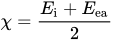
As this definition is not dependent on an arbitrary relative scale, it has also been termed absolute electronegativity,[12] with the units of kilojoules per mole or electronvolts. However, it is more usual to use a linear transformation to transform these absolute values into values that resemble the more familiar Pauling values. For ionization energies and electron affinities in electronvolts,[13] and for energies in kilojoules per mole,[14]


The Mulliken electronegativity can only be calculated for an element whose electron affinity is known. Measured values are available for 72 elements, while approximate values have been estimated or calculated for the remaining elements.
The Mulliken electronegativity of an atom is sometimes said to be the negative of the chemical potential.[15] By inserting the energetic definitions of the ionization potential and electron affinity into the Mulliken electronegativity, it is possible to show that the Mulliken chemical potential is a finite difference approximation of the electronic energy with respect to the number of electrons., i.e.,

Allred–Rochow electronegativity
[edit]

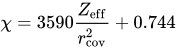
A. Louis Allred and Eugene G. Rochow considered[16] that electronegativity should be related to the charge experienced by an electron on the "surface" of an atom: The higher the charge per unit area of atomic surface the greater the tendency of that atom to attract electrons. The effective nuclear charge, Zeff, experienced by valence electrons can be estimated using Slater's rules, while the surface area of an atom in a molecule can be taken to be proportional to the square of the covalent radius, rcov. When rcov is expressed in picometres,[17]
Sanderson electronegativity equalization
[edit]
R.T. Sanderson has also noted the relationship between Mulliken electronegativity and atomic size and has proposed a method of calculation based on the reciprocal of the atomic volume.[18] With a knowledge of bond lengths, Sanderson's model allows the estimation of bond energies in a wide range of compounds.[19] Sanderson's model has also been used to calculate molecular geometry, s-electron energy, NMR spin-spin coupling constants and other parameters for organic compounds.[20][21] This work underlies the concept of electronegativity equalization, which suggests that electrons distribute themselves around a molecule to minimize or equalize the Mulliken electronegativity.[22] This behavior is analogous to the equalization of chemical potential in macroscopic thermodynamics.[23]
Allen electronegativity
[edit]
Perhaps the simplest definition of electronegativity is that of Leland C. Allen, who has proposed that it is related to the average energy of the valence electrons in a free atom,[24][25][26]
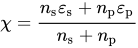
where εs,p are the one-electron energies of s- and p-electrons in the free atom and ns,p are the number of s- and p-electrons in the valence shell.
The one-electron energies can be determined directly from spectroscopic data, and so electronegativities calculated by this method are sometimes referred to as spectroscopic electronegativities. The necessary data are available for almost all elements, and this method allows the estimation of electronegativities for elements that cannot be treated by the other methods, e.g. francium, which has an Allen electronegativity of 0.67.[27] However, it is not clear what should be considered to be valence electrons for the d- and f-block elements, which leads to an ambiguity regarding their electronegativities calculated by the Allen method.
On this scale, neon has the highest electronegativity of all elements, followed by fluorine, helium, and oxygen.
| Group → | 1 | 2 | 3 | 4 | 5 | 6 | 7 | 8 | 9 | 10 | 11 | 12 | 13 | 14 | 15 | 16 | 17 | 18 |
|---|---|---|---|---|---|---|---|---|---|---|---|---|---|---|---|---|---|---|
| ↓ Period | ||||||||||||||||||
| 1 | H 2.300 |
He 4.160 | ||||||||||||||||
| 2 | Li 0.912 |
Be 1.576 |
B 2.051 |
C 2.544 |
N 3.066 |
O 3.610 |
F 4.193 |
Ne 4.787 | ||||||||||
| 3 | Na 0.869 |
Mg 1.293 |
Al 1.613 |
Si 1.916 |
P 2.253 |
S 2.589 |
Cl 2.869 |
Ar 3.242 | ||||||||||
| 4 | K 0.734 |
Ca 1.034 |
Sc 1.19 |
Ti 1.38 |
V 1.53 |
Cr 1.65 |
Mn 1.75 |
Fe 1.80 |
Co 1.84 |
Ni 1.88 |
Cu 1.85 |
Zn 1.588 |
Ga 1.756 |
Ge 1.994 |
As 2.211 |
Se 2.424 |
Br 2.685 |
Kr 2.966 |
| 5 | Rb 0.706 |
Sr 0.963 |
Y 1.12 |
Zr 1.32 |
Nb 1.41 |
Mo 1.47 |
Tc 1.51 |
Ru 1.54 |
Rh 1.56 |
Pd 1.58 |
Ag 1.87 |
Cd 1.521 |
In 1.656 |
Sn 1.824 |
Sb 1.984 |
Te 2.158 |
I 2.359 |
Xe 2.582 |
| 6 | Cs 0.659 |
Ba 0.881 |
Lu 1.09 |
Hf 1.16 |
Ta 1.34 |
W 1.47 |
Re 1.60 |
Os 1.65 |
Ir 1.68 |
Pt 1.72 |
Au 1.92 |
Hg 1.765 |
Tl 1.789 |
Pb 1.854 |
Bi 2.01 |
Po 2.19 |
At 2.39 |
Rn 2.60 |
| 7 | Fr 0.67 |
Ra 0.89 | ||||||||||||||||
| See also: Electronegativities of the elements (data page) | ||||||||||||||||||
Correlation of electronegativity with other properties
[edit]
The wide variety of methods of calculation of electronegativities, which all give results that correlate well with one another, is one indication of the number of chemical properties that might be affected by electronegativity. The most obvious application of electronegativities is in the discussion of bond polarity, for which the concept was introduced by Pauling. In general, the greater the difference in electronegativity between two atoms the more polar the bond that will be formed between them, with the atom having the higher electronegativity being at the negative end of the dipole. Pauling proposed an equation to relate the "ionic character" of a bond to the difference in electronegativity of the two atoms,[5] although this has fallen somewhat into disuse.
Several correlations have been shown between infrared stretching frequencies of certain bonds and the electronegativities of the atoms involved:[28] However, this is not surprising as such stretching frequencies depend in part on bond strength, which enters into the calculation of Pauling electronegativities. More convincing are the correlations between electronegativity and chemical shifts in NMR spectroscopy[29] or isomer shifts in Mössbauer spectroscopy[30] (see figure). Both these measurements depend on the s-electron density at the nucleus, and so is a good indication that the different measures of electronegativity describe "the ability of an atom in a molecule to attract electrons to itself".[1][5]
Trends in electronegativity
[edit]Periodic trends
[edit]
In general, electronegativity increases on passing from left to right along a period and decreases on descending a group. Hence, fluorine is the most electronegative of the elements (not counting noble gases), whereas caesium is the least electronegative, at least of those elements for which substantial data is available.[27]
There are some exceptions to this general rule. Gallium and germanium have higher electronegativities than aluminium and silicon, respectively, because of the d-block contraction. Elements of the fourth period immediately after the first row of the transition metals have unusually small atomic radii because the 3d-electrons are not effective at shielding the increased nuclear charge, and smaller atomic size correlates with higher electronegativity (see Allred-Rochow electronegativity and Sanderson electronegativity above). The anomalously high electronegativity of lead, in particular, when compared to thallium and bismuth, is an artifact of electronegativity varying with oxidation state: its electronegativity conforms better to trends if it is quoted for the +2 state with a Pauling value of 1.87 instead of the +4 state.
Variation of electronegativity with oxidation number
[edit]In inorganic chemistry, it is common to consider a single value of electronegativity to be valid for most "normal" situations. While this approach has the advantage of simplicity, it is clear that the electronegativity of an element is not an invariable atomic property and, in particular, increases with the oxidation state of the element.[31]
Allred used the Pauling method to calculate separate electronegativities for different oxidation states of the handful of elements (including tin and lead) for which sufficient data were available.[9] However, for most elements, there are not enough different covalent compounds for which bond dissociation energies are known to make this approach feasible.
| Acid | Formula | Chlorine oxidation state |
pKa |
|---|---|---|---|
| Hypochlorous acid | HClO | +1 | +7.5 |
| Chlorous acid | HClO2 | +3 | +2.0 |
| Chloric acid | HClO3 | +5 | −1.0 |
| Perchloric acid | HClO4 | +7 | −10 |
The chemical effects of this increase in electronegativity can be seen both in the structures of oxides and halides and in the acidity of oxides and oxoacids. Hence CrO3 and Mn2O7 are acidic oxides with low melting points, while Cr2O3 is amphoteric and Mn2O3 is a completely basic oxide.
The effect can also be seen in the dissociation constants pKa of the oxoacids of chlorine. The effect is much larger than could be explained by the negative charge being shared among a larger number of oxygen atoms, which would lead to a difference in pKa of log10(1⁄4) = −0.6 between hypochlorous acid and perchloric acid. As the oxidation state of the central chlorine atom increases, more electron density is drawn from the oxygen atoms onto the chlorine, diminishing the partial negative charge of individual oxygen atoms. At the same time, the positive partial charge on the hydrogen increases with a higher oxidation state. This explains the observed increased acidity with an increasing oxidation state in the oxoacids of chlorine.
Electronegativity and hybridization scheme
[edit]The electronegativity of an atom changes depending on the hybridization of the orbital employed in bonding. Electrons in s orbitals are held more tightly than electrons in p orbitals. Hence, a bond to an atom that employs an spx hybrid orbital for bonding will be more heavily polarized to that atom when the hybrid orbital has more s character. That is, when electronegativities are compared for different hybridization schemes of a given element, the order χ(sp3) < χ(sp2) < χ(sp) holds (the trend should apply to non-integer hybridization indices as well).
| Hybridization | χ (Pauling)[32] |
|---|---|
| C(sp3) | 2.3 |
| C(sp2) | 2.6 |
| C(sp) | 3.1 |
| 'generic' C | 2.5 |
Group electronegativity
[edit]In organic chemistry, electronegativity is associated more with different functional groups than with individual atoms. The terms group electronegativity and substituent electronegativity are used synonymously. However, it is common to distinguish between the inductive effect and the resonance effect, which might be described as σ- and π-electronegativities, respectively. There are several linear free-energy relationships that have been used to quantify these effects, of which the Hammett equation is the best known. Kabachnik Parameters are group electronegativities for use in organophosphorus chemistry.
Electropositivity
[edit]Electropositivity is a measure of an element's ability to donate electrons, and therefore form positive ions; thus, it is antipode to electronegativity.
Mainly, this is an attribute of metals, meaning that, in general, the greater the metallic character of an element the greater the electropositivity. Therefore, the alkali metals are the most electropositive of all. This is because they have a single electron in their outer shell and, as this is relatively far from the nucleus of the atom, it is easily lost; in other words, these metals have low ionization energies.[33]
While electronegativity increases along periods in the periodic table and decreases down groups, electropositivity decreases along periods (from left to right) and increases down groups. This means that elements in the upper right of the periodic table of elements (oxygen, sulfur, chlorine, etc.) will have the greatest electronegativity, and those in the lower left (rubidium, caesium, and francium) the greatest electropositivity.
See also
[edit]References
[edit]- ^ a b IUPAC, Compendium of Chemical Terminology, 5th ed. (the "Gold Book") (2025). Online version: (2006–) "Electronegativity". doi:10.1351/goldbook.E01990
- ^ a b Jensen, W.B. (1996). "Electronegativity from Avogadro to Pauling: Part 1: Origins of the Electronegativity Concept". Journal of Chemical Education. 73 (1): 11–20. Bibcode:1996JChEd..73...11J. doi:10.1021/ed073p11.
- ^ a b c Pauling, L. (1932). "The Nature of the Chemical Bond. IV. The Energy of Single Bonds and the Relative Electronegativity of Atoms". Journal of the American Chemical Society. 54 (9): 3570–3582. doi:10.1021/ja01348a011.
- ^ Sproul, Gordon D. (2020-05-26). "Evaluation of Electronegativity Scales". ACS Omega. 5 (20): 11585–11594. doi:10.1021/acsomega.0c00831. PMC 7254809. PMID 32478249.
- ^ a b c Pauling, Linus (1960). Nature of the Chemical Bond. Cornell University Press. pp. 88–107. ISBN 978-0-8014-0333-0.
{{cite book}}: ISBN / Date incompatibility (help) - ^ "PubChem ElectroNegativity," Downloaded, line-graphed, and correlated 'Electronegativity' with 'ElectronAffinity', showing a rather strong positive correlation of '0.712925965'. (Accessed linked site on 2023-09-16.)
- ^ Greenwood, N. N.; Earnshaw, A. (1984). Chemistry of the Elements. Pergamon. p. 30. ISBN 978-0-08-022057-4.
- ^ Pauling, Linus (1960). The nature of the chemical bond and the structure of molecules and crystals: an introduction to modern structural chemistry (3. ed., 17. print ed.). Ithaca, NY: Cornell Univ. Press. ISBN 978-0-8014-0333-0.
{{cite book}}: ISBN / Date incompatibility (help) - ^ a b c Allred, A. L. (1961). "Electronegativity values from thermochemical data". Journal of Inorganic and Nuclear Chemistry. 17 (3–4): 215–221. doi:10.1016/0022-1902(61)80142-5.
- ^ Mulliken, R. S. (1934). "A New Electroaffinity Scale; Together with Data on Valence States and on Valence Ionization Potentials and Electron Affinities". Journal of Chemical Physics. 2 (11): 782–793. Bibcode:1934JChPh...2..782M. doi:10.1063/1.1749394.
- ^ Mulliken, R. S. (1935). "Electronic Structures of Molecules XI. Electroaffinity, Molecular Orbitals and Dipole Moments". J. Chem. Phys. 3 (9): 573–585. Bibcode:1935JChPh...3..573M. doi:10.1063/1.1749731.
- ^ Pearson, R. G. (1985). "Absolute electronegativity and absolute hardness of Lewis acids and bases". J. Am. Chem. Soc. 107 (24): 6801–6806. doi:10.1021/ja00310a009.
- ^ Huheey, J.E.; Keiter, E.A.; Keiter, R.L. (December 1, 2008) [1978]. "17". In Kauffman, G.B. (ed.). Inorganic Chemistry: Principles of Structure and Reactivity (digitalized) (3rd ed.). New York (published 1900). p. 167. doi:10.1021/ed050pA379.1. ISBN 9780060429874. OCLC 770736023. inorganicchemist00huhe_0. Archived from the original on September 8, 2019. Retrieved December 15, 2020 – via Oxford University Press.
{{cite book}}: CS1 maint: location missing publisher (link) Alt URL - ^ This second relation has been recalculated using the best values of the first ionization energies and electron affinities available in 2006.
- ^ Franco-Pérez, Marco; Gázquez, José L. (31 October 2019). "Electronegativities of Pauling and Mulliken in Density Functional Theory". Journal of Physical Chemistry A. 123 (46): 10065–10071. Bibcode:2019JPCA..12310065F. doi:10.1021/acs.jpca.9b07468. PMID 31670960. S2CID 207814569.
- ^ Allred, A. L.; Rochow, E. G. (1958). "A scale of electronegativity based on electrostatic force". Journal of Inorganic and Nuclear Chemistry. 5 (4): 264–268. doi:10.1016/0022-1902(58)80003-2.
- ^ Housecroft, C.E.; Sharpe, A.G. (November 1, 1993). Inorganic Chemistry (eBook). Vol. 3 (15th ed.). Switzerland: Pearson Prentice-Hall. p. 38. doi:10.1021/ed070pA304.1. ISBN 9780273742753 – via University of Basel. Alt URL
- ^ Sanderson, R. T. (1983). "Electronegativity and bond energy". Journal of the American Chemical Society. 105 (8): 2259–2261. doi:10.1021/ja00346a026.
- ^ Sanderson, R. T. (1983). Polar Covalence. New York: Academic Press. ISBN 978-0-12-618080-0.
- ^ Zefirov, N. S.; Kirpichenok, M. A.; Izmailov, F. F.; Trofimov, M. I. (1987). "Calculation schemes for atomic electronegativities in molecular graphs within the framework of Sanderson principle". Doklady Akademii Nauk SSSR. 296: 883–887.
- ^ Trofimov, M. I.; Smolenskii, E. A. (2005). "Application of the electronegativity indices of organic molecules to tasks of chemical informatics". Russian Chemical Bulletin. 54 (9): 2235–2246. doi:10.1007/s11172-006-0105-6. S2CID 98716956.
- ^ SW Rick; SJ Stuart (2002). "Electronegativity equalization models". In Kenny B. Lipkowitz; Donald B. Boyd (eds.). Reviews in computational chemistry. Wiley. p. 106. ISBN 978-0-471-21576-9.
- ^ Robert G. Parr; Weitao Yang (1994). Density-functional theory of atoms and molecules. Oxford University Press. p. 91. ISBN 978-0-19-509276-9.
- ^ Allen, Leland C. (1989). "Electronegativity is the average one-electron energy of the valence-shell electrons in ground-state free atoms". Journal of the American Chemical Society. 111 (25): 9003–9014. doi:10.1021/ja00207a003.
- ^ Mann, Joseph B.; Meek, Terry L.; Allen, Leland C. (2000). "Configuration Energies of the Main Group Elements". Journal of the American Chemical Society. 122 (12): 2780–2783. doi:10.1021/ja992866e.
- ^ Mann, Joseph B.; Meek, Terry L.; Knight, Eugene T.; Capitani, Joseph F.; Allen, Leland C. (2000). "Configuration energies of the d-block elements". Journal of the American Chemical Society. 122 (21): 5132–5137. doi:10.1021/ja9928677.
- ^ a b The widely quoted Pauling electronegativity of 0.7 for francium is an extrapolated value of uncertain provenance. The Allen electronegativity of caesium is 0.66.
- ^ See, e.g., Bellamy, L. J. (1958). The Infra-Red Spectra of Complex Molecules. New York: Wiley. p. 392. ISBN 978-0-412-13850-8.
{{cite book}}: ISBN / Date incompatibility (help) - ^ Spieseke, H.; Schneider, W. G. (1961). "Effect of Electronegativity and Magnetic Anisotropy of Substituents on C13 and H1 Chemical Shifts in CH3X and CH3CH2X Compounds". Journal of Chemical Physics. 35 (2): 722. Bibcode:1961JChPh..35..722S. doi:10.1063/1.1731992.
- ^ Clasen, C. A.; Good, M. L. (1970). "Interpretation of the Moessbauer spectra of mixed-hexahalo complexes of tin(IV)". Inorganic Chemistry. 9 (4): 817–820. doi:10.1021/ic50086a025.
- ^ Li, Keyan; Xue, Dongfeng (2006-10-01). "Estimation of Electronegativity Values of Elements in Different Valence States". The Journal of Physical Chemistry A. 110 (39): 11332–11337. Bibcode:2006JPCA..11011332L. doi:10.1021/jp062886k. ISSN 1089-5639. PMID 17004743.
- ^ Fleming, Ian (2009). Molecular orbitals and organic chemical reactions (Student ed.). Chichester, West Sussex, U.K.: Wiley. ISBN 978-0-4707-4660-8. OCLC 424555669.
- ^ "Electropositivity," Microsoft Encarta Online Encyclopedia 2009. (Archived 2009-10-31).
Bibliography
[edit]- Jolly, William L. (1991). Modern Inorganic Chemistry (2nd ed.). New York: McGraw-Hill. pp. 71–76. ISBN 978-0-07-112651-9.
- Mullay, J. (1987). "Estimation of atomic and group electronegativities". Electronegativity. Structure and Bonding. Vol. 66. pp. 1–25. doi:10.1007/BFb0029834. ISBN 978-3-540-17740-1.
External links
[edit] Media related to Electronegativity at Wikimedia Commons
- WebElements, lists values of electronegativities by a number of different methods of calculation
- Video explaining electronegativity
- Electronegativity Chart, a summary listing of the electronegativity of each element along with an interactive periodic table


| International | |
|---|---|
| National | |
| Other | |

Electronegativity
View on GrokipediaIntroduction and Fundamentals
Definition and Importance
Electronegativity, symbolized as χ, is defined as the tendency of an atom to attract shared electrons (or electron density) in a chemical bond towards itself.[8] This property specifically applies to atoms within molecules, distinguishing it from electron affinity, which measures the energy released when an electron is added to an isolated gaseous atom to form a negative ion.[9] Likewise, electronegativity differs from ionization energy, the minimum energy required to remove an electron from an isolated gaseous atom.[10] The concept of electronegativity, originally conceptualized by Linus Pauling as the power of an atom in a molecule to attract electrons to itself, plays a fundamental role in understanding chemical bonding and reactivity.[11] It determines the polarity of bonds, where the difference in electronegativity values (Δχ) between two bonded atoms classifies the bond type: nonpolar covalent for Δχ < 0.4, polar covalent for 0.4 ≤ Δχ ≤ 1.7, and ionic for Δχ > 1.7.[12] This classification arises because larger electronegativity differences result in greater uneven sharing of electrons, leading to partial charges that influence molecular behavior. Electronegativity is essential for predicting molecular dipole moments, as bonds with significant Δχ generate dipole moments proportional to the charge separation and bond length, affecting properties like solubility and intermolecular forces.[13] It also governs reactivity trends by dictating how atoms attract or donate electrons in reactions, thereby influencing bond formation, breaking, and overall chemical behavior in compounds.[14] On most scales, electronegativity is a dimensionless quantity, allowing for relative comparisons across elements without units.[15]Historical Development
The origins of the electronegativity concept trace back to the early 19th century, when Swedish chemist Jöns Jacob Berzelius introduced the term "electronegative" in 1811 as part of his dualistic theory of chemical affinity. Berzelius viewed chemical combinations as resulting from attractions between electropositive and electronegative elements, with oxygen exemplifying electronegativity due to its tendency to attract electrons and form acidic compounds by combining with positive elements. This qualitative notion emphasized oxygen's role in acidity and laid foundational ideas for understanding electron distribution in bonds, though it lacked quantitative measures.[16] The modern quantitative development began in 1932 with Linus Pauling, who formalized electronegativity as a measure of an atom's ability to attract electrons in a covalent bond, deriving the first scale from differences in bond dissociation energies of diatomic molecules. Pauling's approach, detailed in his paper on the nature of the chemical bond, assigned relative values to elements, enabling predictions of bond polarity and type, and marked a shift from descriptive to numerical characterization. Building on this, Robert S. Mulliken proposed an alternative scale in 1934, defining electronegativity as the average of an atom's ionization potential and electron affinity, which provided a more theoretical, quantum mechanical basis tied to isolated atomic properties.[1] In the mid-20th century, further refinements emerged. In 1958, A. Louis Allred and Eugene G. Rochow introduced a scale based on the ratio of effective nuclear charge to the square of the covalent radius, offering a physically intuitive electrostatic interpretation that correlated well with Pauling's values. During the 1950s, Robert T. Sanderson advanced the concept with his electronegativity equalization principle, positing that upon molecule formation, atoms achieve equal electronegativities through electron redistribution, as initially outlined in his 1951 analysis of bond characters. This principle influenced charge distribution models in compounds.80264-7) By the late 20th century, the concept evolved toward spectroscopic and quantum mechanical foundations. In 1989, Leland C. Allen proposed a scale derived from the average one-electron energy of valence-shell electrons in ground-state atoms, emphasizing its direct measurability via atomic spectra and alignment with periodic trends. Over time, electronegativity interpretations progressed from Pauling's thermodynamic bond-energy basis to Mulliken's and Allen's quantum-derived atomic properties, enhancing its utility in predicting molecular behavior and bonding characteristics.[17]Electronegativity Scales
Pauling Scale
The Pauling scale, introduced by Linus Pauling in 1932, defines electronegativity as the power of an atom in a molecule to attract electrons to itself and quantifies it through differences in covalent bond energies. Pauling derived the scale by comparing the dissociation energy of a heteronuclear bond to the geometric mean of the homonuclear bond energies, , assuming that any excess energy arises from partial ionic character due to electronegativity differences. The derivation begins with the postulate that for atoms A and B of equal electronegativity, the bond energy equals the geometric mean of the homonuclear bonds, representing a purely covalent interaction; deviations from this mean, denoted as (with energies in kcal/mol), reflect ionic contributions proportional to , leading to the empirical relation . The constant 0.102 was calibrated to yield reasonable values, with hydrogen initially set at 2.1 relative to fluorine at 4.0. In 1961, A. L. Allred revised Pauling's values by incorporating updated thermochemical bond energy data from more compounds, extending coverage to additional elements and refining the scale for consistency; fluorine was assigned 3.98 as the reference maximum. These revisions improved accuracy for main-group elements while maintaining the original empirical framework. The following table presents selected Pauling electronegativity values (Allred revision) for main-group elements, illustrating the scale's range from alkali metals near 0.8 to halogens approaching 4.0:| Element | Symbol | Electronegativity |
|---|---|---|
| Hydrogen | H | 2.20 |
| Lithium | Li | 0.98 |
| Beryllium | Be | 1.57 |
| Boron | B | 2.04 |
| Carbon | C | 2.55 |
| Nitrogen | N | 3.04 |
| Oxygen | O | 3.44 |
| Fluorine | F | 3.98 |
| Sodium | Na | 0.93 |
| Magnesium | Mg | 1.31 |
| Aluminum | Al | 1.61 |
| Silicon | Si | 1.90 |
| Phosphorus | P | 2.19 |
| Sulfur | S | 2.58 |
| Chlorine | Cl | 3.16 |
Mulliken Scale
The Mulliken scale provides a theoretical measure of electronegativity based on the average of an atom's ionization potential (IP), which reflects its tendency to lose an electron, and electron affinity (EA), which indicates its tendency to gain an electron. Proposed by Robert S. Mulliken in 1934, this approach conceptualizes electronegativity as a balance between these opposing atomic properties, derived from spectroscopic data on valence electrons. The formula is given by where IP and EA are expressed in electron volts (eV), yielding an absolute scale in energy units. To facilitate comparison with empirical scales like Pauling's, Mulliken values are often converted to dimensionless units by dividing by a factor of approximately 3.17, aligning them closely with relative electronegativity trends across the periodic table. This scaling preserves the ordinal ranking of elements while normalizing the magnitude. For instance, hydrogen yields a scaled value of 2.20, reflecting its moderate tendency to share electrons, while chlorine's value of 3.16 highlights its strong electron-attracting power in bonds. A key advantage of the Mulliken scale lies in its foundation in quantum mechanical principles, as IP and EA directly relate to the energies of atomic orbitals, providing a physically meaningful interpretation of electronegativity as an orbital-based property. Unlike bond-dependent methods, it enables electronegativity assignments for all elements, including noble gases, using isolated atomic data without requiring experimental bond formation. However, the scale's reliance on accurate spectroscopic measurements poses a limitation, as EA values are experimentally challenging to determine precisely for many elements beyond the halogens. Additionally, it overestimates electronegativities for noble gases, assigning them moderately high values due to their large IP and near-zero EA, despite their chemical inertness.Allred-Rochow Scale
The Allred-Rochow scale of electronegativity was developed by A. L. Allred and E. G. Rochow in 1958 to provide a theoretical measure of an atom's tendency to attract electrons based on the electrostatic force exerted by its nucleus on valence electrons. This approach treats electronegativity as proportional to the effective nuclear charge divided by the square of the atomic radius, offering a purely atomic property independent of experimental bond data. The electronegativity on this scale is calculated using the formula where is the effective nuclear charge experienced by a valence electron and is the covalent radius in picometers. The value of is determined by Slater's rules, which estimate the shielding constant from inner electrons such that , with being the atomic number; for valence ns or np electrons, contributions to are 0.35 from other electrons in the same shell (except 0.30 for 1s), 0.85 from the shell, and 1.00 from shells below. Covalent radii are typically taken from standard tabulations, such as those derived from bond lengths in diatomic molecules. Representative values on the Allred-Rochow scale include 4.00 for fluorine and 0.93 for sodium, reflecting the strong nuclear attraction in small, highly charged atoms like fluorine. The scale was primarily applied to p-block elements, yielding values that follow periodic trends with increasing across a period and decreasing down a group. The following table summarizes selected p-block values:| Element | (Allred-Rochow) |
|---|---|
| B | 1.81 |
| C | 2.50 |
| N | 3.07 |
| O | 3.50 |
| F | 4.00 |
| Al | 1.47 |
| Si | 1.74 |
| P | 2.06 |
| S | 2.44 |
| Cl | 2.83 |
Sanderson Equalization
The principle of electronegativity equalization, introduced by Robert T. Sanderson in his 1951 paper and further elaborated in his works through the 1970s, states that upon chemical bonding, the electronegativities of constituent atoms adjust to a common value equal to the average electronegativity of the molecule as a whole. This equalization reflects the drive toward molecular stability, where electron density redistributes from less electronegative to more electronegative atoms until their effective electronegativities balance. Sanderson's approach builds on earlier scales like Pauling's by emphasizing dynamic adjustment in molecular environments. Sanderson's electronegativity scale for individual atoms is derived from "stability indices," which quantify the average electron density per unit volume relative to noble gas configurations, providing a measure of an atom's inherent electron-attracting power. For molecules, the scale employs the geometric mean of the atomic electronegativities, adjusted via these stability indices to account for bonding effects. The molecular electronegativity is calculated as where is the atomic electronegativity of element , is the number of atoms of type , and is the total number of atoms. This formulation yields the equalized electronegativity that each atom adopts in the molecule, facilitating predictions of partial charges and bond polarities. One key advantage of Sanderson's equalization principle is its ability to explain charge transfer in molecules: atoms with higher initial electronegativities gain electron density, while those with lower values lose it, resulting in the predicted polarity. It proves particularly useful for organic compounds, where it aids in estimating bond characters and reactivity without complex computations. However, the method relies on empirical adjustments to stability indices and lacks a purely quantum mechanical foundation, limiting its precision in cases requiring detailed orbital considerations. A representative example is the water molecule (H₂O), where the oxygen atom's higher electronegativity (approximately 3.73 on Sanderson's scale) equalizes with the two hydrogen atoms (each approximately 2.90) to a molecular value of about 3.17, leading to partial negative charge on oxygen and partial positive charges on hydrogens in the O-H bonds. This equalization accounts for water's polarity and hydrogen-bonding capability.Allen Scale
The Allen scale, proposed by Leland C. Allen in 1989, defines electronegativity as the average one-electron energy of the valence-shell electrons in ground-state free atoms, derived from spectroscopic data. This approach uses multiplet-averaged ionization energies from photoelectron spectroscopy of the valence orbitals only, excluding core electrons, to provide a quantum mechanically grounded measure independent of molecular bonding environments. The electronegativity χ on the Allen scale is calculated as the weighted average of the ionization energies ε for s and p valence electrons: χ = (n_s ε_s + n_p ε_p) / (n_s + n_p), where n_s and n_p are the numbers of s and p valence electrons, respectively. For elements with d valence electrons, such as transition metals, these are incorporated similarly if they contribute to the valence shell. The ionization energies are obtained from National Bureau of Standards atomic energy level tables and expressed in electron volts, then scaled by division by approximately 2.3 to align with Pauling units for comparability. This method yields values for all elements in the periodic table, including the lanthanides, with fluorine assigned 4.19 and carbon 2.54 as representative examples. The scale's advantages include its rigorous basis in experimental spectroscopy, which ensures reproducibility and a direct link to atomic orbital energies, as well as its ability to rationalize periodic trends like the metal-nonmetal boundary without reliance on empirical bond data. However, it requires precise photoelectron spectra, which can be challenging to obtain for some heavy elements, and produces systematically higher values than the Pauling scale, potentially complicating direct comparisons in some applications.| Element | Allen Scale | Pauling Scale |
|---|---|---|
| H | 2.30 | 2.20 |
| C | 2.54 | 2.55 |
| N | 3.07 | 3.04 |
| O | 3.61 | 3.44 |
| F | 4.19 | 3.98 |
| Cl | 2.87 | 3.16 |
Recent Scales
In recent years, advancements in computational chemistry and theoretical modeling have led to new electronegativity scales that address limitations in earlier frameworks, particularly for heavier elements and under extreme conditions. These developments leverage density functional theory (DFT), thermochemical data, and network analysis to provide more accurate and broadly applicable measures of electron-attracting power. The 2021 Skoltech scale, proposed by researchers at the Skolkovo Institute of Science and Technology, modernizes the Pauling approach by defining electronegativity as the average energy required to remove valence electrons from isolated atoms, derived from thermochemical dissociation energies and DFT calculations. This scale covers all 118 elements and demonstrates improved accuracy for transition metals, where traditional scales often exhibit irregularities due to d-orbital involvement; for instance, it better predicts bond polarities in compounds like metal carbonyls. The method ensures dimensionless values aligned with Pauling units, enhancing predictive power for molecular stability without relying on empirical bond energy adjustments. A 2019 scale developed by Martin Rahm at Chalmers University of Technology extends coverage to the first 96 elements (hydrogen to curium) through a hybrid of experimental photoionization data and quantum mechanical computations, redefining electronegativity as the average binding energy of valence electrons. This unified theory-experiment framework avoids solely complex DFT simulations and facilitates applications in high-pressure chemistry, where element ordering (e.g., repositioning oxygen relative to chromium) reveals anomalies in reaction pathways under compression. The scale provides a thermodynamic basis for reactivity trends. Also in 2025, a network perspective published in Nature Scientific Reports analyzes electronegativity using directed graphs constructed from five established scales (Pauling, Mulliken, Allred-Rochow, Sanderson, and Allen), with edges indicating differences in values between elements. This approach uncovers connectivity patterns in the periodic table, such as clustered trends in electronegativity gradients that correlate with group behaviors and reveal hidden periodic relationships, offering a graph-theoretic tool for visualizing chemical similarity beyond linear scales. An October 2025 revisiting of electronegativity equalization, based on the Mulliken scale, introduces a new calculation method for atoms in molecules and crystals using conceptual density functional theory (CDFT). This technique computes local electronegativities by balancing electron densities across bonded atoms, improving predictions of charge distribution in complex systems like drug molecules, where it enhances binding affinity modeling over traditional uniform assignments. These recent scales offer broader applicability, including to superheavy elements and extreme environments, with some incorporating advanced simulations that hint at future integration with quantum computing for relativistic effects in heavy atoms, where accounts for atomic number and spin-orbit coupling. However, as emerging frameworks, they require further experimental validation to confirm consistency across diverse chemical contexts.Trends and Variations
Periodic Trends
Electronegativity exhibits distinct periodic trends across the elements in the periodic table, primarily increasing from left to right within a period and decreasing from top to bottom within a group.[18] These variations arise from changes in atomic structure that affect an atom's ability to attract electrons in a chemical bond.[19] Across a period, electronegativity increases due to the rising effective nuclear charge (Z_eff), which is the net positive charge experienced by valence electrons after accounting for shielding by inner electrons. As protons are added to the nucleus without a corresponding increase in electron shells, Z_eff strengthens the attraction for valence electrons, while the atomic radius decreases, bringing valence electrons closer to the nucleus. This enhanced nuclear attraction makes atoms more effective at pulling shared electrons toward themselves. For instance, in Period 2 on the Pauling scale, electronegativity rises from lithium (Li) at 0.98 to fluorine (F) at 3.98.[20] In contrast, electronegativity decreases down a group because of increasing atomic size and enhanced electron shielding by additional inner electron shells. As one moves downward, the valence electrons occupy higher principal quantum levels, farther from the nucleus, weakening the electrostatic pull despite a higher nuclear charge; the inner electrons shield the valence electrons from this full attraction, reducing Z_eff for them.[21] This trend is evident in Group 17 (halogens), where Pauling electronegativity drops from F at 3.98 to iodine (I) at 2.66.[20] Notable anomalies include the exceptionally high values in halogens, with F holding the highest due to its small size and high Z_eff, and low values in alkali metals like Li, reflecting their large size and single valence electron in a distant shell.[18] These trends can be visualized in periodic table formats where electronegativity values are color-coded or numerically mapped, showing a diagonal progression of increasing values from the lower left (least electronegative, e.g., alkali metals) to the upper right (most electronegative, e.g., halogens), highlighting the interplay of valence electron configuration and nuclear attraction.[22]Variation with Oxidation Number
The effective electronegativity of an atom tends to increase with higher oxidation states because the atom experiences a greater effective nuclear charge on its bonding electrons, enhancing its ability to attract shared electron density. This phenomenon arises from the partial positive charge developed on the atom in higher oxidation states, which pulls bonding electrons closer and increases polarity in bonds involving that atom.[23] The theoretical basis for this variation is rooted in partial charge effects, where the oxidation state alters the electron density distribution around the atom, making it behave as if it has a higher intrinsic electronegativity in compounds. Computational and empirical studies confirm that electronegativity values for cations rise with increasing oxidation number, as the reduced electron count amplifies the nuclear attraction on valence electrons. For instance, Mulliken-based approaches incorporate empirical adjustments to the neutral atom electronegativity to account for oxidation state.[24] This variation has significant implications for bond polarity, particularly in transition metal complexes, where higher oxidation states lead to more ionic character in metal-ligand bonds due to the enhanced electronegativity difference. In manganese compounds, for example, the effective electronegativity is lower in neutral or low-oxidation states like Mn(0) but rises substantially in Mn(VII) as seen in the permanganate ion (MnO₄⁻), contributing to the oxidative strength and polar Mn-O bonds. Similarly, sulfur exhibits an electronegativity of approximately 2.58 in its elemental form (S⁰), but in the sulfate ion (SO₄²⁻) with S in the +6 oxidation state, the effective value increases significantly, reflecting greater electron withdrawal from surrounding oxygens and influencing the ion's stability and reactivity.| Element | Oxidation State | Compound Example | Approximate Effective Electronegativity (Pauling-like scale) |
|---|---|---|---|
| Mn | 0 | Mn (elemental) | 1.55 |
| Mn | +7 | MnO₄⁻ (permanganate) | significantly higher |
| S | 0 | S (elemental) | 2.58 |
| S | +6 | SO₄²⁻ (sulfate) | significantly higher |
Influence of Hybridization
Atomic orbital hybridization influences the effective electronegativity of an atom by altering the s-character in the hybrid orbitals, which affects the proximity of bonding electrons to the nucleus. In sp hybridization, the hybrid orbitals contain 50% s-character, compared to 33% in sp² and 25% in sp³, leading to a contraction of the orbitals and a greater attraction for shared electrons. This results in higher effective electronegativity for atoms in higher s-character hybrids, as the electrons are held closer to the nucleus due to the lower energy of s orbitals. For instance, the carbon atoms in acetylene (HC≡CH, sp hybridized) exhibit greater electronegativity than those in ethylene (H₂C=CH₂, sp²) or ethane (H₃C-CH₃, sp³), influencing bond polarities and acidities in organic compounds.[25] Bent's rule provides a quantitative framework for understanding this interplay, stating that the distribution of hybrid orbital character is influenced by the electronegativities of surrounding substituents: more electronegative groups direct hybrid orbitals with higher p-character toward them, while the central atom allocates more s-character to bonds with less electronegative atoms. This rule implies a feedback effect where the central atom's effective electronegativity modulates the hybridization to minimize energy. In carbon compounds, this is evident in molecules like CH₄ (sp³ hybridized carbon with effective χ_C ≈ 2.5 on the Pauling scale) versus HC≡CH (sp hybridized, where effective χ_C increases due to higher s-character). Pauling-based adjustments estimate the hybridization-induced change in electronegativity (Δχ_hyb) as approximately 0.2 units for sp² versus sp³ and 0.5 units for sp versus sp³, reflecting the enhanced electron-withdrawing ability in triple bonds compared to single bonds.[26][27] The variation in effective electronegativity due to hybridization has significant implications for molecular geometry and polarity. In alkynes, the increased χ of sp-hybridized carbon strengthens the C-H bond and enhances acidity (pK_a of HC≡CH ≈ 25 versus ≈ 50 for H₃C-CH₃), as the higher s-character allows better stabilization of the conjugate base. This also affects bond angles and overall molecular dipole moments, with sp hybrids promoting linear geometries that amplify polar effects in unsymmetrical molecules. However, these effects are most pronounced in main-group elements like carbon and are less applicable to transition metals, where d-orbital involvement and other factors dominate hybridization patterns.[28][29]Applications and Correlations
Correlations with Periodic Properties
Electronegativity exhibits a strong positive correlation with both first ionization energy (IE) and electron affinity (EA), reflecting the atom's ability to attract and retain electrons. Atoms with higher electronegativity (χ) have greater IE because their valence electrons are held more tightly by the nucleus due to increased effective nuclear charge, making electron removal more energetically costly. Similarly, higher χ aligns with more exothermic EA, as the atom more readily accepts an additional electron. This relationship is evident in the Mulliken scale, where χ is defined as χ = (IE + EA)/2, and Pauling's scale shows comparable trends; for instance, across main-group elements, Pauling χ correlates strongly with average valence IE. For period 2 elements (Li to F), Pauling χ shows a tight linkage with first IE, underscoring the relationship, though noble gases like Ne deviate slightly due to their inert nature. In contrast, electronegativity displays an inverse correlation with atomic radius. As atomic size decreases—due to higher nuclear charge pulling electrons closer— the valence electrons experience stronger attraction, enhancing χ. This trend holds across periods and groups; for example, compression studies reveal that reducing atomic radii under pressure increases χ, with quantitative models showing a near-linear inverse relationship for many elements. Smaller radii thus amplify the electron-withdrawing power, a key factor in periodic variations of χ. Electronegativity also inversely correlates with metallic character: lower χ values characterize metals, which readily donate electrons to form cations, while higher χ typifies non-metals that attract electrons to complete their octet. This alignment stems from the periodic increase in χ from left to right, mirroring the transition from metallic to non-metallic behavior; elements with χ ≤ 2.0 generally exhibit metallic properties, such as low electrical resistivity. Thermodynamically, electronegativity influences bond strengths and acidity. The Pauling scale itself derives from bond dissociation energies, where greater χ differences between bonded atoms strengthen polar covalent bonds by enhancing ionic contributions (e.g., Δχ > 1.7 predicts significant ionic character and higher bond energies). In acidity, higher χ of the atom attached to hydrogen in HX increases acid strength by polarizing the H–X bond and stabilizing the X⁻ conjugate base; thus, HF (χ_F = 3.98) is more acidic than CH₄ (χ_C = 2.55), with pK_a values of 3.17 versus ≈50, respectively, due to fluorine's superior electron attraction. Statistical analyses of Pauling data across 50+ elements confirm these links, with χ explaining over 85% of variance in related periodic properties like IE and radius.[30]Predicting Bond Character
Electronegativity differences (Δχ) between bonded atoms provide a practical tool for classifying bond types on the Pauling scale. Bonds with Δχ < 0.5 are typically nonpolar covalent, characterized by equal sharing of electrons; those with 0.5 ≤ Δχ ≤ 2.0 are polar covalent, featuring unequal sharing and partial charges; and bonds with Δχ > 2.0 are predominantly ionic, involving near-complete electron transfer.[31] Representative examples illustrate these classifications. In NaCl, the Pauling electronegativities are 0.93 for Na and 3.16 for Cl, yielding Δχ = 2.23 and confirming its ionic nature. In HCl, with values of 2.20 for H and 3.16 for Cl, Δχ = 0.96 indicates a polar covalent bond. For Cl2, both atoms have χ = 3.16, so Δχ = 0 and the bond is nonpolar covalent. To quantify the ionic contribution within a bond, the percent ionic character can be calculated using Pauling's empirical formula: This expression estimates the fraction of ionic character based on Δχ, approaching 100% for large differences and 0% for small ones. For instance, applying it to HCl (Δχ = 0.96) yields approximately 21% ionic character, reflecting its predominantly covalent nature with some polarity. The polarity arising from Δχ also manifests in dipole moments, which measure the bond's charge separation. The dipole moment μ is defined as μ = q × d, where q is the magnitude of the partial charges (influenced by Δχ, with larger differences producing greater q) and d is the bond distance. Thus, polar covalent bonds like HCl exhibit measurable dipole moments (μ ≈ 1.08 D), while nonpolar ones like Cl2 have μ = 0. In predictive applications, electronegativity differences inform VSEPR theory by influencing electron pair repulsions and bond angles; for example, highly electronegative ligands (e.g., F) draw electron density away, compressing angles in molecules like SF4. Similarly, in molecular modeling, Δχ values parameterize force fields to simulate bond polarities, geometries, and intermolecular forces in computational chemistry software.[32] Despite these utilities, the approach has limitations. It inadequately predicts bond character in metallic systems, especially involving transition metals, where d-orbital participation and delocalization override simple Δχ rules.[33] Additionally, for multiple bonds (e.g., C=O vs. C-O), electronegativity—a single-atom property—does not account for bond order effects on polarity.[33]Group Electronegativity
Group electronegativity extends the traditional atomic electronegativity concept to functional groups or molecular fragments, treating them as unified entities with an effective electronegativity value derived from their constituent atoms. This approach, pioneered by James E. Huheey in 1978, allows for the assignment of average electronegativity values to groups such as -CH₃ (2.6) and -OH (3.5) on the Pauling scale, enabling better prediction of behavior in complex molecules where individual atomic contributions alone are insufficient.[34] The calculation of group electronegativity typically involves a weighted average or vector sum of the atomic electronegativities within the group, incorporating geometric factors like bond angles and charge distribution to account for inductive effects. Huheey employed principles of electronegativity equalization, where the electronegativity of the central atom adjusts based on attached substituents, resulting in a net group value that reflects the overall electron-attracting power. This method considers the partial charges on atoms and their inherent electronegativities, often using empirical data from bond energies or spectroscopic measurements to refine the values.[34] In applications, group electronegativity is particularly valuable for predicting reactivity in organic synthesis, such as comparing the nucleophilicity of substituents. For instance, the amino group (-NH₂, ≈3.2) exhibits greater nucleophilicity than the alkoxy group (-OR, ≈3.4) due to its lower electronegativity, which results in higher electron density on the nitrogen atom compared to oxygen in -OR, facilitating better donation to electrophiles. This concept aids in designing reactions where substituent effects influence regioselectivity or reaction rates in molecules like amines versus ethers. The following table presents electronegativity values for selected common functional groups on the Pauling scale, illustrating trends from electron-donating alkyl groups to strongly withdrawing ones like nitro:| Group | Electronegativity (Pauling) |
|---|---|
| -CH₃ (alkyl) | 2.6 |
| -NH₂ | 3.2 |
| -OH | 3.5 |
| -OR (alkoxy) | 3.4 |
| -CHO (aldehyde) | 3.4 |
| -COOH (carboxyl) | 3.6 |
| -NO₂ (nitro) | 3.7 |
| -CF₃ | 3.5 |