Hubbry Logo
Alpha motor neuronAlpha motor neuronMain
Open search
Alpha motor neuron
Community hub
Alpha motor neuron
logo
8 pages, 0 posts
0 subscribers
Be the first to start a discussion here.
Alpha motor neuron
Alpha motor neuron
from Wikipedia
Alpha motor neuron
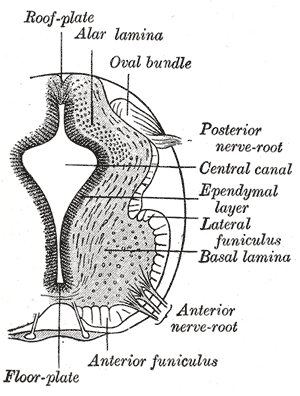
Alpha motor neurons are derived from the basal plate (basal lamina) of the developing embryo.
Identifiers
NeuroLex IDsao1154704263
THH2.00.01.0.00008
FMA83664
Anatomical terms of neuroanatomy

Alpha (α) motor neurons (also called alpha motoneurons), are large, multipolar lower motor neurons of the brainstem and spinal cord. They innervate extrafusal muscle fibers of skeletal muscle and are directly responsible for initiating their contraction. Alpha motor neurons are distinct from gamma motor neurons, which innervate intrafusal muscle fibers of muscle spindles.

While their cell bodies are found in the central nervous system (CNS), α motor neurons are also considered part of the somatic nervous system—a branch of the peripheral nervous system (PNS)—because their axons extend into the periphery to innervate skeletal muscles.

An alpha motor neuron and the muscle fibers it innervates comprise a motor unit. A motor neuron pool contains the cell bodies of all the alpha motor neurons involved in contracting a single muscle.

Location

[edit]

Alpha motor neurons (α-MNs) innervating the head and neck are found in the brainstem; the remaining α-MNs innervate the rest of the body and are found in the spinal cord. There are more α-MNs in the spinal cord than in the brainstem, as the number of α-MNs is directly proportional to the amount of fine motor control in that muscle. For example, the muscles of a single finger have more α-MNs per fibre, and more α-MNs in total, than the muscles of the quadriceps, which allows for finer control of the force a finger applies.

In general, α-MNs on one side of the brainstem or spinal cord innervate muscles on that same side of the body. An exception is the trochlear nucleus in the brainstem, which innervates the superior oblique muscle of the eye on the opposite side of the face.

Brainstem

[edit]

In the brainstem, α-MNs and other neurons reside within clusters of cells called nuclei, some of which contain the cell bodies of neurons belonging to the cranial nerves. Not all cranial nerve nuclei contain α-MNs; those that do are motor nuclei, while others are sensory nuclei. Motor nuclei are found throughout the brainstem—medulla, pons, and midbrain—and for developmental reasons are found near the midline of the brainstem.

Generally, motor nuclei found higher in the brainstem (i.e., more rostral) innervate muscles that are higher on the face. For example, the oculomotor nucleus contains α-MNs that innervate muscles of the eye, and is found in the midbrain, the most rostral brainstem component. By contrast, the hypoglossal nucleus, which contains α-MNs that innervate the tongue, is found in the medulla, the most caudal (i.e., towards the bottom) of the brainstem structures.

Spinal cord

[edit]
The corticospinal tract is one of the major descending pathways from the brain to the α-MNs of the spinal cord.

In the spinal cord, α-MNs are located within the gray matter that forms the ventral horn. These α-MNs provide the motor component of the spinal nerves that innervate muscles of the body.

Alpha motor neurons are located in lamina IX according to the Rexed lamina system.

As in the brainstem, higher segments of the spinal cord contain α-MNs that innervate muscles higher on the body. For example, the biceps brachii muscle, a muscle of the arm, is innervated by α-MNs in spinal cord segments C5, C6, and C7, which are found rostrally in the spinal cord. On the other hand, the gastrocnemius muscle, one of the muscles of the leg, is innervated by α-MNs within segments S1 and S2, which are found caudally in the spinal cord.

Alpha motor neurons are located in a specific region of the spinal cord's gray matter. This region is designated lamina IX in the Rexed lamina system, which classifies regions of gray matter based on their cytoarchitecture. Lamina IX is located predominantly in the medial aspect of the ventral horn, although there is some contribution to lamina IX from a collection of motor neurons located more laterally. Like other regions of the spinal cord, cells in this lamina are somatotopically organized, meaning that the position of neurons within the spinal cord is associated with what muscles they innervate. In particular, α-MNs in the medial zone of lamina IX tend to innervate proximal muscles of the body, while those in the lateral zone tend to innervate more distal muscles. There is similar somatotopy associated with α-MNs that innervate flexor and extensor muscles: α-MNs that innervate flexors tend to be located in the dorsal portion of lamina IX; those that innervate extensors tend to be located more ventrally.

Development

[edit]
Under the influence of the protein sonic hedgehog, shown here, cells of the floor plate of the developing spinal cord differentiate into alpha motor neurons.

Alpha motor neurons originate in the basal plate, the ventral portion of the neural tube in the developing embryo. Sonic hedgehog (Shh) is secreted by the nearby notochord and other ventral structures (e.g., the floor plate), establishing a gradient of highly concentrated Shh in the basal plate and less concentrated Shh in the alar plate. Under the influence of Shh and other factors, some neurons of the basal plate differentiate into α-MNs.

Like other neurons, α-MNs send axonal projections to reach their target extrafusal muscle fibers via axon guidance, a process regulated in part by neurotrophic factors released by target muscle fibers. Neurotrophic factors also ensure that each muscle fiber is innervated by the appropriate number of α-MNs. As with most types of neurons in the nervous system, α-MNs are more numerous in early development than in adulthood. Muscle fibers secrete a limited amount of neurotrophic factors capable of sustaining only a fraction of the α-MNs that initially project to the muscle fiber. Those α-MNs that do not receive sufficient neurotrophic factors will undergo apoptosis, a form of programmed cell death.

Because they innervate many muscles, some clusters of α-MNs receive high concentrations of neurotrophic factors and survive this stage of neuronal pruning. This is true of the α-MNs innervating the upper and lower limbs: these α-MNs form large cell columns that contribute to the cervical and lumbar enlargements of the spinal cord. In addition to receiving neurotrophic factors from muscles, α-MNs also secrete a number of trophic factors to support the muscle fibers they innervate. Reduced levels of trophic factors contributes to the muscle atrophy that follows an α-MN lesion.

Connectivity

[edit]

Like other neurons, lower motor neurons have both afferent (incoming) and efferent (outgoing) connections. Alpha motor neurons receive input from a number of sources, including upper motor neurons, sensory neurons, and interneurons. The primary output of α-MNs is to extrafusal muscle fibers. This afferent and efferent connectivity is required to achieve coordinated muscle activity.

Afferent input

[edit]
Selected pathways between upper motor neurons and alpha motor neurons
UMN origin α-MN target Tract name
Cerebral cortex Brainstem Corticonuclear tract
Cerebral cortex Spinal cord Corticospinal tract
Red nucleus Spinal cord Rubrospinal tract
Vestibular nuclei Spinal cord Vestibulospinal tract
Midbrain tectum Spinal cord Tectospinal tract
Reticular formation Spinal cord Reticulospinal tract

Upper motor neurons (UMNs) send input to α-MNs via several pathways, including (but not limited to) the corticonuclear, corticospinal, and rubrospinal tracts. The corticonuclear and corticospinal tracts are commonly encountered in studies of upper and lower motor neuron connectivity in the control of voluntary movements.

The corticonuclear tract is so named because it connects the cerebral cortex to cranial nerve nuclei. (The corticonuclear tract is also called the corticobulbar tract, as the target in the brainstem—which is medulla—is archaically called the "bulb.") It is via this pathway that upper motor neurons descend from the cortex and synapse on α-MNs of the brainstem. Similarly, UMNs of the cerebral cortex are in direct control of α-MNs of the spinal cord via the lateral and ventral corticospinal tracts.

The sensory input to α-MNs is extensive and has its origin in Golgi tendon organs, muscle spindles, mechanoreceptors, thermoreceptors, and other sensory neurons in the periphery. These connections provide the structure for the neural circuits that underlie reflexes. There are several types of reflex circuits, the simplest of which consists of a single synapse between a sensory neuron and a α-MNs. The knee-jerk reflex is an example of such a monosynaptic reflex.

The most extensive input to α-MNs is from local interneurons, which are the most numerous type of neuron in the spinal cord. Among their many roles, interneurons synapse on α-MNs to create more complex reflex circuitry. One type of interneuron is the Renshaw cell.

Efferent output

[edit]

Alpha motor neurons send fibers that mainly synapse on extrafusal muscle fibers. Other fibers from α-MNs synapse on Renshaw cells, i.e. inhibitory interneurons that synapse on the α-MN and limit its activity in order to prevent muscle damage.

Signaling

[edit]

Like other neurons, α-MNs transmit signals as action potentials, rapid changes in electrical activity that propagate from the cell body to the end of the axon. To increase the speed at which action potentials travel, α-MN axons have large diameters and are heavily myelinated by both oligodendrocytes and Schwann cells. Oligodendrocytes myelinate the part of the α-MN axon that lies in the central nervous system (CNS), while Schwann cells myelinate the part that lies in the peripheral nervous system (PNS). The transition between the CNS and PNS occurs at the level of the pia mater, the innermost and most delicate layer of meningeal tissue surrounding components of the CNS.

The axon of an α-MN connects with its extrafusal muscle fiber via a neuromuscular junction, a specialized type of chemical synapse that differs both in structure and function from the chemical synapses that connect neurons to each other. Both types of synapses rely on neurotransmitters to transduce the electrical signal into a chemical signal and back. One way they differ is that synapses between neurons typically use glutamate or GABA as their neurotransmitters, while the neuromuscular junction uses acetylcholine exclusively. Acetylcholine is sensed by nicotinic acetylcholine receptors on extrafusal muscle fibers, causing their contraction.

Like other motor neurons, α-MNs are named after the properties of their axons. Alpha motor neurons have Aα axons, which are large-caliber, heavily myelinated fibers that conduct action potentials rapidly. By contrast, gamma motor neurons have Aγ axons, which are slender, lightly myelinated fibers that conduct less rapidly.

Clinical significance

[edit]
Poliomyelitis, caused by the poliovirus seen here, is associated with the selective loss of cells within the ventral horn of the spinal cord, where α-MNs are located.

Injury to α-MNs is the most common type of lower motor neuron lesion. Damage may be caused by trauma, ischemia, and infection, among others. In addition, certain diseases are associated with the selective loss of α-MNs. For example, poliomyelitis is caused by a virus that specifically targets and kills motor neurons in the ventral horn of the spinal cord. Amyotropic lateral sclerosis likewise is associated with the selective loss of motor neurons.

Paralysis is one of the most pronounced effects of damage to α-MNs. Because α-MNs provide the only innervation to extrafusal muscle fibers, losing α-MNs effectively severs the connection between the brainstem and spinal cord and the muscles they innervate. Without this connection, voluntary and involuntary (reflex) muscle control is impossible. Voluntary muscle control is lost because α-MNs relay voluntary signals from upper motor neurons to muscle fibers. Loss of involuntary control results from interruption of reflex circuits such as the tonic stretch reflex. A consequence of reflex interruption is that muscle tone is reduced, resulting in flaccid paresis. Another consequence is the depression of deep tendon reflexes, causing hyporeflexia.

Muscle weakness and atrophy are inevitable consequences of α-MN lesions as well. Because muscle size and strength are related to the extent of their use, denervated muscles are prone to atrophy. A secondary cause of muscle atrophy is that denervated muscles are no longer supplied with trophic factors from the α-MNs that innervate them. Alpha motor neuron lesions also result in abnormal EMG potentials (e.g., fibrillation potentials) and fasciculations, the latter being spontaneous, involuntary muscle contractions.

Diseases that impair signaling between α-MNs and extrafusal muscle fibers, namely diseases of the neuromuscular junction have similar signs to those that occur with α-MN disease. For example, myasthenia gravis is an autoimmune disease that prevents signaling across the neuromuscular junction, which results in functional denervation of muscle.

See also

[edit]

References

[edit]
[edit]
Revisions and contributorsEdit on WikipediaRead on Wikipedia
from Grokipedia
Alpha motor neurons are large somatic lower motor neurons whose cell bodies reside in the anterior horn of the or in cranial nerve nuclei within the , directly innervating extrafusal muscle fibers of s to produce voluntary contractions and facilitate movement. These neurons form the final common pathway for motor commands from the , releasing the neurotransmitter at neuromuscular junctions to trigger action potentials that lead to muscle fiber shortening and force generation. Unlike smaller gamma motor neurons, which regulate sensitivity, alpha motor neurons are primarily responsible for the force and speed of actions, enabling both fine precision in tasks like writing and gross movements such as running. A key organizational unit involving alpha motor neurons is the motor unit, defined as a single alpha motor neuron and all the muscle fibers it innervates, representing the smallest functional element for muscle force production. The number of fibers per motor unit varies by muscle type: for example, extraocular muscles have low ratios (around 3:1) for precise control, while larger muscles like the gastrocnemius may have ratios up to 2000:1 for greater force output. Alpha motor neurons within a muscle's motor neuron pool—located in specific spinal segments—exhibit a size principle of recruitment, where smaller neurons (innervating slow-twitch, fatigue-resistant fibers) activate first for sustained efforts like posture maintenance, followed by larger neurons (innervating fast-twitch fibers) for rapid, powerful actions. This orderly recruitment, combined with variable firing rates, allows graded control of muscle force from minimal twitches to maximal contractions. In , alpha motor neurons integrate signals from upper motor neurons in the and local spinal circuits, including arcs such as the , to ensure coordinated movement. They often coactivate with gamma motor neurons to maintain proprioceptive feedback during contraction, preventing slack in muscle spindles and preserving sensitivity to length changes. Pathological damage to alpha motor neurons, as seen in conditions like , results in , , and loss of voluntary control, underscoring their essential role in neuromuscular function.

Anatomy

Location

Alpha motor neurons are primarily located in the ventral horn of the gray matter, where they form the final common pathway for motor commands to skeletal muscles. These neurons are organized into longitudinal columns, often referred to as motor neuron pools, that extend parallel to the 's long axis and span one or more segments, with each pool dedicated to innervating a specific muscle or group of synergistically acting muscles. This columnar arrangement facilitates coordinated control, such as for axial versus limb musculature. The somatotopic organization within the ventral horn positions alpha motor neurons innervating axial (trunk) muscles medially, while those for limb muscles are located more laterally, with further subdivision progressing from proximal (shoulder or hip) to distal (hand or foot) muscles in the outermost regions. In the human spinal cord, the density of these neurons varies by segment, with the cervical enlargement containing the highest numbers to support upper limb innervation, followed by the lumbar enlargement for lower limbs, and fewer in thoracic regions. Overall, the human spinal cord contains approximately 150,000 to 200,000 alpha motor neurons. In addition to the spinal cord, alpha motor neurons are present in the brainstem, specifically within the motor nuclei of that control head, neck, and facial muscles. Examples include the (cranial nerve III) for eye muscles, the trigeminal motor nucleus (cranial nerve V) for masticatory muscles, and the hypoglossal nucleus (cranial nerve XII) for tongue muscles. These brainstem nuclei exhibit similar somatotopic patterns tailored to their innervated structures.

Morphology

Alpha motor neurons are large multipolar neurons characterized by a prominent cell body, or soma, with diameters typically ranging from 20 to 50 μm, which is substantially larger than that of gamma motor neurons. This facilitates the integration of numerous synaptic and supports the neuron's role in innervating extrafusal muscle fibers. The soma contains the nucleus and organelles essential for protein synthesis and metabolic support, contributing to the overall robustness required for sustained motor output. These neurons exhibit extensive dendritic arborization, forming a complex tree that can span up to several millimeters in length and provide a total surface area of approximately 30,000 to 50,000 μm² for synaptic contacts. The dendrites are oriented predominantly in the rostrocaudal direction along the , allowing for efficient reception and summation of inputs from and upper motor neurons across segmental levels. This architectural feature enhances the neuron's capacity to process diverse signals while maintaining a compact footprint within the ventral horn. The of an alpha motor neuron arises from the soma and is notable for its large diameter of 12-20 μm, which is heavily myelinated to enable rapid conduction velocities of 70-120 m/s. This myelination, provided by Schwann cells in the periphery, ensures efficient propagation of action potentials over long distances to neuromuscular junctions. Alpha motor neurons are further classified into three subtypes based on the contractile properties of their target muscle fibers: slow (S; innervating slow-twitch, fatigue-resistant fibers), fast fatigue-resistant (FR; innervating fast-twitch, fatigue-resistant fibers), and fast fatigable (FF; innervating fast-twitch, fatigable fibers). This classification reflects structural and functional adaptations, with larger somas and correlating to faster subtypes. Histochemically, alpha motor neurons express (ChAT), the enzyme responsible for synthesis, confirming their nature. They can also be identified through retrograde labeling with (HRP) injected into target muscles, which selectively fills these neurons due to their direct efferent projections.

Development

Embryogenesis

Alpha motor neurons originate from progenitor cells in the ventral of the developing , where they are induced by Sonic hedgehog (Shh) signaling secreted from the and floor plate. This ventralizing signal establishes a that patterns the , specifying progenitors within the pMN domain by repressing dorsal fates and promoting ventral identities. In mice, this specification occurs around embryonic day 9.5 (E9.5), equivalent to approximately weeks 4-5 of human gestation. Key transcription factors drive this process: confer rostrocaudal segmental identity to the progenitors, while Nkx6.1 and Olig2 are essential for motor neuron fate commitment within the ventral domain. Olig2 expression, in particular, promotes cell cycle exit and activates downstream factors like Neurogenin 2 (Ngn2), leading to the induction of -specific markers such as Hb9 (Mnx1), Isl1, and Lhx3. By E10.5 in mice, these postmitotic migrate laterally to the ventral horn, where they begin to organize into longitudinal columns that foreshadow their adult pooling. This columnar arrangement is influenced by combinations, ensuring topographic alignment with peripheral targets. Initial outgrowth from these neurons is directed toward peripheral targets through guidance cues, including attractive netrins from the ventral midline and repulsive that prevent inappropriate midline crossing. Netrins, acting via DCC receptors, promote ventral exit from the , while slits via Robo receptors refine trajectory and ensure proper limb innervation. In humans, spinal motor neurons first appear by Carnegie stage 13 (around week 5 post-fertilization), with brainstem motor neurons emerging shortly thereafter by week 6.

Differentiation and Maturation

During late embryonic and early postnatal development, alpha motor neurons undergo specialization into distinct subtypes through the action of LIM homeodomain transcription factors. Islet1 (Isl1) and Islet2 (Isl2) are expressed in all s and play a foundational role in their initial specification and survival. Hb9 (also known as MNX1) is specifically required for alpha identity, repressing programs and consolidating differentiation; in Hb9-deficient mice, motor neurons are generated but fail to mature properly into functional alpha subtypes. Lhx3 contributes to the diversification of motor columns, particularly in the medial motor column, where it interacts with Isl1 to promote -specific and subtype identity. These factors synergize with upstream regulators like Ngn2 to drive the transcriptional programs essential for alpha maturation. Further refinement into pool-specific identities occurs as alpha motor neurons integrate signals from their peripheral targets. ETS transcription factors, such as Pea3 (ETV4) and Er81 (ETV1), are induced in specific motor pools innervating limb muscles through peripheral trophic signals, including glial cell line-derived neurotrophic factor (GDNF) released from target tissues. In GDNF signaling mutants, Pea3 expression is absent in affected pools, leading to disrupted cell body positioning, dendritic patterning, and branching. This target-derived induction establishes the topographic organization of motor pools, ensuring precise matching between alpha motor neurons and their muscle targets during circuit assembly. Synaptogenesis at neuromuscular junctions (NMJs) begins in late embryogenesis, with initial axon contact and postsynaptic differentiation occurring around embryonic day 13.5 (E13.5) in mice. Agrin, secreted by alpha motor neuron terminals, binds to LRP4 on the muscle surface, activating the MuSK to cluster acetylcholine receptors (AChRs) and initiate NMJ formation. In agrin-deficient mice, AChR aggregates are severely reduced in number and size, underscoring agrin's essential role in presynaptic and postsynaptic alignment. This agrin-MuSK pathway refines the nascent NMJs, establishing the basic synaptic structure before birth. In the postnatal period, NMJs undergo refinement through the elimination of polyinnervation, where multiple motor axons initially converge on a single muscle fiber and are pruned to single innervation by weeks 2-3 in . This process is activity-dependent, relying on competition between inputs that drives AChR clustering stabilization under the active terminal while destabilizing others. Tumor necrosis factor alpha (TNFα), upregulated by synaptic activity, mediates this elimination by promoting retraction of competing terminals. Disruption of activity patterns, such as through neuromuscular blockade, delays and prolongs polyinnervation. Axonal myelination of alpha motor neurons commences perinatally, progressing in a proximal-to-distal manner along ventral roots and peripheral nerves to enhance conduction velocity. Schwann cells ensheath axons starting around birth in mice, with full maturation of myelin sheaths supporting efficient neuromuscular transmission by early postnatal stages. This myelination is activity-regulated, as increased neuronal firing promotes Schwann cell differentiation and sheath formation, optimizing motor output. Recent studies, including single-cell transcriptomic profiling as of 2023, have delineated spatiotemporal genetic regulation during human spinal motor neuron development, revealing finer details of progenitor diversification. Additionally, as of October 2025, research has shown that MNX1 (Hb9) regulates the expression of thousands of genes in motor neurons, restraining pan-neuronal programs to maintain subtype identity.

Connectivity

Afferent Inputs

Alpha motor neurons receive direct monosynaptic excitatory inputs from upper motor neurons, primarily through the originating from layer V pyramidal cells in the and, to a lesser extent, the from the . These projections utilize as the , forming synapses predominantly on the proximal dendrites and cell bodies of alpha motor neurons to facilitate precise voluntary . Sensory afferent inputs provide critical proprioceptive feedback to alpha motor neurons. Group Ia afferents from primary endings establish strong monosynaptic excitatory connections with homonymous alpha motor neurons, involving multiple synaptic contacts, typically around 10, that ensure rapid and reliable activation during the . In contrast, group Ib afferents from Golgi tendon organs mediate disynaptic inhibition through Ib inhibitory , which release to suppress alpha motor neuron activity and prevent excessive muscle tension. Additionally, Ia afferents from antagonist muscles evoke disynaptic inhibition via Ia inhibitory , promoting reciprocal relaxation of opposing muscles during contraction. Local spinal further refine alpha motor neuron excitability through recurrent feedback mechanisms. Axon collaterals of alpha motor neurons synapse onto Renshaw cells, which in turn provide glycinergic inhibition back to the same and synergistic motor neuron pools, helping to regulate firing rates and prevent hyperexcitability. Neuromodulatory inputs from nuclei enhance the overall excitability and plasticity of alpha motor neurons. Serotonergic projections from the , particularly the nucleus raphe magnus, release serotonin onto spinal motor circuits to promote plateau potentials and sustained activity. Similarly, noradrenergic inputs from the modulate motor neuron responsiveness, increasing excitability via alpha-1 adrenergic receptors to support arousal-related motor adjustments.

Efferent Outputs

The axons of alpha motor neurons originate from their cell bodies in the ventral horn of the and exit via the ventral roots to join the peripheral nervous system. These myelinated axons travel through spinal nerves, where they branch extensively to innervate skeletal muscles, forming the fundamental unit of known as the . Each comprises a single alpha motor neuron and the group of muscle fibers it supplies, with innervation ratios typically ranging from 3 to 2,000 fibers per neuron, depending on the muscle's size and precision requirements—smaller ratios (around 3-5:1) in fine-control muscles like those of the eye and larger in postural muscles. Alpha motor neurons specifically innervate extrafusal muscle fibers, the primary force-generating components of skeletal muscles, enabling voluntary contraction and movement. This contrasts with gamma motor neurons, which target intrafusal fibers within muscle spindles to regulate sensitivity to stretch. Their projections are exclusive to skeletal muscles, excluding smooth or cardiac types, and ensure precise force generation without direct involvement in sensory modulation. At the neuromuscular junction (NMJ), the axon terminals of alpha motor neurons lose their myelin sheath and form multiple branched endings that create a characteristic pretzel-shaped motor endplate on the muscle fiber surface. These terminals contain active zones—specialized presynaptic regions where synaptic vesicles cluster and dock for neurotransmitter release—precisely aligned opposite the crests of postsynaptic junctional folds, which amplify the postsynaptic response through increased receptor density. Innervation follows a strict one-to-one principle in adults, wherein each contacts multiple muscle fibers exclusively within a single muscle or synergistic muscle group, with no cross-innervation to antagonistic or unrelated muscles. This organization ensures coordinated activation and prevents conflicting signals. The efferent projections exhibit topographic precision in the , with motor neurons innervating proximal muscles (e.g., trunk and girdle) located in medial columns of the ventral horn, while those for distal muscles (e.g., hand and foot) occupy more lateral positions, reflecting somatotopic mapping along the mediolateral axis.

Physiology

Membrane Properties and Firing

Alpha motor neurons maintain a of approximately -60 to -70 mV, primarily through the electrogenic activity of the Na⁺/K⁺ ATPase pump, which actively transports three Na⁺ ions out of the cell for every two K⁺ ions transported in, contributing significantly to the negative intracellular potential. The action potential in alpha motor neurons is characterized by an amplitude of 80-100 mV, rising from the resting potential to a peak near +30 mV, with a brief duration of 1-2 ms driven by rapid Na⁺ influx. Following the spike, repolarization occurs via voltage-gated K⁺ channels, leading to an (AHP) phase that lasts 50-200 ms and temporarily hyperpolarizes the membrane below resting levels, thereby limiting the maximum firing rate by increasing the interspike interval. This AHP duration varies systematically with motor neuron type, being shorter in fast-twitch units to allow higher discharge rates. Key ion channels underlying these properties include voltage-gated Na⁺ channels, predominantly Nav1.6, which initiate the action potential upstroke at the axon initial segment and nodes of Ranvier in motor neurons. is facilitated by delayed rectifier K⁺ channels such as Kv1.2, which activate during to promote K⁺ efflux and restore the . The AHP is largely mediated by Ca²⁺-activated K⁺ channels, including large-conductance , which open in response to Ca²⁺ influx during the action potential, enhancing K⁺ outflow and contributing to the hyperpolarizing tail that regulates excitability. Alpha motor neurons exhibit tonic firing patterns, sustaining repetitive action potentials at rates up to 20-50 Hz during steady inputs, with slow-twitch types maintaining lower, more stable frequencies for postural control. In contrast, fast-fatigable motor neurons show initial high-frequency bursts followed by adaptation, where firing rate declines over time due to cumulative AHP effects and inactivation of persistent Na⁺ currents. Recruitment of these neurons follows , whereby smaller motor neurons with lower thresholds and slower conduction velocities are activated first, progressing to larger ones as input intensity increases, ensuring orderly force gradation. The input-output function of alpha motor neurons relies on linear temporal and spatial of excitatory postsynaptic potentials (EPSPs), where multiple synaptic integrate to produce net ; firing threshold is typically reached with 10-15 mV of from rest, often requiring of several EPSPs each around 0.5-1 mV in . This threshold mechanism, influenced briefly by afferent connectivity, allows precise control of initiation at the hillock.

Neuromuscular Signaling

Alpha motor neuron axons project to fibers, forming neuromuscular junctions where chemical signaling occurs via release. Upon arrival of an at the presynaptic terminal, membrane depolarization activates voltage-gated calcium channels, primarily P/Q-type (CaV2.1), allowing Ca2+ influx that triggers . These vesicles contain the (ACh), which is released into the synaptic cleft in a quantal manner, with each vesicle holding approximately 5,000 ACh molecules. Spontaneous release of single vesicles generates miniature endplate potentials (MEPPs) with amplitudes around 0.5 mV, reflecting the postsynaptic response to one quantum of ACh. In contrast, evoked release during synchronizes hundreds of vesicles, producing endplate potentials (EPPs) of 40-50 mV, sufficient to reliably trigger muscle action potentials. This quantal transmission ensures precise control, as the number of quanta released (quantal content) modulates the strength of the signal based on presynaptic Ca2+ dynamics. Postsynaptically, ACh diffuses across the synaptic cleft and binds to nicotinic receptors (nAChRs), which in adult muscle are pentameric complexes composed of α1, β1, δ, and ε subunits in a of (α1)2β1δε. These ligand-gated channels open upon ACh binding, permitting influx of Na+ and efflux of K+, which depolarizes the endplate membrane to generate the EPP. The high density of nAChRs in the postsynaptic folds amplifies this response, ensuring efficient signal propagation. Transmission reliability is maintained by a safety factor, defined as the ratio of EPP amplitude to the threshold required for muscle fiber initiation (typically ~10-15 mV), yielding a value of 3-5 under normal conditions. This excess ensures synaptic efficacy even during high-frequency activity or partial quantal failure. To prevent receptor desensitization and terminate the signal, ACh is rapidly hydrolyzed in the synaptic cleft by (AChE), an anchored in the that cleaves ACh into choline and acetate within microseconds. Choline is recycled for resynthesis of ACh in the presynaptic terminal.

Function in Motor Control

Motor Unit Organization

A motor unit is defined as a single alpha motor neuron and all the skeletal muscle fibers it innervates, serving as the fundamental unit for force generation in voluntary muscle contraction. The number of muscle fibers per motor unit, known as the innervation ratio, varies by muscle function and size; for example, in the human first dorsal interosseous hand muscle, it averages around 346 fibers, enabling fine control, while in the gastrocnemius leg muscle, it reaches approximately 2,000 fibers for greater force output. This variation allows muscles to balance precision and power, with smaller ratios in distal muscles for dexterity and larger in proximal for strength. Alpha motor neurons and their muscle fibers are classified into three main types based on contractile speed, fatigue resistance, and metabolic properties: fast fatigable (FF), fast fatigue-resistant (FR), and slow (S) units, which correspond to glycolytic, oxidative-glycolytic, and oxidative muscle fibers, respectively. FF units produce rapid, high-force contractions but fatigue quickly due to reliance on anaerobic ; FR units offer faster contractions with greater via mixed energy pathways; and S units generate slower, sustained low-force contractions supported by aerobic , ideal for postural . These types match the physiological demands of motor tasks, with proportions varying across muscles—e.g., more units in the soleus for . Graded force production in muscles arises from two mechanisms: varying the firing rate of active motor units and recruiting additional units according to the size principle, where smaller, low-threshold S units activate first, followed by larger FR and FF units as demand increases. Asynchronous firing across motor units ensures smooth summation, preventing tetanic fusion, while synchronous activation within each unit maximizes fiber efficiency. This orderly recruitment optimizes resolution, with small units providing fine adjustments and large units adding power. Motor units exhibit territorial organization within a muscle, where each unit's fibers occupy a specific domain that overlaps minimally with others to distribute force evenly and enhance control precision, though fibers of a single unit are interspersed rather than clustered contiguously. This arrangement minimizes the impact of individual unit failure and supports localized contraction gradients. Fatigue resistance differs markedly by type: S units sustain prolonged low-force activity due to high oxidative capacity, rich vascularization, and content; FR units endure moderate durations with intermediate forces; and FF units excel in brief, explosive efforts but fatigue rapidly from buildup and limited mitochondria. These properties align with functional roles, such as S units in antigravity muscles for steady support and FF units in phasic movements like sprinting.

Reflex and Voluntary Control

Alpha motor neurons play a central role in spinal reflexes, where they receive direct or indirect synaptic inputs from sensory afferents to elicit rapid, protective muscle responses. The , also known as the myotatic reflex, exemplifies monosynaptic excitation of alpha motor neurons by Ia afferent fibers from muscle spindles. When a muscle is suddenly stretched, such as during the knee-jerk response elicited by tapping the , Ia afferents detect the lengthening and directly onto alpha motor neurons in the , triggering a burst of action potentials that contracts the muscle to counteract the stretch. This monosynaptic pathway ensures a low-latency response, typically within 20-50 milliseconds, essential for maintaining posture and limb stability. In contrast, the withdrawal reflex involves polysynaptic circuits that protect against noxious stimuli through coordinated flexion. Painful input from nociceptors activates sensory neurons, which onto in the ; these then excite alpha motor neurons innervating flexor muscles while inhibiting those for extensors via . This results in a swift withdrawal of the limb, such as pulling the hand away from a hot surface, with the multisynaptic nature allowing integration of inputs from multiple dermatomes for a more distributed response. Voluntary motor control is mediated by descending pathways that modulate alpha motor neuron activity, enabling precise and intentional movements. The provides direct monosynaptic excitation to approximately 30% of alpha motor neurons in humans, particularly for distal muscles involved in fine motor tasks like finger dexterity. Indirect control occurs via brainstem pathways, such as the reticulospinal tract, which influences alpha motor neurons to maintain posture and coordinate axial and proximal muscles during locomotion and balance. To preserve proprioceptive feedback during voluntary contractions, alpha-gamma coactivation ensures that descending commands simultaneously drive alpha motor neurons for extrafusal and gamma motor neurons for intrafusal fibers, thereby maintaining sensitivity to stretch across varying lengths. Alpha motor neuron pools are also integral to (CPGs) in the , which produce rhythmic activity underlying locomotion without continuous supraspinal input. These interneuronal networks rhythmically excite and inhibit alpha motor neurons to alternate flexor and extensor bursts, as observed in spinalized animal models where stepping patterns persist. Descending pathways from higher centers modulate CPG output to adapt speed and terrain, integrating sensory feedback for coordinated walking.

Clinical Significance

Associated Diseases

Alpha motor neurons, located in the anterior horn of the and cranial nerve nuclei, are particularly vulnerable in several neurodegenerative disorders collectively known as . These conditions lead to progressive degeneration of alpha motor neurons, resulting in , , and loss of voluntary control. Key examples include (ALS), (SMA), , and poliomyelitis with its late complication, . Amyotrophic lateral sclerosis (ALS), the most common motor neuron disease, involves the selective degeneration of both upper and lower motor neurons, including alpha motor neurons in the and . This leads to symptoms such as , , fasciculations, and progressive , ultimately affecting breathing and swallowing. Approximately 90% of cases are sporadic, while 10% are familial, often linked to mutations in genes like or C9orf72. The incidence of ALS is about 2 per 100,000 people annually, with a prevalence of approximately 10 per 100,000 in the United States as of 2025, typically onset between ages 55 and 75. Spinal muscular atrophy (SMA) is a genetic disorder caused by deletions or mutations in the SMN1 gene on chromosome 5q13, leading to insufficient survival motor neuron (SMN) protein and selective degeneration of s in the spinal cord's anterior horn. This results in symmetric proximal , , and , with severity depending on the number of modifier SMN2 gene copies. SMA is classified into types based on onset: type 1 (infantile, severe, before 6 months), type 2 (intermediate, 6-18 months), type 3 (juvenile, after 18 months), and type 4 (adult-onset, mild). The incidence is approximately 1 in 10,000 live births, with a carrier frequency of 1 in 54. Progressive bulbar palsy (PBP) is a variant of motor neuron disease characterized by early degeneration of alpha motor neurons in the nuclei, particularly those innervating bulbar muscles. Symptoms include , , tongue and fasciculations, excessive salivation, and , often progressing to involve limb muscles. It accounts for about 4% of adult motor neuron disease cases and frequently evolves into full . Poliomyelitis, caused by infection, directly destroys alpha motor neurons in the and , leading to acute , , and areflexia in affected limbs. Although largely eradicated through , residual effects manifest decades later as (PPS) in 30-85% of survivors, involving new weakness, fatigue, and pain due to overload and sprouting failure of surviving alpha motor neurons. PPS typically emerges 15-40 years after the initial infection.

Recent Therapeutic Advances

For (SMA), advancements have significantly impacted preservation. (Zolgensma), approved by the FDA in 2019 for children under 2 years with SMA type 1, delivers a functional via AAV9 vector. Long-term data from 2023-2025 studies, including the STR1VE-EU and SPR1NT trials, demonstrate sustained motor achievement and improved survival without ventilation in over 90% of treated infants at age 2, compared to historical controls. In 2023, the U.S. granted accelerated approval to (Qalsody), an antisense oligonucleotide specifically for adults with (ALS) caused by superoxide dismutase 1 (SOD1) gene mutations. This intrathecal targets and degrades mutant SOD1 mRNA, thereby reducing the production and accumulation of the toxic mutant SOD1 protein in , with clinical trials demonstrating lowered light chain levels as a marker of reduced neurodegeneration. Ongoing studies through 2025 continue to evaluate its long-term efficacy in slowing alpha motor neuron degeneration in SOD1-ALS patients. Among therapies, , a glutamate release inhibitor, has shown continued relevance in recent real-world analyses from 2023 to 2025, where its use was associated with extended survival, particularly in fast-progressing cases, by modulating in motor neurons. , functioning as an , has demonstrated in 2023-2025 studies the ability to slow functional decline by mitigating and correcting TDP-43 mislocalization in alpha motor neurons, though its impact on survival varies by patient subgroup. AMX0035 (Relyvrio), a combination targeting mitochondrial dysfunction, received initial approval but was voluntarily withdrawn from the market in 2024 following phase 3 trial results showing no significant benefit over ; however, its focus on mitochondrial support has inspired subsequent combination therapies exploring sodium phenylbutyrate and taurursodiol derivatives for in . Advances in stem cell and induced pluripotent stem cell (iPSC) models from 2023 to 2025 have enhanced drug screening for alpha motor neuron diseases, with organoid cultures derived from patient iPSCs enabling three-dimensional recapitulation of ALS pathology, including motor neuron vulnerability to stressors. These models facilitate high-throughput testing of compounds on self-organized neuromuscular junctions and spinal motor circuits. Notably, neuromesodermal progenitor (NMP)-derived protocols have progressed to generate self-renewing, functional motor neurons that mimic in vivo organization, supporting rapid induction and phenotypic screening for ALS therapeutics. Clinical trials in 2024-2025 have advanced immunomodulatory and delivery strategies for treatments targeting alpha motor neurons. The MIROCALS phase 3 trial, published in 2025, evaluated low-dose interleukin-2 (IL-2) as an add-on to , showing improved survival through regulatory T-cell modulation to reduce , with safe tolerability in early-stage patients. Efforts to enhance blood-brain barrier permeability, such as devices like the Next Generation Dome Helmet, entered trials in 2025 to improve to motor neurons in -affected regions. The 2025 Northeast (NEALS) Consortium proceedings highlighted RNS60, an oxygenated nanobubble formulation, for its mitochondrial protective effects, improving motor neuron and reducing in preclinical models, with ongoing protocols assessing clinical translation. Neurofilament light chain () has emerged as a key for tracking degeneration and progression, with 2024 ALS/MND International Symposium recommendations integrating serum and measurements for stratifying disease severity and monitoring therapeutic responses in clinical trials. Elevated levels correlate with faster progression, enabling personalized adjustments in interventions like gene therapies.

References

Add your contribution
Related Hubs
User Avatar
No comments yet.