Hubbry Logo
Ion exchangeIon exchangeMain
Open search
Ion exchange
Community hub
Ion exchange
logo
8 pages, 0 posts
0 subscribers
Be the first to start a discussion here.
Ion exchange
Ion exchange
from Wikipedia
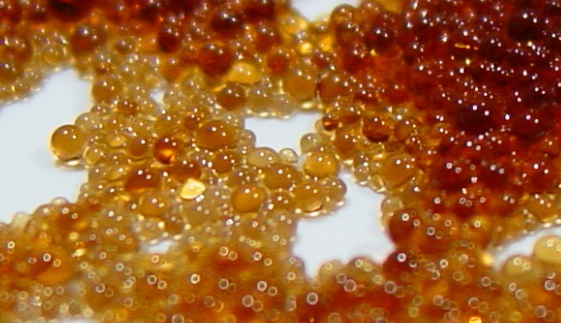
Ion-exchange resin beads
Ion-exchange column used for protein purification

Ion exchange is a reversible interchange of one species of ion present in an insoluble solid with another of like charge present in a solution surrounding the solid. Ion exchange is used in softening or demineralizing of water, purification of chemicals, and separation of substances.

Ion exchange usually describes a process of purification of aqueous solutions using solid polymeric ion-exchange resin. More precisely, the term encompasses a large variety of processes where ions are exchanged between two electrolytes.[1] Aside from its use to purify drinking water, the technique is widely applied for purification and separation of a variety of industrially and medicinally important chemicals. Although the term usually refers to applications of synthetic (human-made) resins, it can include many other materials such as soil.

Typical ion exchangers are ion-exchange resins (functionalized porous or gel polymer), zeolites, montmorillonite, clay, and soil humus. Ion exchangers are either cation exchangers, which exchange positively charged ions (cations), or anion exchangers, which exchange negatively charged ions (anions). There are also amphoteric exchangers that are able to exchange both cations and anions simultaneously. However, the simultaneous exchange of cations and anions is often performed in mixed beds, which contain a mixture of anion- and cation-exchange resins, or passing the solution through several different ion-exchange materials.

Ion exchanger. This device is packed with ion-exchange resin.

Ion exchangers can have binding preferences for certain ions or classes of ions, depending on the physical properties and chemical structure of both the ion exchanger and ion. This can be dependent on the size, charge, or structure of the ions. Common examples of ions that can bind to ion exchangers are:

Along with absorption and adsorption, ion exchange is a form of sorption.

Ion exchange is a reversible process, and the ion exchanger can be regenerated or loaded with desirable ions by washing with an excess of these ions.

Ion exchange process.

Types

[edit]

Cation exchange

[edit]
  1. CM (Carboxymethyl group, weak cation exchange)
  2. SP (sulphopropyl group, strong cation exchange)

Anion exchange

[edit]

Ion exchange resins

[edit]

Ion exchange resins are the physical medium that facilitates ion exchange reactions. The resin is composed of cross-linked organic polymers, typically polystyrene matrix and functional groups where the ion exchange process takes place.

Cation exchange resins

[edit]
  • Strong acid cation (SAC) resins: Composed of a polystyrene matrix with a sulphonate (SO3) functional group. Used in softening or demineralization processes.
  • Weak acid cation (WAC) resins: Composed of an acrylic polymer and carboxylic acid functional groups. Used to selectively remove cations associated with alkalinity.

Anion exchange resins

[edit]
  • Strong base anion (SBA) resins:
    • Type 1 SBA resins: Greatest affinity for the weak acids and commonly present during a water demineralization process.
    • Type 3 SBA resins: Lower chemical stability than Type 1 but better regeneration efficiency.
  • Weak base anion (WBA) resins: Act as acid absorbers; capable of sorbing strong acids with a high capacity and are readily regenerated with caustic.

Chelating resins

[edit]

Used to exchange heavy metals from alkaline earth and alkali metal solutions.

Adsorbents

[edit]

Used for organic compound removal.

Applications

[edit]

Ion exchange is widely used in the food and beverage industry, hydrometallurgy, metals finishing, chemical, petrochemical, pharmaceutical technology, sugar and sweetener production, ground- and potable-water treatment, nuclear, softening, industrial water treatment, semiconductor, power, and many other industries.[citation needed]

A typical example of application is preparation of high-purity water for power engineering, electronic and nuclear industries; i.e. polymeric or inorganic insoluble ion exchangers are widely used for water softening, water purification,[2][3] water decontamination, etc.

Ion exchange is a method widely used in household filters to produce soft water for the benefit of laundry detergents, soaps, and water heaters. This is accomplished by exchanging divalent cations (such as calcium Ca2+ and magnesium Mg2+) with highly soluble monovalent cations (e.g., Na+ or H+) (see water softening). Another application for ion exchange in domestic water treatment is the removal of nitrate and natural organic matter. In domestic filtration systems ion exchange is one of the alternatives for water softening in households along with reverse osmosis (RO) membranes. Compared to RO membranes, ion exchange requires repetitive regeneration when inlet water is hard (has high mineral content).[citation needed]

Industrial and analytical ion-exchange chromatography is another area to be mentioned. Ion-exchange chromatography is a chromatographical method that is widely used for chemical analysis and separation of ions. For example, in biochemistry it is widely used to separate charged molecules such as proteins. An important area of the application is extraction and purification of biologically produced substances such as proteins (amino acids) and DNA/RNA.

Ion-exchange processes are used to separate and purify metals, including separating uranium from plutonium and the other actinides, including thorium, neptunium, and americium. This process is also used to separate the lanthanides, such as lanthanum, cerium, neodymium, praseodymium, europium, and ytterbium, from each other. The separation of neodymium and praseodymium was a particularly difficult one, and those were formerly thought to be just one element didymium – but that is an alloy of the two.[citation needed]

There are two series of rare-earth metals, the lanthanides and the actinides, both of whose families all have very similar chemical and physical properties. Using methods developed by Frank Spedding in the 1940s, ion-exchange processes were formerly the only practical way to separate them in large quantities, until the development of the "solvent extraction" techniques that can be scaled up enormously.

A very important case of ion-exchange is the plutonium-uranium extraction process (PUREX), which is used to separate the plutonium (mainly 239
Pu
) and the uranium (in that case known as reprocessed uranium) contained in spent fuel from americium, curium, neptunium (the minor actinides), and the fission products that come from nuclear reactors. Thus the waste products can be separated out for disposal. Next, the plutonium and uranium are available for making nuclear-energy materials, such as new reactor fuel (MOX-fuel) and (plutonium-based) nuclear weapons. Historically some fission products such as Strontium-90 or Caesium-137 were likewise separated for use as radionuclides employed in industry or medicine.

The ion-exchange process is also used to separate other sets of very similar chemical elements, such as zirconium and hafnium, which is also very important for the nuclear industry. Physically, zirconium is practically transparent to free neutrons, used in building nuclear reactors, but hafnium is a very strong absorber of neutrons, used in reactor control rods. Thus, ion-exchange is used in nuclear reprocessing and the treatment of radioactive waste.

Ion-exchange resins in the form of thin membranes are also used in chloralkali process, fuel cells, and vanadium redox batteries.

Idealised image of water-softening process, involving exchange of calcium ions in water with sodium ions from a cation-exchange resin on an equivalent basis.
Large cation/anion ion exchangers used in water purification of boiler feedwater[4]

Ion exchange can also be used to remove hardness from water by exchanging calcium and magnesium ions for sodium ions in an ion-exchange column. Liquid-phase (aqueous) ion-exchange desalination has been demonstrated.[5] In this technique anions and cations in salt water are exchanged for carbonate anions and calcium cations respectively using electrophoresis. Calcium and carbonate ions then react to form calcium carbonate, which then precipitates, leaving behind fresh water. The desalination occurs at ambient temperature and pressure and requires no membranes or solid ion exchangers. The theoretical energy efficiency of this method is on par with electrodialysis and reverse osmosis.

Other applications

[edit]

Advantages and limitations

[edit]

Advantages

[edit]
  • Selective removal: Ion exchange resins can be designed to selectively remove specific ions from water.
  • High efficiency: Ion exchange processes can achieve high removal efficiencies for targeted ions.
  • Regenerability: Ion exchange resins can be regenerated multiple times by flushing them with a regenerating solution, extending their lifespan and reducing operational costs.
  • Versatility: Ion exchange can be applied to various water treatment applications.
  • Consistent performance: Ion exchange systems offer consistent and predictable performance, providing reliable water treatment over time.
  • Scalability: Ion exchange systems can be easily scaled up or down to meet different treatment capacities and requirements.

Limitations

[edit]
  • Removal limitations: If target ions are present in complex mixtures or at low concentrations, additional pre-treatment or post-treatment may be required.
  • Regeneration requirements: Regeneration of ion exchange resins requires the use of chemicals and generates wastewater containing concentrated contaminants, which may require appropriate handling and disposal measures.
  • Limited capacity: Ion exchange resins have finite capacities for adsorbing ions, and once saturated, they must be regenerated or replaced, which can limit their effectiveness in treating high-concentration or high-volume streams.
  • Complexity: Ion exchange systems can be complex to design, operate, and maintain, requiring specialized knowledge and expertise.

Waste water produced by resin regeneration

[edit]

Most ion-exchange systems use columns of ion-exchange resin that are operated on a cyclic basis.

During the filtration process, water flows through the resin column until the resin is considered exhausted. That happens only when water leaving the column contains more than the maximal desired concentration of the ions being removed. Resin is then regenerated by sequentially backwashing the resin bed to remove accumulated suspended solids, flushing removed ions from the resin with a concentrated solution of replacement ions, and rinsing the flushing solution from the resin. Production of backwash, flushing, and rinsing wastewater during regeneration of ion-exchange media limits the usefulness of ion exchange for wastewater treatment.[6]

Water softeners are usually regenerated with brine containing 10% sodium chloride.[7] Aside from the soluble chloride salts of divalent cations removed from the softened water, softener regeneration wastewater contains the unused 50–70% of the sodium chloride regeneration flushing brine required to reverse ion-exchange resin equilibria. Deionizing resin regeneration with sulfuric acid and sodium hydroxide is approximately 20–40% efficient. Neutralized deionizer regeneration wastewater contains all of the removed ions plus 2.5–5 times their equivalent concentration as sodium sulfate.[8]

See also

[edit]

References

[edit]

Further information

[edit]
  • Betz Laboratories (1976). Handbook of Industrial Water Conditioning (7th ed.). Betz Laboratories.
  • Ion Exchangers (K. Dorfner, ed.), Walter de Gruyter, Berlin, 1991.
  • C. E. Harland, Ion exchange: Theory and Practice, The Royal Society of Chemistry, Cambridge, 1994.
  • Friedrich G. Helfferich (1962). Ion Exchange. Courier Dover Publications. ISBN 978-0-486-68784-1. {{cite book}}: ISBN / Date incompatibility (help)
  • Kemmer, Frank N. (1979). The NALCO Water Handbook. McGraw-Hill.
  • Ion exchange (D. Muraviev, V. Gorshkov, A. Warshawsky), M. Dekker, New York, 2000.
  • A. A. Zagorodni, Ion Exchange Materials: Properties and Applications, Elsevier, Amsterdam, 2006.
  • SenGupta, Arup K. (2017). Ion exchange in environmental processes: fundamentals, applications and sustainable technology. Hoboken, NJ. ISBN 978-1-119-42125-2. OCLC 1001290476.{{cite book}}: CS1 maint: location missing publisher (link)
  • Dr., I., & Luqman, M. (2012). Ion Exchange Technology I : Theory and Materials. Springer Netherlands.
  • Harland, C. E. (1994). Ion exchange : theory and practice (2nd ed.). The Royal Society of Chemistry.
[edit]
Revisions and contributorsEdit on WikipediaRead on Wikipedia
from Grokipedia
Ion exchange is a reversible chemical process in which ions from a solution are exchanged for ions of similar charge bound to an insoluble , such as a or natural mineral, based on differences in affinity and electrostatic interactions. This exchange maintains electrical neutrality and follows the , where the extent of exchange depends on ion concentrations, , , and the specific binding strength of the exchanger for different ions. The process has been observed in natural systems since ancient times, with synthetic ion exchange resins first developed in using phenol-formaldehyde polymers, enabling widespread industrial applications. The fundamental principle of ion exchange relies on the presence of fixed charged groups on the exchanger matrix—either negatively charged for cation exchange (attracting positive ions like Na⁺, Ca²⁺, or H⁺) or positively charged for anion exchange (attracting negative ions like Cl⁻, SO₄²⁻, or OH⁻)—which release loosely bound counterions in favor of those from the solution with higher selectivity. Selectivity follows established series, such as for cations on resins (e.g., H⁺ < Na⁺ < Mg²⁺ < Ca²⁺), influenced by ion size, charge, and hydration; exchangers are typically cross-linked polymer beads (0.3–1.2 mm diameter) with high porosity to allow solution flow without structural change. Natural exchangers, like clay minerals (e.g., montmorillonite with 70–100 meq/100g capacity) or zeolites (100–300 meq/100g), operate similarly through lattice substitutions or edge bonds, expanding in water to expose exchange sites. Ion exchange is widely applied in water treatment for softening (replacing Ca²⁺ and Mg²⁺ with Na⁺ to prevent scaling) and demineralization (using H⁺/OH⁻ forms to produce ultra-pure water with <2 mg/L solids for industries like nuclear power and semiconductors), as well as in chromatography for separating biomolecules based on net charge at specific pH relative to their isoelectric point (pI). In environmental and nuclear contexts, it concentrates and fixes radioactive ions (e.g., Cs⁺, Sr²⁺) on high-capacity clays like montmorillonite, retaining >99% activity after heating to 1,000°C for safe disposal in geologic formations or pits. Resins are regenerated periodically (every 12–48 hours in continuous systems) with concentrated acids, bases, or salts, offering long-term durability and low operational costs in columns ranging from laboratory scale to industrial tonnes.

Fundamentals

Definition and Basic Principles

Ion exchange is a stoichiometric, reversible in which ions from an solution are exchanged with ions of the same charge that are electrostatically bound to an insoluble matrix, such as beads or particles, without a substantial change in the solid's structure. This process maintains charge balance, as the exchange occurs between ions of equivalent total charge to preserve electroneutrality in both the solution and the phase. The acts as an ion exchanger, containing fixed ionic groups that attract mobile counter-s, which can be displaced by incoming ions from the solution based on relative affinities. The concept originated in during the mid-19th century, when English chemists J. Thomas Way and H.S. Thompson investigated the behavior of fertilizers in soils and observed the exchange of ammonium ions (NH₄⁺) from manure with calcium ions (Ca²⁺) held by clay minerals like alumino-silicates. This natural phenomenon in soils, involving cations such as H⁺ and Ca²⁺ bound to negatively charged clay surfaces, laid the foundation for understanding ion exchange as a key mechanism in retention and . In a basic ion exchange process, the solid exchanger—often represented symbolically as R-SO₃⁻ Na⁺ for a cation-exchange resin with sulfonate functional groups—contacts a solution containing target ions, such as Ca²⁺. The reaction proceeds as follows: 2R-SO3Na++Ca2+(R-SO3)2Ca2++2Na+2 \text{R-SO}_3^- \text{Na}^+ + \text{Ca}^{2+} \rightleftharpoons (\text{R-SO}_3^-)_2 \text{Ca}^{2+} + 2 \text{Na}^+ This illustrates the reversible interchange, where sodium ions are released into the solution while calcium ions bind to the resin, driven by the exchanger's selectivity for divalent over monovalent cations. Ions are charged atoms or molecules (cations positively charged, anions negatively charged) dissolved in electrolytes—conducting solutions formed by substances like salts that dissociate into ions—ensuring the process operates under conditions of overall charge neutrality. A common application demonstrating these principles is in household water softeners, where hard water containing scale-forming Ca²⁺ and Mg²⁺ ions passes through a bed of sodium-form cation-exchange resin, replacing the hardness ions with Na⁺ to produce softened water suitable for and appliances. The resin's total exchange capacity (maximum ions it can hold) and selectivity (preference for specific ions) underpin its performance, though detailed quantification falls beyond basic operation.

Thermodynamic and Kinetic Aspects

Ion exchange processes are governed by thermodynamic principles that dictate the equilibrium distribution of ions between the solid exchanger phase and the . The Donnan equilibrium arises due to the presence of fixed charges on the ion exchanger, creating an electrostatic potential that influences ion partitioning across the interface. This equilibrium ensures electroneutrality and results in unequal ion concentrations between phases, with co-ions repelled and counter-ions attracted to the fixed charges. The Donnan potential, typically on the order of tens of millivolts, can be directly measured and plays a critical role in selectivity for charged species. Equilibrium in ion exchange is often described using isotherms that model the relationship between ion uptake and solution concentration. The Langmuir isotherm assumes monolayer adsorption with fixed sites and no interactions between adsorbed ions, expressed as q=qmKC1+KCq = \frac{q_m K C}{1 + K C}, where qq is the amount adsorbed, qmq_m the , KK the , and CC the equilibrium concentration; this model approximates selectivity in systems with homogeneous sites. The Freundlich isotherm, suitable for heterogeneous surfaces, follows q=KfC1/nq = K_f C^{1/n}, where KfK_f and nn are empirical constants reflecting affinity and heterogeneity; it has been derived rigorously for trace ion exchange reactions involving valence differences. These isotherms provide approximations for predicting ion exchange behavior under varying conditions. The selectivity coefficient quantifies the preference of an exchanger for one over another in a . It is defined thermodynamically as SAB=aBmAaAmBS_A^B = \frac{a_B m_A}{a_A m_B}, where aAa_A and aBa_B are the activities of ions A and B in solution, and mAm_A and mBm_B are their molalities in the exchanger phase; this formulation accounts for non-ideal behavior through activities rather than concentrations. A value of SAB>1S_A^B > 1 indicates preference for ion A. Selectivity often favors higher valence ions due to stronger electrostatic interactions with fixed charges, as seen in cation exchange where divalent ions like Ca²⁺ are preferred over monovalent Na⁺, enhancing removal efficiency in mixed solutions. The total capacity of an ion exchanger represents the total number of exchangeable sites, typically expressed in milliequivalents per gram (meq/g) or equivalents per liter (eq/L), determined by the density of functional groups. For strong acid cation resins, this is around 4.5–5.5 meq/g dry basis. Operating capacity, the usable amount under practical conditions, is lower and influenced by factors such as solution , which affects of weak exchangers, and competing ions that reduce availability of sites through preferential exchange. For instance, high concentrations of competing cations can decrease operating capacity by 20–50% in softening applications. Kinetics of ion exchange are primarily diffusion-controlled, involving transport through the liquid film surrounding the particle and within the particle itself. Film diffusion dominates at low solution concentrations or high flow rates, where the rate-limiting step is ion migration across the stagnant , modeled by Fick's : J=DCxJ = -D \frac{\partial C}{\partial x}, with JJ as , DD the , and C/x\partial C / \partial x the concentration gradient. Particle diffusion, prevalent at higher concentrations, involves intraparticle migration through pores and the gel phase, described by Fick's second law: Ct=D2Cx2\frac{\partial C}{\partial t} = D \frac{\partial^2 C}{\partial x^2}, accounting for and swelling effects in beads. The overall rate can be approximated by combined models, with particle diffusion often slower due to restricted paths in cross-linked structures. Temperature and solution concentration significantly impact exchange efficiency. Elevated temperatures increase diffusion coefficients, accelerating kinetics by 1.5–2 times per 10°C rise, but may slightly decrease selectivity for some systems due to altered hydration shells. Higher solution concentrations enhance mass transfer rates via steeper gradients but can reduce operating capacity through competition and approach saturation faster, while low concentrations favor equilibrium attainment but slow kinetics. These effects underscore the need for optimized conditions in process design.

Types

Cation Exchange

Cation exchange is the process by which positively charged ions, or cations, in a solution are reversibly exchanged with other cations attached to negatively charged functional groups on an ion exchange material, such as the (-SO₃⁻) groups in strong acid cation resins. These resins consist of a polymeric with fixed anionic sites that bind labile cations, allowing selective swapping based on the solution's ionic composition. This mechanism relies on electrostatic attractions between the fixed negative charges and the mobile cations, achieving equilibrium governed by concentration gradients and ion affinities. Selectivity in cation exchange, particularly for strong acid resins cross-linked with about 8% , follows a typical order of H⁺ (relative affinity 1.00) < Na⁺ (1.56) < K⁺ (2.28) < Mg²⁺ (2.59) < Ca²⁺ (4.06), reflecting the resin's greater preference for higher-valence and less-hydrated ions. This preference arises from the higher charge density of divalent cations like Ca²⁺, which enables stronger ionic interactions with the fixed sites, and their lower hydration energy, which facilitates closer approach to the resin matrix compared to more strongly hydrated monovalent ions like Na⁺. As a result, processes such as water softening exploit this selectivity, where Ca²⁺ and Mg²⁺—the primary causes of hardness—are efficiently removed by exchanging them for Na⁺ on sodium-form resins, thereby preventing scale buildup in pipes and appliances without requiring exhaustive removal of all ions. The performance of cation exchangers shows notable pH dependence, especially when distinguishing between strong and weak types. Strong acid cation exchangers with sulfonic acid groups remain fully ionized and retain exchange capacity across the full pH range (typically 0–14), making them suitable for acidic conditions where H⁺ exchange predominates due to minimal competition from other cations and the resin's inherent form. In contrast, weak acid cation exchangers bearing carboxylic acid (-COOH) groups are only partially ionized below pH 4–5, where protonation reduces their negative charge and exchange capacity; they perform optimally in neutral to alkaline conditions. This pH sensitivity influences applications, as acidic environments favor strong exchangers for H⁺-based demineralization, while weak exchangers are avoided in low-pH scenarios to prevent capacity loss. Historically, cation exchange concepts emerged in soil science during the mid-1800s, with early agricultural applications focusing on measuring soil cation exchange capacity (CEC) to assess fertility and nutrient retention. Pioneering work by researchers like J.M. van Bemmelen in 1878 recognized CEC as a fixed property of soils under varying conditions, enabling quantitative evaluation of how clay and organic matter hold essential cations like Ca²⁺ and K⁺ against leaching, thus informing crop management practices.

Anion Exchange

Anion exchange is a reversible process in which negatively charged ions (anions) in a solution are exchanged for other anions attached to positively charged functional groups on an ion exchange material, such as quaternary ammonium sites (e.g., R₄N⁺ OH⁻) fixed on a polymer matrix. This mechanism allows for the removal of undesirable anions like nitrates, sulfates, or bicarbonates from aqueous solutions, replacing them with less harmful ions such as hydroxide or chloride. The process operates effectively in basic or neutral environments, where the fixed positive sites maintain their charge to attract and bind anions through electrostatic interactions. The selectivity of anion exchangers for different ions follows a specific order influenced by factors such as ion polarizability, hydrated radius, and charge density, often aligning with aspects of the Hofmeister series for specific ion effects. For strong base anion resins, the typical selectivity sequence relative to hydroxide (OH⁻, coefficient = 1.0) is SO₄²⁻ (85) > NO₃⁻ (65) > Cl⁻ (22) > HCO₃⁻ (6) > OH⁻ (1.0), indicating a strong preference for divalent anions like sulfate over monovalent ones, with more polarizable ions such as nitrate exhibiting higher affinity than chloride. This order arises because larger, less hydrated ions interact more favorably with the hydrophobic polymer backbone of the resin, enhancing binding strength. Anion exchangers are classified as strong base or weak base types based on their functional groups and operational pH range. Strong base anion exchangers feature quaternary ammonium groups (Type I: ; Type II: ), which remain ionized across a wide pH range (0–14), enabling effective removal of both strong and weak acids, including silica and from CO₂. In contrast, weak base anion exchangers use primary, secondary, or tertiary amine groups that protonate only in acidic to mildly basic conditions (pH < 8–9), making them suitable for adsorbing strong mineral acids but ineffective against weak acids like CO₂ or bicarbonates in dealkalization processes, where they help reduce without fully removing . The pH dependency of weak base resins limits their use in high-pH environments, as reduces capacity. Specialized anion exchangers, such as nitrate-selective resins, address challenges in treating -contaminated by prioritizing nitrate removal over competing anions like . These strong base resins, often based on triethyl- or functionalities, exhibit 10–100 times higher selectivity for NO₃⁻ relative to SO₄²⁻ compared to standard resins, preventing "nitrate dumping" where effluent nitrate levels exceed influent due to sulfate displacement. They are widely applied in point-of-use and municipal systems to reduce nitrate below 10 ppm (as N), mitigating health risks like infant in agricultural runoff areas. Unlike cation exchange, which typically uses acidic regenerants like hydrochloric acid (HCl) to restore capacity, anion exchange regeneration employs basic agents such as sodium hydroxide (NaOH) to displace bound anions and return the resin to its hydroxide or chloride form. This difference reflects the need to maintain the positive charge on anion exchanger sites in alkaline conditions, contrasting with the protonation required for cation sites in acidic media. Kinetic aspects, such as anion diffusion into resin pores, generally mirror those in cation exchange but are modulated by the basic operating environment.

Materials

Ion Exchange Resins

Ion exchange resins are synthetic organic s designed for selective ion exchange, consisting of an insoluble, cross-linked matrix with covalently bound functional groups that carry exchangeable ions. The predominant matrix is , formed through copolymerization of styrene and (), which provides the necessary three-dimensional network for stability in aqueous environments. Functional groups such as (-SO₃H) are attached for strong acid cation exchange resins, enabling exchange of cations like Na⁺ or Ca²⁺, while quaternary ammonium groups (e.g., -N⁺(CH₃)₃) serve strong base anion exchange resins for anions like Cl⁻ or SO₄²⁻. Alternative matrices, such as polyacrylates, are used for certain weak acid cation exchangers due to their functional groups (-COOH), offering pH-dependent exchange behavior. The degree of cross-linking, typically 2-8% by weight, critically influences the resin's rigidity, with higher levels reducing uptake and enhancing durability. Synthesis begins with suspension polymerization of styrene and DVB to produce spherical copolymer beads, usually 0.3-1.2 mm in diameter, where DVB acts as the cross-linker to prevent dissolution. Post-polymerization, functionalization occurs: cation resins undergo sulfonation using concentrated or chlorosulfonic acid to graft -SO₃H groups, while anion resins involve chloromethylation with followed by amination with or to form quaternary ammonium sites. The cross-linking percentage directly impacts properties; for instance, 4-8% DVB balances mechanical strength and performance, as lower levels (e.g., 2%) promote greater swelling (up to 50% volume increase in ) and faster ion diffusion kinetics due to expanded polymer chains, whereas higher levels (e.g., 8%) limit swelling to under 20% and slow kinetics by restricting pore access but improve resistance to osmotic shock. Polyacrylate resins are similarly synthesized via copolymerization of acrylic or with cross-linkers like , though they exhibit more pronounced pH-sensitive swelling. Resins are classified into gel-type and macroporous forms based on their internal . Gel-type resins feature a homogeneous, microporous network with transient pores of 10-15 formed during swelling, providing high density and exchange capacities of 4-5 meq/g (dry weight) but slower kinetics for large ions due to limitations within the gel matrix. Macroporous resins, synthesized with porogenic agents like solvents during , possess permanent, interconnected pores up to 100-1000 , yielding surface areas of 50-500 /g and better accessibility for macromolecules or organic foulants, though at the expense of slightly lower capacity (around 3-4 meq/g) and increased in columns. The trade-off favors gel-type for high-purity ion exchange with small ions and macroporous for applications requiring rapid exchange or organic removal. Commercial ion exchange resins, such as the Amberlite series from and Dowex from Dow Chemical, exemplify these designs with standardized capacities of 4-5 meq/g for strong exchangers, tailored through controlled cross-linking and functionalization. Mixed-bed resins integrate cation and anion components in a single bed, typically as separate beads blended in a 1:0.6 to 1:1 ratio by volume, preserving individual structural integrity for concurrent exchange while facilitating easier handling than sequential systems. These formulations ensure consistent performance, with cross-linking optimized to maintain bead uniformity and prevent separation during use.

Inorganic and Other Exchangers

Inorganic ion exchangers encompass a range of materials distinct from organic resins, offering advantages in thermal and chemical stability for specialized applications. Natural exchangers, such as —crystalline aluminosilicates with a microporous framework—primarily facilitate cation exchange through their replaceable cations in the lattice structure. For instance, , a common natural , effectively removes ions from aqueous solutions via selective ion exchange, with capacities reaching approximately 1.41 meq/g in its sodium form. Similarly, clays like , composed of minerals, exhibit high due to their layered structure and ability to swell, enabling adsorption and exchange of divalent cations such as lead and . Synthetic inorganic exchangers include materials like phosphates and oxides, designed for environments requiring resistance to high temperatures or . phosphates, particularly α- phosphate, serve as robust cation exchangers with layered structures that allow intercalation and exchange of protons or metal ions, maintaining stability up to elevated temperatures for applications such as product removal in nuclear systems. oxides, in hydrous forms, demonstrate ion exchange capabilities for heavy metals like (II) even at temperatures up to 280°C, owing to their surface hydroxyl groups that facilitate proton-metal ion swaps, making them suitable for high-temperature . These materials often outperform organic counterparts in harsh conditions but with reduced exchange kinetics due to their rigid crystalline nature. Ion exchange membranes represent another class of inorganic and hybrid exchangers, featuring fixed charges embedded in a solid matrix to enable selective ion transport. Cation-selective membranes, such as those based on perfluorosulfonic acids like , incorporate groups along a polymer backbone that provide negatively charged sites, repelling anions while permitting cation passage, particularly protons in applications. Anion-selective variants operate analogously with positively fixed charges, such as quaternary ammonium groups, to facilitate anion mobility across the membrane. These membranes' semi-permeable structure, combining ionic channels with mechanical integrity, supports processes like without the swelling issues common in bulk resins. Inorganic chelating exchangers, often derived from metal phosphates or oxides, incorporate ligands that enhance selectivity for through coordination beyond simple electrostatic exchange. For example, modified phosphates can chelate ions like and lead via oxygen donors, achieving targeted removal from with minimal interference from competing cations. , as inorganic analogs, similarly bind such as and through anion intercalation and surface complexation, offering reversible exchange in acidic media. Compared to organic ion exchange resins, inorganic and other exchangers generally exhibit superior stability—withstanding temperatures up to 300°C without significant degradation—but lower ion exchange capacities, typically 2-3 meq/g for zeolites versus 4-5 meq/g for resins. This trade-off arises from their inorganic frameworks, which provide rigidity and but limit the density of exchangeable sites.

Processes and Operation

Regeneration Procedures

The ion exchange operational cycle begins with the loading phase, also known as the service or exchange phase, where influent water flows through the resin bed, allowing target ions to exchange with the resin's functional groups until the resin nears saturation. Exhaustion occurs at , when the resin capacity is largely depleted, resulting in a detectable rise in effluent target ion concentration, signaling the end of effective treatment. Following exhaustion, backwashing fluidizes the resin bed with water in the upflow direction to remove trapped particulates and re-stratify the bed, preventing channeling in subsequent cycles. Regeneration then restores the resin's ionic form by passing a concentrated regenerant solution through the bed, reversing the exchange and displacing adsorbed ions. The cycle concludes with rinsing, where deionized or softened water flushes residual regenerant from the bed until effluent quality meets specifications, typically monitored by conductivity. Regeneration agents are selected based on resin type to efficiently restore capacity. For cation exchange resins, strong acids such as (HCl) at 5-8% concentration or (H₂SO₄) at 8-10% are commonly used to protonate the resin and elute captured cations. For anion exchange resins, bases like (NaOH) at 4-6% or (Na₂CO₃) at similar levels supply ions to displace adsorbed anions and regenerate the OH⁻ form. These regenerants are applied at controlled flow rates, typically 0.5-2 bed volumes per hour, to optimize contact and minimize waste. Regeneration can be performed in co-current or counter-current modes, differing in regenerant flow direction relative to the service flow. In co-current regeneration, the regenerant flows in the same direction as the service water, which is simpler but less efficient due to greater mixing and incomplete displacement. Counter-current regeneration, where the regenerant flows oppositely, achieves higher efficiency by concentrating the regenerant at the inlet and displacing ions more effectively, yielding up to 20% savings in salt or regenerant usage compared to co-current methods. The breakthrough curve, an S-shaped graph of normalized effluent concentration (C_t / C_0) versus time or bed volumes processed, characterizes exhaustion and guides cycle timing. It reflects the transition from low effluent to full penetration of target ions. This curve is commonly modeled using the Thomas model, which integrates second-order reaction kinetics with Langmuir adsorption equilibrium: CtC0=11+exp(kThq0mQkThC0t)\frac{C_t}{C_0} = \frac{1}{1 + \exp\left( k_{Th} q_0 \frac{m}{Q} - k_{Th} C_0 t \right)} where CtC_t is the effluent concentration at time tt, C0C_0 is the influent concentration, kThk_{Th} is the Thomas rate constant (L/mg·min), q0q_0 is the equilibrium adsorption capacity (mg/g), mm is the resin mass (g), and QQ is the flow rate (mL/min). Several factors influence , including contact time and temperature. Longer contact times, achieved by slower regenerant flow or higher volumes, enhance ion into pores, improving capacity restoration to 80-95% of original levels. Elevated temperatures, typically 20-40°C, accelerate regenerant and exchange kinetics, boosting by 10-20%, though temperatures above 60°C risk degradation.

Wastewater Management

In ion exchange processes, the regenerant waste primarily consists of high-salinity s that incorporate the chemical agents used for regeneration—such as , acids, or bases—along with the ions displaced from the bed. For instance, in cation exchange softening applications, the resulting often contains 5-10% NaCl mixed with calcium and magnesium chlorides. Similarly, anion exchange regeneration with or can produce waste streams rich in , chloride, and hydroxide, with (TDS) concentrations exceeding 50,000 mg/L in concentrated forms. These compositions pose environmental challenges due to their elevated and potential acidity or , which can harm aquatic ecosystems if discharged untreated. The volume of regenerant waste generated is typically 5-10% of the treated volume per regeneration cycle, depending on capacity, feed ion concentration, and operational efficiency; for example, in demineralization systems, this can be reduced to less than 5% through optimized counter-current regeneration. Minimization strategies, such as employing selective exchange that target specific contaminants, further decrease waste production by extending cycle lengths and reducing regenerant demands. Regulatory frameworks, including U.S. Environmental Protection Agency (EPA) guidelines under the National Pollutant Discharge Elimination System (NPDES), impose strict limits on effluent discharge to protect receiving waters, often requiring TDS concentrations below 500 mg/L on a monthly average in sensitive regions, alongside pH controls between 6.0 and 9.0. Non-compliance can necessitate additional permitting or alternative disposal methods like land application or hauling to licensed facilities. Common treatment methods for regenerant waste focus on mitigating its environmental impact through neutralization to adjust pH using lime or acids, dilution with freshwater to lower salinity prior to discharge, and advanced techniques such as evaporation or crystallization to recover water and solids for reuse or safe disposal. Evaporation, for example, can achieve up to 95% volume reduction by producing distillate for recycling and a concentrated brine for minimal disposal. Emerging innovations address waste generation at the source; continuous electrodeionization (CEDI) systems integrate ion exchange with electrical regeneration, eliminating chemical regenerants and producing no brine waste while maintaining high-purity output. Likewise, ion exchange fibers, often regenerated with carbon dioxide instead of harsh chemicals, enable more efficient ion removal with reduced regenerant volumes and lower environmental footprint compared to traditional bead resins.

Applications

Water Purification

Ion exchange plays a central role in by selectively removing undesirable ions to produce potable , softened water for household use, and ultra-pure water for . This process leverages cation and anion exchange resins to target specific contaminants, such as hardness-causing ions or nitrates, ensuring compliance with standards while minimizing scaling and in distribution systems. Water softening via ion exchange primarily targets hardness ions, calcium (Ca²⁺) and magnesium (Mg²⁺), which cause scaling in and appliances. In the sodium-cycle , water passes through a bed of strong acid cation exchange resin in the sodium form, where Ca²⁺ and Mg²⁺ ions are exchanged for sodium ions (Na⁺), effectively reducing levels to below 1 grain per . This method is widely applied at scales through point-of-use softeners, which treat incoming for residential , and at municipal scales in treatment plants to prevent distribution system buildup and improve water usability. Demineralization employs sequential or combined ion exchange to achieve comprehensive ion removal, producing suitable for high-purity applications. In two-bed systems, first flows through a cation exchange resin (hydrogen form) to replace positively charged ions with H⁺, followed by an anion exchange resin (hydroxide form) that captures negatively charged ions and releases OH⁻, resulting in H⁺ and OH⁻ combining to form pure . Mixed-bed systems integrate both cation and anion resins in a single vessel for more efficient polishing, yielding ultra-pure with resistivity exceeding 18 MΩ·cm, essential for laboratories and electronics manufacturing. These configurations are particularly effective for removing a broad spectrum of dissolved salts, achieving near-total deionization. Specific ion exchange processes address targeted impurities in drinking water. Dealkalization using the chloride cycle involves strong base anion exchange resins that swap bicarbonate (HCO₃⁻) and carbonate (CO₃²⁻) ions—primary contributors to alkalinity—for chloride ions (Cl⁻), reducing pH and preventing corrosion in downstream equipment without introducing sodium. This is regenerated with sodium chloride brine, similar to softening cycles, and is commonly used in boiler pretreatment to control alkalinity-related scaling. Nitrate removal in drinking water relies on anion exchange resins selective for nitrate (NO₃⁻), exchanging it for chloride ions to meet the U.S. maximum contaminant level of 10 mg/L, protecting against methemoglobinemia in infants; this technology is effective for groundwater sources with agricultural runoff contamination.

Industrial and Analytical Uses

Ion exchange plays a pivotal role in , particularly for extraction, where anion exchange resins recover from acidic leach solutions following processing. This process involves loading onto strongly basic anion exchangers in or media, followed by to produce a concentrated stream suitable for further purification via solvent extraction or . In sugar refining, ion exchange resins facilitate deashing by removing mineral ions such as calcium, magnesium, and from cane sugar syrups, enhancing product purity and preventing crystallization issues. Cation and anion exchange steps are sequentially employed in mixed-bed or layered configurations to achieve high demineralization efficiency, typically reducing ash content to below 0.01%. Pharmaceutical applications leverage ion exchange for immobilization, where resins with charged functional groups bind enzymes via electrostatic interactions, stabilizing them for repeated use in biocatalytic processes. For instance, His-tagged enzymes are selectively attached to nickel-chelated cation exchange resins, enabling efficient separation and reuse in drug synthesis workflows. Acidic cation exchange resins serve as heterogeneous catalysts in organic synthesis, notably for esterification reactions, where they replace corrosive liquid acids like . These sulfonic acid-functionalized polymers promote the reaction between carboxylic acids and alcohols, such as in the production of , offering advantages in catalyst recovery and reduced byproduct formation. In , ion employs ion exchange columns for the sensitive detection of trace ions in complex matrices, separating species like halides, nitrates, and metals based on their charge interactions with the stationary phase. Suppressed conductivity detection enhances sensitivity, allowing quantification down to parts-per-billion levels, as standardized in protocols. routinely utilizes ion exchange affinity exchangers, where cation or anion resins selectively bind proteins by net charge, facilitating high-resolution separation in downstream bioprocessing. Emerging applications include nuclear waste remediation, where zeolites act as inorganic ion exchangers to selectively remove cesium-137 through preferential uptake in their crystalline framework, aiding in the of radioactive effluents. In , ion exchange processes recover from acidic leachates of spent lithium-ion batteries, using chelating or strong acid cation resins to achieve over 90% lithium selectivity amid competing metals like and . The global ion exchange market, encompassing resins and related materials, was valued at approximately $2.0 billion in , driven by demand in these industrial and analytical sectors.

Advantages and Limitations

Benefits

Ion exchange processes offer high selectivity for targeted ions, enabling efficient removal of specific contaminants such as nitrates, , and hardness-causing ions like calcium and magnesium, often achieving removal efficiencies greater than 90% under optimal conditions. This selectivity arises from the tailored functional groups on ion exchange resins, which preferentially bind certain ions over others, making the technology suitable for precise purification tasks. Additionally, ion exchange systems exhibit modular , allowing seamless adaptation from laboratory-scale operations to large industrial installations without significant redesign, due to the straightforward column-based setup. The cost-effectiveness of ion exchange stems from its low energy requirements, operating effectively at ambient temperatures and pressures, in contrast to energy-intensive alternatives like or that demand heating or high-pressure pumps. Resins can be regenerated and reused for hundreds of cycles—typically 200 to over 1,000 depending on the application and maintenance—minimizing replacement costs and waste generation through reversible ion swapping during regeneration. This reusability, combined with relatively low operational expenses for chemicals like regenerants, positions ion exchange as an economical choice for ongoing treatment needs. Ion exchange demonstrates versatility, particularly for treating dilute solutions containing less than 1% ionic species, where methods like chemical precipitation become inefficient due to poor yields. It effectively handles a broad range of ionic pollutants in low-concentration feedwaters, such as those from industrial effluents or municipal supplies, without requiring preconcentration steps. From an environmental perspective, ion exchange reduces reliance on chemical dosing compared to traditional , which requires substantial additions of lime and soda ash to precipitate , thereby lowering production and reagent consumption. It facilitates configurations for zero-liquid discharge by concentrating contaminants into manageable regenerant streams for recovery or disposal, promoting resource conservation and minimizing effluent volumes. Safety benefits derive from the solid-phase nature of the resins, which confines ion exchange to packed columns, thereby reducing worker exposure to corrosive liquids or hazardous gases associated with liquid-phase handling in competing processes. This design enhances operational safety in diverse settings, from water treatment plants to analytical labs, with minimal risk of spills or volatile emissions.

Challenges and Drawbacks

One major challenge in ion exchange processes is , where and biological growth accumulate on the surfaces, reducing ion exchange capacity and increasing across the bed. such as and hydrocarbons adsorb onto the , while biological fouling involves formation from present in feed water, leading to decreased efficiency and the need for frequent cleaning. Cleaning methods typically involve chemical agents like for biological fouling or alkaline solutions and solvents for organic buildup, though these can partially degrade the over time. Ion exchange resins have a limited operational lifespan, often degrading after 3-5 years of continuous use due to mechanical and chemical stresses. Osmotic shock from rapid changes in during service and regeneration cycles causes bead fracture and loss of capacity, while exposure to oxidizing agents like or leads to oxidative degradation of the matrix. These factors result in reduced exchange sites and eventual replacement of the resin. Non-selectivity poses another limitation, as resins often co-remove desirable ions alongside target contaminants, complicating downstream processes. In high total dissolved solids (TDS) waters, competing ions reduce the resin's affinity for specific targets like nitrates or , lowering overall efficiency and requiring higher resin volumes. This issue is particularly pronounced in brackish or industrial effluents, where non-selective binding increases operational . Waste generation from regeneration procedures creates significant disposal challenges, with concentrated brine streams contributing to increased in effluents and potential environmental impacts. These brines, often containing elevated levels of salts and desorbed contaminants, require careful management to avoid soil salinization or harm when discharged. Compared to methods for bulk ion removal, ion exchange incurs higher operational costs due to resin replacement, chemical regenerants, and brine handling. While effective for selective demineralization, its expenses exceed those of simpler for large-scale, non-specific applications, limiting in cost-sensitive scenarios.

References

Add your contribution
Related Hubs
User Avatar
No comments yet.