



Community hub
Apricot
View on Wikipedia
| Apricot | |
|---|---|

| |
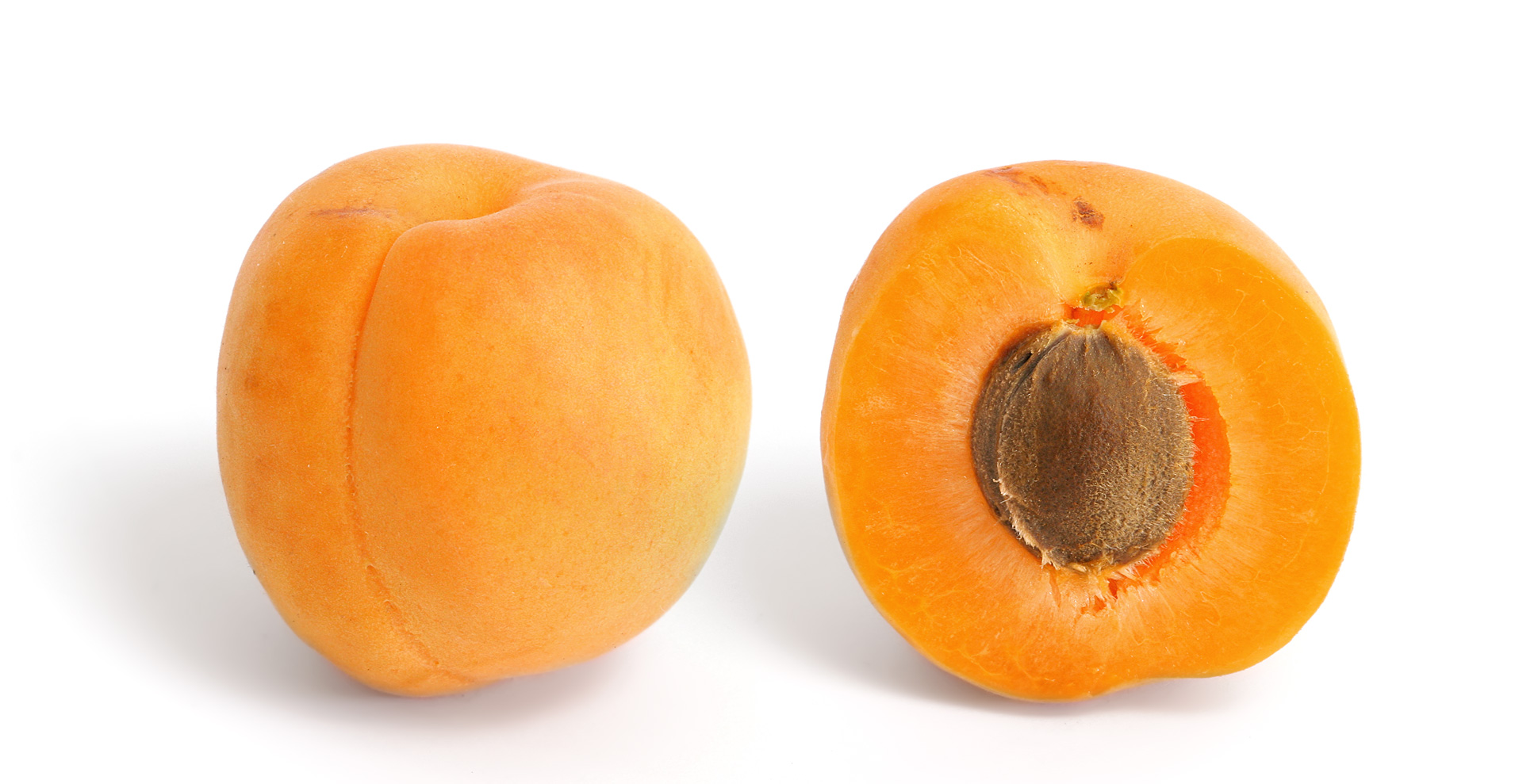
| Apricot and its cross-section | |
Scientific classification 
| |
| Kingdom: | Plantae |
| Clade: | Tracheophytes |
| Clade: | Angiosperms |
| Clade: | Eudicots |
| Clade: | Rosids |
| Order: | Rosales |
| Family: | Rosaceae |
| Genus: | Prunus |
| Subgenus: | Prunus subg. Prunus |
| Section: | Prunus sect. Armeniaca (Scop.) Koch |
| Type species | |
| Prunus armeniaca L. | |
| Species | |
|
See text. | |
An apricot (US: /ˈæprɪkɒt/ ⓘ, UK: /ˈeɪprɪkɒt/ ⓘ) is a fruit, or the tree that bears the fruit, of several species in the genus Prunus. Usually an apricot is from the species Prunus armeniaca, but the fruits of the other species in Prunus sect. Armeniaca are also called apricots.[1] In 2023, world production of apricots was 3.7 million tonnes, led by Turkey with 20% of the total.[2]
Prunus armeniaca was domesticated in ancient times in Central Asia and China. Cultivation of the tree then spread across Eurasia and to North Africa and Japan. The fruit is consumed both fresh and dried. Apricots are used in dishes including cakes, tarts, and jam, and in savoury dishes, for example in stuffing. In Austria, they are the basis of Marillenknödel, sweet apricot dumplings.
Etymology
[edit]Apricot first appeared in English in the 16th century as abrecock from the Middle French aubercot or later abricot,[3] from Spanish albaricoque and Catalan a(l)bercoc, in turn from Arabic الْبَرْقُوق (al-barqūq, 'the plums'), from Byzantine Greek βερικοκκίᾱ (berikokkíā, 'apricot tree'), derived from late Greek πραικόκιον (praikókion, 'apricot') from Latin [persica ('peach')] praecocia' (praecoquus, 'early ripening').[4][5][6]

Description
[edit]The apricot is a small tree, up to 8 metres (26 ft) tall, with a round canopy and a spread similar to its height. The flowers are white or pinkish, about 2 centimetres (0.79 in) wide, appearing before the leaves early in the spring. The fruit is a succulent orange-yellow drupe (a stonefruit) tinged with red.[7] The single seed (kernel or stone) is enclosed in a hard shell (exocarp).[8]
-
 Tree
Tree -
 Leaves
 -
 Flowers
 -
 Apricot kernel (exocarp and seed)


.jpg)
Taxonomy
[edit]Apricots are species belonging to Prunus sect. Armeniaca. The taxonomic position of P. brigantina is disputed. It is grouped with plum species according to chloroplast DNA sequences,[9] but more closely related to apricot species according to nuclear DNA sequences.[10]
- Prunus armeniaca – common apricot, widely cultivated for its edible fruit and kernel
- Prunus brigantina – Briançon apricot, native to Europe, cultivated for its edible fruit and oil-producing kernel
- Prunus cathayana – native to Hebei
- Prunus × dasycarpa – purple apricot, cultivated in Central Asia and adjacent areas for its edible fruit
- Prunus hongpingensis – Hongping apricot, native to Shennongjia, cultivated for its edible fruit
- Prunus hypotrichodes – native to Chongqing
- Prunus limeixing – cultivated in northern China for its edible fruit
- Prunus mandshurica – Manchurian apricot, native to Northeast Asia, cultivated for its kernel, the fruits of some cultivars edible
- Prunus mume – flowering apricot, native to southern China, widely cultivated for its beautiful blossom and edible fruit
- Prunus sibirica – Siberian apricot, native to Siberia, Mongolia, northern China, and Korea, cultivated for its kernel
- Prunus zhengheensis – Zhenghe apricot, native to Fujian
Cultivation
[edit]Origin and domestication
[edit]The most commonly cultivated apricot Prunus armeniaca was known in Armenia during ancient times, and has been cultivated there for so long that it was previously thought to have originated there, hence the epithet of its scientific name.[11] However, this is not supported by genetic studies, which instead confirm the hypothesis proposed by Nikolai Vavilov that domestication of P. armeniaca occurred in Central Asia and China.[12][13] The domesticated apricot then diffused south to South Asia,[12] west to West Asia (including Armenia), Europe and North Africa, and east to Japan.[13]
Cultivation practices
[edit]Apricots have a chilling requirement of 300 to 900 chilling units. A dry climate is good for fruit maturation. The tree is slightly more cold-hardy than the peach, tolerating winter temperatures as cold as −30 °C (−22 °F) or lower if healthy, with large differences between cultivars.[14] They are hardy in USDA zones 5 through 8. A limiting factor in apricot culture is spring frosts: They tend to flower very early (in early March in western Europe), and spring frost can kill flowers or before flower buds in different stages of development.[14] Furthermore, the trees are sensitive to temperature changes during the winter season. In China, winters can be very cold, but temperatures tend to be more stable than in Europe and especially North America, where large temperature swings can occur in winter. Hybridization with the closely related Prunus sibirica (Siberian apricot; hardy to −50 °C (−58 °F) but with less palatable fruit) offers options for breeding more cold-tolerant plants.[15] They prefer well-drained soils with a pH of 6.0 to 7.0.[16]
Apricot cultivars are usually grafted onto plum or peach rootstocks. The cultivar scion provides the fruit characteristics, such as flavor and size, but the rootstock provides the growth characteristics of the plant. Some of the more popular US apricot cultivars are 'Blenheim', 'Wenatchee Moorpark', 'Tilton', and 'Perfection'. Some apricot cultivars are self-compatible, so do not require pollinizer trees; others are not: 'Moongold' and 'Sungold', for example, must be planted in pairs so they can pollinate each other.[17]
Plant breeders have created what is known as a "black apricot" or "purple apricot", (Prunus dasycarpa), a hybrid of an apricot and the cherry plum (Prunus cerasifera). Other apricot–plum hybrids are variously called plumcots, apriplums, pluots, or apriums.[18]
-
 David Packard's apricot orchard in Los Altos Hills, preserved by the David and Lucile Packard Foundation, is one of the few remaining in Santa Clara County, where apricots were a major crop before the urban sprawl of Silicon Valley.
 -
 Preparing apricots at Alchi Monastery, Ladakh, India
 -
 Drying apricots (Fergana, Uzbekistan)


.jpg)
Pests and diseases
[edit]Diseases of apricots vary with climate. In California's hot Central Valley, pit burn, a condition of soft and brown fruit around the pit, is common.[19] Bacterial diseases include bacterial spot and crown gall. Fungal diseases include brown rot caused by Monilinia fructicola late in the season. In periods of heavy rain, the flowers can suffer from blossom wiltwhere the flowers and young shoots turn brown and die; the twigs die back in a severe attack. Dieback of branches in the summer around pruning wounds can be caused by the fungus Eutypa lata.[20][21] Other fungal diseases are black knot, Alternaria spot and fruit rot, and powdery mildew.[22] Unlike peaches, apricots are not affected by leaf curl, and bacterial canker (causing sunken patches in the bark, which then spread and kill the affected branch or tree) and silver leaf are not serious threats, which means that pruning in late winter is considered safe.[20]
 Turkey Turkey |
750,000 |
 Uzbekistan Uzbekistan |
500,545 |
 Iran Iran |
318,475 |
 Italy Italy |
207,190 |
 Algeria Algeria |
200,566 |
| World | 3,728,155 |
| Source: FAOSTAT of the United Nations[2] | |
Production
[edit]In 2023, world production of apricots was 3.7 million tonnes, led by Turkey with 20% of the total (table). Other major producers (in descending order) were Uzbekistan, Iran, Italy, and Algeria.[2]
Toxicity
[edit]Apricot kernels (seeds) contain amygdalin, a poisonous compound. On average, bitter apricot kernels contain about 5% amygdalin and sweet kernels about 0.9% amygdalin. These values correspond to 0.3% and 0.05% of cyanide. Since a typical apricot kernel weighs 600 mg, bitter and sweet varieties contain, respectively, 1.8 and 0.3 mg of cyanide.[24]
Uses
[edit]Fruit
[edit]Fresh apricots can be cooked in dishes such as cakes and tarts, or made into jam.[25] Dried apricots can be used in similar ways, and included in stuffing for meat dishes, stews, granola, and muesli.[26] In Austrian cuisine, Marillenknödel are dumplings stuffed with apricots, garnished with breadcrumbs fried in butter and dusted with sugar.[27] In Mediterranean cuisine, a cooling drink is made by dissolving apricot paste in water.[28] Barack is a Hungarian apricot brandy.[29]
-
 A lemon apricot flower tart
 -
 Apricot jam
 -
 Syrian apricot paste
 -
 Marillenknödel, Austrian apricot dumpling
 -

-
 Barack apricot brandy


.jpg)

Kernel
[edit]Due to their natural amygdalin content, culinary uses for the kernel are limited because of the risk of cyanide poisoning.[30] Oil made from apricot kernels is safe for human consumption without treatment because amygdalin is not oil soluble. Ground up shells are used in cosmetics as an exfoliant.[31] As an exfoliant, it provides an alternative to plastic microbeads.[32] The kernels can be made into a plant milk.[33]
Nutrition
[edit]| Nutritional value per 100 g (3.5 oz) | |||||||||||||||||||||||||||||||||||||||||||||||||
|---|---|---|---|---|---|---|---|---|---|---|---|---|---|---|---|---|---|---|---|---|---|---|---|---|---|---|---|---|---|---|---|---|---|---|---|---|---|---|---|---|---|---|---|---|---|---|---|---|---|
| Energy | 1,010 kJ (240 kcal) | ||||||||||||||||||||||||||||||||||||||||||||||||
63 g | |||||||||||||||||||||||||||||||||||||||||||||||||
| Sugars | 53 g | ||||||||||||||||||||||||||||||||||||||||||||||||
| Dietary fiber | 7 g | ||||||||||||||||||||||||||||||||||||||||||||||||
0.5 g | |||||||||||||||||||||||||||||||||||||||||||||||||
3.9 g | |||||||||||||||||||||||||||||||||||||||||||||||||
| |||||||||||||||||||||||||||||||||||||||||||||||||
| Other constituents | Quantity | ||||||||||||||||||||||||||||||||||||||||||||||||
| Water | 31 g | ||||||||||||||||||||||||||||||||||||||||||||||||
| †Percentages estimated using US recommendations for adults,[34] except for potassium, which is estimated based on expert recommendation from the National Academies.[35] | |||||||||||||||||||||||||||||||||||||||||||||||||
| Nutritional value per 100 g (3.5 oz) | |||||||||||||||||||||||||||||||||||||||||||||||||||
|---|---|---|---|---|---|---|---|---|---|---|---|---|---|---|---|---|---|---|---|---|---|---|---|---|---|---|---|---|---|---|---|---|---|---|---|---|---|---|---|---|---|---|---|---|---|---|---|---|---|---|---|
| Energy | 201 kJ (48 kcal) | ||||||||||||||||||||||||||||||||||||||||||||||||||
11 g | |||||||||||||||||||||||||||||||||||||||||||||||||||
| Sugars | 9 g | ||||||||||||||||||||||||||||||||||||||||||||||||||
| Dietary fiber | 2 g | ||||||||||||||||||||||||||||||||||||||||||||||||||
0.4 g | |||||||||||||||||||||||||||||||||||||||||||||||||||
1.4 g | |||||||||||||||||||||||||||||||||||||||||||||||||||
| |||||||||||||||||||||||||||||||||||||||||||||||||||
| Other constituents | Quantity | ||||||||||||||||||||||||||||||||||||||||||||||||||
| Water | 86 g | ||||||||||||||||||||||||||||||||||||||||||||||||||
| †Percentages estimated using US recommendations for adults,[34] except for potassium, which is estimated based on expert recommendation from the National Academies.[35] | |||||||||||||||||||||||||||||||||||||||||||||||||||
A raw apricot is 86% water, 11% carbohydrates, 1% protein, and less than 1% fat (table). In a reference amount of 100 g (3.5 oz), a raw apricot supplies 48 Calories and is a moderate source of vitamin A and vitamin C (11% each of the Daily Value, DV), with no other micronutrients in significant content (less than 10% DV, table).
Phytochemicals
[edit]Apricots contain phytochemicals, such as polyphenols, including catechins and chlorogenic acid.[36] Taste and aroma compounds include sucrose, glucose, organic acids, terpenes, aldehydes and lactones.[37]
Dried apricots
[edit]Dried apricots are a type of traditional dried fruit. Dried apricots are 31% water, 63% carbohydrates, 4% protein, and contain negligible fat (table). When the water content of apricots is decreased by drying, the mass fraction of micronutrients is increased, such as for vitamin A, vitamin E, and potassium, each having higher contents than in raw fruit (DVs above 20%, table).
In culture
[edit]The apricot is the national fruit of Armenia, mostly growing in the Ararat plain.[38][39] It is often depicted on souvenirs.[40]
The Chinese associate the apricot with education and medicine. For instance, the classical word 杏 壇 (literally: "apricot altar") (xìng tán 杏坛) which means "educational circle", is still widely used in written language. Zhuangzi, a Chinese philosopher in the fourth century BC, told a story that Confucius taught his students in a forum surrounded by the wood of apricot trees.[41] The association with medicine in turn comes from the common use of apricot kernels as a component in traditional Chinese medicine, and from the story of Dong Feng (董奉), a physician during the Three Kingdoms period, who required no payment from his patients except that they plant apricot trees in his orchard upon recovering from their illnesses, resulting in a large grove of apricot trees and a steady supply of medicinal ingredients.[42]
The short and unreliable apricot season in Egypt has given rise to the common Egyptian Arabic and Palestinian Arabic expression filmishmish ("in apricot [season]") or bukra filmishmish ("tomorrow in apricot [season]"), uttered as a riposte to an unlikely prediction, or as a rash promise to fulfill a request.[43][44]
In Middle Eastern and North African cuisines, apricots are used to make Qamar al-Din (lit. "Moon of the faith"), a thick apricot drink that is a popular fixture at Iftar during Ramadan. Qamar al-Din is believed to originate in Damascus, Syria, where the variety of apricots most suitable for the drink was first grown.[45][46] In Jewish culture, apricots are eaten as part of the Tu BiShvat seder.[47]
In the U.S. Marines it is considered exceptionally bad luck to eat or possess apricots, especially near tanks.This superstition has been documented since at least the Vietnam War and is often cited as originating in World War II. Even calling them by their name is considered unlucky,[48][49] so they are instead called "cots",[50] "Forbidden fruit" or "A-fruit".[48]
American astronauts ate dried apricot on the Apollo 15 and Apollo 17 missions to the moon.[51]
Gallery
[edit]-
 Dried date, peach, apricot, and stones. From Lahun, Fayum, Egypt. Late Middle Kingdom. The Petrie Museum of Egyptian Archaeology, London
 -
 Dried apricot, with dark color due to absence of sulfur dioxide treatment
 -
 Prunus sibirica (Siberian apricot; hardy to −50 °C (−58 °F) but with less palatable fruit)
 -
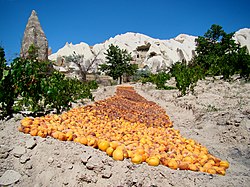 Apricots drying on the ground in Cappadocia
 -
 Packaging apricot fruits in Uzbekistan
 -
 Drying apricots, Uzbekistan
 -
 'Kecskemét Rose' - a pale and juicy apricot cultivar


.jpg)


See also
[edit]- Barack (brandy); apricot brandy
- Apricot plum, Prunus simonii
References
[edit]- ^ Shi, Shuo; Li, Jinlu; Sun, Jiahui; Yu, Jing; Zhou, Shiliang (2013). "Phylogeny and classification of Prunus sensu lato (Rosaceae)". Journal of Integrative Plant Biology. 55 (11): 1069–1079. Bibcode:2013JIPB...55.1069S. doi:10.1111/jipb.12095. PMID 23945216. Archived from the original on 28 January 2021. Retrieved 16 February 2021.
- ^ a b c "Apricot production in 2023, Crops/Regions/World list/Production Quantity/Year (pick lists)". UN Food and Agriculture Organization, Corporate Statistical Database (FAOSTAT). 2025. Retrieved 11 October 2025.
- ^ "abricot" (in French). Centre National de Ressources Textuelles et Lexicales. Archived from the original on 22 September 2017.
- ^ "apricot". Merriam-Webster.com Dictionary. Merriam-Webster.
- ^ "apricot". The American Heritage Dictionary of the English Language (5th ed.). HarperCollins.
- ^ Dean, Sam (9 May 2013). "On the Etymology of the Word Apricot". Bon Appetit. Archived from the original on 22 October 2018. Retrieved 22 October 2018.
- ^ "Prunus armeniaca: apricot". Royal Horticultural Society. Retrieved 28 September 2025.
- ^ "Armeniaca". Flora of China. eFloras. Archived from the original on 6 September 2021.
- ^ Reales, Antonio; Sargent, Daniel J.; Tobutt, Ken R.; Rivera, Diego (1 January 2010). "Phylogenetics of Eurasian plums, Prunus L. section Prunus (Rosaceae), according to coding and non-coding chloroplast DNA sequences". Tree Genetics & Genomes. 6 (1): 37–45. doi:10.1007/s11295-009-0226-9. S2CID 31215875. Archived from the original on 16 January 2023. Retrieved 29 March 2021.
- ^ Liu, Shuo; Decroocq, Stephane; Harte, Elodie; Tricon, David; Chague, Aurelie; et al. (5 January 2021). "Genetic diversity and population structure analyses in the Alpine plum (Prunus brigantina Vill.) confirm its affiliation to the Armeniaca section". Tree Genetics & Genomes. 17 (1): 2. doi:10.1007/s11295-020-01484-6. S2CID 230795948. Archived from the original on 16 January 2023. Retrieved 29 March 2021.
- ^ "VII Symposium on Apricot Culture and Decline". International Society for Horticultural Science. Archived from the original on 21 May 2003. Retrieved 22 June 2012.
- ^ a b Liu, Shuo; Cornille, Amandine; Decroocq, Stéphane; Tricon, David; Chague, Aurélie; et al. (2019). "The complex evolutionary history of apricots: Species divergence, gene flow and multiple domestication events". Molecular Ecology. 28 (24): 5299–5314. Bibcode:2019MolEc..28.5299L. doi:10.1111/mec.15296. PMID 31677192. S2CID 207833328. Archived from the original on 23 June 2020. Retrieved 17 February 2021.
- ^ a b Bourguiba, Hedia; Scotti, Ivan; Sauvage, Christopher; Zhebentyayeva, Tetyana; Ledbetter, Craig; et al. (2020). "Genetic structure of a worldwide germplasm collection of Prunus armeniaca L. reveals three major diffusion routes for varieties coming from the species' center of origin". Frontiers in Plant Science. 11: 638. Bibcode:2020FrPS...11..638B. doi:10.3389/fpls.2020.00638. PMC 7261834. PMID 32523597.
- ^ a b Bakos, József L.; Ladányi, Márta; Szalay, László (1 June 2024). "Frost hardiness of flower buds of 16 apricot cultivars during dormancy". Folia Horticulturae. 36 (1): 81–93. doi:10.2478/fhort-2024-0005.
- ^ "Prunus sibirica Siberian Apricot PFAF Plant Database". pfaf.org. Archived from the original on 16 November 2021. Retrieved 17 November 2013.
- ^ "Apricots". Royal Horticultural Society. Retrieved 27 January 2023.
- ^ Herrera, Sara; Lora, Jorge; Hormaza, José I.; Herrero, Maria; Rodrigo, Javier (2018). "Optimizing Production in the New Generation of Apricot Cultivars: Self-incompatibility, S-RNase Allele Identification, and Incompatibility Group Assignment". Frontiers in Plant Science. 9: 527. Bibcode:2018FrPS....9..527H. doi:10.3389/fpls.2018.00527. PMC 5935046. PMID 29755489.
- ^ "Adorable Apricots – The Essential Guide to probably everything you need to know about growing Apricot – Prunus armeniaca". The Permaculture Research Institute. 10 January 2023. Retrieved 27 January 2023.
- ^ Ingels, Chuck; et al. (2007). The Home Orchard: Growing Your Own Deciduous Fruit and Nut Trees. University of California Agriculture and Natural Resources. p. 27. ISBN 978-1-879906-72-3.
- ^ a b Hessayon, D. G. (1990). "Tree Fruit: Apricots". The Fruit Expert. London: Expert Books. ISBN 978-0903505314.
- ^ Munkvold, Gary P. (2001). "Eutypa Dieback of Grapevine and Apricot". Plant Health Progress. 2 (1) 9. Bibcode:2001PlaHP...2....9M. doi:10.1094/PHP-2001-0219-01-DG.
- ^ "Diseases of Apricot". The American Phytopathological Society. Archived from the original on 24 June 2016. Retrieved 24 June 2016.
- ^ Denker, Joel (14 June 2016). "'Moon Of The Faith:' A History Of The Apricot And Its Many Pleasures". US National Public Radio. Archived from the original on 8 August 2019. Retrieved 9 May 2022.
- ^ "Apricot kernels pose risk of cyanide poisoning". European Food Safety Authority. 27 April 2016. Retrieved 27 January 2023.
- ^ "Apricot recipes". BBC Food. Retrieved 28 September 2025.
- ^ "Dried apricot recipes". BBC Good Food. Retrieved 28 September 2025.
- ^ Wagner, Renate. "Marillenknödel - Apricot Dumplings". Austria.info. Retrieved 28 September 2025.
- ^ David, Elizabeth (1988) [1950]. A Book of Mediterranean Food. Dorling Kindersley [John Lehmann]. pp. 6–17.
- ^ "Barack palinka". Britannica. Retrieved 20 March 2025.
- ^ "Apricot kernels pose risk of cyanide poisoning". European Food Safety Authority. 27 April 2016.
- ^ Southey, Flora (14 May 2021). "Are fruit seeds the new nuts?". Food Navigator. Archived from the original on 24 May 2022. Retrieved 9 May 2022.
- ^ Pierre-Louis, Kendra (8 October 2015). "800 Trillion Plastic Microbeads Go Down Drains Every Day". PBS. Archived from the original on 9 May 2022. Retrieved 9 May 2022.
- ^ Cornall, Jim (10 March 2022). "The latest in dairy alternatives: Taiwan company debuts apricot kernel drink". Dairy Reporter. Archived from the original on 14 March 2022. Retrieved 9 May 2022.
- ^ a b United States Food and Drug Administration (2024). "Daily Value on the Nutrition and Supplement Facts Labels". FDA. Archived from the original on 2024-03-27. Retrieved 2024-03-28.
- ^ a b "TABLE 4-7 Comparison of Potassium Adequate Intakes Established in This Report to Potassium Adequate Intakes Established in the 2005 DRI Report". p. 120. In: Stallings, Virginia A.; Harrison, Meghan; Oria, Maria, eds. (2019). "Potassium: Dietary Reference Intakes for Adequacy". Dietary Reference Intakes for Sodium and Potassium. pp. 101–124. doi:10.17226/25353. ISBN 978-0-309-48834-1. PMID 30844154. NCBI NBK545428.
- ^ Campbell, O. E.; Merwin, I. A.; Padilla-Zakour, O. I. (2013). "Characterization and the effect of maturity at harvest on the phenolic and carotenoid content of Northeast USA Apricot (Prunus armeniaca) varieties". Journal of Agricultural and Food Chemistry. 61 (51): 12700–10. Bibcode:2013JAFC...6112700C. doi:10.1021/jf403644r. PMID 24328399.
- ^ Xi, W.; Zheng, H.; Zhang, Q.; Li, W. (2016). "Profiling Taste and Aroma Compound Metabolism during Apricot Fruit Development and Ripening". International Journal of Molecular Sciences. 17 (7): 998. doi:10.3390/ijms17070998. PMC 4964374. PMID 27347931.
- ^ Lehmann, Maike (2015). "Apricot Socialism: The National Past, the Soviet Project, and the Imagining of Community in Late Soviet Armenia". Slavic Review. 74 (1): 13. doi:10.5612/slavicreview.74.1.9. S2CID 155915149.
The apricot, being the Armenian national fruit...
- ^ Grigoryan, Marianna (25 June 2010). "Apricot Farmers Struggling in Armenia amid Crop Failure". EurasiaNet. Archived from the original on 14 July 2018. Retrieved 15 July 2018.
- ^ Schleifer, Yigal (2 July 2010). "More on Armenia's Bitter Apricot Harvest". EurasiaNet. Archived from the original on 14 July 2018. Retrieved 15 July 2018.
As a symbol of national pride the image of apricots is included in Armenian souvenirs.
- ^ "《莊子·漁父》". Ctext.org. Archived from the original on 2013-05-22. Retrieved 2012-06-22.
- ^ Guo, Zhaojiang (1995). "Chinese Confucian culture and the medical ethical tradition". Journal of Medical Ethics. 21 (4): 239–246. doi:10.1136/jme.21.4.239. PMC 1376720. PMID 7473645.
- ^ Al Qasimi, Nouf (16 August 2012). "There's an old Arabic proverb: You can have apricots tomorrow". The National. Retrieved 18 August 2023.
- ^ Al Qasimi, Nouf. "Mish Mish". Jewish Film Institute. Retrieved 18 August 2023.
- ^ Robertson, Amy (8 June 2017). "All Over The World, Thirsty Muslims Have Their Ramadan Go-To Drinks". NPR. Archived from the original on 2019-08-07. Retrieved 22 May 2018.
- ^ Denker, Joel (14 June 2016). "'Moon Of The Faith:' A History Of The Apricot And Its Many Pleasures". NPR. Archived from the original on 8 August 2019. Retrieved 22 May 2018.
- ^ "The Tu B'Shevat Seder". Anglo-List. 21 January 2018. Retrieved 27 January 2023.
- ^ a b Sicard, Sarah (23 May 2021). "Why tankers are terrified of apricots". Military Times. Retrieved 27 January 2023.
- ^ Phillips, Michael M. (3 March 2003). "Superstitions Abound at Camp As Soldiers Await War in Iraq". Archived from the original on 2 September 2017. Retrieved 2 September 2017.
- ^ Dickson, Paul (1994). War Slang: American Fighting Words & Phrases Since the Civil War. Pocket Books. p. 267. ISBN 978-0671750220.
- ^ Bendix, Aria. "From applesauce in a tube to 'space noodles,' here's how astronaut food has evolved from the 1960s to today". Business Insider. Retrieved 23 April 2024.
External links
[edit]


Apricot
View on GrokipediaBotanical Description
Physical Characteristics
The apricot (Prunus armeniaca) is a small deciduous tree belonging to the Rosaceae family, typically growing to heights of 3–8 meters with a spreading canopy of branches that form a rounded or vase-shaped structure.[14] This morphology allows for efficient light capture and air circulation, supporting early-season flowering. The bark is smooth and grayish-brown on younger branches, becoming rougher and darker with age. The leaves are oval to rounded, measuring 5–7 cm in length, with finely serrated edges and a pointed tip; they emerge in early spring after the flowers, turning vibrant green during the growing season before yellowing in autumn.[1] Flowers appear solitary or in pairs, with diameters of 2–5 cm, featuring five white to pinkish petals and blooming profusely before leaf emergence to facilitate cross-pollination; this pre-foliation adaptation enhances pollinator access in temperate climates.[4] The fruit is a drupe, 3–8 cm in diameter, characterized by velvety orange-yellow skin, firm yellow flesh, and a single hard-shelled pit enclosing the kernel.[13] Apricot varieties vary in self-compatibility; self-incompatible ones prevent self-fertilization and necessitate pollinators such as bees for effective fruit set.[15]Phytochemistry
Apricots (Prunus armeniaca) contain a diverse array of phytochemicals that contribute to their characteristic flavor, color, and aroma. Among the primary pigments, carotenoids predominate, with β-carotene accounting for 60-70% of the total carotenoid content and imparting the fruit's distinctive orange hue. Other notable carotenoids include lutein, α-carotene, phytoene, phytofluene, and violaxanthin, whose levels can vary significantly across cultivars. Flavonoids such as quercetin derivatives (e.g., quercetin-3-glucosides) and catechins (including catechin and epicatechin) serve as key antioxidants, with catechin concentrations ranging from 0.55 to 10.75 mg/100 g fresh weight. Phenolic acids, particularly chlorogenic acid (0.69–21.94 mg/100 g fresh weight) and neochlorogenic acid, are abundant and contribute to the fruit's overall phenolic profile alongside minor compounds like p-coumaric and caffeic acids.[16][17] Volatile compounds play a crucial role in apricot aroma, with over 120 identified across various cultivars, including terpenoids, esters, and aldehydes. Benzaldehyde, contributing an almond-like scent, comprises 0.83–2.48% of total volatiles, while linalool, responsible for floral and citrus notes, can reach up to 33.52% and is present at concentrations exceeding 190 μg/kg in several varieties. These compounds, detected through techniques like HS-SPME-GC-MS, vary by cultivar and ripening stage, with esters and terpenoids often dominating the fruity and pleasant profiles.[18][19] In the kernels, amygdalin, a cyanogenic glycoside, is a prominent compound, alongside fixed oils that constitute up to 50% of the kernel weight and are rich in oleic acid (57.9–68.43% of total fatty acids). These oils also include linoleic acid (22.82–30.4%) and minor components like palmitic and stearic acids, extracted via methods such as cold pressing. Phytochemical content exhibits notable variations; darker-skinned varieties tend to have elevated polyphenol levels, including higher concentrations of flavonoids and phenolic acids, compared to lighter ones.[20] Carotenoid levels, particularly β-carotene, increase significantly during fruit maturation, representing 70–85% of total carotenoids at full ripeness, with seasonal and geographical influences further modulating these profiles.[21][13][22]Taxonomy
Classification
The apricot (Prunus armeniaca) is classified within the kingdom Plantae, phylum Tracheophyta, class Magnoliopsida, order Rosales, family Rosaceae, genus Prunus, subgenus Prunus, and section Armeniaca. In the genus Prunus, section Armeniaca (apricots) is closely related to section Prunus (plums) and section Cerasus (cherries), facilitating interspecific hybridization, such as aprium cultivars derived from apricot-plum crosses.[23][24] The binomial nomenclature Prunus armeniaca L. was formalized by Carl Linnaeus in Species Plantarum in 1753, with the specific epithet "armeniaca" historically denoting an association with Armenia; ongoing taxonomic debates center on the blurred boundaries between wild progenitors and long-cultivated forms due to prehistoric domestication.[25][26] Molecular genetic studies, including DNA sequencing of germplasm collections, have substantiated Central Asia as a key origin center for P. armeniaca.[27][28]Species and Varieties
The apricot genus, Prunus within the Rosaceae family, encompasses several species, with Prunus armeniaca L. recognized as the primary cultivated species originating from Eurasia, particularly Central Asia and northern China, where it grows as a deciduous tree producing small to medium-sized drupes.[29] This species, also known as the common or Armenian apricot, exhibits wide genetic diversity due to its long history of cultivation and natural variation, including botanical varieties such as var. armeniaca (widespread in cultivation) and var. holosericea (native to the Tibetan region).[30] Closely related species include Prunus mume Siebold & Zucc., the Japanese apricot native to East Asia, which is more plum-like in fruit characteristics and primarily valued for ornamental flowers rather than edible fruit, though it shares phylogenetic ties within the Armeniaca section.[27] Another distinct species is Prunus brigantina (Vill.) Rehder, the Briançon or alpine apricot, endemic to the Mediterranean regions of France and Italy, featuring small, smooth yellow fruits and debated taxonomic status as a true apricot due to its unique adaptations to high-altitude environments.[31] Wild relatives of Prunus armeniaca contribute to genetic diversity and breeding efforts, including Prunus mandshurica (Maxim.) Koehne from Siberia and Manchuria, valued for its extreme cold tolerance and used as a rootstock or genetic source for hardy traits. Prunus sibirica L., the Siberian apricot, is another cold-hardy wild species native to Siberia, with small fruits and potential for hybridization to enhance resilience in northern climates.[32] In the Caucasus and Armenia, Prunus dasycarpa Ehrh. occurs naturally alongside P. armeniaca, distinguished by its fuzzier fruits and serving as a progenitor in regional domestication events.[33] Thousands of named cultivated varieties of Prunus armeniaca exist globally, with approximately 3,000 cultivars reported worldwide as of 2023, selected for traits like fruit size, flavor, and adaptability, with ongoing breeding emphasizing disease resistance and climate tolerance.[34][35] Notable examples include 'Moorpark', an English variety from the 18th century prized for its large, sweet, freestone fruits suitable for fresh eating and drying.[1] In California, 'Tilton' is a prominent drying-type cultivar, producing abundant medium-sized fruits with firm flesh and high sugar content for commercial dehydration.[36] For North American conditions, 'Goldcot' stands out as a disease-resistant variety, offering reliable yields of golden, flavorful fruits in cooler climates.[4] Modern hybrid varieties, developed through targeted breeding programs, further expand options for specific challenges; for instance, 'Hargrand' from Canadian programs enhances cold hardiness while maintaining large, juicy fruits for fresh markets.[37] In Turkey, a major center of apricot diversity, hybridization efforts have yielded varieties like 'Sakit' selections, focusing on late blooming to avoid frost damage and improving fruit quality for export.[38] Similarly, U.S. breeding initiatives, particularly in California and the Midwest, have produced approximately 50 new cultivars in the past 30 years (as of 2010), incorporating wild relative genetics to boost traits such as PPV resistance in varieties like 'Harlayne'.[39][35]History and Domestication
Origins
The wild apricot (Prunus armeniaca) is native to Central Asia, with its progenitor populations primarily distributed in the Tian Shan mountains along the Kazakhstan-China border, where archaeological evidence of seed remains dates to the second millennium BCE (ca. 2000 BCE), indicating early human interaction with wild forms.[40][33] Genetic studies further support this region as the center of origin, revealing high diversity in wild populations across the Tian Shan and Pamir-Alai ranges, with chloroplast DNA haplotypes (such as A1, A2, and A3) linking modern cultivars to these ancestral stocks.[26][40] Domestication of apricots occurred independently from distinct wild populations in Central Asia: southern Central Asian progenitors for the Chinese lineage and northern Central Asian progenitors for the European lineage.[26] In China, domestication from southern Central Asian wild progenitors is estimated at approximately 2900 years ago (ca. 900 BCE), supported by chloroplast DNA evidence showing distinct lineages diverging from Central Asian haplotypes.[26] European lineages, derived from northern Central Asian wild forms, emerged around 2250 years ago (ca. 250 BCE), with genomic analyses confirming minimal gene flow between these pools, underscoring separate evolutionary paths.[26] Archaeological evidence from Neolithic and early Bronze Age sites in Xinjiang, China, such as desiccated burials from the second millennium BCE, includes apricot seeds, marking some of the earliest records of utilization and initial cultivation in the region.[41] By around 2000 BCE, apricots began spreading along proto-Silk Road trade routes from Central Asia westward, facilitated by early exchanges between Chinese and neighboring cultures.[41] Separately, Prunus mume (Japanese apricot), a distinct species, was domesticated in China around 1000 BCE, primarily for ornamental and medicinal purposes, with no direct genetic relation to P. armeniaca.[42]Historical Spread
The apricot's dissemination beyond its domestication centers in Central Asia began in ancient times, reaching the Mediterranean region by the first century BCE through trade routes connecting Armenia and Persia. Known to the Greeks and Romans as the "Armenian plum" (reflected in its scientific name, Prunus armeniaca), the fruit was valued for its early ripening and aromatic qualities, as described by Roman authors like Pliny the Elder, who noted its importation and cultivation in Italy.[30][43][44] During the medieval period, Islamic expansion facilitated further spread into Europe and South Asia. The Moors introduced apricot cultivation to the Iberian Peninsula in the 8th century CE following their conquest of Spain, establishing orchards in regions like Granada that integrated the fruit into local agriculture alongside other exotic crops. By the 1st century BCE, the apricot had reached Persia, where it was termed the "yellow plum," and extended to India via the Silk Road, becoming a staple in Persian and Indian horticulture for both fresh consumption and drying.[45][46][45] In the colonial era, European powers accelerated the apricot's global reach. Spanish explorers brought the fruit to the Americas in the early 16th century, planting it in Mexico, the Caribbean, and [South America](/page/South America), with further establishment in the gardens of California missions starting in the late 18th century to support missionary self-sufficiency. Meanwhile, British settlers introduced apricots to Australia in the 19th century, where they adapted to temperate climates and contributed to early colonial orchards.[47][48] The 20th century marked significant commercial and genetic advancements in apricot cultivation. In the United States, the California Gold Rush of 1849 spurred agricultural development in the Santa Clara Valley, transforming small mission plantings into large-scale orchards that drove economic expansion through dried fruit exports. Soviet breeding programs, initiated systematically in the 1930s, focused on enhancing cold hardiness and yield using Central Asian germplasm, resulting in cultivars suited to diverse USSR climates. More recently, climate-adapted varieties have been introduced to New Zealand through targeted breeding efforts, yielding resilient types with improved flavor and export potential for subtropical conditions.[49][33][50]Cultivation
Practices
Apricots thrive in temperate climates characterized by distinct seasons, requiring 300 to 900 chilling hours—defined as hours below 7.2°C—to break dormancy and ensure proper flowering and fruit set.[51] These trees are particularly sensitive to late spring frosts, which can damage early-blooming flowers, necessitating sites with frost-free conditions during the bloom period from February to early April in the Northern Hemisphere.[52] Optimal growing temperatures range from 15°C to 30°C during the active season, with warm, dry summers promoting fruit development while avoiding excessive heat that could lead to sunburn or uneven ripening.[53] For soil and planting, apricots prefer well-drained sandy loam or loamy soils to prevent root rot, with an ideal pH range of 6.5 to 7.5 to support nutrient uptake.[54] Prior to planting, soil testing is essential to address any deficiencies in nutrients or drainage issues. Trees are typically spaced 5 to 7 meters apart to allow for canopy development and air circulation, often grafted onto rootstocks such as 'Lovell' peach, which provides dwarfing effects, cold hardiness, and resistance to certain soil pathogens.[52] Planting occurs in early spring or fall in mild climates, with bare-root or container-grown trees set at the same depth as their nursery level to encourage strong establishment.[55] Ongoing care involves targeted irrigation, fertilization, pruning, and pollination strategies to maintain tree health and productivity. Drip irrigation systems are recommended to deliver water efficiently to the root zone, providing 900 to 1,000 mm annually depending on climate, with increased frequency during fruit sizing to avoid water stress.[52] Fertilization emphasizes nitrogen applications in early spring to support vegetative growth, typically at rates of 100 to 150 kg N per hectare annually, adjusted based on soil tests and leaf analysis to prevent excesses that could reduce fruit quality.[56] Pruning is conducted annually in late summer or early fall using an open-center or modified central leader system to enhance light penetration into the canopy, improve air flow, and stimulate fruiting wood renewal.[57] Most apricot varieties are self-fertile, but pollination is managed by introducing honeybee hives during bloom to boost set, especially in orchards with mixed cultivars for cross-pollination benefits.[58] Harvesting occurs from June to July in the Northern Hemisphere, when fruits reach the firm-ripe stage—characterized by full color development and slight softening—for optimal flavor and shelf life.[59] Fruits are hand-picked over multiple passes to capture varying maturity, minimizing damage to the tree and ensuring quality. Well-managed orchards can achieve yield potentials of 10 to 20 tons per hectare, influenced by variety, site conditions, and cultural practices.[60]Pests and Diseases
Apricots are susceptible to several insect pests that can damage foliage, shoots, and fruit. Aphids, particularly the green peach aphid (Myzus persicae), feed on sap from leaves and stems, causing distortion and honeydew production, while also serving as vectors for plant viruses.[61] The plum curculio (Conotrachelus nenuphar), a native North American weevil, bores into developing fruit, leading to premature drop and scarring, with adults overwintering in soil and migrating to trees in spring.[62] Similarly, the oriental fruit moth (Grapholita molesta) targets shoots and fruit, where larvae tunnel into terminals and ripening apricots, causing gumming and larval exit holes.[63] Fungal and bacterial diseases pose major threats to apricot health, often exacerbated by wet conditions. Bacterial canker, caused by Pseudomonas syringae, infects through wounds and pruning sites, leading to branch girdling, gum exudation, and dieback, with bacteria surviving on plant surfaces and spreading via rain splash.[64] Brown rot, primarily from Monilinia laxa, affects blossoms, twigs, and fruit, resulting in blighted flowers and post-harvest fruit decay with grayish spore masses, favored by moderate temperatures and moisture during bloom.[65] Viral diseases like sharka, induced by plum pox potyvirus, cause ring spots on leaves and fruits, reducing yield and quality in apricots, with transmission mainly by aphids in a non-persistent manner.[66] Soil-borne nematodes, such as root-knot nematodes (Meloidogyne spp.), attack apricot roots, forming galls that impair water and nutrient uptake, leading to stunted growth and decline, particularly in sandy soils.[67] Control strategies emphasize integrated pest management (IPM), combining cultural, biological, and chemical approaches to minimize impacts. Resistant rootstocks, such as certain peach or plum hybrids, help mitigate nematode and disease susceptibility, while copper-based fungicides applied during dormancy suppress bacterial canker and brown rot.[68] IPM practices include monitoring traps for insects like oriental fruit moth, sanitation to remove infected debris, and targeted insecticide applications to avoid resistance buildup.[69] Emerging challenges include climate-driven increases in fungal outbreaks, such as intensified brown rot due to warmer, wetter conditions extending pathogen survival.[70] Invasive pests like spotted-wing drosophila (Drosophila suzukii) threaten ripening apricots by ovipositing into fruit, necessitating quarantine measures and early-harvest strategies in affected regions.[71]Global Production
In 2023, global apricot production reached approximately 3.73 million metric tons, marking a slight decrease from the previous year but reflecting overall steady expansion in recent decades.[72] Turkey led as the top producer with 750,000 tonnes, accounting for about 20% of the world total, followed by Uzbekistan at 500,500 tonnes, Iran at around 318,000 tonnes, and Italy at approximately 230,000 tonnes.[73][74][73][75] Asia dominated regional output with roughly 70% of global production, driven by major contributors in Central and West Asia; Europe accounted for about 15%, primarily from Mediterranean countries, while the Americas contributed around 1%, with the United States producing about 36,000 tonnes mainly in California.[75][76][77] Turkey stands out as a leading exporter, shipping significant volumes of fresh and dried apricots to the European Union, while the United States focuses on domestic markets and exports of processed dried products.[78][79] From 2010 to 2023, worldwide apricot production exhibited an average annual growth of approximately 2%, fueled by rising demand for dried apricots in health-conscious markets.[80] However, climate change poses challenges, including droughts in California's apricot-growing regions that have reduced yields by up to 20% during the 2020s due to water shortages and extreme heat.[81][82] Sustainability efforts include a growing shift toward organic farming in Europe, where consumer preferences for premium products have boosted organic apricot cultivation by over 5% annually in key countries like Spain and Italy.[83] Additionally, breeding programs worldwide are developing drought-tolerant varieties through genetic selection and interspecific hybridization to enhance resilience in arid conditions.[84][85]Uses and Nutrition
Culinary Applications
Apricots are commonly consumed fresh, either eaten raw for their sweet-tart flavor or incorporated into various dishes. In salads, halved fresh apricots add a juicy contrast to greens, cheeses, and nuts, as seen in recipes combining them with arugula, goat cheese, and balsamic vinaigrette. They pair well with savory proteins like pork, where grilled or roasted apricots enhance chops or tenderloins with their natural acidity, often glazed with honey or mustard for added depth. Baked goods frequently feature fresh apricots, such as in tarts where sliced fruit is arranged over pastry dough and baked until caramelized, or in clafoutis, a French custard dessert in which pitted apricots are embedded in a batter and baked to a golden finish. Processed apricots find widespread use in preserves, beverages, and savory preparations due to their high natural pectin content, which aids in gel formation without additional thickeners. Apricot jam is made by cooking halved fruit with sugar and lemon juice until thickened, yielding a spreadable product ideal for toast or fillings in pastries; the process typically involves simmering until the mixture reaches a set point, as detailed in home preservation guidelines. Juices are extracted from fresh or pureed apricots for drinking or as bases in cocktails, while in the Balkans, fermented apricot mash is distilled into rakija, a potent fruit brandy known as kajsija or slivovitz variant, popular in Serbia and Croatia for its aromatic profile. In Middle Eastern cuisine, dried or fresh apricots are stewed in tagines, such as the medieval mishmishiya, where they balance the richness of lamb with spices like cinnamon and cumin in a slow-cooked sauce. Apricot kernels, the seeds within the pits, serve distinct culinary roles based on variety. Bitter kernels, containing amygdalin for a marzipan-like flavor, are used in liqueurs like amaretto, where they are infused with alcohol, sugar, and botanicals such as vanilla and orange peel to create the Italian digestif's characteristic nuttiness. Sweet kernels, milder and safer for direct consumption, are roasted as snacks or added to confections; in Chinese cuisine, they appear in almond tofu desserts or steeped in teas like xing ren cha for a subtle nutty infusion. Regional specialties highlight these uses, including Turkish kayısı tatlısı, where dried apricots are poached in syrup, stuffed with clotted cream or ricotta, and garnished with pistachios for a elegant sweet. In China, dried apricot kernels are incorporated into herbal teas or desserts, enhancing traditional sweets with their almond-like essence.Nutritional Profile
Fresh apricots are a low-calorie fruit with a balanced macronutrient profile that supports a nutrient-dense diet. Per 100 grams of raw apricots, they provide approximately 48 kilocalories, consisting of 11.1 grams of carbohydrates (including 2.0 grams of dietary fiber and 9.2 grams of sugars), 1.4 grams of protein, and 0.4 grams of total fat, with sodium content remaining low at just 2 milligrams. In terms of vitamins, apricots are particularly notable for their content of vitamin A, primarily derived from beta-carotene, offering 96 micrograms of retinol activity equivalents (11% of the Daily Value). They also supply 10 milligrams of vitamin C (11% DV) and 0.89 milligrams of vitamin E (6% DV), along with modest amounts of B vitamins such as 0.6 milligrams of niacin (4% DV). The mineral composition includes 259 milligrams of potassium (6% DV), 0.39 milligrams of iron (2% DV), 13 milligrams of calcium (1% DV), and 10 milligrams of magnesium (2% DV), contributing to overall electrolyte balance and bone health.| Nutrient | Amount per 100g (Fresh) | % Daily Value |
|---|---|---|
| Calories | 48 kcal | - |
| Carbohydrates | 11.1 g | - |
| - Dietary Fiber | 2.0 g | 7% |
| - Sugars | 9.2 g | - |
| Protein | 1.4 g | 3% |
| Total Fat | 0.4 g | 1% |
| Sodium | 2 mg | 0% |
| Vitamin A | 96 μg RAE | 11% |
| Vitamin C | 10 mg | 11% |
| Vitamin E | 0.89 mg | 6% |
| Potassium | 259 mg | 6% |
| Iron | 0.39 mg | 2% |