Hubbry Logo
AtrophyAtrophyMain
Open search
Atrophy
Community hub
Atrophy
logo
8 pages, 0 posts
0 subscribers
Be the first to start a discussion here.
Atrophy
Atrophy
from Wikipedia
Atrophy
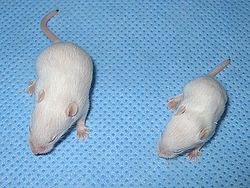
Mouse (right) with spinal muscular atrophy
SpecialtyPathology
SymptomsLoss of body cells, signs of ageing
TypesMuscular atrophy, gland atrophy
CausesPoor nourishment, poor circulation, loss of hormonal support, loss of nerve supply to target organ(s), excessive apoptosis of cells, insufficient exercise, ageing
Risk factorsOld age, sedentary lifestyle
PrognosisDepends on the cause

Atrophy is the partial or complete wasting away of a part of the body. Causes of atrophy include mutations (which can destroy the gene to build up the organ), poor nourishment, poor circulation, loss of hormonal support, loss of nerve supply to the target organ, excessive amount of apoptosis of cells, and disuse or lack of exercise or disease intrinsic to the tissue itself. In medical practice, hormonal and nerve inputs that maintain an organ or body part are said to have trophic effects. A diminished muscular trophic condition is designated as atrophy. Atrophy is reduction in size of cell, organ or tissue, after attaining its normal mature growth. In contrast, hypoplasia is the reduction in the cellular numbers of an organ, or tissue that has not attained normal maturity.

Atrophy is the general physiological process of reabsorption and breakdown of tissues, involving apoptosis. When it occurs as a result of disease or loss of trophic support because of other diseases, it is termed pathological atrophy, although it can be a part of normal body development and homeostasis as well.

Normal development

[edit]

Examples of atrophy as part of normal development include shrinking and the involution of the thymus in early childhood, and the tonsils in adolescence. In old age, effects include, but are not limited to, loss of teeth, hair, thinning of skin that creates wrinkles, weakening of muscles, loss of weight in organs and sluggish mental activity.[1]

Muscle atrophies

[edit]

Disuse atrophy of muscles and bones, with loss of mass and strength, can occur after prolonged immobility, such as extended bedrest, or having a body part in a cast (living in darkness for the eye, bedridden for the legs etc.). This type of atrophy can usually be reversed with exercise unless severe.

There are many diseases and conditions which cause atrophy of muscle mass. For example, diseases such as cancer and AIDS induce a body wasting syndrome called cachexia, which is notable for the severe muscle atrophy seen. Other syndromes or conditions which can induce skeletal muscle atrophy are congestive heart failure and liver disease.

During aging, there is a gradual decrease in the ability to maintain skeletal muscle function and mass. This condition is called sarcopenia, and may be distinct from atrophy in its pathophysiology. While the exact cause of sarcopenia is unknown, it may be induced by a combination of a gradual failure in the satellite cells which help to regenerate skeletal muscle fibers, and a decrease in sensitivity to or the availability of critical secreted growth factors which are necessary to maintain muscle mass and satellite cell survival.[2]

Dystrophies, myositis, and motor neuron conditions

[edit]

Pathologic atrophy of muscles can occur with diseases of the motor nerves or diseases of the muscle tissue itself. Examples of atrophying nerve diseases include Charcot-Marie-Tooth disease, poliomyelitis, amyotrophic lateral sclerosis (ALS or Lou Gehrig's disease), and Guillain–Barré syndrome. Examples of atrophying muscle diseases include muscular dystrophy, myotonia congenita, and myotonic dystrophy.

Changes in Na+ channel isoform expression and spontaneous activity in muscle called fibrillation can also result in muscle atrophy.

A flail limb is a medical term which refers to an extremity in which the primary nerve has been severed, resulting in complete lack of mobility and sensation. The muscles soon wither away from atrophy.

Gland atrophy

[edit]

The adrenal glands atrophy during prolonged use of exogenous glucocorticoids like prednisone. Atrophy of the breasts can occur with prolonged estrogen reduction, as with anorexia nervosa or menopause. Testicular atrophy can occur with prolonged use of enough exogenous sex steroids (either androgen or estrogen) to reduce gonadotropin secretion.

Vaginal atrophy

[edit]

In post-menopausal women, the walls of the vagina become thinner (atrophic vaginitis). The mechanism for the age-related condition is not yet clear, though there are theories that the effect is caused by decreases in estrogen levels.[3] This atrophy, occurring concurrently with breast atrophy, is consistent with the homeostatic (normal development) role of atrophy in general, as after menopause the body has no further functional biological need to maintain the reproductive system which it has permanently shut down.

Research

[edit]

One drug in test seemed to prevent the type of muscle loss that occurs in immobile, bedridden patients.[4] Testing on mice showed that it blocked the activity of a protein present in the muscle that is involved in muscle atrophy.[5] However, the drug's long-term effect on the heart precludes its routine use in humans, and other drugs are being sought.[4]

See also

[edit]

References

[edit]
[edit]
Revisions and contributorsEdit on WikipediaRead on Wikipedia
from Grokipedia
Atrophy is the decrease in size or wasting away of a cell, tissue, organ, or multiple organs, typically resulting from cellular shrinkage due to the loss of organelles, , and proteins, which can lead to . This process is a common pathological response associated with various conditions, including , , , or disuse, and it differs from by involving gradual degeneration rather than acute . Atrophy can be classified into several types based on its underlying mechanisms. Physiologic atrophy occurs due to normal lack of use, such as the wasting of muscles during prolonged immobilization or , and is often reversible through exercise and improved . Pathologic atrophy arises from processes, including chronic , hormonal imbalances, or ischemia, leading to tissue loss, which may be partially reversible depending on the underlying cause. Neurogenic atrophy, another key type, results from damage to innervating nerves, causing and subsequent muscle fiber shrinkage, as seen in conditions like . The causes of atrophy are diverse and interconnected, often involving imbalances in protein synthesis and degradation pathways, such as upregulation of ubiquitin-proteasome systems or . Common triggers include aging (), where muscle mass declines by about 1-2% annually after age 50; endocrine disorders like , which promote ; and neurodegenerative diseases, exemplified by brain atrophy in Alzheimer's, reducing gray matter volume by up to 20% in affected regions. In clinical contexts, atrophy contributes to functional impairments, such as , reduced mobility, and organ failure, underscoring its role as a hallmark of progressive disorders.

Overview and Definition

Definition

Atrophy derives from the Greek term atrophia, meaning "a " or "lack of nourishment," a concept that entered English in the . In , atrophy refers to the partial or complete of a body part, characterized by a progressive decline in the size of cells, tissues, or organs due to the loss of cell substance. This process primarily manifests as a reduction in cell size, distinguishing it from cell death mechanisms such as , which decreases cell number through programmed elimination, or , involving uncontrolled tissue damage. Unlike these, atrophy often involves shrinkage of existing cellular components, including organelles and cytoplasm, without immediate loss of viable cells. A key feature of atrophy is its potential reversibility in certain cases, particularly when the inciting stimulus—such as disuse—is removed, allowing cells to regain size through restored metabolic activity and protein synthesis. The term's early recognition in dates to the , when anatomists like Elias Tillandz described tissue shrinkage observed in postmortem examinations as a form of bodily decline. Atrophy encompasses both physiological adaptations, such as those in normal development, and pathological states linked to , though these distinctions are explored further elsewhere.

Physiological vs. Pathological Atrophy

Physiological atrophy refers to the adaptive reduction in tissue size and function that occurs as part of normal developmental processes or environmental adaptations, without causing harm or impairment. This form of atrophy is typically programmed and reversible or self-limiting, allowing the body to reallocate resources efficiently. For instance, the involution of the gland exemplifies physiological atrophy; the reaches its peak size during but undergoes gradual shrinkage due to hormonal influences, particularly sex steroids, significantly reducing its functional mass by early adulthood as the matures and shifts reliance to peripheral T-cell maintenance. Other examples include post-lactational atrophy, where secretory lobules regress through after , restoring the gland to a pre-pregnancy state, and the reduction in uterine size post-menopause, driven by decline, which significantly decreases the organ's mass while maintaining basic structural integrity. Similarly, bone remodeling in response to disuse in healthy individuals, such as during short-term reduced loading, represents an adaptive physiological process that adjusts without leading to fragility. In contrast, pathological atrophy arises from , , , or , resulting in excessive tissue loss that impairs function and may progress if untreated. A classic example is disuse atrophy following immobilization, such as in a cast or due to , where muscle mass can decrease by approximately 0.5-1% per day initially, accompanied by and , leading to and delayed recovery. This differs from physiological disuse by involving disrupted signaling pathways, such as elevated ubiquitin-proteasome activity, and potential secondary complications like . The key distinctions between physiological and pathological atrophy lie in their , reversibility, and impact: physiological atrophy is hormonally or developmentally regulated, non-inflammatory, and beneficial for , whereas pathological atrophy often features inflammatory mediators, nutritional deficits, or toxic insults, rendering it progressive and detrimental to health. Aging-related atrophy, such as , occupies a borderline position; it involves gradual muscle loss starting around age 30 at 1-2% per year, accelerating after 60 to 3-5% annually due to hormonal shifts and reduced activity, but is considered physiological unless exacerbated by comorbidities into a pathological state.

Causes and Mechanisms

General Causes

Atrophy can arise from a variety of external and internal factors that disrupt the balance between tissue synthesis and degradation, leading to a reduction in cell size and organ volume across multiple tissue types. External influences often involve physical or environmental stressors, while internal factors stem from systemic physiological changes. These causes are broadly applicable and can overlap, contributing to both physiological and pathological forms of atrophy. Denervation, the loss of nerve supply to tissues, is a primary external cause of atrophy, commonly occurring after events such as or peripheral trauma. This leads to rapid muscle wasting, with significant mass loss observable within weeks due to the interruption of neurotrophic signals essential for tissue maintenance. Prolonged disuse or immobility represents another key external trigger, as seen in conditions like extended or limb immobilization from . Such inactivity results in swift tissue degradation, with initial muscle mass loss of approximately 0.5% per day in the early phases, driven by reduced mechanical loading and subsequent downregulation of anabolic pathways. Malnutrition, particularly protein-calorie deficiency as in or severe undernourishment, induces atrophy by depriving tissues of essential substrates needed for protein synthesis and cellular upkeep. This systemic external factor causes widespread organ size reduction, including shrinkage of the liver, heart, and , through impaired assimilation and increased catabolic demands. Ischemia, characterized by diminished blood flow, starves tissues of oxygen and nutrients, promoting atrophy in affected areas. For instance, in , chronic vascular occlusion leads to progressive tissue wasting, particularly in , as hypoxic conditions favor degradative processes over repair. Among internal causes, hormonal imbalances such as excess glucocorticoids in accelerate protein breakdown and inhibit synthesis, resulting in notable muscle and atrophy. Patients with this condition often exhibit proximal muscle weakness due to glucocorticoid-mediated . Aging contributes intrinsically through , where accumulated senescent cells impair regenerative capacity and promote low-grade , leading to baseline atrophy rates across organs like muscle and . This process underlies and other age-related tissue declines, with senescent cell burden increasing progressively from midlife onward. Iatrogenic causes, often linked to medical interventions, include the side effects of long-term therapy, which mimics endogenous excess and induces with muscle fiber atrophy. Chronic use of these drugs, prescribed for inflammatory conditions, can lead to significant tissue loss, particularly in type II muscle fibers, reversible upon dose reduction in many cases.

Cellular and Molecular Mechanisms

Atrophy at the cellular level involves a coordinated activation of catabolic processes that lead to the net loss of cellular components, primarily through enhanced protein degradation and reduced . These mechanisms are triggered by various stressors, such as deprivation or hormonal imbalances, resulting in the breakdown of structural proteins and organelles to recycle and maintain cellular . The ubiquitin-proteasome system (UPS) serves as the primary pathway for selective protein degradation during atrophy, accounting for the majority of intracellular . In this system, target proteins are tagged with polyubiquitin chains by a cascade involving E1 activating enzymes, E2 conjugating enzymes, and ubiquitin ligases, marking them for degradation by the 26S . Muscle-specific ligases, such as MAFbx (also known as atrogin-1) and MuRF1, are upregulated in atrophic conditions and specifically target contractile proteins like myosin heavy chain and for ubiquitination. The ubiquitination process can be represented as: Protein substrate+nUbiquitinE1-E2-E3 ligase complexPolyubiquitinated protein26S proteasome degradation\text{Protein substrate} + n \cdot \text{Ubiquitin} \xrightarrow{\text{E1-E2-E3 ligase complex}} \text{Polyubiquitinated protein} \to \text{26S proteasome degradation}
Add your contribution
Related Hubs
User Avatar
No comments yet.