Hubbry Logo
AttariAttariMain
Open search
Attari
Community hub
Attari
logo
8 pages, 0 posts
0 subscribers
Be the first to start a discussion here.
Attari
Attari
from Wikipedia

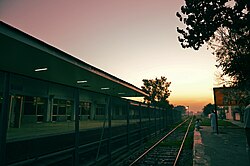
Attari, also spelled Atari, is a village of Amritsar district in the Punjab state of India, 3 km from the Indo-Pakistani border at Wagah. It is situated 25 km west of the Sikh holy city of Amritsar,[1] and is the last Indian station on the rail route connecting Lahore, Pakistan with the Indian capital Delhi.[2] Attari village was the native village of Sardar Sham Singh Attariwala, one of the generals in the Army of Maharaja Ranjit Singh.

Key Information

History

[edit]

Attari village, in the Majha Region, was founded by two Sidhu Jat brothers, by the name of Gaur Singh and Kaur Singh around 1740. They were the sons of Chaudhri Kahn Chand Sidhu of village Kaonke in Ludhiana (Malwa). The two brothers immigrated to the Majha Region beyond the Sutlej River. Firstly the found another village, by the name of Kaunke (Amtitsar). Later a famous local ascetic named Mool Dass pointed the brothers towards a large mound ("theh" in Punjabi), and asked them to establish a new village. Gaura got built a attari (three-storey house), on the mound and later on a village developed around the attari.

Then the brothers were known as simply Gaura and Kaura. Later on they heard the gallantry and braveness of the tough and hardriding Majha Sikhs, who were fighting guerrilla warfare against the crumbling Lahore-based Mughal authorities. They went to Amritsar, and at the Akal Bunga (Akal Takhat), both Sidhu brothers took Khande De Pahul, and became Gaur Singh and Kaur Singh (Sikhs). The brothers joined the jatha (band) of Jathedar Baba Gurbakash Singh, a famous brave Sikh Sandhu Jatt warrior of village Roranwala Kalan some 1 mile from Attari village.[citation needed]

The Sikhs would attack and plunder Mughal treasures and seize goods such as weapons and horses. The Sidhu Attari family joined the Bhangi Misl (Sikh Confederacy) in their captures of Lahore and other places and took part in the establishment of Sikh Misl rule in central Panjab. From the 1750s to 1803 the family remained loyal to the Sikh Bhangi Misl.[citation needed]

From 1802 to 1803, Sardar Nihal Singh (died 1818) of Attari family would loot and plunder the treasures of Maharaja Ranjit Singh of Lahore, In retaliation of the Maharaja, invading and putting an end to the once-dominant Bhangi Sikh Misl in the Majha Region. Sardar Sham Singh Attari (1785–1846), from this family was the great fallen hero of the Battle of Sabhraon 10 February 1846, of First Anglo Sikh Wars. Second Sikh rebellion of 1848–49, was also led by Attari family members, namely Sardar Chattar Singh Sidhu and his young son, Sardar Sher Singh Sidhu Attariwala, which resulted in British victory over the Sikhs.[citation needed]

When the British abolished old Pargana system in 1849, they created modern districts and Attari village was in 1849–1855 added to Lahore District. But in 1855 it was added to Amritsar District and remains so to this present day.

In 1862, the British Government joined Lahore and Amritsar by railway line. Modernisation of Punjab had started in 1850s with the building of large and small canals (Nehar in Punjabi). This railway line would pass through the north of Attari village. The railway line was completed in 1865.

Attari Sikh Sardars were well known for their bravery and gallantry. The British said in 1865 that the Sikh Sardars of Attari are the best blood of the Manjha (Majha).[citation needed]

Over the years, trade regulation between the India and Pakistan have been eased, especially after 2007,[3] annual trade through road increased from Rs 6.5 billion in 2007 to Rs 15 billion in 2010–11. After the Integrated Check Post (ICP) was opened at Attari on 13 April 2012 to improve road trade, around 500 trucks have been crossing the border every day.[4][5]

It is the starting point of the National Highway 1, part of the historic Grand Trunk Road and is also part of AH1, the longest route of the Asian Highway Network. The Samjhauta Express, the train service that actually crosses the international border, the only train that runs from Attari railway station to Wagah, Pakistan a distance of 3 km.[6]

Administratively Attari is one of the five sub-Tehsil and a block in Amritsar district.[7] It is one of the nine Vidhan Sabha (legislative assembly) segments within Amritsar Lok Sabha constituency.[8]

Politics

[edit]

The city is part of the Attari Assembly Constituency.

Tourism

[edit]

Transport

[edit]

Trans-Asian Railway

[edit]

Currently, all freight traffic originating from Asia destined for Europe goes by sea. The Trans-Asian Railway will enable containers from Singapore, China, Vietnam, Cambodia, India, Bangladesh, Myanmar, Thailand and Korea to travel over land by train to Europe. The Southern Corridor of the Trans-Asian Railway is of prime interest to India. It connects Yunnan in China and Thailand with Europe via Turkey and passes through India.[9]

The proposed route will enter India through Tamu and Moreh in Manipur bordering Myanmar, then enter Bangladesh through Mahisasan and Shabajpur and again enter India from Bangladesh at Gede, West Bengal. On the western side, the line will enter Pakistan at Attari. There is a 315 kilometres (196 mi) missing link on this route in the India-Myanmar sector; of this, 180 kilometres (110 mi), in India, is between Jiribam in Manipur and Tamu in Myanmar. The rail link between Jiribam and Imphal has been sanctioned by Indian Railways, but that is unlikely to be completed before 2016. At present construction work is in progress in a 97 kilometres (60 mi) stretch between Jiribam and Tupul.[10][11][12][13]

See also

[edit]

References

[edit]
[edit]
Revisions and contributorsEdit on WikipediaRead on Wikipedia
from Grokipedia
Attari is a village in , , situated approximately 25 kilometers west of city and 3 kilometers from the international with at . As of the 2011 census, it had a population of 8,921 residents across an area of 10.32 square kilometers. The village serves as the Indian endpoint of the Wagah-Attari crossing, the sole authorized road connection facilitating passenger, freight, and trade movement between and . Historically linked to the , Attari derives prominence from being the birthplace of Sardar , a key general under Maharaja Ranjit Singh who distinguished himself in battles against Afghan forces. During the 1947 , the site functioned as a critical crossing for migrants fleeing . In contemporary times, Attari hosts the Attari railway station, an integrated check post for customs and immigration, and draws international attention to the daily flag-lowering ceremony conducted by India's and Pakistan's Rangers, symbolizing the entrenched rivalry and ceremonial discipline at the frontier. The village also marks the eastern origin of National Highway 1, underscoring its logistical role in regional connectivity.

Geography

Location and Borders

Attari is a village situated in Amritsar II tehsil of , state, northwestern . It lies approximately 28 kilometers west of city, positioned on the flat alluvial plains that characterize the , a vast region formed by sediment deposits from rivers such as the Indus and its tributaries. The village's geographical coordinates are approximately 31.60°N and 74.60°E . Attari serves as the Indian side of the Attari-Wagah crossing, located about 3 kilometers from the international boundary with , which follows the demarcation established in 1947. This positioning places Attari as the easternmost point in for the primary overland route connecting to , , across the frontier. The surrounding landscape features level terrain typical of the Indo-Gangetic alluvial zone, with minimal elevation variation and proximity to the Ravi River's basin, which has shaped the local and through historical fluvial deposition. Nearby villages and the absence of significant natural barriers underscore the area's openness, contributing to its strategic border adjacency without pronounced topographical defenses.

Climate and Environment

Attari features a , with extreme seasonal variations typical of the northwestern . Summers from May to June are intensely hot, with average high temperatures reaching 38–40°C and occasional peaks up to 45°C, driven by continental heat and low humidity before the . Winters from December to February are cooler and drier, with average lows around 5–7°C and rare frosts, while spring and autumn serve as transitional periods with moderate temperatures averaging 20–30°C. Annual precipitation totals approximately 600–700 mm, concentrated in the monsoon season from to , when heavy rains from southwest winds account for over 70% of the yearly total, often leading to localized flooding in low-lying agricultural fields. This rainfall pattern supports the region's fertile alluvial soils, derived from Indo-Gangetic sediments, which enable high yields of water-intensive crops like and , though excessive monsoon downpours can cause waterlogging and temporary inundation near the . Environmental pressures stem primarily from agricultural practices and proximity. depletion is acute, with Punjab's tables falling 0.7–1 m annually in overexploited blocks due to tube-well for paddy, threatening long-term and increasing risks in shallow aquifers. Air quality deteriorates seasonally from post-harvest, contributing to PM2.5 levels exceeding safe thresholds and transboundary , while traffic generates dust, noise, and minor emissions from vehicles and goods handling. Agricultural runoff introduces nitrates and pesticides into local bodies, compounding depletion and occasional flood-induced contamination during monsoons.

History

Pre-Colonial and Sikh Era

Attari village was established in 1740 by two Jat brothers, Gaur and , who migrated from the region of amid the declining Mughal authority and the emerging Sikh Misls. Gaur founded Attari itself, while settled in the adjacent village of Chhabal, marking the site's early development as a rural settlement in the region near . This period coincided with the fragmentation of Mughal control in following invasions by Afghan rulers like , creating opportunities for local Sikh warrior bands to consolidate power. Attari's location, approximately 30 kilometers from and close to , positioned it as a frontier outpost in the contested borderlands between Sikh territories and Afghan-influenced areas. During the Sikh Confederacy era (late 18th century), Attari fell under the influence of the , one of the powerful Sikh warrior confederacies that resisted Mughal and Afghan dominance. The village gained prominence through the Attariwala family, a clan that rose to military and administrative roles. Sham Singh Attariwala, born in Attari around 1790 to a family of established Sikh warriors, exemplified this ascent; educated in and Persian, he entered service under Maharaja Ranjit Singh after the unification of the Misls into the in 1801. Under Maharaja 's (1801–1839), Attari's strategic value increased due to its proximity to , which Ranjit Singh captured in 1799 and incorporated as his capital. was appointed administrator of Attari and elevated to of a 5,000-horsemen cavalry unit, participating in key campaigns including the conquest of in 1818 and in 1819. The Attariwala clan's influence peaked when Ranjit Singh secured their allegiance through the marriage of his son, , to their daughter, , integrating Attari into the empire's military and political networks. While no major fortifications or battles are directly recorded at Attari, its role as a supply point and recruitment base for Sikh forces underscored its contribution to the empire's expansion across and beyond, supported by land grants and s to loyal families like the Attariwalas.

Partition and Immediate Aftermath

The Radcliffe Line, published on August 17, 1947, demarcated the Punjab boundary between India and Pakistan, situating the line between Attari—allocated to India—and the adjacent village of Wagah—assigned to Pakistan—thereby transforming Attari from an interior settlement into a border locality overnight. In the days immediately following independence on August 15, residents of Attari and Wagah grappled with profound uncertainty over their territorial status, as the delayed announcement exacerbated local disorientation amid escalating communal tensions. This border placement triggered rapid demographic upheaval in Attari and surrounding areas, as the partition's logic of religious majorities prompted the exodus of Muslim inhabitants toward and the influx of Hindu and Sikh evacuees from into territories like Attari. Official British records from document 838,000 non-Muslim arrivals and 325,000 Muslim departures as refugees between August 17 and September 7, 1947 alone, with movements intensifying near —encompassing Attari—such as 50,000 Muslims crossing from Amritsar to on October 31. By late December 1947, had registered 721,000 Muslim evacuees, reflecting the scale of outflows that reshaped border villages' compositions through forced relocations and property abandonments. Infrastructure responses prioritized border control and management amid persistent riots. On October 11, 1947, brigadiers from and jointly established a provisional check-post—demarcated by whitewashed stones—as the principal transit point linking Attari to , facilitating regulated crossings while curtailing unregulated migrations. Concurrently, authorities activated 45 camps by early September to shelter displaced non-Muslims, with military deployments bolstering security in frontier zones like Attari to mitigate violence that claimed lives across Punjab's partitioned districts.

Post-Independence Developments

Following the Punjab Reorganisation Act of 1966, which bifurcated the state into a Punjabi-speaking and the Hindi-speaking , Attari remained within of the restructured state, retaining its administrative alignment with regional agricultural and border governance frameworks. This reorganization, effective November 1, 1966, emphasized linguistic boundaries but preserved 's core territories including , enabling continued focus on canal-irrigated farming in border areas like Attari. The 1960s and 1970s profoundly transformed Attari's agrarian economy, as —encompassing —adopted high-yielding and varieties, chemical fertilizers, and expanded tube-well , boosting foodgrain output from 1.9 million tonnes in 1960–61 to 11.9 million tonnes by 1980–81. Local farmers in Attari, reliant on and paddy cultivation, benefited from state-subsidized inputs and Punjab Agricultural University's extension services, achieving yield increases of over 50% in staple crops by the mid-1970s, though this shifted cropping patterns toward water-intensive , straining local aquifers. Infrastructure advancements in Attari paralleled national drives, with achieving near-universal village coverage by the 1980s through programs like the Rural Electrification Corporation's initiatives starting in 1969, facilitating pump-set adoption for in border villages. Road networks improved via the Border Roads Organisation's post-1962 war efforts, connecting Attari to city by upgraded highways, enhancing access to markets by the early . Trade infrastructure evolved with the Attari–Wagah border's designation as a key land route under India-Pakistan bilateral agreements, resuming limited overland commerce in the late post-Simla Accord and expanding via SAARC frameworks in the , which facilitated on connectivity despite intermittent suspensions during conflicts. Formal truck-based commenced in , allowing direct goods exchange of commodities like textiles and agricultural products, culminating in the Integrated Check Post's inauguration on April 13, 2012, which centralized , , and quarantine over 120 acres to streamline bilateral volumes reaching $2.6 billion annually by then. This facility incorporated passenger terminals and cargo bays, marking a milestone in subcontinental integration efforts.

Demographics

Population Statistics

According to the , Attari village recorded a total of 8,921, with 4,810 males and 4,111 females. The stood at 854 females per 1,000 males. Children aged 0-6 years numbered 892, representing 10% of the total . The village comprised 1,670 households, resulting in an average household size of 5.34 persons. The 2001 reported a of 7,215 for Attari, reflecting a decadal growth rate of 23.67% between 2001 and 2011, or an approximate annual growth of 2.1%. No subsequent official data at the village level has been conducted, as the 2021 national was postponed.

Literacy and Social Indicators

The literacy rate in Attari village, as recorded in the , stood at 69.95%, lower than the state average of 75.84%; male literacy was 75.16%, while female lagged at around 64.41%, reflecting persistent disparities in rural border areas exacerbated by limited infrastructure and seasonal migration for agricultural labor. These gaps align with broader patterns in district's rural pockets, where female enrollment in remains constrained by early marriage and household duties, per district-level Unified District Information System for Education (UDISE) data. Government initiatives under (SSA), implemented district-wide since 2001, have aimed to bridge these divides through infrastructure upgrades and enrollment drives, resulting in near-universal primary enrollment (over 95%) in by the mid-2010s, though Attari's border proximity has led to higher due to security checkpoints and cross-border tensions disrupting access. Dropout rates at the primary level in hovered around 1-2% in 2022-2023, but rose to 5-6% at upper primary levels, attributed to economic pressures in agrarian households; border-area schools, including those in Attari, exhibit elevated in teacher staffing and facilities, contributing to modest post-2011 literacy gains of only 2-3 percentage points by state estimates. On health indicators, Attari is served by a (PHC) providing basic maternal and child services, though reliance on district hospitals in city for advanced care underscores rural under-provision. in , including , declined to 20.1 per 1,000 live births by NFHS-5 (2019-2021), driven by expanded and Facility-Based Newborn Care under the , yet border villages like Attari face elevated risks from delayed emergency evacuations amid security protocols. Social metrics reveal improvements in antenatal care coverage (over 80% in district rural areas), but stunting rates among under-5 children persist at 25-30%, linked to nutritional deficiencies in wheat-dependent diets and intermittent access to supplementary programs.

Religious and Linguistic Composition

The religious composition of Attari mirrors patterns in the surrounding , where constitute 68.94% of the population, 27.93%, 2.32%, and 0.56% as per the . Within the Amritsar-II encompassing Attari, account for 55.15%, 42.35%, 1.19%, and 0.50%, reflecting a Sikh plurality amid urban influences from nearby city. Post-partition demographic shifts reduced the Muslim share to negligible levels, with remaining minorities integrated into local . Punjabi serves as the dominant spoken language in Attari, utilizing the script for writing, consistent with its status as Punjab's and the vernacular of over 90% of the state's residents per linguistic surveys. The prevails due to the village's location in the subregion spanning and areas, featuring phonetic traits like aspirated consonants influenced by historical cross-border interactions. Hindi and English supplement Punjabi in formal education and administration, though daily discourse remains firmly rooted in local Punjabi variants. Sikh religious practices reinforce linguistic continuity through Gurmukhi-script scriptures recited in gurdwaras, fostering community cohesion around festivals like and .

Economy

Agriculture and Local Livelihoods

Attari's local economy revolves around subsistence and semi-commercial agriculture, dominated by the rice-wheat rotation system typical of Punjab's fertile alluvial soils. Wheat and paddy (rice) constitute the primary crops, cultivated on fragmented smallholdings averaging less than 2 hectares per farmer in the Amritsar district, where Attari is located. Other crops such as cotton, maize, sugarcane, pulses, and oilseeds are grown seasonally, with mustard fields prominent in winter around border villages like Attari. Rice threshing remains a labor-intensive activity observed in Attari fields, underscoring the village's reliance on manual and semi-mechanized processes despite Punjab's overall mechanization advances. Yields in the region align with Punjab state averages, with wheat production reaching 4.2-5 tons per under optimal irrigated conditions recommended by (PAU), supported by hybrid varieties and application. Rice yields average 5.5 tons per , bolstered by high-yielding and non-basmati varieties suited to the area's and tubewell . Cotton, though less dominant in compared to southern districts, contributes to crop diversification, with state-level yields historically around 1.2 tons per under deficit practices. These outputs reflect empirical data from PAU's extension trials, emphasizing timely sowing and balanced over marginal soil amendments. Livestock rearing, particularly dairy buffalo and , supplements farming incomes for over 60% of rural households in Punjab's border areas per National Sample Survey Office (NSSO) assessments, providing milk and draft power amid declining arable labor. In Attari, this integrates with crop residues for fodder, employing a majority of the village workforce in systems as per NSSO's Situation Assessment Survey of Agricultural Households, where non-farm income remains limited. Persistent challenges include depletion from over-reliance on tubewells for water-intensive , with Punjab's dropping 0.3-1 meter annually in sub-regions, exacerbating scarcity during kharif seasons. levels are high, with ownership per farm exceeding Punjab's average of one per 2-3 hectares, driven by subsidies but contributing to and inefficient water use. Government interventions, such as subsidized electricity for pumpsets and minimum support prices, sustain yields but distort resource allocation, per critiques in analyses, without addressing long-term sustainability.

Border Trade Dynamics

The Attari-Wagah border crossing has functioned as the exclusive land route for between and since the 1947 partition, handling all official overland cargo exchanges between the two nations. Initially limited to rail-based transfers via the Attari railway station, trade evolved to include road movements starting in , though volumes were constrained by rudimentary infrastructure and procedural delays until enhancements in the early 2010s. The Integrated Check Post (ICP) at Attari, inaugurated on April 13, 2012, marked a pivotal upgrade by consolidating customs, immigration, security, and quarantine services into a single facility, enabling seamless truck-to-truck cargo transfers without manual unloading and reloading. This infrastructure supported daily handling of up to 100-150 trucks during peak periods, focusing on bulk goods unsuitable for rail, and aligned with South Asian Free Trade Area (SAFTA) provisions that permit tariff reductions on qualifying items while adhering to each country's positive lists for land routes. Pakistan, for instance, restricts imports via Attari to 138 specified commodities, emphasizing non-sensitive goods to manage domestic industry protections under SAFTA. Pre-2020 trade patterns featured Indian exports dominated by textiles, chemicals, pharmaceuticals, and agricultural products, alongside Pakistani imports of soda ash, , and fruits, with annual volumes peaking at around Rs 4,371 in fiscal years prior to 2019 escalations. These flows, tracked by the Land Ports Authority of , reflected seasonal surges—such as during periods for perishable goods—and procedural efficiencies post-ICP, including for faster clearances, though bottlenecks like visa requirements for drivers persisted. Local economic dynamics revolved around ancillary services, employing thousands in porterage, warehousing, and customs facilitation; for example, the ICP supported over 1,400 registered porters for residual manual handling and generated indirect jobs in transport and logistics for border-area residents. Ministry of Commerce data highlights how these activities created multipliers, with each movement sustaining wages for loaders and agents, bolstering incomes in Attari village despite trade's overall modesty relative to maritime routes.

Security-Induced Economic Disruptions

Following the Pulwama terrorist attack on February 14, 2019, which killed 40 Indian paramilitary personnel, India revoked Pakistan's most-favoured-nation status and imposed 200% customs duties on Pakistani imports, effectively suspending bilateral trade through the Attari-Wagah border crossing. Pakistan retaliated by closing its airspace to Indian flights and suspending all trade, halting operations at Attari and causing immediate economic losses for local transporters, labourers, and exporters in the Amritsar district, where cross-border commerce supported ancillary services like trucking and warehousing. This disruption extended to transit trade with Afghanistan, as the Wagah-Attari route facilitated Afghan exports to India; reports indicated a sharp decline in such volumes, with perishable goods like fruits facing spoilage due to delayed rerouting via costlier air or sea paths. In April 2025, the terrorist attack on April 22, which killed 26 people including n tourists, prompted to close the Attari Integrated Check Post on April 24, suspending all and passenger movement until at least , with extensions amid escalating tensions including Indian airstrikes under Operation SINDOOR. The closure interrupted annual flows valued at approximately Rs 3,886 crore through Attari, leading to daily losses in the crores for Punjab's border economy, particularly affecting exports of like straw reapers and cotton yarn from the Amritsar-Attari belt. Transit impacts compounded losses for Afghan- , with suspensions contributing to reported export declines exceeding 50% in affected categories and increased spoilage of time-sensitive commodities such as fresh produce during forced diversions. These security-driven closures have induced long-term economic shifts, with persistent suspension since 2019 forcing reliance on air and routes, which raised costs by factors of 5-10 times and diminished Attari's role as a viable land port. Local in spiked as thousands of jobs in trade-related sectors evaporated, with district-level assessments noting heightened distress among truckers, porters, and small traders dependent on activity. Official reports from highlight sustained livelihood challenges, including reduced industrial investment in the region due to eroded confidence in stability.

Government and Security

Administrative Framework

Attari village falls under in state, within the Amritsar-II , where it serves as a sub-tehsil. Local governance at the village level is managed by a , established under the Punjab Act, 1994, which outlines the structure, powers, and functions of rural local bodies including Gram Sabhas for community decision-making and Panchayat elections every five years. At the block level, Attari functions as a development block supervised by the Block Development and Panchayat Officer (BDPO), who coordinates implementation of rural development schemes, monitors Panchayat Samiti activities, and facilitates welfare programs such as infrastructure projects and agricultural support. The BDPO reports to higher rural development authorities and ensures alignment of local initiatives with state directives. Revenue administration in Attari is handled through the framework, where patwaris maintain jamabandi () and naib tehsildars oversee mutations, demarcations, and resolution of land disputes via revenue courts. These form the basis for property rights, taxation, and conflict , integrated into Punjab's digitized system. Due to its border location, Attari's administrative framework intersects with national-level border management through the Land Ports Authority of India (LPAI), which operates the Integrated Check Post (ICP) at Attari for regulating cross-border trade, immigration, and customs since its commissioning in 2012. The LPAI coordinates with local revenue and district authorities to ensure seamless integration of port operations with village governance, focusing on infrastructure maintenance and procedural efficiency without overriding panchayat functions.

Local Politics and Elections

The Attari Assembly constituency, designated as No. 20 and reserved for Scheduled Castes, forms part of in and sends one representative to the . Elections occur every five years in conjunction with statewide polls managed by the . Voter participation reflects typical rural trends, with agricultural and border-related concerns shaping campaigns. In the held on February 20, candidate Jaswinder Singh won with 56,798 votes, defeating Shiromani Akali Dal's Gulzar Singh Ranike, who received 36,919 votes, by a margin of 19,879 votes. Voter turnout stood at 67.26 percent, with 128,145 votes polled out of 190,534 registered electors. This outcome marked a shift from prior dominance by Akali Dal and , as the capitalized on anti-incumbency against the incumbent Shiromani Akali Dal-Bharatiya Janata Party alliance. Electoral contests in Attari emphasize allocation of state development funds for rural , , and agricultural support, with Amritsar district's Members of and influencing fund disbursements for local projects like upgrades and check post enhancements. Farmer unions, such as the , play a pivotal role by mobilizing rural voters on issues including minimum support prices and , often endorsing candidates aligned with agrarian demands despite internal divisions during polls. Border resident groups advocate for policies addressing cross-border trade resumption and security compensations, lobbying state assembly members to prioritize constituency-specific relief amid periodic disruptions.

Border Security Measures and Cross-Border Tensions

The (BSF) maintains a robust deployment along the Attari-Wagah sector, conducting round-the-clock foot and vehicle patrols to prevent unauthorized crossings and respond to immediate threats. Comprehensive fencing, comprising barbed wire barriers and anti-climb features, covers the frontier, with substantial completion achieved by 2018 to curb infiltration and smuggling routes historically exploited by Pakistan-based elements. Post the , which exposed vulnerabilities in cross-border terrorist logistics, integrated advanced technologies, including drone patrols and thermal imaging sensors, to detect low-flying incursions and nighttime movements along the 553-kilometer border stretch. Infiltration attempts in the Punjab sector, including near Attari, have persisted, with Ministry of Home Affairs data indicating a tactical shift by terrorists toward less fortified riverine areas amid heightened vigilance elsewhere. Annual reports document dozens of foiled entries annually, often involving arms or explosives linked to Pakistan-origin handlers, alongside of narcotics—such as 3.1 kg of intercepted via drone in 2023 near —facilitating terror financing. These empirical threats underscore Pakistan's role in proxy activities, as evidenced by handler communications traced to across the border, though routinely denies involvement, attributing incidents to internal Indian dynamics. Tensions escalated in 2025 following the April 22 terrorist attack in Jammu and Kashmir, which killed 26 civilians and was traced to a offshoot with Pakistan-based training infrastructure. responded by fully closing the Attari-Wagah crossing on May 1, suspending all pedestrian and ceremonial access as a direct deterrent to , halting the daily retreat ceremony and stranding cross-border exchanges. This measure, alongside intensified BSF directives for border-area clearances to eliminate cover for infiltrators, reflected causal linkages between unchecked Pakistani proxy support and recurrent provocations, prompting temporary farmer restrictions in Attari villages to enhance operational visibility. Pakistan's counter-narratives dismissed the closure as escalatory, yet failed to address intelligence on terror camp sustainment, perpetuating bilateral distrust.

Infrastructure and Transport

Road Networks and Border Facilities

National Highway 3 (NH-3) originates at Attari in Punjab, adjacent to the India-Pakistan border, and extends northward through Amritsar, approximately 30 kilometers away, connecting to Jalandhar and further to Leh in Ladakh. This highway, formerly part of NH-1, serves as the primary arterial road for vehicular traffic in the region, facilitating movement of goods and passengers toward major urban centers in Punjab. The Attari-Wagah border crossing represents the sole operational land route for road-based trade and passenger movement between and , managed through the Integrated Check Post (ICP) at Attari. Inaugurated on April 13, 2012, the ICP spans over 118 acres and includes a dedicated passenger terminal equipped with 16 immigration counters, 12 customs counters, and baggage X-ray scanners for efficient processing. Cargo facilities at the ICP feature warehouses covering 4,700 square meters, supporting truck-based that historically handled around 49,000 consignments annually prior to disruptions, equivalent to over 130 trucks daily. Additional infrastructure includes a for emergencies, constructed at a cost exceeding Rs 100 to enhance efficiency and security. Proximity to the international border subjects these road networks to intensive use, including military convoys, which accelerates pavement degradation despite oversight by the National Highways Authority of India (NHAI). Recent closures in 2025, prompted by cross-border tensions, have significantly curtailed traffic volumes, dropping cargo movements to under 4,000 consignments in affected periods.

Railway Infrastructure

Attari Sham Singh railway station functions as the endpoint of the Amritsar-Attari railway line in Punjab's , serving the village of Attari and the adjacent border with . This 28-kilometer connects to Amritsar Junction, forming the Indian segment of the historic Amritsar-Lahore route established under British colonial administration in the 1860s. The station historically supported cross-border passenger services via the , which operated between and through Attari-Wagah from 1976 until its suspension in August 2019 amid escalating India-Pakistan tensions following the revocation of and Kashmir's special status. Freight operations at Attari facilitated , including containerized goods handling with equipment such as portable scanners and lift-on/lift-off mechanisms for wagons crossing into , though volumes remained limited compared to even before recent disruptions. As part of the Trans-Asian Railway initiative, the Attari-Wagah link integrates with Pakistan's network extending westward to and beyond, aiming to enhance continental connectivity despite geopolitical barriers that have stalled full implementation. Current rail activity is confined to domestic shuttles from , with cross-border services halted since 2019 and no resumption as of 2025 due to ongoing security concerns and trade suspensions. The station, classified as NSG-6, maintains basic infrastructure including three platforms but operates under capacity constraints typical of border terminals, prioritizing security protocols over expansion. has pursued joint upgrades with border authorities to enhance amenities, though progress remains incremental amid bilateral strains.

Integrated Check Post Operations

The Integrated Check Post (ICP) at Attari, India's first such facility, was inaugurated on 13 April 2012 to consolidate immigration, customs, security, and quarantine functions for efficient cross-border processing of passengers and cargo with Pakistan's post. Operations emphasize streamlined clearance through integrated agency coordination, with cargo handling via dedicated truck terminals and passenger services including visa verification and baggage screening, synchronized daily with Pakistani counterparts to align gate openings and closings. Security protocols incorporate advanced detection systems, including radiation detection equipment (RDE) deployed to scan and goods for radiological materials, with initial installations post-inauguration and expansions noted in 2021 amid heightened regional threats from and . Biometric enrollment and recognition technologies have been implemented or upgraded for personnel, vendors, and frequent crossers to curb unauthorized access, including unique ID issuance and real-time attendance tracking via systems like the Face Biometric (FBTS) introduced around 2017. Cargo undergoes non-intrusive inspections with machines and truck scanners to detect , though equipment functionality issues have occasionally prompted calls for replacements to mitigate risks. Throughput peaks historically aligned with eased bilateral ties, facilitating hundreds of daily truck movements and limited passenger crossings before major disruptions like the 2019 trade suspension following the Pulwama attack, which reduced activity to near zero for goods while passengers faced stricter scrutiny. Operations remain susceptible to delays from diplomatic frictions, including protracted visa processing under restrictive regimes and abrupt closures; for example, the April 2025 shutdown after the Pahalgam terror attack revoked Pakistani visas, stranding travelers and requiring exceptional repatriation protocols amid retaliatory Pakistani measures. Such interruptions, often logged in trade ministry advisories, highlight reliance on mutual cooperation, with recovery contingent on resolving underlying tensions like cross-border terrorism.

Culture and Tourism

Cultural Heritage and Traditions

Attari's cultural heritage is deeply intertwined with Sikh traditions, reflecting the village's historical role within the Punjab region. The settlement derives its name from Sardar Sham Singh Attariwala (1790–1846), a revered Sikh general who served under Maharaja Ranjit Singh and commanded 5,000 horsemen in campaigns that expanded the Sikh Empire. Attariwala met martyrdom on February 10, 1846, during the Battle of Sobraon in the First Anglo-Sikh War, where he led a desperate defense against British forces despite overwhelming odds. His samadhi complex in the village stands as a memorial to this valor, preserving oral histories of Sikh martial heritage and the empire's resistance to colonial expansion, passed down through community narratives and local commemorations. Local gurdwaras serve as focal points for daily religious observance and communal bonding, emphasizing Sikh tenets of equality and service. These institutions host (devotional singing) and akhand paths (continuous scripture recitations), fostering a sense of continuity with Punjab's Sikh foundational events, such as the Khalsa's establishment in 1699. Traditional crafts like embroidery, practiced by village women, feature intricate floral motifs stitched with untwisted silk floss on coarse khaddar fabric from the reverse side, symbolizing and ; this art form, originating over 500 years ago, remains a staple for creating dupattas and shawls used in rituals. Festivals reinforce these traditions through collective participation. Baisakhi, observed on April 13 or 14 to celebrate the spring harvest and Sikh new year, involves processions with hymn-singing and martial displays (), culminating in visits and expansive langars serving egalitarian meals of , , , and seasonal produce to all attendees. Diwali, known among Sikhs as commemorating Guru Hargobind's release from Mughal captivity in 1619 alongside 52 princes, features illuminated , , and langars with sweets like and karah prasad, underscoring themes of liberation and community solidarity. These observances, rooted in agrarian cycles and religious history, maintain Attari's distinct Punjabi-Sikh identity amid regional customs.

Wagah-Attari Border Ceremony

The Wagah-Attari border ceremony, known as the , is a daily military ritual conducted at the - border crossing near the villages of and Attari, involving synchronized drills by 's (BSF) and . Established in 1959 shortly after the 1947 partition of British , which demarcated the border and separated into Indian and Pakistani territories, the ceremony originated as a formal protocol to lower the national flags at sunset while asserting territorial sovereignty through disciplined marches and postures. The ritual features high-step goose marches, aggressive stomps, and intense stares between opposing soldiers, culminating in the simultaneous lowering and folding of the flags without allowing either to touch the ground, accompanied by calls and national anthems. These elements draw from British colonial military traditions adapted post-independence to symbolize vigilance and resolve, with participants selected for and precision to maintain the ceremony's choreographed intensity. Symbolizing both and restrained between the nuclear-armed neighbors, the event evokes national pride through displays of martial discipline, often eliciting cheers and chants from spectators that reinforce patriotic sentiments on both sides. Crowds can reach several thousand daily, with viewing stands on the Indian side accommodating up to 25,000 and the Pakistani side up to 10,000, though attendance fluctuates with seasonal and factors. During periods of heightened bilateral tensions, such as following the April 2025 terror attack that killed 26 people and prompted Indian retaliatory measures, the ceremony has been suspended, scaled down, or modified—omitting traditional handshakes, keeping closed, or reducing drill vigor to reflect diplomatic strains without escalating to open conflict. Such adjustments underscore the protocol's role as a of India-Pakistan relations, rooted in causal links between cross-border incidents and ceremonial restraint.

Tourism Impacts and Challenges

The Wagah-Attari border ceremony serves as the primary draw for in Attari, attracting between 20,000 and 50,000 visitors daily on the Indian side during normal operations, generating significant revenue for local hotels, restaurants, and vendors through direct spending on accommodations, food, and merchandise. This influx supports small-scale enterprises in , with stakeholders in the hospitality sector reporting optimism for footfall recovery upon ceremony resumptions, as contributes to seasonal and upkeep. Empirical analyses indicate that border positively influences local economies by fostering cultural exchange and stimulating ancillary services, though benefits are concentrated around peak viewing periods. Visitor numbers have proven volatile, with sharp declines during cross-border closures; for instance, following the April 22, 2025, Pahalgam terrorist attack that killed 25 Indian tourists and triggered an India-Pakistan crisis, the Attari-Wagah border was fully shut on May 1, 2025, leading to a 50% drop in attendance at the retreat ceremony and broader tourism slump in Amritsar. Pakistani nationals were required to exit India by that date, exacerbating the halt in joint events and reducing bilateral tourist flows, which had already been intermittent due to prior tensions. Infrastructure challenges include at the spectator galleries, which hold up to 25,000 but often exceed capacity on weekends and holidays, straining parking facilities and necessitating early arrivals for seating. risks arise from dense crowds and the border's proximity to potential threats, prompting heightened security measures post-incidents like , including advisories to avoid the area amid landmine presence and unpredictable clashes. Government allocations, such as ₹24 in July 2025 for enhanced tourist from the entrance gate to the border line, aim to mitigate these strains but highlight ongoing deficiencies. Efforts to expand tourism beyond the ceremony—leveraging Attari's Punjabi cultural heritage for heritage sites or rural experiences—remain constrained by persistent security advisories and reliance on stable Pakistan-India relations for joint attractions, with terrorism-linked disruptions repeatedly undermining visitor confidence and investment. Cross-border unreliability, evidenced by frequent suspensions following attacks attributed to Pakistan-based groups, limits diversification, as global travel warnings deter independent cultural explorers despite the region's potential for authentic Sikh and agrarian attractions.

References

Add your contribution
Related Hubs
User Avatar
No comments yet.