Hubbry Logo
search
logo
1743451

Automatic parking

logo
Community Hub0 Subscribers

Wikipedia

from Wikipedia
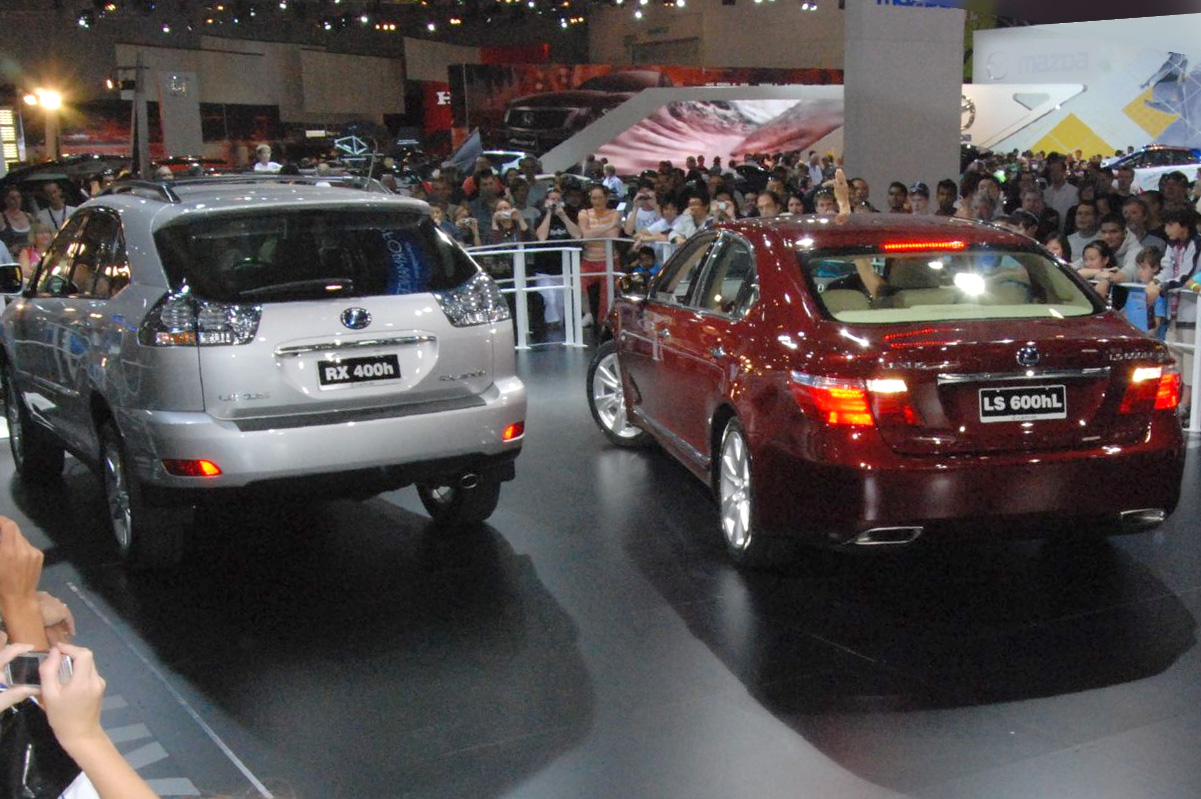
Demonstration of the automatic parking system on a Lexus LS

Automatic parking is an autonomous car-maneuvering system that moves a vehicle from a traffic lane into a parking spot to perform parallel, perpendicular, or angle parking. The automatic parking system aims to enhance the comfort and safety of driving in constrained environments where much attention and experience is required to steer the car. The parking maneuver is achieved by means of coordinated control of the steering angle and speed which takes into account the actual situation in the environment to ensure collision-free motion within the available space.[1]

Multiple car manufacturers have added limited versions of an Automated Valet Parking (AVP) system to their vehicles. The systems allow a car to park itself in certain parking lots or garages, without a driver in the vehicle.

Development

[edit]

One of the first assistance systems for car parking was manual. It used four jacks with wheels to raise the car and then move it sideways into the available parking space. This mechanical system was proposed in 1934, but was never offered on any production model.[2]

One of the world's first experimental prototypes of automatic parallel parking was developed on an electric car Ligier at INRIA in the mid-1990s.[1][3] The underlying technology has been adopted by major automobile manufacturers offering an automatic parking option in their cars today.

The automatic parallel parking algorithm localizes a sufficient parking place along the roadside, attains a convenient start location for the car in front of the parking place, and performs a parallel parking maneuver. Automatic pulling out involves localizing an available space for the car motion within the parking place, placing the car at an appropriate spot at the rear of the parking place, and performing a maneuver to pull out of the parking place into the traffic lane.[4]

The key concept behind automatic parking is to plan and parameterize the basic control profiles of steering angle and speed in order to achieve the desired shape of the vehicle's path within the available space. The parking maneuver is performed as a sequence of controlled motions using sensor data from the car servo systems and range measurements about the environment. The steering and velocity controls are computed in real time and executed. The approach results in various path shapes required to perform parking maneuvers.[5][6]

The car is an example of a nonholonomic system where the number of control commands available is less than the number of coordinates that represent its position and orientation.

In 1992, Volkswagen proposed an automatic parking technology using four-wheel steering in its IRVW (Integrated Research Volkswagen) Futura concept car, allowing it to move sideward for parallel parking. However, no commercial version of this technology was ever offered.[7] The idea of four-wheel steering has been revisited in an electric vehicle ROboMObil of the German Aerospace Center. The vehicle stops in front of an empty parking spot and re-orients its four wheels in the perpendicular direction (leaving rubber marks on the road) to prepare for subsequent sideward motion.[8]

In 2004, a group of Linköping University students working with Volvo developed a project Evolve. The Evolve car can automatically perform parallel parking by using sensors and a computer to control steering, acceleration and braking of Volvo S60.

An automatic parking system uses various methods to detect objects around the vehicle. Sensors installed on the front and rear bumpers can act as both a transmitter and a receiver. These sensors emit a signal that will be reflected back when it encounters an obstacle near the vehicle. Then, the car will use the time of flight to determine the position of the obstacle. Other systems use cameras, e.g. omniview technology, or radars to detect obstacles and measure the parking space size and distance from the roadside.[9]

An automatic parking system has been shown to improve comfort and safety by reducing the level of stress people feel when manual steering for parallel parking and garage parking maneuvers.[10]

For articulated vehicle automatic parking systems, artificial intelligence (AI) techniques have been employed, such as adaptive neuro fuzzy inference systems (ANFIS) and fuzzy C-means (FCM).[11] Unlike regular cars, these vehicles need advanced technology to control their movements and avoid problems like jackknifing, where the trailer swings out of control.

Commercial systems

[edit]

In 2003, Toyota began to sell their Japanese Prius hybrid vehicle with an automatic parallel parking capability offered as an option named Intelligent Parking Assist.[12] In 2006, Lexus added a self-parking system to the redesigned Lexus LS sedan; it parallel parks as well as angle parks. In 2009, Ford introduced their Active Park Assist beginning with their Lincoln models; it does parallel parking.[13] In 2010, BMW introduced a system called "parking assistant" on the redesigned 5 Series to perform parallel parking.[14]

Up to 2012, automatic parking systems were being developed by several automobile manufacturers. Ford and Lincoln offered active park assist on Ford Focus, Fusion, Escape, Explorer, and Flex and Lincoln MKS and MKT. Toyota and Lexus had advanced parking assistant on Toyota Prius V Five and Lexus LS460 and LS460 L. BMW all-new sixth-generation 3 Series used a system called parking assistant. Audi had a parking assistance system on the Audi A6. Mercedes-Benz also offered parktronic on their C-Class, CLS-Class Coupe, M-Class SUV, E-Class, S-Class, GL350, GL450 SUV (standard on the GL550), and R-Class in different prices.[15]

The Holden Commodore (VF), released in 2013, featured automatic parallel and 90-degree parking as standard across the entire range.[16]

Jeep introduced an automatic parallel and perpendicular parking system, called ParkSense, on its 2014 Cherokee model.[17] Chrysler introduced an all new 2015 200 sedan, offering ParkSense as part of a SafetyTec package.[18]

In 2014, BMW demonstrated an i3 equipped with a parking assistant system activated from a smartwatch.[19]

In 2015, Bosch announced plans to release a fully automated valet parking system. This driverless system allows the driver to get out of the car and activate an autonomous parking from a smartphone. The system will calculate a parking maneuver and monitor the surroundings.[20]

Automated Valet Parking

[edit]

Multiple car manufacturers have added limited versions of an Automated Valet Parking (AVP) system to their vehicles. The systems allow a car to park itself in certain parking lots or garages, without a driver in the vehicle.

In 2019, Tesla added a "Smart Summon" ability as part of its Tesla Autopilot vehicle automation features.[21] In 2020, Mercedes-Benz introduced a system named Intelligent Park Pilot for its S-Class. The system was co-developed with Bosch and tested in Stuttgart Airport.[22][23] It was also later showcased in the EQS in Los Angeles.[24] Audi announced in 2021 that it is also working on Automated Valet Parking.[25] In February 2023, BMW announced that it was partnering with Valeo to develop an automated parking system.[26]

Ethical considerations

[edit]

Through the increased of use of these systems, ethical questions regarding safety, accessibility, and user privacy are raised.

The shift from manual parking technology to reliance on automatic computer systems draws concerns to liability issues these companies may face. Highlighting the ethical and legal challenges surrounding autonomous systems, some argue for a shared liability model between users and developers to incentivize safety improvements while protecting consumers from undue burden.[27]

See also

[edit]

References

[edit]

Grokipedia

from Grokipedia
Automatic parking is an advanced driver-assistance system (ADAS) that enables a vehicle to detect available parking spaces and autonomously control steering to maneuver into parallel or perpendicular spots, relying on ultrasonic sensors, cameras, and control algorithms while typically requiring the driver to manage throttle, braking, and transmission.[1] This technology originated from early mechanical prototypes in the 1930s, such as a fifth-wheel system demonstrated on a Packard vehicle for parallel parking aid, but modern electronic implementations began with Toyota's development of the Intelligent Parking Assist System in 1999, first introduced commercially in the 2003 Prius for the Japanese market.[2][3] Subsequent advancements integrated the feature across major manufacturers, including BMW's Parking Assistant in 2007, Ford's Active Park Assist, and systems from Mercedes-Benz and Tesla, evolving from semi-autonomous steering aids to more capable versions handling both detection and execution in controlled environments.[4] Empirical tests indicate effectiveness in reducing minor incidents during parking maneuvers, with one study showing an 81% decrease in contact with obstacles compared to manual attempts, though real-world performance varies due to sensor limitations like blind spots and sensitivity to weather or irregular spaces.[5] Despite these benefits for convenience and precision in low-speed operations, automatic parking systems face limitations including error-prone detection in complex or unmarked areas, slow execution times, and dependency on driver oversight, leading to calibrated but cautious user trust and incomplete adoption even in equipped vehicles.[6][7] No widespread controversies surround the technology, though over-reliance has prompted warnings about potential complacency, underscoring its role as an assistance tool rather than a fully independent capability.[8]

History

Early mechanical systems (1900s–1960s)

The earliest mechanical automated parking systems emerged in Europe during the early 1900s to address urban space constraints amid rising automobile ownership. In 1905, the Garage Rue de Ponthieu in Paris introduced the first such system, featuring elevators to vertically transport vehicles to multi-level storage within a compact concrete structure.[9] [10] These systems relied on manual operators to position cars onto platforms, which were then lifted and shifted mechanically, often incorporating turntables for rotation and alignment to optimize storage density.[11] By the 1920s, similar mechanical garages proliferated in the United States, particularly in densely populated cities like New York, Chicago, and Los Angeles, where land scarcity drove adoption for efficient vertical stacking.[12] In Chicago, a rotary parking system opened in 1932 on Monroe Street, utilizing rotating platforms and elevators to handle vehicles in a central urban location.[13] Westinghouse Electric and Manufacturing Company developed vertical parking prototypes during this era, including a 1932 machine in Chicago that elevated cars via mechanical lifts into multi-story slots, demonstrating engineering focused on minimizing footprint while accommodating dozens of vehicles in spaces equivalent to a few surface lots.[14] These systems reached peak popularity in the United States from the 1930s through the 1950s, fueled by the post-World War II surge in car ownership and continued urbanization.[9] Designs such as rotary towers, akin to Ferris wheels with suspended car cages, enabled stacking of 10 or more vehicles in the area of 2-3 conventional spots, with operators manually loading and retrieving cars to achieve throughput suited for high-demand downtown areas.[12] By 1957, dozens of such installations, including Bowser and Pigeon Hole variants, operated across major metros, though reliance on human attendants for loading and potential mechanical breakdowns constrained scalability and reliability.[15] Despite these limitations, the systems exemplified early causal engineering solutions prioritizing land efficiency over full automation, predating electronic controls.[16]

Decline and technological hiatus (1970s–1990s)

Following the peak of mechanical automated parking systems in the mid-20th century, adoption declined sharply in the United States and Europe during the 1970s and 1980s, primarily due to persistent mechanical failures and operational inefficiencies that eroded user confidence. Early systems, reliant on Ferris wheel-like elevators or stacker mechanisms, frequently malfunctioned, leading to extended downtime and safety concerns, such as the 1970s incident in Denver where a paternoster-style parking elevator failed due to a broken bolt, leaving a vehicle precariously suspended. These breakdowns, combined with slow retrieval times that often exceeded manual parking durations, frustrated drivers and operators, prompting conversions of facilities like the Kent Automatic Garages in the U.S. to office space and condominiums by 1983.[9][17] The reduced urgency for space-efficient parking amid post-war suburbanization further diminished incentives for mechanical systems, as expanding urban peripheries offered abundant land for conventional garages staffed by low-cost human labor, which proved more reliable and adaptable to varying vehicle sizes. Larger postwar automobiles often exceeded the dimensions of cradles designed in the 1930s and 1940s, rendering many installations obsolete without costly retrofits, while manual operations avoided the high downtime risks of mechanical jams during peak hours. Regulatory scrutiny intensified following such incidents, favoring simpler, human-supervised structures that complied with evolving safety standards without the liability of complex machinery.[15][9] In Japan, where land scarcity persisted in dense cities, mechanical innovations like early puzzle parking systems—using sliding platforms and stackers—emerged in the 1970s to maximize vertical space, but their adoption remained regionally confined due to similar reliability challenges and limited export. By the 1990s, global development stalled, with U.S. interest waning as manual garages demonstrated superior long-term viability through flexible staffing and minimal capital outlay for maintenance. This hiatus reflected a pragmatic return to human-centric solutions, underscoring the era's prioritization of operational resilience over mechanized efficiency.[18][19]

Modern resurgence and digital integration (2000s–present)

The resurgence of automatic parking technologies in the 2000s was driven by the integration of electronic controls with existing hydraulic steering systems, enabling pilot projects in densely populated regions like Japan and Europe. These early digital enhancements addressed urban parking constraints, where empirical studies indicate that up to 30% of traffic congestion in major cities stems from vehicles circling for spaces.[20] By combining computer algorithms with sensors such as ultrasonic detectors, vehicles could execute parallel or perpendicular maneuvers with minimal driver input, marking a shift from purely mechanical reliance to hybrid electro-hydraulic operation.[21] In the 2010s, advancements accelerated with demonstrations by suppliers like Bosch and Valeo, showcasing semi-autonomous self-parking in consumer vehicles using improved sensor fusion and path-planning software. Bosch's 2013 Frankfurt Motor Show exhibit highlighted real-time environmental mapping for precise maneuvering, while Valeo's 2014 Park4U system emphasized smartphone-activated automation.[22][23] These developments were causally linked to plummeting sensor costs, particularly LiDAR units dropping from approximately $75,000 in the early 2010s to under $1,000 by decade's end, facilitating broader scalability beyond niche applications.[24][25] The 2020s saw formalization of standards and initial deployments, with SAE International's J3016 taxonomy refinements around 2018 incorporating automated parking scenarios up to Level 4 autonomy, where vehicles operate without human oversight in defined domains like parking facilities. Notable milestones include Mercedes-Benz's 2021 approval for advanced automated valet parking trials in Germany and BMW's 2023 partnership expansions for Level 4 systems, reflecting regulatory progress amid urban drivers wasting an average of 17 hours annually searching for spots.[26][27][28][29] By 2025, the global automated parking market reached approximately $2.6 billion, growing at a compound annual rate of nearly 20% from prior years, propelled by AI-driven precision and infrastructure adaptations to escalating city densities.[30][31]

Technical principles

Core technologies and sensors

Ultrasonic sensors form the primary hardware for close-range detection in automatic parking, using time-of-flight measurements of sound waves to determine obstacle distances with accuracies exceeding 99% in ranges from 0.15 meters minimum to up to 10 meters, though typically optimized for 0.2 to 2 meters in parking maneuvers.[32][33][34] These sensors offer a field of view of 60 to 75 degrees, enabling detection of curbs, vehicles, and walls during low-speed operations below 50 km/h.[35][33] Cameras complement ultrasonics by capturing visual data for parking space recognition, line detection, and environmental mapping, often integrated in surround-view systems to provide 360-degree oversight.[36] In advanced setups, LiDAR sensors generate high-resolution 3D point clouds for precise spatial modeling, measuring distances via laser pulses to support obstacle classification and path verification in complex scenarios.[37][38] Sensor fusion algorithms combine inputs from ultrasonics, cameras, and LiDAR to minimize individual sensor limitations, such as ultrasonic range constraints or camera sensitivity to lighting, achieving enhanced localization accuracy for maneuvers.[39][40] GPS and inertial measurement units (IMUs) provide vehicle positioning and orientation data, crucial in GPS-denied indoor environments like parking garages where satellite signals degrade.[41][42] In automated valet parking, vehicle-to-infrastructure (V2I) communication links onboard sensors to garage systems for pre-mapped slot allocation and real-time updates, facilitating unmanned navigation.[43][44] Empirical evaluations in controlled settings report parking success rates of 90% or higher, attributing reliability to multi-modal sensor integration handling static and dynamic obstacles.[45][46] From the early 2000s, when systems like Toyota's 2003 parking assist relied on basic ultrasonic arrays in hybrid vehicles, technologies have advanced to 2020s multi-sensor configurations incorporating fusion for dynamic obstacle avoidance and sub-meter precision.[47][48]

Algorithms and control systems

Path planning in automatic parking systems relies on search algorithms to generate collision-free trajectories from the vehicle's initial position to the target parking spot. Sampling-based methods like Rapidly-exploring Random Trees (RRT) efficiently explore continuous state spaces for obstacle avoidance by incrementally building a tree of feasible motions, while grid-based approaches such as A* prioritize optimality through heuristic-guided searches on discretized environments.[49] [50] Hybrid variants combining these, often with kinematic constraints, produce initial paths that account for vehicle dynamics like turning radius and clearance requirements.[51] For trajectory optimization, model predictive control (MPC) refines these paths by solving constrained optimization problems over a receding horizon, minimizing errors in position, velocity, and orientation while anticipating disturbances like surface friction variations. MPC formulations incorporate vehicle models (e.g., bicycle kinematics) to predict future states and adjust controls preemptively, ensuring feasibility within actuator limits such as steering angle bounds.[52] [53] Simulations validate MPC performance by replicating real-world dynamics, with iterative tuning reducing trajectory deviations to levels where planned paths align closely with executed maneuvers under nominal conditions.[54] Low-level execution employs proportional-integral-derivative (PID) controllers to regulate steering torque and throttle/brake inputs, computing corrections based on error signals from the reference trajectory to dampen oscillations and achieve precise alignment. These feedback loops operate on causal principles of error minimization, where proportional terms provide immediate response, integral terms eliminate steady-state offsets from model mismatches, and derivative terms anticipate overshoot from inertial effects. [55] Post-2015 advancements integrate machine learning, particularly reinforcement learning, to refine policies for edge cases like tight spaces or dynamic obstacles, training agents to maximize rewards tied to successful docking metrics. These methods have demonstrated parallel parking success rates exceeding 95% in controlled tests, surpassing purely rule-based systems by adapting to unmodeled variabilities through data-driven updates without assuming unbounded generalization.[56] [57] Electronic control units (ECUs) integrate these algorithms in real-time loops, processing fused data to issue commands with latencies minimized for stability, as delays beyond milliseconds can amplify path errors in constrained maneuvers.[58]

Autonomy levels per SAE standards

The SAE J3016 standard defines six levels of driving automation, applicable to parking maneuvers through distinctions in human driver engagement and system capability. In automatic parking contexts, lower levels (0–2) involve driver-initiated and supervised assistance, where the human performs part or all of the dynamic driving task (DDT), including monitoring for system limits. For instance, Level 1 systems, introduced in vehicles like the 2009 Lexus LS 600h, automate lateral control for parallel parking while requiring the driver to handle acceleration, braking, and oversight.[59] Level 2 partial automation, seen in 2010s features from manufacturers such as Ford and BMW, may integrate both lateral and longitudinal control but demands continuous driver attention and readiness to intervene, as evidenced by systems requiring button activation and visual confirmation.[60] Level 3 conditional automation for parking enables hands-off operation in defined environments like parking lots, with the system managing the full DDT but requiring the driver to remain responsive to requests for intervention, such as for edge cases like pedestrian incursions. Pilots emerged around 2020, with examples including Level 3 autonomous parking in Chinese vehicles like the Roewe Marvel R, where the system operates without steering input but mandates driver preparedness.[61] Higher levels shift to driverless operation: Level 4 high automation performs all parking tasks, including unmanned drop-off and retrieval, within geofenced operational design domains (ODDs) like mapped garages, without human fallback, as specified for automated valet parking (AVP) systems achieving driverless functionality.[62] Deployments, such as Bosch's Level 4 AVP trials starting in 2023 across German facilities, target geofenced zones compliant with ISO 26262 safety integrity levels for fault-tolerant operation.[63] Level 5 full automation, capable of parking in any environment without geographic or environmental restrictions, remains theoretical for parking due to unresolved edge cases like unstructured lots, with no commercial implementations as of 2025.[60]
SAE LevelParking Context DescriptionDriver RoleExample Timeline/Implementation
0No automation; manual parking only.Full control and monitoring.Pre-2000s baseline.[60]
1Driver assistance for specific tasks (e.g., steering in parallel parking).Performs remaining DDT aspects; monitors system.2009 Lexus systems.[59]
2Partial automation (e.g., combined steering and speed control).Engaged oversight; ready to intervene at any time.2010s Ford/BMW self-parking.[60]
3Conditional automation in lots/garages; system handles DDT.Responsive to intervention requests; no active control.2020s Chinese EV pilots (e.g., Roewe).[61]
4High automation in geofenced ODDs (e.g., AVP unmanned).None required within ODD; system self-manages failures.2023+ Bosch/AVP trials.[62] [64]
5Full automation anywhere, including unstructured areas.None; unlimited ODD.Unachieved in parking as of 2025.[60]
Empirical distinctions emphasize intervention frequency: Levels 1–2 require near-constant driver input, reducing error rates by 20–30% in controlled tests per manufacturer data, while Level 4 AVP in trials demonstrates near-zero interventions in mapped zones, prioritizing causal reliability over broad-domain generalization.[63]

Types of systems

In-vehicle self-parking features

In-vehicle self-parking features enable personal vehicles to autonomously maneuver into parking spaces using only onboard sensors and computing power, with the driver initiating the process and remaining attentive to monitor and intervene as needed. These systems detect suitable parallel or perpendicular spots via ultrasonic sensors, cameras, and sometimes radar, then compute a safe trajectory while the driver controls acceleration and braking. Unlike automated parking structures or valet systems that rely on external infrastructure, in-vehicle features operate independently in open lots or streets, prioritizing real-time environmental perception.[65] Tesla introduced Autopark in a 2016 software update, allowing Model S and Model X vehicles to parallel park by detecting spaces wider than the vehicle's length plus 20% margin, using vision-based cameras in later iterations, especially in vision-only modes without ultrasonic sensors. Detection excels at obstacles with good contrast like metal fences but is limited for low objects below approximately 8 inches (20 cm), such as flat curbs or barriers; the system measures spots conservatively for urban settings, outlines obstacles in visualization, plans trajectories to avoid contact with safe buffers and active collision avoidance, and aborts risky maneuvers with warnings, not displaying the parking icon, while requiring driver supervision. The feature maneuvers at low speeds, typically under 5 km/h, to align and execute the parking sequence, with recent updates adding "Tap to Park" for simplified activation via the touchscreen. In vision-only models like the 2026 Model Y without ultrasonic sensors, Autopark requires the parking space to have at least three visible lines (such as parking lines, curbs, or markings) and may not function reliably in unmarked areas like home garages. For garage use, owners often create artificial lines using 3-inch white duct tape or painter's tape to mark a rectangle approximately 8 feet wide by 19-20 feet long, extending to the garage entrance, enabling the system to detect a valid perpendicular space—a workaround commonly reported on forums like Tesla Motors Club. Autopark operates below 8 mph (13 km/h) and may require multiple maneuvers in tight spaces, with recent software updates improving reliability. Summon features (Dumb Summon for straight-line movement up to 12 meters and Actually Smart Summon for navigation to a target) provide alternatives for garage entry/exit via the mobile app, though best suited to open areas and requiring supervision.[66] Ford's Active Park Assist, available on models like the Escape since around 2017, similarly scans for spaces using sensors to steer into parallel or perpendicular positions, though the company announced discontinuation of the full self-steering capability in new models starting 2024 to cut costs. Lexus Advanced Park, featured in vehicles like the 2024 NX, employs cameras and sensors for both parallel and perpendicular self-parking, with the driver shifting gears as prompted.[67][68][69][70] These systems demonstrate high reliability in controlled urban parking scenarios, with sensor fusion enabling obstacle avoidance and precise positioning within centimeters, though performance drops in cluttered or unmarked lots lacking clear boundaries. NHTSA studies on related parking aids indicate that rearview cameras combined with sensors reduce backing crashes by up to 42%, suggesting foundational effectiveness for self-parking maneuvers that incorporate similar detection. Limitations include sensitivity to adverse weather, poor lighting, or dynamic obstacles like pedestrians, often requiring driver override; success relies on SAE Level 2 autonomy, where human supervision prevents failures in unmapped or chaotic environments.[71][72] Adoption has grown with consumer demand for convenience, appearing as standard or optional in premium segments from manufacturers like BMW, Mercedes-Benz, and Audi by 2025, though exact penetration varies by market and model. Market analyses project the self-parking sensor system sector at $5 billion in 2025, reflecting integration into 10-20% of new passenger vehicles in developed regions, driven by regulatory pushes for advanced driver assistance and falling sensor costs. These features enhance accessibility for less confident drivers but remain supplementary, not substitutes for skill, as empirical data underscores the need for vigilant oversight to mitigate edge-case errors.[73][74]

Automated parking structures (APS)

Automated parking structures (APS), also known as automated mechanical parking systems, consist of mechanical apparatuses that transport vehicles to storage locations after the driver exits at a designated drop-off point, thereby minimizing the footprint required for parking without relying on vehicle-mounted autonomy. These systems typically employ pallets or carriers on which vehicles are loaded, followed by conveyance via lifts, shuttles, or rotating mechanisms to stack them densely in multi-level or horizontal configurations. Unlike traditional ramp garages, APS eliminate driving lanes and maneuvering space, achieving space utilization efficiencies often exceeding five times that of conventional structures by reducing aisle widths and enabling vertical or puzzle-like stacking.[46] Pallet-based designs predominate, where a vehicle is driven onto a rigid platform that interfaces with rail-guided shuttles or elevators for relocation; alternatively, ferris-wheel configurations rotate entire stacks circumferentially to present spaces at ground level. Harding APS systems exemplify pallet-free variants that use direct vehicle transfer mechanisms, supporting densities of up to 50 vehicles per 100 square meters in compact urban footprints through synchronized vertical and horizontal movements. These mechanical approaches ensure driverless operation post-drop-off, with vehicles retrieved by reversing the transport sequence to the entry/exit portal.[75][76] Deployments proliferated in Asia during the 1980s and 1990s amid urban density pressures, with Japan installing an estimated 40,000 to 100,000 APS spaces annually by the late 1980s, particularly in Tokyo's high-rise towers and multistory facilities. Systems like vertical rotating towers became fixtures in land-scarce areas, handling peak loads in commercial districts without on-site circulation ramps. Efficiency metrics from these installations demonstrate approximately 10-fold increases in parking density compared to manual garages, as mechanical relocation obviates the need for 6-8 meter aisles and turning radii.[77][78] Core technologies include programmable logic controllers (PLCs) for orchestrating multi-axis movements, integrated with radio-frequency identification (RFID) tags on vehicles or pallets to enable precise summoning and verification during retrieval, typically completing cycles in under 45 seconds. Safety interlocks and sensors prevent collisions during transfers, while centralized software manages queueing to minimize wait times. Installation costs for APS average $50,000 per space, influenced by site constraints and system scale, though long-term operational savings arise from reduced staffing and maintenance relative to attended garages.[79][80][81]

Automated valet parking (AVP)

Automated Valet Parking (AVP) refers to a driverless system where vehicles autonomously maneuver within predefined parking facilities, such as multi-story garages, to locate and occupy available spaces after the driver exits at a designated drop-off area. The process begins with the driver using a mobile application to initiate parking upon arrival; the vehicle then employs onboard sensors, high-definition (HD) maps of the facility, and localization algorithms to navigate independently to an empty spot, avoiding obstacles and other vehicles. Upon the driver's return, the app summons the vehicle, which retraces its path to the entrance without human oversight. This capability requires precise environmental perception via LiDAR, cameras, and radar, combined with real-time communication with garage infrastructure for slot availability updates.[82][83][84] AVP functions at SAE Level 4 of driving automation, enabling full self-operation within geofenced operational design domains like enclosed parking structures, where fallback to human control is unnecessary due to the controlled environment. This level bridges toward higher autonomy by validating unmanned navigation in real-world, albeit bounded, scenarios, building confidence in sensor fusion and path-planning reliability before expanding to open-road applications. Standards such as SAE J3016 define these levels, emphasizing operational limits to ensure safety in delimited areas. Unlike automated parking systems (APS), which use external mechanical carriers, lifts, or shuttles to relocate stationary vehicles and minimize footprint through vertical stacking, AVP relies on the vehicle's intrinsic mobility, preserving drivability while integrating with existing garage layouts.[60][85] Commercial trials have demonstrated AVP's viability, with Bosch and Mercedes-Benz conducting Europe's first public unmanned parking at Stuttgart Airport starting in 2020, where vehicles parked autonomously after app activation and were summoned similarly. Volkswagen implemented AVP tests at Hamburg Airport as early as 2018, allowing pre-booking and driverless relocation within the facility. These deployments highlight AVP's potential to eliminate valet staffing, achieving complete automation of parking retrieval in controlled tests, thereby reducing operational labor by 100% compared to traditional services. Market analyses project the AVP sector to expand from approximately USD 1 billion in 2023 to over USD 10 billion by 2030, driven by rising urban density and autonomous tech maturation.[86][87][88]

Commercial implementations

Major manufacturers and deployments

Bosch has developed sensor suites and software for automated valet parking (AVP), collaborating with Mercedes-Benz to enable the world's first SAE Level 4 driverless parking system approved for commercial use in designated German parking facilities as of November 2022, where vehicles autonomously navigate to assigned spots after the driver exits.[89][90] Stanley Robotics specializes in autonomous mobile robots for outdoor valet parking, deploying the first such system globally at Lyon-Saint-Exupéry Airport in France in 2018, which uses flatbed robots to relocate vehicles to denser storage, achieving up to 50% higher parking capacity without infrastructure expansion.[91][92] For automated parking structures (APS), Westfalia Technologies and Wohr Parking Systems lead in multi-level mechanical systems, with Westfalia installing systems in urban settings to stack vehicles vertically and horizontally, reducing footprint by factors of 5-10 compared to surface lots.[93][94] In Singapore, robotic APS deployments include the Robinson Towers project, where automated guided vehicles (AGVs) began ferrying cars weighing up to 2,600 kg starting in 2018, supporting high-rise residential parking via laser and camera guidance.[95][96] Adoption varies regionally, with Europe and Japan showing stronger deployment due to land scarcity; Europe's APS market reached USD 717 million in 2023 with a projected 16% CAGR through 2030, while Japan's is forecast to hit USD 366 million by 2030 at 17.2% CAGR, often in dense urban towers.[97][98] In contrast, the United States lags, with fewer large-scale APS rollouts owing to greater land availability, though pilot AVP tests like Bosch's 2020 garage demonstration in Detroit highlight emerging interest.[99] These systems generally enable faster vehicle turnover in constrained spaces, with robotic valets reducing retrieval times to under 2 minutes in operational pilots versus manual searches averaging 5-10 minutes.[91]

Global adoption and case studies

In Europe, the Volkswagen Autostadt complex in Wolfsburg, Germany, exemplifies early large-scale adoption of automated parking systems through its Car Towers, operational since 2000 and capable of storing up to 800 vehicles while handling an average of 500 retrievals and deliveries daily.[100] This fully automated high-rack system achieved the Guinness World Record for the fastest parking facility in 2013, completing the process from tower entrance to parking slot in 1 minute 44 seconds, demonstrating high throughput in a controlled industrial setting akin to automated valet parking for inventory management.[101] Such implementations highlight efficiency gains, with robotic shuttles enabling 100% automation without human intervention in vehicle handling. In the Middle East, Dubai's Emirates Financial Towers incorporate robotic automated parking systems (APS) providing 1,191 spaces, optimizing vertical space in high-rise developments to address urban density.[102] These systems reduce parking footprint by up to 60% relative to conventional surface lots via pallet-based stacking, allowing developers to allocate saved land to revenue-generating uses while maintaining retrieval times under 2 minutes in similar configurations.[103] Empirical outcomes include enhanced site throughput, with APS enabling 50% greater capacity per square meter and supporting Dubai's urban expansion goals amid limited land availability. Automated valet parking (AVP) trials, often at SAE Level 4 autonomy, have progressed to pilot stages in Europe and Asia, yielding throughput improvements of 20-30% in simulated urban garages by eliminating driver search times, though full commercial scaling lags due to integration challenges.[104] In the United States, adoption trails regions like Asia, where over 40% of global APS installations occur by 2025 driven by megacity parking crises, constrained by liability frameworks and regulatory approvals that prioritize human oversight.[105] ROI analyses from urban APS deployments report payback periods of 9 months to 3-5 years, achieved via capacity doublings and construction savings up to $4 million per site, underscoring viability in space-constrained locales.[106][107]

Benefits and limitations

Operational and economic advantages

Automated parking systems, including automated parking structures (APS) and automated valet parking (AVP), enhance operational efficiency by optimizing space utilization in densely populated urban environments. APS eliminate the need for drive aisles and maneuvering space, enabling up to 50% higher vehicle density in the same footprint compared to conventional garages, which reduces construction and land requirements while maximizing throughput.[108] AVP systems further support this by allowing vehicles to self-maneuver into tighter configurations after driver drop-off, accommodating up to 20% more vehicles per facility without increasing physical size.[109] These capabilities minimize retrieval times and operational bottlenecks, particularly in high-turnover settings like airports or commercial districts. Economically, such systems lower ongoing costs by reducing the need for valet staff and maintenance associated with wider layouts, while freeing land for revenue-generating uses like additional retail or residential space. The global automated parking system market, valued at USD 2.37 billion in 2024, is forecasted to expand at a compound annual growth rate (CAGR) of 19.9% through 2030, driven by adoption in space-constrained cities where traditional parking infrastructure proves inefficient.[31] This growth underscores the systems' role in boosting urban productivity by curtailing time lost to parking searches, which studies link to broader congestion relief and fuel savings in metropolitan areas.[110] Environmentally, automatic parking contributes to operational sustainability by decreasing idling and circling emissions; fully automated approaches can yield 5-11% reductions in urban greenhouse gas outputs tied to parking-related vehicle movements.[111] These benefits compound in electric vehicle integrations, where AVP facilitates efficient charging without prolonged engine runtime, aligning with incentives for lower-carbon infrastructure.

Practical challenges and drawbacks

Installation costs for automated parking systems typically range from $20,000 to $100,000 per space, varying by system type, scale, and site-specific factors such as underground versus above-ground deployment.[112][113] These expenses include mechanical infrastructure, sensors, and controls, which limit scalability in retrofitting legacy parking facilities lacking compatible electrical and structural support, often requiring extensive modifications or new builds.[80] Operational reliability falters in adverse weather, as precipitation, fog, and snow impair sensors like cameras and lidar essential for precise maneuvering, resulting in degraded perception and higher error rates than in clear conditions.[114] Empirical tests of related driver assistance technologies demonstrate failure rates climbing to 33% in moderate rain at low speeds, underscoring vulnerabilities transferable to parking scenarios where environmental occlusion disrupts spatial mapping.[115] Dependency on uninterrupted power and connectivity introduces risks of vehicle stranding during outages or system malfunctions, with users citing fears of retrieval delays as a deterrent to adoption.[116] Cybersecurity threats compound this, as interconnected protocols in automated parking assist create exploitable entry points for disruptions, though actual stranding incidents from hacks have been rare in the 2020s.[117] Driver resistance persists due to perceived error-proneness, with experimental evaluations revealing calibrated but limited trust in automated systems, often leading to manual overrides or avoidance despite demonstrated capabilities in controlled settings.[6]

Safety and reliability

Empirical performance data

Automated parking systems, including in-vehicle self-parking and automated parking structures, have demonstrated high operational reliability in controlled and commercial settings. Commercial automated parking structures (APS) achieve system reliability rates of 99% or higher, minimizing downtime through fault-tolerant designs and redundant servers guaranteeing continuous availability.[118][119] In trials of automated valet parking (AVP), parking space recognition algorithms exhibit success rates exceeding 99%, with execution times as low as 10 milliseconds, enabling precise berth matching in diverse environments.[120] Matching probabilities for correct spaces reach 94% in multi-sensor ensembles, reducing localization errors to centimeters.[121] Comparisons to manual parking reveal fewer maneuvers and lower error potential in automated modes, as systems eliminate variability from human judgment; however, early simulator evaluations report automated success rates around 56% for complex perpendicular maneuvers versus near-100% for manual in ideal conditions, attributed to environmental sensing limitations rather than inherent flaws.[122] Longitudinal analyses of advanced driver assistance systems (including parking aids) indicate reduced crash risks in low-speed scenarios, with SAE-recommended metrics supporting causal safety improvements through consistent trajectory planning over human variability.[123][124]

Documented incidents and failure modes

In automated parking structures (APS), mechanical failures have led to vehicle entrapments and structural issues. On August 1, 2023, in Portland, Oregon, a passenger became trapped inside a vehicle crushed by a malfunctioning rotating parking platform, necessitating emergency extraction by first responders after the car's door jammed between platforms.[125] Similar mechanical entrapment occurred in the same incident location, where platform misalignment crushed the vehicle frame.[126] On November 2, 2021, India's first APS in Mumbai experienced a partial tower collapse, with four platforms failing and damaging two cars while trapping others, attributed to structural overload or maintenance lapses.[127] In Pune, India, on July 25, 2022, a mechanical stack parking system's upper deck unexpectedly lowered onto a parked Kia Seltos below, caused by hydraulic or control system failure without operator input.[128] These cases often stem from mechanical wear, misalignment during operation, or inadequate structural integrity under load, leading to temporary system shutdowns for repairs. For automated valet parking (AVP) in vehicles, software and sensor-related glitches have caused operational errors. Following an over-the-air update on November 14, 2024, multiple Xiaomi SU7 owners reported the intelligent parking assist system malfunctioning, resulting in unintended vehicle movements and collisions with obstacles, incurring repair costs without injuries.[129] On August 17, 2025, in Tirupur, India, an SUV's automated parking feature failed during execution, causing the vehicle to lurch and injure the operator due to erroneous sensor interpretation or control loop errors.[130] Common failure modes include software bugs disrupting path planning (as in post-update anomalies) and sensor vulnerabilities to environmental factors like low light or minor obstructions, though redundancy in modern systems—such as fallback to manual override—limits propagation. No fatalities have been directly linked to APS or AVP incidents in documented cases, contrasting with approximately 500 annual deaths from human-operated parking maneuvers in U.S. lots and garages.[131]

Regulatory and standards landscape

International standards and SAE classifications

The Society of Automotive Engineers (SAE) International's J3016 standard, revised in April 2021, establishes a taxonomy for six levels of driving automation applicable to features including automatic parking. Level 0 involves no automation, while Level 1 includes driver assistance such as automated lateral control for parallel parking; higher levels like Level 4 enable geofenced operations without human intervention, as in automated valet parking (AVP) systems.[59] This framework ensures consistent classification of parking automation's operational domain limitations and fallback requirements.[60] The International Organization for Standardization (ISO) complements SAE classifications with targeted standards for parking maneuvers. ISO 16787:2016 specifies requirements for assisted parking systems (APS) in light-duty vehicles, covering sensor-based detection, trajectory planning, and execution for perpendicular and parallel parking under driver supervision.[132] For partially automated systems, ISO 20900:2023 defines performance criteria for longitudinal and lateral control during low-speed maneuvers in defined areas. Advanced AVP, typically at SAE Level 4, falls under ISO 23374-1:2023, which outlines system frameworks, communication protocols, and environmental tolerances for unoccupied vehicle operations within parking facilities.[133] International harmonization advances through alignment between SAE and ISO under joint agreements, facilitating interoperability for AVP deployments. In the European Union, regulations incorporate UNECE frameworks enabling Level 3 conditional automation and geofenced Level 4 use cases, with type-approval processes supporting parking-specific validations by 2025.[134] National variations persist, such as Japan's emphasis on comprehensive certification testing for automated systems to verify hazard mitigation in dense urban parking scenarios.[135] Compliance with these standards is verified via standardized testing protocols, promoting scalable, safe implementations across borders.[84] In systems classified below SAE Level 3, where drivers must remain attentive and capable of intervention during automatic parking maneuvers, legal liability for collisions or property damage primarily falls on the human operator for negligence in supervision or activation under unsuitable conditions.[136] Manufacturers face exposure under product liability laws only if a demonstrable defect—such as faulty software or hardware—proximately causes the failure, independent of driver input, as established in U.S. strict liability standards requiring proof of design, manufacturing, or warning defects.[137][138] European frameworks introduce nuances favoring evidence of systemic fault over operator culpability in higher automation contexts; for instance, Germany's 2021 Autonomous Driving Act facilitates manufacturer accountability for Level 4 operations by designating the vehicle keeper or operator as initially liable, with recourse against producers for algorithmic or sensor deficiencies, as analyzed in post-2023 cases involving automated functions akin to extended parking autonomy.[139] The UK's Automated and Electric Vehicles Act 2018 mandates that insurers assume primary responsibility during "automated" modes, including self-parking where the system controls steering and speed without real-time human override, shifting the burden from individual drivers to policy-backed compensation funds while preserving subrogation rights against culpable parties.[140] Jurisdictional variances persist: U.S. reliance on state-specific tort regimes demands plaintiffs establish causation via forensic data logs, often complicating claims due to fragmented evidence standards, whereas EU directives like the revised Product Liability Directive (effective 2024) impose stricter no-fault presumptions for AI-integrated defects, easing victim recovery but elevating manufacturer defense costs through mandatory disclosure of black-box data.[141][142] Claims arising from automatic parking remain empirically rare, with incident rates below 0.1% of engagements in manufacturer-reported datasets, attributable to supervised deployment limiting exposure.[143] Proving causation poses acute evidentiary hurdles, particularly in sensor errors or cyber intrusions; ultrasonic or camera misreads from environmental interference (e.g., glare or debris) require isolating algorithmic deviation from external variables through timestamped telemetry, a process forensic experts describe as resource-intensive due to opaque proprietary code and fusion complexities across multi-sensor arrays.[46][144] Insurance models are adapting via usage-based telematics to apportion risk, with premiums potentially rising 10-15% for vehicles equipped with advanced parking aids to cover escalated product liability reserves, though aggregate claims data indicate net stabilization from reduced human-error incidents.[145][146]

Ethical and societal considerations

Privacy and data security issues

Automatic parking systems, which rely on cameras, ultrasonic sensors, and sometimes cloud-connected mapping for precise maneuvering, inherently collect data on vehicle positions, surrounding environments, and nearby license plates to execute parking tasks safely.[147] This data capture raises surveillance concerns, as high-definition (HD) mapping and sensor feeds can inadvertently record identifiable information such as license plate numbers and geolocations, enabling potential tracking of vehicle movements without user consent.[148] Privacy advocates highlight the risk of such data being aggregated to profile individuals' habits, with centralized storage in smart parking integrations exacerbating vulnerabilities to unauthorized access or misuse for stalking purposes.[149] Data security vulnerabilities in automatic parking assist (APA) systems stem from software flaws, communication protocols, and integration with vehicle networks, potentially leading to leaks of location and sensor data.[147] For instance, a 2021 breach in the ParkMobile parking app, which interfaces with vehicle parking data, exposed license plates, emails, and phone numbers of over 21 million users due to third-party software weaknesses, illustrating how interconnected parking ecosystems can amplify risks despite not being core to in-vehicle APA.[150] Empirical evidence shows low rates of exploited APA-specific breaches to date, but the potential for cyber attacks remains, as demonstrated by broader autonomous vehicle sensor vulnerabilities that could extend to parking functions.[151] Mitigations include encryption of transmitted data, anonymization techniques like blurring faces and plates in camera feeds, and adherence to regulations such as the EU's GDPR, which mandates data minimization and purpose limitation for processing personal data in parking systems.[152] Systems employing automatic number plate recognition (ANPR) for parking enforcement often implement on-premise processing to avoid cloud storage risks, retaining data only as long as necessary for operational needs.[153] Proponents of automatic parking argue that opt-in models and federated learning for map updates—where vehicles contribute data without centralizing personal identifiers—balance privacy with functionality, citing minimal real-world exploits as evidence of effective safeguards when properly implemented.[154][155]

Employment impacts and economic displacement

The implementation of automated valet parking (AVP) systems has led to substantial reductions in the demand for manual valet and parking attendant roles at deployment sites, with estimates indicating potential displacements of 50-100% in fully automated facilities such as airport garages and urban lots. For instance, AVP trials by manufacturers like Bosch and Volkswagen's Cariad subsidiary demonstrate vehicles self-parking without human intervention, eliminating the need for attendants to handle steering, positioning, or ticket issuance in controlled environments.[156][157] This displacement targets low-skill, repetitive tasks, mirroring mechanical automation's efficiency gains, though site-specific data from ongoing pilots remains limited due to early-stage rollouts as of 2024. In the U.S., the parking lots and garages sector employed approximately 128,768 workers as of 2024, encompassing attendants, enforcement personnel, and related roles, according to industry analysis. Broader automation trends project that sectors reliant on routine manual labor, including parking services, could see 10-20% workforce shifts by 2030, driven by AVP adoption in high-density areas like airports and commercial districts.[158] Labor economics research indicates that while initial job losses occur in operational roles, net employment may stabilize or grow through demand for higher-skill positions in system maintenance, software oversight, and data analytics.[159][160] Historical precedents, such as the automation of elevators in the mid-20th century, illustrate how mechanical innovations displaced specialized attendants—reducing their numbers from tens of thousands to near-zero—yet spurred overall economic productivity without long-term net unemployment in affected industries.[161] Counterarguments emphasize retraining programs to transition workers into tech-adjacent roles, though empirical evidence from automation waves suggests persistent structural unemployment for those in low-education service positions lacking adaptability, as productivity gains favor capital over labor in routine tasks.[162][163] This pattern underscores AVP's role in reallocating labor toward value-adding functions, consistent with causal mechanisms of technological progress displacing inefficiency.

Broader debates on technological dependency

Critics contend that excessive dependence on automatic parking systems could erode drivers' proficiency in manual maneuvers, fostering complacency and heightened vulnerability during system failures or overrides. This concern echoes broader apprehensions about automation-induced skill atrophy, as evidenced in advanced driver assistance systems (ADAS) where over-reliance has been linked to drivers neglecting basic vigilance. Empirical evidence, however, underscores the prevalence of human error in parking-related incidents; approximately 94% of all vehicle crashes, including those in low-speed parking scenarios, stem from driver mistakes such as misjudgment of distances or failure to yield.[164][165] In the constrained domain of automatic parking, philosophical debates over ethical decision-making—such as utilitarian trade-offs in hypothetical trolley-like scenarios—are largely abstracted from practice, given the rarity of high-stakes conflicts at speeds under 10 mph. Potential dilemmas might involve prioritizing pedestrian safety over vehicle or property integrity, yet real-world deployments in controlled lots prioritize collision avoidance algorithms that consistently favor human safety, with failure modes more often tied to environmental variables than irresolvable moral calculus.[166] Cybersecurity apprehensions amplify dependency critiques, with documented vulnerabilities in parking assist systems enabling remote manipulation or denial-of-service attacks, as demonstrated in analyses of automatic parking architectures susceptible to spoofing sensor inputs. Nevertheless, operational data counters these fears by revealing that over 99% of incidents involving autonomous modes result from external human actions, such as erratic pedestrian or driver interference, rather than inherent system flaws or hacks.[167][168] Proponents rebut Luddite-style resistance by citing statistical superiority of automated systems in error-prone tasks; for instance, while human-driven vehicles log crashes at rates exceeding autonomous counterparts in disengaged testing miles, parking-specific reliability approaches near-perfect in validated environments, debunking claims of inherent technological fragility. User acceptance surveys reinforce this, with studies indicating that 60-70% of participants report positive intent toward automated parking, particularly among younger demographics and those with hands-on experience, suggesting familiarity mitigates dependency anxieties.[169][170]

Future developments

Emerging technologies and integrations

Vehicle-to-everything (V2X) communication enhancements are enabling more dynamic automatic parking in lots with fluctuating occupancy, where vehicles exchange data with infrastructure for real-time slot allocation and path optimization.[171] Integration with 5G networks is projected to boost communication speed and reliability for such cooperative systems by 2025.[171] Artificial intelligence applications, including machine learning for predictive occupancy and computer vision for space detection, are advancing toward handling unstructured parking scenarios like irregular or off-grid lots, with prototypes demonstrating improved adaptability in varied environments.[172] Post-2025 field trials are anticipated to validate these AI-driven maneuvers in real-world unstructured settings, building on simulation-based trajectory planning that achieves precise control in constrained spaces.[173] Robotic integrations, such as outdoor autonomous valet systems, are scaling through strategic expansions; for instance, Stanley Robotics' Stan robots, designed for surface lot automation, saw global rollout potential enhanced by HL Robotics' October 2024 acquisition for $24 million, uniting expertise in robotic parking technology.[174] These prototypes prioritize low-profile, high-density storage without vehicle modifications, targeting airport and urban deployments.[175] Hybrid systems merging automated parking systems (APS) infrastructure with automated valet parking (AVP) vehicle capabilities are emerging to retrofit legacy facilities, allowing seamless handoffs between in-car autonomy and mechanical handling.[46] Simulations of connected and automated vehicle fleets indicate these integrations can optimize assignment and routing, potentially doubling effective throughput in multi-agent scenarios by reducing search times and congestion.[176] Ongoing reductions in autonomous vehicle hardware costs, projected to lower operating expenses to 30-50 cents per mile by 2035, are mitigating computational barriers to widespread AVP and robotic adoption, though infrastructure interoperability remains a key challenge.[177]

Market projections and barriers to scaling

The global automated parking system market was valued at USD 2.37 billion in 2024 and is expected to expand at a compound annual growth rate (CAGR) of 19.9% from 2025 to 2030, reflecting demand for space-efficient solutions amid rising vehicle ownership.[31] Forecasts from other analyses project the market reaching USD 9.47 billion by 2035, with some estimates indicating up to USD 15.96 billion, driven primarily by commercial viability in congested urban settings rather than government incentives.[178][179] A primary market driver is accelerating urbanization, with United Nations projections estimating that 68% of the global population—nearly 7 billion people—will reside in urban areas by 2050, intensifying parking constraints and favoring automated systems that optimize lot utilization by 50-70% in high-density zones.[180] Scaling faces significant barriers, including billion-scale infrastructure retrofits for embedding sensors, robotics, and communication networks in existing facilities, which elevate upfront costs and deter adoption outside premium developments.[181] Regulatory hurdles, such as fragmented approval processes and safety certification variances across regions, contribute to deployment delays, with economic models showing payback periods extending beyond five years in low-utilization scenarios.[182][183] Private-sector pilots are countering these obstacles by validating scalability in targeted applications; for instance, the Port Authority of New York and New Jersey initiated customer-serving self-driving vehicle tests for automated parking at JFK Airport's long-term lot in summer 2024, paving the way for broader U.S. airport integrations by 2025 that leverage existing infrastructure for quicker returns.[184] While projections risk overestimation if adoption lags, data from density-focused implementations suggest breakeven viability where occupancy exceeds 70%, underscoring market forces' role in selective expansion over universal rollout.[46]

References

User Avatar
No comments yet.