


Community hub
Recent from talks
Contribute something
Nothing was collected or created yet.
Peach
View on Wikipedia
| Peach | |
|---|---|

| |
| Peach flower, fruit, seed and leaves as illustrated by Walter Müller[1] | |

| |
| 'Autumn Red' peach, freestone cultivar in cross section | |
Scientific classification 
| |
| Kingdom: | Plantae |
| Clade: | Tracheophytes |
| Clade: | Angiosperms |
| Clade: | Eudicots |
| Clade: | Rosids |
| Order: | Rosales |
| Family: | Rosaceae |
| Genus: | Prunus |
| Species: | P. persica
|
| Binomial name | |
| Prunus persica | |
| Synonyms[2] | |
|
List
| |
The peach (Prunus persica) is a deciduous tree that bears edible juicy fruits with various characteristics. Most are simply called peaches, while the glossy-skinned, non-fuzzy varieties are called nectarines. Though from the same species, they are regarded commercially as different fruits.
The tree is regarded as handsome and is planted in gardens for its springtime blooms in addition to fruit production. It is relatively short lived, usually not exceeding twenty years of age. Peaches were first domesticated and cultivated in China during the Neolithic period. The specific name persica refers to its widespread cultivation in Persia (modern-day Iran), from where it was transplanted to Europe. It belongs to the genus Prunus, which also includes the cherry, apricot, almond, and plum, and which is part of the rose family.
The peach is very popular; only the apple and pear have higher production amounts for temperate fruits. In 2023, China produced 65% of the world total of peaches and nectarines. Other leading countries, such as Spain, Turkey, Italy, the U.S., and Iran lag far behind China, with none producing more than 5% of the world total. The fruit is regarded as a symbol of longevity in several East Asian cultures.
Description
[edit]The peach is a deciduous tree or tree like shrub that may very rarely grow to as much as 10 meters (33 ft) tall, but is more typically 3 m (10 ft) with large specimens reaching 4 m (13 ft).[3][4] The spread of the crown is similar to the height, ranging from 3–4 m (9.8–13.1 ft).[5] They do not produce suckers or have thorns.[3] The root system is deep, with the roots continuing to grow during the winter season.[5][6]
Unlike apples, the size of peach trees is not generally controlled by dwarfing rootstocks in commercial orchards.[7] A great variety of growth habits have been selected including columnar, dwarf, spreading, and weeping.[5] In order to have a single trunk, trees must pruned and likewise the branches have a tendancy to droop over time and must be trained to allow for access under the tree.[8]
The bark on the trunk and branches is dark gray with horizontal lenticels. It becomes more scaly and rough as the tree becomes older.[9] Twigs on peach trees have a smooth, hairless surface, the bark is usually red, but may be green on the sides not exposed to the sun.[10] As they become older, branchlets weather to become gray in color.[11] Twigs have true terminal buds at their ends.[3]
Peach leaves are oblong to lanceolate, having sides nearly parallel until tapering at end and base or shaped like the head of a spear.[3] The widest portion of the leaf is midway or further towards the leaf tip.[10] Each leaf folds along the central rib of the leaf and is often also curved, usually 7–15 centimeters (3–6 in) long and 2–4.5 cm (1–2 in) wide, though occasionally they may be shorter.[3] The surface of the leaves is smooth and hairless, but the leaf stem sometimes has glands.[10] The edges of the leaves have serrated edges with blunt teeth.[3] The teeth have a reddish-brown gland at the tip.[12] Leaves are attached to the twigs by petioles, leaf stems. They are strong and measure 1 to 2 cm. They can also have one or more extrafloral nectaries.[13]
Flowering
[edit].jpg)
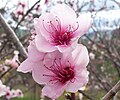
Flowers on peach trees are either solitary or in groups of two, usually blooming before the leaves begin to grow.[10] They may range in shades from white to red,[11] but having pink or red flowers 2–3.5 cm in width is typical of cultivars selected for their fruit.[10] Trees grown as ornamentals also may have double flowers, semi-doubled flowers, or bicolored forms.[14] Each flower has four or five petals and is somewhat cup-shaped with the petals curving to shelter the flower's center.[9] Each flower will have 20 to 30 stamens and purple-red anthers at their ends. The single style is nearly as long as the stamens.[13] The flowers are self-fertile and outcross at about 5%.[15]
The bloom period is in the early spring, often cut short by frosts, in February, March, April, or May depending on location.[16][11] In New Zealand and the southern hemisphere, blooming occurs in August to October.[17]
Fruit
[edit]Trees can begin producing fruit in the two or three years after sprouting.[18] Because of the hardness of the seed casing, peaches are called stone fruits like the others in the Prunus genus, but are more formally called drupes.[5] Fruits range in color from greenish white to orange yellow, usually with a blush of red on the side of the fruit most exposed to the sun. Their shape varies widely from a flattened sphere resembling a doughnut, egg-shaped, or a slightly compressed sphere usually with a seam on one side. A normal diameter for a fruit is between 5 and 7 centimeters (2 and 3 in), but sometimes may be as small as 3 cm (1.2 in) or as large as 12 cm (4.7 in).[13]

The flesh of the peach is quite variable in color from greenish-white to white to yellow to dark red.[19] The texture can also differ from soft to stone hard.[20]
The growth of the fruit is a double-sigmoid growth curve: a beginning quick period of development followed by a resting period of little growth, and then a second period of rapid maturation.[21]
The seed of the peach is much larger and less round than the seeds of its closest fruit relatives.[22] Unlike the pit of an almond, which is only pitted, the peach pit has a stony exterior which is both pitted and deeply furrowed.[17]
Taxonomy
[edit]_(14780111494).jpg)
The peach tree was given the name Amygdalus persica by Carl Linnaeus in 1753 in his book Species plantarum. The accepted combination Prunus persica was published by August Batsch in 1801,[2] though this was far from settled until the 20th century with many different placements of the peach and even divisions of nectarines and flat peaches into different species. The botanist Ulysses Prentiss Hedrick argued persuasively in 1917 that these differences are merely simple mutations and not species or even varieties beginning consensus towards the modern classification.[24] This was supported by breeding experiments as early as 1906 showing the hairlessness of nectarines is a recessive trait,[25] though sometimes alternative names continue to be used even in the 21st Century with Amygdalus persica being used as recently as 2003 in an authoritative scientific publication.[13] More than 200 scientific names have been published that are considered synonyms of Prunus persica by Plants of the World Online (POWO).[2] Though the majority of sources agree on its classification as Prunus persica, there is division on the correct author citation for the name. Most sources, such as POWO,[2] World Flora Online,[12] and the Flora of North America give August Batsch credit.[3] However, a few sources such as World Plants maintained by the botanist Michael Hassler instead credit Jonathan Stokes with priority dated to 1812.[26]
Prunus persica is classified in Prunus with other stone fruits within the rose family, Rosaceae.[12] The further classification into a subgenus or section is disputed. The work of Alfred Rehder, published in 1940, has been widely used to group the species of Prunus.[27] Rehder based his system largely on that of Bernhard Adalbert Emil Koehne with the peach placed with the almond in subgenus Amygdalus because similarities in the rough and pitted stone.[28] However, since 2000 studies of nuclear and chloroplast DNA have shown that the five subgenera accepted by Rehder are not more closely related to each other than to other species in Prunus.[27] In 2013 Shuo Shi and collaborators published research where they proposed it be part of subgenus Prunus together with the plums and cherries, but in a section named Persicae, now corrected to Persica.[29] However, these groupings are not yet widely accepted.[27]
The greatest genetic diversity in peaches is found in China, where it is generally agreed to have been domesticated.[30] The species is often thought to be a cultigen, a taxon that has its origins in cultivation rather than as a wild species.[2][31]

The closest relatives of the peach are the Chinese bush peach (Prunus kansuensis), Chinese wild peach (Prunus davidiana), the smooth stone peach (Prunus mira).[32] Though Charles Darwin speculated that the peach might be a marvelous modification of the almond (Prunus amygdalus), research into the divergence of peach relatives shows this not to be the case. Quite the opposite the almond, while in the same genus, is confirmed to be a more distant relative.[33]
In April 2010, an international consortium, the International Peach Genome Initiative, which includes researchers from the United States, Italy, Chile, Spain, and France, announced they had sequenced the peach tree genome (doubled haploid Lovell). In 2013 they published the peach genome sequence and related analyses. The sequence is composed of 227 million nucleotides arranged in eight pseudomolecules representing the eight peach chromosomes (2n = 16). In addition, 27,852 protein-coding genes and 28,689 protein-coding transcripts were predicted.[34]
Particular emphasis in this study is reserved for the analysis of the genetic diversity in peach germplasm and how it was shaped by human activities such as domestication and breeding. Major historical bottlenecks were found, one related to the putative original domestication that is supposed to have taken place in China about 4,000–5,000 years ago, the second is related to the western germplasm and is due to the early dissemination of the peach in Europe from China and the more recent breeding activities in the United States and Europe. These bottlenecks highlighted the substantial reduction of genetic diversity associated with domestication and breeding activities.[34]
Though not a separate grouping genetically, nectarines are regarded as different fruits commercially. The difference is the lack of fuzz, the trichomes, on the skin of the fruits.[35] Research into the cause of this trait found the transcription factor gene PpeMYB25 regulates the formation of trichomes on peach fruits. A mutation can cause a loss of function resulting in the changed fruit type.[36]
Fossil record
[edit]Fossil endocarps with characteristics indistinguishable from those of modern peaches have been recovered from late Pliocene deposits in Kunming, dating to 2.6 million years ago. In the absence of evidence that the plants were in other ways identical to the modern peach, the name Prunus kunmingensis has been assigned to these fossils.[37] Genetic evidence supports a very early emergence of edibility in the wild ancestors of the peach.[38]
Names
[edit]
The genus name Prunus is from the Latin for plum. The specific name persica was given by Linnaeus because European botanists of the 1700s and 1800s continued to believe the Roman accounts of peaches originating in Persia to be correct.[39]
The modern English word – and its cognates in many European languages such as the German Pfirsich and Finnish persikka – also have Latin origins.[40] In ancient Rome the peach was called persicum malum or simply persicum meaning 'Persian apple'.[41] This became the Late Latin pessica and in turn the medieval pesca. In Old French it was variously the peche, pesche, or peske. The first usage in England was as the surname Pecche in about 1184–1185.[42] The French word was directly adopted into English to mean the fruit and spelled either pechis or peches around the year 1400. In 1605 the first known instance of the modern spelling of peach was published.[43] Peach trees are also, less frequently, called common peaches.[9]
The various cultivars of peach with smooth-skinned fruits are called nectarines. This word was coined by English speakers, originally as an adjective meaning 'nectar-like', from nectar and the suffix -ine, with the first use in print in 1611.[44][45]
Distribution
[edit]
The exact place of origin for the domestic peach is unknown. Based on archeology from the 2010s East China near the Yangtze Delta has emerged as a likely candidate and contradicting the theory of domestication in Northwestern China.[46][39] Many sources since the 1980s have listed North China as its likely place of origin.[2][31] They are now naturalized in many other parts of Asia. It grows throughout eastern China and into Inner Mongolia. To the east they are found on the Korean Peninsula and in Japan. To the south they are also found in Vietnam and Laos. In the Indian Subcontinent are reported in the Eastern Himalayas and nearby Assam province, but not Nepal, parts of central India, Pakistan, and the Western Himalayas. Westwards they are also an introduced species in Afghanistan, Iran, and all the countries of Central Asia. Transitioning to Europe they also grow in the North Caucasus, Transcaucasus, and Turkey.[2]
In Europe the peach trees are partly naturalized. In western Europe they are found in Portugal, Spain, France, Ireland, and the United Kingdom. In central Europe they are reported as escaped from cultivation in Germany, Hungary, and Switzerland and in Corsica, Sardinia, Italy, Cyprus, and Greece in the south.[2] In the southeast they grow as introduced plants in Slovenia, Croatia, Romania, and Bulgaria.[26][2] To the east they are found in parts of European Russia, Ukraine, and Crimea.[2]

They also have escaped from cultivation in the African nations of Libya, Ethiopia, Kenya, South Africa, and the Cape Verde Islands off the northeast coast. Specific areas of South Africa include the biogeographic areas of the Northern Provinces, Orange Free State, and KwaZulu-Natal.[2]
In North America, in addition to cultivation, peach saplings are often found growing anywhere pits have been discarded. Most of these feral trees are short lived, but some have established naturalized populations.[3] Such escapes are reported in the Canadian provinces of Ontario and Nova Scotia.[47] Trees outside of cultivation have been found in all of the United States east of the Mississippi excluding Minnesota, Vermont, and New Hampshire. In the northwest they are found in Oregon and Idaho.[48] In the Southwestern United States they are to some extent naturalized from California to Texas, with the exception of in Nevada. Similar occurrences are also found in the northwest of Mexico and El Salvador in Central America.[2]
In South America escapees are only reported from Ecuador and the northeast of Argentina.[2]
In Australia it is naturalized in the states of New South Wales, Queensland, Victoria, South Australia, and Western Australia.[49] In New Zealand it can be found as an escapee from cultivation on both the North Island and south Island, especially around Auckland, Christchurch, and in the Otago region.[17] It is also naturalized on many oceanic islands including the Mariana Islands, Mauritius, Rodrigues, Réunion, and Saint Helena.[2]
Cultivation
[edit]History
[edit]
Although its botanical name Prunus persica refers to Persia, peaches originated in China,[50] where they have been cultivated since the Neolithic period.[51] From the 1980s to the 2010s it was believed that cultivation started around 2000 BCE.[52][53] In 2014 new research was published showing that domestication occurred as early as 6000 BCE in Zhejiang Province on the central east coast of China. The oldest archaeological peach stones are from the Kuahuqiao site near Hangzhou. Archaeologists point to the Yangtze River Valley as the place where the early selection for favorable peach varieties probably took place.[54]
A domesticated peach appeared very early in Japan, in 4700–4400 BCE, during the Jōmon period. It was already similar to modern cultivated forms, where the peach stones are significantly larger and more compressed than earlier stones. This domesticated type of peach was brought into Japan from China. Nevertheless, in China itself, this variety is currently attested only at a later date around 3300 to 2300 BCE.[55]
In India, the peach first appeared sometime between 2500 and 1700 BCE, during the Harappan period in the Kashmir.[56]
It is also found elsewhere in West Asia in ancient times.[57] Peach cultivation reached Greece by 300 BCE.[53] Alexander the Great is sometimes said to have introduced them into Greece after conquering Persia, but no historical evidence for this claim has been found.[58] Peaches were, however, well known to the Romans in the first century CE;[53] the oldest known artistic representations of the fruit are in two fragments of wall paintings, dated to the first century CE, in Herculaneum, preserved due to the Vesuvius eruption of 79 CE, and now held in the National Archaeological Museum in Naples.[59] Archaeological finds show that peaches were cultivated widely in Roman northwestern Continental Europe, but production collapsed around the sixth century; some revival of production followed with the Carolingian Renaissance of the ninth century.[60]

An article on peach tree cultivation in Spain is brought down in Ibn al-'Awwam's 12th-century agricultural work, Book on Agriculture.[61] The peach was brought to the Americas by Spanish explorers in the 16th century, and eventually made it to England and France in the 17th century, where it was a prized and expensive treat. Although Thomas Jefferson had peach trees at Monticello, American farmers did not begin commercial production until the 19th century in Maryland, Delaware, Georgia, South Carolina, and finally Virginia.[62]
The Shanghai honey nectar peach was a key component of both the food culture and agrarian economy the area where the modern megacity of Shanghai stands. Peaches were the cornerstone of early Shanghai's garden culture. As modernization and westernization swept through the city the Shanghai honey nectar peach nearly disappeared completely. Much of modern Shanghai is built over these gardens and peach orchards.[63]
The first European botanist to argue that the peach did not originate in Persia was Augustin Pyramus de Candolle in 1855. He argued on the basis of it not being mentioned by Xenophon in 401 BCE or by other early sources that it could not have arrived there much before it was imported to Rome in the 100s BCE. An important western botanist to argue for a Chinese origin of the species was Ulysses Prentiss Hedrick in 1917. Chinese literature records the fruit for at least 1,000 years before its appearance in Europe.[64]
Peaches in the Americas
[edit]Peaches were introduced into the Americas in the 16th century by the Spanish. By 1580, peaches were being grown in Latin America and were cultivated by the remnants of the Inca Empire in Argentina.[65]
.jpg)
In the United States the peach was soon adopted as a crop by American Indians. In the eastern U.S. the peach also became naturalized and abundant as a feral species.[66] Peaches were being grown in Virginia as early as 1629. Peaches grown by Indians in Virginia were said to have been "of greater variety and finer sorts" than those of the English colonists. Also in 1629, peaches were listed as a crop in New Mexico.[67] William Penn noted the existence of wild peaches in Pennsylvania in 1683.[68] In fact, peaches may have already spread to the American Southeast by the early to mid 1600s, actively cultivated by indigenous communities such as the Muscogee before permanent Spanish settlement of the region.[69]
Peach plantations became an objective of American military campaigns against the Indians. In 1779, the Sullivan Expedition destroyed the livelihood of many of the Iroquois people of New York. Among the crops destroyed were plantations of peach trees.[70] In 1864, Kit Carson led a successful U.S. army expedition to Canyon de Chelly in Arizona to destroy the livelihood of the Navajo. Carson destroyed thousands of peach trees. A soldier said they were the "best peach trees I have ever seen in the country, every one of them bearing fruit."[71] The Navajo signed a treaty with the US government in 1868 and were able to return to the canyon. They had saved peach pits and some trees resprouted from stumps and so by the 1870s and 1880s many peach orchards had been restored.[72]
Growing conditions
[edit]
Peaches are easiest to grow in dry, continental or temperate climates, with conditions of high humidity greatly increasing diseases and pests in subtropics and tropics.[20] In addition the trees have a chilling requirement. Most cultivars require 600 to 1,000 hours of chilling at temperatures between 4 and 10 °C (40 and 50 °F). During the chilling period, key chemical reactions occur, but the plant appears dormant. Temperatures under −1 °C (30 °F) are ineffective for fulfilling the chilling requirement. Once the chilling period is fulfilled, the plant enters a second type of dormancy, the quiescence period. During quiescence, buds break and grow when sufficient warm weather favorable to growth is accumulated.[73] The chilling requirement is not satisfied in tropical or subtropical areas except at high altitudes with low-chill cultivars, some which require less than 100 hours of suitable temperatures.[74]

The trees themselves can usually tolerate temperatures to around −26 to −30 °C (−15 to −22 °F), although the following season's flower buds are usually killed at these temperatures, preventing a crop that summer. Flower bud death begins to occur between −15 and −25 °C (5 and −13 °F), depending on the cultivar and on the timing of the cold, with the buds becoming less cold tolerant in late winter.[75] Another climate constraint is spring frost. The trees flower fairly early and the blossom is damaged or killed if temperatures drop below about −1.1 °C (30.0 °F). If the flowers are not fully open, though, they can tolerate a few degrees colder.[76] The flowers are also vulnerable to temperatures higher than 22 to 25 °C (72 to 77 °F) during the day.[77]
Climates with significant winter rainfall at temperatures below 16 °C (61 °F) are also unsuitable for peach cultivation, as the rain promotes peach leaf curl, which is the most serious fungal disease for peaches. In practice, fungicides are extensively used for peach cultivation in such climates, with more than 1% of European peaches exceeding legal pesticide limits in 2013.[78]
Finally, summer heat is required to mature the crop, with mean temperatures of the hottest month between 20 and 30 °C (68 and 86 °F).
Peach trees are grown in well draining soils as they are vulnerable to disease in wet soils. They are most productive in topsoils approximately 45 to 60 centimetres (18 to 24 in) with a sandy loam character.[79]
Most peach trees sold by nurseries are cultivars budded or grafted onto a suitable rootstock. Common rootstocks are 'Lovell Peach', 'Nemaguard Peach', Prunus besseyi, and 'Citation'.[80] The rootstock provides hardiness and budding is done to improve predictability of the fruit quality.

Typical peach cultivars begin bearing fruit in their third year. Their lifespan in the U.S. varies by region; the University of California at Davis gives a lifespan of about 15 years while the University of Maine gives a lifespan of 7 years there.[81][82]
Peach trees need full sun, and a layout that allows good natural air flow to assist the thermal environment for the tree. Peaches are planted in early winter.[83] During the growth season, they need a regular and reliable supply of water, with higher amounts just before harvest.[84]
Peaches need nitrogen-rich fertilizers more than other fruit trees. Without regular fertilizer supply, peach tree leaves start turning yellow or exhibit stunted growth. Blood meal, bone meal, and calcium ammonium nitrate are suitable fertilizers.
The flowers on a peach tree are typically thinned out because if the full number of peaches mature on a branch, they are undersized and lack flavor. Fruits are thinned midway in the season by commercial growers. Fresh peaches are easily bruised, so do not store well. They are most flavorful when they ripen on the tree and are eaten the day of harvest.[85]
The peach tree can be grown in an espalier shape. The Baldassari palmette is a design created around 1950 used primarily for training peaches. In walled gardens constructed from stone or brick, which absorb and retain solar heat and then slowly release it, raising the temperature against the wall, peaches can be grown as espaliers against south-facing walls as far north as southeast Great Britain and southern Ireland.
Storage
[edit]Peaches and nectarines are best stored at temperatures of 0 °C (32 °F) and in high humidity.[86] They are highly perishable, so are typically consumed or canned within two weeks of harvest.
Peaches are climacteric fruits and continue to ripen after being picked from the tree. However, though climacteric fruits continue to ripen nutritional quality may not improve after picking with studies showing Vitamin C content to be higher in peaches when ripened on the tree.[87] Both ethylene and the plant hormone auxin are involved in regulating the ripening process.[88] Though the ethylene antagonist 1-Methylcyclopropene can be used to delay the ripening of peaches its use negatively affects the arroma of the fruit.[89][90]
Insects
[edit]The European earwig (Forficula auricularia) can be a minor to significant pest of the peach fruit, particularly when they are tightly clustered or have splits in the skin. The earwigs feed on the fruit and dirty them with waste.[91]
The larvae of many moth species are of concern to peach growers. Frequently noted are the peachtree borer (Synanthedon exitiosa),[92] the peach twig borer (Anarsia lineatella),[93] the yellow peach moth (Conogethes punctiferalis),[94] the fruit tree leafroller (Archips argyrospila),[95] oriental fruit moths (Grapholita molesta), and the lesser peachtree borer (Synanthedon pictipes).[96]
Other moths include the well-marked cutworm (Abagrotis orbis),[97] the climbing cutworm (Abagrotis barnesi),[98] Lyonetia prunifoliella,[97] the grey dagger (Acronicta psi),[99] ghost moth (Aenetus virescens),[100] the march moth (Alsophila aescularia),[101] fruit tree tortrix (Archips podanus),[102] cherry fruit moth (Argyresthia pruniella),[103] azalea leafminer Caloptilia zachrysa,[104] peach fruit moth (Carposina sasakii),[105] apple leaf skeletonizer (Choreutis pariana),[106] honeydew moth (Cryptoblabes gnidiella),[107] plum fruit moth (Cydia funebrana),[108] codling moth (Cydia pomonella),[109] figure of eight (Diloba caeruleocephala),[110] cherry bark tortrix (Enarmonia formosana),[111] apple leaf roller (Epiphyas postvittana),[112] brown-tail moth (Euproctis chrysorrhoea),[113] the fruit tree borer (Maroga melanostigma),[97] winter moth (Operophtera brumata),[114] fruit-tree tortrix (Pandemis heparana),[115] the wood groundling (Parachronistis albiceps),[116] apple leaf miner Phyllonorycter crataegella,[117] lesser bud moth (Recurvaria nanella),[118] and false codling moth (Thaumatotibia leucotreta).[119]
The tree is also a host plant for such species as the Japanese beetle (Popillia japonica), the shothole borer (Scolytus rugulosus), and plum curculio (Conotrachelus nenuphar).[96]
Green peach aphids (Myzus persicae) can be a significant problem on peach trees. They overwinter as eggs on the trees and feed upon them in the spring before moving to other host species during the summer.[120] Two scale insects can cause serious damage to peach trees, the white peach scale (Pseudaulacaspis pentagona) and the San Jose scale (Comstockaspis perniciosa).[96]
At best it is poor nectar and pollen source for honey bees, with the double flowering varieties particularly noted for not producing any usable resources for bees. Some fruiting cultivars also produce no pollen and nectar flow is often impacted by early frosts.[121]
Though not native to North America, peach trees have become a host for caterpillars of the Eastern tiger swallowtail butterfly (Papilio glacucus). Though they are not a significant pest.[9]
Diseases
[edit]
Peach trees are prone to a disease called leaf curl, which usually does not directly affect the fruit, but does reduce the crop yield by partially defoliating the tree. Several fungicides can be used to combat the disease, including Bordeaux mixture and other copper-based products (the University of California considers these organic treatments), ziram, chlorothalonil, and dodine.[122] The fruit is susceptible to brown rot or a dark reddish spot.
Cultivars
[edit]
Hundreds of peach and nectarine cultivars are known. These are classified into two categories—freestones and clingstones. Freestones are those whose flesh separates readily from the pit. Clingstones are those whose flesh clings tightly to the pit. Some cultivars are partially freestone and clingstone, so are called semifree. Freestone types are preferred for eating fresh, while clingstone types are for canning. The fruit flesh may be creamy white to deep yellow, to dark red; the hue and shade of the color depend on the cultivar.[86] The genetic diversity of peach cultivars is highest in China with 495 recognized cultivars.[15]
Peach breeding has favored cultivars with more firmness, more red color, and shorter fuzz on the fruit surface. These characteristics ease shipping and supermarket sales by improving eye appeal. This selection process has not necessarily led to increased flavor, though. Peaches have a short shelf life, so commercial growers typically plant a mix of different cultivars to have fruit to ship all season long.[123]
Nectarines
[edit]
The cultivars commonly called nectarines have a smooth skin. It is on occasion referred to as a "shaved peach" or "fuzzless peach", due to its lack of fuzz or short hairs. Though fuzzy peaches and nectarines are regarded commercially as different fruits, with nectarines often erroneously believed to be a crossbreed between peaches and plums, or a "peach with a plum skin", nectarines belong to the same species as peaches. Several genetic studies have concluded nectarines are produced due to a recessive allele, whereas a fuzzy peach skin is dominant.[25]
As with peaches, nectarines can be white or yellow, and clingstone or freestone. On average, nectarines are slightly smaller and sweeter than peaches, but with much overlap.[25] The lack of skin fuzz can make nectarine skins appear more reddish than those of peaches, contributing to the fruit's plum-like appearance.
The history of the nectarine is unclear; the first recorded mention in English is from 1611,[45] but they had probably been grown much earlier within the native range of the peach in central and eastern Asia. A number of colonial-era newspaper articles make reference to nectarines being grown in the United States prior to the Revolutionary War. The 28 March 1768 edition of the New York Gazette (p. 3), for example, mentions a farm in Jamaica, Long Island, New York, where nectarines were grown. Later, cultivars of higher quality with better shipping qualities were introduced to the United States by David Fairchild of the Department of Agriculture in 1906.[124]
Peacherines
[edit]Peacherines are claimed to be a cross between a peach and a nectarine;[125] they are sometimes marketed in Australia and New Zealand.[126] The linguist Louise Pound, in 1920, wrote that the term peacherine is an example of language stunt.[127]
Flat peaches
[edit]Flat peaches, or pan-tao, have a flattened shape, in contrast to ordinary near-spherical peaches.[128]
Ornamentals
[edit]Peach trees are also grown for ornamental value in gardens, but trees specifically selected for this purpose have small, inedible fruits.[129]
| Peach (and nectarine) production in 2023 (millions of tonnes) | |
|---|---|
 China China |
17.5 |
 Spain Spain |
1.4 |
 Turkey Turkey |
1.1 |
 Italy Italy |
1.0 |
 United States United States |
0.7 |
 Iran Iran |
0.6 |
| World | 27.1 |
| Source: United Nations, FAOSTAT[130] | |
Production
[edit]In 2023, world production of peaches (combined with nectarines for reporting) was 27.1 million tonnes, led by China with 65% of the total. Spain, the next most productive country, only produced about 5% of the total (table). Peaches rank third in total production of temperate fruits after the apple and pear.[131]
The U.S. state of Georgia is known as the "Peach State" due to its significant production and shipping of peaches in the 1870s and 1880s,[132] with the first export to New York occurring around 1853 and significant amounts being sold there by 1858.[133] In 2014, Georgia was third in US peach production behind California and South Carolina.[132] The largest peach producing countries in Latin America are Argentina, Brazil, Chile, and Mexico.[134]
Nutrition
[edit]| Nutritional value per 100 g (3.5 oz) | |||||||||||||||||||||||||||||||||||||||||||||||||||
|---|---|---|---|---|---|---|---|---|---|---|---|---|---|---|---|---|---|---|---|---|---|---|---|---|---|---|---|---|---|---|---|---|---|---|---|---|---|---|---|---|---|---|---|---|---|---|---|---|---|---|---|
| Energy | 46 kcal (190 kJ) | ||||||||||||||||||||||||||||||||||||||||||||||||||
9.87 g | |||||||||||||||||||||||||||||||||||||||||||||||||||
| Sugars | 8.39 g 4.8 g 1.9 g 1.5 g | ||||||||||||||||||||||||||||||||||||||||||||||||||
| Dietary fiber | 1.5 g | ||||||||||||||||||||||||||||||||||||||||||||||||||
0.27 g | |||||||||||||||||||||||||||||||||||||||||||||||||||
0.91 g | |||||||||||||||||||||||||||||||||||||||||||||||||||
| |||||||||||||||||||||||||||||||||||||||||||||||||||
| Other constituents | Quantity | ||||||||||||||||||||||||||||||||||||||||||||||||||
| Water | 88 g | ||||||||||||||||||||||||||||||||||||||||||||||||||
| †Percentages estimated using US recommendations for adults,[135] except for potassium, which is estimated based on expert recommendation from the National Academies.[136] | |||||||||||||||||||||||||||||||||||||||||||||||||||
Raw peach flesh is 88% water, 10% carbohydrates, 1% protein, and contains negligible fat. A medium-sized raw peach, weighing 100 grams (3.5 oz), supplies 46 calories, and contains no micronutrients having a significant percentage of the Daily Value (DV, table).
Sucrose accounts for 57% of the sweetness of a raw peach, with glucose and fructose accounting for the remainder of sugars (table). The glycemic load of an average peach (120 grams) is 5, similar to other low-sugar fruits.[137]
A raw nectarine has a similar low nutrient content.[138]
Phytochemicals
[edit]Total polyphenols in mg per 100 g of fresh weight were 14–113 in white-flesh nectarines, 17–78 in yellow-flesh nectarines, 20–113 in white-flesh peaches, and 16–93 mg per 100 g in yellow-flesh peaches.[139] The major phenolic compounds identified in peach are chlorogenic acid, catechins and epicatechins,[140] with other compounds, identified by HPLC, including gallic acid and ellagic acid.[141] Rutin and isoquercetin are the primary flavonols found in clingstone peaches.[142] The levels of flavonols and cyanidins are highest in the skins. Though phenols vary by cultivar and due to the growing conditions in a growing season.[143] Red-fleshed peaches are rich in anthocyanins, especially red fleshed varieties and their skins.[144] malvin glycosides in clingstone peaches.[142]
As with many other members of the rose family, peach seeds contain cyanogenic glycosides, primarily amygdalin.[145] Amygdalin decomposes into a sugar molecule,hydrogen cyanide gas, and benzaldehyde. Hydrogen cyanide poisons the action of a critical enzyme for the use of oxygen in cells, resulting in death in severe cases.[146] While peach seeds are not the most toxic within the rose family (see bitter almond), large consumption of these chemicals from any source is potentially hazardous to animal and human health.[147]
Peach allergy or intolerance is a relatively common form of hypersensitivity to proteins contained in peaches and related fruits (such as almonds). Symptoms range from local effects (e.g. oral allergy syndrome, contact urticaria) to more severe systemic reactions, including anaphylaxis (e.g. urticaria, angioedema, gastrointestinal and respiratory symptoms).[148] Adverse reactions are related to the "freshness" of the fruit: peeled or canned fruit may be tolerated.[149]
Due to their close relatedness, the kernel of a peach stone tastes similar to almond, and peach stones are used to make a cheap version of marzipan, known as persipan.[150]
Aroma
[edit]The attractive smell of a ripe peach has 110 different volatile molecules combined, including alcohols, ketones, aldehydes, esters, polyphenols and terpenoids. The proportions vary significantly between different cultivars of peach.[151][152]
In culture
[edit]Peaches are not only a popular fruit, but also are symbolic in many cultural traditions, such as in art, paintings, and folk tales such as the Peaches of Immortality.
China
[edit]
Peach blossoms are highly prized in Chinese culture. The ancient Chinese believed the peach to possess more vitality than any other tree because their blossoms appear before leaves sprout. When early rulers of China visited their territories, they were preceded by sorcerers armed with peach rods to protect them from spectral evils. On New Year's Eve, local magistrates would cut peach wood branches and place them over their doors to protect against evil influences.[153] Peach wood was also used for the earliest known door gods during the Han. Another author writes:
The Chinese also considered peach wood (t'ao-fu, Chinese: 桃符; pinyin: Táofú) protective against evil spirits, who held the peach in awe. In ancient China, peach-wood bows were used to shoot arrows in every direction in an effort to dispel evil. Peach-wood slips or carved pits served as amulets to protect a person's life, safety, and health.[154]
Peachwood seals or figurines guarded gates and doors, and, as one Han account recites, "the buildings in the capital are made tranquil and pure; everywhere a good state of affairs prevails".[154] Writes the author, further:
Another aid in fighting evil spirits were peach-wood wands. The Li-chi (Han period) reported that the emperor went to the funeral of a minister escorted by a sorcerer carrying a peachwood wand to keep bad influences away. Since that time, peachwood wands have remained an important means of exorcism in China.[154]
Similarly, peach trees would often be planted near the front door of a house to bring good fortune.[50]
Peach kernels, tao ren (Chinese: 桃仁; pinyin: Táorén), are a common ingredient used in traditional Chinese medicine to dispel blood stasis and unblock bowels.[155]
In an orchard of flowering peach trees, Liu Bei, Guan Yu, and Zhang Fei took an oath of brotherhood in the opening chapter of the classic Chinese novel Romance of the Three Kingdoms. Another peach orchard, in "The Peach Blossom Spring" by poet Tao Yuanming, is the setting of the favourite Chinese fable and a metaphor for utopias. A peach tree growing on a precipice was where the Taoist master Zhang Daoling tested his disciples.[156]
The deity Shòu Xīng (Chinese: 寿星), a god of longevity, is usually depicted with a very large forehead and holding a staff in his left hand and a large peach in his right hand due its associations with a long life.[157] A long-standing traditional birthday food for seniors is a symbolic longevity peach (shòutáo bao - 寿桃包), a type of lotus seed bun shaped like a peach, frequent in Taiwan and Cantonese culture.[158][159]
The term fēntáo (Chinese: 分桃), which is variously translated as "half-eaten peach", "divided peach", or "sharing a peach", was first used by Han Fei, a Legalist philosopher, in his work Han Feizi. From this story it became a byword for homosexuality.[160][161] The book records the incident when courtier Mizi Xia bit into an especially delicious peach and gave the remainder to his lover, Duke Ling of Wei, as a gift so that he could taste it, as well.[162]
Korea
[edit]As recorded by the traveller Isabella Bird in 1898, wands made of peach wood are used in parts of Korean shamanism. During the third part of an exorcism ritual for malevolent spirits a wand made of an eastern branch of a peach tree is used.[163] Originating from Daoism, the peach is one of ten symbols of longevity used in Korean art.[164]
An important piece of Korean art features the peach. Dream Journey to the Peach Blossom Land is the only existing signed and dated work by An Kyŏn. It depicts the imagined utopian Peach Blossom Land from a fable by the Chinese poet Tao Yuanming.[165]
Japan
[edit]
The world's sweetest peach is grown in Fukushima, Japan. The Guinness world record for the sweetest peach is currently held by a peach grown in Kanechika, Japan, with a sugar content of 22.2%. However, a fruit farm in rural Fukushima, Koji grew a much sweeter peach, with a Brix score of 32°. Degrees Brix measures the sugar content of the fruit, and is usually between 11 and 15 for a typical peach from a supermarket.[166]
Momotarō, whose name literally means "peach child", is a folktale character named after the giant peach from which he was birthed.[167]
Two traditional Japanese words for the color pink correspond to blossoming trees: one for peach blossoms (momo-iro), and one for cherry blossoms (sakura-iro).
Vietnam
[edit]A Vietnamese mythic history states that in the spring of 1789, after marching to Ngọc Hồi and then winning a great victory against invaders from the Qing dynasty of China, Emperor Quang Trung ordered a messenger to gallop to Phú Xuân citadel (now Huế) and deliver a flowering peach branch to the Empress Ngọc Hân. This took place on the fifth day of the first lunar month, two days before the predicted end of the battle. The branch of peach flowers that was sent from the north to the centre of Vietnam was not only a message of victory from the Emperor to his consort, but also the start of a new spring of peace and happiness for all the Vietnamese people. In addition, since the land of Nhật Tân had freely given that very branch of peach flowers to the Emperor, it became the loyal garden of his dynasty.
The protagonists of The Tale of Kieu fell in love by a peach tree, and in Vietnam, the blossoming peach flower is the signal of spring. Finally, peach bonsai trees are used as decoration during Vietnamese New Year (Tết) in northern Vietnam.[citation needed]
Europe
[edit]
Many famous artists have painted with peach fruits placed in prominence. Caravaggio, Vicenzo Campi, Pierre-Auguste Renoir, Claude Monet, Édouard Manet, Henri Fantin-Latour, Severin Roesen, Peter Paul Rubens, and Van Gogh are among the many influential artists who painted peaches and peach trees in various settings.[168][169] Scholars suggest that many compositions are symbolic, some an effort to introduce realism.[170] For example, Tresidder claims the artists of Renaissance symbolically used peach to represent heart, and a leaf attached to the fruit as the symbol for tongue, thereby implying speaking truth from one's heart;[171] a ripe peach was also a symbol to imply a ripe state of good health. Caravaggio's paintings introduce realism by painting peach leaves that are molted, discolored, or in some cases have wormholes – conditions common in modern peach cultivation.[172]
In literature, Roald Dahl deciding on using a peach in his children's fantasy novel James and the Giant Peach after considering many other fruits including an apple, pear, or cherry. He thought the flavor and flesh of the peach to be more exciting.[173]
United States
[edit]
Despite it not being first or even second in peach production and the peach contributing far less than 1% of the state's agricultural production, the peach is strongly associated in American culture with the state of Georgia.[174] However, the peach did not officially become the official fruit of Georgia until 1995.[175] It was preceded by South Carolina, which named the peach its state fruit in 1984.[176] They were joined in giving the peach an official state status by Delaware naming it the state flower in 1995 and designating peach pie as its official dessert in 2009.[177] Alabama also named it the state tree fruit in 2006 in addition to the blackberry designated as the state fruit in 2004.[178][179]
The peach was marketed by the Georgia Fruit Exchange and later the Georgia Peach Grower's Association as being particularly tasty and special from the 1910s to the 1960s.[180] This also coincided with parts of Georgia wanting to distance itself from being, "the home of slavery and lynching and Confederate memorials," in the words of Frank Smith Horne.[181] The local movement to create a new county centred on Fort Valley to be named Peach County sponsored Peach Blossom Festivals from 1922 to 1926. They promoted a vision of a new progressive south that also ignored the black labor upon which the peach harvest, like that of cotton, depended.[182] Though the acreage of has declined to just one twelfth of its 1925 peak,[183] from 1935, Georgia has been nicknamed the "Peach State".[184]
Gallery
[edit]-
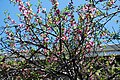
 Delicate pink peach blossoms bloom vibrantly against clear spring sky.
 -
-
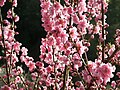 Peach blossoms
 -
-
 Gray bark on trunk with lenticels
 -
 Incipient fruit development
 -

-
 Color and grain of peach wood
 -

-

-
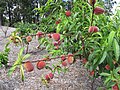 Peaches on tree
 -
 Peaches in a basket
_Blossom_Over_the_Kathmandu_City.jpg)


.jpg)

Paintings
[edit]-
 Portrait of Isabella and John Stewart by Charles Willson Peale, 1774
 -
 Still Life Basket of Peaches by Raphaelle Peale, 1816
 -
 A Jar of Peaches by Claude Monet c. 1866
 -
 "Spring 4, peach-blossoms and green pheasants" by Kōno Bairei, 1883
 -
 Peach (cultivar 'Berry'), watercolour, 1895


References
[edit]Citations
[edit]- ^ Thomé & Migula 1905, p. Plate 321.
- ^ a b c d e f g h i j k l m n POWO 2024.
- ^ a b c d e f g h Rohrer 2020b.
- ^ Welsh et al. 1987, p. 538.
- ^ a b c d Thakur et al. 2024, p. 101.
- ^ Crider 1928, p. 403.
- ^ Byrne et al. 2009, p. 530.
- ^ Gilman & Watson 1994, p. 2.
- ^ a b c d NC State Extension.
- ^ a b c d e Krüssmann 1986, pp. 42.
- ^ a b c Heil et al. 2013, p. 915.
- ^ a b c WFO 2024.
- ^ a b c d Lingdi & Bartholomew 2003.
- ^ Gilman & Watson 1994, p. 1.
- ^ a b Zheng, Crawford & Chen 2014, p. 2.
- ^ Blackburne-Maze 2003, p. 108.
- ^ a b c Given et al. 2024.
- ^ Zheng, Crawford & Chen 2014, p. 2–3.
- ^ Byrne et al. 2009, p. 532.
- ^ a b Byrne et al. 2009, p. 507.
- ^ Faust & Timon 1995, p. 334.
- ^ Zheng, Crawford & Chen 2014, p. 3.
- ^ Hedrick et al. 1917, p. 202.
- ^ Faust & Timon 1995, pp. 332–333.
- ^ a b c Seelig, Fogle & Hesse 2007.
- ^ a b Hassler 2024.
- ^ a b c Rohrer 2020a.
- ^ McVaugh 1951, pp. 279, 283–284.
- ^ Shi et al. 2013, p. 1070.
- ^ Byrne et al. 2009, p. 512.
- ^ a b Li 1983, p. 34.
- ^ Yu et al. 2018, pp. 5–6.
- ^ Yu et al. 2018, p. 2.
- ^ a b Verde et al. 2013.
- ^ Vendramin et al. 2014, p. 1.
- ^ Vendramin et al. 2014, p. 1, 12.
- ^ Su et al. 2015, pp. 1–3.
- ^ Yu et al. 2018, pp. 1–2, 5–7.
- ^ a b Faust & Timon 1995, p. 332.
- ^ Campbell 2004, pp. 274–275.
- ^ Durkin 2009, p. 115.
- ^ Barnhart 1995, p. 549.
- ^ OED 2025c.
- ^ OED 2025b.
- ^ a b OED 2025a.
- ^ Zheng, Crawford & Chen 2014, pp. 1, 7–8.
- ^ VASCAN 2024.
- ^ NRCS 2024.
- ^ Harden & Rodd n.d.
- ^ a b Thacker 1985, p. 57.
- ^ Zheng, Crawford & Chen 2014, p. 4.
- ^ Singh et al. 2020, p. 90.
- ^ a b c Vaughan & Geissler 2009, p. 82.
- ^ Zheng, Crawford & Chen 2014, pp. 3–4.
- ^ Zheng, Crawford & Chen 2014, pp. 1, 5, 7.
- ^ Fuller & Madella 2001, p. 341.
- ^ Ensminger et al. 1994, p. 1719.
- ^ Davidson 1999, p. 588.
- ^ Sadori et al. 2009, p. 46.
- ^ Blan 2019, pp. 523–525.
- ^ Ibn al-'Awwam 1864, pp. 315–318.
- ^ Fogle 1965, p. 1.
- ^ Swislocki 2009, pp. 29–64.
- ^ Faust & Timon 1995, p. 338.
- ^ Capparelli et al. 2005.
- ^ Holland-Lulewicz et al. 2024, pp. 1–2.
- ^ Jett 1977, p. 683.
- ^ Fair 2002, p. 374.
- ^ Holland-Lulewicz et al. 2024, pp. 2–4.
- ^ NPS Staff 2020.
- ^ Sumrak 2017.
- ^ Dolan, Wytsalucy & Lyons 2024.
- ^ Lockwood & Coston 2007, p. 2.
- ^ Thakur et al. 2024, p. 100.
- ^ Szalay, Papp & Szabó 2000, pp. 407–408.
- ^ Chen, Okie & Beckman 2016, p. 816.
- ^ Byrne et al. 2009, p. 524.
- ^ European Food Safety Authority 2015, p. 29.
- ^ Kamas Stein Nesbitt 2015, p. 2.
- ^ Ingels et al. 2007, p. 29–30.
- ^ Hasey 2009, p. 2.
- ^ Moran 2014.
- ^ Carroll 2017, p. 1.
- ^ Carroll 2017, pp. 3–4.
- ^ Carroll 2017, p. 4.
- ^ a b Gao 2000.
- ^ Harvard Center for Health 2010.
- ^ Trainotti, Tadiello & Casadoro 2007, p. 3299.
- ^ Ziosi et al. 2007, p. 167.
- ^ Cai et al. 2019, p. 573.
- ^ Edwards 1998, p. 66.
- ^ Ingels et al. 2007, p. 158.
- ^ Ingels et al. 2007, p. 152.
- ^ Ramzan et al. 2024, p. 236.
- ^ Ingels et al. 2007, p. 155.
- ^ a b c Gorsuch & Scott 2021.
- ^ a b c Kadasa et al. 2022, p. 466.
- ^ Zhang 1994, p. 33.
- ^ Zhang 1994, p. 47.
- ^ Zhang 1994, p. 50.
- ^ Zhang 1994, p. 60.
- ^ Zhang 1994, p. 83.
- ^ Zhang 1994, p. 87.
- ^ Zhang 1994, p. 116.
- ^ Zhang 1994, p. 119.
- ^ Zhang 1994, p. 133.
- ^ Zhang 1994, p. 160.
- ^ Zhang 1994, p. 165.
- ^ Zhang 1994, p. 168.
- ^ Zhang 1994, p. 187.
- ^ Zhang 1994, p. 200.
- ^ Zhang 1994, p. 211.
- ^ Zhang 1994, p. 228.
- ^ Zhang 1994, p. 349.
- ^ Zhang 1994, pp. 362–363.
- ^ Zhang 1994, p. 368.
- ^ Zhang 1994, p. 392.
- ^ Zhang 1994, p. 423.
- ^ Zhang 1994, p. 161.
- ^ Edwards 1998, p. 46.
- ^ Johannsmeier 2016, pp. 34, 122.
- ^ Adaskaveg, Duncan & Day 2015.
- ^ Okie 2005, p. 3.
- ^ Fairchild, Kay & Kay 1938, p. 226.
- ^ Shimabukuro 2004.
- ^ Clark 2013, p. 21.
- ^ Pound 1920, p. 89.
- ^ Bassi & Monet 2008, p. 16.
- ^ Davis 1997, p. 54.
- ^ FAOSTAT 2024.
- ^ Byrne et al. 2009, p. 505.
- ^ a b Taylor 2018.
- ^ Fair 2002, pp. 382, 390.
- ^ United States Food and Drug Administration (2024). "Daily Value on the Nutrition and Supplement Facts Labels". FDA. Archived from the original on 27 March 2024. Retrieved 28 March 2024.
- ^ "TABLE 4-7 Comparison of Potassium Adequate Intakes Established in This Report to Potassium Adequate Intakes Established in the 2005 DRI Report". p. 120. In: Stallings, Virginia A.; Harrison, Meghan; Oria, Maria, eds. (2019). "Potassium: Dietary Reference Intakes for Adequacy". Dietary Reference Intakes for Sodium and Potassium. pp. 101–124. doi:10.17226/25353. ISBN 978-0-309-48834-1. PMID 30844154. NCBI NBK545428.
- ^ Atkinson, Foster-Powell & Brand-Miller 2015.
- ^ "Nutrient table for raw nectarine per 100 g". FoodData Central, US Department of Agriculture. 1 April 2019. Archived from the original on 31 December 2024. Retrieved 3 September 2025.
- ^ Gil et al. 2002, pp. 4978–4979.
- ^ Cheng & Crisosto 1995, p. 836.
- ^ Infante et al. 2011, pp. 448–449.
- ^ a b Chang et al. 2000, p. 149.
- ^ Andreotti et al. 2008, p. 22.
- ^ Cevallos-Casals et al. 2006, p. 274.
- ^ Lee et al. 2017, p. 237.
- ^ Kingsbury 1972, pp. 88–89.
- ^ Cho et al. 2013, pp. 143–145.
- ^ Besler, Cuesta Herranz & Fernández-Rivas 2000, p. 185.
- ^ Cuesta‐Herranz et al. 1998, p. 78.
- ^ Haase et al. 2013.
- ^ Sánchez et al. 2012, pp. 1, 3.
- ^ Spence 2022, p. 383.
- ^ Doré & Kennelly 1914, pp. 504–505.
- ^ a b c Simoons 1991, p. 218.
- ^ Bensky, Gamble & Kaptchuk 1992, pp. 278–279.
- ^ Eskildsen 1998, p. 26.
- ^ Valder 1999, pp. 110–111.
- ^ Liu 2009, p. 148.
- ^ Gong 2005, p. 174.
- ^ Kang 2009, pp. 22, 103.
- ^ Hinsch 1990, pp. 20, 73, 89.
- ^ Hinsch 1990, p. 20.
- ^ Bird 1898, pp. 228–230.
- ^ Vos 1997, pp. 21, 23.
- ^ Yang-mo & Smith 1998, p. 310.
- ^ Sturmer & Asada 2020.
- ^ Leeming 2001, p. 120.
- ^ Torpy 2010, p. 203.
- ^ Janick n.d., pp. 6, 9.
- ^ Spike 2010, pp. 23–24.
- ^ Tresidder 2004, p. 168.
- ^ Janick n.d., p. 6.
- ^ Sturrock 2010, p. 351.
- ^ Okie 2016, pp. 2–4.
- ^ Georgia Secretary of State 2018.
- ^ Aylesworth & Aylesworth 1996, p. 51.
- ^ GIC 2018.
- ^ ADAH 2014a.
- ^ ADAH 2014b.
- ^ Okie 2016, pp. 124–130.
- ^ Okie 2016, p. 168.
- ^ Okie 2016, pp. 147, 152, 159.
- ^ Okie 2016, p. 220.
- ^ OED 2025d.
Sources
[edit]Books
[edit]- Aylesworth, Thomas G.; Aylesworth, Virginia L. (1996). Lower Atlantic: North Carolina, South Carolina. Discovering America (First ed.). New York: Chelsea House Publishers. ISBN 978-0-7910-3401-9. OCLC 31328574. Retrieved 12 January 2025.
- Barnhart, Robert K., ed. (1995) [1988]. The Barnhart Concise Dictionary of Etymology (First Revised ed.). New York: HarperCollins Publishers. ISBN 978-0-06-270084-1. OCLC 30399281. Retrieved 29 September 2024.
- Bensky, Dan; Gamble, Andrew; Kaptchuk, Ted J. (1992). Chinese Herbal Medicine: Materia Medica (Revised ed.). Seattle, Washington: Eastland Press. ISBN 978-0-939616-15-2. OCLC 28891917. Retrieved 2 January 2025.
- Bird, Isabella Lucy (1898). Korea & Her Neighbours: A Narrative of Travel, With Account of the Recent Vicissitudes and Present Position of the Country. Vol. Two (First ed.). London: John Murray. OCLC 1021046487. Retrieved 27 February 2025.
- Blackburne-Maze, Peter (2003). Fruit: An Illustrated History (First ed.). London: Firefly Books. ISBN 978-1-55297-780-4. OCLC 51736017. Retrieved 2 January 2025.
- Bassi, Daniele; Monet, R. (2008). "1. Botany and Taxonomy". In Layne, Desmond R.; Bassi, Daniele (eds.). The Peach: Botany, Production and Uses. Wallingford, United Kingdom: CABI. ISBN 978-1-84593-386-9. OCLC 290429712. Retrieved 3 August 2015.
- Byrne, David H.; Raseira, Maria Bassols; Bassi, Daniele; Piagnani, Maria Claudia; Gasic, Ksenija; Reighard, Gregory L.; Moreno, María Angeles; Pérez, Salvador (2009). "Chapter 14: Peach". In Badenes, Maria Luisa; Byrne, David H. (eds.). Fruit Breeding (First ed.). New York: Springer. pp. 505–569. doi:10.1007/978-1-4419-0763-9_14. ISBN 978-1-4419-0762-2. LCCN 2011943557. OCLC 401157579. Retrieved 6 October 2024.
- Campbell, Lyle (2004). Historical Linguistics: An Introduction (Second ed.). Cambridge, Massachusetts: MIT Press. ISBN 978-0-262-53267-9. OCLC 54692867.
- Davidson, Alan (1999). The Oxford Companion to Food (First ed.). Oxford, United Kingdom: Oxford University Press. ISBN 978-0-19-211579-9. OCLC 55747419. Retrieved 26 December 2024.
- Davis, Brian (1997). The Gardener's Essential Plant Guide: Over 4,000 Varieties of Garden Plants Including Trees, Shrubs, and Vines (First ed.). San Diego, California: Laurel Glen Publishing. ISBN 978-1-57145-601-4. OCLC 37513042. Retrieved 4 October 2024.
- Doré, Henri; Kennelly, M. (1914). Researches into Chinese Superstitions. Vol. V. Translated by Kennelly, M. (English ed.). Shanghai, China: Tʻusewei Printing Press. OCLC 1742009. Retrieved 2 January 2025.
- Durkin, Philip (2009). The Oxford Guide to Etymology (First ed.). Oxford; New York: Oxford University Press. ISBN 978-0-19-923651-0. OCLC 301948893. Retrieved 29 September 2024.
- Edwards, Linda (1998). Organic Tree Fruit Management. Keremeos, British Columbia: Certified Organic Associations of British Columbia. ISBN 978-0-7726-3615-7. OCLC 45818011. Retrieved 12 January 2025.
- Ensminger, Audrey H.; Ensminger, M.E.; Konlande, James E.; Robson, John R.K. (1994). Foods & Nutrition Encyclopedia. Vol. 2. I–Z (Second ed.). Boca Raton, Florida: CRC Press. ISBN 978-0-8493-8980-1. OCLC 28963802. Retrieved 26 December 2024.
- Eskildsen, Stephen (1998). Asceticism in Early Taoist Religion (First ed.). Albany, New York: State University of New York Press. ISBN 978-0-585-06009-5. OCLC 42855374. Retrieved 2 January 2025.
- Fairchild, David; Kay, Elizabeth; Kay, Alfred (1938). The World Was My Garden: Travels of a Plant Explorer (First ed.). New York: Charles Scribner's Sons.
- Faust, Miklos; Timon, Béla (1995). "Chapter 10. Origin and Dissemination of Peach". In Janick, Jules (ed.). Horticultural Reviews. Vol. 17 (First ed.). New York: John Wiley & Sons. pp. 331–379. doi:10.1002/9780470650585.ch10. ISBN 978-0-471-57335-7. OCLC 827631597.
- Fogle, H.W. (1965). Peach Production East of the Rocky Mountains (PDF) (First ed.). Washington, D.C.: Agricultural Research Service, U.S. Department of Agriculture. OCLC 755264053. Archived (PDF) from the original on 27 December 2024. Retrieved 27 December 2024.
- Fuller, Dorian Q.; Madella, Marco (2001). "Issues in Harappan Archaeobotany: Retrospect and Prospect". In Settar, S.; Korisettar, Ravi (eds.). Indian Archaeology in Retrospect. Vol. II. New Delhi, India: Indian Council of Historical Research : Manohar Publishers & Distributors. ISBN 978-81-7304-320-8. OCLC 50080611. Retrieved 26 December 2024 – via ResearchGate.
- Gong, Rosemary (2005). Good Luck Life: The Essential Guide to Chinese American Celebrations and Culture (First ed.). New York: HarperResource. ISBN 978-0-06-073536-4. OCLC 56198749.
- Heil, Kenneth D.; O'Kane, Steve L. Jr.; Reeves, Linda Mary; Clifford, Arnold (2013). Flora of the Four Corners Region: Vascular Plants of the San Juan River Drainage, Arizona, Colorado, New Mexico, and Utah (First ed.). St. Louis, Missouri: Missouri Botanical Garden. ISBN 978-1-930723-84-9. ISSN 0161-1542. LCCN 2012949654. OCLC 859541992. Retrieved 1 October 2024.
- Hedrick, Ulysses Prentiss; Howe, George Henry; Taylor, Orrin Morehouse; Tubergen, Charles Burton (1917). The Peaches of New York. Albany, New York: State of New York, Department of Agriculture. OCLC 2082497. Retrieved 3 January 2025.
- Hinsch, Bret (1990). Passions of the Cut Sleeve: The Male Homosexual Tradition in China (First ed.). Berkeley, California: University of California Press. ISBN 978-0-520-06720-2. OCLC 20755546.
- Ibn al-'Awwam, Yaḥyá ibn Muḥammad (1864). Le livre de l'agriculture d'Ibn-al-Awam (kitab-al-felahah) [Ibn-al-Awam's Book of Agriculture] (in French). Translated by Clément-Mullet, Jean Jacques. Paris: A. Franck. OCLC 780050566. Retrieved 27 December 2024.
- Kang, Wenqing (2009). Obsession: Male Same-sex Relations in China, 1900-1950. Hong Kong: Hong Kong University Press. ISBN 978-962-209-980-7. OCLC 647840261. Retrieved 3 January 2025.
- Kingsbury, John M. (1972). Deadly Harvest: A Guide to Common Poisonous Plants (Paperback ed.). New York: Holt, Reinehart and Winston. ISBN 978-0-03-091479-9. OCLC 3508574. Retrieved 1 January 2025.
- Krüssmann, Gerd (1986) [1978]. Daniels, Gilbert S. (ed.). Manual of Cultivated Broad-leaved Trees & Shrubs. Vol. III, Pru–Z. Translated by Epp, Michael E. (English ed.). London: B. T. Batsford. ISBN 0-7134-5408-3. OCLC 12600067. Retrieved 3 October 2024.
- Leeming, David Adams (2001). A dictionary of Asian mythology. New York: Oxford University Press. ISBN 978-0-19-512052-3. OCLC 44750822. Retrieved 2 January 2025.
- Li, Hui-lin (李惠林) (1983). "The Domestication of Plants in China: Ecogeographical Considerations". In Keightley, David N. (ed.). The Origins of Chinese Civilization. Berkeley, California: University of California Press. pp. 21–63. ISBN 978-0-520-04229-2. OCLC 7306992.
- Liu, Amy C. (2009). Taiwan A to Z: The Essential Cultural Guide (First ed.). Taipei, Republic of China: Community Services Center. ISBN 978-957-97847-6-4. OCLC 624373150. Retrieved 26 December 2024.
- Ingels, Chuck A.; Geisel, Pamela M.; Maxwell, Norton V.; Andris, Harry L.; Flint, Mary Louise; Johnson, T. Scott; Laivo, Edward D.; Prichard, Terry L.; Schwankl, Lawrence J.; Teviotdale, Beth L.; Vossen, Paul M. (2007). Ingels, Chuck A.; Geisel, Pamela M.; Maxwell, Norton V. (eds.). The Home Orchard: Growing Your Own Deciduous Fruit and Nut Trees (First ed.). Oakland, California: University of California, Agriculture and Natural Resources. ISBN 978-1-879906-72-3. OCLC 99996018. Retrieved 29 December 2024.
- Okie, William Thomas (2016). The Georgia Peach. New York: Cambridge University Press. doi:10.1017/9781107785335. ISBN 978-1-107-78533-5. OCLC 952276835.
- Sadori, Laura; Allevato, Emilia; Bosi, Giovanna; Caneva, Giulia; Castiglioni, Elisabetta; Celant, Alessandra; Di Pasquale, Gaetano; Giardini, Marco; Mazzanti, Marta; Rinaldi, Rossella; Rottoli, Mauro; Susanna, Francesca (2009). "The introduction and diffusion of peach in ancient Italy" (PDF). In Morel, Jean-Paul; Mercuri, Anna Maria (eds.). Plants and Culture: Seeds of the Cultural Heritage of Europe (in English and Italian). Bari, Italy: Edipuglia. ISBN 978-88-7228-574-9. OCLC 1158440816. Archived from the original (PDF) on 14 January 2013.
- Singh, Akath; Patel, R.K.; Babu, K.D.; De, L.C. (2020). "5. Low Chilling Peaches". In Peter, K.V. (ed.). Underutilized and Underexploited Horticultural Crops. Vol. 2. Pitam Pura, New Delhi, India: New India Publishing Agency. ISBN 978-93-89571-66-0. OCLC 1013169774.
- Simoons, Frederick J. (1991). Food in China: A Cultural and Historical Inquiry. Boca Raton, Florida: CRC Press. ISBN 978-0-8493-8804-0. OCLC 20392910.
- Spike, John T. (2010). "Caravaggio and the Origins of Roman Still Life Painting". In De Groft, Aaron H. (ed.). Caravaggio – Still Life with Fruit on a Stone Ledge (PDF). Williamsburg, Virginia: Muscarelle Museum of Art, The College of William and Mary. ISBN 978-0-9705725-6-1. OCLC 700941565. Archived from the original (PDF) on 14 January 2013. Retrieved 4 January 2025.
- Sturrock, Donald (2010). Storyteller (First ed.). London: HarperPress. ISBN 978-0-00-725477-4. OCLC 768248123. Retrieved 6 January 2024.
- Swislocki, Mark (2009). Culinary Nostalgia. Stanford, California: Stanford University Press. ISBN 978-0-8047-6012-6. OCLC 609217045.
- Thacker, Christopher (1985) [1979]. The History of Gardens (Paperback ed.). Berkeley, California: University of California Press. ISBN 978-0-520-05629-9. OCLC 5133474.
- Thakur, Disha; Thakur, Kiran; Thakur, Manish; Thakur, Kishore (2024). "Peach". In Rajasekharan, P. E.; Ramanatha Rao, V. (eds.). Fruit and Nut Crops. Singapore: Springer. pp. 99–117. doi:10.1007/978-981-99-5348-6_3. eISSN 2524-8456. ISBN 978-981-99-5347-9. ISSN 2524-8448. OCLC 1429614942.
- Thomé, Otto Wilhelm; Migula, Walter (1905). Prof. Dr. Thomé's Flora von Deutschland, Österreich und der Schweiz, in Wort und Bild, für Schule und Haus; mit ... Tafeln ... von Walter Müller [Prof. Dr. Thomé's Flora of Germany, Austria and Switzerland, in words and pictures, for school and home; with ... Plates ... by Walter Müller] (in German). Vol. 3. Gera-Untermhaus, German Empire: F.E. Köhler. OCLC 77887721. Archived from the original on 10 March 2009. Retrieved 4 January 2025. Alt URL
- Tresidder, Jack (2004). 1,001 Symbols: An Illustrated Guide to Imagery and Its Meaning. San Francisco: Chronicle Books. ISBN 978-0-8118-4282-2. OCLC 52152867. Retrieved 5 January 2025.
- Valder, Peter (1999). Garden Plants of China (First ed.). Glebe, New South Wales: Florilegium. ISBN 978-1-876314-02-6. OCLC 222405710. Retrieved 2 January 2025.
- Vaughan, John; Geissler, Catherine (2009) [1997]. The New Oxford Book of Food Plants (Revised ed.). Oxford, United Kingdom: Oxford University Press. ISBN 978-0-19-954946-7. OCLC 968502468. Retrieved 26 December 2024.
- Vos, Ken (1997). Symbolism & Simplicity: Korean Art from the Collection of Won-Kyung Cho. Leiden, the Netherlands: Hotei Publishing. ISBN 978-90-74822-04-6. OCLC 38855981. Retrieved 27 February 2025.
- Welsh, Stanley L.; Atwood, N. Duane; Goodrich, Sherel; Higgins, Larry C. (1987). "A Utah Flora". Great Basin Naturalist Memoirs. Great Basin Naturalist Memoirs, No. 9 (9) (First ed.). Provo, Utah: Brigham Young University. JSTOR 23377658. OCLC 9986953694. Retrieved 18 November 2024.
- Yang-mo, Chŏng; Hwi-joon, Ahn; Sŏng-mi, Yi; Lena, Kim; Hongnam, Kim; Youngsook, Pak; Best, Jonathan W. (1998). Smith, Judith G. (ed.). Arts of Korea. New York: Metropolitan Museum of Art. ISBN 978-0-87099-850-8. OCLC 38831761.
- Zhang, Bin-Cheng (1994). Index of Economically Important Lepidoptera. Wallingford, Connecticut: CAB International. ISBN 978-0-85198-903-7. OCLC 30777644. Retrieved 21 January 2025.
- Ziosi, V.; Bregoli, A. M.; Fiori, G.; Noferini, M.; Costa, G. (2007). "1-MCP effects on ethylene emission and fruit quality traits of peaches and nectarines". In Ramina, Angelo; Chang, Caren; Giovannoni, Jim; Klee, Harry; Perata, Pierdomenico; Woltering, Ernst (eds.). Advances in Plant Ethylene Research: Proceedings of the 7th International Symposium on the Plant Hormone Ethylene. Dordrecht, the Netherlands: Springer. pp. 167–174. doi:10.1007/978-1-4020-6014-4_38. ISBN 978-1-4020-6014-4. OCLC 191450918. S2CID 81245874.
Journals
[edit]- Andreotti, Carlo; Ravaglia, Daniela; Ragaini, Alessandro; Costa, Guglielmo (August 2008). "Phenolic compounds in peach (Prunus persica) cultivars at harvest and during fruit maturation". Annals of Applied Biology. 153 (1): 11–23. doi:10.1111/j.1744-7348.2008.00234.x.
- Besler, Matthias; Cuesta Herranz, Javier; Fernández-Rivas, Montserrat (2000). "Allergen Data Collection: Peach (Prunus persica)" (PDF). Internet Symposium on Food Allergens. 2 (4): 185–201. Archived (PDF) from the original on 21 November 2024.
- Blan, Noah (November 2019). "Charlemagne's peaches: a case of early medieval European ecological adaptation". Early Medieval Europe. 27 (4): 521–545. doi:10.1111/emed.12374.
- Cai, Hongfang; Han, Shuai; Jiang, Li; Yu, Mingliang; Ma, Ruijuan; Yu, Zhifang (August 2019). "1-MCP treatment affects peach fruit aroma metabolism as revealed by transcriptomics and metabolite analyses". Food Research International. 122: 573–584. doi:10.1016/j.foodres.2019.01.026. PMID 31229116.
- Capparelli, Aylen; Lema, Verónica; Giovannetti, Marco; Raffino, Rodolfo (December 2005). "The introduction of Old World crops (wheat, barley and peach) in Andean Argentina during the 16th century A.D.: archaeobotanical and ethnohistorical evidence". Vegetation History and Archaeobotany. 14 (4): 472–484. doi:10.1007/s00334-005-0093-8. ISSN 0939-6314. JSTOR 23419302. S2CID 129925523.
- Cevallos-Casals, Bolívar A.; Byrne, David; Okie, William R.; Cisneros-Zevallos, Luis (May 2006). "Selecting new peach and plum genotypes rich in phenolic compounds and enhanced functional properties". Food Chemistry. 96 (2): 273–280. doi:10.1016/j.foodchem.2005.02.032.
- Chang, Susan; Tan, Christine; Frankel, Edwin N.; Barrett, Diane M. (1 February 2000). "Low-density lipoprotein antioxidant activity of phenolic compounds and polyphenol oxidase activity in selected clingstone peach cultivars" (PDF). Journal of Agricultural and Food Chemistry. 48 (2): 147–151. doi:10.1021/jf9904564. PMID 10691607. Archived (PDF) from the original on 14 April 2024. Retrieved 31 December 2024.
- Chen, Chunxian; Okie, William R.; Beckman, Thomas G. (July 2016). "Peach Fruit Set and Buttoning after Spring Frost". HortScience. 51 (7): 816–821. doi:10.21273/HORTSCI.51.7.816. ISSN 0018-5345.
- Cheng, Guiwen W.; Crisosto, Carlos H. (September 1995). "Browning Potential, Phenolic Composition, and Polyphenoloxidase Activity of Buffer Extracts of Peach and Nectarine Skin Tissue". Journal of the American Society for Horticultural Science. 120 (5): 835–838. doi:10.21273/JASHS.120.5.835.
- Cho, Hye-Jeon; Do, Byung-Kyung; Shim, Soon-Mi; Kwon, Hoonjeong; Lee, Dong-Ha; Nah, Ahn-Hee; Choi, Youn-Ju; Lee (30 June 2013). "Determination of Cyanogenic Compounds in Edible Plants by Ion Chromatography". Toxicological Research. 29 (2): 143–147. doi:10.5487/TR.2013.29.2.143. ISSN 1976-8257. PMC 3834451. PMID 24278641.
- Crider, Franklin J. (26 October 1928). "Winter Root Growth of Plants". Science. 68 (1765): 403–404. doi:10.1126/science.68.1765.403.b. Retrieved 1 January 2025.
- Cuesta-Herranz, J.; Lázaro, M.; de las Heras, M.; Lluch, M.; Figueredo, E.; Umpierrez, A.; Hernandez, J.; Cuesta, C. (January 1998). "Peach allergy pattern: experience in 70 patients". Allergy. 53 (1): 78–82. doi:10.1111/j.1398-9995.1998.tb03777.x. ISSN 0105-4538. PMID 9491233.
- European Food Safety Authority (2015). "The 2013 European Union report on pesticide residues in food". EFSA Journal. 13 (3) 4038. doi:10.2903/j.efsa.2015.4038. PMC 11883121. PMID 40061627.
- Fair, John D. (Fall 2002). "The Georgia Peach and the Southern Quest for Commercial Equity and Independence, 1843-1861". The Georgia Historical Quarterly. 86 (3): 372–397. ISSN 0016-8297. JSTOR 40584569. Retrieved 19 February 2018.
- Lee, Suk-Hee; Oh, Angela; Shin, Seo-Hee; Kim, Ha-Na; Kang, Woo-Won; Chung, Shin-Kyo (30 September 2017). "Amygdalin contents in peaches at different fruit development stages". Preventive Nutrition and Food Science. 22 (3): 237–240. doi:10.3746/pnf.2017.22.3.237. ISSN 2287-1098. PMC 5642807. PMID 29043223.
- Gil, María I.; Tomás-Barberán, Francisco A.; Hess-Pierce, Betty; Kader, Adel A. (1 August 2002). "Antioxidant capacities, phenolic compounds, carotenoids, and vitamin C contents of nectarine, peach, and plum cultivars from California" (PDF). Journal of Agricultural and Food Chemistry. 50 (17): 4976–4982. doi:10.1021/jf020136b. PMID 12166993. Archived (PDF) from the original on 5 July 2024. Retrieved 31 December 2024.
- Gilman, Edward F.; Watson, Dennis G. (October 1994). Fact Sheet ST-513 – Prunus persica Peach (PDF) (Report). Environmental Horticulture Department, Florida Cooperative Extension Service, Institute of Food and Agricultural Sciences, University of Florida. Archived (PDF) from the original on 5 June 2010. Retrieved 1 January 2025.
- Haase, Ilka; Brüning, Philipp; Matissek, Reinhard; Fischer, Markus (10 April 2013). "Real-Time PCR Assays for the Quantitation of rDNA from Apricot and Other Plant Species in Marzipan". Journal of Agricultural and Food Chemistry. 61 (14): 3414–3418. doi:10.1021/jf3052175. ISSN 1520-5118. PMID 23495652.
- Holland-Lulewicz, Jacob; Thompson, Victor; Thompson, Amanda Roberts; Butler, RaeLynn; Chavez, Dario J.; Franklin, Jay; Hunt, Turner; Williams, Mark; Worth, John (20 September 2024). "The initial spread of peaches across eastern North America was structured by Indigenous communities and ecologies" (PDF). Nature Communications. 15 8245 (2024). doi:10.1038/s41467-024-52597-8. ISSN 2041-1723. PMC 11415391. PMID 39304659. Archived (PDF) from the original on 25 September 2024. Retrieved 28 December 2024.
- Infante, Rodrigo; Contador, Loreto; Rubio, Pía; Aros, Danilo; Peña-Neira, Álvaro (September 2011). "Postharvest Sensory and Phenolic Characterization of 'Elegant Lady' and 'Carson' Peaches" (PDF). Chilean Journal of Agricultural Research. 71 (3): 445–451. doi:10.4067/S0718-58392011000300016. ISSN 0718-5839. Archived (PDF) from the original on 11 July 2012. Retrieved 31 December 2024.
- Jett, Stephen C. (1977). "History of Fruit Tree Raising among the Navajo". Agricultural History. 51 (4): 681–701. ISSN 0002-1482. JSTOR 3741756.
- Johannsmeier, M.F. (2016). Steenkamp, Yolande (ed.). Beeplants of South Africa: Sources of Nectar, Pollen, Honeydew and Propolis for Honeybees. Strelitzia, 37 (First ed.). Pretoria, South Africa: South African National Biodiversity Institute. ISBN 978-1-928224-17-4. OCLC 967504353. Retrieved 15 January 2025.
- Kadasa, Naif M.; Metwali, Ehab M. R.; Soliman, Hemaid I. A.; Alshehri, Wafa A. (March 2022). "Creation of borer pests resistance genetically engineering peach (Prunus persica L.) plants by constitutively overexpressing the cry1Ab gene". Plant Cell, Tissue and Organ Culture. 148 (3): 465–477. doi:10.1007/s11240-021-02198-w.
- Ramzan, Muhammad; Pang, Tianyuan; Shi, Longfei; Naeem-Ullah, Unsar; Saeed, Shafqat; Zhang, Tiantao; Panhwar, Waheed Ali; Zhang, Yongjun (9 July 2024). "Bio-ecology and management approaches of yellow peach moth, Conogethes punctiferalis (Lepidoptera: Crambidae)" (PDF). European Journal of Entomology. 121: 234–251. doi:10.14411/eje.2024.025. eISSN 1802-8829. Archived (PDF) from the original on 13 January 2025. Retrieved 13 January 2025.
- McVaugh, Rogers (10 December 1951). "A Revision of the North American Black Cherries (Prunus Serotina Ehrh., and Relatives)". Brittonia. 7 (4): 279–315. doi:10.2307/2804698. JSTOR 2804698.
- Pound, Louise (February 1920). ""Stunts" in Language". The English Journal. 9 (2): 88–95. doi:10.2307/802441. JSTOR 802441.
- Shi, Shuo; Li, Jinlu; Sun, Jiahui; Yu, Jing; Zhou, Shiliang (November 2013). "Phylogeny and classification of Prunus sensu lato (Rosaceae)". Journal of Integrative Plant Biology. 55 (11): 1069–1079. doi:10.1111/jipb.12095. ISSN 1744-7909. PMID 23945216. Retrieved 28 December 2024 – via ResearchGate.
- Sánchez, Gerardo; Besada, Cristina; Badenes, María Luisa; Monforte, Antonio José; Granell, Antonio (22 June 2012). Bennett, Malcolm (ed.). "A Non-Targeted Approach Unravels the Volatile Network in Peach Fruit". PLOS ONE. 7 (6) e38992. doi:10.1371/journal.pone.0038992. hdl:10261/58898. PMC 3382205. PMID 22761719.
- Spence, Charles (16 May 2022). "Prunus persica in science, literature and art". Nature Food. 3 (5): 383–384. doi:10.1038/s43016-022-00517-8. PMID 37117568.
- Su, Tao; Wilf, Peter; Huang, Yongjiang; Zhang, Shitao; Zhou, Zhekun (26 November 2015). "Peaches Preceded Humans: Fossil Evidence from SW China". Scientific Reports. 5 16794 (2015). doi:10.1038/srep16794. PMC 4660870. PMID 26610240.
- Szalay, Laszlo; Papp, J.; Szabó, Zoltán (October 2000). "Evaluation of Frost Tolerance of Peach Varieties in Artificial Freezing Tests". Acta Horticulturae (538): 407–410. doi:10.17660/ActaHortic.2000.538.71. Retrieved 28 December 2024.
- Torpy, Janet M. (20 January 2010). "Still Life With Peaches". JAMA. 303 (3): 203. doi:10.1001/jama.2009.1853. PMID 20085943.
- Trainotti, Livio; Tadiello, Alice; Casadoro, Giorgio (September 2007). "The involvement of auxin in the ripening of climacteric fruits comes of age: the hormone plays a role of its own and has an intense interplay with ethylene in ripening peaches". Journal of Experimental Botany. 58 (12): 3299–3308. doi:10.1093/jxb/erm178. hdl:11577/2471631. PMID 17925301.
- Vendramin, Elisa; Pea, Giorgio; Dondini, Luca; Pacheco, Igor; Dettori, Maria Teresa; Gazza, Laura; Scalabrin, Simone; Strozzi, Francesco; Tartarini, Stefano; Bassi, Daniele; Verde, Ignazio; Rossini, Laura (3 March 2014). Peace, Cameron (ed.). "A Unique Mutation in a MYB Gene Cosegregates with the Nectarine Phenotype in Peach". PLOS ONE. 9 (3) e90574. Bibcode:2014PLoSO...990574V. doi:10.1371/journal.pone.0090574. ISSN 1932-6203. PMC 3940905. PMID 24595269.
- Verde, Ignazio; Abbott, Albert G; Scalabrin, Simone; Jung, Sook; Shu, Shengqiang; Marroni, Fabio; Zhebentyayeva, Tatyana; Dettori, Maria Teresa; Grimwood, Jane; Cattonaro, Federica; Zuccolo, Andrea; Rossini, Laura; et al. (May 2013). "The high-quality draft genome of peach (Prunus persica) identifies unique patterns of genetic diversity, domestication and genome evolution". Nature Genetics. 45 (5): 487–494. doi:10.1038/ng.2586. hdl:2434/218547. PMID 23525075.
- Yu, Yang; Fu, Jun; Xu, Yaoguang; Zhang, Jiewei; Ren, Fei; Zhao, Hongwei; Tian, Shilin; Guo, Wei; Tu, Xiaolong; Zhao, Jing; Jiang, Dawei; Zhao, Jianbo; Wu, Weiying; Wang, Gaochao; Ma, Rongcai; Jiang, Quan; Wei, Jianhua; Xie, Hua (20 December 2018). "enome re-sequencing reveals the evolutionary history of peach fruit edibility". Nature Communications. 9 (1) 5404 (2018). doi:10.1038/s41467-018-07744-3. PMC 6302090. PMID 30573726.
- Zheng, Yunfei; Crawford, Gary W.; Chen, Xugao (5 September 2014). "Archaeological Evidence for Peach (Prunus persica) Cultivation and Domestication in China". PLOS ONE. 9 (9) e106595. doi:10.1371/journal.pone.0106595. ISSN 1932-6203. PMID 25192436.
News sources
[edit]- Clark, John (March 2013). "Fresh & Local". FMCG. Vol. 19, no. 2. pp. 20–21. ISSN 1175-8279. Retrieved 30 December 2024 – via EBSCOhost.
Sill available will be the later varieties mainly from the South Island – Omega and Songold plums; Fantasia and Summer Blush nectarines; Genevive and Southern Cross apricots; Peacherines;...
- Shimabukuro, Betty (7 July 2004). "Mixed marriages: Cross-pollination produces fruit "children" that aren't quite the same as mom and dad". Honolulu Star-Bulletin. Archived from the original on 2 March 2012. Retrieved 8 January 2014.
- Sturmer, Jake; Asada, Yumi (17 July 2020). "Japan is home to the world's sweetest peach, and it just happens to grow in Fukushima". ABC News (Australia). Archived from the original on 7 February 2024. Retrieved 18 July 2020.
Web sources
[edit]- Adaskaveg, J.E.; Duncan, R.A.; Day, K.R. (2015). "UC Pest Management Guidelines for Peach Leaf Curl on Nectarine". Statewide Integrated Pest Management Program. UC Davis. Archived from the original on 19 January 2016. Retrieved 3 November 2015.
- ARS (1 April 2019). "Nectarines, raw". Agricultural Research Service (ARS), Beltsville Human Nutrition Research Center. FoodData Central. U.S. Department of Agriculture. Archived from the original on 31 December 2024. Retrieved 31 December 2024.
- ARS (1 April 2019). "Peaches, yellow, raw". Agricultural Research Service (ARS), Beltsville Human Nutrition Research Center. FoodData Central. U.S. Department of Agriculture. Archived from the original on 31 December 2024. Retrieved 31 December 2024.
- Atkinson, Fiona S.; Foster-Powell, Kaye; Brand-Miller, Jennie C. (27 August 2015). "Glycemic index and glycemic load for 100+ foods". Harvard Health Publications. Harvard University School of Medicine. Archived from the original on 25 April 2017. Retrieved 26 April 2017.
- Dolan, Susan; Wytsalucy, Reagan; Lyons, Keith (4 April 2024) [22 June 2022]. "How a Navajo Scientist Is Helping to Restore Traditional Peach Horticulture". National Park Service. Archived from the original on 5 January 2025. Retrieved 8 January 2025.
- FAOSTAT (2024). "Production of peaches and nectarines in 2023; Crops/Regions/World/Production Quantity (from pick lists)". Food and Agriculture Organization of the United Nations (FAO). United Nations, Food and Agricultural Organization, Statistics Division (FAOSTAT). Retrieved 30 December 2024.
- Gao, Gary (2000). "Peach and Nectarine Culture". Green Share Factsheets. University of Rhode Island. Archived from the original on 14 January 2013.
- Given, David Roger; Webb, Colin James; Sykes, William Russell; Macmillan, Bryony Hope (2024) [1988]. "Prunus persica (L.) Batsch". Flora of New Zealand Series. Lincoln, New Zealand: Manaaki Whenua – Landcare Research. ISBN 978-0-477-02529-4. OCLC 7925748. Archived from the original on 21 December 2024. Retrieved 21 December 2024.
- Gorsuch, Clyde S.; Scott, Janet McLeod (7 June 2021). Blaauw, Brett; Schnabel, Guido; Williamson, Joey (eds.). "HGIC 2210 - Peach Insect Pests". Clemson Cooperative Extension - Home & Garden Information Center. Clemson University. Archived from the original on 7 October 2024. Retrieved 13 January 2025.
- Harden, G.J.; Rodd, A.N. (n.d.). "Prunus persica (L.) Batsch". PlantNET - New South Wales Flora Online. Sydney, Australia: National Herbarium of NSW, Royal Botanic Garden. Archived from the original on 15 December 2024. Retrieved 20 December 2024.
- Hasey, Janine (November 2009). "Fruit and Nut Varieties for Low-Elevation Sierra Foothills" (PDF). University of California, Division of Agriculture and Natural Resources. Archived from the original (PDF) on 12 June 2010. Retrieved 25 August 2015.
- Hassler, Michael (19 September 2024). "Synonymic Checklist and Distribution of the World Flora. Version 24.9". World Plants. Retrieved 29 September 2024.
- Janick, Jules (n.d.). "Caravaggio's Fruit: A Mirror on Baroque Horticulture" (PDF). NewCROP (New Crops Resource Online Program). Purdue University. Archived from the original (PDF) on 14 January 2013. Retrieved 24 September 2012.
- Kamas, Jim; Stein, Larry; Nesbitt, Monte (2015). "EHT-022 Texas Fruit and Nut Production: Peaches" (PDF). Agrilife Extension. Texas A&M. Archived (PDF) from the original on 14 April 2024. Retrieved 22 November 2024.
- Lockwood, David W.; Coston, D.C. (2007). "Peach tree Physiology" (PDF). University of Georgia. Archived from the original (PDF) on 10 June 2010.
- Lingdi, Lu (Lu Ling-ti); Bartholomew, Bruce (2003). Wu, Z.Y.; Raven, P.H.; Hong, D.Y. (eds.). "Amygdalus persica". Flora of China @ efloras.org. Archived from the original on 12 February 2024. Retrieved 17 December 2024.
- Carroll, Becky (February 2017). "Planting and Early Care of the Peach Orchard". OSU Extension. Oklahoma State University. Archived from the original on 8 November 2017. Retrieved 29 December 2024.
- Mackie, Matt (2 November 2018). "Is Georgia really the Peach State?". WGXA News. Archived from the original on 7 April 2023. Retrieved 29 May 2019.
- Moran, Renae (2014). "Bulletin #2068, Growing Peaches in Maine". Cooperative Extension Publications. University of Maine. Archived from the original on 26 August 2015. Retrieved 25 August 2015.
- Navarro Villa, P. (2 October 2024). "Latin America and the Caribbean: peach and nectarine production 2023, by country". Statista. Archived from the original on 31 December 2024. Retrieved 31 December 2024.
- NPS Staff (2020). "The Clinton-Sullivan Campaign of 1779". Fort Stanwix National Monument. The Military History of Fort Schuyler. National Park Service. Archived from the original on 7 November 2023. Retrieved 7 November 2023.
- NRCS (5 October 2024), "Prunus persica", PLANTS Database, United States Department of Agriculture (USDA)
- Okie, W.R. (2005). "Varieties – Peaches" (PDF). University of Georgia. Archived from the original (PDF) on 14 January 2013.
- Okie, William Thomas (14 August 2017). "The Fuzzy History of the Georgia Peach". Smithsonian Magazine. Archived from the original on 7 August 2024. Retrieved 8 January 2025.
- Rohrer, Joseph R. (5 November 2020). "Prunus". Flora of North America. Archived from the original on 5 September 2024. Retrieved 28 December 2024.
- Rohrer, Joseph R. (5 November 2020). "Prunus persica". Flora of North America. Archived from the original on 18 April 2024. Retrieved 28 December 2024.
- Seelig, R.A.; Fogle, Harold W.; Hesse, Claron O. (22 May 2007) [1971]. "Frequently Asked Questions". Food Resource. Oregon State University. Archived from the original on 14 July 2008. Retrieved 28 December 2024.
- Sumrak, Dennis (15 August 2017). "Navajos Will Never Forget the 1864 Scorched-Earth Campaign". History Net. Archived from the original on 24 June 2024. Retrieved 28 December 2024.
- Taylor, Kathryn C. (26 September 2018) [15 August 2003]. "Peaches". New Georgia Encyclopedia. Georgia Humanities, University of Georgia Press. Archived from the original on 26 December 2024. Retrieved 30 December 2024.
- "Healthy and Sustainable Food". The Center for Health and the Global Environment. Harvard Medical School. 2010. Archived from the original on 11 February 2012. Retrieved 24 September 2012.
- "Nectarine, Adj. & N. (2)". Oxford English Dictionary (Online ed.). Oxford University Press. doi:10.1093/OED/5327466125. (Subscription or participating institution membership required.)
- "Nectarine, N. (1)". Oxford English Dictionary (Online ed.). Oxford University Press. doi:10.1093/OED/1154557334. (Subscription or participating institution membership required.)
- "Peach". Oxford English Dictionary (Online ed.). Oxford University Press. doi:10.1093/OED/8560354383. (Subscription or participating institution membership required.)
- "Peach State, N.". Oxford English Dictionary (Online ed.). Oxford University Press. doi:10.1093/OED/9556213713. (Subscription or participating institution membership required.)
- "Prunus persica (L.) Batsch". Plants of the World Online. Royal Botanic Gardens, Kew. Retrieved 28 September 2024.
- "Prunus persica (Common Peach, Peach)". North Carolina Extension Gardener Plant Toolbox. North Carolina State University. Archived from the original on 13 June 2024. Retrieved 3 October 2024.
- "Prunus persica (L.) Batsch". World Flora Online. Retrieved 29 September 2024.
- "Prunus persica (Linnaeus) Batsch". Database of Canadian Vascular Plants (VASCAN). Retrieved 5 October 2024.
- "State Fruit". Georgia State Symbols. Georgia Secretary of State. 2018. Archived from the original on 29 May 2019. Retrieved 29 May 2019.
- "State Fruit of Alabama". Official Symbols and Emblems of Alabama. 6 February 2014. Archived from the original on 29 November 2020. Retrieved 12 January 2025.
- "State Tree Fruit of Alabama". Official Symbols and Emblems of Alabama. 6 February 2014. Archived from the original on 30 November 2020. Retrieved 12 January 2025.
- GIC (2018). "Facts & Symbols". Delaware.gov. Government Information Center. Archived from the original on 20 December 2024. Retrieved 13 January 2025.
Further reading
[edit]- Okie, William Thomas. The Georgia Peach: Culture, Agriculture, and Environment in the American South (Cambridge Studies on the American South, 2016).
External links
[edit]

- "Prunus persica". Plants for a Future.
- National Center for Home Food Preservation—Freezing Peaches or Nectarines
- Bioimages.vanderbilt.edu – Prunus persica images
- Clemson.edu: Everything About Peaches
| Varieties | |
|---|---|
| Dishes | |
| Production | |
| Other | |

| International | |
|---|---|
| National | |

Peach
View on GrokipediaTaxonomy
Botanical Classification
The peach (Prunus persica (L.) Batsch) is a species in the genus Prunus of the family Rosaceae, which encompasses other stone fruits such as plums, cherries, and almonds.[11] It belongs to the order Rosales within the class Magnoliopsida (dicotyledons) and phylum Tracheophyta in the kingdom Plantae.[12] Within Rosaceae, P. persica is placed in the subfamily Amygdaloideae (formerly Prunoideae), distinguishing it from the pome-bearing Maloideae subfamily that includes apples and pears.[2] Taxonomically, Prunus persica falls under the subgenus Amygdalus of the genus Prunus, specifically in the section Euamygdalus, reflecting its close relation to the almond (P. dulcis), which shares similar floral and fruit characteristics.[2] The species name persica derives from the historical association with Persia, though genetic evidence points to origins in China, and the binomial was originally described by Carl Linnaeus as Amydalus persica before transfer to Prunus by Batsch in 1801.[12] Nectarines are not a separate species but a glabrous-fruited variety (P. persica var. nucipersica), arising from a recessive gene mutation inhibiting fuzz development on the skin.[13] The classification underscores P. persica's status as a drupe-producing tree, with its fruit consisting of a fleshy mesocarp surrounding a hard endocarp (pit) enclosing a single seed, aligning with the defining traits of the Amygdaloideae.[14] This positioning in Rosaceae is supported by morphological features like alternate leaves, perfect flowers with five petals, and superior ovaries, consistent across empirical botanical descriptions.[3]Etymology and Nomenclature
The English term "peach" originates from Old French pesche (14th century), which evolved into modern French "pêche", with "la pêche" denoting the fruit to distinguish it from "pêche" meaning fishing, derived from Medieval Latin pesca or persica, denoting the peach tree or fruit, which traces to Latin malum Persicum ("Persian apple") and Greek Persikē (peach tree), feminine of Persikos ("Persian").[15][16][17] This reflects the Greco-Roman perception that the fruit entered the Mediterranean via Persia (modern Iran) along ancient trade routes, such as those used by Alexander the Great in the 4th century BCE, though archaeological and genetic evidence places its wild origins and early domestication in northwest China.[4][18] The binomial nomenclature Prunus persica, formalized by Carl Linnaeus in Species Plantarum (1753), combines Prunus—Latin for plum or cherry, referencing the genus's drupe fruits akin to plums and almonds—with persica for its supposed Persian provenance.[4][10] Despite this, phylogenetic analyses confirm P. persica diverged from almond (P. dulcis) ancestors in China around 1-2 million years ago, with cultivation evidence from Neolithic sites dating to circa 6000 BCE in the Yangtze River region.[18][19] The epithet's persistence underscores historical diffusion over botanical accuracy, as the species spread westward through Central Asia before reaching Europe by the 1st century CE.[2] Nectarines share the species designation Prunus persica, distinguished primarily by a smooth, glossy skin due to a recessive epidermal mutation suppressing pubescence; they are taxonomically treated as P. persica var. nectarina (Ait.) or subsp. nectarina, though some classifications view them as ecotypes within the broader peach complex.[20] Peach cultivars, exceeding 2000 globally, employ informal nomenclature based on flesh color (yellow or white), pit type (clingstone, where flesh adheres to the stone; freestone, where it separates easily; or semi-freestone hybrids), and maturity groups (early, mid, or late season), such as 'Elberta' (freestone, yellow-fleshed, introduced 1850s in Georgia, USA) or 'Redhaven' (clingstone, yellow, developed 1940s in Michigan).[20][21] These designations facilitate horticultural selection but remain subordinate to the Linnaean framework.Fossil Record
The earliest fossil evidence of peach (Prunus persica) consists of eight well-preserved endocarps recovered from the late Pliocene Ciying Formation in Kunming, Yunnan Province, southwestern China, dated to approximately 2.6 million years ago.[22] These specimens, morphologically indistinguishable from those of modern wild peaches except for slightly smaller size, represent the oldest known record of the species and predate human evolution by millions of years.[22] [23] Designated as Prunus kunmingensis in initial descriptions, the fossils exhibit key diagnostic features of Prunus persica, including a smooth ventral surface, prominent dorsal ridges, and a sulcus, confirming their affiliation with the peach lineage.[22] Prior to this discovery, the oldest evidence for peaches derived from archaeological contexts in China, such as carbonized endocarps from Neolithic sites like Kuahuqiao (ca. 8000–7000 BP), which reflect early domestication rather than wild progenitors.[22] [24] The Pliocene fossils indicate that wild peaches inhabited subtropical to temperate regions of East Asia long before agricultural intervention, supporting genetic evidence of an ancient origin in China without reliance on human-mediated dispersal.[22] [25] The limited fossil record beyond these endocarps underscores gaps in paleobotanical preservation for soft-fruited Rosaceae, with no confirmed peach remains reported from earlier Miocene or Eocene Prunus-like assemblages, which instead document broader subgeneric evolution within the genus.[22] This evidence aligns with phylogenetic analyses placing the peach's divergence within Prunus sect. Persica around the late Tertiary, prior to Pleistocene climatic shifts that may have influenced modern distributions.[26]Morphology and Growth
Tree Characteristics
Prunus persica, the peach tree, is a deciduous dicotyledonous perennial tree native to northwest China.[11] It typically attains a height and spread of 4.5 to 7.6 meters (15 to 25 feet), forming a rounded crown with upward-oriented branches.[3][27] The growth rate is fast, often developing multiple trunks unless pruned to a central leader.[28][3] The bark is smooth and reddish-brown on young trees, acquiring a rougher texture as the tree matures.[29] Twigs are slender, reddish, and pubescent when young, becoming glabrous and grayish with age.[30] Leaves are alternate, simple, lanceolate to elliptic, 7.6 to 12.7 centimeters (3 to 5 inches) long, with serrated margins; they are shiny dark green above and paler beneath, drooping and folding upward along the midrib.[3][30] The tree's root system is shallow and fibrous, predisposing it to instability in high winds or drought conditions without supplemental irrigation.[27] It is hardy in USDA zones 5 to 9, requiring full sun and well-drained soil for optimal vigor.[28][31]Flowering and Reproduction
The flowers of Prunus persica emerge in early spring, typically before leaf bud break, exhibiting a hermaphroditic structure with five petals that range from pink to red or white, 20 to 30 stamens, and a superior ovary containing two ovules of which only one generally develops post-fertilization.[2][32] Flowers produce nectar and pollen, drawing pollinators like honeybees, which enhance pollen transfer even though most cultivars achieve self-pollination via autogamy within the flower.[33][1] Peach exhibits self-compatibility, with the majority of varieties being self-fertile and requiring no cross-pollination for fruit set, though environmental factors such as frost during bloom or insufficient pollinator activity can limit yields.[34][35] Early flowering confers advantages including heightened pollinator fidelity and extended time for fruit maturation, but exposes blossoms to late-spring freezes that can devastate crops.[36] Post-pollination, fertilization triggers drupe development from the ovary, encasing the single seed within a stony endocarp, while the mesocarp and exocarp form the fleshy, edible portions.[32] Sexual reproduction via seeds occurs naturally but yields genetically variable progeny due to the heterozygosity of domesticated lines, rendering seedlings unreliable for preserving specific cultivar traits.[37] Consequently, commercial propagation relies on asexual methods, primarily bud grafting or chip budding onto rootstocks, to clonally replicate desired varieties; seed propagation is limited to rootstock production owing to challenges like hard seed coats and embryo dormancy requiring stratification at 4°C for about three months.[38][39] Softwood cuttings can root under controlled conditions, but grafting predominates for its efficiency and disease resistance benefits from selected rootstocks.[40]Fruit Anatomy
The peach (Prunus persica) fruit is a drupe, consisting of a pericarp divided into three distinct layers surrounding a single seed. The outermost layer, the exocarp, forms a thin, protective skin that is typically covered in fine pubescence (fuzz) in standard peach varieties, though smooth-skinned nectarines arise from a recessive genetic mutation affecting trichome development.[41][42] The exocarp provides minimal barrier function but contributes to post-harvest durability, with fuzz aiding in water retention and pathogen resistance.[43] Beneath the exocarp lies the mesocarp, the edible fleshy portion that constitutes the bulk of the fruit's mass and volume, typically ranging from 5 to 10 centimeters in diameter at maturity. This layer varies in texture and color: white-fleshed cultivars predominate ancestrally and exhibit dominance in genetic inheritance over yellow-fleshed types, where yellow pigmentation results from higher carotenoid accumulation due to reduced activity of the CCD4 enzyme, which cleaves carotenoids into colorless apocarotenoids in white varieties.[44] Mesocarp composition includes approximately 85-90% water, with soluble solids (sugars like sucrose, fructose, and glucose) comprising 10-15% in ripe fruit, influencing taste and firmness.[45] Clingstone peaches feature mesocarp tissue that adheres tightly to the underlying endocarp via interlocking sclerenchyma fibers, complicating pit removal, whereas freestone types possess looser cellular connections, allowing clean separation for easier processing.[46] The innermost pericarp layer, the endocarp, hardens into a lignified, woody pit or stone, 2-4 centimeters long, enclosing the seed and serving as mechanical protection against desiccation and predation. This structure develops from sclereid cell differentiation during fruit maturation, triggered by hormonal signals like auxin, and contains amygdalin, a cyanogenic glycoside that hydrolyzes to release hydrogen cyanide upon damage, deterring herbivores.[47] The single seed within, oval and almond-shaped, comprises a thin testa, nutritive endosperm, and embryo, but is rarely viable for propagation due to dormancy requirements and hybrid origins in cultivated peaches.[42] Nectarines share identical internal anatomy with peaches, differing solely in exocarp texture, as both derive from the same species and exhibit parallel drupe morphology. A medium nectarine typically weighs approximately 140 grams (5 ounces) according to FDA nutrition data, with USDA sources commonly citing around 142 grams.[48][8]Natural Habitat and Distribution
Wild Origins
The wild peach (Prunus persica) evolved in southwest China, with genomic evidence indicating divergence of the lineage approximately 2.47 million years ago amid glacial refugia created by the uplift of the Tibetan Plateau.[49] Fossilized endocarps unearthed from the Yuanmou Basin in Yunnan Province, dated to about 2.58 million years ago via magnetostratigraphy, represent the earliest known peach remains; these eight well-preserved pits measure 2–2.5 cm in length, smaller than modern cultivated forms but sharing key traits such as a furrowed surface and sulcus morphology.[22] These Pliocene fossils predate human presence by over 2 million years, confirming that ancestral peaches existed as wild plants long before domestication.[50] The direct wild ancestor of P. persica is likely extinct, complicating precise phylogenetic reconstruction, though genetic studies affirm a Chinese origin based on elevated nucleotide diversity in regional wild and feral populations compared to domesticated cultivars elsewhere.[26] Closest living relatives include Prunus davidiana, known as the Chinese wild peach, which inhabits mountainous regions of northern and central China and produces small, bitter fruits with minimal fleshy mesocarp and prominent pubescence; this species interbreeds with P. persica and retains traits like earlier flowering that may reflect ancestral characteristics.[51] Other wild congeners, such as Prunus mira from the Tibetan Plateau and Prunus kansuensis from Gansu Province, exhibit comparable endocarp structures but diverged earlier, with P. mira identified in some analyses as a primitive progenitor influencing peach evolution through hybridization events.[52][53] In their native habitat, wild peaches typically grow as small trees or shrubs in forested valleys and slopes at elevations of 1,000–2,500 meters, adapted to temperate climates with cold winters essential for dormancy; fruits are small (1–3 cm diameter), green-skinned when unripe, and contain a high proportion of bitter kernel relative to flesh, serving primarily as a dispersal mechanism for seeds via mammals rather than human consumption.[24] Archaeological pits from Neolithic sites in the Yangtze River valley, dating to 7,000–8,000 years before present, show a gradual size increase from wild forms (averaging 2.5 cm) to early domesticated ones (up to 4 cm), evidencing selective pressures that transformed these opportunistic wild fruits into larger, sweeter varieties over millennia.[51]Current Global Range
The peach (Prunus persica) is cultivated in over 70 countries, primarily in temperate and subtropical regions requiring 200–1,000 chill hours for dormancy and fruit set, with major concentrations in Asia, the Mediterranean Basin, and North America.[12] Global production exceeds 25 million metric tons annually, dominated by commercial orchards in areas with well-drained soils and protection from late frosts.[54] China leads production with approximately 16.8 million metric tons in 2022, representing over 65% of the world total, centered in provinces like Jiangsu, Shandong, and Sichuan where vast orchards span millions of hectares.[54] Italy follows with 1.2 million metric tons, mainly in Emilia-Romagna and Campania regions featuring intensive farming of clingstone and freestone varieties.[54] Turkey produces around 1 million metric tons, concentrated in the Aegean and Mediterranean coastal areas, while Greece yields 894,500 metric tons from Thessaly and Central Greece orchards.[54] Spain contributes 870,700 metric tons, primarily from Murcia and Valencia, exporting significant volumes to Europe.[54] In the Americas, the United States cultivates peaches across 20 states, with California accounting for over 70% of domestic output (around 700,000 tons in recent years) in the San Joaquin Valley, alongside southeastern states like Georgia and South Carolina for fresh-market clingstones.[55] Other notable producers include Iran (focused on high-altitude orchards in the Alborz Mountains) and emerging areas in Chile, South Africa, and Australia, where production supports both local consumption and exports to northern hemisphere off-seasons.[56] Wild populations remain restricted to northwestern China, but global range expansion relies on grafted cultivars adapted to local climates via breeding programs.[12]| Rank | Country | Production (metric tons, 2022) |
|---|---|---|
| 1 | China | 16,800,000 |
| 2 | Italy | 1,200,000 |
| 3 | Turkey | 1,000,000 |
| 4 | Greece | 894,500 |
| 5 | Spain | 870,700 |
History of Domestication
Ancient Cultivation in China
Archaeological evidence indicates that domestication of the peach (Prunus persica) began in the lower Yangtze River valley of China, specifically in Zhejiang Province, around 8000 years before present (approximately 6000 BCE). Excavations at Neolithic sites such as Kuahuqiao (ca. 8000–7000 BP) and Tianluoshan (ca. 7000–6500 BP) have yielded the earliest peach endocarps, or stones, documenting initial human use and selective breeding from wild progenitors.[51] These wild peaches were small, tart fruits with large, fibrous stones relative to flesh, adapted to forest understories in northwestern China but cultivated in the Yangtze region through propagation and selection for sweeter, larger varieties.[57] Morphometric analysis of over 100 peach stones from six Zhejiang sites spanning 5000 years reveals a gradual shift toward domesticated traits: endocarp thickness decreased by about 20–30% while overall fruit size increased, reflecting artificial selection for edibility and yield.[51] By the Liangzhu culture (ca. 5300–4300 BP, or roughly 3300–2300 BCE), stones most closely resembled those of modern cultivated peaches, with thinner walls and reduced fuzz, suggesting intensified horticultural practices including grafting precursors and orchard planting.[58] This transition aligns with broader Neolithic agricultural advancements in the region, where peaches complemented millet and rice cultivation, providing a seasonal fruit source rich in vitamins and antioxidants.[59] Ancient Chinese texts from the Zhou Dynasty (ca. 1046–256 BCE) reference peaches in medicinal and dietary contexts, attributing properties like longevity to the fruit, though these postdate archaeological domestication by millennia.[60] Genetic studies corroborate the Yangtze origin, showing low diversity in cultivated P. persica genomes compared to wild relatives like P. davidiana, indicating a bottleneck from selective breeding focused on fruit quality over kernel utility.[60] Unlike later Silk Road exports, early cultivation remained localized, with no evidence of widespread trade until the Han Dynasty (206 BCE–220 CE).[22]Spread to Europe and Asia
The peach (Prunus persica), domesticated in ancient China, disseminated westward through Central Asia along early trade routes, reaching Persia (modern-day Iran) by the late centuries BCE, where it became widely cultivated and lent the species its epithet persica due to its prominence there.[26][61] This spread facilitated adaptation to new climates, with Persian cultivation centers acting as key transmission points for further westward movement via the Silk Road, which intensified during the Han Dynasty (206 BCE–220 CE).[62][63] In regions like ancient Korea, peach remains indicate independent or parallel dissemination within East Asia by the 1st millennium BCE, supported by textual records of cultivation in mythological and agricultural contexts.[64] Introduction to Europe occurred primarily through Greco-Roman channels, with archaeological evidence of peach endocarps (stones) appearing in Italy during the first half of the 1st century CE, coinciding with expanded Roman horticultural practices.[65][66] Earlier claims attributing the fruit's arrival to Alexander the Great's campaigns in Persia (circa 330 BCE) lack direct archaeobotanical corroboration, as no pre-Roman peach remains have been confirmed in European sites; instead, finds from Roman layers in Emilia-Romagna and other Mediterranean locales suggest systematic diffusion under imperial expansion.[67][68] By the 1st millennium CE, peaches were integrated into Roman diets and orchards across northwestern Europe, though production declined post-6th century amid climatic shifts and societal disruptions.[69] Within broader Asia, peaches reached Central Asian oases via Silk Road exchanges, enabling genetic exchange with wild Prunus relatives and local varietal development, as evidenced by endocarp morphology in archaeobotanical assemblages from Persian-influenced sites.[26] This dissemination pattern underscores causal links between long-distance trade, human selection for fruit traits, and regional agricultural innovation, rather than spontaneous migration.[61]Introduction to the Americas
Peaches (Prunus persica) were introduced to the Americas by Spanish explorers in the 16th century, marking the fruit's initial arrival from its Old World origins. Hernando de Soto's expedition in 1539 brought peach pits to the vicinity of Tampa Bay, Florida, though successful establishment likely occurred later through sustained efforts by Spanish settlers.[70] By the mid-1500s, Spanish monks had planted peaches near St. Augustine, Florida, establishing the first documented orchards in North America.[71] These early introductions to Florida and Georgia laid the foundation for peach cultivation in the southeastern United States, with trees thriving in the region's warm climate and suitable soils.[72] The spread of peaches across the Americas accelerated through Indigenous networks rather than solely European colonization. Native American communities rapidly adopted and propagated the fruit, carrying pits and seedlings along trade routes and during migrations, which facilitated its dissemination from Florida to the Mississippi River valley and beyond by the late 17th century.[73] This propagation turned peaches into one of the first invasive plant species in North America, with feral trees escaping cultivation and naturalizing widely due to the pits' viability after consumption by humans and animals.[70] Archaeological evidence from Indigenous sites confirms peach remains dating to the 1600s, underscoring their integration into pre-colonial American diets and economies before widespread European settlement.[74] In South America, Spanish colonizers similarly introduced peaches to regions like Mexico and Peru during the conquest era, with cultivation documented by the early 17th century in Andean valleys.[75] However, commercial production in the Americas remained limited until the 18th and 19th centuries, when European immigrants expanded orchards in North American colonies such as Jamestown, Virginia, by 1607.[72] The fruit's adaptability to diverse climates, combined with Indigenous dissemination, ensured its establishment across both continents, setting the stage for later agricultural significance in areas like Georgia and California.[76]Cultivation Practices
Environmental Requirements
Peach trees (Prunus persica) thrive in temperate climates characterized by cold winters and warm summers, requiring a specific number of chill hours—defined as cumulative hours between 32°F and 45°F (0°C to 7°C)—to break dormancy and ensure proper flowering and fruit set. Most commercial varieties demand 500 to 1,000 chill hours, while low-chill cultivars suited to warmer regions need fewer than 300 hours.[77][78] Insufficient chilling leads to delayed or uneven bud break, reducing yields, whereas excess warmth during winter can exacerbate this issue in marginal areas. Peach trees are adapted to USDA hardiness zones 5 through 9, tolerating minimum winter temperatures down to -10°F (-23°C) for hardy rootstocks but preferring frost-free springs to avoid damage to blooms.[79] Optimal daytime temperatures during the growing season range from 65°F to 75°F (18°C to 24°C), with full sun exposure of at least 8 hours daily essential for photosynthesis and fruit development.[80][81] Soil conditions must provide excellent drainage to prevent root rot, with sandy loam textures ideal due to their aeration and water percolation properties. Peach roots are susceptible to waterlogging, necessitating sites with good internal drainage and avoidance of heavy clay or compacted soils. The optimal soil pH ranges from 6.0 to 7.0, slightly acidic to neutral, allowing efficient nutrient uptake; levels below 6.0 may require liming, while high pH can induce iron chlorosis.[82][83] Soil tests are recommended prior to planting to assess pH, nutrient status, and drainage, with amendments applied as needed to support vigorous growth.[84] Water requirements peak during bud swell through fruit maturation, particularly from January to May in subtropical regions, where evapotranspiration demands necessitate supplemental irrigation to maintain soil moisture without saturation. Annual precipitation of 25 to 40 inches (635 to 1,016 mm), evenly distributed, supports growth, but irrigation systems are critical in drier climates to deliver 1 to 2 inches (25 to 50 mm) weekly during dry spells. Overwatering risks phytophthora root rot, while drought stress diminishes fruit size and quality, underscoring the need for mulching and monitoring to balance availability.[85][86]Breeding and Varieties
Peach breeding programs aim to enhance fruit quality traits such as size, flavor, color, and shelf life, while incorporating resistance to diseases including bacterial spot (Xanthomonas arboricola pv. pruni), brown rot (Monilinia spp.), and gummosis, alongside adaptation to varying climates and reduced chilling requirements for subtropical regions.[87][88] Modern efforts integrate traditional cross-hybridization with genomic tools like marker-assisted selection and SNP arrays to accelerate development of resilient cultivars, addressing challenges from evolving pathogens and climate variability.[89][90] In the United States, key programs include those at Clemson University, focusing on bacterial spot resistance via allele identification; the USDA-ARS in Byron, Georgia, releasing series of low- to medium-chill varieties; and the University of Florida, targeting subtropical adaptation since 1952.[91][87][92] Peach varieties are primarily classified by pit adherence, flesh color, and ripening season, influencing their suitability for fresh consumption, processing, or shipping. Clingstone peaches feature flesh that adheres tightly to the pit, facilitating mechanical harvesting and canning due to firmer texture and earlier ripening (typically May to July in temperate zones); examples include processing-oriented cultivars like those in yellow-fleshed non-melting types for long-distance transport.[93][94] Freestone varieties allow easy pit separation, preferred for fresh markets with melting flesh that softens post-ripening; they dominate late-season production (July to September).[95] Semi-freestone hybrids combine traits for versatility.[7] Flesh color divides varieties into white-fleshed (lower acidity, higher sweetness, often subacid with subtle floral notes) and yellow-fleshed (higher acidity, beta-carotene content for orange hue near the pit, and firmer texture).[96][97] White types, tracing to Asian origins, suit milder palates but bruise easily, while yellow prevail in Western breeding for visual appeal and nutrition. Notable cultivars include 'Redhaven', a yellow-fleshed freestone released in 1945 by Michigan State University, prized for mid-season ripening and disease tolerance; 'Flordaprince', a low-chill white-fleshed clingstone from Florida in 1982, enabling early subtropical harvests; 'Elberta', a historic freestone standard from the late 19th century, influential in U.S. breeding despite susceptibility issues; and in Georgia, white-fleshed varieties such as 'Belle of Georgia' (also known as 'Georgia Belle'), a mid-late season freestone noted for its very sweet flavor, 'White Lady', and 'China Pearl'.[98][92][99][100] Nectarines, a glabrous-skinned mutant of peach controlled by a recessive gene, undergo parallel breeding for similar traits, yielding freestone or clingstone types like 'Summer Lady' (1987 release).[101] Ongoing releases, such as 'Felicia' and 'Evelynn' from Rutgers in 2023, emphasize high yield and rot resistance.[102] ![White peach and cross section_edit.jpg][float-right]Orchard Management and Propagation
Peach trees (Prunus persica) are commercially propagated asexually via budding or grafting to preserve desirable varietal traits, as seed-grown trees exhibit high genetic variability and rarely match parent characteristics.[103] The predominant method involves T-budding or chip budding during summer, where a single bud (scion) from a selected cultivar is inserted into an incision on a one-year-old rootstock seedling, typically performed in June for peaches and nectarines to align with active cambial growth.[103][104] Rootstocks such as Lovell (a peach seedling resistant to bacterial canker) or Nemaguard (a peach-almond hybrid providing nematode resistance) are selected for traits like vigor control, soil adaptability, and disease tolerance, with budding success rates often exceeding 80% under optimal conditions.[105][103] Orchard establishment begins with site selection emphasizing well-drained soils (pH 6.0-7.0), good air drainage to minimize frost risk, and access to irrigation, followed by planting bare-root or containerized trees during dormancy from late winter to early spring.[82] Standard spacing for full-sized trees ranges from 18 to 24 feet between trees and rows, accommodating 80-120 trees per acre to balance light interception, mechanization, and yield potential, though high-density systems (e.g., 4.5-11.5 feet in-row spacing with 18-foot rows) can increase early productivity up to 500 trees per acre using dwarfing rootstocks.[82][106] Initial training establishes an open-center (vase) structure with 3-5 scaffold branches to optimize light penetration and fruit quality, with trees reaching bearing age in 2-4 years.[82] Ongoing management includes annual dormant-season pruning to remove 40-50% of last year's growth, focusing on eliminating water sprouts, dead wood, and inward/crossing branches while retaining 4-6 fruiting shoots per scaffold spaced 4-6 inches apart to enhance light distribution and reduce disease pressure.[107] Irrigation via drip or micro-sprinkler systems supplies 20-40 inches of water annually, concentrated during bloom-to-harvest (April-July) to support fruit sizing and prevent splitting, with evapotranspiration-based scheduling preventing water stress that could halve yields.[108] Fertilization relies on soil and tissue tests, typically applying 0.05-0.1 pounds of nitrogen per tree yearly post-harvest, avoiding excess to curb vegetative overgrowth at the expense of fruiting.[109] Fruit thinning to 4-6 inches between peaches 3-5 weeks post-bloom ensures larger, marketable fruit (2.5-3 inches diameter) and alternates bearing cycles.[107]Pest and Disease Control
Integrated pest management (IPM) forms the cornerstone of peach orchard protection, emphasizing monitoring, cultural practices, resistant varieties, biological controls, and targeted chemical applications to minimize economic losses while reducing reliance on pesticides.[110][111] Regular scouting for symptoms, such as using pheromone traps for insects or visual inspections for fungal signs, enables timely interventions based on pest thresholds.[112] Cultural measures like proper pruning for airflow, sanitation by removing infected debris, and site selection to avoid poor drainage are foundational, as they disrupt pathogen and pest life cycles.[113][114]Major Diseases
Brown rot, caused by the fungus Monilinia fructicola, is the most destructive disease, infecting blossoms, twigs, and fruit, often resulting in up to 90% yield loss in humid conditions if unmanaged.[113] Control requires sanitation—such as destroying mummified fruit and thinned prunings—combined with fungicide sprays of captan, sulfur, or strobilurins applied at bloom, petal fall, and pre-harvest, timed via weather-based models to target spore release during rain events.[114] Peach leaf curl, induced by Taphrina deformans, deforms emerging leaves into puckered, reddish structures, impairing photosynthesis and weakening trees over successive infections.[113] A single dormant-season application of fungicides like lime sulfur, copper, or chlorothalonil—ideally in late fall after leaf drop or before bud swell in early spring—provides season-long protection, as the pathogen infects only during bud break.[115][116] Bacterial spot, caused by Xanthomonas arboricola pv. pruni, produces angular leaf spots that defoliate trees and pit fruit surfaces, reducing marketability.[117] Management prioritizes resistant cultivars like 'Cumberland' or 'Redhaven', alongside copper bactericides applied at dormancy, pink bud, and post-rain in summer; oxytetracycline offers supplemental control but risks resistance development.[117][118] Pruning to enhance drying and avoiding overhead irrigation further limits spread via splash dispersal.[117] Other notable diseases include bacterial canker, managed through wound avoidance and copper sprays post-injury, and Armillaria root rot, prevented by soil fumigation and resistant rootstocks in infested sites.[110]Major Pests
Peach tree borers (Synanthedon exitiosa), larvae of clearwing moths, girdle trunks and roots, causing gum exudate and tree decline; insecticides like chlorpyrifos or permethrin applied to trunks in late summer target emerging adults, while trunk wraps or beneficial nematodes provide alternatives.[119][112] Oriental fruit moth (Grapholita molesta) larvae bore into shoots and fruit, monitored via pheromone traps; mating disruption with dispensers or targeted insecticides like spinosad during generations (typically three per season in temperate zones) suppress populations.[112][110] Scale insects, such as San Jose scale, form waxy covers on bark and fruit; dormant oils smother overwintering stages, with horticultural oils at bud break effective against crawlers.[120] Aphids and mites are controlled via horticultural oils or predatory insects like lady beetles in IPM programs.[119] Weed management integrates into pest control by eliminating alternate hosts for cat-facing insects, using cover crops, mulching, or herbicides like glyphosate in row middles.[121][122] Resistance monitoring and rotation of chemical classes prevent adaptation, as seen in fungicide-resistant Monilinia strains documented since the 2010s.[111]Harvesting, Storage, and Post-Harvest Handling
Peaches are typically harvested by hand to minimize damage, with pickers cupping the fruit in the palm and applying a gentle upward twist to detach it from the stem, avoiding pulls that could tear the skin or spur.[123] Harvest timing relies on maturity indices including background color shift from green to yellow (indicating full maturity for most varieties), flesh firmness measured at 8-12 pounds with a pressure tester, soluble solids content of 10-14% Brix, and titratable acidity below 0.5%.[124] For wholesale markets, fruit is picked firmer when skin just yellows to allow shipping durability, whereas direct-to-consumer sales permit riper harvest at 50-75% full color change for optimal flavor.[125] Picking occurs in early morning or late evening to capture cooler fruit temperatures below 75°F (24°C), reducing respiration rates and initial decay risk, with clean, padded containers used to prevent bruising during field transport.[126] Damaged or diseased fruit is culled immediately to avoid pathogen spread.[126] Post-harvest handling begins with rapid pre-cooling within 2-4 hours of harvest to remove field heat, often via forced-air cooling or hydro-cooling to 32-34°F (0-1°C), as simply placing warm fruit in cold storage proves ineffective due to slow heat dissipation.[127][128] Grading sorts by size, color, and defects using optical or manual inspection, followed by gentle packaging in ventilated cartons or clamshells to limit ethylene exposure and mechanical injury.[129] To curb decay from fungi like Monilinia spp., pre-harvest fungicide applications (e.g., within 15 days of picking) and orchard sanitation are combined with post-harvest dips in citric acid (10 g/L) or approved fungicides, which reduce rot incidence by 50-70% while preserving texture and nutrients.[130][131] Waxing with carnauba-based coatings minimizes water loss (targeting <2% over 2 weeks) but requires light brushing to avoid residue buildup that accelerates decay.[132] Storage maintains quality at 31-32°F (-0.6 to 0°C) with 90-95% relative humidity to suppress chilling injury like internal browning, which emerges below 29°F (-1.7°C) or above 41°F (5°C) due to uneven ripening.[124][130] Shelf life spans 2-4 weeks under these conditions, limited by softening and ethylene-induced breakdown, with controlled atmosphere storage (3-5% O₂, 5-8% CO₂) extending it by 1-2 weeks for select varieties.[124][133] Riper fruit for local markets stores briefly at 41°F (5°C) to avoid mealy texture from prolonged cold.[130] Monitoring for weight loss and firmness decay is essential, as peaches lose viability rapidly post-storage.[129]Production and Economics
Global Output and Trends
Global production of peaches and nectarines, which are often reported together due to similar cultivation, reached 23.6 million metric tons in the 2022/23 marketing year, marking a more than 20% increase from 19.6 million metric tons in the early 2010s driven primarily by expanded acreage in Asia.[134] This growth reflected rising domestic demand in major producers like China, which accounts for over 60% of output, alongside improvements in yield through varietal selection and irrigation.[135] However, annual fluctuations have become more pronounced, with production dipping below 23 million tons in some years due to weather variability.[136] Recent trends indicate a slowdown in expansion, with global output forecasted to decline 6% to 23.8 million metric tons in the 2025/26 season amid adverse climatic conditions including insufficient chill hours, late frosts, and erratic rainfall that disrupt blooming and fruit set.[136] In regions like the southern United States and southern Europe, warmer winters have reduced chilling accumulation needed for bud break, potentially cutting yields by up to 40% in affected orchards without adaptive breeding.[137] Pathogen pressures, such as brown rot, are also intensifying under higher temperatures and humidity, further straining production efficiency.[138] Export volumes have plateaued after peaking around 2017/18, stabilizing at approximately 1.5-1.7 million metric tons annually as trade barriers, transportation costs, and local consumption priorities limit further growth.[139] Market values remain tied to fresh fruit premiums, with prices averaging $1,200-1,700 per metric ton in key markets like the US and Europe in late 2023, though surpluses from good harvest years depress returns.[140] Sustainability efforts, including water-efficient practices and low-chill cultivars, are emerging responses to these pressures, but labor shortages and input costs continue to challenge profitability in labor-intensive regions.[141]Major Producers and Trade
China dominates global peach and nectarine production, accounting for approximately 70% of the world total with an output of 17.6 million metric tons in recent years, primarily driven by extensive domestic cultivation in regions like the Yangtze River Basin.[142] Other significant producers include the European Union (3.41 million metric tons, or 13% of global share), Turkey (1.18 million metric tons, 5%), and the United States (747,811 metric tons, 3%), with production concentrated in states such as California, which yields over 90% of U.S. peaches.[142] Spain, Italy, Greece, and Iran also rank among the top contributors, with outputs exceeding 800,000 metric tons each annually, supported by Mediterranean climates conducive to high-yield orchards.[54] Global production reached 26.3 million metric tons in 2022 but is forecasted to decline 6% to 23.8 million metric tons in the 2025/26 season due to adverse weather and reduced acreage in key regions.[143][136]| Country/Region | Production Share | Metric Tons (Recent Annual Average) |
|---|---|---|
| China | 70% | 17,600,000 |
| European Union | 13% | 3,410,000 |
| Turkey | 5% | 1,180,000 |
| United States | 3% | 747,811 |
Challenges from Climate and Markets
Peach production is highly vulnerable to climatic variability, particularly in regions with marginal winter chilling. Insufficient chill hours from warmer winters disrupt dormancy, leading to poor bud break and reduced yields; for instance, projections indicate that 40 percent of Georgia winters may fail to meet peach chilling requirements, exacerbating production declines.[137] In 2024, Georgia experienced approximately 90 percent crop loss due to such warm conditions altering weather patterns.[148] Similarly, California's 2025 harvest saw 30 percent fewer peaches from disrupted tree sleep cycles caused by elevated winter temperatures.[149] Late spring frosts pose another acute threat, damaging flowers and young fruit during critical development stages. Exposure to temperatures below -6°C (20°F) for swollen buds can kill 90 percent of peach buds within 30 minutes, resulting in substantial yield losses.[150] In Spain, spring frosts in 2022 caused 50-80 percent reductions in peach and almond yields, triggering economic disruptions.[151] Drought further compounds risks by reducing fruit size and weight, with severe episodes potentially cutting the following year's crop load by up to 64 percent across fruit trees including peaches.[152] Erratic rainfall and heat spikes in the southern United States have repeatedly devastated harvests, as seen in consecutive years of poor yields from 2022 onward.[153] Market challenges amplify these climatic pressures through rising input costs and production volatility. Labor accounts for the largest expense in peach cultivation, encompassing pruning, thinning, and harvesting, while irrigation and other inputs have escalated, straining small-scale producers.[154] U.S. peach acreage and output have trended downward since the 2010s, averaging 1.2 million tons annually but facing ongoing declines amid resource constraints like land and water availability.[87][155] Declining demand for processed peaches has led to a 43 percent drop in clingstone production since 2013/14, driven by reduced canned peach consumption.[134] Price fluctuations exacerbate economic instability, often tied to weather-induced shortages. U.S. peach yields are forecasted to fall by up to 20 percent in 2025 from adverse weather and labor issues, inflating prices and disrupting supply chains.[141] In Turkey, frost-reduced production projected at 48 percent lower in 2025 has spurred severe shortages and price surges.[156] Such volatility affects distributors and markets reliant on consistent volumes, with fresh peach prices rising from $1.54 per pound in 2022 to $1.70 in 2023 amid seasonal imbalances.[157] These factors collectively challenge profitability, prompting calls for adaptive breeding and cost efficiencies in the industry.[158]Nutritional Profile
Macronutrients and Calories
A 100-gram serving of raw peach flesh provides approximately 39 kilocalories, with energy derived predominantly from carbohydrates comprising about 90% of total calories. This low caloric density positions peaches as a suitable component in energy-restricted diets, though their glycemic impact stems from readily digestible sugars.[159] The macronutrient profile features 9.54 grams of total carbohydrates, including 8.39 grams of sugars (primarily fructose, glucose, and sucrose) and 1.5 grams of dietary fiber, which contributes to modest satiety without significant fermentation in the gut. Protein content is negligible at 0.91 grams, consisting mainly of simple amino acids with no complete protein provision, while total fat is limited to 0.25 grams, mostly unsaturated and lacking notable essential fatty acids. These values reflect data from yellow-fleshed varieties, common in commercial production; white-fleshed types show similar profiles but slightly lower acidity influencing perceived sweetness.| Macronutrient | Amount per 100 g raw | Energy Contribution |
|---|---|---|
| Carbohydrates | 9.54 g | ~36 kcal |
| Sugars | 8.39 g | - |
| Fiber | 1.5 g | - |
| Protein | 0.91 g | ~4 kcal |
| Fat | 0.25 g | Negligible |
| Total Calories | 39 kcal | - |
Vitamins, Minerals, and Bioactives
A medium raw peach (approximately 150 g) provides about 10 mg of vitamin C, equivalent to roughly 11% of the daily value (DV) based on a 90 mg reference intake for adults.[160] This water-soluble vitamin supports immune function and acts as an antioxidant, though levels can vary slightly by cultivar and ripeness, with yellow-fleshed varieties typically containing 6.6–7 mg per 100 g.[159] Provitamin A carotenoids, primarily beta-carotene, contribute around 16 μg retinol activity equivalents (RAE) per 100 g, or about 2% DV, aiding vision and skin health; these are concentrated in the flesh and increase with fruit maturity.[160] Smaller amounts of vitamin E (0.73 mg per 100 g, ~5% DV) and vitamin K (2.6 μg per 100 g, ~2% DV) are present, alongside trace B vitamins such as niacin (0.8 mg per 100 g) and folate (4 μg per 100 g).| Nutrient | Amount per 100 g raw peach flesh | % Daily Value* |
|---|---|---|
| Vitamin C | 6.6 mg | 7% |
| Vitamin A (as beta-carotene) | 16 μg RAE | 2% |
| Vitamin E | 0.73 mg | 5% |
| Potassium | 190 mg | 4% |
| Magnesium | 12 mg | 3% |