Recent from talks
Nothing was collected or created yet.
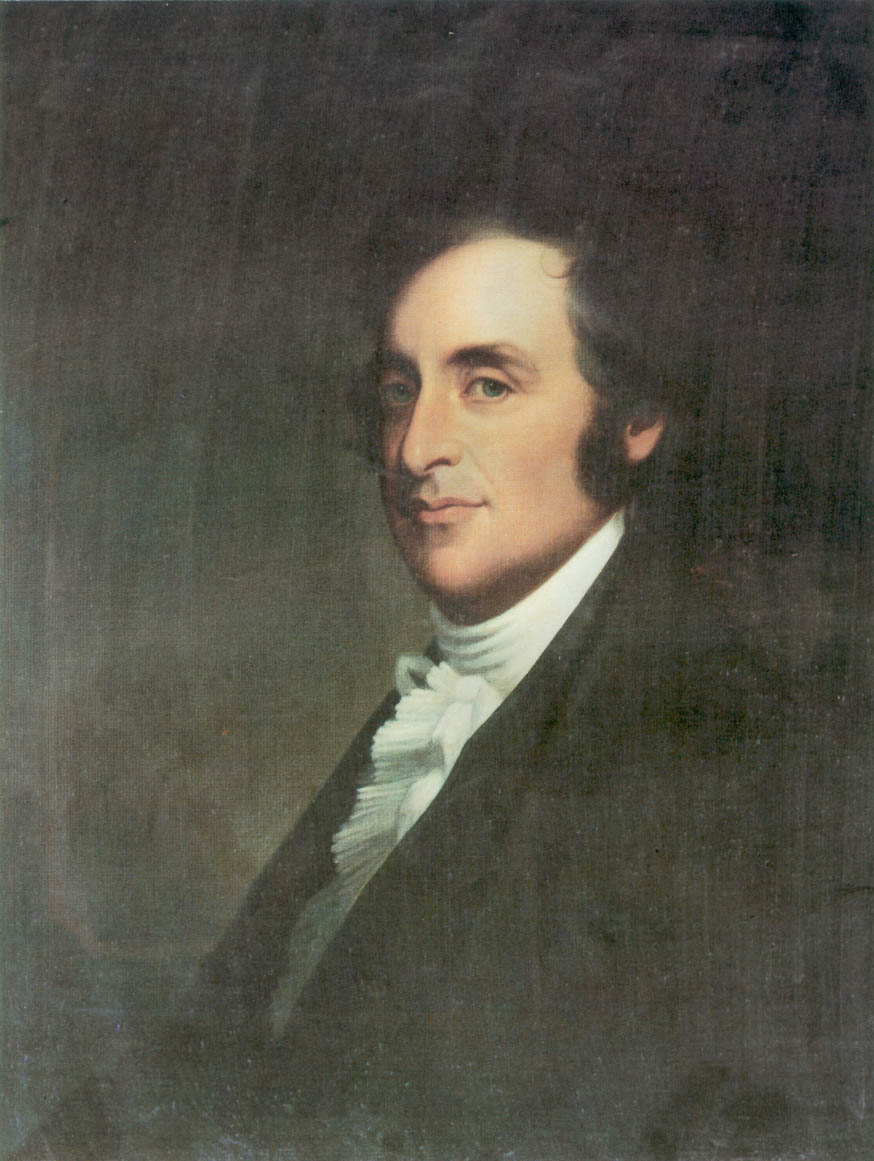
Samuel Dexter
View on Wikipedia

Key Information
Samuel Dexter (May 14, 1761 – May 4, 1816)[1] was an early American statesman who served both in Congress and in the Presidential Cabinets of John Adams and Thomas Jefferson. A native of Boston, Massachusetts, Dexter was a 1781 graduate of Harvard College. After receiving his degree he studied law, attained admission to the bar in 1784, and began to practice in Lunenburg, Massachusetts.
A Federalist, Dexter served in the Massachusetts House of Representatives from 1788 to 1790. In 1792 he was elected to the United States House of Representatives, and he served in the 3rd United States Congress. The state legislature subsequently elected Dexter to the United States Senate, and he served from March 1799 to May 1800. Dexter resigned his senate seat to accept appointment as the fourth United States Secretary of War, and he served from 1800 to 1801. In January 1801, Dexter was appointed the third United States Secretary of the Treasury, and he served until resigning on the day before his fortieth birthday.
After leaving office, Dexter practiced law in Washington, D.C. until he returned to Boston in 1805. Dexter joined the Democratic-Republican Party because of its support for the War of 1812, and he was a candidate for governor in 1814 and 1815. In 1815, Dexter declined President James Madison's appointment as Minister to Spain. He was a candidate for governor again in 1816, but died on May 4, 1816, aged 54, while visiting his son in Athens, New York. Dexter was buried at Mount Auburn Cemetery in Cambridge, Massachusetts.
Early life and education
[edit]Born in Boston in the Province of Massachusetts Bay, to Samuel Dexter, a Massachusetts politician and Hannah (Sigourney) Dexter. He was the grandson of Samuel Dexter, the fourth minister of Dedham. Dexter graduated from Harvard University in 1781 and then studied law in Worcester under Levi Lincoln Sr., the future Attorney General of the United States.[2] After he passed the bar in 1784, he began practicing in Lunenburg, Massachusetts.
Congressional career
[edit]
He was elected to the Massachusetts House of Representatives and served from 1788 to 1790.[1] He was elected to the United States House of Representatives as a Federalist, serving in the 3rd Congress.[3] He served in the United States Senate from March 4, 1799, to May 30, 1800 (the 6th Congress).[4] Between his terms in Congress, he unsuccessfully ran in the 9th congressional district in 1796.[5]
During a House discussion on a Naturalization Bill in 1795, Virginia Representative William Branch Giles controversially suggested that all immigrants be forced to take an oath renouncing any titles of nobility they previously held. Dexter responded by questioning why Catholics were not required to denounce allegiance to the Pope, because priestcraft had initiated more problems throughout history than aristocracy. Dexter's points caused an infuriated James Madison to defend American Catholics, many of whom, such as Charles Carroll of Carrollton, had been good citizens during the American Revolution, and to point out that hereditary titles were barred under the Constitution in any event.[6]
In December 1799, he wrote the Senate eulogy for George Washington.[7] Dexter served in the Senate for less than a year, and resigned in order to accept his appointment as United States Secretary of War in the administration of President John Adams.[8]
Tenures as Secretaries of War and the Treasury
[edit]During his time at the War Department he urged congressional action to permit appointment and compensation of field officers for general staff duty.
When Secretary of the Treasury Oliver Wolcott Jr. resigned in December 1800, Adams appointed Dexter as interim secretary, and Dexter served from January to May 1801.[1] With incoming President Thomas Jefferson wanting to delay his choice for Secretary of the Treasury, Albert Gallatin, for a recess appointment in May, Dexter agreed to retain his duties as Secretary of the Treasury for the first two months of Jefferson's term.[9] In a letter to his wife on March 5, 1801, Gallatin said that Dexter had behaved "with great civility."[10]
Later life
[edit]
He returned to Boston in 1805 and resumed the practice of law.[1] He also invested in the Dedham Manufacturing Company.[11]
He left the Federalists and became a Democratic-Republican because he supported the War of 1812. He was an unsuccessful candidate for Governor of Massachusetts in 1814, 1815 and 1816.[3][2]
Dexter was an ardent supporter of the temperance movement and presided over its first formal organization in Massachusetts. He was elected a Fellow of the American Academy of Arts and Sciences in 1800.[12]
Death and legacy
[edit]Dexter died at the age of fifty-four in Athens, New York on May 4, 1816, ten days shy of his fifty-fifth birthday. He was buried at Mount Auburn Cemetery in Cambridge, Massachusetts.[4]
Simon Newton Dexter and Andrew Dexter Jr. were his nephews.
Samuel W. Dexter, founder of Dexter, Michigan, was his son.
Samuel Dexter is the namesake of Dexter, Maine.[13] The USRC Dexter (1830) was named in his honor.
References
[edit]- ^ a b c d "Samuel Dexter (1801)". Miller Center. October 4, 2016. Retrieved December 3, 2019.
- ^ a b "Samuel Dexter". history.army.mil. Archived from the original on June 8, 2010. Retrieved December 3, 2019.
- ^ a b "DEXTER, Samuel - Biographical Information". bioguide.congress.gov. Retrieved December 3, 2019.
- ^ a b History, Art & Archives, U.S. House of Representatives, “DEXTER, Samuel,” https://history.house.gov/People/Listing/D/DEXTER,-Samuel-(D000296)/ (December 3, 2019)
- ^ "A New Nation Votes". elections.lib.tufts.edu. Retrieved December 26, 2024.
- ^ Irving Brant, James Madison: Father of the constitution, 1787-1800, Indianapolis, Ind. and New York: Bobbs-Merrill Company, 1950, pp. 420–21.
- ^ Johnson, Elizabeth Bryant (1895). George Washington Day by Day. Cycle Publishing Company. p. 188. Retrieved July 23, 2019.
- ^ "1787: From the Senate to the Cabinet, May 13, 1800". United States Senate. Retrieved July 23, 2019.
- ^ Dumas Malone, Jefferson The President: First Term, 1801-1805, Boston: Little, Brown and Company, 1970, pp. 34–36.
- ^ Dumas Malone, Jefferson The President: First Term, 1801-1805, Boston: Little, Brown and Company, 1970, p. 36n.
- ^ Neiswander, Judith (2024). Mother Brook and the Mills of East Dedham. Damianos Publishing. p. 36. ISBN 978-1-941573-66-2.
- ^ "Book of Members, 1780–2010: Chapter D" (PDF). American Academy of Arts and Sciences. Retrieved July 28, 2014.
- ^ Gannett, Henry (1905). The Origin of Certain Place Names in the United States. Govt. Print. Off. pp. 105.
External links
[edit]- United States Congress. "Samuel Dexter (id: D000296)". Biographical Directory of the United States Congress. Retrieved on 2009-5-20
- "Samuel Dexter". Find a Grave. Retrieved May 20, 2009.
Samuel Dexter
View on GrokipediaSamuel Dexter (May 14, 1761 – May 4, 1816) was an American lawyer and Federalist statesman from Massachusetts who served in the United States House of Representatives from 1793 to 1795 and in the Senate from 1799 to 1800, before holding cabinet positions as the fourth Secretary of War and third Secretary of the Treasury.[1][2][3] Born in Boston to a merchant family, Dexter graduated from Harvard College in 1781, read law, and gained admission to the bar in 1784, establishing a practice initially in Dedham before expanding his influence through politics.[1] He began his public career in the Massachusetts House of Representatives from 1788 to 1790, followed by service in the federal House during the 3rd Congress, where he aligned with Federalist priorities amid debates over national finances and foreign policy.[1][2] After an interlude in state affairs, he returned to national prominence as a senator, resigning in May 1800 to accept appointment as Secretary of War under President John Adams.[1] In his War Department role during the Quasi-War with France, Dexter managed military preparations and fortifications, transitioning seamlessly to Secretary of the Treasury in January 1801, where he oversaw fiscal operations for mere months until the Jefferson administration's inauguration prompted his resignation.[2][3] His cabinet service highlighted Federalist administrative continuity amid partisan shifts, though his tenure in Treasury was noted for lacking depth in financial minutiae suited to his legal temperament.[3] Retiring to private practice in Washington, D.C., and later Boston, Dexter declined further appointments, including as minister to Spain in 1815, and died the following year while visiting relatives in New York.[1]
Early Life
Birth and Family Background
Samuel Dexter was born on May 14, 1761, in Boston, within the Province of Massachusetts Bay.[4][3] His family belonged to the colonial merchant class, with ties to Boston's commercial and political circles during the lead-up to the American Revolution.[5] Dexter was the son of Samuel Dexter Sr. (1726–1810), a successful Boston merchant who engaged in trade and served in local political roles, including as a selectman, and Hannah Sigourney (1732–1807), who came from a family of French Huguenot descent established in Connecticut before relocating to Massachusetts.[5][6] The elder Dexter's business involved shipping and imports, reflecting the economic foundations of pre-Revolutionary Boston elite families, though records indicate the family avoided Loyalist sympathies and aligned with patriot causes.[5] He had at least four siblings: a brother named Samuel, another brother Andrew Dexter Sr. (who later practiced law in Alabama), sister Mary Dexter, and sister Catharine Maria Dexter (who married into the Ward family).[5] The Dexter lineage traced back to English immigrants who settled in Massachusetts in the 17th century, with ancestors including Rev. Samuel Dexter (c. 1650–1729), a Congregational minister in Malden, emphasizing a heritage of clerical, mercantile, and civic involvement rather than landed aristocracy.[5][6] This background provided young Dexter with connections to Federalist networks and an emphasis on education and public service, shaping his early worldview amid colonial tensions.[3]Education and Initial Influences
Dexter was born into a Boston family with connections to colonial civic life, which likely exposed him to early republican ideals amid the revolutionary fervor.[7] He prepared for college in Boston and entered Harvard College, graduating in 1781 amid the disruptions of the American Revolutionary War.[4] The Harvard curriculum of the era emphasized classical languages, rhetoric, moral philosophy, and natural science, fostering analytical and oratorical skills that would characterize Dexter's later public discourse. After graduation, he relocated to Worcester to study law under Levi Lincoln Sr., a prominent attorney who later served as U.S. Attorney General under President Thomas Jefferson.[7] This apprenticeship, typical of legal training in post-colonial America, immersed Dexter in practical jurisprudence and Whig constitutional principles, shaping his Federalist leanings despite Lincoln's eventual Republican affiliations.Legal Career
Admission to the Bar and Professional Practice
Dexter graduated from Harvard College in 1781 and subsequently studied law in Worcester, Massachusetts, under Levi Lincoln Sr.[8] He was admitted to the bar in 1784.[4] Following his admission, Dexter commenced his professional practice in Lunenburg, Massachusetts, handling cases in Worcester and Middlesex counties.[4] His early legal work established a foundation for his reputation as a capable attorney, though specific case details from this period are sparsely documented in surviving records. Dexter's practice intersected with his entry into politics in 1788, as he balanced legal duties with service in the Massachusetts House of Representatives.[4] Over time, he relocated his primary practice to Boston, where he maintained an active role in the profession amid congressional and executive responsibilities. After resigning from the cabinet in 1801, Dexter briefly retired from public life before resuming law practice upon returning to Boston in 1805, continuing until health issues prompted withdrawal in his later years.[9]Notable Legal Engagements
Dexter established a prominent legal practice in Boston after his admission to the bar in 1784, initially beginning in Lunenburg, Massachusetts, where he handled civil and criminal matters reflective of early republican jurisprudence.[1] His reputation as a skilled orator and Federalist advocate drew him into politically charged cases amid partisan divides between Federalists and Jeffersonian Republicans. One of his most notable engagements was the defense of Thomas O. Selfridge in 1806, a fellow Federalist attorney charged with manslaughter for fatally shooting Charles Austin, a Republican debtor, during a confrontation on State Street in Boston on July 4, 1806.[10] Dexter, alongside Christopher Gore, argued before the Massachusetts Supreme Judicial Court that Selfridge acted in self-defense after Austin initiated violence with a horsewhip and threats, invoking principles of personal honor and immediate peril under common law precedents.[11] [12] Chief Justice Theophilus Parsons instructed the jury on the right to armed resistance against assault, leading to Selfridge's acquittal on March 10, 1807, which sparked Republican protests but underscored Dexter's persuasive argumentation in upholding individual rights against mob sentiment.[10] [13] Dexter also appeared before the United States Supreme Court in several admiralty and contract disputes, leveraging his expertise in federal law during his intermittent returns to private practice between public offices.[14] In United States v. The William (circa 1808–1809), he represented claimants challenging a vessel seizure, contending against government assertions of forfeiture under neutrality laws, though the case highlighted tensions in maritime enforcement without altering established precedents significantly.[15] These arguments positioned Dexter among elite counsel navigating the early Court's jurisdictional expansions, emphasizing strict construction of executive powers in commercial litigation.[14]State Political Involvement
Service in the Massachusetts House of Representatives
Dexter began his public service in the Massachusetts House of Representatives, elected to represent Dedham and serving from 1788 to 1790.[1] [2] This two-year tenure followed his admission to the bar in 1784 and the establishment of his legal practice in Dedham, where he resided after studying law.[1] As one of approximately 300 members in the House during this period, under the Massachusetts Constitution of 1780, Dexter contributed to routine legislative matters including local governance, taxation, and judicial appointments, though no records indicate he chaired committees or led major initiatives.[2] His involvement aligned with emerging Federalist leanings, reflecting support for stronger centralized authority amid post-Shays' Rebellion reforms, yet specific votes or speeches from his state service remain sparsely documented in primary accounts.[16] This early role positioned him for federal office, culminating in his election to the U.S. House in 1792.[1]Congressional Service
Tenure in the U.S. House of Representatives
Samuel Dexter, a Federalist from Massachusetts, was elected to the United States House of Representatives in 1792 and served from March 4, 1793, to March 3, 1795, during the 3rd Congress, representing the state's 1st congressional district.[4][17] His tenure coincided with escalating partisan divisions between Federalists, who backed the Washington administration's policies, and emerging Democratic-Republicans, amid domestic challenges like the Whiskey Rebellion and foreign policy strains from the French Revolutionary Wars.[18] As a staunch Federalist, Dexter actively opposed Democratic-Republican societies, which Federalists viewed as fomenting subversion and undermining federal authority, particularly in connection with the Whiskey Rebellion's resistance to excise taxes. In December 1794, he moved to amend a naturalization bill to require applicants for citizenship to swear they had never belonged to such societies, reflecting concerns over their alleged role in encouraging insurrection and pro-French agitation.[19] Dexter argued that Congress possessed the power to counter these "bad tendencies" that threatened national stability, aligning with Federalist efforts to assert central government authority against perceived radical influences. He did not seek reelection after his term, returning to state-level politics before later federal service.[4]Role in the U.S. Senate
Samuel Dexter, a Federalist from Massachusetts, was elected to the United States Senate by the state legislature for the term beginning March 4, 1799, serving in the 6th Congress until his resignation on May 13, 1800.[20][1] His tenure aligned with the Federalist minority in the Senate, where he supported administration policies amid growing Democratic-Republican opposition.[21] Dexter's Senate service was brief, focused on debates over foreign relations and domestic governance, consistent with Federalist advocacy for strong central authority and commerce protections.[22] On May 13, 1800, President John Adams nominated him for Secretary of War, leading to his confirmation and resignation—the first instance of an incumbent senator leaving for a cabinet post.[23][24] This move reflected the era's fluid transitions between legislative and executive roles, though no major bills sponsored by Dexter are recorded during his limited time.[20]
