Hubbry Logo
Pointed hatPointed hatMain
Open search
Pointed hat
Community hub
Pointed hat
logo
8 pages, 0 posts
0 subscribers
Be the first to start a discussion here.
Pointed hat
Pointed hat
from Wikipedia
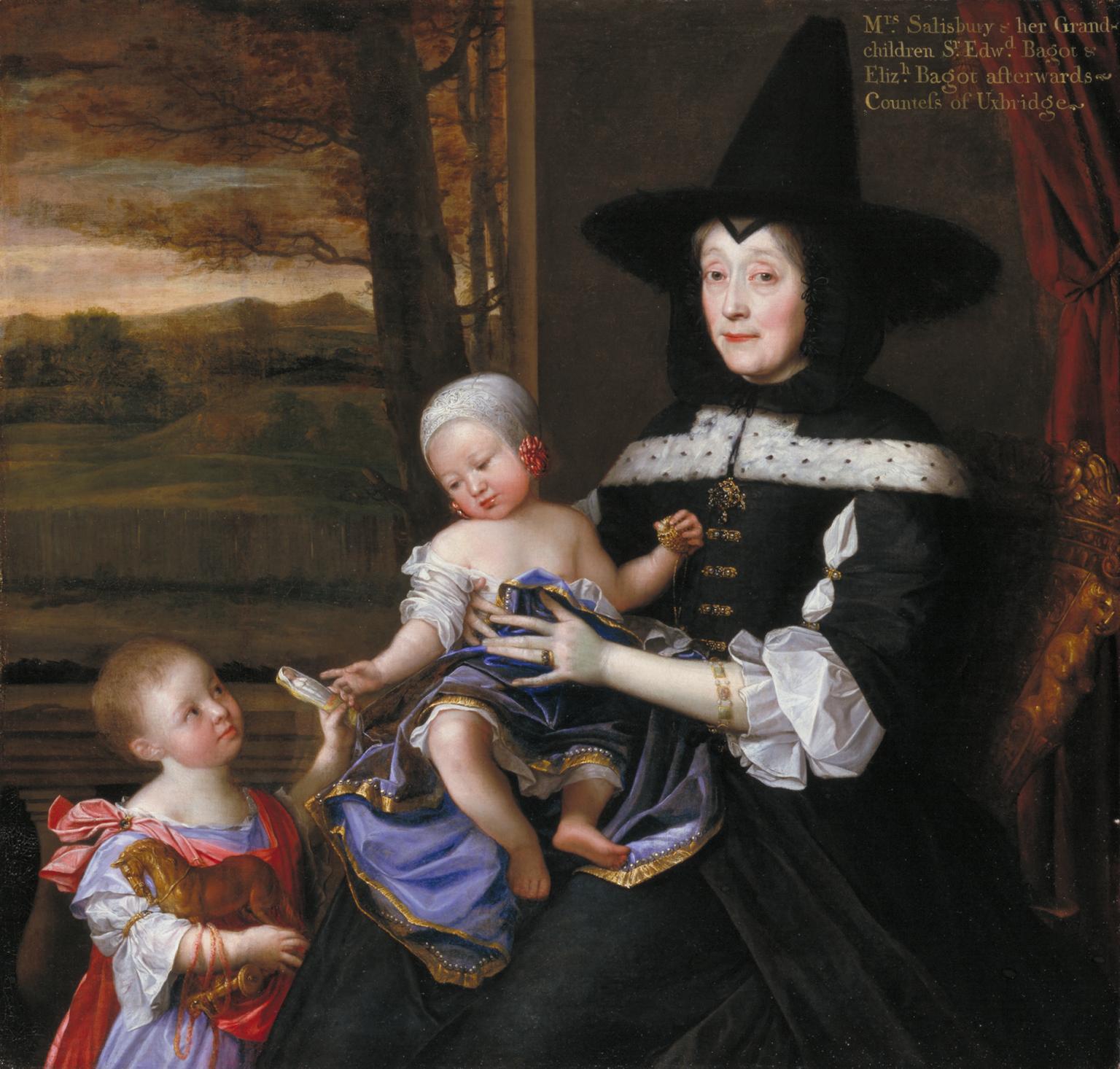
John Michael Wright, Mrs Salesbury with her Grandchildren Edward and Elizabeth Bagot, c. 1676, Tate Britain

Pointed hats have been a form of headgear of a wide range of cultures throughout history. Although often suggesting an ancient Indo-European tradition, they were also traditionally worn by women of Lapland, the Japanese, the Mi'kmaq people of Atlantic Canada, and the Huastecs of Veracruz and Aztec (e.g., as illustrated in the Codex Mendoza). The Kabiri of New Guinea have the diba, a pointed hat glued together.[1]

History

[edit]

The conical hat is known to have existed as early as the Bronze Age in the Middle East, Eurasia, and Central Europe. Conical hats were recorded in ancient Egypt, especially when depicting Osiris and pharaohs, who emulated Osiris' iconography. Conical hats were also recorded by many Indo-European civilizations. Golden hats have been recorded in burial sites in Central Europe. The Scythians of the Eurasian steppes were noted for having pointed hats, often mentioned by other civilizations, such as in the DNa inscription on the tomb of Darius the Great. In Ancient Greece, the pilos was a common hat worn by travelers and infantrymen by the 5th century BCE. Popular among Burgundian noblewomen in the 15th century was a type of conical headgear now called a hennin.[2]

Iron Age

[edit]

Textile analysis of the Tarim Mummies has shown some similarities to the Iron Age civilizations of Europe dating from 800 BCE, including woven twill and tartan patterns strikingly similar to tartans from Northern Europe. One unusual find was a distinctively pointed hat:

Yet another female – her skeleton found beside the remains of a man – still wore a terrifically tall, conical hat just like those we depict on witches riding broomsticks at Halloween or on medieval wizards intent at their magical spells.

— Elizabeth Wayland Barber[3]: 200 

Pointed hats were also worn in ancient times by Saka (Scythians), and are shown on Hindu temples (as helmets and metal crowns) and in Hittite reliefs. As described by Herodotus, the name of the Scythian tribe of the tigrakhauda (Orthocorybantians) is a bahuvrihi compound literally translating to "people with pointed hats".[4][5]

Besides the Scythians, the Cabeiri as well as Odysseus are traditionally pictured wearing a Pilos, or woolen conical hat.[6]

Middle Ages

[edit]
A kazaori eboshi from the Japanese Heian period

The 13th-century Cumans commonly wore scythian style pointed hats,[7] and are reported to have fought wearing them.[8]

Originating from the Japanese Heian period, the kazaori eboshi (風折烏帽子) was worn by aristocrats to indicate rank. Still worn today for ceremonial purposes, this black[9] linen hat was used during a samurai's ceremony in attaining manhood.[10]

The Jewish poet Süßkind von Trimberg wearing a "Jewish hat" (Codex Manesse, 14th century)

Medieval Jewish men wore distinctive headgear as required by European Christian authorities. This included the pointed Jewish hat (or "Judenhut") already worn by Jews, a piece of clothing probably imported from the Islamic world and perhaps before that from Persia.[11]

Popular among Burgundian noblewomen in the 15th century was a type of conical headgear now called a hennin.[2]

Modern times

[edit]
Pointed hats at 2017 Courir de Mardi Gras in rural Louisiana

Pointed hoods were used by various orders and Catholic lay confraternities for processions (e.g., the Semana Santa of Sevilla, who wore the Capirote).[12]

Pointed hats are still worn in the rural Louisiana Mardi Gras celebrations by the Cajuns, the Courir de Mardi Gras, where they are known as capuchons.[13]

The Ku Klux Klan has worn this headgear since its inception.[14]

Tall conical hats are common to traditional folk ceremonies in many parts of Europe, particularly at Carnival time. Examples can still be seen in Italy, Spain, and Bulgaria.[15]

The May Day hobby horses of Padstow and Minehead in southwest England have pointed hats with masks attached.[16][17][18]

Types

[edit]
Type Image Notes
Bashlyk This traditional Turkic and Cossack cone-shaped headdress hood is usually made of leather, felt or wool. It is an ancient round topped felt bonnet with lappets for wrapping around the neck.
Capirote Historically, the capirote was a cardboard cone worn in Spain.
Capuchon A capuchon is a ceremonial hat worn during the Mardi Gras celebration in the Cajun areas of southwestern Louisiana, known as the Courir de Mardi Gras.
Asian conical hat Known as a sedge hat, rice hat, paddy hat or coolie hat, this simple style of hat is often made of straw. It originated in East, South and Southeast Asia, particularly Vietnam, China, Japan, Korea, Cambodia, Philippines, India, Bangladesh and Indonesia.
Dunce cap In popular culture, the dunce cap is typically made of paper and often marked with a D or the word "dunce", and given to schoolchildren to wear as punishment by public humiliation for misbehaviour and, as the name implies, stupidity.
Fulani hat A conical plant fiber hat covered in leather both at the brim and top, worn by men of the Fulani people in West Africa.
Golden hat This type of hat is a very specific and rare type of archaeological artifact from Bronze Age Europe.
Hennin Most commonly worn in Burgundy and France by women of the nobility, the hennin appears from about 1430 onwards. Later, though, this hat spread more widely, especially in the truncated form. Typically, the hennin was 12 to 18 inches (30 to 45 cm) high, generally accompanied by a veil that usually emerged from the top of the cone and was allowed to fall onto the woman's shoulders.
Hogeon This Korean traditional headgear for young boys aged one year to five years has flaps, and is a type of gwanmo (관모),.
Jewish hat The Jewish hat was often white or yellow, worn by Jews in Medieval Europe and some of the Islamic world.
Kalpak This high-crowned cap is usually made of felt or sheepskin. It is worn by men from southeastern Europe, Iran, Central Asia and the Caucasus.
Kasa A Kasa is any of several kinds of traditional hats of Japan.
Madhalla Traditional straw hat from Yemen.
Mokorotlo A straw hat used traditionally by the Sotho people. It serves as the national symbol of Lesotho.
Nightcap This garment is worn while sleeping, often with a nightgown, for warmth.
Nón lá Nón lá is a type of Vietnamese headwear used to shield the face from the sun and rain.
Party hat A party hat is generally a playful conical hat made with a rolled up piece of thin cardboard, usually with designs printed on the outside and a long string of elastic going from one side of the cone's bottom to another to secure the cone to one's head.
Phrygian cap The Phrygian cap is a soft cap with the top pulled forward. Associated in antiquity with the inhabitants of Phrygia, a region of central Anatolia; from the French Revolution a symbol of revolution, liberty and republicanism – and in modern times with Smurfs.
Pileus The pileus was, in Ancient Greece and Rome, a brimless, felt cap, somewhat similar to a fez.
Salakot Usually made from rattan or reeds, this is a traditional hat from the Philippines.
Sugar loaf This very tall, tapering hat was first worn in medieval times. Its name comes from the loaves into which sugar was formed at that time.[19] The sugar loaf hat is a kind of early top hat ending in a slightly rounded conical top.[20]
Tantour Similar to the hennin, this woman's headdress was popular in the Eastern Mediterranean during the 19th century.[21][22] The most ornate tantours were made of gold and reached as high as 30 inches (76 cm). Some were encrusted with gems and pearls. The tantour was held in by a ribbons tied around the head. A silk scarf was wound around the base with a white veil attached to the peak.[23]
Topor A topor is worn during Bengali Hindu wedding ceremonies. It is usually white, fragile, and made of sholapith.
Witch hat A tall, conical hat with a wide brim, which is typically black. It is commonly associated with European witches.

See also

[edit]

References

[edit]

Bibliography

[edit]
[edit]
Revisions and contributorsEdit on WikipediaRead on Wikipedia
from Grokipedia
A pointed hat is a form of headwear distinguished by its conical or tapered crown terminating in a distinct point, appearing independently across diverse cultures from ancient and the through medieval and into modern for purposes ranging from ritual significance to practical protection against weather. In antiquity, such hats symbolized divinity or foreign identity, as seen in Assyrian priestly attire that influenced Persian and Scythian styles by the sixth century BCE, and in the worn by eastern figures in Greek and to denote barbarians or freedmen. Medieval European variants included the , initially a voluntary marker of status among some Jewish communities but later mandated as a distinctive in Christian territories, evolving from a Phrygian-derived form associated with into a stigma of otherness. In , conical hats like Vietnam's emerged as utilitarian items for rural laborers, shielding against sun and rain in rice fields, with origins tied to agricultural necessities rather than symbolism. By the and , pointed hats appeared in Western fashion as the tall for noblewomen and in as attire for alchemists or herbalists, later caricatured in depictions of witches during periods of persecution, though direct causal links to historical witch hunts remain debated among scholars. Modern connotations often link pointed hats to folly or punishment, exemplified by the dunce cap used in 19th-century Western schools to publicly shame slow learners, reflecting punitive educational practices now widely discredited. These associations underscore the hat's shifting role from markers of authority or utility to emblems of marginalization, with persistent use in ceremonial contexts like certain African or traditions.

History

Ancient Origins

In Mesopotamian , deities from Sumerian and later periods were frequently depicted wearing horned headdresses, which evolved from low dome shapes and signified divine authority, with examples dating to around 2500 BCE. These multi-tiered crowns, often interpreted as precursors to conical forms, appeared on figures like and in cylinder seals and reliefs, emphasizing supernatural status over mundane attire. Ancient Egyptian evidence includes tall pharaonic crowns such as the , a conical white crown of symbolizing hierarchical and solar-linked kingship, in use from the Early Dynastic Period circa 3100 BCE. Obelisks, tapering to points and representing petrified sun rays, paralleled this headgear in evoking divine solar power and eternal order. Among Indo-Iranian steppe nomads like the and , pointed caps emerged as cultural markers by around 1000 BCE, with archaeological finds from sites like Arzhan yielding artifacts from the 8th-7th centuries BCE depicting or implying such headwear. Achaemenid Persian reliefs at Behistun, circa 520 BCE, portray tigrakhauda leaders in distinctive pointed hoods, confirming their prevalence among these pastoral warriors. Similarly, Tarim Basin mummies in , dated 2000-1000 BCE, wore conical hats suggestive of early carrying this attire eastward.

Classical Antiquity

In , the , a soft conical headdress with its apex bent forward, emerged around 500 BCE through cultural exchanges with in , appearing in art as attire for eastern figures like Trojans and . By the 4th century BCE, during the early , it became linked to the cult of , consort of , reflecting the integration of Anatolian religious elements into Greek practices via trade and conquest. The Romans adopted the pileus, a variant of the made from felt, as a symbol of ; freed slaves received it upon , signifying their transition to free status and distinguishing them from those still in bondage. This practice, rooted in Etruscan and Greek precedents, underscored liberty in Roman society, with the cap often depicted alongside , the goddess of freedom, in coinage and sculptures from the late onward. In the Roman mystery religion of , influenced by Persian traditions, deities and initiates donned Phrygian-style caps, as seen in tauroctony reliefs where Mithras wears such headgear while slaying the bull, symbolizing cosmic renewal and initiation rites popular among soldiers from the 1st to 4th centuries CE. These caps, typically constructed from or felt for flexibility, facilitated the religion's spread across the empire through military networks rather than Hellenistic trade alone.

Medieval Period

![Süßkind von Trimberg wearing a Judenhut in the Codex Manesse][float-right] In medieval Europe, pointed hats continued to be worn for practical purposes by diverse groups, including Eastern migrants like the Cumans, who settled in regions such as Hungary during the 13th century and favored tall conical felt or leather hats often edged with fur. These migrants brought steppe traditions to the continent, influencing local headwear styles amid broader cultural exchanges. The style also appeared in illustrations from the 12th and 13th centuries depicting itinerant scholars and figures engaged in intellectual or esoteric pursuits, such as early alchemists, where the hat served as protective or distinctive headgear during travel and experimentation. Prior to formal regulations, pointed hats were not confined to any single class but reflected a versatile form suited to or felt construction for everyday use. A significant development came with sumptuary laws, particularly following the Fourth Lateran Council of 1215, which required and Saracens to wear clothing distinguishing them from Christians to prevent social ambiguity. This canon prompted the enforcement of the Judenhut—a stiff, conical hat typically yellow in color—as mandatory Jewish headgear across much of Christian , though the form predated the decree and appeared in earlier art. The Judenhut symbolized regulatory control, with its pointed shape drawing from pre-existing conical traditions but rigidly standardized for identification.

Early Modern Era

In the Early Modern Era, pointed hats transitioned from medieval prestige symbols to markers of ridicule and simplicity amid rising literacy and Reformation influences. The dunce cap, a conical paper hat, emerged in late 16th-century European classrooms as a punitive device for students perceived as intellectually dull, inverting earlier associations of pointed headwear with scholarly depth. This practice stemmed from the legacy of John Duns Scotus (c. 1266–1308), whose followers, known as Dunsmen, wore distinctive pointed caps; by the 16th century, as Scotist philosophy fell out of favor during Renaissance humanism, "dunce" became a slur for obtuse thinkers, and the cap symbolized pedagogical correction. The , resembling a in its tall, slightly conical crown and narrow brim, gained prevalence in 16th- and 17th-century and colonial America, particularly among seeking austere attire. Typically crafted from black felt or and centered atop the head, it reflected Protestant emphasis on over ostentation, appearing in inventories from the 1590s through the mid-1600s. , emerging in the 1650s, adopted similar tall, wide-brimmed hats as part of their code, rejecting fashionable excesses while asserting equality in refusing to doff hats before authorities. German woodcuts from the 1500s onward frequently illustrated entities, such as witches and alpine dwarfs, in tall pointed hats, standardizing these motifs through reusable blocks in pamphlets during the era's witch hunts (peaking 1560–1630). These depictions, often satirical or cautionary, bridged oral traditions with , influencing artistic conventions without direct ties to contemporary wearers.

Modern Developments

In the , illustrations in and periodicals standardized the image of witches wearing tall, black pointed hats, drawing from earlier depictions but amplifying the trope through widespread printing. This visual convention, seen in works like Arthur Rackham's 1907 illustrations for fairy tales, influenced commercial Halloween costumes by the early , with pointed witch hats becoming a staple accessory sold by companies such as starting in the . The capirote, a conical pointed hood, persists in contemporary Catholic processions known as Semana Santa, particularly in and Latin American countries, where participants wear them as part of penitential brotherhoods to symbolize anonymity and . These processions draw millions annually; for instance, Seville's Semana Santa events in 2023 involved over 100 brotherhoods and attracted more than 500,000 visitors daily during the week. Modern adaptations include enhanced media coverage and tourism integration, with live broadcasts and LED-lit floats complementing the traditional attire since the . In 21st-century , knitted pointed hats have reemerged as niche items, often styled as elongated beanies or gnome-inspired caps, gaining traction via platforms like in 2023-2024. Designers such as Paloma Wool popularized slouchy, pointed wool variants in winter collections, blending them with casual urban outfits for a whimsical yet edgy aesthetic. Fantasy media adaptations, including video games and conventions post-2000, have further revived pointed hats for characters like elves and wizards, with merchandise sales spiking after releases such as Amazon's 2022 The series, where conical headgear echoed Tolkien's influences.

Types and Variations

Traditional Forms

The , originating in ancient around the BCE, consisted of a soft, brimless conical bonnet typically crafted from or felt, with its apex bent forward in a floppy manner. This headdress was commonly worn by inhabitants of and associated peoples, including Trojans, as depicted in from the Archaic period onward. Variations in felt or emphasized its practical use for protection against weather among semi-nomadic groups in the region. In the Eurasian steppes during the , from approximately the 9th century BCE to the 5th century CE, nomadic Eastern Iranian groups such as the —specifically the Sakā tigraxaudā or "pointed hat wearers"—adopted high conical caps often featuring earflaps for horseback riders. These hats, evidenced in Persian inscriptions and archaeological finds like the Behistun relief depicting Skunkha around 520 BCE, were constructed from felt or to suit the mobile lifestyle of nomads. Similar conical forms appeared among related groups like the , serving functional purposes in harsh climates across and . Medieval European chaperons, emerging in the , featured a hooded shoulder with an extended liripipe—a that could terminate in a pointed shape, often padded or dagged for stylistic variation. Crafted from or finer fabrics, these evolutions of earlier hoods were worn across social classes, with the liripipe's length and form denoting regional fashions in and by the mid-1300s. Conical hats among Asian nomads, traceable to migrations, included tall felt structures like those of Mongol boqta worn by elite women, reaching heights of five to seven feet supported by willow withes for ceremonial purposes. In the , mummies from around 2000 BCE to 1000 CE exhibit conical "witch hats" made from felt or reeds, reflecting early pastoralist adaptations in arid environments. These forms paralleled Eastern European nomadic variants, such as Cuman leather or felt cones with broad brims, used from the 11th to 13th centuries for protection during migrations.

Punitive and Symbolic Variants

The dunce cap consisted of a conical paper hat placed on the heads of students deemed slow learners in Western classrooms, serving as a visible marker of academic shame from the into the early . This practice aimed to enforce discipline through , with the pointed shape evoking earlier associations of cones with or ignorance, though its direct origins link to the inverted prestige of medieval scholar John Duns Scotus's followers, whose tall hats symbolized intellectual acuity before critics repurposed the form for ridicule. By the 1930s, progressive education reforms largely eliminated the cap in U.S. and European schools, viewing it as psychologically harmful rather than instructive. ![Not what you may think - these are nazarenos (hooded penitents](./assets/Not_what_you_may_think_-these_are_nazarenoshoodedpenitentshooded_penitents The capirote, a stiff, tall conical hood, forms part of the penitential attire for nazarenos in Spanish and Latin American Catholic processions, where it conceals the wearer's identity to facilitate anonymous atonement for sins. Dating to at least the era (1478–1834), the hood's height symbolized elevation toward divine forgiveness, transforming a tool of ecclesiastical punishment into a voluntary emblem of humility and contrition during public rituals. Worn with a , it enforces uniformity among participants, emphasizing collective penance over individual recognition in events that draw millions annually, such as Seville's processions. Historical fool's caps in European courts typically featured soft fabric with drooping points mimicking ass's ears, bells at the tips, and sometimes a single forward-pointing cone, marking jesters as official purveyors of and from the medieval period through the . These hats signified the wearer's licensed role to mock authority and highlight human absurdity, drawing from ancient Greco-Roman symbols of stupidity like the pilleus pannonicus and evolving into badges of enforced eccentricity for court entertainers who advised rulers indirectly through humor. Unlike punitive caps, the fool's cap granted paradoxical privilege, protecting the wearer from reprisal while visually stigmatizing them as intellectually marginal, a convention documented in 16th-century portraits and texts like Erasmus's Praise of Folly.

Contemporary Styles

In Halloween costumes, the pointed witch hat has become a standardized accessory since the mid-20th century, typically constructed from felt or similar material with a wide brim and conical crown, often adorned with a faux to evoke historical Puritan . This design solidified through mass-produced costumes and illustrations accompanying and advertisements, diverging from earlier varied depictions to emphasize a uniform, recognizable silhouette for festive wear. Pointed hats feature prominently in fantasy subcultures, particularly at game conventions and events, where they represent wizards drawing from J.R.R. Tolkien's influential depictions in , first published in 1954. These hats, usually tall and floppy with a starry or rune-embellished design, appear in games like (launched 1974) and their live-action adaptations, serving as practical props for immersive character portrayal rather than historical accuracy. Minimalist pointed hats persist in contemporary as artisanal knits or holiday accessories, such as elf-style caps with soft, elongated tips in or fleece, marketed for or casual winter wear. Patterns for these, like the Pointy Elf Hat design from 2010, enable home crafting or small-batch production, appealing to niche markets for whimsical yet functional headwear without ties to traditional symbolism.

Symbolism and Cultural Interpretations

Associations with Freedom and Status

In ancient accounts, pointed hats signified elite status among Scythian warriors, who wore tall, erect, stiff caps tapering to a point as distinctive markers of their nomadic martial identity. Herodotus described these Sakians, a Scythian group, as attired in such headgear during military campaigns, emphasizing their role in denoting rank within hierarchical steppe societies. The , a soft, brimless, conical originating from ancient , evolved into a potent emblem of and emancipation. In Roman tradition, it was bestowed upon freed slaves to symbolize their release from bondage, a practice that influenced later republican iconography. During the commencing in 1789, revolutionaries adopted the red bonnet rouge—a Phrygian-style cap—as a widespread symbol of from monarchical tyranny, often paraded atop liberty poles and incorporated into revolutionary art and attire to assert . These historical associations underscore pointed hats' connotations of elevated social position and liberation, drawn from empirical records of elite and emancipatory contexts rather than pervasive derision. In the Roman mystery cult of , prevalent from the 1st to 4th centuries CE, the god Mithras was depicted wearing a —a soft, forward-pointing conical —symbolizing the religion's Persian roots and the wearer's participation in secretive initiatory rites that promised spiritual rebirth and cosmic insight. The highest grade of initiate, the Pater, also donned such headgear alongside ritual staff and ring, denoting authority within the all-male, hierarchical brotherhood focused on astral and salvific mysteries. Medieval European folklore associated tall, pointed hats with alewives and herbalists, women who brewed herbal ales and remedies for sale in markets; these practical hats enhanced visibility amid crowds but aligned with perceptions of their empirical yet esoteric knowledge of , often blurring into folk magic for healing or . Such headwear, documented in 15th-16th century illustrations of market vendors, reflected causal links between herbal and rudimentary , as these practitioners navigated church-sanctioned medicine's boundaries without formal clerical oversight. In Tibetan Buddhist traditions, pointed hats with earflaps, worn by monks in and Geluk lineages during rituals, signify elevated spiritual lineage and meditative authority, evoking conical forms tied to doctrinal transmission from Indian pandits. Siberian and Mongolian shamanic practices similarly employ conical fur or felt headdresses, enabling symbolic traversal of the cosmic —the vertical pillar connecting earthly, upper, and lower realms—facilitating spirit journeys for and as described in ethnographic accounts from the 18th-20th centuries. These non-Western examples underscore pointed hats' recurrent role in channeling vertical energies or hierarchical enlightenment across disparate esoteric systems, grounded in observed ritual efficacy rather than speculative symbolism.

Representations of Folly and Stigma

The dunce cap, a conical pointed hat, emerged in the 19th century as a tool of pedagogical shame in Western schools, placed on students deemed slow learners to publicly mark intellectual inadequacy and enforce conformity. This practice inverted an earlier association: followers of the medieval philosopher John Duns Scotus (c. 1265–1308) wore pointed hats, believing the shape metaphysically funneled divine knowledge into the brain, symbolizing scholarly wisdom among Scotists. By the 16th century, as Scotist ideas fell from favor amid rival philosophies, "duns" or "dunce" shifted to denote stupidity, transforming the hat into a punitive emblem by the 1800s in American and European classrooms. Such use causally linked the hat to mechanisms, inducing to deter nonconformity in learning without addressing underlying cognitive or environmental factors, akin to other disciplinary spectacles. The cap remained in use until the mid-20th century, when highlighted its counterproductive effects on motivation and self-esteem, leading to its discontinuation. In , fools and jesters in courts donned caps with pointed extensions—often floppy lobes ending in bells—to embody and mock , serving as visual cues for satirizing or social deviance while upholding hierarchical norms through permitted ridicule. These garments, part of attire, exaggerated nonconformist traits to stigmatize them as laughable, reinforcing audience adherence to convention via the fool's inverted wisdom. This representational role persisted in art and , where pointed fool caps denoted moral or intellectual failing, distinct from genuine critique.

Controversies and Debates

Sumptuary Laws and Religious Identification

The Fourth Lateran Council, convened in 1215 under , issued Canon 68 mandating that and Saracens () wear distinctive clothing or badges to differentiate them from Christians, explicitly to avert situations where Christians might unknowingly share meals, engage in commerce, or form illicit relations with non-Christians. This decree, rooted in concerns over religious assimilation and boundary maintenance, was enforced variably across , often manifesting as the Judenhut—a tall, conical, pointed hat typically in yellow—for Jewish men, as recorded in regional synods and municipal statutes from the 13th century onward. The hat's design, evoking isolation through its exaggerated form, served as a visual enforcer of separation, with non-compliance punishable by fines or expulsion, as documented in chronicles from cities like and Breslau. In medieval Iberia, analogous sumptuary regulations emerged amid the Christian , requiring and to don identifying attire such as yellow badges, caps, or turbans to demarcate religious communities and curb intermingling, particularly after royal decrees in Castile and from the late 13th century. For instance, the legal code promulgated by around 1265 prescribed special garb for and Moors to reinforce segregation, aligning with the rationale but adapted to local contexts of territorial recovery from Muslim rule. Heretics, including suspected Conversos ( forcibly converted to ), faced similar impositions in inquisitorial regions, where distinctive headwear aided surveillance and prevented relapse into prior faiths, though enforcement often prioritized and as primary targets. These mandates engendered economic repercussions by institutionalizing visual stigma, which complemented prohibitions on Jews owning , joining guilds, or practicing most crafts, thereby channeling them into restricted roles like moneylending—a Christians were canonically barred from via usury bans. Contemporary accounts, such as those from 14th-century English and French chroniclers, describe how the hat facilitated discriminatory taxation, market exclusions, and triggers during crises like the , as the identifiable attire made Jewish communities vulnerable targets for debt cancellation or violence without broader societal integration. In Iberia, such segregation intensified post-1391 riots, where mandated dress underscored Muslims' and Jews' outsider status, limiting their access to urban and fostering reliance on intra-community networks amid escalating expulsions by the .

Origins of Witch Hat Imagery

The pointed hat in witch imagery, characterized by its conical shape and wide brim, emerged as a standardized trope primarily in 18th- and 19th-century European and American , absent from most trial-era woodcuts and pamphlets of the 16th and 17th centuries, which typically showed accused witches in everyday garb or unclothed. This later crystallization reflects satirical and commercial influences rather than direct historical attestation from persecution records. One theory attributes the hat to alewives—women who brewed and sold ale in 15th- to 17th-century and —positing they donned tall, pointed headwear for visibility amid market crowds, akin to . Adherents link this to stereotypes via shared motifs like cauldrons for boiling , brooms for grain sifting, and cats as , suggesting reputational decline in led to accusations of maleficium through herbal adulteration. However, primary sources yield scant evidence of alewives uniformly adopting such hats, with records and market depictions favoring simpler coifs or hennins; the theory's evidentiary base rests on circumstantial parallels, vulnerable to anachronistic projection and critiqued for lacking iconographic corroboration in period art. Alternative explanations invoke practical headgear of religious dissenters or folk healers influencing 18th-century caricatures. Quaker women and Puritan sympathizers wore tall-crowned "steeple" or broad-brimmed hats, derided in English satires as marks of nonconformity, occasionally morphing into exaggerated points in prints equating religious outsiders with diabolism. Similarly, rural herbalists or "" in and the English countryside donned conical woolen hats for weather protection during foraging, echoed in early 1700s engravings like those lampooning eccentric healers; these informed witch portrayals amid Enlightenment-era mockery of , though causal links depend on interpretive readings of sparse satirical evidence rather than explicit endorsements. A contested derivation traces the form to the medieval Judenhat, a stiff, pointed cap imposed on Jewish men by ecclesiastical decrees such as the Fourth Lateran Council's canon 68 in , intended for identifiability and appearing in as a signifier of otherness. In antisemitic iconography from the 13th to 15th centuries, such as illuminated manuscripts depicting in sorcerous roles or allied with demons, the hat symbolized ritual deviance, potentially transferring to witch archetypes via shared motifs of marginality and perceived cabalistic magic. Critics highlight the absence of transitional depictions linking Judenhat wearers directly to female witches, attributing the hypothesis more to thematic analogies of exclusionary symbolism than to documented artistic evolution, with empirical support confined to visual parallels in biased medieval sources.

Modern Cultural Appropriation Claims

In recent years, some commentators have alleged that the pointed hat motif in fantasy media and s revives antisemitic stereotypes, tracing it to the conical Judenhut mandated for Jews by the Fourth Lateran Council in 1215. These claims posit that 19th-century illustrations of witches, such as those by , caricatured Jewish features including hooked noses and pointed hats, thereby perpetuating medieval anti-Jewish imagery in modern entertainment like films and video games. However, this linkage falters on chronological grounds: the distinctive emerged prominently in illustrations from the 17th to 19th centuries, postdating the Judenhut by centuries and aligning more closely with unrelated traditions like alewife headgear or Quaker bonnets, without direct evidentiary ties to antisemitic caricature. Empirical assessments, including analyses from Jewish cultural commentators, find no causal connection between contemporary witch depictions and rises in antisemitic incidents; for instance, U.S. data from 2019–2023 shows no correlation between trends and reported anti-Jewish hate crimes, which fluctuate due to broader sociopolitical factors rather than seasonal imagery. Debates over Halloween commercialization have intensified since the , with pointed witch hats symbolizing mass-produced s sold in billions annually—U.S. Halloween spending reached $10.6 billion in 2023, including over 20 million witch-themed outfits—yet critics alleging cultural insensitivity fail to demonstrate measurable . Assertions that such attire mocks historical witch persecutions or appropriates pagan elements overlook the fictional, non-sacred nature of the archetype, as affirmed by practitioners of modern who view generic witch s as harmless fantasy rather than theft. No peer-reviewed studies link costume sales to increased against any group; instead, prejudice metrics from sources like the FBI's Uniform Crime Reporting show steady or unrelated patterns, underscoring that claims prioritize symbolic offense over verifiable harm. Critiques of "cultural theft" targeting indigenous conical hats, such as Vietnam's nón lá or similar Asian and African variants, have surfaced sporadically in social media and educational contexts since the 2010s, accusing non-native wearers of exoticizing functional headgear developed independently across continents for agriculture and weather protection. These arguments ignore archaeological evidence of parallel evolutions: pointed hats appear in Bronze Age Eurasian artifacts (e.g., Scythian caps circa 500 BCE) and unrelated Mesoamerican and Polynesian designs, predating modern globalization and refuting singular ownership. Instances of backlash, like isolated school incidents over "rice paddy hats," lack documentation of tangible community harm, with ethnographic reviews emphasizing mutual exchange over appropriation in hat styles diffused via ancient trade routes rather than colonial imposition. Such claims, often amplified in activist discourse without empirical backing, contrast with historical continuity where motifs transcend cultural boundaries absent evidence of erasure or economic displacement.

Construction and Materials

Historical Techniques

In ancient and , pointed hats were fabricated primarily from felted , achieved through wet felting where wool fibers were matted together using hot , agitation, and natural soaps derived from animal fats or . This process created a dense, moldable material that could be shaped into conical forms by hand or over simple wooden molds, with the inherent structure of felt providing basic rigidity for the upright or forward-curving apex. Archaeological evidence from frozen burials, such as those at Pazyryk dating to the 5th-3rd centuries BCE, reveals preserved felt constructed in layered or sewn panels to enhance durability and form. Some variations incorporated or , stiffened by tanning processes or application of natural starches from grains like , allowing the material to hold a pointed without collapsing. Regional resources influenced dyes, with plant-based extracts such as from woad in or madder roots providing colors like and , applied post-forming via immersion or mordanting techniques to fix pigments to fibers. During the medieval period in , pointed hats such as the Judenhut were often sewn from fabric panels of or , joined with simple straight stitches to form a , then stiffened internally with or solutions boiled from or for structural support. weaving emerged as an alternative method in some regions, intertwining reeds or wheat stalks into rigid conical baskets covered with cloth for weather resistance, particularly noted in 15th-century descriptions. Embellishments like embroidered edges or metal badges were added using available local metals and threads, varying by economic access and trade routes.

Functional Aspects

The conical shape of pointed hats offers practical advantages in weather protection, particularly by allowing rainwater to channel off the surface without pooling, a feature evident in the Vietnamese nón lá, which farmers have used since at least the 12th century to shield against tropical downpours and intense sunlight. This geometry minimizes water retention compared to flat-topped alternatives, reducing the risk of leakage onto the wearer during heavy rain, while the broad base provides extensive coverage for the neck and shoulders. In nomadic pastoral societies, such as the of the Eurasian steppes (circa 900–100 BCE), pointed hats constructed from felt or served to insulate against extreme temperature fluctuations and block ultraviolet radiation, addressing the demands of mobile lifestyles exposed to open terrains. Ethnographic evidence from prehistoric (2000–200 BCE) indicates similar headgear functioned for shielding and thermal regulation in arid, windy environments conducive to . Among West African Fulani nomads, the tall, conical tengaade hat, woven from fibers, deflects harsh solar rays during extended tending, enhancing endurance in sun-exposed savannas. Pointed hoods like the Caucasian further exemplify weather resistance, with their peaked form and extended flaps providing barrier against wind and precipitation in mountainous or regions, as utilized by and for multifunctional coverage including muffling and rain diversion. These designs prioritize causal in elemental exposure over ornamental concerns, though empirical tests on wind dynamics remain limited, suggesting potential vulnerabilities to gusts that could lift unsecured tall structures.

References

Add your contribution
Related Hubs
User Avatar
No comments yet.