Hubbry Logo
Kitchen stoveKitchen stoveMain
Open search
Kitchen stove
Community hub
Kitchen stove
logo
8 pages, 0 posts
0 subscribers
Be the first to start a discussion here.
Kitchen stove
Kitchen stove
from Wikipedia
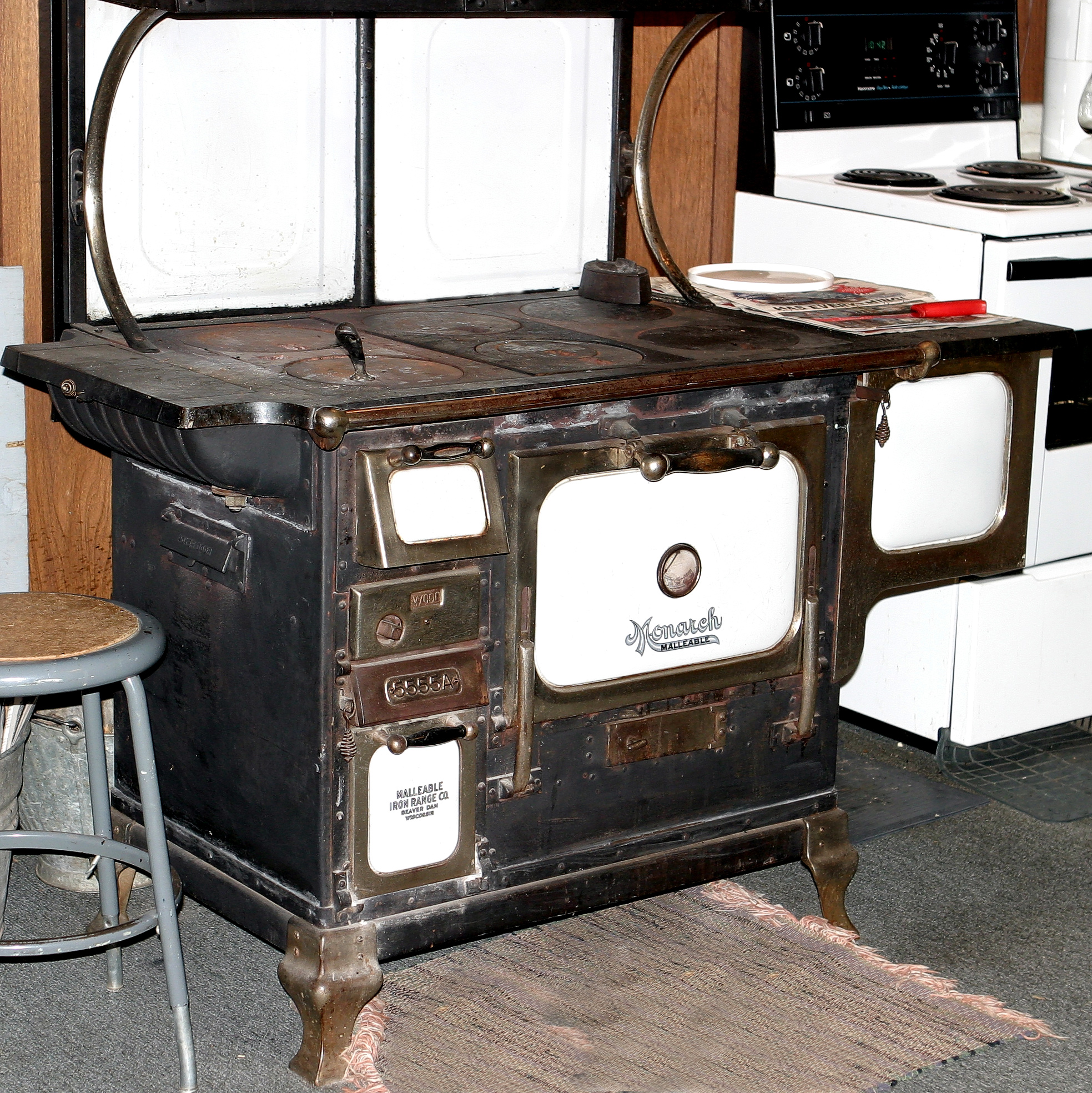
A wood-burning iron stove
A stove at Holzwarth Ranch, Colorado

A kitchen stove, often called simply a stove or a cooker, is a kitchen appliance designed for the purpose of cooking food. Kitchen stoves rely on the application of direct heat for the cooking process and may also contain an oven, used for baking. "Cookstoves" (also called "cooking stoves" or "wood stoves") are heated by burning wood or charcoal; "gas stoves" are heated by gas; and "electric stoves" by electricity. A stove with a built-in cooktop is also called a range.[1]

In the industrialized world, as stoves replaced open fires and braziers as a source of more efficient and reliable heating, models were developed that could also be used for cooking, and these came to be known as kitchen stoves.[2] When homes began to be heated with central heating systems, there was less need for an appliance that served as both heat source and cooker and stand-alone cookers replaced them. Cooker and stove are often used interchangeably.

The fuel-burning stove is the most basic design of a kitchen stove. As of 2012, it was found that "Nearly half of the people in the world (mainly in the developing world), burn biomass (wood, charcoal, crop residues, and dung) and coal in rudimentary cookstoves or open fires to cook their food."[3] More fuel-efficient and environmentally sound biomass cookstoves are being developed for use there.

Natural gas and electric stoves are the most common today in western countries. Electricity may reduce environmental impact if generated from non-fossil sources. The choice between the two is mostly a matter of personal preference and availability of utilities. Bottled gas ranges are used where utilities are unavailable.

Modern kitchen stoves have an oven, and a often have a "stovetop" or "cooktop" in American English; known as the "hob" in British English, from Hob (hearth). A "drop-in range" is a combination stovetop-and-oven unit that installs in a kitchen's lower cabinets flush with the countertop. Most modern stoves come in a unit with built-in extractor hoods. Today's major brands offer both gas and electric stoves, and many also offer dual-fuel ranges combining a gas stovetop and an electric oven.

History

[edit]

Early kitchen stoves

[edit]
Indonesian traditional brick stove, used in some rural areas
An 18th-century Japanese merchant's kitchen with copper Kamado (Hezzui), Fukagawa Edo Museum

Early clay stoves that enclosed the fire completely were known from the Chinese Qin dynasty (221 BC – 206/207 BC), and a similar design known as kamado (かまど) appeared in the Kofun period (3rd–6th century) in Japan.

Roman-era stove, Delos, Greece

Brick and Iron (Craticula) stoves were used across the Roman Empire, several example are preserved at Herculaneum and Pompeii.[4]

These stoves were fired by wood or charcoal through a hole in the front. In both designs, pots were placed over or hung into holes at the top of the knee-high construction. In the Middle East, references to similar stoves and cooking ranges where the fire was lit from below are recorded as early as the 2nd-century AD, constructed of clay and either made portable or attached to the ground.[5] Raised kamados were developed in Japan during the Edo period (1603–1867).

Prior to the 18th century in Europe, people cooked over open fires fueled by wood. In the Middle Ages, waist-high brick-and-mortar hearths and the first chimneys appeared, so that cooks no longer had to kneel or sit to tend to foods on the fire. The fire was built on top of the construction; the cooking done mainly in cauldrons hung above the fire or placed on trivets. The heat was regulated by placing the cauldron higher or lower above the fire.[2]

Open fire systems had three significant disadvantages that prompted an evolutionary series of improvements from the 16th century onwards: it was dangerous, it produced much smoke, and the heat efficiency was poor. Attempts were made to enclose the fire to make better use of the heat that is generated and thus reduce the wood consumption. An early step was the fire chamber: the fire was enclosed on three sides by brick-and-mortar walls and covered by an iron plate. This technique also caused a change in the kitchenware used for cooking, for it required flat-bottomed pots instead of cauldrons. The first design that completely enclosed the fire was the 1735 Castrol stove, built by the Walloon-Bavarian architect François de Cuvilliés. This stove was a masonry construction with several fire holes covered by perforated iron plates and was also known as a stew stove. Near the end of the 18th century, the design was refined by hanging the pots in holes through the top iron plate, thus improving heat efficiency even more.

Origins of the modern kitchen range

[edit]

The modern kitchen range was invented by Sir Benjamin Thompson, Count Rumford in the 1790s. As an active scientist and prolific inventor, he put the study of heat onto a scientific basis and developed improvements for chimneys,[6] fireplaces and industrial furnaces, which led to his invention of the kitchen range.

His Rumford fireplace created a sensation in London when he introduced the idea of restricting the chimney opening to increase the updraught. This was a much more efficient way to heat a room than earlier fireplaces. He and his workers modified fireplaces by inserting bricks into the hearth to make the side walls angled, and added a choke to the chimney to increase the speed of air going up the flue. The effect was to produce a streamlined air flow, so all the smoke would go up into the chimney rather than lingering and entering the room. It also had the effect of increasing the efficiency of the fire, and gave extra control of the rate of combustion of the fuel, whether wood or coal. Many fashionable London houses were modified to his instructions, and became free of smoke.[7]

Following on from this success, Thompson designed a kitchen range made of brick, with a cylindrical oven and holes in the top for the insertion of pots. When not needed, the opening could be covered over leaving the fire to smolder gently. This kitchen range was much more fuel efficient than the prevailing open hearth method and to a great degree safer. His range was widely adopted in large cooking establishments, including at the soup kitchens that Thompson built in Bavaria. However, it was too big and unwieldy to make much of an impact on domestic cooking.[8]

The first half of the nineteenth century witnessed a steady improvement in stove design. Cast iron stoves replaced those made of masonry and their size shrank to allow them to be incorporated into the domestic kitchen. By the 1850s, the modern kitchen, equipped with a cooking range, was a fixture of middle-class homes. In 1850 Mary Evard invented the Reliance Cook Stove, which was divided in two with one half for dry baking and the other half for moist.[9] Patents issued to Mary Evard are U.S. patent 76,315 and U.S. patent 76,314 on April 7, 1868.[10][11] She demonstrated this stove with her husband at the St. Louis World's Fair.[12]

In 1867 Elizabeth Hawks of New York invented and received U.S. patent 64,102 for a baking attachment for stoves, intended to spread heat thoroughly throughout loaves while keeping the top crust tender, which she called an "Auxiliary Air-chamber for Stoves."[12] This was so successful that she sold two thousand within months of its release.[13][14]

Stoves of that era commonly burned charcoal as well as wood. These stoves had flat tops and the heat was concentrated on one side of the stove top so that cooks could cook things at different temperatures based on where the pot or pan was located. This was called the "piano" system. After coal was replaced with gas, French chefs continued to prefer the smooth cooking surface and so the majority of French gas stoves had flat metal surfaces over the gas burners, which continues to be known as the "French style" today.[15]

Gas stove

[edit]
Early gas stoves produced by Windsor in Mrs Beeton's Book of Household Management, 1904

A major improvement in fuel technology came with the advent of gas. The first gas stoves were developed as early as the 1820s, but these remained isolated experiments. James Sharp patented a gas stove in Northampton, England, in 1826 and opened a gas stove factory in 1836. His invention was marketed by the firm Smith & Philips from 1828. An important figure in the early acceptance of this new technology, was Alexis Soyer, the renowned chef at the Reform Club in London. From 1841, he converted his kitchen to consume piped gas, arguing that gas was cheaper overall because the supply could be turned off when the stove was not in use.[16]

A gas stove was shown at The Great Exhibition in London in 1851, but it was only in the 1880s that the technology became a commercial success in England. By that stage a large and reliable network for gas pipeline transport had spread over much of the country, making gas relatively cheap and efficient for domestic use. Gas stoves only became widespread on the European Continent and in the United States in the early 20th century.

Electric stove

[edit]
Australian patent (1905) for an "electric cooking stove", also known as "The Kalgoorlie Stove"

Once electric power was widely and economically available, electric stoves became a popular alternative to fuel-burning appliances. One of the earliest such devices was patented by Canadian inventor Thomas Ahearn in 1892.[17] Ahearn and Warren Y. Soper were owners of Ottawa's Chaudiere Electric Light and Power Company.[18] The electric stove was showcased at the Chicago World's Fair in 1893, where an electrified model kitchen was shown.

Unlike the gas stove, the electrical stove was slow to catch on, partly due to the unfamiliar technology, and the need for cities and towns to be electrified. Early electric stoves were unsatisfactory due to the cost of electricity (compared with wood, coal, or city gas), limited power available from the electrical supply company, poor temperature regulation, and short life of heating elements. The invention of nichrome alloy for resistance wires improved the cost and durability of heating elements.[19]

The first practical design was patented by the Australian David Curle Smith in 1905. His device adopted (following the design of gas stoves) what later became the configuration for most electric stoves: an oven surmounted by a hotplate with a grill tray between them. Curle Smith's stove did not have a thermostat; heat was controlled by the number of the appliance's nine elements that were switched on.[20]

The first electric stoves used heating elements made of high-resistance metal to produce heat. The stovetop (range) surface had one or more circular heating elements, insulated with compressed magnesia and sheathed in a spiral metal tube. Heating elements for the oven are of similar construction but an elongated loop to distribute heat. Elements were made as plug-in consumer-replaceable parts and could also be easily removed for cleaning. Temperature of cooking elements was regulated by adjusting a bimetal thermostat control switch, which switched power on and off to control the average heating effect of the elements.

Other technologies

[edit]
A modern three-oven AGA cooker

A high-end gas stove called the AGA cooker was invented in 1922 by Swedish Nobel prize winner Gustaf Dalén. As a heat storage stove, it worked on the principle that a heavy frame made from cast iron components can absorb heat from a relatively low-intensity but continuously burning source, and the accumulated heat can then be used when needed for cooking.

Dalén took his design to Britain in 1929, where it was first manufactured under licence in the early 1930s. The cast iron components were first cast at the Coalbrookdale foundry in the 1940s, where they are still made today by the Aga Rangemaster Group. Its popularity in certain parts of English society (owners of medium to large country houses) led to the coining of the term "Aga saga" in the 1990s, referring to a genre of fiction set amongst stereotypical upper-middle-class society.

Microwave ovens were developed in the 1940s, and use microwave radiation to directly heat the water held inside food.

Cooktop

[edit]

A cooktop or hob is a cooking appliance that heats the bottoms of pans or pots; it does not have an enclosed oven as used for baking or roasting. Cooktops may be heated by gas or electricity and may also have exhaust systems.

Flattop grills are also being installed into kitchen counters and islands, which do double-duty as a direct cooking surface as well as a platform for heating pots and pans. A hot plate is a similar device, which is mobile and can be used as an appropriate technology.

See also

[edit]

References

[edit]
Revisions and contributorsEdit on WikipediaRead on Wikipedia
from Grokipedia
A kitchen stove, also known as a range or , is a appliance designed for cooking by applying controlled heat from sources such as gas, , or solid fuels like or . It typically features one or more burners or heating elements on a for direct pot and pan heating, along with an enclosed for , , or broiling. The evolution of the kitchen stove traces back to ancient open hearths and fireplaces used for cooking in colonial and early industrial homes, where heat was generated by burning wood or in large, continuously operating units that also provided hot water and space heating. By the , enclosed cast-iron ranges emerged, improving efficiency and safety by containing flames and directing heat through flues, with early models like the 1735 Stew Stove marking the shift toward dedicated cooking devices. The late 1800s saw the introduction of gas stoves, which offered more precise control, while electric models appeared around 1909, followed by thermostats in 1915 for automated temperature regulation. These advancements were driven by industrialization, research, and efforts to simplify domestic labor, transforming stoves from labor-intensive hearths into efficient appliances. Modern kitchen stoves come in several types, each suited to different needs for performance, energy use, and installation. Gas stoves, fueled by or gas, provide instant heat and precise flame adjustment, making them popular among professional chefs for tasks requiring high or low temperatures. Electric coil stoves use exposed heating coils for budget-friendly reliability and easy cleaning, though they heat and cool more slowly than gas. Smooth-top electric stoves feature a glass-ceramic surface for a sleek look and even heating, while induction stoves employ electromagnetic fields to heat cookware directly, offering rapid response, energy efficiency up to 90%, and cooler surfaces for safety. Dual-fuel ranges combine gas cooktops with electric ovens for optimal and , and innovations like self-cleaning ovens (introduced in 1963) and fans continue to enhance functionality. Overall, contemporary designs prioritize reduced emissions, improved —such as 30 to 50 percent more efficient than models—and integration with smart home systems, alongside recent regulations like U.S. DOE efficiency standards (2024) and state labeling for emissions (as of 2025), for better environmental and user benefits.

Overview

Definition and basic function

A kitchen stove, also referred to as a range or , is a appliance engineered to generate and apply controlled for cooking and food preparation. It typically integrates a surface for direct heating applications and an enclosed cavity for baking, roasting, and broiling, enabling versatile culinary techniques within a single unit. This design distinguishes it from standalone components, providing a centralized platform for both open-flame or element-based surface cooking and indirect, ambient heating in a sealed environment. The primary functions of a kitchen stove revolve around efficient heat delivery and regulation to support diverse cooking methods. The cooktop facilitates surface heating for tasks such as boiling, frying, sautéing, and simmering, where pots and pans receive direct thermal energy from burners or elements. In contrast, the oven enables enclosed heating for baking, roasting, and broiling, circulating warmth around food items to promote even cooking without direct contact. Temperature control is integral to these operations, achieved through adjustable knobs, digital interfaces, or thermostats that maintain precise settings—typically ranging from low simmer (around 185–205°F) to high broil (up to 550°F)—ensuring consistent results and preventing overcooking. While a full encompasses both and , a refers exclusively to the surface heating module, often installed into countertops without an integrated , suitable for space-constrained kitchens. Hybrid appliances, such as dual-fuel ranges, blend heating technologies—like a gas for rapid, visible flames paired with an electric for uniform —offering enhanced performance by leveraging the strengths of multiple sources. At its core, stove operation relies on fundamental principles to convey to . Conduction occurs on the , where moves directly from the or flame through the cookware to the via molecular contact. Convection dominates in the , as heated air circulates via natural or fan-assisted currents to evenly distribute warmth around the . plays a role in both, particularly through emissions from exposed elements or flames that warm surfaces without intermediary contact, optimizing across cooking modes.

Historical significance and evolution overview

The kitchen stove's development marked a profound shift in domestic cooking, transitioning from inefficient open-hearth methods reliant on direct flames and constant tending to enclosed, controlled systems that revolutionized meal preparation and home architecture. Prior to the 19th century, cooking primarily occurred over open fireplaces or central hearths, which were labor-intensive and smoky, limiting culinary complexity and contributing to health risks from poor ventilation. The introduction of closed cast-iron stoves in the late 18th and early 19th centuries, fueled by coal or wood, enclosed the fire for better heat retention and reduced smoke, enabling more precise temperature control and safer operation in urbanizing households. This evolution laid the foundation for modern cuisine by allowing baking, simmering, and multi-dish cooking simultaneously, while influencing kitchen design toward dedicated, compact spaces separate from living areas. By the early 20th century, the adoption of gas and electric stoves further accelerated these changes, with gas models gaining popularity around 1910 for their instant ignition and adjustability, followed by electric versions in the that eliminated open flames entirely. These innovations, driven by industrialization and , improved compared to wood-burning predecessors and enhanced through features like pilot lights and thermostats, standardizing cooking across socioeconomic classes. In the post-2000 era, digital integration transformed stoves into smart appliances with connectivity, app-based , and AI-driven recipe assistance, further boosting efficiency via induction technology that heats cookware directly without wasted energy. Socially, the stove's evolution significantly reduced cooking time and physical labor—from hours of fire maintenance to minutes of setup—freeing time for other activities and contributing to women's increased participation in the workforce, particularly after . This shift influenced gender roles, as 19th-century designs like those advocated by Catherine Beecher in her 1841 Treatise on Domestic Economy emphasized efficient layouts for housewives, while 20th-century appliances diminished reliance on domestic servants and promoted shared family cooking. amplified these effects, as compact stoves suited smaller city apartments emerging in the , fostering structures and integrating kitchens as central social hubs rather than isolated workrooms. Overall, these advancements not only standardized global cooking practices but also reshaped household dynamics toward greater equity and convenience.

Components

Main structural elements

The core structure of a kitchen stove is built around a robust frame typically constructed from , such as cold-rolled , which is often coated with to enhance corrosion resistance, durability, and cleanability. This frame supports the overall assembly and houses doors and panels that provide access to internal compartments while maintaining a sealed exterior. Storage drawers, commonly positioned at the base, are integrated into the frame to store utensils and pots, constructed from matching enameled metal for heat tolerance. Leveling legs, adjustable via threaded mechanisms and made from heavy-duty metal or reinforced , allow the stove to be stabilized on uneven by raising or lowering each corner. The cooktop surface forms the upper working area, utilizing materials like porcelain-enameled for affordability and scratch resistance, glass-ceramic for smooth, heat-resistant properties that facilitate easy wiping, or for premium durability and aesthetic appeal. Burner grates and supports, often or stamped , sit atop the cooktop to securely hold pots and pans while allowing airflow and spill containment. Within the oven cavity, multiple layers of insulation—such as batts or high-temperature ceramic fiber blankets—line the walls to minimize external and improve energy efficiency. Adjustable racks and shelves, typically wire-formed with enamel coating, slide into side rails for positioning cookware at various heights. The oven features a heat-resistant window, often , paired with gaskets made of rubber or to create an airtight seal that retains internal temperatures. Standard dimensions for kitchen stoves measure approximately 30 inches in width to align with common spaces, 36 inches in height to match base cabinet standards, and 25 to 29 inches in depth excluding handles. Configurations vary between freestanding models, which include a full back panel and stand independently, and built-in designs that fit flush into for a seamless installation. These structural elements provide the foundational support for integrating heating components into a functional appliance.

Heating mechanisms

Kitchen stoves generate heat through three primary mechanisms: combustion for fuel-based systems, electrical resistance for traditional electric models, and electromagnetic induction for advanced electric variants. These processes convert energy from solid fuels like wood or coal, gaseous fuels such as natural gas or propane, or electrical sources into thermal energy for cooking. Combustion involves exothermic chemical reactions, while electrical methods rely on physical principles of current flow or magnetic fields to produce localized heating. The choice of mechanism affects not only heat output but also energy efficiency and safety. In combustion-based heating, prevalent in gas and solid fuel stoves, fuel oxidizes with oxygen from the air, releasing through or glowing embers. For gaseous fuels, burners mix with air and ignite it to produce a controlled that heats cookware directly or warms cavities via hot gases and . Solid fuels like wood undergo and before burning, generating from char and volatile gases. Typical efficiencies range from 30% to 50% due to incomplete utilization and byproduct formation, though optimized burners can achieve higher rates by ensuring proper air- ratios. Electrical resistance heating operates on the principle of , where an flows through a high-resistance material, such as coiled wire, converting entirely into via electron collisions. These elements, often embedded in or exposed on cooktops, radiate heat or conduct it to surfaces. The process is 100% efficient in energy conversion, but overall stove performance depends on to food, typically reaching 70-80% efficiency in well-designed systems. Electromagnetic induction heating uses an in a coil beneath a glass-ceramic surface to generate an oscillating at 20-100 kHz, which induces eddy currents and losses directly in compatible ferromagnetic cookware. This direct heating of the pot bypasses the , achieving energy transfer efficiencies of 84-90% to the food, higher than the 40% for gas or 74% for conventional electric methods in comparable tests. Non-ferromagnetic pots require adapters or are incompatible, limiting versatility. Once generated, distributes to cooking surfaces or interiors via conduction, , and . On cooktops, gas flames provide direct convective and radiant transfer, while electric elements emit infrared absorbed by pots; smoothtop models conduct through the surface. In ovens, radiant from wall-mounted elements warms food directly, supplemented by natural from rising hot air or via fans that circulate air for even distribution, reducing hotspots by up to 20-30% in fan-assisted models. Stove efficiency hinges on minimizing heat losses, which include exhaust gases in combustion systems—vented through flues in solid fuel models, carrying away 50-70% of generated heat—and standby radiation or conduction through uninsulated enclosures. Insulation materials like fiberglass or ceramic linings reduce these losses by 10-20%, retaining heat within the cooking zone and improving overall thermal performance; older designs with open flues exacerbate losses, while sealed modern systems enhance containment.

History

Pre-industrial era developments

The earliest known cooking devices in the , including , consisted of simple open hearths constructed from clay or stone, dating back to at least 6000 BCE in sites like Tell es-Sawwan near , where rectangular houses featured dedicated kitchens with these hearths for preparing meals over open fires. By around 3000 BCE, these evolved into more structured clay and stone hearths in Mesopotamian urban centers, used for , , and staples like barley-based foods, with enclosed variants emerging that foreshadowed later stove designs. In during the same period, households employed basic clay or mud-brick hearths for everyday cooking, particularly for flatbreads and simmering stews, as evidenced by archaeological remains from settlements where hearths captured food residues like grains and meats. The Romans advanced heating technology with the system, an underfloor and wall heating method using circulated from a furnace, which was applied in domestic villas to warm living spaces including kitchens from the 1st century BCE onward, improving overall cooking environments by maintaining ambient heat near open braziers. In medieval , from the 5th to 15th centuries, cooking primarily occurred over central open hearths in halls or kitchens, where iron pots and cauldrons were suspended from adjustable cranes—metal arms that allowed pots to be swung closer or farther from the fire for —though this setup often led to poor smoke management, filling rooms with haze before it escaped through roof vents or early chimneys. By the 16th to 18th centuries, transitional enclosed designs appeared in , featuring cast-iron pots and Dutch ovens—heavy lidded pots originating in the around the mid-17th century for versatile baking and stewing over coals—which were increasingly integrated with improved chimneys to direct more efficiently, reducing indoor while enabling more controlled cooking in fireplaces. These innovations, including early jamb stoves with cast-iron plates backing fireplaces, marked a shift toward semi-enclosed heating for culinary use before widespread industrialization. Cultural variations highlighted diverse pre-industrial adaptations; in ancient , the kang—a or clay platform integrated with a stove for cooking and sleeping—traced back over 7,000 years to Neolithic periods, channeling heat from a firebox through flues to warm surfaces efficiently in northern homes. Among Native American groups, earth ovens—pits lined with stones, filled with food wrapped in leaves, and covered with hot rocks and soil—were employed for slow-roasting roots, meats, and seeds across the for at least 10,000 years, as seen in sites from the late onward.

19th-century innovations

The marked a pivotal shift in kitchen stove design during the , as mass-produced cast-iron stoves replaced open hearths and early box stoves, enabling more efficient and standardized cooking in homes. These innovations were driven by advancements in iron casting techniques, which allowed for durable, modular components that could be manufactured at scale in foundries across and America. The , invented by in 1742 as a cast-iron freestanding , served as an important precursor by introducing enclosed combustion to retain heat and reduce fuel waste, though it was primarily for heating rather than cooking. By the early 1800s, this concept evolved into dedicated cooking ranges, with full cast-iron models featuring integrated ovens emerging in the 1820s. A landmark in this progression was the Oberlin stove, patented in 1834 by Philo Penfield Stewart, a co-founder of , which compactly combined a firebox, oven, and in a single cast-iron unit suitable for average households. This design improved upon earlier prototypes by incorporating better heat circulation through internal flues, making it one of the first commercially successful American cooking stoves and influencing widespread adoption. Key inventors like James Sharp, who patented an early controlled gas valve mechanism in 1826, contributed to the era's focus on precise fuel regulation, though his work primarily advanced burner efficiency in experimental appliances. Fuel transitions during this period reflected growing resource pressures and technological adaptations, with wood remaining dominant in rural areas but giving way to , particularly , in urban and industrial settings for its superior efficiency. coal, mined extensively in from the 1820s onward, burned cleaner and hotter than with less smoke, requiring about half the volume for equivalent heat output and reducing refueling frequency in stoves. Initial resistance to coal stemmed from its unfamiliarity and sooty residue compared to the familiar flames of fires, but by the mid-19th century, affordable cast-iron stoves optimized for —such as those with grated fireboxes for better airflow—had made it the preferred fuel, powering 90% of households by 1860. Design advancements further enhanced usability, including fully enclosed ovens that trapped heat for even baking and multiple burners (often four or more holes atop the stove) allowing simultaneous cooking of different dishes over a single fire. These features, refined in models like Count Rumford's 1800 adjustable iron stove, which permitted individual for pots via sliding dampers, represented early precursors to modern thermostats by enabling rudimentary regulation without constant monitoring. Such innovations prioritized fuel economy and convenience, transforming the kitchen stove from a rudimentary heat source into a versatile appliance central to 19th-century domestic life.

20th-century advancements

The proliferation of gas stoves in households accelerated in the early , building on 19th-century innovations such as James Sharp's 1826 patent for the first practical gas cooking apparatus in . By the , expanded urban gas infrastructure and improved manufacturing enabled widespread adoption, with gas stoves offering precise temperature control and reduced smoke compared to coal or wood models. Key advancements included the introduction of standing pilot lights around the , which provided constant ignition for burners without manual lighting, enhancing safety and convenience. Later in the century, automatic ignition systems, patented in the 1930s, further simplified operation by eliminating the need for pilots and reducing gas waste. Electric stoves emerged as a viable alternative in the late with prototypes like Thomas Ahearn's 1892 electric range in and William Hadaway's 1896 U.S. patent for an electric . However, high costs and limited grid access confined them to novelties until , when rural programs and cheaper power spurred household adoption, reaching millions of U.S. homes by decade's end. These early models relied on resistance coils—Nichrome wire elements encased in metal tubes—to generate heat through electrical resistance, providing even cooking without open flames. Range designs evolved to meet diverse kitchen layouts, with continuous freestanding models dominating early in the century for their all-in-one oven and cooktop integration, while drop-in ranges gained popularity mid-century for seamless installation into countertops, creating a built-in aesthetic. A major breakthrough came in 1963 when General Electric patented the P7 pyrolytic self-cleaning oven, which heated to over 900°F to incinerate residues into ash, drastically reducing manual scrubbing. This innovation, using specially coated interiors to withstand high temperatures, became standard in premium ranges by the late 1960s. World War II profoundly influenced stove development due to severe material shortages, halting new appliance production as metals like and were redirected to military needs, forcing manufacturers to prioritize repairs and efficient designs. These constraints spurred compact, lightweight models using alternative materials such as porcelain enamel over minimal frames, optimizing space in wartime housing and paving the way for modular kitchens.

Post-2000 technological shifts

The early marked the rise of induction cooktops as a dominant heating in stoves, driven by their energy efficiency and advantages over traditional gas and electric resistance methods. Consumer-focused models became widely available in the late , coinciding with economic recovery and growing demand for precise cooking tools. By the mid-2010s, the global household induction cooktops market had expanded significantly, valued at approximately $9.16 billion in 2015 and projected to grow at a compound annual rate of 5.8% through 2022. These stoves utilize electromagnetic fields to heat cookware directly, enabling precise through integrated sensors that adjust power output in real time, minimizing overheating and improving cooking accuracy. The 2010s introduced smart integrations to kitchen stoves, transforming them into connected devices within the broader smart home ecosystem. connectivity emerged as a standard feature, allowing users to monitor and control stoves remotely via mobile apps, such as preheating ovens or adjusting burners from afar. Manufacturers like incorporated voice activation, enabling hands-free operation through assistants like , where commands could initiate cooking functions or receive status updates. This shift, accelerated by the maturation of voice recognition technology in the decade, enhanced user convenience and integration with systems. Post-2005 energy standards significantly influenced stove design, emphasizing efficiency to reduce household energy consumption. In the , the 2005 Ecodesign Framework Directive (2005/32/EC) laid the groundwork for minimum performance requirements, followed by Regulation (EU) No 65/2014 in 2013, which mandated energy labeling and efficiency benchmarks for ovens and hobs to promote lower energy use. In the United States, the directed the Department of Energy to establish conservation standards for cooking products, leading to updated rules in 2014 that set integrated minimums for gas cooktops and ovens. These regulations spurred innovations like LED displays, which consume far less power than traditional incandescent indicators while providing clear, energy-efficient interfaces for controls and timers. In the 2020s, became a core focus, with manufacturers adopting eco-friendly materials and low-emission technologies to align with global environmental goals. Recycled metals, such as sourced from , are increasingly used in stove construction to reduce raw material extraction and manufacturing emissions. Eco-gas models feature advanced low-emission burners that optimize fuel , cutting and outputs by up to 50% compared to older designs, as seen in high-efficiency lines from brands emphasizing clean-burning performance. These developments reflect a broader industry push toward principles and compliance with stringent emission regulations.

Types

Solid fuel and wood-burning stoves

Solid fuel and wood-burning stoves, used for cooking, rely on combustible materials such as , , or biomass pellets placed in a dedicated firebox, which serves as the primary often insulated with low-conductivity materials to retain heat efficiently. Below the firebox, an ash pan collects combustion residues for periodic removal, facilitating and preventing airflow obstruction. Smoke and exhaust gases are directed through flues or chimneys, which enhance draft and reduce excess air infiltration to optimize burning. In modern pellet variants, an automatic feed system, typically an auger mechanism, delivers compressed wood pellets from a hopper to the burn pot, enabling more consistent fuel supply without constant manual intervention. Operation involves manual loading of into the firebox—either continuously for sustained cooking or in batches—followed by ignition and regulation of through dampers or adjustable doors that control primary and secondary airflow. These dampers allow users to modulate oxygen , influencing and heat intensity, though output remains variable due to factors like fuel moisture content and load size. Pellet models automate this further with thermostat-linked augers that adjust feed rates, but traditional wood or versions demand frequent tending to maintain and achieve desired cooking temperatures. These stoves offer advantages including high radiant heat for effective cooking and , with insulated designs achieving thermal efficiencies around 35% compared to open fires at 15%, making them well-suited for off-grid or rural environments where fuel is locally abundant. However, drawbacks include inconsistent , which complicates precise cooking tasks, and the labor required for reloading and ash management. Today, and wood-burning stoves find use in niche applications like cabins and remote homesteads, where many models adhere to U.S. EPA emissions standards established in 1988 to curb particulate matter output—initially limiting non-catalytic units to 7.5 grams per hour and catalytic to 4.5 grams per hour, with further reductions to 2.0–2.5 grams per hour by 2020 for certified appliances. cookstoves meeting specific size criteria for ovens and cooking surfaces are often exempt from these requirements but benefit from similar clean-burning technologies.

Gas stoves

Gas stoves, also known as gas ranges, utilize or as fuel sources to produce an open flame for cooking on the and heating in the . These appliances provide instant heat adjustment, allowing users to control flame intensity from low simmer settings to high-heat , which is particularly valued for precise cooking tasks like or stir-frying. Introduced widely in the , gas stoves offer responsive performance compared to alternatives due to the continuous supply of gaseous fuel. Burners on gas stoves are typically open-flame designs, where gas is emitted through ports and ignited to create a visible flame that directly heats cookware. They vary in output to suit different cooking needs: smaller burners for (around 5,000 BTU per hour) and larger power burners for rapid boiling (up to 18,000 BTU per hour). Sealed burners, common in residential models, enclose the gas ports beneath a or metal cap, preventing spills and debris from entering the burner base and simplifying cleanup. In contrast, open burners expose the ports without a seal, allowing greater for more efficient and higher maximum heat output, though they require more careful maintenance to avoid grease buildup. Ignition systems in modern gas stoves primarily use electronic spark mechanisms, where turning the knob generates a spark to light the gas without a continuous . This replaces the older standing —a small, always-burning that ignites the main burners—which has been largely phased out since the 1990s due to energy , as it consumes gas even when the stove is off. Electronic ignition improves overall by eliminating standby gas use, aligning with updated standards for residential cooking products. Efficiency in gas stoves is measured by the British Thermal Units (BTU) output per burner, typically ranging from 5,000 to 18,000 BTU per hour, with most residential models featuring a mix of low-, medium-, and high-output burners for versatile performance. Higher BTU ratings enable faster heating but require adequate ventilation to safely exhaust combustion byproducts like moisture and carbon monoxide. Ventilation needs are calculated based on total BTU output; for example, a minimum of 50 cubic feet of air per 1,000 BTU per hour is recommended to maintain safe indoor air quality during operation. A properly sized range hood, often with at least 600 cubic feet per minute (CFM) airflow for a standard four-burner stove, is essential to capture and remove these emissions effectively. As of November 2025, gas stoves face increasing regulatory scrutiny in the US, with laws like New York's All-Electric Buildings Act (implementation postponed) restricting new installations in certain buildings to reduce emissions. Installation of gas stoves involves connecting to a line, usually via a 1/2-inch flexible connector or rigid , which must be performed by a licensed professional to ensure compliance with local codes and prevent leaks. For homes using instead of , conversion kits are available that adjust the stove's orifices and to accommodate the higher of (about 2,500 BTU per versus 1,000 for ). These kits typically include smaller orifices to restrict gas flow and a conversion regulator, allowing seamless adaptation while maintaining safe operation.

Dual-fuel stoves

Dual-fuel stoves combine a gas with an , offering the precise control of gas for surface cooking and the even, moist of electric for and . This hybrid design is popular for its versatility, allowing high-BTU gas burners for and electric ovens for consistent results.

Electric resistance stoves

Electric resistance stoves utilize heating elements that convert electrical energy into through the principle of , where current passing through a resistive material generates . These stoves typically feature two main types of elements: exposed coil elements, which consist of open metal loops made from wire that directly contact cookware, and radiant elements embedded under a smooth ceramic-glass surface, where tubular or ribbon-like coils heat the glass to radiate warmth. Exposed coils are common in traditional designs for their simplicity and direct , while smooth-top radiant elements provide a sleek appearance and easier cleaning by concealing the coils beneath the surface. Each operates at power levels ranging from 1,000 to 3,000 watts, depending on the burner size and intended use, with larger elements like those for rapid boiling reaching the upper end of this range. , these stoves are designed for standard household voltages of 120/ volts, allowing compatibility with dedicated electrical circuits without the need for specialized lines or venting systems, as no occurs. This electrical setup enables straightforward installation in most homes equipped with appropriate outlets. Compared to gas stoves, electric resistance elements heat up more slowly, typically requiring 5 to 10 minutes to reach full from a cold start, due to the time needed for the coils to glow and radiate effectively. To achieve even distribution and precise , the elements cycle on and off automatically, modulating power delivery rather than maintaining continuous operation; this thermostatic ensures consistent cooking temperatures across the surface without hotspots.

Induction and advanced electric stoves

Induction cooking represents a modern advancement in technology, utilizing to generate directly within compatible cookware rather than heating a surface element. This process involves a high-frequency (typically 25–50 kHz) passing through a copper coil embedded beneath a smooth glass-ceramic , creating an oscillating that induces eddy currents in ferromagnetic materials, such as or certain stainless steels, within the cookware base. The resulting resistance to these currents produces via the Joule effect precisely where it is needed, bypassing the need for intermediate heating of the itself. This direct heating method ensures that only cookware with sufficient ferrous content responds, rendering non-magnetic materials like aluminum or copper ineffective without adapters. Key components of an induction include the planar copper coil, which forms the inductive element, paired with switching that convert standard line frequency (60 Hz) to the required high-frequency output for efficient generation. The surface, usually durable ceramic glass, protects the coil while allowing to penetrate. Power delivery varies by unit and zone, ranging from low settings around 100 for to high outputs up to approximately 7,000 as of 2025 for rapid in advanced residential models, with standard zones often rated between 1,500 and 3,700 per burner. Controls enable variable power levels, often in increments, allowing for fine adjustments down to 30–50% of maximum capacity without the lag associated with traditional heating elements. Induction stoves offer several notable advantages over conventional gas or resistance electric models, including superior energy efficiency, where up to 90% of the converts to in the cookware, compared to about 40% for gas and 70% for electric coils. This translates to faster cooking times; for instance, induction burners can boil water nearly twice as quickly as gas equivalents due to the immediate and direct . is highly precise, enabling rapid adjustments and consistent results ideal for delicate tasks like sauces or melting , with the system responding almost instantaneously to changes in power input. is enhanced by the cool surface, which remains below scalding temperatures during operation and only retains residual from the cookware, reducing burn risks; many units include automatic shutoff if cookware is removed. Despite these benefits, induction technology has limitations that may affect adoption. Initial costs are higher, with induction cooktops typically $300 or more expensive than comparable electric models, potentially leading to extended payback periods exceeding 44 years based on savings alone. The strict for ferromagnetic cookware necessitates verification or replacement of existing pots and pans, adding to upfront expenses. Induction systems are available in built-in formats for seamless integration, often requiring 240-volt circuits, as well as portable single- or dual-burner units that operate on standard 120-volt outlets for flexibility in smaller spaces or temporary use.

Operation and Features

Ignition and control systems

Ignition systems in kitchen stoves initiate the combustion or heating process for burners and ovens, evolving from manual to automated mechanisms for safety and convenience. In gas stoves, manual lighting with a , once common, is now obsolete due to risks of gas leaks and uneven ignition, having been phased out in favor of integrated systems since the mid-20th century. Piezoelectric spark ignition, widely used in modern gas ranges, operates by applying mechanical pressure to a , generating a high-voltage spark to light the gas without requiring external power or pilots. This method provides reliable, instant ignition for each burner via a push-button or knob twist, reducing energy waste from constant pilot lights. For gas ovens, hot-surface ignition employs a glow bar—a silicon carbide or nitride element that heats to approximately 1,800–2,200°F (1,000–1,200°C) when is applied, igniting the gas stream directly upon valve opening. This self-proving system verifies igniter functionality before gas release, minimizing unlit gas accumulation and hazards, and is standard in many residential models for its durability and efficiency over spark alternatives. Control systems regulate temperature and operation, ranging from simple analog interfaces to advanced digital ones. Analog controls typically feature mechanical knobs or dials that directly adjust gas valves or electric resistance levels, offering tactile feedback and intuitive operation for precise heat settings. Digital controls, common in contemporary stoves, utilize capacitive touchscreens or panels for selecting power levels, displaying real-time temperatures, and programming modes, though they may require visual confirmation in steamy environments. Thermostats maintain oven temperatures through closed-loop feedback systems, where sensors continuously monitor internal heat and signal the control unit to cycle heating elements on or off, preventing overheating or undercooking. For enhanced precision, —often integrated into PID (proportional-integral-derivative) algorithms—modulates power output proportionally to the deviation from the setpoint, reducing fluctuations to within ±5–10°F compared to basic on-off cycling, which can swing by 25°F or more. This approach ensures steadier cooking conditions, particularly for or . Timer integrations enhance usability by allowing users to preset cooking durations, automatically reducing or shutting off heat to avoid overcooking; these are embedded in control panels or linked via smart apps for remote monitoring. Accessibility features address diverse user needs, with many stoves incorporating raised markings on knobs and buttons to enable independent navigation for visually impaired individuals, as standardized in kits developed with input from blindness advocacy groups. In smart models, voice command integration via assistants like Alexa or allows hands-free activation and adjustment, such as "set oven to 350°F," supporting users with mobility or vision challenges.

Oven and cooktop functionalities

Cooktops on kitchen stoves offer a range of heating modes tailored to specific culinary techniques, enabling precise control over and distribution. , for instance, maintains a gentle, consistent low suitable for slowly cooking sauces, soups, or delicate reductions without over. provides rapid, high-intensity to quickly bring liquids to a rolling boil, ideal for , , or . utilizes medium to high for fast, even of ingredients like meats or in a pan, promoting flavor development through quick cooking. Many modern cooktops incorporate zoned heating, where individual burners or induction zones operate independently to accommodate multiple pots or pans simultaneously, allowing simultaneous preparation of dishes at different . Oven functionalities extend versatility through specialized modes that optimize application for diverse cooking methods. employs primarily bottom-element for even, gentle cooking of breads, cakes, and casseroles, ensuring uniform rising and browning from below. Broiling activates the top to deliver intense direct from above, perfect for the surface of , melting cheese, or crisping toppings without overcooking the interior. mode integrates a fan to circulate throughout the cavity, promoting faster and more even cooking, which is particularly effective for multi-rack or where consistent temperatures across shelves are essential. combines top and bottom elements for balanced , ideal for larger cuts of or whole , yielding juicy interiors with crispy exteriors. For , self-cleaning pyrolytic cycles the interior to temperatures exceeding 800°F (427°C), incinerating residues and grease into that can be easily wiped away, eliminating the need for manual scrubbing. Standard kitchen oven capacities typically range from 4 to 6 cubic feet, providing ample space for everyday in most households. This volume accommodates standard bakeware, such as multiple sheet pans or dishes, and supports multi-rack configurations—often up to three or four racks—especially in modes where even airflow ensures uniform results across levels without rotating trays. Additional features enhance the stove's versatility for specialized tasks beyond basic cooking. Warming drawers maintain food at safe, low temperatures (typically 80–200°F or 27–93°C) to keep dishes hot and ready for serving without overcooking, preserving texture and moisture. Proofing settings, available in some ovens or dedicated drawers, provide a controlled warm, humid environment around 80–100°F (27–38°C) to activate and allow to rise effectively before . These modes are accessed through intuitive control interfaces, allowing users to select and adjust settings for optimal performance.

Smart and energy-efficient features

Modern kitchen stoves incorporate that enhance user convenience through connectivity and . App integration allows and monitoring, such as preheating ovens or receiving notifications when cooking cycles complete, often via platforms like Samsung's or GE's SmartHQ. For instance, recipe guidance features in appliances from brands like June Oven use built-in cameras and AI to identify ingredients and suggest adjustments, streamlining . AI-driven temperature adjustments further optimize cooking by predicting and adapting to variables like food type and ambient conditions, reducing manual intervention and improving consistency. Energy-efficient features in contemporary stoves focus on minimizing consumption while maintaining performance. Induction cooktops, for example, achieve up to 90% energy efficiency by directly heating cookware through electromagnetic fields, compared to approximately 40% for gas stoves, resulting in roughly 50% less energy use for equivalent cooking tasks. Eco-modes, available in many models, automatically reduce power during idle periods or low-heat operations, further lowering usage. ENERGY STAR certified electric cooking products, including ranges and cooktops, demonstrate an average 18% greater efficiency over standard models by adhering to strict U.S. Environmental Protection Agency guidelines on standby power and cooking cycle performance. Advanced sensors contribute to both and precision in stove operation. Auto-shutoff mechanisms, triggered by motion or sensors, deactivate burners if no activity is detected after a set interval, preventing unattended cooking hazards. Boil-over detection uses or area sensors to monitor pot levels and adjust heat in real-time, avoiding spills and waste. In combi-ovens, precise humidity control sensors maintain specific moisture levels—ranging from 0% for dry baking to 100% for —enabling versatile cooking modes that preserve food quality and reduce drying out. Emerging trends in stove design include solar-compatible hybrid systems and voice assistant integration. Post-2015 developments, such as the GoSun Fusion hybrid , combine solar thermal collection with electric backup, allowing cooking on alone or seamlessly switching to grid power for cloudy conditions, promoting use in off-grid or eco-conscious setups. Voice assistants like and enable hands-free control of compatible stoves from brands including and , supporting commands for starting timers, adjusting temperatures, or querying status updates.

Safety and Regulations

Common hazards and prevention

Kitchen stoves pose several common hazards that can lead to fires, burns, or other injuries if not properly managed. Fire risks are among the most prevalent, often stemming from unattended cooking, grease accumulation, or equipment malfunctions. For gas stoves, grease flares can occur when oil or fat ignites due to high heat or open flames, potentially spreading rapidly if not contained. In electric stoves, overheating from faulty elements or forgotten appliances can ignite nearby combustibles. To prevent these fires, users should never leave stoves unattended while cooking, maintain a clear three-foot zone around the free of flammable materials like towels or curtains, and keep a multipurpose (ABC type) nearby for immediate use on grease or electrical fires. Additionally, turning pot handles inward and wiping up spills promptly reduces ignition sources. Burns and scalds represent another significant danger, primarily from contact with hot surfaces, open flames, steam, or splattering liquids. Hot surfaces such as cooktops can exceed 500°F (260°C), while external doors typically reach up to 250°F (120°C); both can cause severe burns on contact, while from boiling pots can lead to scald injuries. Gas stoves may exacerbate this through direct exposure, whereas electric models retain longer after shutdown. Prevention strategies include using oven mitts or pot holders for handling hot items, establishing a three-foot "kid-free zone" around the stove to avoid accidental contact, and incorporating features like auto-off timers on modern stoves to shut down heating elements if left on too long. Some advanced electric stoves use cool-touch materials on exteriors, such as insulated panels, to minimize burn risks from outer surfaces. Gas leaks in natural gas or propane stoves can result in explosions, fires, or if undetected. is odorized with additives like ethyl mercaptan to produce a rotten smell for early detection, alerting users to potential leaks from faulty connections or . If a is suspected, immediate actions include evacuating the area without using electrical switches or flames, and shutting off the main gas supply located near the stove or meter. For ongoing prevention, automatic shutoff integrated into some stove designs can halt gas flow during malfunctions, and professional annual inspections by qualified technicians help identify and repair potential points before they become hazardous. Electrical faults in electric resistance or induction stoves can cause shocks, fires, or appliance failure due to issues like frayed power cords, circuit overloads, or damaged wiring. Overloading circuits by plugging high-wattage stoves into inadequate outlets may trip breakers or spark fires, while frayed cords expose live wires to potential short circuits. To mitigate these, install Ground Fault Circuit Interrupter (GFCI) outlets in areas to automatically cut power during ground faults, preventing shocks, and regularly inspect cords for damage, avoiding extension cords for heavy appliances like stoves. Hardwired installations should be performed by licensed electricians to ensure compliance with safe wiring practices.

Safety standards and certifications

Safety standards for kitchen stoves encompass a range of regulations and testing protocols designed to mitigate risks such as electrical faults, gas leaks, and structural failures in household . , UL 858 serves as the primary standard for the safety of household electric ranges, addressing construction, performance, and marking requirements for floor-supported, wall-mounted, or counter-mounted units rated at 600 volts or less. For gas appliances, ANSI Z21.1 establishes requirements for household cooking gas appliances, including limits on emissions to ensure safe operation. , the EN 30 series of standards governs domestic cooking appliances burning gas, specifying constructional, operational, and testing methods for , including electrical components associated with gas use. Certifications play a crucial role in verifying compliance with these standards, often requiring rigorous laboratory testing. The CSA mark indicates that appliances have been evaluated against North American safety standards, covering electrical and mechanical hazards for a wide range of products including stoves. In the EU, CE labeling is mandatory for kitchen stoves under the Gas Appliances Regulation (EU) 2016/426, confirming conformity with essential health and safety requirements through technical documentation and, where applicable, notified body assessment. Key tests mandated by these certifications include assessments for auto-ignition prevention, such as the abnormal cooking operation test in UL 858, which simulates overheating scenarios to evaluate fire ignition risks, and stability evaluations to prevent tipping under load. Historical developments in stove safety regulations have been driven by incidents involving gas leaks and child-related accidents, leading to enhanced protective features since the . Following concerns over unvented gas appliances raised by the U.S. Consumer Product Safety Commission in 1978, standards evolved to incorporate flame failure devices—also known as flame supervision devices—that automatically shut off gas supply if the burner flame extinguishes, reducing risks of buildup. Many modern stoves incorporate voluntary child-safety features, such as locks on knobs and doors, to prevent accidental activation by young children. International variations reflect differing priorities in regulatory approaches, with imposing stricter limits on emissions compared to the U.S. Under EN 30, gas stoves must limit CO concentrations to no more than 1,000 ppm in undiluted products of combustion during normal operation, emphasizing emission control to protect . In contrast, U.S. standards like ANSI Z21.1 focus more on fire resistance, requiring materials and enclosures to withstand ignition sources without propagating flames, as tested in UL 858 protocols for polymeric components and overall appliance integrity. In 2024, the U.S. Department of finalized standards for consumer conventional cooking products, requiring gas cooktops to meet a maximum integrated of 9.1% starting January 31, 2028, to reduce energy use and associated emissions.

Environmental and health considerations

Gas stoves contribute to indoor through emissions of and , which can exacerbate respiratory conditions such as and wheezing in children. Exposure to elevated levels from gas cooking has been linked to intensified attacks and increased risk of childhood , with studies estimating that 50,000 current cases of childhood in the U.S. may be attributable to NO2 exposure from gas stoves. emissions from incomplete combustion in gas appliances can cause symptoms including , impaired vision, and reduced brain function at moderate concentrations, and prove fatal at higher levels. Solid fuel stoves, commonly used in developing regions, release high levels of particulate matter (PM2.5), which inflames airways and impairs lung function, leading to elevated risks of (COPD), acute respiratory infections, and . Among populations relying on s like wood or dung for cooking, these emissions are associated with higher rates of admissions and mortality, particularly in rural areas of low- and middle-income countries. Proper ventilation is essential for mitigating indoor from cooking; range hoods vented to the outdoors are recommended to exhaust pollutants like , CO, and particulates, with standards such as 62.2 suggesting at least 100 cubic feet per minute (cfm) for intermittent use over gas ranges. High-heat cooking on gas stoves can also emit , a linked to and blood cancers, with from unlit pilots and burners contributing to benzene levels that exceed safety thresholds in many homes. Globally, household cooking with fuels in developing countries accounts for significant (GHG) emissions, estimated at 0.5–1.2 gigatons of CO2-equivalent annually, representing about 1.5–3% of total anthropogenic GHG emissions, though regional contributions can reach higher proportions in areas like where use dominates. Mitigation strategies include low- burners for gas stoves, which can reduce NOx emissions by 40–85% compared to conventional burners through optimized . Transitioning to electric stoves, particularly induction models, eliminates direct emissions, achieving zero on-site pollutant output and reducing indoor NOx by over 50% while lowering overall GHG impacts when powered by low-carbon grids.

Maintenance and Sustainability

Routine care and troubleshooting

Routine care for kitchen stoves involves regular cleaning to prevent buildup of grease and food residues, which can affect performance and safety. For electric cooktops, particularly glass or ceramic models, degreasing is effectively done by sprinkling baking soda on the surface after it has cooled, then wiping with a damp cloth or sponge to create a mild abrasive paste that lifts stains without scratching. Manufacturers recommend avoiding harsh abrasives, as they can damage the finish. In contrast, gas cooktops require soaking removable grates and burner caps in hot, soapy water for at least 20 minutes to loosen debris, followed by scrubbing with a soft cloth and rinsing thoroughly to maintain proper gas flow. Oven cleaning options include self-cleaning cycles, which use high temperatures (around 900°F or 482°C) to pyrolyze residues into ash over 2-4 hours, offering convenience for busy households by eliminating manual scrubbing. However, this method consumes more energy and may produce odors requiring ventilation, and it is best suited for newer to avoid potential damage to older components like control panels. Manual cleaning, using a soda and water paste applied overnight then wiped away, is gentler and suitable for lighter buildup or vintage models, though it demands more effort. Regular inspections help identify wear early. Check oven door seals by visually inspecting for cracks, gaps, or brittleness along the , and test integrity by closing the on a piece of paper—if it pulls out easily, replacement is needed to prevent heat loss. For gas stoves, verify burner alignment by ensuring electrodes are positioned 1/8 to 1/4 inch from the burner ports; misalignment can hinder ignition. Perform seasonal deep cleans by removing and washing all removable parts, vacuuming crumbs from the bottom, and wiping interior surfaces to sustain . Common troubleshooting addresses performance issues without professional intervention. Uneven heating on electric coil stoves often stems from a faulty surface element; test continuity with a multimeter—if resistance is infinite, replace the coil by unplugging the stove, lifting the , and installing a compatible unit rated for the burner's wattage. For gas stoves, ignition failures typically result from dirty or misaligned spark electrodes or depleted batteries in battery-ignited models; clean electrodes with a soft , check battery voltage (should be at least 9V), and ensure the spark module produces a visible arc. If issues persist, consult a to rule out wiring faults. Basic DIY maintenance requires a few essential tools for safe access and diagnosis. A set of screwdrivers (flathead, Phillips, and possibly ) is necessary for removing panels, grates, and elements. A proves invaluable for testing electrical continuity in coils or igniter circuits, ensuring the appliance is unplugged first to avoid shocks. Additional items like aid in handling small parts, but always refer to the manufacturer's manual for model-specific procedures.

Energy efficiency and eco-friendly practices

Energy efficiency in kitchen stoves can be significantly improved through simple usage habits that minimize loss and optimize appliance performance. Cooking with lids on pots and pans traps , significantly reducing cooking time and by approximately 30-50% compared to uncovered cooking. Matching pot and pan sizes to the burner or cooking zone prevents excess escape, ensuring more efficient energy transfer to the . For electric stoves, scheduling cooking during off-peak hours leverages lower rates, potentially reducing costs by 20-30% depending on local time-of-use pricing structures. Typical annual energy benchmarks for kitchen stoves highlight the potential for savings; an average electric oven consumes about 280 kWh per year under standard usage patterns, while gas stoves use approximately 20-25 therms annually for cooking. Upgrading to more efficient models, such as those certified by the U.S. Department of Energy (DOE) or ENERGY STAR, can lower these figures; for instance, ENERGY STAR electric cooking products are 18% more efficient on average than standard models. Switching to induction cooktops offers substantial gains, using up to 40% less energy than traditional gas stoves due to their 90% efficiency in direct heat transfer to cookware. Eco-friendly practices further enhance sustainability by integrating renewable options with stove operation. For gas stoves, conversions to biofuels like —produced from household organic waste via anaerobic digesters—can replace , reducing dependence while utilizing the same appliance infrastructure with minor adjustments for gas composition. Pairing electric stoves with sources, such as solar photovoltaic systems, allows cooking to run on clean power; for example, solar-generated can offset the stove's annual 280 kWh demand, minimizing grid reliance and emissions. These practices not only cut energy use but also align household cooking with broader goals.

End-of-life disposal and recycling

When a kitchen stove reaches the end of its useful life, responsible disposal begins with assessing whether it can be repaired or donated; if not, professional haul-away services or e-waste collection programs are recommended to ensure safe handling and prevent landfill contamination. In the United States, local waste management authorities or certified recyclers often provide curbside pickup or drop-off options for large appliances like stoves, where technicians disconnect gas or electrical lines before transport to avoid hazards. Recycling processes for kitchen stoves focus on material recovery, as these appliances are composed primarily of metals, which account for over 75% of their total weight, along with non-ferrous metals, glass-ceramic cooktops, and smaller amounts of plastics and . Dismantlers first separate components manually or mechanically, removing glass-ceramic surfaces for specialized due to their thermal resistance properties, while metals are shredded and sorted using for iron and , and eddy currents for aluminum and . Hazardous materials, such as any residual oils or capacitors in electric models, are extracted and treated separately to comply with environmental standards, though most stoves lack refrigerants like those in refrigerators. In the , the Waste Electrical and Electronic Equipment (WEEE) Directive (2012/19/EU) classifies kitchen stoves as large household appliances under category 1, mandating separate collection, treatment, and targets, including a minimum 85% recovery rate by weight and proper handling of substances of concern like lead in wiring. In the United States, the Environmental Protection Agency (EPA) provides guidelines through its Sustainable Materials Management program, emphasizing to recover metals and reduce use, with specific protocols for any older models containing hazardous components, though stoves generally require no recovery. For repurposing, functional stoves can be donated to organizations like ReStores, which accept working appliances no older than seven years for resale to fund housing projects, or salvaged for parts such as burners and controls in DIY restoration efforts. Non-functional units may still contribute to community programs where components are reused in educational workshops or artistic projects, extending material value beyond disposal.

References

Add your contribution
Related Hubs
User Avatar
No comments yet.