Hubbry Logo
CyclopoidaCyclopoidaMain
Open search
Cyclopoida
Community hub
Cyclopoida
logo
8 pages, 0 posts
0 subscribers
Be the first to start a discussion here.
Cyclopoida
Cyclopoida
from Wikipedia

Cyclopoida
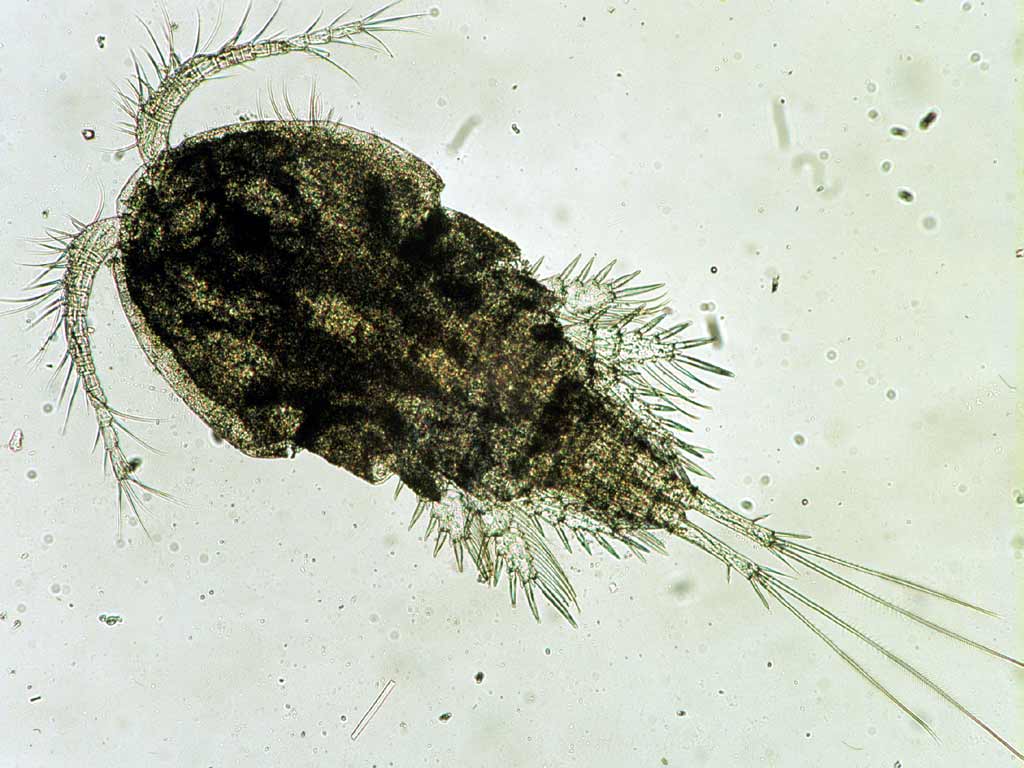
Cyclops sp.
Scientific classification Edit this classification
Kingdom: Animalia
Phylum: Arthropoda
Class: Copepoda
Infraclass: Neocopepoda
Superorder: Podoplea
Order: Cyclopoida
Burmeister, 1834
Families

See text

The Cyclopoida are an order of small crustaceans from the class Copepoda. Like many other copepods, members of Cyclopoida are small, planktonic animals living both in the sea and in freshwater habitats. They are capable of rapid movement. Their larval development is metamorphic, and the embryos are carried in paired or single sacs attached to first abdominal somite.[1]

Distinguishing features

[edit]

Cyclopoids are distinguished from other copepods by having first antennae shorter than the length of the head and thorax, and uniramous second antennae. The main joint lies between the fourth and fifth segments of the body.[2]

Taxonomy

[edit]

Cyclopoida contains 30 families:[3]

Several more families are included in suborder Poecilostomatoida, a temporary name for the "poecilostome lineage" [4] The Poecilostomatoida were previously treated as a separate order, but molecular phylogenies show that this lineage is nested within the Cyclopoida.[5]

References

[edit]
[edit]
Revisions and contributorsEdit on WikipediaRead on Wikipedia
from Grokipedia
Cyclopoida is an order of small, primarily planktonic or benthic crustaceans in the class Copepoda, distinguished by their fusiform body shape, short first antennae with 6 to 17 segments, and a characteristic hopping or bouncing swimming motion. The order encompasses approximately 1,200 accepted species distributed across 15 families, including prominent ones such as Cyclopidae (with over 800 free-living freshwater species), Oithonidae, and Notodelphyidae. Taxonomically, Cyclopoida falls under the infraclass Neocopepoda and superorder Podoplea, with suborders including Cyclopida, Ergasilida, and Oithonida, reflecting recent phylogenetic revisions that incorporated former Poecilostomatoida lineages. Morphologically, cyclopoids are typically minute, measuring 0.5 to 2 mm in length (though some as small as 0.2 mm or reach up to 10 mm), lacking compound eyes and a true , with a prosome (cephalosome fused to metasome) that is wider than the narrower urosome. They possess uniramous antennae, gnathostomous mandibles, four pairs of biramous swimming legs, and caudal rami bearing four plumose setae, adaptations suited to their active, predatory lifestyles. Many species exhibit , particularly in symbiotic families like Notodelphyidae, where males may have prehensile antennae or reduced swimming forms. Ecologically, Cyclopoida inhabit a wide range of environments, from freshwater lakes and rivers to marine planktonic, benthic, and demersal zones, with numerous species forming symbiotic or parasitic associations, such as with ascidians (sea squirts) in families like Ascidicolidae and Notodelphyidae. Free-living forms, especially in Cyclopidae, dominate freshwater ecosystems as omnivorous predators feeding on , , rotifers, and even larvae, playing key roles in food webs and cycling. Reproduction involves naupliar and copepodid larval stages, with females often carrying eggs in external ovisacs or internal brood pouches, and some showing environmental adaptations like tolerance to in reservoirs. Notable genera include Cyclops, Oithona, and Diacyclops, which are widely distributed and serve as bioindicators of and trophic levels in aquatic systems.

Description and Morphology

General characteristics

Cyclopoida is an order of small crustaceans belonging to the class Copepoda and infraclass Neocopepoda. These organisms are characterized by their diminutive adult size, typically ranging from 0.2 to 5 mm in length, which enables them to occupy diverse microhabitats in aquatic environments. Members of this order exhibit either a planktonic or benthic lifestyle, often inhabiting freshwater, marine, or brackish waters where they contribute significantly to food webs as primary consumers or predators. A defining feature of Cyclopoida is the presence of a single median naupliar eye, also known as the cyclopic eye, which is a simple photoreceptor structure retained from the larval stage and used for basic light detection. This eye typically appears as a dark spot, either black or red, and distinguishes cyclopoids from many other orders. Their locomotion is adapted for quick evasion and foraging, featuring rapid, jerky swimming movements propelled by intermittent beats of the first antennae and swimming legs, resulting in a characteristic bouncing or erratic path through the water. The body of cyclopoids is segmented into a prosome, which comprises the fused , and a urosome, representing the , with a total of 10 to 11 somites across these regions. The prosome includes the cephalosome and four pedigerous thoracic somites, while the urosome consists of five somites, providing flexibility for movement and articulation between the major body divisions. Like other copepods, they share basic traits such as biramous appendages, though these are specialized in cyclopoids for their predatory or filter-feeding behaviors.

Body structure

The body of cyclopoid copepods is divided into two main regions: the prosome, which comprises the cephalosome (fused head) and the first four thoracic segments, and the urosome, which consists of five segments including the fifth thoracic segment, the genital , and three abdominal somites. In females, the genital somite is typically a double-somite formed by the fusion of the true genital somite and the first abdominal somite, resulting in four visibly distinct urosomal segments, while males possess six urosomal segments due to the lack of this fusion. The prosome is generally robust and ovoid, wider than the slender, tapering urosome, providing a compact form suited to their often planktonic or benthic lifestyles. A key feature is the major articulation, or joint, between the fourth and fifth thoracic segments, which separates the prosome from the urosome and allows significant flexibility in body movement. This articulation enables the characteristic "hopping" or bouncing locomotion typical of many free-living cyclopoids. The first antennae (antennules) are relatively short, typically comprising 6–17 segments and not extending beyond the prosome, unlike the elongated antennules of calanoid copepods. The second antennae are uniramous, consisting of four segments armed with setae, and serve primarily in feeding and manipulation. The swimming legs (pereopods 1–4) are biramous, with both the exopod and endopod rami three-segmented, each armed with setae and spines for propulsion and sensory functions. The fifth legs are reduced and uniramous, often rudimentary in parasitic forms but functional in free-living species. is pronounced in the appendages and body; females commonly carry paired egg sacs attached to the genital , while males exhibit modified, geniculate antennules adapted for grasping females during mating, along with differences in leg setation.

Sensory and reproductive organs

Cyclopoid copepods possess a naupliar eye, a simple photoreceptive structure retained from the larval stage, consisting of three ocelli arranged in a triangular configuration: two lateral and one median. This eye enables basic light detection and phototaxis, aiding in orientation and predator avoidance in aquatic environments. The ocelli are housed within pigmented cups that focus light onto rhabdomeric photoreceptors, with the structure varying slightly among species but generally lacking the complexity of compound eyes found in other crustaceans. Chemoreception is facilitated by the rostral organ, a paired sensory structure on the anterior cephalosome, and aesthetascs on the antennules. The rostral organ, projecting from the rostrum, bears sensory elements that detect chemical cues in the , supporting and mate location. Aesthetascs, specialized chemosensory setae on the antennules, are typically numbering around three in females along with numerous setae, allowing detection of dissolved substances such as pheromones or prey metabolites through their porous tips connected to sensory neurons. Reproductive organs are located in the genital , formed by the fusion of the sixth thoracic and first abdominal segments, featuring paired gonopores ventrally. In females, these gonopores connect to internal ducts leading from the , and spermathecae serve as storage organs for received during , enabling fertilization of multiple egg batches over time. Females typically carry fertilized eggs in external ovisacs attached to the first abdominal , where embryonic development occurs until naupliar larvae hatch, with clutch sizes varying by but often comprising 20-50 eggs per sac. In males, the sixth legs (P6) are modified into claspers, asymmetrical structures with setae and spines that grasp the female during , facilitating transfer to the gonopores. These adaptations ensure precise in the dynamic aquatic medium, with the claspers often exhibiting species-specific morphology for .

Taxonomy and Phylogeny

History of classification

The order Cyclopoida traces its taxonomic origins to , when established the family Cyclopidae to accommodate copepods characterized by their simple, uniramous antennae and cyclopiform body shape. This grouping initially focused on free-living freshwater forms like Cyclops, but the order itself was formally defined by in 1834, expanding the scope to include diverse small crustaceans with a fused rostrum, a single naupliar eye, and podoplean limb structure. By the early , classifications emphasized divisions within Cyclopoida between free-living , often in freshwater or planktonic habitats, and parasitic forms adapted to hosts such as and , with the latter exhibiting reduced segmentation and specialized mouthparts. Wilhelm Giesbrecht's morphological studies in 1903, detailed in his contributions to , highlighted these adaptations through detailed illustrations and descriptions of antennal and thoracic limb structures, influencing subsequent keys for identification. This period saw parasitic groups like those with poecilostome mouthparts often segregated, setting the stage for treating Poecilostomatoida as a distinct order by the mid-20th century. A significant revision occurred in 2004 with Geoffrey Boxshall and Sheila Halsey's comprehensive monograph on diversity, which integrated morphological data across over 11,500 and proposed closer affinities between Cyclopoida and Poecilostomatoida based on shared apomorphies in limb setation and body tagmosis, effectively bridging traditional divides without fully merging the orders. The study by Khodami et al. further advanced this by using molecular data to nest Poecilostomatoida within Cyclopoida as a derived , though the paper was retracted in 2020 due to concerns over sequence authenticity; nevertheless, the of Cyclopoida excluding poecilostomes has been corroborated by subsequent phylogenomic analyses. The shift from purely morphology-based systems to integrated molecular phylogenies, particularly employing 18S rDNA sequences, has redefined Cyclopoida boundaries since the 2000s, revealing multiple origins of and supporting a monophyletic core of free-living families while incorporating parasitic lineages. These analyses, building on earlier ribosomal markers, underscore the order's evolutionary plasticity and now inform a with approximately 103 families.

Current taxonomy

The current taxonomy of the order Cyclopoida recognizes four suborders based on a 2019 molecular phylogenetic revision, reflecting major evolutionary lineages within the group. These suborders are Cyclopicinida, comprising primarily free-living species in freshwater environments; Ergasilida, dominated by parasitic forms on fish (incorporating former Poecilostomatoida); Cyclopida, including many marine planktonic taxa; and Oithonida, encompassing small marine planktonic species often contributing to oceanic food webs. The order Cyclopoida encompasses approximately 103 families as of recent compilations (Walter & Boxshall, 2023), including recent additions such as Nodocopsidae (established in 2025), integrating diverse ecological roles from free-living to highly specialized parasitic lifestyles. Notable families include the Cyclopidae, a predominantly free-living group with around 800 described species, many inhabiting freshwater systems; the Lernaeidae, known for their parasitic members that attach to hosts; the Oithonidae, a key family of small marine planktonic copepods contributing significantly to oceanic food webs; and the Ergasilidae, specializing in of freshwater and marine fishes. Representative genera illustrate the order's ecological breadth, such as Cyclops in the Cyclopidae, a cosmopolitan freshwater genus often used as a model for cyclopoid ; Oithona in the Oithonidae, an abundant marine planktonic genus pivotal in global carbon cycling; and Lernaea in the Lernaeidae, notorious as parasitic "fish lice" that embed in fish tissues, causing significant impacts. This classification incorporates former independent orders like Notodelphyoida into the Cyclopoida, supported by molecular data demonstrating their nested position within the podoplean s, thereby unifying symbiotic and parasitic lineages under a single order.

Phylogenetic relationships

Cyclopoida is positioned within the superorder Podoplea of the subclass Neocopepoda, where it forms one of the three major orders alongside Harpacticoida and Siphonostomatoida, encompassing over 80% of diversity. Molecular phylogenies indicate a close relationship between Cyclopoida and Siphonostomatoida, often resolving as sister groups within Podoplea, though some analyses reveal a basal among the three orders due to limited sampling. This placement reflects early divergences in Neocopepoda, with Podoplea emerging as a monophyletic distinct from the superorder Gymnoplea. Internally, Cyclopoida exhibits a resolved phylogeny divided into four main clades, elevated to suborder rank as Cyclopicinida, Ergasilida, Cyclopida, and Oithonida, with Cyclopicinida branching basally. This four-clade structure is robustly supported by concatenated analyses of 18S and 28S rRNA genes alongside COI mitochondrial DNA from 189 specimens across 39 families, confirming for 16 families and highlighting in others like Cyclopidae. Mitogenome data from diverse cyclopoids further corroborate this division, showing consistent clustering of parasitic lineages within Ergasilida and Cyclopida, though nucleotide- versus amino acid-based trees occasionally differ in fine-scale arrangements. Key studies, such as Khodami et al. (2019), have integrated molecular markers to refine these relationships, demonstrating that families like Thaumatopsyllidae nest within rather than as a separate order. However, conflicts arise with morphological , particularly in parasitic forms where antennal reductions and segmentation losses—traits once used to justify distinct orders like Poecilostomatoida—do not align with molecular topologies, underscoring in host attachment structures. Synthesis efforts, including Bernot et al. (2021), reconcile these by prioritizing molecular data while noting undersampling (only 3% of cyclopoid species phylogenetically analyzed). Evolutionary trends within Cyclopoida trace from free-living ancestors in marine and freshwater habitats to multiple independent transitions to , particularly in Ergasilida and Cyclopida, facilitated by adaptations like maxilliped modifications for host gripping and body streamlining for endoparasitic lifestyles. These shifts, supported by fossil-calibrated phylogenies, highlight at least five origins of across the order, contrasting with the singular parasitic trajectory in sister Siphonostomatoida.

Diversity and Distribution

Species diversity

The order Cyclopoida comprises approximately 4,600 accepted across about 30 families, representing a significant portion of . Recent estimates suggest thousands of valid based on ongoing taxonomic revisions, including the 2017 merger of Poecilostomatoida into Cyclopoida. The family Cyclopidae dominates the diversity, encompassing about 940 that are predominantly free-living in freshwater and marine planktonic habitats. Parasitic and commensal forms account for a substantial portion of the remaining diversity, with many adapted to symbiotic or parasitic lifestyles on hosts ranging from to ; notable examples include the Ergasilidae (approximately 140 ) and Taeniacanthidae. These forms highlight the order's ecological versatility. Cyclopoida show pronounced in systems, where stygobionts—obligate subterranean —number over 330, many restricted to specific aquifers or regions. Tropical regions also harbor elevated diversity, with the Neotropics alone supporting at least 148 free-living freshwater . Discoveries continue apace, including new genera like Pseudohesperocyclops from deep Thai aquifers in 2024, underscoring the order's underexplored richness. Relative to other copepod orders, Cyclopoida ranks second in species richness after Harpacticoida, which includes over 4,500 primarily in benthic habitats. This positions Cyclopoida as a key contributor to the subclass's total of approximately 15,000 valid .

Geographic distribution

Cyclopoida exhibit a broad global distribution, with many displaying cosmopolitan patterns across marine and freshwater environments. In marine habitats, such as Oithona similis are widely regarded as cosmopolitan, occurring in all major ocean basins from polar to subtropical regions, including the , , and temperate waters of the Atlantic, Pacific, and Indian Oceans. In freshwater systems, genera like Cyclops are predominantly Holarctic, with such as Cyclops scutifer distributed across northern temperate and zones of , , and . These widespread distributions contrast with endemic patterns, particularly among groundwater-adapted , where high levels of local occur in isolated aquifers; for instance, 19 stygobitic cyclopoid are endemic to in European karst systems. Regional hotspots for Cyclopoida diversity are evident in tropical regions, especially for parasitic forms within families like Lernaeidae. Parasitic species such as Lernaea cyprinacea are native to tropical and subtropical areas of and , where they infect in rivers and lakes across these continents. Similarly, groundwater endemics form hotspots in landscapes of and ; in Australia's region, cyclopoid copepods show short-range confined to specific calcrete aquifers, reflecting isolation in arid subterranean environments. Dispersal of Cyclopoida occurs primarily through passive mechanisms, including transport via water currents in connected aquatic systems and attachment to birds for overland movement between water bodies. Human-mediated introduction has facilitated the spread of invasive species, such as Cyclops abyssorum divergens, which originated in central and southern Europe to southwest Asia but has been introduced to North American water bodies, likely via ship ballast water. Latitudinal gradients in Cyclopoida diversity reveal distinct patterns between freshwater and marine realms. Freshwater cyclopoids, particularly in the family Cyclopidae, exhibit higher in temperate zones compared to tropical or polar latitudes, with diversity peaking in the Holarctic region due to historical and climatic factors. In contrast, marine cyclopoids display greater uniformity across latitudes, with cosmopolitan species like Oithona similis maintaining consistent presence from high latitudes to the , though overall diversity in marine environments shows a subtropical peak without strong cyclopoid-specific variation.

Habitat types

Cyclopoid copepods exhibit remarkable habitat versatility, occupying diverse microenvironments that reflect their evolutionary adaptations to specific ecological niches. Planktonic species, such as those in the family Oithonidae, dominate open-water columns in marine and freshwater systems, particularly the epipelagic zone of oceans and lakes where they contribute significantly to pelagic communities. These free-swimming forms leverage their rapid locomotion for dispersal in well-oxygenated, sunlit waters, often reaching high abundances in neritic and coastal regions. In benthic and interstitial settings, cyclopoids thrive in sediments, damp mosses, leaf litter, and aquifers, showcasing specialized adaptations to low-flow, confined spaces. Stygobiotic species in aquifers, numbering over 330 described taxa, display physiological modifications including , eye loss, and elongated appendages to navigate dark, oxygen-poor environments with limited food resources. forms, akin to those in harpacticoid-like cyclopoids, often exhibit reduced body segmentation and enhanced urosomal flexibility, facilitating movement through pore spaces in sandy substrates or moist terrestrial microhabitats like arboreal mosses. These adaptations enable persistence in heterogeneous, semi-terrestrial, and hypogean niches, such as ephemeral seeps and psammon layers. Epiphytic and parasitic cyclopoids occupy surfaces of aquatic plants, , or animal hosts, with many forming symbiotic associations that influence host . For instance, species of Notodelphys inhabit the branchial cavities of ascidian , embedding within host tissues for protection and nutrient access. Parasitic members develop attachment organs, such as modified second antennae and maxillae, to secure onto hosts ranging from to , often undergoing morphological transformations like body elongation and limb reduction to optimize anchorage in dynamic environments. These habitat preferences underscore the order's , linking structural flexibility—such as reduced segmentation in confined spaces—to survival across microhabitats.

Life Cycle and Reproduction

Developmental stages

The ontogeny of Cyclopoida follows the typical life cycle, commencing with the egg stage. Eggs are produced by females and carried externally in ovisacs attached to the or urosome, often in pairs containing dozens to hundreds of eggs depending on species and environmental conditions. These eggs undergo embryonic development within the ovisacs before , with duration influenced by and ; for instance, in free-living species like Oithona similis, occurs after 1-2 days at 15-20°C. typically releases free-living nauplii, though some parasitic forms may show internal or reduced free naupliar phases to facilitate direct host infection. The naupliar phases comprise six planktonic instars (NI to NVI), during which the larvae are primarily free-swimming and feed on or . Early stages (NI-NII) feature a simple with three pairs of appendages: uniramous antennules for sensory functions, biramous antennae, and mandibles adapted for swimming and grasping food. Progressive molts lead to the addition of setose buds for the maxillules (around NIII) and maxillae, enhancing feeding efficiency, while the body remains unsegmented without arthrodial membranes. By NVI, buds for the first and second swimming legs appear on the posterior , marking preparation for , with total naupliar duration ranging from 3-10 days in species like Cyclopina longifera at 25°C. In parasitic Cyclopoida, naupliar stages may be abbreviated (2-5 instars) and non-feeding, relying on reserves for host-seeking behavior. Following the naupliar period, the copepodite phases consist of five instars (CI to CV), which increasingly resemble scaled-down adults with articulated somites and functional thoracic legs for locomotion. In CI, the first two swimming legs are fully developed for swimming, while subsequent stages add legs 3-5 progressively, with the urosome elongating to include up to four abdominal somites by CV. Sexual dimorphism emerges in CIV and CV, particularly in the morphology of the fifth legs—females develop a bifurcate structure, while males show geniculation or chelate modifications—and the female genital complex begins forming. The final molt to the adult (CVI) completes development, with copepodite duration varying from 5-15 days across species, influenced by food availability and temperature. Metamorphosis in Cyclopoida, particularly pronounced in parasitic lineages, occurs during the NVI to CI transition and involves host-specific morphological transformations to adapt to endoparasitic or ectoparasitic lifestyles. Free-living forms undergo moderate changes, such as reconfiguration of limb buds into biramous swimming legs, but parasitic species exhibit extreme reductions, including fusion or loss of thoracic segments and degeneration of up to four pairs of swimming legs in adults to prioritize attachment organs like suckers or hooks. These adaptations reflect phylogenetic shifts toward , correlating with larger egg sizes and abbreviated larval phases for rapid host colonization.

Reproductive biology

In Cyclopoida, mating typically involves males detecting and approaching females through chemical cues or patterns, followed by physical grasp using the geniculate right antennule to hold the in position during copulation. The male then transfers a single to the 's genital using modified appendages, such as the fifth legs, enabling . after which the male releases the . Fecundity in free-living Cyclopoida generally ranges from 20 to 100 per , carried in paired external egg sacs attached to the female's urosome, with iteroparous allowing multiple clutches over the lifespan. is rare or absent in this order, with predominantly sexual to maintain in variable aquatic environments. In parasitic species, such as those in Lernaeidae, can increase with larger sizes relative to body size, though size decreases, reflecting a optimized for host exploitation. Reproductive strategies vary between free-living and parasitic modes. Free-living forms, like many Cyclopidae, exhibit continuous or iteroparous breeding in stable planktonic habitats, producing multiple clutches annually without in reproductive phases, while freshwater species often show seasonal peaks aligned with spring blooms. Parasitic Cyclopoida, conversely, display altered cycles, including in some Lernaeidae where eggs develop internally in a brood pouch, eliminating external sacs and adapting to host availability for synchronized release of live offspring. Sex ratios in free-living Cyclopoida are typically near 1:1 at the primary stage due to chromosomal determination, though adult populations often become female-biased from higher male mortality during mate searching. In parasitic species, ratios can skew further toward females, influenced by host density and availability, which limits male dispersal and survival.

Ecology and Behavior

Feeding mechanisms

Cyclopoid copepods exhibit diverse feeding strategies adapted to their lifestyles, ranging from active predation in free-living forms to specialized tissue extraction in parasites. The primary modes include feeding, suspension or filter feeding, and parasitic suction, each leveraging modifications of the mouthparts and appendages. These mechanisms enable cyclopoids to exploit a wide array of sources, from microorganisms to host tissues, contributing to their ecological success across freshwater and marine environments. In feeding, prevalent among free-living freshwater cyclopoids such as Cyclops and Diacyclops thomasi, individuals actively detect and seize prey using mechanoreceptive antennules to sense vibrations from motile organisms like smaller , , or eggs. Once detected, the antennules grasp the prey, while maxillipeds and mandibles manipulate and tear it for ingestion, allowing selective predation on soft-bodied items while avoiding hard-shelled prey. This strategy supports omnivorous or carnivorous diets, with clearance rates up to 180 mL per individual per day in species like D. thomasi. Suspension or filter feeding occurs in certain marine and planktonic cyclopoids, exemplified by Oithona species, where maxillipeds and second maxillae generate localized feeding currents to draw in suspended particles such as , , and small protists. Prey within a detection range of about 0.2 mm is captured via a rapid jump followed by suction from extended maxillae, enabling efficient particle interception in low-turbulence waters without continuous swimming. This passive-ambush hybrid mode contrasts with the active pursuit of feeders and sustains lower metabolic demands. Parasitic cyclopoids, particularly in the family Ergasilidae, employ modified mouthparts for host tissue penetration, featuring a two-segmented with a falcate terminal segment and short maxillae that form a piercing stylet-like apparatus. Attached to or , they extract or fluids by puncturing tissues, as observed in Ergasilus sieboldi, causing localized damage while minimizing host detection through reduced mobility. This ectoparasitic mode relies on antennae and maxillipeds for initial attachment rather than active foraging. Digestion in cyclopoids occurs in a simple tubular gut comprising an , a multi-zoned for enzymatic breakdown, and a , with diverticula in some species aiding absorption. In forms like Macrocyclops albidus, the processes fragmented prey into solubilized s via , while parasitic species adapt the gut for fluid-based diets with reduced epithelial activity during attachment. Gut levels vary with feeding state, dropping 2–8 times in diapausing individuals but remaining functional for opportunistic intake.

Ecosystem roles

Cyclopoid copepods occupy a pivotal position in aquatic food webs as omnivorous organisms that feed on both and smaller , functioning as herbivores, detritivores, and carnivores depending on availability and life stage. This dietary flexibility positions them as a critical link between primary producers and higher trophic levels, such as larval and , which rely heavily on cyclopoids as prey. In freshwater systems, species like Thermocyclops decipiens and Mesocyclops longisetus exemplify this role by transferring energy from to planktivorous , thereby supporting secondary production and maintaining balance. In terms of , cyclopoids often dominate freshwater communities, contributing up to 40-50% of total in certain lakes and reservoirs, particularly during spring and in eutrophic conditions. For instance, in subtropical reservoirs like Bariri, cyclopoid species such as Tropocyclops prasinus and Mesocyclops longisetus account for the majority of , driving secondary production rates that exceed those of cladocerans. In marine environments, genera like Oithona play a similar role, serving as key secondary producers and comprising a significant portion of mesozooplankton in coastal and open-ocean systems, where they facilitate energy transfer to and other predators. Cyclopoids contribute to nutrient cycling primarily through their grazing activity, which regulates populations and prevents excessive algal blooms in both freshwater and marine habitats. By selectively consuming and , they promote nutrient remineralization in the , with species like Diacyclops thomasi indirectly modulating bloom initiation via trophic cascades. Their fecal material, often in the form of loose aggregates rather than compact pellets, enhances recycling of and nutrients in the upper layers, though it may reduce deep vertical export compared to calanoid copepods; in some cases, coprophagous behavior by cyclopoids like Oithona further promotes nutrient retention and turnover. This grazing-mediated control is evident in eutrophic lakes, where high cyclopoid densities correlate with suppressed peaks, aiding overall biogeochemical balance. As indicator species, cyclopoids exhibit sensitivity to environmental stressors, making them valuable for water quality. Their abundance and community composition respond predictably to and ; for example, increased densities of tolerant species like Thermocyclops decipiens signal elevated levels and degraded conditions in reservoirs. In South American freshwater systems, cyclopoids such as Acanthocyclops robustus and Metacyclops anceps serve as reliable bioindicators of trophic status, with shifts in dominance reflecting impacts and enabling assessment of .

Symbiotic and parasitic interactions

Cyclopoid copepods exhibit a range of symbiotic associations, including and , where they inhabit host surfaces or internal tissues without free-living phases in their adult stages. Commensal species, such as those in the family Notodelphyidae, often reside in the branchial baskets, postabdomens, or cloacal pouches of ascidians, deriving nutrients from host-filtered particles while causing minimal apparent harm. For instance, females of genera like Doropygus are pharyngeal associates in ascidians, showing variability in morphology adapted to these enclosed microhabitats. These interactions highlight host specificity, with copepods like Clausidium persiaensis exclusively infesting the chambers of the ghost shrimp Callianidea typa, at densities up to 64 individuals per host, potentially benefiting from host protection without clear detriment. A substantial proportion of cyclopoid species engage in parasitism, with many families dedicated to this lifestyle, affecting marine and freshwater invertebrates and vertebrates alike. Ectoparasitic forms, such as Ergasilus species in the family Ergasilidae, attach to or eggs, feeding on host tissues and mucus, which can impair respiration and lead to secondary infections. Endoparasites like cyprinacea embed their heads into fish musculature, anchoring via holdfasts and extracting nutrients, often resulting in tissue damage and reduced host vigor. Parasitic cyclopoids frequently alter their life cycles for transmission, featuring abbreviated development with planktonic naupliar or copepodid stages that facilitate multi-host switches; for example, ergasilids use free-swimming infective copepodids to locate definitive hosts after initial development on intermediate hosts. Host impacts from these interactions vary, with adaptations like cyst induction aiding immune evasion. In the case of Pachypygus gibber (Notodelphyidae), infestation in the pharyngeal basket of the ascidian Ciona robusta reduces host hatching rates by 12% and larval settlement by 63%, alongside transgenerational effects causing 66% higher offspring mortality and stunted growth. Similarly, the newly described Ive ptychoderae induces cysts in the genital wings of the acorn worm Ptychodera flava, leading to localized tissue degeneration and prevalence up to 69%, while feeding on host eggs and tissues through a transformed vermiform body. Some free-living cyclopoids, such as Cyclops species, serve as intermediate vectors for metazoan parasites like Dracunculus medinensis, ingesting nematode larvae that develop within them before transmission to vertebrate hosts via contaminated water. These associations underscore the cyclopoids' role in host-parasite dynamics, often involving morphological camouflage or encapsulation to bypass immune responses.

Economic and Medical Importance

Applications in aquaculture

Cyclopoid copepods are widely employed as live feeds in hatcheries, where their nauplii provide superior compared to traditional options like rotifers or Artemia, particularly for first-feeding larval stages of marine and and . The nauplii are rich in essential fatty acids, including DHA (15.5% dry weight) and EPA (4.9% dry weight), supporting enhanced larval survival and growth. Species such as the marine Oithona colcarva and the freshwater Cyclops sp. are commonly used, with Oithona nauplii promoting better acceptance by small-mouthed larvae due to their planktonic nature and weak escape responses. In tropical aquaculture systems, Apocyclops dengizicus stands out for feeding postlarvae of species like , where it yields higher survival rates (41.7 ± 2.9%) and specific growth rates (11.0 ± 0.4%/day) than Artemia alone (28.7 ± 1.2% survival, 9.3 ± 0.7%/day). Cyclopoid nauplii offer advantages over Artemia due to their smaller size (78–245 μm versus ~250 μm for Artemia nauplii), facilitating ingestion by delicate larvae and reducing handling stress without the need for enrichment. This results in improved DHA:EPA:ARA ratios (e.g., 10.2:3.2:1 in A. dengizicus), aligning closely with larval nutritional requirements. Mass cultivation of cyclopoids occurs in aerated tanks at salinities of 20–30 ppt and temperatures of 26–30°C, with diets such as 1:1 mixtures of Isochrysis galbana, Chaetoceros calcitrans, and Tetraselmis tetrathele provided at 2–5 × 10^6 cells/mL. High-density rearing achieves populations of 5,000–10,000 individuals per liter, as seen in A. dengizicus reaching 5 individuals/mL and related Apocyclops royi sustaining ≥6,000 nauplii/L/day at 10,000 ind./L stocking. Key challenges in cyclopoid cultivation include managing cannibalism, which can cause up to 99% mortality in dense cultures, addressed by separating nauplii and eggs via sedimentation or daily harvesting. Integration into sustainable feeds involves using cost-effective alternatives like palm oil mill effluent-grown yeast, which boosts nauplii production while minimizing environmental impacts from algal production.

Impacts as parasites

Parasitic species within the Cyclopoida, particularly those in the families Ergasilidae and Lernaeidae, inflict substantial damage on fish in aquaculture settings by targeting gills and external surfaces, leading to respiratory impairment and secondary infections. Ergasilus species, commonly known as gill maggots, attach to the gills of freshwater fish, feeding on epithelial tissue and mucus, which disrupts oxygen exchange and causes respiratory distress, including rapid breathing and gill swelling in heavily infested individuals. Similarly, Lernaea cyprinacea, or anchor worm, embeds its head into the skin, fins, or muscles of fish such as carp and goldfish, resulting in open wounds, hemorrhaging, and bacterial invasions that can cause significant mortality in pond cultures, with reported rates reaching up to 40% in severe outbreaks over short periods. These infestations not only reduce fish growth and condition but also contribute to economic losses through decreased yields and treatment costs in intensive farming operations. Cyclopoid copepods, especially genera like Cyclops, serve as intermediate hosts for the parasitic nematode , the causative agent of guinea worm disease, a transmitted to s and other mammals through the ingestion of contaminated containing infected s. This life cycle stage allows the larvae to develop within the copepod before release into sources, facilitating human via untreated . Global eradication efforts have reduced human cases dramatically; as of 2024, only 15 human cases were reported worldwide, with 4 confirmed cases in 2025 to date. The disease now primarily affects animal reservoirs, such as dogs, posing an emerging concern. While other emerging zoonotic risks from cyclopoids remain limited, their role in vectoring helminths underscores the need for quality management in endemic areas. Management of cyclopoid parasites in aquaculture relies on chemical treatments such as , an that inhibits synthesis in larvae and adults, effectively reducing infestation levels without immediate harm to at approved doses. However, repeated applications have led to resistance development in some parasitic populations, complicating control efforts and prompting integrated approaches like improved and biological agents to mitigate reliance on chemotherapeutics.

Use in biological control

Cyclopoid copepods, particularly species in the genus Mesocyclops, have been employed as biological control agents to suppress populations of mosquito larvae, especially those of Aedes aegypti, the primary vector of . These copepods act as voracious predators, consuming mosquito larvae in aquatic habitats such as water storage containers, ponds, and fields. Laboratory studies demonstrate that Mesocyclops species can consume 95–100% of Aedes first-instar larvae within short periods, preferentially targeting them over other prey like Culex quinquefasciatus (71% consumption) or Anopheles farauti (54%). Key species utilized include Mesocyclops aspericornis and Thermocyclops spp., which exhibit high predatory efficiency while showing minimal non-target effects on beneficial aquatic organisms. For instance, M. aspericornis has been shown to destroy up to two-thirds of wild Aedes larvae in container environments without significant impacts on non-mosquito fauna. Deployment strategies involve introducing these copepods into mosquito breeding sites, with notable programs in since the 1990s, where Mesocyclops were disseminated across villages, leading to the elimination of A. aegypti in 40 of 46 communes through community-based efforts. In , Mesocyclops species collected locally, such as M. aspericornis, have been evaluated and introduced into tire piles and water bodies for Aedes control, demonstrating sustained predation in subtropical conditions. Field trials have reported substantial reductions in mosquito populations, with up to 100% larval elimination in simulated and community settings in , and approximately 80–90% control efficacy in container habitats. These copepods are often integrated with * var. israelensis (Bti), a bacterial , enhancing overall suppression without compromising copepod survival or efficacy.

References

Add your contribution
Related Hubs
User Avatar
No comments yet.