Hubbry Logo
Daniel BurnhamDaniel BurnhamMain
Open search
Daniel Burnham
Community hub
Daniel Burnham
logo
8 pages, 0 posts
0 subscribers
Be the first to start a discussion here.
Daniel Burnham
Daniel Burnham
from Wikipedia

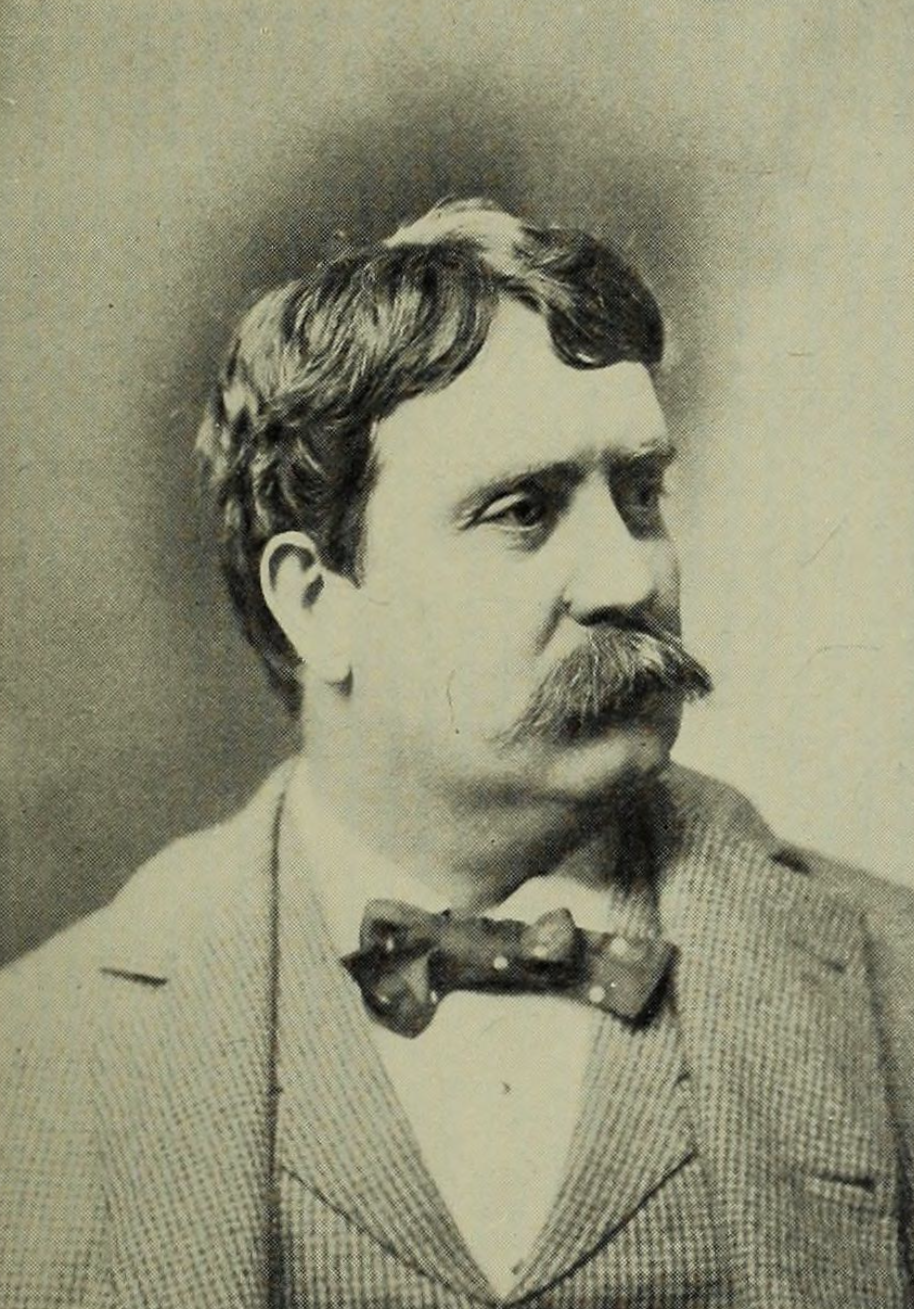
Daniel Hudson Burnham FAIA (September 4, 1846 – June 1, 1912) was an American architect and urban designer. A proponent of the Beaux-Arts movement, he may have been "the most successful power broker the American architectural profession has ever produced."[1]

Key Information

A successful Chicago architect, he was selected as Director of Works for the 1892–93 World's Columbian Exposition, colloquially referred to as "The White City". He had prominent roles in the creation of master plans for the development of a number of cities, including the Plan of Chicago, and plans for Manila, Baguio and downtown Washington, D.C. He also designed several famous buildings, including a number of notable skyscrapers in Chicago, the Flatiron Building of triangular shape in New York City,[2] Washington Union Station in Washington D.C., London's Selfridges department store, and San Francisco's Merchants Exchange.

Although best known for his skyscrapers, city planning, and for the White City, almost one third of Burnham's total output – 14.7 million square feet (1.37 million square metres) – consisted of buildings for shopping.[3]

Early life

[edit]
Burnham's childhood home in Henderson, New York

Burnham was born in Henderson, New York, the son of Elizabeth Keith (Weeks) and Edwin Arnold Burnham.[4] He was raised in the teachings of the Swedenborgian, also called "The New Church"[5] which ingrained in him the strong belief that man should strive to be of service to others.[6] At the age of eight, Burnham moved to Chicago[4] and his father established there a wholesale drug business which became a success.[7]

Burnham was not a good student, but he was good at drawing. He moved to the eastern part of the country at the age of 18 to be taught by private tutors in order to pass the admissions examinations for Harvard and Yale, failing both apparently because of a bad case of test anxiety. In 1867, when he was 21 he returned to Chicago and took an apprenticeship as a draftsman under William LeBaron Jenney of the architectural firm Loring & Jenney. Architecture seemed to be the calling he was looking for, and he told his parents that he wanted to become "the greatest architect in the city or country".[7]

Nevertheless, the young Burnham still had a streak of wanderlust in him, and in 1869 he left his apprenticeship to go to Nevada with friends to try mining gold, at which he failed. He then ran for the Nevada state legislature and failed to be elected. Broke, he returned again to Chicago and took a position with the architect L. G. Laurean. When the Great Chicago Fire hit the city in October 1871, it seemed as if there would be endless work for architects, but Burnham chose to strike out again, becoming first a salesman of plate glass windows, then a druggist. He failed at the first and quit the second. He later remarked on "a family tendency to get tired of doing the same thing for very long".[7]

Career

[edit]
The Montauk Building, c. 1886

At age 26, Burnham moved on to the Chicago offices of Carter, Drake and Wight where he met future business partner John Wellborn Root, who was 21 and four years younger than Burnham. The two became friends and then opened an architectural office together in 1873. Unlike his previous ventures, Burnham stuck to this one.[7] Burnham and Root went on to become a very successful firm. Their first major commission came from John B. Sherman, the superintendent of the massive Union Stock Yards in Chicago, which provided the livelihood – directly or indirectly – for one-fifth of the city's population. Sherman hired the firm to build for him a mansion on Prairie Avenue at Twenty-first Street among the mansions of Chicago's other merchant barons. Root made the initial design. Burnham refined it and supervised the construction. It was on the construction site that he met Sherman's daughter, Margaret, whom Burnham married in 1876 after a short courtship.[8] Sherman commissioned other projects from Burnham and Root, including the Stone Gate, an entry portal to the stockyards which became a Chicago landmark.[9]

In 1881, the firm was commissioned to build the Montauk Building, the tallest building in Chicago at the time. To solve the problem of the city's water-saturated sandy soil and bedrock 125 feet (38 m) below the surface, Root came up with a plan to dig down to a "hardpan" layer of clay on which was laid a 2-foot (0.61 m) thick pad of concrete overlaid with steel rails placed at right-angles to form a lattice "grill", which was then filled with Portland cement. This "floating foundation" was, in effect, artificially-created bedrock on which the building could be constructed. The completed building was so tall compared to existing buildings that it defied easy description, and the name "skyscraper" was coined to describe it. Thomas Talmadge, an architect and architectural critic said of the building, "What Chartres was to the Gothic cathedral, the Montauk Block was to the high commercial building."[10]

Masonic Temple Building in Chicago

Burnham and Root went on to build more of the first American skyscrapers, such as the Masonic Temple Building[11] in Chicago. Measuring 21 stories and 302 feet, the temple held claims as the tallest building of its time, but was torn down in 1939.

The talents of the two partners were complementary. Both men were artists and gifted architects, but Root had a knack for conceiving elegant designs and was able to see almost at once the totality of the necessary structure. Burnham, on the other hand, excelled at bringing in clients and supervising the building of Root's designs. They each appreciated the value of the other to the firm. Burnham also took steps to ensure their employees were happy: he installed a gym in the office, gave fencing lessons and let employees play handball at lunch time. Root, a pianist and organist, gave piano recitals in the office on a rented piano. Paul Starrett, who joined the office in 1888 said "The office was full of a rush of work, but the spirit of the place was delightfully free and easy and human in comparison to other offices I had worked in."[12]

Although the firm was extremely successful, there were several notable setbacks. One of their designs, the Grannis Block in which their office was located, burned down in 1885 necessitating a move to the top floor of The Rookery, another of their designs. Then, in 1888, a Kansas City, Missouri, hotel they had designed collapsed during construction, killing one man and injuring several others. At the coroner's inquest, the building's design came in for criticism. The negative publicity shook and depressed Burnham. Then in a further setback, Burnham and Root also failed to win the commission for design of the giant Auditorium Building, which went instead to their rivals, Adler & Sullivan.[13]

On January 15, 1891, while the firm was deep in meetings for the design of the World's Columbian Exposition, Root died after a three-day course of pneumonia. As Root had been only 41 years old, his death stunned both Burnham and Chicago society.[14] After Root's death, the firm of Burnham and Root, which had had tremendous success producing modern buildings as part of the Chicago School of architecture, was renamed D.H. Burnham & Company. After that the firm continued its successes and Burnham extended his reach into city design.[15]

Court of Honor and Grand Basin — World's Columbian Exposition
The Agricultural Building at night (1893)

World's Columbian Exposition

[edit]

Burnham and Root had accepted responsibility to oversee the design and construction of the World's Columbian Exposition in Chicago's then-desolate Jackson Park on the south lakefront. The largest world's fair to that date (1893), it celebrated the 400-year anniversary of Christopher Columbus's famous voyage. After Root's sudden and unexpected death, a team of distinguished American architects and landscape architects, including Burnham, Frederick Law Olmsted, Charles McKim, Richard M. Hunt, George B. Post, and Henry Van Brunt radically changed Root's modern and colorful style to a Classical Revival style. Only the pavilion by Louis Sullivan was designed in a non-Classical style. To ensure the project's success, Burnham moved his personal residence into a wooden headquarters, called "the shanty" on the burgeoning fairgrounds to improve his ability to oversee construction.[16] The construction of the fair faced huge financial and logistical hurdles, including a worldwide financial panic and an extremely tight timeframe, to open on time.

Considered the first example of a comprehensive planning document in the nation, the fairground featured grand boulevards, classical building facades, and lush gardens. Often called the "White City," it popularized neoclassical architecture in a monumental, yet rational Beaux-Arts style. As a result of the fair's popularity, architects across the U.S. were said to be inundated with requests by clients to incorporate similar elements into their designs.

The control of the fair's design and construction was a matter of dispute between various entities, particularly the National Commission which was headed by George R. Davis, who served as Director-General of the fair. It was also headed by the Exposition Company which consisted of the city's leading merchants, led by Lyman Gage which had raised the money needed to build the fair, and Burnham as Director of Works. In addition the large number of committees made it difficult for construction to move forward at the pace needed to meet the opening day deadline.[17] After a major accident which destroyed one of the fair's premiere buildings, Burnham moved to take tighter control of construction, distributing a memo to all the fair's department heads which read "I have assumed personal control of the active work within the grounds of the World's Columbian Exposition ... Henceforward, and until further notice, you will report to and receive orders from me exclusively."[18]

After the fair opened, Olmsted, who designed the fairgrounds, said of Burnham that "too high an estimate cannot be placed on the industry, skill and tact with which this result was secured by the master of us all."[19] Burnham himself rejected the suggestion that Root had been largely responsible for the fair's design, writing afterwards:

What was done up to the time of his death was the faintest suggestion of a plan ... The impression concerning his part has been gradually built up by a few people, close friends of his and mostly women, who naturally after the Fair proved beautiful desired to more broadly identify his memory with it.[20]

Post-fair architecture

[edit]

Nevertheless, Burnham's reputation was considerably enhanced by the success and beauty of the fair. Harvard and Yale both presented him honorary master's degrees ameliorating his having failed their entrance exams in his youth. The common perception while Root was alive was that he was the architectural artist and Burnham had run the business side of the firm; Root's death, while devastating to Burnham personally, allowed him to develop as an architect in a way he might not have, had Root lived on.[21]

In 1901, Burnham designed the Flatiron Building in New York City, a trailblazing structure that utilized an internal steel skeleton to provide structural integrity; the exterior masonry walls were not load-bearing. This allowed the building to rise to 22 stories.[22] The design was that of a vertical Renaissance palazzo with Beaux-Arts styling, divided like a classical column, into base, shaft and capital.[23][24]

Other Burnham post-fair designs included the Land Title Building (1897) in Philadelphia, the first major building in that city not designed by local architects, and known as "the finest example of early skyscraper design" there,[25] John Wanamaker's Department Store (1902–1911) in Philadelphia, now Macy's, which is built around a central court,[26] Wanamaker's Annex (1904, addition: 1907–1910), in New York City, a 19-story full-block building which contains as much floorspace as the Empire State Building,[27] the neo-classical Gimbels Department Store (1908–1912) also in New York, now the Manhattan Mall, with a completely new facade,[28] the stunningly Art Deco Mount Wilson Observatory in the hills above Pasadena, California,[20] and Filene's Department Store (1912) in Boston, the last major building designed by Burnham.[29]

The Philippines

[edit]

In 1904, Burnham accepted a commission from Philippines Governor-General William Howard Taft. He had the opportunity to redesign Manila and plan a summer capital to be constructed in Baguio. Due to the Philippines status as a territory, Burnham was able to pursue his vision without having to win local approval. Altogether the project took six months to design, with only six weeks spent in the Philippines. After his plans were approved by William Cameron Forbes, Commissioner of Commerce and Police in the Philippines, Burnham was allowed to choose the principal architect, William E. Parsons. Burnham then departed to keep tabs on the project from the mainland. Burnham's plans emphasized improved sanitation, a cohesive aesthetic (Mission Revival), and visual reminders of government authority. In Manila, wide boulevards radiated out from the capital building. In Baguio, government structures loomed from the cliffs above the town. Burnham Park located in center downtown Baguio was built. The land for the Baguio project, 14,000 acres (5,700 ha) in total, was seized from local Igorots with approval of the Philippine Supreme Court. In Manila, neighborhoods ravaged by the war for independence were left untouched while a luxury hotel, casino, and boat clubs were designed for visiting mainland dignitaries.[30]

Title page of first edition

City planning and the Plan of Chicago

[edit]

Initiated in 1906 and published in 1909, Burnham and his co-author Edward H. Bennett prepared a Plan of Chicago which laid out plans for the future of the city. It was the first comprehensive plan for the controlled growth of an American city and an outgrowth of the City Beautiful movement. The plan included ambitious proposals for the lakefront and river. It also asserted that every citizen should be within walking distance of a park. Sponsored by the Commercial Club of Chicago,[31] Burnham donated his services in hopes of furthering his own cause.

Building off plans and conceptual designs from the World's Fair for the south lakefront,[32] Burnham envisioned Chicago as a "Paris on the Prairie". French-inspired public works constructions, fountains and boulevards radiating from a central, domed municipal palace became Chicago's new backdrop. Though only parts of the plan were actually implemented, it set the standard for urban design, anticipating the future need to control urban growth and continuing to influence the development of Chicago long after Burnham's death.

Plans in additional cities

[edit]
Burnham and Bennett's plan for San Francisco

Burnham's city planning projects did not stop at Chicago. Burnham had previously contributed to plans for cities such as Cleveland (the 1903 Group Plan),[33] San Francisco (1905),[34] Manila (1905),[35] and Baguio in the Philippines, details of which appear in the 1909 Plan of Chicago publication. His plans for the redesign of San Francisco were delivered to the Board of Supervisors in September 1905,[36] but in the haste to rebuild the city after the 1906 earthquake and fires Burnham's plans were ultimately ignored. In the Philippines, Burnham's plan for Manila never materialized due to the outbreak of World War II and the relocation of the capital to another city after the war. Some components of the plan, however, did come into fruition including the shore road which became Dewey Boulevard (now known as Roxas Boulevard) and the various neoclassical government buildings around Luneta Park, which very much resemble a miniature version of Washington, D.C., in their arrangement.

In Washington, D.C., Burnham did much to shape the 1901 McMillan Plan which led to the completion of the overall design of the National Mall. The Senate Park Commission, or McMillan Commission established by Michigan Senator James McMillan, brought together Burnham and three of his colleagues from the World's Columbian Exposition: architect Charles Follen McKim, landscape architect Frederick Law Olmsted Jr., and sculptor Augustus Saint-Gaudens. Going well beyond Pierre L'Enfant's original vision for the city, the plan provided for the extension of the Mall beyond the Washington Monument to a new Lincoln Memorial and a "pantheon" that eventually materialized as the Jefferson Memorial. This plan involved significant reclamation of land from swamp and the Potomac River and the relocation of an existing railroad station, which was replaced by Burnham's design for Washington Union Station.[37] As a result of his service on the McMillan Commission, in 1910 Burnham was appointed a member and first chairman of the United States Commission of Fine Arts helping to ensure implementation of the McMillan Plan's vision. Burnham served on the commission until his death in 1912.[38]

Influence

[edit]

In his career after the fair, Burnham became one of the country's most prominent advocates for the Beaux-Arts movement as well as the revival of Neo-classical architecture which began with the fair.[25] Much of Burnham's work was based on the classical style of Greece and Rome. In his 1924 autobiography, Louis Sullivan, one of the leading architects of the Chicago School, but one who had a difficult relationship with Burnham over an extended period of time, criticized Burnham for what Sullivan viewed as his lack of original expression and dependence on classicism.[39] Sullivan went on to claim that "the damage wrought by the World's Fair will last for half a century from its date, if not longer"[40] – a sentiment edged with bitterness, as corporate America of the early 20th century had demonstrated a strong preference for Burnham's architectural style over Sullivan's.

Burnham c. early 1900s

Burnham is famously quoted as saying, "Make no little plans. They have no magic to stir men's blood and probably will not themselves be realized." This slogan has been taken to capture the essence of Burnham's spirit.[41][42]

A man of influence, Burnham was considered the pre-eminent architect in America at the start of the 20th century. He held many positions during his lifetime, including the presidency of the American Institute of Architects.[43] Other notable architects began their careers under his aegis, such as Joseph W. McCarthy. Several of his descendants have worked as influential architects and planners in the United States, including his son, Daniel Burnham Jr., and grandchildren Burnham Kelly and Margaret Burnham Geddes.

Personal life

[edit]

Burnham married Margaret Sherman, the daughter of his first major client, John B. Sherman, on January 20, 1876. They first met on the construction site of her father's house. Her father had a house built for the couple to live in. During their courtship, there was a scandal in which Burnham's older brother was accused of having forged checks. Burnham immediately went to John Sherman and offered to break the engagement as a matter of honor but Sherman rejected the offer, saying "There is a black sheep in every family." However, Sherman remained wary of his son-in-law, who he thought drank too much.[44]

Burnham and Margaret remained married for the rest of his life. They had five children—two daughters and three sons—including Daniel Burnham Jr., born in February 1886,[45] who became an architect and urban planner like his father. He worked in his father's firm until 1917, and served as the Director of Public Works for the 1933-34 Chicago World's Fair, known as the "Century of Progress".

The Burnham family lived in Chicago until 1886, when he purchased a 16-room farmhouse and estate on Lake Michigan in the suburb of Evanston, Illinois.[46][47][48][49] Burnham had become wary of Chicago which he felt was becoming dirtier and more dangerous as its population increased. Burnham explained to his mother, whom he did not tell of the move in advance, "I did it, because I can no longer bear to have my children on the streets of Chicago..."[45] When Burnham moved into "the shanty" in Jackson Park to better supervise construction of the fair, his wife, Margaret and their children remained in Evanston.[46]

Beliefs

[edit]

Burnham was an early environmentalist, writing: "Up to our time, strict economy in the use of natural resources has not been practiced, but it must be henceforth unless we are immoral enough to impair conditions in which our children are to live," although he also believed the automobile would be a positive environmental factor, with the end of horse-based transportation bringing "a real step in civilization ... With no smoke, no gases, no litter of horses, your air and streets will be clean and pure. This means, does it not, that the health and spirits of men will be better?" Like many men of his time, he also showed an interest in the supernatural, saying "If I were able to take the time, I believe that I could prove the continuation of life beyond the grave, reasoning from the necessity, philosophically speaking, of a belief in an absolute and universal power."[50]

Death

[edit]
Daniel Burnham's headstone in Graceland Cemetery, Chicago, Illinois

When Burnham was in his fifties, his health began to decline. He developed colitis and in 1909 was diagnosed with diabetes, which affected his circulatory system and led to an infection in his foot which was to continue for the remainder of his life.[51]

On April 14, 1912, Burnham and his wife were aboard the RMS Olympic of the White Star Line, traveling to Europe to tour Heidelberg, Germany. When he attempted to send a telegram to his friend Frank Millet who was traveling the opposite direction, from Europe to the United States, on the RMS Titanic, he learned that the ship had sunk in an accident and Millet did not survive. Burnham died only 47 days later[52] from colitis complicated by his diabetes and food poisoning from a meal eaten in Heidelberg.[53][54]

At the time of his death, D.H. Burnham and Co. was the world's largest architectural firm. Even legendary architect Frank Lloyd Wright, although strongly critical of Burnham's Beaux Arts European influences, still admired him as a man and eulogized him, saying: "[Burnham] made masterful use of the methods and men of his time ...[As] an enthusiastic promoter of great construction enterprises ...his powerful personality was supreme." The successor firm to Burnham's practice was Graham, Anderson, Probst & White, which continued in some form until 2006.[55] Burnham was interred at Graceland Cemetery in Chicago.[56]

Memorials

[edit]

Tributes to Burnham include Burnham Park and Daniel Burnham Court in Chicago, Burnham Park in Baguio in the Philippines, Daniel Burnham Court in San Francisco (formerly Hemlock Street between Van Ness Avenue and Franklin Street), the annual Daniel Burnham Award for a Comprehensive Plan (run by the American Planning Association),[57] and the Burnham Memorial Competition which was held in 2009 to create a memorial to Burnham and his Plan of Chicago.[58] Collections of Burnham's personal and professional papers, photographs, and other archival materials are held by the Ryerson & Burnham Libraries at the Art Institute of Chicago.

In addition, the Reliance Building in Chicago which was designed by Burnham and Root, is now the Hotel Burnham, although Root was the primary architect before his death in 1891.

Notable commissions

[edit]

Chicago

[edit]

Cincinnati

[edit]
  • Union Savings Bank and Trust Building (later the Fifth Third Union Trust Building, the Bartlett Building and now the Renaissance Hotel, 1901)[62]
  • Tri-State Building (1902)[62]
  • First National Bank Building (later the Clopay Building and now the Fourth & Walnut Center, 1904)
  • Fourth National Bank Building (1904)[62]
  • Cincinnati Art Museum, Schmidlapp Extension (opened 1907)

Detroit

[edit]

Indianapolis

[edit]

New York

[edit]

Philadelphia

[edit]

Pittsburgh

[edit]

San Francisco

[edit]

Washington, D.C.

[edit]

Others

[edit]
Burnham's Plan for Manila

Philippines

[edit]
[edit]
  • Make No Little Plans - Daniel Burnham and the American City[66] is the first feature-length documentary film about noted architect and urban planner Daniel Hudson Burnham, produced by the Archimedia Workshop. National distribution in 2009 coincided with the centennial celebration of Daniel Burnham and Edward Bennett's 1909 Plan of Chicago.
  • The Devil in the White City, a non-fiction book by Erik Larson, intertwines the true tales of two men: H.H. Holmes, a serial killer famed for his 'murderous hotel' in Chicago, and Daniel Burnham.
  • In the role-playing game Unknown Armies, James K. McGowan, the True King of Chicago, quotes Daniel Burnham and regards him as a paragon of the Windy City's mysterious and magical past.
  • In the episode "Legendaddy" of TV sitcom How I Met Your Mother, the character Ted, who is professor of architecture, describes Burnham as an "architectural chameleon".
  • In the episode "Household" of Hulu original The Handmaid's Tale, Daniel Burnham is indirectly mentioned and only named as a Heretic for the reason the Gilead government demolished and replaced Washington Union Station in Washington, D.C..
  • In Joffrey Ballet's version of The Nutcracker, choreographed by Christopher Wheeldon, Daniel Burnham, is the Drosselmeyer character of the ballet.[67]

References

[edit]
[edit]
Revisions and contributorsEdit on WikipediaRead on Wikipedia
from Grokipedia
Daniel Hudson Burnham (September 4, 1846 – June 1, 1912) was an American and whose work transformed city design in the United States. Born in Henderson, New York, and raised in after his family relocated there when he was eight years old, Burnham began his career as a draftsman in 1868 and rose to prominence through his partnership with , pioneering steel-frame construction in skyscrapers such as the . His most notable achievement came as director of works for the 1893 in , where he coordinated the creation of the "White City"—a temporary ensemble of Beaux-Arts structures on Jackson Park that demonstrated coordinated on a grand scale and inspired the . Later, Burnham co-authored the 1909 Plan of Chicago with Edward H. Bennett, a comprehensive blueprint sponsored by the Commercial Club that proposed radial boulevards, unified public , and lakefront improvements to elevate civic aesthetics and functionality, influencing subsequent city plans for , , , and . As president of the from 1894 to 1895, Burnham advocated for professional standards and monumental public works, leaving a legacy of integrating with systematic urban reform despite dying prematurely from food poisoning in , .

Early Life and Education

Family Background and Childhood

Daniel Hudson Burnham was born on September 4, 1846, in the rural village of Henderson, , to Edwin Act Burnham, a businessman of modest means, and his wife Elizabeth Keith Weeks Burnham. He was the sixth of seven children and the youngest son in the family. The Burnhams followed the Swedenborgian faith, a denomination emphasizing rational theology, moral discipline, and intellectual pursuit, which shaped the family's approach to child-rearing and education. In January 1855, at the age of eight, Burnham moved with his family to , , drawn by the city's booming economic prospects amid its transformation into a major Midwestern hub. There, his father established a wholesale drug business that achieved commercial success, providing the family with middle-class stability. Burnham's childhood in Chicago involved attendance at local public schools, where he proved an indifferent and restless pupil, showing little academic inclination despite the Swedenborgian emphasis on self-improvement. His early years reflected a blend of rural origins and urban adaptation, fostering resilience amid Chicago's dynamic, opportunity-laden environment.

Architectural Training and Early Influences

Burnham received no formal architectural education, having failed entrance examinations for institutions such as Harvard, Yale, and the at West Point in the mid-1860s, after which he briefly pursued and other ventures before returning to around 1867. Instead, his training consisted of practical apprenticeships in local firms amid 's rapid post-Great Fire reconstruction, which emphasized functional, fire-resistant commercial structures. In 1867, at age 21, Burnham secured a position as a draftsman apprentice under William LeBaron Jenney at the firm of Loring & Jenney, where he gained foundational exposure to innovative structural techniques, including early experiments with iron skeleton framing that would underpin the era—Jenney being credited as the "father of the " for such advancements. He supplemented this with brief stints at other offices, such as those of John Van Osdel, Chicago's pioneering architect, honing skills in drafting and site adaptation to the city's flat terrain and economic demands. By 1872, Burnham joined Carter, Drake & Wight as a draftsman, encountering , a fellow apprentice whose artistic sensibility complemented Burnham's pragmatic, business-oriented approach to ; this meeting laid the groundwork for their influential 1873 partnership. Early influences thus centered on Jenney's engineering rationalism and the Chicago School's emphasis on height, light, and efficiency driven by real estate pressures, rather than academic , fostering Burnham's view of as a scalable enterprise responsive to urban growth.

Professional Beginnings

Partnership with John Wellborn Root

Daniel Burnham and formed the architectural firm Burnham & Root in 1873, having met as draftsmen at the Chicago office of Carter, Drake, and Wight. Burnham, born in 1846, handled business development, client acquisition, and project management, leveraging his organizational skills and connections. Root, born in 1850 and trained at and in , served as the primary designer and engineer, bringing inventive structural solutions and aesthetic versatility. Their complementary strengths enabled the firm to thrive in 's post-Great Fire reconstruction boom, producing over 300 buildings in 18 years. The partnership pioneered advancements in tall building construction amid Chicago's challenging subsoil, developing "floating" raft foundations and hybrid iron-and-steel skeletal frames to support greater heights. Early commissions included luxury residences, such as the 1874 for John B. Sherman on , establishing their reputation among the city's elite. Commercial projects followed, with the Montauk Block (1882–1883) marking an early milestone as a 10-story office building featuring extensive terra cotta cladding for fire resistance. The firm progressed to innovative skyscrapers like the 10-story Building (1889), utilizing an all-steel frame and standing 148 feet tall. Iconic works included the (1886), praised for its light court with skylit iron-and-glass ornamentation that flooded interior spaces with natural light; the Monadnock Building's northern half (1891), demonstrating load-bearing masonry at unprecedented scale; and the (1890–1892), which reached 22 stories and briefly held the title of world's tallest building upon completion. These structures evolved from Romanesque influences toward more functional, vertically expressive forms, influencing the Chicago School's emphasis on height and efficiency. Root's sudden death from on January 15, 1891, at age 41—contracted after a business trip to —abruptly ended the partnership, leaving Burnham profoundly affected and several projects unfinished. Burnham reorganized the firm as D. H. Burnham & Co., completing Root's designs like the and (1890–1895), which advanced curtain-wall construction with terra cotta and large glass areas. The collaboration's legacy lay in transforming Chicago's skyline, proving that innovative engineering could enable safe, economical high-rises on unstable ground.

Pre-Exposition Projects and Skyscraper Innovations

In 1873, Daniel Burnham partnered with to establish the firm Burnham & Root in , initially focusing on residential and small commercial commissions amid the city's post-fire rebuilding boom. The partnership quickly expanded to larger projects, leveraging Root's engineering expertise and Burnham's business acumen to secure high-profile clients, including the and real estate developers. Early works included the 1879 , a monumental limestone archway symbolizing Chicago's , constructed with robust to withstand heavy traffic. By the early 1880s, Burnham & Root pioneered multi-story office buildings, with the Montauk Block (1882–1883) marking a key advancement as Chicago's first all-masonry at 10 stories and 130 feet tall, featuring innovative grillage foundations—layered steel beams in —to distribute weight over Chicago's unstable clay . The (1885–1886), a 12-story structure at 209 South , integrated a with a light court of glass and iron ornamentation, allowing to penetrate deeper into interior spaces while employing fire-resistant terracotta cladding. This design balanced structural efficiency with aesthetic appeal, using ornamental ironwork that Root detailed personally. The firm advanced technology through full steel-skeleton construction, exemplified by the Building (1889) on Adams Street, their first fully steel-framed structure at 10 stories and 148 feet, which incorporated footings for enhanced stability on soft ground. The Masonic Temple Building (1890–1892), rising 22 stories to 302 feet, became the world's tallest building upon completion, utilizing a riveted steel skeleton clad in and terracotta for fireproofing, though its massive piers strained foundation limits. Root initiated the (1890–1895) before his 1891 death, introducing a pioneering terracotta curtain wall system with large plate-glass windows that maximized daylight and ventilation, reducing reliance on interior load-bearing walls. These projects innovated design by prioritizing skeletal framing over load-bearing walls, enabling greater heights and open plans; Root's contributions included refined riveting techniques and the integration of electric and elevators, as seen in the Rookery's early adoption of such systems. Fireproofing via hollow terracotta tiles and encasements addressed Chicago's frequent blazes, while expansive areas—up to 50% of facades in the Reliance—responded to demands for in dense urban settings. Burnham & Root's iterative approach, informed by site-specific engineering tests, established precedents for modern high-rises, influencing subsequent architects despite Root's untimely death halting further direct collaboration.

World's Columbian Exposition

Appointment and Leadership Role

In 1890, the firm of Burnham & Root, a leading architectural practice known for innovative designs, was commissioned by the 's organizers to coordinate planning for the event's structures in Jackson Park. Following the sudden death of partner on January 15, 1891, Burnham reorganized the firm under his own name and took sole charge of the firm's responsibilities for the exposition. He was subsequently appointed Director of Works by the exposition's directing board, a role that positioned him to oversee the entire construction effort amid tight deadlines and logistical challenges. Burnham's leadership involved assembling and directing a consultancy of ten prominent American architects, including as chief of the board of architects, to ensure unified design standards across the fairgrounds. He played a key role in selecting firms for major buildings, such as advocating for non-resident architects to bring prestige and expertise to the Court of Honor structures. Under his direction, the exposition's works were divided into specialized departments covering construction, grounds, and utilities, enabling efficient management of the transformative development of the previously undeveloped site. Burnham enforced a cohesive classical aesthetic inspired by Beaux-Arts principles, rejecting initial proposals for disparate styles in favor of monumental uniformity that symbolized . His organizational acumen facilitated collaboration among egos of leading designers, averting potential conflicts and delivering the "White City" on schedule for the May 1, 1893, opening despite setbacks like labor strikes and weather delays. This role elevated Burnham's national stature, demonstrating his capacity for large-scale rooted in practical engineering and diplomatic coordination.

Design Execution and Classical Aesthetic


Daniel Burnham served as chief of construction for the , overseeing the coordination of designs by a team of leading architects including Richard M. Hunt, Peabody & Stearns, and . To achieve aesthetic unity, Burnham enforced Beaux-Arts principles, mandating a uniform height of 60 feet and a 25-foot bay module across facades while rejecting proposals for towers that would disrupt neoclassical harmony. This approach prioritized classical European motifs—such as columns, pediments, and symmetrical layouts—over contemporary American industrial styles, resulting in the fair's designation as the "White City."
The execution involved constructing temporary buildings using staff, a plaster-like mixture applied over wooden frames and painted white to simulate marble, enabling rapid assembly of grand-scale structures like the Administration Building and Machinery Hall. Burnham's oversight extended to the Court of Honor, where neoclassical facades dominated, featuring highly decorative surfaces, statues, and balanced proportions that evoked ancient ideals on a monumental scale. Deviations, such as Louis Sullivan's Transportation Building with its more ornate, non-white design, were limited to peripheral areas to preserve the central aesthetic coherence. This deliberate classical aesthetic, implemented under Burnham's direction, transformed Jackson Park into a vision of ordered splendor, with axial planning, lagoons, and unified white tones that contrasted sharply with Chicago's emerging landscape. The fair's architectural execution not only met the deadline for the 1893 opening but also demonstrated the feasibility of large-scale collaborative design, influencing subsequent urban projects through its emphasis on , balance, and visual magnificence.

Major Architectural Commissions

Commercial and Skyscraper Works

Burnham's commercial works, primarily through the partnership of Burnham & from 1873 to 1891, pioneered structural innovations that defined , including iron skeleton framing, fireproofing with terra cotta, and large window areas for . The Montauk Block, completed in 1883 at 10 stories, was among the first tall office buildings in , utilizing an iron frame to support its height and earning the label of the city's inaugural "," though it was demolished in 1902 due to foundation issues. The , finished in 1888 at 11 stories, exemplified these advances with its metal framing, elevators, and fireproofing, featuring a central light court with an iron-and-glass skylight that flooded interiors with daylight, influencing subsequent office designs. Burnham and Root's , constructed in phases from 1890 to 1895 and reaching 15 stories, introduced a lightweight terra cotta curtain wall with expansive plate-glass windows covering nearly the entire facade, maximizing interior light and ventilation while minimizing structural mass—a prototype for modern high-rises. The Masonic Temple, dedicated in 1892 at 21 stories and 302 feet tall, briefly held the title of world's tallest building until 1894, incorporating advanced framing and standing as a testament to the firm's prowess before its in 1939. After Root's death in 1891, Burnham's firm expanded nationally; the in , completed in 1902 at 22 stories and 285 feet, featured a clad in and terra cotta, its wedge shape adapting to the site while becoming an early emblem of urban verticality. These projects collectively shifted commercial toward taller, lighter structures, prioritizing functionality and efficiency in response to booming urban demands for .

Public and Institutional Buildings

Daniel Burnham's firm, D. H. Burnham & Company, executed several landmark public buildings, particularly railroad stations, that embodied Beaux-Arts principles of , scale, and classical ornamentation to convey civic importance. These structures facilitated urban connectivity while serving as monumental gateways, reflecting Burnham's vision for integrated with aesthetic dignity. Union Station in Washington, D.C., stands as a prime example, with design work beginning in 1903 to centralize rail operations and clear tracks from the Capitol grounds. Construction occurred from 1904 to 1907, yielding a Beaux-Arts edifice of white granite with a 96-foot vaulted concourse drawing from Roman bath designs, completed at a cost exceeding $4 million. The station opened on October 27, 1907, handling up to 35,000 daily passengers by 1910 and symbolizing national transportation prowess. In , Burnham's firm designed Union Depot, awarded the contract on February 7, 1903, to Burnham and contractor Frank Powers, with construction from 1905 to 1906. This neoclassical revival building, featuring a red brick exterior and classical detailing, served multiple railroads including the Southern Pacific and Atchison, Topeka & Santa Fe, opening in 1906 as a vital Southwest hub. For institutional buildings, the Gilbert M. Simmons Memorial Library in , commissioned in 1899 and completed in 1900, demonstrates Burnham's application of neoclassical revival to educational and cultural facilities. Donated by former mayor Zalmon G. Simmons at a cost of $150,000, the 9,045-square-foot structure includes Ionic columns, a pedimented entrance, and symmetrical massing, listed on the in 1974. by Ossian Cole Simonds complemented the architecture, establishing it as a community anchor for over 125 years. These commissions, spanning 1900 to 1908, underscore Burnham's role in elevating public and institutional through durable materials, proportional elegance, and functional innovation, influencing civic design nationwide.

Urban Planning Contributions

The Plan of Chicago (1909)

The Plan of Chicago, co-authored by Daniel H. Burnham and Edward H. Bennett, was published on July 4, 1909, marking the first comprehensive urban plan for an American city. Sponsored by the Commercial Club of Chicago—a group of business leaders—the document proposed a systematic overhaul of the city's layout to enhance beauty, efficiency, and public welfare, drawing inspiration from the orderly aesthetics of the 1893 World's Columbian Exposition. Burnham, as the primary visionary, synthesized diverse ideas through extensive consultations, emphasizing visual and monumental elements to foster civic pride and functionality in Chicago's rapidly industrializing environment. Key proposals centered on unifying Chicago's disparate elements into a cohesive "complete organism," including a grand with grouped public buildings in classical style, extensive park systems, and widened boulevards to alleviate congestion. The plan advocated transforming the lakefront through landfilling and into a continuous public park stretching from Grant Park northward, prohibiting industrial uses along the shore to prioritize recreation and monumental architecture. Transportation reforms featured diagonal streets radiating from the civic center, rail terminal consolidation, and harbor improvements, while residential areas would benefit from a network of small parks and playgrounds every 500 feet. These elements reflected the City Beautiful movement's focus on grandeur and order as antidotes to urban chaos, with detailed renderings by artists like Jules Guerin illustrating the envisioned transformations. Presented to the in July 1909, the plan prompted the creation of a city planning commission by November, though full implementation faced obstacles from high costs, political resistance, and competing priorities. Partial realizations included lakefront park developments, such as the expansion of Grant Park and the 1920s creations, alongside boulevard extensions and influences that shaped subsequent growth. Despite incomplete adoption, the Plan of Chicago exerted profound influence on American , establishing a model for comprehensive metropolitan design and inspiring similar efforts nationwide. Its emphasis on aesthetic and functional integration underscored Burnham's belief that visual appeal could drive practical reforms, though critics later noted its elite-driven perspective overlooked socioeconomic inequities.

Plans for Other U.S. Cities

Burnham extended his expertise beyond to other major U.S. cities, emphasizing coordinated civic centers, grand boulevards, and public amenities in line with the City Beautiful movement's focus on monumental architecture and orderly development. In 1901, Burnham served as chairman of the U.S. Park Commission, also known as the McMillan Commission, tasked with revitalizing 's layout. The commission's 1902 plan reaffirmed and expanded L'Enfant's 1791 , recommending the completion of the as a ceremonial axis, construction of the Union Station to consolidate rail traffic, and development of park systems linking key monuments. Elements such as the Mall's extension and Union Station, completed in 1907, were implemented, influencing the city's federal core. For Cleveland, Burnham joined forces with architects John M. Carrère and Arnold W. Brunner in 1902 to develop the Group Plan, formally presented in August 1903 to Mayor Tom L. Johnson. The proposal centered on a rectangular mall—approximately 12 blocks long and flanked by neoclassical public buildings in Beaux-Arts style—to serve as a unified civic hub, drawing inspiration from the World's Columbian Exposition's of Honor. Key features included a central green space for public gatherings and sites for structures like a city hall, , and federal building; the plan also addressed street realignments for better connectivity. Implementation proceeded with the Federal Building opening in 1910, followed by other civic structures, rendering the Group Plan the most comprehensively realized City Beautiful scheme for a major U.S. city outside . Burnham's firm prepared a comprehensive redesign for in 1904, culminating in a September 1905 report co-authored with Edward H. Bennett, which gained urgency after the April 1906 earthquake and fire. The plan advocated into functional districts (civic, commercial, residential, industrial) linked by broad, tree-lined boulevards and diagonal avenues to break the rigid grid, alongside parks and playgrounds occupying about one-third of the city's anticipated land area for a population of two million. A monumental was proposed, featuring a domed City Hall, post office, and opera house, with emphasis on scenic views, waterfront access, and radial street patterns echoing L'Enfant's Washington and Haussmann's . While visionary in promoting through green spaces and , the scheme faced rejection for its high costs, lack of economic analysis, and perceived impracticality in hilly terrain; partial influences appeared in later civic developments, but wholesale adoption did not occur.

Philippine Commission and Colonial Planning

In 1904, William Howard Taft, serving as Secretary of War and chairman of the , invited Daniel Burnham to the to assess urban conditions in and propose improvements, as well as to identify and plan a site for a to serve American administrators escaping tropical heat. Burnham, accompanied by his assistant Pierce Anderson, arrived in on December 26, 1904, and conducted an intensive survey over six weeks, consulting local officials and inspecting terrain, infrastructure, and health challenges like poor sanitation and overcrowding exacerbated by the recent Spanish-American War and Philippine-American War. Their efforts were framed within the U.S. colonial administration's mandate under the , established by Congress in 1900 to govern the archipelago and promote modernization, though implementation faced hurdles from ongoing insurgencies and limited budgets. Burnham's 1905 report, "Proposed Improvements at Manila," advocated a City Beautiful-inspired overhaul, recommending wide radial boulevards up to 200 feet across, a grand government quadrangle housing key administrative buildings, and an expanded Luneta park along the bayfront to enhance ventilation, recreation, and defense capabilities. The plan emphasized hygienic reforms, including zoned districts for residences, commerce, and industry to mitigate disease outbreaks, drawing on European models like under Haussmann while adapting to Manila's and ; it projected costs exceeding $20 million but promised long-term efficiency in and . Colonial officials partially adopted elements, such as the construction of the in 1909–1912 and initial road widenings, but full realization stalled due to resource shifts, fiscal constraints, and local political shifts favoring Filipino autonomy. Concurrently, Burnham selected in Province as the , proposing in his October 1905 report a compact garden city for 25,000–30,000 residents centered on a 33-acre Burnham Park with lakes, promenades, and forested ridges to foster a salubrious retreat modeled after American resort towns. The design incorporated diagonal avenues, a central administrative core, and infrastructure like a cog railway for access, aiming to symbolize U.S. benevolence through orderly development amid indigenous Igorot lands; construction began under architect William E. Parsons, including and the park, though wartime disruptions and post-independence changes altered the vision. These plans reflected Burnham's belief in monumental to legitimize colonial rule, prioritizing aesthetic monumentality and administrative control over indigenous spatial practices, with enduring legacies in Baguio's layout despite incomplete execution.

Architectural Philosophy and Methods

Beaux-Arts Principles and City Beautiful Movement

Daniel Burnham adopted Beaux-Arts principles, which emphasized classical symmetry, axial alignments, monumental scale, and ornate detailing derived from French neoclassical training at the École des Beaux-Arts. These tenets shaped his architectural and planning endeavors, prioritizing harmonious compositions over functional innovation alone. Burnham's exposure intensified through collaborations with Beaux-Arts-trained architects like during major commissions. As chief of construction for the 1893 in , Burnham orchestrated the "White City," a temporary ensemble of grand neoclassical structures along the Court of Honor, exemplifying Beaux-Arts urbanism on a vast scale. This project unified disparate buildings under a cohesive aesthetic, employing white staff (plaster) facades, lagoons, and colonnades to evoke imperial grandeur and civic order. The Exposition's success, drawing over 27 million visitors between May 1 and October 30, 1893, demonstrated how Beaux-Arts design could transform chaotic urban environments into inspiring spectacles. The Exposition catalyzed the , a reform philosophy advocating monumental public architecture, wide boulevards, parks, and unified civic cores to foster moral upliftment and social cohesion in growing American cities. Burnham, often termed the movement's progenitor, integrated these ideals into subsequent plans, arguing that aesthetic environments elevated citizenship and curbed urban vice. In the 1909 Plan of Chicago, co-authored with Edward H. Bennett, he proposed radial boulevards, a central mall linking to the city's interior, and neoclassical groupings of public buildings, directly extending Beaux-Arts spatial hierarchy to permanent . Burnham's philosophy held that "aesthetic unity among buildings encouraged social harmony," viewing classical forms as a didactic language to instill civic pride and discipline. He advocated comprehensive planning over piecemeal development, insisting on "no little plans" to achieve transformative scale, as evidenced in applications to Washington, D.C.'s McMillan Commission in 1902, where Beaux-Arts principles expanded the National Mall. This approach prioritized visual monumentality and functional efficiency, influencing over a dozen U.S. city plans by 1912, though realizations varied due to costs and politics. Despite modernist critiques of ornamental excess, Burnham's framework endured in early 20th-century public works, linking architectural beauty to societal progress.

Organizational Approach to Large-Scale Projects

Burnham exemplified a centralized yet collaborative organizational model for executing large-scale projects, prioritizing unity of vision amid diverse expertise. As Director of Works for the 1893 , he directed the reclamation and development of 700 acres in Chicago's Jackson Park—a former swamp—completing 12 major palaces, over 200 structures, and extensive infrastructure in two years and five months, from groundbreaking in 1891 to opening in October 1893. All department heads and officials reported directly to him, enabling decisive control over construction timelines, budgets, and aesthetic standards, while he delegated specialized roles such as Chief Designer to Charles B. Atwood and Director of Color to Francis D. Millet. This structure subordinated individual egos to collective harmony, as evidenced by his January 1891 convocation of leading architects—including , , and Peabody & Stearns—to standardize cornice heights, court dimensions, and building placements for visual coherence across the fairgrounds. To cultivate teamwork, Burnham hosted informal gatherings, such as suppers at his "Shack" retreat, where architects and artists discussed designs and subordinated personal preferences to project goals, fostering a sense of public service among participants like and . Daily site inspections enforced accountability and a shared viewpoint, while his firm, D.H. Burnham & Company, mirrored this by delegating supervision to partners like Ernest R. Graham (10% profit share) under Burnham's overarching business authority, allowing management of 50 to 60 buildings annually without sacrificing quality. This method extended to ; for the 1909 Plan of Chicago, commissioned by the Commercial Club, he collaborated with Edward H. Bennett on detailed visualizations—starting with small-scale sketches (6 inches square)—after extensive surveys and consultations, integrating input from engineers and stakeholders while retaining final artistic control. In commissions like the 1901 Senate Park plan for , Burnham applied a similar process: assembling expert panels (e.g., with Charles F. McKim and Olmsted), conducting on-site analyses, and aligning designs axially with historical precedents like Pierre Charles L'Enfant's layout, all coordinated through iterative meetings and delegated detailing to ensure feasibility across federal agencies and railroads. His approach demanded tact in reconciling conflicting interests—such as committee demands versus contractor realities—but yielded enduring frameworks, as seen in the Exposition's influence on the , by emphasizing systematic foresight over ad hoc decisions.

Criticisms and Debates

Architectural Modernist Critiques

Louis Sullivan, Burnham's former mentor and a pioneer of modernist principles emphasizing functional form derived from structure, lambasted the 1893 World's Columbian Exposition—directed architecturally by Burnham—as a betrayal of American innovation. Sullivan argued that the fair's uniform neoclassical Beaux-Arts facades, imposed over steel-frame construction, promoted derivative European historicism rather than evolving a distinctly American architecture suited to industrial realities. In his 1924 Autobiography of an Idea, Sullivan described the Exposition's influence as initiating a "true retrograde movement" in U.S. architecture, fostering decades of ornamental imitation that stifled organic development and the dictum "form follows function." He specifically critiqued Burnham's leadership in enforcing classical motifs, viewing them as a "colossal white elephant" that prioritized visual grandeur over structural honesty, leading to widespread adoption of " bogus antique" styles in civic buildings. This critique extended to Burnham's City Beautiful ethos, which modernists saw as superficial aestheticism masking deeper urban dysfunctions. Sullivan and contemporaries like contended that Burnham's plans, such as the 1909 Plan of Chicago, emphasized monumental symmetry and classical ornamentation at the expense of adaptable, machine-age forms, resulting in rigid urban layouts ill-suited to democratic, industrialized societies. Later modernist historians reinforced this view, portraying City Beautiful projects under Burnham's influence as elitist impositions that delayed the shift to unadorned modernism, exemplified by the International Style's rejection of historical references in favor of glass, steel, and functional zoning. Cultural critic Lewis Mumford, writing in the mid-20th century amid rising modernist dominance, dismissed Burnham's comprehensive plans as extensions of Baroque absolutism, critiquing their focus on ceremonial axes and monumental scale as promoting real estate speculation over humane, regionally responsive design. Mumford argued that Burnham's organizational triumphs, while efficient for exposition-scale projects, neglected vital elements like green integration and social equity, yielding "sumptuous" but ultimately hollow visions that modernists supplanted with pragmatic, anti-ornamental paradigms. These perspectives framed Burnham's legacy as a pivotal, if regressive, interlude before modernism's ascendancy in the 1920s–1930s, prioritizing efficiency and abstraction over revivalist splendor.

Imperialism and Social Oversight Concerns

Daniel Burnham's involvement in the Philippine Commission from December 1904 to January 1905 resulted in plans for Manila and Baguio that scholars have critiqued as instruments of American landscape imperialism. These designs imposed City Beautiful principles, featuring grand boulevards, monumental government buildings, and public esplanades modeled after Washington, D.C., and Chicago, to project U.S. authority and modernity over the colonial territory. For Manila, the 1905 plan included a 305-meter reclamation for a new Luneta and bayfront esplanade, prioritizing elite social spaces while neglecting indigenous urban patterns and Filipino cultural contexts. In , Burnham's 1904 plan established a for American colonial administrators, incorporating a 10-square-mile reservation and the Benguet Road—completed in 1913 at a cost of $2.75 million using labor—to facilitate access for U.S. elites, often at the expense of local Igorot communities and indigenous land use. Critics, including Scott , argue these interventions represented an "aesthetic ," enforcing spatial control to "uplift and Anglicize" the population, with limited input from and a focus on American recreational and administrative needs over broader . Burnham himself viewed the projects as civilizing efforts, but implementation favored colonial priorities, such as lot sales primarily to foreigners starting in 1905. Domestically, Burnham's urban plans, exemplified by the 1909 Plan of Chicago, faced contemporaneous and later rebukes for overlooking social welfare amid aesthetic grandeur. Contemporary critics like settlement worker Mary McDowell highlighted failures to address poor living conditions, while labor leader John J. Fitzpatrick rejected involvement, deeming the plan a vehicle for commercial interests that ignored workers' low wages and desperation. The published version, edited by Charles Moore, omitted Burnham's draft discussions of education, health, and childcare, emphasizing instead traffic efficiency and monumental features, which urban theorists and later derided as "baroque" and dehumanizing for neglecting neighborhoods and housing. These concerns reflect a in Burnham's , where physical order and civic beauty were prioritized to foster moral and social harmony, yet often sidelined immediate socioeconomic reforms like poverty alleviation or inclusive land policies. In the Philippine context, such oversights compounded imperial dynamics, as plans reinforced hierarchical control without mechanisms for local governance or equitable development, drawing fire from anti-imperialists and nationalists for their extractive fiscal burdens on the .

Personal Life

Marriage and Family Dynamics

Burnham married Margaret Sebring Sherman, daughter of Chicago lumber merchant and railroad executive John B. Sherman, on January 20, 1876. The couple met during construction of the Sherman family residence, where Burnham, then partnering with John Root, arranged to be present whenever Margaret visited the site, fostering their courtship. John Sherman, approving of the match, gifted the newlyweds a house as a wedding present. Their union endured for 36 years until Burnham's death in 1912, yielding five children born within the first decade of marriage: sons Daniel Hudson Burnham Jr. (1886–1961), Hubert Sherman Burnham (1882–1968), and John Burnham; and daughters Ethel Burnham (married George T. Kelly) and Margaret Burnham (married A. B. Wells). Sons Daniel Jr. and Hubert entered the architectural profession, joining their father's firm and extending its influence into subsequent generations. The Burnham household reflected the architect's rising status; in 1886, the family moved from to a sixteen-room home on a six-acre wooded lot in the suburb of Evanston, affording greater privacy and space. oversaw domestic affairs, maintaining family stability during Burnham's extended absences for projects like the 1893 , though specific accounts of interpersonal tensions or collaborations remain limited in contemporary records. The couple's partnership aligned professional ambition with familial support, with no documented separations or conflicts disrupting their long-term commitment.

Health Challenges and Daily Habits

Burnham's health began to deteriorate in his fifties, marked by the development of , a chronic inflammatory condition of the colon. In 1909, he was diagnosed with , which progressively impaired his , leading to complications such as reduced mobility and foot injuries. These ailments were compounded by the physical toll of his demanding career, including episodes of exhaustion during fieldwork, such as sleepless nights following strenuous travel in the in late 1904. By 1912, while traveling in with his wife, Burnham succumbed to an acute episode of aggravated by and food poisoning, dying on June 1 in , , at age 65. His daily habits reflected a disciplined yet grueling routine centered on professional output and personal recovery. Burnham maintained a rigorous work schedule, often laboring late into the night on designs and finances in his early office with partner John Root, while overseeing an annual volume of 50 to 60 building projects that necessitated delegation to clerks. Frequent disrupted , prompting compensatory habits like early retirement to regain rest, alongside occasional leisure pursuits such as fishing and sailing to balance exertion. Socially, he hosted suppers for colleagues to discuss civic projects, and maintained detailed diaries tracking meetings and decisions, underscoring his organizational ; early , including living with family to economize, persisted as a foundational . These patterns, while enabling monumental achievements, likely contributed to his physical decline through sustained and irregular rest.

Beliefs and Worldview

Views on Progress and Civic Order

Burnham espoused a vision of progress rooted in ambitious, unified that could elevate society through monumental and rational city design. He famously articulated this in a statement urging architects and planners to "make no little plans; they have no magic to stir men's blood and probably themselves will not be realized," emphasizing that grand schemes, once diagrammed logically, endure as catalysts for advancement. This philosophy, drawn from his experience orchestrating the 1893 , held that small-scale efforts lacked the inspirational power to mobilize resources and public will, whereas comprehensive visions—such as transforming chaotic industrial cities into ordered ensembles—drove tangible improvements in infrastructure, efficiency, and collective aspiration. Central to Burnham's conception of civic order was the City Beautiful movement's premise that aesthetic harmony in public spaces directly fostered social discipline and moral uplift. He contended that disordered urban environments bred vice and inefficiency, while symmetrically arranged civic centers, boulevards, and parks imposed a sense of unity and restraint on inhabitants, countering the "savage" aspects of rapid industrialization. In the 1909 Plan of Chicago, co-authored with Edward H. Bennett, Burnham proposed reconfiguring the city as a "complete " with a dominant east-west axis linking cultural institutions, government buildings, and green spaces, arguing this layout would assert civic authority, reduce congestion, and instill pride in residents by mirroring classical ideals of proportion and grandeur. Burnham's advocacy extended beyond to a causal that ordered environments causally reinforced ethical conduct and democratic stability, viewing progress not as isolated technological gains but as holistic civic refinement achievable through elite-led . He drew from European models like Paris's Haussmann renovations, adapting them to assert that beauty in public realms—via unified architectural styles and accessible monuments—would harmonize diverse populations, mitigate class tensions, and propel cities toward enlightened . This outlook informed his later works, such as the 1903 Group and Manila's redevelopment post-1898, where he prioritized axial layouts and monumental foci to symbolize and enforce orderly expansion amid imperial and commercial growth.

Religious and Ethical Convictions

Daniel Burnham was raised in a devout Swedenborgian household, with his parents adhering to the teachings of through the , which emphasized a mystical correspondence between the natural and spiritual worlds, , and the pursuit of "uses" or purposeful service to society. As a young man, Burnham was confirmed into the Chicago Society of the General Convention of Swedenborgian Churches, reflecting a personal commitment to these principles that persisted throughout his life. This faith profoundly shaped Burnham's ethical framework, instilling a conviction that individual and professional endeavors should prioritize communal usefulness and moral order over personal gain, as evidenced by his repeated emphasis on and as means to elevate public welfare and inspire . Swedenborgian doctrine's focus on "uses"—actions aligned with divine intent for societal harmony—manifested in Burnham's designs, such as the 1909 Plan of Chicago, where spatial organization symbolized spiritual correspondences, promoting ethical ideals of beauty, efficiency, and collective progress as antidotes to urban disorder. Burnham's ethical convictions extended to a pragmatic rooted in providence, viewing large-scale projects not merely as technical feats but as moral imperatives to foster and social cohesion, though he rarely articulated these views in explicitly theological terms beyond private correspondence and family influence. His involvement in designing religious structures, including the First Presbyterian Church of Evanston in 1895, further illustrates a respect for institutional faith traditions, even as his personal allegiance remained Swedenborgian.

Death and Posthumous Recognition

Final Years and Passing

In the years following the publication of the Plan of Chicago in 1909, Burnham directed D.H. Burnham & Co. as it expanded into the world's largest , overseeing commissions for major commercial structures such as the Department Store in (1908–1912) and ongoing developments including the W.D. Boyce Building and Otis Elevator Building. His firm employed hundreds and influenced across the , though Burnham himself increasingly delegated design details amid growing health issues from chronic . Early in 1912, Burnham's condition worsened, prompting a European trip for rest and study. On April 14, he and his wife Margaret sailed aboard the , sister ship to the sunken Titanic, en route to , . During the crossing, Burnham received news of the Titanic disaster, in which his close friend and frequent collaborator Frank Millet perished. Arriving in , Burnham suffered a sudden acute illness, dying on June 1, 1912, at age 65. Contemporary accounts attribute the death primarily to complications from his longstanding , with some reports citing an exacerbating bout of food poisoning or from a local meal. His remains were repatriated to and buried in .

Memorials, Honors, and Lasting Impact

Daniel Burnham's gravesite in , , serves as a notable , where he and his are interred on a small island in Lake Willowmere beneath natural glacial boulders, reflecting the simplicity he favored in personal commemoration. Burnham Park, established in 1927 along Chicago's South Lakefront, was named in his honor to recognize his pivotal role in envisioning interconnected green spaces and manmade lagoons as part of the city's southward extension, directly implementing aspects of his 1909 Plan of Chicago. The 598-acre park embodies his advocacy for accessible public landscapes that integrate natural beauty with urban function. A dedicated Burnham was proposed in Grant Park to commemorate his legacy, with David Woodhouse Architects winning an international design competition in 2009 for a structure including interpretive panels defining the park's southeast corner and a statue of Burnham; city approval for construction followed in 2010 on the lawn north of the Field Museum, funded privately at an estimated $5 million. Burnham's enduring influence on stems from the partial realization of his comprehensive schemes, such as the 1909 Plan of Chicago, which guided the development of the lakefront, boulevards, and civic centers, fostering the City Beautiful movement's emphasis on monumental aesthetics to promote civic pride and social cohesion. His directives for Washington, D.C.'s federal core, San Francisco's post-earthquake rebuilding, and Manila's layout introduced coordinated infrastructure and grand public spaces, principles that informed subsequent American city planning efforts. Burnham's advocacy for visionary scale, encapsulated in his dictum to "make no little plans," continues to inspire planners prioritizing long-term harmony over incremental development.

References

Add your contribution
Related Hubs
User Avatar
No comments yet.