
.jpg/250px-Deco_com_o_Fluminense_em_2013_(cropped).jpg)


.jpg)
Community hub
Recent from talks
Contribute something
Nothing was collected or created yet.
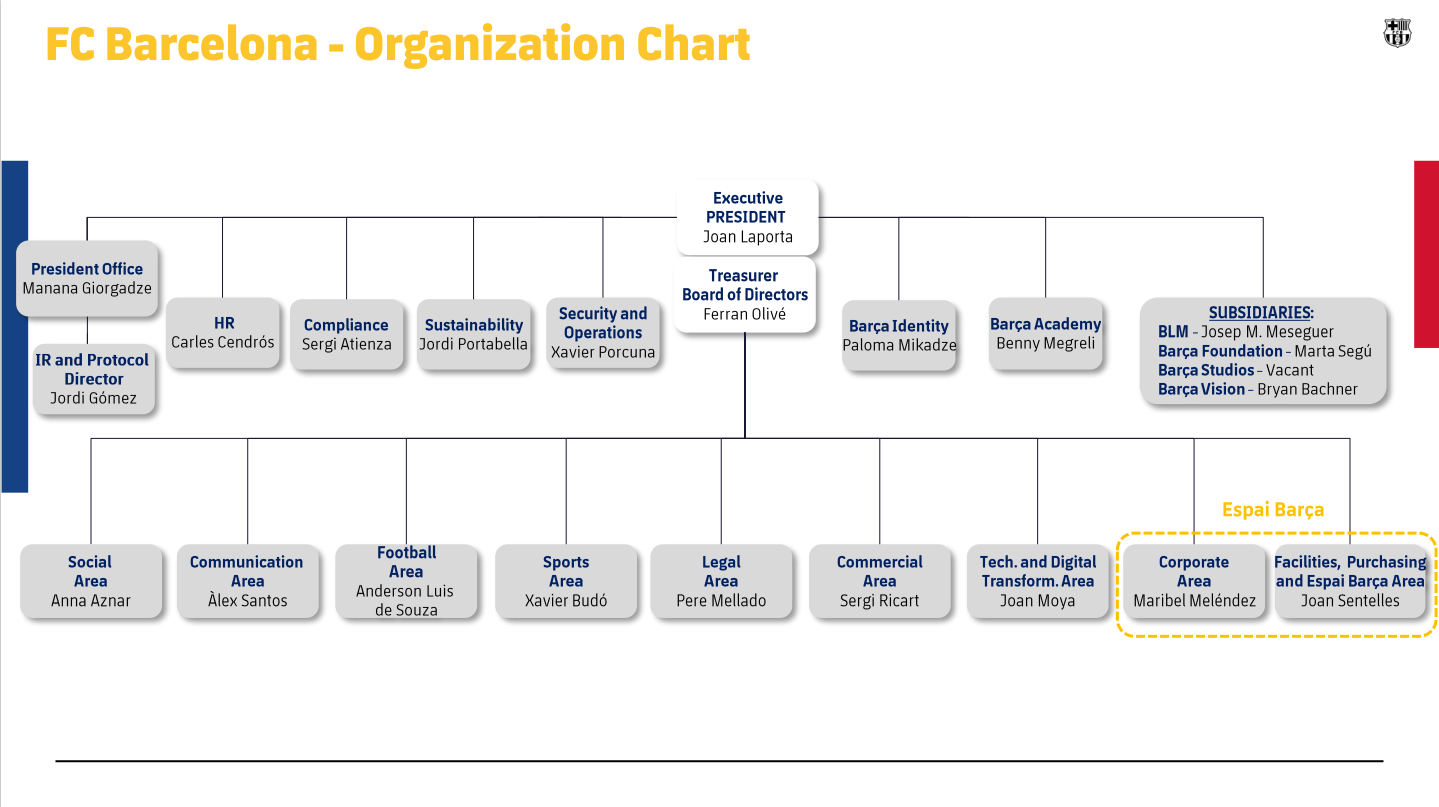
Anderson Luís de Souza OIH (born 27 August 1977), also known as Deco (Portuguese pronunciation: [ˈdɛku]), is a former professional footballer who primarily played as an attacking or central midfielder.[4] Born and raised in Brazil, he played for the Portugal national team. He currently works as sporting director for Barcelona.
Key Information

.jpg)

Deco is one of the few players to have won the UEFA Champions League with two clubs, with Porto in 2004 and Barcelona in 2006. He was named UEFA Club Footballer of the Year and UEFA Best Midfielder in Porto's Champions League-winning season and was named Man of the Match in the 2004 UEFA Champions League Final. Deco was the first player to win the UEFA Best Midfielder Award with two clubs, Porto and Barcelona. He was awarded the 2006 FIFA Club World Cup Golden Ball and the Man of the Match award in the final despite losing to Internacional.
Deco received Portuguese citizenship in 2002 having completed five years of Portuguese residence, and subsequently opted to play internationally for the Portugal national team. He earned 75 caps for them, playing at two UEFA European Championships and two FIFA World Cups, reaching the final of Euro 2004, and achieving a fourth-place finish at the 2006 World Cup.
Club career
[edit]Early career
[edit]Born in São Bernardo do Campo, Deco spent time at Corinthians as a youngster, competing in the Copa São Paulo de Futebol Júnior for them. In the 1997 edition, Benfica sent Toni to scout the tournament, and he soon noticed Deco, recommending his signing.[5] In June 1997, Benfica purchased his rights from CSA and immediately sent him on loan (along with fellow Brazilian Caju) to their farm team, Alverca.[5][6] After helping them win promotion to the top tier in 1997–98 season by scoring 13 goals in 32 appearances, he returned to Benfica in July 1998. However, he left for Salgueiros in exchange for Nandinho, who went in the opposite direction.[5] When asked by Nuno Gomes in an interview for FourFourTwo why he did not stay and become a legend at Benfica, Deco said, "Benfica decided, it wasn't my decision. They didn't want me. The coach was Graeme Souness at the time. I was young and Benfica needed some players."[7]
At Salgueiros, Deco was plagued by injuries and only made a few appearances, until Porto purchased him in March 1999, in time to win the league title.[8] His release from Benfica and subsequent success with Porto was considered by António Simões as an "historical mistake", while Toni stated he saw in Deco, a successor for Rui Costa the club needed since his departure.[5]
Porto
[edit]In his first season with Porto, Deco scored a goal after just 30.08 seconds in a 1–0 away win against Molde in the 1999–2000 UEFA Champions League.[9]
Under the guidance of manager José Mourinho in the 2002–03 season, Deco scored 10 goals in 30 matches and received 17 yellow cards and 1 red card. He was one of the key players in Porto's UEFA Cup final 3–2 win over Celtic that year. In the 2003–04 season, Deco helped Porto recapture the national title and led the team to the 2004 UEFA Champions League Final, in which Porto won 3–0 over Monaco, scoring the second goal of the match. He was the UEFA Champions League's top assist provider and also suffered the most fouls in the Champions League that season. That season, Deco also won the UEFA Club Footballer of the Year as well as the award for the best midfielder in the competition.
Barcelona
[edit]
A deal was achieved between Porto and Barcelona the day after the Euro 2004 final. Barcelona agreed on a €15 million fee in cash, plus the complete rights of Ricardo Quaresma to Porto, which tagged Quaresma for €6 million.[10]
On 14 May 2005, Deco played in the draw against Levante, which gave Barcelona their 17th La Liga title. He also was named Barcelona's player of the season in the 2005–06 season.
Deco scored twice in the 2006 Supercopa de España, which Barça won.[11] Deco won the UEFA Best Midfielder Award yet again for his performance in Barça's UEFA Champions League-winning season, enabling him to join the exclusive group of players that have won the same award more than once with different teams, having won the Champions League previously with Porto. He was also awarded the Golden Ball at the FIFA Club World Cup and the Man of the Match award, despite losing the final to Internacional.[12]
Chelsea
[edit].jpg)
On 30 June 2008, Premier League team Chelsea signed Deco from Barcelona on a three-year contract for €10 million (£8 million).[13][14] He was the first signing of new Chelsea coach Luiz Felipe Scolari, who was formerly the head coach of the Portugal national team.
Deco scored on his debut with a 30-yard goal in a 4–0 league victory over Portsmouth.[15] Deco followed up his performance by scoring in his second game for Chelsea, a curling free-kick against Wigan Athletic. These performances led to him winning the Premier League Player of the Month award for August.[16] Deco made his Champions League debut for Chelsea on 16 September. Deco injured himself during a training session, but he returned from the thigh injury on 19 October and came on as a substitute against Middlesbrough. He was sent off in the 3–1 defeat by Roma on 4 November 2008. He then scored a bicycle kick against Bolton Wanderers on 6 December.
Deco eventually lost his place in the 2008–09 starting line up, due in part to some poor performances, but also to the sacking of Scolari. In a June interview, Deco said, "I do not want to stay. I have not liked my experience at Chelsea." This was soon followed by Inter Milan, managed by former Chelsea manager José Mourinho, declaring Inter was attempting to sign Deco along with fellow countryman Ricardo Carvalho, who had also declared his desire to leave and, like Deco, desired to link-up with Mourinho again. Both players previously played under Mourinho at Porto.[17] However, Inter club president Massimo Moratti ruled out signing either of the Portuguese internationals on the basis of their age, telling Gazzetta dello Sport, "Deco and Carvalho? They are two champions but at this time I don't feel there's a need to buy them."[18]
Fluminense
[edit]On 6 August 2010, Deco signed a two-year contract with Brazilian club Fluminense on a free transfer,[19] joining former Chelsea and Barcelona teammate Juliano Belletti.[20] Playing for Fluminense, Deco won the Campeonato Brasileiro in 2010 and 2012.
On 26 August 2013, Deco retired, ending a 17-year career. The decision came on the day before his 36th birthday. His final match was four days prior, against Goiás.[21]
International career
[edit]
Deco was never called up to the Brazil national team, as the Brazil squad for the 2002 FIFA World Cup included other attacking midfielders such as Ronaldinho, Rivaldo and Juninho. After completing six years of residence in Portugal, he was able to gain Portuguese citizenship and play for their national team. As none of his great-grandparents, grandparents or parents were Portuguese, under FIFA's player eligibility rules his citizenship was the only factor to allow him to play for Portugal. He was subsequently mentioned several times in the media as an option for the Portugal national team.
After many months of public discussion which split Portuguese public opinion, and despite the opposition of a large number of Porto rivals' supporters, he was called up for his first international, coincidentally against Brazil. He came on as a substitute for Sérgio Conceição and scored the free-kick which won the match 2–1.[22] This was Portugal's first win over Brazil since the 1966 FIFA World Cup. Since that match, he became a regular in the national team. Before UEFA Euro 2004, Luís Figo criticised Deco's inclusion[23] and said, "Se você nasceu chinês, bem, você tem que jogar pela China." (English: "If you're born Chinese, well, you have to play for China.") Deco responded, "Eu nasci no Brasil e seria uma mentira dizer que sou português agora e não brasileiro. Mas amo Portugal e adoro jogar pela seleção." (English:"I was born in Brazil and it would be a lie to say that I'm Portuguese now and not Brazilian. But I love Portugal and I love playing for the national team.")
Despite the early criticism, Deco was one of the highlights of the Portugal national team. He scored 5 goals in 75 caps for Portugal by June 2010, when his international career ended after the second-round defeat to Spain at the 2010 World Cup.
2006 World Cup
[edit]In the 2006 World Cup, Deco scored the first goal in Portugal's second Group D match against Iran in the 63rd minute prior to Cristiano Ronaldo's 80th-minute penalty. During the first knockout stage of the competition, Deco received two yellow cards in the match against the Netherlands with the first given for a rash tackle on John Heitinga, suspending him from the quarter-final win against England, as he had already picked up a caution in the match with Iran. The win against England in the quarter-final stage led to Portugal's defeat in the semi-final, which Deco was able to participate in.
Euro 2008
[edit]On 11 June, Deco scored the opening goal in Portugal's second match of Euro 2008, a Group A clash with the Czech Republic. The match ended 3–1 to Portugal, with Deco aiding his team in their passage to the quarter-finals where Portugal's campaign came to an end against Germany, the eventual runners-up of the tournament.
In February 2010, Deco announced he would be retiring from international football after the 2010 World Cup.[24]
2010 World Cup
[edit]Deco played for Portugal in their opening game against the Ivory Coast. During the match, he was injured and was ruled out of the remaining two group matches, against North Korea and Brazil. He was fit again for the round of 16 match against Spain, but Portugal head coach Carlos Queiroz chose Tiago over him.
Deco retired from international football with 75 caps and 5 goals.
Style of play
[edit]As a player, Deco was a versatile, tactically intelligent and creative midfielder with excellent vision and technical ability.[25][26] A generous and hard-working team-player capable of playing in several midfield positions. He was initially used as a central midfielder under manager José Mourinho during his time with Porto, although he was also capable of playing as an attacking midfielder, as a deep-lying playmaker or as a winger on either flank.[27] What he lacked in pace as well as physical, defensive and athletic attributes,[27][28] he made up for in stamina, as well as excellent ball control, dribbling skills, passing range and crossing ability, which allowed him to beat players, find space and create chances for teammates.[29][30][31] Deco was an excellent visionary with the ball, who opened up spaces for his teammates through finding passing lanes that no one else saw, and also had a notable ability to switch the tempo of play in rapid style.
A diminutive midfielder,[32] in later years, as he lost his acceleration, agility and mobility, he also went through a physical development, which, along with his balance, allowed him to protect the ball against larger opponents. He also contributed offensively with occasional goals due to his accurate mid-range shooting ability,[33] and his adeptness at free-kicks.[34] Despite his talent, Deco was also known to be injury-prone and inconsistent at times, and was also accused of drifting in and out of matches. Furthermore, his work-rate and fitness were often brought into question in his later career.[28][32][35] Deco was also well known for his tendency to commit tactical fouls,[30] and he was accused of diving throughout his career.[31]
Post-retirement
[edit].jpg)
On 16 August 2023, it was announced that Deco would become the sporting director of his former club Barcelona by signing a three-year contract.[36][37]
Personal life
[edit]Deco is the brother-in-law of fellow former footballers Alecsandro and Richarlyson. Deco is an ambassador for the Laureus Sport for Good Foundation. He also has a charitable organisation, the Deco Institute, based in the Brazilian city of Indaiatuba, near São Paulo, where he grew up.[38]
After retiring, Deco set up D20 Sports Management, a sports agency registered in Dublin, Ireland. The agency, whose clients include Brazil international Fabinho and Burkina Faso international Edmond Tapsoba, recorded €300,000 profit in 2017.[39]
Media
[edit]Deco features in EA Sports' FIFA football video game series. He was included in the Ultimate Team Legends in FIFA 16.[40]
Career statistics
[edit]Club
[edit]Appearances and goals by club, season and competition.[41][42]
| Club | Season | League | National Cup[a] | League Cup[b] | Continental | Other | Total | |||||||
|---|---|---|---|---|---|---|---|---|---|---|---|---|---|---|
| Division | Apps | Goals | Apps | Goals | Apps | Goals | Apps | Goals | Apps | Goals | Apps | Goals | ||
| Corinthians | 1996 | Série A | 2 | 0 | 0 | 0 | — | — | — | 2 | 0 | |||
| CSA | 1997 | Série C | 0 | 0 | 1 | 0 | — | — | — | 1 | 0 | |||
| Alverca (loan) | 1997–98 | Segunda Divisão | 32 | 12 | 1 | 1 | — | — | — | 33 | 13 | |||
| Salgueiros | 1998–99 | Primeira Divisão | 12 | 2 | 1 | 0 | — | — | — | 13 | 2 | |||
| Porto | 1998–99 | Primeira Divisão | 6 | 0 | 0 | 0 | — | — | — | 6 | 0 | |||
| 1999–2000 | Primeira Liga | 23 | 1 | 4 | 3 | — | 11[c] | 3 | — | 38 | 7 | |||
| 2000–01 | Primeira Liga | 31 | 6 | 4 | 0 | — | 10[d] | 0 | 2[e] | 0 | 47 | 6 | ||
| 2001–02 | Primeira Liga | 30 | 13 | 2 | 0 | — | 15[c] | 6 | 1[e] | 0 | 48 | 19 | ||
| 2002–03 | Primeira Liga | 30 | 10 | 3 | 1 | — | 12[d] | 1 | — | 45 | 12 | |||
| 2003–04 | Primeira Liga | 28 | 2 | 3 | 0 | — | 12[c] | 2 | 2[f] | 0 | 45 | 4 | ||
| Total | 148 | 32 | 16 | 4 | — | 60 | 12 | 5 | 0 | 229 | 48 | |||
| Barcelona | 2004–05 | La Liga | 35 | 7 | 0 | 0 | — | 7[c] | 2 | — | 42 | 9 | ||
| 2005–06 | La Liga | 29 | 2 | 1 | 0 | — | 11[c] | 2 | 2[g] | 0 | 43 | 4 | ||
| 2006–07 | La Liga | 31 | 1 | 3 | 0 | — | 8[c] | 2 | 5[h] | 3 | 47 | 6 | ||
| 2007–08 | La Liga | 18 | 1 | 5 | 0 | — | 6[c] | 0 | — | 29 | 1 | |||
| Total | 113 | 11 | 9 | 0 | — | 32 | 6 | 7 | 3 | 161 | 20 | |||
| Chelsea | 2008–09 | Premier League | 24 | 3 | 1 | 0 | 1 | 0 | 4[c] | 0 | — | 30 | 3 | |
| 2009–10 | Premier League | 19 | 2 | 2 | 0 | 2 | 1 | 4[c] | 0 | 1[i] | 0 | 28 | 3 | |
| Total | 43 | 5 | 3 | 0 | 3 | 1 | 8 | 0 | 1 | 0 | 58 | 6 | ||
| Fluminense | 2010 | Série A | 16 | 1 | — | — | — | — | 16 | 1 | ||||
| 2011 | Série A | 18 | 0 | 0 | 0 | — | 2[j] | 1 | 5[k] | 0 | 25 | 1 | ||
| 2012 | Série A | 17 | 1 | 0 | 0 | — | 8[j] | 1 | 11[k] | 3 | 36 | 5 | ||
| 2013 | Série A | 5 | 0 | 1 | 0 | — | 3[j] | 0 | 5[k] | 0 | 14 | 0 | ||
| Total | 56 | 2 | 1 | 0 | — | 13 | 2 | 21 | 3 | 91 | 7 | |||
| Career total | 406 | 64 | 32 | 5 | 3 | 1 | 113 | 20 | 33 | 6 | 588 | 96 | ||
- ^ Includes the Copa do Brasil, Taça de Portugal, Copa del Rey and FA Cup
- ^ Includes the Football League Cup
- ^ a b c d e f g h i Appearances in UEFA Champions League
- ^ a b Appearances in UEFA Cup
- ^ a b Appearance(s) in Supertaça Cândido de Oliveira
- ^ One appearance in Supertaça Cândido de Oliveira and one appearance in UEFA Super Cup
- ^ Appearances in Supercopa de España
- ^ Two appearances and one goal in FIFA Club World Cup, one appearance in UEFA Super Cup, two appearances and two goals in Supercopa de España
- ^ Appearance in FA Community Shield
- ^ a b c Appearances in Copa Libertadores
- ^ a b c Appearances in Campeonato Carioca
International
[edit]Appearances and goals by national team and year[43][44]
| National team | Year | Apps | Goals |
|---|---|---|---|
| Portugal | 2003 | 9 | 1 |
| 2004 | 15 | 1 | |
| 2005 | 8 | 0 | |
| 2006 | 11 | 1 | |
| 2007 | 8 | 0 | |
| 2008 | 9 | 2 | |
| 2009 | 11 | 0 | |
| 2010 | 4 | 0 | |
| Total | 75 | 5 | |
International goals
Scores and results list Portugal's goal tally first.[43][44]
| # | Date | Venue | Opponent | Score | Result | Competition |
|---|---|---|---|---|---|---|
| 1. | 29 March 2003 | Estádio das Antas, Porto, Portugal |  Brazil Brazil |
2–1 | 2–1 | Friendly |
| 2. | 13 October 2004 | Estádio José Alvalade, Lisbon, Portugal |  Russia Russia |
3–0 | 7–1 | 2006 FIFA World Cup qualifying |
| 3. | 17 June 2006 | Commerzbank-Arena, Frankfurt, Germany |  Iran Iran |
1–0 | 2–0 | 2006 FIFA World Cup |
| 4. | 11 June 2008 | Stade de Genève, Geneva, Switzerland |  Czech Republic Czech Republic |
1–0 | 3–1 | UEFA Euro 2008 |
| 5. | 10 September 2008 | Estádio José Alvalade, Lisbon, Portugal |  Denmark Denmark |
2–1 | 2–3 | 2010 FIFA World Cup qualifying |
Honours
[edit]Porto[45]
- Primeira Divisão/Liga: 1998–99, 2002–03, 2003–04
- Taça de Portugal: 1999–2000, 2000–01, 2002–03
- Supertaça Cândido de Oliveira: 2001, 2003
- UEFA Champions League: 2003–04
- UEFA Cup: 2002–03
Barcelona[45]
Chelsea
Fluminense
Portugal
- UEFA European Championship runner-up: 2004
Individual
- Ballon d'Or runner-up: 2004[48]
- UEFA Club Footballer of the Year: 2003–04[43]
- UEFA Club Midfielder of the Year: 2003–04,[43] 2005–06[43]
- 2004 UEFA Champions League Final: Man of the Match
- ESM Team of the Year: 2004–05[49]
- FIFA Club World Cup Golden Ball: 2006[50]
- Portuguese League Footballer of the Year: 2003–04[48]
- CNID Best Portuguese Athlete Abroad: 2006
- Premier League Player of the Month: August 2008[46]
- Campeonato Carioca Best Player: 2012[51]
- Campeonato Carioca Best Midfielder: 2012[51]
- Globe Soccer Awards Player Career Award: 2013[52]
- Golden Foot: 2016, as football legend[53]
Orders
 Medal of Merit, Order of the Immaculate Conception of Vila Viçosa (House of Braganza)

References
[edit]- ^ "2006 FIFA World Cup Germany: List of Players: Portugal" (PDF). FIFA. 21 March 2014. p. 22. Archived from the original (PDF) on 10 June 2019.
- ^ "Fluminense Football Club | Futebol | Deco". Fluminense.com.br. 27 August 1977. Archived from the original on 22 May 2012. Retrieved 28 June 2012.
- ^ a b "Deco" (in Catalan). FC Barcelona. Archived from the original on 22 August 2007. Retrieved 5 June 2022.
- ^ "AN ODE TO DECO". footballtimes. 27 May 2020.
- ^ a b c d "Toni descobriu Deco: "Erro histórico do Benfica"" [Toni, who discovered Deco: "Historical mistake from Benfica"]. Maisfutebol (in Portuguese). 26 August 2013. Retrieved 10 September 2015.
- ^ "Caju reforça FC Porto por troca com Duda" [Caju joins FC Porto in exchange for Duda]. Record (in Portuguese). 1 February 2000. Archived from the original on 16 April 2016. Retrieved 1 April 2016.
- ^ "Deco: 'At Chelsea, the players spoke directly to the directors over Scolari. That wasn't good'". FourFourTwo. 11 March 2015. Retrieved 10 September 2015.
- ^ "Deco: "Contestam as nossas vitórias porque têm muita inveja"" [Deco: "They dispute our wins because they are jealous"]. Record (in Portuguese). 25 June 1999. Archived from the original on 15 April 2016. Retrieved 1 April 2016.
- ^ "Molde 0–1 Porto". UEFA. 15 September 1999.
- ^ "FACTO RELEVANTE" (PDF). FC Porto. 6 July 2004. Archived from the original (PDF) on 5 December 2010. Retrieved 28 April 2014.
- ^ Gillen, Sean (18 December 2006). "Manuel Jose leads Al-Ahly to historic third place finish". portugoal.net. Archived from the original on 11 December 2007. Retrieved 28 April 2014.
- ^ Pereira, Marco (21 August 2006). "Deco blasts brace as Barcelona win Spanish Supercopa". portugoal.net. Archived from the original on 24 July 2008. Retrieved 28 April 2014.
- ^ "Chelsea sign Deco". World Soccer. 1 July 2008. Retrieved 18 June 2024.
- ^ Fraser, Peter (30 June 2008). "Chelsea complete Deco deal". Sky Sports. Retrieved 18 June 2024.
- ^ Goodhart, Benjie (17 August 2008). "Deco inspires imperious Chelsea in Portsmouth rout". The Guardian. Retrieved 18 June 2024.
- ^ Rutledge, Lewis (13 September 2008). "Deco and Southgate net awards". Sky Sports. Retrieved 18 June 2024.
- ^ "Deco seeks Blues exit". Sky Sports.
- ^ "Inter rule out Chelsea duo". Sky Sports. 6 July 2009.
- ^ "OFFICIAL: Fluminense Sign Deco On Two-Year Contract". Goal.com. 7 August 2010. Retrieved 28 June 2012.
- ^ "Juliano Belletti heads for Fluminense from Chelsea and Deco may follow". The Guardian. London. 18 July 2010.
- ^ uefa.com (26 August 2013). "Member associations - News – UEFA.com". Archived from the original on 28 August 2013.
- ^ "Portugal vs. Brazil - Football Match Report - March 29, 2003 - ESPN". ESPNFC.com.
- ^ "Figo re-ignites Deco row". BBC News. 10 June 2004.
- ^ "Chelsea's Deco to quit Portugal". BBC News. 4 February 2010. Retrieved 1 May 2010.
- ^ Boldrini, Stefano (4 July 2006). "È Deco l' oro di Scolari". La Gazzetta dello Sport (in Italian). Retrieved 7 February 2015.
- ^ Licari, Fabio (12 October 2004). "Deco in pole per i premi "Ma ho paura di Sheva"". La Gazzetta dello Sport (in Italian). Retrieved 7 February 2015.
- ^ a b Hytner, David (20 June 2008). "Deco's art dazzles but Germany prevail after Schweinsteiger's masterpiece". The Guardian. Retrieved 7 February 2015.
- ^ a b "Deco: Understated Genius". FourFourTwo. Archived from the original on 24 September 2015. Retrieved 7 February 2015.
- ^ De Sà, Manuel Martins (22 January 2000). "Deco, il valore aggiunto". gazzetta.it (in Italian). La Gazzetta dello Sport. Retrieved 7 February 2015.
- ^ a b "Anderson Luis de Souza 'Deco'". FC Barcelona. Archived from the original on 27 January 2015. Retrieved 7 February 2015.
- ^ a b "Deco: The master behind the magic of Barça". The Independent. Retrieved 7 February 2015.
- ^ a b "Penpix of Portugal's squad". Reuters. 21 May 2010. Retrieved 26 May 2020.
- ^ Galavotti, Giancarlo (15 September 2004). "Deco-Giuly-Larsson Barça scatenato Il Celtic k.o in casa". La Gazzetta dello Sport (in Italian). Retrieved 7 February 2015.
- ^ Galavotti, Giancarlo (25 August 2008). "La classe di Deco fa volare il Chelsea". La Gazzetta dello Sport (in Italian). Retrieved 7 February 2015.
- ^ "Deco struggles to shine in Blues' rough diamond". The Independent. Retrieved 7 February 2015.
- ^ "Barcelona appoints former playmaker Deco as its new sporting director". AP News. 16 August 2023.
- ^ "FC Barcelona - Organization Chart". fcbarcelona.com. Retrieved 2 October 2024.
- ^ Szczepanik, Nick (9 March 2009). "I will show Chelsea the real Deco". The Times. London. Archived from the original on 29 June 2011. Retrieved 1 May 2010.
- ^ "D20 Sports Management posts profit of about €300,000 for 2017". The Irish Times. 20 November 2018. Retrieved 17 September 2022.
- ^ "FIFA 16 Player Ratings - New Legends". EA Sports. 5 September 2015. Retrieved 8 September 2015.
- ^ "Deco". ForaDeJogo. Retrieved 27 August 2021.
- ^ "Deco". BDFutbol. Retrieved 27 August 2021.
- ^ a b c d e "Anderson Luis de Souza "Deco" - International Appearances". RSSSF. Retrieved 6 February 2021.
- ^ a b "National football team player - Deco". eu.football.info. Retrieved 6 February 2021.
- ^ a b c "Former Portugal midfielder Deco retires". UEFA. 26 August 2013. Archived from the original on 28 August 2013. Retrieved 11 February 2016.
- ^ a b "Deco: Overview". Premier League. Retrieved 28 September 2018.
- ^ McNulty, Phil (9 August 2009). "Chelsea 2–2 Man Utd". BBC Sport. Retrieved 16 April 2018.
- ^ a b "FIFA World Cup - Deco – UEFA.com". UEFA. Archived from the original on 31 March 2017. Retrieved 16 February 2016.
- ^ Karel Stokkermans (14 March 2007). "ESM Season XI". RSSSF. Archived from the original on 7 February 2016. Retrieved 9 February 2016.
- ^ "2006 FIFA Club World Cup awards". Fédération Internationale de Football Association. Archived from the original on 5 September 2015. Retrieved 16 February 2016.
- ^ a b "PREMIAÇÃO DO CAMPEONATO CARIOCA 2012 TEVE SETE NOVAS CATEGORIAS". rj.gov.br. Retrieved 14 February 2016.
- ^ "Wall of Fame". Globe Soccer.com. Retrieved 28 December 2015.
- ^ "LEGENDS – GoldenFoot". Golden Foot. Retrieved 5 January 2017.
External links
[edit]
- Profile at the FC Barcelona website
- Deco national team profile at the Portuguese Football Federation (in Portuguese)
- Deco – FIFA competition record (archived)
- Deco – UEFA competition record (archive)
- Deco at ForaDeJogo (archived)
- Deco at National-Football-Teams.com
- Deco at Soccerbase
- Deco at WorldFootball.net
- FootballDatabase provides Deco's profile and stats at the Wayback Machine (archived 24 December 2008)
- Deco profile from About.com at the Wayback Machine (archived 19 March 2009)
- goal.com

Portugal squads | |||||||||||||||||||
|---|---|---|---|---|---|---|---|---|---|---|---|---|---|---|---|---|---|---|---|
| |||||||||||||||||||


| Authority control databases: National |
|---|
Early life
Birth and family
Anderson Luís de Souza, known as Deco, was born on August 27, 1977, in São Bernardo do Campo, a city in the São Paulo metropolitan area known for its industrial suburbs.[1] He grew up in a working-class family, the only son among four siblings, with three sisters.[4] Deco's father played a pivotal role in introducing him to football, sharing a deep passion for the sport that influenced his son's early interests.[4] His mother managed the household, supporting the family in the modest environment of São Bernardo do Campo.[4] From a young age, Deco was exposed to football through informal street games in the industrial neighborhoods of São Paulo, where children typically played with whatever was available. His father gifted him his first football, sparking a lifelong pursuit that began as casual play with neighborhood friends, often in bare feet on makeshift pitches.[4] These early experiences in local, unstructured teams fostered his natural talent and love for the game amid the bustling suburban life.[5]Youth and early moves
Deco began his youth football journey in the late 1980s and early 1990s in the São Paulo metropolitan area, starting with the modest local club Nacional Atlético Clube, where he honed his skills as a midfielder during his early teenage years.[5] His talent quickly drew attention from larger clubs, leading to a move to the prestigious youth academy of Sport Club Corinthians Paulista around the age of 15 or 16, one of Brazil's most prominent teams known for its strong developmental program.[5] At Corinthians, Deco impressed in youth competitions, including state-level tournaments, but struggled to secure a pathway to the senior squad amid intense competition and limited spots for emerging talents.[6] Despite signing initial professional contract attempts with Corinthians, Deco encountered significant challenges in Brazilian football during this period, including low wages typical for youth prospects and the instability of breaking through in a highly competitive environment dominated by established players.[5] These frustrations, coupled with the promise of better opportunities abroad, prompted his departure from Brazil. In June 1997, at the age of 19, Benfica acquired his federative rights from Corinthians for a modest fee and immediately loaned him to F.C. Alverca in Portugal's second division (Liga de Honra), marking his relocation to Europe in search of professional stability and growth.[7] This move was facilitated by a Benfica scout who had spotted Deco during a youth tournament in São Paulo earlier that year.[6] Upon arriving in Portugal, Deco faced initial adaptation struggles, including cultural differences between Brazil and Europe, such as the more structured and tactical style of play in Portuguese football compared to the flair-oriented Brazilian game.[5] Additionally, he encountered financial instability right from the start, receiving significantly less pay than what Benfica president João Vale e Azevedo had promised, which sowed early distrust toward the Portuguese football establishment and compounded the challenges of settling in a new country.[8] Despite these hurdles, the relocation provided Deco with his first consistent senior-level exposure, helping him build resilience for his burgeoning European career.[5]Club career
Early professional career
Deco began his senior professional career on loan from Benfica to FC Alverca in the 1997–98 season, competing in Portugal's second division (Segunda Liga). During this period, he made 32 league appearances and scored 13 goals, playing a pivotal role in Alverca's promotion to the Primeira Liga at the end of the campaign.[9] Upon returning to Benfica in July 1998, Deco struggled to secure regular first-team opportunities and was subsequently loaned to Primeira Liga side S.C. Salgueiros for the 1998–99 season. There, he featured in 12 matches, netting 2 goals, though persistent injuries limited his involvement and overall impact.[10] These early experiences at Alverca and Salgueiros provided Deco with crucial exposure in competitive environments, totaling around 44 senior appearances across the two spells. His technical skill and vision on the ball, evident despite the injury interruptions at Salgueiros, began to attract attention from larger clubs, including FC Porto.[5]Porto
Deco transferred to FC Porto from Salgueiros in March 1999, signed by manager Octávio Machado for a nominal fee after limited appearances at his previous club due to injuries. Initially, he struggled to secure a regular starting place and primarily served as a substitute during the 1999-2000 season under Machado's tenure.[11] The arrival of José Mourinho as manager in January 2002 marked Deco's breakthrough at the club. Mourinho repositioned him as a central playmaking midfielder, where his vision, technique, and creativity flourished, leading to over 30 appearances in all competitions during the 2001-2002 season and establishing him as an indispensable part of the squad.[12] In the 2002-2003 season, Deco played a pivotal role in Porto's domestic and European successes. The team clinched the Primeira Liga title, ending a three-year drought, with Deco contributing key assists and goals in crucial matches. Porto also triumphed in the UEFA Cup, defeating Celtic 3-2 after extra time in the final on 21 May 2003 in Seville; Deco earned man-of-the-match honors for his virtuoso performance, including a precise through-ball that set up Derlei's winning goal in extra time.[13] The following 2003-2004 campaign saw Deco instrumental in Porto's historic treble under Mourinho. The club secured the Primeira Liga and Taça de Portugal domestically, while advancing to European glory in the UEFA Champions League. In the semi-finals against Deportivo La Coruña, Deco was central to both legs: in the first leg at Porto (0-0 on 21 April 2004), he drew a late red card from defender Jorge Andrade after being kicked while on the ground; in the return leg (1-0 win on 4 May 2004), he won a penalty converted by Derlei for the decisive goal. Porto then dominated the final against Monaco 3-0 on 26 May 2004 in Gelsenkirchen, with Deco scoring the second goal—a composed finish from a Costinha pass—and again named man of the match for his commanding midfield display.[14][15][16] Over his five-year stint at Porto from 1999 to 2004, Deco made 160 appearances across all competitions and scored 34 goals, including a hat-trick in a 4-0 league win over Boavista on 27 May 2001.[17][18]Barcelona
Deco transferred to Barcelona from Porto in July 2004 for a fee of €15 million plus the transfer of winger Ricardo Quaresma, marking a significant reunion with former rivals despite his recent successes under José Mourinho.[19][20] Under manager Frank Rijkaard, Deco quickly became a central figure in midfield, providing creative control and vision that revitalized the team's attack alongside stars like Ronaldinho and Samuel Eto'o. His arrival coincided with Barcelona's resurgence, culminating in the 2004–05 La Liga title, which ended an eight-year domestic drought for the club.[21] The following season, 2005–06, Deco played a pivotal role in securing another La Liga crown and the club's second UEFA Champions League trophy, defeating Arsenal 2–1 in the final at the Stade de France; his composure in midfield helped orchestrate the comeback after Barcelona played with ten men for much of the match.[21][22] Additionally, he contributed to victories in the 2005 and 2006 Spanish Super Cups, solidifying Barcelona's dominance in domestic competitions during this period.[21] Individually, Deco's performances earned him second place in the 2004 Ballon d'Or voting, behind Andriy Shevchenko, recognizing his influence in both club and international play that year.[23] Over four seasons at Barcelona, he made 161 appearances and scored 20 goals, often operating as an advanced playmaker who dictated tempo and delivered precise passes to unlock defenses.[2] As Rijkaard's tenure progressed, Deco's role evolved slightly toward a deeper position to accommodate emerging talents, enhancing the team's balance in possession-based football. Deco's departure in June 2008, after Barcelona opted not to renew his contract amid a squad overhaul under incoming manager Pep Guardiola, marked the end of an era focused on renewal and youth integration.[24]Chelsea
Deco transferred to Chelsea from Barcelona on July 1, 2008, for a fee of €10 million, reuniting with his former Portugal national team manager Luiz Felipe Scolari.[25] The move marked Deco's entry into English football at the age of 30, where he was expected to provide creative flair in midfield amid Chelsea's pursuit of domestic and European honors. Scolari's tenure was short-lived, ending in November 2008, after which Carlo Ancelotti took over and guided the team through the remainder of the season. In the 2008–2009 season, Chelsea finished third in the Premier League with 83 points, narrowly missing the title to Manchester United. Deco contributed steadily, making 24 league appearances and scoring three goals, including a notable long-range strike on his debut in a 4–0 victory over Portsmouth. The team achieved success in the FA Cup, defeating Everton 2–1 in the final to secure the trophy—Chelsea's first since 2007—though Deco did not feature in the final due to rotation. His integration into the high-intensity Premier League proved challenging initially, with adaptation to the physical demands and pace of English football testing his technical style. Under Ancelotti in the 2009–2010 season, Chelsea clinched the Premier League title with a record 103 goals scored, finishing 9 points ahead of Manchester United.[26] Deco played a key role despite persistent injuries including calf and groin issues, appearing in 34 matches across all competitions and scoring 6 goals, including contributions in the league and cups that helped maintain the team's attacking rhythm. He was instrumental in Chelsea's run to the UEFA Champions League semi-finals, where they were eliminated by Inter Milan on away goals despite a strong group stage and knockout performances.[27] Persistent injuries continued to affect Deco, and he departed the club in August 2010 on compassionate grounds to return to Brazil for family reasons, having made 55 appearances and scored 7 goals in total during his stint.[28] This period highlighted both his impact on Chelsea's trophy haul—adding a Premier League title and an FA Cup to his collection—and the physical toll of competing at the elite level in England.Fluminense
In August 2010, Deco joined Fluminense on a free transfer from Chelsea, marking his return to Brazil after 13 years in Europe; the move was driven by his desire to reconnect with his Brazilian roots and spend more time with his family, including his ailing son.[29][30] During his tenure at Fluminense from 2010 to 2013, Deco contributed to key successes, including the Campeonato Brasileiro Série A titles in 2010 and 2012, as well as the 2012 Campeonato Carioca.[31] In the 2012 Campeonato Carioca Taça Guanabara final, he scored a notable long-range goal that helped secure a 1-0 victory over Flamengo. Despite turning 33 upon arrival and dealing with injuries later, Deco maintained consistent involvement, making 91 appearances and scoring 7 goals across all competitions.[17] Deco assumed a leadership role at the club, often guiding younger players with his experience from major European triumphs. His performances underscored his technical prowess and vision, even as age and physical demands took a toll.[5] On August 26, 2013, Deco announced his retirement at age 35, just before his 36th birthday, citing persistent injuries, including a hamstring issue, that had limited him in the prior season; his final match was a 0-0 draw against Atlético Mineiro on August 11, 2013.[32][33] The decision drew widespread tributes from fans and peers, celebrating his career highlights and his role in revitalizing Fluminense during a competitive era in Brazilian football.[34]International career
Naturalization and debut
Born in Brazil, Deco moved to Portugal in 1997 at the age of 19 to pursue his professional football career.[35] After residing in the country for five years, he was granted Portuguese citizenship through naturalization in 2002, fulfilling the legal requirement for foreign nationals to demonstrate residency and integration.[35] Deco opted to represent Portugal internationally rather than his birth country of Brazil, citing his deep gratitude and affection for his adopted homeland, where he had received significant support and respect during his early career at Porto.[35] His first call-up to the Portugal national team came in March 2003 under head coach Luiz Felipe Scolari, who had specifically requested his inclusion following the naturalization.[36] Deco made his debut as a substitute on March 29, 2003, in a friendly match against Brazil, entering in the 62nd minute and scoring the winning goal in the 82nd minute to secure a 2–1 victory for Portugal.[37][38] In the lead-up to UEFA Euro 2004, Deco quickly established himself in the national team, accumulating 13 caps by June 2004, including appearances in qualifying matches against opponents such as North Macedonia, Spain, and Norway.[38] These early international outings highlighted his seamless integration into the squad, where he contributed creatively in midfield during both friendlies and competitive fixtures.[38]2004 UEFA European Championship
Deco played a central role in Portugal's hosting of the 2004 UEFA European Championship, featuring in all six matches as the team advanced to the final.[39] He entered as a substitute in the opening 1–2 group stage loss to Greece before starting the remaining five fixtures, logging 524 minutes overall and providing two assists with his precise passing and vision.[39][40] In the group stage, Deco helped Portugal secure victories over Russia (2–0) and the Czech Republic (2–1), topping Group A despite the initial setback.[41] His influence grew in the knockout rounds, where he started the quarter-final against England, which ended 2–2 before Portugal prevailed 6–5 on penalties to reach the semi-finals.[41] In that semi-final, Deco delivered the corner kick for Cristiano Ronaldo's opening header in a 2–1 win over the Netherlands, earning widespread praise for his composure amid the high-stakes atmosphere.[42][43] Portugal's dream run ended in the final at Lisbon's Estádio da Luz, where they fell 0–1 to Greece despite Deco starting and contributing to a dominant but goalless performance from the hosts.[44] Throughout the tournament, Deco's blend of creativity, work rate, and leadership marked his emergence as a Portuguese star, with his displays drawing comparisons to top midfielders and significantly elevating his international profile.[45][46] The competition's exposure accelerated Deco's club career trajectory, culminating in his €15 million transfer to Barcelona just days after the final, where he signed a four-year deal alongside winger Ricardo Quaresma moving the other way.[47][20] This move from Porto positioned him among Europe's elite, building on his prior Champions League success.[48]2006 FIFA World Cup
Deco was a key figure in Portugal's midfield during the 2006 FIFA World Cup in Germany, contributing to their run to the semi-finals under coach Luiz Felipe Scolari, who emphasized a pragmatic, defensively solid approach that limited opponents to just three goals across seven matches. Portugal finished top of Group D with three victories, though Deco missed the opener against Angola (1-0 win) due to injury but returned strongly thereafter. He made four appearances in total, starting each and logging 336 minutes.[49] In the second group match against Iran on 17 June, Deco scored Portugal's opening goal in the 63rd minute with a deflected long-range effort, securing a 2-0 victory and earning a yellow card in the process; Cristiano Ronaldo added a late penalty. This was his sole goal of the tournament and highlighted his vision and technical ability from midfield. He sat out the final group game against Mexico (2-1 win) as a precaution, with several players rested to manage yellow card risks.[50] Deco played a pivotal role in the round-of-16 clash against the Netherlands on 25 June, dubbed the "Battle of Nuremberg" for its record 16 bookings and four red cards. Operating as the creative hub, he dictated play before receiving a second yellow card in the 62nd minute for a foul on John Heitinga, resulting in his dismissal; Portugal held on for a 1-0 win via Maniche's early strike despite the numerical disadvantage.[51] Suspended for the quarter-final against England on 1 July due to his accumulation of cards, Deco watched from the sidelines as Portugal advanced with a 0-0 draw decided by a 3-1 penalty shootout victory, where goalkeeper Ricardo saved three spot-kicks. He returned for the semi-final against France on 5 July, starting and playing the full 90 minutes in a tight 0-1 defeat to Thierry Henry's 33rd-minute goal, ending Portugal's title hopes.[52] In the third-place match against hosts Germany on 8 July, Deco earned his 50th international cap, starting and completing the game in a 1-3 loss, with Nuno Gomes netting Portugal's lone goal; this appearance underscored his importance to the squad amid Scolari's counter-attacking setup, which prioritized defensive resilience over expansive play.[53]UEFA Euro 2008
Under the guidance of coach Luiz Felipe Scolari, Deco played a pivotal role in Portugal's midfield during UEFA Euro 2008, starting all three matches he appeared in and contributing to their advancement to the quarter-finals as Group A winners.[54] Deco logged 269 minutes on the pitch, scoring one goal and providing one assist, which helped anchor a possession-dominant Portugal side that topped the group with six points from two victories and one defeat.[55] His performances underscored his importance as an experienced playmaker, having already earned over 50 caps by the tournament's start.[56] Deco featured in Portugal's opening 2-0 group stage win over Turkey on 7 June, where he played 89 minutes before being substituted, helping control the midfield in a match that set a strong tone for the campaign.[57] Four days later, against the Czech Republic, he opened the scoring in the 8th minute with a composed finish and later assisted Cristiano Ronaldo's goal in the 63rd minute, securing a 3-1 victory that clinched early qualification to the knockout stage.[58] Resting for the final group fixture—a 0–2 loss to hosts Switzerland on 15 June—Deco returned for the quarter-final against Germany on 19 June, starting and playing the full 90 minutes in a 2-3 defeat, where Portugal's goals came from Nuno Gomes and Tiago but could not overcome Germany's set-piece prowess.[59] Throughout the tournament, Deco was lauded for his leadership qualities and tactical intelligence in midfield, providing stability amid the rising prominence of younger stars like Ronaldo, who drew much attention but benefited from Deco's orchestration.[60] Post-tournament analyses highlighted how Deco's experience helped foster team dynamics in a squad blending veterans and emerging talents, though Portugal's exit exposed vulnerabilities in aerial duels and finishing against physically imposing opponents like Germany.[61] By the end of his international career, Deco would amass 75 caps, with his Euro 2008 contributions marking a key chapter in his 5-goal tally for Portugal.[33]2010 FIFA World Cup
Deco was part of Portugal's squad for the 2010 FIFA World Cup in South Africa, selected by coach Carlos Queiroz despite concerns over his form at Chelsea and advancing age of 32.[62] His participation was limited by a thigh injury sustained early in the tournament, resulting in just one appearance: a 62-minute start in the Group G opener against Ivory Coast on June 15, which ended in a 0–0 draw at Nelson Mandela Bay Stadium.[63] Deco contributed to the midfield but was substituted in the 62nd minute, recording no goals or assists in his sole outing. The injury ruled Deco out of Portugal's subsequent group stage matches—a 7–0 victory over North Korea on June 21 and another 0–0 draw against Brazil on June 25—highlighting his reduced role amid Queiroz's cautious, defensive strategy that prioritized solidity over attacking flair.[7] This approach yielded three consecutive clean sheets and second place in Group G but drew criticism for its lack of creativity, with Portugal scoring only against the weakest opponent and failing to produce goals in the other fixtures.[64] Deco remained sidelined for the round of 16 clash against Spain on June 29, a 1–0 defeat that eliminated Portugal, marking an underwhelming campaign overall.[65] Entering the tournament, Deco viewed it as a potential swansong for his international career, having announced in February 2010 his intention to retire from national team duty afterward due to physical fatigue and age.[66] This World Cup appearance served as his final one, capping a career that included 75 total caps for Portugal.[56] The limited playtime underscored the team's defensive mindset under Queiroz, which stifled individual creativity like Deco's playmaking amid broader frustrations over Portugal's conservative tactics.[67]UEFA Euro 2012
Deco was not included in Portugal's squad for UEFA Euro 2012, having retired from international duty two years earlier following the 2010 FIFA World Cup.[68] Under coach Paulo Bento, who took over after the World Cup, Deco made no appearances for the national team, as his retirement precluded any further involvement.[69] The tournament thus served as a definitive close to his international career, which he had announced ending in February 2010 at age 32.[70] Portugal advanced to the semi-finals of UEFA Euro 2012, defeating the Czech Republic 1–0 in the quarter-finals before losing to Spain on penalties, but without Deco's participation. His overall international record with Portugal stood at 75 caps and 5 goals upon retirement.[71]Playing style
Positions and roles
Deco primarily operated as an attacking midfielder, often in the classic number 10 role, dictating play from central areas while demonstrating versatility to deploy on the wings or in deeper central midfield positions.[1] His career began in attacking roles during his early stints at Alverca and Salgueiros in the late 1990s, where he honed his dribbling and crossing abilities before transitioning to more central responsibilities.[72] At Porto under José Mourinho, Deco evolved into an advanced playmaker at the apex of a 4-4-2 diamond formation, occasionally fulfilling box-to-box duties with penetrating runs and defensive contributions to support the team's counter-attacking style, which culminated in the 2004 UEFA Champions League triumph.[12] This role emphasized his tactical intelligence in linking midfield to attack, a trait that carried over to Barcelona under Frank Rijkaard, where he operated as a central playmaker alongside Xavi and Iniesta, occasionally dropping deeper to orchestrate build-up play in fluid attacking setups.[5] Upon joining Chelsea in 2008, Deco's role adapted to a more defensive-oriented central midfield position within the team's diamond formation, requiring greater responsibility in shielding the backline while still contributing creatively, though injuries limited his impact over two seasons.[73] Later at Fluminense from 2010 to 2013, as club captain, he embraced a veteran leadership role in midfield, influencing team dynamics through his experience and vision, helping secure the 2010 Brasileirão title despite persistent fitness issues.[5]Key attributes and influences
Deco was renowned for his exceptional vision and technical proficiency, which allowed him to read the game astutely and deliver precise passes that unlocked defenses. His dribbling skills, characterized by impeccable balance and close control, enabled him to evade challenges in congested areas, while his expertise in set-pieces—particularly free-kicks and penalties—made him a reliable threat from dead-ball situations. These attributes defined him as an elegant playmaker, often operating as a trequartista in central midfield.[5] Despite his modest stature of 1.76 meters, Deco's mentality was marked by relentless work rate and resilience, as he contributed to pressing efforts and maintained high energy levels throughout matches. He thrived as a clutch performer in decisive encounters, frequently rising to the occasion with key contributions that influenced outcomes. His tactical intelligence flourished under coaches like José Mourinho at Porto and Frank Rijkaard at Barcelona, where he adapted seamlessly to structured systems emphasizing creativity and discipline.[5] However, he was not without flaws; occasional disciplinary lapses, including instances of tardiness and controversial on-field behavior, occasionally disrupted his professionalism. Later in his career, injury proneness hampered his consistency, leading to reduced appearances at clubs like Chelsea and Fluminense.[5]Post-playing career
Retirement
Deco officially announced his retirement from professional football on August 26, 2013, at the age of 35, following a series of persistent injuries that prevented him from fulfilling the remainder of his contract with Fluminense, which was due to expire in December of that year.[33][74] In a statement, he expressed sadness over the decision, noting that his body could no longer withstand the demands of the sport despite his desire to continue playing until the end of the year.[75] A year later, on July 25, 2014, Deco received tributes from former clubs Porto and Barcelona during a high-profile testimonial match at Porto's Estádio do Dragão, pitting the 2004 Porto Champions League-winning squad against Barcelona's 2006 victorious side, which ended in an entertaining 4-4 draw.[76][77] Deco himself participated, scoring a notable lob and assisting a goal, while stars like Lionel Messi, Samuel Eto'o, and his former teammates joined in honoring his contributions to both clubs.[78] Following his retirement, Deco took an initial break from the sport to focus on recovery from chronic muscle injuries and quality time with his family, marking a shift toward a more personal life after two decades of professional demands.[79] In early post-retirement interviews, he reflected fondly on career pinnacles, particularly highlighting his role in Barcelona's 2006 UEFA Champions League triumph—where he was named the tournament's best player—as one of his greatest achievements, alongside his international debut goal for Portugal against Brazil in 2003.[79][74]Roles at Porto
Following his retirement from professional football in 2013, Deco did not assume any official administrative or advisory roles at FC Porto, despite his legendary status with the club during his playing tenure from 1999 to 2004, where he contributed to multiple Primeira Liga titles and the 2004 UEFA Champions League victory. Instead, Deco established D20 Sports Management, a football agency based in Dublin, Ireland, which he operated until closing it in June 2023 to pursue opportunities elsewhere.[80] Through his agency, Deco represented numerous players and facilitated transfers across Europe, leveraging his extensive network from his playing days, though no direct involvement in Porto's club restructuring or specific transfers like those of Luis Díaz or Otávio has been documented.[81] In interviews, Deco has reflected on how his experience as a player at Porto influenced his perspectives on scouting and youth development, emphasizing the importance of tactical intelligence and adaptability in Portuguese football, but he did not engage in formal contributions to Porto's operations during this period.[79] His tenure as an agent concluded without a transition to club management at Porto, leading to his subsequent role at Barcelona in 2023.[82]Sporting director at Barcelona
Deco was appointed as FC Barcelona's sporting director in August 2023 on a three-year contract, succeeding Jordi Cruyff who departed earlier that year.[83] His role emphasized navigating the club's financial constraints under La Liga's Financial Fair Play (FFP) regulations while prioritizing the integration of youth academy talents into the first team.[84] Deco focused on squad rebuilding through strategic sales and prudent acquisitions to restore economic stability, through strategic player sales, loans, and wage optimizations to comply with spending limits.[85] Under Deco's oversight, Barcelona executed key signings such as Dani Olmo from RB Leipzig for €60 million in August 2024, bolstering the midfield and attack amid ongoing FFP challenges that delayed his registration into January 2025 due to ongoing FFP challenges, with provisional permission granted on January 8, 2025.[86][87] This contributed to a comprehensive squad rebuild, blending experienced players with emerging stars, which propelled the team to a domestic treble in the 2024-2025 season: winning La Liga, the Copa del Rey, and the Supercopa de España.[88] Deco has been instrumental in youth development, particularly praising 17-year-old winger Lamine Yamal for his "genius" technical ability and rapid progression, crediting the club's La Masia system for producing such talents who featured prominently in the successful campaign.[89] In the 2024-2025 season, Barcelona advanced to the UEFA Champions League semi-finals, drawing 3-3 with Inter Milan in the first leg before a 4-3 extra-time loss in the return fixture on aggregate 7-6, marking a strong European resurgence.[90] Deco addressed persistent FFP hurdles, including a €500,000 UEFA fine in 2023 and ongoing scrutiny, by affirming the club's solid financial structure with debt reduced to €469 million by October 2025.[91] He also managed rumors surrounding Lionel Messi's potential return, stating in mid-2025 interviews that while personal factors influenced past decisions, the focus remained on current squad stability rather than speculative transfers.[92]Personal life
Citizenship and family
Deco was born in São Bernardo do Campo, Brazil, on 27 August 1977, and acquired Portuguese citizenship in 2002 after completing the required period of residence in Portugal, enabling him to represent the Portuguese national team.[1][36] This dual heritage has been a recurring theme in his public reflections, where he has described feeling connected to both Brazilian roots and Portuguese culture through his career and life experiences.[79] Deco has been married twice previously, including to Jaciara Dias de Souza from 2005 to 2008. He married Brazilian model Ana Paula Schiavetti in 2009, and the couple has children together, including a daughter born in 2010 and a son in 2012. He has five children in total from his marriages and relationships, with the first born in 2005.[93][94] Throughout his career, his family provided crucial support during frequent relocations, from Portugal to Spain and England, helping him adapt to new environments and maintain focus amid professional demands.[79] Following his retirement from playing in 2013, Deco has balanced residences between Brazil, where he ended his playing career with Fluminense, and Europe, primarily Portugal and Spain; since becoming Barcelona's sporting director in 2023, he has been based in Barcelona with his family.[95]Philanthropy and interests
Deco founded the Instituto Deco 20 in 2007, a non-profit organization based in Indaiatuba, Brazil, aimed at promoting education, social inclusion, and youth development through sports and cultural programs near his hometown of São Bernardo do Campo.[96] The institute provides scholarships, workshops, and facilities to support underprivileged children, emphasizing the role of sport in personal growth and community building.[97] As an ambassador for the Laureus Sport for Good Foundation since the early 2010s, Deco has advocated for using sports to address social challenges, including violence prevention and youth empowerment, participating in global initiatives to inspire positive change among young people.[98] In 2010, he also became an ambassador for the Non-Violence Project Foundation, promoting the "Non-Violence" sculpture campaign to educate youth on peace and conflict resolution through athletic role models.[99] Beyond philanthropy, Deco founded D20 Sports Management in 2015 as an agency representing players and facilitating transfers across Europe and South America; the agency closed in 2023.[100] Post-retirement, he has engaged informally in youth coaching, drawing on his foundation's programs to mentor aspiring talents in Brazil and Portugal, often involving his family in these community efforts.[101]Media and endorsements
Appearances in media
Deco has appeared in several sports-related television productions, primarily as himself in highlight reels and special events. In the 2005 TV movie Partido por la esperanza, a charity match organized to raise funds for tsunami victims, Deco featured alongside other football stars in a competitive exhibition game broadcast in Spain.[102] Post-retirement, Deco has been a frequent interviewee on major networks, offering insights into Barcelona's strategic revival amid financial challenges and youth development. In a 2023 ESPN interview, he expressed strong support for manager Xavi Hernández, describing him as the "perfect coach" despite the team's early-season struggles, emphasizing continuity in the club's philosophy.[103] By 2025, his discussions shifted to emerging talents; in a February ESPN appearance, Deco highlighted the irreplaceable value of 17-year-old winger Lamine Yamal, stating "there is no price" for his long-term commitment to Barcelona.[104] A May 2025 ESPN interview reinforced this, where he expressed certainty that Yamal would renew his contract and lead a new generation at the club.[105] On BBC Sport in June 2025, Deco addressed Barcelona's competitiveness against Real Madrid, denying financial woes and affirming the club's stability under president Joan Laporta, while praising Yamal's role in the revival.[84] In October 2025, Deco spoke to Catalunya Radio following defeats to Sevilla and PSG, urging team unity and hard work to overcome challenges.[106] These interviews underscore his perspective on blending experience with youth to restore Barcelona's dominance. Deco has also engaged in public speaking at football industry events, sharing expertise on talent management and club operations. At the 2024 Thinking Football Summit in Porto, he delivered a session as Barcelona's sporting director, discussing global trends in player development and the importance of academies like La Masia.[107] On social media, Deco maintains an active Instagram account (@deco_official) with over 1 million followers, where he posts about his professional journey and current role.[108] Key content includes retrospectives on his career milestones, such as tributes to his 2004 UEFA Champions League win with Porto and reflections on his Barcelona tenure, often shared during anniversaries or team events to engage fans on his transition from player to executive.[109]Commercial deals
Deco has engaged in several business partnerships and investments throughout and after his playing career, contributing to his financial portfolio. In 2008, he co-invested in the Alvor Baía, a four-star tourist complex in the Algarve region of Portugal, alongside fellow Portuguese national team players Cristiano Ronaldo, Paulo Ferreira, Ricardo Carvalho, and Tiago, as well as agent Jorge Mendes, through a collaboration with the RR Grupo development firm. The project featured 400 apartments near popular beaches and golf courses, with construction set to begin that February and operations managed by RR Grupo.[110] Post-retirement, Deco has expressed interest in casino-related business ventures, reflecting a diversification into the gaming and hospitality sectors in Portugal. While specific ownership stakes in Porto-area businesses have not been publicly detailed, his involvement in regional real estate and tourism projects underscores his entrepreneurial activities following his 2013 retirement from professional football.[111] As of 2025, Deco's estimated net worth stands at $25 million, primarily derived from his lucrative playing career across clubs in Portugal, Spain, England, and Brazil, including high-profile transfers such as his €15 million move to Barcelona in 2004 and €10 million transfer to Chelsea in 2008. This wealth has been augmented by selective commercial investments rather than extensive endorsement contracts.[112]Career statistics
Club statistics
Deco amassed 549 appearances and scored 83 goals in club competitions throughout his professional career, which spanned from 1995 to 2013.[113] These figures encompass all domestic leagues, cups, and continental tournaments across his stints at various clubs. He also recorded 171 assists during this period.[113] His club statistics are distributed as follows: FC Porto (225 appearances, 48 goals, 102 assists), FC Barcelona (161 appearances, 20 goals, 45 assists), Fluminense (91 appearances, 7 goals, 19 assists), Chelsea FC (58 appearances, 6 goals, 5 assists), SC Salgueiros (12 appearances, 2 goals), and Corinthians (2 appearances, 0 goals).[113] The bulk of his contributions came during his time at Porto and Barcelona, where he featured prominently in both league and European fixtures.| Club | Appearances | Goals | Assists | Yellow Cards | Red Cards |
|---|---|---|---|---|---|
| FC Porto | 225 | 48 | 102 | 73 | 1 |
| FC Barcelona | 161 | 20 | 45 | 56 | 2 |
| Fluminense | 91 | 7 | 19 | 29 | 0 |
| Chelsea FC | 58 | 6 | 5 | 9 | 0 |
| SC Salgueiros | 12 | 2 | 0 | 1 | 0 |
| Corinthians | 2 | 0 | 0 | 0 | 0 |
| Total | 549 | 83 | 171 | 168 | 3 |
International statistics
Deco earned 75 caps for the Portugal national team from 2003 to 2010, scoring 5 goals during his international career.[56] His appearances spanned multiple competitions, providing key contributions in both qualifying campaigns and major tournaments.[33] A breakdown of his caps by competition includes 30 in friendlies, 21 in FIFA World Cup qualifiers, 10 in UEFA European Championship qualifiers, 9 in UEFA European Championship finals, and 5 in FIFA World Cup finals.[56] These figures highlight his consistent involvement in Portugal's competitive fixtures, particularly during the mid-2000s golden generation era.[36] Deco ranks 22nd on Portugal's all-time list for most international appearances.[115] The table below details his 5 international goals, including dates, opponents, final match scores, and competitions:| No. | Date | Opponent | Score | Competition |
|---|---|---|---|---|
| 1 | 29 March 2003 | Brazil | 2–1 | Friendly |
| 2 | 13 October 2004 | Russia | 7–1 | 2006 FIFA World Cup qualification |
| 3 | 17 June 2006 | Iran | 2–0 | 2006 FIFA World Cup |
| 4 | 11 June 2008 | Czech Republic | 3–1 | UEFA Euro 2008 |
| 5 | 10 September 2008 | Denmark | 2–3 | 2010 FIFA World Cup qualification |