Hubbry Logo
Derek BartonDerek BartonMain
Open search
Derek Barton
Community hub
Derek Barton
logo
8 pages, 0 posts
0 subscribers
Be the first to start a discussion here.
Derek Barton
Derek Barton
from Wikipedia

Insignia of a Knight Bachelor

Key Information

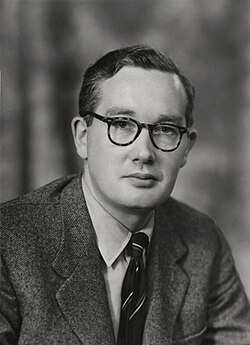
Sir Derek Harold Richard Barton FRS FRSE[1] (8 September 1918 – 16 March 1998) was an English organic chemist and Nobel Prize laureate for 1969.[2][3][4][5]

Education and early life

[edit]

Barton was born in Gravesend, Kent, to William Thomas and Maude Henrietta Barton (née Lukes).

He attended Gravesend Grammar School (1926–29), The King's School, Rochester (1929–32), Tonbridge School (1932–35) and Medway Technical College (1937–39). In 1938 he entered Imperial College London, where he graduated in 1940 and obtained his PhD degree in Organic Chemistry in 1942.

Career and research

[edit]

From 1942 to 1944, Barton was a government research chemist, then from 1944 to 1945 he worked for Albright and Wilson in Birmingham. He then became Assistant Lecturer in the Department of Chemistry of Imperial College, and from 1946 to 1949 he was ICI Research Fellow.

During 1949 and 1950, he was a visiting lecturer in natural products chemistry at Harvard University, and was then appointed reader in organic chemistry and, in 1953, professor at Birkbeck College. In 1955, he became Regius Professor of Chemistry at the University of Glasgow, and in 1957, he was appointed professor of organic chemistry at Imperial College, London. In 1950, Barton showed that organic molecules could be assigned a preferred conformation based upon results accumulated by chemical physicists, in particular by Odd Hassel. Using this new technique of conformational analysis, he later determined the geometry of many other natural product molecules.

In 1969, Barton shared the Nobel Prize in Chemistry with Odd Hassel for “contributions to the development of the concept of conformation and its application in chemistry."

In 1958, Barton was appointed Arthur D. Little Visiting Professor of Massachusetts Institute of Technology, and in 1959 Karl Folkers Visiting Professor at the Universities of Illinois and Wisconsin. The same year, he was elected a foreign honorary member of the American Academy of Arts and Sciences.[6]

In 1949, he was the first recipient of the Corday-Morgan Medal and Prize awarded by the Royal Society of Chemistry. In 1954 he was elected a Fellow of the Royal Society and the International Academy of Science, Munich as well as, in 1956, a Fellow of the Royal Society of Edinburgh; in 1965 he was appointed member of the Council for Scientific Policy. He was knighted in 1972, becoming formally styled Sir Derek in Britain. In 1978, he became Director of the Institut de Chimie des Substances Naturelles (ICSN - Gif Sur-Yvette) in France.

In 1977, on the occasion of the centenary of the Royal Institute of Chemistry, the British Post Office honoured him, and 5 other Nobel Prize-winning British chemists, with a series of four postage stamps featuring aspects of their discoveries.[7]

He moved to the United States in 1986 (specifically Texas) and became distinguished professor at Texas A&M University and held this position for 12 years until his death.

In 1996, Barton published a comprehensive volume of his works, entitled Reason and Imagination: Reflections on Research in Organic Chemistry.

As well as for his work on conformation, his name is remembered in a number of reactions in organic chemistry, such as the Barton reaction, the Barton decarboxylation, and the Barton-McCombie deoxygenation.

The newly built Barton Science Centre at Tonbridge School in Kent, where he was educated for 4 years, completed in 2019, is named after him.

Honours and awards

[edit]

Barton was elected a Fellow of the Royal Society (FRS) in 1954.[1] In 1966 he was elected a Member of the German Academy of Sciences Leopoldina.[8] He was elected to the United States National Academy of Sciences in 1970 and the American Philosophical Society in 1978.[9][10]

Personal life

[edit]

Sir Derek married three times: Jeanne Kate Wilkins (on 20 December 1944); Christiane Cognet (died 1992) (in 1969); and Judith Von-Leuenberger Cobb (1939-2012) (in 1993).[11] He had a son by his first marriage.[when?]

References

[edit]
[edit]
Revisions and contributorsEdit on WikipediaRead on Wikipedia
from Grokipedia
Sir Derek Harold Richard Barton (8 September 1918 – 16 March 1998) was a British organic chemist renowned for pioneering conformational analysis, a method that revolutionized the understanding of molecular shapes and their influence on chemical reactivity, earning him the in 1969 shared with Odd Hassel. Born in , , as the only child of William Thomas Barton and Maude Henrietta Lukes, Barton overcame early hardships following his father's death in 1935 by working as an apprentice in the timber trade before pursuing higher education. He earned a BSc with first-class honours in 1940 and a PhD in in 1942 from , where he later held positions including assistant lecturer (1945) and professor (1957–1977). Barton's seminal 1950 paper, "The Conformation of the Steroid Nucleus," introduced the of conformational , applying it to biologically important molecules such as , bile acids, and to predict their three-dimensional structures and reaction behaviors. This work bridged physical and , enabling advances in synthesis and mechanism elucidation for natural products. Throughout his career, he held prestigious roles at (visiting lecturer, 1949–1950), Birkbeck College (reader, 1950–1953; professor, 1953–1955), and the (, 1955–1957), before returning to Imperial College. In his later years, Barton shifted focus to innovative free-radical chemistry at the Centre National de la Recherche Scientifique (CNRS) in (1977–1986) and (1986–1998), developing methods like the Barton reaction for and the , which remain staples in synthetic . Knighted in 1972 and elected a in 1954, Barton authored over 1,000 papers and received numerous accolades, including the Davy Medal (1961) and (1980) from the Royal Society, underscoring his profound impact on the field. His legacy endures in the foundational role of conformational principles in modern and molecular modeling.

Early life and education

Early years

Derek Harold Richard Barton was born on 8 September 1918 in , , , as the only child of William Thomas Barton and Maude Henrietta Barton (née Lukes). His father worked in the timber trade, providing a modest middle-class livelihood for the family, while his mother managed the household. The family resided primarily in , though Barton's early years involved some instability due to relocations tied to his father's business. Barton attended several schools during his childhood, reflecting both family circumstances and his evolving academic interests. He began at County School for Boys from 1926 to 1929, followed by King's School in Rochester from 1929 to 1932. Upon transferring to in 1932, he shifted toward science, completing his studies there in 1935; this change marked the beginning of his engagement with scientific subjects, including early experimentation in chemistry through school activities. The sudden death of his father in 1935 profoundly impacted the family, prompting Barton to apprentice in the timber trade from 1935 to 1937 to support his mother financially. Seeking further practical training, Barton enrolled at Technical College in Gillingham from 1937 to 1938, where he gained hands-on exposure to scientific experimentation, particularly in chemistry, solidifying his passion for the field. The onset of in 1939 disrupted family life amid broader societal strains, though Barton's subsequent university entry in 1938 positioned him toward academic pursuits amid the conflict.

Formal education

Barton began his formal education in chemistry at in 1938 amid the escalating tensions of . The wartime context accelerated academic timelines, allowing him to complete his (BSc) with first-class honours in just two years by 1940, during which he also received the Hofmann Prize for outstanding performance. For his doctoral studies, Barton remained at Imperial College, pursuing a PhD in under the supervision of Ian Heilbron, the head of the department. His research, conducted in collaboration with Dr. Martin Mugdan and Dr. I. Galichtenstein, focused on developing an improved industrial process for manufacturing from ethylene dichloride through of chlorinated hydrocarbons—a project deemed of national importance for wartime chemical production needs. He was awarded his PhD in 1942, having navigated the constraints of resource shortages and air raids that disrupted work. Barton's graduate studies were interrupted by brief but significant wartime roles from 1942 to 1944, when he was assigned to a unit at in . Medically exempt from active combat due to a heart condition, he contributed to the development of water-free invisible inks suitable for application on , undetectable by standard iodine detection methods—a critical innovation for efforts. Despite the demands of this classified work, Barton continued his PhD research nocturnally at Imperial College, balancing these obligations under the pressures of the ongoing conflict. These early academic milestones laid a foundation for Barton's career, culminating in his first publications derived from the PhD thesis. In , he co-authored a on the volatile of ethylquinone from stressed flour beetles, followed by a series of contributions detailing the mechanisms of in chlorinated hydrocarbons, including intramolecular elimination and free-radical pathways in 1,2-dichloroethane decomposition. These works, published amid wartime secrecy constraints, marked his initial foray into mechanistic and highlighted his ability to apply chemical principles to practical challenges.

Professional career

Early positions

Following his PhD in 1942, Derek Barton served as a government research chemist from 1942 to 1944, working in a military intelligence unit based at in during . His primary task involved developing invisible inks to support activities; however, Barton found the work monotonous and supplemented it with independent chemical studies at night. In 1944, Barton transitioned to an industrial role at Albright and Wilson, a leading phosphorus producer, where he remained until 1945. Based at their facilities in Oldbury near Birmingham, he conducted research on the synthesis of organophosphorus compounds, gaining practical experience in industrial-scale amid wartime demands for chemical materials. This position honed his laboratory skills but ultimately proved unsatisfying due to its routine nature. Returning to academia in 1945 as an assistant lecturer at , Barton secured an ICI Research Fellowship from 1946 to 1949, allowing him to pursue independent research in . During this period, he focused on the structural analysis and synthesis of natural products, including triterpenoids—complex polycyclic compounds derived from plants—which laid foundational skills for his later work in complex molecule degradation. In 1949, Barton accepted a visiting lectureship in the chemistry of natural products at , lasting until 1950 and marking his first major international engagement. There, he collaborated closely with Louis F. Fieser, a prominent , contributing to ongoing projects in steroid structural elucidation and synthesis while delivering lectures to graduate students. This opportunity exposed him to advanced American facilities and networks. Postwar economic constraints in Britain, coupled with his dissatisfaction with industrial constraints, underscored the challenges of transitioning from wartime and commercial roles to stable academic positions, prompting Barton's decisive pivot toward university-based .

Major academic appointments

Barton began his major academic career in 1950 as Reader in at Birkbeck College, , where he established a research group focused on terpenoids despite the institution's emphasis on evening classes for part-time students. He was promoted to Professor of there in 1953, allowing him to expand his influence before relocating for further opportunities. In 1955, Barton was appointed Regius Professor of Chemistry at the , a prestigious endowed chair that provided substantial resources for laboratory expansion and student supervision during his brief two-year tenure. This move marked a step toward greater administrative responsibility, though he departed in 1957 amid departmental changes. He then returned to as Professor of at Imperial College in 1957, ascending to the Hofmann Professorship in 1970, where he led the department to international prominence through strategic hires and fostering global collaborations until his retirement in 1978. Seeking to continue his work beyond UK retirement age limits, Barton accepted the directorship of the Institut de Chimie des Substances Naturelles in , , in 1977, overseeing operations at this CNRS facility dedicated to studies until 1986. In 1986, at age 68, he joined as a of Chemistry, later holding the Dow of Chemical , where he mentored students and contributed to departmental growth in a dedicated research wing until his death in 1998. These relocations underscored his pursuit of environments that supported expansive research leadership and institutional development.

Scientific contributions

Conformational analysis

Derek Harold Richard Barton developed the principles of conformational analysis in the late 1940s and early 1950s, building on the foundational work of Odd Hassel, who had used studies to elucidate the preferred chair conformation of and its derivatives during the 1930s and 1940s. Hassel's investigations provided critical structural data from the solid state, but Barton extended these insights to predict the three-dimensional behavior of molecules in solution, emphasizing the dynamic spatial arrangements around single bonds without relying on complex mathematical equations; instead, he employed diagrammatic representations to illustrate conformational preferences. This approach marked a pivotal shift in , allowing chemists to correlate molecular shape with reactivity and properties in fluid environments. In 1950, while at , Barton published a seminal four-page paper in Experientia titled "The Conformation of the Nucleus," which introduced the term "conformational analysis" and applied it systematically to the rings prevalent in structures. Central to his framework was the distinction between configuration—the fixed spatial arrangement of atoms defined by bonds around asymmetric centers or double bonds, which requires bond breaking to alter—and conformation—the variable arrangements arising from rotation about single bonds, such as the interconversion between chair and boat forms of , which occur without breaking bonds. Barton highlighted the axial and equatorial positions of substituents on chairs: axial groups project perpendicular to the ring plane, often leading to steric hindrance, while equatorial groups lie more parallel, favoring stability and reactivity in many cases. These concepts explained why certain substituents in prefer equatorial orientations, influencing rates and elimination reactions. Barton applied conformational analysis to complex natural products, particularly steroids and alkaloids, to resolve their structures and predict reaction outcomes based on spatial accessibility. For instance, in analyzing —a key with a fused —he demonstrated how the all-chair conformation with predominantly equatorial substituents accounted for its stability and biosynthetic pathway, integrating with reaction mechanisms to guide synthetic strategies. Similarly, his work on derivatives revealed how conformational preferences in the nucleus influenced photochemical rearrangements and , enabling more precise structural elucidations. In alkaloids like those in the tropane series, Barton used these principles to differentiate reactivity between axial and equatorial approaches, such as in ester hydrolyses where equatorial groups react faster under alkaline conditions due to reduced steric interference. The impact of Barton's conformational analysis was profound, revolutionizing by providing a predictive tool that linked to chemical behavior, thereby streamlining the design of reactions and the understanding of enzymatic processes. Prior to this, chemists often relied on empirical trial-and-error for complex molecules; Barton's method allowed for rational planning, as seen in his diagrammatic predictions of product distributions in reductions and eliminations, where diaxial alignments favored E2 reactions by orders of magnitude. This framework not only clarified longstanding puzzles in chemistry but also laid the groundwork for modern stereoselective synthesis, earning Barton shared recognition for advancing the field beyond static structural formulas.

Other innovations in organic synthesis

In the 1960s, Barton developed the Barton reaction, a photochemical process involving the photolysis of alkyl nitrites derived from alcohols, which generates alkoxy radicals that abstract a hydrogen atom from the δ-position, leading to selective C-H functionalization and formation after recombination with . Initially applied to synthesis, such as the conversion of acetate to aldosterone acetate, it provided an efficient route to biologically active compounds by targeting unactivated positions. Building on radical chemistry principles, Barton later developed the Barton decarboxylation, a method for the remote decarboxylation of carboxylic acids via thiohydroxamate esters, facilitating precise C-C bond formation in complex structures without disrupting sensitive functionalities. Building on radical chemistry principles, Barton introduced the Barton-McCombie deoxygenation in the 1970s, a two-step protocol for replacing secondary or tertiary hydroxyl groups with hydrogen while preserving other functional groups. The process first converts the alcohol to a xanthate ester or similar thiocarbonyl derivative, followed by radical reduction using tributyltin hydride and a radical initiator like AIBN, generating a carbon radical that abstracts hydrogen to yield the deoxygenated product. This mild, selective method addressed limitations in earlier deoxygenation techniques, such as those requiring harsh conditions that could degrade natural product scaffolds. These innovations found broad utility in natural product synthesis, particularly for terpenoids, , and , where selective manipulation of polyfunctional molecules is essential. The Barton reaction facilitated functionalization in frameworks, enabling semisyntheses of hormones like aldosterone and extensions to triterpenoids such as β-amyrin derivatives. Meanwhile, the Barton-McCombie procedure proved invaluable for antibiotics; for instance, it was employed in steps for erythromycin precursors, allowing modification of the moieties without affecting the aglycone core. In plant chemistry, both methods supported degradation and reconstruction efforts, such as selective hydroxyl removal in alkaloids to probe biosynthetic pathways or build complex polycyclic systems. Barton's later reflections on these synthetic advances appeared in the 1996 collection Reason and Imagination: Reflections on Research in , which compiles his selected papers and emphasizes the creative interplay of mechanistic insight and practical invention in developing tools for manipulation. This focus on methodological innovation marked a shift in Barton's career, evolving from structural elucidation to reaction invention during his tenure at the Institut de Chimie des Substances Naturelles in (1978–1986), where he directed efforts toward radical-based transformations for degradation. Upon moving to in the United States (1986–1998), he further refined these tools, addressing scalability issues in complex syntheses and mentoring a new generation in free-radical strategies that overcame limitations in traditional ionic methods.

Awards and honors

Nobel Prize

In 1969, Derek H. R. Barton was jointly awarded the in Chemistry with Odd Hassel for "their contributions to the development of the concept of conformation and its application in chemistry." The prize was announced in October 1969 by the Royal Swedish Academy of Sciences, recognizing foundational advancements in understanding molecular shapes and their roles in chemical reactivity. The award highlighted the complementary nature of their work: Hassel's contributions stemmed from physical chemistry and X-ray crystallography studies of small, simple molecules in the 1940s and 1950s, which established core principles of conformation, while Barton's focused on applying these ideas to complex organic compounds, particularly steroids and natural products. This synergy bridged with practical , enabling deeper insights into how atomic arrangements dictate molecular behavior. On December 11, 1969, Barton delivered his Nobel Lecture in Stockholm, titled "The Principles of Conformational Analysis," where he outlined the methodology's evolution and emphasized its applications to biosynthesis. He illustrated how conformational principles elucidate the spatial factors influencing enzymatic reactions and the synthesis of biologically active molecules, underscoring the field's transformative potential in organic chemistry. The selection reflected the Academy's recognition of Barton's pioneering 1950s —most notably his 1950 paper on steroid conformations—amid the era's rising emphasis on in pharmaceutical development, where molecular shape proved critical for and . Barton attended the Nobel ceremony in on December 10, 1969, an event that amplified his global visibility through international media coverage and facilitated enhanced and collaborative opportunities in subsequent years.

Other distinctions

Barton received early recognition for his contributions to with the First Corday-Morgan and from the (now ) in 1949, awarded to promising young chemists under the age of 35 for outstanding research. This honor, the inaugural recipient of the prize, underscored his innovative work on molecular structures and helped establish his reputation within the British scientific community. In 1954, he was elected a (), a prestigious distinction that recognized his growing influence in chemistry and facilitated access to influential networks. He received the Fritzsche from the in 1956 and the first Roger Adams in 1959, both for contributions to . In 1961, Barton was awarded the Davy from the for his distinguished researches in , particularly on the conformation of molecules. Two years after his knighthood, in 1956, Barton was elected a Fellow of the Royal of Edinburgh (FRSE), further affirming his standing among Scotland's academic elite during his tenure at the . Barton’s international prestige expanded through memberships in leading global academies. In 1966, he was elected to the German Academy of Sciences Leopoldina, one of Europe's oldest scientific societies, highlighting his contributions to conformational analysis on the continental stage. He became a Foreign Associate of the National Academy of Sciences in 1970, a rare honor for non-American scientists that reflected the global impact of his synthetic methodologies. In 1978, Barton was elected to the , joining luminaries in science and philosophy and enhancing his role in transatlantic collaborations. These affiliations not only validated his work but also opened doors to joint research projects and exchanges with international peers. In 1972, Barton was knighted by Queen Elizabeth II for his services to chemistry, adopting the title Sir Derek Barton in the , which symbolized national acknowledgment of his transformative role in the field. That same year, he received the Longstaff Medal from the Chemical Society and the Royal Medal from the Royal Society. This honor, coming shortly after his Nobel recognition, elevated his profile and aided in attracting top talent to his laboratories. Other distinctions included his appearance on a in 1977, part of a series commemorating Nobel laureates in chemistry to mark the centenary of the Royal Institute of Chemistry, which popularized his conformational analysis work among the public. Barton also received honorary degrees from numerous universities, including the (DSc, 1962), (DSc, 1964), the (DSc, 1970), the (DSc, 1972), and over two dozen others worldwide, reflecting his enduring mentorship and scholarly influence. Later honors included the from the Royal Society in 1980 and the Priestley Medal from the in 1995, the latter recognizing his lifetime contributions to chemistry. These cumulative honors, spanning from the late through the , progressively built Barton's prestige, enabling broader collaborations across institutions in and while enhancing his ability to recruit and inspire graduate students in .

Personal life and legacy

Family and marriages

Derek Barton married three times during his life. His first marriage was to Jeanne Kate Wilkins on 20 December 1944 in Harrow, ; the couple had one son, William Godfrey Lukes Barton, born on 8 March 1947, before their divorce in the late 1960s. In 1969, Barton married Christiane Cognet, a at the Lycée français de Londres, who brought warmth to his through her love of entertaining guests. The couple navigated frequent relocations tied to Barton's academic career, including moves from to , then to in , and later to , which required balancing family stability with professional demands. Christiane passed away in 1992 from cancer while they were in . Barton remarried in 1993 to Judith von Leuenberger Cobb in , who provided steadfast support during his later years, accompanying him on travels and sharing a home with three dogs. Public details about Barton's family remain limited, reflecting his primary focus on scientific work rather than personal disclosures.

Death and influence

Sir Derek Barton died on March 16, 1998, in , at the age of 79, from a sudden heart attack related to natural causes of aging. Following his death, a memorial service was held at on September 1, 1998, honoring his contributions to . Tributes also emerged from , where he had served as a , including departmental acknowledgments of his legacy in chemical . A comprehensive biographical , detailing his life and scientific achievements, was published in the Biographical Memoirs of Fellows of the Royal Society in 2002 by Steven V. Ley and Rebecca M. Myers. Barton's legacy profoundly shaped modern , particularly through his pioneering work, which influenced fields like , , and . His work has been cited over 25,000 times across hundreds of publications, underscoring its enduring impact on subsequent research and methodologies. He inspired generations of organic chemists, with his innovative approaches continuing to guide complex molecule synthesis and biosynthetic studies. Institutional tributes reflect his broader influence, including the naming of the Barton Science Centre at —his alma mater—which opened in January 2019 as a state-of-the-art facility for and exploration. While specific posthumous endowed chairs in his name are not prominently documented, his foundational role in advancing chemical sciences endures through such commemorations and the ongoing application of his principles in academic and industrial contexts.

References

Add your contribution
Related Hubs
User Avatar
No comments yet.