Hubbry Logo
George PorterGeorge PorterMain
Open search
George Porter
Community hub
George Porter
logo
8 pages, 0 posts
0 subscribers
Be the first to start a discussion here.
George Porter
George Porter
from Wikipedia

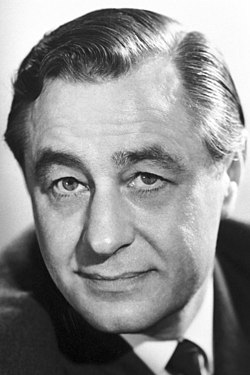
George Porter, Baron Porter of Luddenham, OM, FRS, FRSE (6 December 1920 – 31 August 2002) was a British chemist.[5] He was awarded the Nobel Prize in Chemistry in 1967.

Key Information

Education and early life

[edit]

Porter was born in Stainforth, near Thorne, in the then West Riding of Yorkshire. He was educated at Thorne Grammar School,[6] then won a scholarship to the University of Leeds and gained his first degree in chemistry. During his degree, Porter was taught by Meredith Gwynne Evans, who he said was the most brilliant chemist he had ever met. He was awarded a PhD from the University of Cambridge in 1949 for research investigating free radicals produced by photochemical means.[7] He later became a Fellow of Emmanuel College, Cambridge.[8]

Career and research

[edit]

Porter served in the Royal Naval Volunteer Reserve during the Second World War. Porter then went on to do research at the University of Cambridge supervised by Ronald George Wreyford Norrish where he began the work that ultimately led to them becoming Nobel Laureates.

His original research in developing the technique of flash photolysis to obtain information on short-lived molecular species provided the first evidence of free radicals. His later research utilised the technique to study the detailed aspects of the light-dependent reactions of photosynthesis, with particular regard to possible applications to a hydrogen economy, of which he was a strong advocate.

He was Assistant Director of the British Rayon Research Association from 1953 to 1954, where he studied the phototendering of dyed cellulose fabrics in sunlight.[9]

Porter served as professor in the Chemistry department at the University of Sheffield in 1954–65. It was here he started his work on flash photolysis with equipment designed and made in the departmental workshop. During this tenure he also took part in a television programme describing his work. This was in the "Eye on Research" series. Porter became Fullerian Professor of Chemistry and Director of the Royal Institution in 1966. During his directorship of the Royal Institution, Porter was instrumental in the setting up of Applied Photophysics, a company created to supply instrumentation based on his group's work. He was awarded the Nobel Prize in Chemistry in 1967 along with Manfred Eigen and Ronald George Wreyford Norrish.[10] In the same year he became a visiting professor in University College London.[10]

Porter was a major contributor to the Public Understanding of science. He became president of the British Association in 1985 and was the founding Chair of the Committee on the Public Understanding of Science (COPUS). He gave the Romanes Lecture, entitled "Science and the human purpose", at the University of Oxford in 1978; and in 1988 he gave the Dimbleby Lecture, "Knowledge itself is power." From 1990 to 1993 he gave the Gresham lectures in astronomy.

Awards and honours

[edit]

Porter was elected a Fellow of the Royal Society (FRS) in 1960,[1] a member of the American Academy of Arts and Sciences in 1979,[11] a member of the American Philosophical Society in 1986,[12] and served as President of the Royal Society from 1985 to 1990. He was also awarded the Davy Medal in 1971, the Rumford Medal in 1978, the Ellison-Cliffe Medal in 1991 and the Copley Medal in 1992.

Porter also received an Honorary Doctorate from Heriot-Watt University in 1971.[13]

He was knighted in 1972, appointed to the Order of Merit in 1989,[14] and was made a life peer as Baron Porter of Luddenham, of Luddenham in the County of Kent, in 1990. In 1995, he was awarded an Honorary Degree (Doctor of Laws) from the University of Bath.[15]

In 1976 he gave the Royal Institution Christmas Lecture on The Natural History of a Sunbeam.[16]

Porter served as Chancellor of the University of Leicester between 1984 and 1995. In 2001, the university's chemistry building was named the George Porter Building in his honour.

Family

[edit]

In 1949 Porter married Stella Jean Brooke.

Publications

[edit]
  • Chemistry for the Modern World (1962)
  • Chemistry in Microtime (1996)

See also

[edit]

References

[edit]
[edit]
Revisions and contributorsEdit on WikipediaRead on Wikipedia
from Grokipedia
George Porter, Baron Porter of Luddenham (1920–2002), was a British chemist renowned for pioneering the technique of , which enabled the study of extremely fast chemical reactions using short bursts of . He shared the with Ronald George Wreyford Norrish and for their groundbreaking work on disturbing chemical equilibria with very short pulses of to observe rapid reaction kinetics. This innovation revolutionized and by allowing scientists to capture and analyze molecular behaviors on timescales, previously inaccessible. Born on 6 December 1920 in Stainforth, , , Porter grew up in a modest mining community and attended Thorne Grammar School before earning a BSc in chemistry from the in 1941 as an Ackroyd scholar. During , he served as a radar officer in the Royal Navy from 1941 to 1945, gaining expertise in electronics that later informed his experimental techniques. After the war, he pursued postgraduate studies at the under Norrish, where in the late 1940s they co-developed —a method combining high-intensity flash lamps with spectroscopic detection to initiate and monitor photochemical reactions in real time. Porter remained at as a demonstrator and assistant director of research until 1954, earning a fellowship at Emmanuel College from 1952 to 1954. In 1955, Porter was appointed professor of at the , where he expanded his research on fast reactions. He joined the Royal Institution in in 1963 as professor of chemistry, becoming director in 1966—a position he held until 1986, during which he also served as Fullerian Professor of Chemistry until 1988. Under his leadership, the institution advanced public engagement with science; he delivered the Royal Institution Christmas Lectures in 1969 and 1976 and advocated for the importance of fundamental research. Later, he chaired the Centre for Photomolecular Sciences at from 1987 and was elected president of the Royal Society from 1985 to 1990. Knighted in 1972 and created a in 1990, Porter died on 31 August 2002 in Canterbury, Kent, leaving a legacy of over 300 publications and influence on generations of chemists.

Early Life and Education

Childhood and Early Influences

George Porter was born on December 6, 1920, in Ash House, a modest dwelling in Stainforth, a village in the , . He was the only child of John Smith Porter, a local builder who had limited formal until age 13 and served as a lay Methodist , and Alice Ann Roebuck, in a working-class family shaped by the rural industrial landscape of and railways. One of his grandfathers worked as a , underscoring the family's ties to Yorkshire's industrial heritage, while the household environment fostered a sense of determination influenced by his father's regrets over his own curtailed schooling. Porter's early education began at the local village from 1925 to 1931, where he first displayed curiosity about the natural world. At around age eight or nine, his father ignited a lifelong passion for chemistry by gifting him a , allowing him to conduct simple experiments at home. This early exposure, combined with the self-directed play in the modest family setting, highlighted his innate inquisitiveness amid the constraints of a working-class upbringing in an area blending rural tranquility with industrial activity. In 1931, Porter won a county scholarship to Thorne Grammar School near , where he received a more structured introduction to through dedicated teachers. His chemistry and physics instructor, Mr. Moore, and English teacher, Mr. Todd, provided key inspiration, encouraging his enthusiasm for scientific inquiry and experimentation. To accommodate his growing interest, his father repurposed an old bus as a private , enabling Porter to explore chemical reactions safely away from the house and nurturing his determination to pursue despite limited resources. These formative experiences in the industrial countryside laid the groundwork for his later academic path.

Formal Education and Wartime Service

In 1938, George Porter enrolled at the University of Leeds as an Ackroyd Scholar to study chemistry. There, he developed a strong interest in physical chemistry and chemical kinetics, largely inspired by the teaching of M. G. Evans, who emphasized the dynamic aspects of molecular reactions. During his final honors year, Porter also took a specialized course in radio physics, which provided foundational knowledge in electronics and pulse techniques that would later influence his scientific work. Porter's studies were interrupted by the outbreak of , and in 1941, he joined the Royal Naval Volunteer Reserve as an , soon being commissioned as an officer in the . From 1942 to 1944, he served as a radar group officer in the and Mediterranean commands, where he maintained and troubleshot equipment on destroyers during operations, including the detection and sinking of U-boats and support for the Allied invasion of (). Later, from 1943 to 1945, he worked as an instruction officer at a radar training school in and was assigned to Force X for potential operations against , though he was demobilized following Japan's surrender. Following his demobilization in 1945, Porter returned to the and completed his degree in chemistry that year. He then moved to the as a postgraduate research student under Professor R. G. W. Norrish, where he began his PhD studies on free radicals in gaseous photochemical reactions using flow techniques. This period marked Porter's first significant exposure to concepts, as preparatory work on transient species and light-induced reactions laid the groundwork for his later innovations, culminating in the completion of his PhD in 1949.

Professional Career

Early Research and Academic Positions

Following his completion of a PhD under Ronald Norrish at the in 1949, George Porter was appointed as a demonstrator in , continuing his close collaboration with Norrish on photochemical . In 1952, he advanced to the role of assistant director of in , a position he held until 1954 while contributing to studies of transient . In 1954, Porter took a one-year appointment as assistant director at the British Rayon Research Association in , where he investigated photochemical fading of dyes. He then transitioned in 1955 to the as Professor of , the institution's first such chair, and promptly established a specialized for photochemical investigations. At Sheffield, Porter assumed significant administrative responsibilities, including serving as head of the chemistry department and Firth Professor from 1963 onward, roles that extended until his departure in 1966. He developed a dedicated group centered on transient in chemical reactions, navigating postwar constraints such as scarce funding in Britain and challenges in attracting students to kinetics-focused studies.

Leadership in Scientific Institutions

In 1966, George Porter was appointed Director of the Royal Institution and Fullerian Professor of Chemistry, succeeding , a position he held until 1986. During his tenure, he led significant modernization efforts, including securing funds through the Faraday Centenary Appeal in 1967 and a subsequent 1976 appeal that supported infrastructure upgrades, such as the construction of the , and expanded educational programs like Schools Lectures. He also reformed the institution's governance by merging the Committees of Managers and Visitors into a single executive Council, enhancing administrative efficiency and promoting interdisciplinary initiatives in areas like photobiology. Porter's leadership extended to other key roles that influenced British scientific organizations. In 1970, he served as President of the Chemical Society for two years, during which he guided early discussions on amalgamating it with other bodies to form a unified chemical sciences entity. In 1966, he became Honorary Professor of at the , and in 1967, he was appointed Visiting Professor at , roles that allowed him to foster academic collaborations while maintaining his institutional oversight. From 1985 to 1990, Porter served as President of the Royal Society, succeeding and leveraging the position to advocate for increased government funding for science amid economic pressures in the . He emphasized international collaborations, including efforts to support global scientific exchanges and for scientists, such as in the case of , while chairing the Committee on the Public Understanding of Science (COPUS) to bridge institutional science with public engagement. These initiatives strengthened the Royal Society's role in fostering worldwide partnerships during a period of fiscal constraint. Following his presidency, Porter served as Chancellor of the from 1986 to 1995 and chaired the Centre for Photomolecular Sciences at from 1990 until his death.

Scientific Research

Invention of Flash Photolysis

In 1947, while working under Ronald George Wreyford Norrish at the , George Porter conceptualized the technique as a means to study fast chemical reactions by generating transient species with intense, short bursts of light. This idea drew inspiration from Porter's wartime service developing systems, where he encountered high-intensity flash tubes used in . The method aimed to produce and detect short-lived intermediates, such as free radicals, in the gas phase, overcoming the limitations of continuous illumination techniques that failed to capture rapid kinetics. The technical setup of involved discharging a bank of capacitors through a flash lamp filled with to create a high-energy photolyzing pulse, typically around 2 milliseconds initially, which initiated reactions in a sample vessel. This was followed by a delayed spectroscopic flash from a similar lamp to probe the resulting transients via absorption spectroscopy, with the timing controlled by a rotating sector disk for early implementations. The system achieved microsecond temporal resolution by the early 1950s, allowing real-time observation of species with lifetimes as short as 10 microseconds, using a magnesium oxide-coated reflector to enhance light efficiency and a vacuum line for sample preparation. The method was first described in a 1949 publication, with early experiments demonstrating its application to gaseous systems, such as the of NO₂ to study the kinetics of the H-O explosion or chlorine-oxygen mixtures to observe the ClO radical. These demonstrated the technique's ability to detect free radicals directly via transient absorption spectra in the near-ultraviolet region, confirming intermediates' identity and enabling kinetic measurements. Later, in 1953, the technique was applied to the photolysis of acetone vapor, observing the transient absorption spectra of methyl radicals (CH₃•). The basic process for acetone can be represented by the equation: CH3COCH3+hν2CH3+CO\text{CH}_3\text{COCH}_3 + h\nu \rightarrow 2 \text{CH}_3^\bullet + \text{CO} This simplified photodecomposition equation illustrates the primary dissociation pathway under ultraviolet irradiation, though actual yields depend on wavelength and energy input; derivation involves quantum yield considerations from bond dissociation energies (e.g., C-C bond in acetone at ~335 kJ/mol), but limitations include secondary reactions causing temperature rises that complicate radical recombination rates. Over the subsequent years, the technique evolved through refinements in light sources and detection systems, transitioning from mechanical timing to electronic triggers for precise delays as short as 20 microseconds. Shorter flash lamps (e.g., 20-50 cm) and smaller, higher-voltage capacitors (10-30 μF at 8-10 kV) reduced pulse durations to 35-50 microseconds, minimizing heating effects and enabling the study of reaction mechanisms in real time by resolving sequential steps in radical formation and decay. These improvements, detailed in early publications, expanded the method's precision for spectroscopic analysis of transient species without altering their natural kinetics.

Applications to Chemical Kinetics and Photosynthesis

Flash photolysis enabled the direct observation of transient intermediate species in rapid chemical reactions, particularly free radical reactions, by providing time-resolved spectroscopic data with initial resolutions on the scale. In early applications, Porter studied the ClO radical formed in the of chlorine-oxygen mixtures, identifying its absorption spectrum and measuring its decay kinetics, which revealed second-order recombination rates influenced by wall effects and third-body molecules. By the , advancements with excitation improved time resolution to nanoseconds, allowing quantification of lifetimes for short-lived radicals, such as approximately 10^{-9} seconds for certain aromatic free radicals like benzyl and phenoxyl species observed in gas-phase photolysis. These studies extended to , where ClO kinetics informed models of mechanisms, and to processes, providing rate constants for radical recombination essential for understanding propagation. A seminal example in chemical kinetics involved the recombination of iodine atoms following flash photolysis of iodine vapor, confirming a third-order mechanism with rate constants on the order of 10^{-32} cm^6 molecule^{-2} s^{-1} at room temperature, exhibiting negative activation energies due to chaperon effects from inert gases like argon. This work demonstrated how flash photolysis could resolve elementary steps in chain reactions, yielding quantitative data on bimolecular and termolecular rate constants that were previously inaccessible. In photosynthesis research, Porter applied flash photolysis in the 1960s to identify short-lived chlorophyll intermediates. Later, collaborating with biologists such as James Barber, he bridged photochemistry and biological systems. Using microbeam flash photolysis on concentrated chlorophyll solutions and plant tissues, he detected the triplet state of chlorophyll a and b, with lifetimes around 3 ms for chlorophyll b triplets in solid matrices like cholesterol, independent of concentration below quenching thresholds. Quantum yields for triplet formation were measured as 0.64 for chlorophyll a and 0.88 for chlorophyll b in ether solutions at 23°C, highlighting intersystem crossing efficiency but revealing lower yields in dry hydrocarbons due to excited-state dissociation. No triplets were observed in intact or etiolated plant leaves, but detergent treatment yielded up to 15% triplet formation, suggesting quenching by biological quenchers and implications for electron transfer steps in photosystems. These findings elucidated energy conversion in photosynthesis, with triplet states facilitating energy transfer but risking reactive oxygen species if not quenched efficiently. In vitro models developed by Porter mimicked charge separation, such as photolysis of dyes or chlorophyll-quinone systems to study electron transfer rates on picosecond scales, informing artificial photosynthesis for solar energy. For instance, flash-induced electron transfer from excited chlorophyll to quinone demonstrated kinetics relevant to photosystem II water oxidation, though full water splitting remained partial in these setups. Such experiments provided rate constants for steps like radical anion formation, e.g., e^- + O_2 \to O_2^-, underscoring inefficiencies in biological energy transduction.

Awards and Honors

Nobel Prize and Major Scientific Awards

In 1967, George Porter was awarded the , sharing the honor with , who received half the prize, and Ronald George Wreyford Norrish, with whom Porter jointly received the other half, for their pioneering studies of extremely fast chemical reactions. Porter's specific contribution was recognized for developing , a technique that enabled the observation of short-lived intermediates in photochemical processes. On December 11, 1967, during the Nobel ceremonies in , Porter presented his titled "Flash and Some of Its Applications," where he elaborated on the method's role in detecting and analyzing transient species, such as free radicals and excited states, that occur on timescales in chemical reactions. This work underscored the technique's broad applicability to understanding reaction mechanisms in . Porter's innovations garnered further recognition during the peak of photochemical research in the and beyond. In 1971, he received the Davy Medal from the Royal Society for his distinguished contributions to the understanding of chemical reactions through spectroscopic methods. Earlier, in 1955, the Chemical Society awarded him the Corday-Morgan Medal for his research on fast reactions. He also earned the Longstaff Medal from the Chemical Society in 1981, honoring his advancements in . In 1976, he received the from for the popularization of science. In 1978, he was awarded the from the Royal Society for his work on fast chemical reactions. Additionally, Porter was conferred numerous honorary doctorates from various universities, reflecting his global impact on the field.

National Honors and Peerage

Porter's contributions to science were recognized early in his career through his election as a (FRS) in 1960, a distinction that highlighted his emerging influence in . This honor, conferred by one of Britain's most prestigious scientific bodies, marked him as a leading figure among the nation's scholars. In 1972, Porter was knighted as Sir George Porter in the , specifically for his services to chemistry, reflecting the broader impact of his research on national scientific advancement. This title underscored his growing stature beyond academia, positioning him as a key ambassador for British . Porter received further acclaim in 1989 with his appointment to the (OM), a rare personal honor bestowed by the Sovereign and limited to just 24 living members at any time, acknowledging exceptional distinction in their field. The following year, in 1990, he was created a life peer as Porter of Luddenham, of Luddenham in the of , granting him a seat in the where he contributed to debates on and education until his death. During his presidency of the Royal Society from 1985 to 1990, Porter played a central role in the institution's honors processes, personally presenting medals such as the and overseeing committees that advised on awards for scientific excellence and policy-related recognitions. This involvement extended his influence into shaping how scientific achievements were honored at a national level.

Personal Life

Family

George Porter married Stella Jean Brooke on August 25, 1949, shortly after completing his PhD at the , where they had met three years earlier at a dance held at the London College of Dance. The couple shared a close partnership, with Stella providing steadfast support throughout Porter's career, including accompanying him on international travels and contributing to their social life as a family. The Porters had two sons: John Brooke Porter, born on September 22, 1952, who became a professor of haematology at , and Andrew Christopher George Porter (1955–2023), born on August 17, 1955, in Knutsford, , who was a scientist and lecturer specializing in at . Family life during the early years was centered in , where the couple settled after their marriage, before relocating to in 1955 when Porter accepted a professorship there; the family later moved to in 1966 upon his appointment as Director of the Royal Institution. These transitions were managed with the family's active involvement, as Stella helped maintain stability amid Porter's demanding professional commitments. Porter often balanced his intense laboratory work—frequently extending into late hours—with family responsibilities, drawing on Stella's role in creating a welcoming home environment that facilitated both personal relaxation and professional networking. In and later at the Royal Institution's residence, the family hosted numerous gatherings for scientists and colleagues, where Stella served as a gracious hostess, fostering an atmosphere that blended domestic warmth with intellectual exchange; such events highlighted their shared enthusiasm for sociability, occasionally featuring lighthearted moments like Porter's playful demonstrations of physics tricks using items.

Interests and Science Communication

George Porter's personal interests extended beyond his scientific pursuits, reflecting a balanced life that intertwined with . His primary hobby was , which he shared with his wife Stella and their children aboard their boat Annobelle, fostering family bonding during outings on the Kentish coast near their home in Luddenham. He also enjoyed music, participating in choral groups like the Emmanuel Singers and performances of operettas during his time in , activities that highlighted his sociable nature and integrated into social gatherings with colleagues and . Porter was a pioneering figure in science communication, dedicated to bridging the gap between specialists and the public. In the and , he contributed to early programs, including an appearance on the 1959 series Eye on Research and a 1964 episode of Horizon demonstrating how everyday materials like and polythene derive from simple compounds such as candles, making complex accessible to lay audiences. His efforts expanded in the 1970s with the -broadcast , such as the 1976 series The Natural History of a , where he explained the role of light in chemistry and through engaging demonstrations. Additionally, the 1965–1966 series The Laws of Disorder, based on his discourse on , further popularized concepts of chemical change. At the Royal Institution, Porter revitalized public engagement through lectures and live demonstrations. As director from 1966, he reinvigorated the historic Friday Evening Discourses tradition—dating back to 1825—by delivering dozens of talks with simple, visually striking experiments, such as his 1960 discourse on "Very Fast Chemical Reactions," which used everyday items like matchboxes to illustrate . He also presented school lectures and the Royal Institution Christmas Lectures in 1969 ("") and 1976 ("The Natural History of a Sunbeam"), emphasizing photochemistry's wonders to inspire young audiences. In public talks, Porter often shared motivational anecdotes from his career to humanize scientific discovery. He frequently recounted the thrill of first observing transient absorption spectra during early experiments in the 1950s, describing how the spectra of short-lived substances gradually emerged under the of a as "one of the most rewarding experiences of his life," a story that underscored the excitement of unveiling hidden chemical worlds.

Legacy

Publications and Writings

George Porter's scholarly contributions were extensive, encompassing over 300 scientific papers primarily focused on , fast reaction kinetics, and related fields. His publications appeared in prestigious journals such as the and the Transactions of the Faraday Society, reflecting his pioneering role in advancing spectroscopic techniques for transient species. Later in his career, Porter also produced works on , emphasizing the accessibility of chemical concepts to broader audiences. A cornerstone of Porter's oeuvre is his collaborative work with Ronald G. W. Norrish on . In a seminal 1949 paper published in , they described chemical reactions produced by very high light intensities, laying the groundwork for observing short-lived intermediates. This was elaborated in Porter's 1950 article in the , titled "Flash photolysis and : a new method for the study of free radical reactions," which detailed the technique's application to gaseous free radicals and established its utility for kinetic studies. Throughout the 1950s, Porter published numerous papers on the lifetimes of free radicals, often in the Journal of the Chemical Society and related periodicals. These works, including series on transient absorption spectra and radical decay rates in solution, provided quantitative insights into ultrafast photochemical processes, such as dynamics in organic molecules. Representative examples include investigations of radical recombination and energy transfer, which built directly on data to quantify lifetimes on microsecond scales. Porter's books further exemplified his commitment to disseminating beyond academia. In 1962, he authored Chemistry for the Modern World, a concise introduction to and its societal implications, to engage general readers with concepts like reaction rates and energy barriers. His 1996 volume, Chemistry in Microtime: Selected Writings on , Free Radicals, and the , compiled key papers from the to the , offering reflections on the evolution of ultrafast spectroscopy and its impact on understanding . These writings played a pivotal role in bridging academic research and public understanding, making complex photochemical principles accessible while influencing subsequent generations of scientists. Porter's 1967 Nobel lecture, "Flash photolysis and some of its applications," published in the official Nobel series, synthesized his contributions to rapid reaction studies and highlighted applications in , such as . Through such publications, he not only documented his discoveries but also advocated for the integration of kinetics into mainstream chemical education.

Influence on Science Policy and Public Engagement

Following his retirement from formal leadership roles, George Porter, elevated to the peerage as Baron Porter of Luddenham in 1990, actively campaigned in the until 2002 for enhanced public funding of . In his in May 1991 and subsequent interventions, he emphasized the need for sustained support for "blue-skies" research through bodies like the research councils, arguing that such funding was essential for long-term scientific breakthroughs. Porter frequently criticized the prevalence of short-term grants, which he viewed as detrimental to innovative, curiosity-driven science, warning that they prioritized immediate applicability over foundational discoveries. Porter's advocacy extended to in science and , where he championed ethical practices and international collaboration. He supported dissident scientists, including efforts on behalf of , and used his platform to address global challenges like derived from . In speeches, he highlighted 's potential for harnessing , noting inefficiencies in natural processes while advocating for policy frameworks to promote renewable technologies. Porter's legacy in public engagement continues to inspire modern science communicators through his eloquent promotion of chemistry's societal relevance. The European Photochemical Association established the Porter Medal in his honor in 1988, first awarded to Porter himself, to recognize outstanding contributions to . He died on August 31, 2002, in , , with tributes underscoring his pivotal role in elevating chemistry's public profile and fostering broader appreciation for . His pioneering work in laid the groundwork for advancements in , techniques now integral to studies of molecular dynamics on atomic timescales.

References

Add your contribution
Related Hubs
User Avatar
No comments yet.