


Community hub
Recent from talks
Contribute something
Nothing was collected or created yet.
Eric Burdon
View on Wikipedia
Key Information


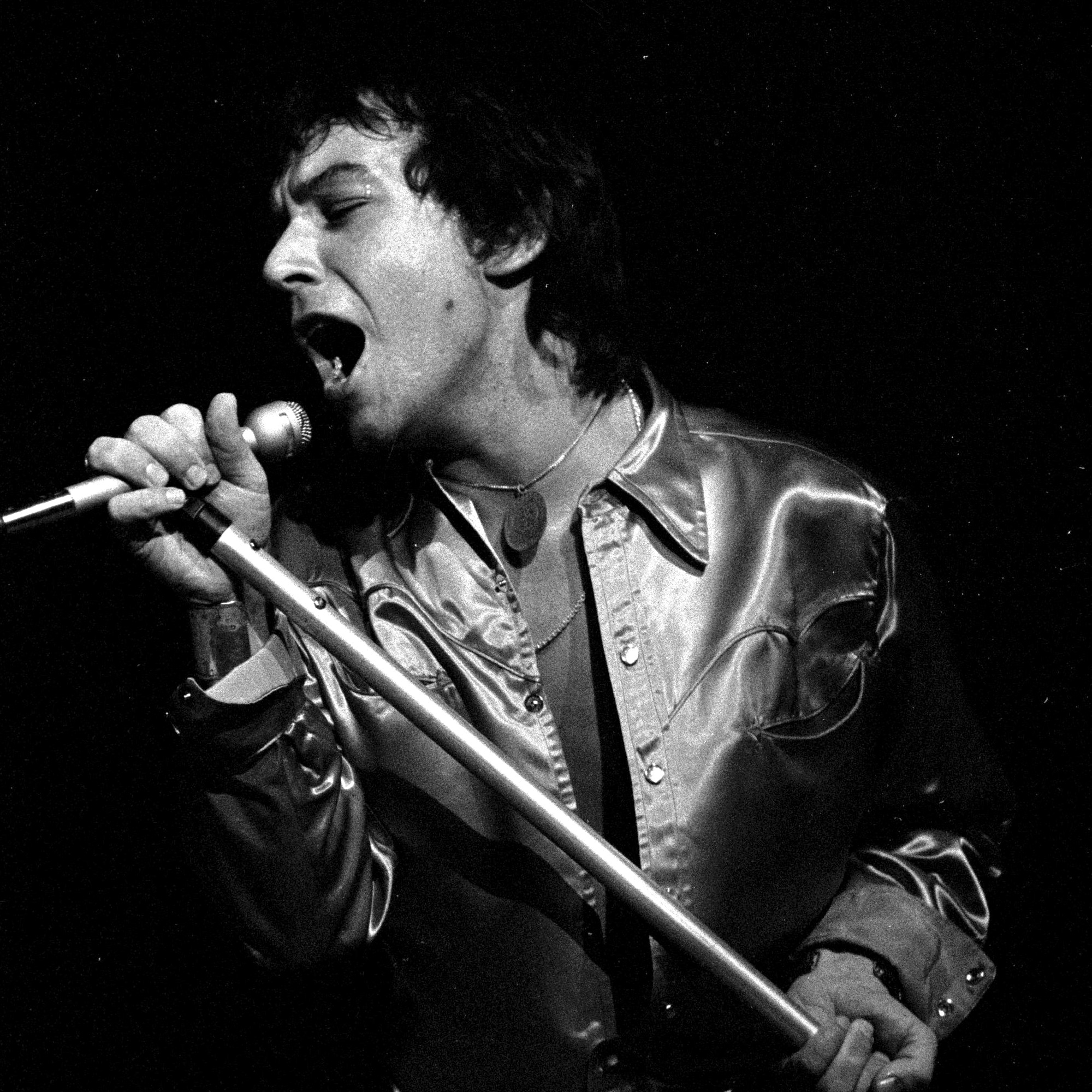
Eric Victor Burdon (born 11 May 1941)[3] is an English singer and songwriter. He was previously the lead vocalist of the R&B and rock band The Animals and the funk band War.[4] Burdon is regarded as one of the British Invasion's most distinctive singers with his deep, powerful blues-rock voice and is known for his intense stage performances.[5]
In 2008, he was ranked 57th in Rolling Stone's list of "The 100 Greatest Singers of All Time".[6]
Early life
[edit]Eric Burdon was born in 1941 in Walker, Newcastle upon Tyne, England. His father, Matt, was originally from Tyneside. His mother, Rene, was originally from Ireland and had moved to Scotland before settling in Newcastle in the 1930s. He had a younger sister, Irene.[7] Burdon's middle name, Victor, resulted from a reward of £25 offered by the Lord Mayor of Newcastle upon Tyne to mothers who gave their newly born children suitably patriotic names.[8]
Burdon was born to a working class family.[9][10][11] Burdon describes his early school years as a "dark nightmare" that "should've been penned by Charles Dickens". Due to the river pollution and humidity in Newcastle he suffered asthma attacks daily. During primary school, he was "stuck at the rear of the classroom of around 40 to 50 kids and received constant harassment from kids and teachers alike." He goes on to say his primary school was "jammed between a slaughterhouse and a shipyard on the banks of the Tyne. Some teachers were sadistic – others pretended not to notice – and sexual molestation and regular corporal punishment with a leather strap was the order of the day."[12]
At secondary school, a teacher by the name of Bertie Brown was responsible for getting him into Newcastle College of Art and Industrial Design (now part of Northumbria University) and changing his life forever.[13] It was while studying graphics and photography at the college that he first met John Steel, the original drummer for the Animals.[14] He also met a lot of other "young rebels" who shared his interest in jazz, folk, and movies.[12]
Burdon started his young adult life as one of a group of people who hung out at the local jazz club, The Downbeat. He describes his friends as "like a motorcycle gang ... without the motorcycles" – they were tough, hard-drinking, and listened to American music. Burdon and fellow rocker and guitarist, American Jimi Hendrix, became very close friends in the mid-sixties and remained so up until Hendrix's death in 1970. Burdon was the person Hendrix's girlfriend called when she found him overdosed on drugs.[15]
Burdon was a good friend of John Lennon. Burdon claims he was the eggman in one of Lennon's songs, "I Am the Walrus". Burdon states, "The nickname stuck after a wild experience I'd had at the time with a Jamaican girlfriend called Sylvia. I was up early one morning cooking breakfast, naked except for my socks, and she slid up beside me and slipped an amyl nitrite capsule under my nose. As the fumes set my brain alight and I slid to the kitchen floor, she reached to the counter and grabbed an egg, which she cracked into the pit of my belly. The white and yellow of the egg ran down my naked front and Sylvia began to show me one Jamaican trick after another. I shared the story with John at a party at a Mayfair flat one night with a handful of others." According to Burdon, Lennon, finding the story hilarious, replied, "Go on, go get it, Eggman", incorporating the incident into his song in tribute to the unique experience.[16]
Career
[edit]The Animals
[edit]
Burdon was lead vocalist of the Animals, formed during 1962 in Newcastle upon Tyne. The original band was the Alan Price Rhythm and Blues Combo, which formed in 1958;[17] they became the Animals shortly after Burdon joined the band. The Animals combined electric blues with rock; in the US they were considered one of the leading bands of the British Invasion.[18] Along with the Beatles, the Rolling Stones, the Who, the Hollies, the Dave Clark Five, and the Kinks, the group introduced contemporary British music and fashion to American audiences. Burdon's powerful voice can be heard on the Animals' singles "The House of the Rising Sun", "Baby Let Me Take You Home", "I'm Crying", "Boom Boom", "Don't Let Me Be Misunderstood", "Bring It On Home to Me", "We Gotta Get Out of This Place", "It's My Life", "Don't Bring Me Down", "See See Rider", "Help Me Girl", "Monterey", and "Sky Pilot".
The Animals' keyboardist Alan Price left the band in May 1965, and drummer John Steel followed in April 1966.[19] Burdon has often attributed the disintegration of the band to conflict with Price, specifically that Price had claimed sole rights and ownership to "House of the Rising Sun".[20] Burdon and drummer Barry Jenkins reformed the group as Eric Burdon and the Animals. Their first studio album was Eric Is Here, which featured the hit single "Help Me Girl", released in December 1966, in which Burdon and drummer Jenkins teamed up with Animals' keyboardist Dave Rowberry, Animals' original bassist Chas Chandler, and Animals' original guitarist Hilton Valentine, and session musicians arranged and conducted by Horace Ott.[21]
Then followed a more psychedelic incarnation of the group that featured future Family member John Weider and was sometimes called Eric Burdon and the New Animals. Keyboardist Zoot Money joined during 1968 until the band broke up in 1969.[22] This group's hits included the ballad "San Franciscan Nights", the grunge–heavy metal-pioneering "When I Was Young", "Monterey", the anti-Vietnam-war anthem "Sky Pilot", "White Houses" and the progressive cover of "Ring of Fire".
In 1975, the original Animals reunited and recorded a studio album called Before We Were So Rudely Interrupted, released in 1977.[23] In May 1983, the Animals reunited with their original line-up and released the studio album Ark on 16 June 1983, along with the singles "The Night" and "Love Is for All Time". A world tour followed, and the concert at Wembley Arena, London, recorded on 31 December 1983, was released in 1984 as Greatest Hits Live (Rip It to Shreds). Their concert at the Royal Oak Theatre in April 1984 was released in 2008 as Last Live Show; the band members were augmented by Zoot Money, Nippy Noya, Steve Gregory and Steve Grant. The original Animals broke up for the last time at the end of 1984.

Although the band Burdon formed in the late 1960s was sometimes called Eric Burdon and the New Animals, it was not until 1998 that the name Eric Burdon and the New Animals was officially adopted. The 1998 band had bassist Dave Meros, guitarist Dean Restum, drummer Aynsley Dunbar and keyboard guitarist Neal Morse. They recorded Live at the Coach House on 17 October 1998, released on video and DVD in December that year. In 1999 they released The Official Live Bootleg No. 2 and in August 2000 The Official Live Bootleg 2000, with Martin Gerschwitz on keyboards.
In June 2003, he formed another Eric Burdon and the Animals, with keyboardist Martin Gerschwitz, bassist Dave Meros, guitarist Dean Restum, and drummer Bernie Pershey. They broke up in 2005. During 2008 Burdon toured again as Eric Burdon and the Animals with a variable line-up of backing musicians.[24]
On 13 December 2008 Burdon lost a three-year legal battle to use the name "the Animals" in the UK, with drummer John Steel owning the rights, in the UK only, as a result. Steel was a member in the band's heyday and left in 1966, before the band broke up three years later; he later played in various reunion versions of the band with Burdon. Burdon still toured as Eric Burdon and the Animals, but was prevented from using the name "the Animals" in Britain while the case was under appeal. On 9 September 2013 Burdon's appeal was allowed, with him then entitled to use the band name in the UK.[25][26]
In 2016, Burdon formed the current line-up of the Animals, including Johnzo West (guitar and vocals), Davey Allen (keyboards and vocals), Dustin Koester (drums and vocals), Justin Andres (bass guitar and vocals), Ruben Salinas (saxophone and flute), and Evan Mackey (trombone).[27]
War
[edit]In 1969, while living in San Francisco, Burdon joined forces with California funk rock band War. In April 1970, the resulting studio album was titled Eric Burdon Declares "War" which produced the singles "Spill the Wine" and "Tobacco Road". A two-disc set entitled The Black-Man's Burdon was released in September 1970. The singles from their double album, "Paint It Black" and "They Can't Take Away Our Music", had moderate success during 1971. During this time Burdon collapsed on the stage during a concert, caused by an asthma attack, and War continued the tour without him.[28]
In 1976, a compilation album, Love Is All Around, released by ABC Records, included recordings of Eric Burdon with War doing a live version of "Paint It Black" and a cover of the Beatles' song "A Day in the Life".
Eric Burdon and War were reunited for the first time in 37 years, to perform an Eric Burdon & War reunion at the concert at the Royal Albert Hall London on 21 April 2008. The concert coincided with a major reissue campaign by Rhino Records (UK), which released all the War albums including Eric Burdon Declares "War" and The Black-Man's Burdon.
The version of the band that performed alongside Burdon in 2008 at the Royal Albert Hall was not the original band but a reformed one led by the only original member, keyboardist Lonnie Jordan. This was due to a court injunction. The remaining surviving members of WAR perform as "The LowRider Band".[citation needed]
Solo career
[edit]Burdon began a solo career in 1971 with the Eric Burdon Band, continuing with a hard rock–heavy metal–funk style. In August 1971, he recorded the studio album Guilty!, which featured the blues shouter Jimmy Witherspoon and Ike White of the San Quentin Prison Band. In 1973, the band performed at the Reading Festival. At the end of 1974, the band released the album Sun Secrets followed by the album Stop in 1975. Burdon moved to Germany in 1977 and recorded the album Survivor with a line-up including guitarist Alexis Korner and keyboardist Zoot Money; the album also had a line-up of four guitarists and three keyboardists and is known for its interesting album cover, which depicts Burdon screaming. The album was produced by former Animals bassist Chas Chandler. The original release included a booklet of illustrated lyrics done in ink by Burdon himself.
In May 1978, he recorded the studio album Darkness Darkness at the Roundwood House in County Laois, Ireland, using Ronnie Lane's Mobile Studio and featuring guitarist and vocalist Bobby Tench from the Jeff Beck Group, who had left Streetwalkers a few months before. The album was eventually released in 1980.[29] During January 1979, Burdon changed his band for a tour taking in Hamburg, Germany and the Netherlands.
On 28 August 1982, the "Eric Burdon Band" including Red Young (keyboards) performed at the Rockpalast Open Air Concert at the Lorelei, Germany. Following this Burdon toured heavily with his solo project from March 1984 to March 1985, taking in UK, Spain, Germany, Sweden, Canada and Australia. In 1986, Burdon published his autobiography titled I Used to Be an Animal, but I'm Alright Now.[30]
In March 1979, he played a concert in Cologne and changed the band's name to Eric Burdon's Fire Department,[31] whose line-up included backing vocalist Jackie Carter of Silver Convention, Bertram Engel of Udo Lindenberg's "Panik Orchester" and Jean-Jaques Kravetz. In mid 1980, they recorded the album The Last Drive. "Eric Burdon's Fire Department" toured Europe with this line-up and Paul Millns and Louisiana Red made special appearances in Spain and Italy. By December 1980, the band had broken up.
In April 1981, Christel Buschmann began to film Comeback with Burdon as the star. They created a new Eric Burdon Band whose line-up included Louisiana Red, Tony Braunagle, John Sterling and Snuffy Walden. This band recorded live tracks in Los Angeles. They also recorded in Berlin with another line-up, the only remaining member being John Sterling. In September 1981, the final scenes of Comeback were shot in the Berlin Metropole and Burdon and his band continued to tour through Australia and North America. A studio album titled Comeback was released in 1982. The 1983 album Power Company also included songs recorded during the Comeback project.

In 1988, he put together a band with 15 musicians including Andrew Giddings – keyboards, Steve Stroud – bass, Adrian Sheppard – drums, Jamie Moses – guitar and four backing vocalists to record the studio album I Used to Be an Animal in Malibu, in the United States. In 1990, Eric Burdon's cover version of "Sixteen Tons" was used for the film Joe Versus the Volcano. The song, which played at the beginning of the film, was also released as a single. He also recorded the singles "We Gotta Get out of this Place" with Katrina and the Waves and "No Man's Land" with Tony Carey and Anne Haigis. Later in 1990, he had a small line-up of an Eric Burdon Band featuring Jimmy Zavala (saxophone and harmonica), Dave Meros (bass guitar), Jeff Naideau (keyboards), Thom Mooney (drums) and John Sterling (guitar) before he began a tour with the Doors guitarist Robby Krieger and they appeared at a concert from Ventura Beach, California, which was released as a DVD on 20 June 2008.
On 13 April 2004, he released a "comeback" album, My Secret Life, which was his first album with new recordings for 16 years. When John Lee Hooker died in 2001, Burdon had written the song "Can't Kill the Boogieman" the co-writers of the songs, on the album, were Tony Braunagel and Marcelo Nova. In 2005, they released a live album, Athens Traffic Live, with special DVD bonus material and a bonus studio track and disbanded in November 2005. He began a short touring as the "Blues Knights".
On 27 January 2006, he released his blues–R&B album Soul of a Man. This album was dedicated to Ray Charles and John Lee Hooker. The cover of the album was a picture which was sent to Burdon a few years before. Burdon then formed a new band, with the following members: Red Young (keyboards), Paula O'Rourke (bass), Eric McFadden (guitar), Carl Carlton (guitar) and Wally Ingram (drums). They also performed at the Lugano Festival and in 2007 he toured as the headlining act of the "Hippiefest" line-up, produced and hosted by Country Joe McDonald.
Burdon, at 71, recorded an EP with Cincinnati garage band the Greenhornes called, simply, Eric Burdon & the Greenhornes. The album was recorded at an all-analogue recording studio,[32] and released on 23 November 2012 as part of Record Store Day's "Black Friday".
In 2013, Eric Burdon came out with a new album called, Til Your River Runs Dry. The lead single off the album was called "Water" and was inspired by a conversation he had with former Soviet General Secretary Mikhail Gorbachev.[33]
Other associations
[edit]
In 1991, Burdon and Brian Auger formed the "Eric Burdon – Brian Auger Band" with the following line-up: Eric Burdon – vocals, Brian Auger – keyboards, vocals, Dave Meros – bass guitar, vocals, Don Kirkpatrick – guitar, vocals and Paul Crowder – drums, vocals. By 1992, Larry Wilkins replaced Kirkpatrick and Karma Auger (Brian's son) replaced Crowder and in 1993 they added Richard Reguria (percussion). The live album Access All Areas was then released. In 1994 the "Eric Burdon – Brian Auger Band" disbanded. Burdon then formed the "Eric Burdon's i Band". The line-up included Larry Wilkins, Dean Restum (guitar), Dave Meros (bass) and Mark Craney (drums).
In 1995, Burdon made a guest appearance with Bon Jovi, singing "It's My Life"/"We Gotta Get out of This Place" medley at the Hall of Fame. He also released the album Lost Within the Halls of Fame, with past tracks and re-recordings of some songs from I Used to Be an Animal. In October 1996, Aynsley Dunbar replaced Craney on drums. The Official Live Bootleg was recorded in 1997 and in May that year Larry Wilkins died of cancer. He also released the compilation albums Soldier of Fortune and I'm Ready which featured recordings from the 1970s and 1980s.
In 1996, the lead singer of Brazilian rock band Camisa de Vênus, the vocalist Marcelo Nova worked in partnership with the former lead singer of the Animals. Burdon and Nova composed the song "Black & White World" and sang in a duet on "Don't Let Me Be Misunderstood" on the Camisa de Venus album Quem É Você?, produced by Burdon.
In 2000, he recorded the song "Power to the People" together with Ringo Starr and Billy Preston for the motion picture Steal This Movie!. On 11 May 2001, the Animals were inducted into the Rock Walk of Fame on Burdon's 60th birthday. On 3 March 2002, the live album Live in Seattle was recorded. Ex-War member Lee Oskar made a guest appearance on the album. In 2003 he made a guest appearance on the album Joyous in the City of Fools by the Greek rock band Pyx Lax, singing lead vocals on "Someone Wrote 'Save me' On a Wall".

In 2001, his second critically acclaimed memoir, Don't Let Me Be Misunderstood, written with author and filmmaker J. Marshall Craig, was released in the US, followed by editions in Greece, Germany and Australia; it covers the British Invasion, moving to Los Angeles and Palm Springs, and various anecdotes about Rock and Roll stardom.[34]
In 2004, in his studio album My Secret Life, besides presenting the song composed in partnership with the Brazilian rocker Marcelo Nova "Black & White World", Eric Burdon shed to the English and re-recorded two songs of Marcelo Nova: "A Garota da Motocicleta" turned "Motorcycle Girl" while "Coração Satânico" became "Devil's Slide".
On 7 June 2008, Burdon performed at the memorial service of Bo Diddley in Gainesville, Florida.[35] During July and August 2008, Burdon appeared as the headline act of the "Hippiefest". He also recorded the single "For What It's Worth" with Carl Carlton and Max Buskohl.
On 22 January 2009 he first performed with his new band, including keyboardist Red Young, guitarist Rick Hirsch, bassist Jack Bryant and drummer Ed Friedland. For a few months he was sick and did not perform except in the United States. On 26 June, he began his European tour. The band included Red Young (keyboards), Billy Watts (guitar), Terry Wilson (bass), Brannen Temple (drums) and Georgia Dagaki (cretan lyra).
On 28 January 2013, Burdon performed on Late Night with Jimmy Fallon, backed by the Roots. Fallon hyped Burdon's current album, Til Your River Runs Dry. On 23 July 2013, he guested onstage with Bruce Springsteen and the E Street Band at Cardiff Millennium Stadium, performing "We Gotta Get Out of This Place". In August 2013, he toured with Pat Benatar and Neil Giraldo.
On 29 September 2021, Burdon performed on the Greek TV show Mousiko kouti[36] hosted by Nikos Portokaloglou and Rena Morfi.
Ownership of "The Animals" name
[edit]In 2008, an adjudicator determined that John Steel owned "The Animals" name in Britain by virtue of a trademark registration Steel had made in relation to the name. Eric Burdon had objected to the trademark registration, arguing that Burdon personally embodied any goodwill associated with the Animals name. Burdon's argument was rejected, in part based on the fact that he had billed himself as Eric Burdon and the Animals as early as 1967, thus separating the goodwill associated with his own name from that of the band.
In 2013 Burdon won an appeal, making him a joint owner of the Animals name.[37]
Film career
[edit]Burdon wanted to act in the film Blowup (1966). Director Michelangelo Antonioni wanted to use him as a musician in a club scene, but Burdon turned the role down because he had acted in films before in which he sang songs. He disbanded the Animals and went to California, where he met Jim Morrison of the Doors and decided he wanted to go into acting. Later, he turned down major roles in Zabriskie Point and Performance (both 1970).
In 1973, he formed the Eric Burdon Band and recorded the soundtrack for his own film project, Mirage. He spent much money to make this film, produced as a film for Atlantic. The film and the soundtrack were to be released in July 1974, but somehow they never were. The soundtrack was released in 2008.[38]
In 1979, he acted in the TV film The 11th Victim, then in the German film Gibbi Westgermany (1980). In 1982, he starred in another German film, Comeback,[39] again as a singer. In 1991, he made a cameo appearance in The Doors.[40]
In 1998, he played himself in the Greek film My Brother and I,[41] followed by a bigger role in the German film Snow on New Year's Eve (1999).
In the following years, he was credited in many documentaries and in an independent film called Fabulous Shiksa in Distress (2003), along with Ned Romero and Ted Markland. In 2007, he performed the traditional "Sometimes I Feel Like a Motherless Child" in the drama festival film The Blue Hour and in a documentary about Joshua Tree, called Nowhere Now (2008).
Personal life
[edit]Due to his asthma and need for clean air, from the 1960s Burdon lived in California.[42][43]
In 1967, Burdon married Angela "Angie" King, an Anglo-Indian hippie and model connected to the music scene.[44] The next year she left him for Jimi Hendrix: they divorced in 1969. In 1992, Steven Blurton, the father of King's son Jet James, stabbed King to death in a drug-fuelled argument, which had begun after King had forgotten she'd left Jet at an arcade to go to the pub: King then accused her then-estranged partner, Blurton, of taking Jet.[45][46]
In 1972, Burdon married Rose Marks, with whom he has a daughter. They divorced in 1978.[47][48]
In 1999, Burdon married Marianna Proestou, a Greek lawyer who is also his manager.[47][48]
In 2021, during COVID-19, Burdon relocated to Athens, Greece.[49][50]
Discography
[edit]The Animals
- The Animals (1964; US)/The Animals (1964; UK)
- The Animals on Tour (1965; US)
- Animal Tracks (1965; UK)/Animal Tracks (1965; US)
- Animalisms (1966; UK)/Animalization (1966; US)
- Animalism (1966; US)
- Before We Were So Rudely Interrupted (1977; as the Original Animals)
- Ark (1983)
- Greatest Hits Live (Rip It to Shreds) (1984)
Eric Burdon & the Animals
- Eric Is Here (1967; US)
- Winds of Change (1967)
- The Twain Shall Meet (1968)
- Every One of Us (1968; US)
- Love Is (1968)
Eric Burdon and War
- Eric Burdon Declares "War" (1970)
- The Black-Man's Burdon (1970)
- Love Is All Around (1976)
Solo
- Guilty! (1971)
- Survivor (1977)
- Darkness Darkness (1980)
- Comeback (1982)
- I Used to Be an Animal (1988)
- Lost Within the Halls of Fame (1995)
- My Secret Life (2004)
- Soul of a Man (2006)
- Mirage (2008)
- Eric Burdon & The Greenhornes (2012)
- 'Til Your River Runs Dry (2013)
Eric Burdon Band
- Sun Secrets (1974)
- Stop (1975)
- Power Company (1983)
- That's Live (1985)
Eric Burdon's Fire Dept.
- Last Drive (1980)
Books
[edit]- I Used to Be an Animal But I'm All Right Now, Faber and Faber, 1986, 978-0571134922[51][52]
Filmography
[edit]- 1964: Get Yourself a College Girl
- 1964: Whole Lotta Shakin'
- 1965: Pop Gear
- 1965: The Dangerous Christmas of Red Riding Hood
- 1967: World of the Animals
- 1967: The War (short)[53]
- 1967: It's a Bikini World
- 1967: Tonite Let's All Make Love in London
- 1968: All My Loving
- 1968: Monterey Pop
- 1973: Mirage (never filmed)
- 1975: Hu-Man (French)
- 1979: 11th Victim
- 1980: Gibbi Westgermany
- 1982: Comeback
- 1991: The Doors
- 1998: My Brother And I (O adelfos mou ki ego)
- 1999: Snow on New Year's Eve
- 2001: Plaster Caster
- 2001: Screamin' Jay Hawkins: I Put a Spell on Me
- 2003: Fabulous Shiksa in Distress
- 2003: Yes, You Can Go Home
- 2007: The Blue Hour
- 2008: Nowhere Now: The Ballad of Joshua Tree
- 2010: Remembering Nigel
- 2010: Forever Young: How Rock 'n' Roll Grew Up (BBC Documentary)
- 2020: Eric Burdon: Rock ‘n’ Roll – Animal (BBC Documentary)
References
[edit]- ^ "Eric Burdon | Biography, Albums, Streaming Links". AllMusic. Archived from the original on 19 April 2023. Retrieved 16 October 2019.
- ^ "eric burdon & the greenhornes, the ep, buy the digital download or 12 inch vinyl ep". Lojinx.com. 20 April 2013. Archived from the original on 24 April 2023. Retrieved 25 August 2015.
- ^ Rosen, Steven (9 July 2013). "Eric Burdon Declares More". HuffPost. Archived from the original on 12 April 2019. Retrieved 12 April 2019.
- ^ "Soul of a Man: The Story of Eric Burdon". Crawdaddy.com. 28 January 2009. Archived from the original on 15 June 2011. Retrieved 24 April 2014.
- ^ Anthony, T. (2007) Chasing the Rising Sun: The Journey of an American Song, Simon & Schuster, New York, pp. 144, 146
- ^ "100 Greatest Singers". Rolling Stone. 27 November 2008. Archived from the original on 15 June 2024. Retrieved 24 April 2014.
- ^ "Eric Burdon – Interview". Pennyblackmusic.co.uk. Archived from the original on 6 May 2019. Retrieved 8 June 2019.
- ^ "BBC Four – Eric Burdon: Rock 'n' Roll – Animal". Bbc.co.uk. Archived from the original on 15 June 2024. Retrieved 15 May 2020.
- ^ The Animals, Harry Lime, p. 27
- ^ Working-Class Heroes: Rock Music and British Society in the 1960s and 1970s, David Simonelli, Lexington Books, 2013, p. 69
- ^ Dalton, Nick (29 July 2017). "The Animals frontman Eric Burdon reflects on his 50-year journey". Express.co.uk. Archived from the original on 15 June 2024. Retrieved 16 July 2023.
- ^ a b "Newcastle blues legend Eric Burdon talks about his early days and The Animals". Ne4me.co.uk. 1 July 2010. Archived from the original on 2 August 2017. Retrieved 22 July 2017.
- ^ "Burdon, Eric". Encyclopedia.com. Retrieved 25 September 2024.
- ^ "Eric Burdon: "The death of Hendrix was the end of the parade"". Loudersound.com. 10 April 2013. Archived from the original on 15 June 2024. Retrieved 29 August 2021.
- ^ "Eric Burdon". Everything2.com. Archived from the original on 15 June 2024. Retrieved 22 July 2017.
- ^ "The X-Rated Reason Why John Lennon Called Eric Burdon 'The Eggman'". Ultimateclassicrock.com. 13 April 2015. Archived from the original on 15 June 2024. Retrieved 22 July 2017.
- ^ Rolling Stone Encyclopedia of Rock and Roll
- ^ "Eric Burdon: Biography, Life, Facts and Songs". Famoussingers.org. Archived from the original on 8 August 2020. Retrieved 28 August 2015.
- ^ Johnson, Pete. "POPULAR RECORDS." Los Angeles Times 4 September 1966. ProQuest. Print.
- ^ Greenblatt, Mike. "The Beast in Burdon." Goldmine Fall 2013: 42–4. ProQuest. Print.
- ^ Dunbavan, Peter (28 February 2017). An Avid's Guide to Sixties Songwriters - Peter Dunbavan - Google Books. AuthorHouse. ISBN 9781524633455. Retrieved 14 September 2022.
- ^ Johnson, Pete. "One More Shift for the Animals." Los Angeles Times 13 May 1968. ProQuest. Print.
- ^ "Before We Were So Rudely Interrupted by The Animals". MTV. 1 August 1977. Archived from the original on 1 May 2015. Retrieved 25 August 2015.
- ^ Eric Burdon vocals and percussion, Red Young keyboards and vocals, Hilton Valentine guitar and vocals, Paula O'Rourke bass and vocals, Billy Watts guitar, Steve Conte lead guitar, Tony Braunagel drums, Herman Matthews drums, Steve Murphy drums, Bobby Furgo violin
- ^ "You can't Steel this name: Burdon of proof satisfied – Music Law Updates". Musiclawupdates.com. 6 May 2020. Retrieved 15 May 2020.
- ^ Jeremy (30 October 2013). "You can't Steel this name: Burdon of proof satisfied – The IPKat". Ipkitten.blogspot.nl. Archived from the original on 27 March 2018. Retrieved 15 May 2020.
- ^ "ericburdon". Ericburdon.com. Archived from the original on 23 March 2020. Retrieved 2 July 2016.
- ^ "The Animal Eric Burdon raise roofs in Germany". The Berlin Spectator. 3 May 2019. Archived from the original on 8 December 2022. Retrieved 12 November 2022.
- ^ "Darkness Darkness – Eric Burdon | Songs, Reviews, Credits, Awards". AllMusic. Retrieved 24 April 2014.
- ^ "'60s British Star Recalls Impact of Era's Music". Los Angeles Times. 22 August 1996. Archived from the original on 15 June 2024. Retrieved 16 April 2020.
- ^ "Career Timeline". Ericburdon.com. Archived from the original on 5 September 2015. Retrieved 25 August 2015.
- ^ "Welcome to 1979". Welcometo1979.com. Archived from the original on 15 June 2024. Retrieved 24 April 2014.
- ^ "Eric Burdon, "Til Your River Runs Dry" – Album Review". Ultimateclassicrock.com. 11 February 2013. Archived from the original on 15 June 2024. Retrieved 24 April 2014.
- ^ Don't Let Me Be Misunderstood. Thunder's Mouth Press. 2001. ISBN 978-1-56025-330-3.
- ^ "Bo Diddley". Canada.com. 8 June 2008. Archived from the original on 15 March 2014. Retrieved 24 April 2014.
- ^ "- YouTube". www.youtube.com. Archived from the original on 10 October 2021. Retrieved 10 October 2021.
- ^ "Appointed person rejects trade mark application for THE ANIMALS by former drummer". Lexology.com. 7 November 2013. Archived from the original on 15 June 2024. Retrieved 2 August 2022.
- ^ Dave Thompson (27 February 2008). "Mirage – Eric Burdon | Songs, Reviews, Credits, Awards". AllMusic. Archived from the original on 15 June 2024. Retrieved 25 August 2015.
- ^ Simon Matthews (28 January 2021). Looking for a New England: Action, Time, Vision: Music, Film and TV 1975 – 1986. Oldcastle Books. p. 1777. ISBN 978-0-85730-412-4. Archived from the original on 15 June 2024. Retrieved 17 January 2021.
- ^ Gregg Kilday. "Cameos in The Doors". Explore Entertainment. Archived from the original on 15 June 2024. Retrieved 17 January 2021.
- ^ Martin Charles Strong; Brendon Griffin (2008). Lights, Camera, Sound Tracks. Canongate. p. 13. ISBN 978-1-84767-003-8.
- ^ Dager, Wendy. "Eric Burdon, The Animals performing in Ojai". Ventura County Star.
- ^ James, Gary. "Interview With Eric Burdon". www.classicbands.com.
- ^ "Angela King weds Eric Burdon, singer of British pop group..." Timesunion.com. Retrieved 19 October 2018.
- ^ Burdon, Eric. Don't Let Me Be Misunderstood (2001), pp. 62–63
- ^ "Jet's mother was a sixties model who married rock royalty but her life met a tragic end". 6 July 2024 – via www.abc.net.au.
- ^ a b "Eric Burdon". Famous Singers. 2020. Archived from the original on 8 August 2020. Retrieved 29 August 2020.
- ^ a b "The Animals". Rock Portraits. Wordpress. 22 September 2014. Archived from the original on 15 June 2024. Retrieved 29 August 2020.
- ^ Ioannou, Theo (3 October 2021). "Sting Celebrates 70th Birthday with Eric Burdon Under the Acropolis".
- ^ Benitez-Eves, Tina (14 March 2025). "No Longer Misunderstood: An Interview With Eric Burdon". American Songwriter.
- ^ "I Used to be an Animal but I'm All Right Now by Eric Burdon". Archived from the original on 15 June 2024. Retrieved 21 October 2023.
- ^ Burdon, Eric (6 October 1986). I Used to be an Animal, But I'm Alright Now. Faber & Faber. ASIN 0571134920.
- ^ "Eric Burdon, Actor" by Ken Stoddard. Rolling Stone Vol.1 No.2, 23 November 1967
Further reading
[edit]- Burdon, Eric (1986). I Used to Be an Animal, but I'm All Right Now. Faber and Faber. ISBN 0-571-13492-0.
- Kent, Jeff (1989). The Last Poet: The Story of Eric Burdon. Witan Books. ISBN 0-9508981-2-0.
- Egan, Sean (2012). Animal Tracks – Updated and Expanded: The Story of the Animals, Newcastle's Rising Sons. Askill Publishing. ISBN 978-0-9545750-4-5.
- Burdon, Eric; Craig, J. Marshall (2001). Don't Let Me Be Misunderstood: A Memoir. Thunder's Mouth Press. ISBN 1-56025-330-4.
- Carroll, Sherry (13 November 2014). Even Rock and Roll has Fairy Tales: The Flight of the Sherry Fairy. CreateSpace Independent Publishing Platform. ISBN 978-1502490476.
External links
[edit]
- Eric Burdon website
- Eric Burdon at AllMusic
- Eric Burdon discography at Discogs
- Eric Burdon at IMDb
- Eric Burdon Eric Burdon Interview from 2009
- Eric Burdon interviewed on the Pop Chronicles (1969)
- Eric Burdon Interview NAMM Oral History Library (2017)
| |||||||
| Studio albums |
| ||||||
| Compilations | |||||||
| Hit singles |
| ||||||
| Related articles | |||||||


Eric Burdon
View on GrokipediaEarly life
Childhood in Newcastle
Eric Burdon was born Eric Victor Burdon on May 11, 1941, in Walker, a working-class district of Newcastle upon Tyne, an industrial port city in northeastern England.[5][6] His father, Matt Burdon, originally from Tyneside, worked as an electrical repairman, enabling the family to acquire a television set by the time Eric was ten years old, while his mother, Rene, originally from Ireland via Scotland, handled homemaking duties.[7][8] Born amid World War II, Burdon's infancy coincided with German air raids on Newcastle's shipyards and factories, contributing to a childhood defined by post-war rationing, economic scarcity, and the grit of a lower-class upbringing in a declining industrial hub.[5][6] Burdon's early education unfolded in local schools where, as detailed in his 1986 autobiography I Used to Be an Animal, But I'm All Right Now, he endured harsh conditions resembling a "dark, Dickens-like nightmare," including routine corporal punishment and an incident of sexual molestation by a teacher.[9] These experiences, set against the backdrop of Walker's shipbuilding community and pervasive poverty, cultivated a tough, resilient persona unsoftened by sentimentality, emphasizing survival amid limited prospects rather than victimhood.[9][10] Newcastle's status as a port facilitated indirect exposure to American culture, with Burdon recalling as a child hearing blues pioneer Muddy Waters sound-checking equipment, an event that ignited his fascination with raw, visceral rhythms transcending local drudgery.[11] Radio broadcasts and scarce imported records further introduced him to rhythm and blues, laying groundwork for a worldview attuned to the unvarnished emotional authenticity of blues traditions, which mirrored the unyielding realities of his environment without idealizing deprivation.[5][10]Musical influences and formative experiences
Burdon's initial immersion in blues stemmed from a pivotal teenage experience in Newcastle upon Tyne, where, while walking home from school, he overheard Muddy Waters sound-checking electric guitars at the City Hall—an "exotic" sound that stopped him in his tracks and crystallized his desire to pursue such music.[12] [1] This encounter, occurring amid the post-war skiffle craze popularized by figures like Lonnie Donegan, catalyzed Burdon's transition from lighter acoustic ensemble playing to emulating the gritty, amplified authenticity of Chicago-style blues.[1] [13] During the late 1950s and early 1960s, as a student at Newcastle College of Art and Industrial Design, Burdon balanced formal studies in sketching and design—often rendering album covers—with an obsessive pursuit of blues records sourced via merchant seamen contacts and trips to London or Paris.[14] [1] He formed an informal "secret club" within the art school to share imported American jazz and blues imports, viewing the genre as both personal escape and ideological commitment: "The blues pretty much meant the world to me. It was my escape, and I made a crusade of it."[14] [1] Central to Burdon's developing style were Delta and Chicago blues pioneers like John Lee Hooker, whose raw, boogie-driven rhythms and visits to Newcastle—where Burdon assisted as a young enthusiast—emphasized primal storytelling over polished execution.[1] [15] Similarly, Howlin' Wolf's howling vocal timbre and unrefined ferocity influenced Burdon's prioritization of visceral emotional conveyance, fostering a raspy delivery that conveyed hardship and defiance rather than instrumental virtuosity.[1] [16] These artists' unvarnished approach, rooted in Southern field hollers and urban electrification, shaped Burdon's rejection of skiffle's diluted folk mimicry in favor of blues' causal depth—authentic expression born from lived adversity.[1]Career beginnings with The Animals
Formation and early R&B sound
The Animals originated in Newcastle upon Tyne in late 1962 and early 1963, when vocalist Eric Burdon joined the existing Alan Price Rhythm and Blues Combo, a group formed in 1958 that specialized in covers of American blues and R&B standards.[17] Burdon's recruitment by keyboardist Alan Price marked a pivotal shift, as the band adopted the name The Animals and began performing in local clubs with a gritty, unrefined sound rooted in working-class Tyneside authenticity.[18] Their early repertoire emphasized raw interpretations of blues numbers, driven by Price's organ riffs and Burdon's harmonica accents, capturing the visceral energy of Newcastle's club scene amid the emerging British R&B revival.[19] Burdon's raspy, gravelly vocals emerged as the band's defining element, inflected by his Geordie dialect to deliver lyrics with raw emotional intensity that resonated with audiences seeking an antidote to polished pop.[20] This unpolished approach contrasted with smoother contemporaries, positioning The Animals as authentic purveyors of R&B's primal edge. The group signed with EMI's Columbia label in the UK, releasing their debut single "Baby Let Me Take You Home"—a reworked version of Bob Dylan's "Baby Let Me Follow You Down"—on March 27, 1964, which peaked at number 21 on the UK Singles Chart.[17] In the US, MGM Records handled distribution, amplifying their transatlantic breakthrough. The band's signature hit, "House of the Rising Sun," recorded in a single take on May 18, 1964, propelled them to international stardom, topping the UK Singles Chart for one week in July 1964 and the US Billboard Hot 100 for three weeks starting September 5, 1964.[21] [22] This folk-blues adaptation, featuring Hilton Valentine's iconic guitar arpeggio and Burdon's brooding narration, exemplified their ability to infuse traditional material with urgent R&B propulsion, cementing their role in the British Invasion's raw underbelly.[23]British Invasion breakthroughs
The Animals achieved their British Invasion breakthrough with the release of "House of the Rising Sun" in June 1964, a folk-blues adaptation that reached number one on both the UK Singles Chart and the US Billboard Hot 100, holding the top spot for three weeks in the United States starting September 5, 1964.[21][24] This seven-minute track, arranged by Alan Price with Burdon's raw, emotive vocals, showcased the band's gritty R&B style rooted in American blues traditions, distinguishing them from more polished contemporaries.[25] The song's success propelled The Animals into transatlantic stardom, with the single selling nearly five million copies worldwide. Following their US debut concert on September 23, 1964, in Norfolk, Virginia, The Animals toured extensively across North America, building on the momentum from "House of the Rising Sun" and appearing on The Ed Sullivan Show on October 18, 1964, where they performed the hit to a national audience.[26][27] Subsequent singles reinforced their commercial peak: "Don't Let Me Be Misunderstood," released in 1965, peaked at number 15 on the Billboard Hot 100 and number 3 in the UK, its lyrics conveying Burdon's plea against misjudgment amid the band's rising fame.[28][29] "We Gotta Get Out of This Place," another 1965 release, climbed to number 13 in the US and number 2 in the UK, capturing working-class disillusionment with its urgent, anti-establishment tone that resonated with youth audiences.[30][31] These hits, driven by the band's high-energy live performances emphasizing blues authenticity, influenced peers like The Rolling Stones by reintroducing raw American blues to international audiences.[25] By mid-1965, The Animals had sold millions of records, with their debut album and singles dominating charts on both sides of the Atlantic, cementing their role in the Invasion's wave of blues-infused rock. However, rapid fame introduced internal strains; keyboardist Alan Price departed in May 1965, citing personal and musical differences as well as a fear of flying that complicated international touring.[32] Tensions were exacerbated by disputes over royalties, notably Price's sole songwriting credit on "House of the Rising Sun" due to limited label space for credits, which left other members without publishing shares.[33] Despite these frictions, the period marked the band's peak viability through chart dominance and visceral stage presence.[34]Evolution to psychedelic rock and 1966 breakup
In 1966, The Animals, under Eric Burdon's leadership, increasingly engaged with the emerging psychedelic rock scene during extensive U.S. tours, particularly immersing themselves in California's counterculture hubs like San Francisco. This exposure, combined with widespread experimentation with LSD among band members, prompted a departure from their foundational R&B and blues structures toward extended improvisational jams and atmospheric soundscapes. Drummer John Steel later attributed the group's stylistic pivot to psychedelic drugs, noting that substances like LSD altered their creative approach and interpersonal dynamics, fostering longer, more experimental compositions over the tight, hit-driven format that had defined their earlier success.[35] Tracks from their final album with the original lineup, Animalism (released November 1966), reflected this nascent shift, featuring covers and originals with rawer, more introspective edges—such as the intense, narrative-driven "Inside Looking Out" and the brooding "Don't Bring Me Down," which incorporated modal influences hinting at Eastern psychedelia—though still rooted in blues frameworks. Burdon's vocals evolved to emphasize raw emotional depth, influenced by hallucinogenic experiences that he described as transformative for both music and personal perception. However, this experimentation yielded diminishing commercial returns, as U.S. radio stations favored concise pop over the band's lengthening tracks, contributing to financial pressures amid nonstop touring schedules exceeding 200 shows annually.[36] The psychedelic immersion exacerbated existing fractures, including physical exhaustion, substance-induced paranoia, and creative divergences; Burdon pushed for radical evolution aligned with hippie ideals, while other members resisted, citing burnout and mismatched visions. Bassist Chas Chandler departed earlier that year to pursue management (later discovering Jimi Hendrix), further destabilizing the group. These tensions culminated in the original Animals' breakup in late September 1966, after a final U.S. tour, with Burdon announcing the split due to irreconcilable fatigue and directional clashes rather than any unified artistic statement. Steel recalled the drug toll as a primary factor in eroding cohesion, underscoring how LSD-fueled creativity came at the cost of band unity and sustainability.[32][35][37]Mid-career transitions
Eric Burdon and the New Animals
After the original Animals disbanded in September 1966 amid internal conflicts and creative differences, vocalist Eric Burdon relocated to California and reformed the group as Eric Burdon and the Animals in December 1966, enlisting a fresh lineup of musicians to pursue a psychedelic rock direction distinct from the band's earlier rhythm and blues roots.[38] The new ensemble included British guitarist Vic Briggs, who joined in November 1966 and contributed songwriting and arrangements, alongside bassist Danny McCulloch, drummer Barry Jenkins (retained from the original band), and guitarist John Weider.[39] This reconfiguration reflected Burdon's ambition to evolve beyond the original members' preferences, prioritizing experimental sounds over the raw energy that had defined their British Invasion success, though it severed ties with key originals like Alan Price and Hilton Valentine who had already departed.[40] The band's output during 1967–1968 centered on two primary albums that ventured into psychedelic and blues-infused territories. Winds of Change, released in October 1967 on MGM Records, featured tracks like "San Franciscan Nights" and "Monterey," the latter a tribute to the 1967 Monterey Pop Festival that peaked at number 15 on the Billboard Hot 100 in January 1968.[41] [42] Every One of Us, issued in August 1968, emphasized extended improvisational jams in a psychedelic blues style but achieved only modest commercial reception, charting at number 152 on the Billboard 200.[43] These releases showcased Briggs' guitar work and Burdon's socially conscious lyrics, yet critics and audiences noted a dilution of the original Animals' gritty cohesion, with the shift to longer, jazz-tinged explorations failing to replicate prior hit-making potency.[44] Tours supporting these albums were hampered by lineup flux and external pressures, including the addition of keyboardist Zoot Money in 1967 to bolster the experimental sound, alongside incidents of drug-related legal troubles that disrupted momentum.[45] Burdon's insistent pivot toward American-influenced psychedelia, driven by his personal immersion in the counterculture scene, exacerbated tensions, as the absence of the original rhythm section undermined the band's foundational chemistry and contributed to creative overreach.[46] By December 1968, following erratic performances and waning label support, Burdon announced the dissolution of this incarnation, marking the end of the New Animals era due to unsustainable ambitions and internal discord.[47]Collaboration with War and funk experimentation
In 1969, following the dissolution of Eric Burdon and the New Animals, Burdon encountered the Los Angeles-based band originally known as Nightshift, comprising primarily African American and Latino musicians steeped in R&B, funk, and Latin rhythms, during local performances in the area.[48] This chance alignment led to an impromptu jam session and the formation of Eric Burdon and War, blending Burdon's raw blues-rock vocals with the group's percussive, groove-oriented style to pioneer a fusion of psychedelic rock, funk, and Latin elements.[49] The partnership emphasized extended improvisational jams, reflecting the band's multiracial composition and themes of cultural integration amid the era's social tensions, without overt political posturing but through organic musical interplay.[50] Their debut album, Eric Burdon Declares "War", released in April 1970 on MGM Records, featured five tracks dominated by lengthy, groove-heavy compositions such as the 7-minute opener "The Vision of Rassan" and the psychedelic funk track "Spill the Wine."[51] "Spill the Wine," with its spoken-word narrative by Burdon over War's hypnotic bass and percussion, became their breakthrough hit, peaking at number 3 on the US Billboard Hot 100 in July 1970 and earning gold certification.[52] The album's experimental sound, incorporating congas, flutes, and horn sections, marked an early shift toward funk experimentation, diverging from Burdon's prior British Invasion roots.[53] A follow-up double album, The Black-Man's Burdon, arrived in December 1970, comprising 15 tracks including covers like "Paint It Black" and "Mother Earth" reinterpreted as sprawling 10- to 20-minute jams infused with Latin percussion and soulful grooves.[54] Despite lacking a major single, it achieved gold status worldwide, showcasing the band's live-wire energy and thematic nods to black cultural pride through its title and cover art, rooted in War's demographic makeup rather than imposed ideology.[54] The recordings captured their club-honed chemistry but highlighted growing strains from exhaustive touring schedules. Burdon departed the group in early 1971 amid escalating health issues, including an onstage collapse from an asthma attack during a European tour, compounded by the physical toll of relentless performances and substance use.[1] Creative tensions also surfaced, as Burdon's introspective, narrative-driven approach clashed with War's emphasis on instrumental funk grooves, prompting his exit and enabling the band to evolve independently under their shortened name. This brief collaboration yielded two influential albums but underscored the challenges of sustaining such a stylistically hybrid partnership.[49]Solo and later group endeavors
Solo albums and stylistic shifts
Following his departure from War in 1971, Eric Burdon launched a solo career with the album Guilty!, a collaboration with blues singer Jimmy Witherspoon released in December 1971 on MGM Records.[55] The record featured electric blues arrangements, with Burdon sharing vocals equally with Witherspoon on tracks like "Soledad" and "Have Mercy Judge," blending Burdon's raw rock delivery with Witherspoon's established postwar blues style backed by a horn section.[56] Despite critical nods to its gritty authenticity, Guilty! achieved limited commercial traction, marking the onset of Burdon's post-War solo struggles amid label instability and personal excesses including heavy substance use.[57] Burdon's next solo effort, Stop (1975) by the Eric Burdon Band on Capitol Records, shifted toward hard rock infused with R&B elements, featuring a lineup including guitarist John Sterling and bassist Kim Kesterson.[58] Tracks like "City Boy" and "Gotta Get It On" showcased extended jams and funk-tinged grooves, attempting to merge Burdon's blues roots with heavier, groove-oriented sounds influenced by his prior War experiments.[59] However, the album's eclectic production and Burdon's strained vocals—evident in raspy deliveries strained by years of touring and lifestyle tolls—yielded uneven results, with no chart success and further commercial disappointment attributed to poor promotion and shifting audience tastes away from 1960s-era rock figures.[57][60] Into the late 1970s and 1980s, Burdon's output leaned toward blues revivalism in albums like Survivor (1977), emphasizing stripped-down interpretations of his influences amid vocal wear from decades of intense performance demands.[61] These releases, often on smaller labels, reflected stylistic pivots toward introspective blues but consistently underperformed commercially, hampered by distribution challenges and Burdon's distractions from legal battles and health issues stemming from prior excesses.[57] By the early 1980s, efforts such as the self-titled Eric Burdon Band (1982) attempted hard-edged rock-blues hybrids, yet Burdon's deepening growl—powerful but limited in range—signaled adaptation to age rather than peak innovation, prioritizing live authenticity over studio breakthroughs.[62][60]Reunions of The Animals and ongoing touring
The original lineup of the Animals, comprising Eric Burdon, Alan Price, Hilton Valentine, Chas Chandler, and John Steel, reunited in 1976 after a decade apart, recording tracks that formed the basis of their comeback album Before We Were So Rudely Interrupted, released in June 1977 on the Jet Records label. This effort captured a return to their raw rhythm and blues roots, with Burdon's gravelly vocals leading covers and originals like "Brother Bill" and "Riverside County." The reunion included a supporting tour across the UK and Europe, though internal tensions over creative direction and finances soon resurfaced, limiting its longevity.[63] In 1983, the same five members reconvened for a second full reunion, producing the album Ark under IRS Records, which entered the Billboard 200 at number 66 and featured tracks such as "No More Elmore" blending blues with harder rock edges. Accompanied by a promotional tour, this project marked the last collaborative studio effort by the original group, hampered by persistent disagreements on band ownership and Burdon's evolving solo ambitions. Despite modest commercial impact, it underscored Burdon's commitment to live performances, where his enduring stage presence compensated for vocal wear from years of intense touring.[64][65] Amid ongoing legal disputes with former members like Steel over the "Animals" moniker, Burdon stabilized his act as Eric Burdon and the Animals by the early 1990s, assembling rotating lineups for consistent international tours emphasizing classic hits such as "House of the Rising Sun" and "Don't Let Me Be Misunderstood." This configuration prioritized endurance on the road over new recordings, allowing Burdon to maintain a grueling schedule into the 2000s while navigating voice strain from decades of belting out high-energy sets. The original Animals' induction into the Rock and Roll Hall of Fame on January 19, 1994, highlighted their legacy, though Burdon skipped the ceremony due to European tour obligations.[66][67][3]Recent activities (2000s–2025)
Key releases and performances
Burdon issued his solo album My Secret Life on April 26, 2004, comprising 13 original tracks including "Once Upon a Time" and "Motorcycle Girl," produced in a blues rock style.[68] [69] This marked his first full-length release of new solo material since 1988's I Used to Be an Animal, But I'm All Right Now.[70] In 2013, he followed with 'Til Your River Runs Dry, a 12-track effort featuring originals such as "Water," "Memorial Day," and "Devil and Jesus," emphasizing personal and reflective themes through blues-infused rock arrangements.[71] [72] The album, released January 29, 2013, by ABKCO, represented Burdon's return to high-profile original songwriting after an extended period focused on live performances and reissues.[73] On February 5, 2024, Burdon contributed vocals to the single "Don't Ever Leave," a collaboration with Greek musicians Alex Sid and Quasamodo, blending soulful rock elements in a track that premiered via a Greek television series.[74] [75] This release highlighted his ongoing engagement with international artists, particularly from Greece, where he has maintained a residency influencing a more introspective approach to songwriting.[76] In a March 2025 interview, Burdon described his evolving songcraft as rooted in personal reflection, shaped by life in Greece and a shift toward Mediterranean-inspired blues tones amid continued creative output.[76] Burdon sustained an active touring schedule through the 2020s, performing at festivals and venues emphasizing his blues and rock catalog, including appearances at events like the Notodden Blues Festival.[77] Early Animals material spanning 1964–1970, including Eric Burdon & the Animals recordings, received Dolby Atmos remixing in May 2024 to commemorate the 60th anniversary of "House of the Rising Sun," enhancing spatial audio accessibility for retrospective listening.[78] These adaptations preserved and modernized key performances from his career, aligning with Burdon's focus on enduring live and recorded legacies into advanced age.[79]Adaptations to age and health challenges
Following his 80th birthday in 2021, Eric Burdon scaled back touring demands, limiting live performances and listing no scheduled concerts for 2025 on his official website, a shift attributed to physical constraints of advanced age.[80] [77] This adjustment allowed focus on selective engagements that accommodate reduced stamina, prioritizing studio work over exhaustive road schedules common in his earlier decades.[81] In March 2025, during sessions for new material in collaboration with Greek producers Alex Sid and Quasamodo—initiated after his 2021 relocation to Greece—Burdon faced acute health setbacks, including hospitalization for pneumonia shortly after tracking vocals.[76] He recovered sufficiently to complete the project without long-term interruption, demonstrating resilience amid ongoing respiratory vulnerabilities stemming from decades of heavy smoking and prior lung capacity reduction to one-third normal function.[76] [82] Burdon has adapted vocally by emphasizing controlled delivery suited to his evolved, raspy timbre, avoiding the high-volume screams of youth in favor of interpretive depth in blues-rooted phrasing, as evident in recent recordings that highlight gravelly sustain over raw power.[76] These choices align with collaborations leveraging his seasoned voice, such as the 2021 onward Greek sessions, which integrate electronic elements to complement rather than strain his range.[76] His enduring catalog sustains relevance through technological enhancements, including ABKCO's 2024 Dolby Atmos remixes of five early Animals albums and compilations, optimizing playback for contemporary streaming and spatial audio systems.[83][78]Business disputes
Ownership battles over "The Animals" name
Following the original Animals' disbandment in 1966, former members, including drummer John Steel, began performing under variations of the band name, such as "The Animals," "Animals II," or "Animals And Friends," prompting initial informal disputes over usage rights as Eric Burdon continued with his reformed lineup billed as "Eric Burdon & The Animals."[84] These conflicts escalated with failed reunion efforts, notably the 1983 "Ark" project involving original members, which collapsed amid internal disagreements and unresolved name claims, further entrenching divisions without formal resolution at the time.[1] The primary legal confrontation arose in 2004 when Steel applied to register "THE ANIMALS" as a UK trademark for recorded music and live performances; Burdon opposed the application under the Trade Marks Act 1994, arguing passing off based on enduring goodwill from the original group's 1963–1966 era and his subsequent associations, including participation in the 1983 reunion.[85] In 2008, the UK Intellectual Property Office's hearing officer rejected Burdon's opposition, ruling that any goodwill had dissipated due to the name's dormancy from 1966 to 1993 and sporadic reunions thereafter, allowing Steel's registration.[84] Burdon appealed the decision, and on September 9, 2013, the Appointed Person, Geoffrey Hobbs QC, overturned the 2008 ruling in Burdon's favor, determining that goodwill persisted from the group's last collective performance in 1983 and that Steel's exclusive use risked misleading the public while damaging the shared reputation; as a participant in that 1983 effort, Burdon could invoke passing off to protect the collective interest.[85] This outcome affirmed Burdon's ability to challenge unauthorized uses but did not grant him sole ownership, enabling ongoing co-existence where Steel tours as "The Animals" with other ex-members or proxies, while Burdon employs the prefixed "Eric Burdon & The Animals" branding to leverage his personal recognition. These battles highlighted the absence of clear partnership agreements in early rock groups, fostering multiple splinter entities that fragmented audience loyalty and tour revenues; royalties from reissues remained tied to original contracts rather than name rights, but disputes over branding delayed potential full reunions and amplified financial strains by diluting market share among competing acts.[1] Burdon's prefixed nomenclature served as a practical workaround, preserving his career momentum despite legal hurdles, though the proliferation of name claimants underscored broader industry challenges in commodifying legacy band identities.[84]Conflicts with former bandmates and managers
The original Animals lineup began fracturing in 1965 when keyboardist Alan Price departed amid mounting tensions with vocalist Eric Burdon and resentment over Price's sole arranging credit for "The House of the Rising Sun," which entitled him to all royalties despite the track's collaborative origins.[86][87] Price's aversion to flying further precluded his involvement in a planned U.S. tour, amplifying interpersonal strains rooted in creative control and financial inequities.[86] These disputes exemplified broader ego clashes, with Burdon's commanding presence as frontman often overriding bandmates' input on direction and recognition. At a 1983 reunion performance, Burdon directly pressed Price to share future royalties from the song, but Price's refusal severed their personal ties permanently.[88] Guitarist Hilton Valentine voiced similar grievances over uncredited contributions, particularly his iconic arpeggiated riff on "The House of the Rising Sun," which Burdon himself contended deserved precedence over Price's keyboard work in publishing allocations.[37] Valentine later sought reimbursement from Burdon for outstanding payments, underscoring lingering resentments from unequal rewards amid the band's grueling schedule.[37] By 1966, bassist Chas Chandler and Valentine exited alongside drummer John Steel, driven by exhaustion from nonstop touring, eroding camaraderie, and resistance to Burdon's insistence on a psychedelic overhaul that prioritized his evolving vision over the group's blues roots.[37][86] Burdon's domineering push for reinvention—fueled by his personal experimentation and ambition—effectively dismantled the original ensemble, as members sought respite from what they described as a loss of joy and autonomy in decision-making.[37][88] Burdon has since protested unauthorized exploitation of the band's catalog by external parties, including the 2020 use of "The House of the Rising Sun" at a Donald Trump campaign event, where he noted no permission was sought and decried the irony of the "tale of sin and misery" aligning with the context.[89][90] Such incidents reflect persistent frictions over legacy control, echoing earlier bandmate grievances about disproportionate benefits from shared efforts.Film and acting career
Notable roles and appearances
Burdon's forays into acting were infrequent and typically leveraged his established image as a raw-voiced rock performer rather than pursuing dramatic range. During the 1960s, his screen presence was confined to cameo appearances in music documentaries, such as performance footage of The Animals in Monterey Pop (1968), which captured the band's set at the Monterey International Pop Festival on June 17–18, 1967.[91] In the late 1970s, Burdon took on scripted roles, beginning with a part in the American made-for-television thriller The 11th Victim (1979), a CBS film centered on a serial killer investigation.[92] This led to appearances in German-language productions, including Gibbi Westgermany (1980), a drama about youth culture, and a starring role in Comeback (1982), a semi-autobiographical feature loosely based on his life and career trajectory up to that point.[93][94] Further roles included Ballhaus Barmbek (1988), a German film exploring club life and social dynamics in Hamburg.[94] On television, he made guest appearances, such as on the Vietnam War-era medical drama China Beach (1988–1991 series), where his persona aligned with the show's gritty ensemble.[92] These limited engagements often reinforced typecasting as the archetypal blues-rock figure, constraining opportunities for roles detached from his musical identity.[94]Intersection with music projects
Burdon's participation in the unproduced 1973 film Mirage, a proposed United Artists project centered on the Vietnam War, prompted him to form the Eric Burdon Band and record a dedicated soundtrack album of the same name, including extended tracks like "River of Blood" (8:19) and "Cum" (14:13), which captured his evolving psychedelic and blues-infused style amid post-War solo explorations.[95] [96] The effort, undertaken at the Record Plant in San Francisco, yielded seven compositions but aligned with a broader pattern of film-adjacent music that rarely translated to commercial releases at the time, as the movie collapsed despite the completed audio work.[95] A more direct synergy emerged from his cameo appearance in Oliver Stone's 1991 biopic The Doors, where Burdon portrayed himself; this exposure facilitated a touring and recording collaboration with Doors guitarist Robby Krieger, forming the Eric Burdon & Robby Krieger Band, which blended Animals staples with Doors numbers such as "Roadhouse Blues" in live sets during the early 1990s.[92] The partnership extended Burdon's musical output by integrating rock legacies, though it remained episodic rather than yielding a dedicated studio album. Burdon's role in the semi-autobiographical 1981 film Comeback, directed by Christel Buschmann, further intersected with music production, as he supplied the full score drawn from prior solo efforts like The Last Drive and Darkness, Darkness, augmented by fresh material including "Devil’s Daughter."[92] Such scoring opportunities provided compositional outlets during lulls in mainstream recording activity, particularly in the post-1971 War era when solo droughts were evident, though these film ties generally supplemented rather than drove his core discography. Overall, while Burdon contributed soundtracks to over two dozen media projects, including documentaries and TV like The Wonder Years, the linkages from acting to music remained sporadic, often funding or inspiring isolated recordings without reshaping his primary touring and album trajectory.[92]Personal life
Marriages, relationships, and family
Burdon's first marriage was to Angela "Angie" King, an Anglo-Indian model associated with the 1960s music scene, on September 7, 1967, at Caxton Hall in London; the union ended in divorce in 1969 after King left him for musician Jimi Hendrix.[97][98] His second marriage, to Rose Marks, occurred on September 17, 1972, following a year of dating; they divorced in 1978 and had one daughter, Alex Mirage Burdon, born during the marriage.[99][100] Burdon married his third wife, Greek lawyer Marianna Proestou, in 1999 after dating for a year; Proestou also serves as his manager, and the couple has maintained the marriage for over 25 years, relocating to Athens, Greece, in 2021 amid Burdon's health needs for cleaner air.[101][102] Burdon has no other confirmed children beyond his daughter from the second marriage, with his early unions marked by brevity amid the demands of constant touring and rising fame in the rock music milieu.[100]Drug use, excesses, and lifestyle consequences
Burdon immersed himself in the psychedelic culture of the 1960s, becoming a heavy user of LSD by October 1967, which coincided with periods of heightened creativity but also perceptual distortions and risky behaviors.[6] He experienced his first LSD trip during a James Brown concert in Paris and later dropped acid with Janis Joplin at the Fillmore Auditorium, while receiving high-potency doses from producer Owsley Stanley that influenced his songwriting.[1] At the Monterey Pop Festival in June 1967, an LSD trip shaped his onstage narration of the event in the song "Monterey."[5] These experiences, while fueling countercultural immersion, exposed him to the substance's volatility, including potential for psychological strain amid the era's widespread experimentation. Burdon cultivated a hellraiser reputation through associations with Jimi Hendrix and Jim Morrison, involving nights of excessive alcohol and drug consumption that escalated personal risks.[1] He jammed with Hendrix shortly before the guitarist's fatal barbiturate overdose on September 18, 1970, and was present at the scene afterward, having witnessed Hendrix's substance-fueled decline firsthand.[1] Similarly, a debauched session with Morrison culminated in Burdon firing a .44 Magnum pistol into a chandelier the next morning, highlighting the reckless physical dangers of such indulgences.[1] These ties, rooted in shared hedonism, contributed to vocal strain over time, roughening his once-powerful timbre through chronic exposure to smoke, alcohol, and narcotics, though he retained performance capability into later decades.[82] In the 1970s, Burdon's escalating substance abuse led to a complete physical and mental breakdown in early 1971 following a concert, forcing an indefinite slowdown amid unchecked excesses.[5] This period marked numerous drug-related episodes that compounded health tolls and personal instability, derailing stability without immediate cessation.[8] By 1983, such patterns resulted in his arrest in Germany on drug charges, underscoring persistent legal repercussions from the lifestyle.[5] Efforts toward sobriety gained traction in the 1980s and 1990s, allowing Burdon to distance himself from hard substances and mitigate further damage, though occasional lapses like a 1989 mushroom experience persisted before fuller abstinence by the 2000s.[103] [104] This shift preserved his longevity, averting the fatal outcomes that claimed peers like Hendrix and Morrison, but left enduring physiological wear from decades of abuse.[1]Health issues and residences
Burdon's vocal prowess, characterized by a deep and raspy timbre, has been progressively strained by long-term smoking and substance use from his youth through the rock era, resulting in chronic respiratory limitations. By 2014, he disclosed retaining only about one-third of normal lung capacity, a condition he linked to his lifestyle history, yet this did not deter his stage commitments.[82] In February 1970, an asthma exacerbation evolved into pneumonia, prompting Burdon's exit from War amid physical exhaustion.[105] More recently, in early 2025 at age 83, he faced hospitalization for pneumonia immediately after recording vocals for a new project, reflecting ongoing vulnerability from prior lung damage; recovery enabled resumed performances later that year.[76] Burdon's relocations have paralleled health and lifestyle shifts, beginning with a move to California in the 1960s during The Animals' U.S. success, where he established roots amid the era's excesses. He later owned a desert retreat in Joshua Tree, California, placed on the market in 2016 for $888,888 after decades of use as a personal haven.[106][107] In 2021, amid the COVID-19 pandemic, Burdon relocated to Greece with his wife Marianna Proestou, settling in Athens; this shift preceded musical collaborations with Greek artists and aligns with seeking milder climates potentially easing respiratory ailments. No children are documented, leaving health management to personal resilience and spousal support rather than familial caregiving.[76]Legacy and reception
Musical influence and achievements
The Animals, fronted by Burdon, played a pivotal role in introducing raw American blues and folk traditions to mainstream audiences during the British Invasion, with their 1964 adaptation of the traditional folk-blues song "House of the Rising Sun" exemplifying this preservation effort. The track reached number one on the Billboard Hot 100 for three weeks and topped the UK Singles Chart, selling an estimated eight million copies worldwide based on available sales data.[108] This success helped bridge gritty rhythm-and-blues roots with emerging rock structures, influencing the genre's evolution by prioritizing authentic blues phrasing over polished pop arrangements.[109] Burdon's raspy, emotive vocal delivery in The Animals' recordings served as a direct model for subsequent rock vocalists, notably Bruce Springsteen, who has repeatedly cited the band as a formative influence on his working-class anthems and stage presence. Springsteen delivered an induction speech for The Animals at the Rock and Roll Hall of Fame in 1994, highlighting their impact on his early performances and songwriting, including covers of their material in his repertoire. The band's emphasis on blues authenticity amid commercial pressures underscored a causal link to later artists seeking depth in rock narratives.[110] Burdon's collaboration with War in the early 1970s advanced cross-genre experimentation, fusing rock, funk, jazz, Latin rhythms, and psychedelia in albums like Eric Burdon Declares "War" (1970), which charted at number 30 on the Billboard 200 and spawned the hit "Spill the Wine" reaching number three on the Hot 100. This synthesis prefigured funk-rock hybrids by integrating improvisational elements from diverse traditions, demonstrating Burdon's adaptability in expanding blues-rock boundaries. War's enduring catalog, with over five million albums sold globally, reflects the viability of such fusions in sustaining commercial relevance.[111] Over six decades of continuous touring since The Animals' formation in 1963 provides empirical evidence of Burdon's sustained influence and genre preservation, with performances maintaining blues-rock's core energy amid stylistic shifts. The 1994 Rock and Roll Hall of Fame induction of The Animals validated this longevity, recognizing their contributions to rock's foundational sounds. Burdon's ongoing road work, spanning from British Invasion tours to modern festivals, quantifies adaptability through persistent audience engagement rather than fleeting trends.[112][113]Criticisms, controversies, and unvarnished assessment
Burdon and The Animals faced criticism for their heavy dependence on cover versions of blues and R&B standards, with only three original compositions across their first three UK albums released between 1964 and 1966, which contributed to the band being overshadowed as contemporaries shifted toward self-penned material.[114] This approach, while delivering raw energy in tracks like their adaptation of "House of the Rising Sun," limited perceptions of their songwriting evolution and played a role in their diminished prominence amid the 1960s songwriting boom.[114] Burdon's late-1960s pivot to psychedelia and the hippie counterculture, exemplified by albums like Winds of Change (1967), drew rebukes for overambition and stylistic excess, featuring clunky lyrics, rambling spoken-word segments, and superficial nods to cosmic themes that often veered into silliness rather than substantive innovation.[115] Critics noted Burdon's desperate emulation of influences like Jimi Hendrix through name-dropping and unfocused experimentation, yielding output hampered by a lack of editorial restraint and producing few enduring contributions beyond transient cultural documentation.[115] This phase, fueled by LSD and immersion in San Francisco's free-love scene, represented more escapist indulgence than lasting artistic advancement, contrasting sharply with the gritty authenticity of his earlier blues-rooted work.[1] Persistent disputes with former bandmates underscored allegations of internal exploitation and credit imbalances; Burdon harbored deep resentment toward Alan Price for monopolizing royalties on "House of the Rising Sun," a traditional arrangement Price was solely credited for, leading Burdon to reportedly wish Price "fries in fucking hell."[1] Similar conflicts plagued his tenure with War, culminating in his 1971 dismissal at gunpoint amid opaque record deals that excluded him, followed by protracted lawsuits over royalties, publishing, and the band name that fragmented the group into rival touring factions unable to reconcile warring egos and legal entanglements.[1][116] Burdon's vocal prowess, once a guttural force, has deteriorated partly from self-inflicted excesses including heavy alcohol and drug consumption, which he acknowledged did not favor his longevity despite the rough-hewn timbre persisting into later performances.[82] These habits, intertwined with his hellraiser persona, exacerbated health strains beyond mere aging, contributing to onstage collapses and a career marked by survival rather than unblemished vitality.[1][82] In unvarnished terms, Burdon emerges as a resilient talent whose raw charisma propelled blues-rock breakthroughs but whose career was repeatedly undermined by interpersonal acrimony, impulsive reinventions, and lifestyle tolls that prioritized visceral experience over disciplined output, rendering him a compelling survivor rather than an untarnished icon.[1] Recent endeavors, while demonstrating endurance through touring and releases like 'Til Your River Runs Dry (2013), often recycle familiar motifs without groundbreaking novelty, affirming competence amid derivative familiarity.[1]Discography
With The Animals
The Animals, with Eric Burdon as lead vocalist, issued their debut studio album The Animals in November 1964 on Columbia Records, featuring blues-inflected covers like "House of the Rising Sun." This was followed by Animal Tracks in May 1965, comprising mostly original material and R&B standards.[117] A third album, Don't Let Me Be Misunderstood, appeared in November 1965.[117] After internal changes and a shift toward psychedelia, Burdon continued with a new lineup billed as Eric Burdon & the Animals, releasing Winds of Change on October 1, 1967, via MGM Records, incorporating experimental elements and tracks like "San Franciscan Nights."[118] The Twain Shall Meet followed in May 1968.[118] Subsequent releases included Every One of Us in August 1968, a live-in-studio recording emphasizing improvisation, and Love Is in 1969.[117] The original quintet reformed in 1976, producing Before We Were So Rudely Interrupted released in August 1977 on Barn Records, blending roots rock with updated production.[119] Another reunion yielded Ark in 1983 on I.R.S. Records, marking their final full album together and featuring tracks like "The Night."[120]| Album Title | Release Date | Label |
|---|---|---|
| The Animals | November 1964 | Columbia |
| Animal Tracks | May 1965 | Columbia |
| Don't Let Me Be Misunderstood | November 1965 | Columbia |
| Winds of Change | October 1967 | MGM |
| The Twain Shall Meet | May 1968 | MGM |
| Every One of Us | August 1968 | MGM |
| Love Is | 1969 | MGM |
| Before We Were So Rudely Interrupted | August 1977 | Barn |
| Ark | 1983 | I.R.S. |