


Community hub
Recent from talks
Contribute something
Nothing was collected or created yet.
Hill farming
View on Wikipedia | The examples and perspective in this article deal primarily with Europe and English-speaking countries and do not represent a worldwide view of the subject. (August 2015) |

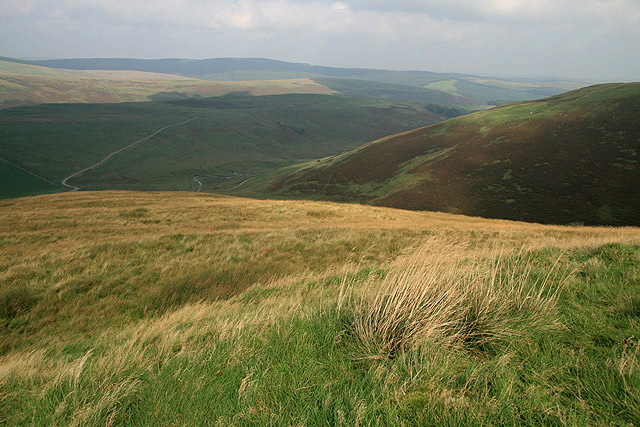
Hill farming or terrace farming is an extensive farming in upland areas, primarily rearing sheep, although historically cattle were often reared extensively in upland areas. Fell farming is the farming of fells, a fell being an area of uncultivated high ground used as common grazing. It is a term commonly used in Northern England, especially in the Lake District and the Pennine Dales. Elsewhere, the terms hill farming or pastoral farming are more commonly used.
Cattle farming in the hills is usually restricted by a scarcity of winter fodder, and hill sheep, grazing at about two hectares per head, are often taken to lowland areas for fattening.
Modern hill farming is often heavily dependent on state subsidy, for example in the United Kingdom it received support from the European Union's Common Agricultural Policy. Improved, sown pasture and drained moorland can be stocked more heavily, at approximately one sheep per 0.26 hectares.
Location and organization
[edit]
Hill farming is a type of agricultural practice in the UK in upland regions. In England, hill farms are located mainly in the North and South-Western regions, as well as a few areas bordering Wales.[1] The Scottish highlands are another home for many hill farms. Sheep farms and mixed sheep and cattle farms constitute approximately 55% of the agricultural land in Scotland. These areas have a harsh climate, short growing seasons, relatively poor quality of soil and long winters. Therefore, these areas are considered to be disadvantaged and the animals raised there are generally less productive and farmers will often send them down to the lowlands to be fattened up.[2]
Upland areas are not traditionally favourable for agricultural practices. The majority of Hill farming land in England is classified as Less Favoured Area (LFA), and the LFA constitutes 17% of land farmed in England.[3] The LFA is further divided into Severely Disadvantaged Areas (SDAs) and Disadvantaged Areas (DAs), which make up 67% and 33% of the LFA respectively.[3] These areas are classified as such on account of poor climate, soils, and terrain which cause higher costs in production and transportation as well as lower yields and less productivity.[3] The LFA is significant in England's farming on a whole despite these disadvantages: 30% of beef cows and 44% of breeding sheep come from LFAs.[3] Farming distinctively shapes the ecosystems of these zones,[3] and the agriculture practices in the uplands define and shape the environment and landscape.[1]
Upland areas are usually covered with both dry and wet dwarf shrub heath and, rough and either managed or unmanaged improved grasslands.[1] The typical hill farm is made up of three distinct zones: the High fell, the Alotment, and the Inbye.[4] The High fell includes peat moors and rocky areas which provide poor grazing at the top.[4] The Alotment follows below, an enclosed area with rough grazing.[4] The Inbye is the lowest area at the bottom, which is used as the regular grazing area as well as for growing hay.[4]
History
[edit]Dartmoor National Park has over 10,000ha of prehistoric field systems, dating back to 1500BC.[5] Archaeological evidence shows that these moors have been grazed for 3500 years.[5] Because of the extent of historical farming in the UK uplands, hill farming has shaped the English uplands both environmentally and culturally.[1]
The UK government has designated different areas in the upland as specifically valuable by certain terms of the environment, biodiversity, archaeology, cultural heritage and landscape, and seeks to protect these regions for such reasons.[1] According to the UK government, these designated areas and their qualifications as such are:
- National parks
- "These protect and conserve the character of landscapes, facilities for access, wildlife habitats and historic features"
- Areas of outstanding natural beauty
- "These conserve and enhance naturally beautiful landscapes"
- Countryside character areas
- "Areas of cultural heritage which should be preserved"
- Natural England natural areas
- "Each area has a unique identity created by its mix of natural features and human activities and provides a broad context for local nature conservation work"
- Common land
- "Areas where people who do not own the land have rights to use it for farming or other purposes"
- National nature reserves
- "These protect and provide public access to important wildlife and geological sites"
- Special areas of conservation
- "These protect various wild animals, plants and habitats under the European Union’s Habitats Directive"
- Special protection areas
- "These protect rare and vulnerable birds and migratory species as well as geological and physiographical heritage"
- Upland experiment areas
- "Two upland areas where Natural England/Defra predecessor bodies piloted an integrated approach to rural development and nature conservation between 1999 and 2001"
- Ancient woodland
- "Land that has had continuous tree cover since at least 1600"[1]
Over the past century, Hill farming and the upland environment have undergone a number of changes. Since 1900 there has been:
- An approximately 500% increase in the number of sheep livestock.[6]
- A decrease in medium-sized farms, due to increase in large farms businesses and the emergence of small-scale hobby farmers.[6]
- Increased specialization in livestock and a movement away from tradition mixed farming methods.[6]
- Fairly consistent labour employment on account of constant agricultural intensification offsetting reductions in labour output made possible by technological advancements.[6]
- A high turnover rates in upland ecosystem habitat types. For example, although the percentage of land classified as dwarf shrub moor remained relatively stable between 1913 and 2000, only 55% of the dwarf moor shrub land in 1913 occupied the same area as it does in 2000.[6]
Uplands ecosystems
[edit]
A large number of upland ecosystems have been shaped by humans for centuries, particularly by farming and agriculture.[6] Because of this, many upland ecosystems have become dependent on hill farm land management.[6] Hill farming practices play a significant role in supporting surrounding flora and fauna in the uplands. Through grazing, sheep and cattle maintain a variety of tall grasses and short vegetation.[2] This in turn supports local wildlife, as the short vegetation provides breeding and nesting grounds for many species of waders, including the lapwing, redshank, and golden plover.[2] The taller grasses are an important part of the Curlew habitat, which is another species of wader.[2] Cattle dung provides nutrition for many species of insects and carrion provides food for various species of scavenging birds.[2]
During winter farmers will usually keep the animals indoors, supplementing the livestock's diet with hay or silage.[2] The land used to grow winter feed that are not mowed are able to provide protection for a variety of birds including skylarks, partridge, and corncrakes who build on their nests on the ground.[2] Agricultural use, burning, and grazing by both livestock and wild life such as deer, helps to sustain the upland grasslands, moorland and bogs.[2] If these ecosystems were not maintained they would be colonized by trees and scrub.[2]
Sustainable careful maintenance is highly important in hill farming in order to protect the delicate relationship that farm manage has on the biodiversity of native plant and animal species.[1]

Upland ecosystems have seen a shift in the last century, associated with widespread habitat deterioration caused by human actions and exploitation.[6] The decline in grazing animals accompanied with the milder winters experienced in recent years has caused an overgrowth in vegetation, putting the ecosystem, as well as various archaeological sites at risk. The Dartmoor Vision initiative is trying to return Dartmoor to its former predominantly cattle, sheep, and pony grazed landscape.[5]
Government support and subsidies
[edit]Hill farm incomes in the UK have recently seen great decrease following drops in lamb and beef prices.[6] Therefore, subsidy support has become vital for Hill farm survival, and the policies have been changing in response to continuous uncertainty in the sector.[6]
Common Agricultural Policy (CAP)
[edit]Hill farming has been supported by both the British government and EU policies, one of the most influential EU scheme being The Common Agricultural Policy (CAP).[7] The CAP provided production-based direct (headage) which gave incentive to stock beef cattle and sheep at high densities.[7] This led to, in some circumstances, overgrazing which damages natural and semi-natural vegetation.[7] Because of overgrazing and issues with the accumulation of surpluses, the CAP was reformed.[7] The two most recent reforms to the CAP were Agenda 2000 in 1999 and the Mid Term Review of June 2003 and April 2004.[7] These changes are phasing out support and protections linked to production, and are providing more support on environmental and rural developments.[7]
Single Farm Payment
[edit]The Single Farm Payment replaced the older headage payments (CAP) in 2005.[6] Analyses of the effects of economic incentives provided to hill farmers by decoupling and the introduction of the Single Farm Payment show that although these policies cause little change in average farm incomes they do encourage change in the way hill farms run.[6] Specifically the policies promote the reduction of stocking densities, reduction of employment of additional farm labour, movement away from reliance on beef cattle, increased specialization, and to keep farming land in “good agricultural condition” rather than farm abandonment.[6] The EU plans to phase out and progressively reduce the SFP, and the SFP is guaranteed until 2013.[7]
Other policies
[edit]Other subsidy schemes from the British government are available to hill farmers, particularly the Uplands Entry Level Stewardship (Uplands ELS)[1] and agri-environment schemes.[6] The Uplands ELS replaced the prior Hill Farm Allowance in 2010.[3] Before the HFA, hill farms we subsidized by the Hill Livestock Compensatory Allowances which were active as headage support to eligible beef cows and ewes.[3] Because the DAs are more profitable than the SDAs, active since 2008 DAs became ineligible for funding from the Hill Farming Allowance (HFA).[3]
In addition to the Upland ELS, hill farmers in England's SDAs are supported by the Single Payment Scheme (SPS), which is the primary agricultural subsidy scheme under the EU.[1] Subsidies from the SPS are not dependent on production, granting greater freedom to farmers to meet market demands.[1] The SPS also claims to specifically support hill farmers who follow environmentally friendly farming practices.[1]
In order to receive these subsidies, hill farmers must meet cross compliance rules and regulations, which mainly involves avoidance of overgrazing and unsuitable supplementary feeding on natural and semi-natural vegetation under GAEC (standard of good agricultural and environmental condition).[1] These standards were implemented to protect significant habitats and to limit soil erosion and other negative effects of soil structure in the uplands.[1]
Certain upland farmers and communities also have access to funding from the Rural Development Programme for England (RDPE) team at Defra.[1] The reduction of farming subsidies that have taken place over the past few decades has created an uncertain future for farming in many parts of Europe.[7]
Recent strain on hill farming
[edit]
Without government subsidies, many hill farms would have a negative income.[8] The high cost of land and machinery keeps many hill farmers from expanding.[8] Hill farmers in some parts of England have reported a 75% decrease in income over the past decade.[8]
Hill farmer income is subject to large fluctuation above the influence of the farmers.[9] The harsh terrain and climate of hill farms are hard on the animals, causing them to be relatively very unproductive.[4] Because of this, hill farming can have economic strains on the farmers who generally have low income.[4] Wet weather, as often experienced in the uplands, create additional animal feed costs for farmers.[9]
Many hill farmers earn around £12,600, with some earning as little as £8,000. This is much below the annual £19,820 a single working adult requires to live in a village in England.[9] In 2008, a farmer would receive a profit of £1 for a single moorland lamb.[5] The average LFA farm in England only earns about 66% of their total revenue from farming.[3] 22% of this revenue comes from the Single Farm Payment, and 10% from specific agri-environment payments.[3] The 2% balance originated from non-farm activities, which are usually associated with contracting or tourism and recreation.[3]
Hill farmers in Peak District National Park (PDNP) constitute one of UK's most deprived farming communities, with farms in the LFA making an average loss of £16,000 per farm, generating an average headline Farm Business Income of £10,800 (supplemented by various government subsidies), creating a net income average per farm of about £6000.[7]
The hill farming sector in southwest England, like farming in the rest of the country, has experienced a decade of much change associated with economic pressures and uncertainties.[10] On average, the financial position of hill farms in South West England, like the rest of the country, is precarious. The average southwest English hill farm system in unable to match labour and capital invest in the business.[10]
Many farmers rely on a Single Farm Payment as a source of income.[9] These payments are expected to arrive in November or December, but sometimes farmers do not receive the money until June.[9] Due to this farmers are often unable to pay their bills or fix their machinery.[9] Some farmers have to cut back on the feed given to their animals, leading to a decrease in meat production and therefore lower profit.[9] By 2012 the Single Payment Scheme (or SPS), will only take into consideration the area of the farm.[5] This will decrease the income in moorland farmers to only 70% of what it was 20 years ago.[5]
The income from calves and lambs has remained constant, while the costs of farm upkeep have risen sharply (including items such as feed, straw, fuel, or fertilizer).[5] Because hill farming is becoming increasingly less profitable an increasing number of farmers have switched from the traditional hearty but less profitable animals which graze the moors to mainstream more profitable animals.[5]
Opportunities for farmers to supplement their farm income by working in industries such as quarrying or mining are largely no longer available.[5] The financial burden has taken a toll on many hill farmers, causing them to exhibit signs of mental health issues.[9] Many hill farmers are forced to generate supplemental income outside their farms or to take out loans.[9] Because of these economic factors, there is little incentive for younger generations to continue on with the hill farming.[5]
Problems
[edit]As discussed in an article on the Carnegie UK Trust Rural Community Development Programme site:[11]
The Foot and Mouth outbreak in Cumbria in 2001 led to the culling of over a million sheep. It also showed that the hill (fell) farming communities were as vulnerable as the pastoral system they have created over many generations.
See also
[edit]
References
[edit]- Specific
- ^ a b c d e f g h i j k l m n Hill farming - Detailed guidance - GOV.UK
- ^ a b c d e f g h i Hill farming – Scottish Natural Heritage
- ^ a b c d e f g h i j k "Archived copy" (PDF). Archived from the original (PDF) on 2016-03-04. Retrieved 2012-11-01.
{{cite web}}: CS1 maint: archived copy as title (link) - ^ a b c d e f BBC - Standard Grade Bitesize Geography - Hill farming : Revision
- ^ a b c d e f g h i j "Archived copy" (PDF). Archived from the original (PDF) on 2012-09-04. Retrieved 2012-11-01.
{{cite web}}: CS1 maint: archived copy as title (link) - ^ a b c d e f g h i j k l m n Armsworth 2009
- ^ a b c d e f g h i "UK Data Service" (PDF). Archived from the original (PDF) on 2016-03-05. Retrieved 2012-11-01.
- ^ a b c Hard Times: A research report into hill farming and farming families in the Peak District
- ^ a b c d e f g h i UTASS and Rose Regeneration for Oxfam. "Challenges Facing Farmers: A report into upland farming and farming families in Teesdale".
- ^ a b "Archived copy" (PDF). Archived from the original (PDF) on 2015-06-10. Retrieved 2012-11-01.
{{cite web}}: CS1 maint: archived copy as title (link) - ^ "Rural Community Development Programme - Media Clips". Archived from the original on 2007-09-28. Retrieved 2014-02-25.
- General
- Natural England, September 10, 2012. [1] Hill Farming Retrieved on October 31, 2012
- Harvey, D., Scott, C. February, 2012. [2] Farm Business Survey 2010/2011 Hill Farming in England. Retrieved on October 31, 2012.
- BBC. [3] Bite Size Geography: Hill Farming. Retrieved on October 31, 2012.
- Dartmoor Vision Group, April 2008. [4] Moor Farming Delivering the Dartmoor Vision. Retrieved on October 31, 2012.
- Armsworth, Paul et al. (2009). A Landscape-Scale Analysis of the Sustainability of the Hill Farming Economy and Impact of Farm Production Decisions on Upland Landscapes and Biodiversity: Full Research Report ESRC End of Award Report, RES-227-25-0028. Swindon: ESRC
- Scottish Natural Heritage, September 6, 2012. [5] Hill Farming Retrieved on October 31, 2012.
- UK Data Archive, 2007–2008. [6] Archived 2016-03-05 at the Wayback Machine Study Number 6363: Sustainability of Hill Farming. Retrieved October 31, 2012.
- UTASS and Rose Regeneration for Oxfam, 2012. [7] Challenges Facing Farmers. Retrieved on October 31, 2012.
- Turner, M., Robbins, K., Silcock, P., June 20, 2008. [8] Hill Farming in South West England: Economic Viability and the Delivery of Public Goods. Retrieved on October 31, 2012
- Peak District Rural Deprivation Forum, 2004. [9] Hard Times. Retrieved on October 31, 2012.
External links
[edit]Hill farming
View on GrokipediaDefinition and Characteristics
Core Features and Distinctions from Lowland Farming
Hill farming entails extensive pastoral agriculture on marginal lands characterized by steep slopes, high altitudes typically exceeding 300 meters, thin and acidic soils, and severe climatic conditions including prolonged winters and high precipitation. In the United Kingdom, such farming is predominantly conducted in Less Favoured Areas (LFAs), designated under European Council Directive 75/268/EEC for their inherent natural disadvantages that handicap agricultural productivity. These areas encompass about 17% of England's utilized agricultural land, totaling 1.8 million hectares, where cultivation of arable crops is largely infeasible due to terrain and soil limitations.[1][3] Core operational features include low-input grazing systems reliant on hardy ruminant breeds, such as Scottish Blackface sheep or hill cattle, adapted to subsist on rough grazing and moorland vegetation without supplemental feeding or heavy mechanization. Stocking densities remain low, often below 0.5 livestock units per hectare, to prevent overgrazing and maintain vegetation cover, with management practices emphasizing seasonal transhumance and hefting—where flocks instinctively adhere to traditional grazing territories. This approach prioritizes resilience to nutritional deficits and weather extremes over high yields, producing primarily store livestock rather than finished products.[9][10] Distinctions from lowland farming are pronounced in productivity, enterprise diversity, and input intensity. Lowland agriculture leverages fertile, well-drained soils and milder climates to support mechanized arable cropping, intensive dairy, and pig operations, achieving higher outputs such as lambing percentages often surpassing 150% compared to approximately 100% in hill systems. Hill farming, conversely, yields lower financial returns— with average farm incomes in English LFAs at £14,000 in 2020/21 versus £40,000 for lowland grazing farms—necessitating subsidies like the Hill Farming Task Force initiatives to offset viability challenges. While lowlands enable diversified, high-density production, hill operations integrate into a national stratified livestock chain, supplying breeding stock or stores to upland and lowland finishers, thereby sustaining broader supply but with inherent economic fragility.[11][12][13]Economic and Productivity Constraints
Hill farming is characterized by low productivity due to topographic, edaphic, and climatic limitations that restrict operations to extensive livestock grazing, primarily sheep and hardy cattle breeds, with minimal scope for crop cultivation or intensive management. Steep slopes inhibit mechanized equipment use, while thin, acidic soils and short growing seasons yield poor-quality forage, necessitating low stocking densities of approximately 0.52 grazing livestock units per hectare in England.[13] These factors result in outputs per unit area far below those of lowland farming, where higher fertility and accessibility enable greater intensification and diversified enterprises.[13] Economically, these constraints translate to persistently marginal returns, with average farm business income for English hill farms at £23,505 in 2023/24, reflecting a 12% year-on-year decline amid volatile input costs and market prices for lamb and wool. Core agricultural activities frequently incur losses, averaging -£13,961 per farm, rendering viability dependent on public support mechanisms such as £19,172 from the Basic Payment Scheme and £17,642 from agri-environment payments.[13] Total factor productivity in upland systems has fallen 9% from 1990/91 to 2017/18, exacerbated by reduced investment and output.[14] High unpaid family labor inputs, averaging £35,599 annually, often exceed net incomes for smaller operations, highlighting the labor-intensive nature and thin margins.[13] Resource barriers further impede productivity enhancements, with 85% of surveyed upland farmers in England reporting at least one major constraint, predominantly land and tenure issues (42%) and poor cash flow tied to low profitability (16%).[15] Such limitations manifest in lower stocking rates for 17% of cases, deferred capital expenditures for 12%, and overall profitability erosion for 30%, with nearly half of farmers deeming external assistance essential for mitigation.[14] Policy shifts, including Brexit-related uncertainties cited by 15%, compound these challenges by disrupting subsidy frameworks historically vital to sustaining upland enterprises against inherently unfavorable production economics.[15]Geographical and Organizational Context
Primary Locations and Regional Variations
Hill farming is primarily concentrated in the upland regions of the United Kingdom, where steep terrain, high rainfall, and cooler temperatures restrict crop cultivation and necessitate extensive livestock production, mainly sheep and hardy cattle breeds. Key areas encompass the Scottish Highlands and Islands, the uplands of Wales including Snowdonia and the Brecon Beacons, northern England's Pennines, Lake District, Yorkshire Dales, and southwestern moorlands such as Dartmoor and Exmoor.[12][16] These regions account for the majority of the UK's hill and upland grazing land, classified under Less Favoured Areas (LFAs) that cover approximately 17 million hectares, or 70% of the country's agricultural land.[17] Regional variations arise from differences in elevation, soil quality, and climate, influencing farm structures, livestock breeds, and management practices. In Scotland, hill farming frequently aligns with crofting systems—small-scale, tenanted holdings on marginal land—prevalent in the northwest Highlands and islands like Skye and Lewis, where communal sheep grazing on extensive hill pastures supports hardy breeds such as the Scottish Blackface, adapted to severe winters and short growing seasons.[18][17] English hill farms, often in Severely Disadvantaged Areas (SDAs) above 300 meters like the Cheviot Hills and North Pennines, feature stratified systems with native breeds including Swaledale and Herdwick sheep for rough grazing, transitioning to improved pastures at lower elevations; Disadvantaged Areas (DAs), with better accessibility and soil, allow for mixed sheep and cattle enterprises yielding higher outputs per hectare.[13][19] In Wales, hill farming predominates in central and northern uplands, emphasizing self-flocking breeds like the Welsh Mountain sheep, which thrive on steep slopes with minimal supplementary feeding; cattle rearing, particularly beef breeds, is more integrated here than in Scotland due to relatively milder coastal influences in areas like mid-Wales.[19][20] These variations reflect adaptations to local conditions: Scottish systems prioritize extensive, low-input grazing across vast commons, while English and Welsh farms often incorporate more enclosed "in-bye" land for wintering livestock, affecting stocking densities—typically 0.1 to 0.3 livestock units per hectare in SDAs versus higher in DAs.[13][17] Beyond the UK, analogous hill and mountain farming occurs globally in regions like the European Alps, New Zealand's South Island, and the Himalayas, but these differ in scale and intensification; for instance, Alpine systems integrate dairy production with summer transhumance, contrasting the UK's predominant meat-focused sheep operations.[21]Farm Structures and Community Organization
Hill farms typically consist of compact, family-operated holdings with limited arable land, emphasizing extensive grazing on steep, unimproved uplands. Core structures include stone-built farmsteads housing livestock shelters, hay barns, and basic machinery storage, designed for durability against harsh weather; in-bye fields near the homestead provide fenced pasture for winter fodder production and calving/lambing, while unenclosed hill ground extends grazing access, often exceeding the farmed area by factors of 5:1 or more.[17] These layouts prioritize low-input systems, with minimal infrastructure investment due to economic constraints, as evidenced by the Hill Farming Act 1946, which subsidized rehabilitation of such marginal lands but preserved traditional extensive models.[22] In Scotland, the crofting system structures hill farming around small-scale tenancies averaging 5-50 hectares per croft, secured under the Crofting Reform (Scotland) Act 2010, with communal grazing shares managed by township grazings committees that allocate stints (grazing rights) and enforce stock control.[23] Crofting communities, numbering around 20,000 holdings as of 2021, integrate subsistence production with shared resources, fostering resilience through collective decision-making on moor burning and predator control, though challenges like succession persist in remote areas.[24] England and Wales hill farms rely on common land regimes, where over 500,000 hectares support grazing rights for sheep and cattle under the Commons Act 2006; commoners—often 50-100 per fell or moor—exercise rights via registered entitlements, with sheep "hefted" to hereditary territories through generational shepherding rather than fencing.[25] Community organization occurs through commoners' associations or agistment committees, which regulate stocking densities, collect fees for maintenance, and mediate disputes, as seen in Cumbria's 150+ commons where hefted flocks maintain biodiversity via rotational grazing.[26] Farmer-led networks, such as the Dartmoor Hill Farm Project established in 2002, exemplify modern community support by delivering training in business planning and environmental compliance to over 200 members, enhancing viability amid subsidy shifts post-2013 CAP reforms.[27] Similarly, the Exmoor Hill Farming Network coordinates peer-to-peer advice on breed selection and market access, reflecting a shift from isolated operations to collaborative models for sustaining upland demographics.[28] These organizations prioritize empirical adaptation over policy-driven narratives, drawing on local knowledge to counter depopulation trends documented in 2021 upland reports.[24]Historical Development
Origins and Traditional Practices
Hill farming in the British uplands originated from prehistoric pastoral activities, with archaeological evidence of field systems and grazing on sites like Dartmoor dating back to around 1500 BC, though systematic year-round occupation intensified during the early medieval period from the 6th to 10th centuries. During this time, settlements were established at altitudes of 250–400 meters above sea level, such as in Ribblehead (265–340 m) and Pitcarmick (355 m), enabling mixed farming that included oats, barley, and livestock rearing despite challenging acidic and peaty soils.[29] Transhumance practices, involving seasonal movement of herds to higher pastures, predated and facilitated this colonization, creating anthropogenic niches that improved soil fertility for sustained upland agriculture.[29] Traditional hill farming emphasized extensive rearing of hardy livestock, primarily sheep breeds like Herdwick, Cheviot, and Welsh Mountain, which are adapted to harsh weather and rough terrain in regions such as the Lake District, Scotland, Wales, and northern England. Cattle were also reared extensively in earlier periods, but sheep dominated due to the unsuitability of steep hillsides for arable crops or heavy machinery. Practices relied on communal common lands, where open fell grazing constituted a significant portion of UK upland areas, shaping landscapes through features like dry stone walls and stone barns over centuries.[30][31] A key element of traditional management was the "hefting" of sheep flocks, where ewes learn and transmit territorial boundaries to their lambs, allowing shepherds to oversee thousands of acres without fencing or constant supervision. This system supported low-input operations, with minimal interventions focused on selective breeding for resilience and natural grazing to maintain biodiversity and soil health. Lambs were often sold to lowland farms for finishing, reflecting a stratified production model that integrated hill breeds with more productive lowland systems for meat and wool output.[30][31][32]20th Century Evolution and Policy Influences
In the early decades of the 20th century, hill farming in Britain persisted with extensive sheep and cattle grazing on marginal uplands, characterized by low-input systems ill-suited to mechanization due to steep terrain and poor soil fertility. Following World War I, economic pressures intensified as global commodity prices fell, exacerbated by resumed imports of frozen meat and wool from dominion countries like New Zealand and Argentina, leading to stagnant or declining incomes for upland producers. Sheep numbers in upland areas such as the Peak District remained relatively stable between 1900 and 1939, but profitability eroded, prompting some farmers to reduce flock sizes or supplement with off-farm labor to avoid abandonment.[33][34] The interwar period (1919–1939) amplified these challenges, with agriculture entering a prolonged depression marked by overproduction and deflationary policies that prioritized urban recovery over rural support. Upland farms, already operating at subsistence margins, faced acute cash flow shortages; farmers minimized expenditures on feed and labor while accepting soil degradation and reduced stock quality to preserve operations, as evidenced in Welsh uplands where livestock values halved between 1920 and 1931. Government interventions remained general and inadequate for hills: the Agriculture Act 1920 aimed at wage boards and smallholdings but offered little for extensive grazing, while 1930s measures like the Wheat Act 1932 and Ottawa preferential tariffs provided tariff protections mainly benefiting arable and dairy sectors, leaving hill sheep and cattle exposed to import competition.[35][36] World War II catalyzed policy shifts toward food self-sufficiency, indirectly bolstering hill farming through wartime controls. Although plough-up campaigns targeted lowland margins for arable expansion—increasing cereal acreage on southern downs by 38% in 1940–1941—upland areas saw limited conversion due to impracticality. Critically, in 1941, emergency subsidies for hill sheep were introduced under Defence Regulations to maintain breeding ewe flocks as a national livestock reservoir, paying rates scaled to flock size (e.g., up to 5 shillings per ewe on approved hills) and preventing collapse amid labor shortages and feed rationing. These measures, administered via county committees, stabilized upland output by compensating for depressed market prices, with total payments reaching £1.2 million by 1945, foreshadowing peacetime reforms.[37][38]Post-War Intensification and Modern Shifts
Following the Second World War, the UK government enacted the Hill Farming Act 1946 to rehabilitate upland grazing land through subsidies for hill sheep and cattle, alongside grants for infrastructure improvements such as fencing, water supplies, and building renovations.[39] These measures targeted increased stock-carrying capacity by restoring soil fertility via liming, drainage, and reseeding, enabling modest intensification of pastoral output despite topographic limitations that precluded widespread mechanization or arable expansion.[40] By the 1950s and 1960s, such interventions contributed to higher livestock densities in designated hill areas, with sheep numbers rising from approximately 20 million in 1945 to over 30 million by 1970, though productivity gains remained lower than in lowland systems due to harsh climates and poor soils.[41] Upon joining the European Economic Community in 1973, hill farming benefited from the Common Agricultural Policy's (CAP) Less Favoured Areas (LFA) scheme, which provided compensatory payments from 1975 onward to offset natural handicaps like steep slopes and short growing seasons, sustaining extensive grazing systems.[42] These direct aids, decoupled from production volumes after 2005 reforms, formed a growing share of farm income—reaching 80% in Welsh uplands by the 2010s—allowing maintenance of traditional practices amid volatile wool and lamb markets, but also discouraging innovation in low-margin operations.[43] LFA funding supported over 40% of UK upland holdings, preserving cultural landscapes while critiqued for entrenching inefficiency, as evidenced by static productivity metrics compared to subsidized lowland intensification.[44] Brexit in 2020 terminated CAP participation, phasing out LFA-style payments by 2027 in favor of the Environmental Land Management Scheme (ELMS), which rewards public goods like carbon sequestration and biodiversity enhancement over food production.[45] For hill farms, where subsidies historically accounted for up to 95% of income, this pivot has induced severe financial strain, with government analyses projecting 20-30% income reductions and potential land abandonment on marginal holdings without transitional support.[46] [47] By 2024, uptake of ELMS pilots remains low among upland graziers due to administrative complexities and mismatched payments for extensive systems, prompting diversification into agro-tourism or afforestation, though scalability is hindered by remoteness and aging farmer demographics.[5] These shifts underscore a broader transition from production subsidies to ecosystem service incentives, risking depopulation in hill communities if viability thresholds are not met.[1]Farming Practices and Techniques
Livestock Management and Breeding
In hill farming, sheep constitute the primary livestock, with typical flocks comprising hardy breeds suited to extensive grazing on marginal uplands.[17] Breeding ewes number around 422 on average Less Favoured Area (LFA) farms, reflecting low stocking densities necessitated by poor forage quality and harsh terrain.[13] Cattle play a secondary role, with approximately 23 beef cows per such farm, often used to complement sheep grazing by utilizing rougher pastures.[13] Sheep breeding emphasizes resilience to extreme weather, nutritional scarcity, and terrain challenges, with purebred hill ewes like Swaledale, Scottish Blackface, or North Country Cheviot selected for maternal hardiness and territorial "hefting" instincts that maintain flock distribution without fencing.[48] Crossbreeding hill ewes with sires from longwool breeds such as Bluefaced Leicester produces Mule lambs for lowland finishing, enhancing overall system productivity while preserving upland maternal lines.[49] Lambing occurs seasonally, often in late winter or spring, with rates influenced by supplemental feeding during prolonged winters, though natural selection favors ewes capable of unassisted birthing in remote areas.[31] Hill cattle breeds, including Belted Galloway and Luing, are bred for foraging efficiency on sparse vegetation and cold tolerance, with selection prioritizing calving ease and low maintenance to minimize labor in inaccessible uplands.[50] Stabiliser crosses with Limousin bulls have been adopted on some farms to improve reproductive performance, achieving higher weaning weights despite environmental constraints.[51] Management practices involve rotational grazing across heather, moor, and in-bye land, with shepherding to prevent overgrazing and mitigate risks like soil erosion from uneven terrain.[52] Health protocols address prevalent issues such as parasitic burdens, foot rot exacerbated by wet conditions, and nutritional deficits, often through targeted drenching and mineral supplementation rather than intensive veterinary intervention.[53] Winter housing is minimal, relying on hardy genetics to endure exposure, though declining sheep numbers pose challenges to balanced habitat management.[17]Land Use and Grazing Systems
Hill farms primarily utilize rough grazing lands, including moorland, heath, upland grassland, and rock outcrops, which constitute over 40% of land in Less Favoured Areas (LFAs) and are enclosed within the Moorland Line.[1] These areas feature nutrient-poor soils, steep slopes, and harsh climatic conditions, comprising nearly half of the United Kingdom's agricultural land and rendering them unsuitable for arable cropping.[54] Adjacent semi-improved and improved grasslands serve as supplementary areas for winter feeding and lambing, integrated with the extensive upland terrain to support livestock production.[1] Grazing systems in hill farming are predominantly extensive, relying on low stocking densities of hardy sheep and cattle breeds to utilize poor-quality forage while minimizing inputs.[17] Mixed grazing of sheep and cattle enhances pasture efficiency, as cattle consume taller, coarser vegetation, leaving more palatable grasses and legumes for sheep, thereby improving lamb growth rates and overall land productivity.[54] Moderate grazing levels are essential to prevent overgrazing, which can lead to soil erosion and loss of plant diversity, or undergrazing, which allows dominance by competitive species; in Scotland, such practices maintain 55% of agricultural land for upland sheep and mixed sheep-beef systems, preserving habitats like grassland, moorland, and bogs.[17] A significant portion of hill grazing occurs on common land, where private ownership coexists with rights of common, primarily for pasture, enabling multiple farmers to graze livestock without physical fencing through traditional hefting—where flocks learn and adhere to territorial boundaries via inherited knowledge.[25] Covering 3% of England, much of it in protected landscapes like National Parks, common land integrates with individual farm holdings to extend grazing capacity, supporting heritage breeds and seasonal movements while adhering to regulations such as Good Agricultural and Environmental Condition (GAEC) standards to limit stock numbers and mitigate environmental damage.[25][1] Livestock are often wintered outdoors with supplementary hay or silage, or away-wintered on lowland farms, to reduce pressure on upland pastures during harsh conditions.[17]Integration of Supplementary Activities
Hill farmers frequently integrate supplementary activities to offset the economic limitations of livestock-centric operations on marginal upland terrain, where primary revenues from sheep and cattle grazing often fail to cover full costs without external support. In England, diversification activities accounted for approximately 5% of total farm revenues in hill farming businesses during the 2020/2021 period, helping to bridge gaps left by variable livestock outputs influenced by weather and market fluctuations.[3] These integrations leverage the unique scenic and cultural assets of hilly landscapes, such as expansive views and traditional practices, while minimizing disruption to core grazing systems. Agri-tourism represents a primary supplementary avenue, involving hosted accommodations, guided walks, or experiential events like sheepdog trials that draw visitors to remote hill areas. Case studies from European mountainous regions, including UK uplands, demonstrate that such activities enhance rural viability by generating off-season income without requiring arable expansion, as seen in Exmoor National Park operations combining farm stays with livestock demonstrations.[55] In Italian and French hill contexts, agri-tourism has sustained family farms by integrating tourism revenues averaging 20-30% of total income, though success depends on proximity to transport links and marketing of authentic rural heritage over commodified experiences.[56] UK upland policy frameworks encourage this through grants for farm infrastructure adaptations, provided activities align with less-favored area designations that prioritize environmental stewardship alongside economic diversification.[1] Other integrations include woodland management and renewable energy installations, which utilize under-grazed hill slopes for timber production or small-scale wind turbines. Upland farmers in Wales and Scotland have diversified into agroforestry, planting native species on margins to yield supplementary timber sales and carbon credits, with empirical assessments showing 10-15% income uplift in participating hill holdings without compromising pasture integrity.[57] Renewable projects, such as hilltop turbines, provide lease revenues exceeding £5,000 annually per unit in viable sites, though regulatory hurdles like visual impact assessments limit widespread adoption.[58] These activities demand careful spatial planning to avoid over-intensification, as over-reliance on non-agricultural income can erode traditional hill farming knowledge transmission across generations. Challenges in integration stem from infrastructural barriers in remote areas, including limited broadband for online bookings and stringent planning permissions that favor conservation over commercial expansion. Parliamentary analyses of UK hill farms highlight that while diversification mitigates subsidy dependency—upland businesses often derive over 50% of income from public schemes—systemic underinvestment in rural skills training hampers scalability.[59] Empirical data from diversified hill operations indicate net profitability gains of 15-25% where activities complement rather than compete with grazing cycles, underscoring the causal link between adaptive land use and long-term farm resilience.[3]Economic Realities
Revenue Sources and Cost Structures
In hill farming, primarily practiced in upland areas of the United Kingdom such as Less Favoured Areas (LFAs), revenue is dominated by livestock enterprises focused on sheep and cattle production, with sales of lambs, breeding stock, and finished animals forming the core of agricultural output. For English hill farms in 2023/24, this agricultural output averaged £98,136 per farm, accounting for 68% of total output, up from 62% in 2020/21 amid fluctuating market prices for sheep (up 3% year-on-year) and stable cattle values.[13][3][60] Wool sales contribute marginally, often less than 5% of livestock revenue due to depressed global prices.[13] Government subsidies remain essential, comprising 25% of total output in 2023/24, with Basic Payment Scheme (BPS) payments at £19,172 per farm (13%, down 18% from 2022/23 as post-Brexit transitions reduce area-based support) and agri-environment schemes at £17,642 (12%, up 5%).[13][60] Without these, agricultural activities alone generated net losses for LFA grazing livestock farms in 2022/23, highlighting systemic reliance on public funds to offset low-margin upland production.[5] Diversification into non-agricultural income, such as rural tourism, accommodation, or contract services, added £9,723 per farm (7% of output), a rise from 5% in 2020/21, though scale remains limited by remoteness and small farm sizes averaging under 200 hectares.[13][3] Cost structures reflect the challenges of extensive grazing on marginal land, with total inputs averaging £121,167 per farm in 2023/24, split between variable costs (£54,105, or 45%) dominated by supplementary feed concentrates (£18,846) and other livestock expenses (£10,862 including transport), and fixed costs (£67,350, or 55%) led by general overheads (£14,589), machinery depreciation (£10,578), and paid labor (£7,734).[13] These are elevated by terrain-induced needs for rugged equipment, higher fuel use, and veterinary costs (£5,510) for disease management in remote flocks, contributing to fixed costs rising 9% year-on-year.[60][13]| Category | Average per Farm (2023/24, £) | % of Total Output/Costs |
|---|---|---|
| Revenue: Agricultural Output | 98,136 | 68% of total output |
| Revenue: BPS Subsidies | 19,172 | 13% of total output |
| Revenue: Agri-Environment | 17,642 | 12% of total output |
| Revenue: Diversification | 9,723 | 7% of total output |
| Costs: Variable (e.g., Feed, Vet) | 54,105 | 45% of total costs |
| Costs: Fixed (e.g., Labor, Machinery) | 67,350 | 55% of total costs |