


Community hub
Recent from talks
Contribute something
Nothing was collected or created yet.
Finnish Americans
View on Wikipedia

Key Information

Finnish Americans (Finnish: amerikansuomalaiset,[a] pronounced [ˈɑmerikɑnˌsuo̯mɑlɑi̯set]) comprise Americans with ancestral roots in Finland, or Finnish people who immigrated to and reside in the United States. The Finnish-American population is around 650,000.[1] Many Finnish people historically immigrated to the Upper Peninsula of Michigan and the Iron Range of northern Minnesota to work in the mining industry; much of the population in these regions is of Finnish descent.[3]
History
[edit]Some Finns, like the ancestors of John Morton, came to the Swedish colony of New Sweden, located in Delaware in the mid-17th century. In Russian America, Finns came to Sitka (when it was still called New Archangel) as migrant workers. Arvid Adolf Etholén was the first Finnish governor of Russian America, and the Lutheran Church was built for Finns.
Finns started coming to the United States in large numbers in the late 19th century, and this movement continued until the mid-20th century. However, there were some Finns in the United States before this; they were instrumental in the development of the New Sweden colony on the Delaware River, later absorbed into New Netherland. Many townships were established by Finnish Americans, including Herman, located in Baraga County, Michigan. The town is named for Herman Keranen, of Puolanka, Finland.[4]
A significant number of Finnish immigrants also settled in northern Minnesota, especially in the Arrowhead Region, along with portions of Aitkin, Crow Wing, and Carlton counties, often working in the region's iron mines. A number of the Finns fleeing the Russification efforts in their native country also immigrated to many of the mill-towns of New England, where they became known for their woodworking skills.[citation needed]
First migrants (1640–1870)
[edit]The first immigrants to North America arrived at the New Sweden colony by the lower Delaware River in 1640. Finland was an integrated part of the Kingdom of Sweden at the time, and a Swedish colony in the New World thus had subjects from Finland as well. In two years' time, the number of Finns in the settlement had grown to fifty, and was increasing. New Sweden changed hands and came under Dutch control in 1655 and the Finnish community, while still small, was growing.[citation needed]
Among the Finnish settlers of New Sweden was Martti Marttinen, who came to North America in 1654 and changed his name to Morton. John Morton, the politician who signed the U.S. Declaration of Independence on behalf of Pennsylvania in 1776, was his great-grandson.[citation needed]
Migration to North America from Finland continued throughout the 17th and 18th centuries, but it was very sporadic in nature and only a few individuals and groups dared make the move.[citation needed] This was largely due to the long distance between Europe and America, and the difficulties associated with crossing it. However, as the Industrial Revolution began with the turn of the 19th century, bringing with it such technological innovations as railroads and steam ships, these obstacles slowly began to disappear.[citation needed]
While the rest of Europe was industrializing, Finland, by now a Grand Duchy of the Russian Empire, was to a great extent excluded from the revolutionary process. The society was largely agrarian, and unemployment was rising, thanks to population growth and the fact that there was now little land left to cultivate in the country. America, on the other hand, possessed abundant natural resources but lacked a workforce.[citation needed]
Rural life in Finland during the 1860s seemed doomed to remain laborious, stunted, and forever at the mercy of unpredictable weather. In 1867, a severe crop failure in Finland drove masses of Finns, especially from rural Ostrobothnia, to migrate into Norway, from where they later moved to the United States and Canada.[5]
Religion
[edit]The Laestadian Finns longed for a rural way of life and religious toleration which they believed they would find in America. Thus, a group of Laestadian preachers and their followers immigrated to the Upper Peninsula of Michigan, bringing their faith with them. In 1873 the Finnish Laestadians started their own congregation at Calumet, Michigan. By 1906 the Laestadian or Apostolic Lutheran movement in America had 68 churches and a communicant body of over 8,000. The denomination was a significant minority within the Finnish Lutheran community in the Upper Peninsula of Michigan. Most Finnish immigrants at the time joined the Finnish Evangelical Lutheran Church of America, which eventually became part of the Evangelical Lutheran Church in America and remains in Calumet, Michigan, alongside various Apostolic (Laestadian) Lutheran churches.[citation needed]
The Great Migration (1870–1930)
[edit]The years between 1870 and 1930 are sometimes referred to as the Great Migration of Finns to North America. In the 1870s, there were only 3,000 migrants from Finland, but their number rapidly grew thereafter. New migrants often sent letters home, describing their life in the New World, and this encouraged more and more people to leave and try their luck in America. Rumours began of the acres of land that could be cleared into vast productive fields, and the opportunity to earn "a barrel of American dollars" in mines, factories, and railroads.
There were also professional recruiters, or agents, employed by mining and shipping companies, who encouraged Finns to move to the United States. More than 90% of the Finnish immigrants lived in urban centers. This recruitment activity was frowned upon by the authorities of the Grand Duchy, and it was mostly done in secret. It was eventually brought to an end in the late 1880s by legislation in the United States, but the decade still saw a 12-fold increase in the number of Finnish migrants compared to the previous decade, as 36,000 Finns left their home country for North America.
The movement was strengthened even further in 1899, as the Russian government started an aggressive, coordinated campaign for the Russification of Finland. Many Finns chose to escape the repression by migrating to the New World, and, during the 1900s, there were 150,000 new migrants.
Most Finns who left for America came from the impoverished rural regions of Ostrobothnia. Other prominent points of departure were Northern Savonia and the Torne Valley. Many of the emigrants left by ship from the port town of Hanko. Judging from municipalities of origin and later linguistic statistics, it is estimated that about 20-22% of all Finnish emigrants from 1893 to 1929 were Finland Swedes of which two thirds came from the Swedish-speaking coastal parts of Ostrobothnia, and also many from the Åland Islands which had a high share of emigrants relative to population.[6] This would mean an over-representation of Swedish speakers emigrating from Finland at the time.

In the years surrounding the turn of the 20th century, settlement was focused around three specific regions:
- Several pockets of Finnish settlement appeared in New England. New York City and Boston, Massachusetts were the prime destinations for scores of skilled and general laborers. Cities such as Fitchburg, Massachusetts, Worcester, Massachusetts, and Monessen, Pennsylvania attracted thousands of Finns to settle in both urban and rural settings. From about 1910–30, Gloucester, Massachusetts had a thriving community of some 3,000 Finnish granite quarry workers.
- In the Upper Midwest, a similar pattern rapidly took shape. Due to the region's similar geographic and climatic features to Finland, the heaviest levels of Finnish settlement were seen in an area known as the Finn Hook, which includes northeastern Minnesota, northern Wisconsin, and the Upper Peninsula of Michigan, where Finns were heavily invested in mining and agriculture.[3] At the same time, because of the connections between these sectors and Great Lakes shipping, another area of Finnish settlement formed in northeastern Ohio, with its core located in the port city of Ashtabula and the nearby towns of Conneaut, Painesville and Fairport Harbor. Today, the region is known as having the highest population of Americans of Finnish ancestry of any region in the United States; in the northwestern half of the Upper Peninsula of Michigan they make up the majority of the population.
- In addition, a number of rural and urban locations in the Northwestern United States contained a number of Finnish-settled areas. Cities such as Aberdeen, Washington and Astoria, Oregon were known for being prime destinations for Finnish immigrants.
The immigration of Finns gave birth to a strong Finnish-American culture, especially in cities such as Duluth and Ashtabula, Ohio. Many villages were named after places in Finland (such as Toivola, Minnesota, Savo, South Dakota, and Oulu, Wisconsin).
The Finnish exodus took place after most of the available farmland in the United States was already taken and Canada's was largely still available. While many immigrants pursued farming, others found employment in mining, construction, and the forest industry, while women usually worked as maids. In the case of the Finnish-American enclave in the Finger Lakes region south of Ithaca, New York early in the 20th century, Finns left urban jobs in order to acquire farms that had been sold by their previous owners.[7]
The migration continued well into the 20th century, until U.S. authorities set up a quota of 529 Finnish immigrants per year in 1929. Initially, this led to an increase in Finnish immigration to Canada. But as social and economic conditions in Finland improved significantly during this era, overall immigration decreased by the middle of the century.
The American revolutionary James P. Cannon noted that a considerable part of these immigrants tended towards the radical left in politics: "Under the impact of the Russian Revolution the foreign-born socialist movement grew by leaps and bounds. The foreign-born were organized in language federations, practically autonomous bodies affiliated with the Socialist Party. [Among others] there were about 12 thousand Finns, organized in their own federation".[8]
Return
[edit]Most Finnish migrants had planned to stay only for a few years in North America, and then return to their native land once they had become rich. [citation needed] However, only about twenty percent of the migrants returned to Finland. Those who did, managed to import new ideas and technologies into Finland and put them into use there.[citation needed]
Approximately ten thousand Finns returned from the New World, not to Finland but to the Soviet Union, in the 1920s and the 1930s to "build socialism" in the Karelian ASSR. This took place mainly for ideological reasons and was strongly supported by the political elite of the USSR.
Demographic concentrations
[edit]

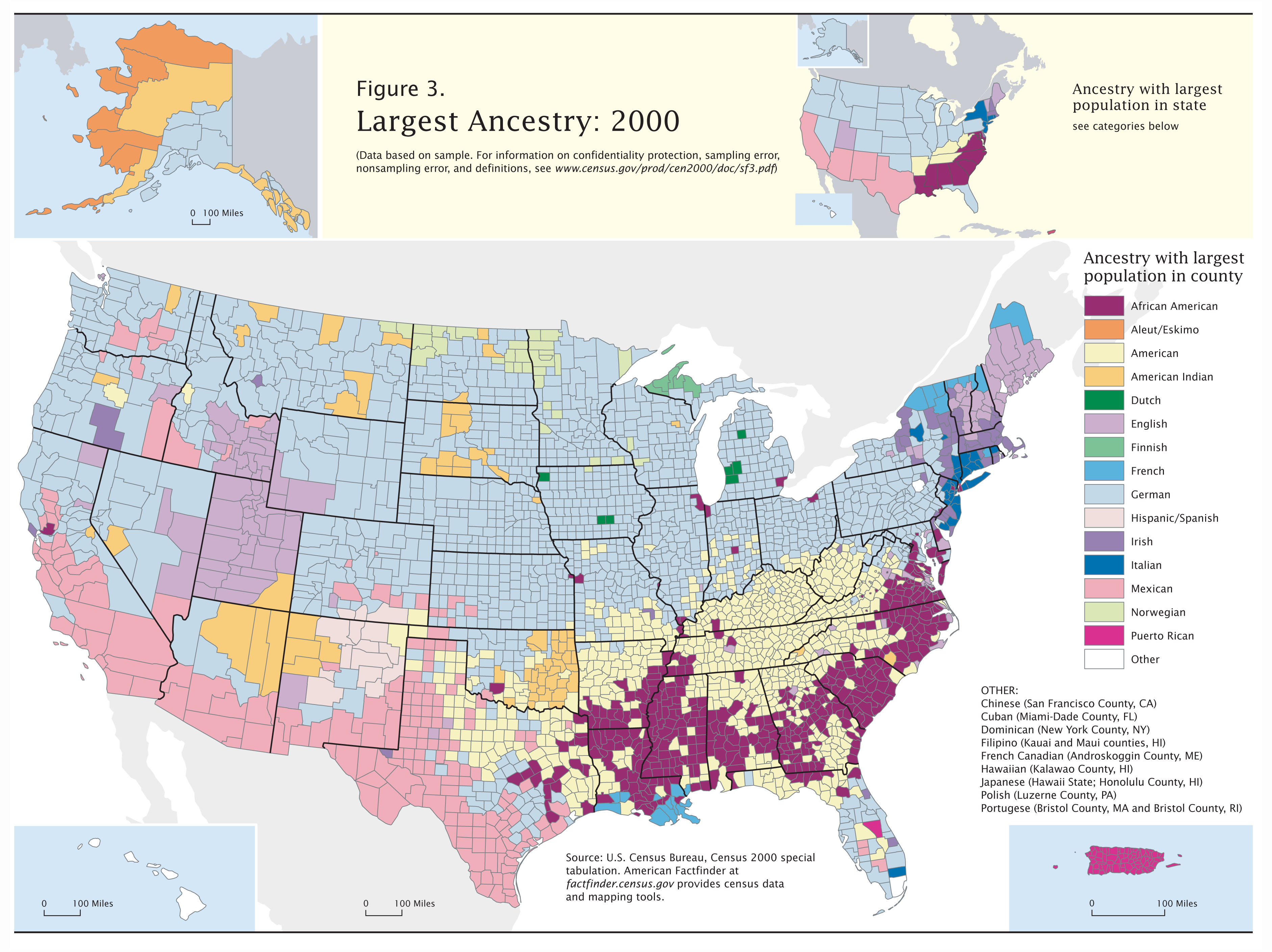
Today, the greatest concentration of Finnish Americans is in Michigan's Upper Peninsula, where they form 16% of the population, and are the largest ancestral group in the peninsula's western counties.[9] Hancock, one city of Michigan's Upper Peninsula, could be considered a kind of "cultural capital" of the Finnish Americans.[10] Finland Calling, a weekly Finnish cultural television program hosted by Carl Pellonpaa, was broadcast on WLUC-TV in Michigan's Upper Peninsula. In March 2015 the program's final episode aired, ending 53 years of weekly broadcasts.[11] Stanton Township, Michigan, is the place in the U.S. with the largest proportion of people with Finnish ancestry, at 47%.[12] The median Finnish-American household income is $70,045.[citation needed]
| State |
Finnish-American population[13] |
Percent Finnish American |
|---|---|---|
 United States United States |
653,222 | 0.20% |
 Minnesota Minnesota |
100,545 | 1.78% |
 Michigan Michigan |
94,259 | 0.94% |
 Washington Washington |
53,599 | 0.70% |
 California California |
48,518 | 0.12% |
 Wisconsin Wisconsin |
39,698 | 0.68% |
 Florida Florida |
29,337 | 0.14% |
 Oregon Oregon |
23,510 | 0.56% |
 Massachusetts Massachusetts |
22,556 | 0.33% |
 Texas Texas |
20,578 | 0.07% |
 New York New York |
18,131 | 0.09% |
 Ohio Ohio |
15,978 | 0.14% |
 Illinois Illinois |
14,146 | 0.11% |
 Arizona Arizona |
13,869 | 0.19% |
 Colorado Colorado |
13,807 | 0.24% |
 North Carolina North Carolina |
10,224 | 0.10% |
 Pennsylvania Pennsylvania |
8,124 | 0.06% |
 New Hampshire New Hampshire |
7,152 | 0.53% |
 Virginia Virginia |
7,142 | 0.08% |
 Maine Maine |
7,045 | 0.52% |
 South Carolina South Carolina |
6,944 | 0.13% |
 Montana Montana |
6,872 | 0.64% |
 Georgia (U.S. state) Georgia (U.S. state) |
6,100 | 0.06% |
 New Jersey New Jersey |
6,093 | 0.07% |
 Utah Utah |
5,668 | 0.18% |
 Maryland Maryland |
5,612 | 0.09% |
 Indiana Indiana |
5,599 | 0.08% |
 Connecticut Connecticut |
5,487 | 0.15% |
 Tennessee Tennessee |
4,870 | 0.07% |
 Nevada Nevada |
4,758 | 0.15% |
 Idaho Idaho |
4,459 | 0.25% |
 Missouri Missouri |
3,585 | 0.06% |
 Iowa Iowa |
2,572 | 0.08% |
 Alabama Alabama |
2,555 | 0.05% |
 Oklahoma Oklahoma |
2,204 | 0.06% |
 Kansas Kansas |
2,198 | 0.08% |
 New Mexico New Mexico |
1,856 | 0.09% |
 Arkansas Arkansas |
1,839 | 0.06% |
 Louisiana Louisiana |
1,574 | 0.03% |
 Nebraska Nebraska |
1,533 | 0.08% |
 Hawaii Hawaii |
1,458 | 0.10% |
 Kentucky Kentucky |
1,357 | 0.03% |
 Rhode Island Rhode Island |
961 | 0.09% |
 West Virginia West Virginia |
713 | 0.04% |
 District of Columbia District of Columbia |
494 | 0.07% |
 Delaware Delaware |
490 | 0.05% |
Finnish Americans by metropolitan statistical area in 2019:
- Minneapolis-St. Paul-Bloomington, MN-WI MSA 49,006 (1.33%)
- Duluth, MN-WI MSA 29,881 (10.33%)
- Detroit–Warren–Dearborn, MI MSA 29,120 (0.67%)
- Seattle-Tacoma-Bellevue, WA MSA 22,092 (0.55%)
- Portland-Vancouver-Hillsboro, OR-WA MSA 20,881 (0.83%)
- New York-Newark-Jersey City, NY-NJ-PA MSA 14,841 (0.08%)
- Chicago-Naperville-Elgin, IL-IN-WI MSA 14,394 (0.15%)
- Boston-Cambridge-Newton, MA-NH MSA 14,228 (0.29%)
- Los Angeles-Long Beach-Anaheim, CA MSA 11,325 (0.09%)
Notable people
[edit]Eero Saarinen
[edit]Architect and product designer Eero Saarinen immigrated to the United States in 1923 when he was thirteen years of age and grew up in Michigan. His father was architect Eliel Saarinen, the first president of the Cranbrook Academy of Art in Bloomfield Hills, Michigan. He studied architecture at the Cranbrook Academy of Art and later the Yale University and graduated in 1934. After touring Europe and Africa for a couple of years he returned to the States and became a citizen in 1940. During the Second World War Saarinen worked for Office of Strategic Services (OSS) which later became the Central Intelligence Agency (CIA). Saarinen is famous for his furniture and architectural designs. His designs include the Gateway Arch at the Gateway Arch National Park in St. Louis, Missouri, the General Motors Technical Center in Warren, Michigan, the TWA Flight Center at John F. Kennedy International Airport, and the main terminal of Dulles International Airport near Washington, D.C. Eero's son, Eric Saarinen, is a cinematographer and film director, who has photographed and cinematographed several features, including The Hills Have Eyes, Lost in America, and Exploratorium.[14][15]
Other notable individuals
[edit]Notable Americans of some Finnish descent also include several film stars such as actresses Anna Easteden, Christine Lahti, Marian Nixon, Maila Nurmi, Pamela Anderson, Leslie Mann and Jessica Lange, actors Albert Salmi, Matt Damon, Richard Davalos and George Gaynes, and director David Lynch. Other notable individuals are author Jean M. Auel, historian Max Dimont (born in Finland of Russian Jewish parentage), cook and cookbook author Beatrice Ojakangas, politician Emil Hurja, labor activist T-Bone Slim, U.S. Communist Party leader Gus Hall (originally Arvo Kustaa Halberg), Finnish-Kiowa-Comanche U.S. Attorney Arvo Mikkanen, mathematician Lars Ahlfors, musicians Dave Mustaine, Jaco Pastorius, Einar Aaron Swan, Jorma Kaukonen and Mark Hoppus, science fiction author Hannu Rajaniemi, computer scientists Linus Torvalds and Alfred Aho, former Google executive and CEO of Yahoo Marissa Mayer, co-founder of Apple Mike Markkula, chairman and CEO of General Motors Mary Barra, astronaut Timothy L. Kopra, special forces officer Larry Thorne, ice hockey player Matt Niskanen and serial killer Aileen Wuornos. Porn actress Puma Swede is of Finnish descent although she was born in Sweden.[16]
Culture
[edit]FinnFest USA is an annual festival held to celebrate Finnish heritage and culture in the United States. Organized by a non-profit organization of the same name, FinnFest USA has been held in a different location each year since 1983, often incorporating regional cultural elements of the local site into the year's event. To date there have also been three FinnGrandFests, a collaboration between Finnish-Americans and Finnish-Canadians: 2000 (Toronto, Ontario), 2005 (Marquette, Michigan) and 2010 (Sault Ste. Marie, Ontario).
Finnish American culture was also celebrated at Finlandia University in Hancock, Michigan before its closure[17], which has been the only Finnish American institution of higher learning in the United States since the closing of Work People's College in Duluth, Minnesota in 1941. Finlandia was established by the Finnish Evangelical Lutheran Church of America and is now affiliated with the Evangelical Lutheran Church in America.[citation needed] Finlandia Foundation National, based in Pasadena, CA is working with the Finnish American Heritage Center to preserve their archives and continue the Finnish American Reporter newspaper.[18]
Salolampi Finnish Language Village is a Finnish language immersion camp in Bemidji, Minnesota. Founded in 1978, it is a member of the Concordia Language Villages, and celebrates Finnish and Finnish-American heritage, culture, and language.[19][20]
Karelian pasty is a popular food among Finnish Americans.[21]
Politics
[edit]Finnish-Americans historically favored Democratic Party candidates, owing to their frequent employment in mining and other blue-collar industries. This has changed in recent decades as many of the rural regions in which they are numerous have swung to the Republican Party. In 2010, the three congressional districts with the highest concentrations of Finnish Americans (Michigan 1st, Wisconsin 7th, and Minnesota 8th), all adjacent to Lake Superior, flipped from Democratic to Republican control.[22]
See also
[edit]
- Finland–United States relations
- Anti-Finnish sentiment
- Danish Americans
- Finglish
- Heikki Lunta
- Mesaba Co-op Park
- New Finland, Saskatchewan
- Norwegian Americans
- Sauna
- Sisu
- St. Urho's Day
- Swedish Americans
- Swedish colonization of the Americas
General:
Notes
[edit]- ^ Amerikansuomalaiset (lit. "Finns of America") is used for Finns living in North America, i.e., it is used for both Finnish Americans and Finnish Canadians.[2]
References
[edit]- ^ a b "Table B04006 – People Reporting Ancestry – 2019 American Community Survey 1-Year Estimates". United States Census Bureau. Archived from the original on October 24, 2022. Retrieved September 26, 2020.
- ^ "amerikansuomalainen". New Dictionary of Modern Finnish (in Finnish). Institute for the Languages of Finland. Archived from the original on October 1, 2020. Retrieved September 23, 2020.
Pohjois-Amerikassa asuva suomalainen
- ^ a b Van Cleef, Eugene (September 1918). "The Finn in America". The Geographical Review. VI (3). American Geographical Society: 185–214. Bibcode:1918GeoRv...6..185C. doi:10.2307/207814. JSTOR 207814.
- ^ Wargelin Brown, K. Marianne. "Finnish Americans." Gale Encyclopedia of Multicultural America pp. 137–151.
- ^ Holmio, Armas Kustaa Ensio (2001). History of the Finns in Michigan. Detroit, Michigan: Wayne State University Press. pp. 77. ISBN 0814329748.
- ^ Myhrman, Anders (1972). Finlandssvenskar i Amerika: = The Finland-Swedes in America. Skrifter utgivna av Svenska Litteratursällskapet i Finland. Helsingfors: Svenska Litteratursällskapet i Finland. ISBN 978-951-9017-04-4.
- ^ "History of the Spencer Finns – Reasons". Archived from the original on March 4, 2016. Retrieved September 13, 2014.
- ^ James P. Cannon, "The History of American Trotskyism", Ch. 1
- ^ Census-2000-Data-Top-US-Ancestries-by-County.jpg
- ^ Sisson, Richard, Zacher, Christian, and Cayton, Andrew R.L. (2007). American Midwest: An Interpretive Encyclopedia. Indiana University Press.
{{cite book}}: CS1 maint: multiple names: authors list (link) - ^ Steele, Anne (March 27, 2015). "After 53 Years, Mr. Pellonpaa Is Finnished". The Wall Street Journal. Archived from the original on January 6, 2017. Retrieved March 7, 2017.
- ^ U.S. census data as compiled by eopdunk.com Archived November 7, 2007, at the Wayback Machine
- ^ "PEOPLE REPORTING ANCESTRY". United States Census Bureau. Archived from the original on June 2, 2022. Retrieved June 2, 2022.
- ^ "Eero Saarinen: The Architect Who Saw the Future". Adfilmfest. October 23, 2017. Archived from the original on November 10, 2017. Retrieved November 8, 2017.
- ^ "Dokumentin kuvaaminen opetti Eric Saarisen tuntemaan isänsä, arkkitehti Eero Saarisen". Yle (in Finnish). Archived from the original on November 10, 2017. Retrieved November 8, 2017.
- ^ Puma Swede at the Internet Adult Film Database
- ^ "'Deeply saddened': Community reacts to Finlandia's closure". Archived from the original on June 12, 2023. Retrieved July 10, 2023.
- ^ "Saving Finland in America". Archived from the original on June 5, 2023. Retrieved July 10, 2023.
- ^ "History – Salolampi Foundation". Archived from the original on September 14, 2016. Retrieved September 5, 2016.
- ^ "About the Salolampi Foundation – Salolampi Foundation". Salolampi Foundation. Archived from the original on September 14, 2016. Retrieved September 5, 2016.
- ^ Long, Lucy M. (July 17, 2015). Ethnic American Food Today: A Cultural Encyclopedia: 2 Volumes. Bloomsbury Publishing PLC. ISBN 978-1-4422-2731-6. Retrieved August 18, 2025.
- ^ "In 2010 Sweep, Even the Finns Voted Republican". November 25, 2010. Archived from the original on June 23, 2021. Retrieved June 2, 2021.
Further reading
[edit]- Hoglund, A. William. Finnish Immigrants in America, 1880–1920. (Madison: University of Wisconsin Press, 1960)
- Holli, Melvin and A. Kostiainen. Finnish Identity in America (1990, University of Turku)
- Holmio, Armas K. E. History of the Finns in Michigan (2001)
- Jalkanen, Ralph. The Faith of the Finns: Historical Perspectives on the Finnish Lutheran Church in America (East Lansing: Michigan State University Press, 1972)
- Kivisto, Peter, and Johanna Leinonen. "Representing Race: Ongoing Uncertainties about Finnish American Racial Identity," Journal of American Ethnic History (Fall 2011), 31#1 pp. 11–33.
- Kolehmainen, John I. (1945). "Finnish Overseas Emigration from Arctic Norway and Russia". Agricultural History, 19(4), 230–232.
- Kostiainen, Auvo, ed. (2014). Finns in the United States: A History of Settlement, Dissent, and Integration. Michigan State University Press. ISBN 978-1-61186-106-8.
- Mattson Schelstraete, Nancy, ed. (c. 1982). Life in the New Finland Woods: A History of New Finland, Saskatchewan (digitized online by Red Lauttamus and Julia Adamson). Vol. I. Rocanville, Sask.: New Finland Historical and Heritage Society. ISBN 978-0-88864-968-3.
- Mattson Schelstraete, Nancy, ed. (c. 1982). Life in the New Finland Woods: A History of New Finland, Saskatchewan (digitized online by Red Lauttamus and Julia Adamson). Vol. II. Rocanville, Sask.: New Finland Historical and Heritage Society. ISBN 978-0-88864-968-3.
- Ross, Carl. The Finn Factor in American Labor, Culture, and Society, 2nd edition. (New York Mills, Minnesota: Parta Printers, 1978)
- Stebbins Craig, Peter (1996). "Mårten Mårtensson and His Morton Family". Swedish Colonial Society. Retrieved September 6, 2005.
- Wargelin Brown, K. Marianne. "Finnish Americans", Gale Encyclopedia of Multicultural America, edited by Thomas Riggs (3rd ed., vol. 2, Gale, 2014), pp. 137–151. online
Immigrant experiences
[edit]- Beck, J. Robert (2005). Well, Here We Are! The Hansons and the Becks. Lincoln, Nebraska: iUniverse. ISBN 0-595-35772-5. A history of a Swedish-Finnish immigrant family.
- Dloniak, Miriam Kaurala; Diane M. Hohl (2009). Miriam: Daughter of Finnish Immigrants. Denver, Col.: Outskirts Press. ISBN 978-1-4327-2294-4..
In Finnish
[edit]- Heliölä, Mikko and Ruuskanen, Esa (2000). "Suuri Amerikan-siirtolaisuus (1870–1930)". Retrieved September 6, 2005.
- Kauppi, Jorma J. (2001). "Suomalaisten siirtolaisuus Pohjois-Amerikkaan". Retrieved September 6, 2005.
External links
[edit]- Finnish American Lives Archived September 23, 2020, at the Wayback Machine, a documentary film exploring traditional Finnish American culture
- The Finnish American Reporter, monthly journal from Finlandia University
- Finnish American Genealogical Resource Archived October 2, 2020, at the Wayback Machine
- Finnish American Virtual Museum
- FinnFest USA An annual celebration of Finnish America
- Finns in America – Library of Congress
- Finnish Americans
- Finnish immigration to Michigan's copper district
- The Finns
- Site of first Finnish settlement in America
- FinnishImmigrants.org Records on approx. 25,000 passengers to the U.S. from Finland between 1834 through 1897
- Salolampi Finnish Language Village
| Americas |  | |
|---|---|---|
| Europe | ||
| Asia | ||
| Oceania | ||
| Categories | ||
| Related | ||
| ||
Finnish Americans
View on GrokipediaHistory
Early Settlement and Initial Migration (1638–1870)
The first documented Finnish presence in North America occurred in March 1638, when Finnish settlers accompanied Swedish colonists aboard the ships Kalmar Nyckel and Fogel Grip to establish the New Sweden colony along the Delaware River.[6] These settlers founded Fort Christina (present-day Wilmington, Delaware), purchasing land from Lenape Native Americans and initiating permanent European habitation in the region.[6] Primarily ethnic Finns from forested regions of Sweden (known as Forest Finns), they were selected for their expertise in slash-and-burn agriculture and woodland survival skills, which proved advantageous in the untamed Delaware Valley.[7] Over the colony's lifespan until its conquest by the Dutch in 1655, approximately 600 to 700 total settlers arrived, with Finns comprising a significant majority—often nearly all—in later expeditions, many traveling with families.[7][8] Finnish contributions to early colonial life included pioneering log cabin construction techniques, adapted from Scandinavian forestry practices, which influenced American building methods; a surviving example in Gibbstown, New Jersey, dates to around 1638 and is regarded as the oldest such structure in the United States.[9] Following the Dutch takeover in 1655 and subsequent English control after 1664, Finnish communities persisted in the Delaware Valley, spreading to areas in present-day New Jersey (such as Penn's Neck in Salem County) and Pennsylvania, where they maintained distinct settlements and contributed to local agriculture and trade.[10] Place names like Finland (near Marcus Hook, Pennsylvania) and Nya Vasa reflect this enduring Finnish imprint.[6] From the late 17th through the 18th centuries, Finnish migration remained minimal and sporadic, limited to individual sailors, traders, or adventurers rather than organized groups, with scant records of permanent settlement.[11] This pattern continued into the early 19th century, though isolated Finns participated in events like the California Gold Rush starting in 1849, with small numbers documented among prospectors.[11] By the 1850s, external pressures such as the Crimean War (1853–1856) prompted a handful of Finnish vessels to seek refuge in American ports, leading to temporary stays or desertions by crews totaling a couple hundred individuals.[11] Finnish passport applications and parish records from the 1860s indicate the onset of slightly increased but still limited emigration, often driven by economic hardships in Finland under Russian rule, though numbers stayed low—fewer than a thousand total arrivals—prior to the mass outflows after 1870.[6] These early migrants typically assimilated into broader Scandinavian or local populations, with little organized community formation until later waves.The Great Migration and Peak Influx (1870–1930)
The Great Migration of Finns to the United States from 1870 to 1930 constituted the largest wave of Finnish emigration, with approximately 340,000 individuals arriving by 1920, driven primarily by economic distress in Finland including overpopulation, land scarcity, and recurrent poor harvests in a predominantly agrarian society.[6] [12] This period saw emigration accelerate after initial trickles in the 1870s, peaking between 1890 and 1914 when over 200,000 Finns entered the country, with the single highest annual figure of 23,152 recorded in 1902.[3] [13] Political instability under Russian imperial rule, including policies of Russification that threatened Finnish autonomy, compounded these push factors, prompting many rural inhabitants—particularly from the western provinces like Ostrobothnia and Vaasa—to seek stability abroad.[14] [12] Pull factors included labor demands in America's burgeoning extractive industries, where recruiters actively solicited Finnish workers for higher wages unattainable at home; early migrants' letters and chain migration further fueled the influx.[3] Most arrivals were young, single adult males intending temporary sojourns to accumulate capital for return, though family migration increased later, shifting patterns toward permanent settlement.[12] Immigrants exhibited notably high literacy rates, with 98 percent of those arriving between 1899 and 1910 able to read, exceeding averages for other groups and facilitating adaptation.[6] Primary destinations clustered in resource-rich regions suited to Finnish skills in forestry and mining: Michigan's Upper Peninsula emerged as the epicenter, attracting tens of thousands to copper and iron operations; Minnesota's Mesabi Iron Range drew similar numbers for ore extraction; while Wisconsin, Washington, and Oregon absorbed loggers into vast timber industries.[3] [12] By 1920, these areas hosted the bulk of the roughly 273,000 Finnish-born residents, forming ethnic enclaves with saunas, cooperative halls, and newspapers that sustained cultural ties amid harsh working conditions.[13] The 1924 Immigration Act's quotas sharply curtailed flows post-1924, marking the era's close as economic recovery in Finland and U.S. restrictions aligned to diminish arrivals by 1930.[3]Interwar Period, World Wars, and Return Movements (1930–Present)
The influx of Finnish immigrants to the United States effectively halted after 1930, constrained by the Immigration Act of 1924's national origins quotas and the Great Depression's economic collapse, which reduced foreign-born Finnish arrivals from peaks of over 20,000 annually in the 1900s to fewer than 1,000 per year by the decade's end.[15] Finnish American communities, numbering around 300,000 including descendants by 1930, faced assimilation pressures amid urban shifts and labor market contractions, with many second-generation individuals entering skilled trades or farming while retaining cooperative societies and newspapers.[5] A notable exception was the "Karelian Fever," a radical return movement where approximately 10,000 Finnish American communists and their families, motivated by proletarian internationalism and Soviet propaganda promising a classless society in Finnish-speaking Soviet Karelia, emigrated to the USSR between 1931 and 1934.[5] [16] These migrants, often from mining regions like Michigan's Upper Peninsula, sold assets to fund the journey, but encountered rapid disillusionment through forced collectivization, cultural suppression, and Stalinist purges; by the late 1930s, thousands were arrested, executed, or imprisoned as "foreign spies," with survivors' descendants later repatriated to Finland in the 1990s amid Soviet collapse.[17] During the Winter War of 1939–1940, Finnish Americans mobilized widespread sympathy for Finland's resistance to Soviet invasion, organizing relief campaigns through groups like the Finland Emergency Relief Fund that collected over $1 million in aid and medical supplies by 1940.[6] More than 300 volunteers of Finnish descent from the US traveled to Finland to fight alongside Finnish forces, driven by ethnic solidarity and anti-communist sentiment, with figures like 62-year-old Arthur Hyvönen exemplifying the age range of participants.[18] In the ensuing Continuation War (1941–1944), where Finland allied tactically with Germany to reclaim territories lost to the USSR, Finnish American support persisted via lobbying and fundraising, though US entry into the war against the Axis complicated relations; President Roosevelt maintained a policy of "benevolent neutrality" toward Finland until formal war declarations in 1944, which involved no military engagements.[6] Postwar peace treaties ceded additional Finnish territories to the USSR, prompting minor repatriation flows as some Finnish Americans returned to aid reconstruction, but overall community focus shifted to domestic integration amid Cold War anti-communism that marginalized lingering leftist elements. Return movements to independent Finland remained limited after 1945, with only sporadic individual repatriations—estimated at under 5% of prewar emigrants' descendants—facilitated by Finland's postwar economic recovery and US-Finland dual citizenship allowances introduced in 1990, contrasting the earlier Karelian tragedy's scale.[19] By mid-century, the foreign-born Finnish population in the US had declined to around 50,000 due to natural attrition and negligible new immigration (averaging 200–500 annually through the 1950s), while second- and third-generation descendants, totaling over 600,000 by 2000 census self-identification, prioritized assimilation into mainstream American life.[20] Contemporary ties manifest in heritage tourism, cultural exchanges, and small-scale returns among retirees or professionals, bolstered by Finland's welfare state appeal, though net migration favors inflows to the US from Finland in tech and academic sectors since the 1990s.[21] These patterns reflect broader causal factors: improved Finnish living standards post-1950 reducing emigration incentives, coupled with US economic opportunities retaining descendants, yielding stable but diluted ethnic enclaves.Demographics and Distribution
Population Estimates and Trends
According to the U.S. Census Bureau's American Community Survey, 649,761 individuals reported Finnish ancestry in 2018.[22] This figure represents approximately 0.2% of the total U.S. population at the time.[22] Historical self-reported data indicate relative stability with minor fluctuations: 658,854 in 1990 (0.3% of the population) and 623,559 in 2000 (0.2% of the population).[23] The lack of substantial growth reflects negligible net immigration since the 1930s, offset by natural population increase among descendants, high intermarriage rates, and generational dilution in ethnic self-identification.[6] Finnish immigration to the United States totaled about 340,000 between 1870 and 1920, predominantly during the peak years of economic migration for mining and logging opportunities, though roughly one-third of arrivals—over 100,000—returned to Finland due to factors including homesickness, labor strikes, and political developments like Finnish independence in 1917.[6] This net influx of approximately 230,000 formed the core of the ancestral base, with subsequent population expansion through births until mid-century stabilization.[24]| Year | Reported Finnish Ancestry | Percentage of U.S. Population |
|---|---|---|
| 1990 | 658,854 | 0.3% |
| 2000 | 623,559 | 0.2% |
| 2018 | 649,761 | 0.2% |
Geographic Concentrations and Urban vs. Rural Patterns
Finnish Americans exhibit the highest concentrations in the Upper Midwest, particularly in Minnesota, Michigan's Upper Peninsula, and Wisconsin, where historical immigration patterns tied to logging, mining, and farming established enduring communities. Minnesota holds the largest share, with approximately 1.72% of its population reporting Finnish ancestry, equating to over 100,000 individuals, followed by Michigan at 0.9% and Wisconsin at 0.6%.[1][25] In Michigan, the Upper Peninsula features the densest pockets, comprising up to 16% of the local population in areas like Houghton and Marquette Counties, reflecting early 19th-century settlements drawn to the region's iron mines and forests.[15][26] Secondary clusters appear in the Pacific Northwest, including Washington (0.6%) and Oregon, where Finnish laborers contributed to timber industries and later diversified into urban professions. Smaller but notable presences exist in states like North Dakota (0.7%) and Montana (0.6%), often linked to agricultural frontiers. At the county level, St. Louis County in Minnesota leads with nearly 22,000 Finnish descendants, while urban Hennepin County (Minneapolis area) reports over 14,000, illustrating a blend of regional strongholds.[1][27] Early Finnish settlement emphasized rural patterns, with immigrants favoring isolated northern landscapes reminiscent of Finland's terrain for self-sufficient farming and resource extraction; communities in Michigan's Keweenaw Peninsula and Minnesota's Iron Range exemplify this, where over half of early arrivals engaged in agrarian or extractive labor.[5] Over generations, urbanization accelerated assimilation, shifting descendants toward cities like Duluth, Minneapolis, and Seattle for education and industry, though rural retention persists in high-density areas—evident in the Upper Peninsula's ongoing cultural enclaves amid depopulation trends. By the 2010s, while national Finnish ancestry reports hovered around 650,000 (0.2% of the U.S. population), urban metro areas captured a growing proportion, contrasting initial rural dominance driven by economic necessities rather than preference.[23]| Top Counties by Finnish Ancestry Population | State | Estimated Number |
|---|---|---|
| [St. Louis County | Minnesota](/page/St._Louis_County,_Minnesota) | 21,993 |
| [Hennepin County | Minnesota](/page/Hennepin_County,_Minnesota) | 14,550 |
| [Marquette County | Michigan](/page/Marquette_County,_Michigan) | 12,085 |