Hubbry Logo
Frederick Bailey DeemingFrederick Bailey DeemingMain
Open search
Frederick Bailey Deeming
Community hub
Frederick Bailey Deeming
logo
8 pages, 0 posts
0 subscribers
Be the first to start a discussion here.
Frederick Bailey Deeming
from Wikipedia

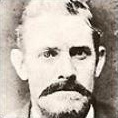
Frederick Bailey Deeming (30 July 1853 – 23 May 1892) was an English serial killer who was convicted and executed for the murder of his entire family in Rainhill, Merseyside, England, and his second wife in Melbourne, Australia. He is remembered today because he was suspected by some of being the notorious serial killer Jack the Ripper.

Key Information

Less than three months elapsed between the discovery of the second vicitm's body in Melbourne, in March 1892, and Deeming's execution for her murder in May 1892; a remarkably short time by comparison to modern western legal standards.[1] This was not only due to efficient police work, but also a result of the considerable international media interest Mather's murder attracted - Gurvich and Wray list numerous newspaper reports on the Windsor murder.[2] Another factor was Deeming's behaviour in public, for while he often used different names, he usually drew attention to himself with behaviour variously described as aggressive, ostentatious, ingratiating and overly attentive to women.

Three copies of his death mask exist. One is on display at the Old Melbourne Gaol in Melbourne, where he was executed, whilst another is in the collection of the State Library Victoria alongside a cast of his right hand and photographs, books, newspaper articles and letters relating to the case.[3] The third is in the collection of the Metropolitan Police's Crime Museum at New Scotland Yard in London - previously displayed there, it is now on display at the Metropolitan Police Museum in Sidcup.

Life

[edit]

First marriage

[edit]

Frederick Bailey Deeming was born in Ashby-de-la-Zouch, Leicestershire, England, the son of brazier Thomas Deeming and his wife Ann (née Bailey).[4] According to writers Maurice Gurvich and Christopher Wray, Deeming was a "difficult child."[5] At age 16 he ran away to sea, and thereafter he began a long career of crime, largely thieving and obtaining money under false pretenses.

On 28 February 1881 he married Marie James, a slater's daughter one year Deeming's junior, at St Paul's, Tranmere.[6] They lived briefly at Birkenhead, Cheshire, before leaving for Melbourne in 1882.[7] Deeming's brother Alfred had married Marie's sister, Martha. Deeming and his wife, "a typical Welsh lass", moved to Australia in 1882, chiefly working in Sydney, but was also employed by John Danks, a Melbourne importer of plumbing and gas fitting supplies.[8] Deeming's Melbourne employers regarded him as an excellent worker and extended him 200 pounds credit, supposedly to open a business in Rockhampton, Queensland. The money was never repaid.[9]

Deeming is also known to have worked for a Sydney gasfitter, where he was charged with theft of brass fittings from his employer. He indignantly denied the theft, but the items were found at his home and he was sentenced to six weeks' imprisonment. Deeming pretended to faint when the sentence was pronounced.[8] After his release from prison, Deeming continued to work in Sydney as a gasfitter until, in December 1887, he was again committed for trial, now on a charge of fraudulent insolvency. He disappeared from New South Wales while on bail. By 1886 Deeming and Marie had two Australian-born daughters, Bertha (born around 1881) and Marie or Mary (born around 1884) - they were later followed by Sidney (born around 1886) and Leala (18 months old at the time of her death).

South Africa and England

[edit]

In 1888 Deeming's brothers Alfred and Walter learned that he and his family were returning to England "with a considerable fortune."[7] He was then active in Cape Town in 1888–1889. These journeys to South Africa were possibly without his family[10] - his exact movements at this time are unclear and it appears he returned to Birkenhead at least once. Deeming was known to have been involved in conducting a Transvaal diamond mine swindle in 1889.[7] His return to England via the steamship Yumna was well-remembered by the captain and passengers because of his ostentatious display of jewellery and money, and his unwanted attention to some of the female passengers.[11]

Deeming had arrived at Hull by November 1889, lodging in the nearby town of Beverley. Here he passed himself off as "a retired sheep farmer" named Harry Lawson from Mount House Farm, Rockhampton, Queensland, living on 1,500 pounds a year.[12] He wooed Helen Matheson, the 21-year-old daughter of his landlady, and married her, bigamously, on 18 February 1890.[4] About a month later, after a honeymoon in the south of England, Deeming suddenly disappeared, taking his expensive gifts to Matheson with him. Deeming's wife and extended family had heard of his bigamous marriage to Matheson, according to Gurvich and Wray.[7]

Deeming was later found to have then visited Marie and the four children in Birkenhead. He apparently gave Marie several hundred pounds, announced he was leaving for South America and told her he would send for her and the children once he was settled.[13] Before leaving he conducted another swindle at a jeweler's in Hull. He was arrested for this offence on arrival at Montevideo and extradited back to England on a charge of "obtaining goods by false pretenses" being sentenced to nine months prison.[13]

Rainhill

[edit]

On his release from prison in July 1891, Deeming headed to the Liverpool area, settling into a hotel in the village of Rainhill under the name Albert Williams. A mysterious woman (almost certainly his wife Marie) who appeared at the hotel was dismissed as his "sister", visiting before she left for Port Said. Deeming then took a lease on Dinham Villa, a house in Rainhill, supposedly on behalf of a military friend, a certain "Colonel Brookes". However, Deeming himself took up residence at Dinham Villa, while a woman and several children were seen at the house and were again dismissed as merely his "sister and her children" visiting, who had "since returned home".[14]

Deeming cut the throats of Marie and all their children at Rainhill on or about 26 July (or possibly as late as 11 August) 1891,[15][16] by which time he had already begun courting Emily Lydia Mather,[17] the daughter of a widowed local shopkeeper and stationer, Mrs. Dove Mather. He hid the bodies under the Villa's floor and soon afterwards complained that its drains were defective, and that the kitchen floor needed to be replaced. He closely supervised the work on the floor. Deeming married Mather on 22 September 1891 under the false identity of Albert Oliver Williams at St Ann's Church, Rainhill, claiming to be son of a Colonel Albert William Williams.[18]

Deeming seems to have led his brothers and Marie's sister to believe that Marie and the children were in Brighton on a holiday, which then led them to assume they were overseas again. Deeming also made several visits to Birkenhead to reassure Martha that her sister and the children were well.[19] Detection of the murders was also obstructed by Deeming's lease (as Williams) on Dinham Villa, which stipulated that the house should not be sold or re-let for six months, because of the imminent arrival of Colonel Brookes and/or Williams' sister. The lease also allowed Williams to resurface the concrete floor.[20]

Windsor murder

[edit]

In November 1891, Deeming (still using the name Williams) took Mather to Australia in the German steamship Kaiser Wilhelm II - she talked to fellow passengers about her family in Rainhill during the long voyages and their evidence would later prove vital. Deeming's behaviour as Mr. Williams also attracted considerable attention during the voyage. When interviewed later by the police, many passengers stated they "detested Williams, [but] all agreed he had treated his wife in a loving and considerate manner".[21]

They arrived in Melbourne on 15 December 1891. Deeming rented a house on Andrew Street in Windsor, a suburb of the city.[4] He paid a month's rent in advance, giving the name Mr. Drewn. The owner, nearby butcher John Stamford, had been happy to rent to the man, because of his air of respectability, and at first, had not even known the man's name. As was testified to at the inquest into Mather's death, early in 1892 a man (answering Mr. Williams's description and then staying at the Cathedral Hotel in Swanston Street in the city as Mr. Duncan) had auctioned a variety of household goods, possibly wedding presents, in the city.

On 24 December or early on 25 December 1891, he fractured Mather's skull in several places and cut her throat, the latter deemed to be the most likely cause of death at her autopsy.[22] He buried her under the hearthstone of one of the bedrooms, covering the body with cement and leaving the property very soon afterwards. As emerged at the inquest, he wrote an affectionate letter (as Albert Williams) to Mather's mother several days after Mather's murder. Before or after the murder he also found time to approach Holt's Matrimonial Agency (as Duncan), wishing to meet a young lady with matrimonial intentions,[23] and to swindle a local Melbourne jeweller.

Jack the Ripper suspect

[edit]
19th-century illustration of Deeming
19th-century illustration comparing Deeming and 'Jack the Viper' of Whitechapel

On 3 March 1892 a prospective tenant of the Windsor house complained of "a disagreeable smell" in the second bedroom.[24] The owner and estate agent later raised the hearthstone to investigate whereupon the smell became so overpowering "they found themselves barely able to breathe".[24] The police were called and Mather's body found, with a postmortem following on 4 March.[22]

Considerable publicity surrounded the discovery. On 5 March The Age newspaper had connected the murder to the Whitechapel murders by 'Jack the Ripper' in east London from August to November 1888:

From the outset a suspicion of insanity is almost suggested and a tinge of the Whitechapel murders is hinted. The body hacked and mangled, the cool manner in which the cementing was carried out, the taking a house etc, the laborious obliteration of all traces of the crime – all these things suggest the malevolence and craft which can scarcely accompany the sane murderer, no matter how callous and brutal.[25]

As Australians struggled to comprehend the savageness of the Windsor murder, significant press speculation grew, suggesting Deeming was also responsible for the Whitechapel murders.[26] The speculation was also found in overseas reports of the case. For example, on 17 March The New York Times reported the story with the headlines:

Perhaps Jack the Ripper. The Startling discovery made in Liverpool. A Man arrested in Australia.[27]

This responded to the possibility that Deeming may have been in England at the time of the Whitechapel murders. In 1912 Kreitmayer's in Melbourne produced waxworks showing Deeming burying Mather and commented that it was suspected he was "identical with Jack the Ripper" - this probably reflected widespread public opinion on the point by that time.[28]

As of 1892 the Metropolitan Police officially dismissed Deeming as a suspect of the Whitechapel murders, since they had evidence that he was either in jail[29][30] or in South Africa at the time of the murders.[31] However, speculation that Deeming was Jack the Ripper continues today[32] - The Last Podcast on the Left still lists him as one of two "reasonable" Jack the Ripper suspects.[33]

Forensic researcher and former Metropolitan Police detective Robin Napper worked with a team of researchers and concluded that most of the evidence leads to Deeming as Jack the Ripper. In a Discovery Channel documentary in 2011 Napper argued that the Crime Museum's past display of a copy of Deeming's death mask as that of "Jack the Ripper" shows that the police had always considered him a prime suspect.

Investigation and capture

[edit]

From clues found at the vacant Andrew Street house and from information provided by local tradespeople, including Stamford and his agent, a local laundress, an ironmonger who sold Deeming cement and several carriers, investigating Victoria Police sergeants William Considine and Henry Cawsey were able to trace the recently arrived Mr. Williams to the Kaiser Wilhelm II. They were then able to interview other passengers, who gave corroborating descriptions of Mr. Williams and Mather and his apparently loving behaviour towards her. They also passed on her mentions of her family in Rainhill. This gave the police several leads and a very good description of Mr. Williams, which they circulated to other Australian colonies, but at this stage, his real identity was still unknown.

In the meantime, on or about 12 January 1892, Deeming had travelled to Sydney, and was now using the name Baron Swanston. During the voyage and in Sydney Deeming met and courted Kate Rounsefell. He told Rounsefell that if she agreed to become his wife, "she would never regret it, and would always congratulate herself on having entered into matrimony with him".[34] After a whirlwind romance, during which Deeming gave Rounsefell several items of what was later shown to be stolen Melbourne jewellery, Rounsefell consented to marry Baron Swanston. Having also agreed to follow him to Western Australia, Rounsefell and Deeming parted company. By means of forged testimonials, Deeming had obtained a position at a mine at Southern Cross.

On 22 January 1892 Baron Swanston departed for Fremantle. Again, Deeming as Baron Swanston made a name for himself on the ship, boasting of his wealth and position in society. He made approaches to Miss Maude Beech, a young woman in the care of her uncle and aunt, Mr. and Mrs. Wakeley. In this case, Deeming's charm came to nothing. Mr. Wakeley told Swanston; "I may tell you plainly, that I don't believe your stories and I am not in the habit of allowing men of your class to enter my family circle."[35] Once settled at Southern Cross, Deeming maintained a barrage of pleas to Rounsefell, writing on 8 February; "Don't keep me waiting dear. If you love me half as much as I love you, you would not keep me waiting a day".[36] [nb 1]

Grave of Emily Mather, Melbourne General Cemetery

Police were closing in, however, and following telegrams by Victoria Police to Western Australia, Deeming was arrested at Southern Cross on 12 March 1892. He began by denying he was Deeming but later said "I think I know the party who has been murdered. I don't believe anyone would have the heart to murder a girl like that".[38] Found in his possession at the time of the arrest were a number of Mather's belongings, including her prayer book.[39]

An English journalist working for the Melbourne Argus was the first to approach Mather's mother in Rainhill and deliver the news of her daughter's murder - his account first appeared in The Argus on 14 March 1892:

Mrs. Mather had not heard of any murder in Melbourne [or]…the fate of her daughter. When I told her of the tragedy, she fainted.

Following publicity surrounding the discovery of Mather's body at Windsor, investigations at Rainhill revealed the decomposing bodies of Marie Deeming and the four children. At an inquest held at Rainhill on 18 March 1892, Deeming's brothers identified Marie and gave some accounts of his activities.[40] At about the same time as Deeming was being returned to Melbourne, news of the discovery of the Rainhill murders in England arrived in Australia.[24]

A family acquaintance of the Mather family, Edward Thunderbolt, Melbourne's Inspector of Public Nuisances, arranged a public subscription, and erected a monument to Emily Mather at Melbourne General Cemetery.[nb 2]

Trial and execution

[edit]

Furious demonstrations against Deeming were made on the journey to Perth, and again on the way to Albany. Deeming was tried at Melbourne Supreme Court on 25 April 1892.[42] The prosecution case was conducted by Robert Walsh, Q.C.[43] Alfred Deakin, his counsel (later Prime Minister of Australia), tried to mount a plea of insanity. The defence also questioned the impact of newspaper reporting of Deeming on the jury.

Perhaps wishing to aid the defence of insanity, Deeming also claimed to have caught syphilis in London and to have received visitations from his mother's spirit, which urged his actions. Before the jury retired, Deeming made a "lengthy,... rambling, speech of self-justification". He repeated a story he had told police that Emily had "run off with another man". "That is my one comfort...knowing that she is not dead".[44]

Deeming was found guilty as charged, however. Deeming spent the last days writing his autobiography and poetry; "The Jury listened well to the yarn I had to tell, But they sent me straight to hell."[45] He also spent time talking to the Church of England ministers, to whom he supposedly confessed. The sentence of the court was confirmed by the Executive Council on 9 May 1892 and the judicial committee of the Privy Council refused leave to appeal on 19 May 1892. Deeming was hanged at 10:01 am on 23 May 1892, he weighed 143 pounds (65 kg), 14 pounds (6.4 kg) less than when he entered prison.[46] The autobiography which Deeming wrote in jail was destroyed.[4]

See also

[edit]

Notes

[edit]

References

[edit]
[edit]
Revisions and contributorsEdit on WikipediaRead on Wikipedia
from Grokipedia
Frederick Bailey Deeming (30 July 1853 – 23 May 1892) was an English-born Australian , bigamist, and notorious for murdering his wives and children in the late . Born in , , as the youngest of seven children to a marked by an abusive, alcoholic father and a puritanical mother, Deeming exhibited erratic behavior from a young age, earning the nickname "Mad Fred." He worked as an engineer and plumber, traveling extensively across Britain, , the , , and , often under aliases such as Baron Swanston, Harry Lawson, or Albert Oliver Williams—he reportedly used at least 35 in total. Deeming's criminal activities escalated through fraud and ; he also bigamously married Helen Matheson in 1890 under the alias "Harry Lawson," deserting her soon after. He married his first wife, Marie, in , with whom he had four children, before deserting them and remarrying others under false identities. In July 1891, while living in , , Deeming murdered Marie and their four children, burying their bodies in concrete beneath the kitchen floor of their rented home; the crime was discovered months later after his arrest elsewhere. On 22 September 1891, he married Emily Mather at , , under the alias "Albert Williams"; the couple then emigrated to , where on 1891, he bludgeoned and strangled her, concealing her body under the hearthstone at their home in Windsor, . Deeming's pattern of and deception continued until his arrest on 11 March 1892 at Southern Cross, , following suspicions raised by his latest fiancée, Kate Rounsefell, and reports linking him to the Windsor disappearance. Extradited to Victoria, Deeming stood trial in for Emily's murder, defended by future Australian , who argued an insanity plea based on Deeming's history of mental instability; the defense failed, and he was convicted on 2 May 1892. He was hanged at Melbourne Gaol on 23 May 1892 before a crowd of about 10,000 spectators outside, amid intense media sensationalism that portrayed him as a "monster of depravity" and fueled public hysteria. Post-execution, Deeming's body was examined for phrenological study, and his skull was preserved and displayed at the gaol museum until the . Though suspected of additional murders—including links to unsolved cases in and a possible connection to due to his travels and a disputed confession—no conclusive evidence tied him to the killings, and his confirmed crimes cemented his legacy as one of Australia's most reviled serial killers.

Early Life

Childhood in England

Frederick Bailey Deeming was born on 30 July 1853 in , , , the youngest of seven children to Thomas Deeming, a working-class , and his wife Ann (née Bailey). The family relocated to in during Deeming's early years, where his father suffered from severe mental instability, attempting multiple times by slashing his throat before dying in the local in 1889. Deeming's mother, whom he reportedly adored, died in 1877 at their home, leaving him deeply distraught and contributing to his emotional turmoil. Deeming received only limited schooling amid this unstable environment and exhibited early behavioral problems from his disturbed upbringing, marked by familial hardship and paternal abuse. At around age 16 in 1869, Deeming ran away from home and went to sea as a deckhand on vessels, initiating a life of itinerancy and minor offenses that would define his early adulthood.

Apprenticeship and Early Crimes

Deeming developed skills as a and gasfitter that he would later employ in Britain and abroad. By his mid-teens, he had begun exhibiting signs of instability, including reported instances of cruelty that hinted at underlying violent tendencies from his childhood. In his late teens and early twenties, Deeming engaged in a pattern of petty thefts and assaults in , often leveraging his position as a gasfitter to gain access to homes and seduce housewives while stealing jewelry and other valuables. Around age 18, he reportedly boasted to acquaintances of having killed a man, possibly in an accidental altercation, further illustrating his emerging deceptive and violent behavior. Deeming later claimed to have suffered from starting at age 18, leading to stays in asylums, assertions that were disputed by his brother Albert and used in attempts to argue during his later trials. These self-reported health issues, combined with his unstable wanderings, underscored a lifelong pattern of psychological and behavioral instability prior to his emigration in 1881.

Settlement in Australia

Arrival and Marriage to Marie James

Frederick Bailey Deeming married Marie James on 28 February 1881 at St. Paul's Church in Tranmere, Cheshire, . The couple, who had known each other since childhood in , briefly resided there before Deeming departed for alone. Shortly after the wedding, Deeming took up seafaring to facilitate his immigration, arriving in in August 1881 after deserting the ship Vereus. Upon settling in Sydney, Deeming secured employment as a and gasfitter, initially lodging in Riley Street, , and working for J. Tucks. His wife Marie joined him on 1 July 1882 aboard the SS Northampton, bringing the beginnings of their family life to the colony. Together, they established a that outwardly projected stability, with Deeming starting his own business in the Sydney suburbs by the mid-1880s. The couple had four children: daughters Bertha (born 22 April 1884 in ) and Marie (born 29 March 1886 in , New South Wales); son Sydney Francis (born 1888 at sea en route from to ); and daughter Martha Lila (born January 1890 in Cheshire, England). They resided primarily in from 1881 to 1887, with periods in , around 1883-1885, before moving to in 1888 en route to . These relocations reflected Deeming's professional pursuits while maintaining an appearance of a conventional domestic existence.

Professional Life and Family

Upon settling in Sydney after his arrival in Australia, Frederick Bailey Deeming pursued a career as a plumber and gasfitter, a trade he had learned during his apprenticeship in England. From 1884 to 1887, he achieved a measure of prosperity during the economic boom of the colonial era, working for various firms before establishing his own workshop at 91 Philip Street in 1886. This period reflected the opportunities available to skilled tradesmen in the expanding urban centers of New South Wales, where demand for gasfitting and plumbing services grew with infrastructure development. However, Deeming's business venture faltered amid financial pressures common to the volatile colonial economy. In late 1887, a damaged his premises, and he failed to meet his obligations, resulting in proceedings in December with liabilities exceeding assets by £700. He was briefly imprisoned for 14 days on charges of pervarication during the , after which he relocated his family to in early 1888, seeking new prospects as a gasfitter. In 1888, the family left for . The family's expansion occurred amid modest living conditions typical of working-class colonial families, as Deeming aimed to provide respectability through his despite economic strains. Contemporary accounts noted his apparent devotion to his wife Marie and children during this time, though later reports hinted at underlying domestic tensions in the household.

Escalating Criminality

Frauds and Imprisonments in Australia

Upon arriving in Australia, Frederick Bailey Deeming quickly engaged in criminal activity, beginning with a theft that led to his first imprisonment. In April 1882, while employed as a plumber and gas-fitter by J. Skinner & Co. in Sydney, he stole eight gas burners from his employer and attempted to shift blame onto a young apprentice. Convicted of larceny, he was sentenced to six weeks in gaol. In the mid-1880s, Deeming's deceptions escalated as he pursued fraudulent schemes across several locations, often leveraging his skills as a gas-fitter to gain and access to valuables. After working briefly for John Danks & Son in , he relocated to , , in 1883, where he obtained £200 in credit from the same firm under false pretenses and failed to repay it, marking an early instance of systematic financial deceit. These activities demonstrated a pattern of exploiting professional opportunities for personal gain, though no immediate conviction followed in . By late 1887, Deeming's financial troubles culminated in proceedings in , where he filed with a £700 deficiency attributed to extravagant spending. During his examination, discrepancies in his "cooked" account books led to a conviction for after he prevaricated under . He received a sentence of fourteen days in gaol over the period, further highlighting his reliance on to evade creditors. Throughout this period, Deeming frequently adopted aliases, such as "Ward," to facilitate his and avoid detection, enabling him to secure credit and employment under false identities. This pattern of imposture not only sustained his fraudulent lifestyle but also destabilized his family life, as he abandoned his wife and children in in early 1888 to flee impending re-arrest for insolvency-related offenses.

South African Swindles

In January 1888, Frederick Bailey Deeming arrived alone in , , adopting the alias Harry Lawson to begin a brief but prolific period of criminal activity. He quickly immersed himself in the vibrant expatriate community of British investors drawn to the region's mining opportunities, leveraging his charm and fabricated credentials to perpetrate sophisticated frauds. Deeming's schemes were marked by audacity and efficiency, often involving false promises of quick riches in the diamond and gold sectors. One prominent swindle saw him sell shares in a nonexistent diamond mine for £2,000, using a bogus telegram to convince victims of its legitimacy. He also defrauded a bank by obtaining £600 under the pretense of a gold commission and secured a £3,000 loan from a Johannesburg banker by presenting forged endorsements from a supposed respectable citizen. Posing as a mining engineer in the Transvaal goldfields, he provided misleading reports on properties to public companies, further extracting funds from eager British expatriates. Additionally, he stole jewelry later identified as belonging to gentlemen in Durban and Cape Town, disposing of it through illicit channels. These operations, sometimes aided by accomplices, netted him significant sums—totaling thousands of pounds—within months, highlighting the scale of his international con artistry. To evade capture, Deeming employed a web of aliases, including Levy, and moved rapidly between , , , and the Transvaal, altering his identity after each major fraud. The absence of an extradition between Britain and the Boer shielded him from immediate legal repercussions, despite determined pursuits by at least one defrauded victim. No arrests occurred during this period, allowing him to amass debts and a criminal reputation before vanishing. By early 1889, Deeming had departed , traveling incognito via to aboard the P&O steamer Jumna.

Return to England and Bigamy

Marriage to Helen Matheson

Upon returning to in late 1889 after his swindles in and , Frederick Bailey Deeming concealed his Australian past and existing marriage to Marie James by adopting various aliases and fabricating identities as a prosperous emigrant. He arrived shadowed by police but evaded capture, initially appearing in before moving to other locations such as , , and Pembroke. This deception allowed him to present himself as unencumbered, setting the stage for his pursuits. In October 1889, Deeming lodged in , , under the alias Harry Dunn, but soon shifted to Harry Lawson, claiming to be a wealthy sheep farmer from , . He courted 21-year-old Helen Matheson, the daughter of his landlady, Mrs. Matheson, during this period; while engaged in the courtship, Deeming traveled to for business, where he suffered an accident and was nursed back to health by Mrs. Matheson and Helen. This incident deepened their bond, leading to their marriage on 18 February 1890 at , —a ceremony funded by proceeds from Deeming's recent frauds. The union was bigamous, as Deeming had not divorced his first wife and continued to hide his Australian family. Following the wedding, the couple honeymooned at in before relocating to the Station Hotel in Hull. There, Deeming maintained the facade of affluence, but shortly after their arrival, he abruptly abandoned Helen, claiming he was stepping out to make a call and never returning. He departed alone aboard a steamer bound for , , in mid-1890, posing as the director of a gold mine to further his deceptions while leaving Helen destitute and exposing the bigamy's fragility amid mounting fraud investigations.

Imprisonment and Release

In late 1890, Frederick Bailey Deeming, using the alias "Lawson," was arrested in , , for frauds committed in , including obtaining valuable by false pretences from local tradesmen such as jeweller Mr. Reynoldson in Hull. The charges stemmed from deceptions he perpetrated shortly after his bigamous marriage to Helen Matheson in nearby earlier that year. He was extradited to , convicted in October 1890 and sentenced to nine months' imprisonment in Hull Gaol. During his incarceration, Deeming's cell was under close due to prior escape attempts and efforts to bribe officials, and he was restricted from outdoor labor. He maintained a low profile but continued fabricating stories about his background, claiming separation from a wife in and ownership of gold mines in to impress fellow inmates and staff. Deeming was released on July 16, 1891, owing to the expiration of his sentence, though he avoided additional charges of on a legal technicality related to his . Immediately upon freedom, he took £100 from his wife Helen and vanished from their Hull lodging, prompting her to search for him in vain. To evade mounting debts and creditors from his fraudulent activities, Deeming adopted new aliases, including "John Taylor" in and "Albert Williams" in , , where he planned to relocate his family under the pretense of a fresh start while forging cheques and peddling fake .

The Rainhill Murders

Murder of Family

Upon his release from in Hull on 15 July 1891 for , Frederick Bailey Deeming traveled to , , where he rented a house known as Dinham Villa at 21 Hughes's Gardens under the alias Albert Oliver Williams. He had recently sent for his wife, Marie James, whom he had married in 1881, and their four children—Bertha (aged 9), Marie (aged 7), (aged 5), and Leala (aged 18 months)—to join him from . The family arrived in late July 1891. Around 26 July 1891, Deeming murdered his wife and children in the house, striking them repeatedly with a hammer while they slept. He then concealed the bodies by removing sections of the kitchen floorboards, placing the victims underneath, sprinkling chloride of lime over them to mask the odor, and covering the area with fresh to create a new floor. Deeming explained the family's sudden disappearance to neighbors and the Mathers as his "sister and her family" leaving to join her husband overseas. These acts were driven by Deeming's mounting financial desperation, exacerbated by his recent and mounting debts, coupled with his desire to eliminate family obligations and begin a new life unencumbered. He abandoned the house without notice to the landlord, leaving behind personal effects and unpaid rent. The property remained vacant for several months, with a later noting a persistent foul smell and traces of lime during an inspection.

Courtship of Mather

In July 1891, Frederick Bailey Deeming, using the alias Albert Williams, was in , , where he had inquired about renting Dinham Villa through local agent Lydia Mather, a 26-year-old living with her widowed mother. Posing as a respectable of stores with a background, Deeming claimed his father—a colonel—had been killed in the and that he had a wealthy uncle he had never met; he further described himself as preparing to sail to or for a lucrative involving supplies. These fabrications, along with tales of adventures such as escaping Kaffirs in with a blood-stained and carrying a bag of sovereigns, charmed Mather during their interactions at the Commercial Hotel and her family home. The courtship unfolded rapidly over about two months, with Deeming visiting the Mather household frequently and even introducing his concealed previous wife and children—whom he passed off as his sister and her family during a late visit—as part of his deceptive narrative. By the end of , he proposed , which Mather accepted despite her brother's objections, drawn in by the whirlwind romance and promises of to start a new life abroad. The engagement was kept secretive from most villagers to avoid scrutiny, allowing Deeming to maintain his facade while quietly purchasing materials under Mather's name for household preparations. On 22 September 1891, Deeming and Mather were married at 's St Anne's in a low-key at 8 a.m., officiated by Rev. T. Johnson, with the bride listed as 20 and the groom as 30 on the register to further obscure their backgrounds. The wedding was followed by a lavish for 17 local guests at the Mather home, though notably absent were any of Deeming's purported friends or family, highlighting the isolation of his deceptions. The couple spent a brief period in Rainhill, residing with the Mathers while Deeming arranged their impending voyage to , all the while concealing the recent crimes committed in the same village.

The Windsor Murder

Voyage to Australia

Frederick Bailey Deeming, traveling under the alias Albert Williams with his newlywed wife Emily Mather, departed from , , on 2 1891 aboard the SS Kaiser Wilhelm II of the North German Lloyd line. The couple had secured second-class passages at a cost of £70, funded in part by Deeming's fraudulent activities, and the voyage was intended to take them to for a supposed fresh start. Deeming initially told acquaintances they were bound for , where he claimed to resume military duties as an army inspector, but he later altered the story to and even for a high-paying job in a tea earning £830 annually—tales that were entirely fabricated to maintain his deceptive persona. During the 43-day journey, which included stops at , Said, , and , Deeming and posed as an affectionate newlywed couple, though passenger accounts painted a contrasting picture of their interactions. Deeming engaged fellow s with boastful stories of his supposed wealth and global adventures, often displaying ostentatious jewelry to reinforce his image of affluence, but his overbearing manner, loud accent, and frequent lies earned him widespread distrust among the travelers and even the ship's . He committed minor frauds on board, including fabricating a tale that had been robbed of a costly and accusing an innocent of the to deflect , as well as collecting funds ostensibly for a needy while pocketing a portion for himself. Despite Deeming's abrasive behavior, endeared herself to others as quiet, intelligent, and ladylike; she wrote cheerful letters home describing the voyage positively, noting Deeming's assistance to passengers with minor medical aid and expressing her contentment as "the happiest woman that ever left ." The SS Kaiser Wilhelm II arrived in , Victoria, on 15 December 1891, where Deeming and initially planned to settle by renting a modest cottage in the suburb of Windsor to establish a new life away from Deeming's troubled past in . Deeming continued his deceptions upon arrival, presenting himself as a prosperous engineer, but the voyage had already sowed subtle seeds of unease among observers due to his erratic conduct, though herself showed no outward signs of suspicion toward her husband during the trip.

Murder of Emily Mather

Upon arriving in aboard the SS Kaiser Wilhelm II on 15 December 1891, Frederick Bailey Deeming, using the alias John Drewn, rented a small brick cottage at 57 Andrew Street in the suburb of Windsor. He had married Lydia Mather, a 26-year-old barmaid from , just weeks earlier in , presenting himself as a prosperous engineer bound for . Around Christmas Day 1891, Deeming murdered in the rented house by battering her head and cutting her throat. He then concealed the body by doubling it up, wrapping it in cloth, and burying it beneath the hearthstone in the back bedroom, which he covered with a layer of purchased earlier that week. The motive stemmed from Deeming's fear that Emily would discover his bigamous marriage to his previous wife and his mounting financial difficulties from fraudulent schemes, which threatened his ability to maintain his deceptive lifestyle. In the days following the , Deeming calmly auctioned off the household goods, including Emily's clothing and items from his supposed African exploits, to liquidate assets and erase traces of their occupancy. By early January 1892, he abandoned the Windsor property and traveled northward by train to , where he continued his deceptions under new aliases while seeking further opportunities for fraud.

Capture and Revelations

Arrest in Western Australia

After murdering Emily Mather in late December 1891, Frederick Bailey Deeming sought to evade detection by auctioning the contents of their rented house at 57 Andrew Street, Windsor, including his African artifacts and her clothing, under the alias Dawson in early January 1892. He also defrauded a jeweler, Kilpatrick & Co., by obtaining a £35 ring through and stealing two additional items. Posing as Duncan, he contacted a matrimonial agency to arrange further connections, then departed on 12 January 1892 aboard the steamer for , using the alias Baron Swanston. In , Deeming continued his deceptive practices, courting and proposing marriage to 22-year-old Kate Rounsefell during the voyage and in the city, promising her a life of wealth from his supposed ventures. He arranged for her to join him later in after establishing himself there. By early February 1892, Deeming had sailed to Perth, arriving on 6 February, where he presented himself as a seeking employment. He secured a position at the Fraser's Company in the Southern Cross goldfields, about 370 kilometers east of Perth, continuing to use the Baron Swanston alias while planning his next moves. Deeming's flight ended on 11 March 1892 when Western Australian police arrested him at Southern Cross, prompted by a telegraphed description and details sent from detectives Considine and Cawsey, who had traced him within six days of the Windsor 's discovery. During initial , Deeming confessed to Mather's , admitting he had killed her and concealed her body under the hearth. He was transferred by train and steamer to , arriving on 1 April 1892 under heavy guard to face charges.

Discovery of the Rainhill Bodies

Following Deeming's arrest in on 11 March 1892 and his subsequent partial confessions to police regarding his family's disappearance, authorities in initiated urgent inquiries into his activities in , . These investigations, prompted by clues such as a banquet invitation found under the alias A. O. Williams, focused on Dinham Villa on Lawton Road, a property Deeming had rented briefly in July 1891. On 16 March 1892, police exhumed the site, lifting the recently cemented kitchen floorboards to reveal the decomposed remains of Deeming's first wife, Marie (née James), and their four young children: (9), Marie (7), Sidney (5), and Leila (18 months). The bodies, buried in shallow graves and showing signs of violent death, including throats cut and strangulation, had been concealed in an apparent attempt to mask the crime. Identification was swiftly confirmed through from Deeming's brother Albert and Marie's sisters, who recognized personal clothing and effects recovered from the site, including items Deeming had shipped away under false names; medical examination further corroborated the victims' identities based on age and physical characteristics. The exhumation, conducted amid growing suspicion from local residents who recalled Deeming's odd behavior and the sounds of screams in August 1891, uncovered no immediate signs of the family's prior existence in the village, as Deeming had presented them as visitors before vanishing. The revelation ignited an international media frenzy, with newspapers across , Britain, and beyond sensationalizing the horrors under headlines linking the atrocity directly to the recent Windsor murder of Emily Mather. Reports detailed the gruesome parallels—bodies concealed under fresh cement—and solidified Deeming's culpability for six killings, transforming the case into a transcontinental that captivated public attention for weeks.

Trial and Execution

Following his arrest in Southern Cross, , on 11 March 1892, Frederick Bailey Deeming was extradited to Victoria and arrived in by 1 April. He was arraigned in the under the alias Albert Oliver Williams for the murder of Emily Mather, with the trial commencing on 28 April 1892 and concluding on 2 May. The prosecution, led by Robert Walsh QC, presented a case centered on the concealment of Mather's body beneath a in the kitchen of 57 Andrew Street, Windsor, where Deeming had rented the property under a false name shortly after arriving in . Key evidence included the discovery of the body on 3 March 1892 by subsequent tenants, prompted by a foul odor, and physical items such as Mather's dresses, jewelry, and a banquet invitation linking Deeming to prior crimes in , , which served as an aggravating factor in establishing his pattern of violence. The motive was framed as , as Deeming had married Mather while still wed to his first wife, Marie James, whom he had already killed along with their children; this was supported by documentation of his multiple aliases and fraudulent identities used to evade detection. Witness testimonies bolstered the prosecution's narrative. From the voyage on the RMS Bengal in December 1891, passengers including Max Hirschfeldt identified Deeming as traveling with Mather under the names Mr. and Mrs. Lawson, describing his attentive yet controlling behavior toward her. Windsor-area witnesses, such as landlord John Staniford and ironmonger John Woods, recounted Deeming's suspicious activities, including his purchase of cement and sand, his abrupt departure without notice, and the persistent smell emanating from the house after he left. Sergeant Patrick O'Loughlin detailed the exhumation process, confirming the body's identity through clothing and stab wounds consistent with Deeming's toolkit found nearby. Deeming's defense, conducted by , pursued an insanity plea, arguing that he suffered from epileptic seizures and hereditary mental instability that rendered him incapable of distinguishing right from wrong at the time of the . Medical experts, including Drs. and John Y. Fishbourne, testified to Deeming's history of epileptic fits—observed during his rail journey from Perth to —and a family background of mental instability, with his father dying in a after attempts and a brother confined to a . Dr. described potential homicidal mania linked to , while Dr. Fishbourne cited precedents of undetected in similar cases, though the evidence was deemed inconclusive by the . After deliberating for approximately 40 minutes, the jury rejected the and returned a verdict of guilty on 2 May 1892. Justice George Higinbotham immediately pronounced the death sentence, stating that Deeming would be hanged by the neck until dead.

Execution and Final Statements

Deeming's death sentence was confirmed by Victoria's Executive Council on 9 May 1892, following his conviction for the murder of Emily Mather. On 19 May 1892, the Judicial Committee of the in refused him leave to appeal, exhausting his legal options despite ongoing pleas centered on his previously rejected . While imprisoned at Gaol awaiting execution, Deeming maintained erratic behavior, continuing to assert his innocence in the Windsor murder while making unsubstantiated claims of additional killings, including vague references to crimes in and that he attributed to influences like his deceased mother's spirit. He penned an during the three weeks between his verdict and execution, detailing his life and alleged justifications for his actions, but the manuscript was destroyed by Australian authorities at the request of his family to prevent its publication, despite offers from English publishers worth £1,000. Two days before his death, on 21 May 1892, he wrote a letter to the Governor of Gaol expressing gratitude for the kindness shown by staff during his incarceration. Deeming, aged 38, was executed by hanging at Melbourne Gaol on 23 May 1892. Approximately 10,000 spectators gathered outside the gaol, reflecting intense and revulsion toward the condemned man. His final words on the gallows were reportedly unintelligible and did not include a or clear denial of his crimes. Following the execution, Deeming's body was initially buried within the Melbourne Gaol grounds but later exhumed and reinterred in an unmarked grave at Pentridge Prison Cemetery in . An unconfirmed rumor emerged in 2011 suggesting that his head may have been preserved for phrenological study, potentially linked to a held in a collection, though no definitive evidence supports this claim.

Suspected as Jack the Ripper

Origins of the Theory

Following his arrest in March 1892 for the murder of his wife Emily Mather in , speculation quickly arose in the press linking Frederick Bailey Deeming to the committed by in 1888, fueled by reports of his alleged confessions. During his in April 1892, The Standard newspaper in reported that Deeming had confessed to his lawyers and doctors that he committed most of the Ripper killings in London's district, causing a significant sensation among the public and media. Although Deeming never formally admitted the crimes to authorities, he reportedly told fellow inmates in Melbourne Gaol that he was , attributing his violent impulses to a venereal disease. The theory gained traction due to the alignment of Deeming's travels with the timeline of the Ripper murders, as his movements in during 1888 were initially unaccounted for, allowing rumors to suggest he was in at the time. Proponents pointed to his background as a gasfitter and , claiming it provided him with rudimentary surgical knowledge sufficient for the precise mutilations seen in the victims, such as throat-cutting and abdominal incisions. Early press accounts in 1892, including those in the , highlighted this temporal fit and his history of and evasion under aliases, portraying Deeming as a transient figure capable of committing crimes across continents without detection. In the , several articles and sensational books amplified these connections, drawing parallels between Deeming's bigamous lifestyle, pattern of , and the Ripper's targeting of vulnerable women in impoverished areas. Authors suggested his frequent travels for fraudulent schemes mirrored the Ripper's ability to evade capture, embedding Deeming in popular discourse as a plausible . By the , Deeming's inclusion in informal suspect lists had become entrenched in Ripper lore, perpetuated by the display of his at New Scotland Yard's Black Museum as that of , which reinforced public fascination with his violent past and the unsolved London crimes. This cultural persistence was driven by similarities in his confirmed murders—such as sealing bodies in concrete, akin to the Ripper's ritualistic brutality—solidifying his place in early 20th-century speculation.

Evidence and Counterarguments

One key piece of supporting evidence for the theory linking Deeming to the emerged in a 2011 documentary, ": Australia's Killer," produced by former detective Robin Napper, which examined Deeming's skull and cited historical police memos suggesting his presence in during 1888. The documentary highlighted similarities in Deeming's known methods, such as throat-cutting, to those used in the Ripper killings, along with his documented misogynistic tendencies, including claims that he sought to a prostitute who allegedly infected him with . Contemporary press reports also noted a London dressmaker's identification of Deeming as a man known as "Mr. Lawson" seen in the East End on September 30, 1888, the night of Catherine Eddowes's , where he demonstrated detailed knowledge of the mutilations. Counterarguments against the theory are substantial, beginning with timeline discrepancies; historical research places Deeming in Cape Town, South Africa, during parts of 1888, providing an alibi for some Ripper murders, as confirmed by police investigations at the time. There are no forensic links, such as DNA evidence, connecting Deeming to the crime scenes, and his modus operandi differed markedly—Ripper attacks were opportunistic and left bodies exposed in public, while Deeming premeditated his crimes and concealed victims, such as entombing his family in a house foundation. Official dismissals include contemporary police statements denying any Ripper connection, and Scotland Yard's Crime Museum, which once displayed Deeming's death mask as that of the Ripper, has since withdrawn support for the suspect status. Modern analyses offer mixed insights, with some psychological profiles aligning Deeming's narcissism and deceptive personality—evident in his multiple bigamous marriages and false identities—with Ripper suspect traits like psychopathy and a need for control, as outlined in early forensic assessments of the killer. However, post-2020 reviews, including ongoing Ripper DNA studies focusing on other suspects like Aaron Kosminski, reveal no new evidence implicating Deeming and emphasize timeline gaps without resolution. Efforts in 2011 to extract DNA from a skull potentially belonging to Deeming, aimed at comparing it to Ripper evidence, ultimately failed to yield conclusive results due to challenges in tracing descendants. The theory remains speculative today, with incomplete pre-1890 records for Deeming leaving potential gaps but no post-2020 archival discoveries providing fresh proof; experts regard it as unproven amid stronger for alternative suspects.

References

Add your contribution
Related Hubs
User Avatar
No comments yet.